
I’ve been working with clay for a while now and the coil method has always been one of my go to techniques.
It is straightforward and doesn’t require a lot of tools.
Over time I’ve come up with some simple projects that turn out nicely without much fuss.
These ideas are things I’ve tried in my own studio and they seem to work well for different skill levels.
I thought it might be helpful to share 25 of them here.
Ribbed Coil Mug

A coil-built mug uses stacked horizontal rings of clay to create the body, resulting in a series of raised ridges that wrap around the form. The rounded shape sits comfortably in the hand with a simple pulled handle attached at the side. A glossy green glaze highlights the texture while the interior stays lighter, keeping the piece practical for daily drinks.
What makes this idea useful is how the built-in ridges give natural grip without extra carving. You could adapt the same coil method to make taller or shorter versions or switch to a matte glaze for a different surface feel. In a kitchen this shape works well as both a coffee mug and a small utensil holder. The straightforward construction also makes it easy to resize for an espresso cup or adjust the rim width.
Coil-Built Breakfast Bowl
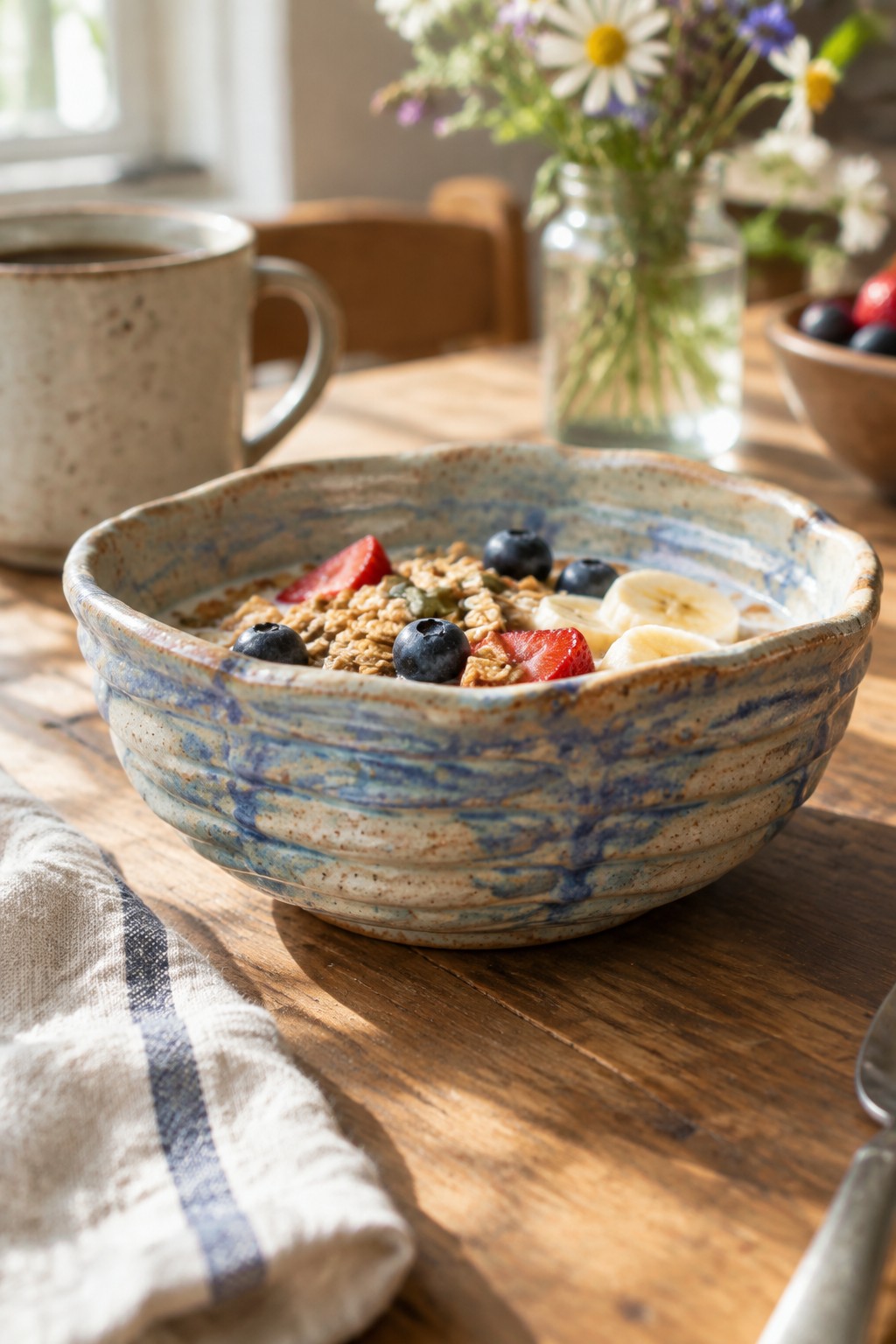
A coil-built bowl makes a practical kitchen piece for serving oatmeal, granola, or salad. The rolling and stacking process leaves subtle horizontal ridges that help the glaze pool and break, creating a textured surface without added carving. This size sits comfortably on a table and holds a single serving without taking up much space.
The shape does a lot of the work here because the same coil technique can produce a shallower dish for snacks or a taller version for soup. You could change the glaze to a single matte color for a more modern look or keep the drippy blue tones if you want the ridges to stand out more. In a kitchen, this kind of bowl works well stacked with others or used every morning alongside a mug.
Leaf Shaped Ring Dish

A leaf shaped ring dish is a compact catchall built by coiling clay into a flat, elongated oval with one pointed end and slightly raised edges to keep small items in place. The design uses a soft pink glaze with gold accents along the rim and veins to emphasize the leaf form without adding bulk. This approach keeps the piece simple while making the natural outline the main feature. It works as a ring dish or small tray and fits easily on a bedside table or desk.
What makes this idea useful is how the leaf outline can be lengthened or shortened depending on what you want to hold. You could coil a wider version for keys and coins or keep the same narrow shape for just a few rings. The rim accent is easy to add after the base form is leather hard and helps the dish stand out on a wood surface. For a gift this shape works well because it stays functional while staying small enough to finish in one or two sessions.
Cat Face Coil Planter
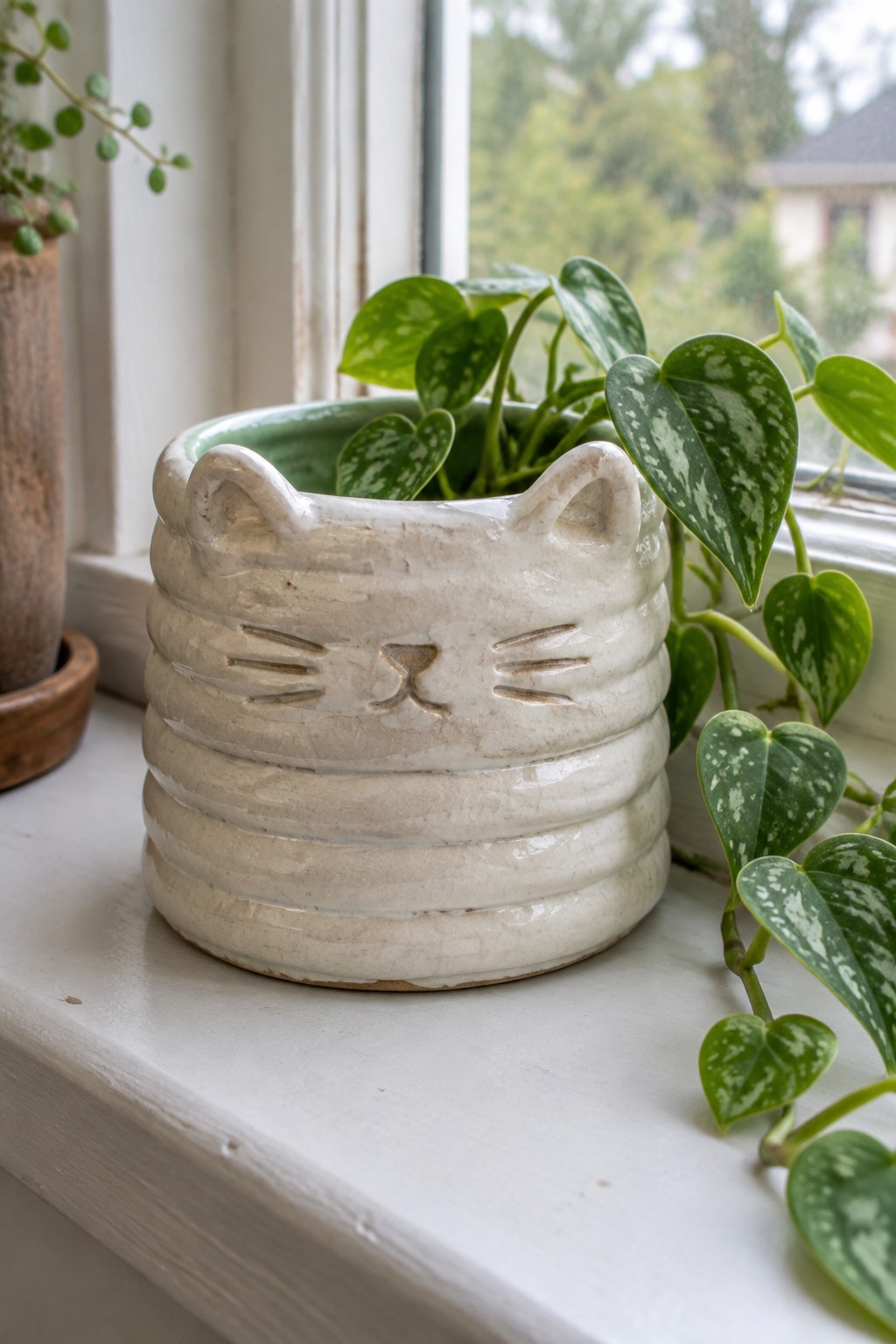
A small coil-built planter with a cat face offers a straightforward way to combine the coil method with simple sculpting. The stacked coils form the body while the ears are pinched from the rim and the whiskers are carved into the surface before glazing. The white exterior with a green interior keeps the focus on the plant while the face details stay visible.
What makes this idea useful is how the face stays readable even after the plant fills out. You can adapt the same coil base to create other animal versions or swap the glaze for a solid color if you want less contrast. In a kitchen or on a desk this size works for small herbs or succulents without taking much space. For a gift the pot pairs easily with a cutting from a common houseplant.
Coiled Tea Light Holders

Coil built tea light holders are formed by rolling clay into ropes and stacking them into short, wide cylinders that sit low on a surface. The visible coil seams and slightly irregular rims create a textured surface that catches glaze evenly, giving each holder a consistent but handmade finish in colors like earthy yellow, soft blue, or warm pink. This approach produces a simple holder that keeps a tea light stable while the stacked form adds enough visual weight to stand alone or work in a group.
What makes this idea useful is how the same coil cylinder can be shortened for a ring dish or raised slightly for a small succulent planter by changing the number of coils. The method needs only basic rolling and joining skills, so one batch of clay easily yields a set in different glaze colors for gifts or seasonal decor. On a tray or shelf, these holders keep flames contained and add a practical layer of handmade lighting without taking up much space.
Coil-Built Spoon Rest Tray
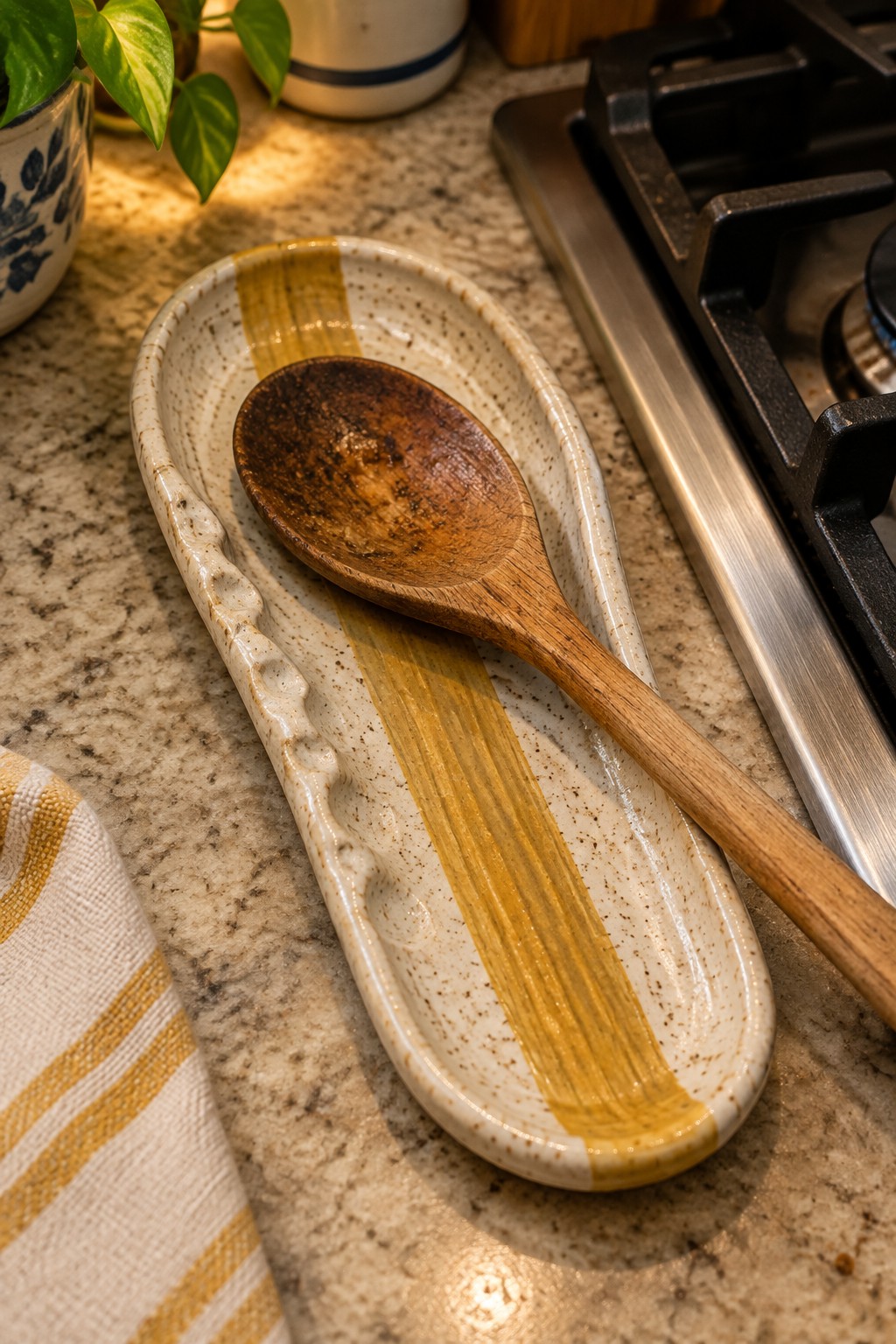
A long, narrow tray built from coils makes a practical spoon rest for the stove area. The shape stays shallow with one side left slightly irregular to catch drips while the other stays smooth for easy wiping. Vertical stripes of golden brown over a speckled base give the surface enough contrast to show up against light counters without extra decoration. This project stays simple because the length and gentle taper come directly from how the coils are joined and smoothed.
What makes this idea useful is how the same coil layout can be made shorter for a single spoon or wider for multiple utensils. The striped glaze pattern works with almost any kitchen color scheme and takes little time to apply. In a kitchen, this kind of piece sits right beside the stove or on the counter without sliding around. You could swap the wavy edge for a straight rim or change the stripe direction if you want to turn the same form into a small trivet or plant saucer.
Coiled Double Bowl for Kitchen Condiments
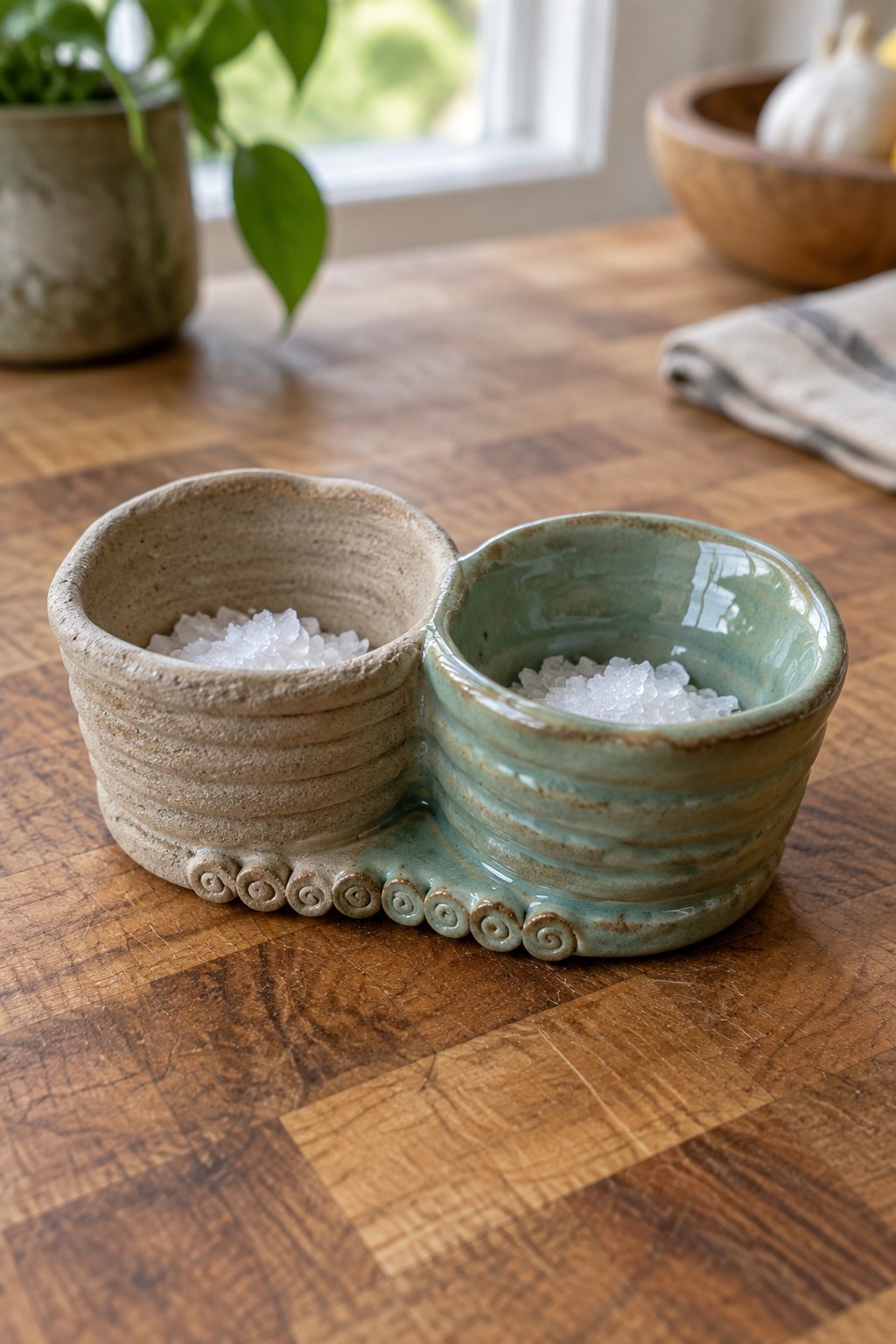
This handbuilt piece uses the coil method to create two small bowls joined along one side into a single stable unit. Horizontal coils form the walls and give both bowls a ridged texture, while a row of tiny spirals runs along the base where the bowls connect. One bowl stays in its natural clay state and the other receives a simple green glaze, creating contrast without extra decoration. The result is a compact kitchen item that can hold salt, sugar, or spices side by side.
What makes this idea useful is the joined shape that prevents the bowls from sliding apart while keeping the footprint small on a counter or table. You could adapt the same connection method to make matching dip bowls for snacks or a double planter for small herbs. The contrast between the raw clay and glazed surfaces gives the piece a clean look that stands out in photos, which helps when sharing the project online. For a gift, the same form works well scaled slightly larger and finished with two different glaze colors.
Coiled Oval Tray with Dotted Rim

An oval tray built from coils creates a shallow dish suited for holding jewelry or small desk items. The visible spiral coils form a textured surface that helps keep rings and chains in place, while the row of painted dots along the rim gives a clean border without extra tools or carving. A light speckled glaze lets the coil lines show through and keeps the focus on the handbuilt construction.
The oval shape offers more usable space than a round dish but still fits on a dresser or shelf without taking over. You can change the dot color to match other pieces in a room or simplify the rim to plain coils if you want a faster build. This tray works as a quick project for gifts since it stays small and the coil method shows clearly once glazed.
Tapered Coil Vase with Horizontal Ridges
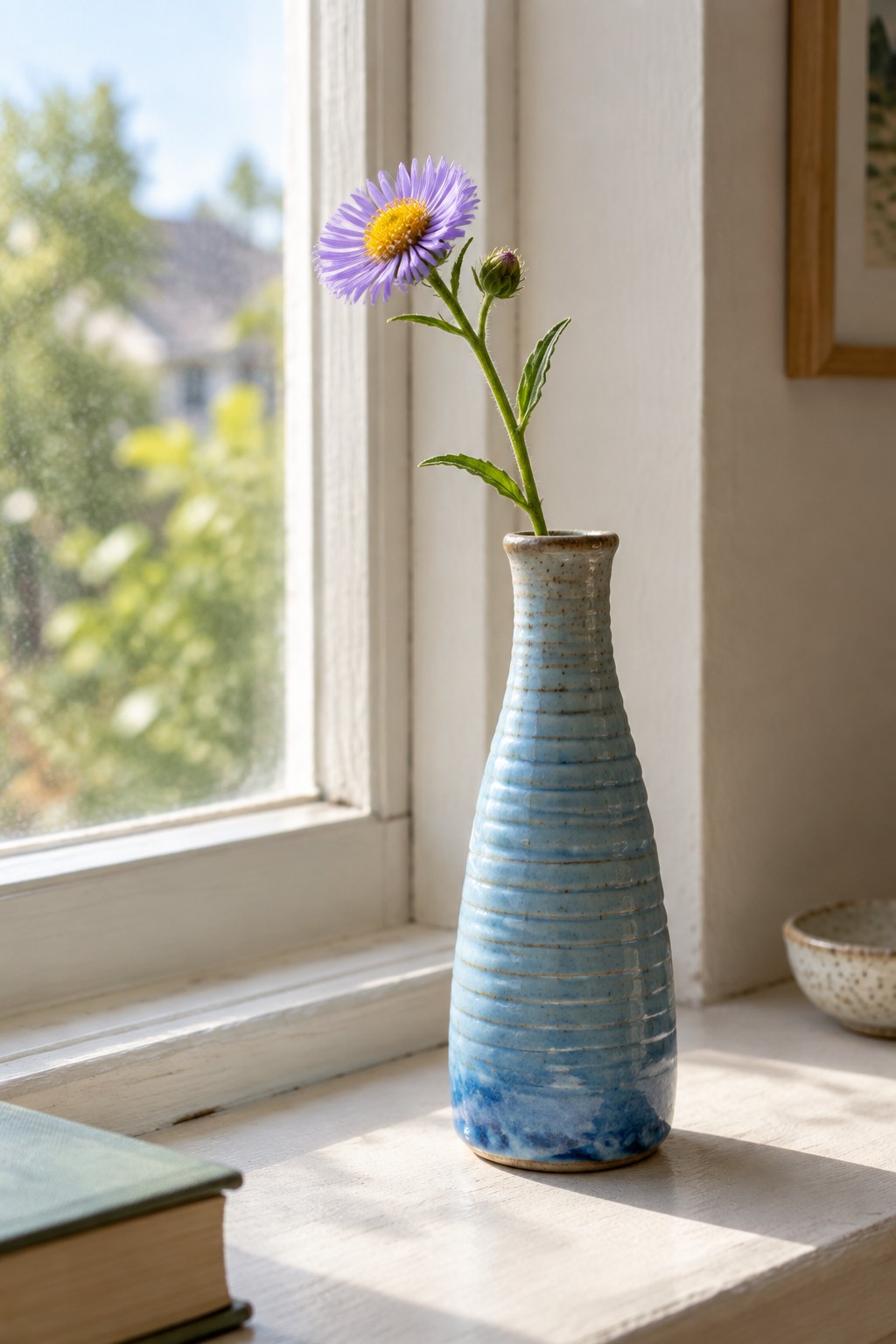
A tall narrow vase built by stacking coils into a tapered shape works well for displaying single stems or small bunches. The visible horizontal ridges from the coils create a simple surface texture that holds glaze nicely and adds interest without extra carving. This project fits the bud vase or small decor category, and the blue glaze that lightens toward the top and pools darker near the base gives it a straightforward handmade finish.
What makes this idea useful is how the slim profile fits on narrow windowsills or shelves without taking much room. You can adapt the same coil build to make shorter versions for desks or slightly wider ones for bigger arrangements. The ridge texture is easy to leave as is after joining the coils, and it photographs well for project sharing. For a gift, this shape pairs with whatever flowers are in season and needs no additional decoration.
Coiled Multi Slot Toothbrush Holder

A coil built toothbrush holder creates four separate openings that keep brushes upright and easy to grab. The stacked coils form horizontal ridges that add texture and strength without extra tools, while the speckled glaze gives the piece an earthy finish that suits most bathroom surfaces. This shape stays compact on a counter or windowsill yet holds several brushes at once.
What makes this idea useful is how the coil method lets you control both height and the number of slots with one simple technique. You could shrink it to two openings for a smaller bathroom or widen the base to add a soap rest on the side. The same ridges and glaze approach would work for a desk pencil cup or kitchen utensil holder with minor size changes. For a gift this stays practical and uses less clay than a solid form.
Coiled Soap Dish with Drainage Ridges
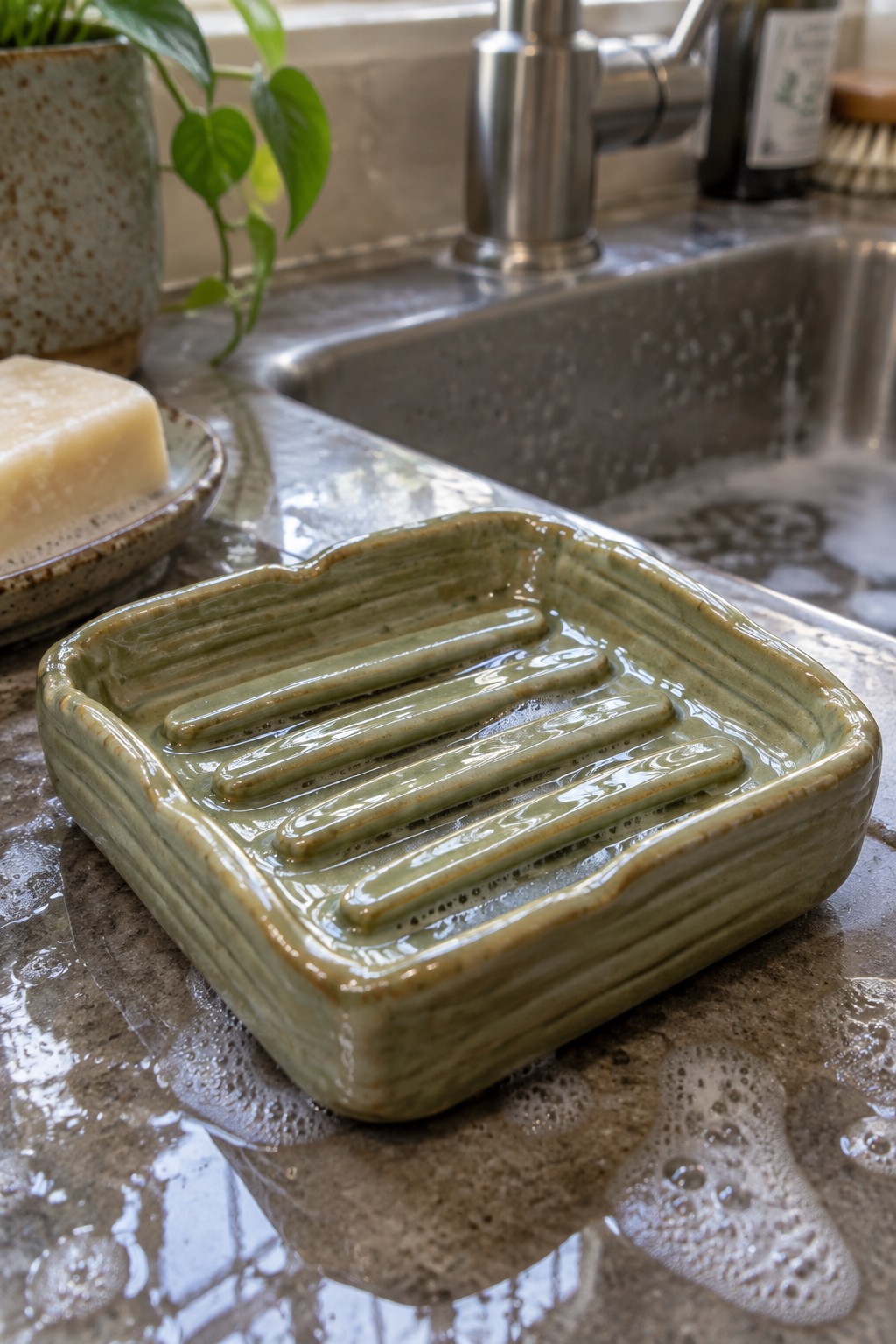
A shallow square tray built from coils makes a practical soap dish for the kitchen or bath. Parallel raised coils run across the base to create channels that let water drain away from the bar. The earthy green glaze and simple rim shape keep the focus on the function while still looking finished on a countertop.
What makes this idea useful is how the ridges directly solve the soggy soap problem without extra parts. You can stretch the same coil layout into a longer rectangle for a double sink or swap the glaze color to match your tiles. For a gift, this shape uses little clay yet looks complete. The compact size also makes it easy to batch out several at once.
Coil-Built Bird Figurine

A small bird figurine built from coils creates a compact sculptural form that works as a simple tabletop or shelf accent. The speckled clay body keeps the shape light while the blue brushwork on the wings adds color without requiring complex carving or extra pieces. This fits the decor object category because the rounded, low-profile shape stays stable and the minimal painted details keep the focus on the handmade form.
What makes this idea useful is how easily the same bird silhouette can be lengthened or shortened to change the stance. You could adapt the wing painting into stripes or dots for a different look or build a second version with a small base to hold a tea light. The small scale means it uses little clay and still reads clearly from a distance, which helps it stand out in a grid of similar projects on Pinterest. For a desk or nightstand, this shape takes up little space while giving you a finished piece in one or two sessions.
Spiral Coil Coasters
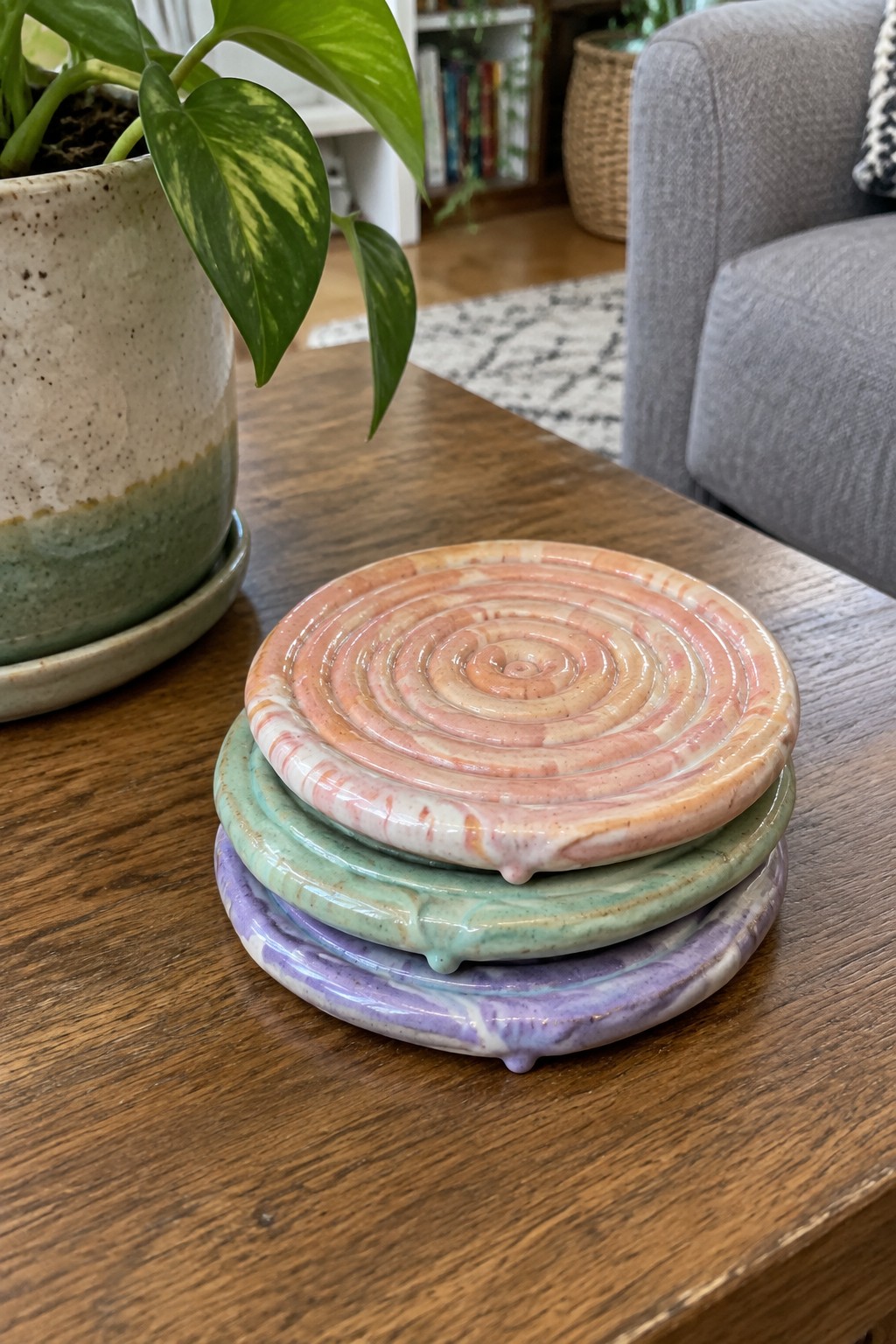
Coil-built coasters use ropes of clay arranged in a continuous spiral to create flat, round shapes that protect surfaces from cups or small pots. The coils stay visible after glazing, giving each piece a clear handmade texture and a slightly raised surface pattern. Soft marbled glazes in peach, mint green, and lavender let the spiral lines show through while adding color variation across a matching set. This keeps the project simple and repeatable without needing molds or wheels.
What makes this idea useful is how quickly the same coil layout can be scaled up or down for different sizes. You can make a full set in one session by varying only the glaze colors, which helps them look coordinated on a table. For a gift, something like this works well because the pieces stack flat and travel easily. The same spiral technique also adapts directly to small trivets or round soap dishes with almost no change in the building steps.
Coil Built Creamer with Simple Ridges
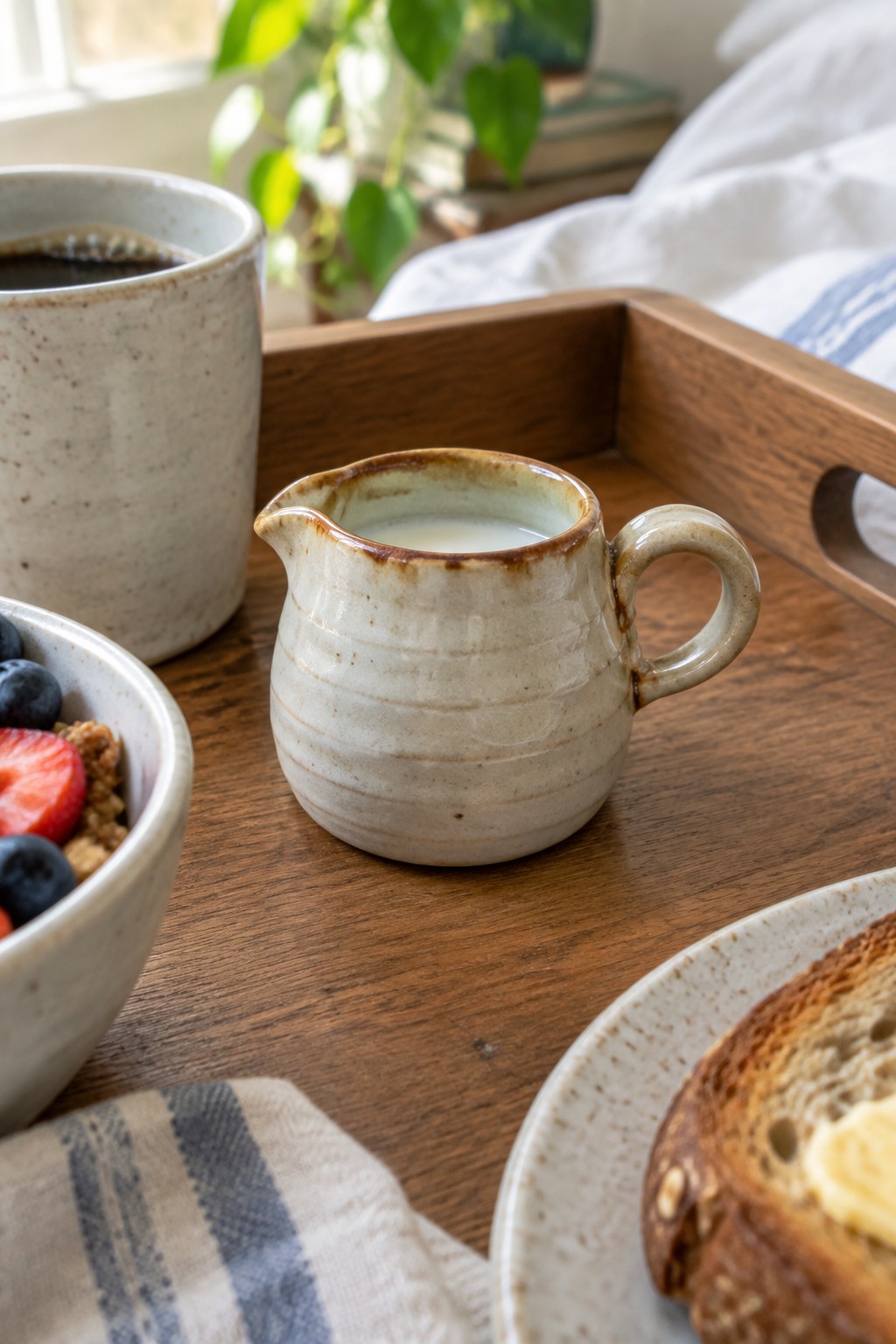
A small creamer pitcher built from coils gives you a compact kitchen piece with even walls and a natural place for a spout and handle. The horizontal ridges left from the coils add subtle texture that shows through a light speckled glaze. This shape stays practical for pouring milk or cream while keeping the overall form small enough to sit on a tray or table without crowding other items.
What makes this idea useful is how the same coil construction can be adjusted for a taller version or shortened into a sugar bowl. The ridges give you an easy surface detail that works with most glazes, so you can change the color without altering the build. In a kitchen setting the small scale keeps it functional for daily use, and the same basic form could be reworked into a small vase or desk holder if you want to try the method again.
Coil-Built Wall Pocket Planter
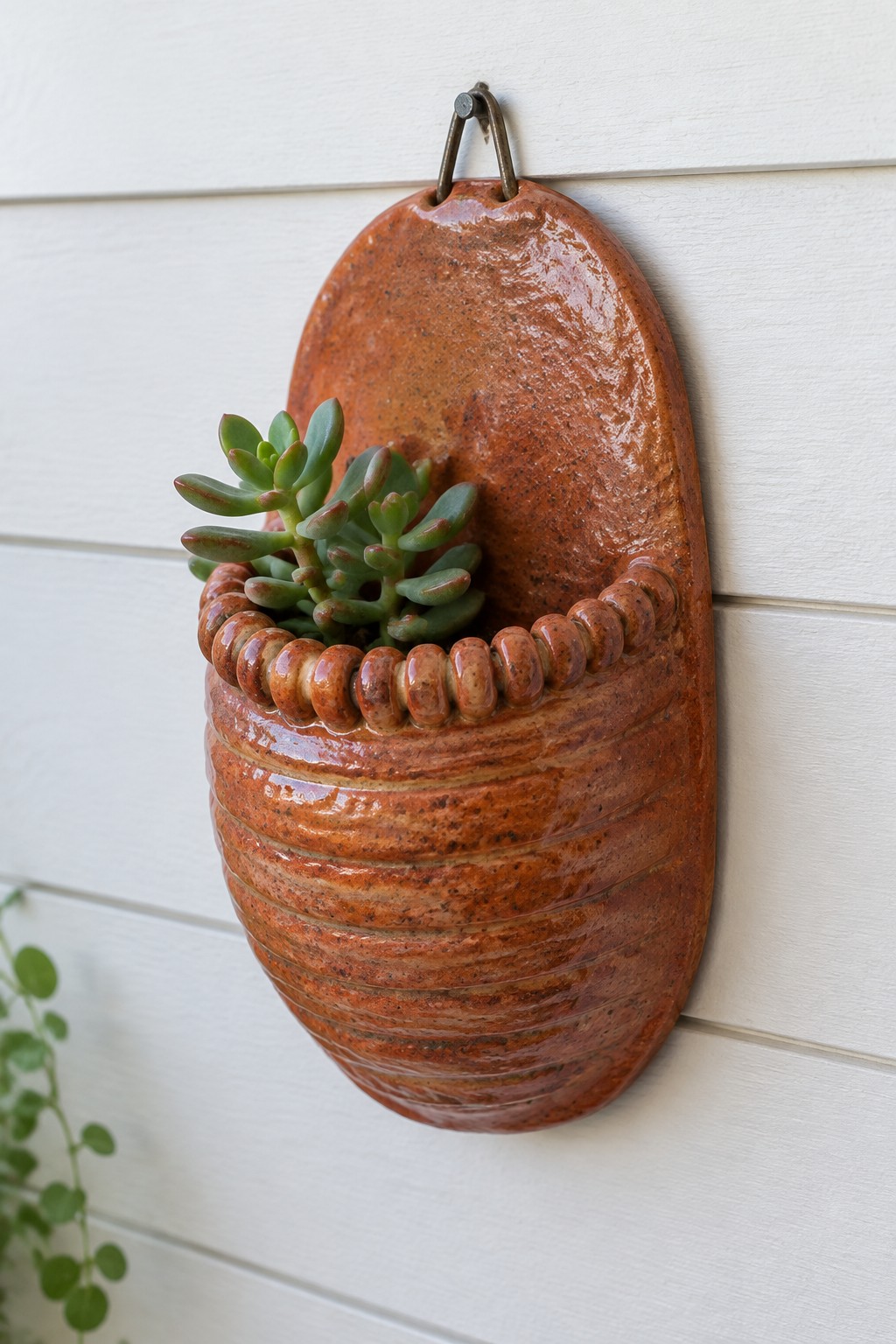
A wall pocket planter built with coils creates a compact planting space that hangs flat against any surface. The oval form uses stacked horizontal coils to form both the back panel and the deep pocket, while an added row of small coils along the opening gives the rim extra strength and visual weight. A simple red-brown glaze brings out the ridges without covering the texture, and the metal loop at the top makes hanging straightforward. This approach fits the coil method well because the entire piece can be assembled from ropes of clay without needing a wheel or molds.
What makes this idea useful is how the pocket shape turns unused wall space into room for succulents or small herbs in kitchens, balconies, or entryways. You can change the width of the coils or skip the beaded rim for a quicker version while keeping the same overall form. The design also adapts easily to different sizes, so the same pattern works for one plant or a row of several pockets. In a small apartment, a piece like this keeps plants off counters and still shows the coil texture clearly.
Double Coil Bowls Joined Side by Side
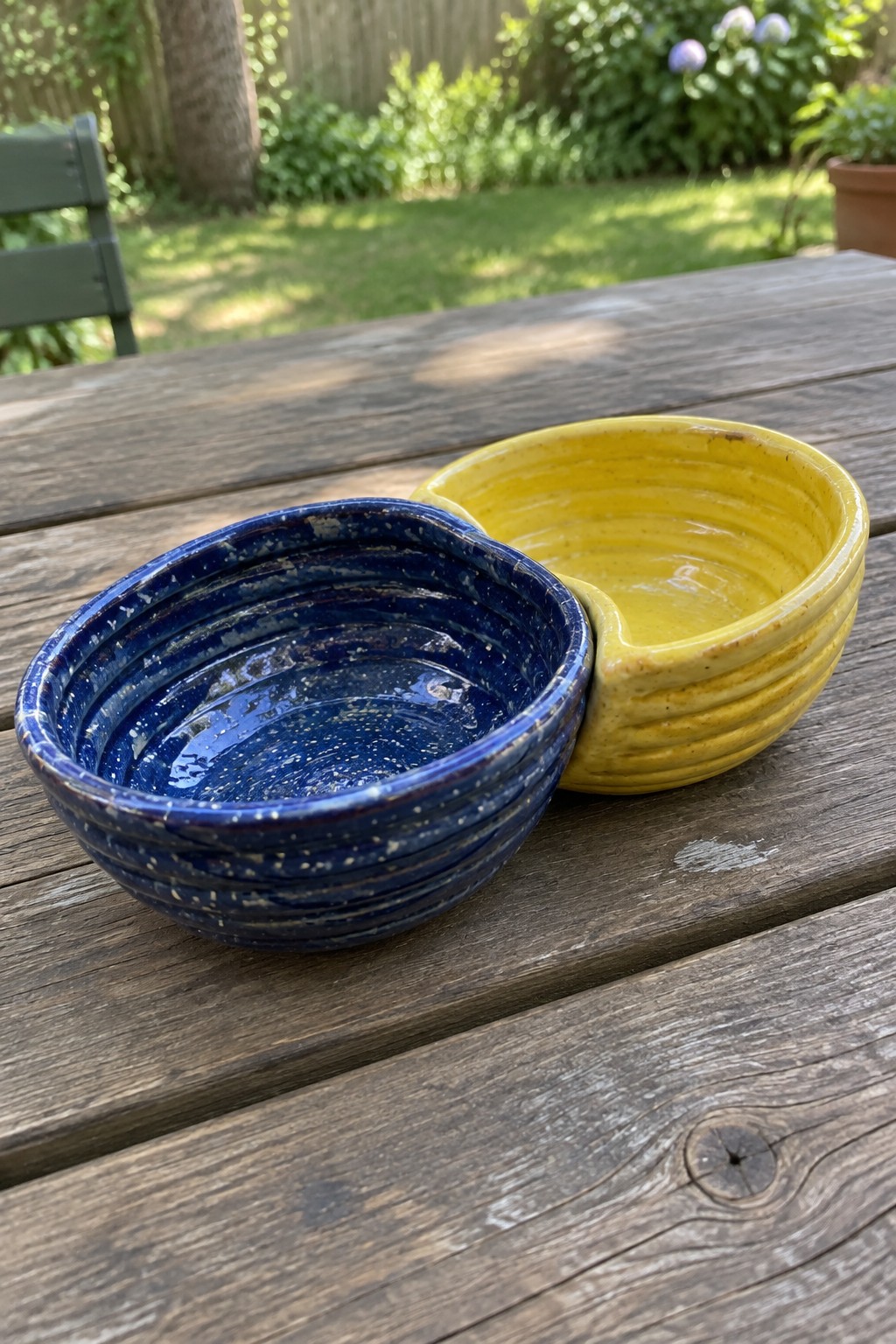
Two small bowls built together with coils create a single divided dish that keeps two foods separate without extra plates. The coils form even horizontal ridges that add texture and help the glaze pool slightly for depth. One section uses a speckled blue glaze while the other uses yellow, so each side stands out clearly during use. This shape fits the kitchen item category and works as a compact server for dips, snacks, or sauces.
What makes this idea useful is that the joined form stays stable on a table and takes up less space than two loose bowls. You can adapt the same coil layout to change the angle between the bowls or add a third section for more options. The two-tone glaze approach helps the piece read as intentional rather than random, which makes it easier to match with existing dinnerware. In a kitchen, this kind of piece keeps chips and salsa or hummus and vegetables organized in one spot.
Citrus Slice Dishes
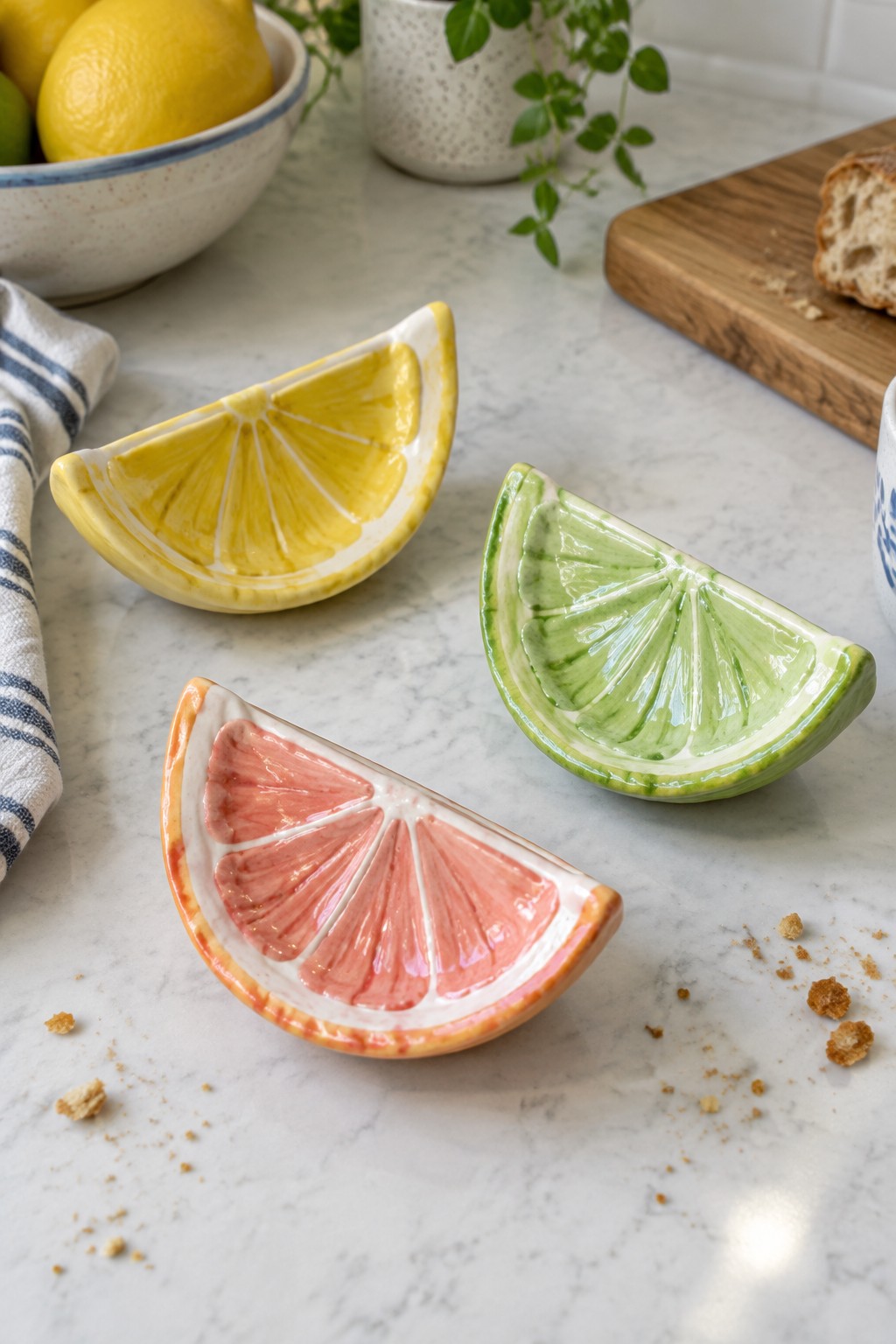
These small wedge-shaped dishes are built to look like slices of lemon, lime, and grapefruit, complete with curved outer edges and simple interior lines that suggest fruit segments. Each piece is finished in a single matching glaze color with a white rim that emphasizes the slice shape. The form works as a compact bowl or tray that sits flat on a surface while the pointed end gives it a distinct profile. This approach fits into the category of kitchen items or small holders that double as decor.
What makes this idea useful is how the wedge shape naturally creates a stable base with an interesting outline. In a kitchen, these pieces work well for holding garnishes, salt, or small snacks during prep. You could adapt the same form by changing the glaze colors or skipping the segment lines for a cleaner look. The small size also makes it easy to turn the idea into ring dishes or desk organizers by adjusting the depth slightly.
Coil-Built Egg Cup for Breakfast Use

A coil-built egg cup creates a small, footed holder that keeps a soft-boiled egg stable on the table. Horizontal coils form the body and add ridges that give texture and a secure grip when you lift the cup. The speckled glaze on the stoneware surface resists stains and fits daily kitchen use. This kitchen item pairs naturally with toast or coffee and takes up little space on a tray or plate.
What makes this idea useful is how the coil method lets you control the rim width and base height to match standard eggs without extra forms. You can make a matching set in one glaze batch for regular breakfasts or scale the same shape down for salt dishes. The ridges from the coils catch light and add detail while keeping the build straightforward. For a gift, pair two cups with a small loaf plate in the same finish.
Coil-Built Chopstick Rests
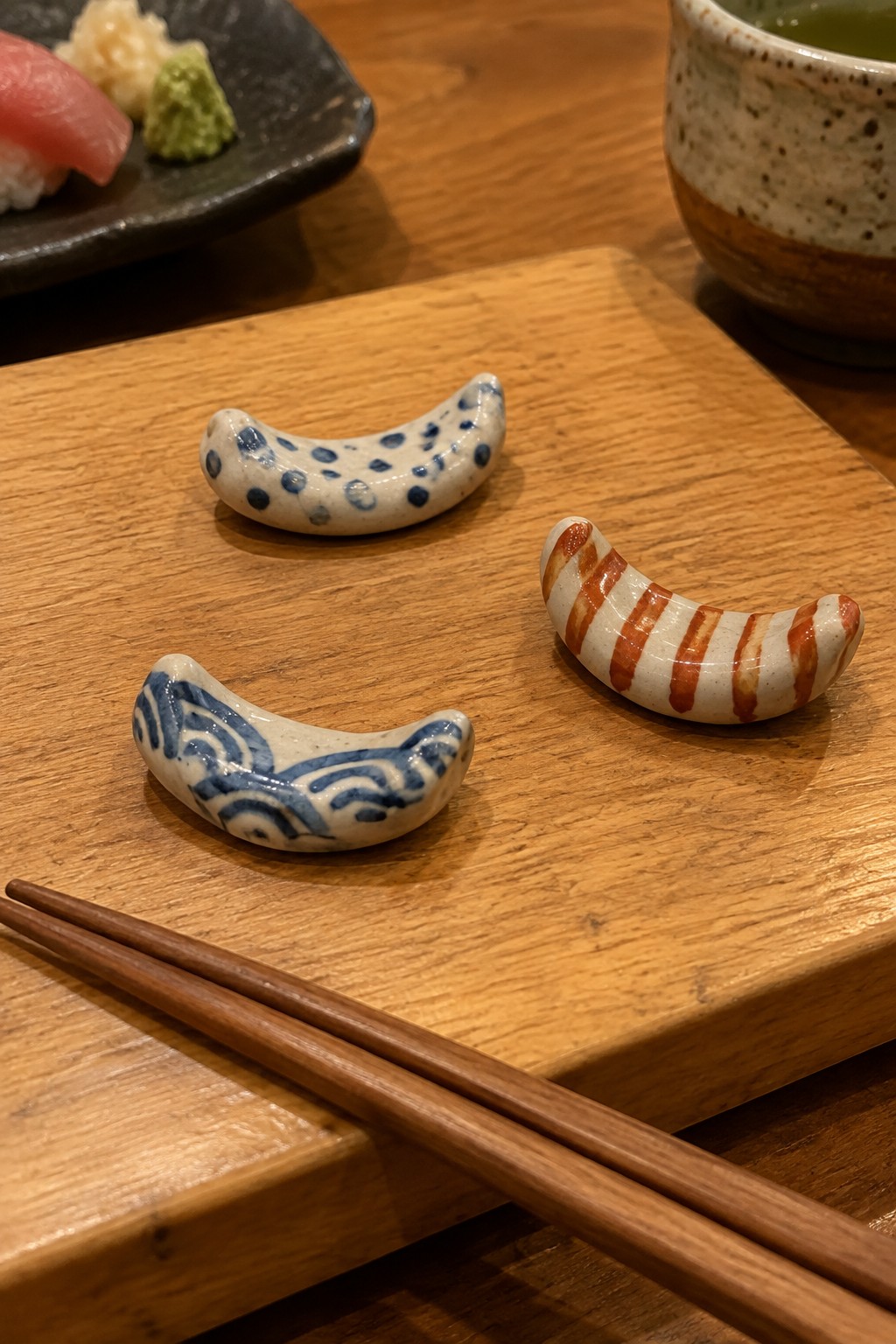
Small crescent-shaped rests made from coiled clay give chopsticks a stable place to rest during meals. The curved form keeps the sticks from rolling off the table while the flat base sits steady on any surface. Simple underglaze patterns like dots, waves, or stripes add color without extra steps, and the compact size makes them quick to form and fire.
What makes this idea useful is how easily the same coil shape works for a whole set. You can vary the surface patterns across four or six pieces so each person at the table gets a slightly different one. The small scale also means leftover clay from a larger project can be used up without waste. For a different use, the same curved form can be lengthened slightly into a spoon rest or shortened into a small jewelry holder for rings.
Coiled Sponge Holder with Drainage Slots

A coil-built ceramic sponge holder keeps a kitchen sponge raised and ventilated so it dries faster between uses. The oval form comes from stacking and smoothing coils into a shallow bowl shape, with three small holes cut into the base to let water drain straight into the sink. The ridged exterior texture is a natural result of the coil construction, and a simple green glaze highlights those lines without covering them completely. This turns a basic kitchen need into a sturdy, reusable item that fits the coil method well.
The shape does a lot of the work here. You can make the same holder in a smaller size for bar soap or stretch the oval into a longer tray for scrub brushes. In a kitchen, this kind of piece stops sponges from sitting in pooled water and getting musty. The drainage holes are easy to add before the final smoothing stage, so the idea stays simple while still feeling finished.
Coiled Yarn Bowl with Side Notch for Yarn Control
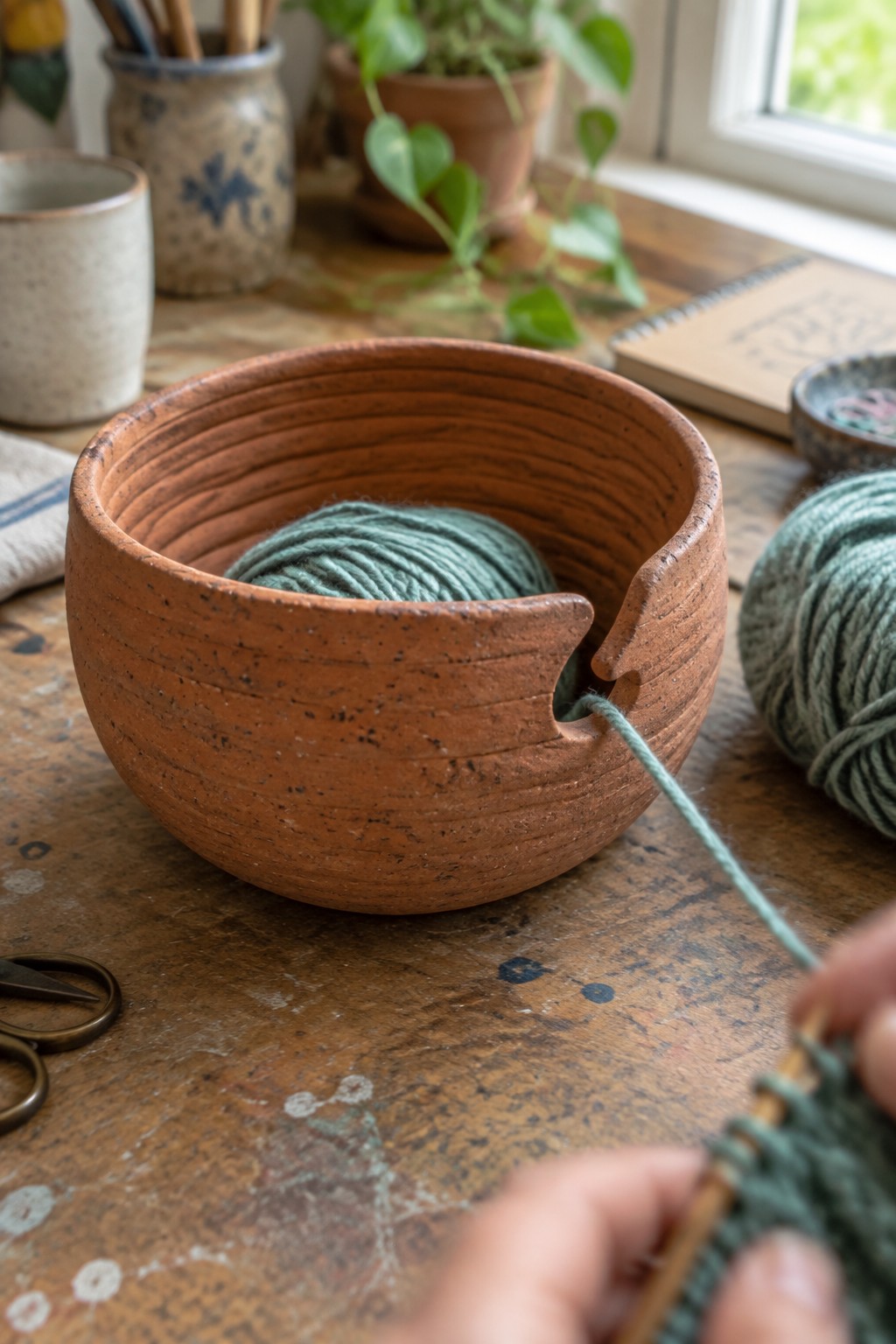
A coil-built yarn bowl gives knitters and crocheters a simple way to keep a ball of yarn contained while working. The thick coils create a sturdy, rounded form with a deep well that holds the yarn, and a cut notch on the rim lets the strand feed out smoothly without the ball rolling across the table. This design turns a basic bowl shape into a dedicated craft tool that works on a desk, lap tray, or studio table.
The notch can be sized to match different yarn thicknesses, and the same coil method can be used to make smaller versions for thread or larger ones for bulky skeins. It fits easily into a craft space or living room without taking up much room, and the handmade surface holds up to daily use better than plastic containers. For a gift, scale the bowl to fit a standard skein and add a second notch on the opposite side for two-color projects.
Coiled Cone Ring Holder

A coil-built ring cone creates a tall tapered form that holds rings stacked along its length. The pointed top keeps smaller bands from sliding off while the wider base gives stability on a flat surface. Horizontal ridges left from the coiling process add texture that shows through the streaked purple and white glaze. This simple shape belongs in the ring holder category and doubles as a small decorative object for a dresser or vanity.
The small footprint makes it practical for a bathroom counter or bedside table where space is limited. You can shorten the cone or widen the base slightly to hold more rings or bracelets without changing the overall method. A marbled glaze covers minor coil lines and seam marks so the piece still looks finished even if your coils are not perfectly even. The same tapered form can be reworked into a shorter bud vase or a candle holder by adjusting the height and opening at the top.
Leaf Incense Holder

A narrow leaf-shaped tray made from coils serves as a simple incense holder. The clay is rolled into a long base with one end pinched into a small upright section that supports the stick. Raised lines pressed into the surface create a vein pattern, and a dark green glaze brings out the texture while keeping the form clean. The shallow curve of the tray contains ash without needing extra parts.
What makes this idea useful is that the same coiled leaf can be shortened for a desk or lengthened to hold the stick at a lower angle. You can swap the glaze for matte brown or keep the veins unglazed for contrast. The shape also works as a small catch-all for matches or a single ring when not in use. For Pinterest, the leaf outline stands out because it reads as both functional and plant-inspired without extra decoration.
Coiled Sunburst Square Tile

A square tile built from coils creates a sunburst design with a tight spiral at the center that opens into straight rays reaching the edges. Alternating brown and blue glaze on the rays gives the pattern clear contrast without extra decoration. The raised coils define both the spiral and the radiating lines in a single construction step. This approach fits the category of simple wall decor that uses the coil method for both structure and surface detail.
What makes this idea useful is that the coil layout does most of the visual work once the basic square is formed. You can scale the same sun pattern down for smaller tiles or change the glaze colors to suit different rooms. A piece like this hangs easily above a desk or near plants and needs no additional hardware beyond a simple wire loop. The design also adapts quickly to a round shape or a version with fewer rays if you want a quicker build.
Cloud-Shaped Jewelry Dish
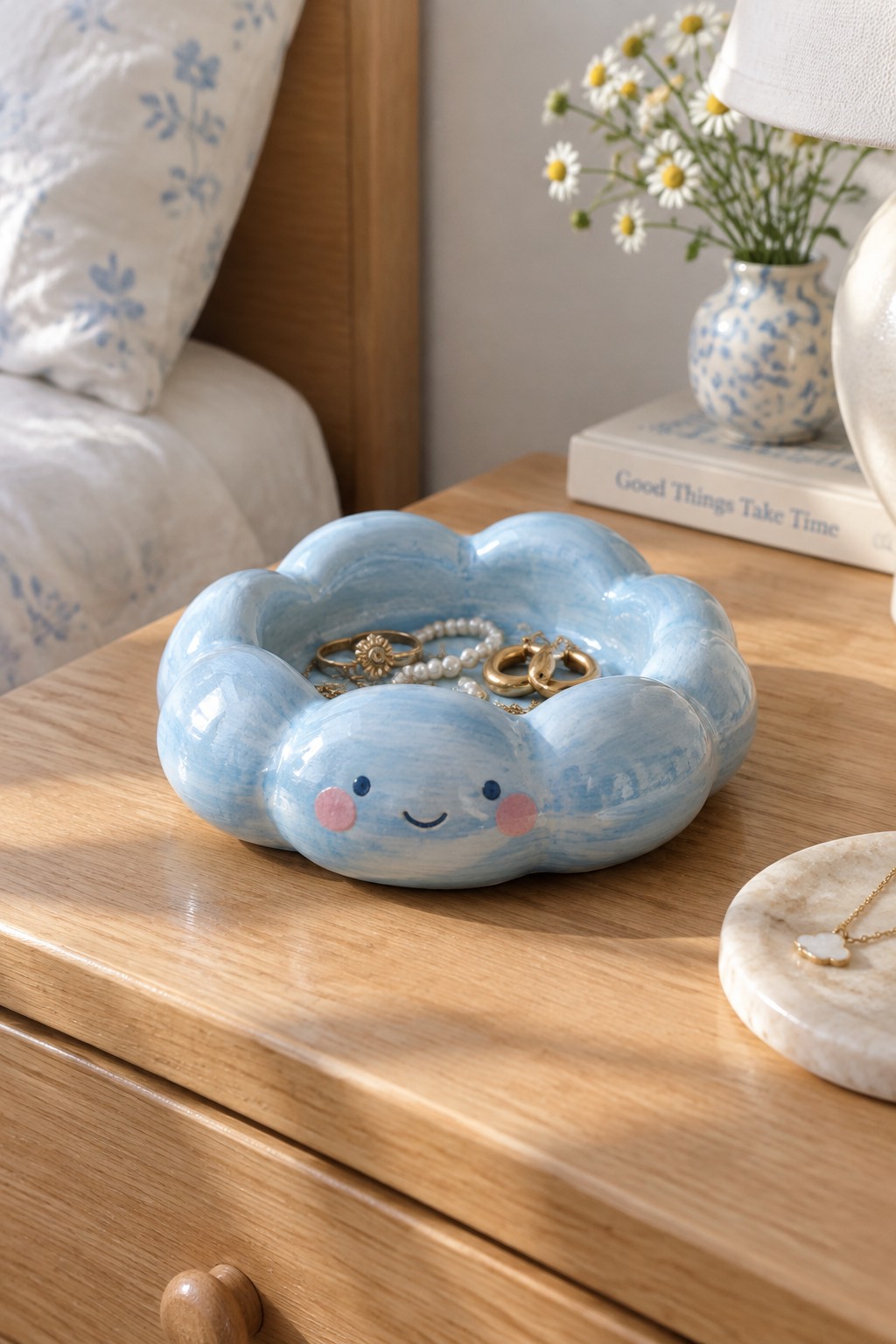
A small cloud-shaped dish built from coils makes a practical ring holder or trinket tray. The coils form the rounded outline and raised edges, then a pale blue glaze covers the surface with minimal painted details added for the face. This keeps the piece shallow enough to sit flat while still holding rings, chains, and small items without them sliding off.
The small scale makes this easy to adapt into other simple shapes like a sun or leaf if you want variety in a set. A piece like this works especially well on a nightstand or dresser because it takes up little room yet keeps everyday jewelry in one spot. You could swap the glaze color or skip the face to make versions that fit different color schemes or gift them with a few pieces of jewelry tucked inside.
Frequently Asked Questions
1. What type of clay works best for beginners trying coil method projects? Stoneware or earthenware clay with grog added is ideal because it provides strength and reduces cracking during drying. Start with a 5 to 10 pound bag of moist clay that feels pliable but not sticky. Knead it well to remove air pockets before rolling coils. This choice supports the 25 simple ideas like bowls and vases without needing advanced equipment.
2. How do I make coils of even thickness for consistent results? Roll clay between your palms or on a porous surface like canvas while applying steady pressure. Aim for coils about as thick as your finger for most projects or thinner for delicate items. Keep a ruler nearby to check diameters and work in small batches to prevent drying out. Even coils help the finished pieces from the list hold their shape better during assembly.
3. What is the best way to join coils so they do not separate later? Score the edges of each coil and the surface below with a tool like a fork then apply slip made from clay and water. Press the coils together firmly and smooth the inside and outside joints with your fingers or a rib tool. This step is essential for all handbuilt items to create strong walls that survive drying and firing.
4. How long should coiled pottery dry before it can be fired? Allow pieces to dry slowly for one to two weeks in a room with moderate humidity and no direct drafts. Check by touching the clay it should feel cool and dry to the touch with no moisture remaining. Slow drying prevents cracks especially on larger items from the 25 ideas and prepares them safely for bisque firing.
5. Can coil built pieces be made functional like cups or plates? Yes many of the simple ideas translate well to functional ware when you add a base and smooth interiors thoroughly. Use food safe glazes after firing and ensure walls are at least a quarter inch thick for durability. Test small prototypes first to confirm they hold liquids without leaking.

Pottery Path is my cozy corner of the internet where I share clay ideas, pottery inspiration, and simple projects you can recreate at home. I love exploring everything from air dry clay to handbuilt pottery to cute minis that brighten your day. My goal is to make clay crafting feel easy, fun, and welcoming for anyone who wants to try it.
You will find beginner friendly tutorials, creative pottery painting ideas, and lots of warm inspiration for slow and happy crafting. If you enjoy hands on creativity, this space will feel like home.