
I started experimenting with coil pots a while ago because they give me room to shape things freely.
Organic forms seem to work well with this method since they do not need perfect symmetry.
I also enjoy pressing in textures from leaves or fabric to make the surface more interesting.
These choices keep the pots looking grounded rather than too polished.
Here are some of the designs I have tried recently.
Spiral Coil Vase with Wavy Texture

Coil construction builds this vase by stacking and pinching clay ropes into a continuous spiral that wraps around the form in uneven bands. The rounded coils create deep grooves that catch glaze and light, turning a basic build method into a sculptural surface. A turquoise and beige glaze settles into the recesses and leaves raised areas lighter, which keeps the organic shape readable even from a distance. This approach fits the vase category but gives it a strong enough profile to work as a standalone decor piece.
The coil lines let you control both height and width in one session without needing molds or wheels. You can loosen or tighten the spiral to make the body bulge more or taper toward the top, which changes how it holds plants or dried stems. The same wrapping pattern works on a shorter, wider base if you want a low bowl or catch-all instead. A piece like this stands out in photos because the horizontal movement contrasts with the usual smooth vertical shapes in most pottery collections.
Coil Planter with Horizontal Ridges

A coil-built ceramic planter with a rounded form and evenly spaced horizontal ridges gives houseplants a sturdy base that still feels organic. The green glaze settles into the grooves to emphasize the texture while keeping the surface simple. This approach works because the ridges add structure without complicating the shape, making it a practical option for plants that need decent soil depth.
What makes this idea useful is how the ridged surface catches light and pairs with trailing leaves. You can adapt the same coil method by widening or narrowing the grooves or switching to a matte glaze for a softer look. A piece like this works especially well on shelves where vines can hang down naturally. For a different version, build a taller version for floor plants or shorten the height for a desk-sized pot.
Coiled Handle Mug with Ridges and Mixed Glaze

A coil-built mug stands out when the handle is formed from a single spiraled rope of clay that attaches at two points on the body. The main form carries horizontal ridges left by hand shaping or scraping, which catch glaze unevenly and create a layered brown surface with small patches of green near the handle joints. This combination keeps the piece firmly in the mug category while making texture the main design feature rather than smooth walls or painted patterns.
The shape does a lot of the work here because the coiled handle gives a secure grip and a clear focal point that is easy to repeat on future pieces. You can scale the same coil size down for an espresso cup or stretch it for a larger pour-over vessel without changing the technique. The ridged surface helps hide minor unevenness, so the idea works for anyone who wants visible handmade marks rather than a polished finish. In a kitchen or on a desk, this mug style holds up well to daily use while still looking distinct from wheel-thrown work in photos.
Layered Coil Bowl with Wavy Rim

A coil-built bowl with a freeform scalloped rim gives you an easy way to create an organic shape without needing molds or wheels. The exterior stacks coils in uneven layers to build a rough, bark-like texture, while the interior gets a smooth glossy pink glaze that highlights the open form. This approach fits the bowl category and works as a decorative piece for holding fruit, keys, or small items on a surface.
The stacked coils do most of the visual work by adding weight and interest to the sides without extra carving. You could scale the same rim shape down for ring dishes or widen it for a low planter. In a kitchen or entryway, the contrast between the textured outside and the colored inside makes the bowl stand out from standard round forms. The basic coil method also lets you swap the pink glaze for other colors or leave the interior matte if you want a different look.
Pressed Leaf Wall Plaque

A flat clay disc works as a wall hanging when real leaves are pressed directly into the surface to capture fine vein details and edges. The round shape keeps the focus on the organic texture while a partial white glaze creates contrast against the exposed clay body. This approach turns a simple slab into a decor object that emphasizes natural patterns without needing complex construction.
What makes this idea useful is how easily the same leaf imprint method can be scaled up or down for different wall spaces. The split glaze treatment lets you experiment with coverage without committing to a full coat, and the hanging cord adds a quick way to display it. You could adapt the concept into smaller versions for shelves or try different leaf types to match a room’s plants. A piece like this stands out in a feed because the texture reads clearly even in a thumbnail.
Coiled Clay Tea Light Holder with Drip Glaze

This tea light holder is built from stacked clay coils that create a low, rounded bowl shape. The coils are left visible on the exterior to emphasize the handmade construction, while an amber glaze covers the interior and drips down one side over the brown clay body. The form stays compact and open at the top so a standard tea light sits securely inside without any added hardware.
What makes this idea useful is how the coil technique builds a stable, heat-resistant base in just a few steps. The small scale fits easily on a bedside table or desk corner where you want a simple light source. You could rework the same stacked coils into a slightly wider ring dish by flattening the top rim or turn it into a tiny succulent planter by leaving the interior unglazed.
Coiled Fiddlehead Tray for Kitchen Utensils
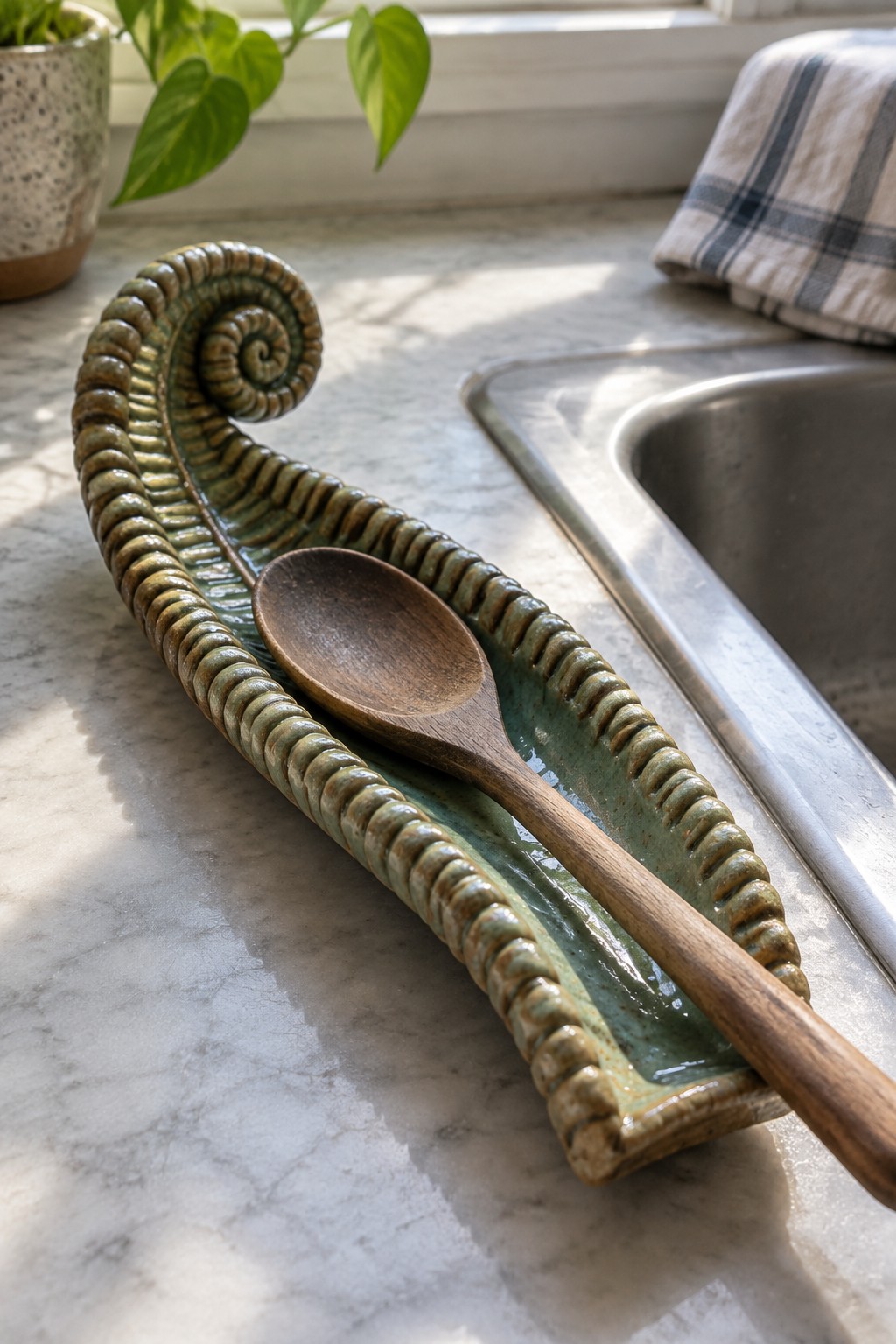
A long, narrow ceramic tray built around a coiled spiral at one end serves as a practical holder for spoons, spatulas, or other kitchen tools. The ridged texture along the outer edge mimics a fern frond while the smooth glazed channel inside keeps utensils from sliding. Green glaze in layered tones gives the piece an earthy surface that reads as natural rather than polished. This design falls into the category of functional kitchen pottery that stays useful on a countertop.
The elongated shape fits narrow spaces between a sink and wall without taking over the workspace. You could shrink the same coil pattern into a shorter version for a desk or turn the spiral end into a small ring dish. Keeping the ridged detail only on the outer curve while leaving the interior plain makes the form easier to throw or hand-build on a second attempt. The contrast between the textured edge and simple interior also helps the piece stand out in photos without extra styling.
Coiled Ring Dish with Pooled Glaze Texture

A small coil-built bowl works well as a ring dish because the spiraling interior ridges naturally guide glaze into the grooves during firing. The blue-green glaze settles unevenly along those coils to emphasize the texture without extra carving or stamping. This keeps the form simple while still giving the surface visual interest that stands out next to plain wood or neutral linens.
The small scale means you can finish the piece quickly and test different glaze combinations without using much material. You could widen the same coil layout into a soap dish or shorten the walls for a flatter tray. The ridges do most of the decorative work, so the idea adapts easily if you want to try matte glazes or single-color versions for a more understated look.
Flower Shaped Ring Dish with Painted Daisies

A small ceramic ring dish built in a multi-lobed flower form gives you a practical holder that still reads as an organic object. The scalloped rim creates distinct sections that keep rings and small items separated while the interior carries a central daisy with smaller blooms and leaves brushed around it. A warm beige clay body and soft glaze let the yellow and green painting stay visible without looking busy. This approach works as a simple decorative holder that combines storage with a clear natural shape.
What makes this idea useful is the way the lobed edges do the work of containing small objects without needing extra height. You could rework the same outline into a soap rest for a bathroom or stretch the pattern across a larger tray for keys and mail. The daisy layout is straightforward to change by swapping in different flower colors or leaf styles to match a specific room. In a bedroom this kind of piece keeps jewelry visible and contained while taking up very little surface space.
Coiled Soap Dish with Wavy Organic Rim

A coil-built soap dish makes a practical bathroom item when the coils form both the base and the sides in one continuous build. Parallel coils across the bottom create built-in drainage gaps so the soap stays drier, while the outer walls stack in loose, irregular waves that follow the clay’s movement. The speckled clay surface adds subtle texture without extra carving or stamping. This keeps the piece simple to build yet clearly handmade.
What makes this idea useful is how the wavy rim can be stretched or pinched to fit different counter spaces or soap sizes. You could shorten the overall length for a compact version or swap in a smoother clay if you want cleaner lines. In a bathroom, the drainage ridges solve a common problem with bar soap, and the same coil layout could be adapted into a small catchall tray for jewelry or keys. The irregular outline also photographs well for Pinterest because it stands out against typical straight-edged ceramic dishes.
Coiled Ceramic Toothbrush Holder with Scattered Dots

A coil-built ceramic holder creates a compact bathroom caddy that keeps toothbrushes upright and within reach. The stacked coils give the form clear horizontal lines while the loose arrangement of blue, orange, and yellow dots adds color across the surface without needing precise placement. This style works as a simple bathroom item that stays functional while showing the handmade clay construction.
What makes this idea useful is how the coil texture can be tightened or loosened depending on the tools available. The same shape scales easily into a shorter pencil cup or a taller kitchen utensil holder by adjusting the number of coils. The dot pattern can be changed to match other colors in the room, and the narrow opening keeps the piece from taking up much counter space.
Stacked Coil Yarn Bowl with Feeding Notch

A coil-built yarn bowl turns a basic storage form into a working tool for knitters. The visible stacked coils create both the bowl walls and a textured exterior that holds up well under a speckled, matte glaze. A carved notch in the rim guides the yarn strand outward so it unwinds cleanly from the ball inside. The rounded shape and sturdy walls keep larger skeins from tipping or rolling away during use.
What makes this idea useful is the notch, which can be added to any coil bowl without changing the overall build. The same stacked-coil method works for smaller versions that hold embroidery thread or for wider bowls sized for chunky yarns. Place one on a side table or in a basket of supplies so it stays within reach while you work. The earthy finish and simple profile also let the bowl double as a quiet decor piece when not in use.
Coiled Creamer with Horizontal Ridges and Soft Green Glaze

A coil-built pitcher makes a practical small creamer or milk jug for daily table use. The visible horizontal ridges from the coils create a consistent texture that helps the glaze pool and run in places. The pale green glaze with its drips keeps the surface lively while the rounded body and simple handle stay easy to form and lift. This approach fits the kitchen item category and shows how coil construction itself can supply the main decorative element.
The compact size works well for scaling up or down depending on whether you want a syrup server or a small vase. You could vary the coil spacing or thickness to control how much the glaze drips and where it settles. In a kitchen this shape pairs easily with other handmade bowls and plates without needing extra decoration. The same ridge-and-drip idea translates quickly to a set of matching mugs or a small butter dish if you want to repeat the texture across multiple pieces.
Coil-Built Utensil Holder with Horizontal Ridges

A coil-built ceramic cylinder uses stacked coils to form a tall, narrow holder with pronounced horizontal ridges running the full height. The piece functions as a kitchen utensil caddy, keeping spoons, spatulas, and forks upright and accessible. The glaze combines warm browns and muted oranges that pool along the ridges, emphasizing the coil texture without covering it completely. This approach belongs to the functional kitchen storage category where surface texture does the main visual work.
What makes this idea useful is the way the ridges add grip and visual structure while the tall shape keeps multiple tools organized in one spot. In a kitchen, the form fits neatly on a counter near the stove or prep area and pairs naturally with wooden utensils. You could adapt the same coil method to a shorter, wider version for a bathroom or desk, or switch the glaze to cooler tones for a different room. The strong horizontal lines also make the holder stand out in photos for Pinterest boards focused on textured kitchen pieces.
Coiled Seashell Salt Cellar

A small coil-built salt cellar takes the form of a spiraling seashell. The potter stacked and smoothed coils to form raised ridges that follow the shell curves, then applied a speckled blue-gray glaze across the surface. The lid rests beside the open container, which holds coarse salt ready for table use. This turns a simple kitchen holder into a sculptural piece by copying the layered structure of a real shell.
The compact size lets it sit on a countertop or dining table without crowding the space. You could repeat the same coiling pattern to make a matching set of small spice jars or a pepper shaker with similar ridges. The speckled glaze helps disguise small surface bumps, so the form stays the focus even if your coils are not perfectly even. For a gift, this shape gives you a functional kitchen item that still reads as handmade pottery rather than a plain container.
Coiled Branch Incense Tray

A long, narrow tray built from coils takes on the shape of a fallen branch or log, with a shallow channel running through the center to hold an incense stick. The exterior shows pronounced ridges and uneven texture that read as wood grain once the dark glaze pools in the crevices. The form stays low and linear, so it sits flat on a table without tipping.
This shape keeps ash contained along its length, which makes it practical for a coffee table or desk where you burn incense regularly. You could shorten the coils to make a smaller version for a nightstand or widen the channel slightly for thicker sticks. The same textured coiling approach works for other narrow objects like a chopstick rest or a linear plant tag holder.
Coil-Built Domed Cloche with Horizontal Ridges

A coil-built covered dish uses stacked coils to create a wide domed lid that rests on a shallow matching base. The exposed coil lines form consistent horizontal ridges that add texture and help the glaze pool in subtle stripes of beige, brown, and gray. An earthy matte glaze with slight sheen variation emphasizes the layered construction rather than hiding it. This approach works well for kitchenware where the coil ridges serve as both the building method and the finished surface pattern.
What makes this idea useful is how the same coil spacing and domed profile can be adjusted to make smaller versions for cheese, pastries, or butter. The wide base and fitted lid keep the piece functional on a counter while the ridged texture stands out against smooth wood or stone surfaces. You could simplify the coil count for faster builds or vary the glaze colors to match different kitchen styles. In a kitchen setting, this shape offers a practical covered server that still reads as handmade pottery rather than standard dishware.
Organic Openwork Coil Candle Holder

This coil-built candle holder uses looped and twisted clay strands to create an irregular open cage that surrounds a tealight. The design leaves multiple gaps so light passes through the structure in different directions. A mottled green glaze with brown undertones emphasizes the rough, root-like texture and makes the handmade form stand out. It functions as a bathroom or shelf accent that doubles as both light source and sculptural object.
The small scale keeps it practical for tight counters or grouped displays with other items. You could rework the same coil method into a taller version for a pillar candle or simplify the loops for a quicker project. Changing the glaze to earth tones or matte black would shift the look for different rooms without changing the structure. The open form also gives it an edge on Pinterest because the light pattern creates visual interest that solid pieces lack.
Coiled Snail Figurine for Terracotta Trays

A coil-built snail works as a small decor object by turning basic rope coils into a spiraled shell with a dotted surface texture that contrasts against the smoother body. The head uses two short stalks topped with simple round eyes and a curved line for the mouth, keeping the overall form compact enough to rest on a shallow tray. This approach fits the figurine category and pairs naturally with other unglazed or low-fired clay pieces like plant pots and saucers.
What makes this idea useful is how the snail can sit directly on any wide plant tray or saucer to add interest without crowding the space. You could rework the same coil method into a larger version for a different tray size or swap the dotted texture for shallow carved lines to match other pottery in the same display. For a gift this shape needs minimal tools and materials while still looking intentional next to real plants.
Organic Scalloped Sponge Holder with Ridges

A shallow coil-built bowl with an uneven scalloped rim makes a simple sponge holder for the kitchen sink area. The interior has several raised ridges that keep the sponge elevated, and the green glaze shifts in tone across the surface to highlight the handmade form. This approach turns a basic kitchen need into a piece that echoes natural shapes without extra decoration.
The ridges do the main job by letting water drain and air reach the sponge so it stays less soggy. You could scale the same rim style down for a soap dish or stretch the outline into a small tray for scrub brushes. The compact size fits beside most sinks without crowding the counter, and the organic edge gives it enough presence to stay visible when you need it.
Wavy Rim Tray with Pressed Leaf Imprints

A handbuilt ceramic tray with an irregular wavy rim and impressed botanical patterns makes a simple serving piece that highlights texture over color. The oval form stays low and wide so the pressed fern and stem details show clearly across the surface. A soft off-white glaze with darker edges keeps the focus on those natural marks while the handmade shape gives the whole piece movement. This idea sits in the tray category and works as both a kitchen item and a decorative accent.
The shape does a lot of the work here because the ruffled edge turns a basic slab into something that looks finished without extra trimming. You could press different leaves or grasses to change the pattern or scale the same form down for a smaller cheese board. In a kitchen this kind of tray keeps fruit or bread visible while the neutral glaze stays out of the way. The pressed texture also translates well to wall-hung versions if you want to skip the functional side entirely.
Leaf-Shaped Napkin Holder with Vein Texture
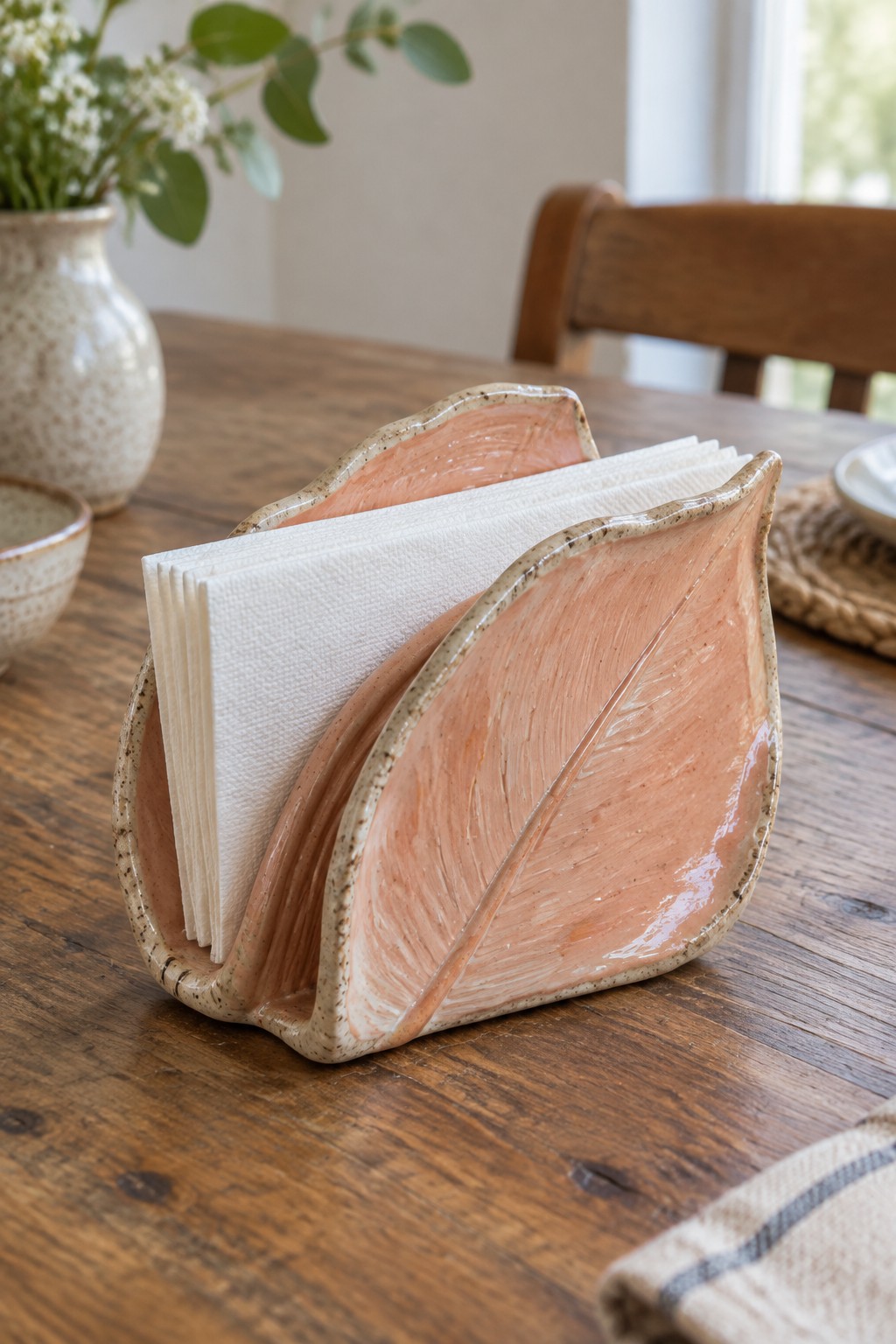
A leaf-shaped napkin holder built from clay uses the natural split of two facing leaves to grip a stack of napkins upright. The design features raised center veins and slightly curled edges that add structure while the soft peach glaze with speckled rims gives the surface a finished, slightly glossy look. This turns a basic table item into a compact kitchen piece that draws from organic forms rather than geometric ones.
The shape does a lot of the work here by creating built-in sides that hold napkins without extra supports or hardware. You could scale the same leaf vein pattern down for a business card holder or stretch it wider for a utensil caddy. In a kitchen, this kind of piece works well on a dining table or breakfast bar where the color blends with everyday ceramics. For a gift, the form stands out on Pinterest because it reads as intentional tableware instead of generic storage.
Coiled Pedestal Egg Cup with Horizontal Ridges

An egg cup formed from stacked coils produces a stable pedestal base and a rounded top that holds an egg upright. The visible horizontal ridges come directly from the coiling process and create built-in texture without added carving or stamping. A blue and white marbled glaze pools in the grooves and emphasizes the rounded, organic shape of the piece. This kitchen holder stays small in scale and uses the coil method as the main design feature.
What makes this idea useful is how the same stacking technique can be shortened or widened to make cups for different egg sizes or even small spice bowls. The pedestal keeps the piece from tipping on a tray while the ridges help the glaze create natural color variation. You could simplify it by using just three coils for a shorter version or change the glaze to a single matte tone for a quieter look. For breakfast tables or small kitchen storage this shape gives a clear example of coil construction that still serves a daily purpose.
Frequently Asked Questions
What clay types work best for building coil pots with organic shapes and textures? Stoneware or earthenware clays with grog content provide good strength and texture retention. These clays hold coils well without slumping and accept surface impressions from natural objects like leaves or bark. Start with a medium plasticity clay to allow easy manipulation while building up the walls gradually.
How can I add realistic textures to my coil pots without damaging the structure? Press natural items such as shells, twigs, or fabric into the clay surface after the coils are joined but before they dry too much. Use a soft brush or sponge to refine the marks and avoid deep gouges that weaken the walls. Apply textures in layers, letting each section firm up slightly to maintain the pot’s organic form.
What techniques help coils blend smoothly in designs based on natural forms? Score and slip each coil thoroughly before attaching it to the previous layer. Then smooth the interior seams with a rib tool while leaving the exterior more irregular to echo organic irregularity. Work in small sections and let lower coils stiffen before adding weight above to prevent distortion.
How do I prevent organic coil pots from warping during drying? Dry the pots slowly under plastic sheeting or in a humid environment to reduce uneven shrinkage. Support curved or asymmetrical shapes with foam or cloth props that match the design contours. Turn the piece occasionally to ensure even moisture loss across textured areas.
What finishing steps preserve the natural look of textured coil pots? Apply a matte or satin glaze in earthy tones that highlights rather than covers the surface details. Fire at the clay’s recommended temperature and consider low-fire options if you want to keep subtle impressions visible. Avoid high-gloss finishes that can flatten the organic appearance.

Pottery Path is my cozy corner of the internet where I share clay ideas, pottery inspiration, and simple projects you can recreate at home. I love exploring everything from air dry clay to handbuilt pottery to cute minis that brighten your day. My goal is to make clay crafting feel easy, fun, and welcoming for anyone who wants to try it.
You will find beginner friendly tutorials, creative pottery painting ideas, and lots of warm inspiration for slow and happy crafting. If you enjoy hands on creativity, this space will feel like home.