
I’ve been making coil bowls for a while now since they don’t need much equipment.
They end up sturdy enough for things like soup or holding fruit on the counter.
I collected these ideas because I wanted more options that fit my daily routine.
Some use simple textures from tools I already own.
Others keep the surface smooth for easy cleaning.
Spiral Coil Bowl with Pooled Turquoise Glaze

A coil-built bowl that leaves the spiral ridges exposed gives you a functional piece with built-in texture. The concentric rings come directly from the coiling process, and the blue-green glaze settles into the grooves to create natural variation in tone. This style suits a medium serving bowl or a larger mixing bowl you would actually use on the counter.
The shape does a lot of the work here because the ridges catch light and glaze differently without needing extra carving or painting. You could keep the same coiling method but use a matte glaze for a calmer look, or switch to a smaller scale for individual prep bowls. In a kitchen this kind of bowl works well stacked with plainer dishes since the spiral pattern makes it easy to spot.
Coil-Built Serving Bowl with Two-Tone Glaze

A coil-built bowl gives you a wide, stable form that works well for serving noodle soups or grain bowls. The construction shows in the slightly uneven rim and thicker walls that hold up to repeated use. The beige clay on the outside contrasts with the deep blue glaze inside that runs and pools during firing, creating a practical surface that masks broth stains while still looking intentional. This approach fits the everyday ceramics category because the size and weight make it suitable for actual meals rather than just display.
The shape does a lot of the work here since the open diameter leaves room for multiple toppings without feeling cramped. You could repeat the same coil method in a smaller diameter for side dishes or swap the blue for a matte gray to change the look without changing the build. In a kitchen, this kind of piece handles daily stacking and washing better than thin wheel-thrown bowls because the coiled walls add strength. The two-tone glaze idea also translates easily to other forms like plates or small serving dishes if you want to build a matching set.
Citrus Slice Stack Bowls

Small bowls painted as citrus cross sections give you an easy way to create a matching set with just a few colors. Each bowl uses simple radial lines and a bright center to suggest lemon, lime, or grapefruit halves. The round form and limited palette keep the design clean while the stacking shape lets the set store neatly. This works as a coil bowl project because the low, wide profile builds quickly and leaves plenty of surface for the painted segments.
What makes this idea useful is how well it fits in a kitchen for salt, spices, or tea bags. The painted fruit detail helps the bowls stand out on a shelf without extra carving or texture. You could swap the citrus for other round motifs like berries or flowers if you want to change the theme. For a gift, making three in different colors takes less time than a full dinnerware set and still feels complete.
Scalloped Rim Coil Bowl with Drippy Green Glaze
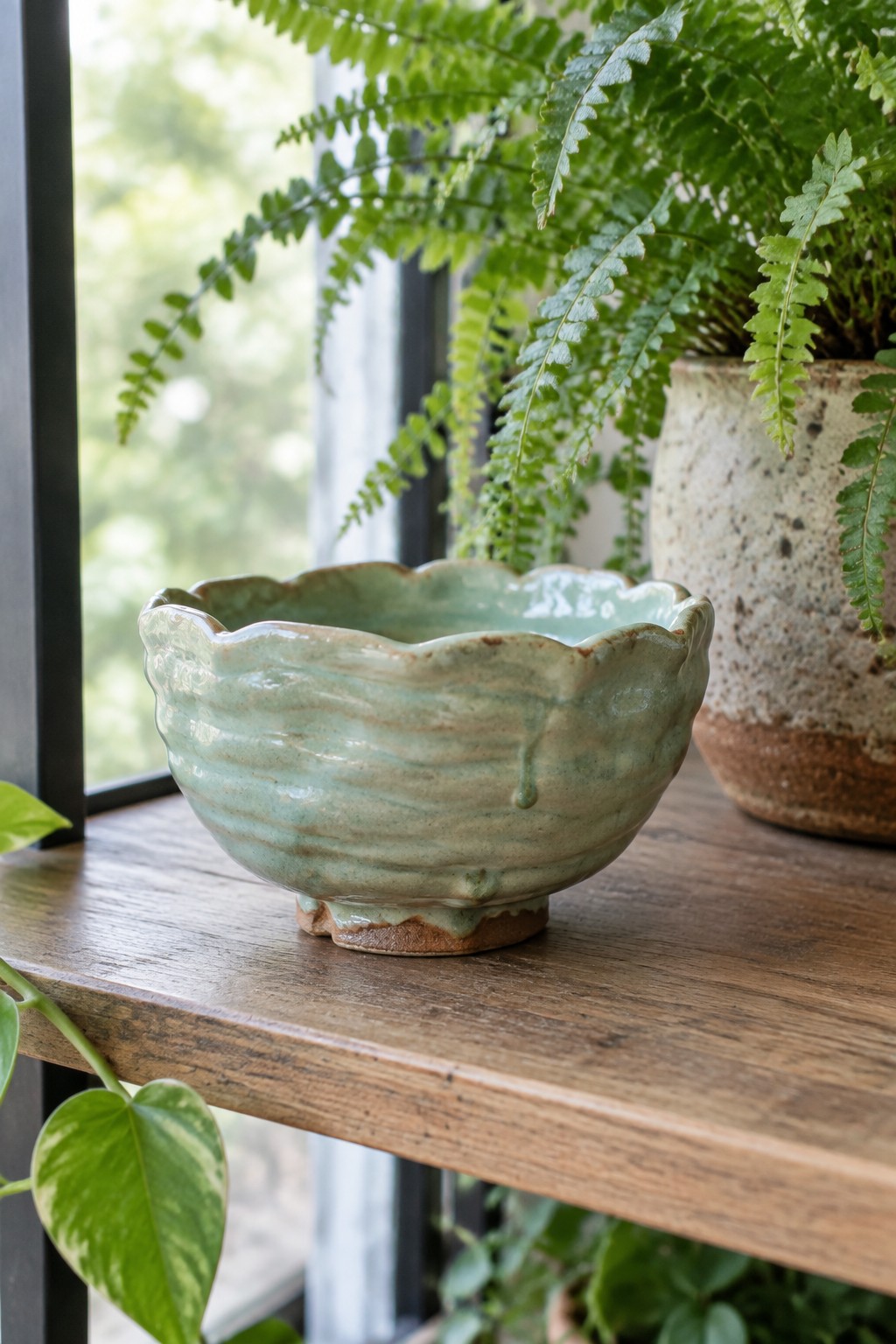
A coil built bowl with a scalloped rim gives you an organic shape that avoids the symmetry of wheel thrown work. The horizontal coil ridges add texture that makes the glaze flow unevenly, creating soft drips and color shifts from green to brown where it thins. This method suits a medium serving bowl or decorative piece for the table or open shelving.
The wavy edge lets you vary the shape easily from one piece to the next so you can make matching sets without forcing uniformity. A similar glaze works on stoneware or earthenware and forgives uneven application, which keeps the process simple. This bowl works well for fruit, snacks, or as a plant saucer, and the same rim treatment adapts to smaller dishes or deeper vessels.
Incised Leaf Pattern on a Wide Terracotta Bowl

A wide, shallow bowl built from coils or thrown on the wheel uses a reddish clay body with a repeating leaf motif carved or inlaid in white around the inner rim. The simple, stylized leaves sit between horizontal bands that emphasize the round form without crowding the eating surface. This approach keeps the bowl practical for daily use while adding a clear handmade detail that reads from across the table.
What makes this idea useful is how the carved pattern stays out of the way of food yet still gives the bowl identity. You could scale the same leaf motif down for smaller dip bowls or repeat it on a taller vessel if you want to try a different shape. In a kitchen this kind of piece works especially well for cereal, yogurt, or salads because the warm clay color pairs naturally with fresh ingredients. The design is straightforward enough to adapt on your next coil session by changing the leaf style or spacing to match other pieces you already own.
Scalloped Rim Coil Ring Dish

A small coil-built bowl with a wavy, ruffled rim makes a practical ring dish or trinket holder. The horizontal coil lines left visible on the inside create texture that contrasts with the smooth marbled glaze in soft pink and purple tones. The irregular edge adds shape without extra tools or carving, keeping the form simple while making it distinct from a basic round bowl.
What makes this idea useful is how the compact size fits on a nightstand, dresser, or desk for everyday jewelry storage. The same coil method and rim style can be scaled up slightly for a soap dish or kept shallow for a catch-all tray in an entryway. Mixing two clay bodies before building gives the marbled look without extra glazing steps, and the design works in any soft or neutral color.
Coiled Planter Bowl with Exposed Layers

A coil-built bowl made from stacked clay ropes forms a wide, low planter that suits small succulents and similar houseplants. The visible horizontal coils create a ridged surface that holds glaze unevenly, producing natural color shifts from deep green to brown. A simple drip application lets the glaze pool in the grooves without hiding the construction. This keeps the focus on the handmade form while giving the piece enough finish to work as functional decor.
The rounded shape and open top make it easy to repot or swap plants without crowding roots. You can scale the same coil method down for a desk tray or up for a larger herb planter by adjusting coil thickness and height. The earthy glaze range pairs well with most foliage, so the bowl stays useful even when you change the plant. On a windowsill it catches light nicely and shows the texture without needing extra decoration.
Splatter Pattern on a Wide Coil Bowl

A wide, shallow bowl built from coils works well for this kind of loose splatter treatment. The white base glaze lets the coral and teal marks stand out clearly, while the gold rim adds a clean finish that frames the pattern. The visible coil ridges give the surface just enough texture to catch the colors without competing with them. This approach suits a large bowl form because the broad surface gives the splatters room to vary in size and placement.
What makes this idea useful is how the splatter method covers a big area quickly without needing steady handwork. The gold rim can be swapped for a matte edge if you want a simpler daily version. A bowl this size fits as a catchall on a table or as a serving piece for snacks. You could shrink the same shape for smaller bowls and keep the color combo or change it to match other dishes you already own.
Coiled Kitchen Bowl with Horizontal Ridges

A coil-built ceramic bowl makes a practical serving piece for soups, salads, or stews. The construction leaves visible horizontal ridges that give the form texture and help the glaze pool in streaks of green and brown. This approach keeps the shape straightforward while showing the clay building method clearly on the finished piece.
What makes this idea useful is how the ridges add grip and visual weight without needing extra carving or handles. You could repeat the same coil spacing on a wider, shallower form for a salad bowl or tighten the coils on a taller shape for a storage container. The streaky glaze works across different clay bodies, so the idea adapts easily if you want to test new color combinations on similar everyday bowls.
Coil-Built Nesting Bowls

These nesting bowls are built with coils, leaving the spiral ridges visible inside the top yellow piece. The set uses three graduated sizes finished in matte speckled glazes of yellow, green, and dark brown. The simple stacking form keeps the bowls compact while the textured interior shows the construction method clearly.
What makes this idea useful is how the nesting shape saves shelf space in a kitchen or dining area. You can adapt the same coil approach to make just two bowls or switch the glaze colors to suit your dishes. The visible ridges add surface interest without extra carving, so the project stays straightforward. A set like this photographs well for Pinterest because it shows both the technique and a ready-to-use result.
Ribbed Coil Bowl in Earthy Amber Glaze

A coil built bowl forms its walls by stacking and smoothing clay coils, and this example keeps the horizontal coils visible as ridges around the exterior. The wide, rounded shape works well as a serving or mixing bowl. The glossy amber glaze pools slightly in the ridges and shifts to a darker tone near the base, which emphasizes the texture without added decoration. This approach turns the construction method into the main design feature.
The shape does a lot of the work here because the wide mouth and stable base make it practical for kitchen use. You could adapt the same ridge pattern on a taller form for a utensil holder or scale it down for small prep bowls. In a kitchen, this kind of piece handles both daily tasks and countertop storage without extra surface details. For a gift, something like this stands out because the visible coils make the handmade process easy to recognize.
Smiley Face Coil Bowl for Kids

A coil-built bowl gains clear structure from the horizontal ridges left on the outside. This version keeps the coils visible under a soft pink glaze and places a simple blue smiley face on the interior bottom. The small size and low sides make it practical for portioned servings while the painted face adds a quick decorative step that does not require extra tools.
The shape works well on a child’s table or in a lunch setup because the wide opening and shallow depth help with easy scooping. You can swap the face for other basic motifs like stars or initials using the same underglaze approach. The coil texture also means the idea adapts quickly to slightly taller versions for yogurt or cereal without changing the forming method.
Marbled Coil Bowl with Horizontal Ridges

A coil bowl starts with ropes of clay stacked and smoothed into the final shape, leaving the exterior ridges visible for texture. This version uses a wide, shallow form finished with a marbled surface made from blended slips or colored clays in brown, gray, and cream. The marbling covers the interior and rim while the coils create a clear horizontal pattern around the outside. The neutral colors and open shape make it suitable for both serving and display.
What makes this idea useful is how the visible coils add interest without extra tools or carving. You can adapt the same form into a smaller serving bowl or a deeper mixing bowl by changing the height during building. The marbled effect works with any two or three colors you already have on hand, so it stays simple for repeat projects. In a kitchen this kind of bowl holds fruit or bread and still looks good when left empty on a shelf.
Ruffled Rim Speckled Ceramic Bowl

This is a handmade ceramic bowl with a wide, scalloped rim that folds into irregular waves around the edge. The surface uses a blue speckled glaze over a light base, creating a loose splatter pattern that follows the ridges of the clay. The shape works as a serving or mixing bowl, with the ruffled edge adding visual interest without extra decoration. The idea fits the category of a kitchen bowl that can handle both everyday use and display.
What makes this idea useful is the ruffled rim, which draws attention even with a simple glaze treatment. You could adapt the same edge shape to smaller pinch bowls or a set of plates by changing only the rim while keeping the rest plain. In a kitchen, this kind of bowl works well for holding fruit, bread, or ingredients during baking. The scale is practical for gifting, and the speckled glaze is easy to recreate with a basic brush or sponge technique if you want to match an existing set of dishes.
Coil Bowl with Pressed Botanical Motifs

A wide coil bowl gains its shape from stacked clay rings that create visible horizontal ridges near the rim. The exterior carries pressed or carved botanical patterns of leaves, stems, and flowers that hold a rust-toned slip against the blue-green glaze, while the interior stays smooth and functional. This approach turns the construction method into a design feature rather than hiding it under a uniform surface.
The shape does a lot of the work here because the wide, shallow profile fits fruit, bread, or small kitchen items without taking up much counter space. You can adapt the same idea by using a single repeated stamp instead of multiple motifs or by switching the glaze to a matte white that still lets the brown accents show. For a gift, something like this stands out on Pinterest because the carved details read clearly in photos even at small sizes, and the form scales down easily to a smaller serving bowl or planter.
Wide Everyday Coil Bowl with Blue Rim Stripes

A wide, shallow bowl formed from coils gives you a broad, open shape that works well for serving or casual table use. Horizontal blue bands wrap the upper section, applied over a light crackled glaze so the stripes stay simple and the interior ridges remain visible. The coil construction shows clearly in the stepped rings inside, which catch light and add texture without extra carving.
What makes this idea useful is how the wide diameter handles bread, salad, or fruit without crowding a table setting. You can reduce the number of stripes to one or two for a quicker version, or shift the blue to a different color to match existing dinnerware. The same open form also works as a catchall for keys or small produce on a kitchen counter.
Coil Bowl with Mushroom Rim Accent

A small coil-built bowl works well when the exterior shows clear horizontal ridges from the building process and the rim stays slightly irregular. The pale glossy interior glaze contrasts with the darker matte clay on the outside, while a single small mushroom form attached to the rim adds a clear focal point without overpowering the shape. This approach suits compact bowls meant for holding rings, coins, or other small items on a surface where they stay visible and easy to reach.
The shape does a lot of the work here by keeping the overall size modest and the profile low enough to sit beside a lamp or book without crowding the space. You could swap the mushroom for a leaf, a simple knob, or a small handle and still keep the same coil texture and two-tone glaze. This kind of piece fits a nightstand or entry table where you want something functional that also reads as handmade. Scaling the same idea down further turns it into a ring dish or up slightly into a shallow catch-all for keys.
Exposed Horizontal Coils on a Simple Bowl Form

A coil-built bowl that keeps the construction lines visible on the outside creates a clear ridged texture. The coils are stacked and slightly flattened to form even horizontal bands that wrap the entire exterior, while the interior is smoothed for daily use. This approach pairs a matte gray surface on the textured side with a lighter, plain interior to keep the focus on the clay layers themselves.
What makes this idea useful is how the coil ridges do the visual work without extra carving or glaze patterns. The shape works well as a kitchen fruit bowl, a desk catch-all, or a small serving dish. You could scale the same coil method down for smaller prep bowls or shift the exterior to a single clay color to simplify the look further.
Marbled Cat Coil Bowl for Small Catch-All Storage

A coil-built ceramic bowl shaped like a cat serves as a compact catch-all for keys and small items. The form features upright ears, a rounded body with visible coil ridges, and a simple face detail on the rim. A pink and gray marbled glaze covers the surface in irregular stripes that follow the coil lines and emphasize the handmade shape. This approach turns a basic bowl into a themed holder that still functions as everyday storage.
What makes this idea useful is the open, low profile that fits easily on an entry table or desk without crowding the surface. You could repeat the same coil ridges and ear shapes in different sizes to create matching dishes for jewelry or pet treats. Switching the glaze colors lets the bowl blend with any room while the marbled effect keeps the surface lively. For a gift, this style of bowl gives a simple coil project a clear purpose that photographs well for sharing.
Coil Bowl with Visible Horizontal Ridges

A coil bowl built from stacked clay rings leaves the construction lines as the main surface pattern. The wide, low shape and dark mottled glaze that settles into the ridges turn a basic form into something ready for daily use like noodle bowls or rice dishes. Keeping the coils exposed gives the piece texture without extra carving or stamping.
The shape does a lot of the work here because the wide rim holds chopsticks or spoons easily during meals. You could repeat the same ridge pattern on a taller version for soup or shrink it for small prep bowls in the kitchen. The glaze variation adds depth while staying simple, so the idea translates well to different sizes or clay colors without much extra planning.
Scalloped Rim Coil Bowl with Blue Speckle Glaze

This coil-built bowl uses stacked coils to create both the form and the visible horizontal ridges that run around the sides. The rim is pinched and shaped into a repeating scallop pattern that gives the edge movement while keeping the overall shape round and open. A speckled tan glaze covers most of the surface, with small blue marks added on top that break up the neutral tone without covering the texture underneath. The result is a medium-sized bowl that works for holding fruit, serving snacks, or sitting empty as a table piece.
What makes this idea useful is the scalloped rim, which adds shape using only your fingers after the coils are stacked. You could repeat the same edge treatment on a set of smaller bowls or swap the blue marks for a different accent color to match your dishes. The size sits comfortably on a kitchen counter or dining table without taking over the space, and the texture from the coils helps hide minor unevenness if you are still practicing coil building. For a gift, the same bowl shape works well with a simple change in glaze color or by adding a matching small dish.
Frequently Asked Questions
1. What clay is best suited for creating coil bowls meant for everyday use? Stoneware clay is an excellent choice because it offers good strength and durability after firing. It handles coiling well without slumping and can withstand regular washing and handling. Start with a mid fire stoneware that has some grog for texture and stability during building.
2. How do I make sure my handmade coil bowls are food safe? Use food safe glazes that are labeled as such and fire them to the correct temperature specified by the manufacturer. Avoid glazes with lead or other harmful materials. After firing test a small bowl by soaking it in water overnight to check for absorption and always follow proper kiln firing schedules to ensure the clay and glaze mature fully.
3. What steps help prevent cracks when building and drying coil bowls? Keep coils of even thickness and score and slip each layer thoroughly for strong joins. Dry the bowls slowly under plastic to control moisture loss and turn them periodically. Avoid thin walls or uneven drying spots which can lead to cracks. If a piece starts to dry too fast mist it lightly with water and re cover it.
4. Which of the coil bowl ideas work well for beginners trying everyday ceramics? Simple rounded shapes like nesting bowls or basic cylinder forms are ideal starting points. Focus on consistent coil size and smooth blending rather than complex patterns at first. These straightforward designs build skills quickly and produce functional pieces for daily meals or storage without needing advanced tools.
5. How can I add decorative elements to coil bowls while keeping them practical? Incorporate subtle textures by pressing natural items like leaves or fabric into the coils before smoothing. For color use underglazes in soft tones that highlight the coil lines without overpowering them. Choose matte or satin glazes for a non slippery surface that feels comfortable in daily handling and resists chipping.

Pottery Path is my cozy corner of the internet where I share clay ideas, pottery inspiration, and simple projects you can recreate at home. I love exploring everything from air dry clay to handbuilt pottery to cute minis that brighten your day. My goal is to make clay crafting feel easy, fun, and welcoming for anyone who wants to try it.
You will find beginner friendly tutorials, creative pottery painting ideas, and lots of warm inspiration for slow and happy crafting. If you enjoy hands on creativity, this space will feel like home.