I have been trying out coil pottery because it gives me a way to make sturdy pieces without needing a wheel.
Some of my recent attempts turned into items I reach for around the house every day.
I gathered projects that focus on simple shapes like cups and trays that actually hold up to use.
These ideas came from what I already had on hand and what felt practical to finish in a few sessions.
You can start with basic coils and adjust the size to match what you need.
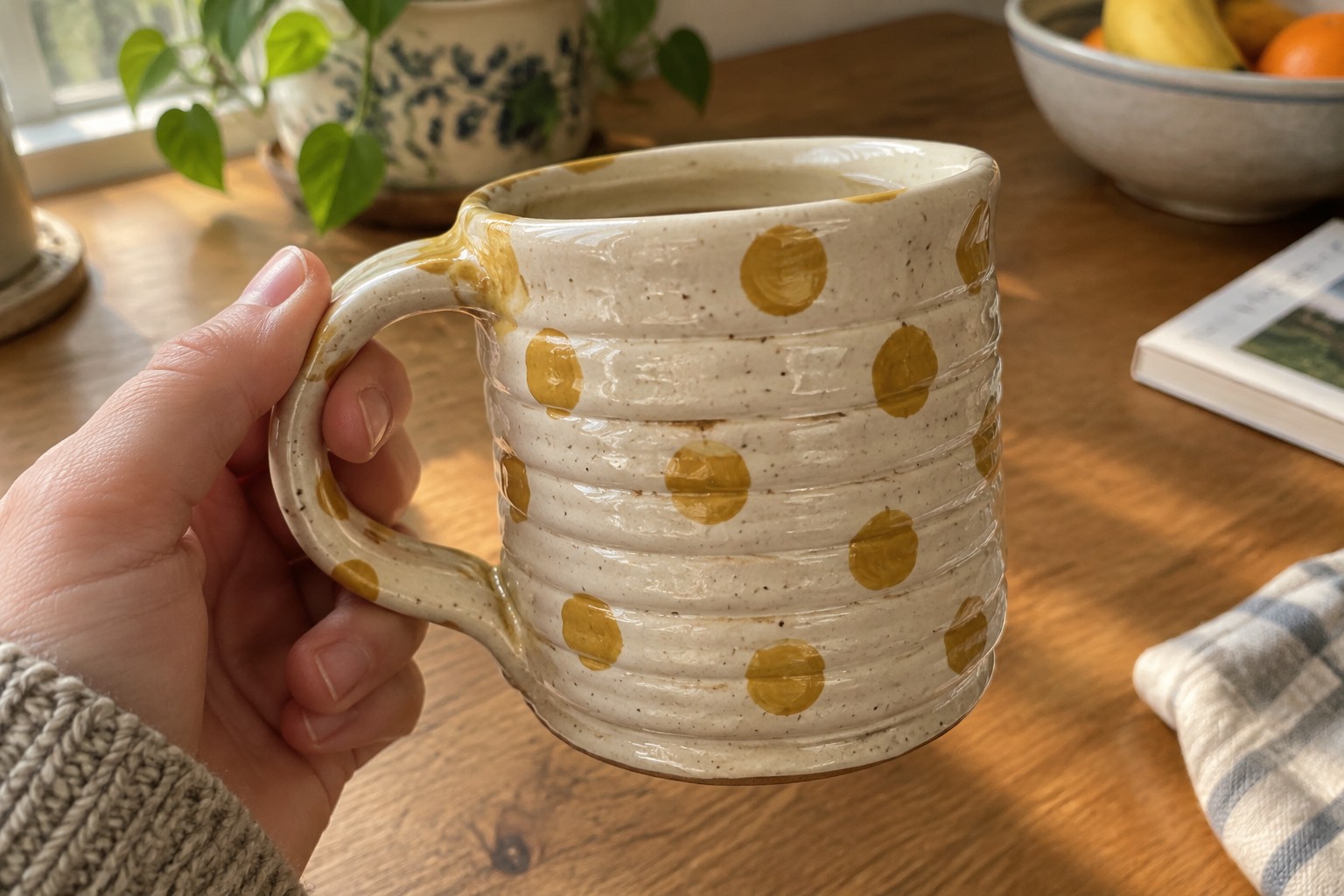
Coiled Mug with Yellow Polka Dots

A coil-built mug uses stacked rings of clay to form both the body and the handle while leaving visible horizontal ridges on the surface. The light speckled glaze provides a neutral base that lets the scattered yellow dots stand out as the main decorative element. This combination keeps the construction simple and the pattern easy to repeat.
What makes this idea useful is that the ridges come directly from the building method so no extra carving is needed. You can change the dot color or spacing to match dishes you already own or scale the same pattern down for smaller cups. In a kitchen this shape works well for daily use because the handle stays thick enough to grip comfortably. The small scale makes it simple to turn the idea into a set by repeating the dots on a matching sugar bowl or creamer.
Cat-Shaped Ceramic Planter

A cat-shaped ceramic planter gives a simple way to hold small houseplants while adding a clear animal form to the piece. The rounded body sits on four short feet, with ears rising above the rim and a face built from low-relief details like whiskers and a nose. Horizontal ridges run around the sides to create surface texture, and the opening at the top is sized for a standard nursery pot or loose soil. This approach turns a basic planter into a recognizable cat without adding extra parts or complex construction.
What makes this idea useful is how the compact shape stays stable on a narrow windowsill or shelf. You can scale the same cat body down for a desk or up for a larger floor plant, and swapping the glaze color lets it match different rooms. For gifts, the form works well for anyone who keeps small plants and wants a holder that feels personal. The design also translates easily to other animals if you change the ears and face details while keeping the same body and foot structure.
Two-Tone Glazed Coil Bowl for Breakfast and Salads
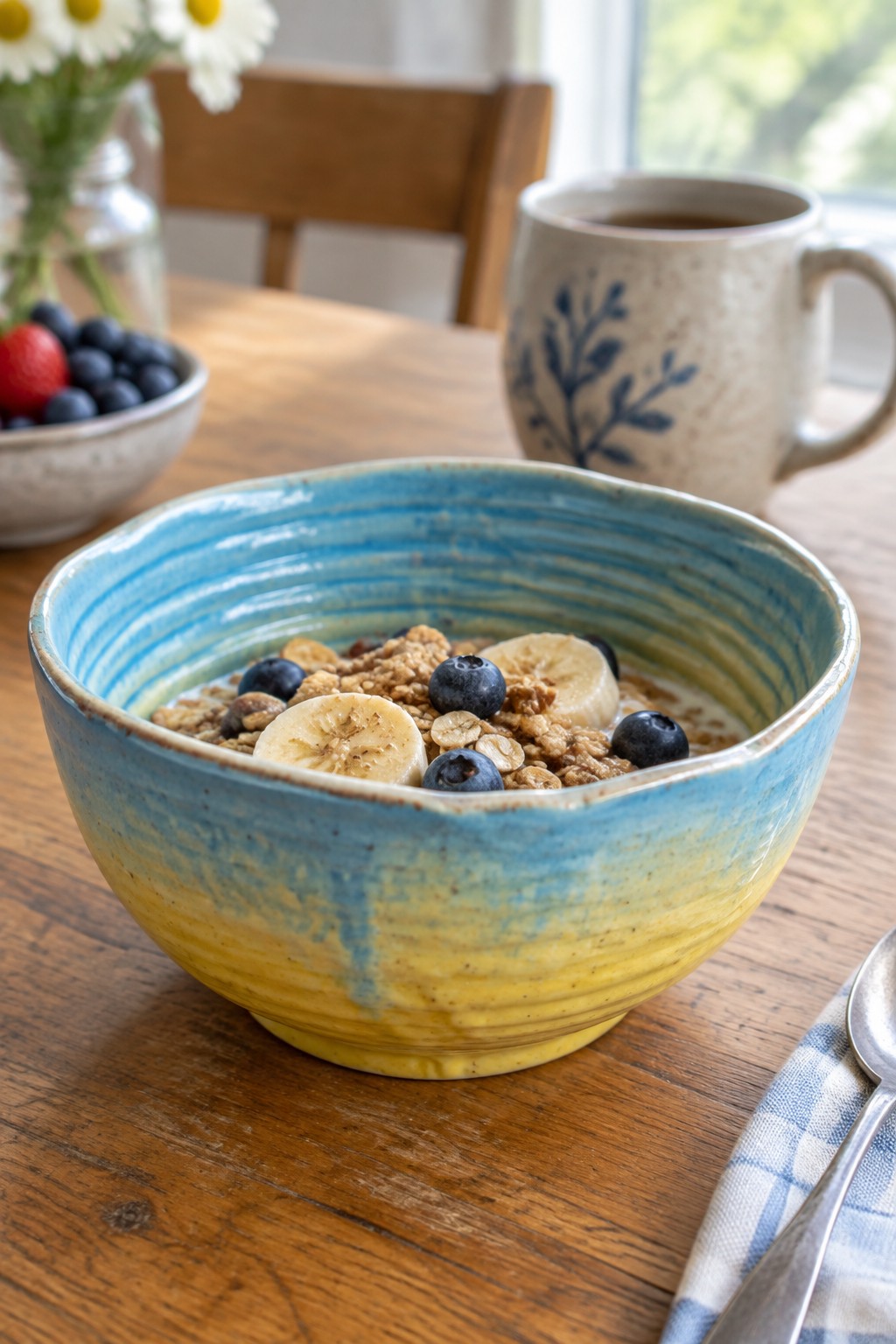
A wide coil-built bowl gives you a sturdy, everyday piece that holds large portions of cereal, salad, or fruit. The horizontal ridges left from coiling create a textured surface that catches light and makes the piece feel substantial without added weight. A blue glaze applied at the rim that blends into yellow toward the base produces a simple color shift that still reads as bright and clean in a kitchen setting.
What makes this idea useful is the generous diameter that works for both single servings and family-style dishes. You could scale the same coil method down for smaller cereal bowls or keep the size and change the glaze to earth tones for a different look. In a kitchen this shape stands out because the open form and blended color make it easy to match with existing dishes while still showing the handmade texture.
Oval Serving Tray with Handles
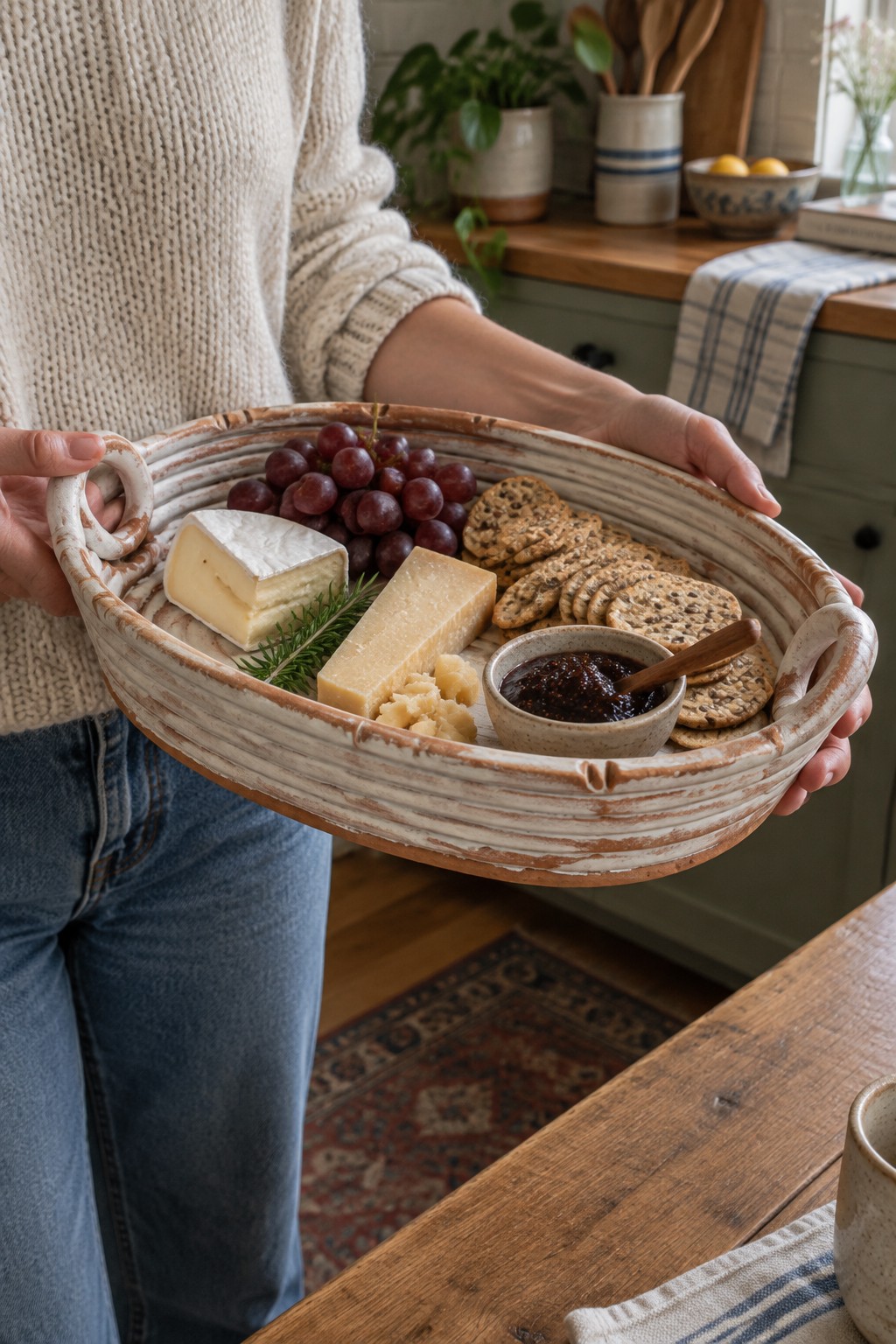
A coil-built oval tray gives you a wide, shallow surface that works as a serving piece for cheese, fruit, or appetizers. The elongated form leaves room to group different foods without crowding, while the looped handles at each end make carrying straightforward. Horizontal ridges left from the coiling process add texture that helps with grip and keeps the surface from looking too plain.
What makes this idea useful is how the size and handles turn a basic tray into something you can actually move around the kitchen. You could shorten the oval into a rectangle or drop the handles to make a simpler platter for bread or snacks. The same coil ridges could be spaced wider or tighter depending on how much texture you want. For everyday use, the sturdy shape stands up to regular handling better than thinner slab pieces.
Leaf-Shaped Spoon Rest
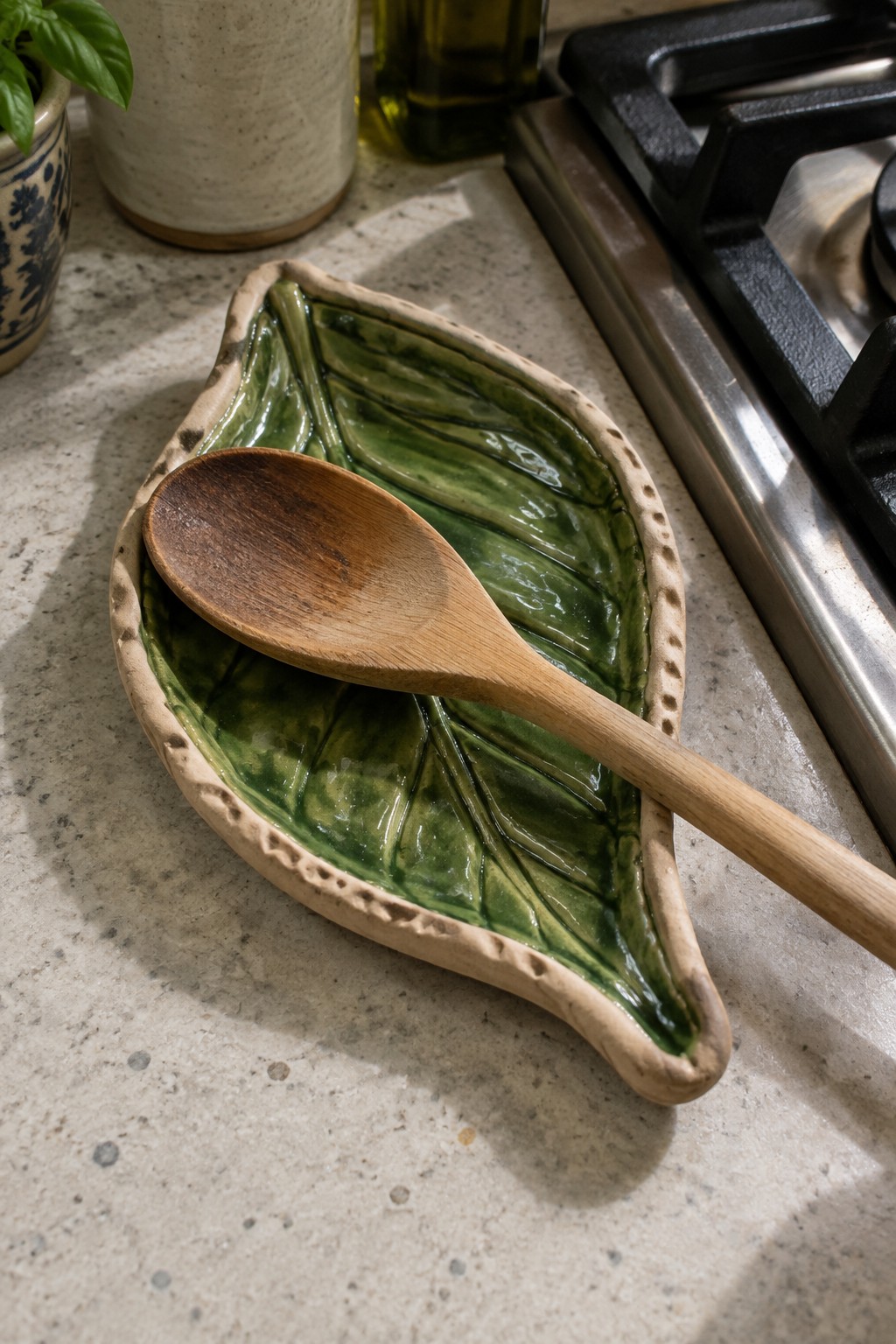
A leaf-shaped spoon rest gives you a simple way to keep utensils off the counter during cooking. The clay is formed into an elongated leaf with raised center veins that help hold the spoon in place and stop it from sliding. A glossy green glaze covers the surface and highlights the natural shape while the uneven edges add texture without extra steps. This project works as a basic kitchen item that stays flat and stable on a stovetop or counter.
What makes this idea useful is how the leaf outline does the work of containing drips and keeping the spoon handle from touching surfaces. You could make a wider version to hold two utensils at once or shorten the form into a small rest for a single spoon. In a kitchen, the green glaze pairs easily with other pottery pieces already in use. The same leaf shape could be adapted into a narrow tray for desk supplies if you change the depth and scale.
Coil-Built Multi-Hole Toothbrush Holder
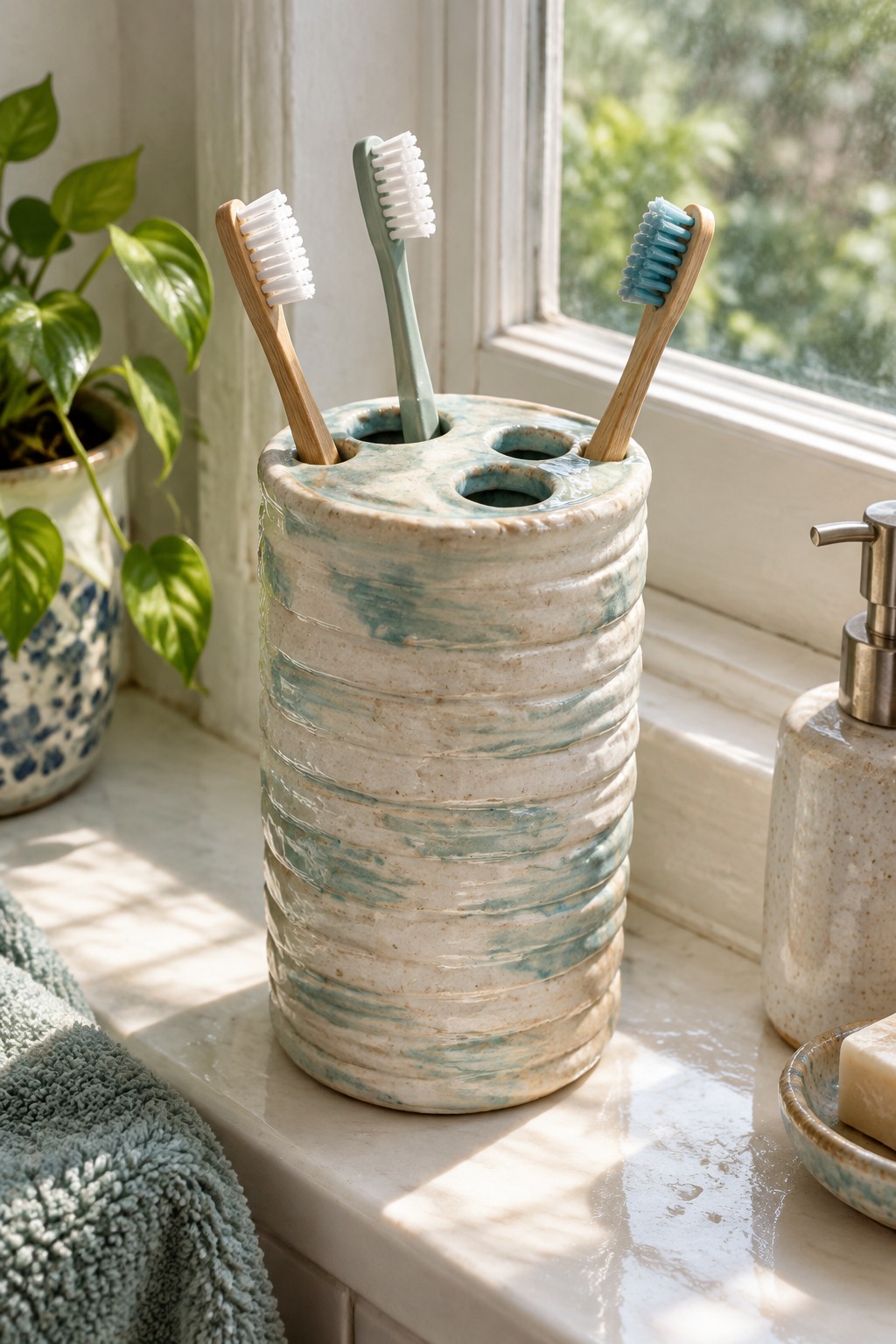
A coil pottery toothbrush holder uses stacked coils to form a tall cylinder with several openings cut into the top surface. The ridges left by the coils create a textured exterior that helps the piece feel substantial on a bathroom counter. A simple two-tone glaze that pools in the grooves adds color variation without extra decoration. This approach gives you a stable, weighted holder that keeps brushes separated and upright.
The shape does a lot of the work here by turning basic coil construction into ready-made slots. You can easily change the number of holes or the overall height to fit two brushes or a full family set. The same cylinder form works just as well for makeup brushes or small kitchen tools if you want to adapt it. A piece like this stands out on Pinterest because it solves a daily need while showing clear coil texture.
Coiled Yarn Bowl with a Feeding Notch
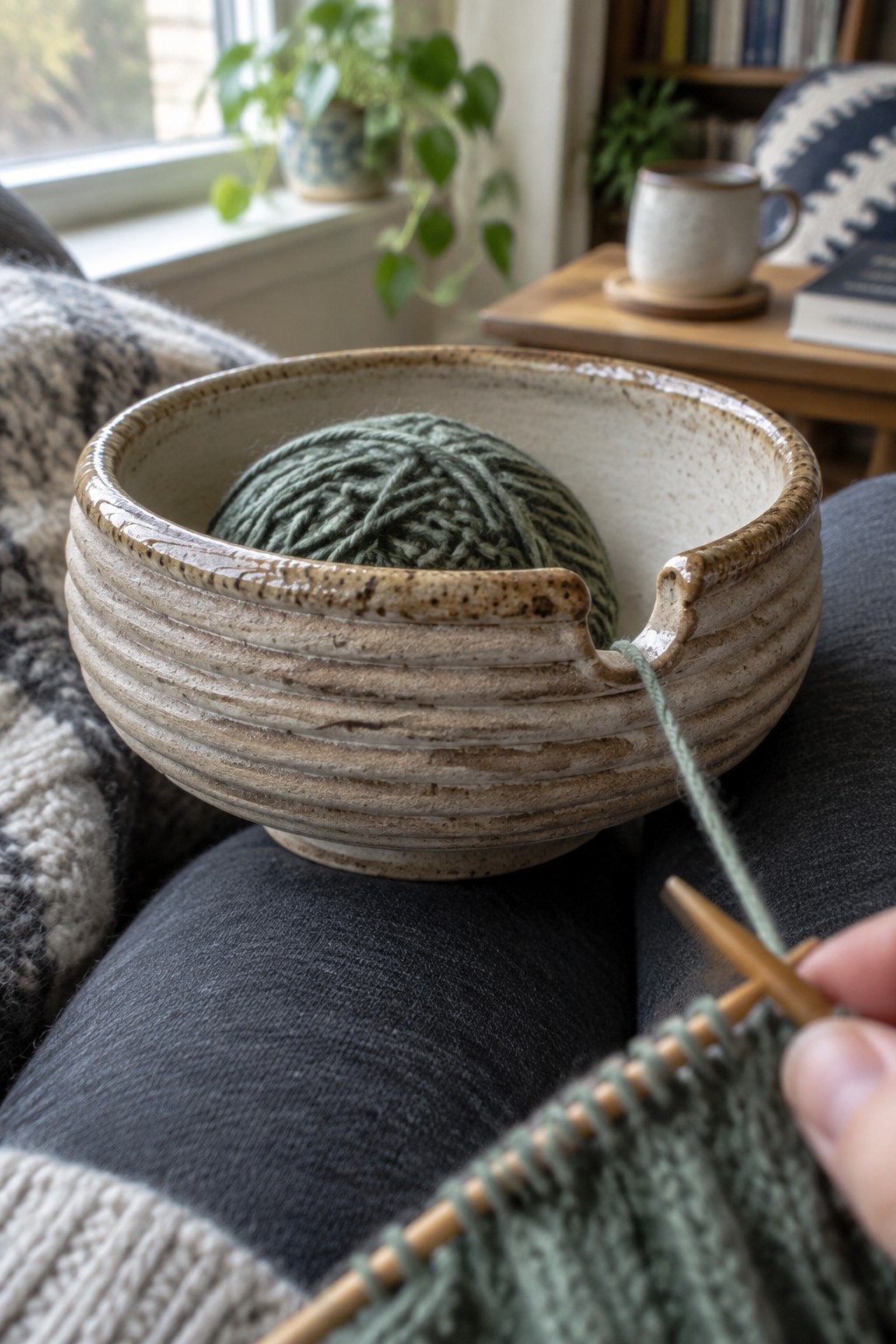
A yarn bowl is a simple ceramic holder made to keep a ball of yarn contained while you knit or crochet. The rim has a cut notch that lets the working strand feed out smoothly without the ball tumbling across the floor. Horizontal ridges from the coil construction give the outside texture and help the bowl stay put on a lap or table. The speckled glaze and sturdy rounded shape keep it practical for everyday use rather than purely decorative.
What makes this idea useful is that the notch turns a basic bowl into a dedicated tool that stops yarn from tangling or rolling away. You could scale the same coiled form down for embroidery thread or widen the notch for chunky yarn projects. In a living room or craft corner, the bowl sits ready on a shelf between sessions and doubles as a small catch-all when not in use. The ribbed surface also hides minor imperfections, so the shape works well even if your coils are not perfectly even.
Coiled Lidded Canister for Dry Goods Storage
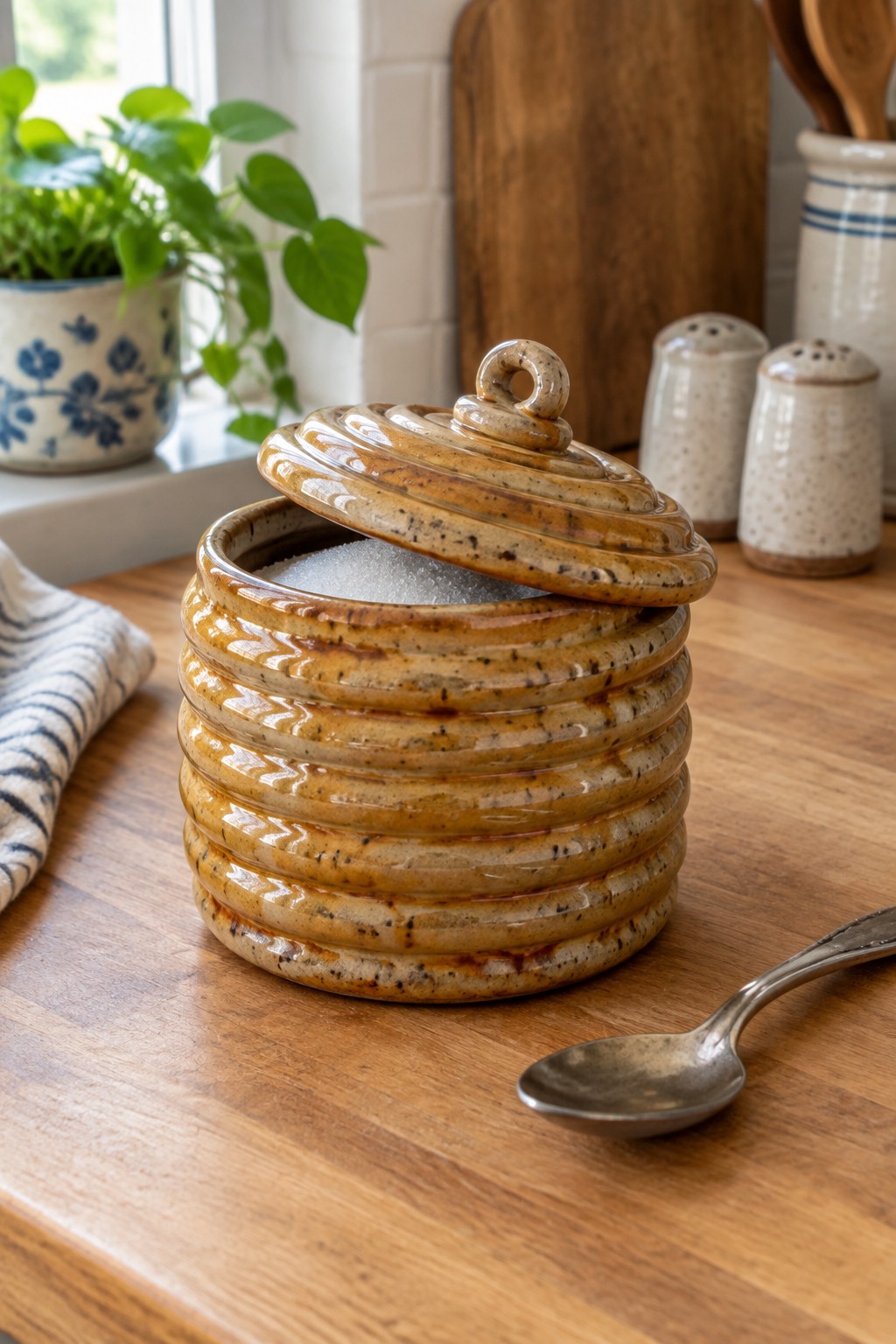
A coil-built lidded jar works well as a kitchen canister for sugar, salt, or other dry staples. The stacked coils create horizontal ridges that add grip and visual structure while forming a sturdy wall. An earthy speckled glaze in brown and tan tones covers the surface, giving it a durable finish that hides minor wear from daily handling. The fitted lid with a simple looped knob keeps contents protected and makes the jar easy to open one-handed.
The shape does a lot of the work here because the wide opening and stable base suit repeated scooping without tipping. You could scale the same coil method down for spice jars or up for flour storage, and swapping the glaze for a matte white or deep blue would change the look without altering the build. In a kitchen this kind of piece keeps bulk items visible and accessible while still looking intentional on open shelving. For Pinterest, the clear coil texture and practical lid make it easy to photograph from multiple angles as a straightforward weekend project.
Ceramic Soap Dish with Drainage Ridges
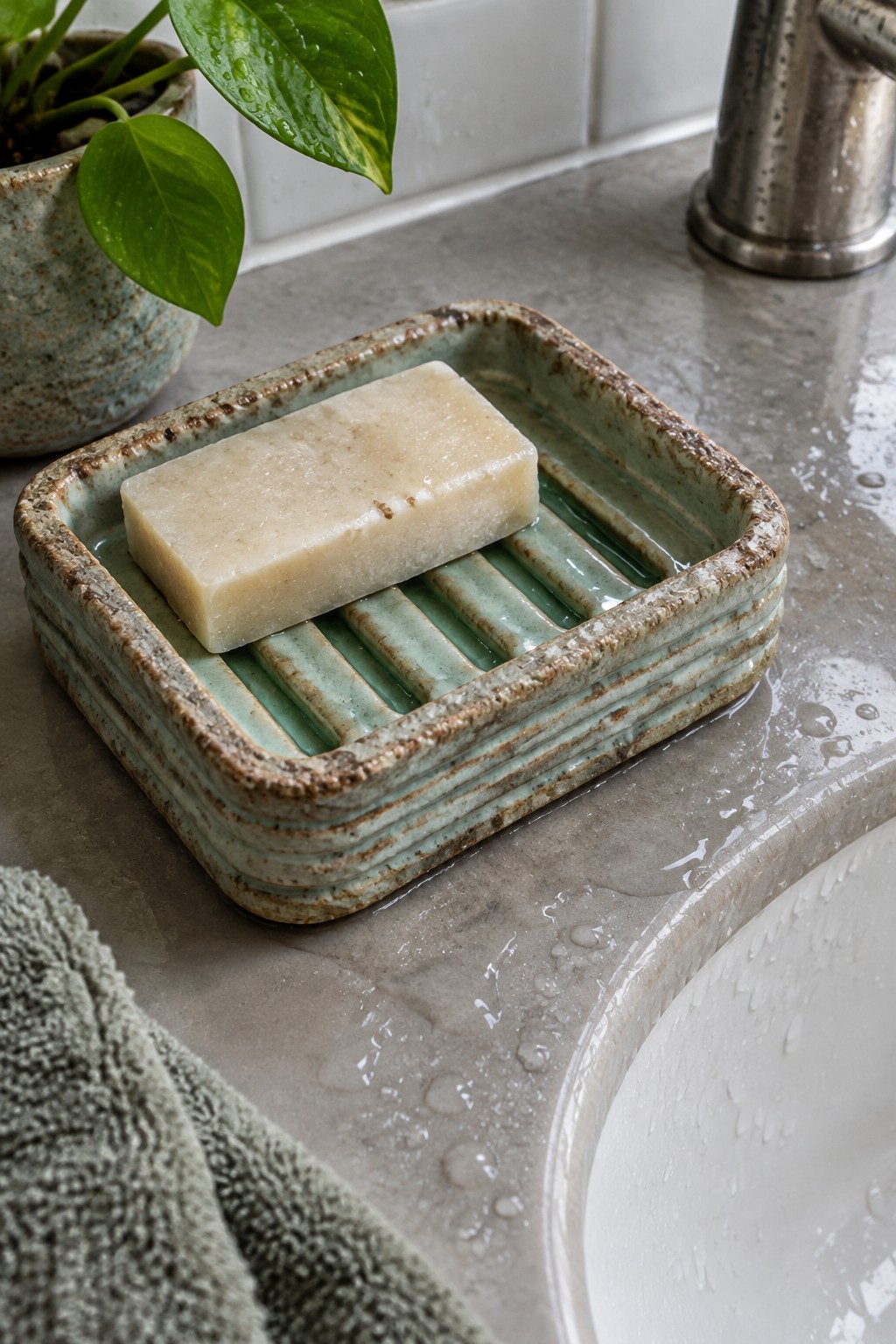
A rectangular ceramic soap dish built with parallel ridges along the base keeps a bar of soap raised so water drains away instead of pooling underneath. The low walls and speckled greenish glaze give it a simple, sturdy look that works in most bathrooms without standing out. This project falls into the bathroom item category and turns a common daily need into a durable, handmade solution.
What makes this idea useful is how the ridges solve a practical problem without adding extra parts. You can adapt the same shape into a longer version for a kitchen sponge or shrink it into a small tray for jewelry. The slab or coil construction stays straightforward, and the speckled surface helps hide water marks over time.
Coil-Built Kitchen Utensil Crock
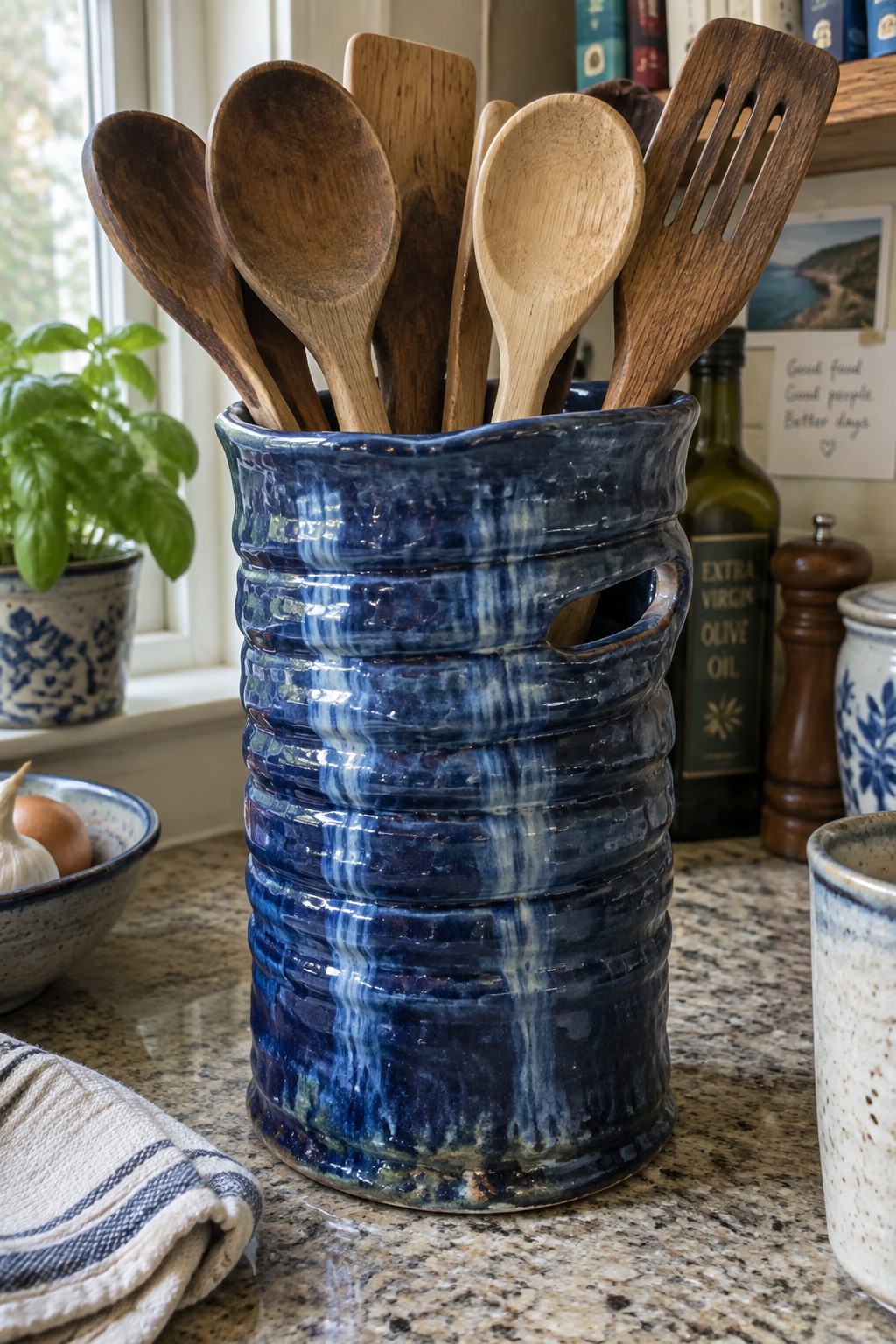
A tall cylindrical crock built from stacked coils makes a practical holder for wooden spoons, spatulas, and other cooking tools. The visible ridges from the coils create a textured surface that catches the blue glaze, giving the piece depth while keeping the form sturdy enough to stand on a counter without tipping. A small cutout near the top rim adds a simple way to grip and move the holder when needed.
What makes this idea useful is how the height and weight keep utensils upright and easy to grab while cooking. The same coil construction works well scaled down for a smaller brush holder or scaled up for a larger canister set. You could swap the blue glaze for earth tones or leave the surface unglazed on the inside so it stays matte and grips tools better. In a kitchen, this kind of piece keeps counters clear without needing a drawer or hanging rack.
Divided Coil Dish for Salt and Pepper

A divided ceramic dish with two connected compartments works as a practical salt and pepper server for the kitchen counter or table. The wavy figure-eight shape keeps the two seasonings separate while letting you reach both easily, and the horizontal ridges add grip and visual interest without extra decoration. The light speckled glaze stays neutral so the focus stays on the contents, and the sturdy handmade form holds up to daily scooping.
What makes this idea useful is how the connected shape solves the common problem of separate shakers rolling around or getting lost. You could rework the same layout for other pairs like red pepper flakes and dried herbs or even small dipping sauces. The compact size fits on crowded counters or in a picnic basket, and the design would translate well to a single larger version for serving nuts or olives at gatherings.
Spiral Lid Butter Dish

A lidded butter dish built from clay keeps butter at room temperature while protecting it from dust and odors. The domed lid uses concentric spiral ridges that add grip and catch light across the surface, and a glossy yellow glaze covers the entire form for easy cleaning. The base sits low and wide to catch any condensation, making the whole piece stable on a countertop.
What makes this idea useful is that the lid pattern gives you something to hold without fingerprints showing on the glaze. You could scale the same shape down for a small cheese dome or swap the yellow for a matte white to match different kitchen colors. In daily use the covered form keeps butter spreadable without taking up fridge space, and the simple spiral detail translates easily if you want to try the idea in a different size or glaze.
Scalloped Coil Tea Light Holder

This project uses the coil method to build a small, shallow bowl that holds a standard tea light. The walls are formed from stacked coils that create a ridged texture, while the top edge is pinched and shaped into a repeating scallop pattern. A simple earthy glaze covers the piece, allowing the coil lines to remain visible and giving the interior a slight sheen that reflects candlelight.
What makes this idea useful is how the compact size and stable base let it sit safely on a table or shelf without taking much room. You can adapt the scalloped edge by making the waves wider or narrower, or switch to a matte glaze if you want the coil texture to stand out more. The same form works as a small ring dish or catch-all when the candle is not in use. For a gift, scale the coils up slightly to fit a votive instead.
Ribbed Ceramic Pitcher for Kitchen Liquids
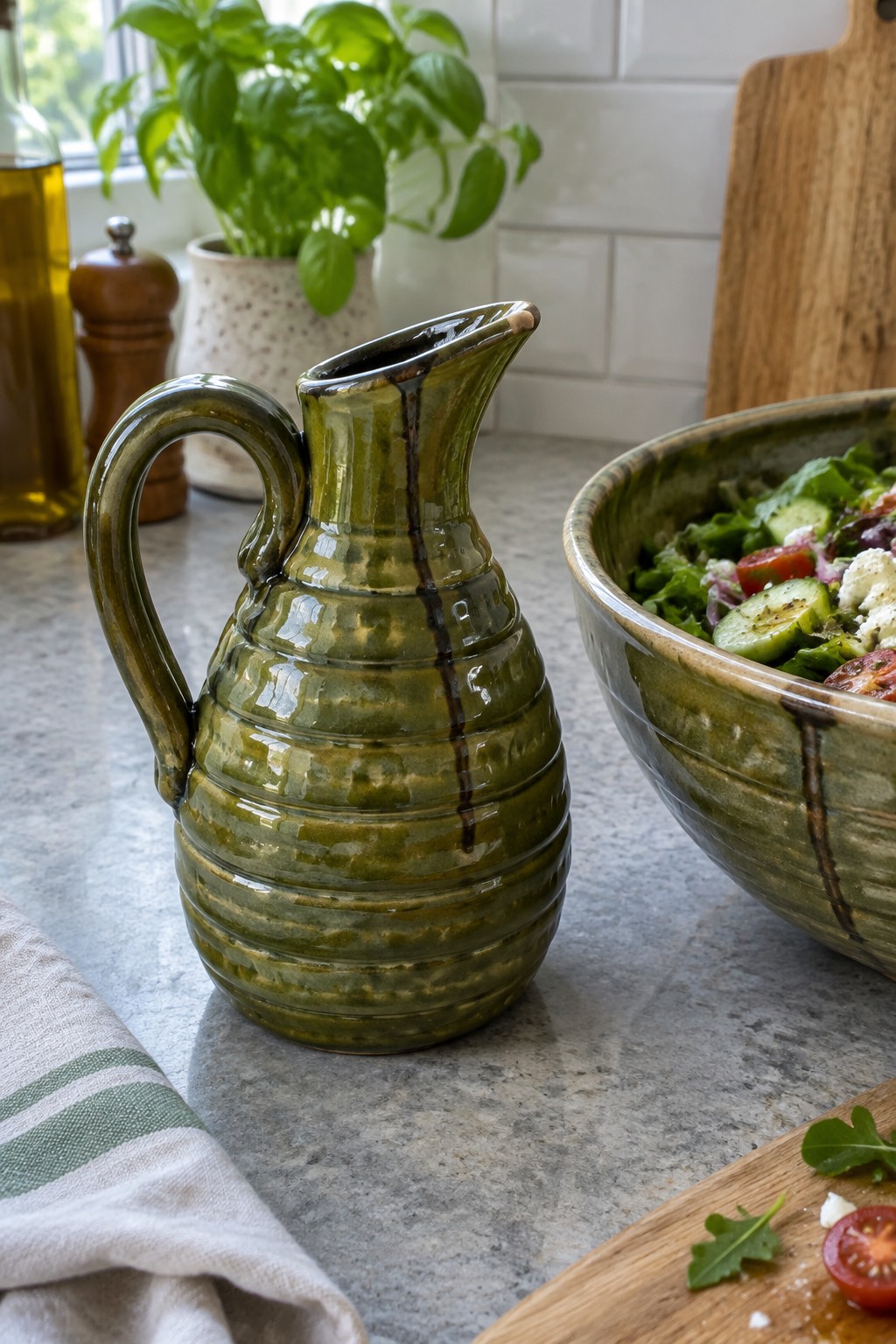
A handmade ceramic pitcher with this shape uses a rounded body and stacked horizontal ridges to create grip and visual weight. The green glaze with brown drips adds contrast without needing extra decoration. This style of vessel fits the kitchen item category and works for oil, vinegar, or salad dressings.
What makes this idea useful is how the ridges give structure while letting the glaze do the visual work. The same form could be made shorter for a creamer or taller for a water jug. In a kitchen, this kind of piece keeps items within reach on the counter and pairs easily with other stoneware bowls and boards.
Striped Coil Napkin Holder

A napkin holder built from coils forms a simple arched shape that keeps a stack of paper napkins upright and ready for use. The maker formed two thick supports connected by a curved coil top, then added vertical stripes in red and brown before firing. This creates a sturdy kitchen item that sits flat on a table while the stripes highlight the coil texture without adding extra bulk. The design stays compact enough for everyday meals yet shows the handmade clay construction clearly.
What makes this idea useful is how the arch shape grips napkins firmly without needing extra hardware or weights. You could scale the same coil method down for cocktail napkins or change the stripe width and colors to match different table settings. In a kitchen or on an outdoor table, this kind of holder works because it is heavy enough to stay put and easy to wipe clean. The painted stripes also give you a quick way to personalize the piece without changing the basic form.
Coil-Built Egg Cups
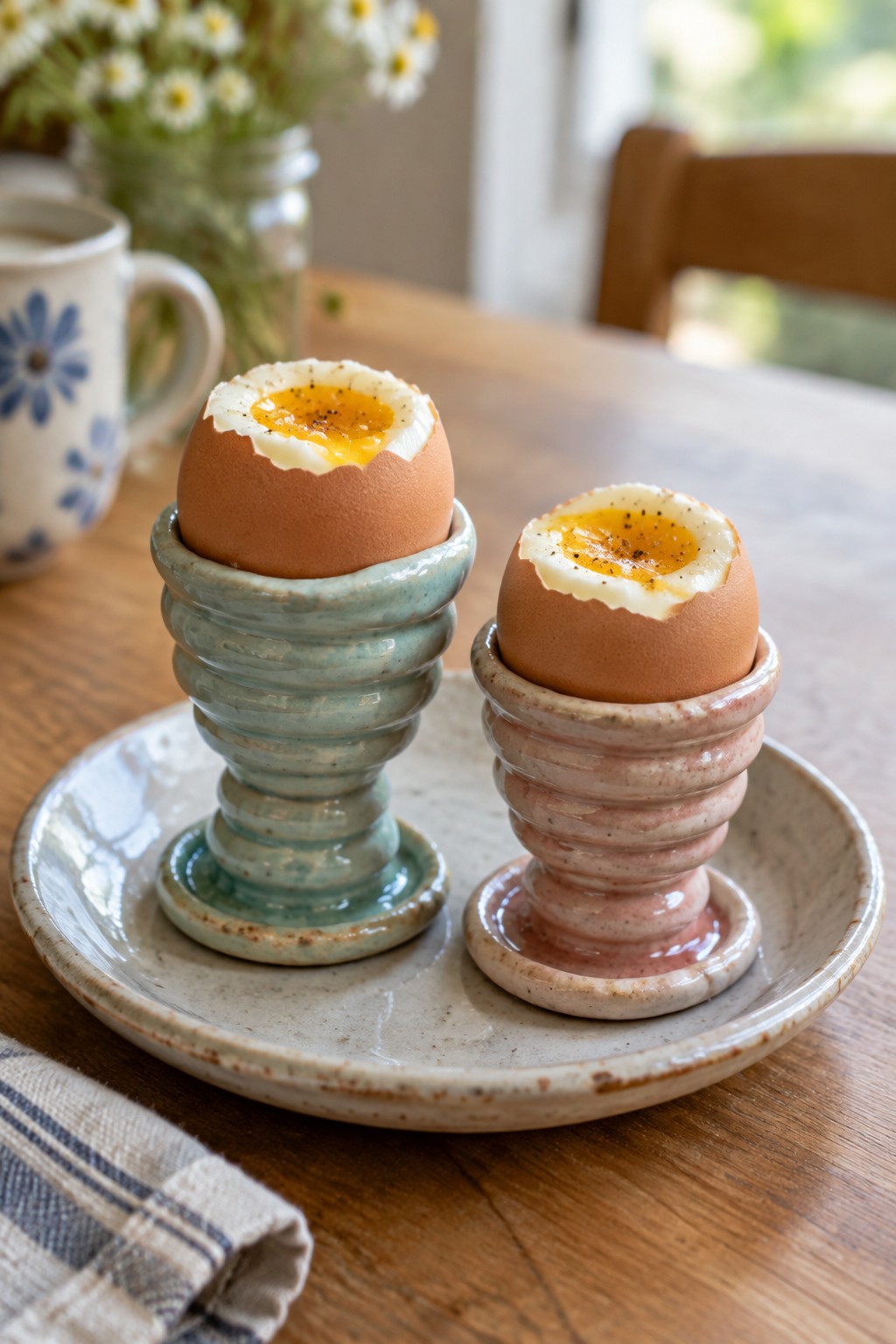
Coil-built egg cups give a simple way to serve soft-boiled eggs without a separate holder. The stacked coils create a stable base that widens at the bottom and narrows to cradle the egg, while the ridged surface from the coils adds texture under a matte glaze. This kitchen item works as a small, repeatable project that fits the coil-building theme and can be made in matching sets.
What makes this idea useful is how the same stacked-coil shape can be adjusted for height or width to fit different egg sizes or turned into small spice holders. The form takes up little space on a table or shelf, and the visible coils give it enough detail that plain glazes still read as intentional. You could rework the proportions into a taller version for candles or shorten it for ring storage without changing the building method.
Scalloped Ceramic Ring Dish

A small ceramic dish with a scalloped rim makes a practical ring holder for everyday use. The fluted edge gives the form a shell-like shape while the glossy blue glaze on the inside creates contrast against the lighter clay rim. This design keeps rings from sliding around and makes them easy to grab in one spot.
What makes this idea useful is how the compact size fits on a nightstand or dresser without crowding other items. You could adapt the same scalloped shape for a soap dish in a bathroom or a small tray for keys by the door. Changing the glaze to a matte finish or a different color would help it blend with existing decor while keeping the functional rim detail intact.
Open-Bar Ceramic Sponge Holder

A coil-built ceramic sponge holder uses vertical bars to create an open cage structure that promotes airflow and drainage. The round form includes a small center hole in the base so water flows straight into the sink instead of pooling around the sponge. Its compact size and speckled light green glaze make it read as a practical kitchen tool rather than decorative shelf ware.
What makes this idea useful is the way the bars and base hole solve the common problem of soggy sponges without needing extra parts. You could scale the same open-bar design down for a toothbrush cup or widen it into a small utensil crock by adjusting the coil spacing and height. In a busy sink area this shape keeps the sponge visible and accessible while staying out of the way of dishes. The straightforward construction also means you can make two or three in one session and vary the glaze colors for a matching set.
Speckled and Striped Dip Bowls
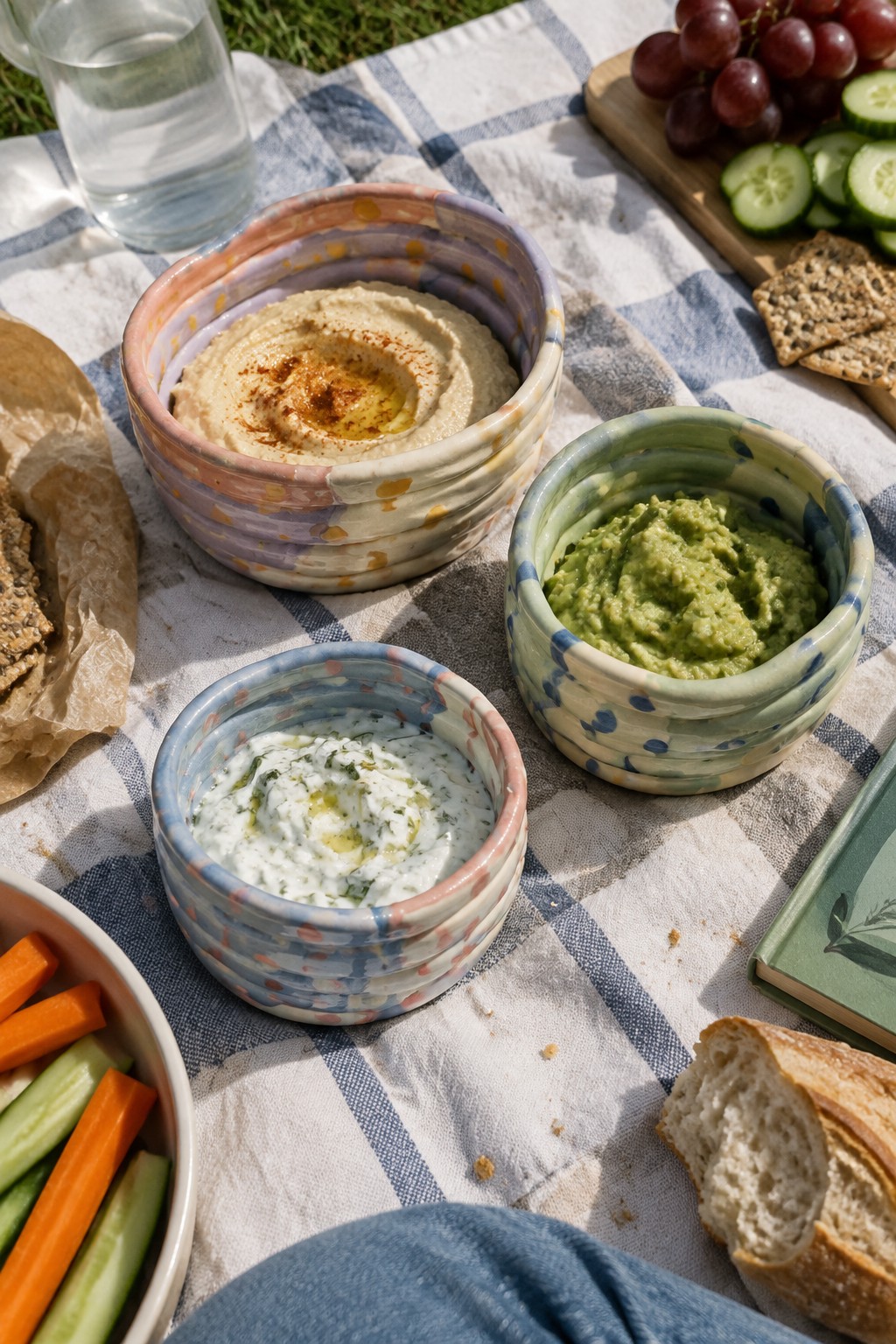
Coil-built bowls like these work well for serving dips and spreads because the thick walls stay stable on a table and the open shape makes it easy to dip crackers or vegetables. The striped bowl uses bands of colored clay or slip layered during construction, while the speckled ones rely on a mix of clay bodies that show through the glaze. This gives each bowl a distinct look while keeping the surface smooth and food-safe. The result is a simple kitchen piece that fits casual meals or outdoor spreads.
What makes this idea useful is that the same coil method scales easily to different sizes, so you can make a full set of matching bowls for snacks or sides. The bright glaze patterns help the bowls stand out against neutral table linens or picnic blankets without extra painting. You could rework the shape into slightly taller versions for holding utensils or smaller ones for salt and spices. In a kitchen, these bowls keep everyday items organized while giving you a practical way to use up leftover clay scraps for the colored bands.
Frequently Asked Questions
What type of clay works best for functional coil pottery projects meant for daily use like mugs or bowls?
Stoneware clay is an excellent choice because it offers good strength and durability after firing. It handles the coiling process well without cracking easily during drying. Always check that the clay is labeled food safe if you plan to use the items for eating or drinking, and test small batches first to match your kiln settings.
How do I ensure my coil built pieces remain sturdy enough for regular handling without breaking?
Build walls with even thickness by rolling coils to about the same diameter and blending each layer thoroughly with scoring and slipping. Allow partial drying between sections to avoid slumping. Adding a foot ring at the base helps distribute weight, and firing to the clay’s full maturity temperature increases overall toughness for everyday tasks.
Can beginners successfully complete these coil pottery projects, or do they need prior experience?
Many of the projects suit beginners because coil building relies on simple hand techniques rather than a wheel. Start with basic shapes like small planters or spoon rests to practice joining coils evenly. Follow step by step instructions for each design, and practice on scrap clay to build confidence before moving to functional items.
What steps help make glazed coil pottery safe for food contact in the kitchen?
Apply food safe glazes that are tested for your clay type and firing range. Avoid metallic lusters or certain bright colors unless specified as dinnerware safe. Fire to the recommended cone temperature, and run a test piece through a dishwasher cycle to confirm it holds up without leaching.
How should I choose among the 19 projects based on the tools and space I have at home?
Match projects to your setup by picking simpler forms like vases or trays if you lack a large workspace or kiln access. Items needing minimal tools, such as basic bowls, work well with just a rolling pin and basic hand tools. Review each project’s material list first to confirm you have what is required before starting.

Pottery Path is my cozy corner of the internet where I share clay ideas, pottery inspiration, and simple projects you can recreate at home. I love exploring everything from air dry clay to handbuilt pottery to cute minis that brighten your day. My goal is to make clay crafting feel easy, fun, and welcoming for anyone who wants to try it.
You will find beginner friendly tutorials, creative pottery painting ideas, and lots of warm inspiration for slow and happy crafting. If you enjoy hands on creativity, this space will feel like home.