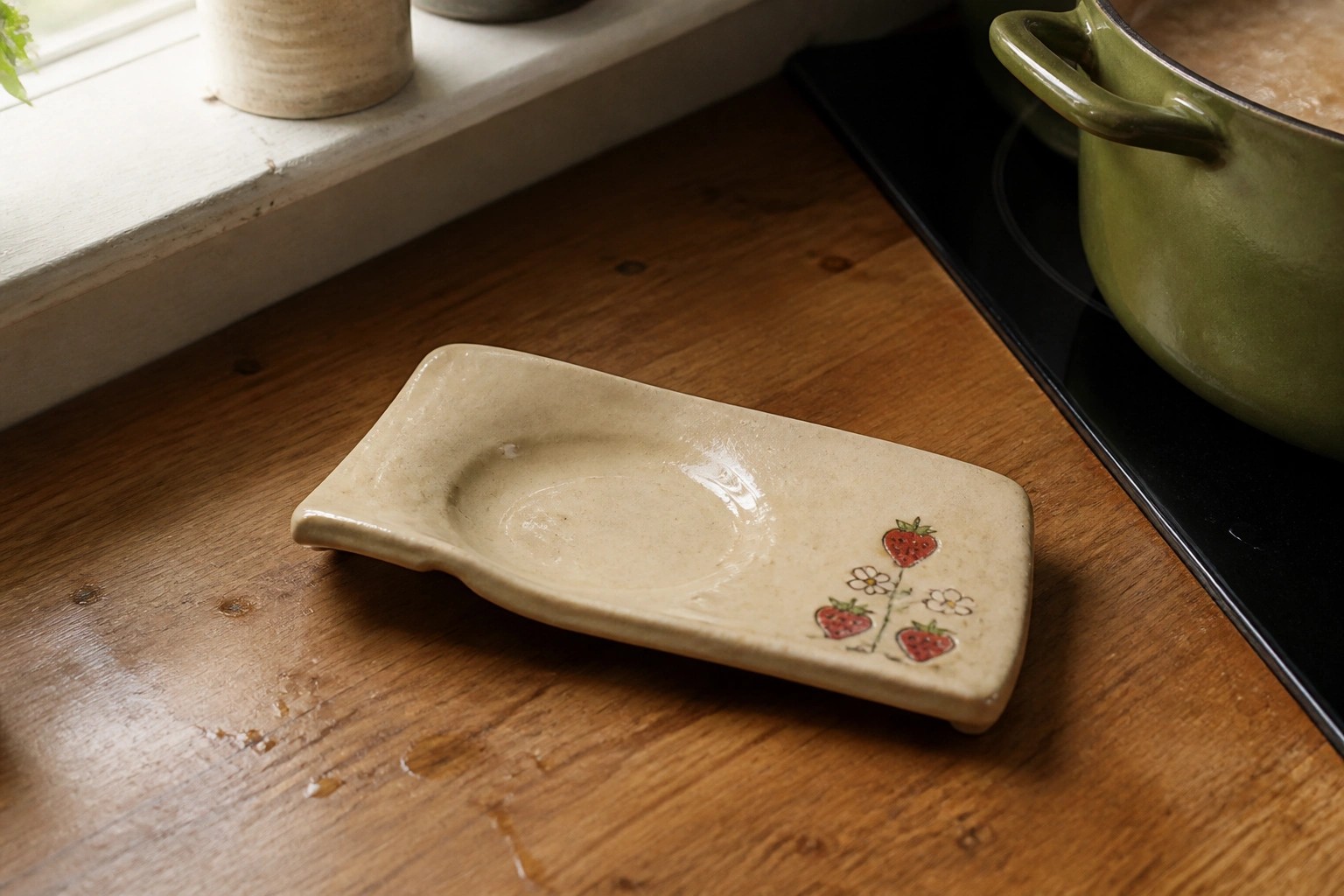
I started making slab pottery pieces for my kitchen because they are simple to shape.
I often use basic forms that match things like jars or utensils I already own.
The projects here are all built around those everyday essentials we use daily.
Each one stays small and easy so they fit into regular routines.
I came up with twenty ideas that might give you some starting points.
Strawberry Spoon Rest Tray
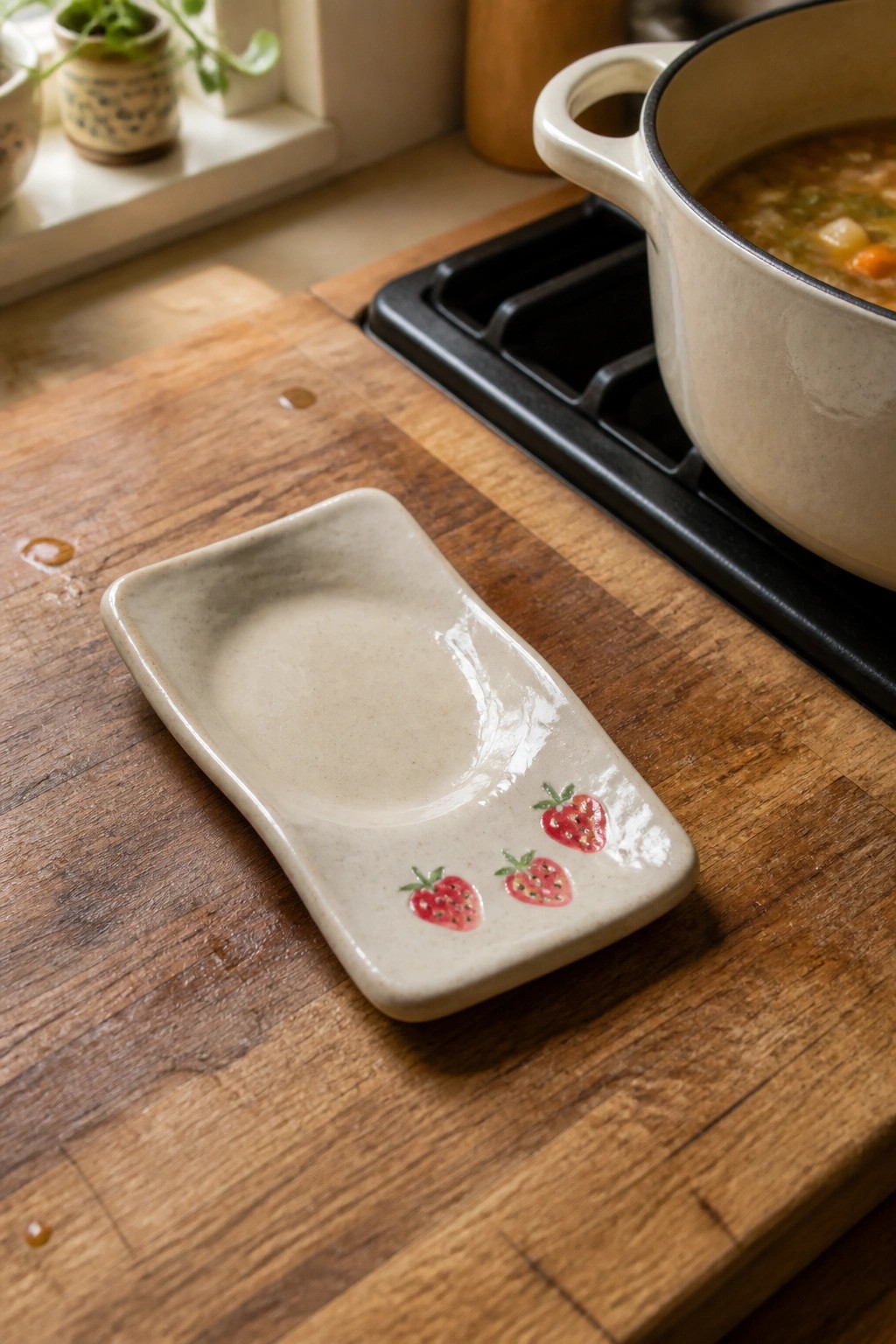
A small rectangular ceramic tray with a shallow center dip makes a practical spoon rest for stovetop use. Three hand-painted strawberries sit on one end while the rest of the surface stays plain under a light speckled glaze. The shape keeps utensils from rolling off and catches any drips during cooking.
The compact size lets it slide between burners or sit on a counter edge without crowding the workspace. Swap the strawberries for other simple motifs like herbs or dots to match different kitchen styles. This same form works as a small butter dish or a holder for tea bags if you adjust the depth slightly.
Speckled Salt Cellar
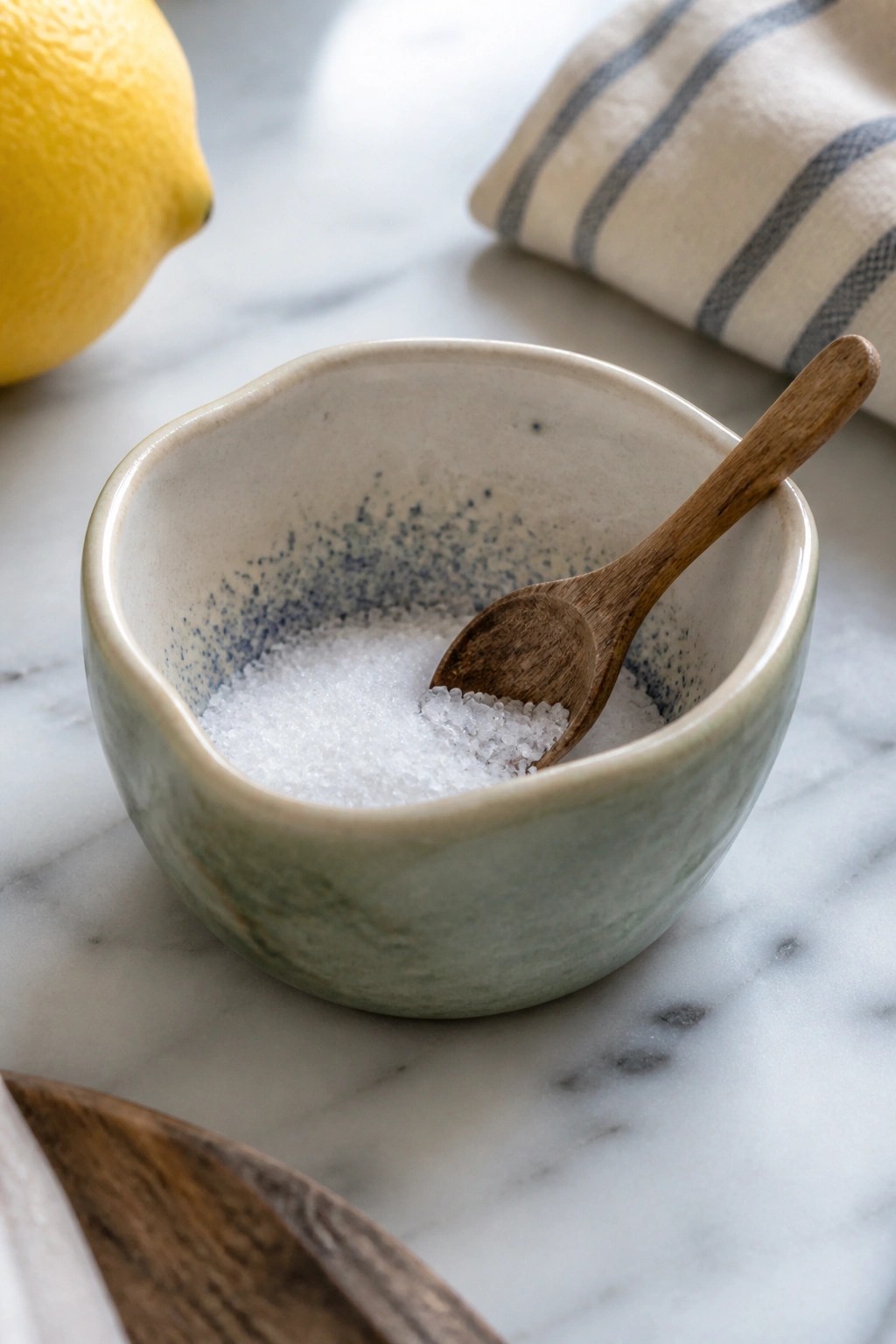
A small salt cellar formed from clay gives you a practical way to keep table salt or finishing salt within reach. The bowl uses a simple rounded shape with a softly irregular rim and a light speckled glaze that hides minor surface marks from daily use. This size works well for a standard wooden spoon so you can scoop without making a mess on the counter. It belongs to the group of basic kitchen pottery pieces that focus on one everyday item rather than trying to do too much.
What makes this idea useful is how little clay and time it takes to build. You can roll out a quick slab, shape the walls, and add a foot ring without needing advanced tools. The same form adapts easily to hold sugar, coarse pepper, or even a small amount of baking soda near the stove. In a kitchen, this kind of piece stays out on the counter without taking up much room and pairs with whatever dishes you already own.
Slab Sponge Holder for the Sink
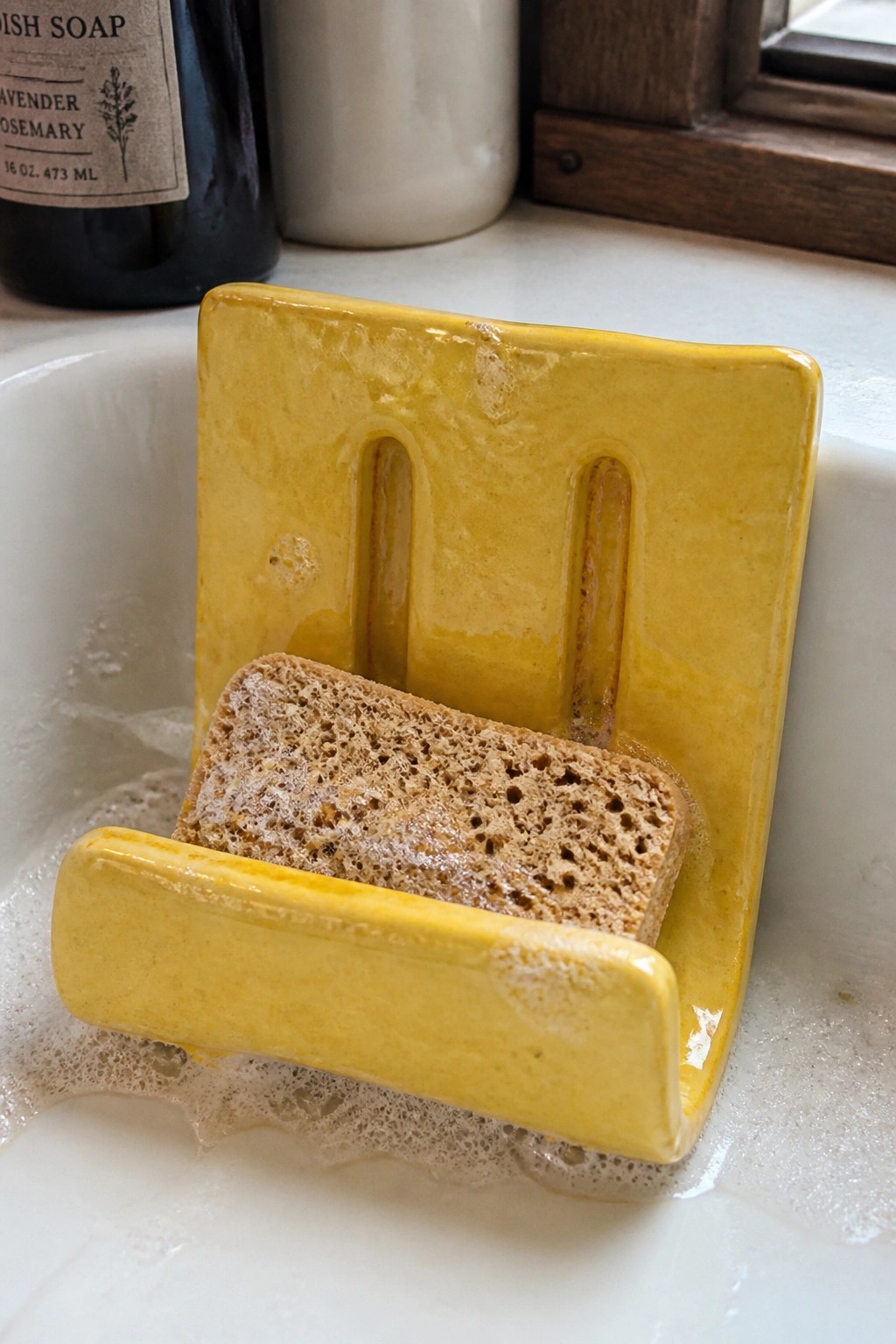
A slab-built sponge holder uses a flat base joined to an upright back panel to keep a kitchen sponge lifted off wet surfaces. Two vertical ridges on the back create air channels so the sponge dries faster between uses. The glossy yellow glaze covers the entire form and makes the holder easy to clean and spot on the counter. This type of project falls into the kitchen holder category and works directly with the everyday sponge most people already keep near the faucet.
What makes this idea useful is how it turns a basic slab shape into something that solves a daily sink annoyance. The curved base keeps the sponge from sliding forward while the ridges prevent it from lying flat and staying soggy. You can adapt the same layout by shortening the back for a smaller sponge or adding extra ridges to hold a scrub brush alongside it. In a kitchen this piece sits neatly beside the soap bottle and can be glazed in any color to match existing dishes or tiles.
Floral Butter Dish
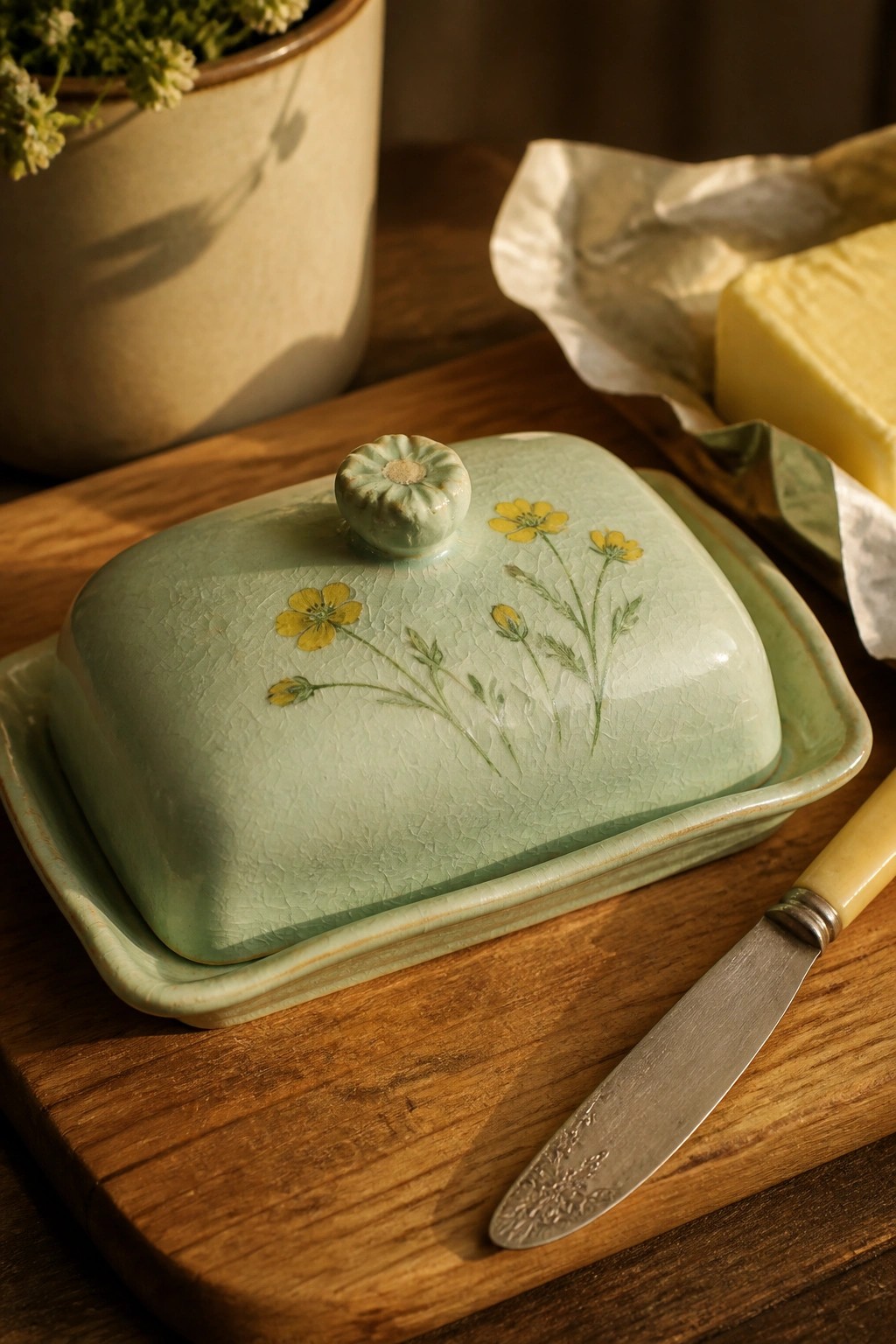
A rectangular lidded butter dish keeps a stick of butter covered and accessible on the counter. The domed lid sits inside a shallow tray that catches crumbs or drips, and the light green crackle glaze provides a soft background for the hand-painted yellow flowers and stems. The painted motif stays simple so it reads clearly from a short distance without crowding the surface.
What makes this idea useful is that the same tray-and-lid shape can be scaled down for a small cheese server or scaled up for a covered casserole. You can swap the flowers for leaves, dots, or a single initial to match different kitchens or seasons. The compact footprint means it fits on most counters without taking prime space, and the painted detail helps it photograph well for recipe posts or gift guides.
Heart Motif Mug as Utensil Holder
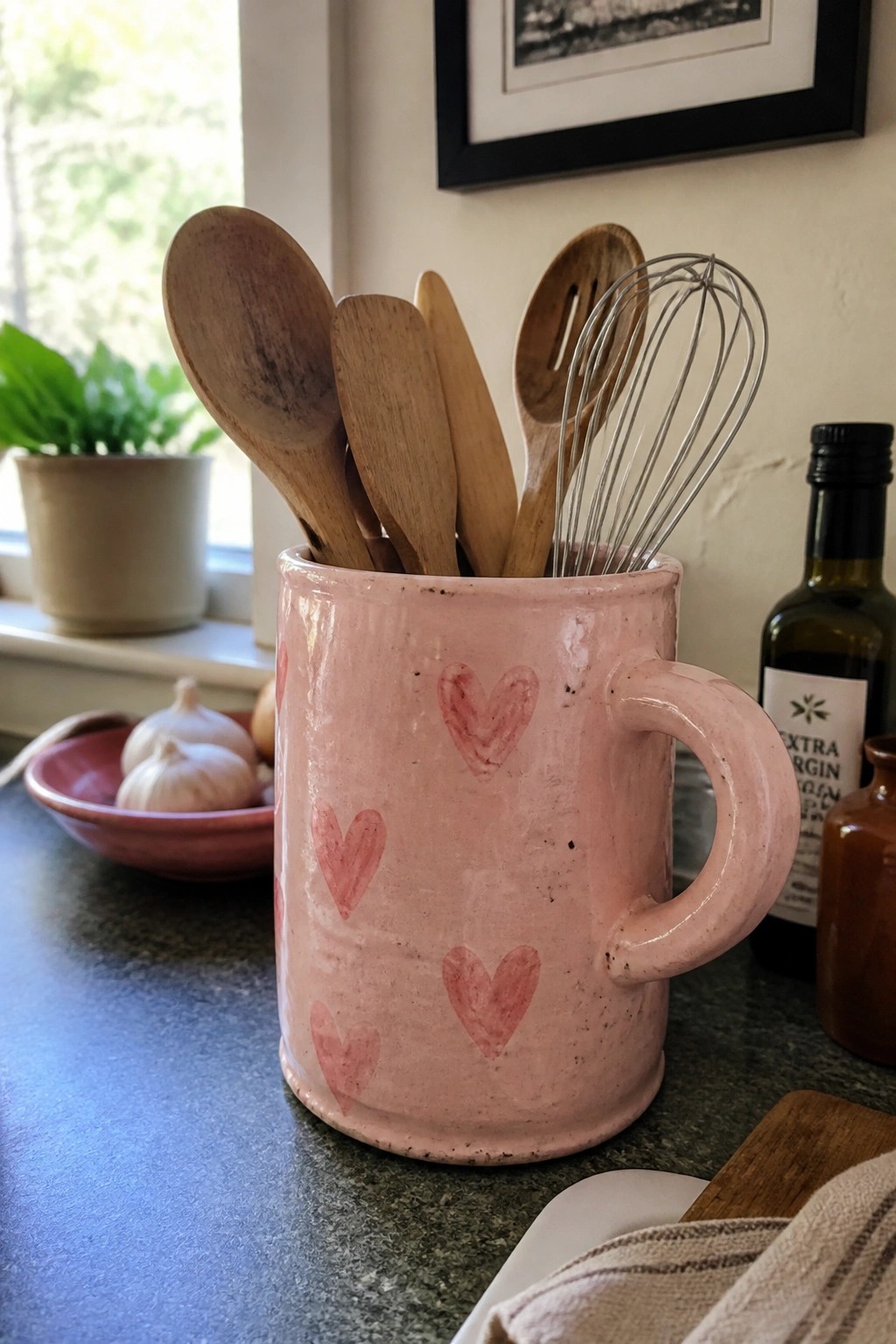
A hand-built ceramic mug works well as a kitchen utensil holder when made with a wide body, thick walls, and a functional handle. The pink glaze provides a soft base while the red heart motifs are applied in a loose, repeated pattern across the surface. This approach turns a basic mug form into a stable counter piece that keeps wooden spoons and whisks upright and accessible.
What makes this idea useful is how the same mug shape can be adjusted in height or diameter to suit different tool sets. The heart pattern can be swapped for other simple stamps or stencils if you want to match existing kitchen colors or create a set. In a kitchen, this kind of piece keeps tools in one spot without taking up much space and can be made in multiples for different stations.
Painted Slab Napkin Holder
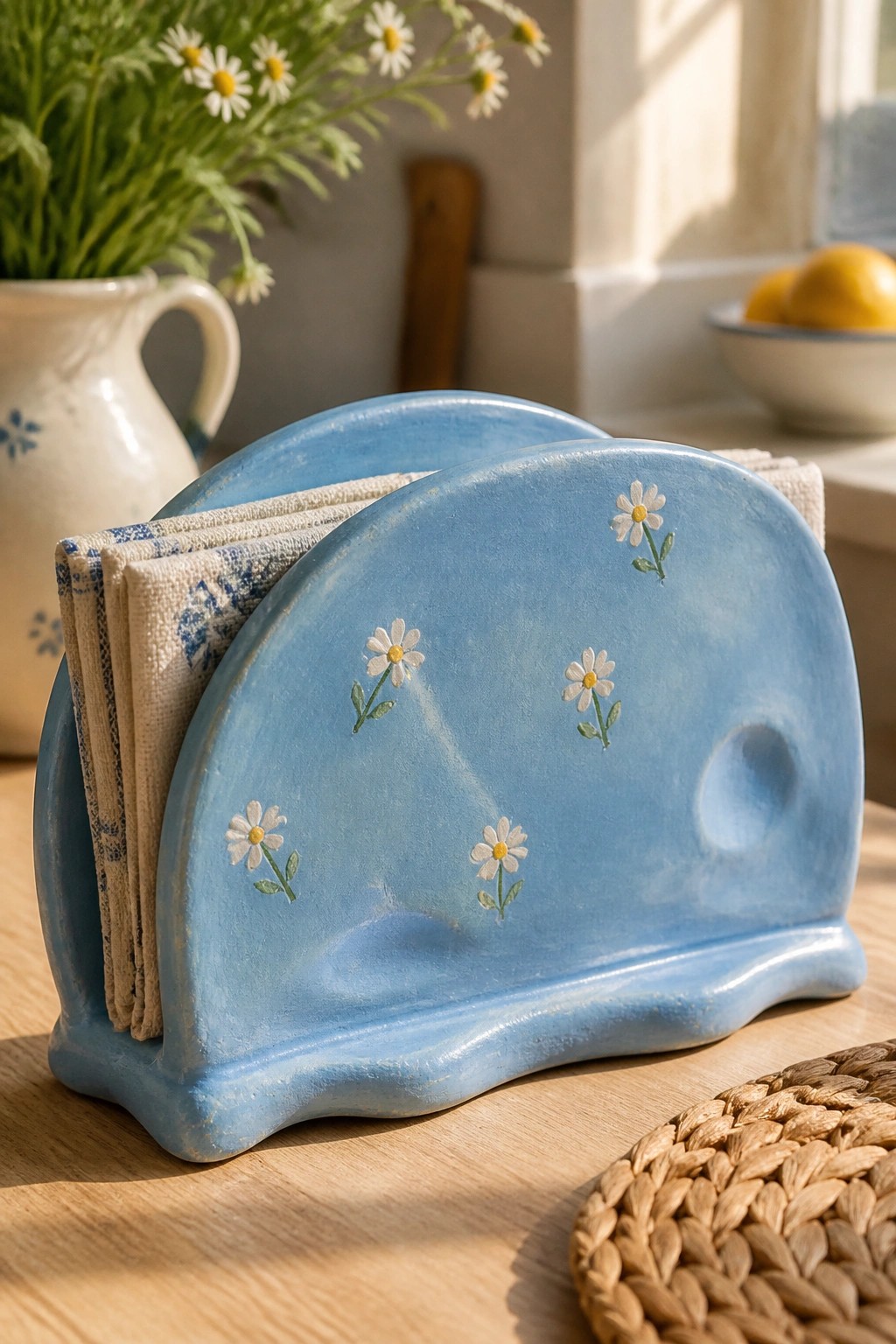
A slab-built napkin holder keeps folded kitchen linens upright and easy to grab. The curved form creates two sides that cradle the stack while leaving room for a simple cutout handle on one end. A solid blue glaze covers the surface and gives a clean background for small painted daisies that add color without extra texture or carving.
The shape does a lot of the work here because the same slab method can be adjusted to hold envelopes, recipe cards, or small towels. You could swap the daisy motif for stripes or dots to match other dishes you already own. In a kitchen this piece stays practical on the counter while taking up little space.
Leaf Impressed Slab Trivet
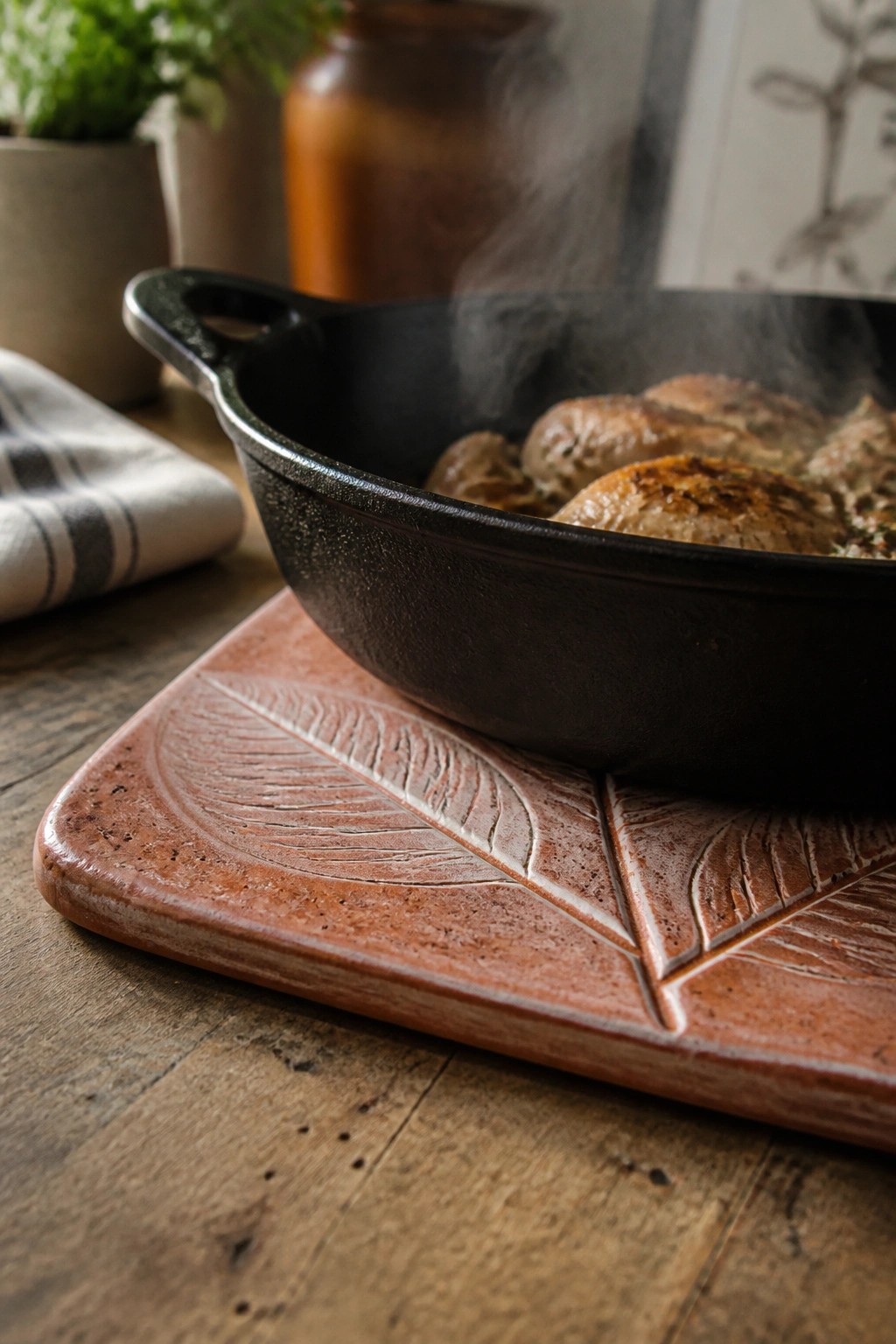
A slab trivet built from terracotta clay uses impressed leaf details to create a flat, heat-resistant surface for kitchen use. Roll out an even slab, press fresh leaves or stamps into the clay to capture the vein patterns, then cut it to a simple rectangular shape before firing. The natural reddish tone and glossy finish keep the focus on the texture while making the piece durable enough to sit under hot pans.
What makes this idea useful is how the impressed texture adds interest without extra glazing steps or color work. The flat shape fits under cast iron skillets or baking dishes and can be resized for smaller trivets or spoon rests. You could adapt the same slab method with different leaves or add small feet on the back for better airflow. In a kitchen this kind of piece works well as a quick project that stays practical while still looking intentional on a counter.
Lidded Tea Caddy with String Notch
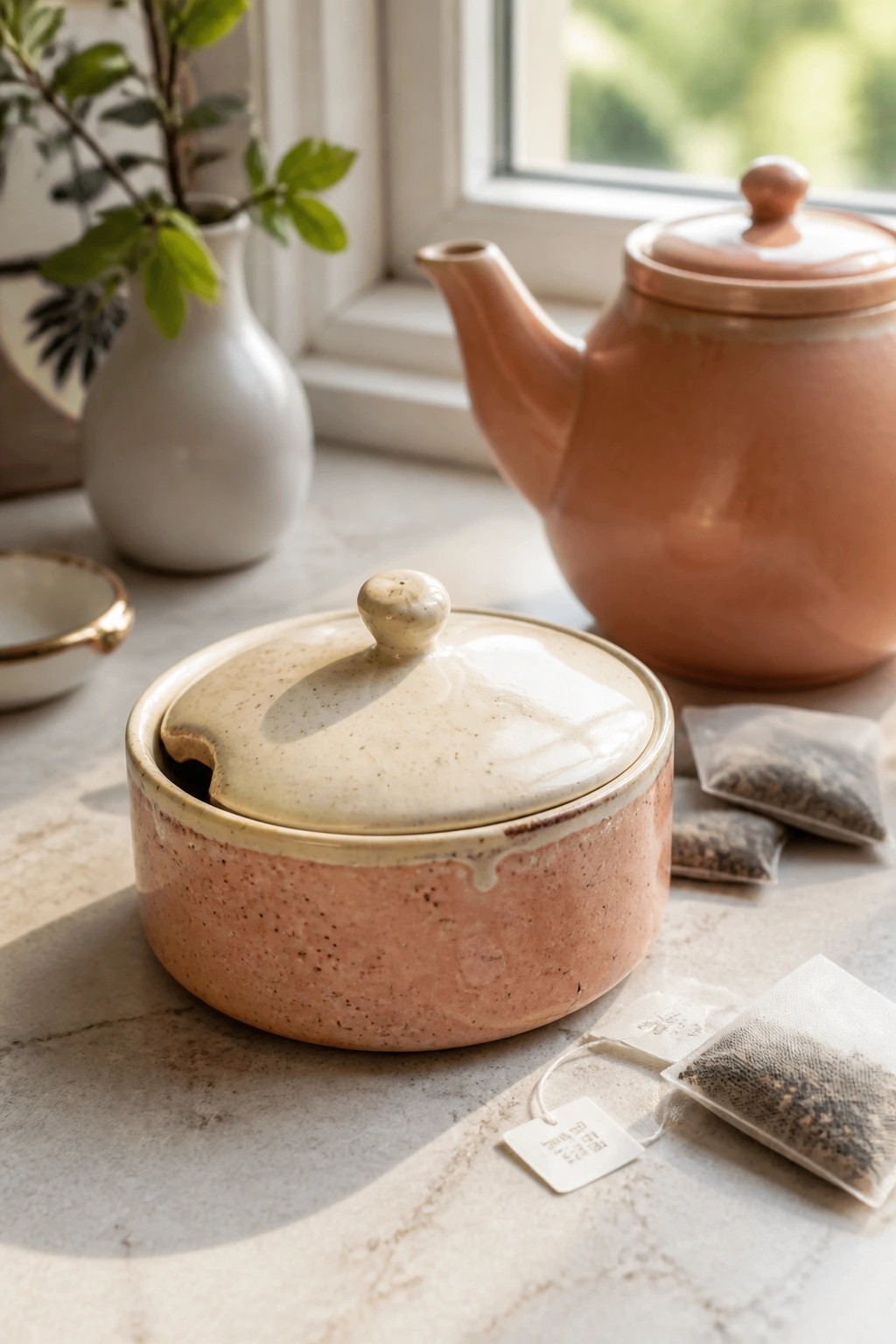
A slab-built round caddy with a fitted lid works well as a kitchen tea bag holder. The lid includes a small cutout that lets the tea bag string hang outside while the bag stays covered. The speckled warm glaze and low rounded form keep the piece simple and easy to place on a counter.
What makes this idea useful is how the notch turns a basic covered bowl into a practical daily item. You can adjust the cutout width for different tea bag styles or scale the whole form taller to hold more bags. In a kitchen this caddy keeps tea organized next to the kettle and pairs easily with other slab pieces like a matching sugar bowl or small tray.
Lemon Slice Tea Bag Caddy
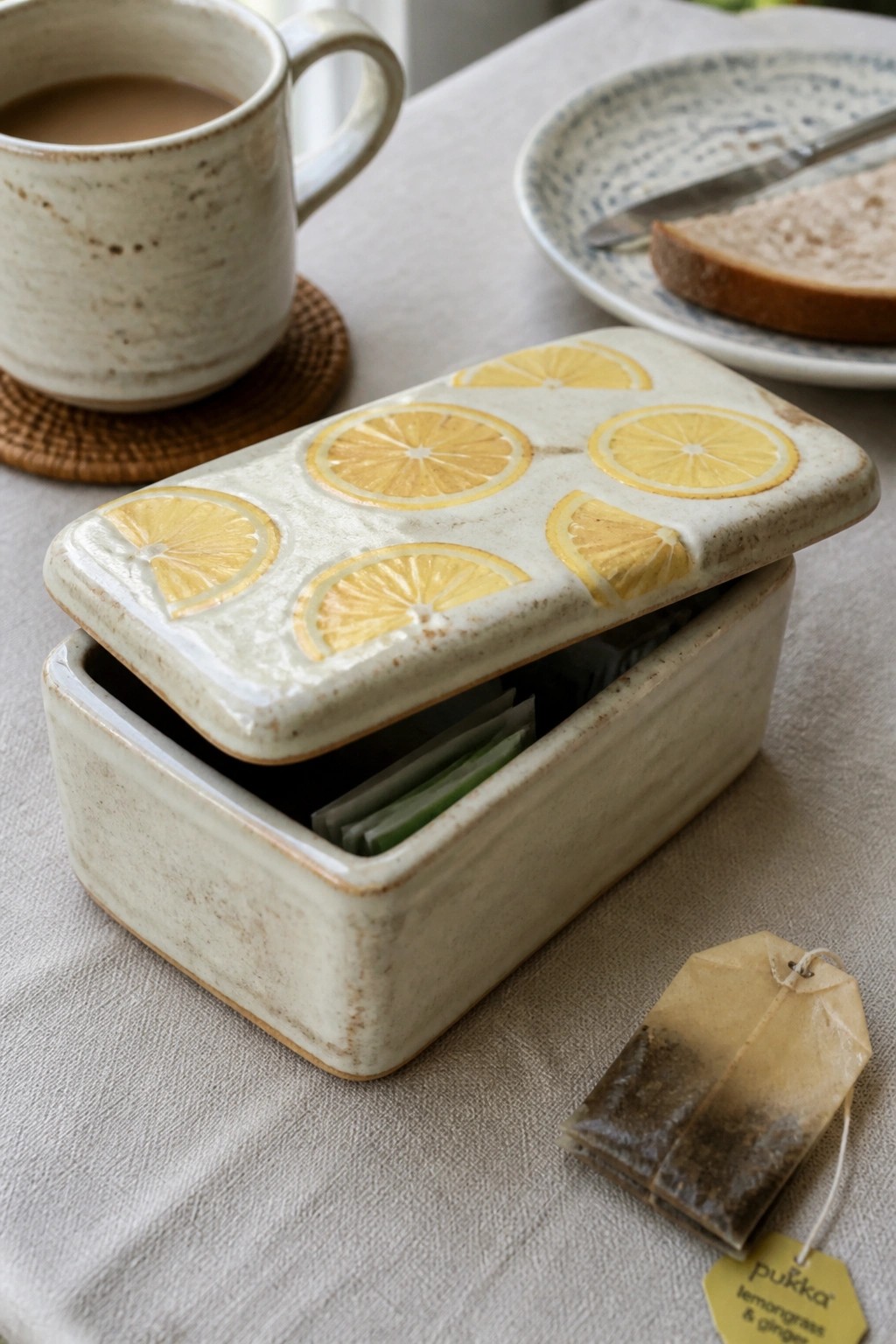
A rectangular slab box with a fitted lid works as a tea bag holder for the kitchen counter. The lid carries a row of lemon slices formed in low relief and finished in yellow glaze against a pale base. The simple box shape keeps tea bags stacked and easy to grab while the lid design adds a clear fruit motif without extra parts.
What makes this idea useful is the way the lid pattern can be swapped for other sliced fruits or herbs to match different tea varieties. The same proportions work for a slightly taller version that stores sugar packets or coffee stirrers instead. In a kitchen this piece sits beside the kettle or on an open shelf where the scale stays small enough to build in one afternoon.
Polka Dot Egg Cup
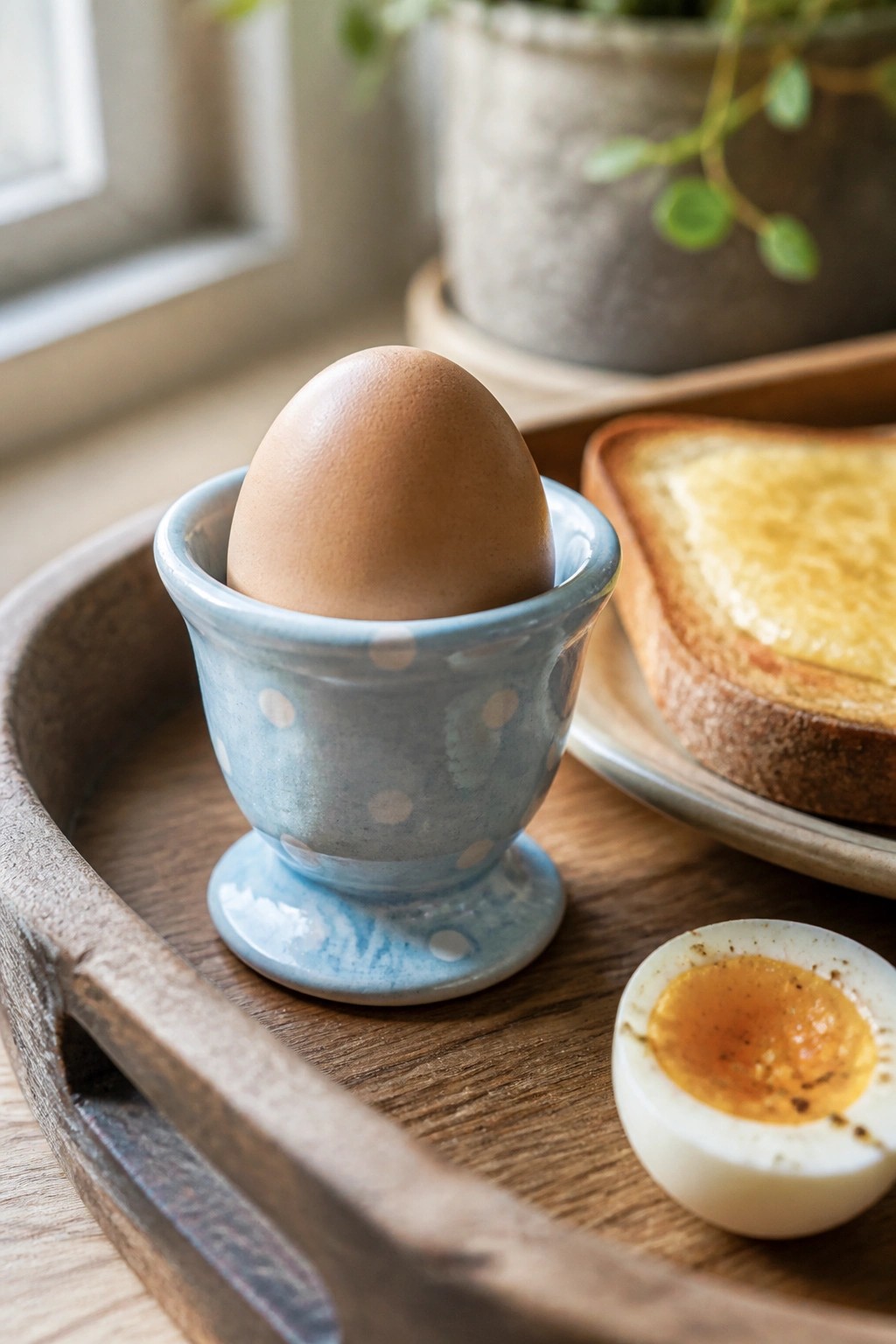
A small footed cup sized to cradle a single egg works as a dedicated holder for soft-boiled breakfasts. The blue glaze with simple white dots creates a clear pattern that stays visible even when the cup sits among plates and trays. This shape keeps the egg stable on the table while taking up very little space in a cabinet.
What makes this idea useful is how the foot and rim can be adjusted to fit different egg sizes without changing the overall form. You could repeat the same dot pattern across a set of cups or swap the dots for stripes to match other kitchen pieces. In a kitchen, this kind of holder pairs directly with toast plates or small trays, and the compact scale makes it simple to turn the same template into a salt cellar or small cream pitcher.
Grapefruit Segment Ceramic Bowl
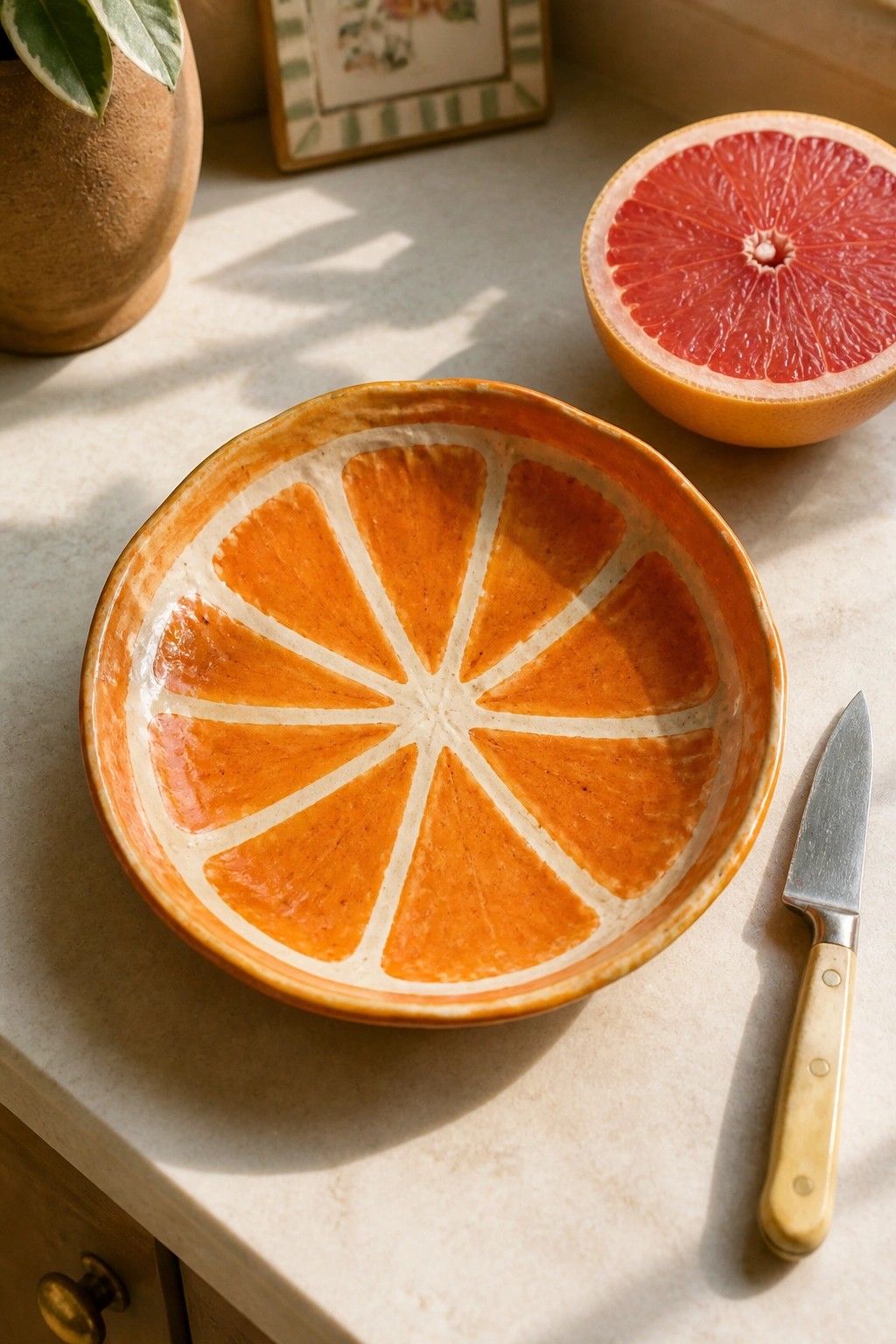
A shallow ceramic bowl decorated with wedge-shaped orange sections divided by white lines creates a direct visual reference to a cut grapefruit. The design uses a radial layout from the center outward, with slight color variation across the segments to suggest natural fruit texture. This turns an ordinary kitchen bowl into a themed serving piece that pairs naturally with actual citrus.
What makes this idea useful is how the painted motif connects the bowl to the food it often holds. You could rework the same layout for other fruits by changing the main color and adding small details like seeds. In a kitchen this kind of piece works well for snacks or as a small prep bowl. The pattern also scales easily to plates or a tray set if you want to repeat the theme.
Ridge-Textured Ramekins for Spreads and Portions
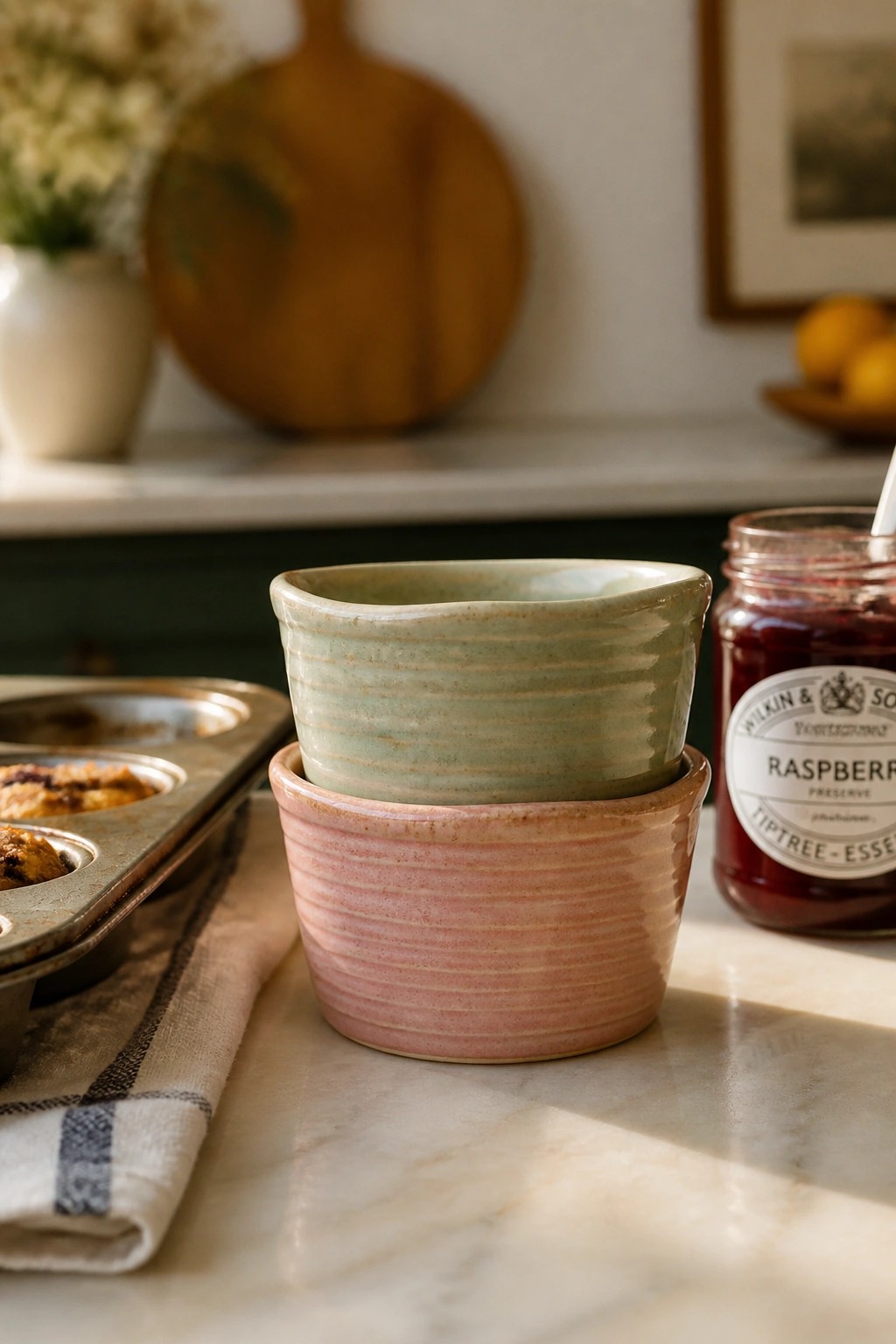
These small ceramic bowls use a simple rounded form with evenly spaced horizontal ridges running around the outside. The soft pink and green glazes keep the surface matte and slightly speckled, while the rims stay slightly irregular for a relaxed finish. Made as a matching pair, they nest together so they take up little storage space when not in use. The shape works well as a kitchen item for holding small servings of jam, butter, or sauces next to toast or muffins.
What makes this idea useful is the compact size that fits neatly beside other breakfast items without crowding the table. You could adapt the ridges by rolling a textured tool or stamp across a slab before forming the bowl, or change the glaze colors to coordinate with existing dishes. In a kitchen, this kind of piece keeps everyday condiments organized and portioned. The same shape scales easily into a set of four or five for gifting, or you could widen the base slightly to turn it into a small prep bowl for spices.
Nesting Ceramic Scoops for Measuring
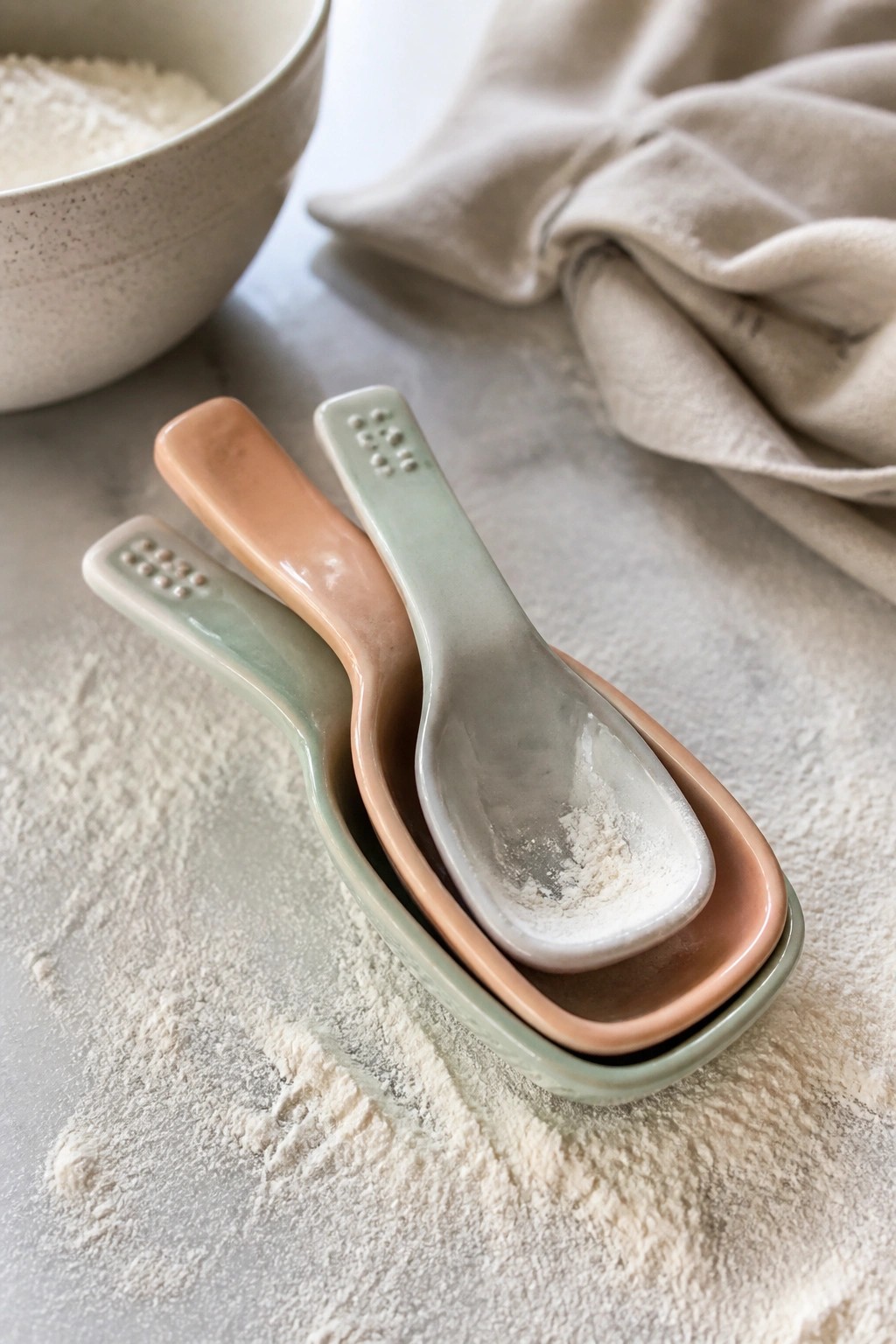
A set of three nesting ceramic scoops gives you a compact way to portion flour, sugar, or spices right at the counter. Each scoop is formed from a simple slab that is curved into a shallow bowl shape with an attached handle. The handles carry a row of small impressed dots that add grip without extra parts. Soft sage, peach, and off-white glazes keep the pieces looking like a matched set while still letting each one be used on its own.
What makes this idea useful is how quickly the same template can be cut in three sizes to create a full measuring set. The nesting shape stacks neatly inside a canister or sits beside the mixing bowl without taking much room. You can change the glaze colors to match your kitchen or swap the dot pattern for lines or stamps if you want a different texture. The same slab method also works for making small tasting spoons or salt spoons using leftover clay from larger projects.
Slab Pitcher for Daily Serving
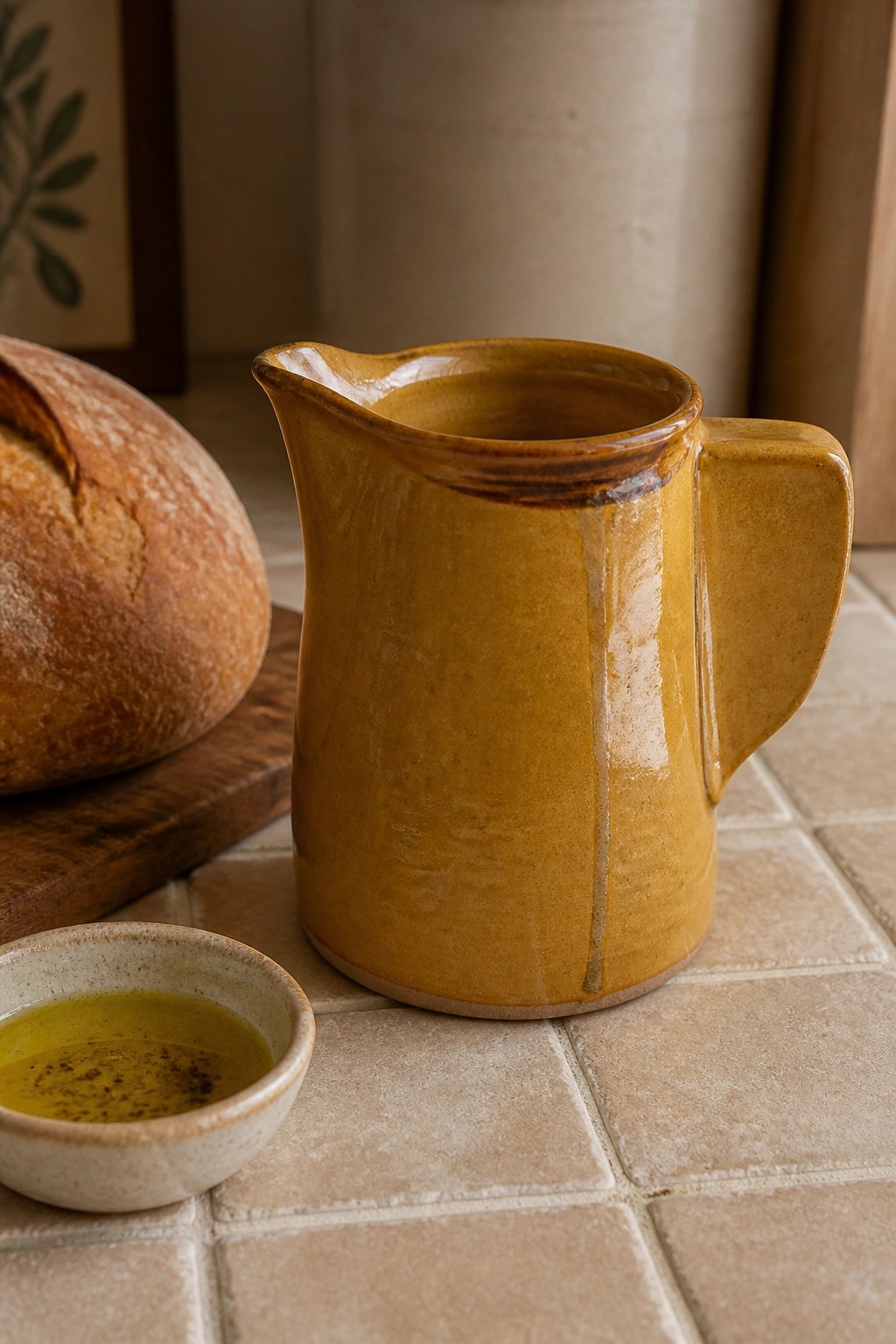
A slab-built pitcher gives you a simple cylinder shape that you can form with basic templates before adding a spout and handle. The straight sides and even wall thickness make it stable on the table while the attached handle stays comfortable to grip. A single solid glaze in warm amber keeps the surface smooth and easy to wipe clean after kitchen use.
What makes this idea useful is how the proportions work for small batches of cream, syrup, or dressings without taking up much counter space. You can change the height or diameter of the slabs to make a shorter version for individual pours or stretch the same pattern into a taller jug for larger servings. In a kitchen this shape stores neatly on open shelves and pairs with other plain dishes since the color does the work instead of added patterns. For a gift the same form can be repeated in different glazes to match a recipient’s existing tableware.
Three-Section Condiment Server
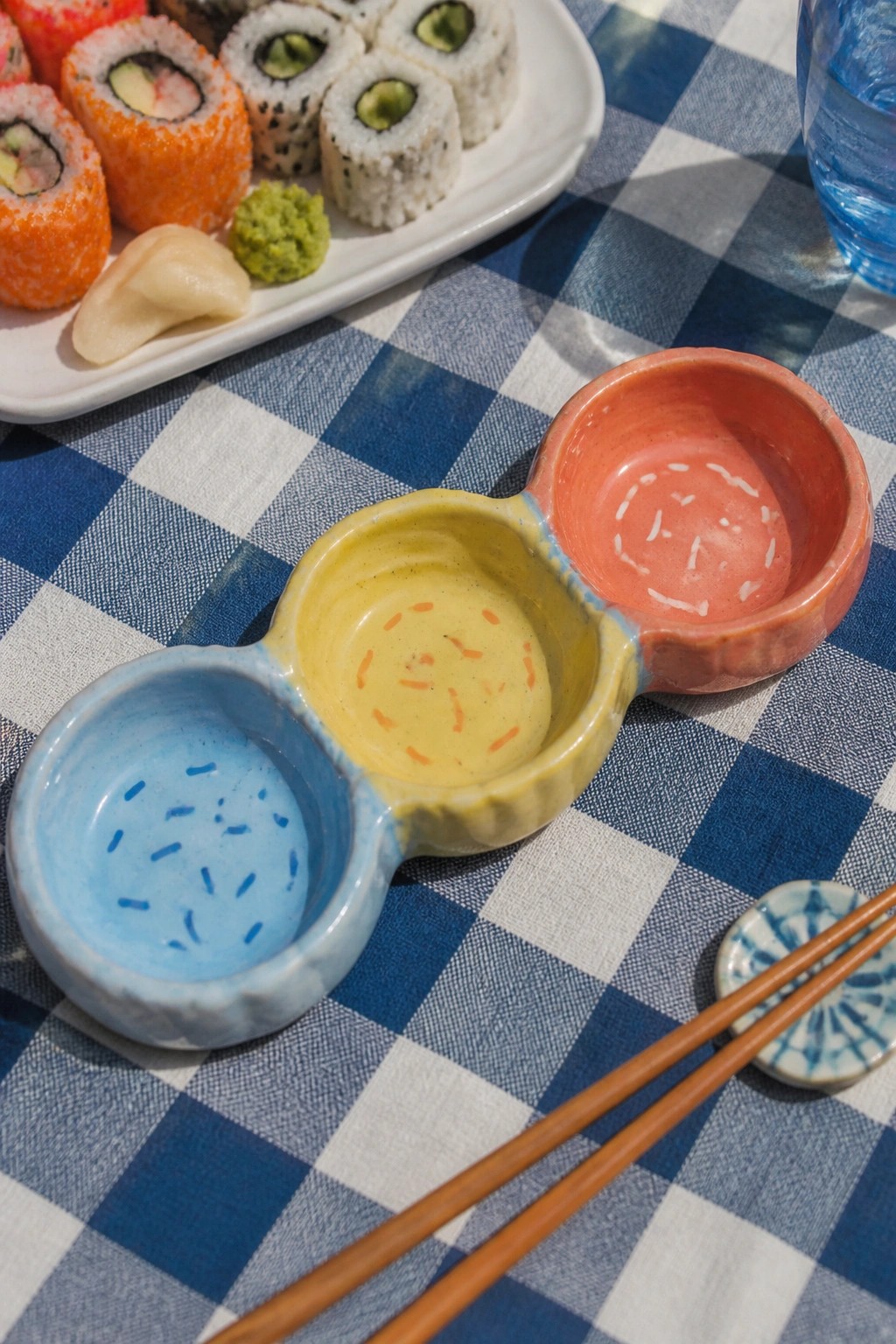
A divided ceramic dish with three connected round compartments serves as a compact holder for different sauces or dips at once. Each section gets its own glaze color, and the joined form keeps the whole piece stable while taking up little table space. The low profile and simple curves come from basic slab building, which makes the shape easy to repeat for kitchen use.
What makes this idea useful is how it keeps several condiments organized without crowding the table. You could adapt it by making just two sections for everyday meals or adding a fourth for larger spreads. In a kitchen, this kind of piece fits well next to sushi, tacos, or snack boards. The small size also means it uses minimal clay and works as a quick project when you want something functional rather than decorative.
Cloud Motif Mug with Built-In Spoon Rest
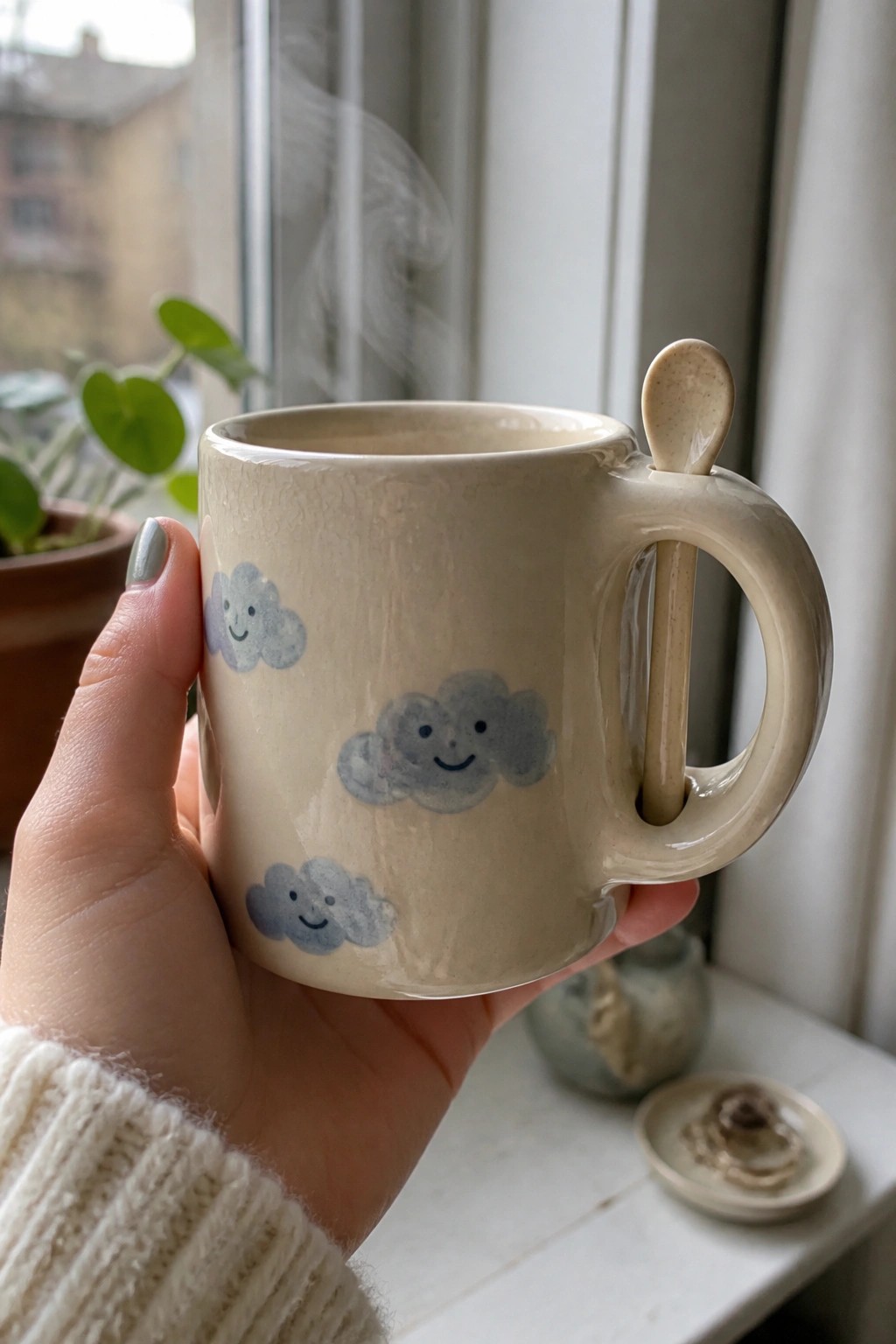
A wheel-thrown or hand-built mug made from stoneware or earthenware clay features a standard handle modified with a vertical slot sized to hold a teaspoon upright. Three simple clouds painted in diluted blue-gray underglaze each carry a small face, spaced across the body on a matte off-white or beige glaze. The design keeps the mug functional for daily drinks while the handle detail adds a practical place to park a spoon without a separate rest.
What makes this idea useful is the spoon slot, which keeps the handle area clear on a desk or small kitchen table. You could swap the clouds for other quick brush shapes like stars or dots and still use the same handle template. The small scale also works well as a template for a matching creamer or sugar bowl set. In a kitchen, this kind of piece solves a minor clutter problem while staying simple enough to repeat in different glaze colors.
Handbuilt Clay Salt Cellar
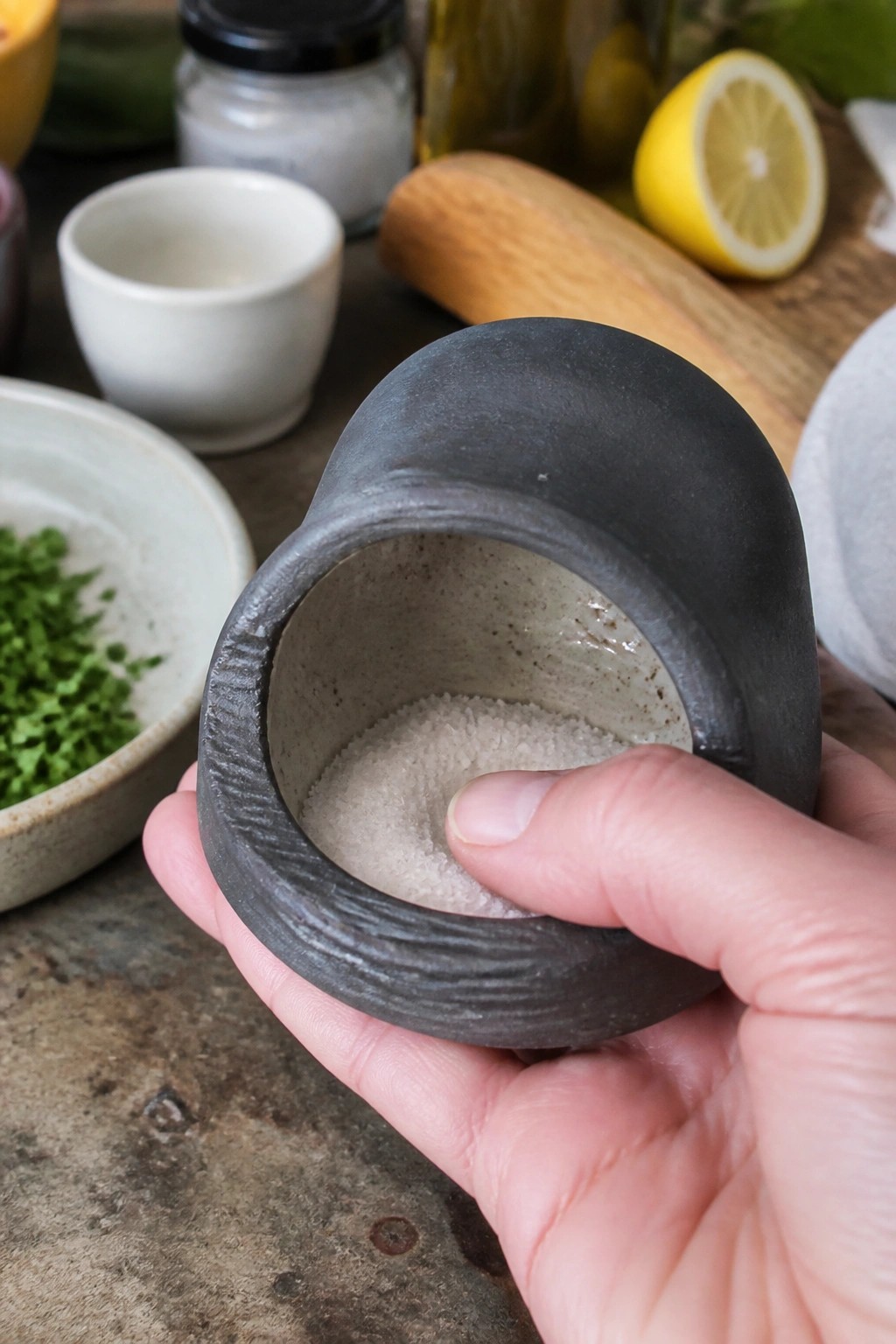
A small ceramic salt cellar gives you a simple way to keep salt or spices within reach on the counter. The rounded form with a thick rim sits steady and holds just enough for daily cooking without taking up much space. The dark clay exterior and lighter interior make the contents stand out while the overall shape stays compact enough to move easily between prep areas.
What makes this idea useful is how the open top lets you pinch salt directly while cooking. You could rework the same size and shape into a holder for loose tea or a small dish for finishing oils. In a kitchen, this kind of piece replaces a plastic shaker with something that fits right next to a cutting board or stove. The scale also makes it easy to batch out several at once for gifts.
Lidded Canister with Leaf Knob for Herbs
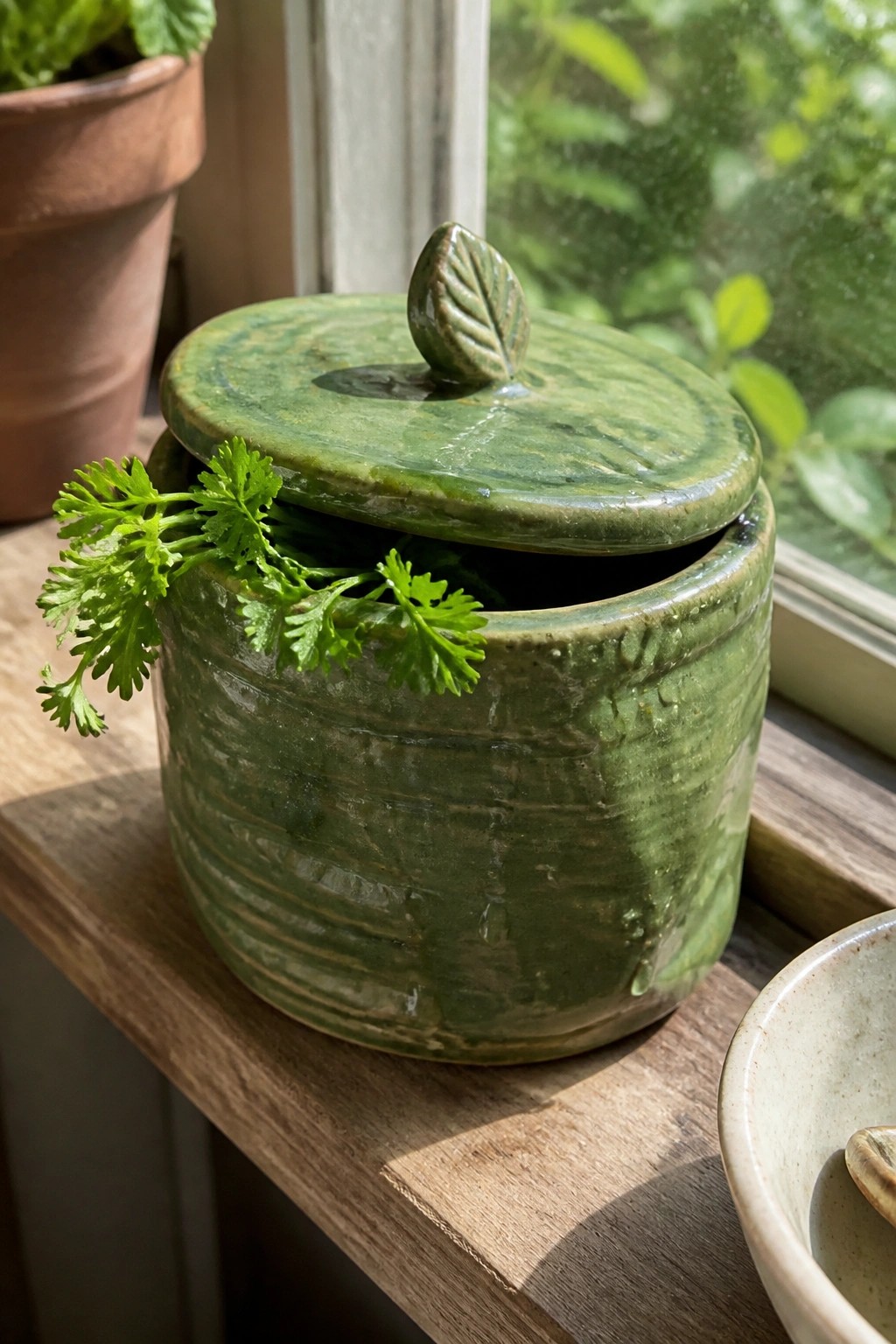
A lidded canister built from clay serves as a practical kitchen holder for fresh herbs. The green glaze and ridged texture give the surface a natural, earthy finish that pairs well with leafy greens. A small sculpted leaf forms the knob on the lid, adding a simple detail that connects the piece directly to its contents without extra decoration.
What makes this idea useful is how the same basic shape and lid can store tea, spices, or coffee beans just as easily. You could swap the leaf knob for a small berry or stem shape to match whatever you keep inside. In a kitchen, this kind of piece keeps herbs visible on a counter or sill while protecting them from air, and the compact size means it takes little shelf space.
Slab Built Wall Spoon Holder
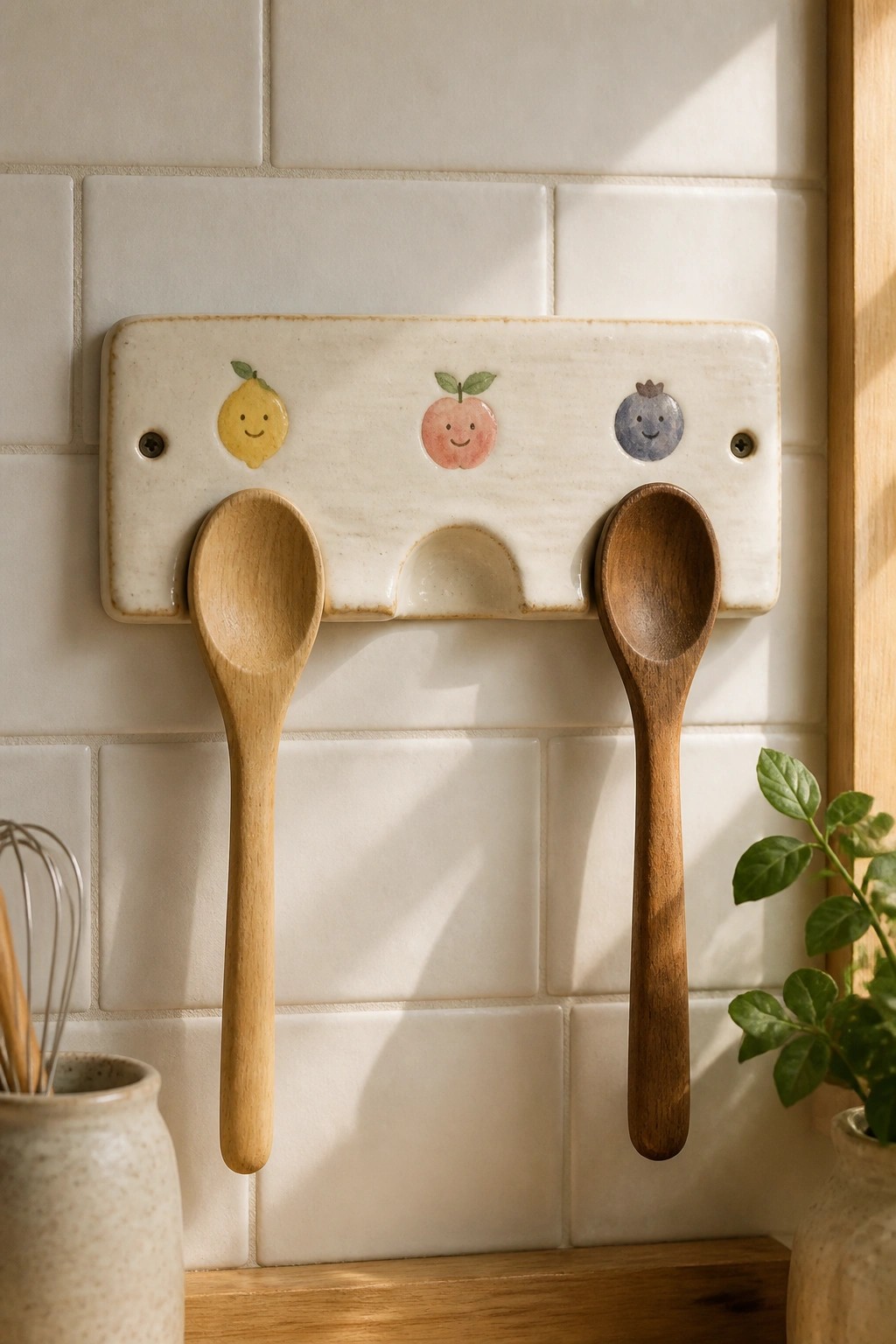
A slab built ceramic spoon holder serves as a simple wall mounted kitchen item that keeps utensils off the counter. The rectangular form includes three painted fruit faces and cut notches along the lower edge sized to hold spoon handles. A pale glaze background keeps the soft fruit colors visible while the overall shape stays flat enough to mount with basic hardware. This kind of project fits the kitchen item category and focuses on everyday storage rather than display.
What makes this idea useful is how the notches can be widened or spaced differently to fit larger spoons or smaller tools like spatulas. The painted fruit motifs can be swapped for any simple shape or color that matches existing kitchen dishes or towels. A piece like this works especially well on a short section of backsplash where counter space is limited. The same slab approach could be reworked into a shorter version for just two spoons or lengthened for a full set of utensils.
Fish-Shaped Chopstick Rests
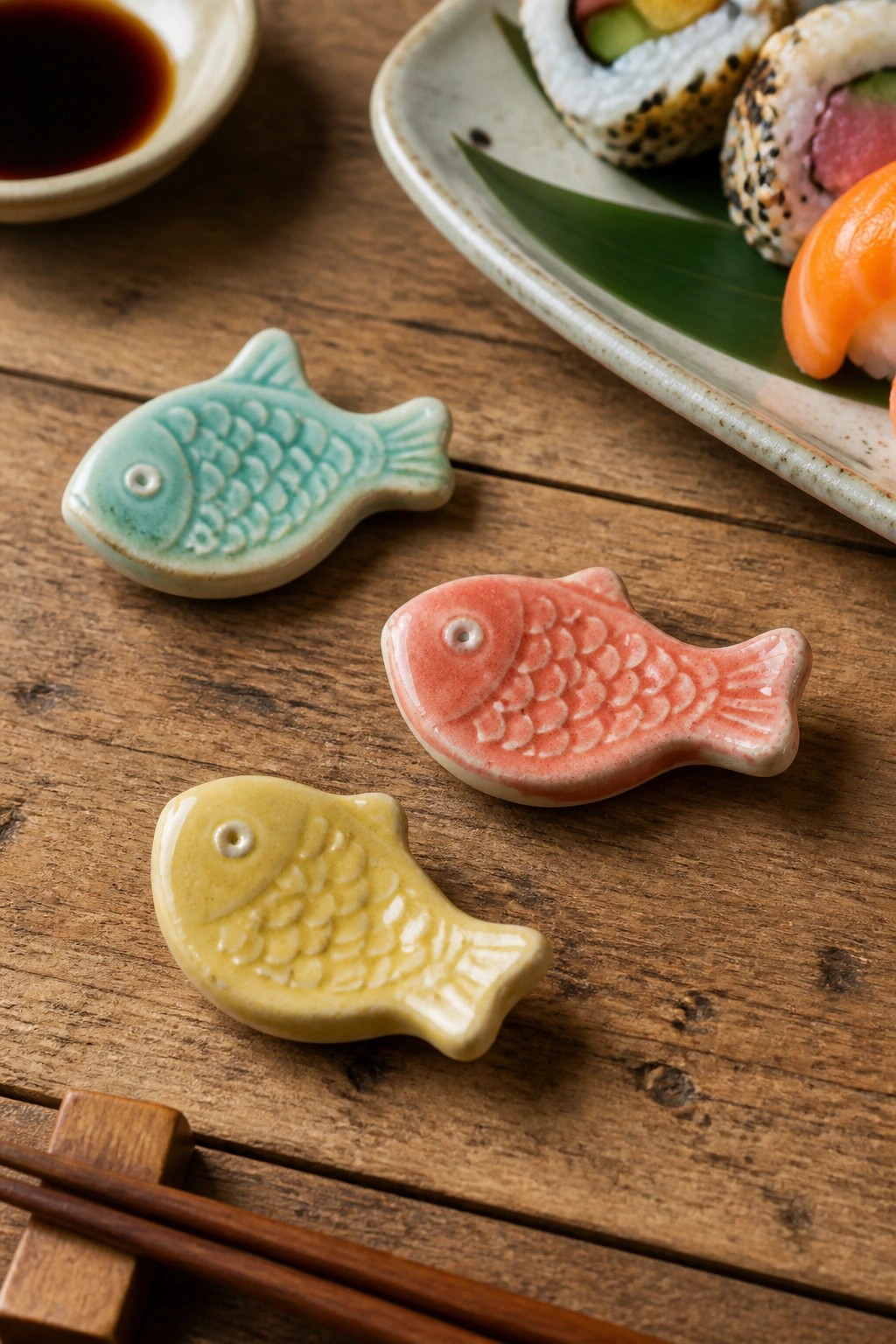
Small fish cut from clay slabs work as chopstick rests for sushi or other Asian meals. The pressed scale texture and fin details give each piece a clear shape while the single hole for an eye adds a simple focal point. Solid glazes in turquoise, coral, and yellow keep the surface smooth and easy to clean.
The shape does a lot of the work here because the fish outline is simple to trace from a template and cut from a thin slab. These rests sit flat beside a plate without taking up much space. You could reuse the same fish form for spoon rests by making them a bit larger or turn them into small decorative accents on a kitchen shelf by adding a magnet to the back. A set like this stands out in a gift box because the colors and theme tie directly to food presentation.
Frequently Asked Questions
1. What everyday essentials work best as templates or supports for these slab pottery kitchen projects? Common items like cereal boxes, plastic containers, rolling pins, and even old books can serve as excellent forms for shaping slabs into trays, coasters, or spoon rests. Cut the cardboard or plastic to the desired size and drape or press the clay slab over it while the clay is still soft. This approach keeps projects simple and low cost while producing consistent shapes that fit right into your kitchen routine.
2. Do these projects require a kiln or can they be completed with air dry clay? Many of the cute kitchen projects can be made with air dry clay if you do not have access to a kiln, though pieces will be less durable and not fully waterproof. For food contact items like butter dishes or herb planters, low fire clay and a kiln firing are recommended so the finished work can be glazed and made sturdy. Start with small test pieces to see which clay type suits your space and tools.
3. How do I ensure the finished pottery is safe for kitchen use? Choose food safe glazes that are labeled lead free and non toxic, then fire them to the correct temperature according to the clay package instructions. Avoid using pieces with cracks or unglazed surfaces that could harbor bacteria. Always test new pieces by washing them thoroughly before first use and check that any lids or handles fit comfortably for everyday handling.
4. What beginner tips help avoid common slab pottery mistakes in these projects? Roll clay to an even thickness of about a quarter inch and let it firm up slightly before cutting shapes so edges stay clean. Keep a spray bottle of water nearby to prevent cracking while you join slabs, and score and slip all seams well. Work on a canvas mat or newspaper to stop the clay from sticking, and allow pieces to dry slowly under a loose cover to reduce warping in items like planters or mugs.
5. How long does it usually take to finish one of these kitchen projects from start to glaze? A single simple project such as a spoon rest or coaster set can be built in one afternoon, then needs one to two days of drying time before bisque firing. Glazing and the final firing add another week depending on your kiln schedule and studio access. Planning ahead for drying stages lets you complete several projects in a batch without rushing any step.

Pottery Path is my cozy corner of the internet where I share clay ideas, pottery inspiration, and simple projects you can recreate at home. I love exploring everything from air dry clay to handbuilt pottery to cute minis that brighten your day. My goal is to make clay crafting feel easy, fun, and welcoming for anyone who wants to try it.
You will find beginner friendly tutorials, creative pottery painting ideas, and lots of warm inspiration for slow and happy crafting. If you enjoy hands on creativity, this space will feel like home.