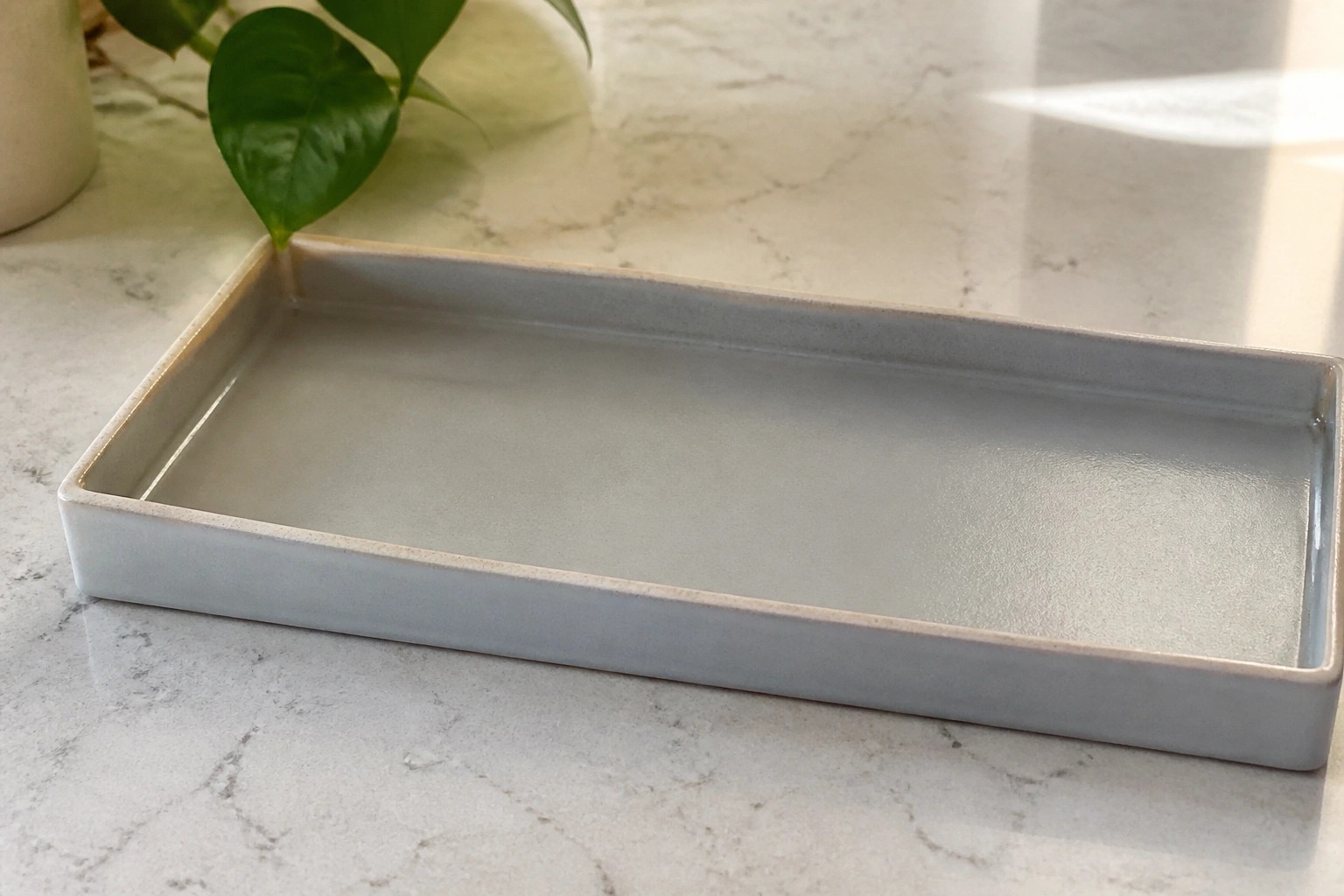
I started making slab pottery trays after seeing how simple the process can be with basic tools.
Keeping the designs minimal helps the pieces look clean and modern without extra effort.
My first few trays were a bit uneven but I learned to roll the clay evenly and cut straight edges.
Now I have a few ideas that might work well for everyday use around the house.
These projects focus on straightforward steps that anyone can follow at their own pace.
Square Slab Tray with Contrasting Rim
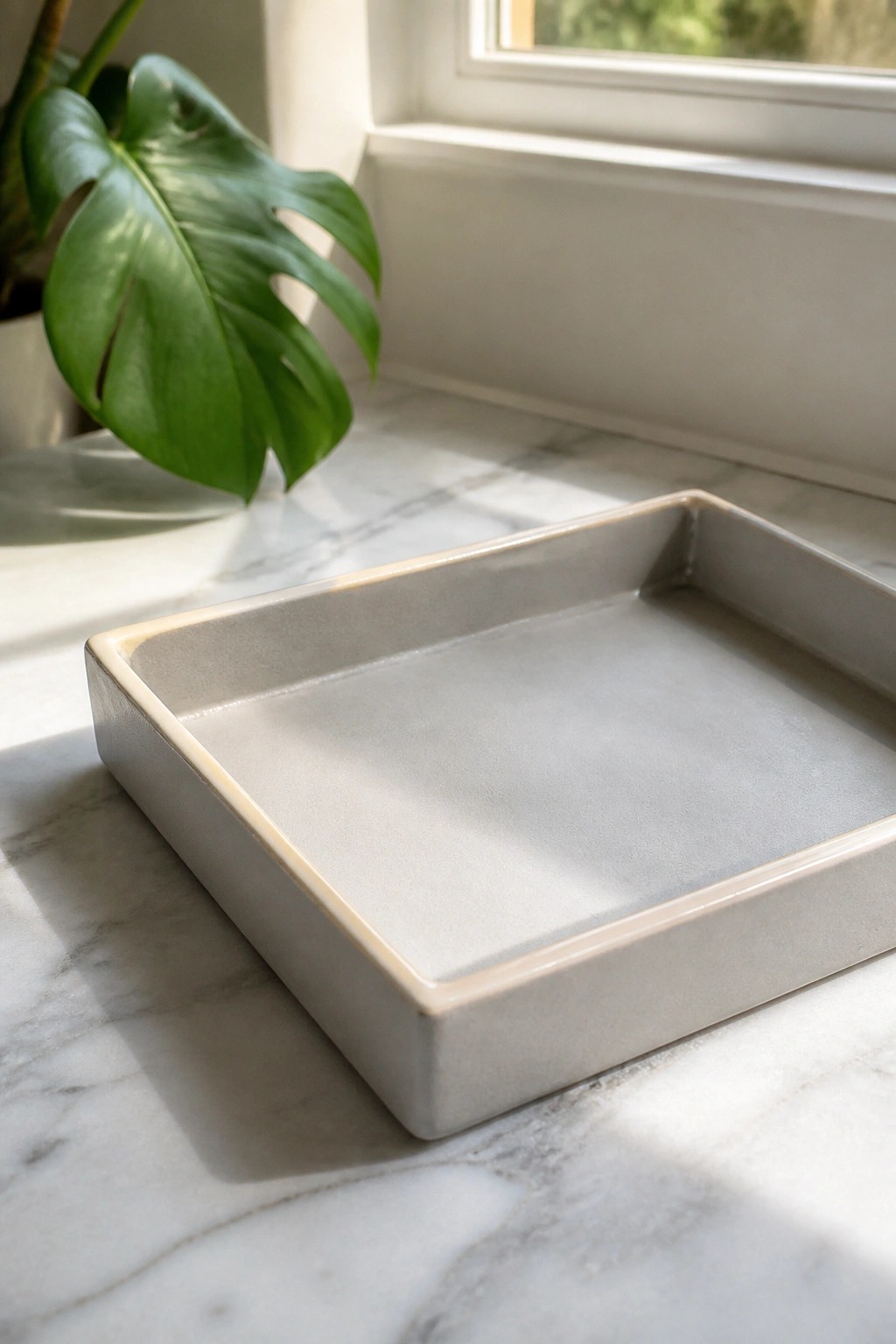
A square slab tray built with straight sides and a low profile creates a clean catch-all for small items. The design pairs a matte gray interior glaze with a lighter rim to add quiet contrast without extra decoration. This keeps the focus on the simple form and works as a basic tray project for desks or counters.
What makes this idea useful is how the flat base and upright walls hold keys, jewelry, or toiletries without anything sliding around. You can scale the size up or down depending on the surface, or swap the rim color to match other pieces in a set. In a bathroom or entryway, this shape stays practical while fitting into a minimal style.
Octagonal Slab Tray with Painted Accent
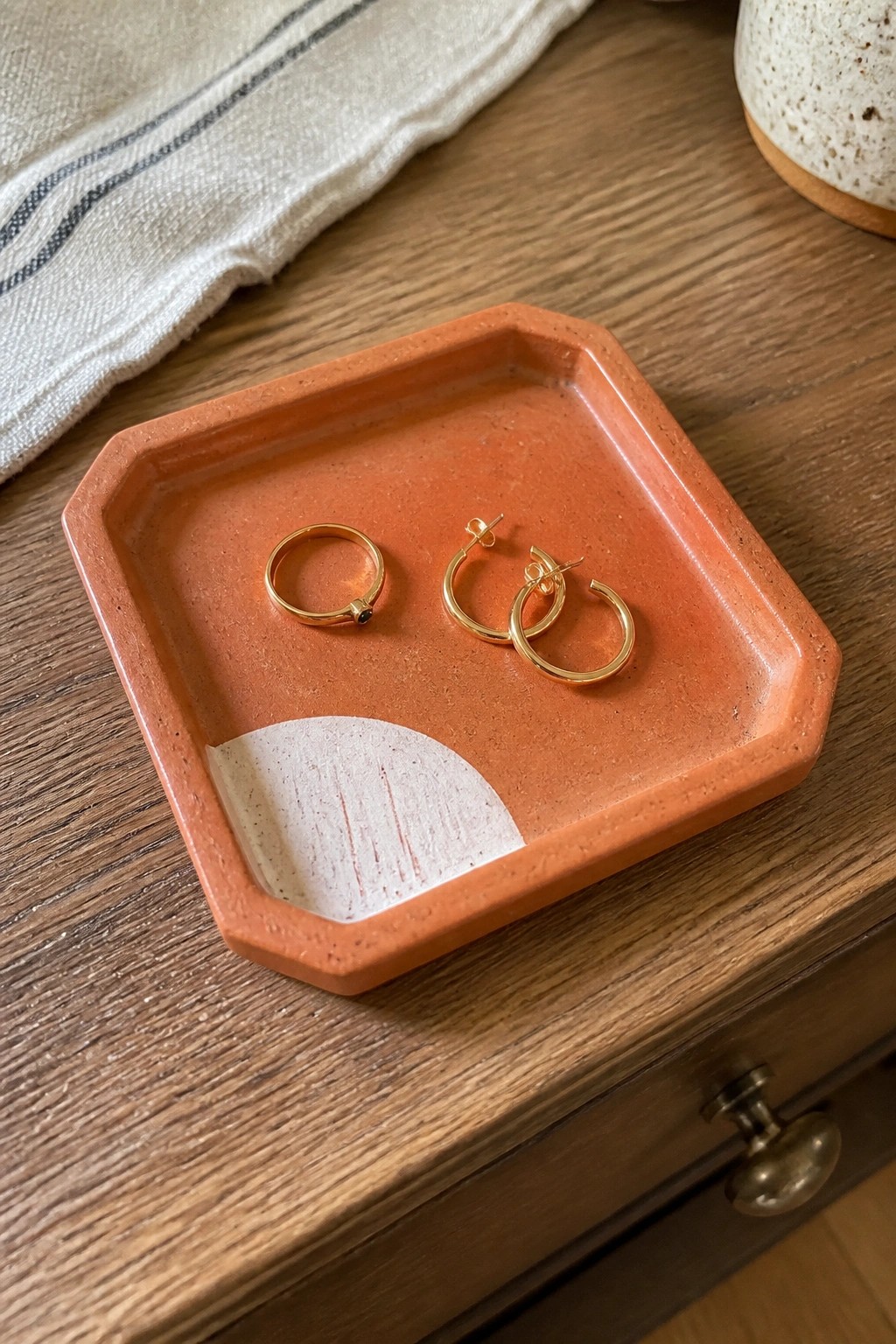
A compact octagonal tray formed from a single slab makes a practical ring dish or jewelry holder. Straight edges give the piece a clean modern outline while the terracotta surface contrasts with a simple white semicircle and a few straight red lines. The small size keeps the tray focused on holding just a few items without taking up much space. This approach fits the category of minimal slab trays that rely on basic cutting and surface detail rather than complex construction.
What makes this idea useful is how the octagonal shape can be cut from any slab thickness and still read as intentional. You could replace the white section with a different clay color or skip the lines for a plain version that still works. Scale the same template up a bit to make a soap dish or keep it small for a desk tray that catches keys and coins. The limited palette and straight lines make the finished piece easy to repeat or tweak for matching sets.
Minimal Oval Soap Dish Built from Slab Clay

A slab-rolled oval tray works well as a soap dish because the flat form holds a bar steady while two shallow parallel ridges raise it off the base for drainage. The design keeps the overall shape simple with a soft rounded edge and a light mint glaze on the interior that contrasts with the unglazed speckled rim. This approach fits the category of small bathroom trays that stay functional without extra decoration or complex carving.
What makes this idea useful is how quickly it adapts to other small trays like a ring dish or sponge holder by changing the ridge pattern or overall size. The oval proportions sit neatly beside a sink without taking much counter space and the drainage channels prevent water from pooling on the surface. You can build the same layout in a slightly longer rectangle if you want it to hold a larger bar or two smaller items. The clean lines make it easy to repeat in different glaze colors for matching sets.
Two Tone Slab Catch Tray
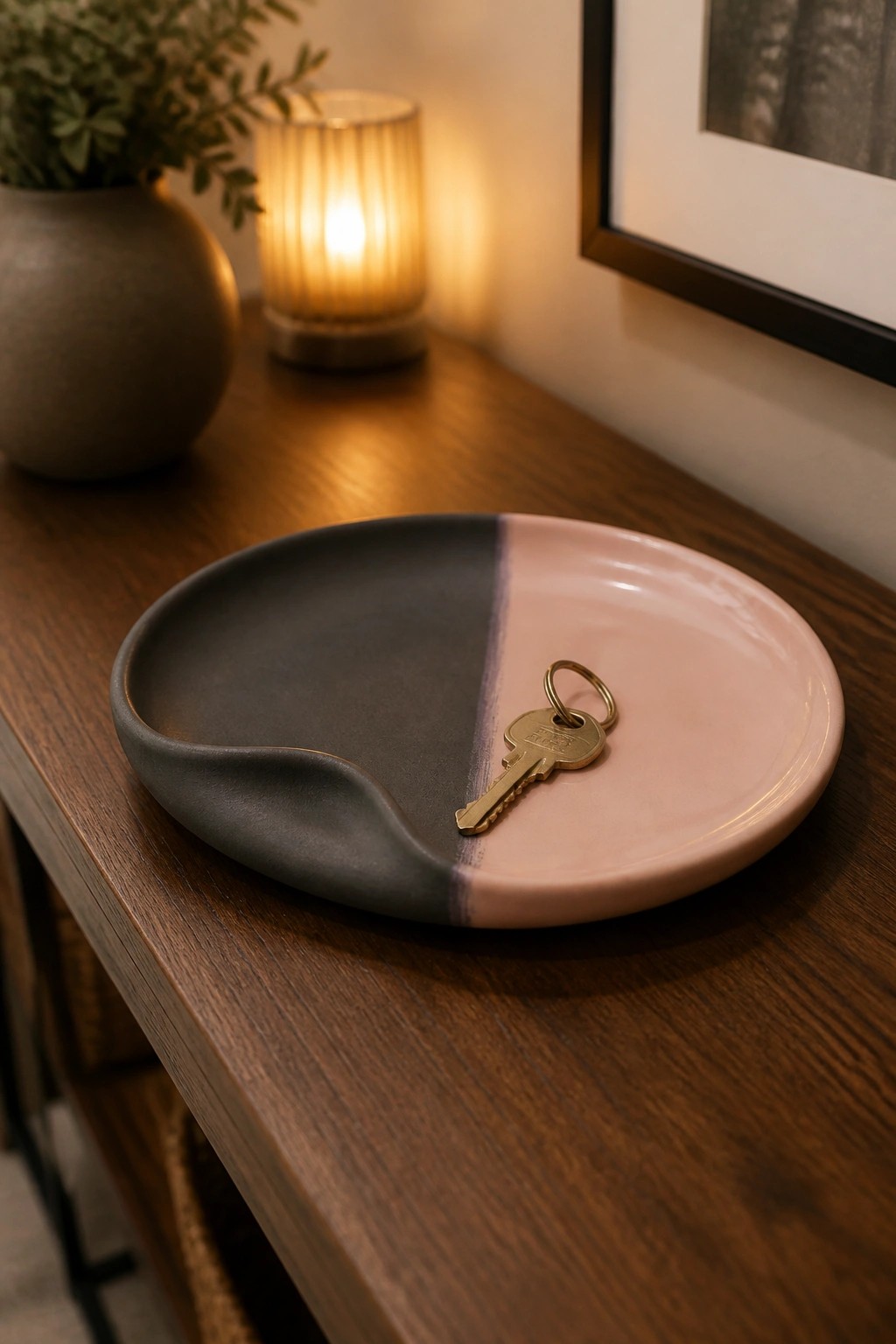
A slab-built tray with a straight split between two glazes creates a clean modern look using just one seam and two colors. The low profile and slightly wavy rim keep the form simple while the matte dark section contrasts with the glossy pink side. This style fits the catch-all tray category and works as a small desktop or entry piece for keys and daily items.
What makes this idea useful is how the color split can be swapped out to match any room without adding patterns or texture. The compact oval shape adapts easily into a longer version for a bathroom counter or a round one for jewelry. You could roll out the same slab and use different glaze pairs to make a set that coordinates across a few rooms.
Rectangular Slab Tray Raised on Short Feet
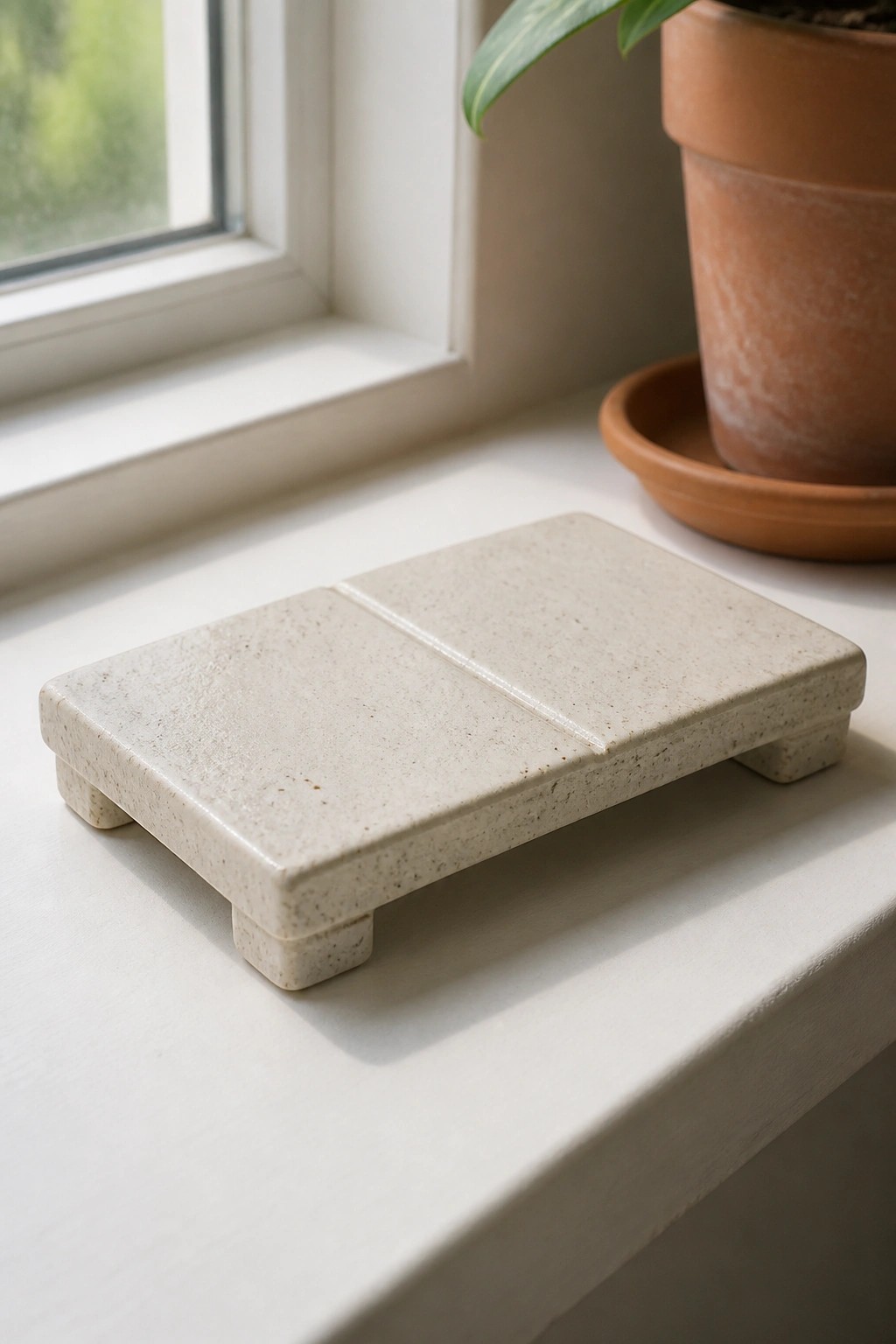
A simple rectangular tray built from a flat slab of clay, lightly scored down the middle and lifted on four short rectangular feet. The speckled surface comes from the clay body itself rather than added glaze, giving a matte, stone-like finish that stays minimal. This project sits in the slab tray category because it uses basic rolling and cutting with almost no additional shaping or carving.
The shape does a lot of the work here by creating a low platform that keeps items off damp surfaces. You could scale the same dimensions up for a larger catch-all or shorten the feet to make a flatter version for jewelry. In a bathroom or entryway this kind of tray works well because the clean edges and neutral tone blend with most styles without drawing attention.
Minimal Rectangular Slab Tray
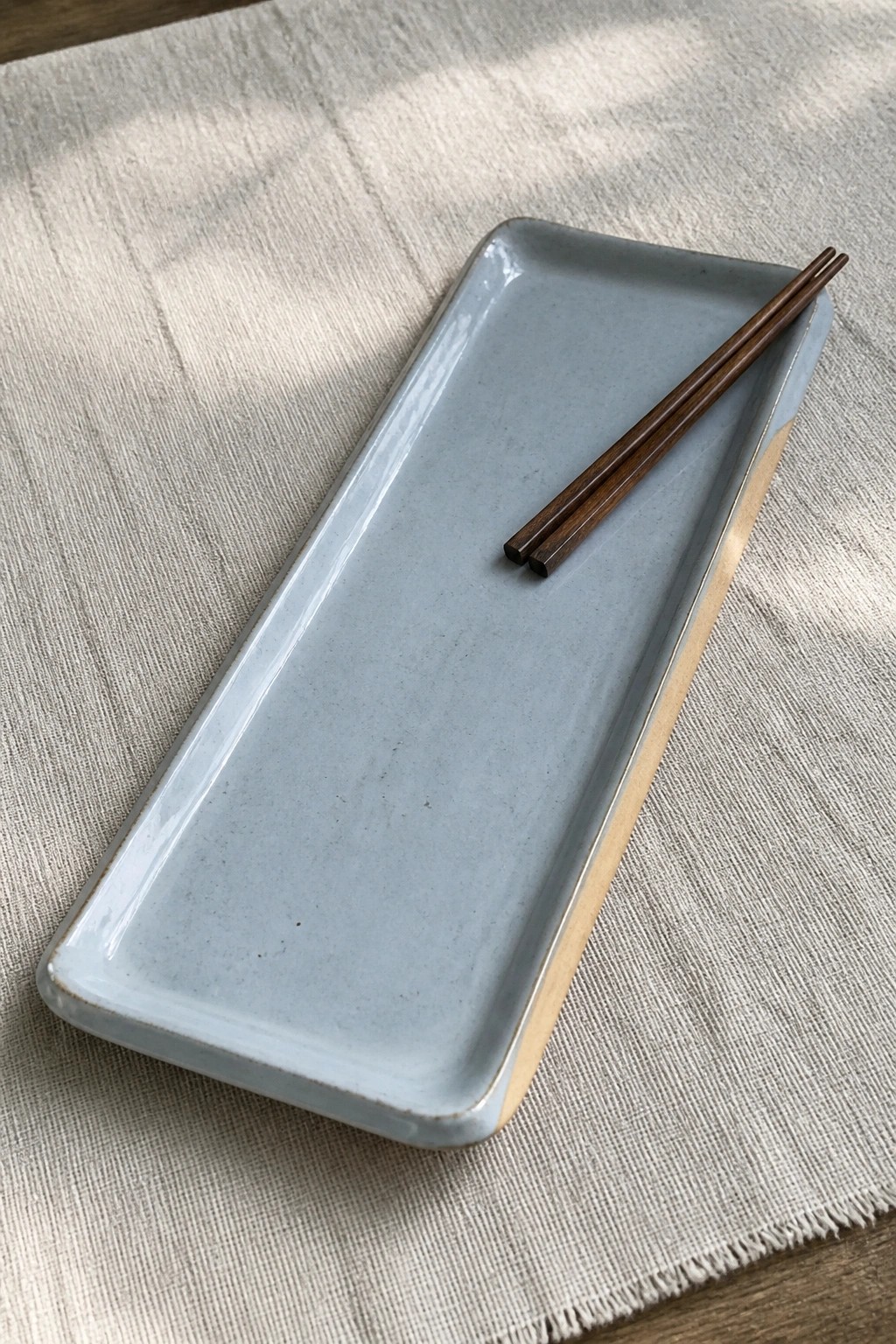
A rectangular slab tray built with straight sides and a flat base gives you a simple serving piece that works for sushi, appetizers, or small snacks. The soft blue-gray glaze covers the surface evenly while letting the clay edges show through in places. Low walls keep items from sliding off, and the long shape leaves room for chopsticks or utensils alongside the food.
What makes this idea useful is how the basic rectangle can be lengthened or shortened depending on what you plan to serve. You could make two or three in different sizes to stack or use as a set. The same slab method works for a desktop catchall if you skip the glaze and leave it unglazed for a matte finish. In a kitchen this shape stays practical because it fits on shelves without taking much space.
Rectangular Divided Tray with Clean Slab Sections

A slab-built tray with two main compartments and one smaller inner section creates a simple layout for snacks or small items. The straight walls and flat surfaces keep the form minimal while the low profile makes it easy to stack or store. A single matte glaze in a warm tone unifies the piece and emphasizes the geometric divisions without extra decoration.
What makes this idea useful is how the fixed sections organize olives, nuts, or condiments without extra dishes. You could change the divider placement to fit jewelry or bathroom items instead. Scaling the overall size down turns the same layout into a compact desk tray, and the clean lines translate well to other neutral glaze colors for a consistent set.
Dark Oval Slab Tray with Edge Perforations

A slab-built oval tray in a matte dark finish creates a low-profile surface that holds a candle or small items without drawing attention to itself. The irregular oval shape keeps the piece from looking too rigid, while a single line of small punched holes along one edge adds subtle texture. This approach fits the clean, minimal tray category where the focus stays on the form and surface rather than added decoration.
What makes this idea useful is how the same slab method can be adjusted for a longer version to hold soap or a shorter one for rings. The dark finish works in most rooms and makes the perforations the only accent, so you can easily leave them out or change their placement. The scale stays small enough to try on a standard workspace without needing much clay.
Slab Built Serving Tray with Cutout Handle
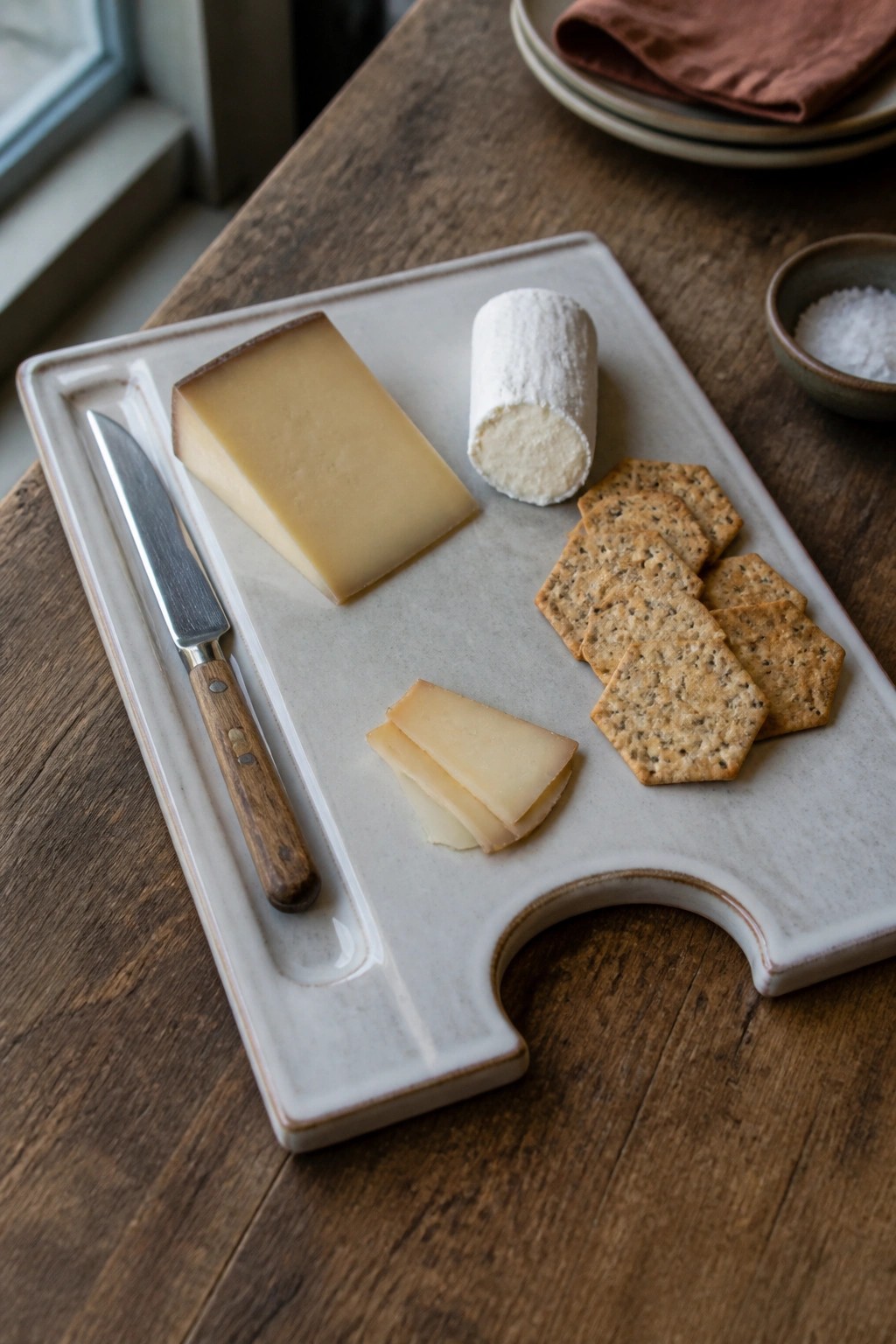
A rectangular slab tray built from clay creates a simple serving surface for cheese and crackers. The form stays flat with straight edges and a single rounded cutout on one end that functions as a handle. A light matte glaze covers the surface while leaving the clay edges slightly exposed for contrast. This approach keeps the project in the kitchen tray category with minimal shaping required.
What makes this idea useful is how the handle cutout adds function without extra pieces. Scale the rectangle down to make appetizer plates or widen it for larger boards that hold multiple items. The clean lines work well on a table setting because they do not compete with food or other dishes. You could swap the solid surface for a textured one or change the glaze color to match different kitchen styles.
Oval Slab Ring Dish in Soft Sage Glaze
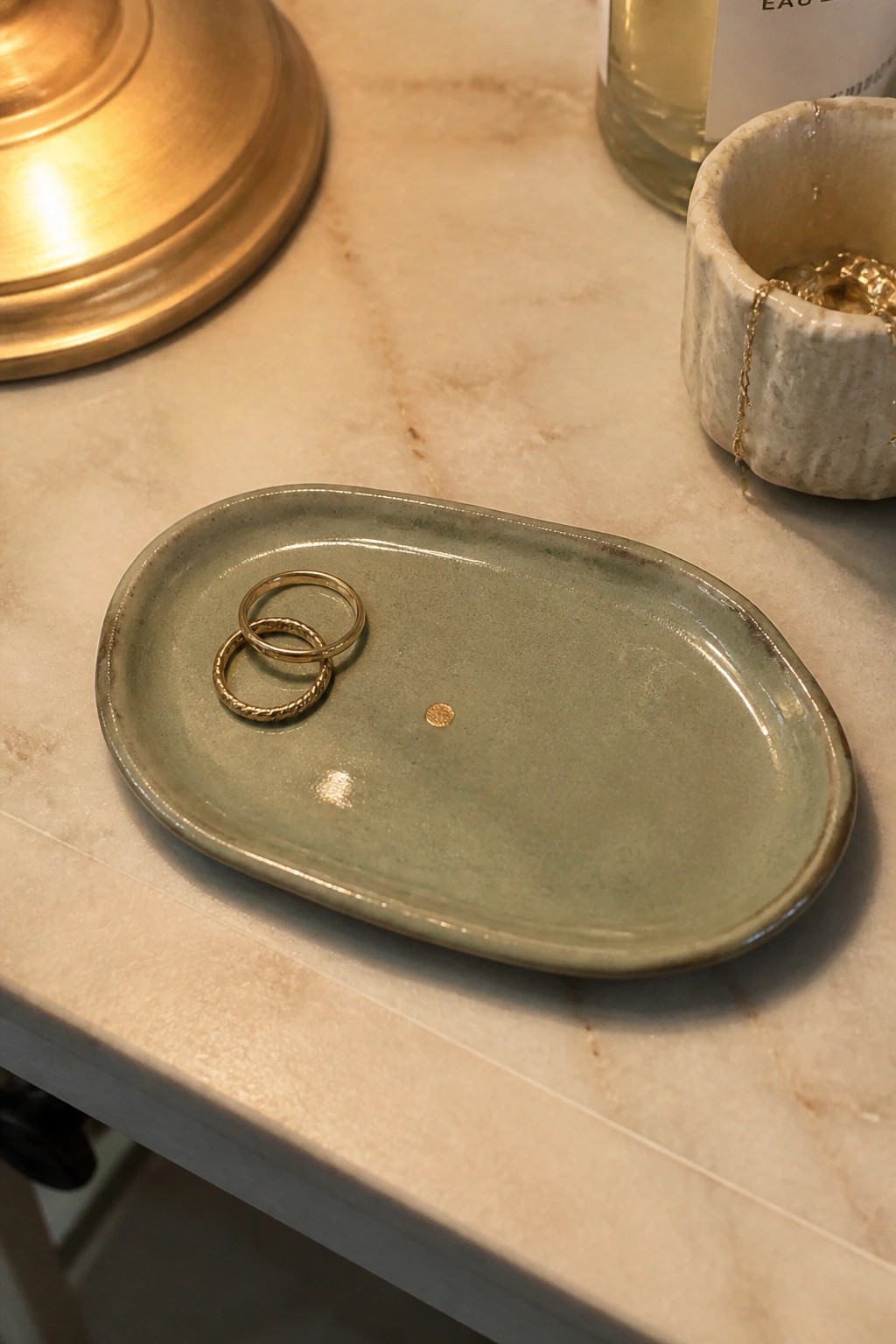
A small oval tray built from a single slab of clay works well as a ring dish. The elongated shape stays simple and functional while the muted green glaze creates a quiet surface that lets the form stand out. Hand-trimmed edges and a light speckled finish keep the look minimal without extra carving or texture. This type of project fits easily into the small tray or jewelry holder category.
What makes this idea useful is how the oval proportions hold a few rings or small items without crowding a surface. You could roll out the same slab shape in different lengths or swap the glaze for a matte off-white to change the feel. In a bathroom or on a nightstand, the compact size keeps everyday jewelry in one spot. Scaling the width down slightly would turn the same idea into a slim tray for keys or loose change.
Minimalist Slab Tray with Soap Well and Brush Slots
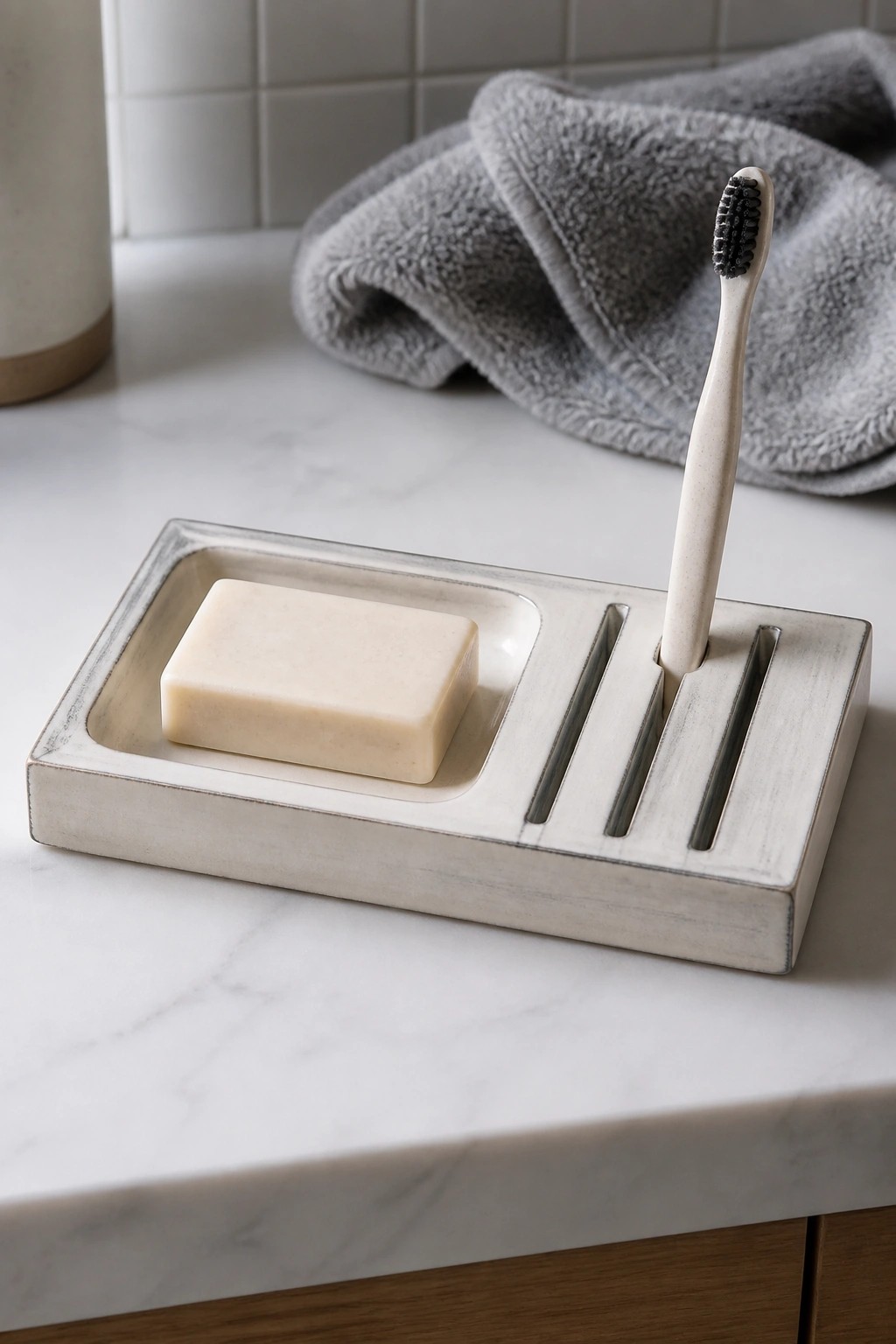
A slab-built ceramic tray creates two separate zones in one flat piece. The left side forms a shallow rectangular well to hold a bar of soap, while the right side features several parallel vertical slots sized to keep a toothbrush standing upright. Straight edges, low walls, and a matte off-white glaze keep the overall shape simple and functional as a bathroom accessory.
What makes this idea useful is the way it combines soap storage and toothbrush support in a single counter item that stays compact. You can adjust the number or width of the slots to match different brush handles or shorten the tray for smaller sinks. In a bathroom this layout reduces clutter and works well as a gift because it solves two needs at once. The same slab method could be reworked into a wider version for multiple brushes or a narrower one for travel.
Rolled Edge Slab Tray for Utensils

A long rectangular slab tray with both short ends rolled upward creates a low-sided holder that keeps spoons or small tools in place. The surface uses a split glaze application with a dark section on one side meeting a lighter section on the other, leaving most of the clay smooth and untextured. This shape works as a basic kitchen or countertop tray because the rolled ends add height without needing extra walls or handles.
What makes this idea useful is how the rolled ends can be formed tighter or looser depending on the slab thickness you start with. The two-tone glaze keeps the design minimal while still giving the piece clear visual weight, so it blends into a simple kitchen setup or works as a small catchall near the stove. You could shorten the overall length to hold just one or two tools or change the glaze split to run lengthwise instead. In a modern kitchen this tray stands out on Pinterest because the clean slab form pairs easily with everyday items like wooden spoons.
Crescent Indent Match Tray
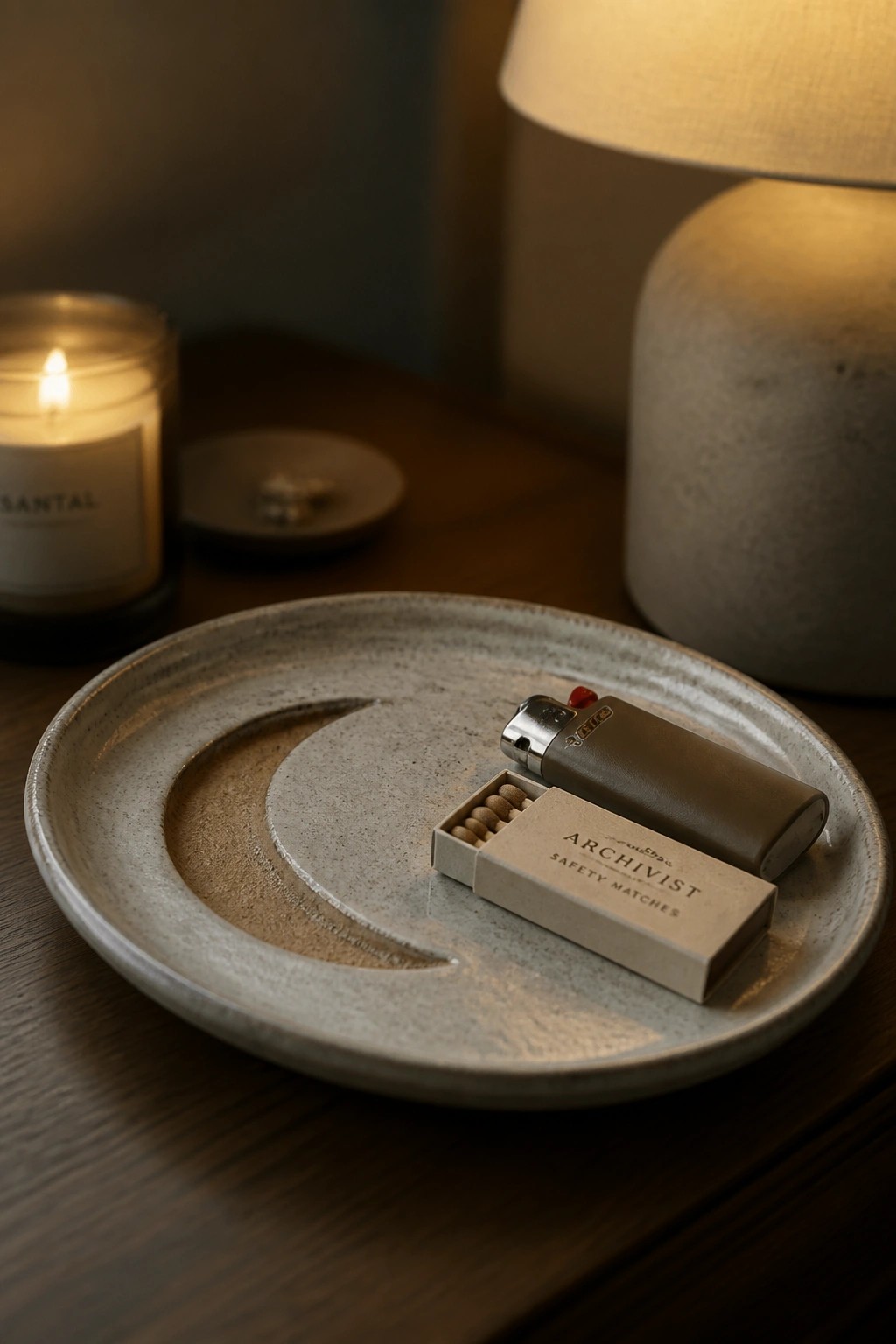
A slab built tray with a large crescent indentation creates a low-profile catchall for small items. The speckled matte surface and simple curved recess keep the design minimal while the open shape prevents clutter from shifting. This fits the tray category for bedside or desk use where everyday objects need a designated spot.
The shape does a lot of the work here by turning a flat surface into organized storage without extra dividers. You could scale the same slab template down for a ring dish or stretch it into a longer version for keys and coins. In a bathroom this kind of piece holds cotton swabs or hair ties just as easily.
Minimal Rectangular Tray With One Thin Line
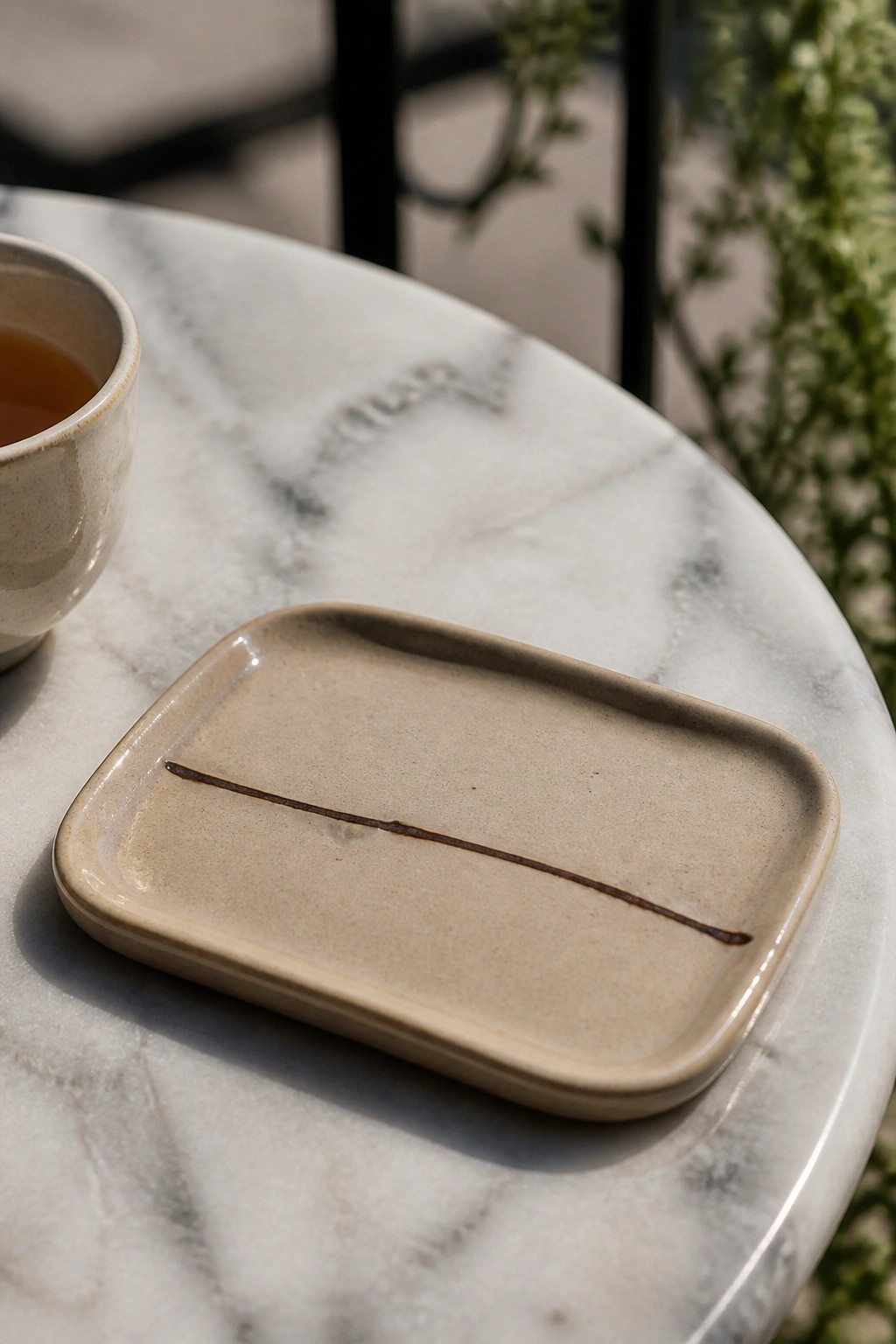
A rectangular slab tray like this keeps the form simple with straight sides and rounded corners that feel balanced without extra detail. The single narrow dark line running across the surface gives the piece its only decoration, letting the clay color and the clean shape carry the design. This type of project fits the modern minimal tray category because it relies on basic slab construction and a restrained surface treatment rather than added texture or multiple colors.
What makes this idea useful is how quickly the shape can be adapted for different uses such as a jewelry dish, a tea bag rest, or a small desk tray. You could change the line into two shorter marks or move it off center if you want a slightly different look while keeping the same minimal feel. The neutral tone works on most surfaces, so the tray blends into kitchen counters or entryway tables without competing with other items. For a gift, the straightforward layout makes it easy to repeat in a few different sizes.
Nested Rectangular Slab Trays
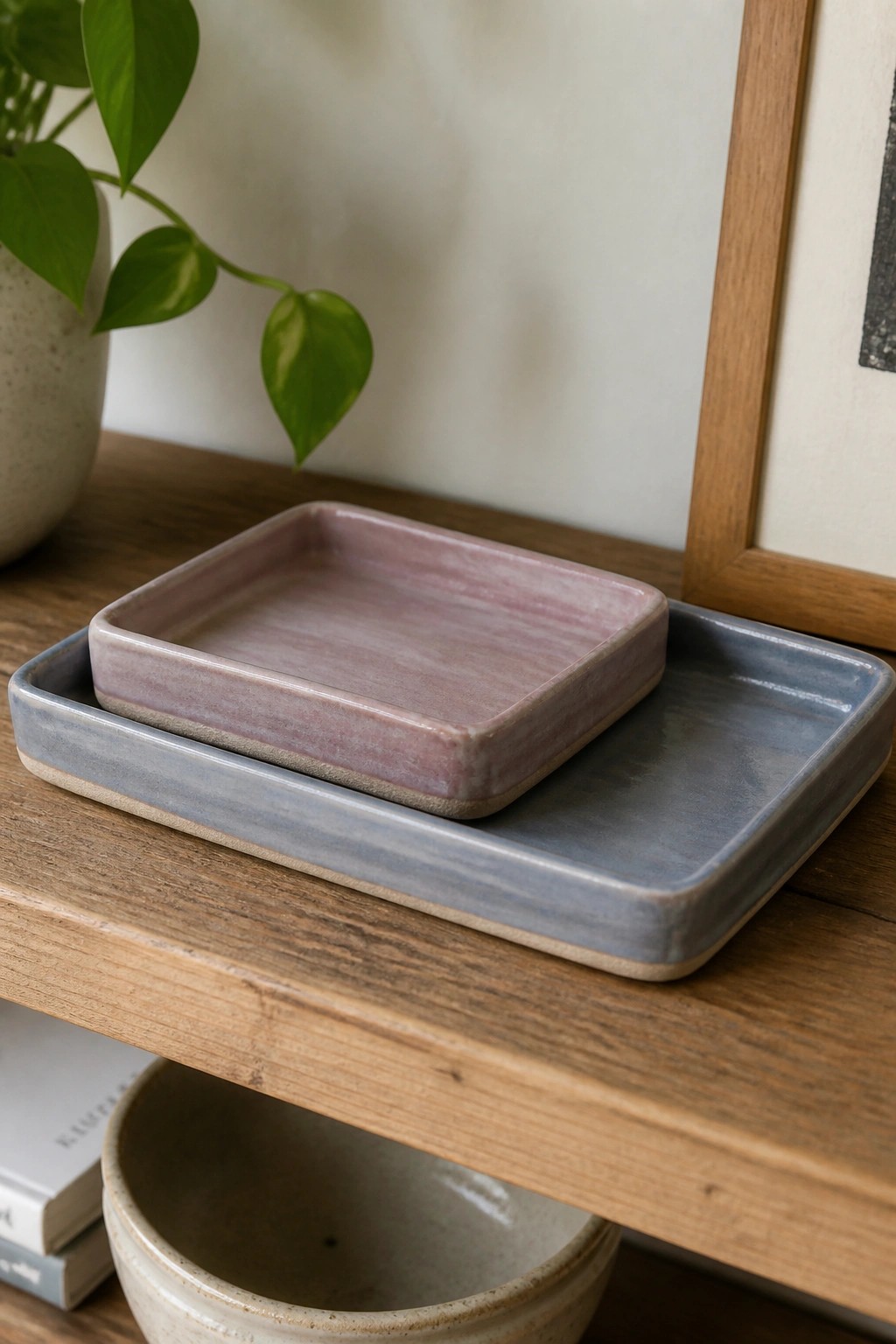
Two rectangular trays built from flat slabs create a simple nesting set that stays functional on its own or stacked. The larger tray forms a stable base while the smaller one sits inside it, both finished with upright edges that keep contents contained. A soft pink glaze on the top tray and a blue-gray glaze on the bottom one let the clay body show through at the rims, giving the pieces a quiet contrast without extra decoration.
What makes this idea useful is how the two sizes work for different tasks like holding jewelry, keys, or small desk items. You can easily change the dimensions to make a single larger tray or a set of matching squares instead. The same clean slab construction adapts well to bathroom counters or entryway tables where you need low-profile storage. A version in one solid glaze color would also keep the focus on the simple rectangular form.
Three-Well Slab Tray for Small Items
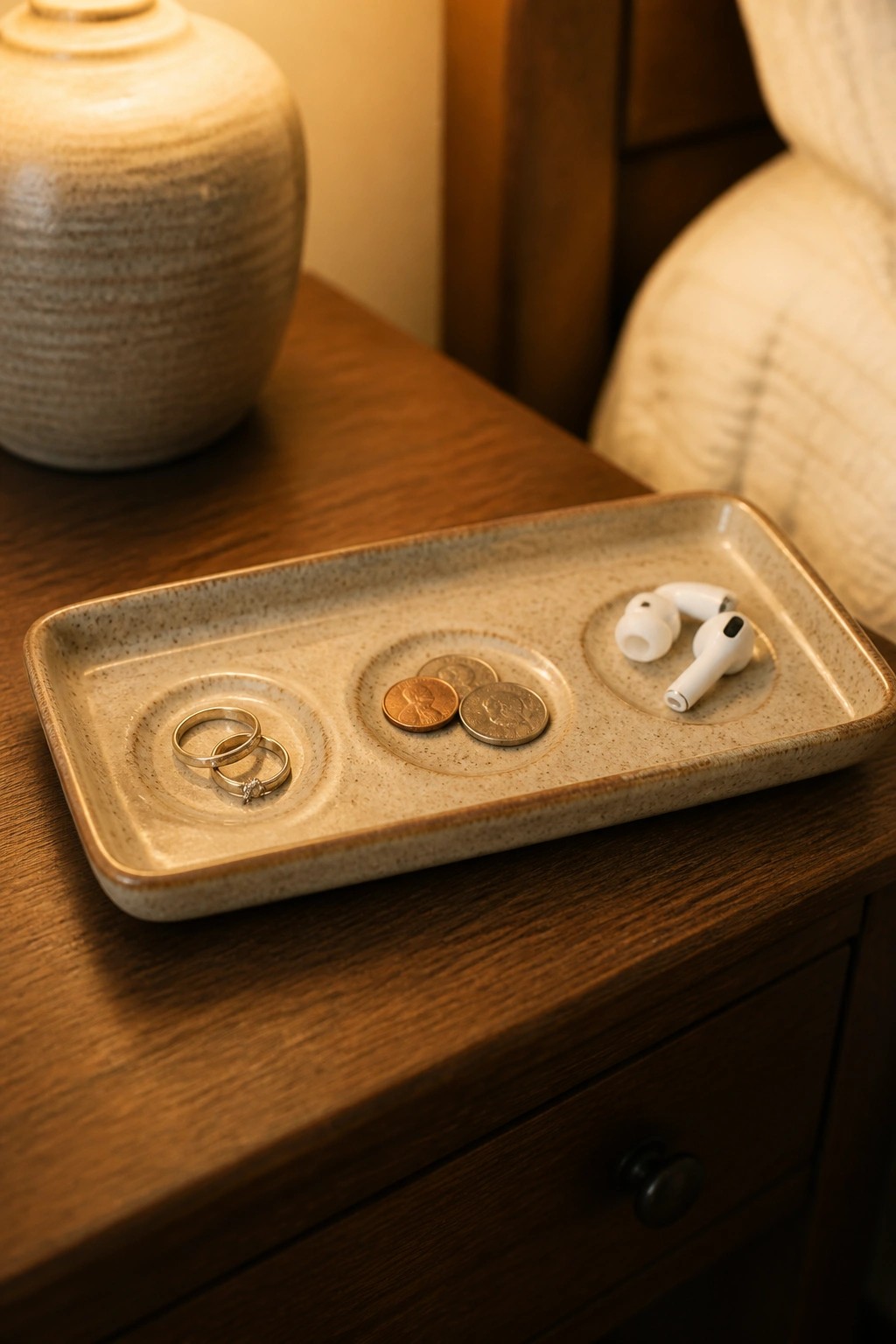
A rectangular slab tray with three recessed circular wells keeps small objects separated and easy to reach. The matte speckled glaze and simple rounded edges give the piece a quiet, functional look that works on a nightstand or desk. This style of tray fits the catch-all category and handles mixed items like jewelry, coins, and earbuds without needing extra dividers.
The shape does a lot of the work here by turning one flat slab into three distinct spots that stop things from rolling together. You could repeat the same layout at a larger size for keys and mail or shrink one well to make a dedicated ring dish. The neutral finish makes it simple to match different rooms, and the low walls keep the overall form minimal while still holding daily carry items in one place.
Minimal Oval Slab Tray with Brushstroke Accent

An oval tray formed from a single slab of white clay carries a smooth glossy surface and one wide blue brushstroke that runs diagonally across one side. The shape stays simple with slightly raised edges that keep the piece functional without adding extra detail. This kind of project falls into the minimalist tray category, where the clean form and single painted element create contrast without clutter.
The small scale keeps the slab easy to roll, cut, and dry evenly before firing. You can adapt the same layout by changing the brush direction, width, or color while keeping the rest plain. It suits holding a few cookies, a slice of cake, or small bathroom items on a counter. The single-stroke design also translates well to a longer rectangular version for jewelry or keys.
Rectangular Slab Tray With Etched Grid
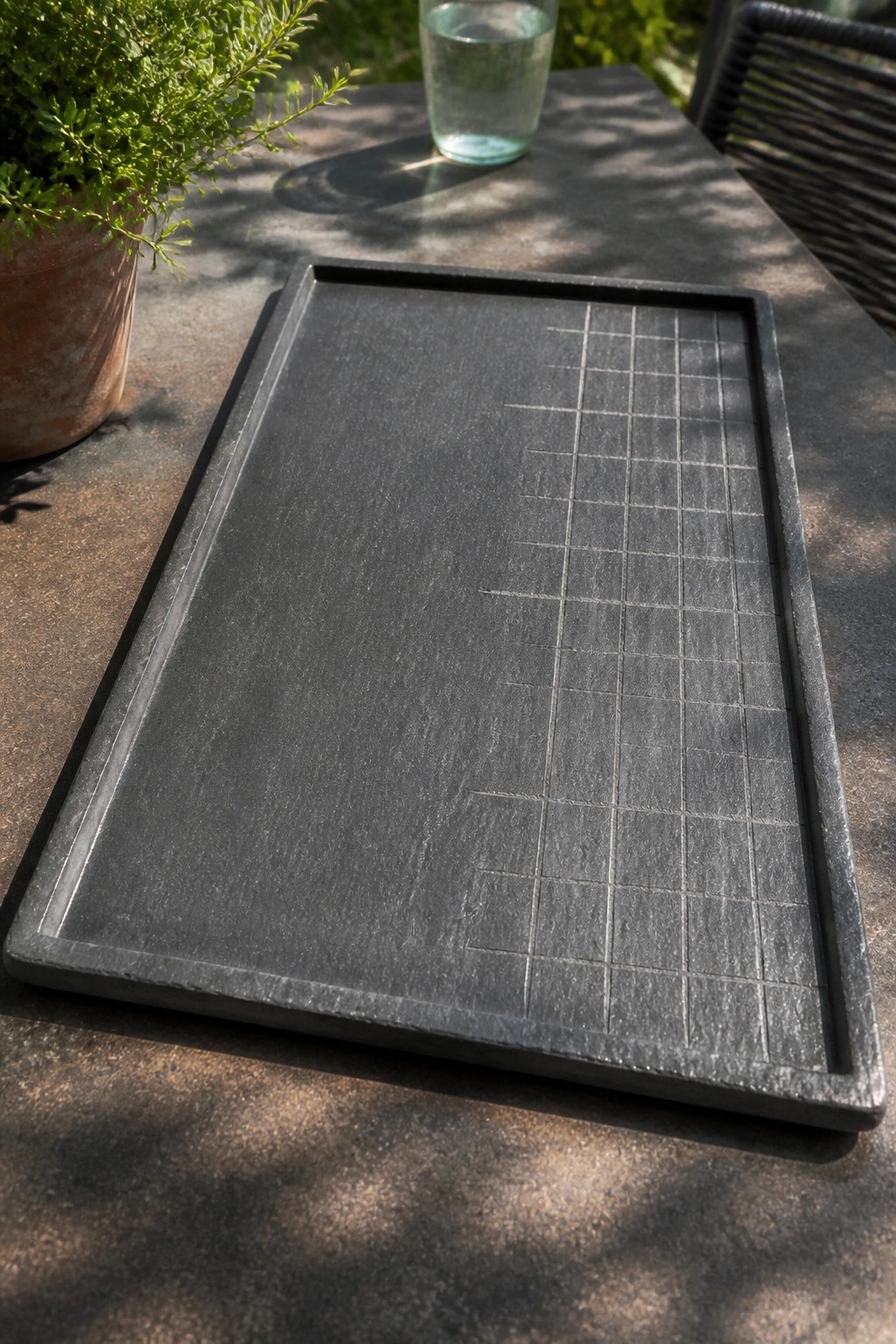
A slab built rectangular tray with a series of straight lines scored into the surface creates a simple grid pattern. The dark matte finish and low profile keep the design minimal while the lines add structure without extra decoration. This approach fits the tray category and works well for holding small objects or serving items.
What makes this idea useful is how the grid can be adjusted in spacing or size to match the tray dimensions you choose. The same scored lines could be adapted into a square format for a desk tray or made shallower for a bathroom soap holder. In a kitchen setting the clean layout helps organize utensils or small containers without visual clutter.
Minimal Round Tray with Central Candle Well

A round slab tray built with a shallow central well creates a simple holder for a tea light while leaving the flat rim open for an incense stick to rest across. The design keeps everything contained on one surface without extra stands or separate pieces. A muted green glaze covers the entire form, giving a smooth finish that highlights the clean slab edges rather than adding pattern or texture. This approach fits the category of small functional trays meant for bathroom counters or quiet corners.
What makes this idea useful is how the central well can be resized or omitted in future versions to make a plain incense tray or a larger catchall. The flat slab construction makes it straightforward to roll out multiples in one session and trim them to matching shapes. You could adapt the same base into a soap dish by widening the well or into a small plant saucer by keeping the rim wide. In a bathroom setting, this kind of tray keeps matches and ash in one spot without needing much space.
Divided Slab Tray for Vanity Storage
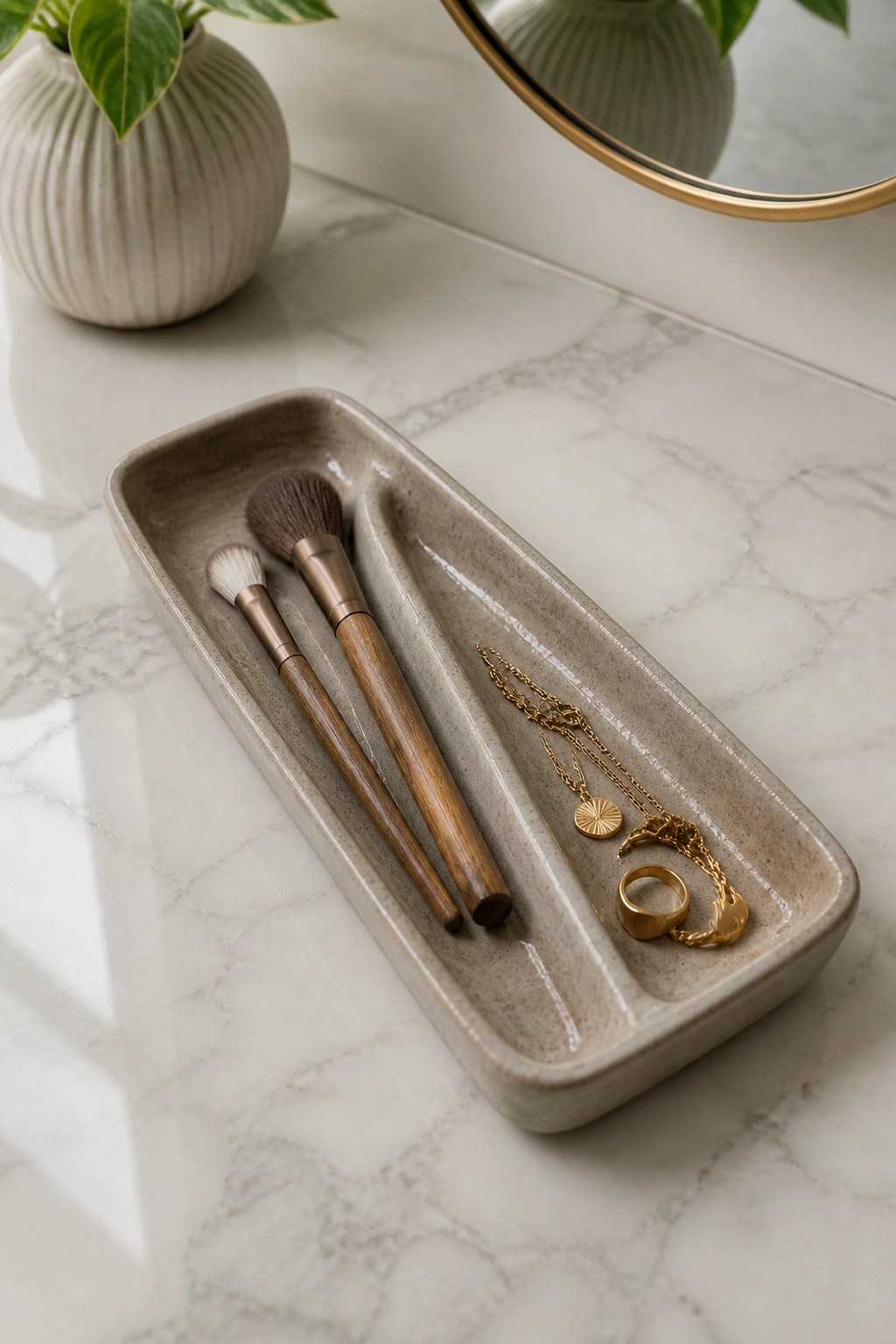
A slab built rectangular tray with one straight divider down the center makes a simple organizer for small daily items. The longer section holds brushes upright while the narrower side keeps chains and rings from tangling. The matte speckled surface and clean edges keep the whole piece looking minimal without extra decoration.
What makes this idea useful is how the divider turns a basic tray into separate zones for different objects. You could shorten the length for a smaller sink area or make the sections wider if you need space for tubes and bottles. The same form works as a desk tray for pens and clips if you change the proportions slightly.
Single Stripe Slab Tray
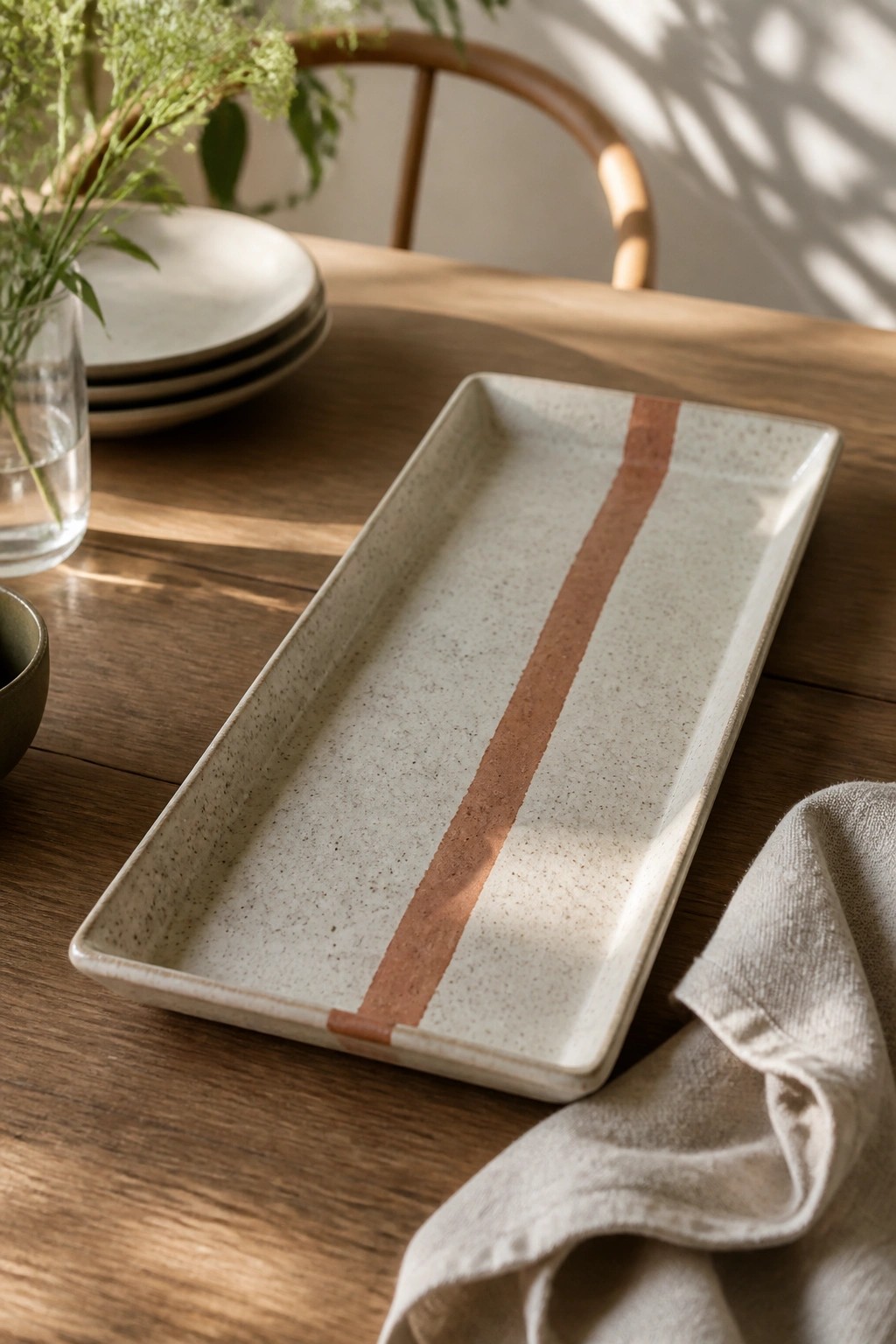
A rectangular slab tray built with straight sides and a flat base uses a speckled off-white glaze as the main surface. One vertical stripe of terracotta glaze runs down the center, creating a simple color break without added pattern or texture. The long narrow proportions keep the design minimal while the stripe gives the piece a clear focal point.
What makes this idea useful is how the single stripe turns a basic rectangle into something more distinctive without extra carving or handles. You could change the stripe color, widen it, or place two narrower ones side by side for a quick variation on the same slab shape. The size works well as a small serving tray or desk organizer, and the same stripe idea transfers easily to a shorter version for jewelry or keys.
Interlocking Modular Slab Trays
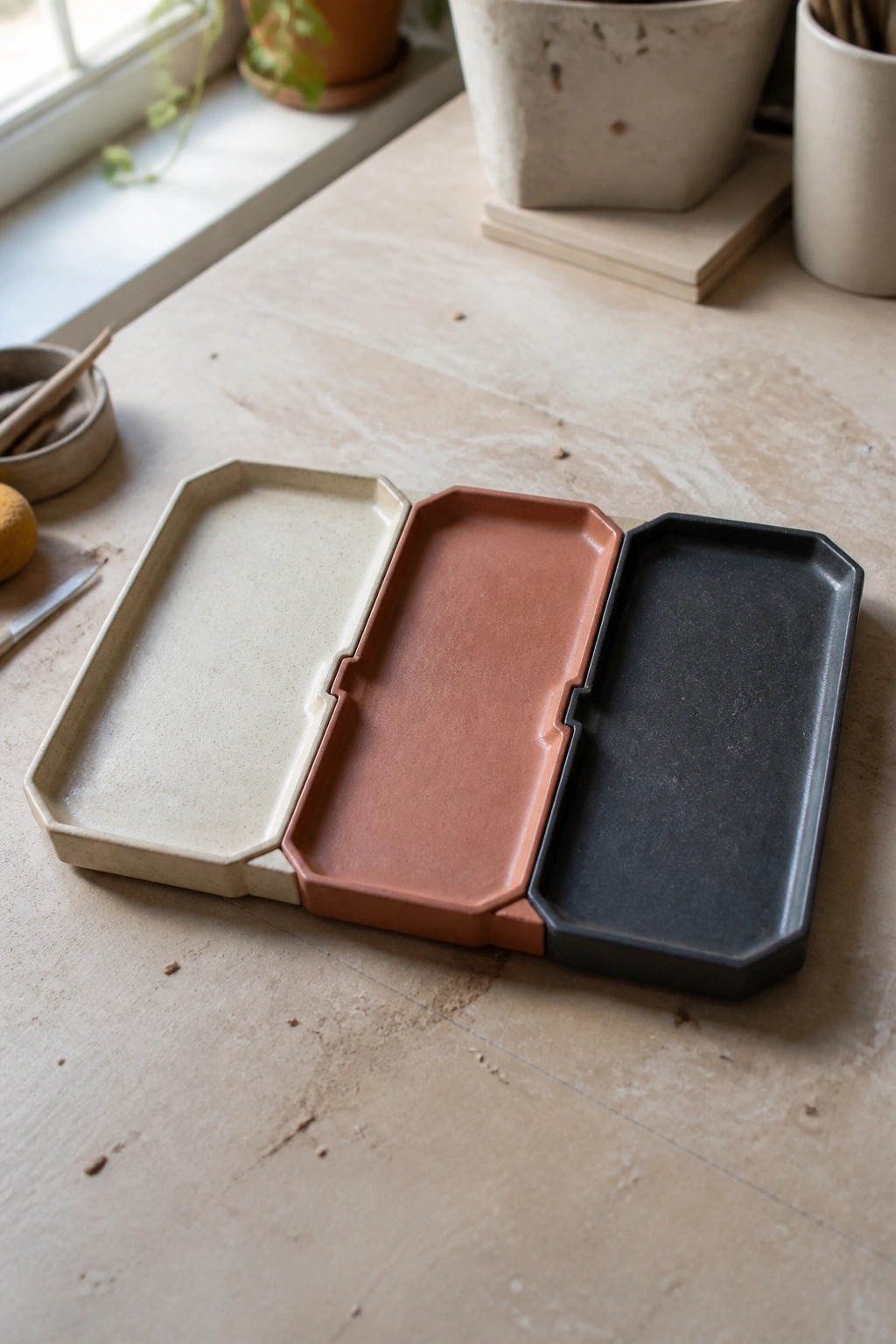
Three slab-built trays connect side by side through simple interlocking tabs to form one longer surface. Each section uses straight walls and clipped corners, built from the same basic template but finished in a different matte tone. The light speckled clay, warm terracotta, and dark charcoal versions sit flush when joined, keeping the overall shape clean and geometric.
What makes this idea useful is the choice to keep the trays together for a shared workspace or pull them apart for separate small tasks like holding keys or plant saucers. You could repeat the same slab layout with two trays instead of three or change the color order to fit a kitchen counter versus a bathroom shelf. The connected edges give the project a finished look that photographs well for Pinterest without requiring extra carving or surface detail.
Frequently Asked Questions
What tools and materials are needed to start these slab pottery tray projects?
You will need a rolling pin or slab roller for even clay thickness, a sharp knife or clay cutter for precise edges, basic templates or rulers for clean shapes, and air-dry or kiln-fire clay suited to your workspace. Start with a non-porous surface like canvas or plastic to prevent sticking, plus sponges and ribs for smoothing. These items keep projects simple and focused on minimal designs without extra complexity.
How do I maintain clean lines and avoid uneven edges during construction?
Roll your clay to a consistent quarter-inch thickness and use a straight edge as a guide when cutting. Smooth seams gently with a damp sponge rather than overworking the clay, and let slabs firm up slightly before assembling to hold their shape. Practice on scrap pieces first to refine your cuts, which helps achieve the sharp, modern look in all 22 projects.
Which clay type works best for these minimal tray designs and why?
Stoneware or porcelain clay is ideal because it holds clean forms well during drying and firing while showing off subtle textures or glazes. Avoid overly groggy clays that can make edges look rough. Test small samples to match your kiln or drying method, ensuring the trays stay flat and the designs remain understated.
What are common mistakes beginners make with these projects and how can I avoid them?
Rushing the drying process often leads to warping or cracks, so cover trays loosely with plastic for even moisture loss over several days. Another issue is uneven slab thickness, which you can prevent by measuring carefully. Always score and slip joints properly for strong bonds, and review each project step slowly to build confidence across the variations.
How should I glaze or finish the trays for a modern minimalist appearance?
Apply a single matte or satin glaze in neutral tones like white, gray, or soft earth colors using thin coats to preserve clean lines. Avoid heavy patterns or multiple colors that clutter the design. Fire according to your clay instructions and consider a clear seal for food-safe trays if needed, keeping the overall aesthetic simple and elegant.

Pottery Path is my cozy corner of the internet where I share clay ideas, pottery inspiration, and simple projects you can recreate at home. I love exploring everything from air dry clay to handbuilt pottery to cute minis that brighten your day. My goal is to make clay crafting feel easy, fun, and welcoming for anyone who wants to try it.
You will find beginner friendly tutorials, creative pottery painting ideas, and lots of warm inspiration for slow and happy crafting. If you enjoy hands on creativity, this space will feel like home.