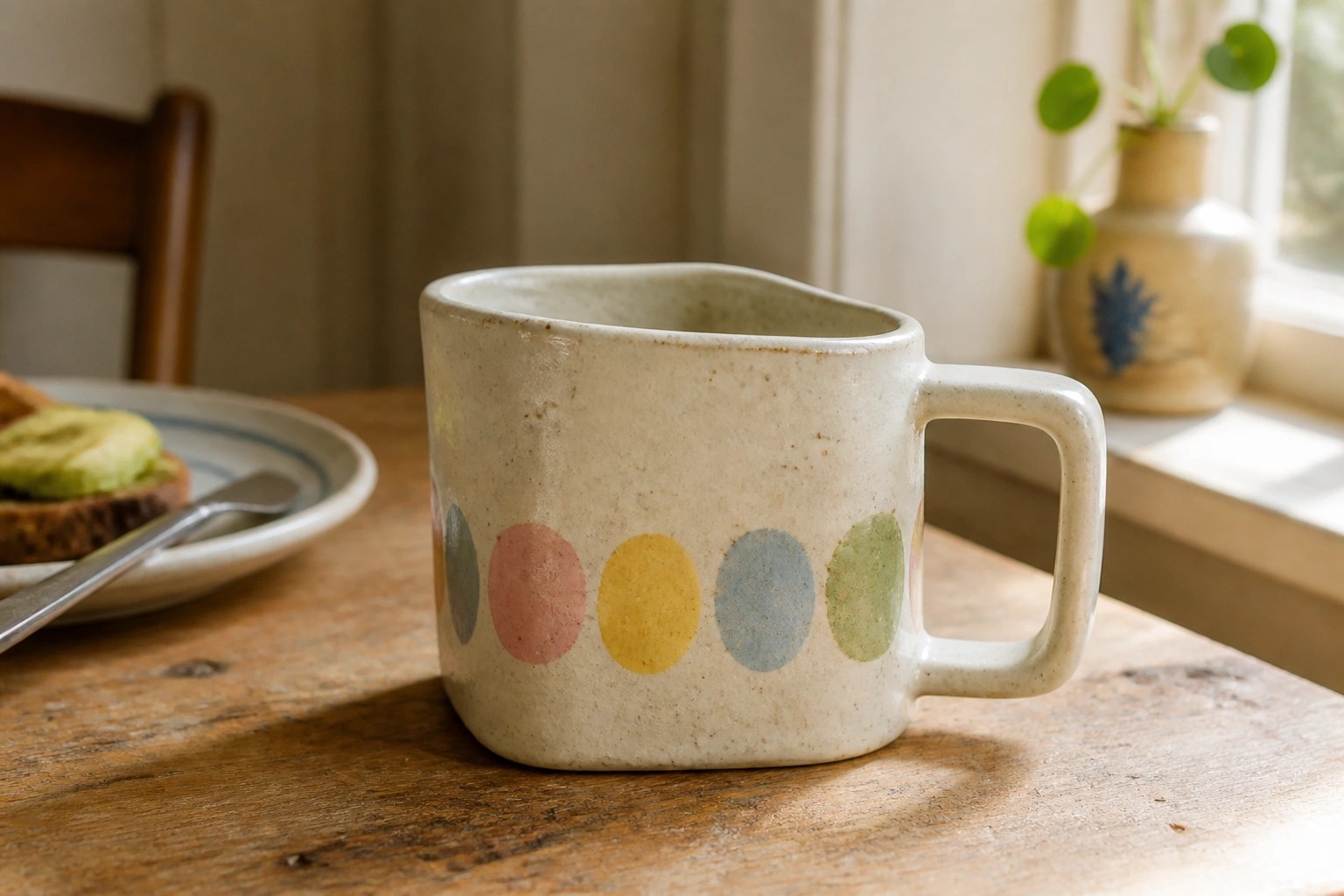
I started working with slab pottery a few years ago and often wished I had something simple to follow for basic shapes.
These templates came from my own notes and sketches that I use when I want to make something without overthinking the measurements.
They work well for small trays, dishes, and other starter pieces that do not require much experience.
I am sharing them here so others can try the same projects with less setup time.
Dot-Band Ceramic Mug
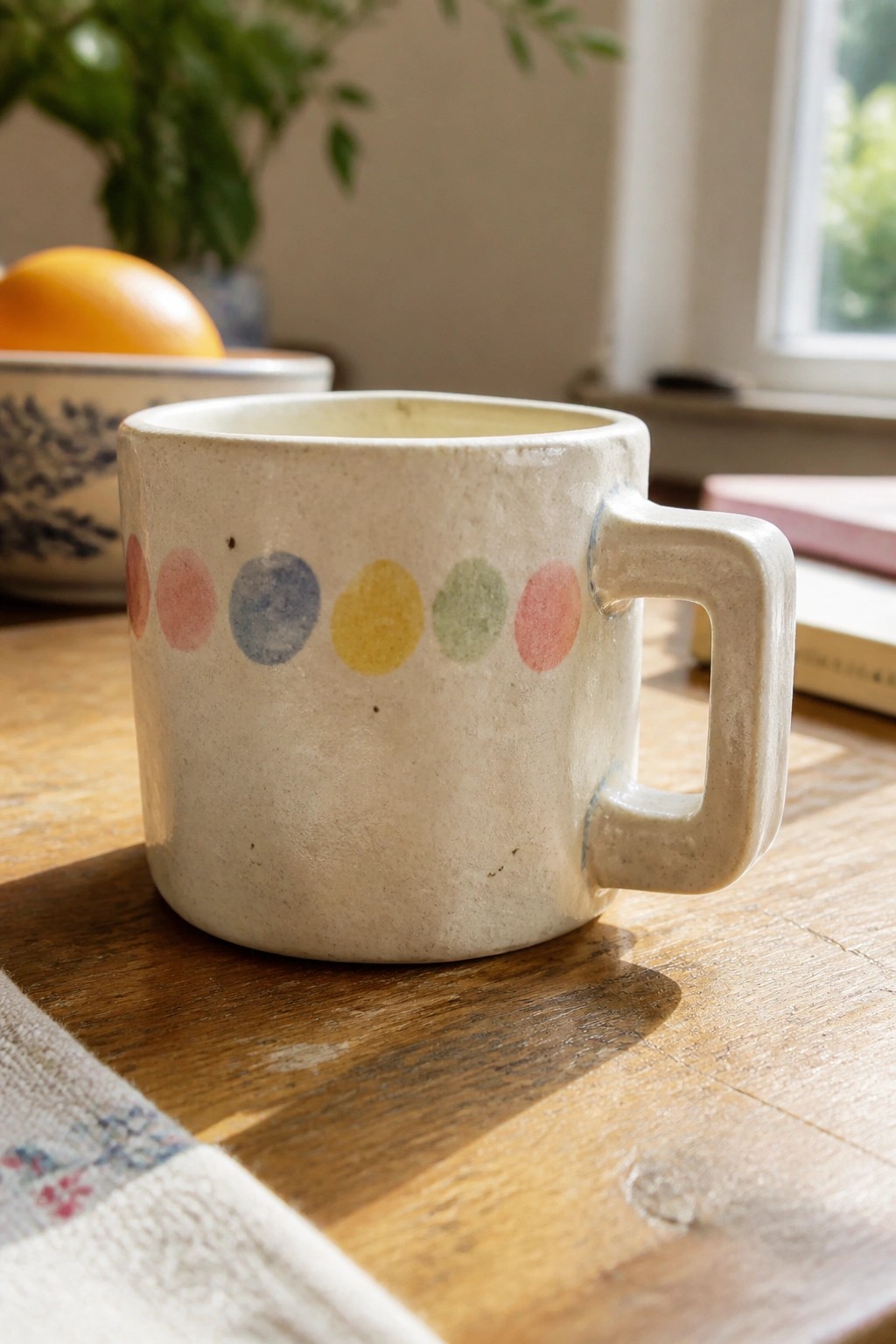
A small ceramic mug with a thick squared handle uses a single row of painted dots in pink, blue, yellow, green, and coral to create its main decoration. The off-white speckled clay body keeps the surface simple so the evenly spaced circles stand out clearly against it. This project takes a basic cylinder shape and adds interest through repeated color rather than complex carving or glazing.
What makes this idea useful is how the dot pattern can be changed to any color sequence or repeated in multiple rows without much extra work. The compact size suits everyday tea or coffee use and fits easily on a shelf or desk. The same band can be adapted to a small pitcher or set of cups to create a matching group.
Scalloped Edge Shallow Bowl
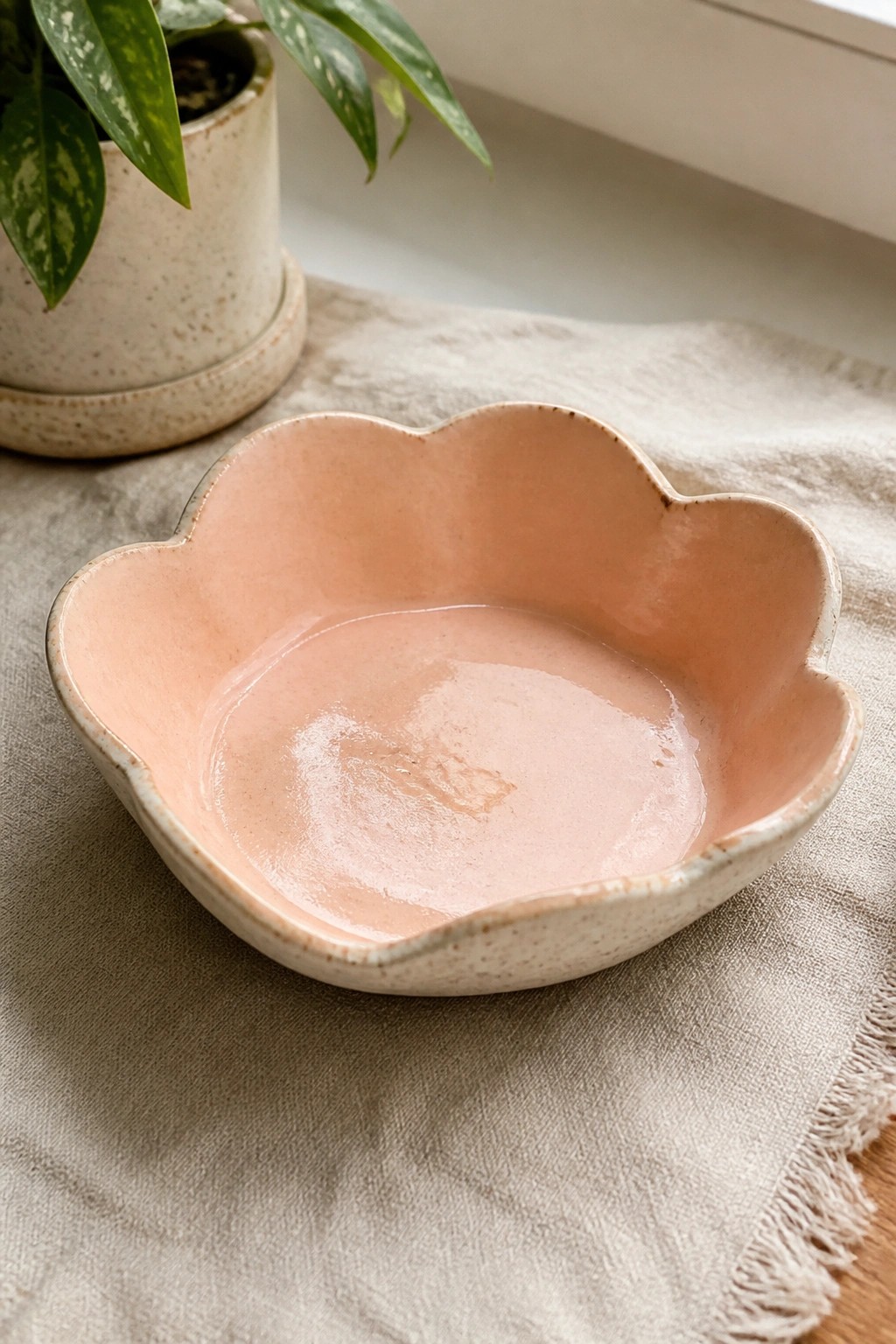
A scalloped rim bowl is cut from a flat slab of clay using a simple template that creates the wavy outline before the piece is shaped over a form or left to dry flat. The soft pink glaze sits evenly across the surface and lets the slight texture from the clay show through. This kind of project fits the small dish category and works as a jewelry holder or catch-all for everyday items. The design keeps the focus on the cut edge rather than added decoration.
The shape does a lot of the work here by giving the piece instant detail with just one template cut. You can reuse the same wavy pattern for a larger tray or shrink it down for a ring dish without changing the process. In a bedroom or entryway the shallow form keeps small objects visible and easy to grab. The idea also adapts quickly to different glaze colors or a plain bisque finish if you want less shine.
Lemon Slab Serving Tray
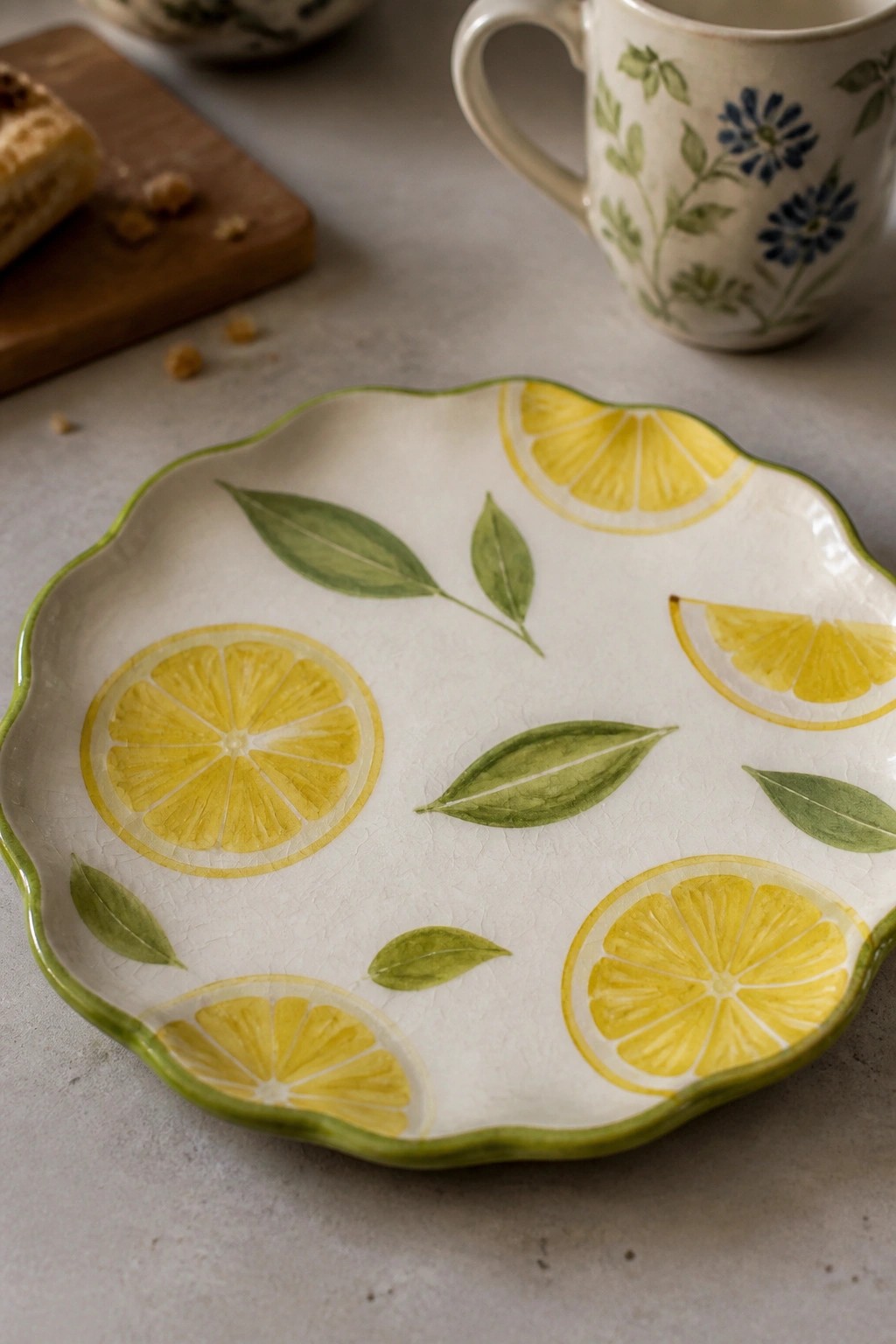
A slab tray cut with a scalloped edge gives you a shallow plate shape that works for snacks or small kitchen tasks. The white crackle surface is painted with yellow lemon slices and green leaves before the final firing, and a green rim finishes the border. This keeps the project focused on rolling a simple slab and adding surface decoration rather than building up walls or adding handles.
What makes this idea useful is how the painted motif can be traced from a template and repeated on coasters or a longer rectangular tray. The flat shape is easy to cut from a single slab and trim with a wavy cutter if you want the same edge. In a kitchen this size holds butter, fruit, or small pastries without needing much counter space. You can change the fruit to oranges or skip the color and just use the leaves if you want fewer painting steps.
Simple Rectangular Slab Tray
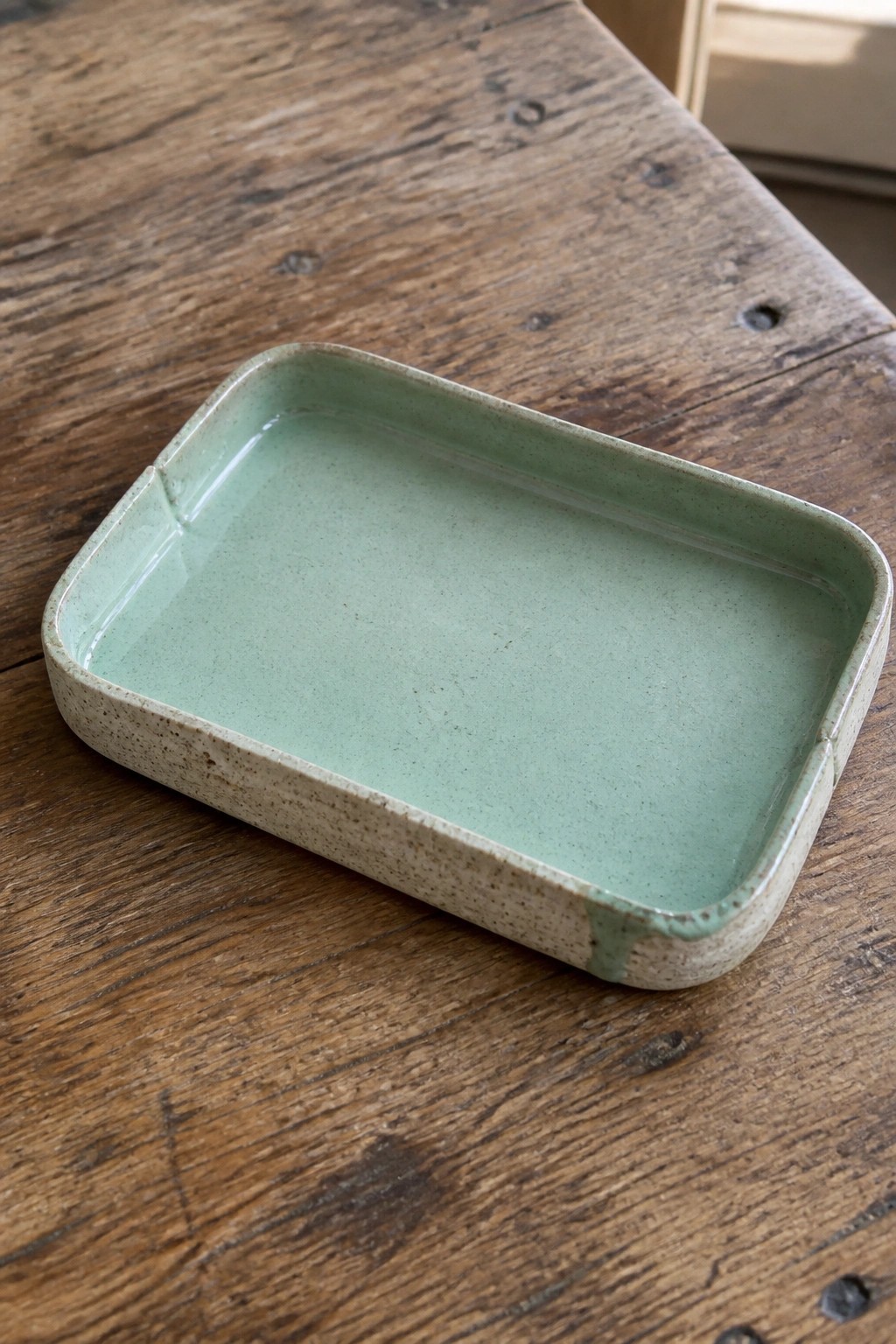
A rectangular slab tray like this makes a practical catch-all dish for small items. The low sides and flat base come from joining cut slabs at the edges, then smoothing the seams for a clean shape. The interior gets a soft green glaze that pools slightly along the bottom, while the exterior keeps the natural speckled clay visible with just a few glaze drips along the rim.
What makes this idea useful is how quickly the size and depth can shift for different uses. Scale it down for a desk tray that holds keys and change, or widen it slightly for a bathroom soap dish. The unglazed exterior means less glaze work overall, and the same basic form adapts easily into a shallow planter saucer or a small serving piece for snacks.
Square Slab Planter with Painted Cactus
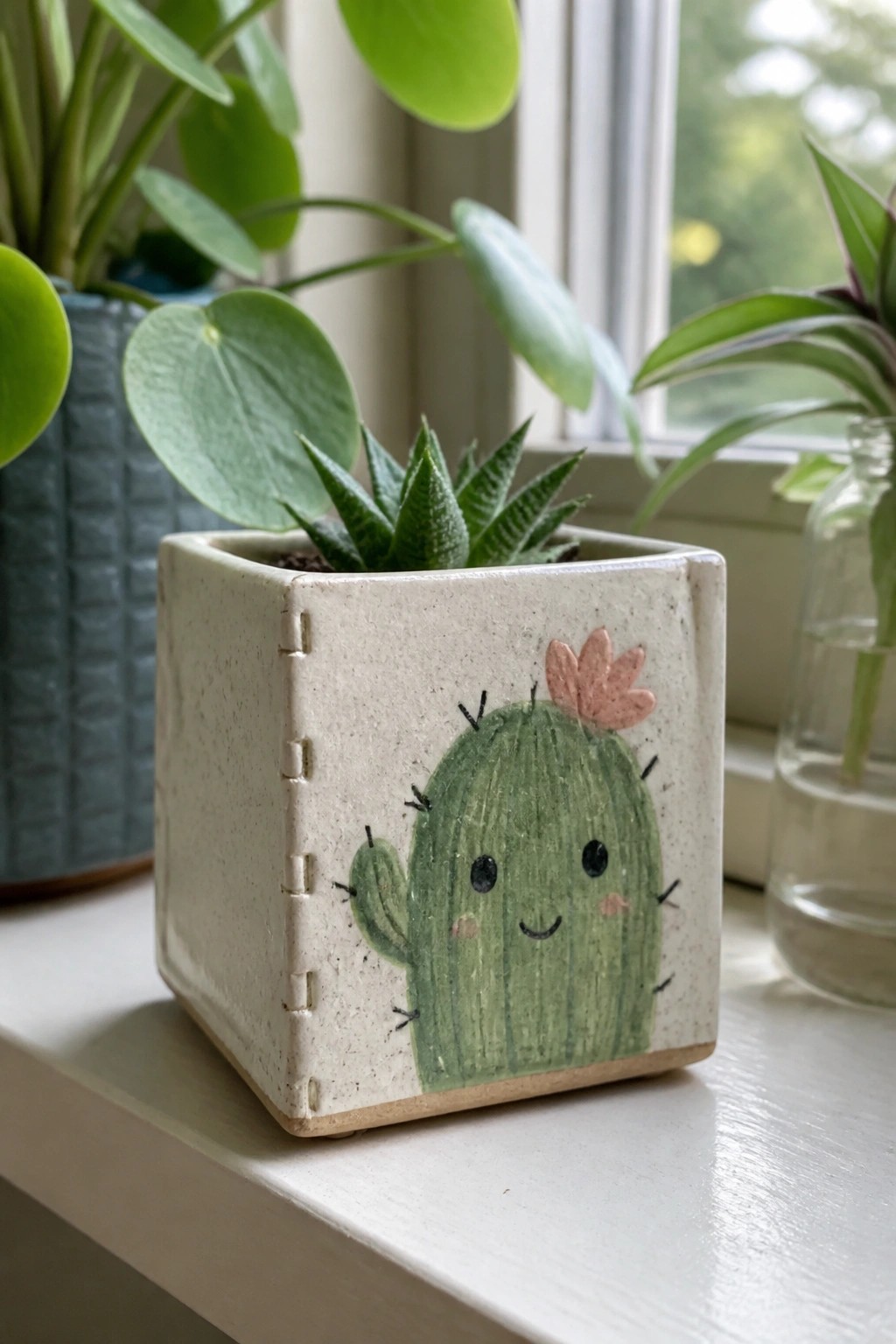
A square slab planter gives flat surfaces that make it simple to paint a large central cactus with a smaller arm branching off to the side. The design uses basic green brushstrokes for the cactus body, a pink flower on top, and small black lines for spines, leaving the light speckled clay visible around the edges. This approach turns an ordinary plant pot into a holder that visually connects with the succulent it contains.
The compact square shape fits easily on a narrow windowsill or shelf without taking much space. You can swap the flower color or change the face details to match other succulents, or reuse the same slab template to make a matching tray or small catch-all dish. Painting the motif before the final firing keeps the process straightforward while letting the clay texture remain visible.
Organic Indented Oval Tray
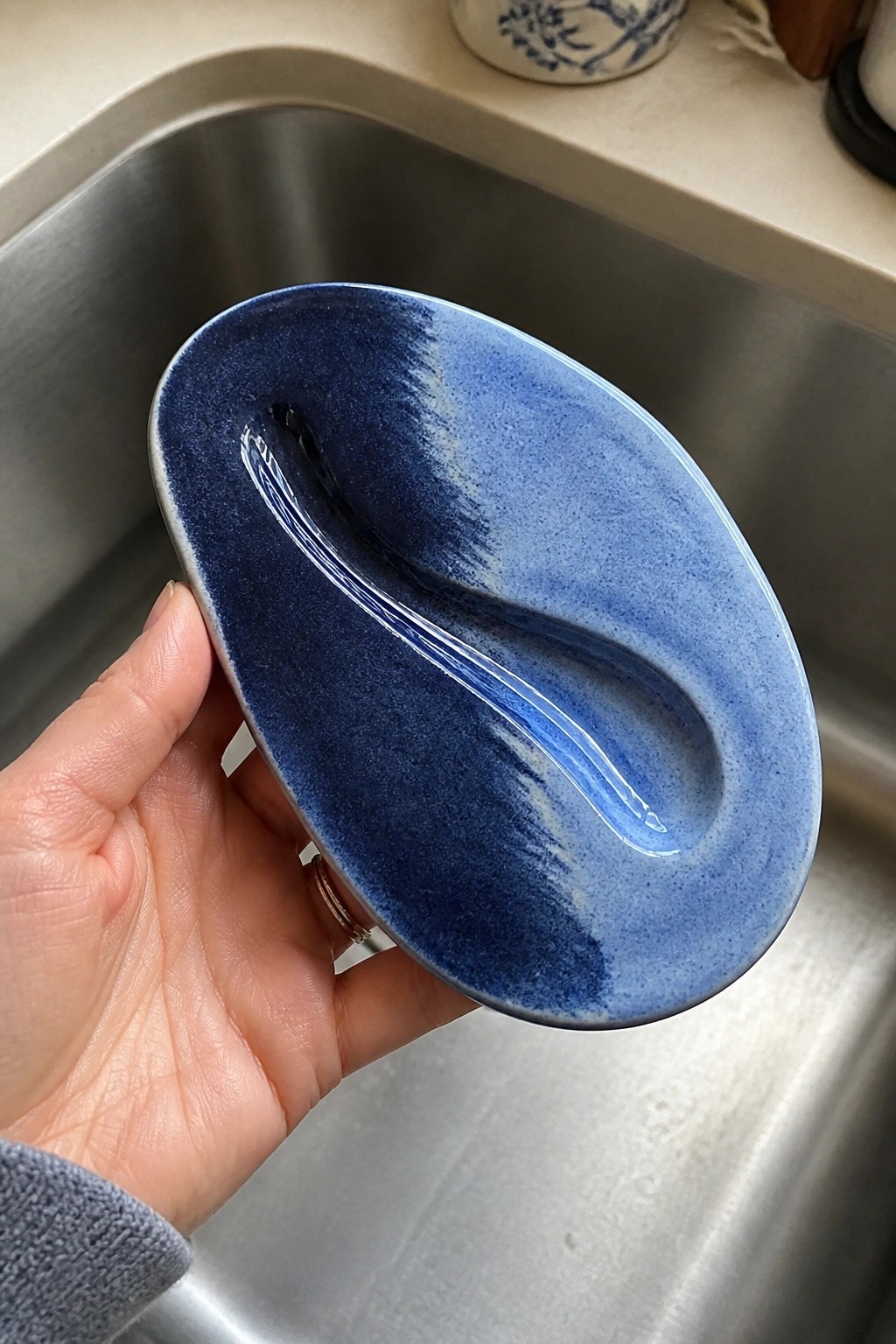
A handbuilt oval tray uses a simple slab with one long curved indentation running through the center. The blue glaze moves from dark navy to lighter tones with visible brushstrokes and small speckles that follow the form. This project works as a kitchen item or small holder, keeping the focus on the shape rather than added decoration.
The shape does a lot of the work here because the groove stops small items from rolling off. You could scale the same template down for a ring dish or stretch it longer to hold chopsticks or tasting spoons. In a kitchen this kind of tray fits next to the stove or sink without needing much space, and the same slab cut can be repeated in different glaze colors for a quick set.
Wavy Edge Ring Dish with Star Motif

A small slab-built ring dish with a scalloped rim gives you a compact place to drop rings at the end of the day. The white glaze and simple pink starburst with a few leaf accents add just enough detail to the center without covering the whole surface. This project stays in the jewelry holder category and works at a scale that fits easily on a dresser or bedside table.
The painted star can be changed to other basic shapes or colors to match different spaces or seasons. Its small footprint makes it a quick project when you want to use up extra clay from a larger piece. The same wavy edge template can be adapted into a soap dish or tiny tray for keys.
Leaf Imprint Hanging Tile
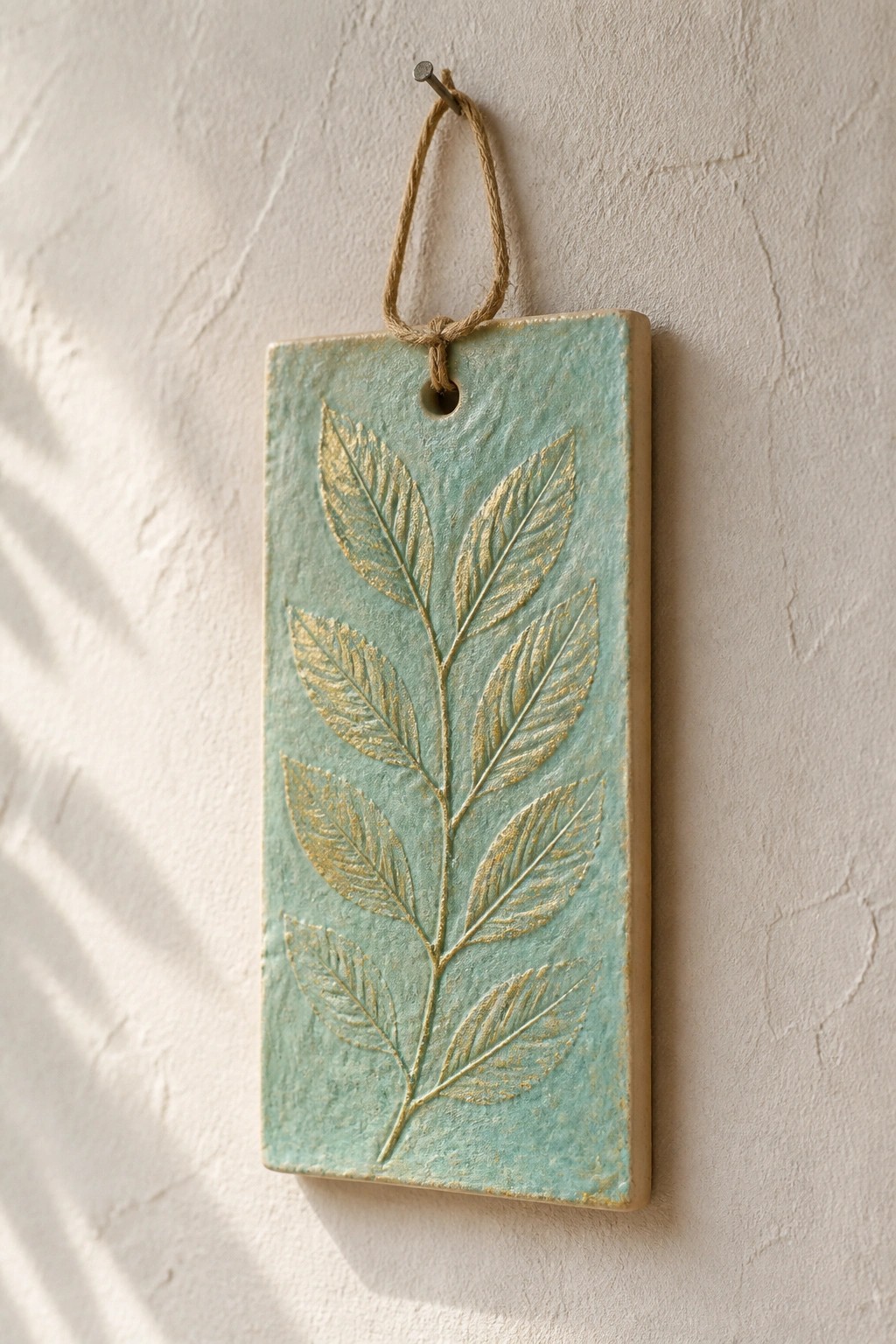
A flat rectangular slab works well for this wall piece when you press a real leaf or branch into the clay to create raised details. The turquoise glaze covers the background while gold is rubbed into the impressed areas to catch the light on the veins and stems. A single hole near the top lets you hang it with twine or cord for simple display.
What makes this idea useful is how little trimming the rectangle needs once you cut the slab. You can swap the plant for whatever leaves are in season or change the glaze color under the gold to fit different rooms. The same slab shape could become a small tray or trivet if you skip the hanging hole and keep the surface flatter. A piece like this stands out on Pinterest because the contrast between the matte background and the metallic leaf detail reads clearly in photos.
Geometric Star Tea Light Holder
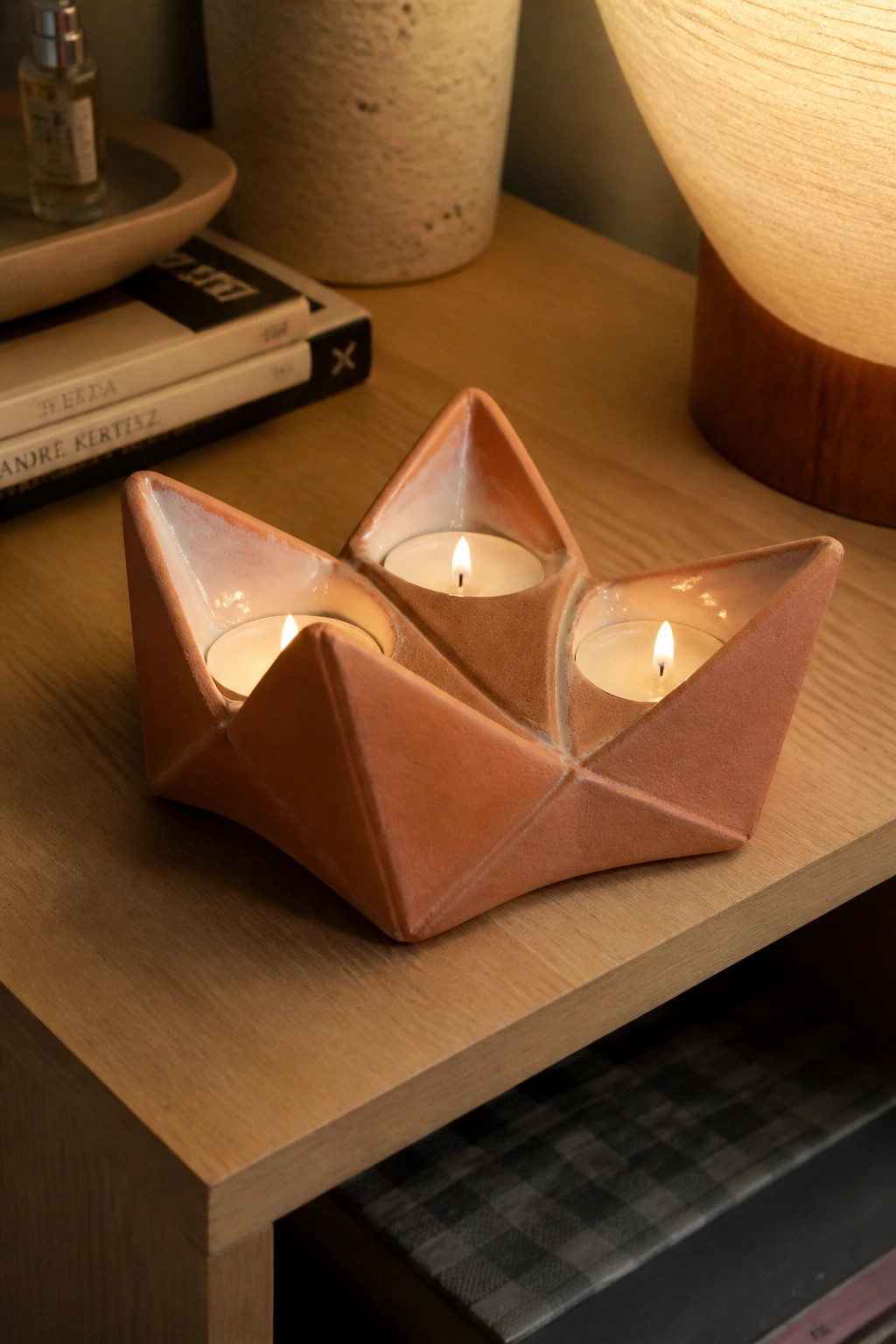
A slab-built tea light holder formed into a three-pointed star shape gives you three separate candle cups in one connected piece. The angular folds create flat planes that meet at crisp edges, and the matte terracotta surface keeps the look simple and earthy. This approach turns basic slab work into a compact decor object that holds multiple candles without needing separate bases.
The small overall size lets it sit on a shelf, desk, or side table without crowding the space. You can change the number of points or adjust the depth of the cups to fit two or four candles instead, using the same folding method. For gifts the clean geometry makes the piece easy to recognize and quick to reproduce from a template.
Square Soap Dish with Drainage Ridges
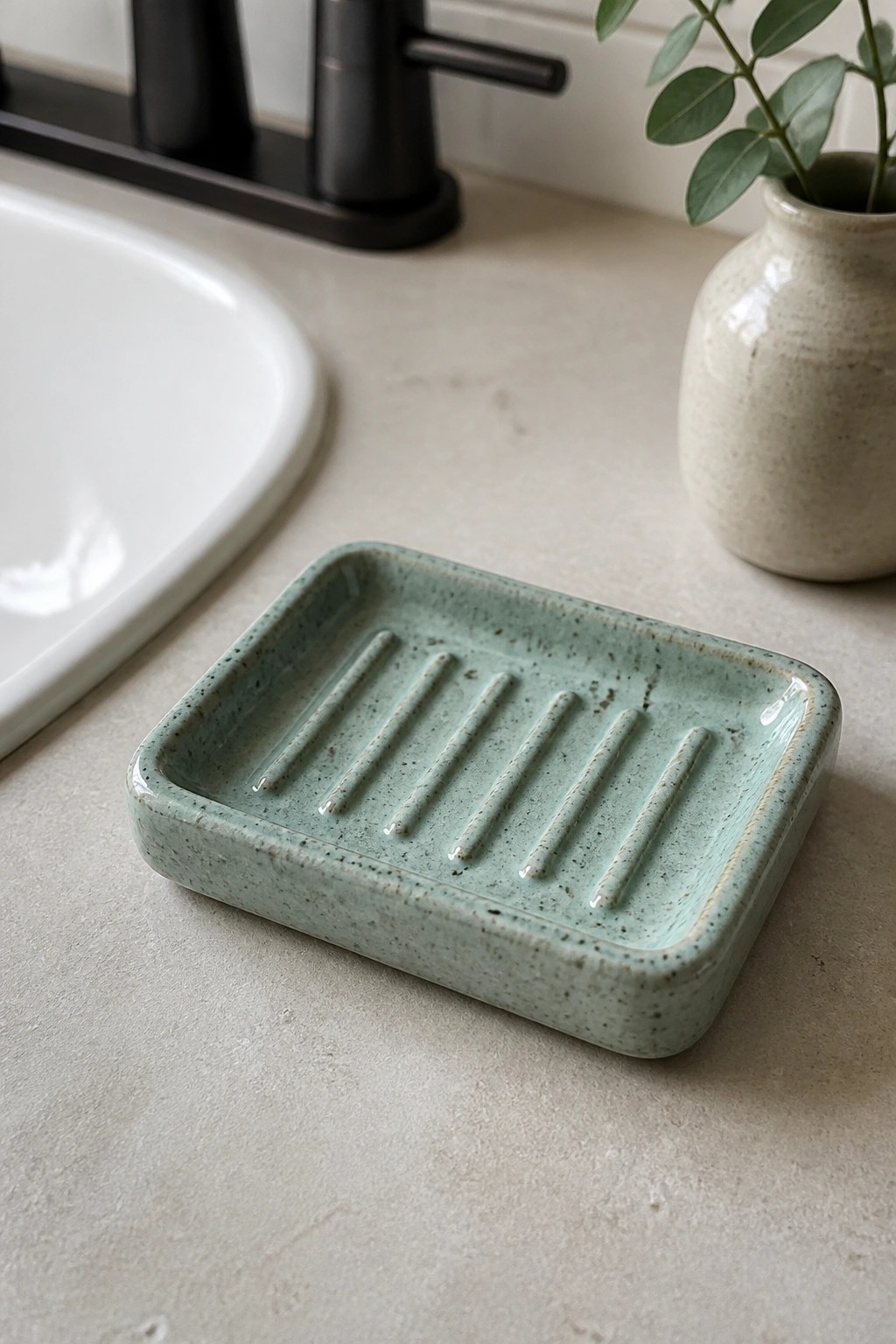
A square soap dish formed from clay slabs gives you a flat, stable base that fits neatly on a bathroom counter. Several parallel ridges raised from the surface keep the bar elevated so water drains off instead of pooling underneath. The soft green speckled glaze adds a subtle texture without competing with other bathroom colors or fixtures.
What makes this idea useful is how quickly the slab can be cut to any size you need. You could scale it down for a guest bath or widen it to hold two bars. The ridges are easy to add with a simple tool or thin coils before the clay firms up, and the same basic tray shape can be adapted into a small sponge holder or a tray for jewelry by leaving the surface flat.
Divided Cloud Toothbrush Holder
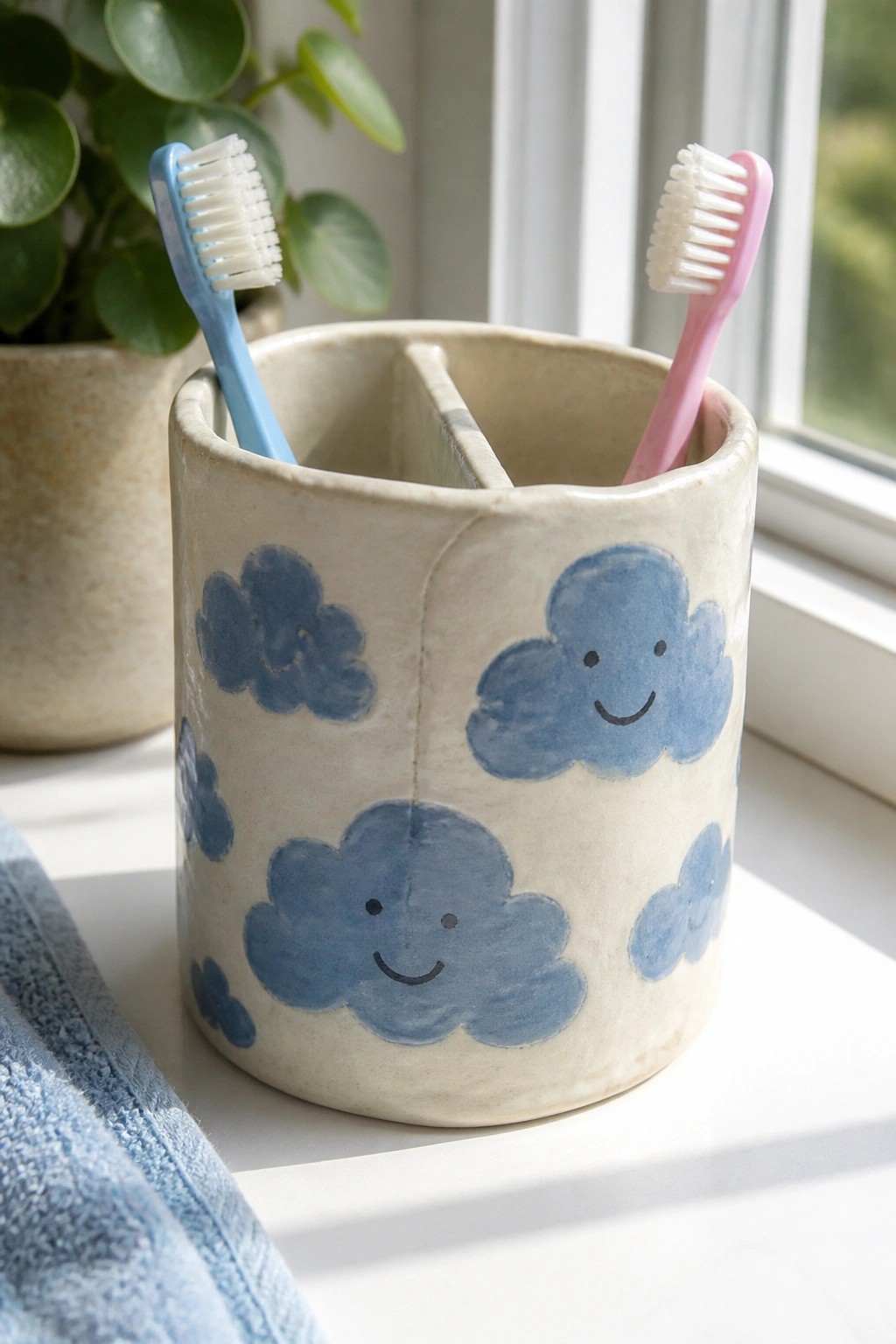
A divided ceramic cylinder creates a simple two-compartment holder that keeps toothbrushes separate and upright. The design relies on loose blue brushstrokes forming cloud shapes with small faces added on the surface. This approach works on a plain clay body that stays light in color so the painted elements read clearly without extra layers or texture. The result fits the bathroom item category and stays functional while using minimal decoration.
What makes this idea useful is how the divided shape can be adapted for pens on a desk or small kitchen tools without changing the basic form. You could replace the clouds with stars or simple dots if you want something faster to paint for a different room. The compact size works well on narrow windowsills or shelves where bigger pieces take up too much space. For a gift, keeping the motif to just three or four clouds makes the project quick to finish while still looking intentional.
Scallop Shell Trinket Dish
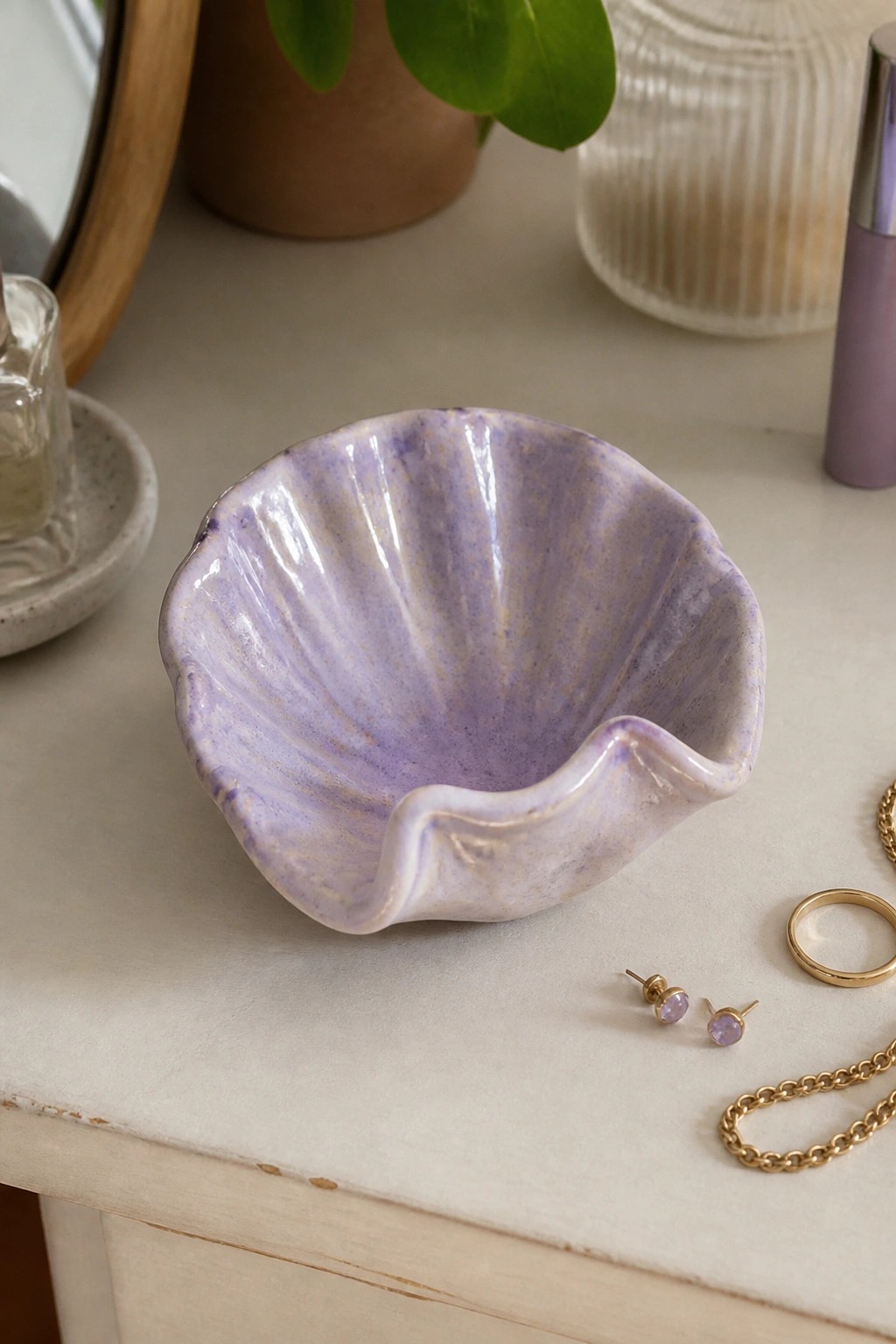
A small slab-built ceramic dish shaped like a scallop shell works well as a ring holder or vanity tray. The form uses a wavy rim and ridged interior to create natural curves that hold small items without needing extra dividers. A soft purple glaze with subtle variation in tone adds interest while keeping the surface smooth and easy to wipe clean.
What makes this idea useful is its compact size that fits on a nightstand or dresser without crowding other items. You could press the same shell shape over a simple hump mold, then change the glaze to match different color schemes or try a matte finish for contrast. For a gift this shape stands out on Pinterest because the organic edge looks intentional even when the slab work stays basic. The same idea could be adapted into a soap rest by making the ridges a little deeper.
Split Slab Bud Vase
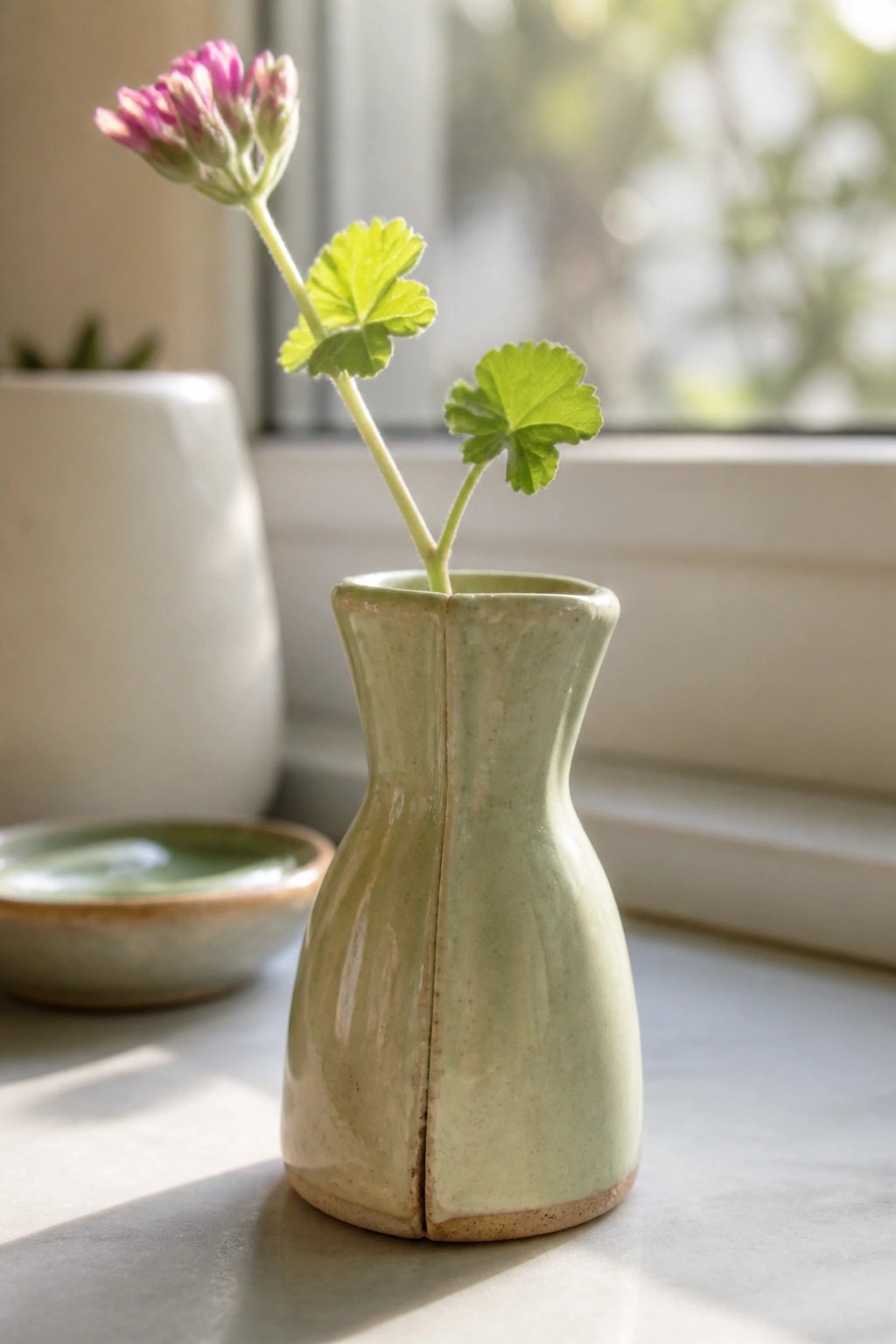
A small vase built from two slab sections joined along a vertical seam creates a narrow-necked form that holds one or two flower stems. The soft green glaze with light speckling keeps the surface simple while the slight waist and flared foot give it stability on a flat surface. This shape suits cut stems from the garden or a single sprig without needing much water or filler.
What makes this idea useful is how little clay and space it requires. The split seam can be left as a clean line or varied by changing the curve of each half, so the same template works for taller or wider versions. It fits easily on a desk or shelf where a full bouquet would crowd the area, and the narrow opening keeps stems upright without extra supports. You could swap the glaze for a matte white or add a small foot ring if you want to test different slab finishing steps.
Two-Tone Utensil Holder with Stamped Band

A slab-built utensil holder gives you a straight-sided cylinder that stands upright and holds kitchen tools without tipping. The design uses a simple two-tone glaze split at the middle, with the lower section covered in repeated oval stamps that add texture without extra clay work. This approach keeps the piece functional while the stamped band breaks up the surface so the holder does not look plain.
The shape does a lot of the work here because the tall sides keep long-handled spoons and spatulas from falling over on a countertop. You can change the stamp pattern to lines, circles, or even letters if you want something more personal. In a kitchen this kind of piece works as both storage and a quick way to keep tools within reach. This would be easy to turn into a shorter herb planter by reducing the height and switching the glaze colors.
Yarn Bowl with Rim Notch for Knitting

A yarn bowl made from a slab of clay gives knitters and crocheters a simple way to keep yarn from rolling across the floor. The rim is cut with a curved notch that lets the strand feed out smoothly while the rest of the ball stays inside the bowl. The rounded shape and warm glaze make the piece stable enough to sit on a lap or table during long projects.
What makes this idea useful is how the notch solves a common problem without adding extra parts. You can scale the bowl larger to fit bulky yarn or cut two notches if you often work with multiple strands. The same form works just as well for holding embroidery floss or small craft supplies when you are not knitting.
Moon Phase Incense Holder From a Slab
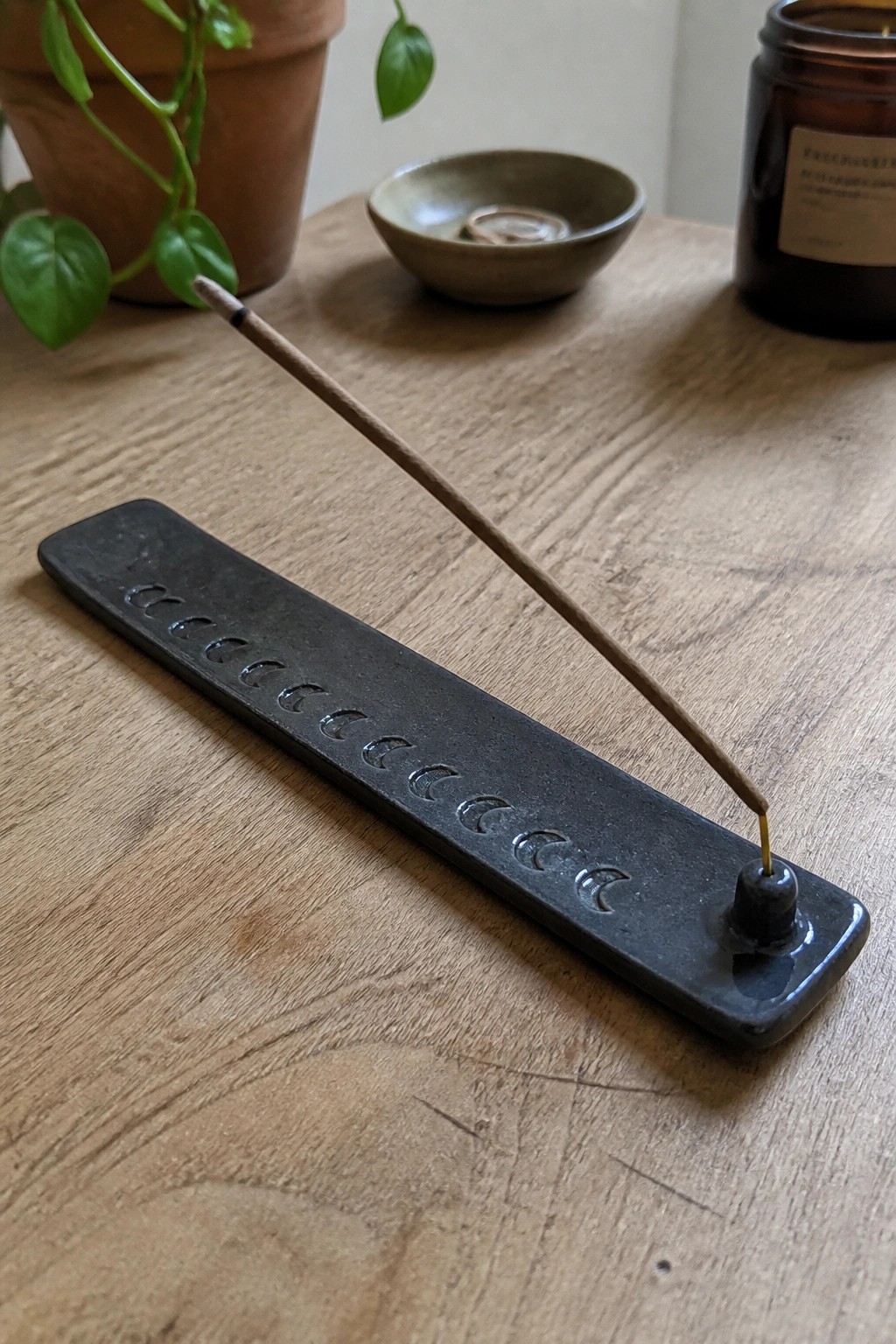
A flat slab of clay rolled to an even thickness and cut into a long rectangle forms the base of this incense holder. Moon phase shapes are pressed into the surface in a repeating sequence, and one end is fitted with a small raised knob that has a hole for the stick plus a shallow well for ash. The dark finish keeps the focus on the impressed pattern rather than on color or shine. This type of project fits the simple tray or holder category and needs only basic slab work plus a few stamps.
The narrow rectangle shape lets the piece sit on a windowsill or shelf without crowding other items. You can change the moon stamps for stars, lines, or even leave the surface plain if you want a faster version. Shortening the slab turns the same idea into a small ring tray or match holder. The impressed pattern gives enough detail to stand out in a photo without extra carving or glazing steps.
Leaf Slab Jewelry Tray

A leaf shaped tray built from a flat slab of clay makes a simple holder for rings and small necklaces. Press a real leaf into the surface to transfer vein texture, then cut around the outline and add a shallow rim so items stay in place. A green glaze that settles into the details brings out the natural pattern without extra carving. The finished piece sits easily on a dresser or bedside table.
What makes this idea useful is how quickly the same slab process can be repeated with different leaf sizes or shapes. Scale it smaller for a single ring dish or larger for a catch-all tray near the door. Change the glaze color to match bathroom tiles or try a matte finish for a softer look. The organic outline gives the tray a clean profile that photographs well for project boards.
Hanging Heart Ornament with Impressed Botanicals

A flat slab of clay cut into a heart shape creates this simple hanging ornament. Impressed stems and flower heads add surface detail across the front, while a hole near the top lets it hang from twine. The soft pink finish keeps the focus on the raised plant patterns rather than color. This project falls into the category of small decorative objects meant for display rather than daily use.
What makes this idea useful is how the heart template removes the need to freehand a shape while still giving you a recognizable finished form. You could swap the botanical stamps for leaves, initials, or geometric lines and still use the same basic construction. The small scale works well for gifts, package toppers, or seasonal hanging decor that stores easily. The same slab method can be repeated to make matching sets or adjusted into other flat shapes like stars or circles.
Frequently Asked Questions
What are the best ways to download and print the 18 free slab pottery templates?
You can access the templates directly from the article by clicking the provided links which often lead to PDF files. Print them on standard letter size paper and then trace the shapes onto your clay slab using a pencil or needle tool. If the site requires an email signup save the files to your device right away for easy future reference and scale the prints up or down as needed for different project sizes.
Which type of clay works best for these beginner slab projects?
Low fire earthenware or stoneware clay is ideal because it is forgiving and easy to work with for flat slab constructions. Choose a clay body that has some grog in it to reduce cracking during drying and always keep your slabs covered with plastic when not in use to maintain even moisture levels.
Do I need any special tools beyond basic pottery supplies to follow the templates?
Basic items like a rolling pin a ruler a scoring tool and a fettling knife are usually enough to start. You can improvise with household objects such as a pizza cutter for clean edges or cardboard for templates if you prefer not to print. A banding wheel helps with even shaping but it is optional for most of the projects.
How can I avoid common mistakes like warping when using these templates?
Roll your slabs to a consistent thickness of about a quarter inch and let them firm up slightly before assembling pieces. Score and slip all joints thoroughly then dry the finished project slowly under plastic for several days to prevent uneven shrinkage. If warping occurs gently reshape the piece while it is still leather hard.
Can I customize the designs from the templates for my own creative ideas?
Yes the templates serve as starting points so feel free to combine shapes add textures with stamps or alter dimensions slightly. Experiment with different handle styles or surface decorations once you master the basic forms and always test your changes on a small practice slab first.

Pottery Path is my cozy corner of the internet where I share clay ideas, pottery inspiration, and simple projects you can recreate at home. I love exploring everything from air dry clay to handbuilt pottery to cute minis that brighten your day. My goal is to make clay crafting feel easy, fun, and welcoming for anyone who wants to try it.
You will find beginner friendly tutorials, creative pottery painting ideas, and lots of warm inspiration for slow and happy crafting. If you enjoy hands on creativity, this space will feel like home.