I’ve tried a bunch of slab projects over the years and found that the simplest ones often turn out the best.
These 23 ideas all use basic construction so you won’t need special skills or equipment.
I picked projects that can be done in a short time without a lot of fuss.
Most of them are things I actually make and use in my own home.
You might find a few that fit what you’re looking for in your own pottery time.
Leaf-Shaped Slab Ring Dish
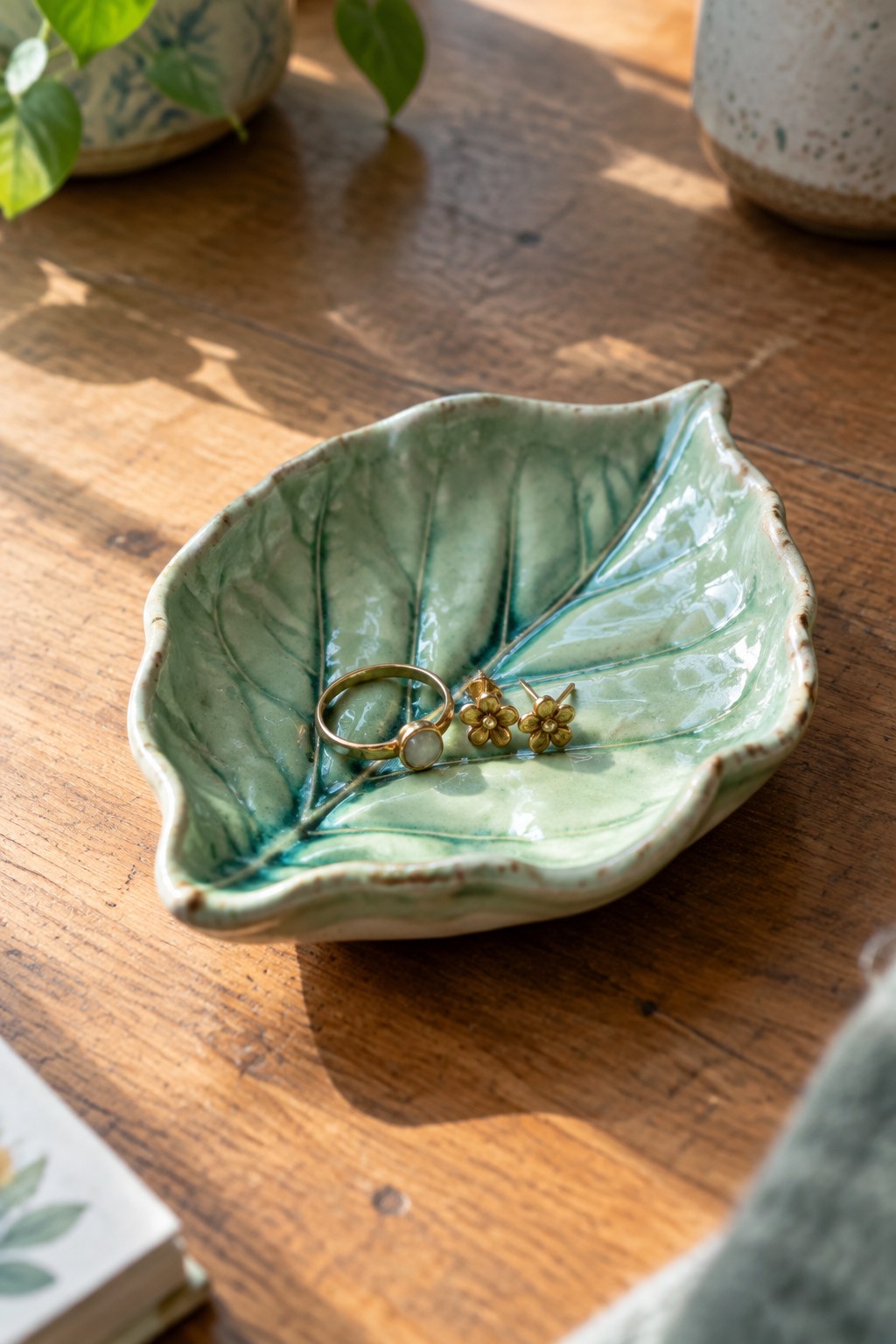
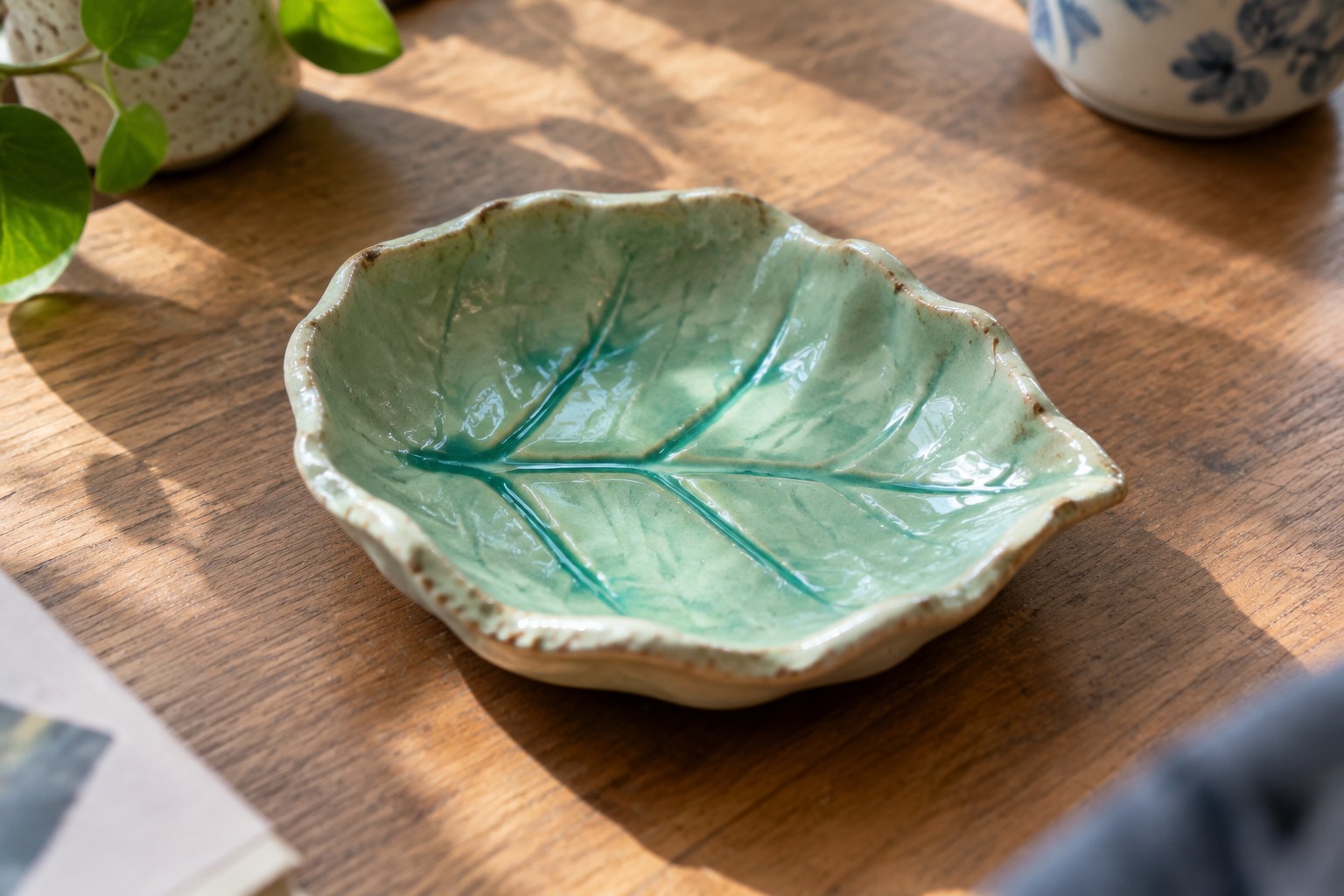
A simple slab forms the base for this small leaf dish that works as a ring and earring holder. The outline follows a broad leaf shape with impressed center veins that add texture without extra tools. A single green glaze pools slightly in the veins and along the edges, giving the surface enough variation to read as handmade while keeping the form low and stable.
The shape does a lot of the work here because the natural leaf edges already suggest a shallow rim once the slab is draped or gently folded. You can cut the form from a rolled slab in one session, press veins from actual leaves, and finish it quickly for a nightstand or vanity tray. The same idea adapts easily to other simple outlines like a smaller fern or an elongated oval if you want a version for bathroom counters or desk use.
Ceramic Spoon Rest with Blue Dots
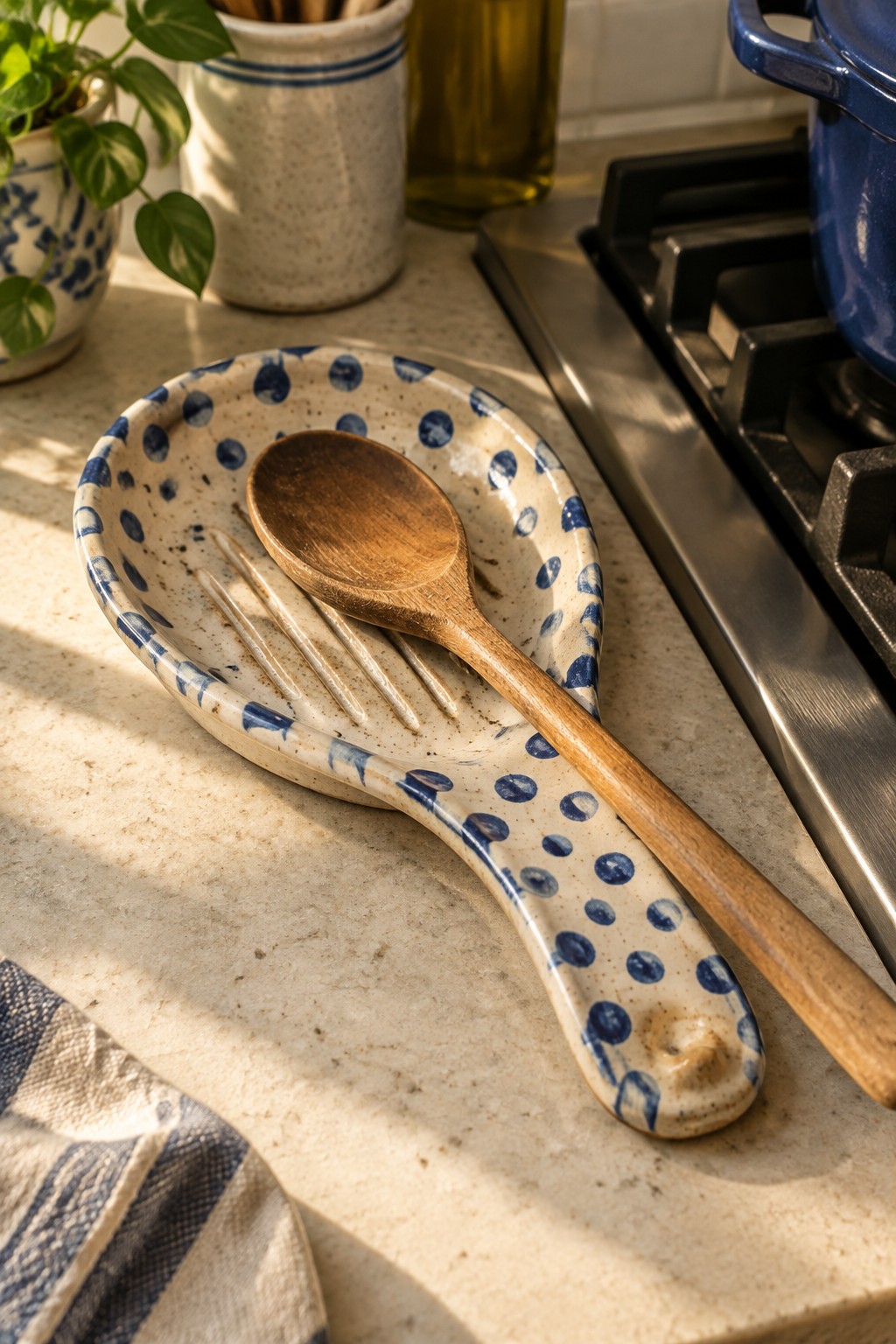
A ceramic spoon rest built from a simple slab gives you a long, tapered form with a shallow well that holds spoons and forks side by side. The speckled clay surface gets finished with loose blue dots that wrap around the edges and handle without needing perfect spacing. This kitchen item keeps utensils off the counter during cooking and fits the straightforward slab construction style used in many quick projects.
The shape does a lot of the work here by offering room for multiple tools at once while staying compact enough for daily use. You could shorten the form into a single-spoon version or swap the dots for stripes or solid color blocks if you want a faster decoration step. In a kitchen this kind of piece stays handy next to the stove and makes a practical gift when paired with wooden utensils. The same slab layout can be reworked into a small tray for tea bags or a rest for pot lids.
Square Slab Planter with Side Drainage
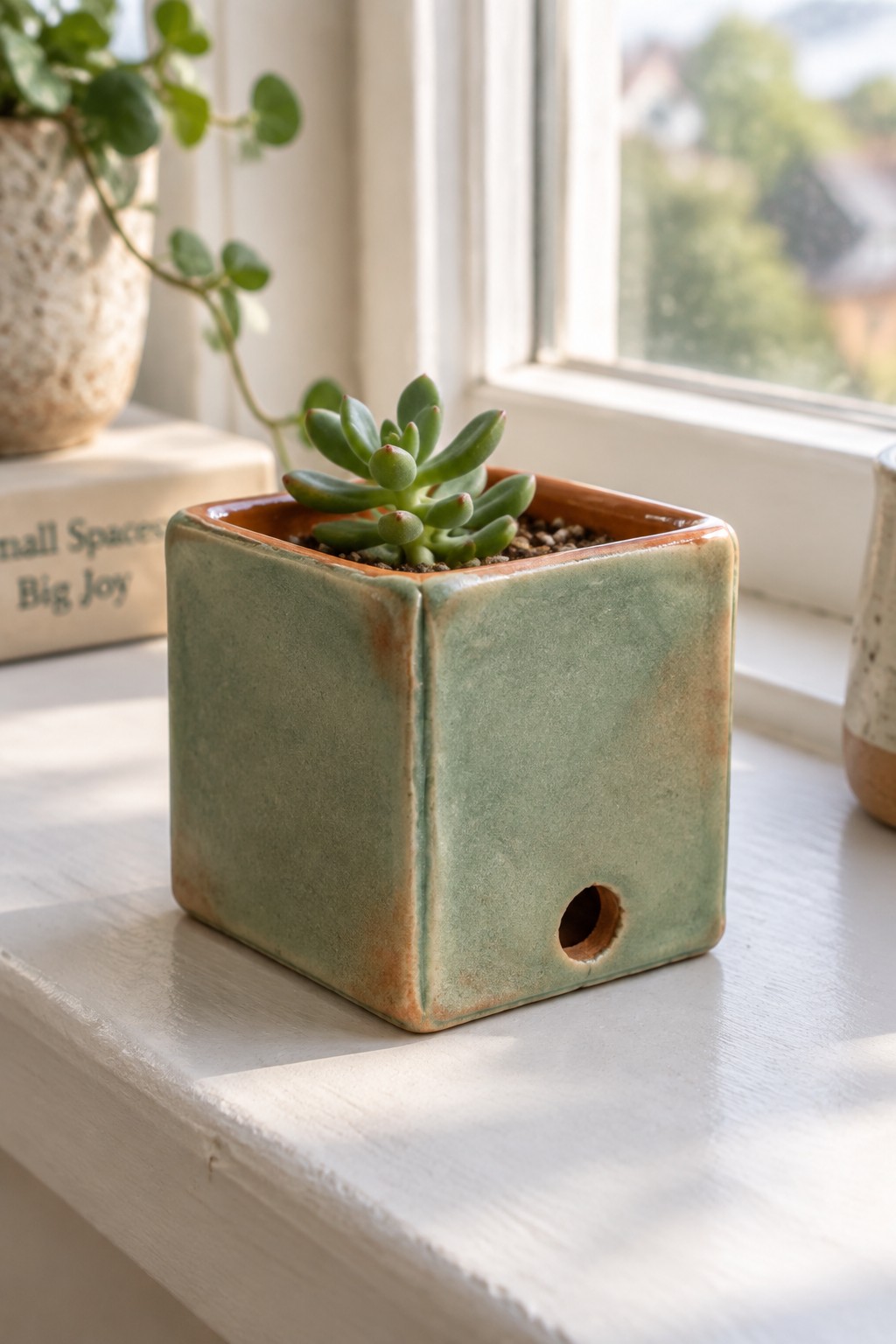
A square planter built from clay slabs gives you a compact, stable container suited to small succulents or herbs. The flat sides and clean corners create a simple geometric shape that works with matte or lightly speckled glazes in greens and earth tones. Placing the drainage hole on the side rather than the bottom keeps the base flat while still allowing excess water to escape. This form stays within quick slab projects because it needs only straight cuts, basic scoring, and a few joins.
What makes this idea useful is how the square shape fits tight spots like windowsills or narrow shelves without tipping. You can change the height or width easily by adjusting the slab measurements, or swap the glaze for a brighter color on the rim to match different rooms. The same construction works for a small herb pot in the kitchen or a desktop holder for pencils and tools. For Pinterest, the clean lines and single drainage detail photograph clearly and adapt well to different glaze tests.
Organic Square Tea Light Holder
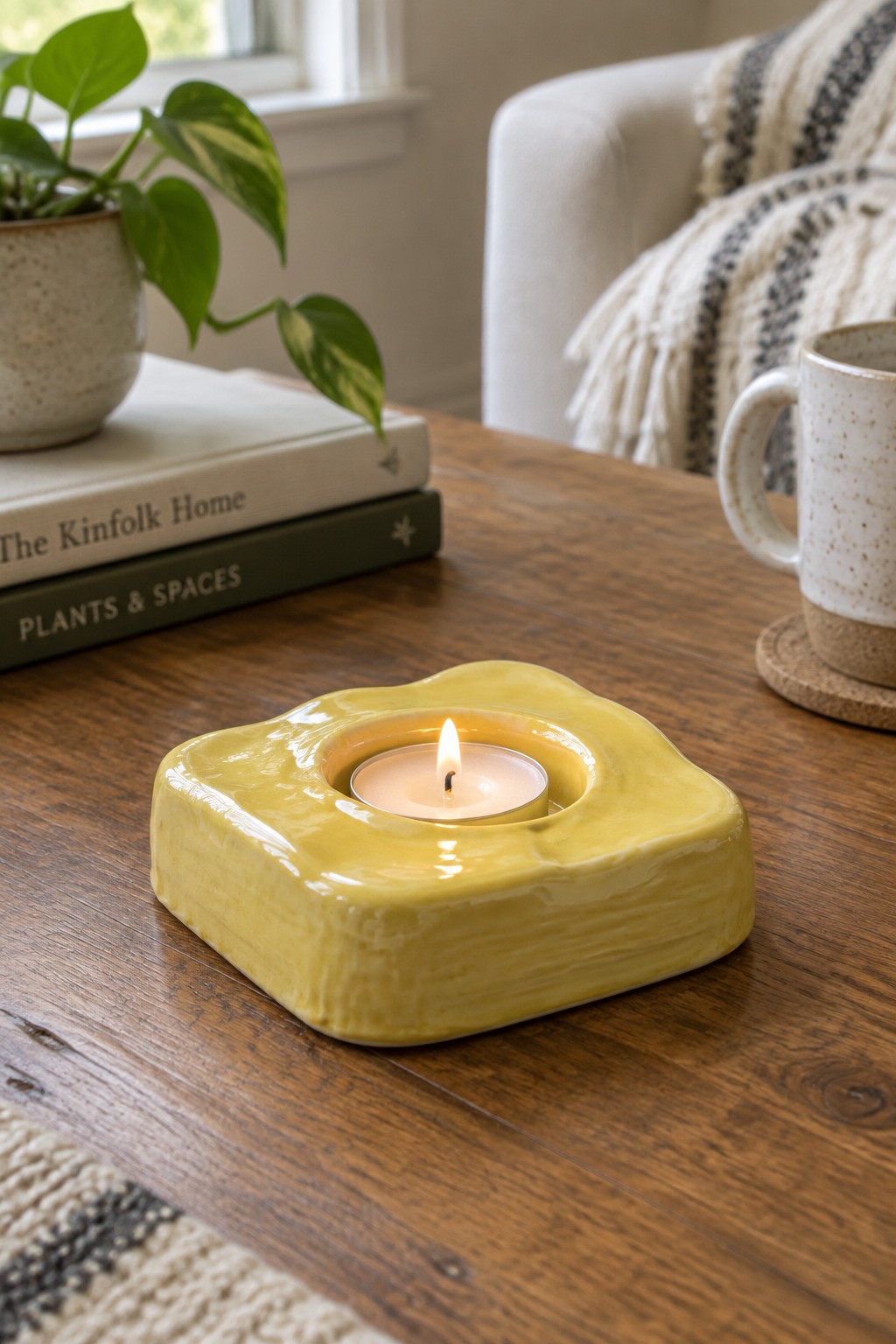
A slab-formed ceramic tea light holder gives you a compact way to add soft lighting without much material or space. The shape is a low, roughly square base with gently undulating edges that frame a round well just large enough for a standard tea light. A single bright yellow glaze covers the entire surface and emphasizes the slight ridges left from rolling and shaping the slab. The result is a small, stable piece that sits flat on a table while the recessed center keeps the flame contained.
What makes this idea useful is how quickly the same slab technique can be repeated in different sizes or glaze colors to suit shelves, nightstands, or grouped centerpieces. The low profile and contained well make it safer than taller candles on crowded surfaces. You could stretch the same form into a narrow tray for two or three lights or shrink it into a shallow dish for jewelry. The simple outline also photographs cleanly for sharing project variations online.
Hanging Botanical Slab Tile
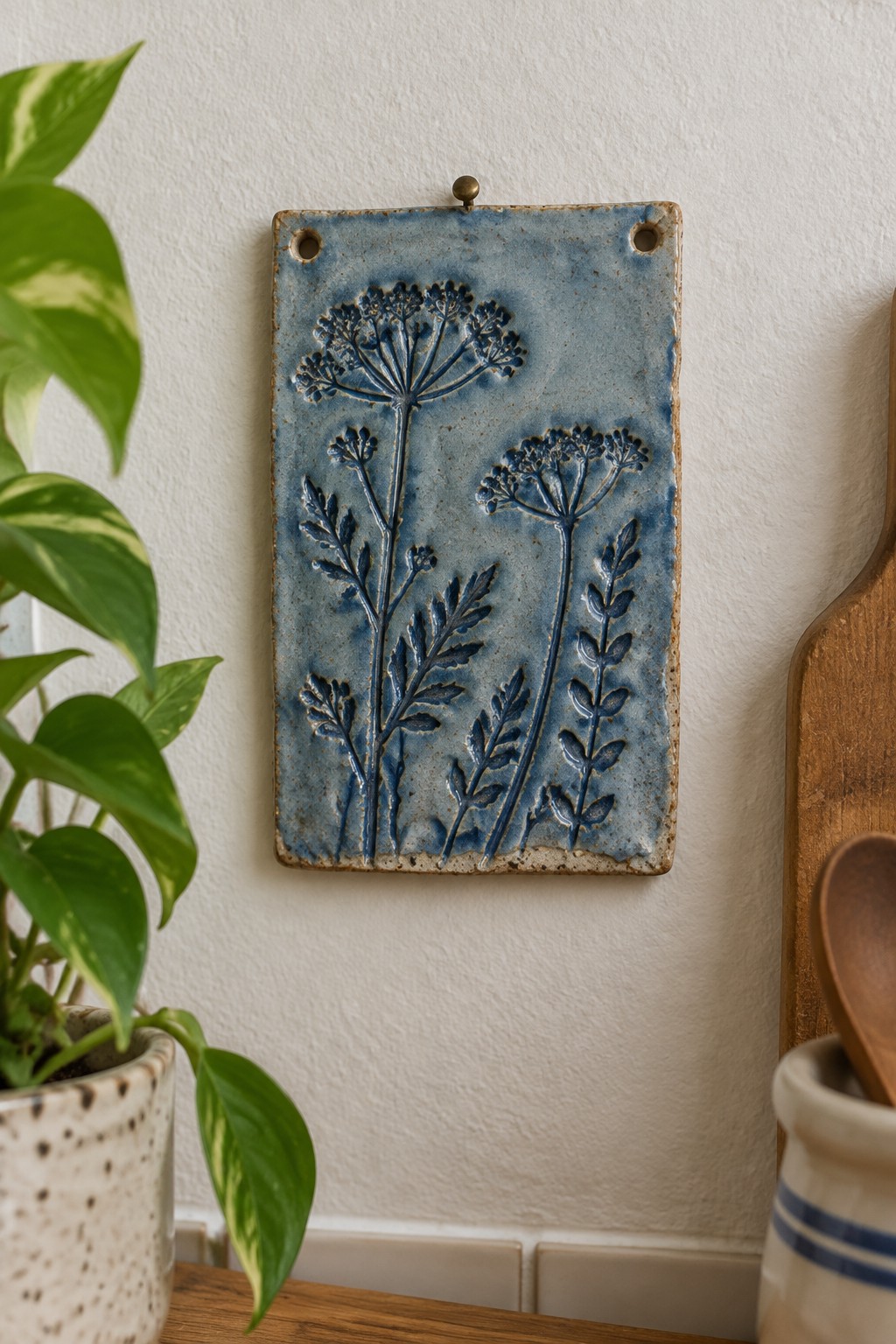
A rectangular slab forms the base for this wall piece, with two drilled holes at the top for simple hanging. Plant motifs like umbels and fern-like leaves are pressed or carved into the surface to create raised details that catch the blue glaze. The straightforward construction keeps the focus on the natural forms while the rectangular shape makes it easy to repeat or resize.
What makes this idea useful is how quickly the same slab can be adapted with different leaves or flowers pressed from actual plants. The hanging format works well in kitchens or near windows where you want a bit of nature without needing a frame or shelf. You can scale it down for a set of smaller tiles or widen the slab to turn it into a backsplash accent. For a gift, this kind of piece is easy to personalize with plants that have meaning to the recipient.
Handled Rectangular Tray
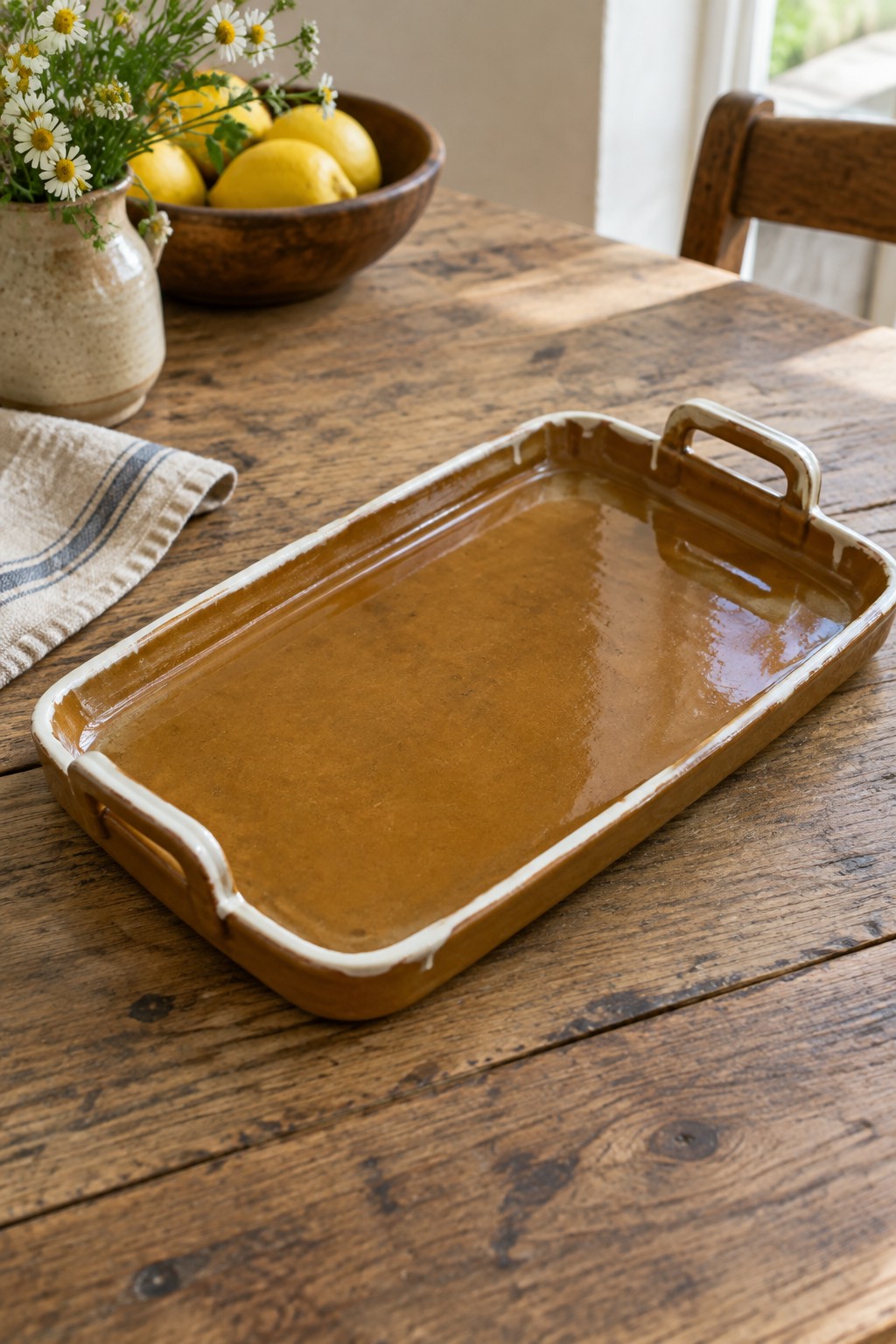
A rectangular slab tray with gently raised sides and integrated loop handles on the short ends makes a straightforward project from one or two rolled slabs. The warm amber-brown glaze covers the interior while the white clay body shows at the rims and handle edges, creating a simple contrast without extra decoration. This shape works well as a serving tray, kitchen catchall, or display piece for fruit or small items because the handles make it easy to carry and the flat base stays stable on a table.
The shape does a lot of the work here since the proportions already feel balanced and the handles add function without extra parts. You could scale it down for a desk organizer or make a deeper version for a plant saucer by adjusting the slab height. Changing the glaze to a matte finish or adding a stamped texture on the base gives quick variety while keeping the same construction. In a kitchen this kind of tray stands out on Pinterest because the clean lines and handle detail photograph clearly against wood or linen.
Slab Built Ceramic Soap Dish
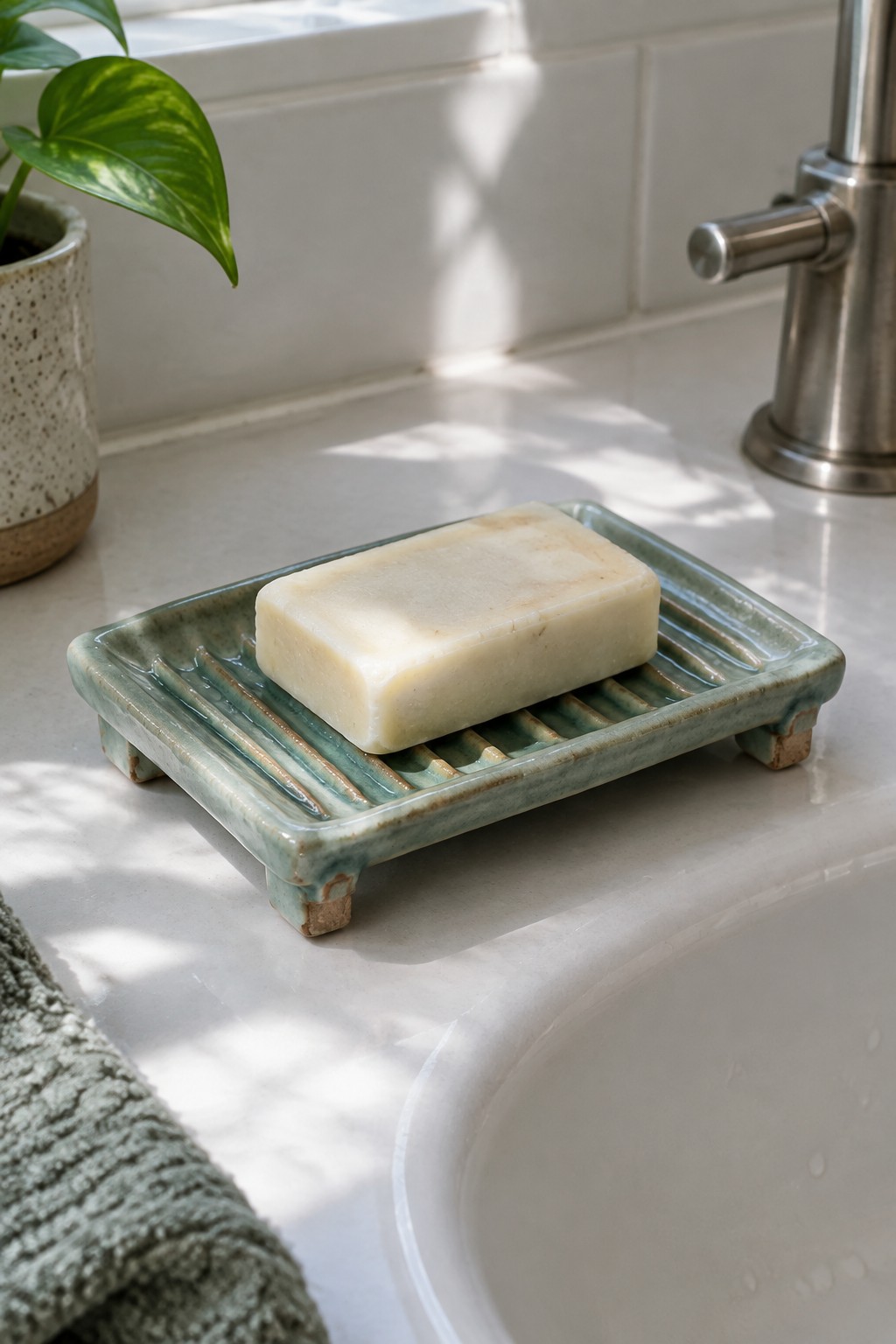
A rectangular soap dish built from a single slab gives you a practical bathroom tray with built-in drainage. Parallel ridges rolled or cut into the surface let water run off the bar instead of pooling underneath. Small feet raise the dish slightly so air can circulate underneath, and a simple green glaze with brown edges keeps the focus on the form rather than added decoration. The straightforward construction works for any sink size because the basic rectangle and ridge pattern scale easily.
The drainage ridges are the part worth copying first since they solve the main problem with bar soap. You can change the glaze to match your tile or switch to a matte surface if you want less slip. Try shortening the length for a narrow ledge or adding a low wall on one side to catch stray water. This kind of tray also makes a quick gift when you keep the shape clean and let the ridges do the work.
Cat-Shaped Planter with Added Face and Paws
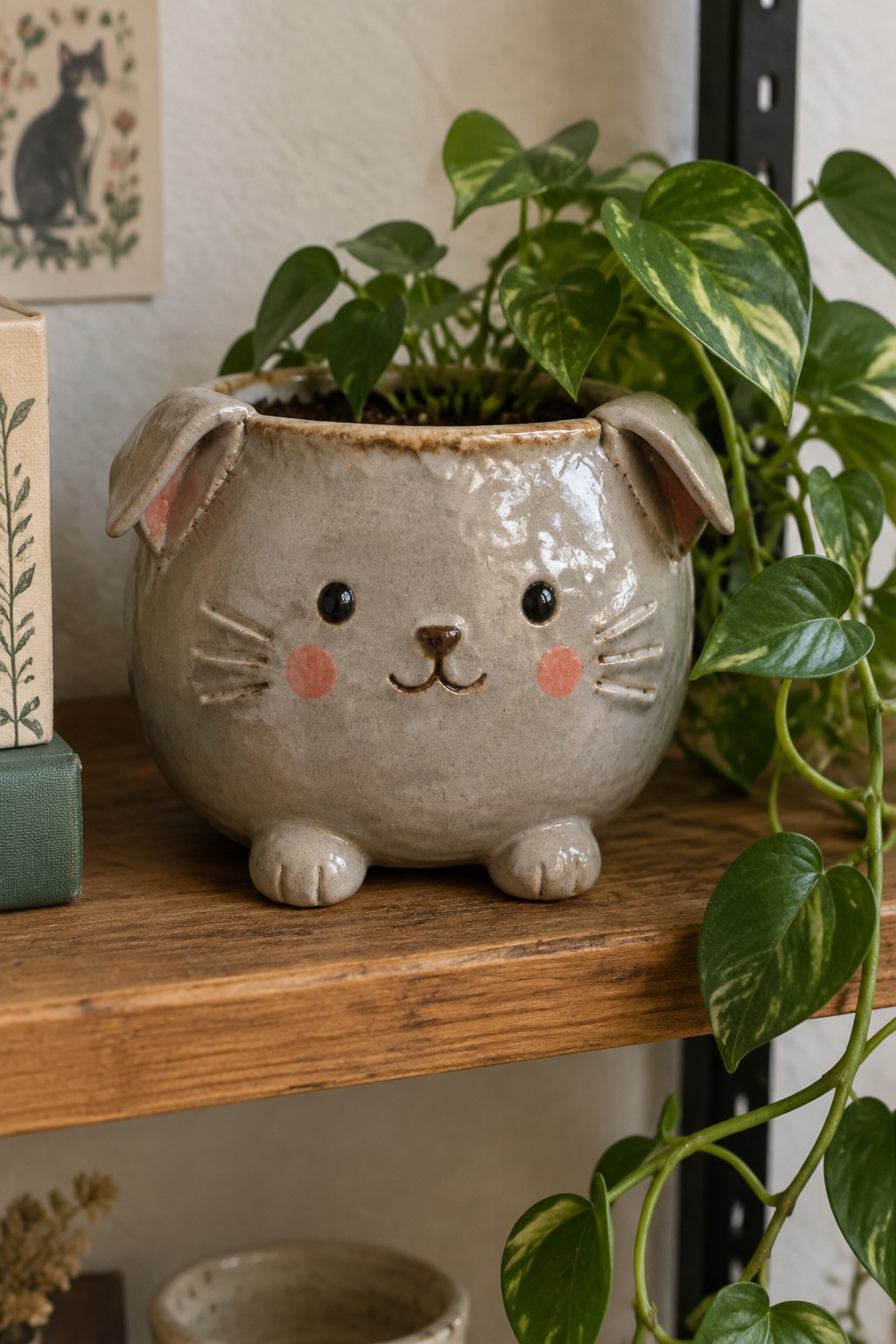
A cat-shaped planter uses a rounded ceramic body as the main pot with ears, paws, and facial features attached to create an animal form. The design relies on simple sculpted additions like black eyes, a nose, whiskers, and pink cheeks against a matte neutral glaze. This keeps the focus on the animal shape while still functioning as a standard small planter for houseplants.
The compact size works well on shelves or windowsills where a regular pot blends in. You can adapt the same base shape for other animals by changing just the ears and face details, or skip the cheeks and whiskers for a quicker version. A piece like this stands out in plant styling photos because the animal form adds clear visual interest without needing bright colors or complex patterns.
Citrus Slice Coasters
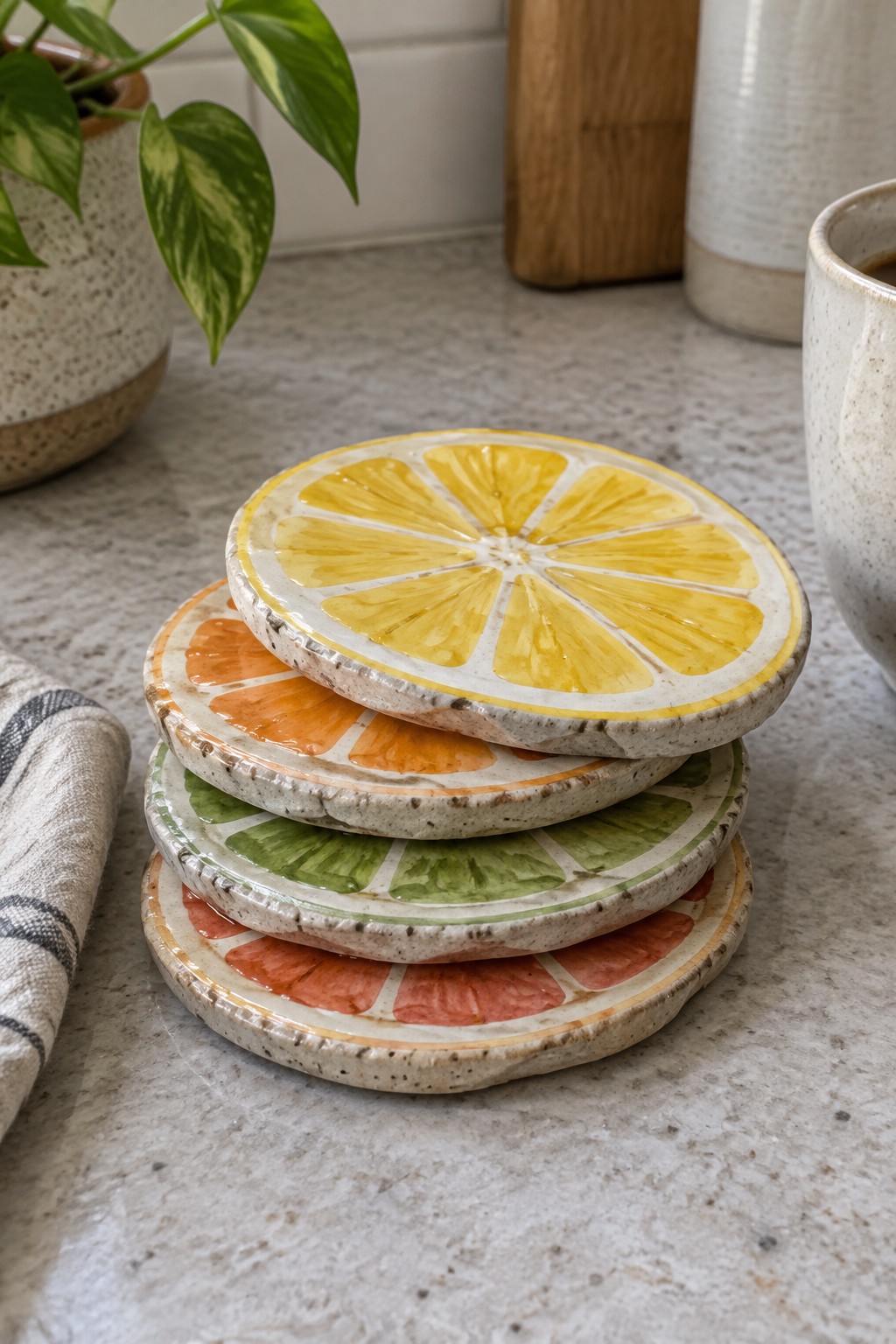
Ceramic coasters cut into citrus slices give you a flat, functional form that uses colored glazes to mark out fruit segments. The round shape with radiating lines makes each piece read as lemon, orange, lime, or grapefruit, while the speckled clay rim keeps the design from looking too polished. Slab construction keeps the work quick since you only need to cut circles and add underglaze or glaze in sections.
The painted detail helps this stand out when the coasters sit on a counter or get stacked for storage. A piece like this works especially well as basic table protection that still fits a kitchen theme. You could change the fruit colors, use just one variety across the set, or scale the same slab circles up for trivets. The small size also makes it simple to test new glaze combinations without using much material.
Two-Tone Speckled Slab Mug
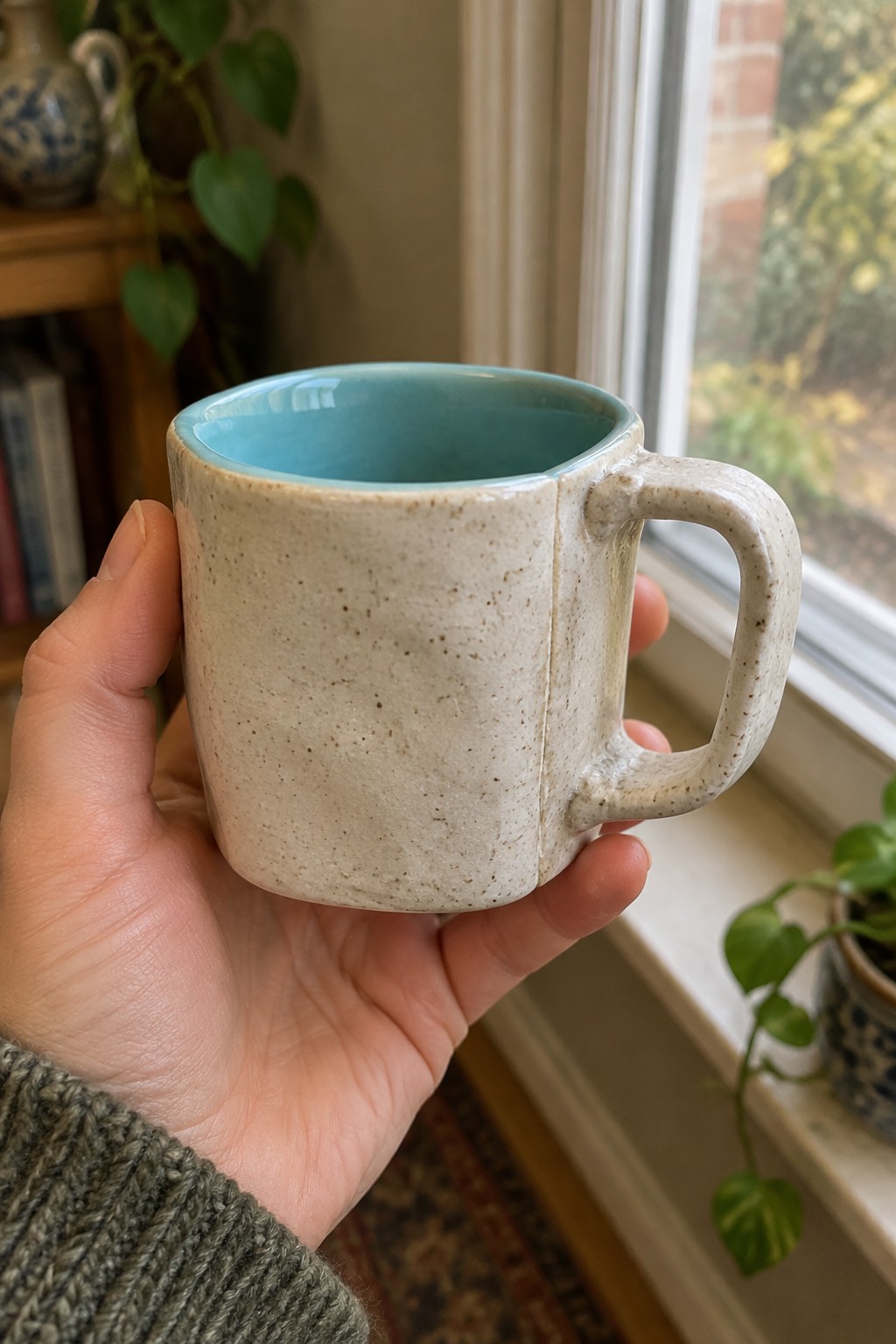
A slab mug starts with a simple rolled rectangle joined into a cylinder, then gets a handle added before firing. This version keeps the exterior in a speckled stoneware clay and lines the inside with a solid turquoise glaze for an easy color contrast. The straight sides and modest scale make it comfortable to hold while the speckled texture provides visual interest without added carving or stamps.
What makes this idea useful is how the two-tone glaze works on any basic cylinder you cut from a slab. Swap the interior color to match dishes you already own or leave the outside unglazed for a drier, matte finish. The same form adapts quickly into a small creamer or a wider soup bowl by changing the rectangle dimensions. In a kitchen setting this kind of mug stands out in photos because the interior color pops against the neutral exterior.
Slab-Built Napkin Holder
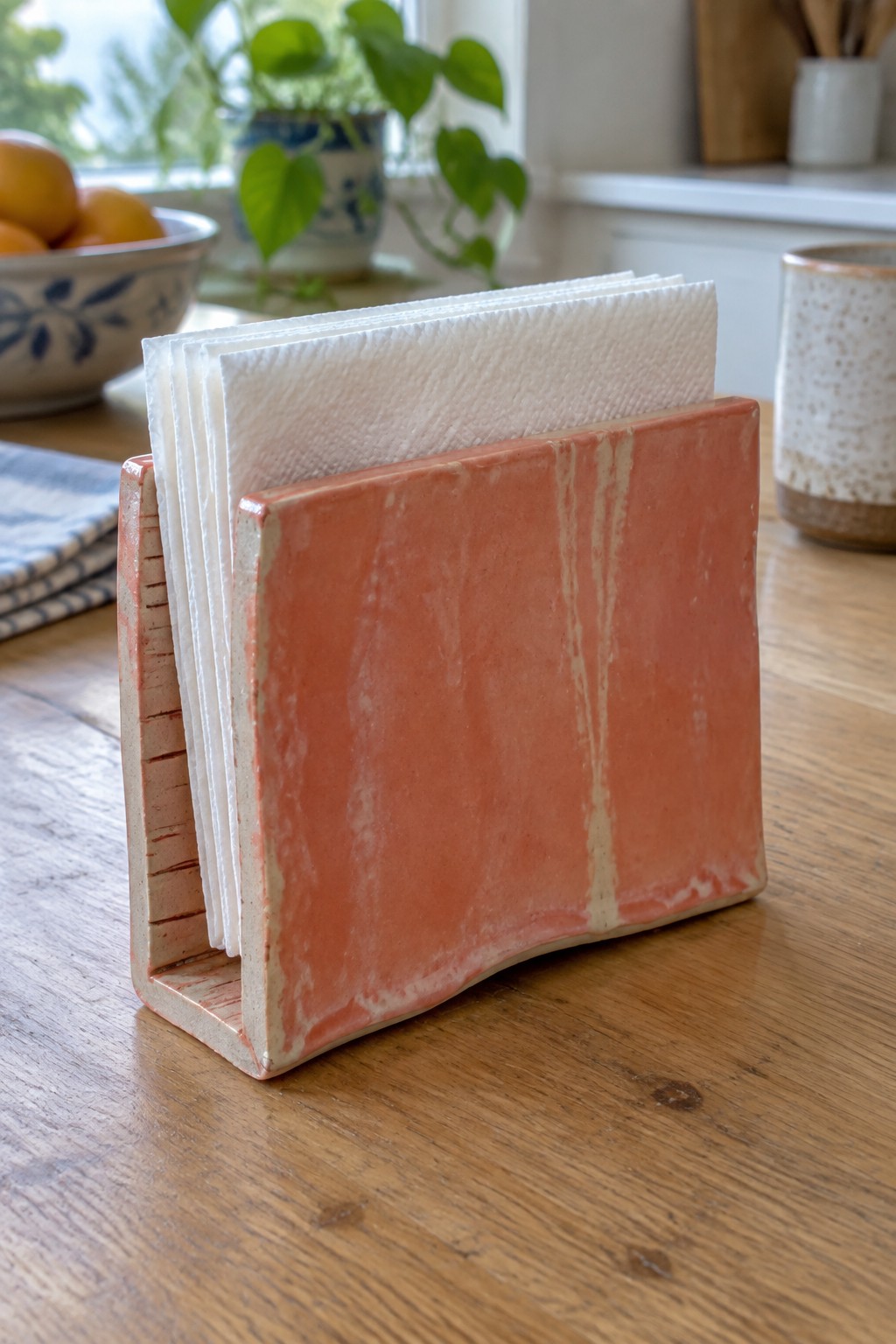
A napkin holder built from three flat slabs creates a simple open channel that keeps a stack of paper napkins upright and ready on a table or counter. Two taller side slabs and one narrow base slab are joined at the edges, then the whole form is glazed in a single color with a few vertical drips for surface interest. The slightly wavy bottom edge and soft coral tone give the piece a relaxed kitchen look while still functioning as a practical holder.
What makes this idea useful is how little clay and time it requires while still producing a finished object that fits standard napkin sizes. The same three-slab layout can be made taller for cloth napkins, shortened into a letter holder, or widened for mail. Changing the glaze to a solid matte or adding a single stamp row along the top edge gives you an easy way to match different kitchen colors without altering the construction.
Slab Incense Holder with Cone Dish
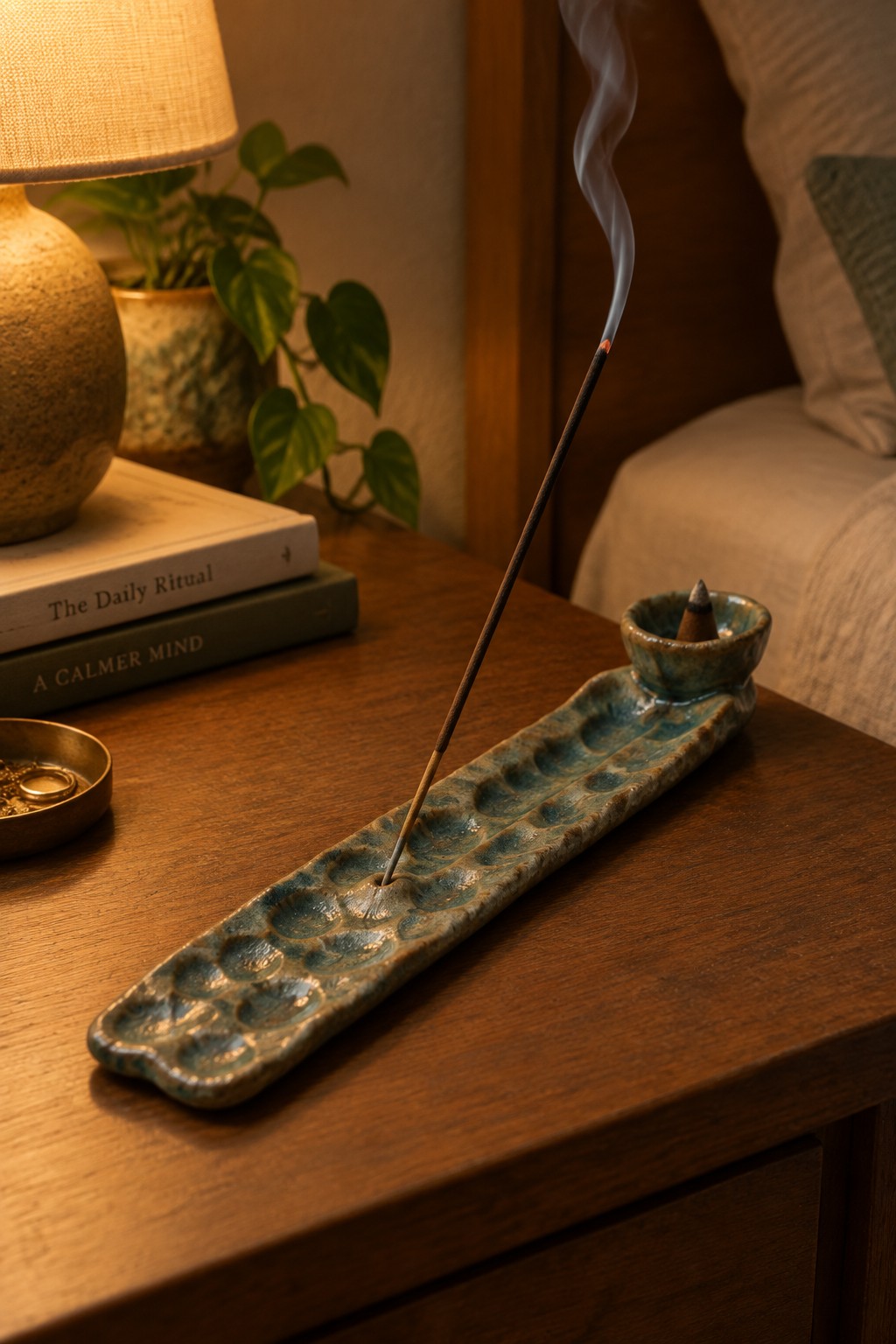
This project is a long, narrow ceramic tray built from a single slab, with a row of rounded indentations running down the center to catch falling ash. One end has a small attached cup that holds cone incense, while a hole or groove near the middle supports a stick. The blue-green glaze and simple textured surface keep the focus on its practical shape rather than decoration.
What makes this idea useful is that it handles both stick and cone incense in one compact piece. The length keeps the burning tip safely away from surfaces while the depressions contain the ash. You could shorten the slab for a desk version or add extra holes to fit different incense lengths. This kind of holder works especially well as a bedside or workspace piece because it stays flat and takes up little room.
Divided Two-Section Salt Cellar

A two-compartment dish built from a single slab gives you separate sections for salt and another seasoning without extra pieces. The oval shape keeps the form compact while the low center divider prevents mixing between sides. Contrasting glazes on each half make the sections easy to read at a glance and highlight the handmade division. This approach fits the quick slab construction style since the basic shape needs only one cut and fold to create both wells.
What makes this idea useful is how the divided layout solves a common kitchen problem of keeping two dry ingredients handy but separate. The small scale works on a counter near the stove or on a table during meals. You could rework the same slab template into a double dip server or a small tray for coffee toppings by adjusting the divider height and glaze choices. The simple form also translates well to gifts since it stays practical while showing clear handmade construction.
Square Slab Utensil Holder
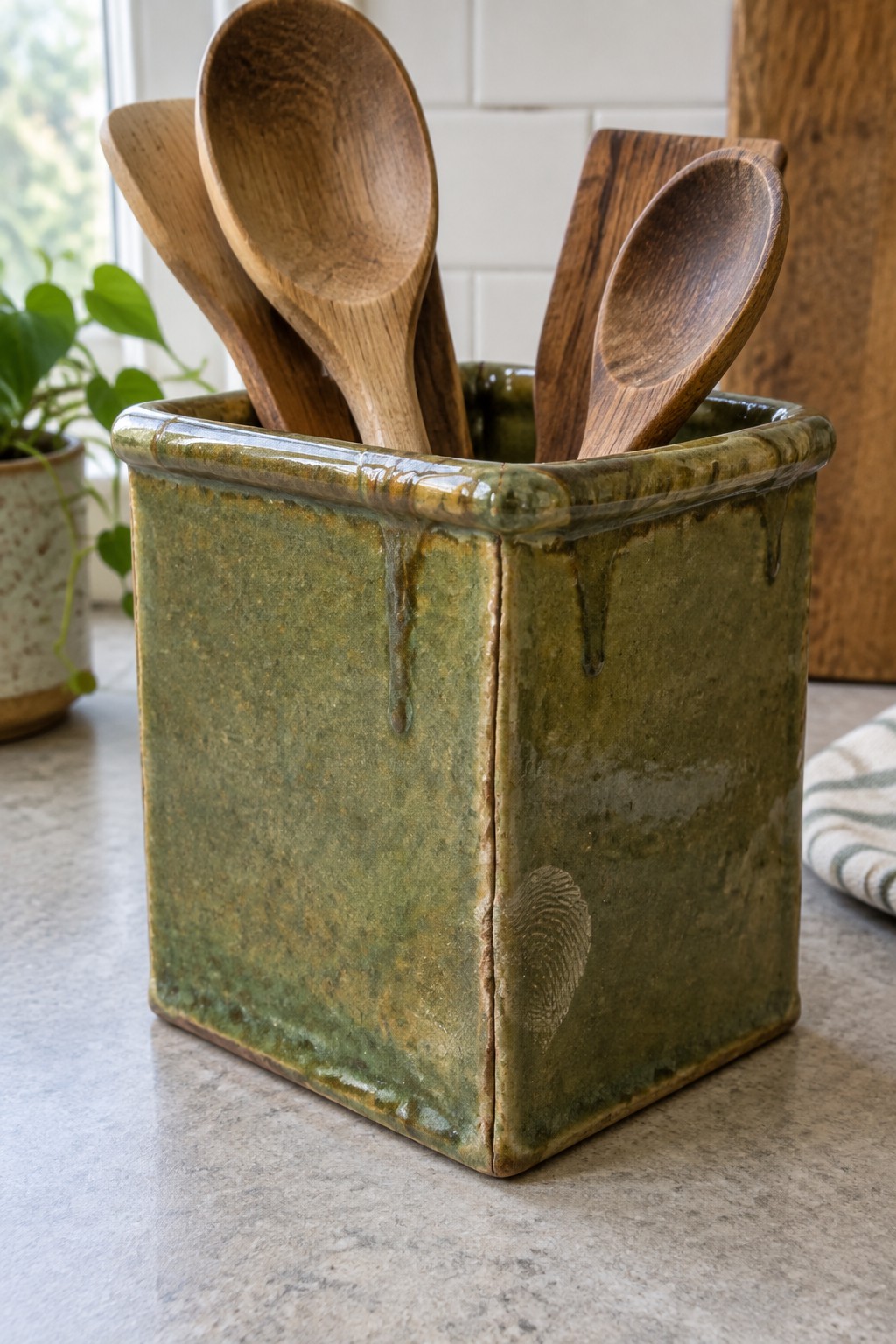
A square slab container makes a practical utensil holder because the flat sides create a stable base that keeps wooden spoons and spatulas upright and easy to grab. The green glaze with its downward drips gives the piece visual interest through simple surface movement rather than added patterns. This type of project fits the kitchen storage category, where the form stays functional while the glaze adds color and texture.
What makes this idea useful is how the square shape can be scaled up or down to hold different kitchen tools or even art brushes. The drip glaze effect works with many flowing colors, so the same build can be adapted to match existing dishware or countertop tones. In a kitchen this kind of piece keeps tools accessible without taking up much space, and the slab method lets you make matching holders for other rooms if needed.
Divided Slab Tray for Jewelry Storage
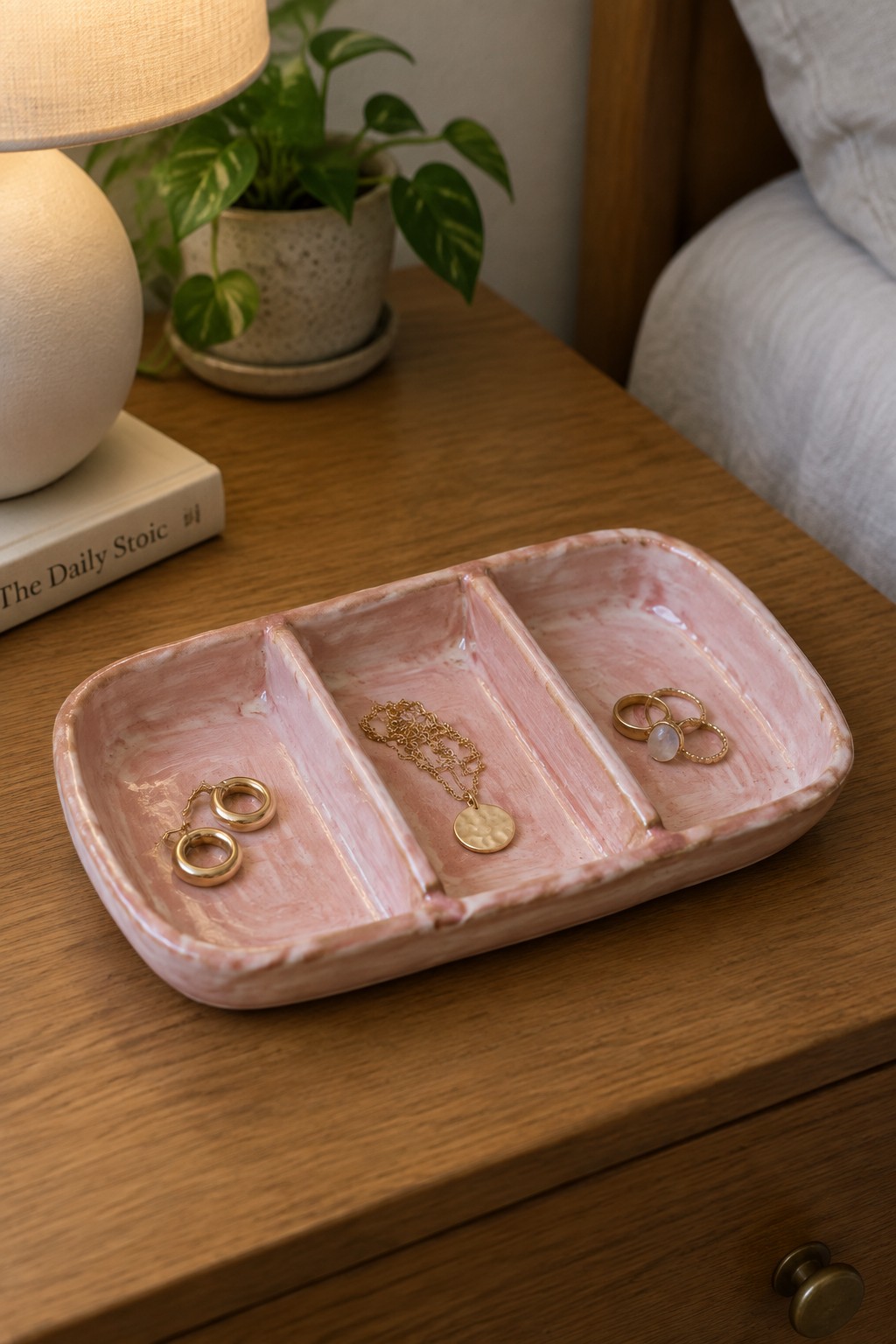
A three-compartment tray formed from a single slab gives you separate spaces for rings, necklaces, and earrings in one compact piece. The soft pink marbled glaze keeps the surface simple while the low walls and rounded edges prevent small items from sliding between sections. This format works as a desktop or bedside organizer that keeps jewelry visible and untangled.
What makes this idea useful is how easily the divided layout adapts to different items. You can shorten the tray for a windowsill version or stretch it longer to hold more necklaces. The same slab construction works for a bathroom version in a solid color to hold hair ties and small bottles. For a gift, swap the glaze to match someone’s room and keep the three sections so the recipient can sort by daily use.
Lidded Cylinder Toothbrush Holder
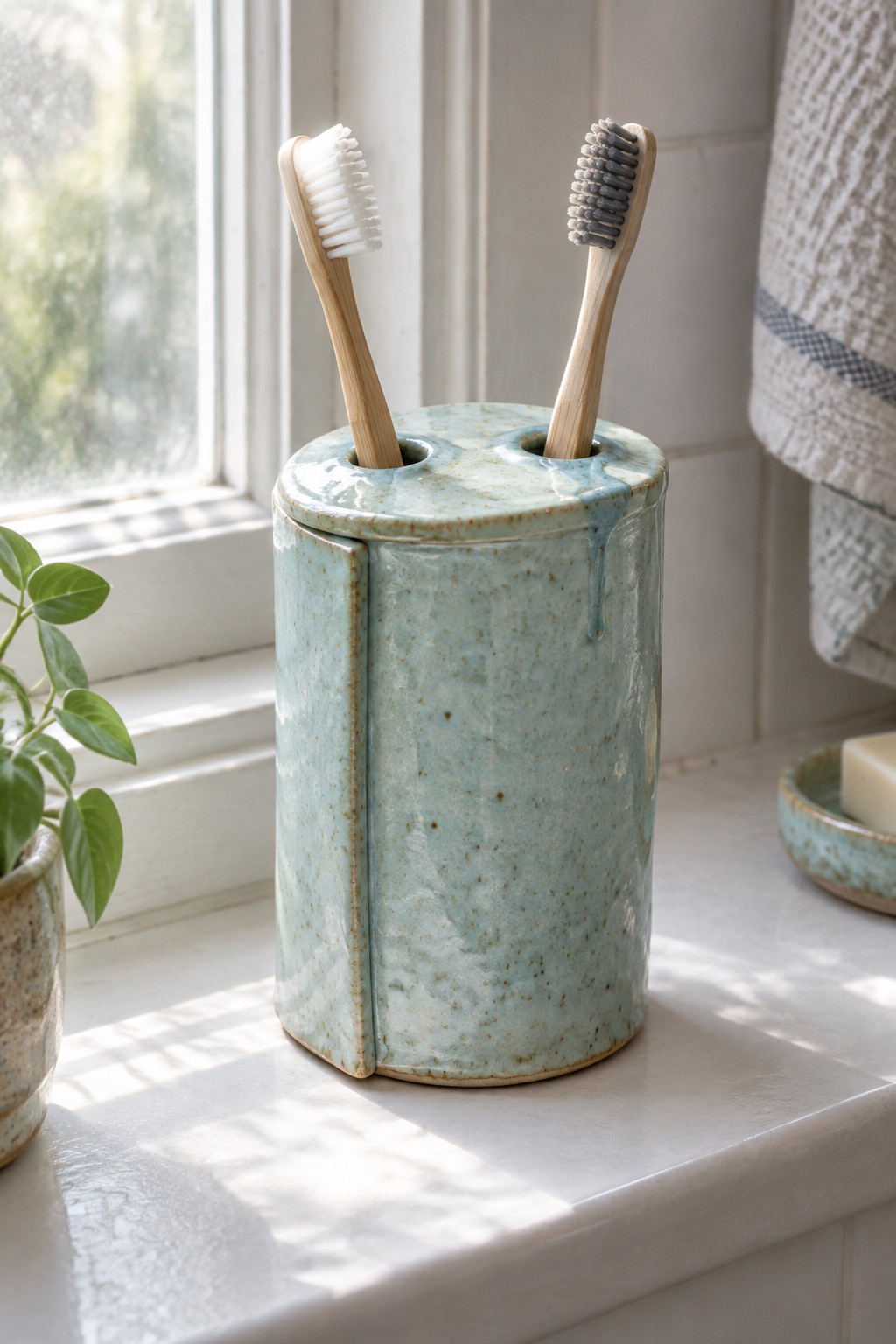
A tall ceramic cylinder with a fitted lid that has two holes drilled through it makes a simple double toothbrush holder for the bathroom. The soft blue-green glaze and slight surface texture keep the form from looking too plain while still letting the shape do the main work. This project takes a basic container form and turns it into a functional piece that keeps brushes upright and separate without needing extra hardware or compartments.
What makes this idea useful is how the lid adds stability so the brushes do not tip or touch each other. The same cylinder could be shortened into a single-hole version or made wider with more holes to hold razors or makeup brushes. In a small bathroom it takes up little space on the counter and pairs easily with a matching soap dish in the same glaze. You could also skip the lid entirely and just cut holes directly into the top rim if you want a quicker slab version.
Cylinder Planter With a Layered Saucer

A simple slab cylinder forms the main body of this planter while a separate saucer with raised concentric rings catches excess water. The matte speckled glaze in neutral tones keeps the surface quiet so the plant remains the main feature. This two-piece setup solves drainage in one clean object without needing extra trays or liners.
The ridged saucer adds grip and visual weight that helps the whole piece feel balanced on a shelf or table. You can change the diameter or height of the cylinder slab to fit larger or smaller plants without altering the basic construction. The same saucer design works just as well under a small vase or a lidded jar if you want to reuse the form for other projects.
Ring Pattern Candle Plate
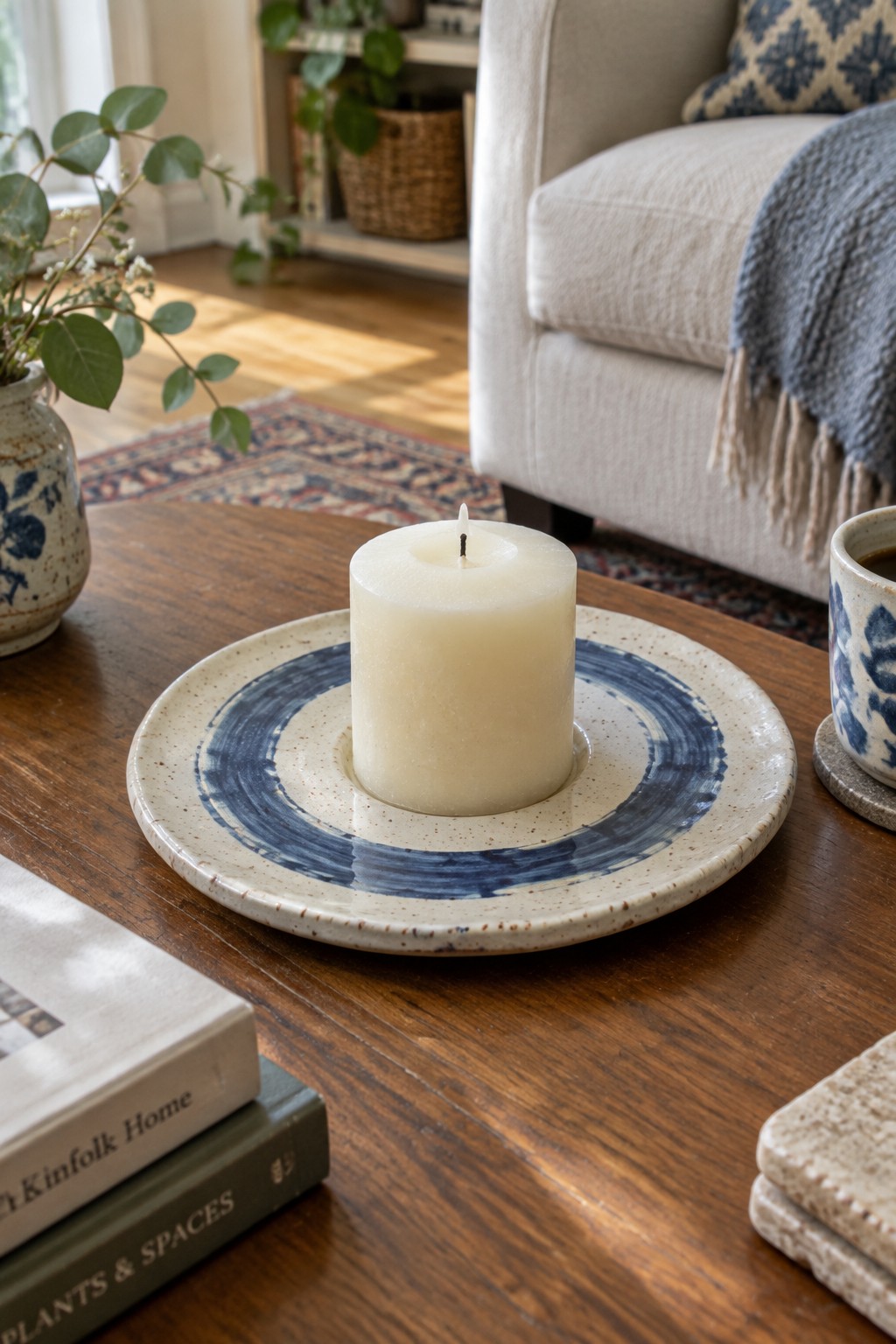
A flat ceramic plate with a shallow central depression creates a stable holder for a pillar candle. The design uses quick concentric blue brushstrokes on a speckled off-white clay body to form bold rings that draw the eye inward. This approach keeps the form simple while the painted pattern adds visual interest without extra carving or attachments. It fits the candle piece category and works as both a functional drip catcher and a tabletop accent.
What makes this idea useful is how the same plate shape can be made in different diameters to fit various candle sizes. The brushstroke rings are easy to adapt by changing the number of circles or swapping colors to match other decor. In a living room or on a coffee table this piece keeps wax contained while doubling as a small tray. You could rework the slab method into coasters or a soap dish by adjusting the center depth and skipping the well.
Wall-Mounted Slab Planter with Leaf Impression
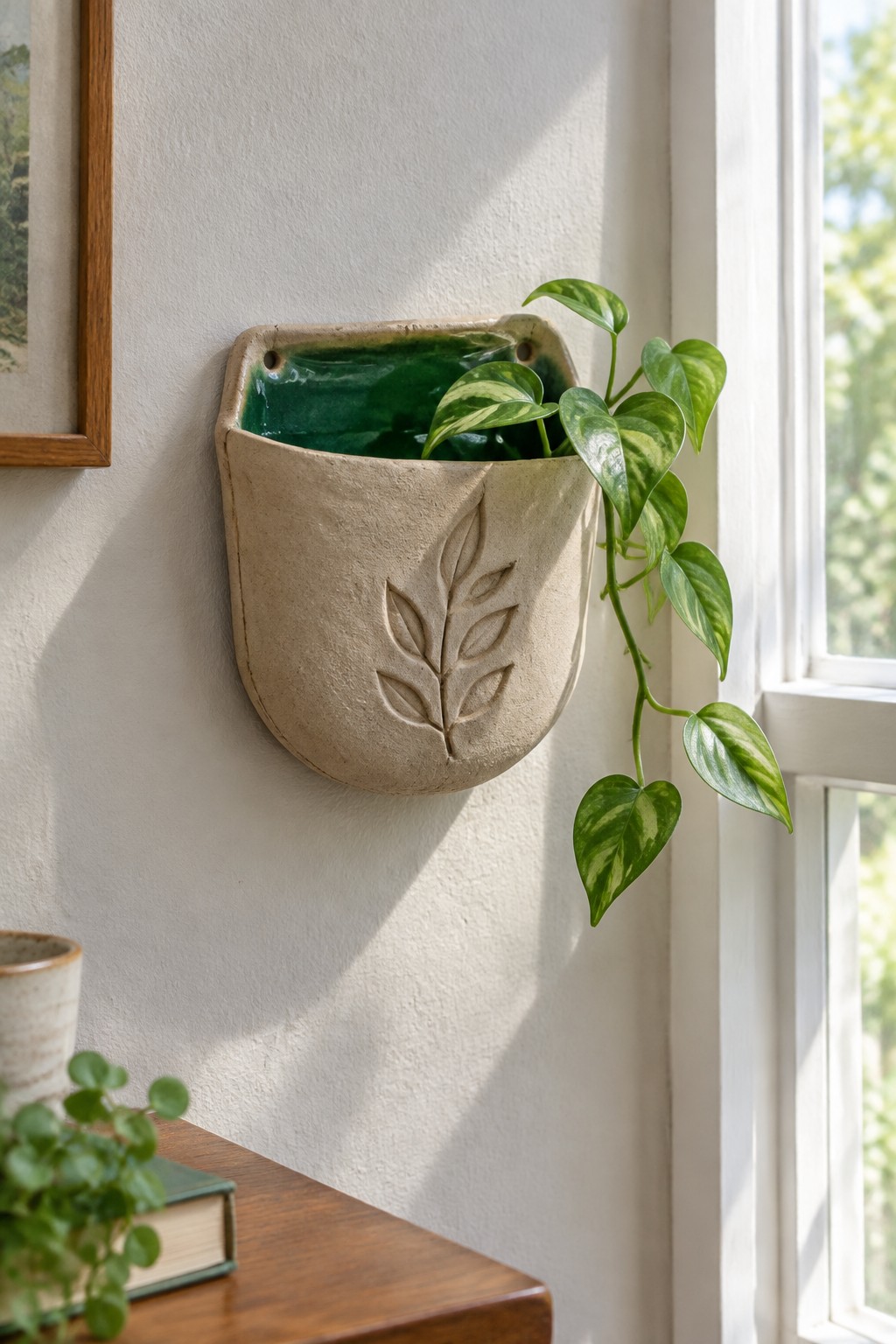
This project uses flat clay slabs joined into a simple pouch shape that hangs on the wall. The front slab carries a single leaf pressed into the surface for texture while the inside receives a glossy green glaze that contrasts with the matte exterior. The open top and two small holes near the rim make it easy to mount and plant. The form stays shallow so it fits flat against a wall without taking up shelf space.
The shape does a lot of the work here because the curved bottom and wide opening suit trailing houseplants without needing extra drainage holes. You can swap the leaf for any flat object you have on hand or leave the front plain if you want a faster build. This style works especially well in kitchens or bathrooms where counter space is limited and a small hanging planter adds greenery at eye level. The same slab layout can be widened into a longer tray or narrowed into a bud vase with almost no extra steps.
Slab-Built Cylinder Vase for Single Stems
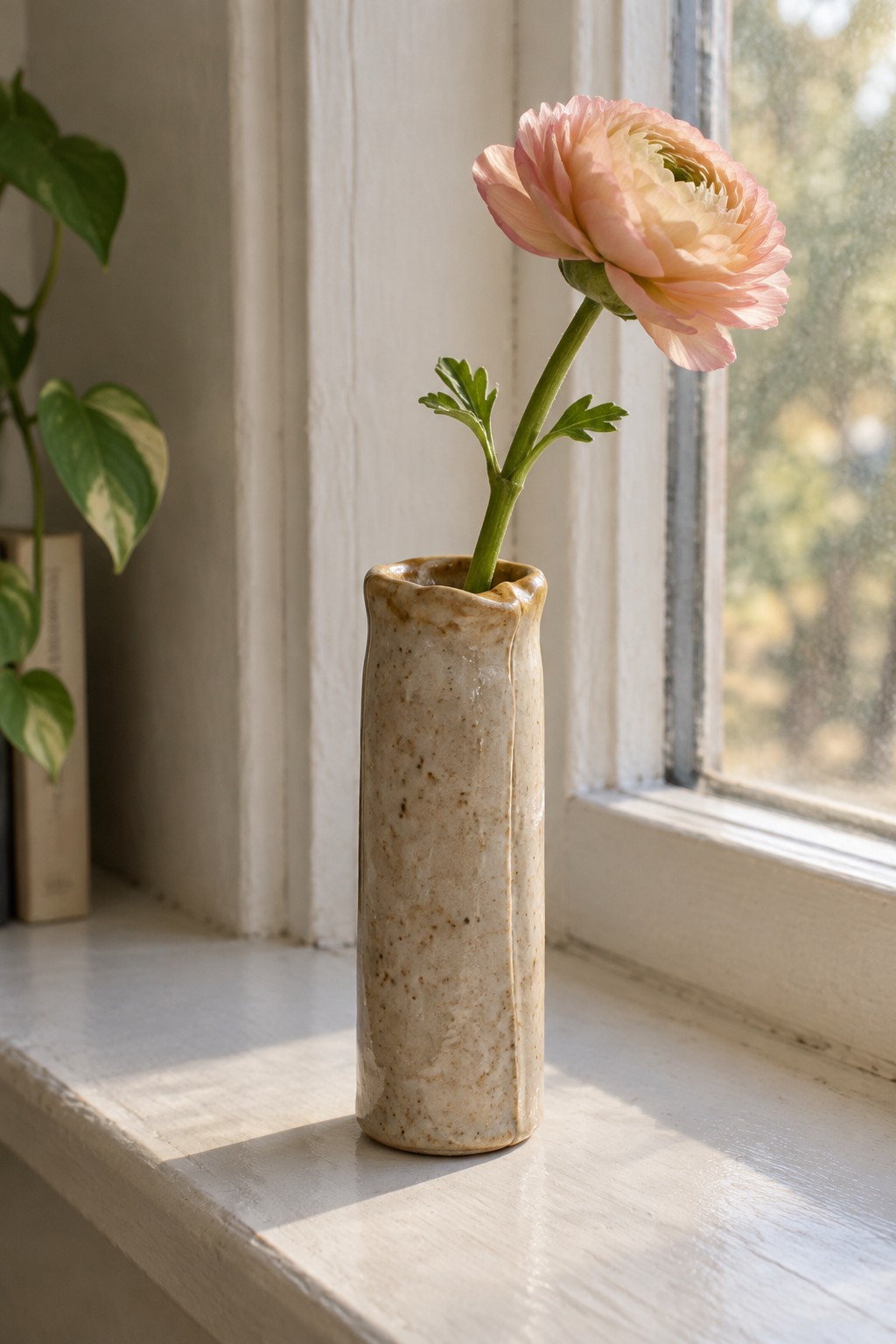
A tall, narrow vase formed from a rolled slab gives you a clean vertical shape that holds one or two flower stems without tipping. The slightly irregular rim comes from pinching the top edge while the clay is still soft, which breaks up the straight lines without adding handles or extra parts. A light speckled glaze over the textured surface keeps the piece simple while showing the clay body underneath.
What makes this idea useful is how easily the same cylinder can shift from flower vase to desk pencil holder or small kitchen utensil crock. You can change the height or try a matte glaze in a different color to match a specific room without changing the construction. The narrow footprint works on crowded windowsills or shelves where wider pots would not fit. For gifts, this form is quick to repeat in batches and looks finished with just one glaze layer.
Slab-Built Egg Cup with Wavy Rim
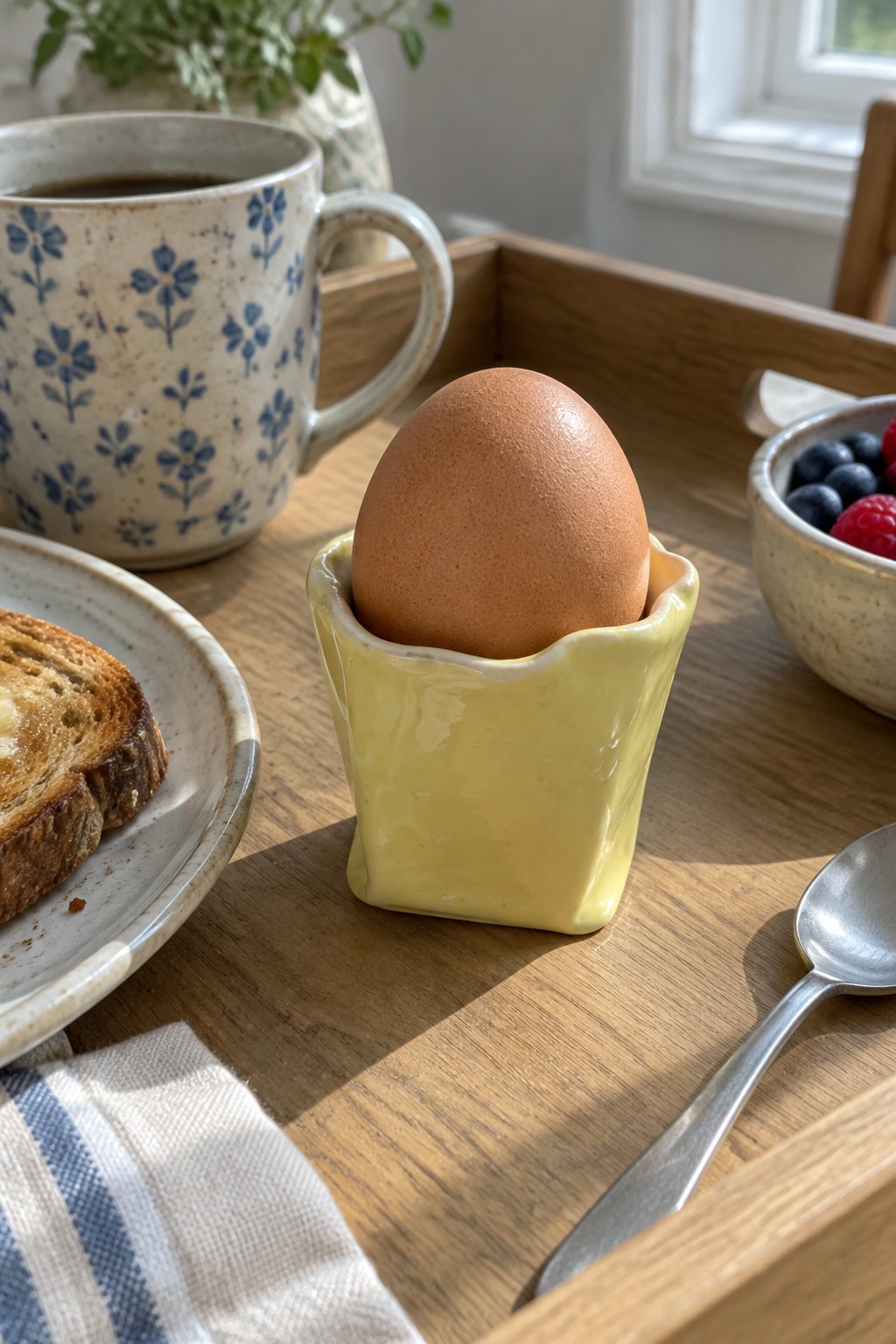
A small egg cup built from a single slab of clay makes a practical kitchen item for serving soft-boiled eggs. The form is pinched or folded into a tapered square shape with an uneven, wavy rim that adds visual interest without extra decoration. The glossy yellow glaze reflects light and contrasts cleanly with everyday tableware, keeping the focus on the egg itself.
What makes this idea useful is how fast it assembles from leftover clay and fires in one go. The compact size works on a breakfast tray, in a lunch box, or as part of a simple gift set with a few eggs. You can easily change the rim cut or swap the glaze color to match existing dishes, and the same basic shape scales down into a ring dish or small spice bowl with almost no extra steps.
Textured Essential Oil Diffuser Tray
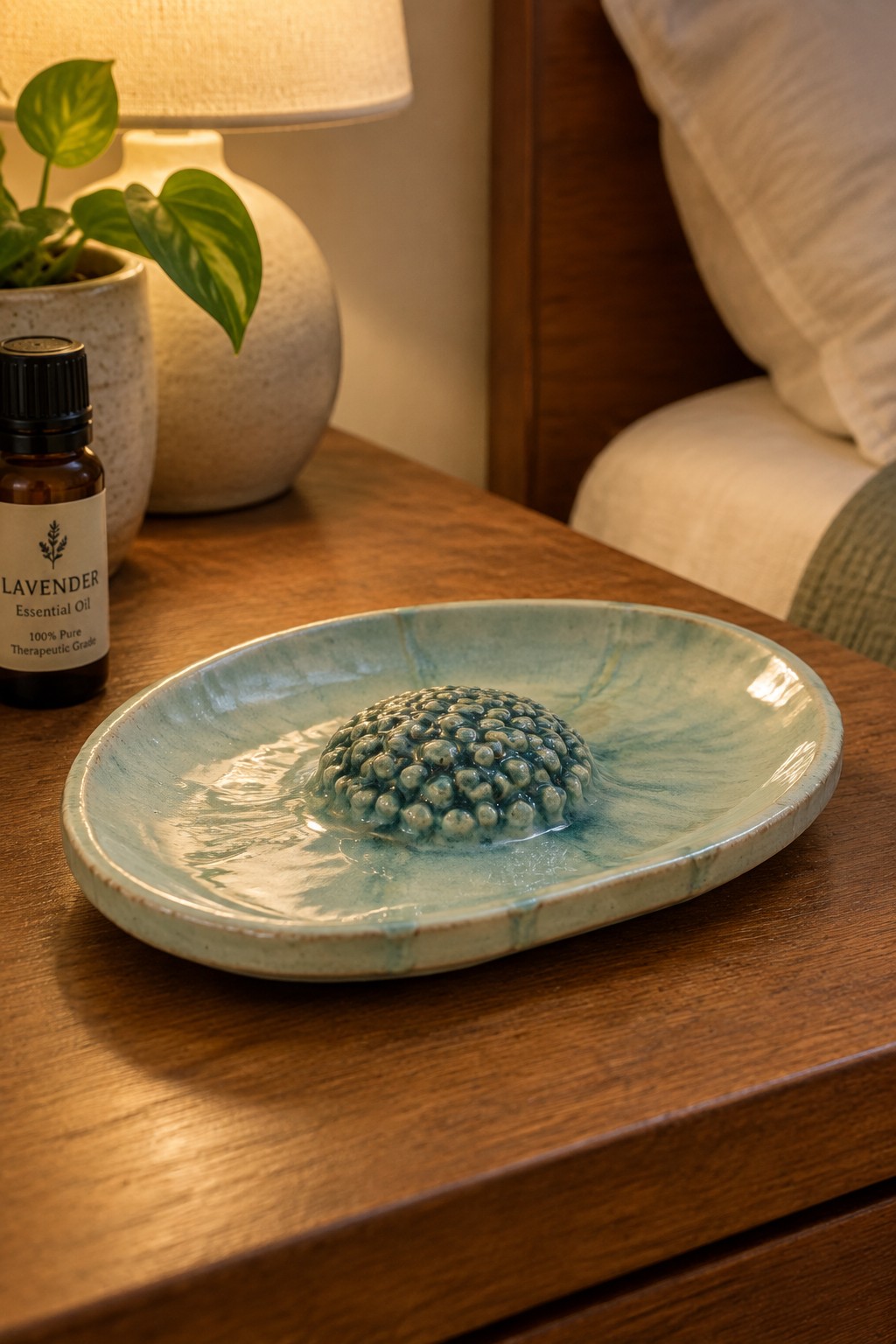
A small oval ceramic tray with a raised central dome covered in tight rounded bumps works as an essential oil diffuser. The bumpy surface traps drops of oil so they release scent gradually instead of evaporating all at once. A soft blue-green glaze with subtle movement gives the piece a watery appearance that pairs naturally with lavender or other calming oils.
What makes this idea useful is its small footprint on a bedside table or bathroom counter. The same oval slab base can be adapted into a soap dish or ring holder by swapping the textured dome for a flatter or slightly raised center. The bumpy detail is simple to add with coils or a stamp before the first firing, so the project stays quick while still looking intentional.
Rectangular Slab Key Tray
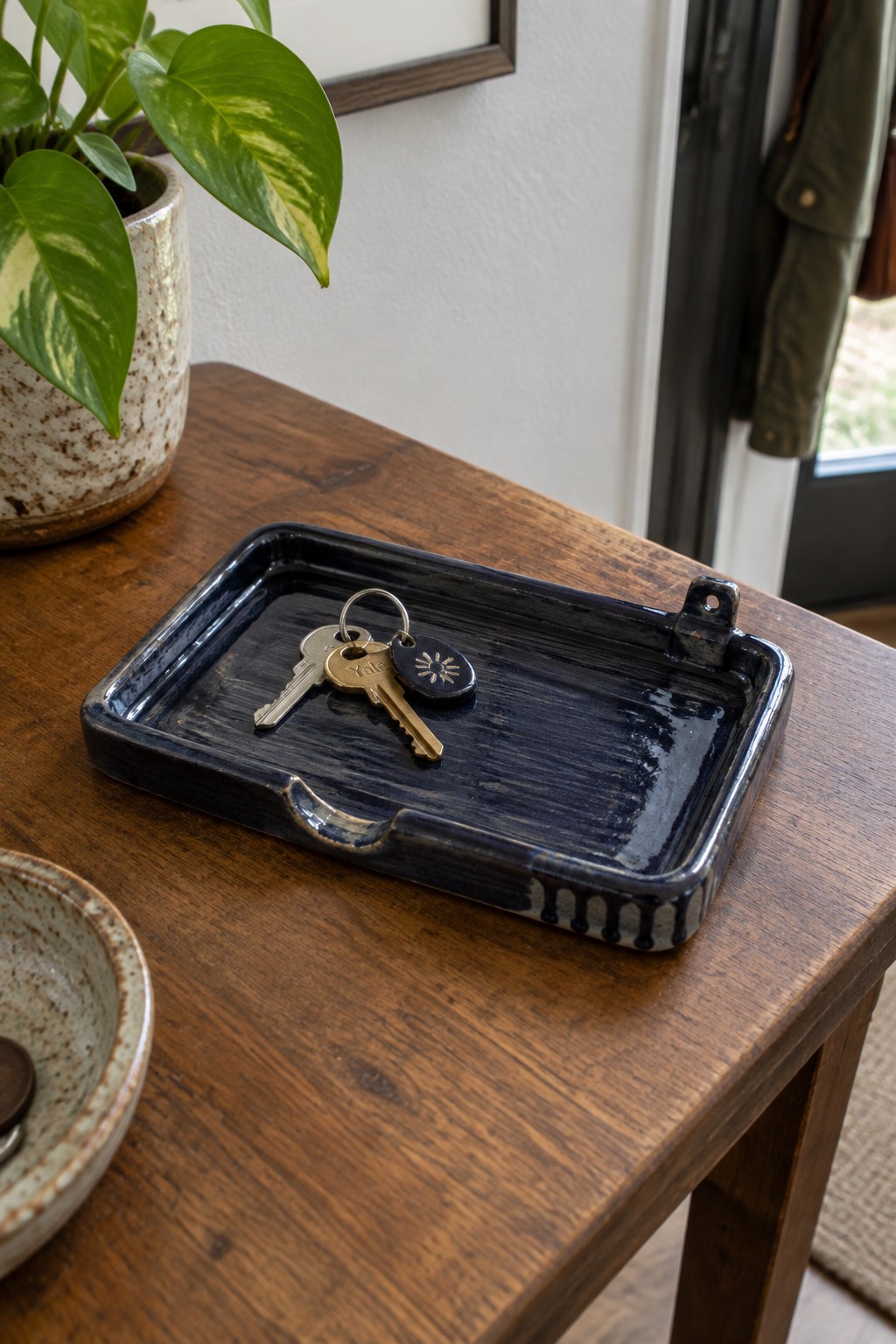
A rectangular ceramic tray built from slabs makes a practical catch-all for keys and small daily items. Low sides with a slight rim keep things from sliding off while the flat base stays simple to form. The dark glossy glaze covers the surface evenly and creates a smooth wipe-clean finish that suits everyday use. This fits the holder category and works as a desk or entryway piece.
What makes this idea useful is the straightforward shape that builds quickly from one base slab and four side pieces. You could add a small tab on one end like the one shown here for easier lifting or skip it for a cleaner look. The same proportions adapt well to a jewelry dish or a narrow windowsill tray by changing only the length. In a kitchen or mudroom this kind of tray keeps clutter contained without needing extra hardware.
Frequently Asked Questions
1. What basic supplies do I need to begin these slab pottery projects? You will need a rolling pin or slab roller, a work surface covered with canvas or newspaper, basic clay tools like a needle tool and scoring tool, a sponge, and a bucket of water. Choose a clay body that matches your kiln type, and keep plastic bags handy to control drying. These items allow straightforward construction without specialized equipment.
2. How can I prevent cracks at the seams when building with slabs? Score and slip all joints thoroughly before pressing pieces together firmly. Smooth the inside and outside of each seam with a damp sponge or finger to blend the clay. Cover completed projects loosely with plastic for even drying over several days, and avoid placing them in direct sunlight or near heat sources.
3. Which of the 23 projects work best for complete beginners? Start with flat or low-sided items such as coasters, simple trays, or small wall pockets. These require fewer joins and less structural support. Once comfortable with slab handling and basic assembly, move on to boxes or vases that involve more precise cutting and joining.
4. How long should I expect each project to take from start to finish? Most of the quick projects can be built in one to two hours. Drying usually takes three to seven days depending on thickness and room conditions. Bisque firing and glazing add another week or two if you use a community kiln, so plan for a total timeline of two to three weeks before a finished piece is ready.
5. What are good ways to add decoration without complicating the construction process? Apply texture with stamps, found objects, or textured rollers while the clay is still soft. Carve simple patterns or add small slab accents before assembly. For color, brush on underglazes after the first firing or use slip trailing on leather-hard clay. These methods keep the focus on straightforward building while creating visual interest.

Pottery Path is my cozy corner of the internet where I share clay ideas, pottery inspiration, and simple projects you can recreate at home. I love exploring everything from air dry clay to handbuilt pottery to cute minis that brighten your day. My goal is to make clay crafting feel easy, fun, and welcoming for anyone who wants to try it.
You will find beginner friendly tutorials, creative pottery painting ideas, and lots of warm inspiration for slow and happy crafting. If you enjoy hands on creativity, this space will feel like home.