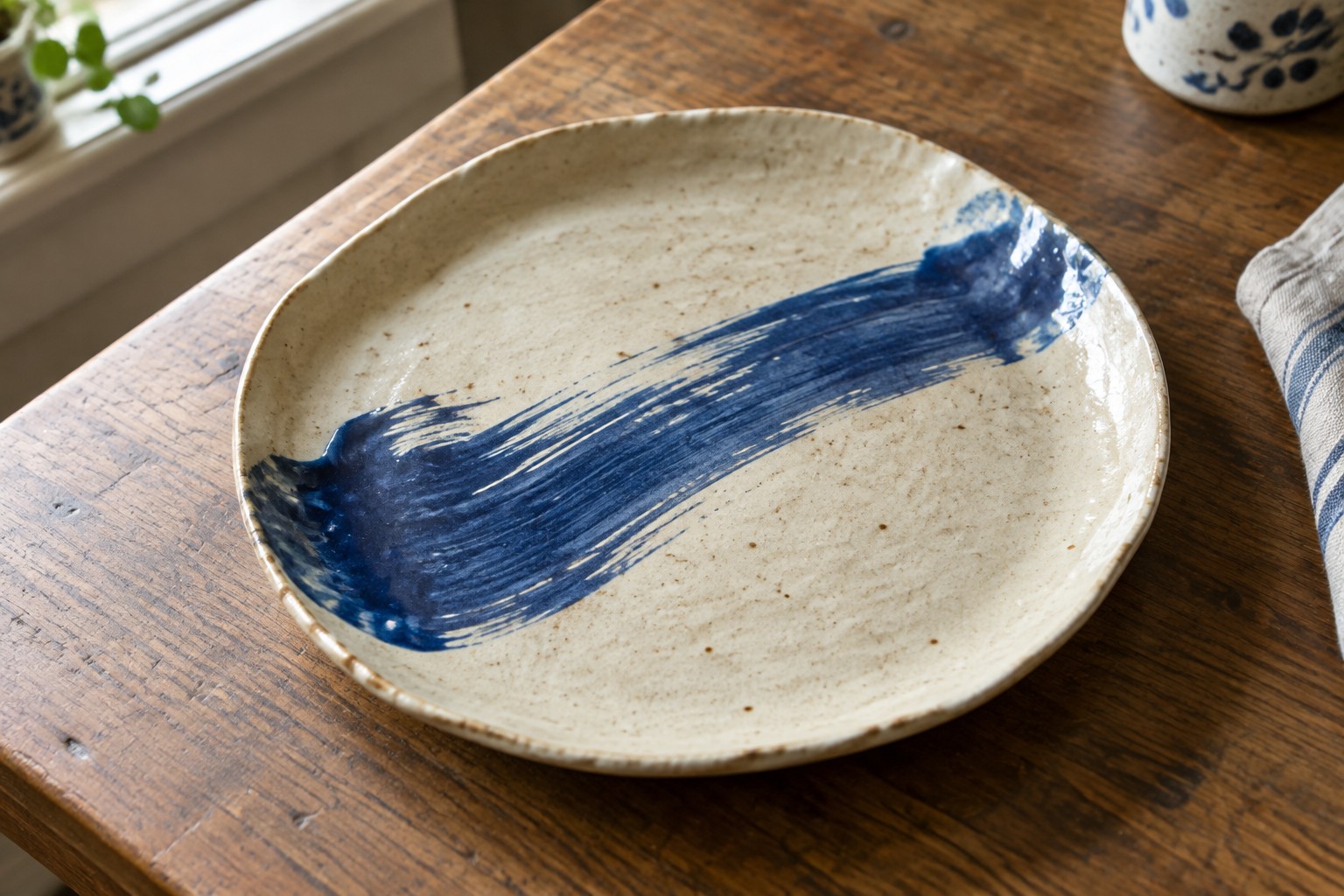
I started making slab pottery plates because the method is straightforward and does not require much equipment.
These plates hold up well for regular meals or for setting out on a shelf.
I have gathered examples that show different shapes and finishes I find useful.
Some are plain while others have light texture or color that still feels practical.
They might give you a few ideas to try if you work with clay yourself.
Sweeping Blue Brushstroke Slab Plate
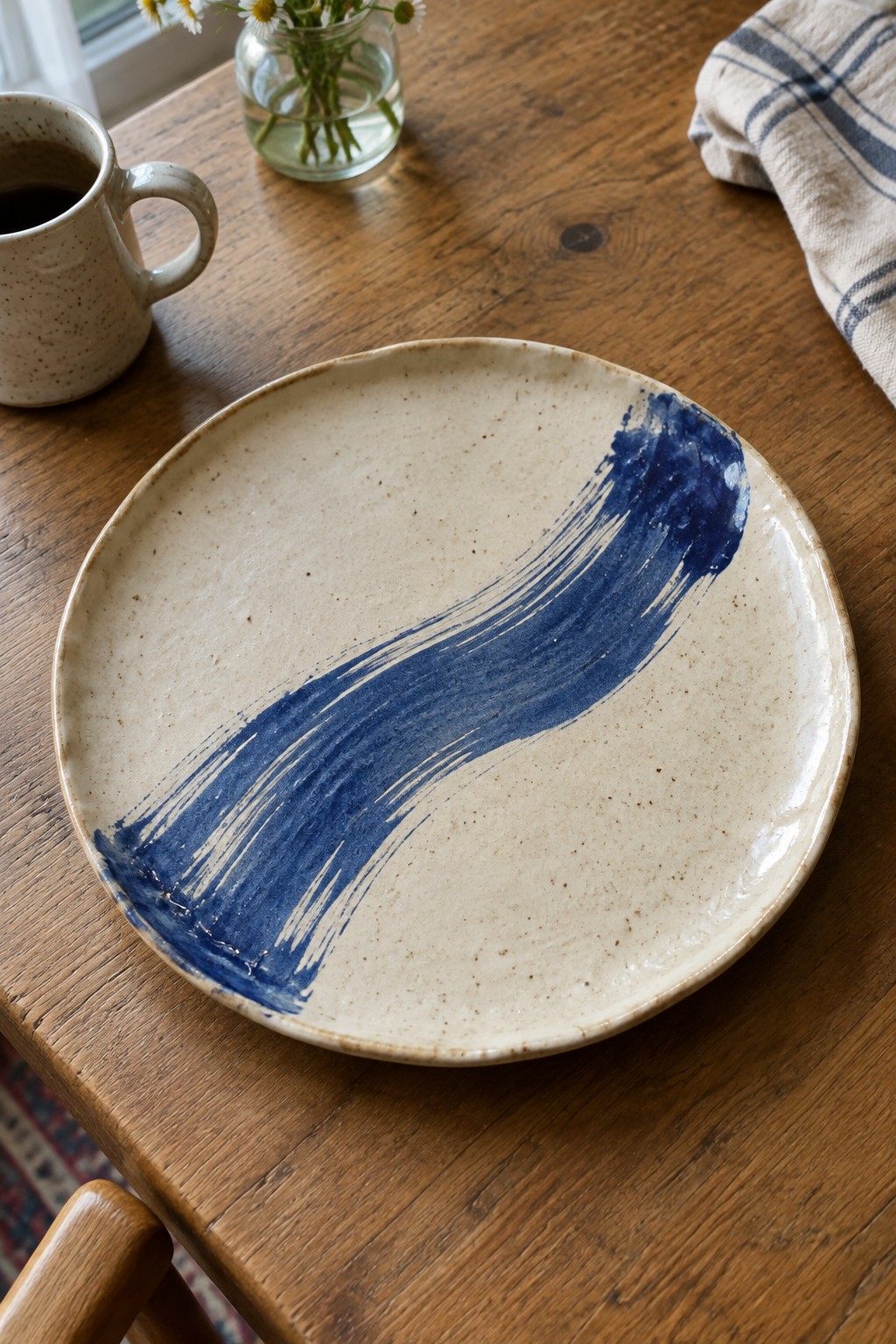
A slab-rolled plate finished in a speckled off-white glaze gets its impact from one wide, loose blue brushstroke that runs diagonally across the surface. The stroke varies in thickness and leaves visible brush marks, which keeps the design feeling direct and handmade rather than overly planned. This kind of minimal painted detail works especially well on flat forms where the surface itself becomes the canvas.
What makes this idea useful is how little extra work the decoration actually requires once the plate is made. The same stroke could be repeated on a set of smaller plates or scaled down for dessert dishes without changing the glaze. In a kitchen, the neutral base lets it mix with other dishes while the single color accent still catches attention on a table. For display, the strong line gives the piece enough presence to stand alone on a shelf.
Marbled Rectangular Slab Tray
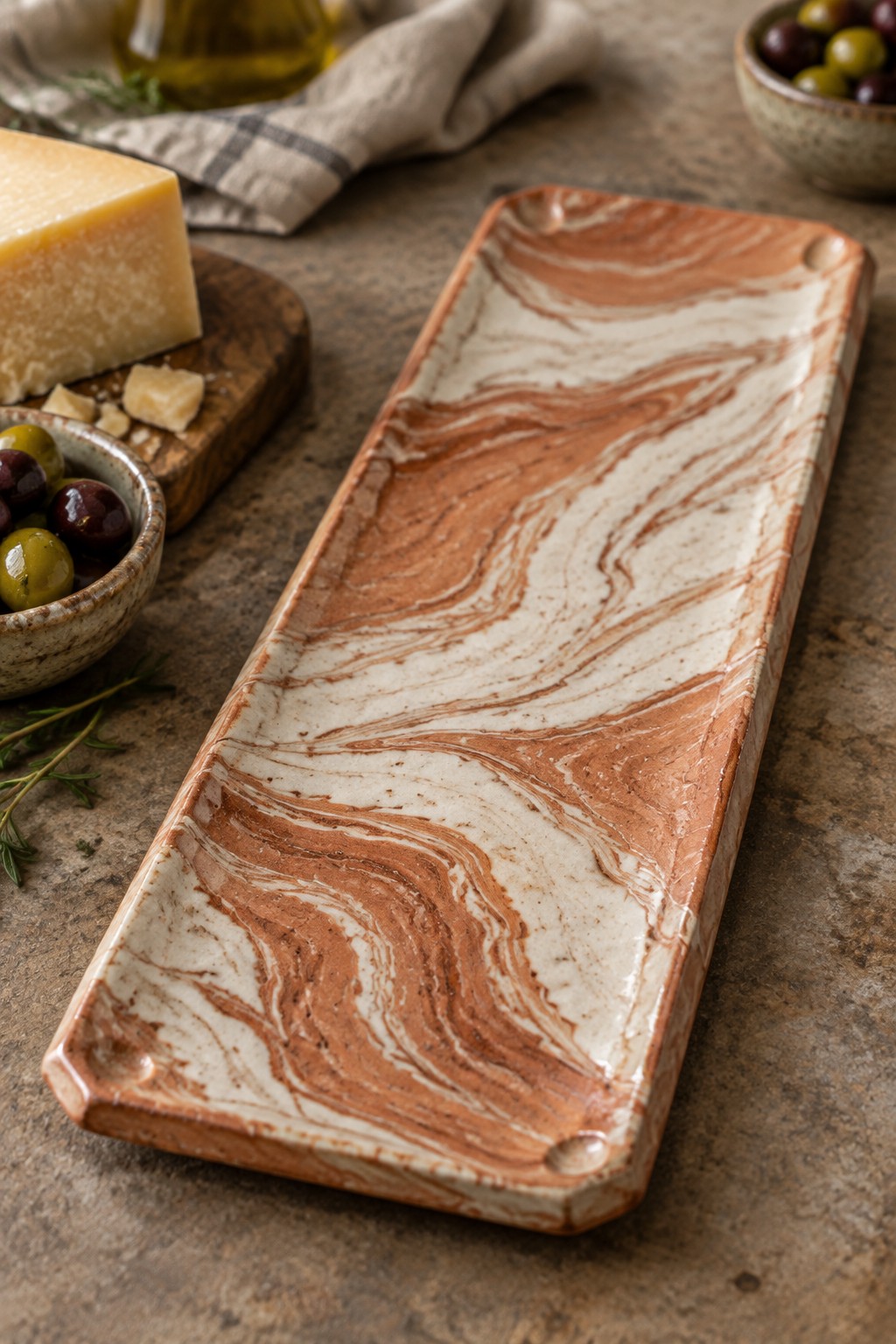
A slab-built rectangular tray uses a marbled glaze of white and terracotta to create movement across a flat surface. The pattern forms when two contrasting glazes are partially mixed before application, so each piece ends up with its own flowing lines. The long, low shape works well for serving because it gives plenty of room for food without tall sides getting in the way.
What makes this idea useful is how the flat slab format keeps the focus on the glaze rather than complicated construction. You could repeat the same marbling on smaller rectangles to make matching appetizer plates or change the color mix for a different look. In a kitchen this shape handles cheese boards or tapas easily since the length fits across a table. For a variation, try the marbled surface on a square slab and add small feet underneath to turn it into a display stand.
Oval Slab Tray with Parallel Grooves
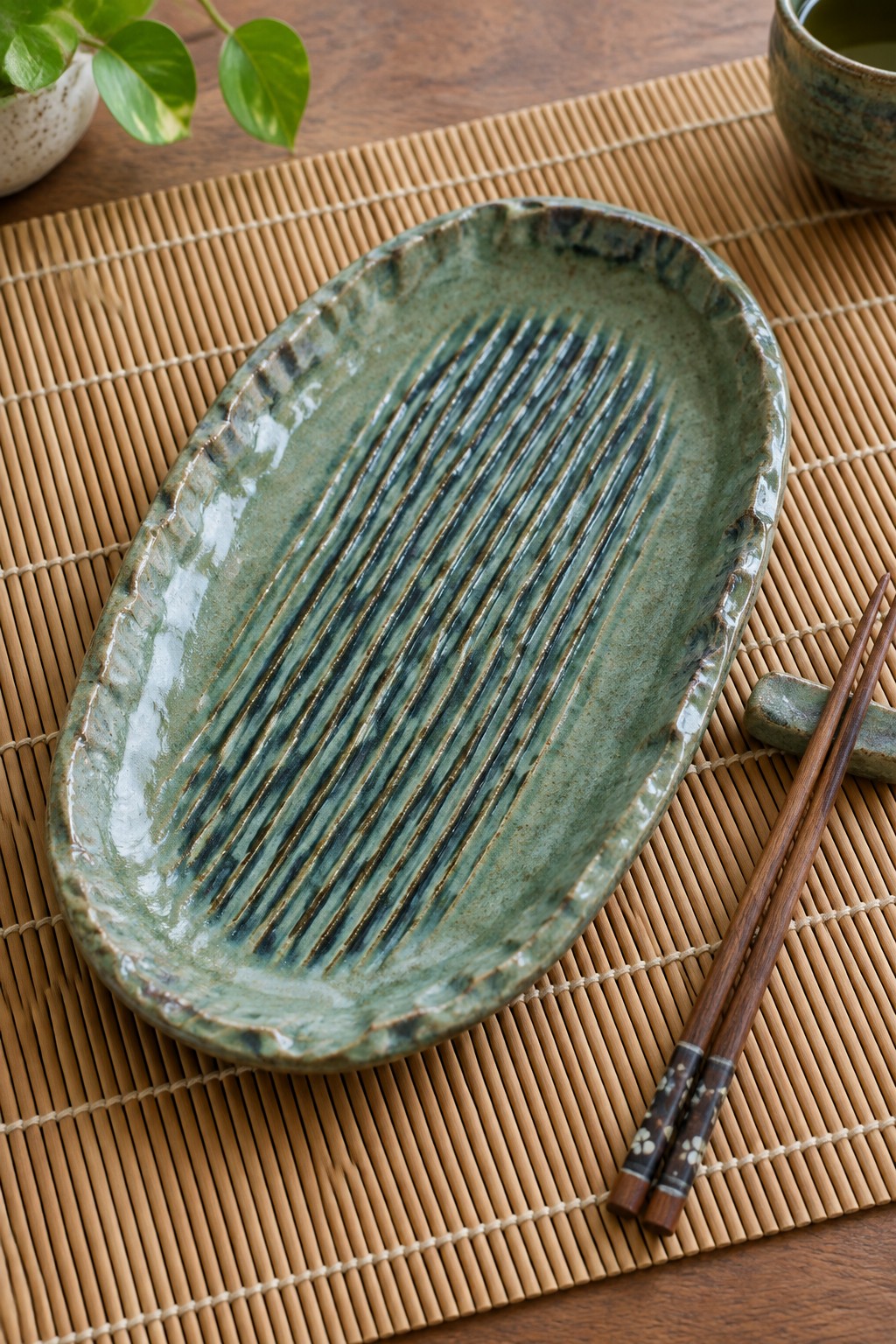
This slab-built tray uses a long oval form with a series of evenly spaced grooves running lengthwise down the center. The grooves add both texture and function by creating channels that help keep small foods in place. A reactive green glaze covers the surface and settles deeper into the ridges, producing natural color shifts without added decoration. The uneven rim and slight warping are typical of hand-built slab work.
The shape works especially well for serving sushi, dumplings, or appetizers where the grooves keep items from sliding. You could shorten the form into a rectangular version for a desk catchall or swap the glaze for a matte speckled finish to change the look. This approach keeps the build simple since everything comes from one slab, yet the texture makes the finished piece stand out in photos for sharing.
Square Slab Plate with Pressed Fern Details
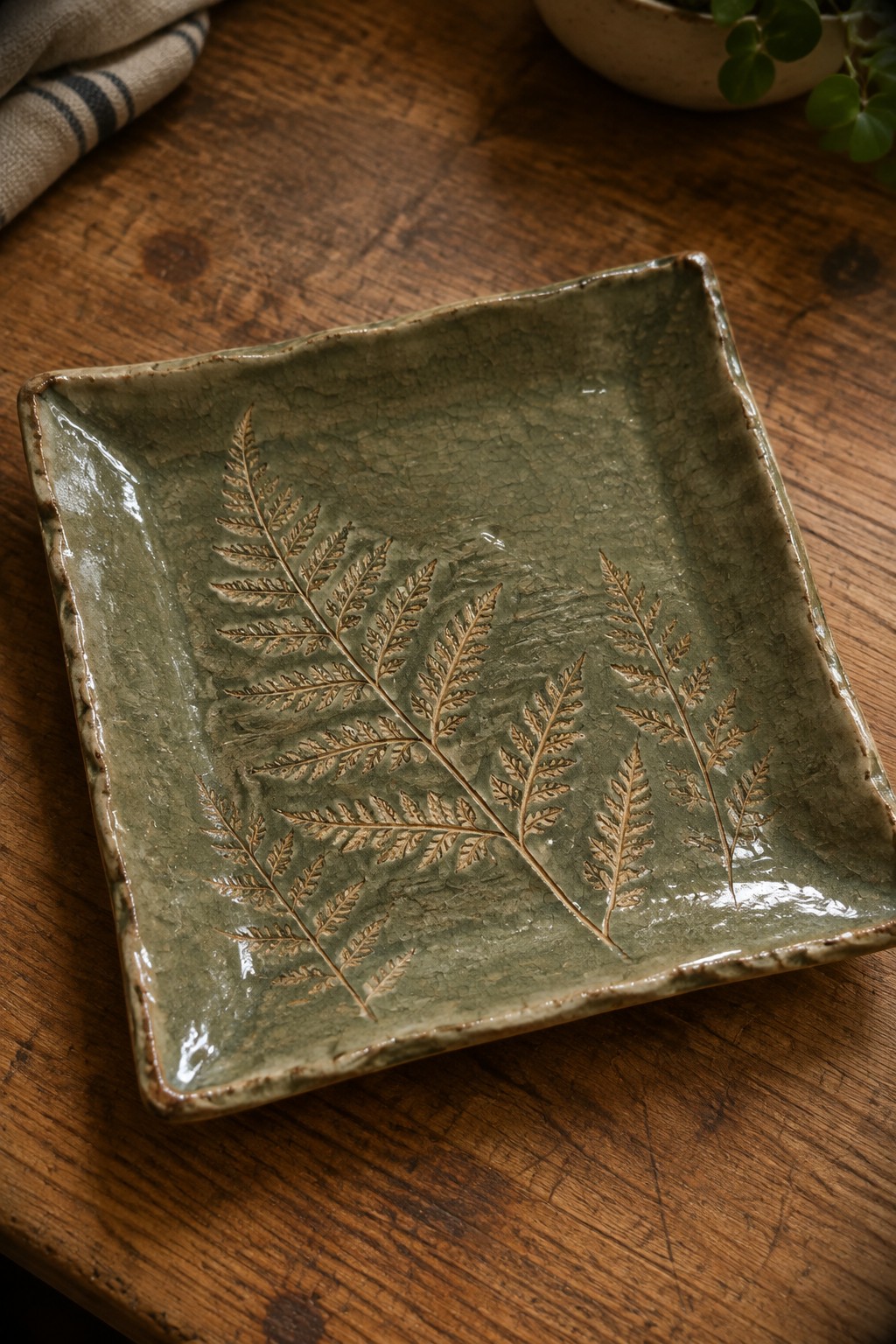
A square slab plate takes on more interest when fresh fern fronds are pressed into the clay to create raised impressions. The green crackle glaze pools slightly in the recessed areas and leaves the leaf shapes lighter, so the pattern reads clearly without extra carving. This method keeps the surface flat enough for serving while turning the plate into a display piece at the same time. The result sits comfortably in the category of functional kitchenware that also works as table or shelf decor.
The square shape gives the plate a clean, stable surface that works for appetizers or small desserts without the tipping issues round plates can have. You can swap the ferns for other flat leaves like hosta or ginkgo to match different seasons or room colors. The same slab and press technique scales down quickly for coasters or spoon rests if you want a matching set. Pieces with this kind of clear, repeatable motif tend to save well on Pinterest boards because the pattern stays legible even in thumbnails.
Divided Glazed Tray for Appetizers
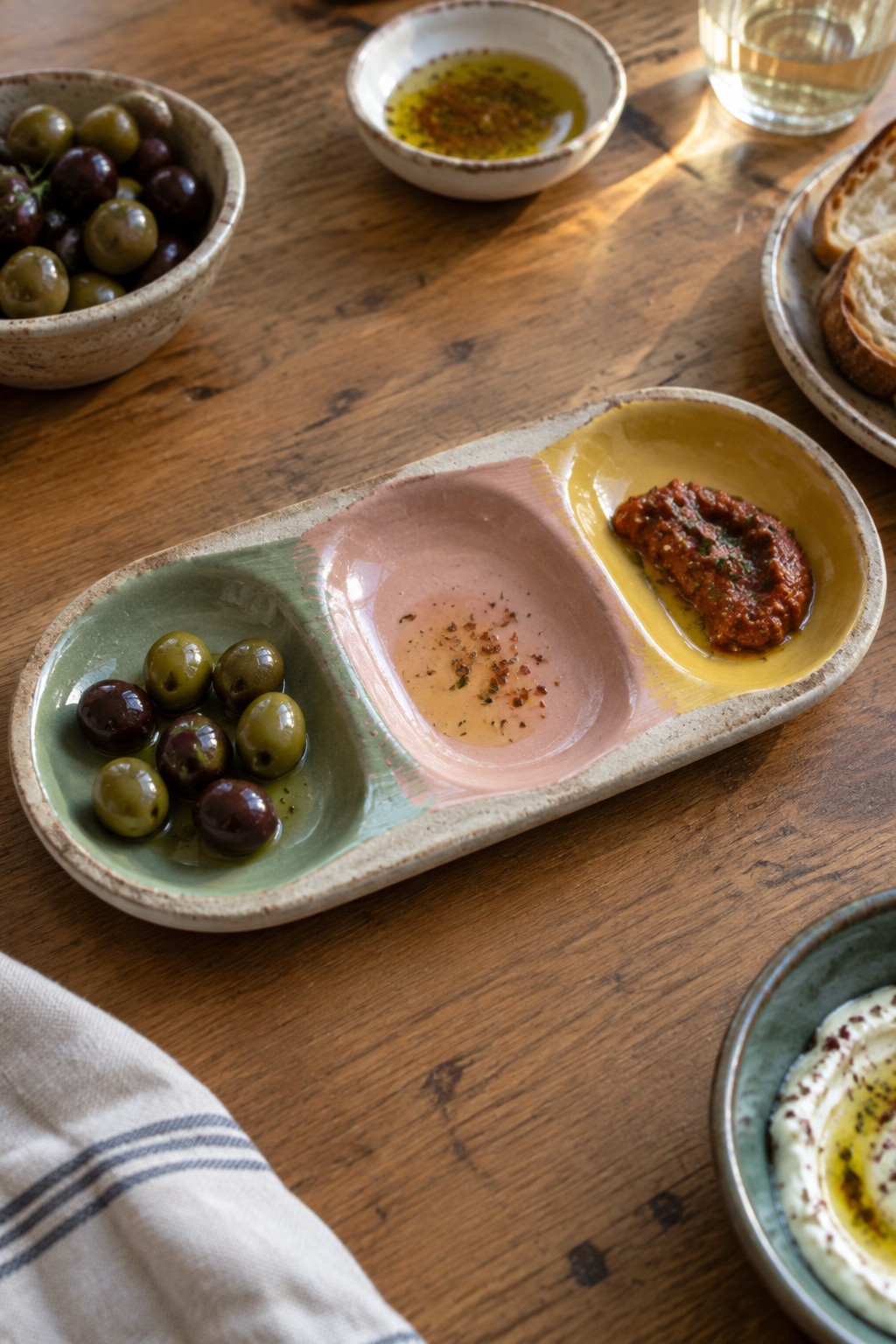
A three-compartment ceramic tray gives each food its own space while keeping everything on one piece. The sections are glazed in different colors, with the green holding olives, the pink holding oil, and the yellow holding a thicker spread. Low dividers between the sections keep the foods from running together. The matte rim and varied glaze tones make the tray read as handmade rather than factory-made.
What makes this idea useful is how the separate compartments handle multiple small items without extra dishes. You could adapt the same layout for two sections if you want something simpler or stretch it to four for a bigger spread. In a kitchen, this shape keeps olives, dips, and bread toppings organized during meals or gatherings. For a gift, repeat the color-blocked glazes but change the compartment sizes to match what the person usually serves.
Speckled Plate with Dashed Rim Pattern

A small hand-built ceramic plate uses a wavy irregular rim finished with short brown dashes painted directly along the edge. The light speckled glaze covers the surface and shows fine brown flecks that add subtle texture without competing with the rim detail. This keeps the plate simple in shape while the painted dashes give it a clear handmade finish suitable for serving or display.
The compact size makes it practical for holding small portions, jewelry, or condiments on a table. You can adapt the dashed rim by switching the paint color or spacing the strokes differently to match other dishes you already own. The same rim treatment works on slightly larger plates or shallow trays if you want to scale the idea up.
Rustic Slab Serving Tray for Cheese Boards
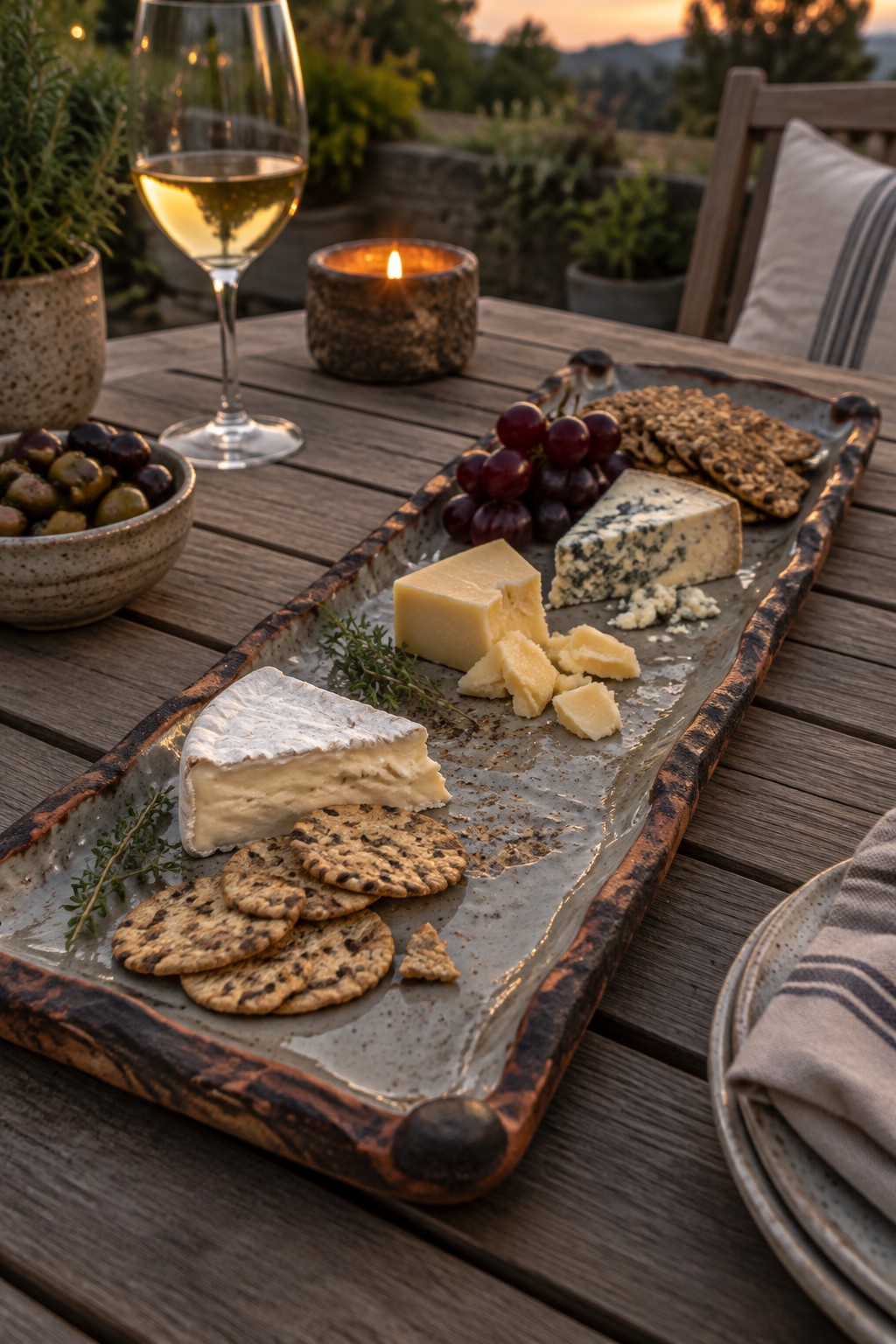
A slab-built ceramic tray creates a wide, flat surface ideal for arranging cheeses, crackers, and fruit together. The hand-shaped edges stay slightly irregular, giving the piece a natural outline that feels less rigid than factory-made boards. An earthy, mottled glaze in brown and gray tones adds subtle texture while keeping the focus on the food. This type of project falls into the serving tray category and works as a practical kitchen item for shared plates.
What makes this idea useful is the elongated shape that easily fits multiple components without looking crowded. You can shorten the slab for smaller appetizer plates or add subtle feet underneath to lift it slightly off the table. The same approach adapts well to making matching dip bowls or bread plates in one firing. For outdoor meals, the durable clay surface handles both hot and cold foods and wipes clean quickly.
Leaf-Shaped Slab Plate with Pressed Veins

A slab plate cut into a broad leaf form uses impressed lines to recreate the central rib and branching veins of a real leaf. The clay edge stays slightly irregular to keep the outline natural rather than geometric. A translucent green glaze pools in the recessed veins and thins over the raised areas, making the pattern stand out without extra painting. This method produces a flat serving or display surface that still reads clearly as a leaf.
The shape does a lot of the work here because the leaf outline already suggests a tray without needing handles or feet. You can press different leaves into fresh slabs for faster texture or change the glaze to earth tones for a drier look. A smaller version of the same cut works as a ring dish or spoon rest while the full size handles cheese, fruit, or small appetizers. The idea stands out on Pinterest because the vein detail reads well in photos and translates easily to other slab projects like coasters or shallow bowls.
Reactive Blue Slab Plate with Speckled Rim

A slab-built serving plate uses a wide, flat form that highlights a reactive turquoise glaze flowing across the center. The glaze pools unevenly to create depth and movement while the speckled clay body remains visible along the rim and edge. This keeps the design simple yet striking by letting the glaze and clay do the visual work. The result fits the category of a functional kitchen plate that also serves as a display piece.
What makes this idea useful is the way one glaze application creates the main pattern, so you only need to focus on rolling an even slab and shaping a clean rim. A piece like this works especially well as a large salad or dinner platter on a wooden table. You could adapt the same color split to smaller side plates or try a matte version of the glaze for a less reflective surface. The bold center color also helps the plate stand out in photos without needing extra carving or painting.
Large Matte Black Slab Plate
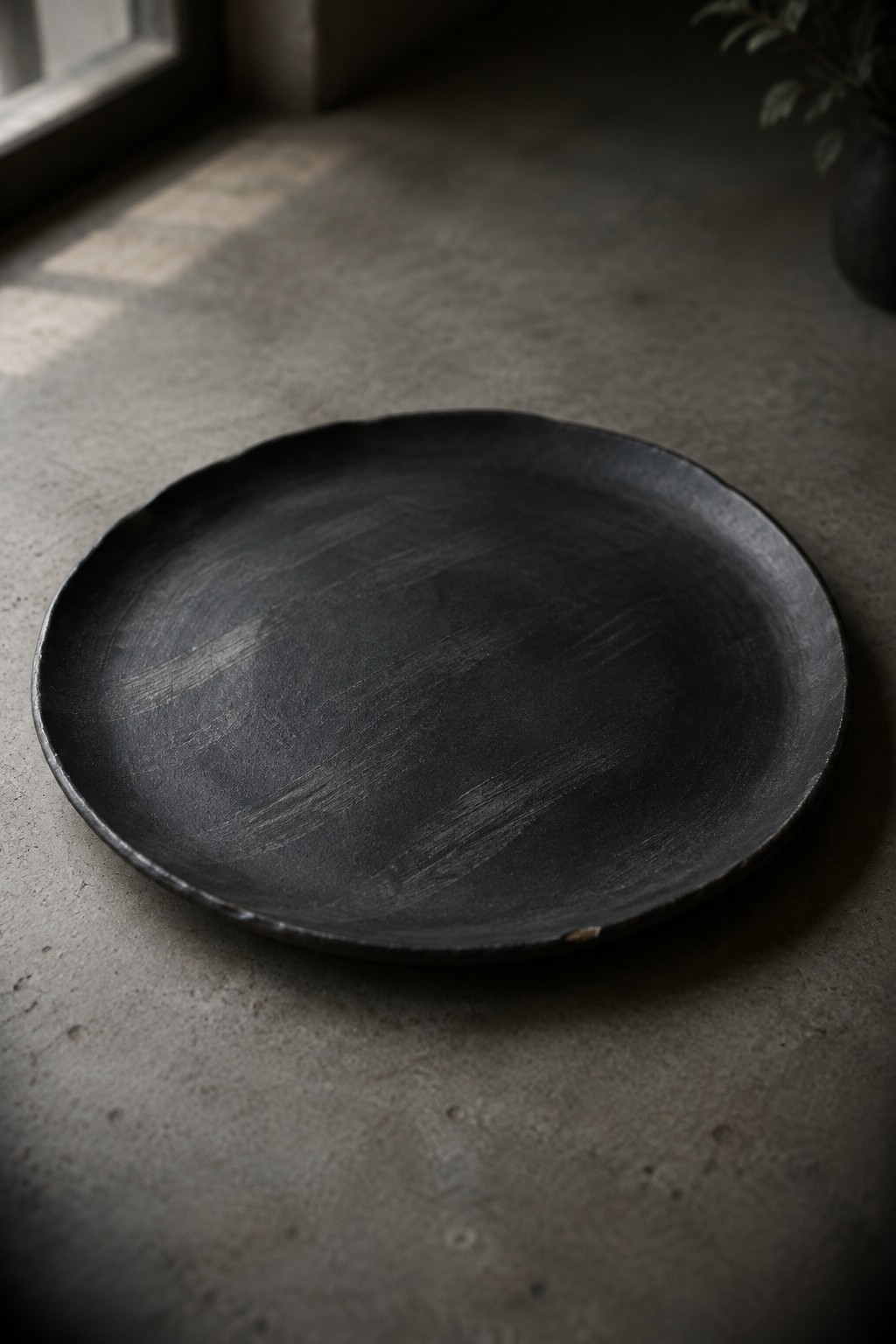
A slab built plate gives you a wide, flat surface that works for both serving and display without needing a wheel. The dark matte finish comes from brushing slip or underglaze across the clay, leaving visible horizontal marks that add subtle texture. The softly irregular rim comes from the natural edge of the slab rather than precise trimming. This approach fits into the category of simple handbuilt serving pieces that rely on surface treatment instead of added decoration.
What makes this idea useful is how the dark tone makes lighter foods or objects stand out on top of it. You could scale the same slab method down to create smaller plates or a set of chargers. In a kitchen or on a dining table, the low profile keeps it stable for bread, cheese, or snacks. For a variation, try the same shape in a lighter clay with a satin white glaze to change the contrast while keeping the brushed texture.
Shallow Slab Plate with Reactive Crackle Glaze

A wide, low slab plate gives you a flat serving surface that still has enough depth to hold food without sliding off. The crackle glaze in a soft green tone covers the entire interior and develops a fine network of lines during firing, creating texture through the glaze itself rather than added carving or painting. The rim is left slightly uneven with one small glaze drip, which keeps the piece looking handmade instead of uniform.
What makes this idea useful is how the large surface area shows off the crackle pattern while still functioning as a practical serving dish. You can adapt the same slab construction for smaller dessert plates or change the glaze color to get different crackle effects. In a kitchen, this works for cheese boards or sliced fruit, and the simple form means you can scale it up or down without changing the overall approach.
Painted Sunset Plate with Horizontal Color Bands

This slab plate uses broad horizontal bands of red, orange, yellow, and magenta glaze to form a simple sunset over water. A single yellow semicircle placed in the upper half acts as the sun, while the lower bands suggest reflection on the surface. The design stays effective because the stripes require only basic brushing and the central shape anchors the whole composition. The irregular rim and visible brush marks keep the plate clearly handmade rather than mass-produced.
What makes this idea useful is how the band layout can be adjusted for different glaze sets or simplified with fewer colors. A piece like this works especially well as a serving plate for salads or bread on a patio table. The flat shape makes it easy to replicate on your own slabs or wheel-thrown forms and quick to personalize with a different central motif. For a gift, the same approach scales well to smaller dessert plates or larger chargers without major changes to the technique.
Square Slab Plate with Impressed Grid Texture
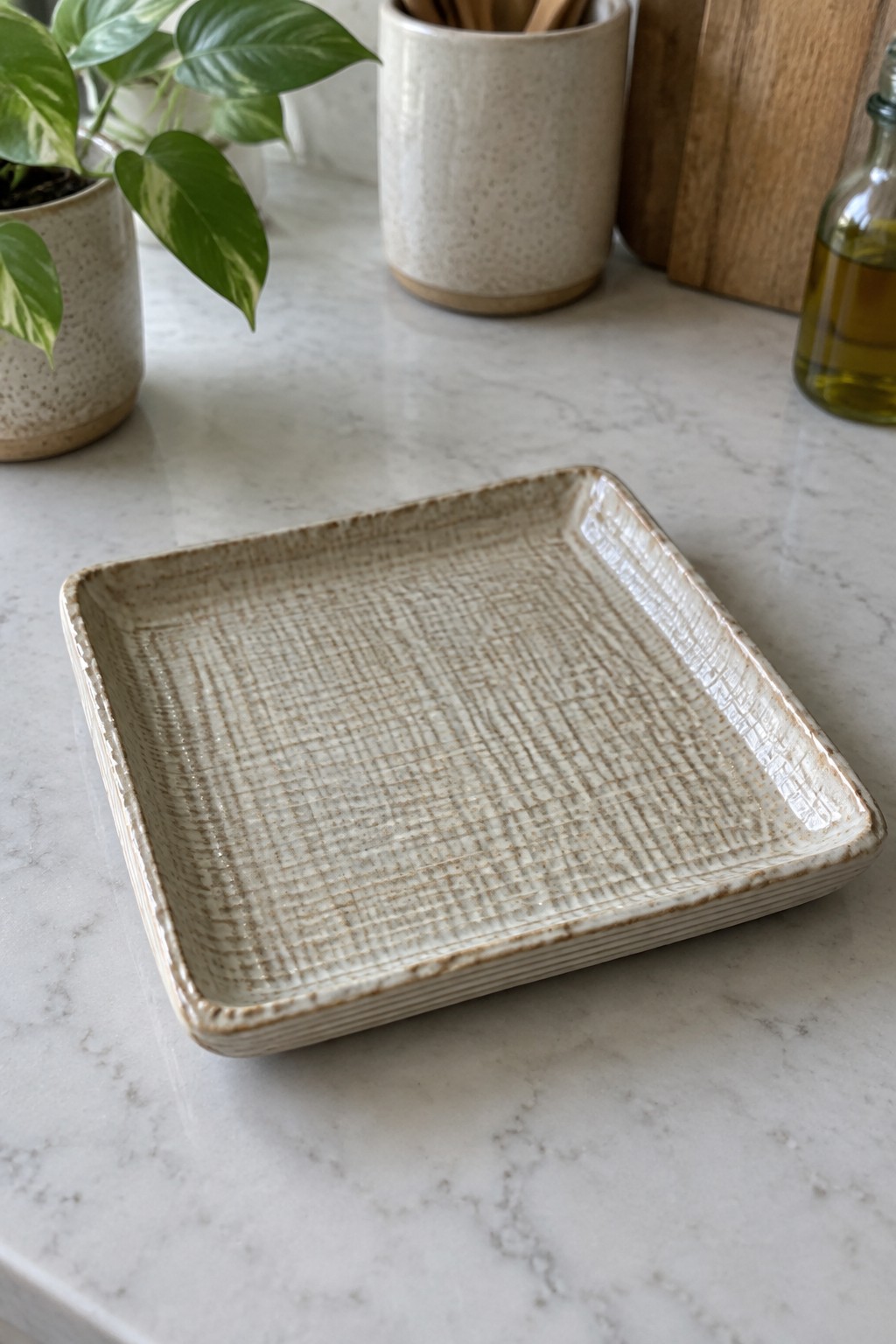
A square slab plate built from a flat sheet of clay gets its character from the grid texture pressed into the base before assembly. Shallow walls rise from the textured field, and the rim is left with a narrow band of exposed clay that contrasts with the light speckled glaze. This approach keeps the focus on the surface pattern while creating a functional low tray shape.
The shape does a lot of the work here since the square format fits neatly into both serving and display uses. You could repeat the grid texture with a different roller or stamp to change the scale, or trim the walls lower for a flatter sushi-style plate. In a kitchen this piece handles cheese, snacks, or small baked goods without needing extra decoration. The same slab method also translates easily to rectangular versions or sets of smaller matching trays.
Split-Glaze Oval Platter with Scored Lines
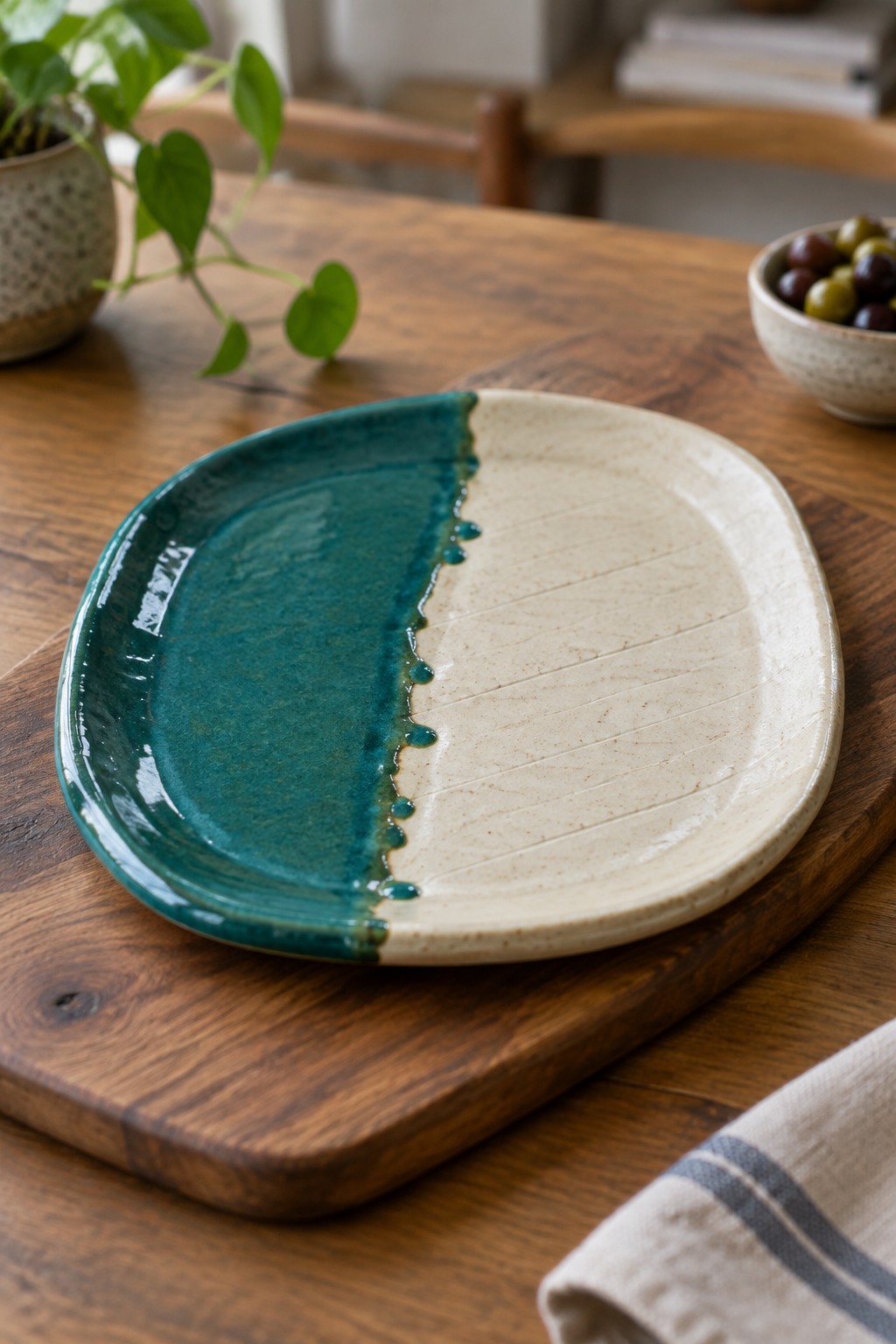
A slab-built oval platter uses two contrasting glazes divided by an irregular edge that lets the teal run slightly into the beige side. One half receives a glossy deep teal coating while the other stays matte with evenly spaced lines pressed into the surface before firing. The simple two-part layout keeps the focus on the glaze contrast and the linear texture rather than added carving or handles.
What makes this idea useful is how easily the same slab can be rolled and cut to different sizes for serving boards or display trays. The scoring on just one side gives the piece a clear visual divide without extra tools, and the color split works well with neutral table settings or as a backdrop for food. You could swap the teal for any bold glaze or move the scored section to a smaller area if you want less texture. The flat oval form also translates directly to a cheese board or small appetizer plate with minimal changes to the original layout.
Slab Plate with Applied Bead Rim
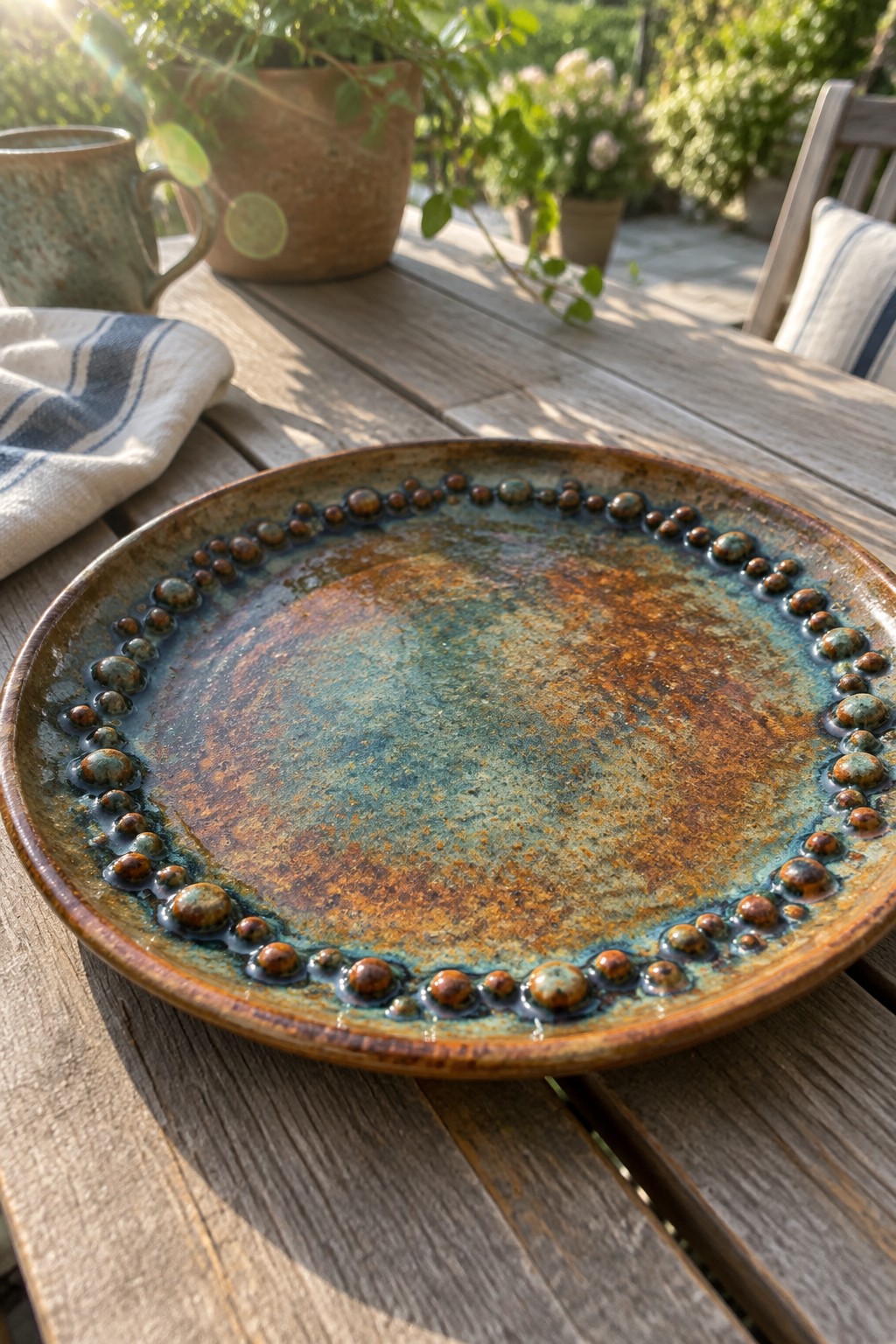
A slab-built plate takes on more structure when small clay balls are pressed along the outer edge to form a raised beaded border. The flat center stays smooth for serving while the beads create a defined frame that catches light and adds weight to the rim. Reactive glazes in teal, rust, and brown move across the surface during firing to produce the varied color without extra decoration. This style fits the category of serving and display plates because the textured edge works whether the plate holds food or sits empty on a shelf.
The bead rim detail can be adjusted by changing bead size or spacing to suit different plate diameters or slab thicknesses. In a kitchen it handles cheese, bread, or small appetizers without the raised dots getting in the way of the food area. You could repeat the same bead technique on a rectangular tray or shorten the border to just two sides for a more modern look. The finished piece photographs clearly for Pinterest because the contrast between the smooth center and the dotted edge reads well in a flat lay.
Citrus Segment Slab Plate

This slab pottery plate is cut and formed into the shape of a citrus slice with a curved outer edge and pointed tip. The surface is divided into triangular sections of orange and yellow glaze separated by white lines to suggest fruit segments. The design works as a kitchen serving piece because the bright color blocks create strong contrast that makes food pop. Handmade ceramic construction keeps the plate flat and stable for holding slices of pie or tart.
What makes this idea useful is how the wedge shape naturally frames whatever sits on it. You could adapt the segmented color layout to round plates or small trays by keeping the same orange and yellow blocks with white dividers. In a kitchen this kind of piece works well for serving citrus desserts or brunch items. The pattern is straightforward to recreate with underglaze on a rolled slab before firing.
Spiral Dimple Slab Plate
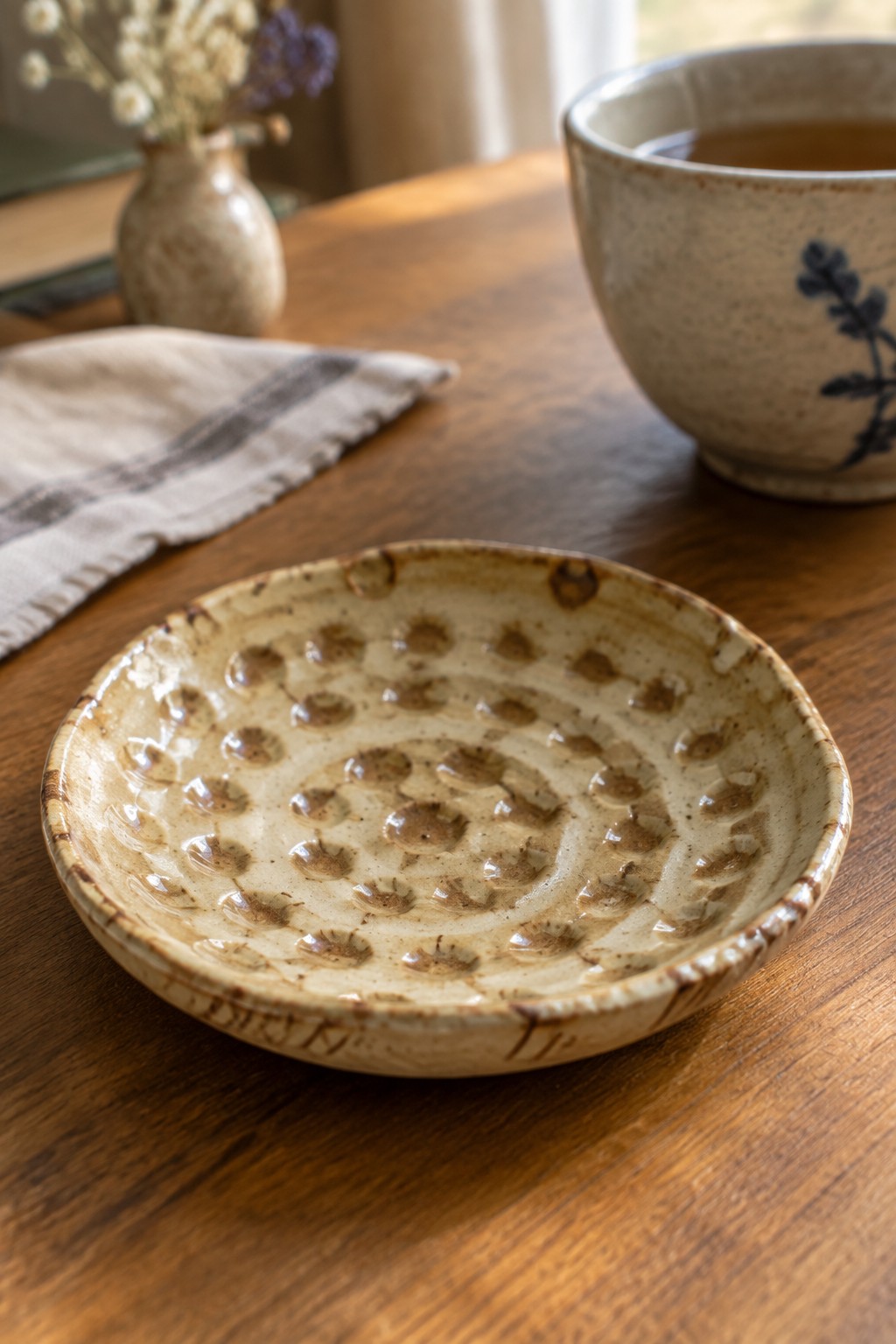
A small round plate made from a rolled slab of clay carries a repeating pattern of circular impressions pressed into the surface in a loose spiral. The speckled beige glaze settles into the depressions and leaves the raised areas lighter, while the rim picks up a thin line of darker tone where the glaze thinned during firing. This kind of surface treatment works especially well on flat slab forms because the texture adds depth without requiring extra construction steps or attachments.
What makes this idea useful is how the impressed pattern gives the plate a finished look that still reads as handmade. You could repeat the same dimple layout on a longer rectangular tray or scale it down for a ring dish. The neutral glaze keeps the focus on the texture, so the same plate shape could be made in other colors or left unglazed in spots for contrast. In a kitchen or on a dresser, this size works for holding small items without taking up much space.
Rectangular Slab Tray with Wave Border
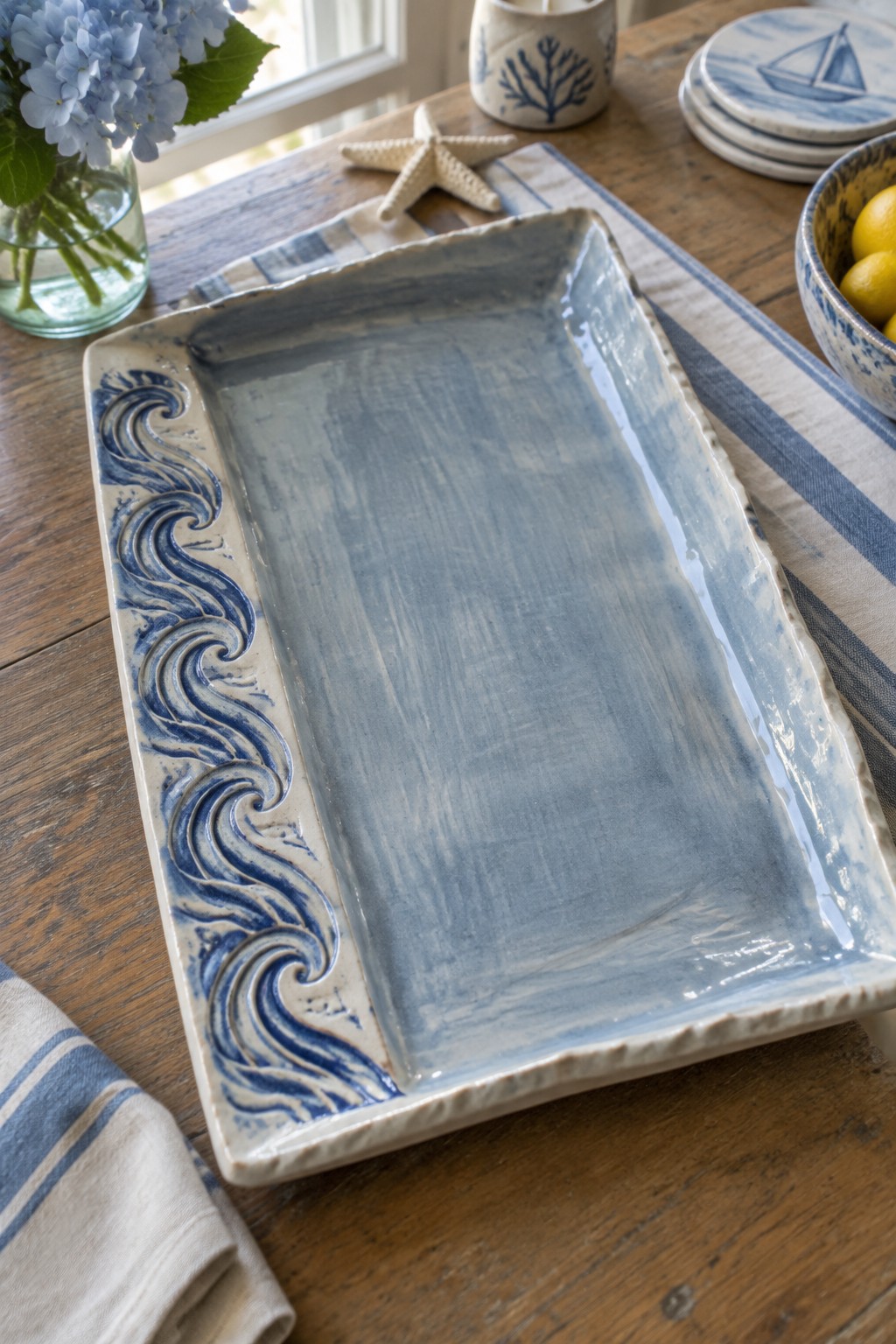
A slab-built rectangular tray gives you a flat, stable surface that works for serving or display. The maker cut a large slab to shape, then pressed or carved a repeating wave pattern along one long edge before applying a soft blue glaze across the interior. This keeps the design simple while letting the sculpted border create visual interest without crowding the center.
The shape does a lot of the work here because the long rectangle fits easily on a table for cheese, fruit, or small dishes. You could repeat the wave motif on all four sides or scale it down for a smaller appetizer tray. The same slab method also adapts well to a leaf pattern or simple geometric lines if you want to change the theme.
Braided Rim Plate with Stamped Leaves
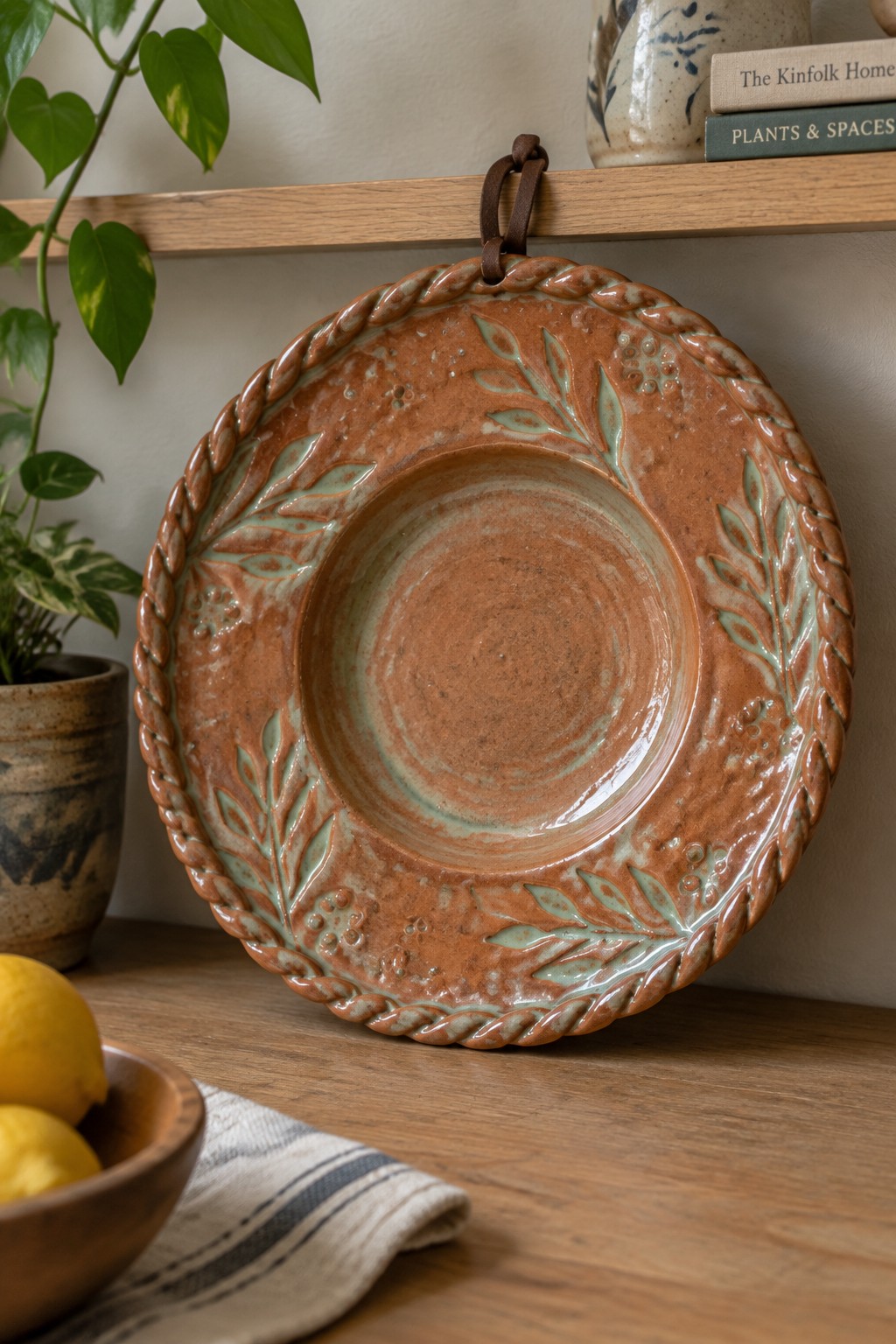
This plate starts with a flat slab or wheel-thrown base that gets finished with a twisted coil rim. The coil creates a raised braided border that frames the surface and gives the edge extra strength. Leaf and berry stamps pressed into the clay add texture, and a second glaze color on those details creates contrast against the terracotta field.
What makes this idea useful is how the braided rim doubles as both decoration and a hanging point when you add a simple leather loop. The stamped motifs can be swapped for other stamps or carved patterns to match different table settings or seasonal displays. In a kitchen this shape works well for serving cheese, bread, or fruit, and the same rim technique scales easily to smaller plates or larger trays. The two-glaze approach keeps the process straightforward while still giving the finished piece a finished, collected look.
Concentric Ridge Platter

A round ceramic plate built with a series of raised concentric ridges that run from the rim inward toward a small center point. The ridges create a simple repeating texture that catches light and gives the surface visual interest without added color or decoration. This style fits the serving plate or display platter category because the pattern reinforces the round shape while the light glaze keeps the focus on the form and handmade texture.
What makes this idea useful is how the ridges add detail through the making process rather than through extra steps like painting or carving. You could adapt the same spacing and depth on smaller plates or a larger tray by changing the starting point of the rings. In a kitchen this kind of plate works well for serving bread or appetizers because the texture helps keep items from sliding. The pattern also photographs clearly for sharing, which makes it a straightforward project to document and repeat with different glazes.
Rectangular Slab Tray with Blue Floral Sprigs
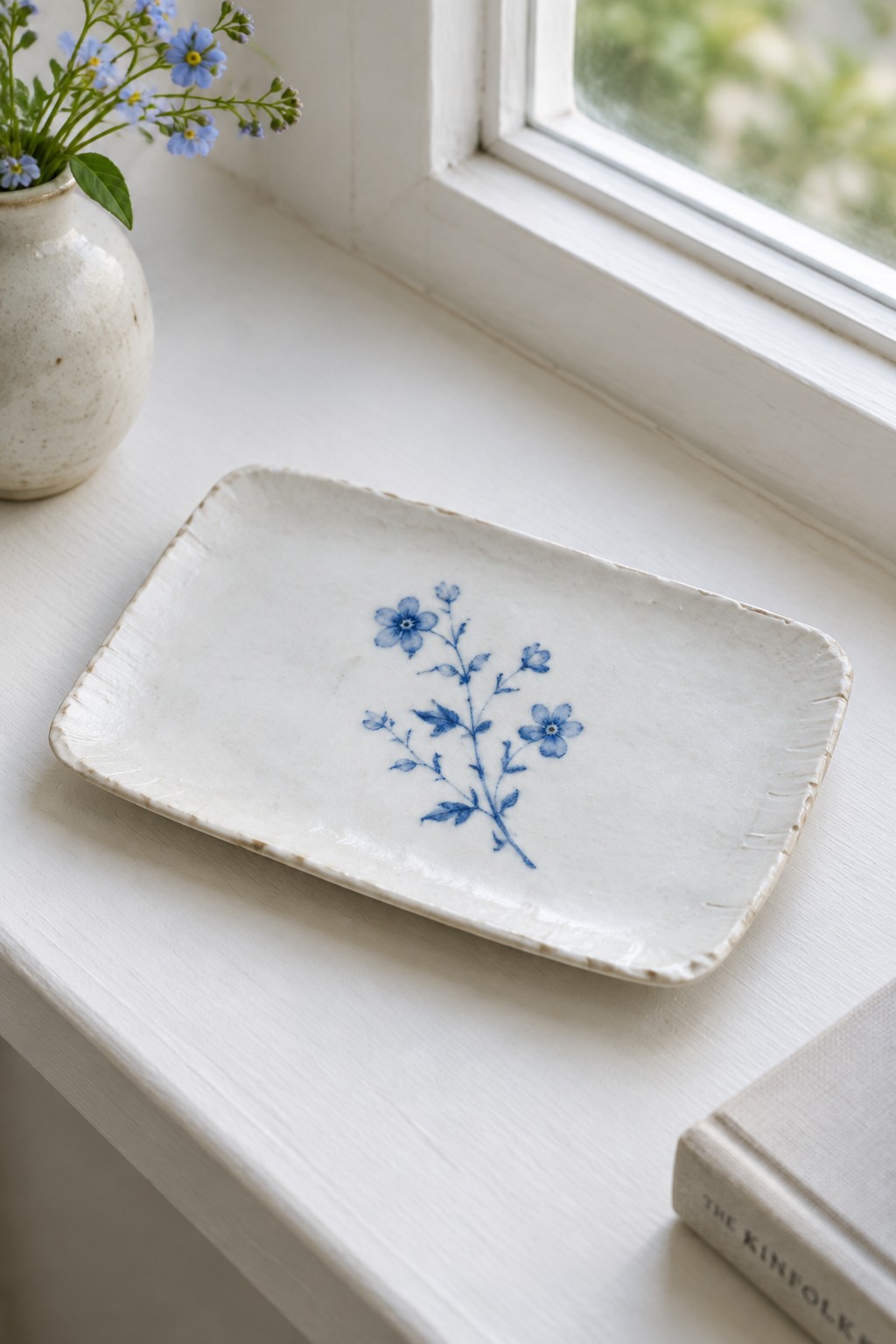
A rectangular slab tray built from white clay creates a flat surface ideal for painted decoration. The blue floral branches are applied directly onto the glazed surface before firing, allowing the design to sit cleanly without raised texture. Softly uneven edges from the slab construction add subtle variation to the otherwise simple form. This type of piece works as a serving tray or display plate for small items.
The flat shape makes it easy to adapt for different uses like a desk tray or vanity dish. You can change the painted motif to match other colors or patterns while keeping the same slab dimensions and rim style. A smaller version of this tray would suit gift projects or table settings where a single accent piece is needed. The blue on white design photographs clearly, which helps when sharing slab tray ideas online.
Mottled Green Slab Plate with Reactive Glaze

A slab-built plate starts with a flat sheet of clay cut into a circle and gently shaped with a low rim to keep the form simple and stable. The real focus here is the glaze, which pools and breaks across the surface to produce shifting greens, browns, and hints of blue without any added decoration or carving. This style of plate works well as a serving piece because the wide, shallow center holds food while the irregular glaze pattern keeps the surface interesting even when empty. The approach belongs to the slab pottery category, where the flat construction lets the clay and finish do most of the visual work.
What makes this idea useful is how the wide, low profile fits both kitchen serving and display on open shelving. You can repeat the same slab shape with different glaze mixes to build a set that still looks varied rather than uniform. In a kitchen this kind of plate handles everything from appetizers to small sharing dishes, and the mottled surface hides everyday wear better than a solid color would. The same base form can be scaled down into individual dinner plates or left larger for a charger or decorative tray.
Frequently Asked Questions
What is slab pottery and how does it differ from wheel thrown ceramics?
Slab pottery involves rolling out flat sheets of clay and shaping them by hand or with molds to create plates with unique textures and forms. This method allows for more angular shapes and surface designs compared to wheel thrown pieces which tend to be round and symmetrical. Many striking slab pottery plates feature hand carved patterns or inlaid colors that make them stand out for both serving meals and hanging on walls.
Are these plates safe for serving food or are they mainly decorative?
Most slab pottery plates designed for serving undergo food safe glazing processes that make them suitable for direct contact with food. Check for mentions of lead free materials and dishwasher safe finishes in product descriptions. Those intended purely for display often have unglazed backs or metallic accents that could leach if used with acidic foods so always confirm the maker specifications before using them at the table.
How do I properly clean and store slab pottery plates to prevent damage?
Hand washing with mild soap and a soft sponge is the safest approach since many feature textured surfaces that could trap residue in a dishwasher. Avoid stacking them directly on top of each other without soft padding between each plate to prevent chipping the edges. Store them upright in a cabinet or on a plate rack so air circulates and reduces the risk of moisture buildup.
What are some practical ways to use these plates for both serving and display in a home setting?
Rotate a few plates from your collection onto the dining table for special meals while mounting others on wall brackets or shelves as art. Group three or four similar designs together on a sideboard to create a focal point that transitions easily from decorative arrangement to functional serving pieces during gatherings. This approach highlights their striking visual appeal without requiring separate sets for different purposes.
Where can someone purchase high quality slab pottery plates like those featured in such collections?
Search online marketplaces from independent ceramic artists or visit local pottery studios that offer custom commissions. Many makers sell through platforms focused on handmade goods and provide details on materials and firing techniques. Attending craft fairs or contacting galleries that specialize in functional art also connects buyers directly with creators who produce limited runs of striking designs.

Pottery Path is my cozy corner of the internet where I share clay ideas, pottery inspiration, and simple projects you can recreate at home. I love exploring everything from air dry clay to handbuilt pottery to cute minis that brighten your day. My goal is to make clay crafting feel easy, fun, and welcoming for anyone who wants to try it.
You will find beginner friendly tutorials, creative pottery painting ideas, and lots of warm inspiration for slow and happy crafting. If you enjoy hands on creativity, this space will feel like home.