I started trying one slab projects because they do not require much space or tools.
It is a simple way to make small items like trays or planters at home.
I collected twenty of these ideas that I have tested or seen work well.
Each one stays basic with handbuilding techniques.
They might be a good fit if you want to keep things easy.
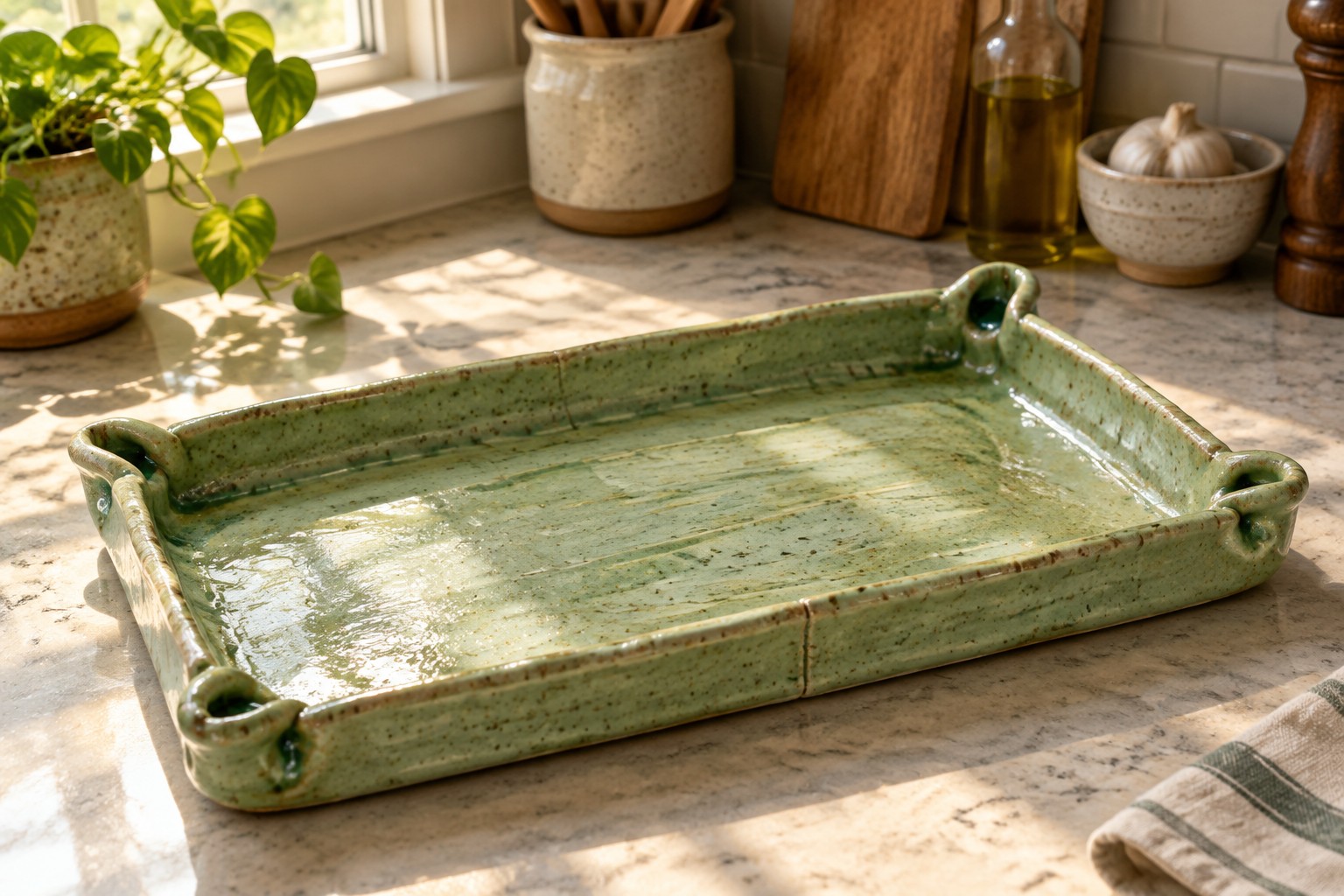
Slab Tray with Corner Spouts

A rectangular tray formed from one slab gains function when the corners are lifted and shaped into short spouts. This keeps the base flat while the edges rise just enough to contain small items without adding separate walls. The speckled green glaze settles into the textured surface and makes the tray easy to clean after use in the kitchen or at the table.
What makes this idea useful is how the corner spouts double as both handles and pour points. You can scale the same slab down for a desk tray or widen it for a plant saucer by adjusting only the final fold angles. The low profile also works well stacked with other handmade dishes, and the spout detail gives a clear focal point when the piece is shared online.
Slab-Built Mug with Brushstroke Decoration
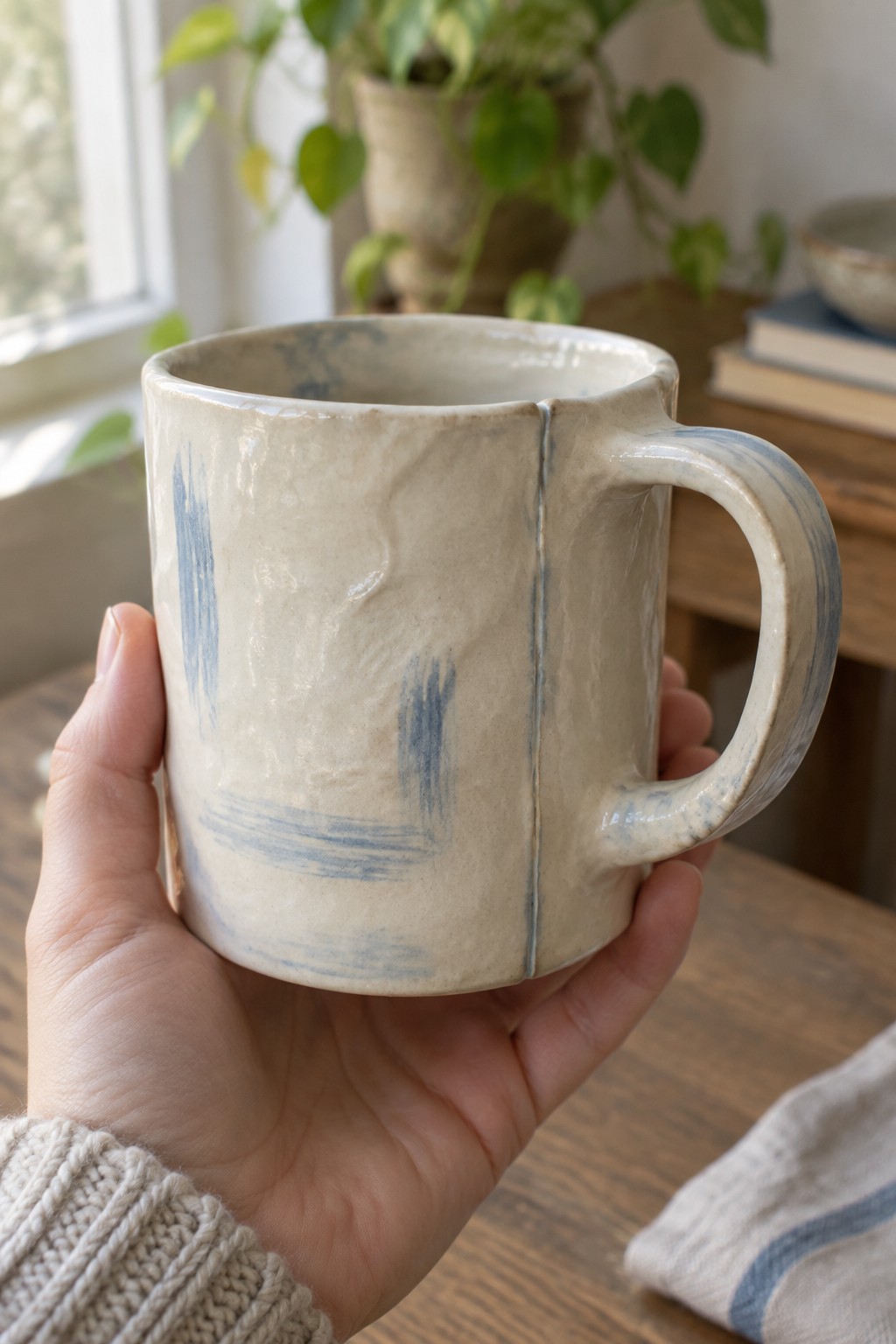
A single slab of clay rolled into a cylinder forms the body of this mug, with the seam left visible as a design element rather than hidden. Blue underglaze strokes applied in loose vertical and horizontal marks give the piece contrast against the light clay without requiring stencils or carving. The attached handle completes the form while keeping the overall construction quick and low-waste.
What makes this idea useful is how the straight cylinder shape works well for both drinking and stacking. The same slab method can be adjusted for different heights or diameters, and the brush marks can be swapped for dots, lines, or solid bands to change the look. This style of mug fits daily kitchen use or makes a straightforward gift that still looks handmade.
One-Slab Pinch Rim Bowl

This project uses a single slab of clay rolled out and shaped into a shallow bowl. The maker left the exterior mostly unglazed to show the clay surface while applying a speckled amber glaze inside that pools slightly in the bottom. The rim gets its character from a simple fold or pinch at one side rather than trimming it smooth. This approach fits the bowl category and works for small servings or table use without needing extra tools or attachments.
What makes this idea useful is how the uneven rim detail turns a basic slab into something more interesting without added decoration. The shape works especially well as a side dish for snacks or a small catch-all near a sink or entryway. You could scale the same slab method up for a larger salad bowl or swap the interior glaze for a solid color to match different kitchen styles. For a gift, the compact size keeps it quick to make and easy to pack.
Flower Shaped Ring Dish
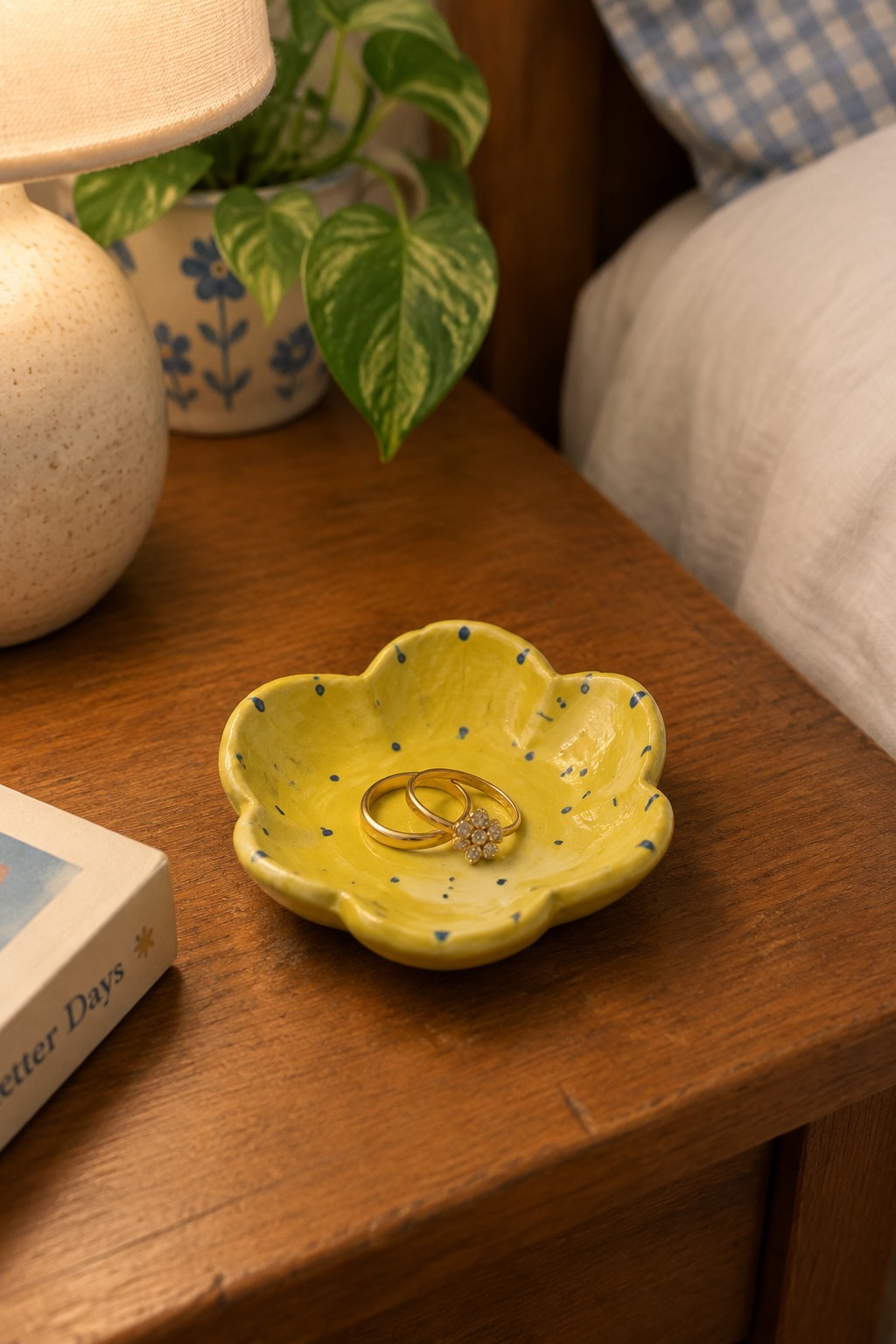
A small flower-shaped dish cut from one slab makes a simple ring holder or trinket dish. Cut a scalloped edge to create the petals, then press the center gently to form a shallow well that keeps rings in place. The bright yellow glaze with blue dots adds contrast without needing extra decoration. This project stays easy because it uses only basic slab work and one piece of clay.
What makes this idea useful is how the flower outline gives the dish a finished look with almost no extra effort. It works well on a nightstand or bathroom counter where you need a small spot for jewelry or keys. You could adapt the same slab by changing the petal count or switching the glaze color to match different rooms. The compact size also makes it a quick project that still feels complete on its own.
Slab-Built Spoon Rest
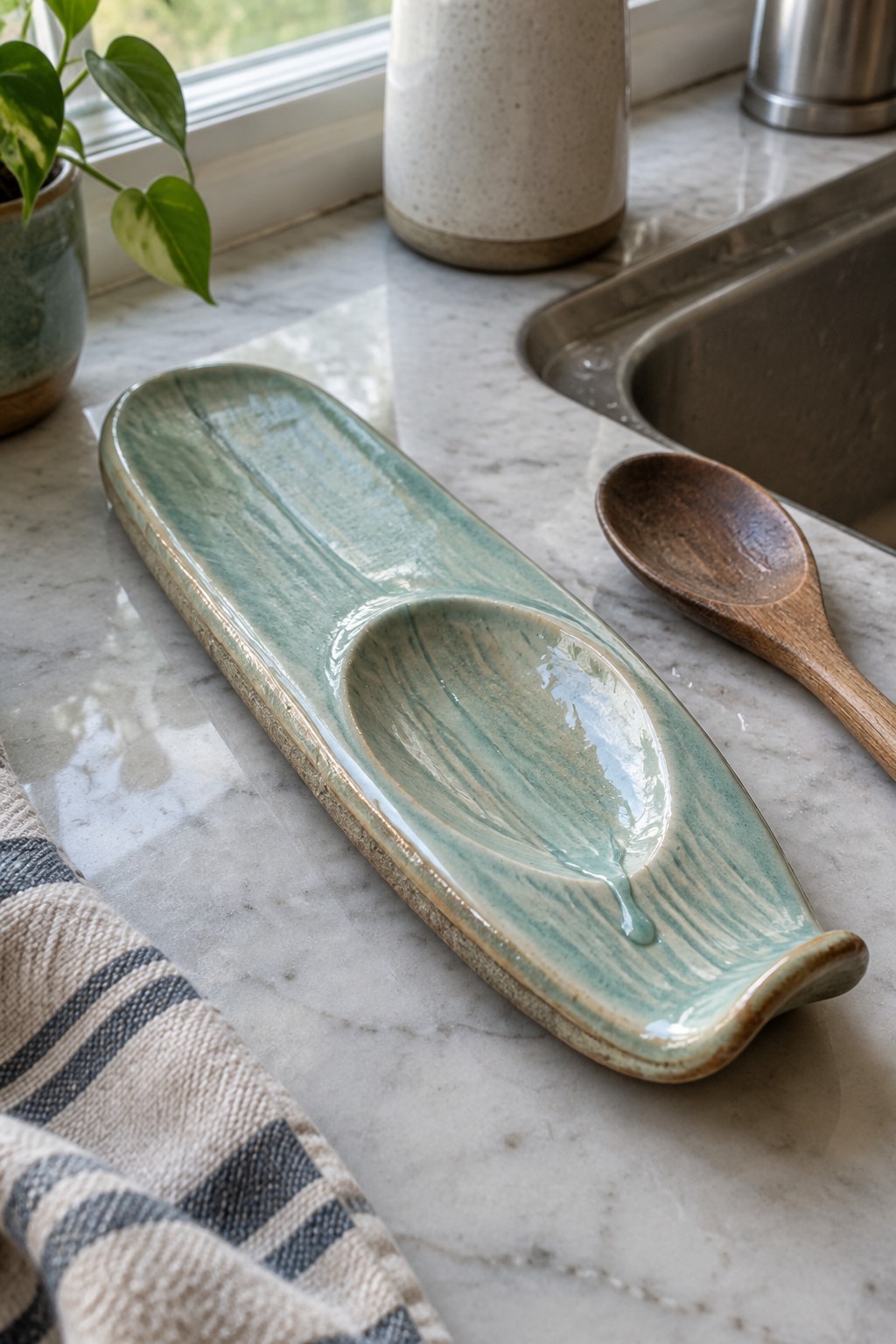
A one-slab spoon rest takes the form of a long, narrow tray with a rounded central well. The flat slab is curved upward slightly at the ends while the middle is pressed down to create a shallow bowl shape that holds a spoon and catches drips. The streaky sea-green glaze shows the clay texture underneath and gives the piece a simple finished look without added decoration.
What makes this idea useful is how the long shape keeps a spoon handle off the counter while the well contains any mess. You can stretch the same slab longer to hold two spoons or shorten it for a small chopstick rest. In a kitchen this kind of piece sits easily beside the stove or sink and takes up little space on open shelving. The basic form also works as a small tray for salt and pepper or a single serving of olives.
Slab-Built Square Cactus Planter
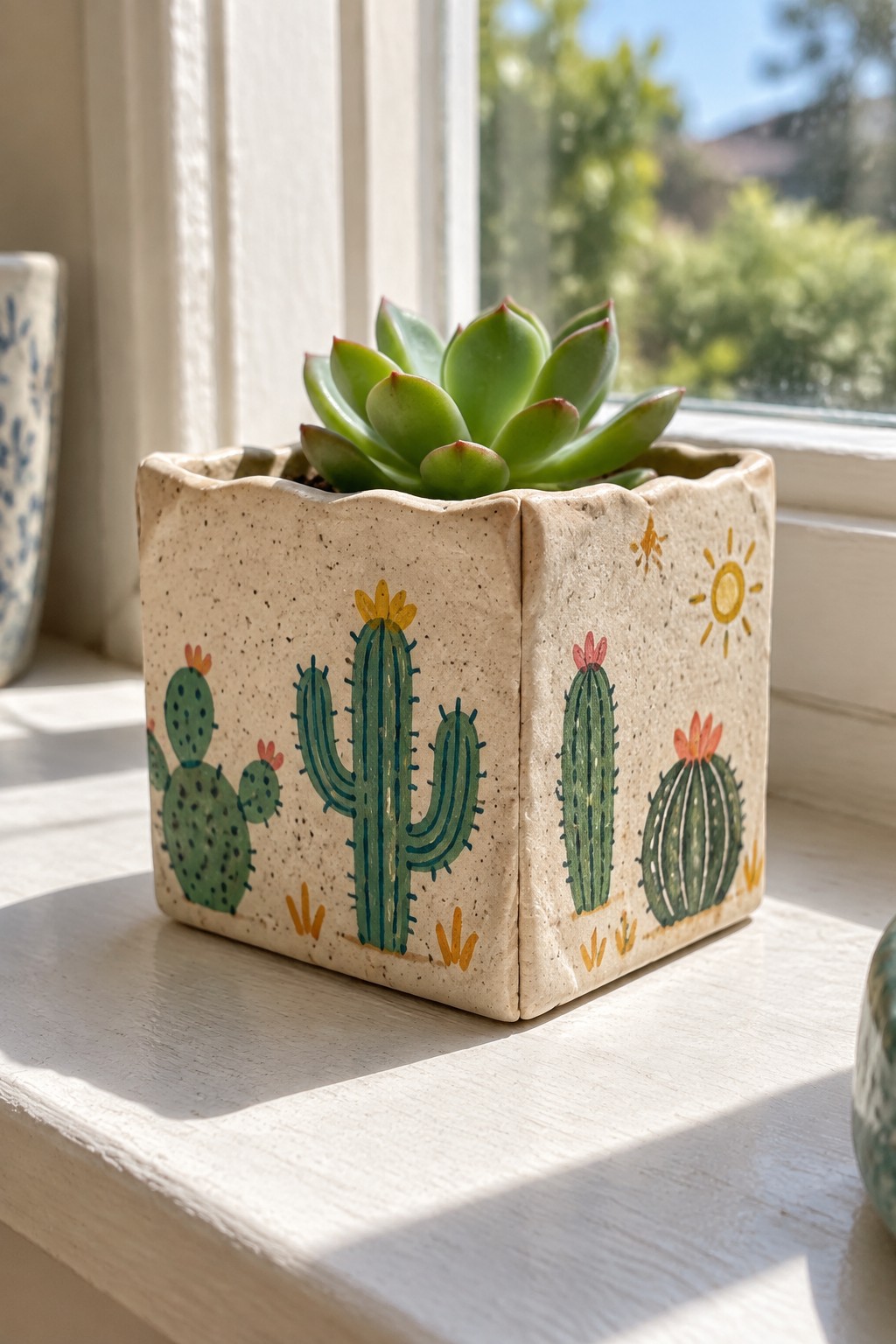
A square planter made from one slab of clay gives you a simple container for succulents or small houseplants. The wavy rim and speckled clay surface keep the form casual, while the painted cactus motifs with colorful flowers and a sun add quick visual interest across the sides. This style focuses on surface painting rather than complex shaping or attachments.
What makes this idea useful is how the flat sides give you clear space to practice basic brushwork without fighting curves. The small size works well on a windowsill or desk where larger pots would feel crowded. You could swap the cactus design for leaves or abstract shapes, or stretch the same slab method into a slightly longer rectangle for a row of small plants.
Pressed Leaf Slab Wall Hanging
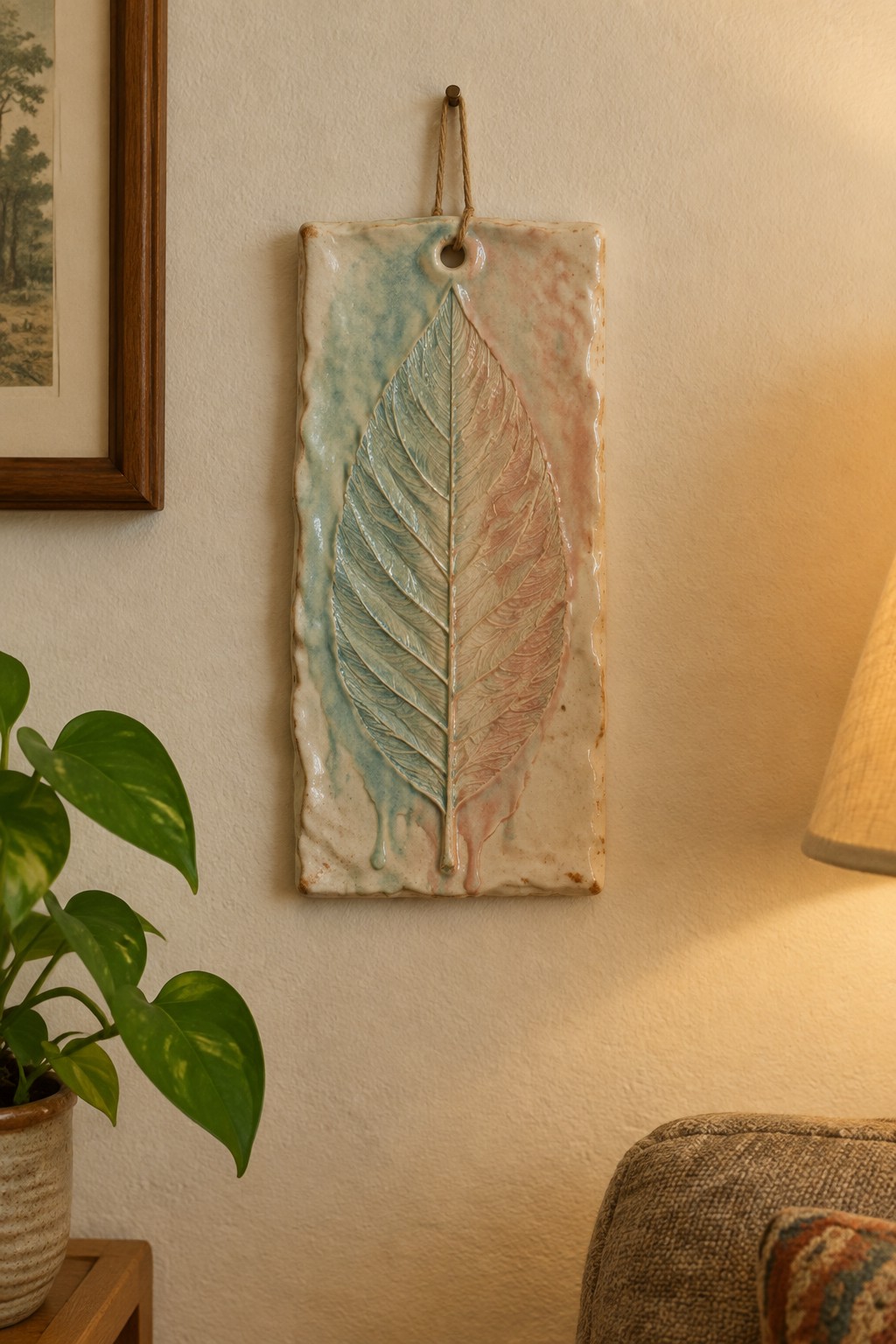
A single rectangular slab of clay becomes a wall hanging when you press a large leaf into the surface to capture the veins and edges. The raised leaf texture holds glaze in the details while the rest of the slab lets color run and pool. Turquoise and pink glazes applied on either side of the leaf create a split effect that follows the shape without extra decoration. A hole drilled near the top before firing lets you hang the piece with cord.
The shape does a lot of the work here since the flat slab needs only a leaf and two glazes to look finished. This kind of piece fits narrow wall spaces above a desk or beside a window where a full painting would feel too big. You can change the leaf to whatever grows in your area and test different glaze pairings on the same slab size. Skipping the hole turns the same form into a small tray or plant stand base.
One-Slab Tea Light Candle Holder

A small tea light holder built from clay slabs forms a short cylinder that sits inside a shallow matching saucer. The form keeps the candle contained while the base catches wax. A simple white heart motif on the front breaks up the warm terracotta surface without adding much complexity.
What makes this idea useful is how the two-piece construction stays manageable with one slab for the body and another for the base. The shape works on a side table, mantel, or as a quick gift that still feels considered. You can swap the heart for a name stamp, date, or small geometric pattern and change the glaze color to match different rooms. The compact size also makes it easy to batch out several at once for markets or holidays.
Pressed Leaf Catch-All Dish
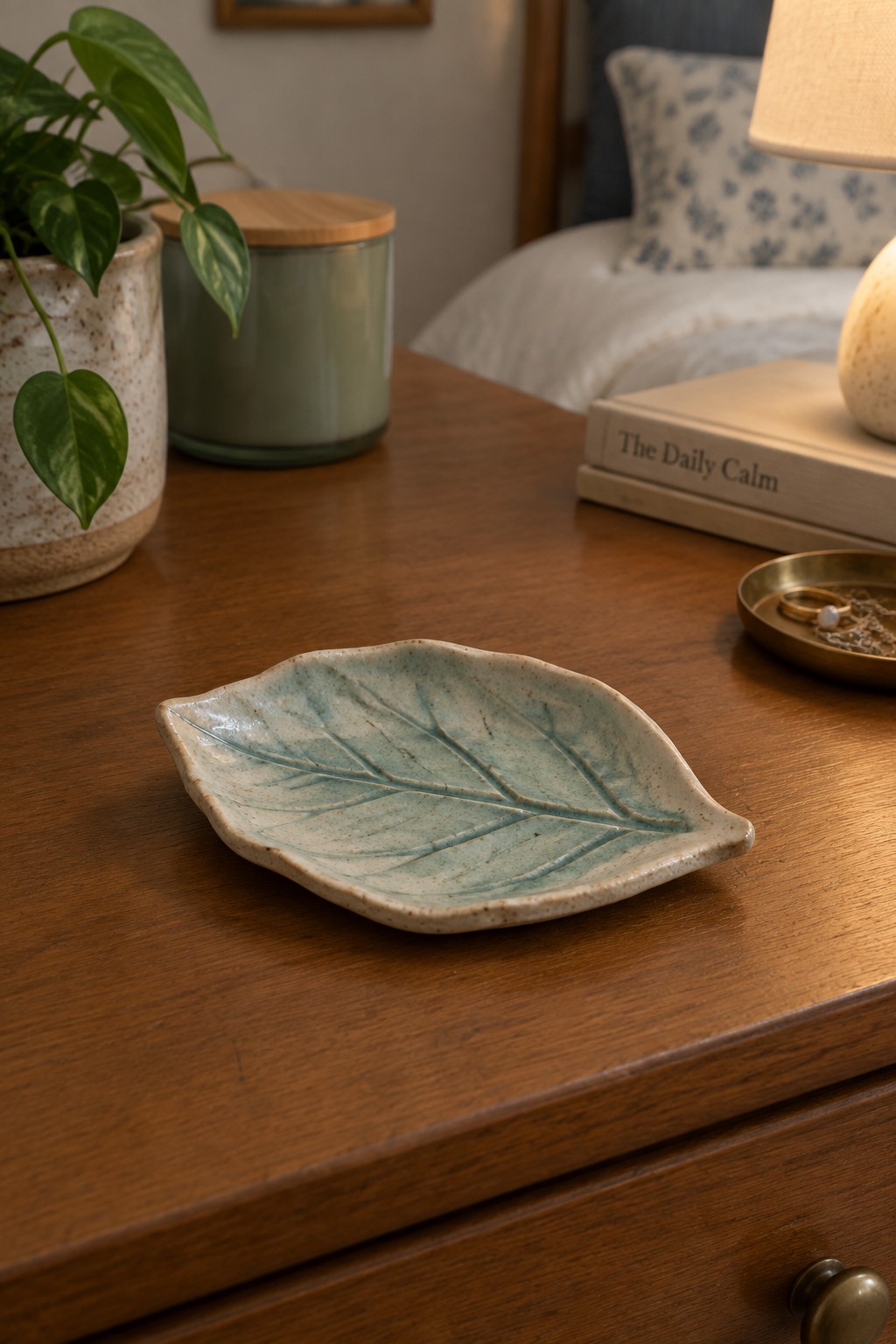
A one-slab leaf dish starts with a rolled-out piece of clay cut into a simple leaf outline. Veins are pressed or carved in to create texture, then the edges are lifted slightly to form a shallow tray. A light base glaze with a blue-green wash over the top highlights the recessed lines while letting the clay show through on the raised areas.
What makes this idea useful is how the natural shape handles both function and display without extra construction. It works well on a dresser or bedside table for rings and small items, and the same slab method can be adapted to different leaf sizes or vein patterns using household tools like stamps or actual leaves. You can also skip the upward curve on the edges to turn it into a flat trivet or coaster instead. The organic outline stands out in photos because it reads clearly even in simple glazes.
Divided Dish for Kitchen Salts
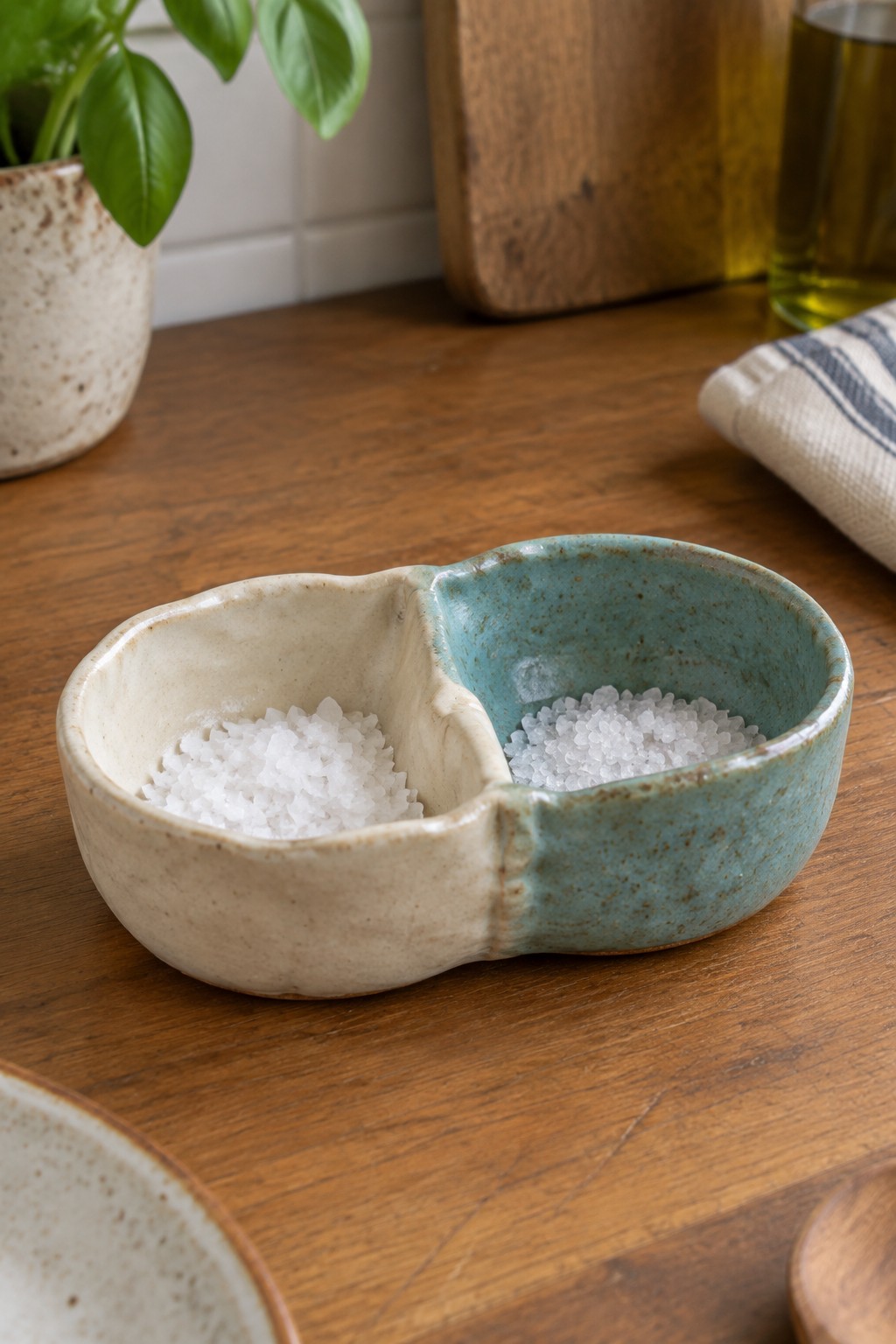
A divided dish formed from one slab of clay gives you two connected compartments in a single compact piece. The builder rolled out a slab, then shaped it into matching rounded bowls that share a center wall, finishing one side in a matte off-white glaze and the other in speckled teal. The simple color split and low profile make it practical for holding different salts or small seasonings without taking up much counter space.
What makes this idea useful is how quickly it moves from slab to finished form with minimal trimming. You can change the glaze colors or shift the size of each section depending on whether you want it for salt and pepper, sugar and cinnamon, or two different finishing salts. The same joined shape works just as well as a double dip bowl for snacks or a small tray for rings by the sink.
Three-Slot Toothbrush Holder

A simple cylinder formed from one slab of clay makes an effective toothbrush holder for the bathroom. The shape stays low and wide enough to sit stable on a counter while the flat top gets three evenly spaced holes sized for standard brush handles. The speckled terracotta surface keeps the piece plain so it blends with other bathroom items without extra carving or painting.
What makes this idea useful is that the same cylinder can be scaled up or down to hold two brushes or four depending on the household. You can swap the clay color to match tile or add a shallow groove near the base for a bit of detail without changing the build. In a small bathroom this kind of holder keeps brushes upright and contained while taking up little space on the sink.
One-Slab Soap Dish with Drainage Ridges
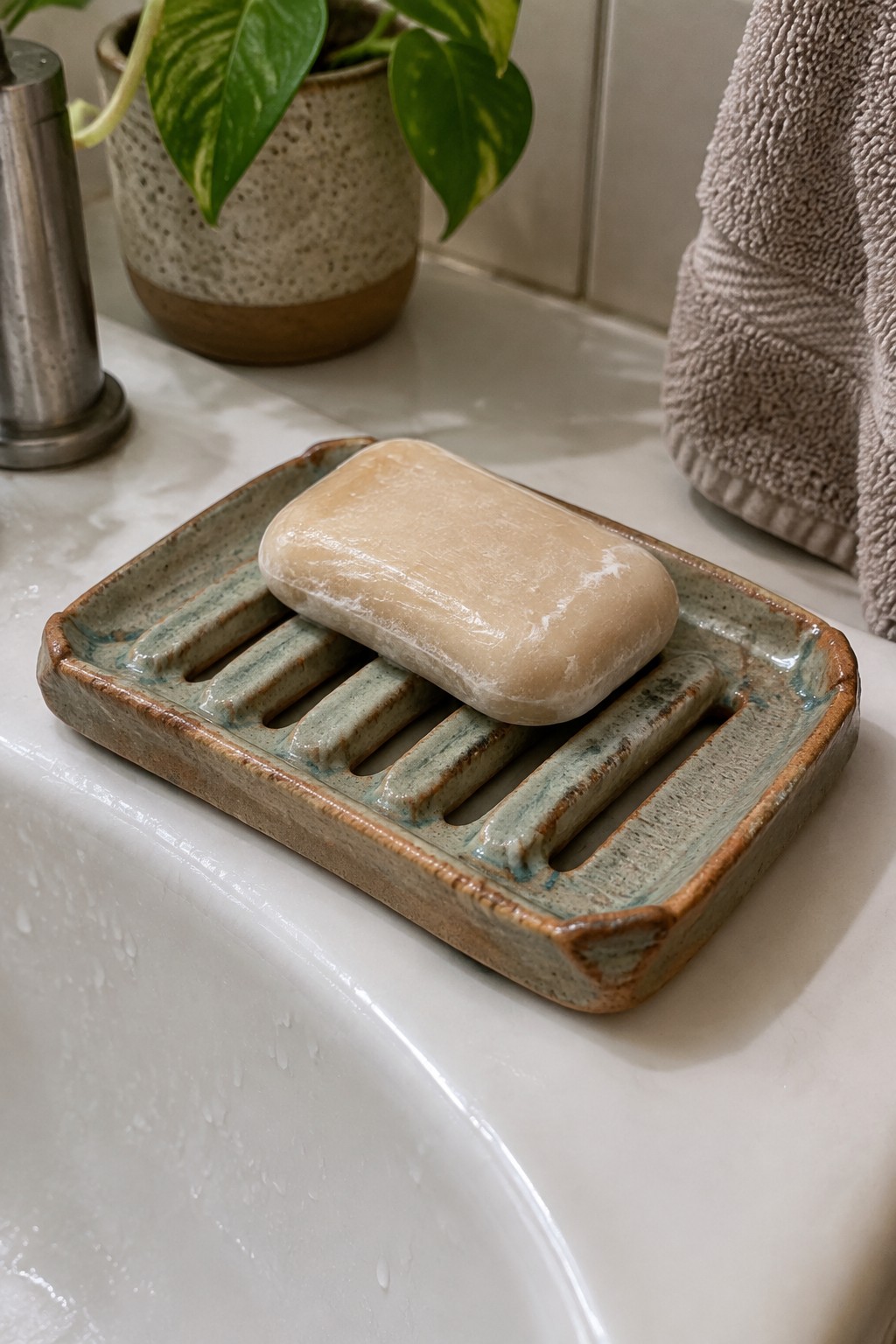
A rectangular soap dish cut from a single slab of clay makes a practical bathroom item that keeps the bar elevated and dry. Parallel ridges formed by cutting slots into the base allow water to drain through instead of pooling underneath. The simple slab construction uses minimal clay while creating a stable, flat surface that fits on the edge of a sink. An earthy glaze with blue-green variation adds durability and makes the ridges easy to clean.
What makes this idea useful is how the drainage ridges solve a common problem with bar soap without requiring extra parts or assembly. The same slab layout can be scaled down for a smaller guest bath or widened into a longer tray for a double sink. You could skip the glaze on the ridges to create more grip or add small coil feet underneath if you want extra height. This project stands out on Pinterest because the functional slots give it a clear purpose that plain trays lack.
Slab-Built Bud Vase with Wildflowers

A small vase formed from one slab of clay works well when you shape it into a rounded body and pinch the top into a narrow, slightly divided opening. The surface gets decorated with scattered wildflower stems painted in blue, yellow, purple, and white, leaving plenty of the light base visible between the motifs. A thin vertical seam down the front adds a subtle handmade line that breaks up the painted pattern without extra carving.
What makes this idea useful is how the compact size fits on a narrow shelf or windowsill for holding dried stems or a single bloom. You can change the flower colors or spacing to match different rooms or seasons while keeping the same slab shape. The same form adapts easily into a small pitcher or a set of three vases in varying heights. For gifts, the painted motif gives it a finished look that feels more personal than plain glaze.
Divided Double Bowl for Snacks
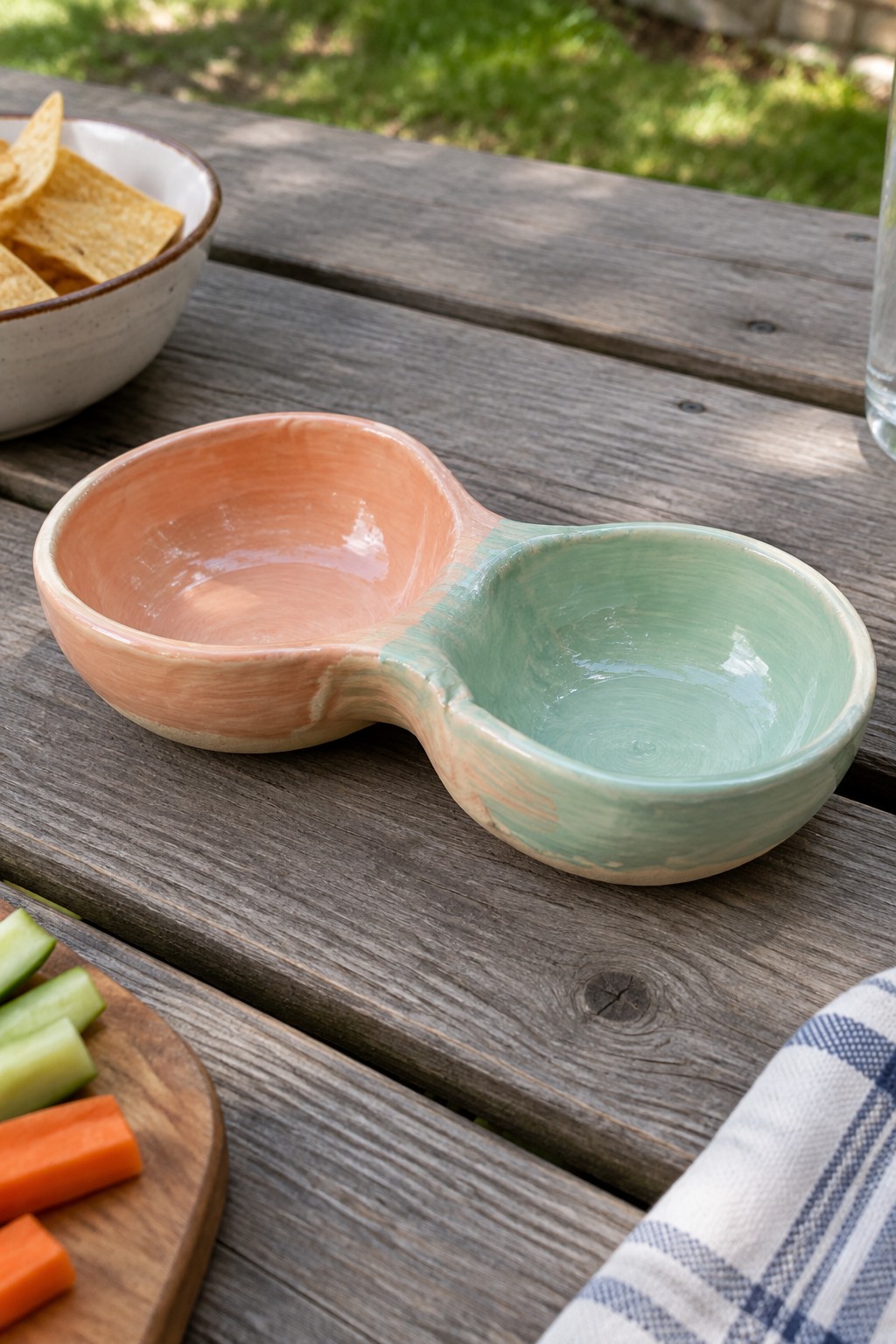
A divided serving bowl made by joining two rounded sections side by side keeps dips or snacks separate in one compact piece. Each half receives its own glaze color, with the coral and green sections meeting at a shared center wall that forms naturally during building. The shape works as a simple kitchen item that holds two different foods without extra plates or ramekins. The two-tone glazing adds visual separation while keeping the overall form low and stable on a table.
What makes this idea useful is how the joined shape saves space compared to two separate bowls while still giving clear compartments. You could rework the same layout with matching glazes for a more uniform look or stretch the form longer to create three sections instead of two. In a kitchen it handles chips and salsa or cut vegetables and hummus during casual meals or gatherings. The small scale also makes it simple to personalize with different color pairings that photograph well for sharing.
One-Slab Incense Tray
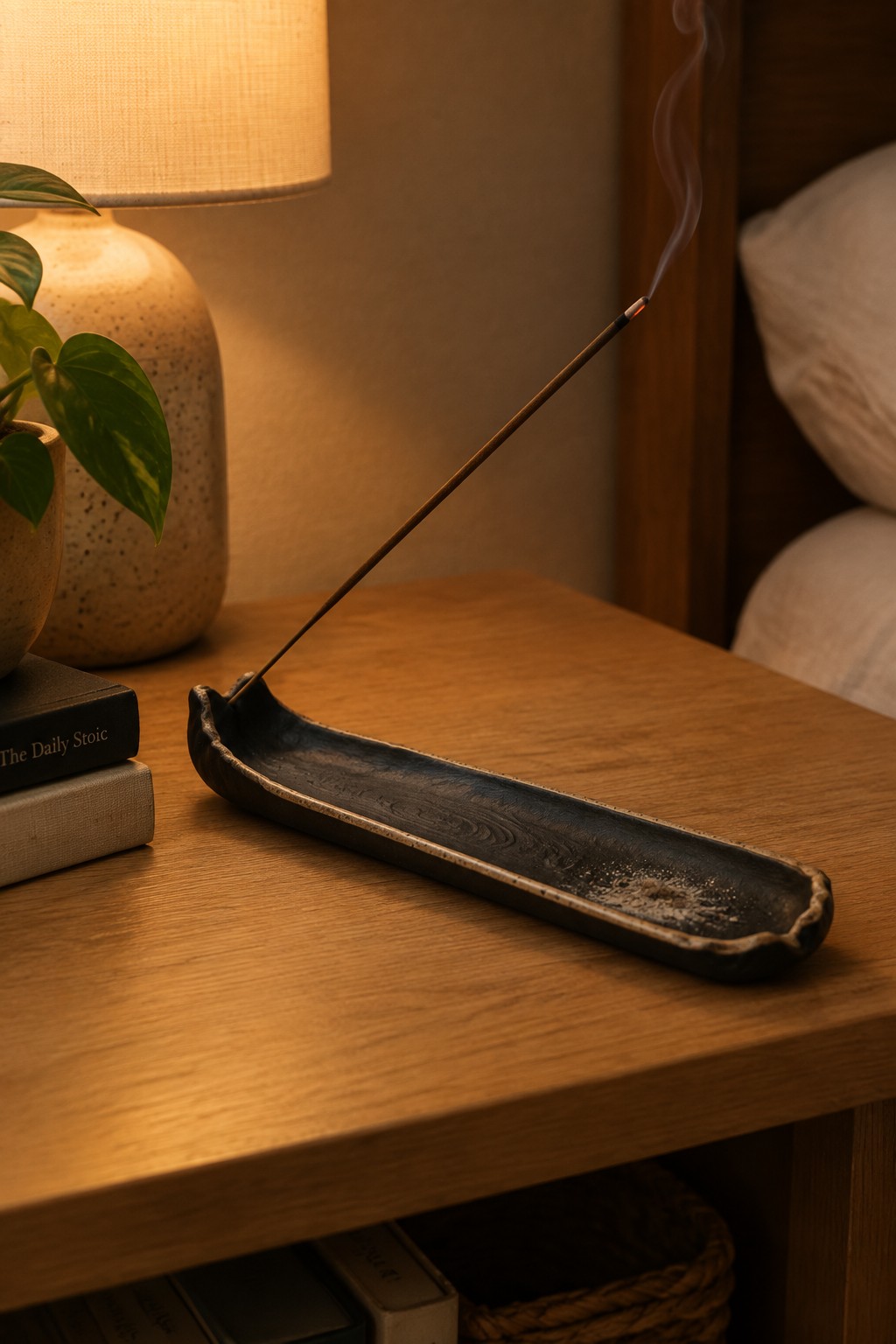
A single slab of clay rolled thin and folded up along the edges creates a long, narrow tray that holds an incense stick at one end. The maker left the rim irregular and slightly wavy, then applied a dark glaze that pools in the texture and leaves the edge lighter. A small notch or hole at the raised end keeps the stick steady while it burns. This shape stays flat enough to form quickly but gains enough curve to catch ash.
What makes this idea useful is how the length can stretch or shorten depending on the table space you have in mind. You can change the glaze color or press a simple stamp into the slab before shaping to make each tray different without extra steps. The same slab method works for a shorter version that sits on a windowsill or a wider one that holds two sticks at once. Because the form stays low and narrow, it fits on crowded shelves where round dishes would not.
Spiral Cone Ring Holder
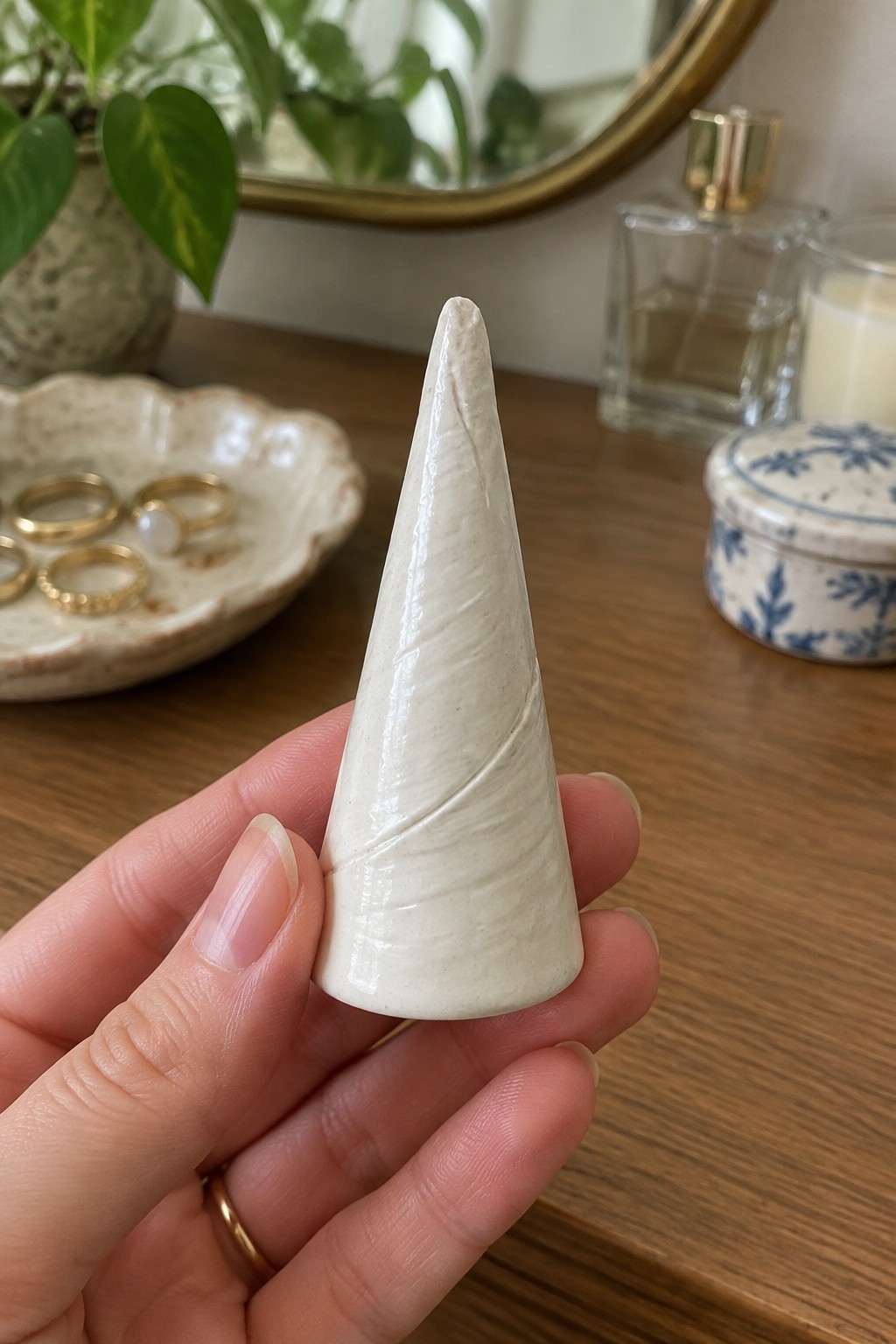
A one-slab cone formed from a flat sheet of clay works well as a ring holder. The maker rolled or scored a single spiral line into the slab before shaping it, then joined the edges to create the tapered form. A simple white glaze keeps the focus on the clean shape and the twisting detail that runs from base to tip.
The small scale makes this easy to adapt for a nightstand, desk, or bathroom counter where rings need a dedicated spot. You can change the spiral depth, try a matte glaze instead, or shorten the cone to hold just a few rings. The same slab method also works for a tiny bud vase or a holder for incense sticks if you adjust the opening at the top.
Slab Cylinder Utensil Holder with Drip Glaze

A slab-rolled cylinder forms the base for this utensil holder that keeps wooden spoons, spatulas, and slotted tools upright on a kitchen counter. The light speckled clay gets its main visual interest from vertical stripes of blue and green glaze that run down the sides and break into drips. This keeps the construction simple while the glaze treatment adds movement and color without extra carving or attachments.
What makes this idea useful is how the cylinder height and diameter can be changed to match different utensil sets or even hold paintbrushes. The vertical drip pattern works well on any light clay body and hides small bumps from handbuilding. You could swap the stripe layout for a single color wash or add a foot ring cut from the same slab to give the holder a more finished base.
Yarn Bowl with Rim Notch for Knitting
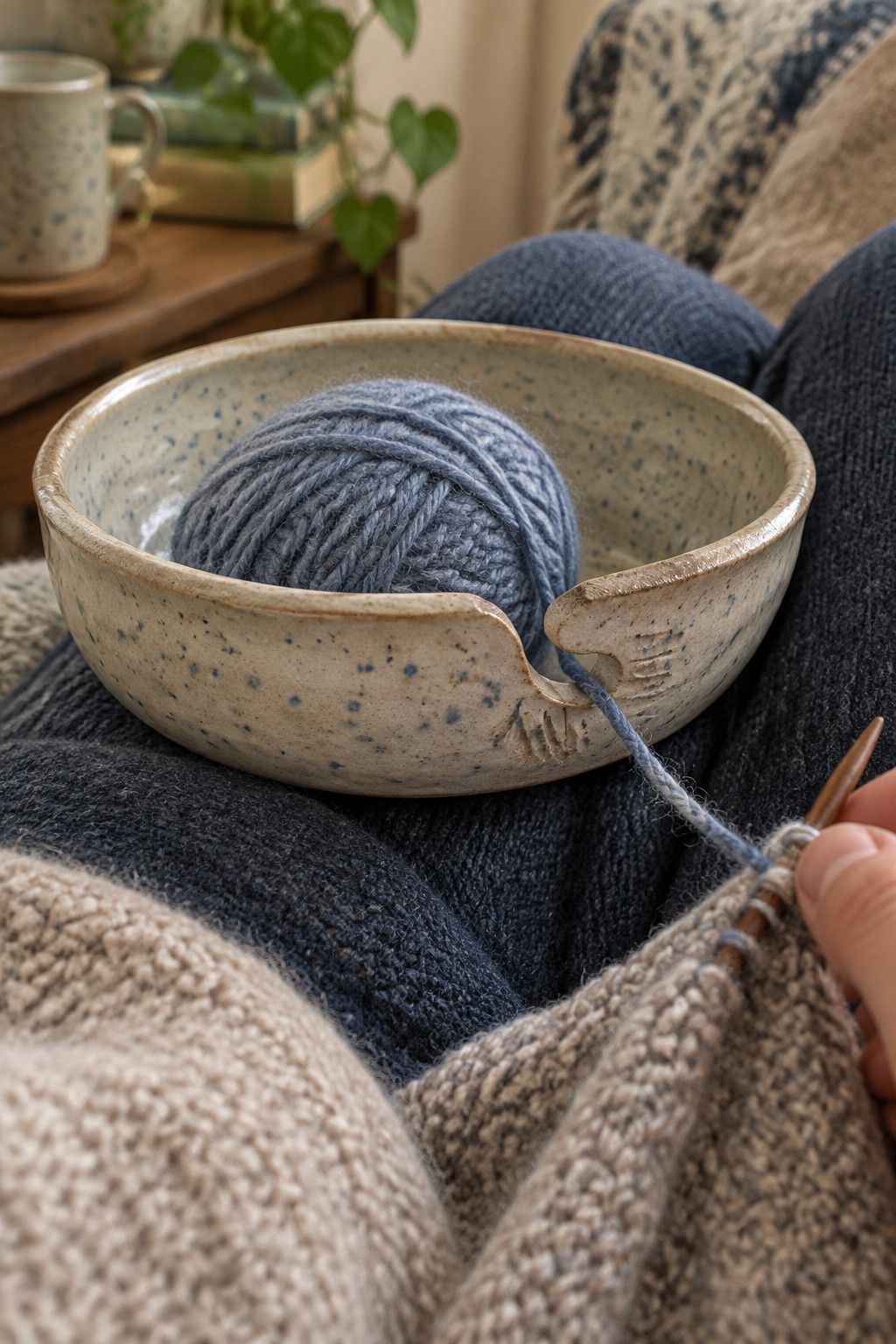
A yarn bowl is a low, wide ceramic dish built to hold a ball of yarn while knitting or crocheting. The practical detail is a notch cut into the rim that guides the strand out cleanly and keeps it from rolling away. This example uses a speckled matte glaze in neutral tones so the bowl stays in the background while the yarn and project stay visible. The form is simple enough to cut from one slab, shaped into a shallow curve with the notch added before drying.
What makes this idea useful is how the notch solves a common problem without adding extra parts. You can make several sizes to match different yarn weights or add a second notch on the opposite side for stranded knitting. The compact shape works on a couch arm, coffee table, or in a project bag without taking up much room. For a variation, try the same slab method to create a smaller version that doubles as a stitch marker dish when not in use.
Slab-Built Cat Face Planter
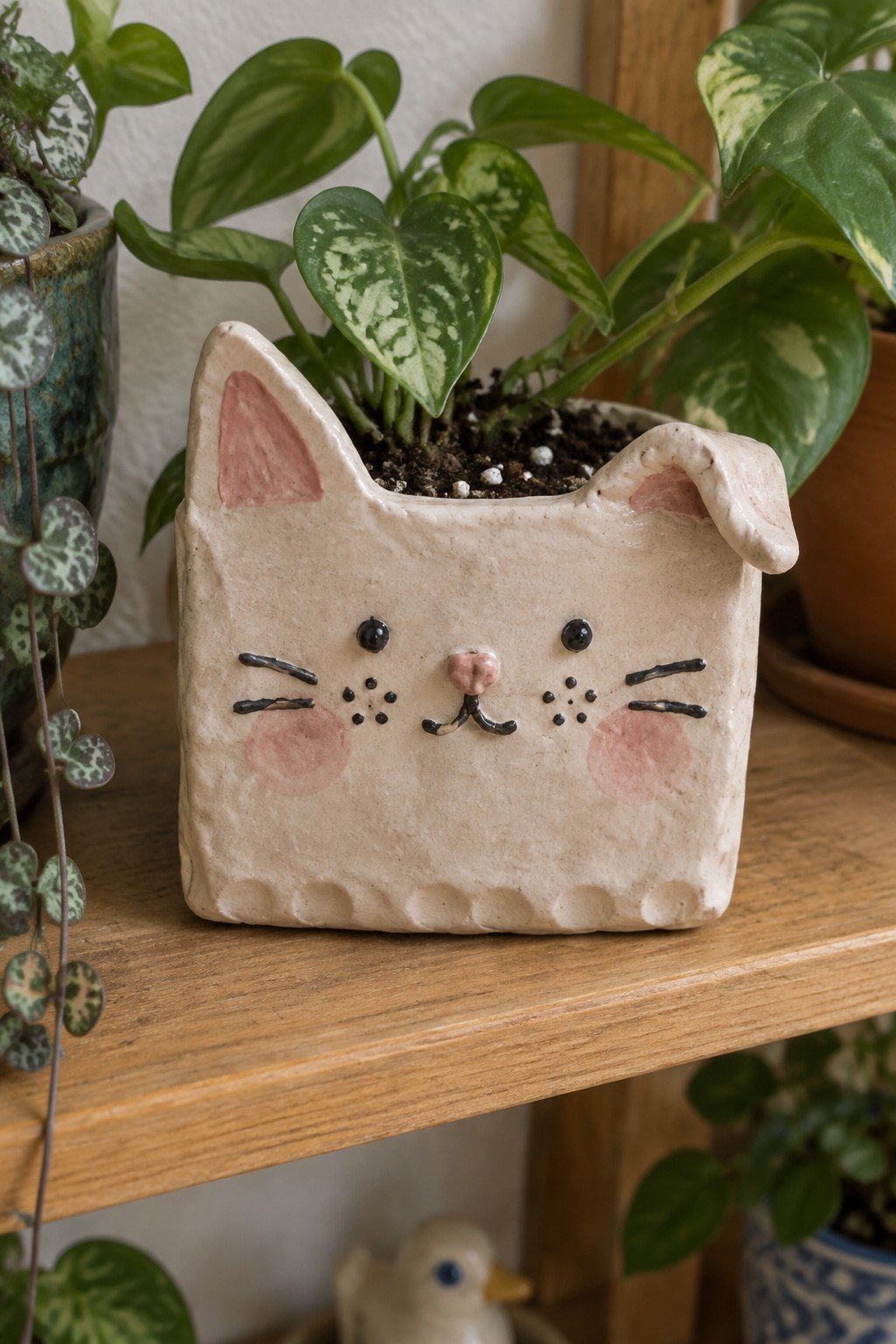
A single slab rolled and joined into a box shape forms the body of this small planter, with two ear pieces added along the top rim before firing. Black slip or underglaze creates the eyes, whiskers, and mouth while pink accents mark the inner ears, nose, and cheeks. The flat front gives a clear surface for the face, and the open top is sized for a young plant or cutting. This method keeps the build simple while turning the slab into a recognizable animal form.
The box shape sits steadily on a shelf and leaves room for soil without taking much space. You can adjust the slab height for a shallower tray or stretch it longer to hold multiple small plants. Painting only the face keeps the rest of the surface plain, so the same base works for other animal faces or even abstract patterns. For gifts, this size pairs easily with a nursery plant and fits standard wrapping.
Divided Slab Tray for Small Items
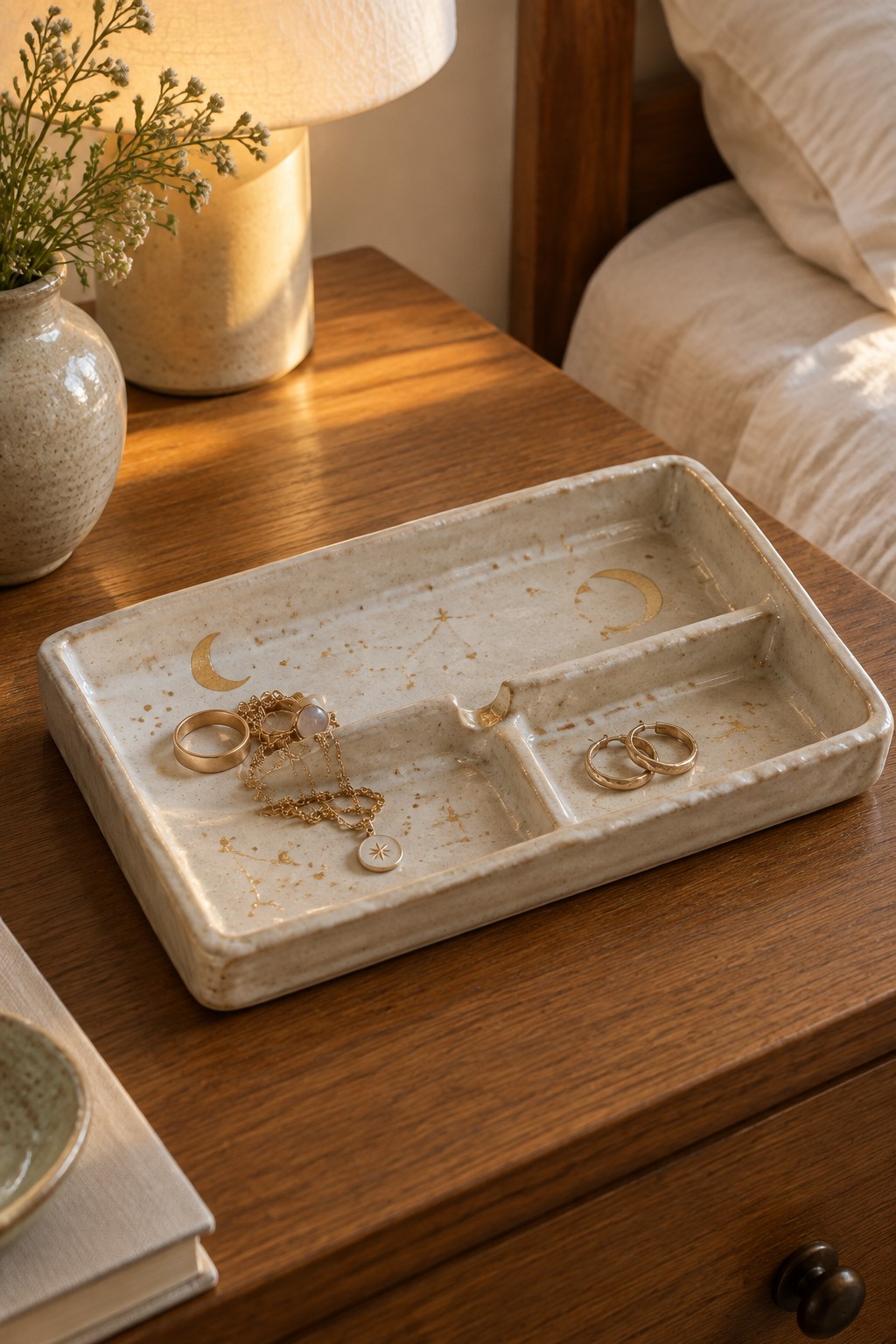
A divided tray built from one slab of clay creates separate compartments for rings, necklaces, and other small objects. The flat base is formed with raised outer walls and one low interior divider that runs most of the length, keeping pieces from mixing together. Simple gold painted crescents and stars add light decoration across the surface without requiring extra sculpting or carving.
What makes this idea useful is how the same slab layout can be resized or split into more sections depending on what needs storing. A shorter version works on a bathroom counter for daily items, while a longer tray can sit on a desk for keys and accessories. The painted motifs can be changed to lines, dots, or nothing at all once the clay is leather hard. This shape shows up well in photos because the compartments create clear visual order even when the tray is only partially filled.
Frequently Asked Questions
What is the ideal thickness for the clay slab when starting these projects? A quarter inch works well for most one-slab handbuilding ideas. This measurement gives the clay enough strength to hold shapes like trays or wall pockets while reducing the chance of cracks as it dries. Roll the clay evenly with guides on each side of the slab to maintain consistency.
How can I keep my one-slab projects from warping during the drying stage? Dry pieces slowly and evenly by covering them loosely with plastic for the first 24 hours. Place them on a flat surface and rotate them every few hours. Once the clay reaches the leather-hard stage, remove the plastic and let it finish drying in a draft-free area. This method helps the moisture escape at the same rate across the entire piece.
Which of the 20 projects suits complete beginners the most? The basic slab tray or simple bookmark designs are excellent starting points. They require only rolling, cutting, and light shaping with minimal joins. These allow new potters to focus on slab preparation and drying techniques before moving to more complex forms like folded vases or textured tiles.
Do any of these one-slab projects result in functional items that can hold food or liquids? Several projects such as plates and small bowls can become functional after proper glazing and firing. Apply a food-safe glaze to the finished piece and fire it in a kiln according to the clay manufacturer’s instructions. Air-dried versions will not be waterproof or durable for everyday use.
What tools help create clean edges and textures on single-slab pottery? A basic set includes a rolling pin, canvas cloth, ruler, and sharp knife for cutting. For texture, press items like lace, leaves, or stamps into the slab before cutting shapes. Keep a damp sponge nearby to smooth any rough spots during assembly.

Pottery Path is my cozy corner of the internet where I share clay ideas, pottery inspiration, and simple projects you can recreate at home. I love exploring everything from air dry clay to handbuilt pottery to cute minis that brighten your day. My goal is to make clay crafting feel easy, fun, and welcoming for anyone who wants to try it.
You will find beginner friendly tutorials, creative pottery painting ideas, and lots of warm inspiration for slow and happy crafting. If you enjoy hands on creativity, this space will feel like home.