
I started experimenting with slab pottery a while ago and found that geometric designs give the vases a nice clean look.
Cutting the clay into shapes and joining them up has become one of my favorite parts of the process.
Some patterns turn out bolder than others but they all feel achievable with basic tools.
Not every attempt works out perfectly but that is part of learning.
I have collected 19 different ideas that might give you some inspiration for your own projects.
Faceted Slab Vase with Triangular Inlays

A slab-built vase with flat sides gives you clean surfaces for applying geometric shapes. Triangles cut from black and brown clay and set into the white speckled body create a repeating pattern that moves around the form without needing extra carving. The angular shape of the vase itself reinforces the straight lines of the design and keeps the whole piece feeling structured rather than soft.
What makes this idea useful is the way the faceted form does most of the visual work once the triangles are in place. You could simplify the pattern by using only two colors or change the scale of the triangles to fit a shorter or wider vase. This shape works especially well as a standalone decor piece on a shelf or table where the light catches the edges. The same triangle inlay approach could be reworked onto a slab tray or a set of square coasters for a matching group.
Square Slab Vase With Circle Color Blocks

A slab built vase gives you flat sides that work like a canvas for large geometric shapes. Here the form is a low square body with a short neck, finished in broad blocks of blue and terracotta. Circles cut across the color divisions in the opposite shade, keeping the pattern simple and readable from a distance. This approach turns basic slab construction into a bold vase idea that relies on shape and color contrast rather than surface texture.
What makes this idea useful is how the flat panels let you plan the design before you attach the slabs. You could repeat the same layout on a taller rectangle or swap the circle size to match a different color scheme. The shape works especially well as a shelf or mantel piece where the pattern reads clearly from across the room. For a gift, something like this is easy to personalize by changing just the placement or number of circles while keeping the same color blocks.
Faceted Slab Vase With Chevron Stripes

A slab-built vase with flat angular sides gives the form a strong geometric structure. The surface carries wide diagonal bands of teal and mustard yellow that line up across the facets to create a continuous chevron pattern. This simple color-blocking method makes the vase stand out without needing carved texture or complex glaze work.
The shape works especially well as a standalone accent on a shelf or console because the flat planes catch light differently from every angle. You could repeat the same faceting and stripe layout on a shorter cylinder to make matching tumblers or scale the chevrons down for a small planter. Masking the bands with tape keeps the edges clean, so the design stays bold even if the slab joints are not perfectly straight.
Tall Slab Vase With Diagonal Triangle Carvings

A slab-built vase with a tall, tapered form uses incised triangles arranged in diagonal bands to create a strong geometric pattern. The triangles are stacked and decrease in size toward the top, which follows the narrowing shape and keeps the design balanced. A light glossy glaze sits over the surface and leaves the carved lines visible as texture rather than filling them with color. This keeps the piece simple while making the pattern the main feature.
The shape does a lot of the work here by giving the triangles space to stretch without crowding. You could adapt the same layout to a shorter cylinder or a wider planter by changing the row spacing and triangle size. In a kitchen or on a windowsill, the narrow profile takes up little room while still reading as a statement piece. The carving approach also works on trays or wall tiles if you want to repeat the motif across a set.
Diagonal Striped Slab Vase
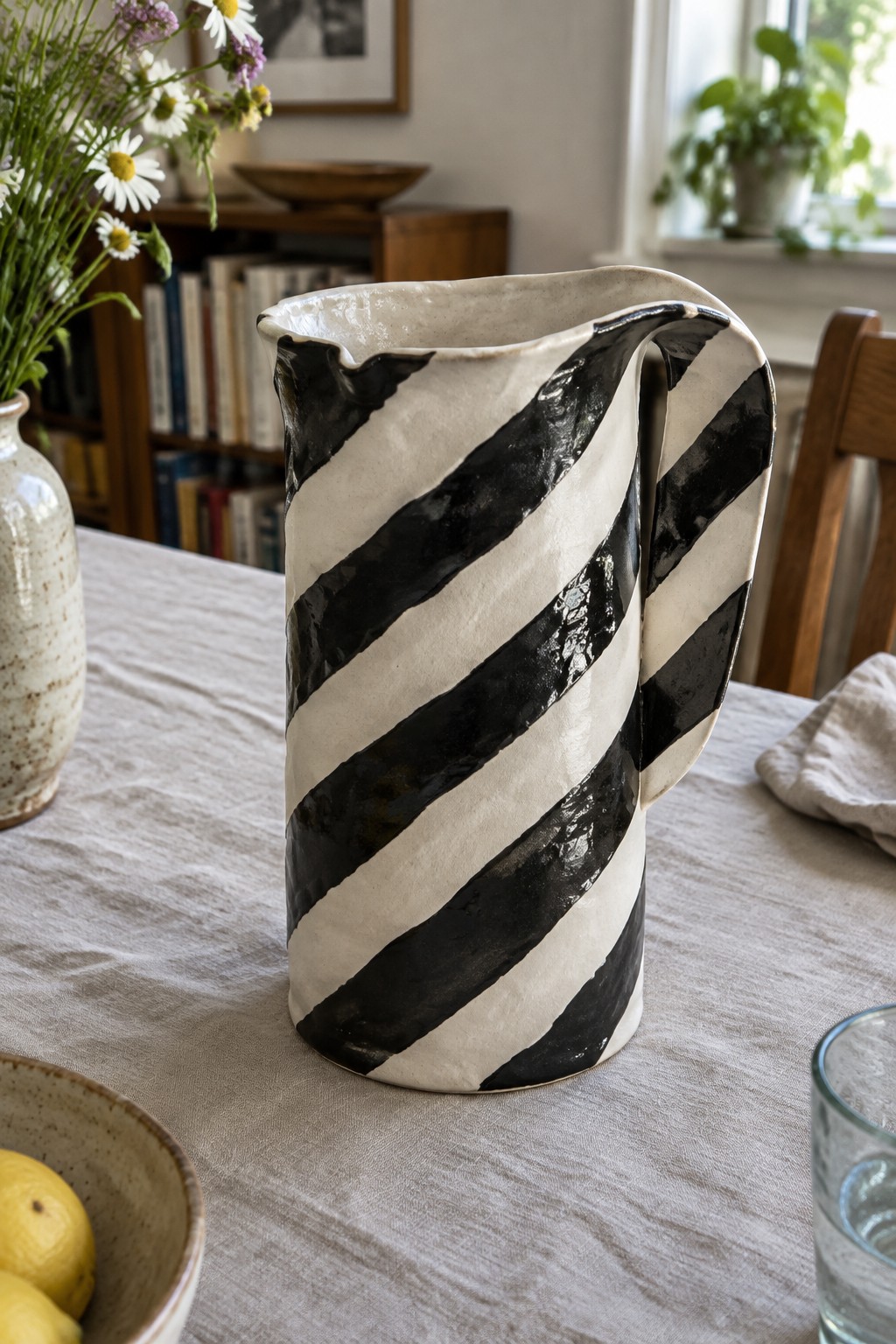
A tall cylindrical vase built from slabs features a wide spout and a sturdy pulled handle. Thick diagonal bands of black glaze alternate with the natural off-white clay body, creating a strong repeating pattern that wraps around the form. The stripes are wide enough to stay bold after firing yet leave room for the clay texture to show through in places.
What makes this idea useful is how the diagonal layout adds movement to a basic cylinder without extra carving or added pieces. The same stripe pattern adapts easily to a straight vase without a spout or to a shorter drum shape for a different proportion. In a living room or on a shelf this kind of piece works well because the contrast reads clearly from a distance. The pattern can be simplified by using fewer stripes or changed by switching the black to a deep blue or terracotta for a new look.
Dual-Neck Slab Vase Built from Geometric Patches

A slab-built vase made from irregular polygonal sections creates strong visual contrast through color blocking. Earth-tone glazes in matte brown, off-white, and glossy green cover each piece, with the seams left visible to emphasize the handmade construction. The rounded body rises into two separate necks at different heights, turning a basic vessel into a sculptural form that can hold multiple stems or stand alone. This method uses simple slab assembly to produce a bold geometric pattern without complex carving or painting.
What makes this idea useful is the way the patchwork layout lets you test glaze combinations on one piece instead of making multiple test tiles. The dual openings work especially well for dried arrangements or as a standalone patio accent where the shape draws attention. You could adapt the same slab approach to a single-neck vase or reduce the number of colors for quicker assembly. The strong silhouette and mixed finishes also photograph clearly for Pinterest without needing extra styling.
Slab Vase With Concentric Painted Rectangles
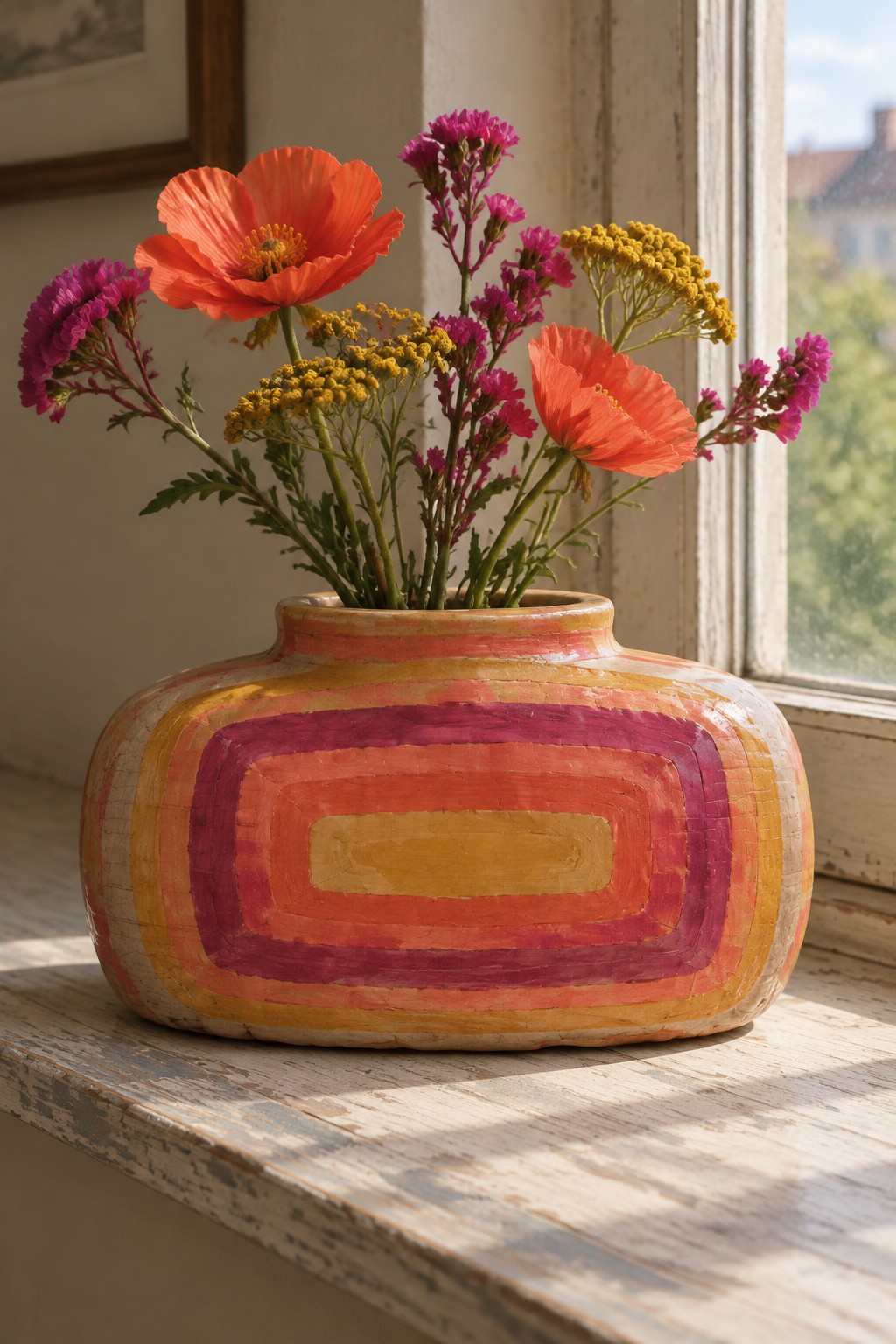
This slab-built vase takes a low, wide oval shape that rests flat without a foot. The surface carries bold horizontal bands of yellow, orange, and magenta that surround a central rectangle built from the same layered colors. The design relies on repeating geometric shapes and strong color contrast rather than texture or carving. It belongs in the painted geometric slab vase category, where the flat sides give clean space for precise stripe work.
The wide base supports a small bouquet without needing extra weight at the bottom. You can recreate the concentric rectangle by rolling slabs, assembling the form, then brushing underglaze bands before the bisque firing. This layout works especially well for a windowsill or low shelf where the flat sides face outward. The same stripe pattern can be simplified by using fewer colors or scaled down to make a matching tray or small planter.
Stacked Cube Slab Vase
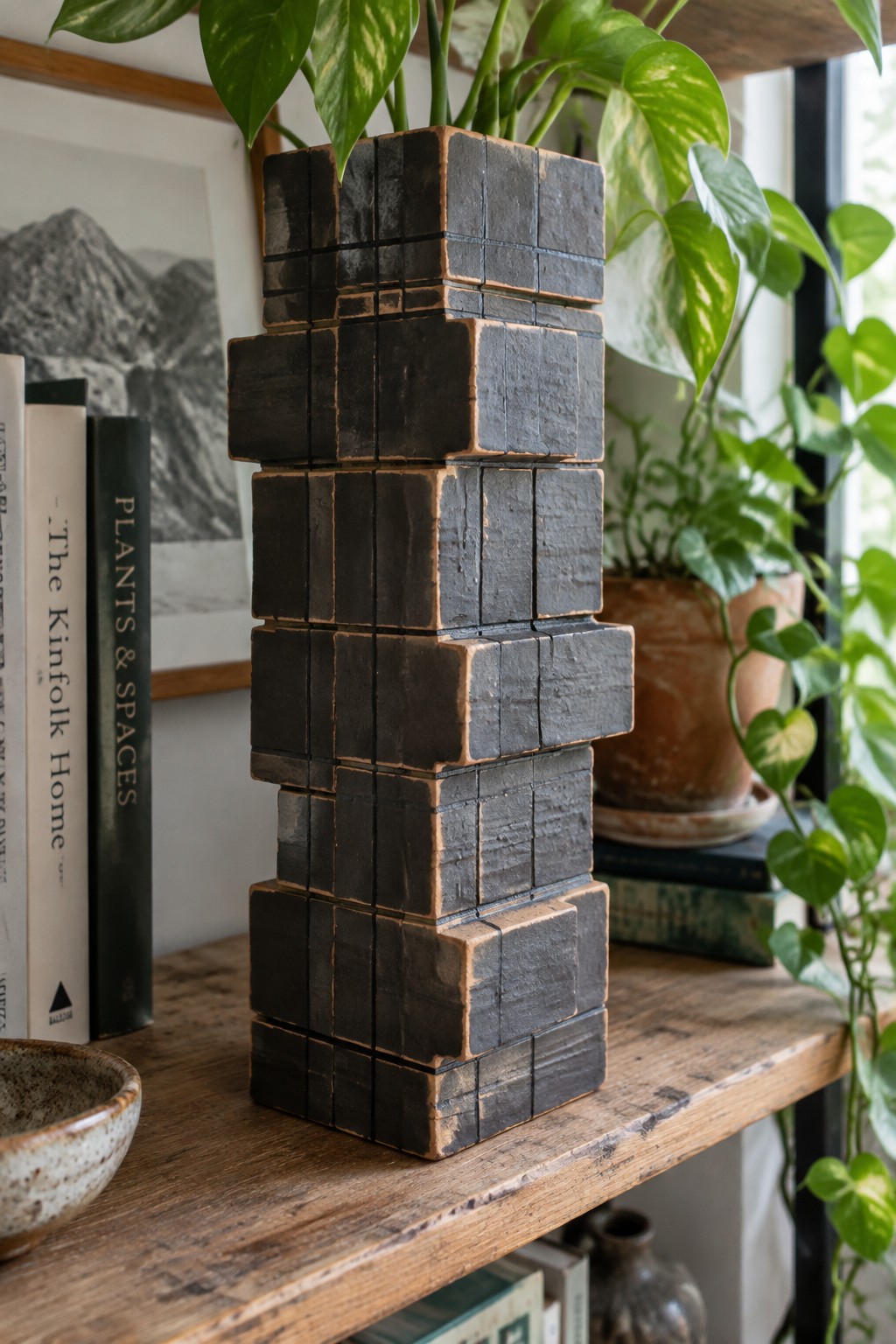
Slab pottery forms the base of this tall vase, with individual cubes built separately then stacked in an offset pattern to create an irregular column. Each cube carries a pressed grid texture across its faces, and the dark matte glaze stops short of the edges to reveal the lighter clay body. The result is a sturdy planter that can support a full-sized houseplant while keeping a strong geometric silhouette.
What makes this idea useful is the modular construction that lets you adjust height by adding or removing cubes without starting over. The same offset stacking works well for shorter table vases or wider versions that hold multiple stems. Dark glaze with raw edges keeps the lines sharp and makes the piece stand out in photos for modern pottery boards. You could simplify it by using fewer cubes or change the finish to a single color for a cleaner look.
Curved Diagonal Color Block Vase

A slab-built vase split into two sections using contrasting clay colors creates a strong geometric look without needing extra surface decoration. One half stays in a speckled light green while the other uses a warm terracotta tone, joined along a single sweeping curve that runs from the shoulder down to the base. The form stays simple with a narrow neck and rounded body, so the color division becomes the main design element.
The shape works well on a shelf or windowsill where the curve stands out against a flat background. You could adapt the same split by changing the angle, reversing the colors, or using the idea on a taller cylinder. For a gift this size stays easy to handle through the building and firing stages, and the clean division makes it simple to try different glaze pairings on future versions.
Split Face Slab Vase with Bold Color Blocks
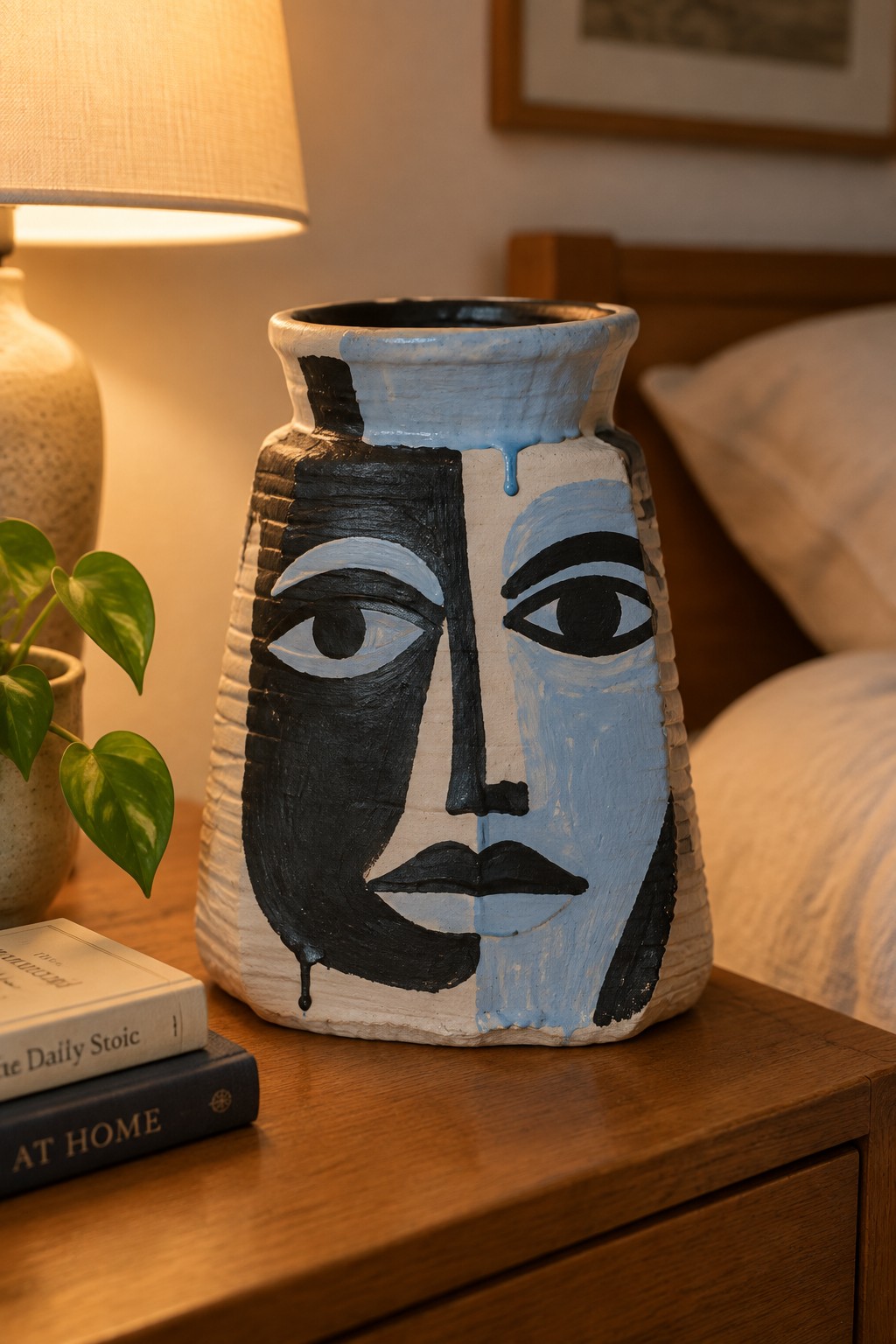
A slab built vase gives you flat sides that work well for painting large graphic designs. This piece uses a simple tapered form and divides the surface into black and blue sections with strong black outlines for the eyes, nose, and mouth. The geometric blocks of color and the drip details keep the design bold and easy to read. It fits the category of a decorative vase meant for display rather than daily use.
The shape does a lot of the work here because the wide middle gives plenty of room for the face motif without crowding. You could adapt the same idea by using fewer color blocks or painting just the eyes and mouth on a smaller cylinder. This type of vase works especially well as a bedroom accent or on an entry table where the graphic pattern can stand out. For a different project, try the same divided layout on a slab tray or a set of mugs using only one color against the clay.
Triangular Mosaic Wall Pocket Vase

A wall-mounted vase formed from clay slabs and finished with a repeating pattern of triangular tiles gives a clean geometric look. The triangles alternate between deep blue and amber glazes, creating contrast across the rounded front surface while the flat back stays plain for mounting. A single hole at the top allows it to hang directly on the wall, turning the piece into a compact flower holder that uses vertical space.
What makes this idea useful is how the flat back and small hanging hole let you add fresh flowers without needing counter or shelf room. You could adapt the triangle layout by switching to two tones or larger pieces if the full mosaic feels like too much cutting. In a hallway or above a desk, this shape keeps the arrangement visible but out of the way. The same slab-and-tile approach could be scaled down for a set of smaller pockets or lengthened into a taller version for bigger stems.
Checkerboard Slab Vase with Alternating Glaze

A tall slab-built vase covered in a grid of squares offers a straightforward way to create bold geometric impact. The pattern alternates matte tan clay sections with glossy black squares, letting the natural clay texture show through in some areas while the glaze adds shine and depth in others. This layout works especially well on a larger form because the scale keeps the squares readable without crowding.
What makes this idea useful is how the grid pattern translates easily to different vase heights and widths. You can adjust square size to match your slab roller or template, then swap the black glaze for another color if you want a softer look. The same construction works for a narrower version that fits on a shelf or a wider one for floor placement. For Pinterest, the high contrast and clean lines help the finished piece photograph clearly against simple backgrounds.
Slab Vase With Stacked Triangle Pattern

A slab-built vase gives you flat surfaces that make it easy to paint large geometric shapes without distortion. This example uses three stacked triangles in teal, ochre, and rust on a light speckled clay body, with the top triangle wrapping slightly onto the neck. The simple color blocks stand out because the background stays neutral and the clay shows its natural texture where the paint stops. The flattened oval shape keeps the piece stable while giving the design room to breathe.
What makes this idea useful is how the triangle layout can be changed in height or spacing to fit different vase proportions. You could repeat the same three colors on a rounder form or shrink the motif for a set of smaller bottles. The painted areas stay bold even from across a room, which helps the piece show up well in photos for sharing. For a first slab project, the straight edges and limited color palette keep the work manageable while still looking intentional.
Diagonal Two-Tone Slab Vase

A slab-built vase uses a clean diagonal division to separate a glossy turquoise glaze from a matte, textured clay surface. The simple tapered shape keeps the focus on the geometric split rather than complicated form work. This contrast between the smooth colored section and the rough natural clay creates a bold, graphic look that fits the slab pottery style.
What makes this idea useful is how the angled line works on basic cylinder or slab forms without extra tools. You could repeat the same split on a wider planter or a narrow bottle shape to suit different spaces. The unglazed lower half also adds grip and hides water marks, which helps when the vase holds fresh flowers on a countertop.
Slab-Built Vase with Radiating Sunburst Lines

A flat slab vase gives you a wide surface for bold geometric patterns without needing a wheel. This one uses a central circle and straight radiating lines in red clay slip over a light base to form a sunburst across both sides of the angular body. The sharp edges and scored texture keep the design crisp while the open spout at the top turns the whole form into a functional vase. It belongs in the category of decorative slab vases meant for display rather than heavy daily use.
The shape does a lot of the work here by giving the pattern straight borders that make the rays look precise. You could repeat the same layout on a shorter, wider slab tray or adapt the rays into a half-circle motif on a set of matching coasters. This kind of piece works especially well on a narrow shelf where its flat profile takes up little room but still reads as a strong focal point. For a gift, drop the height by a few inches and use fewer lines to finish the project in one session.
Bold Color-Blocked Jug Vase

A ceramic jug vase uses wide blocks of dark green, soft pink, and gray to divide the surface into geometric sections. The upper half splits vertically between green and pink while the lower half shifts to wider horizontal bands, letting the color changes define the shape rather than added texture or carving. This method suits hand-built or slab forms because the smooth walls give the blocks clean edges without extra surface prep.
The shape does a lot of the work here by giving the color blocks a tall canvas that still feels balanced. You could repeat the same blocking on a shorter cylinder or a set of matching mugs by taping off sections before glazing. In a kitchen or entryway, this kind of piece stands out on open shelving where the strong color divisions catch the eye without needing extra decoration. For a gift, the jug form is practical enough to hold flowers or kitchen tools while the color layout keeps it from looking plain.
Slab Built Low Vase With Arched Color Blocks

This project uses slabs of clay joined into a wide, low vessel with an irregular rim and gently curved sides. Large overlapping arches in orange, navy, and cream create the main pattern, applied so the shapes follow the form rather than fight it. The visible texture from the clay slabs adds depth under the color, keeping the design from feeling flat. It fits the geometric slab vase category because the shape itself stays simple while the surface carries the bold pattern.
The low, wide proportions make the piece stable on a table and simple to assemble from a few large slabs. You could repeat just the arch motif on a taller cylinder or a shallow tray using the same color blocking. The strong contrast between the orange and navy helps the pattern read clearly even in photos, which is useful if you want to share the finished piece. For a different version, swap the navy for black or cut the arches from colored clay instead of painting them on.
Diagonal Striped Square Vase with Stepped Base
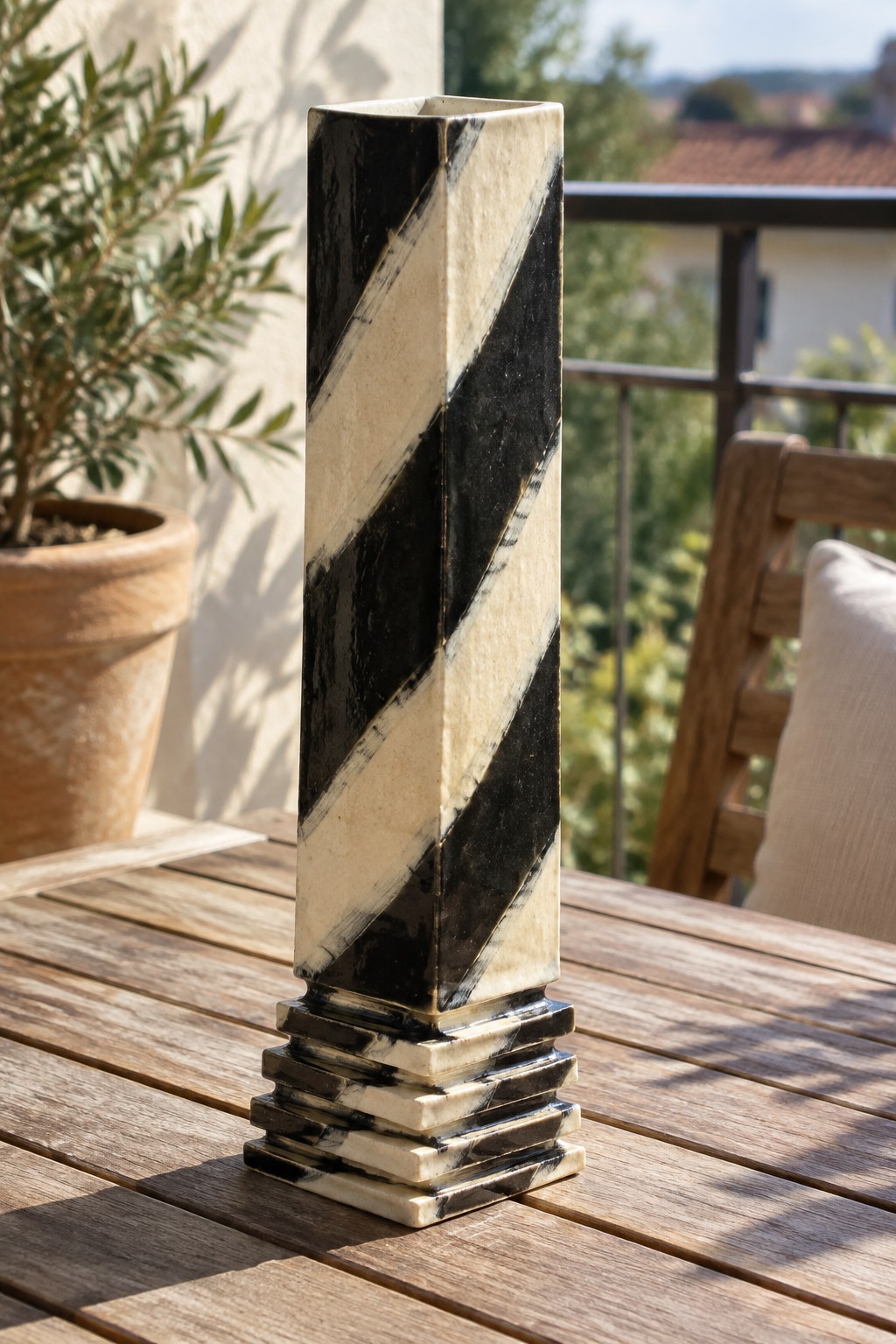
Slab construction produces a tall square vase with flat sides that display a repeating diagonal stripe pattern clearly on every face. Black and white glazes applied in broad angled bands create strong contrast and keep the geometric design bold even from a distance. The base is formed from stacked slabs that step out gradually, giving the tall form a grounded, balanced proportion.
What makes this idea useful is how the same diagonal glazing can be scaled to shorter or wider slab vases without changing the technique. A piece like this works especially well as a standalone decor object on a mantel or side table where the height stands out. You could rework the stepped base into a simpler two-layer version or repeat the stripe pattern on a matching set of small square planters.
Double Slab Vase with Triangle Mosaic

A slab built vase made from two joined forms creates a double neck shape that gives you separate openings for different stems or small bunches. The surface uses a simple grid of triangles cut from colored clay or slip in yellow, peach, and mint green over a speckled base. This layout keeps the pattern bold but easy to repeat across the curved form without needing precise symmetry.
The connected shape works especially well for styling two types of flowers side by side in one piece. You can adapt the same triangle idea to a flatter tray or a single wide vase by changing how many sections you join. For gifts, this form stands out because the pattern reads clearly from a distance while the double opening adds a practical twist.
Frequently Asked Questions
What type of clay is best suited for slab pottery vases featuring bold geometric designs?
A good choice is a stoneware or porcelain clay body that has some grog added for strength and to reduce warping during drying. These clays hold sharp edges well when cut into slabs and allow for crisp geometric lines without cracking. Start with a medium firmness clay rolled to about a quarter inch thickness for stability in taller vases.
How do I create precise and bold geometric patterns on my slab vases?
Use templates cut from stiff paper or thin cardboard to trace shapes like triangles, hexagons, or intersecting lines onto the leather hard slabs. Score the surface lightly with a needle tool and then carve or add contrasting clay strips for raised designs. Keep the slabs flat on a board while working to maintain even lines, and smooth edges with a rib tool before assembling the vase form.
What tools and supplies will I need to try these slab vase ideas at home?
Gather a rolling pin or slab roller, canvas sheets to prevent sticking, a metal ruler for straight cuts, scoring tools, and a variety of ribs for smoothing. You will also want calipers to measure consistent slab thickness, wooden guides for even rolling, and basic hand building tools like a needle tool and wire cutter. For geometric flair, collect stencils or stamps in bold shapes to press into the clay.
How should I dry and fire these geometric slab vases to avoid cracks?
Dry the assembled vases slowly under plastic for several days to equalize moisture, then uncover gradually over a week. Once bone dry, bisque fire to cone 04 or 06 depending on your clay. For the final glaze firing, apply a matte or satin glaze that contrasts with the geometric areas to make designs pop, and fire to the clay’s recommended cone. Always support the form with kiln furniture if it has sharp angles.
Can I make these vases waterproof for holding fresh flowers?
Yes, by applying a food safe glaze to the interior and exterior before the final firing, or by using a liner glaze inside. Test your glaze on a sample tile first to ensure it seals properly without running into the geometric details. If you prefer a more matte look, seal the inside with a waterproof varnish after firing, though this works best for decorative use only.

Pottery Path is my cozy corner of the internet where I share clay ideas, pottery inspiration, and simple projects you can recreate at home. I love exploring everything from air dry clay to handbuilt pottery to cute minis that brighten your day. My goal is to make clay crafting feel easy, fun, and welcoming for anyone who wants to try it.
You will find beginner friendly tutorials, creative pottery painting ideas, and lots of warm inspiration for slow and happy crafting. If you enjoy hands on creativity, this space will feel like home.