I’ve been working with slab pottery for a while now and I find that organic shapes come together more easily when I don’t overthink the forms.
Texture on the surface adds something without requiring fancy tools or techniques.
I put together some of the ones that have worked well for me and wanted to share the details here.
There are 22 forms in total and each one stays simple with a focus on natural looking results.
These are the variations I keep coming back to when I want something straightforward to make.
Organic Slab Bowl With Wavy Ridges
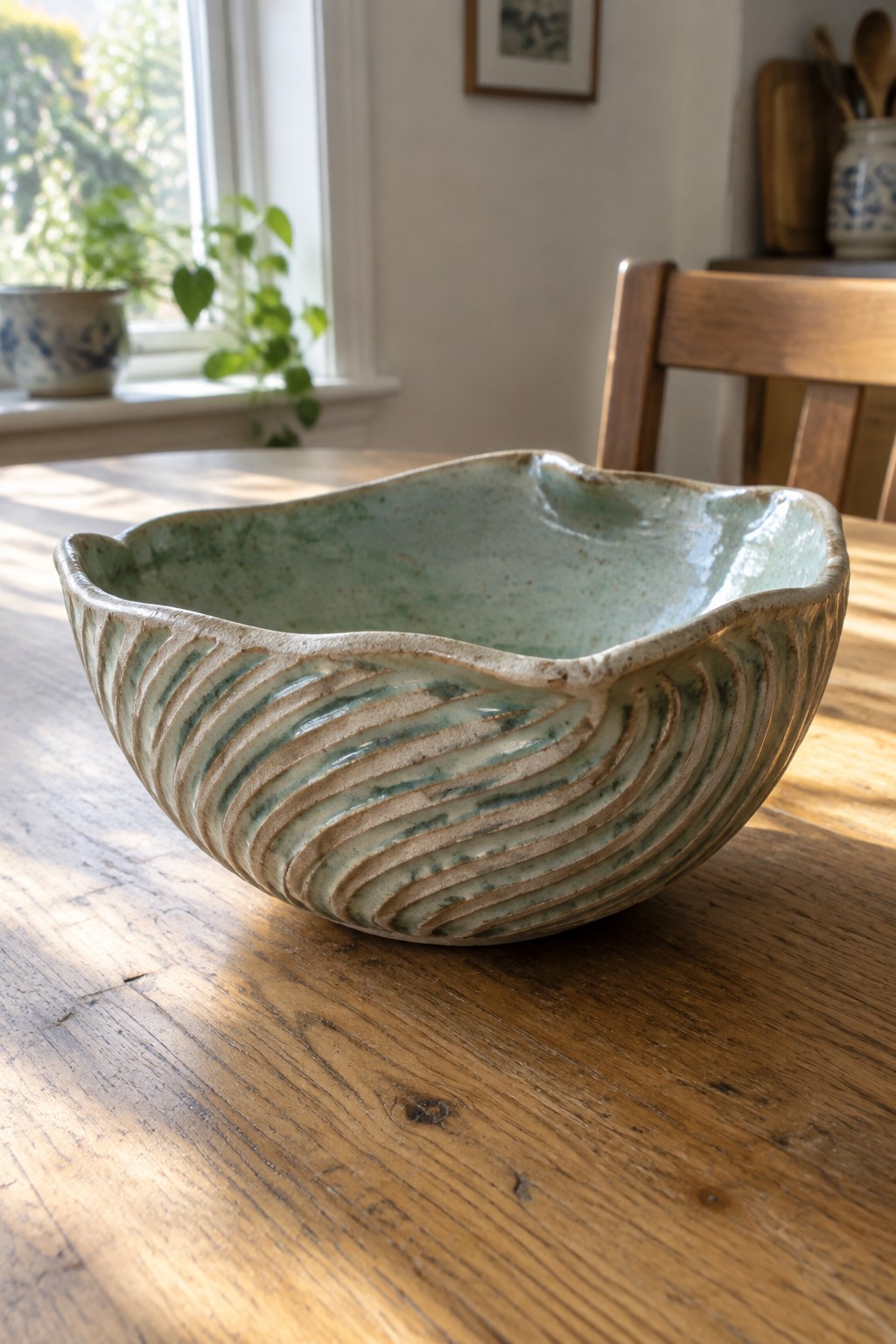
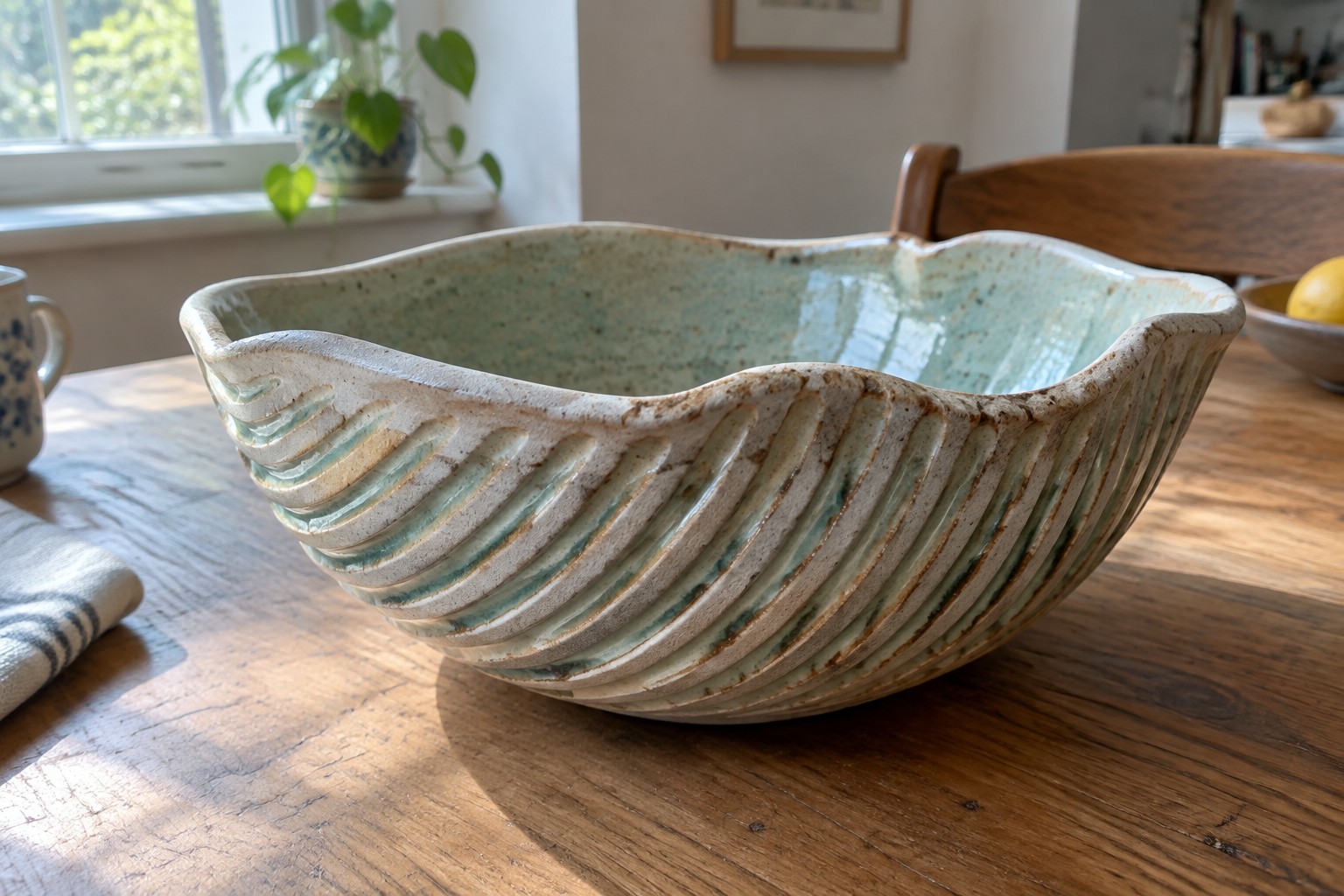
A slab built bowl gives you an irregular, soft-edged shape that feels natural rather than perfectly round. The maker rolled or pressed lines into the clay to create flowing ridges that wrap around the sides, then applied a light green glaze that settles into the grooves and leaves the raised areas paler. This texture and glaze combination turns a simple bowl into a piece that catches light and shadow across the surface. The result works as a serving bowl or a standalone table piece.
The shape does a lot of the work here because the uneven rim and ridged sides already provide visual interest without extra elements. You can adapt the same idea by changing how far apart you space the ridges or by using the form for smaller dishes and trays. In a kitchen or dining area this kind of bowl pairs easily with wooden utensils and everyday dishes. The slab method also lets you recreate the look at different sizes, so the same ridge pattern could become a set of nesting bowls or a shallow catch-all.
Leaf Vein Textured Slab Planter

A square planter built from slabs carries deep impressions of real leaves across each side, turning the clay surface into a repeating pattern of veins and edges. The form stays low and wide enough to support a medium-sized plant while the irregular top rim follows the natural shape of the pressed foliage. An earthy glaze settles into the recessed lines and leaves a light wash over the raised areas, making the texture stand out without extra carving.
This shape works especially well on a windowsill or plant shelf because the flat sides let the texture catch side light. You could press different leaf varieties on the same slab layout to make a set of matching pots in different sizes, or shorten the walls to turn the idea into a shallow tray for propagation. The square footprint also gives you a stable base if you want to scale it up for a larger floor plant or simplify it for a desktop holder.
Organic Slab Vase with Flowing Vertical Seam

A tall vase built from slabs joined along a single curving seam gives the form an asymmetrical, hand-shaped profile without needing a wheel. The surface shows vertical ridges and tool marks that run the full height, creating light-catching texture across the matte speckled glaze. This approach fits the slab pottery category of organic decor vases meant for dried stems or branches rather than fresh flowers.
What makes this idea useful is the way the tall narrow shape works on a console or mantel without taking much table space. You can adapt the same slab layout by changing the curve depth or shortening the overall height to make a version suited for a desk or bathroom counter. The vertical texture is easy to repeat on future pieces using a simple rib or wire tool, and it photographs well for sharing because the ridges create natural shadows. A smaller version of this form would also work as a single-stem holder or gift for someone who likes minimal arrangements.
Rectangular Slab Tray With Central Raised Texture
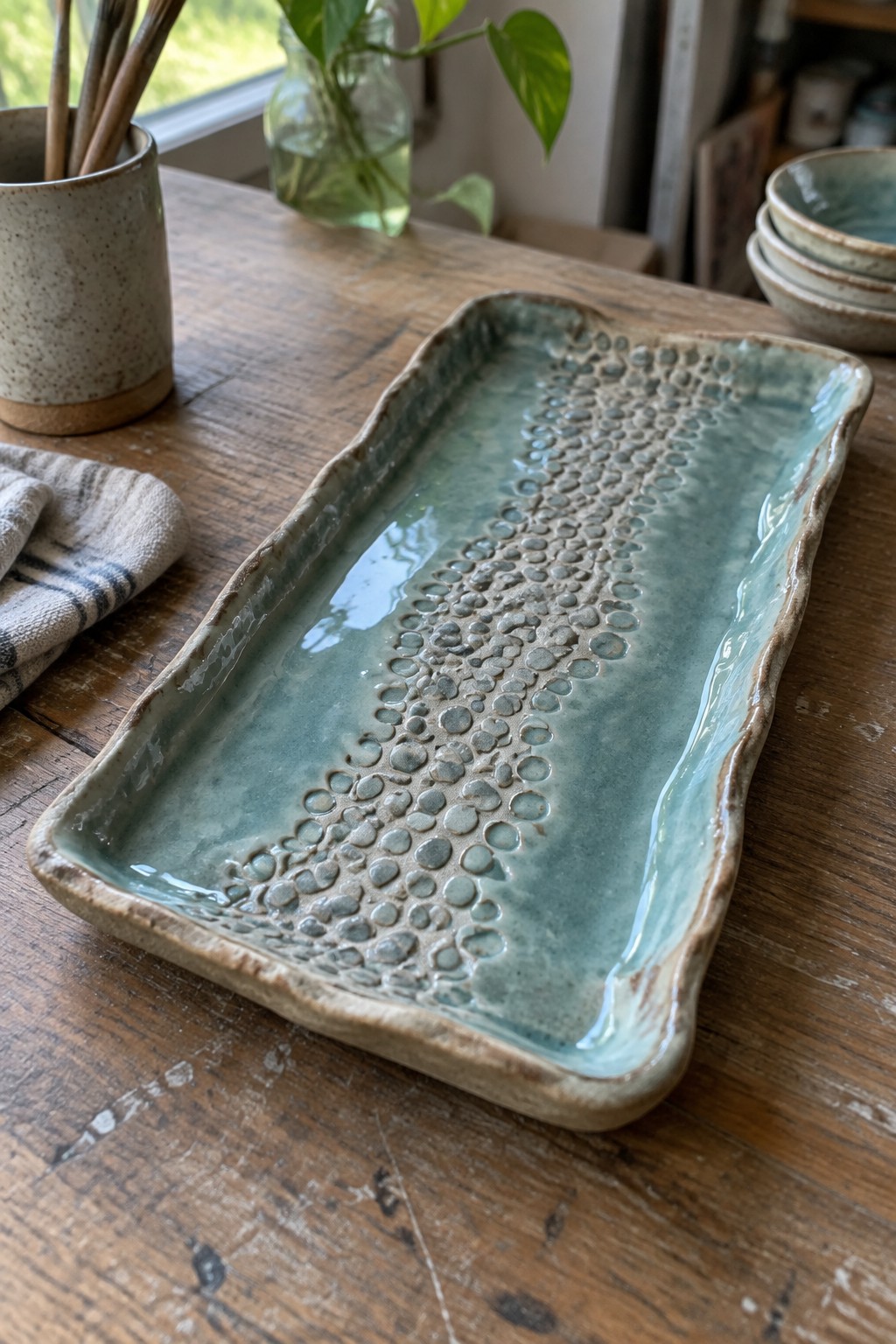
A long rectangular tray built from a single slab of clay works well when the edges stay soft and slightly uneven. The main design element is a central band of small raised circles that run the length of the piece and create a strong visual line. A mottled turquoise glaze covers the surface and settles into the texture to make the raised dots stand out without extra carving or painting. This keeps the form functional as a tray while the texture adds interest through simple surface variation.
What makes this idea useful is how the same slab and texture approach can be shortened into a soap dish or widened into a sushi platter. The central band of dots is easy to recreate with a stamp or small tool and works in other glaze colors if you want to change the look. In a kitchen or bathroom this shape holds small items without taking much space, and the irregular rim gives it a handmade finish that still feels practical. For a different project you could use the same texture idea on the inside of a shallow bowl instead.
Textured Slab Mug with Raised Dot Surface

A slab built mug gains a lot of visual interest when the exterior is covered in small raised clay dots and shallow craters that create an uneven organic surface. The pale clay body keeps the focus on that texture while loose blue and green brushstrokes along the rim add a simple color accent. This combination works because the texture does most of the work and the painted rim stays minimal.
What makes this idea useful is how easily the same texture can be adapted to other small forms like bowls or planters by pressing clay onto a bumpy surface before shaping. The sturdy handle and medium size make it practical for daily kitchen use or as a gift that feels substantial without extra decoration. You could simplify the rim painting to a single color or skip it entirely if you want to emphasize the texture alone.
Organic Slab Tray with Pressed Lace Border

A shallow round tray built from a slab gains interest when you press a strip of lace or doily into the clay to create a repeating textured band just inside the rim. The center stays smooth so the pattern reads clearly, while the outer edge is pinched and shaped into soft waves that echo the organic slab style. This combination keeps the form simple but gives the surface enough detail to stand out on its own.
The small scale makes the tray practical as a ring dish, desk catch-all, or small serving plate, and the same pressed-texture idea can be scaled up for a larger platter or repeated with different fabric scraps for variety. Once you have a template for the circle and the lace strip, the process moves quickly for making multiples as gifts. The contrast between the plain center and the patterned ring also helps the piece photograph well for sharing.
Organic Slab Spoon Rest
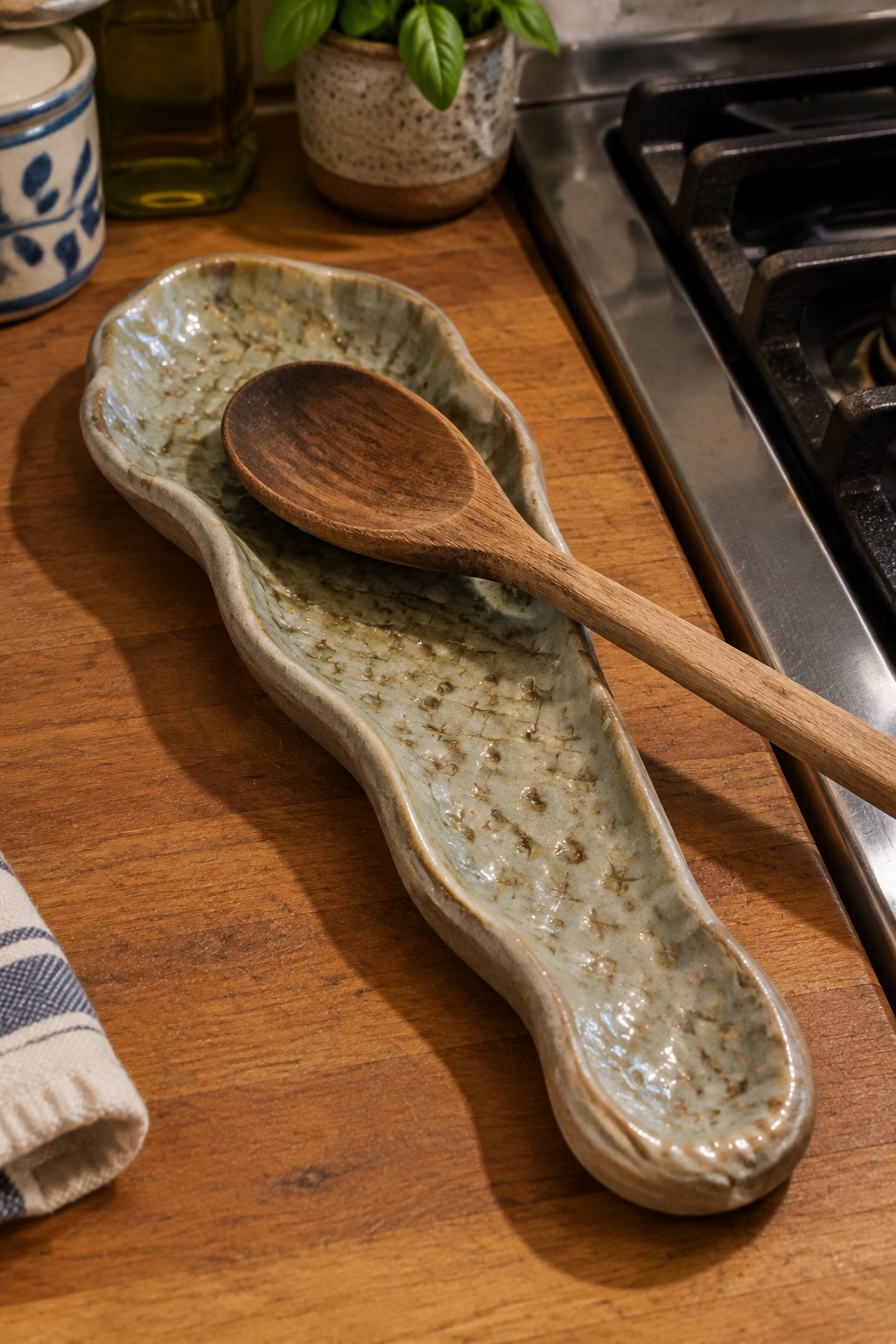
A slab-built spoon rest gives you a dedicated spot to rest cooking utensils without marking up the counter. The long, narrow form with softly curved edges follows the shape of a wooden spoon and creates a shallow well that catches drips. The mottled greenish glaze with its rough, crawling texture adds visual interest while making the surface easy to wipe clean. This kitchen item fits naturally into everyday cooking setups where you need quick access to spoons or spatulas.
What makes this idea useful is how simple it is to adjust the length and width when rolling out the slab to match the spoons you actually use. The textured glaze treatment helps minor surface marks blend in, so the focus stays on getting the edges to curve naturally. In a kitchen this kind of piece keeps the counter tidy during meal prep and pairs well with other handmade ceramics like oil jars or herb planters. You could shorten the same shape for a small butter knife rest or widen it slightly to hold two utensils at once.
Flower Relief Ring Dish

A small slab-formed ring dish gains its character from a raised floral relief pressed or sculpted into the center before the clay firms up. The outer edge is pinched or cut into soft lobes that echo the flower shape, while a light speckled glaze pools in the recessed petals to highlight the texture. This keeps the piece functional for holding rings or small items while the surface detail does most of the visual work.
The small scale means you can finish the whole form in one session and fire it with other small pieces, which is useful when making multiples. You could swap the flower motif for leaves, a geometric stamp, or even a simple spiral and still keep the same lobed rim. It works especially well on a nightstand or desk where a larger bowl would take up too much space.
Concentric Ring Slab Candle Holder

A slab-built tea light holder made from stacked concentric rings forms a shallow, rounded dish that holds a standard candle in the center. The layered rings create natural ridges that catch light and add surface texture without extra carving. Warm brown and amber glazes pool in the grooves to emphasize the organic curves and handmade construction. This shape works as a simple candle piece that stays low and stable on any flat surface.
The small overall size lets you build it quickly from a few rolled slabs without needing much workspace. You could adapt the ring method to create shallow ring dishes or small catch-all trays by shortening the outer layers. The earthy glaze colors blend with wood tables and neutral decor, so the finished piece fits into living rooms or entryways without extra styling. Scaling the rings up or down gives you options for different candle sizes or even tiny plant saucers.
Textured Slab Wall Hanging with Branch Relief
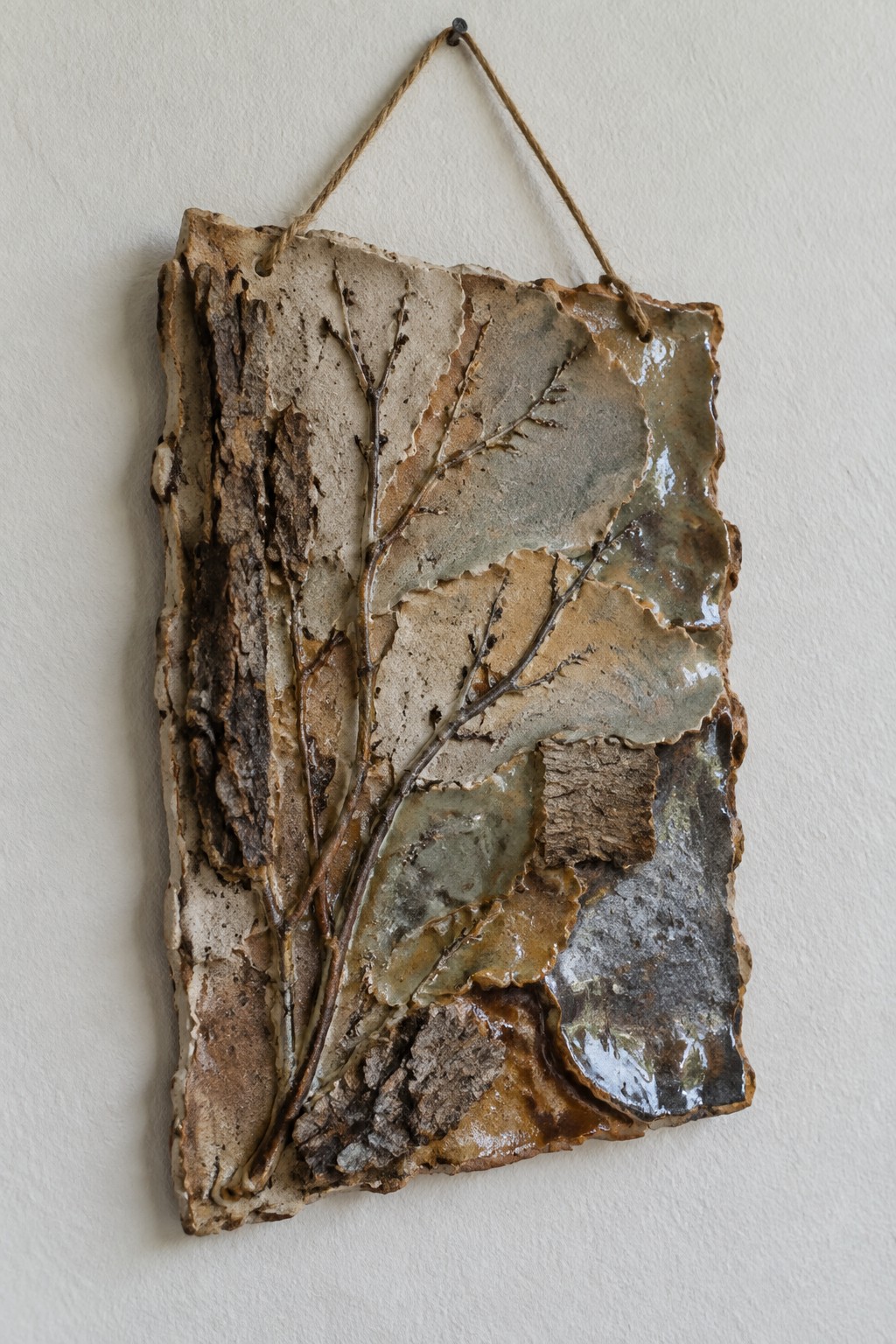
This slab-built ceramic wall piece uses an irregular rectangular form assembled from layered clay sections that vary in texture and finish. Rough, dry-looking surfaces sit next to smoother glazed areas, while raised branch forms run across the center to create a clear focal point. The design works as a purely decorative object that highlights contrast between matte and glossy zones along with the linear branch details. The hanging cord allows it to sit directly on a wall without additional framing.
A piece like this works especially well above a desk or in a hallway where you want a single natural accent without much color. You can adapt the branch element by rolling real twigs into the clay or using a stamp for quicker repeats. The same layered approach scales down for smaller plaques or tiles that could cover a larger section of wall. The combination of rough and glossy surfaces photographs clearly on Pinterest and gives viewers something specific to examine up close.
Textured Slab Jewelry Tray
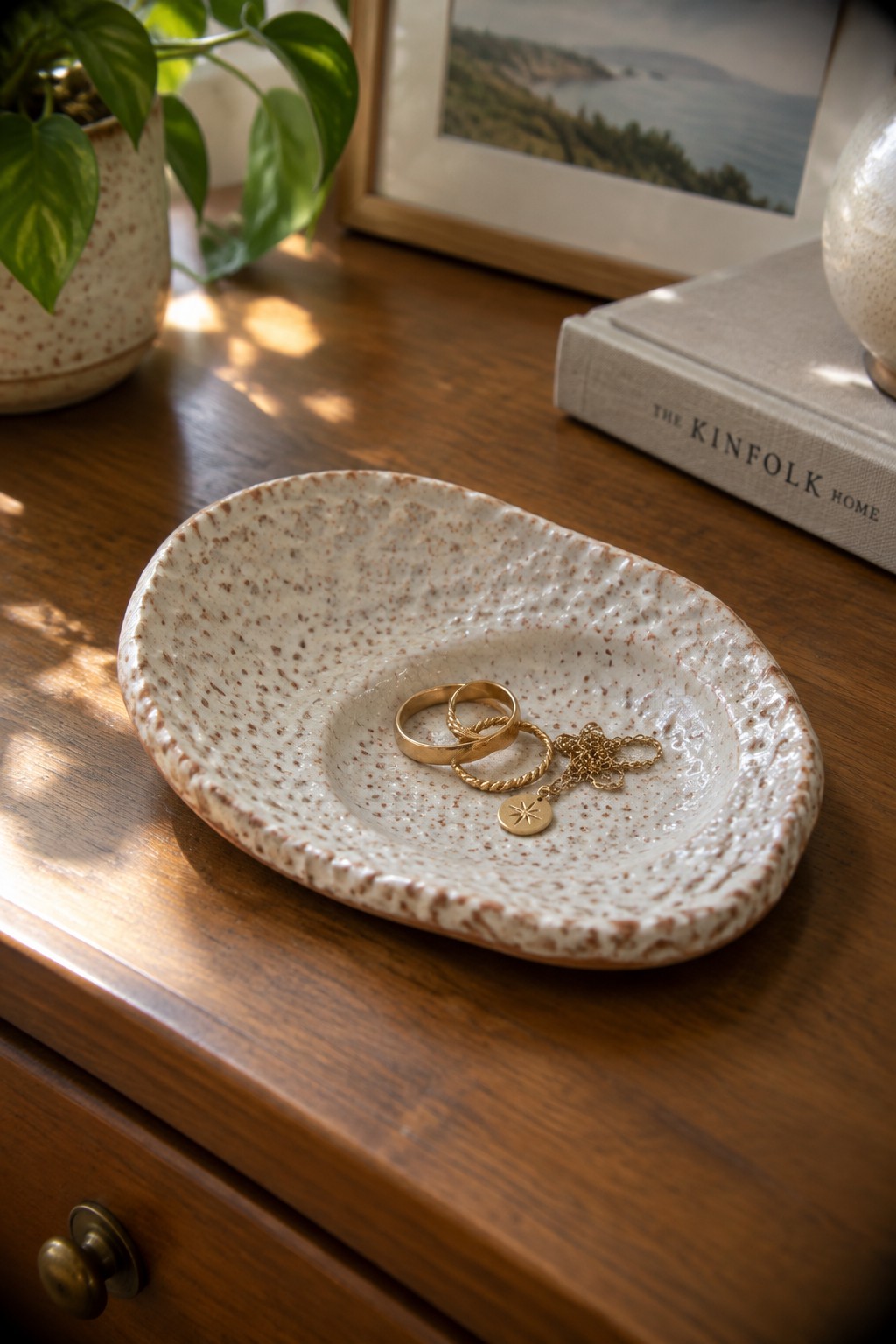
A handbuilt slab forms a shallow oval tray with a gently curved base and an irregular rim that was pinched or rolled to create a bumpy, organic edge. The speckled glaze highlights the clay surface without covering the texture, keeping the piece simple and neutral. This kind of small tray works as a ring dish or catch-all because the low walls and wide surface keep items visible and easy to reach.
What makes this idea useful is the compact size that fits on a dresser, nightstand, or entry table without crowding other objects. You could roll the slab thinner for a more delicate version or widen the rim texture with a stamp or found object for faster surface detail. The same oval shape scales up easily into a soap dish or small plant saucer, and the speckled finish pairs with both warm wood tones and metal hardware.
Wavy Ridge Slab Tray

A slab-built ceramic tray with an elongated oval shape and a series of raised wavy ridges running down the center creates a textured surface that catches light and holds small items in place. The light green glaze with brown speckling settles into the grooves to emphasize the lines without extra decoration. This approach turns a basic flat form into a functional kitchen or table piece where the texture itself becomes the main design element.
What makes this idea useful is how the ridges give the tray a practical grip for crackers or snacks while keeping the overall form simple to construct from one slab. You could adapt the same pattern by rolling a textured tool across the clay before shaping the edges or by using a smaller version as a spoon rest or desk tray. The narrow proportions make it easy to fit on crowded tables or shelves, and the design translates well to other slab projects like shallow bowls or rectangular platters.
Divided Salt Cellar with Dimpled Texture

This small double-compartment dish is a handmade ceramic piece shaped like two connected bowls. Each side has a bumpy, dimpled interior that helps hold coarse salt or spices in place, while one rim features a scalloped edge for visual contrast. The soft green glaze sits over a terracotta base, giving the form a simple, functional kitchen look without extra decoration. The divided shape keeps two seasonings separate in one compact object.
The small scale makes this easy to keep on a counter near the stove or prep area. You could rework the same double form into a holder for small snacks like nuts or seeds, or shrink it further for a jewelry dish. The dimpled texture adds grip without extra steps, so the idea stays straightforward to repeat in different sizes or glaze colors. For Pinterest, the clean divided layout and visible texture read clearly even in a small thumbnail.
Three-Slot Slab Holder for Daily Essentials
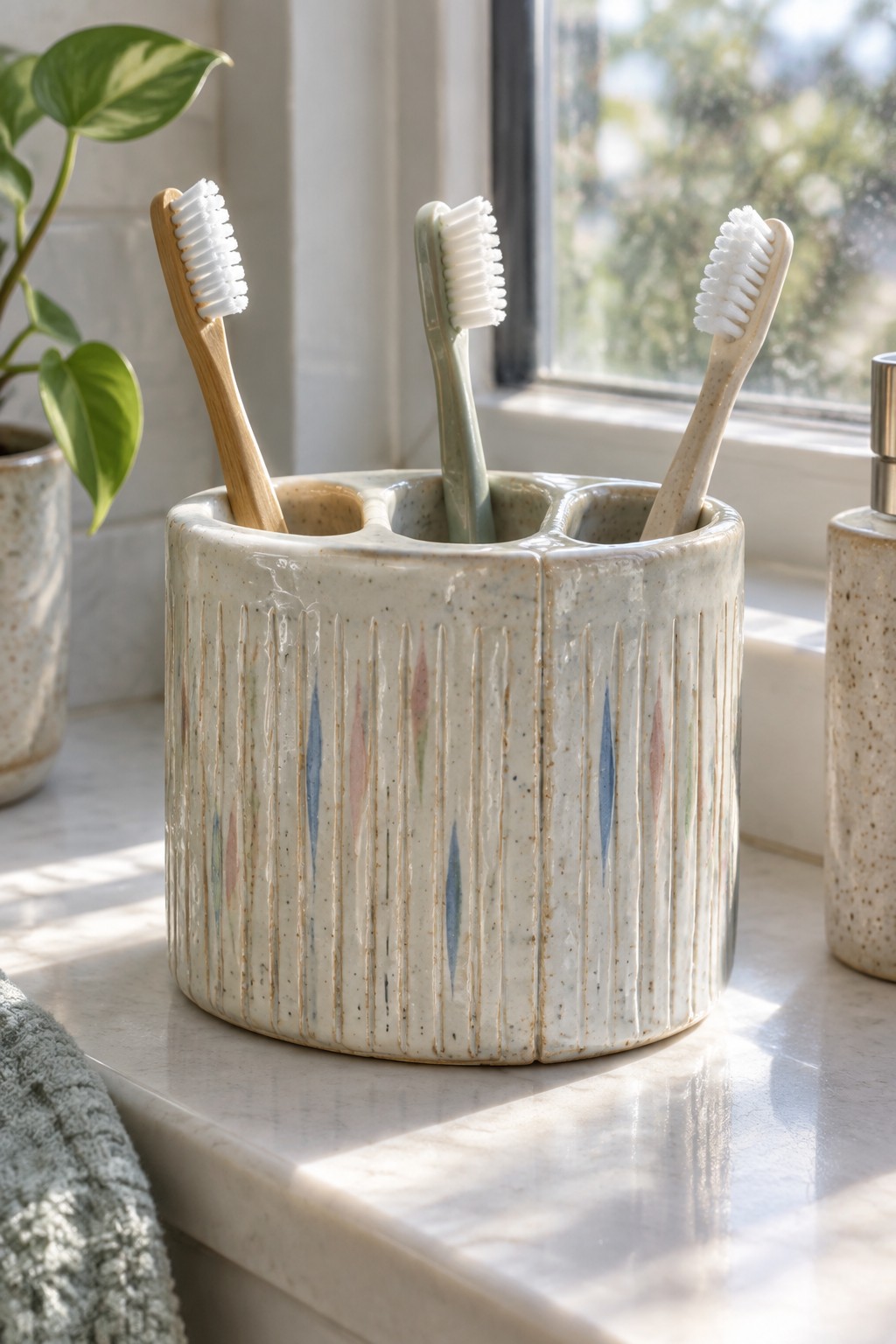
A divided ceramic holder built from slabs gives you a stable, low cylinder that keeps three items upright without tipping. The vertical scoring adds grip texture to the exterior while the inlaid diamond shapes break up the surface with small color accents. This form works cleanly as a bathroom item where toothbrushes or small tools need separation in one compact piece. The speckled clay keeps the look simple so the texture and inlays stay the main focus.
What makes this idea useful is the way the three compartments solve a basic counter clutter problem without extra parts. You can adapt the same slab layout for a desk pen holder or a kitchen utensil caddy by changing the height or diameter. The scored lines are easy to adjust in spacing or depth if you want more or less texture. A version with two slots instead of three would suit smaller spaces or couples who share a sink.
Grooved Slab Soap Dish With Drainage Channels
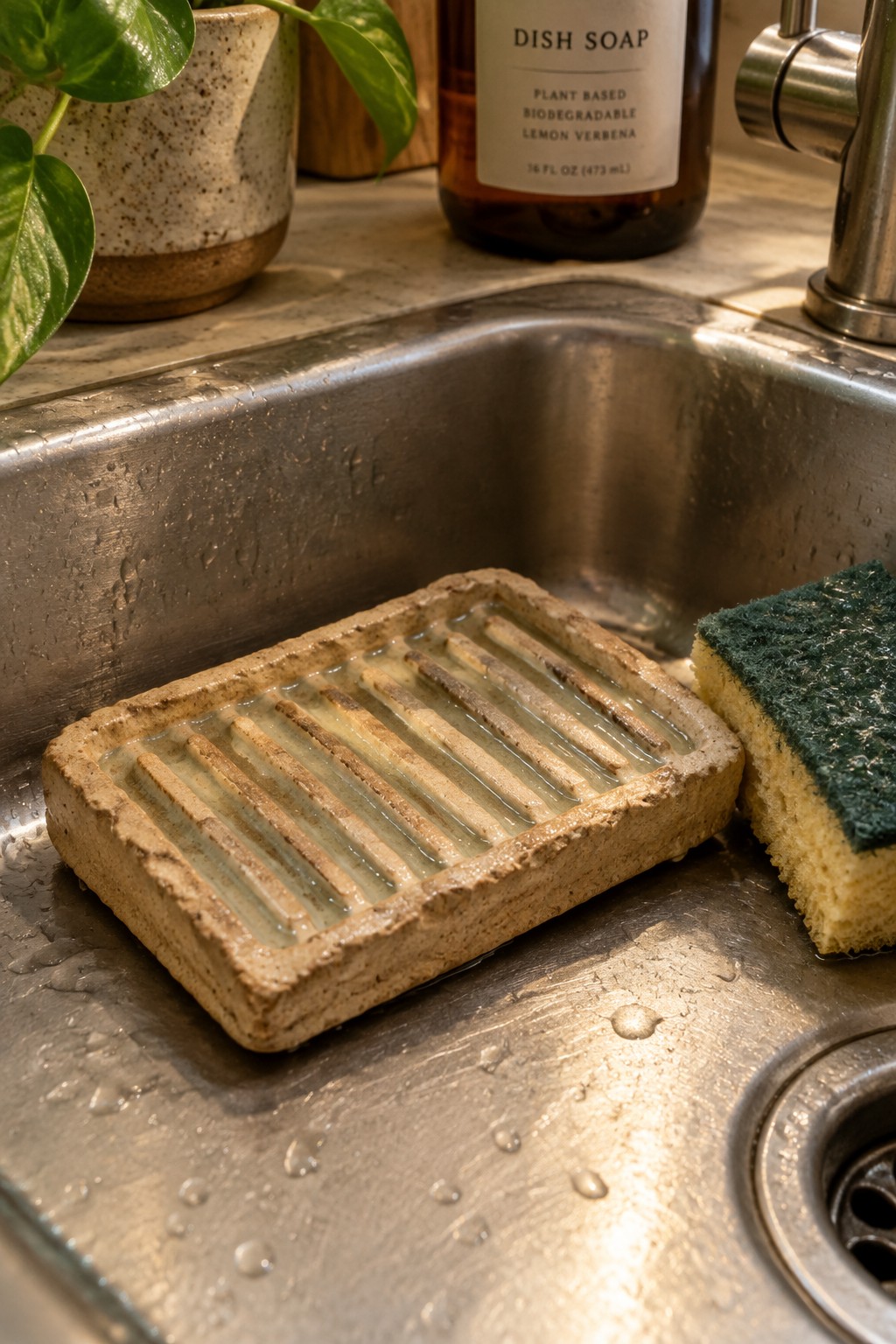
A flat rectangular slab of clay can be turned into a functional soap dish by adding evenly spaced ridges that run the length of the form. The raised lines create shallow channels that let water run off the bar instead of pooling underneath. This keeps the soap drier and longer lasting while the simple slab shape stays easy to build and trim. The matte, earthy surface works in either a kitchen sink area or a bathroom without needing glaze.
What makes this idea useful is how the ridges solve a practical issue without adding extra parts or complicated construction. You can adapt the same layout to a smaller scale for a ring dish or make it wider to hold a sponge beside the faucet. The textured top also gives plain clay enough visual interest to stand on its own, so the piece does not need decoration to look finished. In a kitchen this kind of dish keeps counters drier and pairs directly with bar soap or solid dish soap blocks.
Leaf-Shaped Ceramic Soap Dish
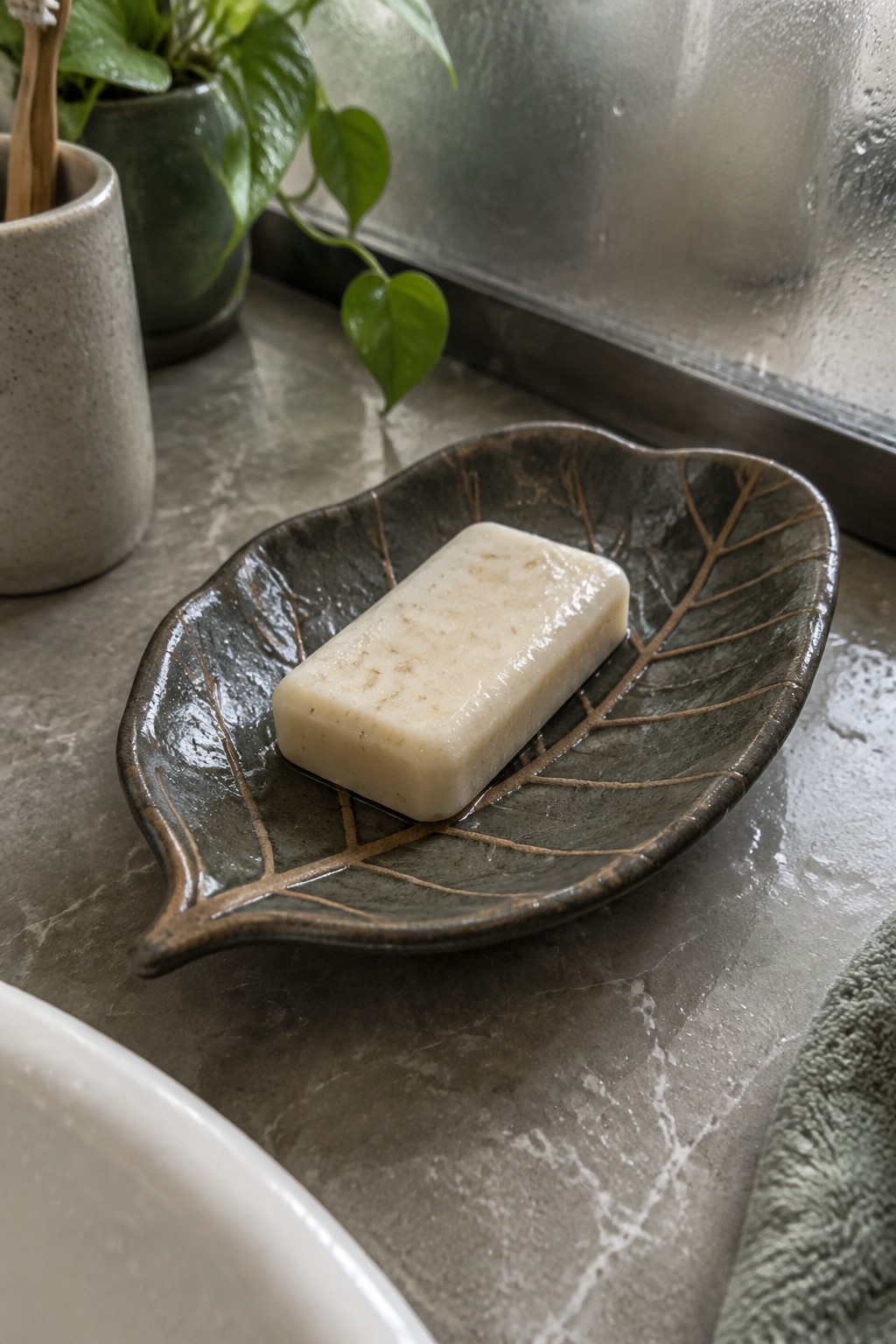
A leaf-shaped ceramic soap dish gives you a simple way to keep bar soap from sitting in water. The form is pressed or slab-built into an elongated leaf with vein lines that catch darker glaze in the grooves. This texture helps the surface stay interesting while the raised edges keep the soap slightly elevated. It works as a bathroom item that stays practical without needing extra parts.
The shape does a lot of the work here because the pointed end and curved sides naturally cradle most bar sizes. You can adapt the same leaf by changing the size for a ring dish or small trinket tray. The vein detail stands out more with a contrasting glaze, so the piece photographs well for sharing. For a quick variation, try pressing a real leaf into the clay before firing to get a similar texture without carving.
Rope-Wrapped Slab Cylinder Crock
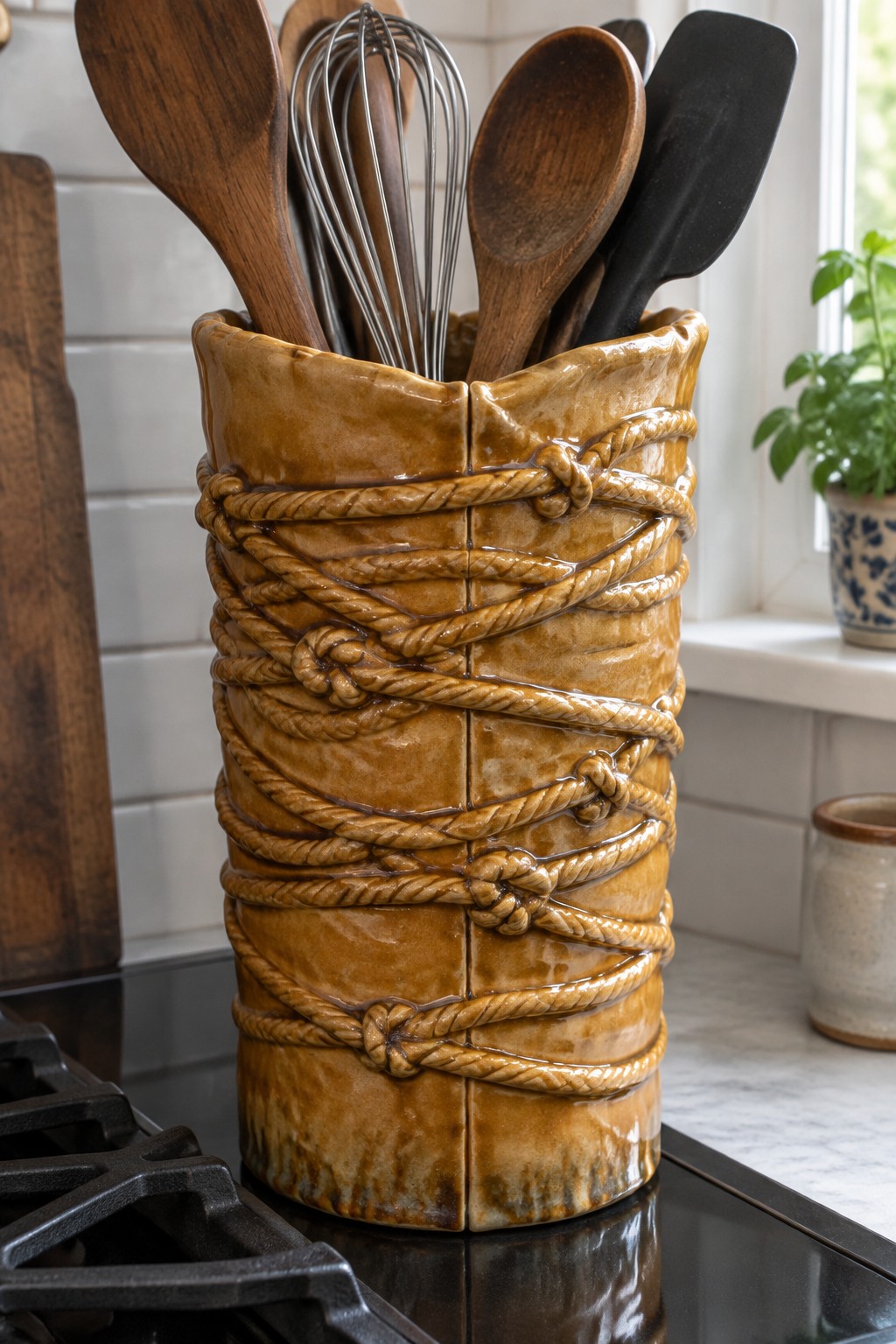
A tall cylinder built from slabs becomes a practical utensil holder when the surface is covered with overlapping rope-shaped coils. The brown glaze pools in the recessed areas between the coils, making the texture stand out without extra carving or stamping. This method keeps the form simple while adding enough surface interest to fit the organic slab style.
The shape does a lot of the work here because the height and open rim let you store a full set of spoons, spatulas, and whisks in one spot on the counter. You can rework the same rope coils on a shorter, wider cylinder to make a planter or a bathroom toothbrush holder. The texture also photographs clearly on Pinterest when the coils vary slightly in thickness and spacing.
Rectangular Slab Incense Holder
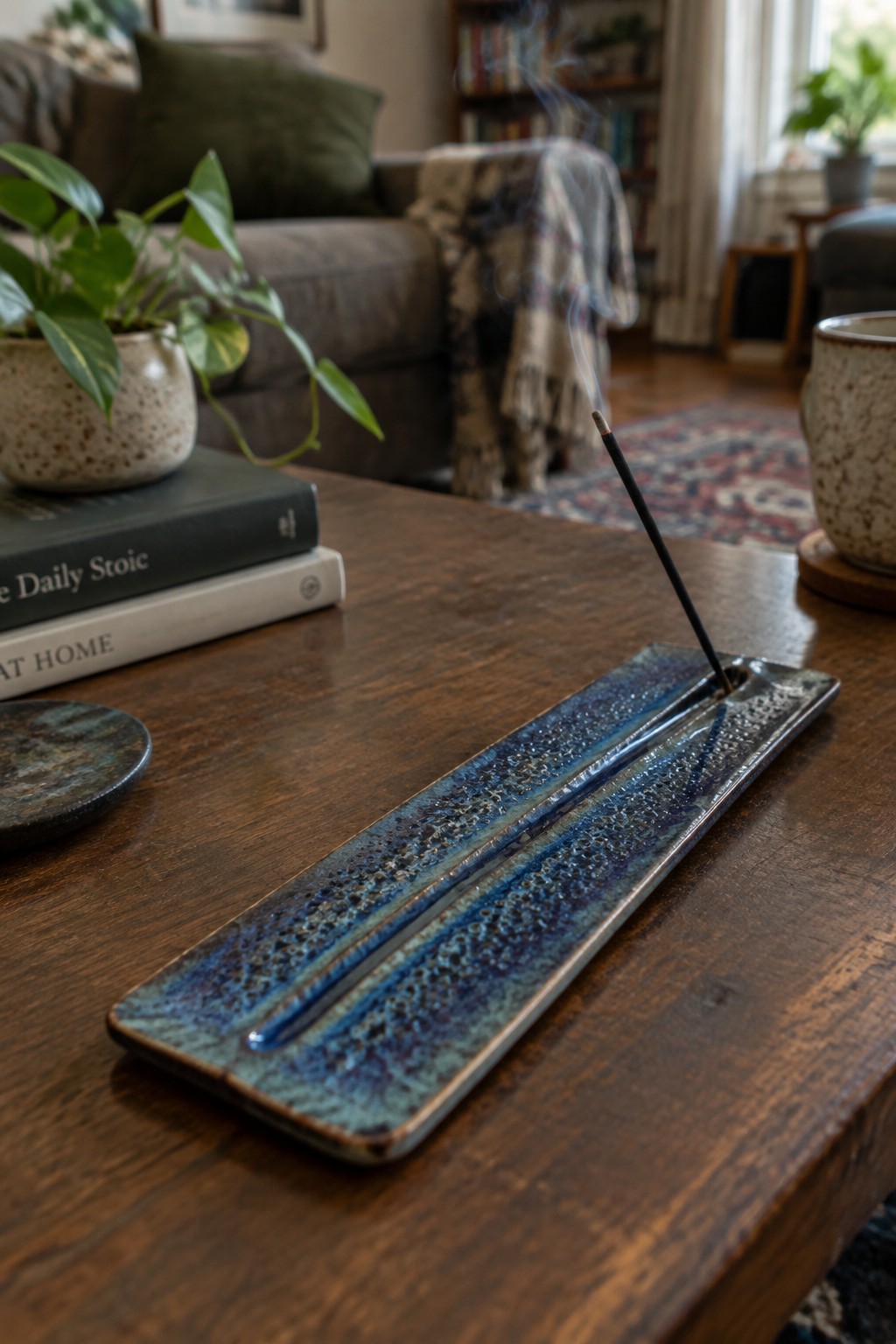
A flat slab of clay forms the base of this incense holder. The maker added a shallow groove running most of the length and left a small hole at one end to catch ash. The surface shows a heavily textured blue-green glaze that breaks over the raised areas and pools in the recesses. This simple slab shape keeps the piece stable on a table while giving the incense stick a clear resting spot.
What makes this idea useful is how the narrow rectangular form takes up little space on a desk or shelf. You could shorten the slab to make a version for a windowsill or stretch it longer for two sticks at once. The textured glaze approach works on almost any flat slab because it adds interest without needing precise carving. For a different project, use the same base shape but add a small raised edge to turn it into a tray for rings or small crystals.
Hanging Planter with Woven Slab Texture

A rectangular slab planter with a pressed woven texture across the front panel creates a sturdy hanging vessel when the sides are folded up and joined at the corners. Leather straps looped through reinforced holes at the top turn the form into a practical container for trailing plants. The mottled green and brown surface keeps the piece grounded in natural tones while the grid texture adds clear visual structure without extra decoration.
The shape works especially well for balcony railings or porch hooks where floor space is limited. You could scale the same slab layout down for a wall-mounted pocket or repeat it in three sizes to hang as a group. The woven texture holds its own even with a simple glaze, which makes the finished piece easy to photograph and share.
Triple Slab Vase with Mixed Textures
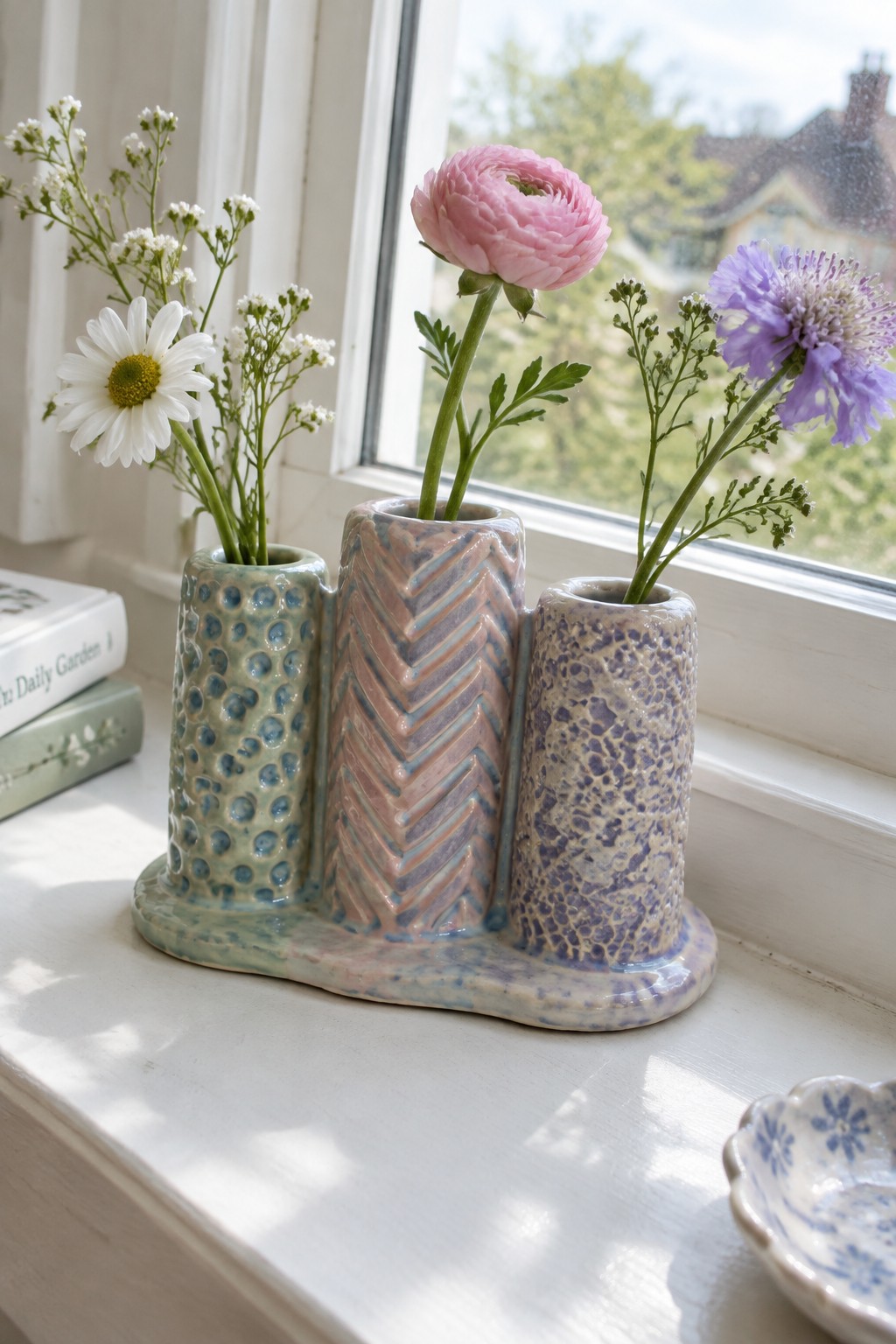
A triple bud vase made from slabs gives you three small cylinders joined on one base so you can display several stems without needing separate pieces. Each section gets a different surface treatment before the forms are attached, like stamping dots into one, carving chevrons into another, and leaving the third with an irregular mottled finish. The soft, blended glazes help the textures show up while keeping the overall piece simple and low.
What makes this idea useful is how the connected shape stays steady on a narrow windowsill or shelf without tipping. You can easily rework the same slab method into a double version or add a fourth cylinder if you want more stems. The varied textures let you try out different tools in one firing, and the finished holder works well for small flower arrangements or as a gift that does not take up much room.
Slab-Built Bird Figurine with Incised Wing Texture
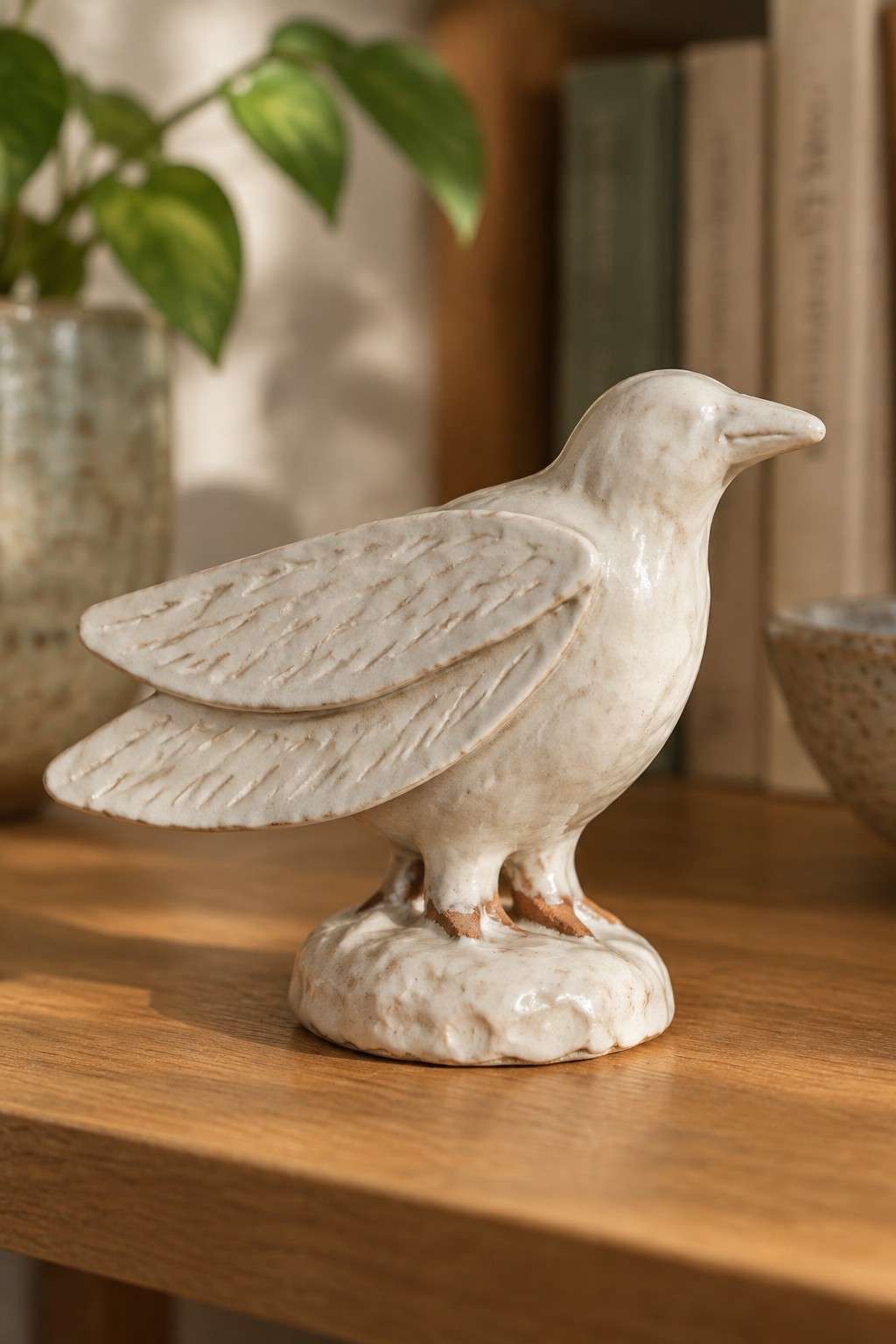
A slab-built bird figurine starts with flat clay sheets cut into simple body and wing shapes, then joined while leather hard. The wings carry the main visual weight through rows of shallow parallel lines pressed or carved into the surface to suggest feathers. A glossy white glaze covers most of the piece and pools slightly in the texture, while the base stays low and rounded for stability on a flat surface.
What makes this idea useful is that the same slab approach lets you change the bird into other simple animals by altering just the wing angle or head shape. The incised lines give enough surface interest that the form still reads clearly even if your joins are a little rough, so it works as shelf decor, a desk accent, or a small gift. You could easily shrink the whole thing for a ring dish version or repeat the wing texture on a slab tray.
Carved Leaf Texture Ceramic Pitcher
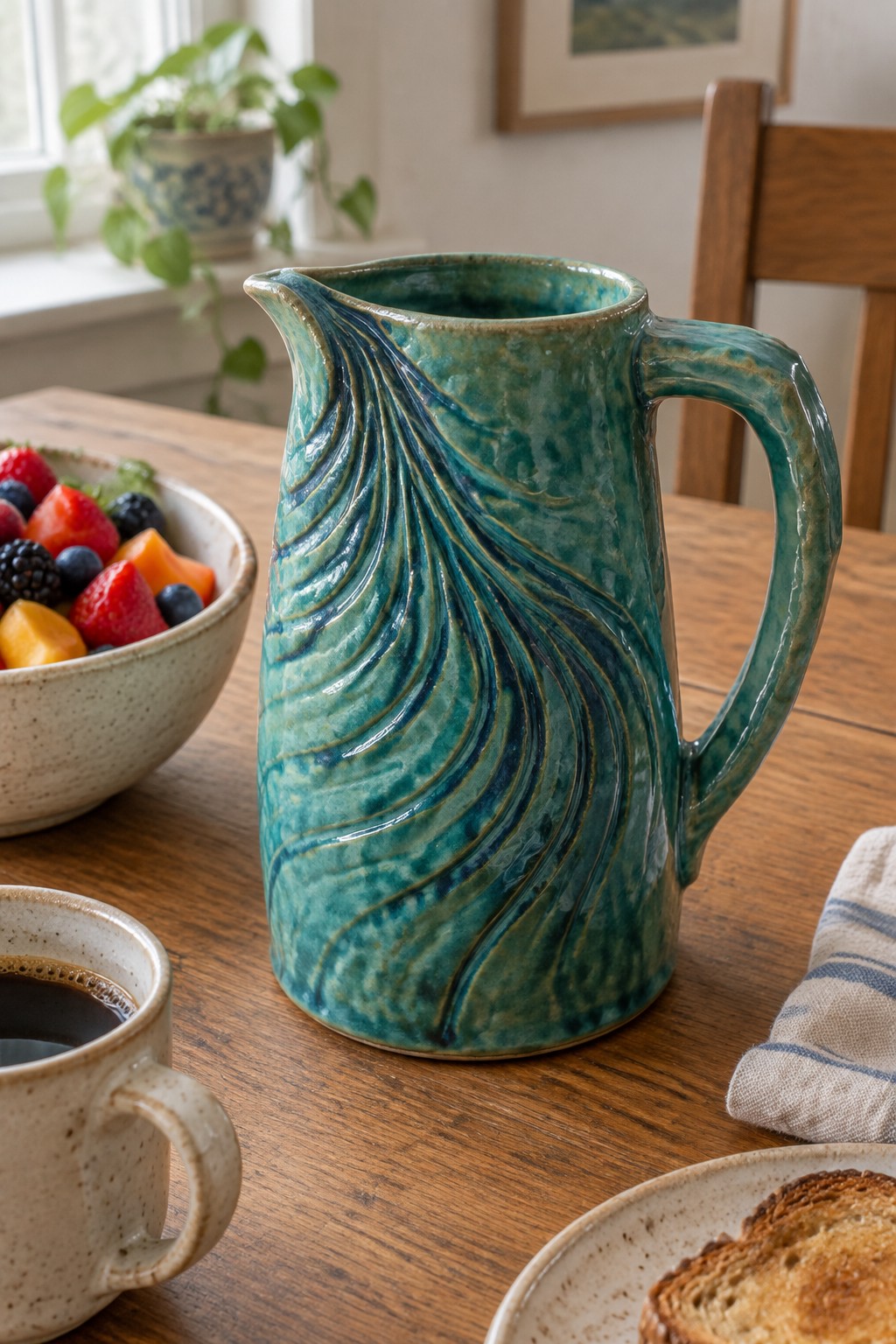
A tall ceramic pitcher with a tapered body and attached handle serves as a practical kitchen piece for pouring milk, cream, or water. The surface carries carved organic lines that fan upward in a layered leaf or feather pattern, formed while the clay was still workable. Layered teal and blue-green glazes pool in the recessed areas to emphasize the raised texture and give the piece a cohesive finish. This treatment fits the organic slab pottery category by adding surface interest to a simple functional form.
What makes this idea useful is how the carved texture gives the pitcher visual weight without changing its basic proportions. You could repeat the same sweeping leaf lines on slab-built trays or small vases by carving them into flat pieces before joining. The pitcher works especially well on a breakfast table where its height and color stand out against neutral dishes. Swapping the teal palette for warmer tones would let the same pattern adapt to different room styles while keeping the carving technique intact.
Frequently Asked Questions
What type of clay works best for creating organic slab pottery forms with textured surfaces?
A low to mid fire stoneware or porcelain blend offers good plasticity for shaping while holding textures well during drying. Start with a clay body that has some grog to reduce cracking risks when adding deep textures, and always wedge it thoroughly before rolling out slabs to about a quarter inch thick for stability in organic shapes.
How do I add texture to slab surfaces without distorting the organic forms?
Press textures into the slabs early using items like leaves, fabric, or carved wooden rollers while the clay is still soft, then support the forms with foam or newspaper during assembly. Work gently from the center outward to avoid stretching, and let the textured slabs firm up slightly before draping or joining them into curves and folds for natural organic results.
What steps help prevent cracking when drying these textured slab forms?
Cover the completed forms loosely with plastic for the first few days to slow drying, then gradually expose them to air while propping any thin edges. Rotate the pieces periodically and avoid direct heat or drafts, as the added textures can create uneven moisture loss that leads to splits along the surface details.
Are there specific joining techniques recommended for the different organic forms?
Use slip made from the same clay body and score both surfaces deeply before pressing edges together, then reinforce seams from the inside with small coils of clay. For more complex shapes among the forms, build in stages so each section can firm up before adding the next, which keeps the overall structure stable and preserves the textured exterior.
How should I approach glazing these textured organic pottery pieces?
Apply a thin base layer of glaze with a soft brush to reach into the textures without pooling, then wipe excess from high areas to highlight the surface details after firing. Test glazes on sample tiles first since textured surfaces can cause colors to shift or run differently than on smooth clay, and consider matte finishes to emphasize the organic, tactile quality.

Pottery Path is my cozy corner of the internet where I share clay ideas, pottery inspiration, and simple projects you can recreate at home. I love exploring everything from air dry clay to handbuilt pottery to cute minis that brighten your day. My goal is to make clay crafting feel easy, fun, and welcoming for anyone who wants to try it.
You will find beginner friendly tutorials, creative pottery painting ideas, and lots of warm inspiration for slow and happy crafting. If you enjoy hands on creativity, this space will feel like home.