I started using templates with slab pottery a couple years ago because it helped me get more consistent results without measuring everything from scratch each time.
They make it simple to repeat a shape so I can make a few pieces that actually match if I want a set.
Most of the ideas here are things I have tried in my own studio with a few adjustments along the way.
I focused on clean forms that feel current but still practical for daily use.
Square Slab Mug Using a Four-Piece Template

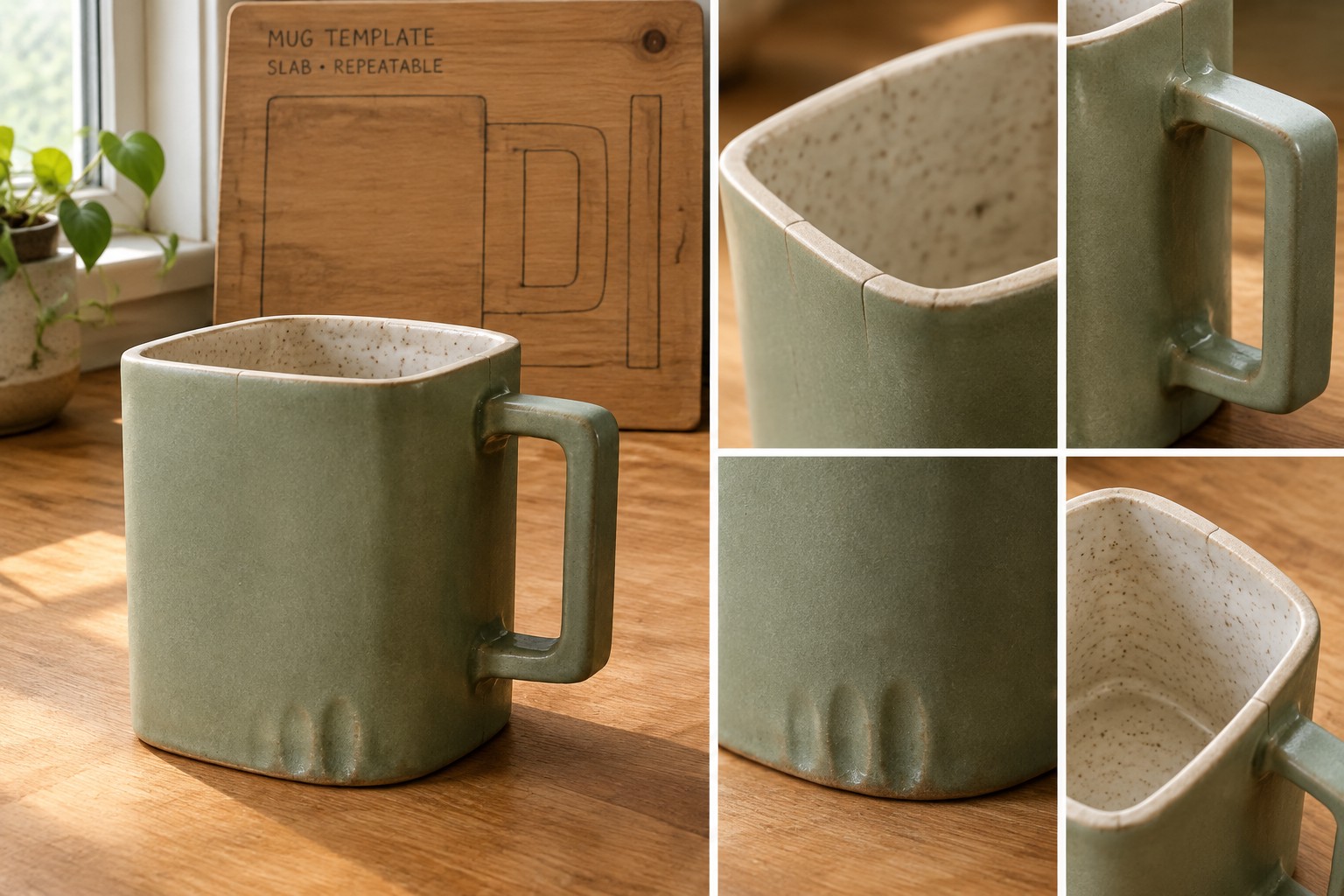
A square mug assembled from four flat clay slabs creates a clean geometric form that feels more structured than wheel-thrown work. The reusable template lets you cut matching sides quickly, so the shape stays consistent across multiple pieces. A muted green glaze covers the exterior while the interior stays light with brown speckles, keeping the surface simple and letting the angles show.
The shape does a lot of the work here by giving you a mug that sits flat and stable on a desk or shelf without rolling. You can adapt the same template for taller versions, skip the handle to make a small container, or change the glaze to test different color blocks on the sides. This style works especially well for gifts because the straight lines and solid color read as modern rather than handmade in a rustic way.
Abstract Color Block Slab Plates
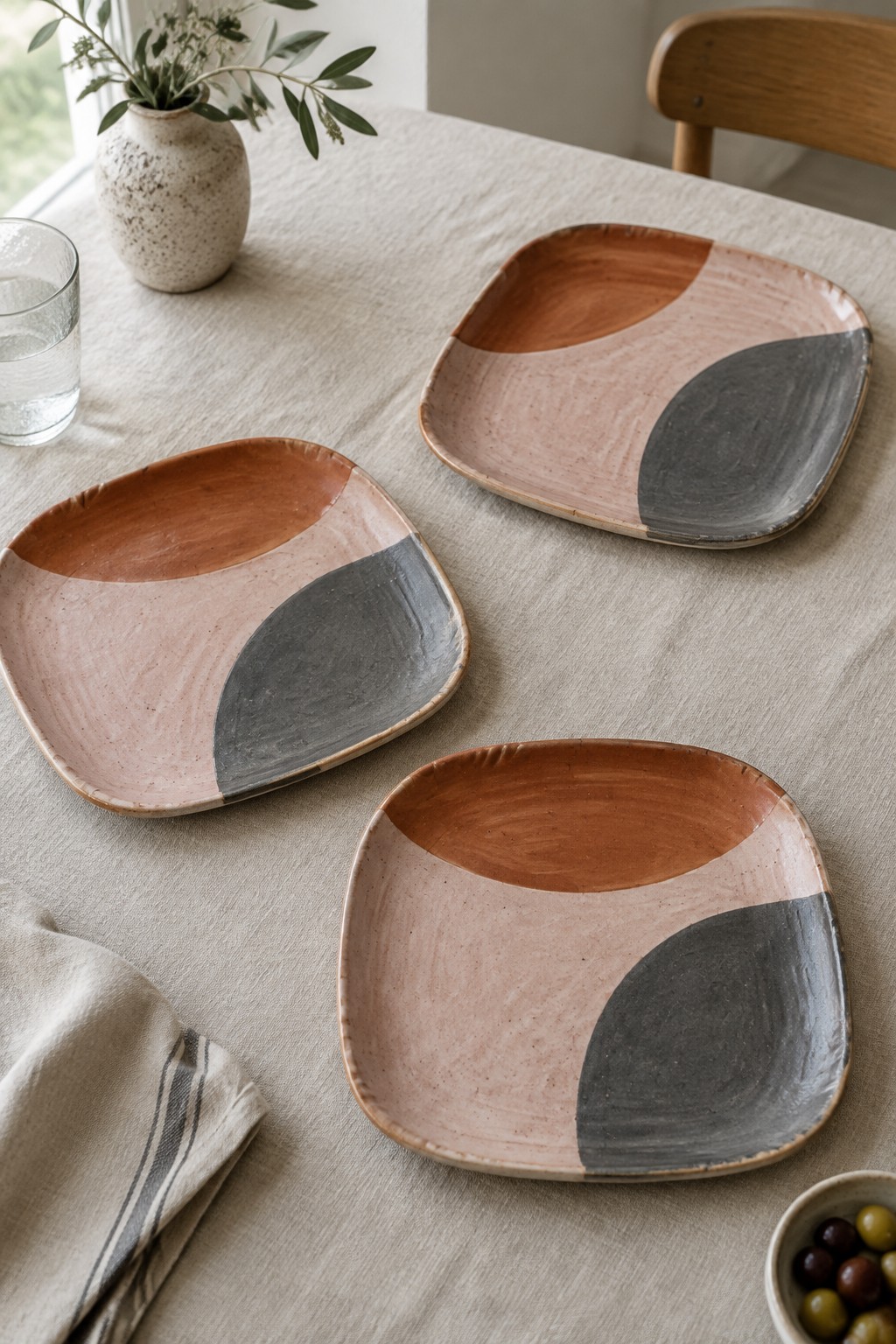
These square plates are built from clay slabs cut with a simple template so the overall shape stays consistent across a set. Each plate carries three curved color sections in terracotta, dusty pink, and gray that meet along soft arcs, with the matte speckled surface left unglazed in places to show the clay texture. The slightly softened corners and organic edges keep the form casual while the color blocking gives the design structure. This style fits the kitchenware or serving tray category and works especially well when you want matching pieces without making them identical.
The shape does a lot of the work here because the square format stacks neatly and leaves room for the curves to stand out without crowding. You could reuse the same template to make smaller dishes or coasters by shrinking the color blocks, or swap the gray for a deeper blue if you want a different palette. In a kitchen these plates handle cheese boards or snacks without looking too precious, and the painted design is simple enough to repeat quickly when making gifts. The template approach also makes it easy to produce a set of six or eight in one session while still varying the color placement on each one.
Slab Planter with Repeating Leaf Template
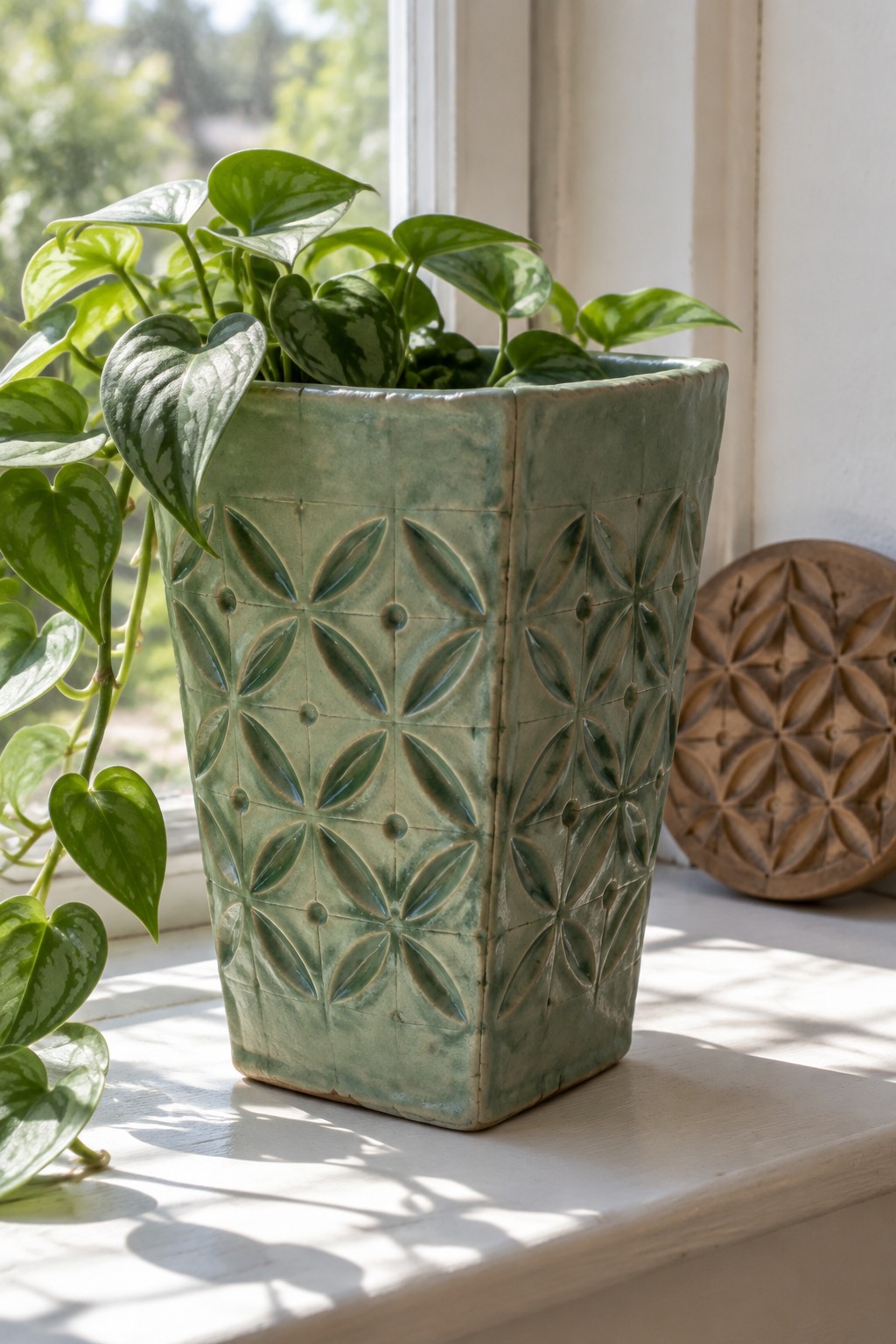
A square ceramic planter built from slabs uses a single repeatable template to create a grid of leaf-shaped impressions across the surface. The template produces consistent four-leaf clusters separated by small dots, which gives the flat sides a structured pattern without requiring freehand carving on every piece. A muted green glaze settles into the recessed areas to emphasize the texture while keeping the overall form simple and modern. This type of project fits the planter category because the straight sides and open top work well for holding plants while showing off the surface design.
What makes this idea useful is that the same template can be applied to different slab forms like trays, boxes, or taller vases without changing the core technique. The pattern scales easily if you adjust the size of the leaf stamp or the spacing between repeats. In a windowsill or shelf setting, the geometric texture stands out next to smooth pots and gives the plant a defined base. You could simplify it further by using just one row of the motif near the rim or adapt the template for a round cylinder by curving the slab before assembly.
Striped Slab Tiles for a Hanging Wall Panel
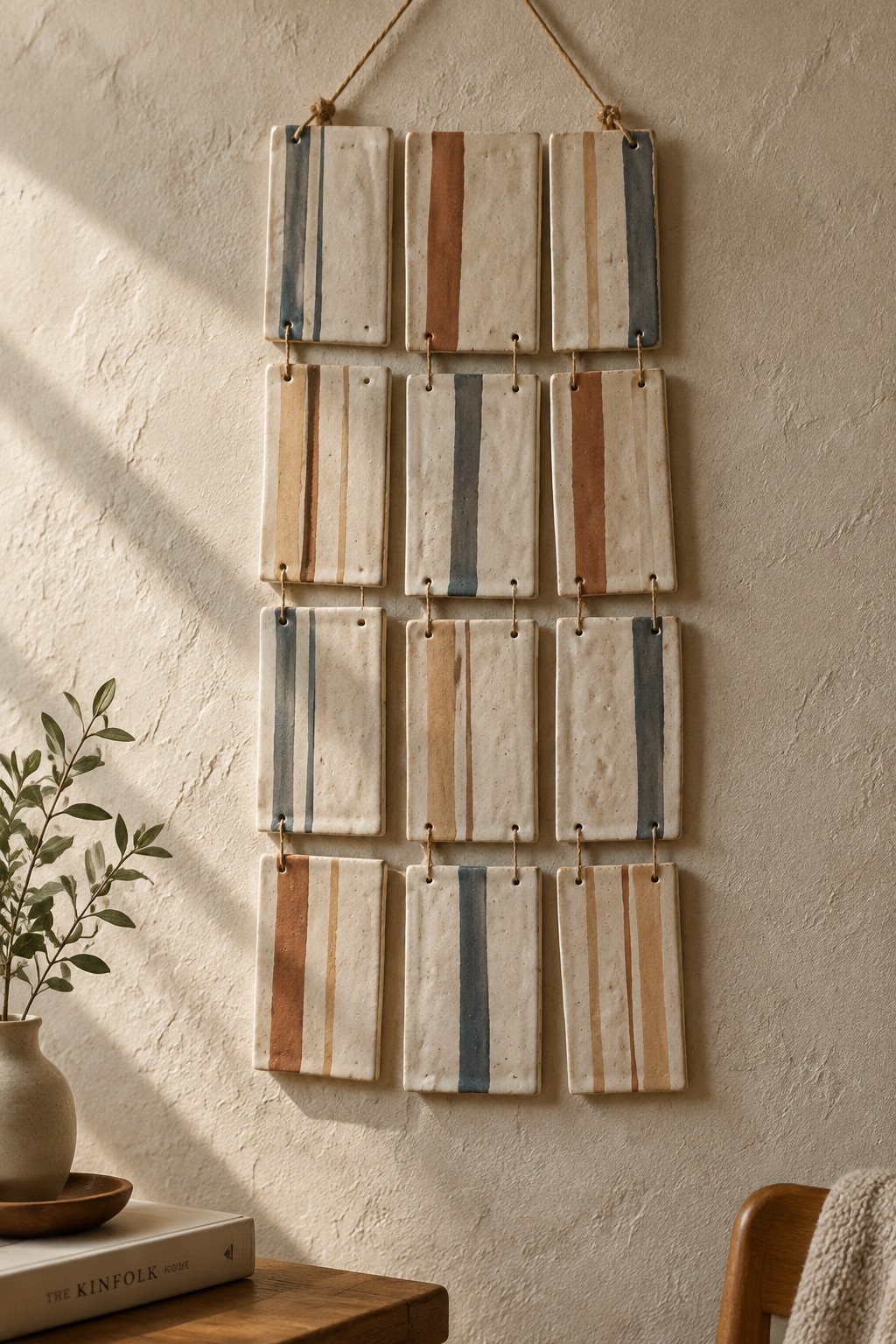
Cut a simple rectangle template from cardstock and use it to produce a set of matching clay slabs. Brush or sponge vertical stripes in two or three muted tones across each tile while the clay is still leather-hard, then punch two small holes near the top edge of every piece. Once fired, run cord through the holes to connect the tiles into a grid that hangs flat against the wall. The result is a repeatable decor piece built entirely from basic slab construction and limited color repeats.
What makes this idea useful is that the same template works for every tile, so sizing stays consistent no matter how many you make. You can swap the stripe colors or reduce the grid to six tiles if you want a smaller version for a narrow wall. The vertical lines keep the design graphic without requiring complex carving or multiple glazes. For a gift, something like this packs flat and still reads as intentional handmade work.
Faceted Slab Bowl with Radial Brushwork
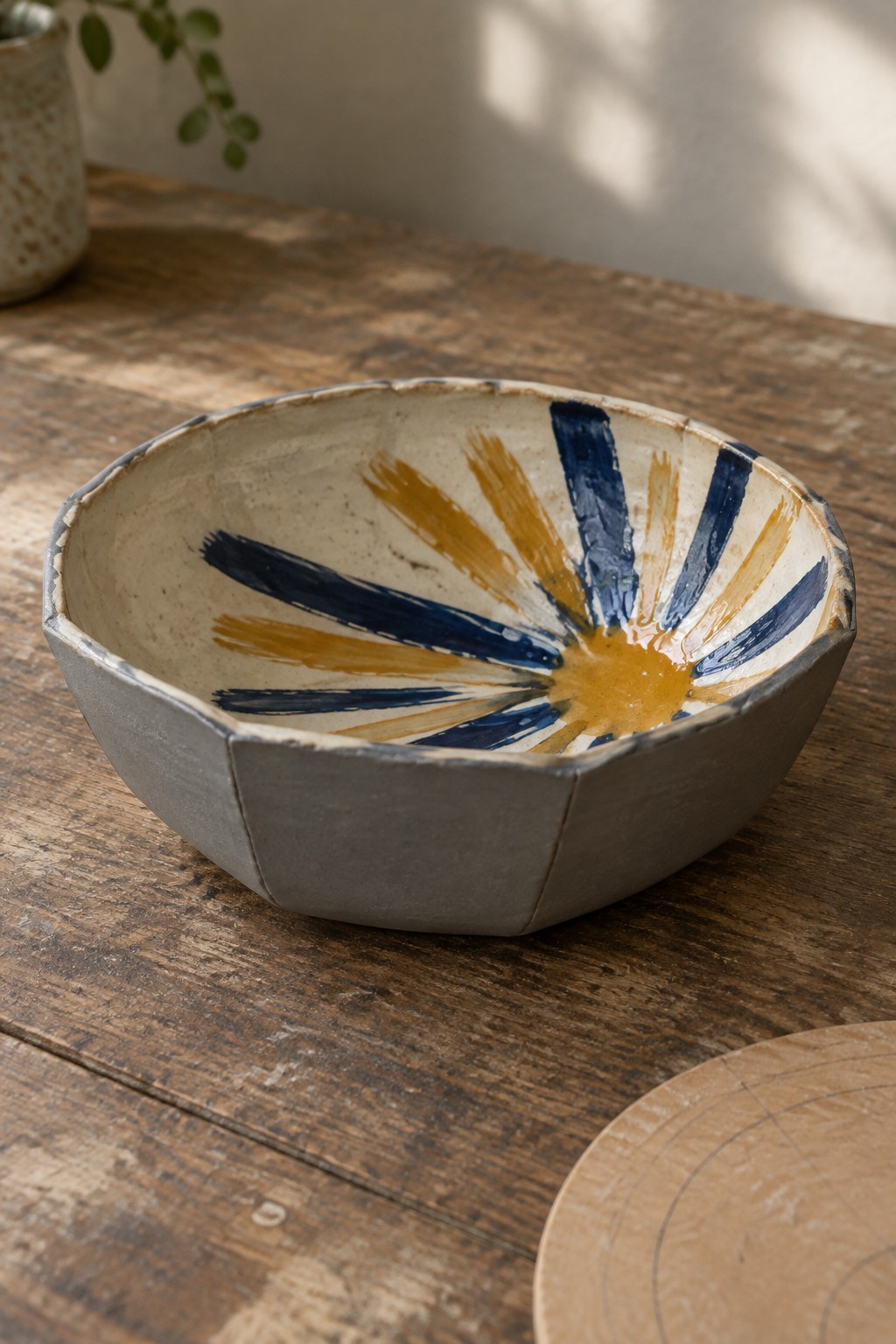
A slab template cut into a polygon produces the angled sides and flat base of this bowl, giving it a clean geometric profile that stands out from round wheel-thrown forms. Inside, simple brushstrokes in blue and ochre radiate from the center across the light clay, creating a bold pattern that stays easy to repeat. The same template can be used to make several bowls at once, with the painted rays added freehand after the slab is joined.
The flat facets keep the bowl stable on a table and give it enough presence to work as a serving piece or desk catch-all. You can scale the template down for small ring dishes or swap the brush colors to fit different rooms. The radiating strokes also translate well to plates or trays if you want to build a small matching set without learning new techniques.
Slab Spoon Rest with Wavy Lines

A slab-built spoon rest gives you a flat, elongated surface that keeps wooden utensils from touching the counter during cooking. The basic shape comes from rolling out a slab, cutting an organic oval with slightly irregular edges, and adding a shallow curve so spoons sit securely. Blue lines painted in repeating wavy patterns across the surface create visual interest while staying simple enough to repeat with a template. This approach fits the kitchen item category and works especially well when you want something functional that still looks intentional next to a sink or stove.
The shape does a lot of the work here because the length easily holds most spoons or spatulas without taking up much counter space. You can adapt the wavy line pattern by changing the spacing, color, or number of stripes to match different kitchen styles or to create a matching set of small trays. This kind of piece makes a practical gift since it solves a daily problem and takes up little room in a cabinet. The same template can be adjusted into a shorter version for a soap dish or scaled down further for a desk organizer.
Slab-Built Cube Tea Light Holders
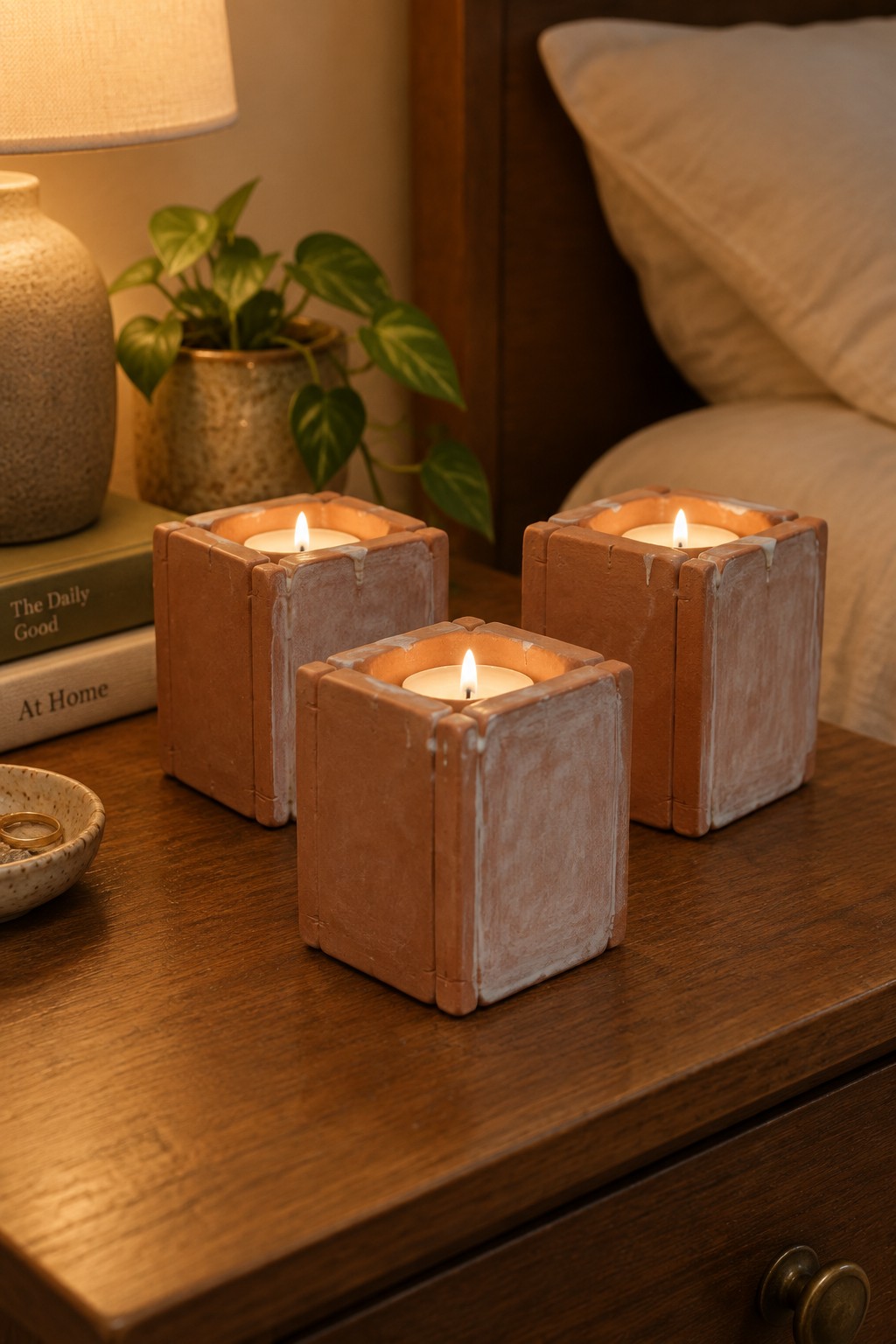
These are square ceramic holders built from flat clay slabs joined at the seams to form open-top cubes sized for standard tea lights. The construction uses a repeatable template so each holder comes out the same size and shape, with the clay left in its natural terracotta tone and a light slip wiped along the joints for contrast. The thick walls and simple geometry keep the focus on the form rather than surface decoration. This fits the candle piece category and works especially well when several holders are grouped together.
The cube shape stays stable on a table and lets you mix different sizes without the arrangement looking scattered. You can use the same template to make shorter versions for a tray or taller ones that hold a single pillar candle. Because the sides are flat, it is easy to add a small notch for a wick or change the surface texture with a rib tool before assembly. The neutral clay color also photographs cleanly against wood or linen, which helps the idea perform well when shared online.
Dot-Painted Ring Dish from a Circle Template
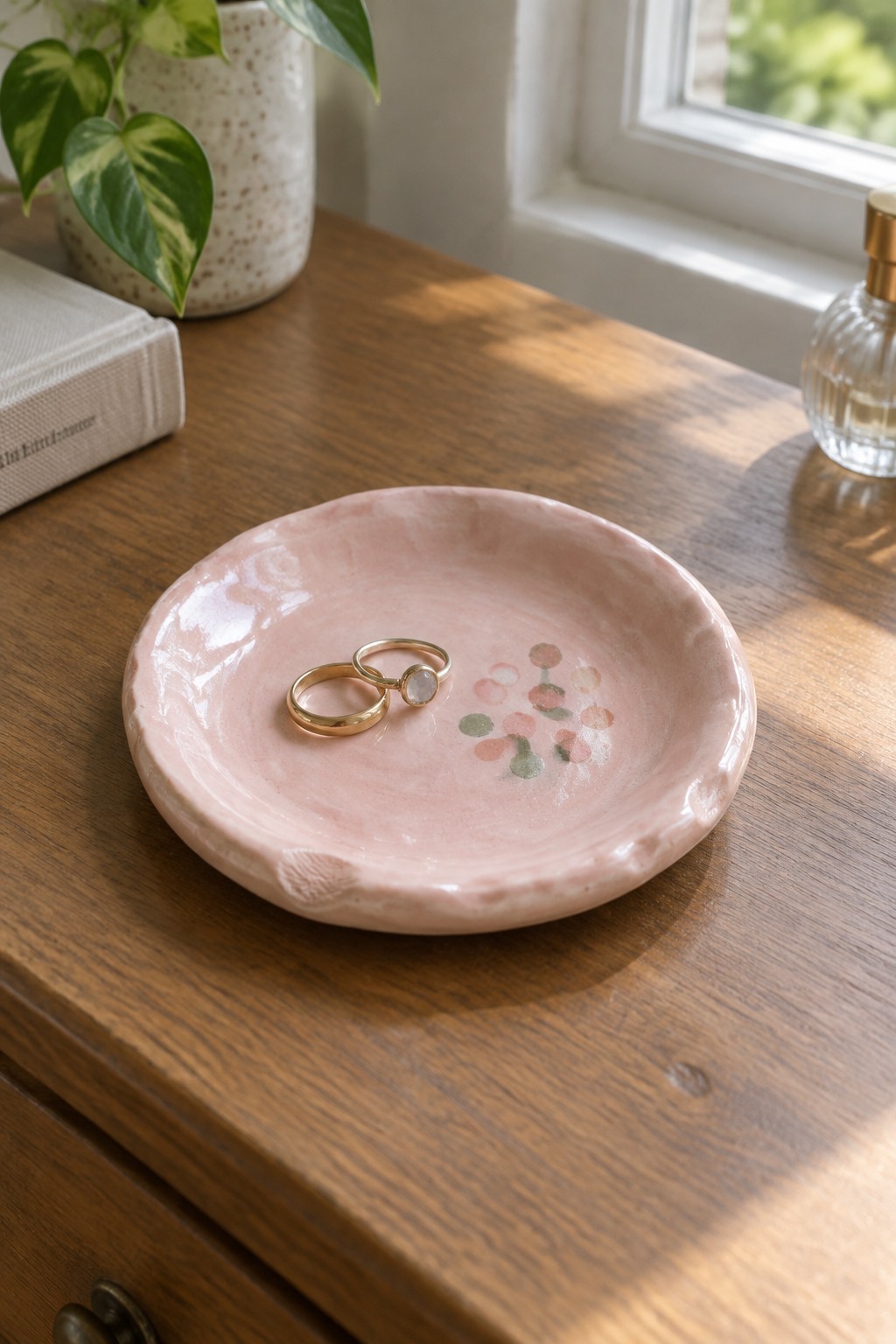
A small round dish formed from a rolled slab makes a practical spot for rings and other small jewelry. The form stays simple with a softly curved edge, while the pink glaze provides a clean base for a scattered pattern of painted dots in muted green, pink, and beige tones. Pressing a textured tool into the rim adds a quick, repeatable detail that gives the piece more surface interest without extra steps.
What makes this idea useful is how the same circle template can be cut multiple times to produce a matching set in different glaze colors. The dot pattern adapts easily by switching paint colors or changing the spacing to suit different palettes. This size works well on a nightstand or dresser for daily rings and earrings, and the same shape can be made slightly deeper to hold soap or loose change instead.
Three-Slot Toothbrush Holder from a Slab Template
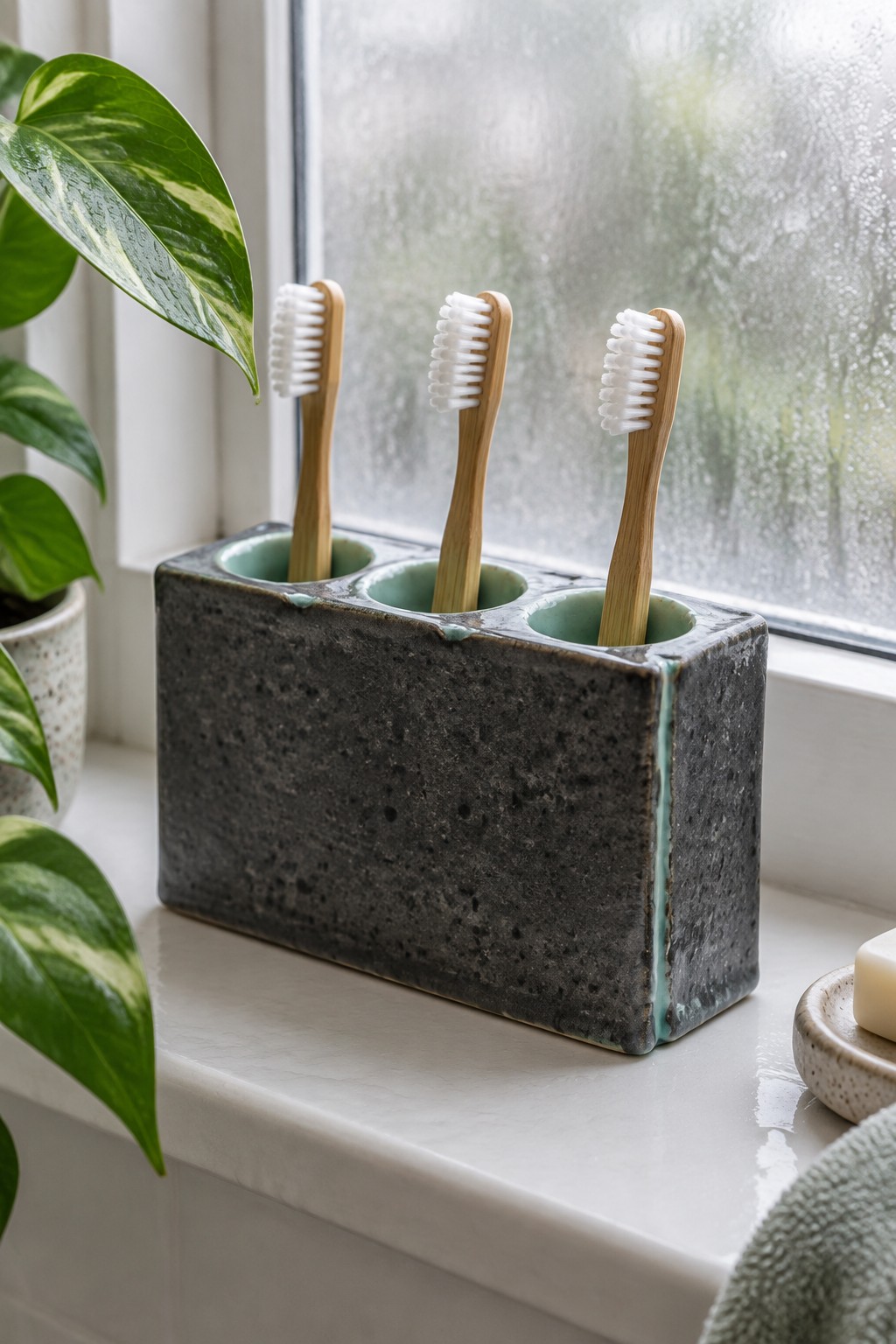
A rectangular slab form with three vertical cutouts creates a compact holder that keeps toothbrushes upright and separated on a bathroom surface. The thick slab walls give the piece weight and stability while the rounded openings fit standard brush handles without extra fittings. Dark textured glaze on the outside paired with a lighter interior makes the holder easy to clean and visually distinct from plastic or resin versions.
What makes this idea useful is how the same rectangle template can be adjusted for two, four, or five slots depending on household size. The shape works equally well as a desk organizer for pens or a small kitchen caddy for cooking tools. Changing only the glaze or adding a simple foot ring lets you produce matching sets without redesigning the template each time.
Grooved Slab Soap Dish
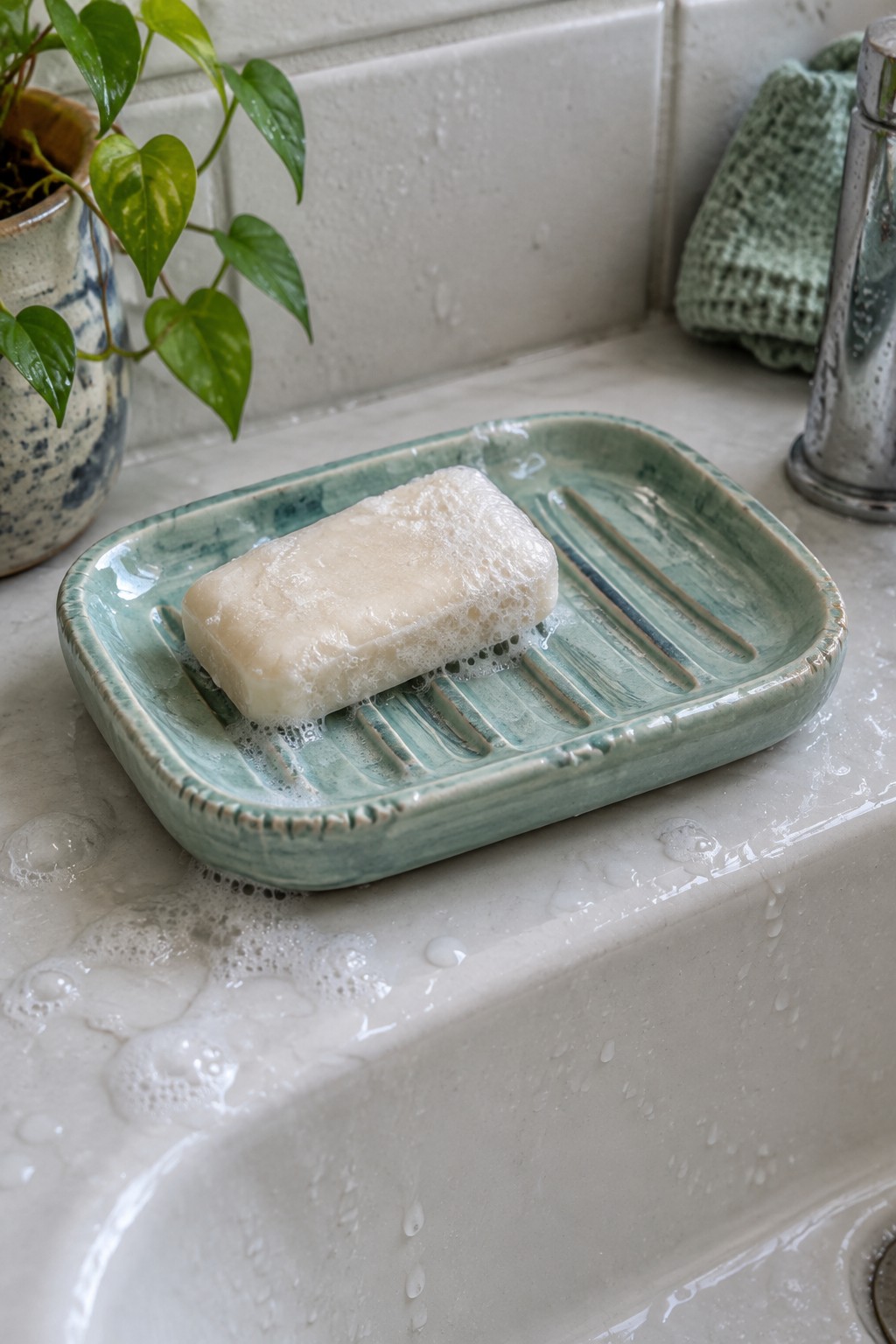
A rectangular slab tray works as a bathroom soap dish when you cut or impress parallel drainage grooves across the base. The grooves keep the bar elevated so water runs off instead of pooling underneath. A single soft green glaze unifies the piece while the simple rectangle keeps the focus on the functional lines. This category of project turns a basic slab template into a practical bathroom item that can be repeated quickly.
The shape does a lot of the work here because the same rectangle and groove pattern can be scaled up for a sponge tray or scaled down for a small ring dish. You can swap the glaze color to match different tile schemes or leave the grooves unglazed for extra grip. A piece like this stands out on Pinterest because it solves a common problem without extra parts or hardware. For gifts, batch out several in different glaze combinations using the same template.
Split-Glaze Faceted Slab Vase

This slab-built vase is constructed from flat templates cut into irregular polygons that join at sharp angles to form a tall, faceted vessel. One vertical half of the finished piece is left in its natural light clay while the opposite half is covered in a deep blue glaze, creating a strong two-tone effect across the geometric planes. The design works because the flat facets reflect light differently on each side and the split glaze treatment requires no additional carving or painting once the form is assembled.
What makes this idea useful is that the same templates can be adjusted in height or width to produce matching smaller vessels for desk use or wider versions for cut flowers. The two-tone split lets you rotate the piece to change the look without making a new object. You could also apply the same template set to build a matching tray or low bowl using the same angle cuts and glaze division.
Slab-Built Salt Cellars with Moon Detail
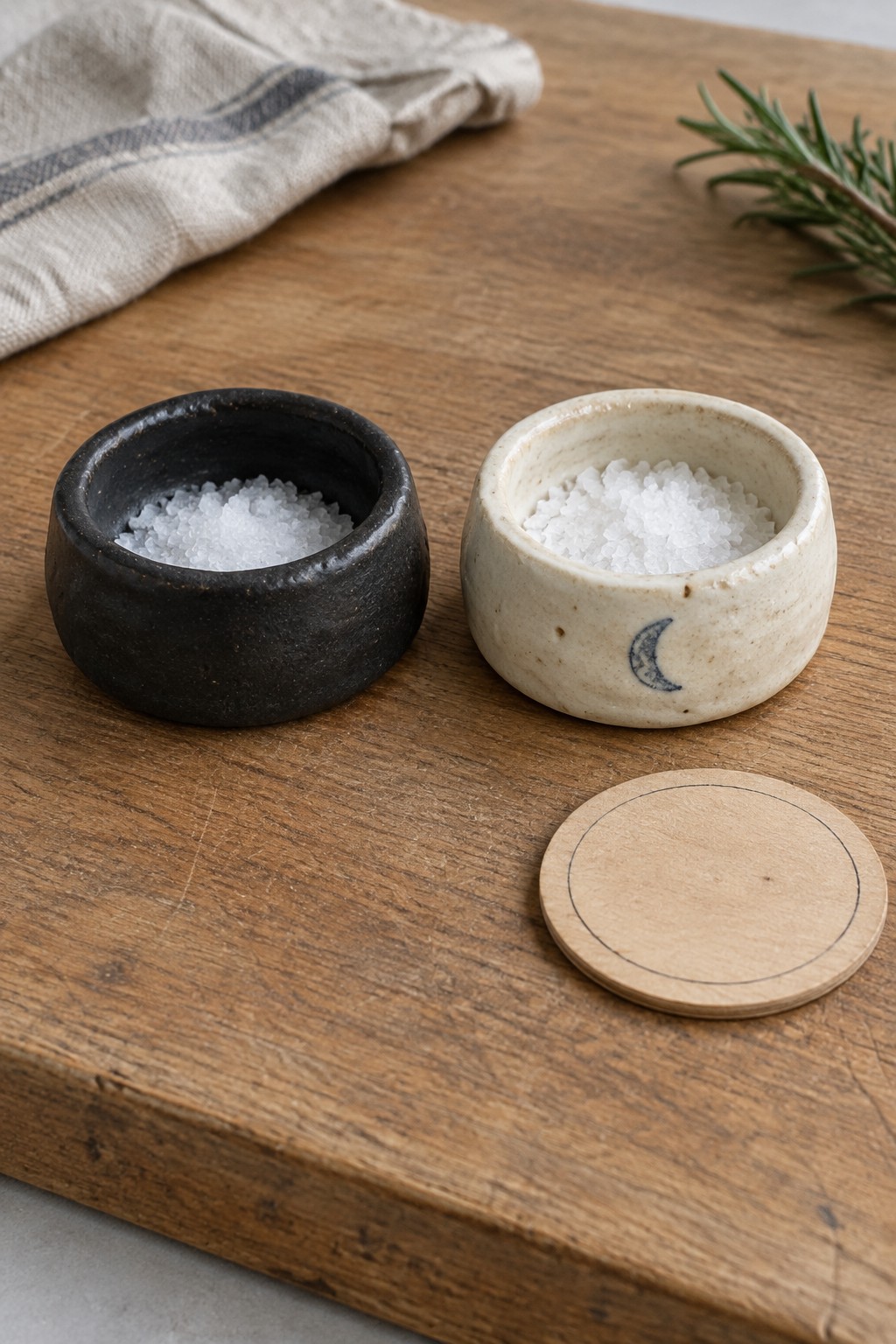
Small ceramic salt cellars built from basic round templates keep salt or spices within reach on a counter. The forms stay simple and consistent, with one version finished in a dark matte glaze and the other left light with a single crescent moon added in blue. A wooden lid cut to the same diameter uses the same moon outline so the set stays coordinated without extra decoration.
What makes this idea useful is the small scale that lets you produce several pieces quickly from one template. The moon motif can be swapped for other stamps or skipped entirely if you want a plain set instead. In a kitchen these cellars sit neatly beside the stove or on a table, and the same shape adapts easily to spice bowls or tiny ring dishes. For gifts, make a few at once and vary only the surface color or motif to keep each one distinct.
Pastel Striped Yarn Bowl with Notch
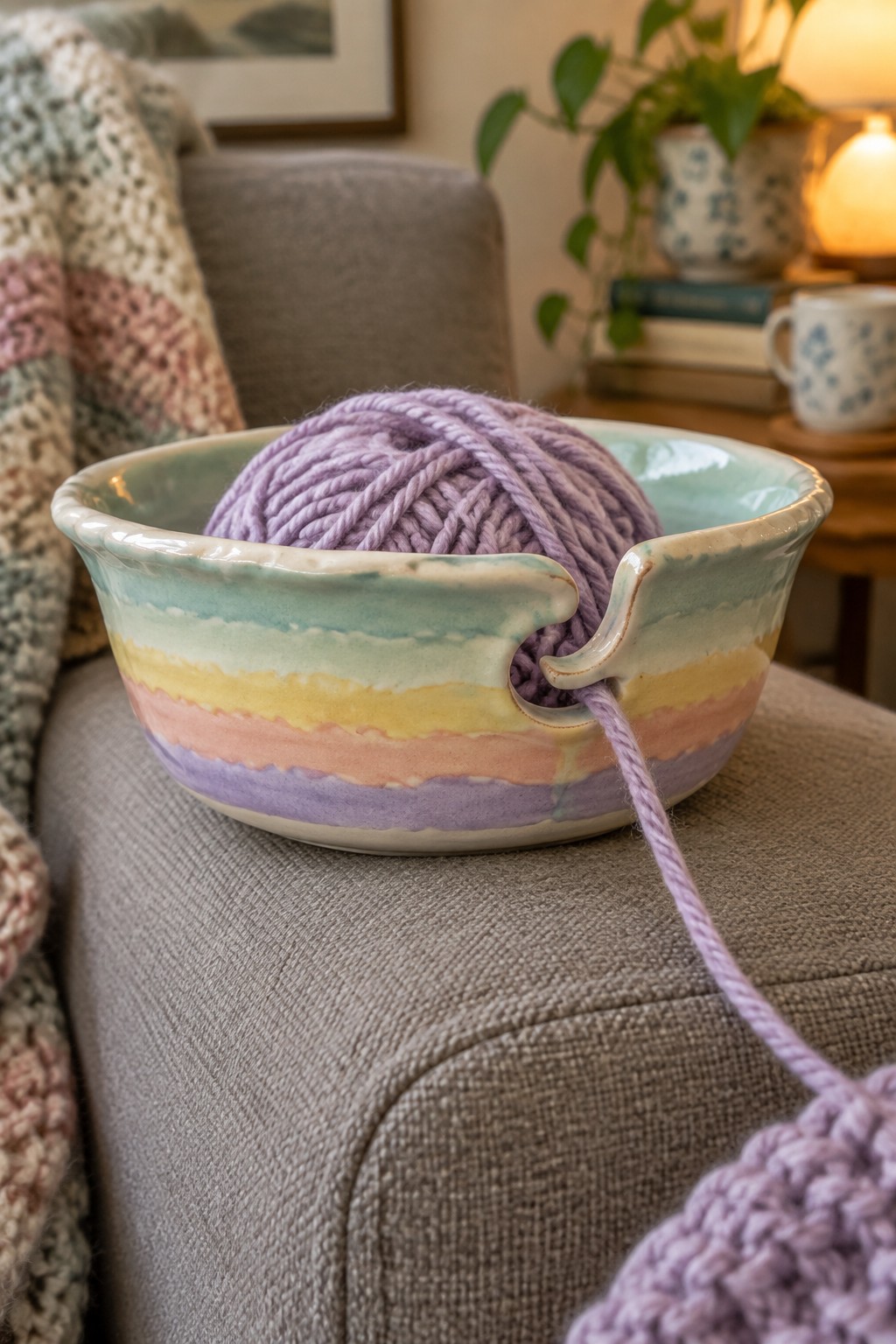
A yarn bowl made in ceramics holds a ball of yarn while keeping the strand accessible during knitting or crochet work. The form includes a wide rim with a cut notch that guides the yarn outward without tangling. Horizontal bands of soft glaze in purple, teal, yellow, orange, and pink create even stripes around the exterior. This project falls into the holder category and serves as a dedicated craft tool rather than general decor.
What makes this idea useful is the notch, which adds function without extra parts or hardware. You could repeat the same striped glaze layout on bowls of different diameters using slab templates for the walls and base. In a craft room, this kind of piece keeps supplies contained on a table or shelf. The same template set could be adjusted to make a smaller version for embroidery floss or a larger one for bulky yarns.
Slab-Built Animal Figurines with Painted Color Blocks

Cut simple animal shapes from clay slabs using templates to create flat, freestanding figurines like these cat, whale, and bird forms. Apply bold sections of color with minimal line details such as stripes or spots, then finish with a clear glaze for a smooth surface. The approach works well for decor objects because the flat slab method keeps the pieces lightweight and easy to balance on a shelf without extra supports. Repeatable templates let you produce matching sets quickly while varying the painted motifs.
The shape does a lot of the work here since the side-view silhouettes read clearly even at small sizes. You could scale the same whale template up for a longer tray or flatten the bird base slightly to make a ring dish. This style stands out for mantel or desk styling because the bright color blocks catch light without needing intricate carving. For a gift set, make three different animals from the same template family and change only the glaze colors to keep production simple.
Two-Tone Slab Utensil Holder
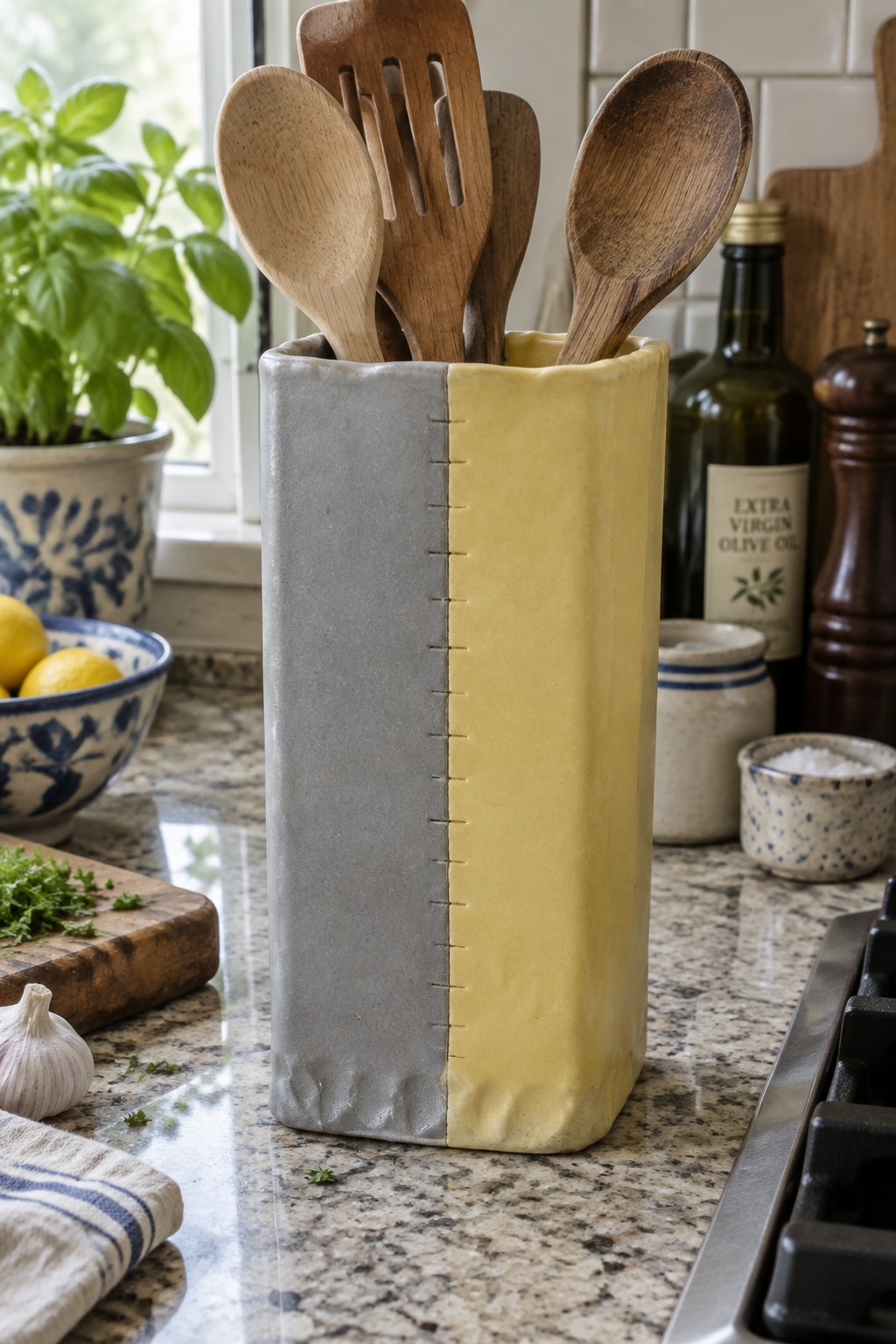
A slab-built rectangular holder makes a practical kitchen piece for storing spoons, spatulas, and other tools upright. The vertical split between gray and yellow sections creates a simple color block that keeps the form clean while still giving it visual weight. The dashed seam detail down the center adds a subtle line that breaks up the surface without extra carving or texture. This category of kitchen holder works because the shape stays functional while the color split turns it into something worth displaying on the counter.
What makes this idea useful is how the two-tone split can be swapped to match whatever colors are already in the kitchen. The tall rectangular form takes up little space but keeps tools within reach during cooking. You could reuse the same template for a shorter version that holds brushes near the sink or change the seam line into a different pattern for a desk organizer. The stitched detail is easy to adjust or skip if you want a faster slab project.
Hexagonal Slab Trays with Linear Motifs
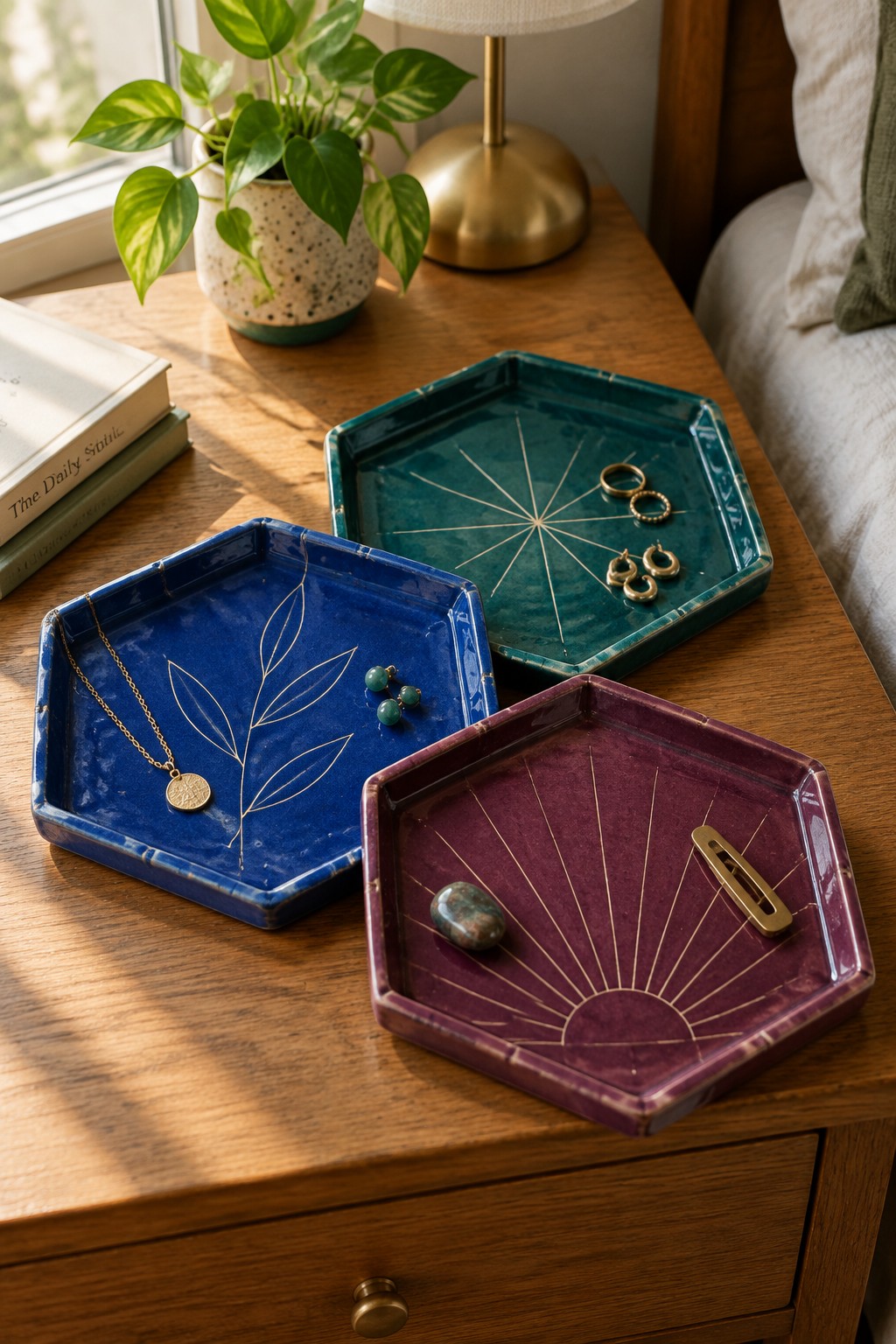
Hexagonal trays built from slab templates give you a flat, stable surface that works well for holding rings, necklaces, or small daily items. The shape comes from cutting around a repeatable hexagon pattern, then adding simple line designs like radiating spokes or leaf outlines that are easy to score or paint before the final glaze. Solid color glazes in deep blue, teal, or plum let the gold or white lines stand out clearly without extra layers of decoration. This style lands in the jewelry dish or catch-all tray category and keeps production consistent when you want several matching pieces.
The hexagon template speeds up making sets in different colors so you can place one on a nightstand, another on a desk, and a third in a bathroom. You can swap the line pattern for a different motif or change the size slightly to turn the same template into a soap dish or small coaster. Because the shape is geometric and the surface decoration stays simple, these trays photograph cleanly for sharing or selling. The approach also lets you test new glaze combinations on a form that stays useful even if the color experiment does not turn out as planned.
Ombre Slab Wall Tiles on Twine
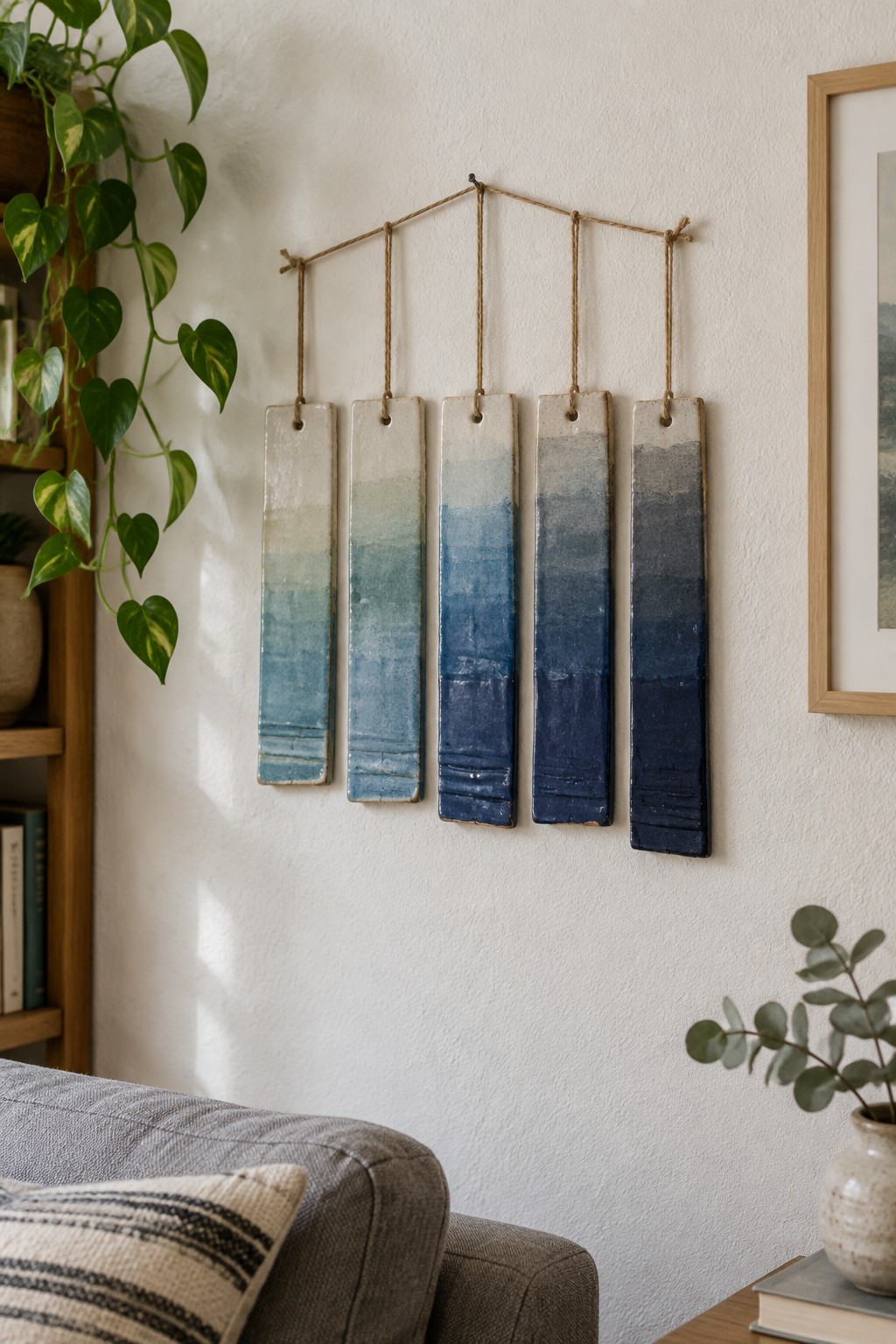
This project starts with simple rectangular clay slabs cut to matching sizes and fired with layered blue glazes that shift from pale aqua down to deep navy. The horizontal texture lines left in the clay catch the glaze and create subtle depth across the color change. Five tiles hang side by side from a single piece of twine, turning the set into one long vertical wall piece. The idea works as repeatable slab decor that relies on glaze variation rather than complex shaping.
What makes this idea useful is how quickly you can repeat the same template to change the width or length of the finished panel. Swap the blue gradient for any other color family and the same slabs still read as a coordinated set. The narrow vertical shape fits well in hallways or above furniture where a wider piece would crowd the space. You could shorten it to three tiles for a smaller version or switch the twine to wire for a more modern look.
Frequently Asked Questions
What materials are best for creating slab pottery with repeatable templates? Start with a smooth, grog-free clay body that holds its shape well during rolling and drying. Use a slab roller or rolling pin with thickness guides to achieve even slabs around a quarter inch thick. Cardboard or thin plastic sheets make excellent template materials because they are durable enough for repeated use yet easy to cut into shapes. Keep a set of basic tools on hand including a clay knife, scoring tool, sponge, and wooden ribs for smoothing seams.
How can I ensure my templates produce consistent results across multiple pieces? Trace each template onto the clay with a needle tool or sharp pencil while the slab is still on the work surface. Cut slowly and hold the template firmly to avoid shifting. After cutting, gently lift the piece and place it on a flat drying board to prevent distortion. Store your templates in a labeled folder or envelope so you can pull them out quickly for future projects without recreating the shapes.
Are these modern slab ideas suitable for beginners who have never used templates before? Many of the 18 ideas work well for beginners because the templates remove the need for freehand shaping. Begin with simpler forms such as trays or wall pockets that require only one or two template pieces. Practice scoring and slipping seams on test scraps first. Once you master joining, move to designs that involve more pieces like boxes or layered vases. Take your time drying pieces slowly under plastic to reduce cracking.
What should I do if my slab pieces warp during drying or firing? Place freshly cut slabs on a flat surface and cover them loosely with plastic for the first twenty four hours to slow moisture loss. Flip the pieces once or twice during the leather hard stage so both sides dry evenly. When loading the kiln, support flat forms with kiln shelves or props and avoid stacking pieces that can press against each other. Firing to the clay body’s recommended temperature in a controlled schedule also helps maintain shape.
How can I adapt the template ideas to create larger or smaller versions of the same design? Make a master template set and then photocopy or redraw the shapes at different percentages on a copy machine or with a ruler and compass. Keep the proportions consistent so seams still line up properly. Test the new sizes on paper first before cutting clay. Remember that larger pieces may need slightly thicker slabs and longer drying times while smaller ones can be made from thinner slabs for a lighter final result.

Pottery Path is my cozy corner of the internet where I share clay ideas, pottery inspiration, and simple projects you can recreate at home. I love exploring everything from air dry clay to handbuilt pottery to cute minis that brighten your day. My goal is to make clay crafting feel easy, fun, and welcoming for anyone who wants to try it.
You will find beginner friendly tutorials, creative pottery painting ideas, and lots of warm inspiration for slow and happy crafting. If you enjoy hands on creativity, this space will feel like home.