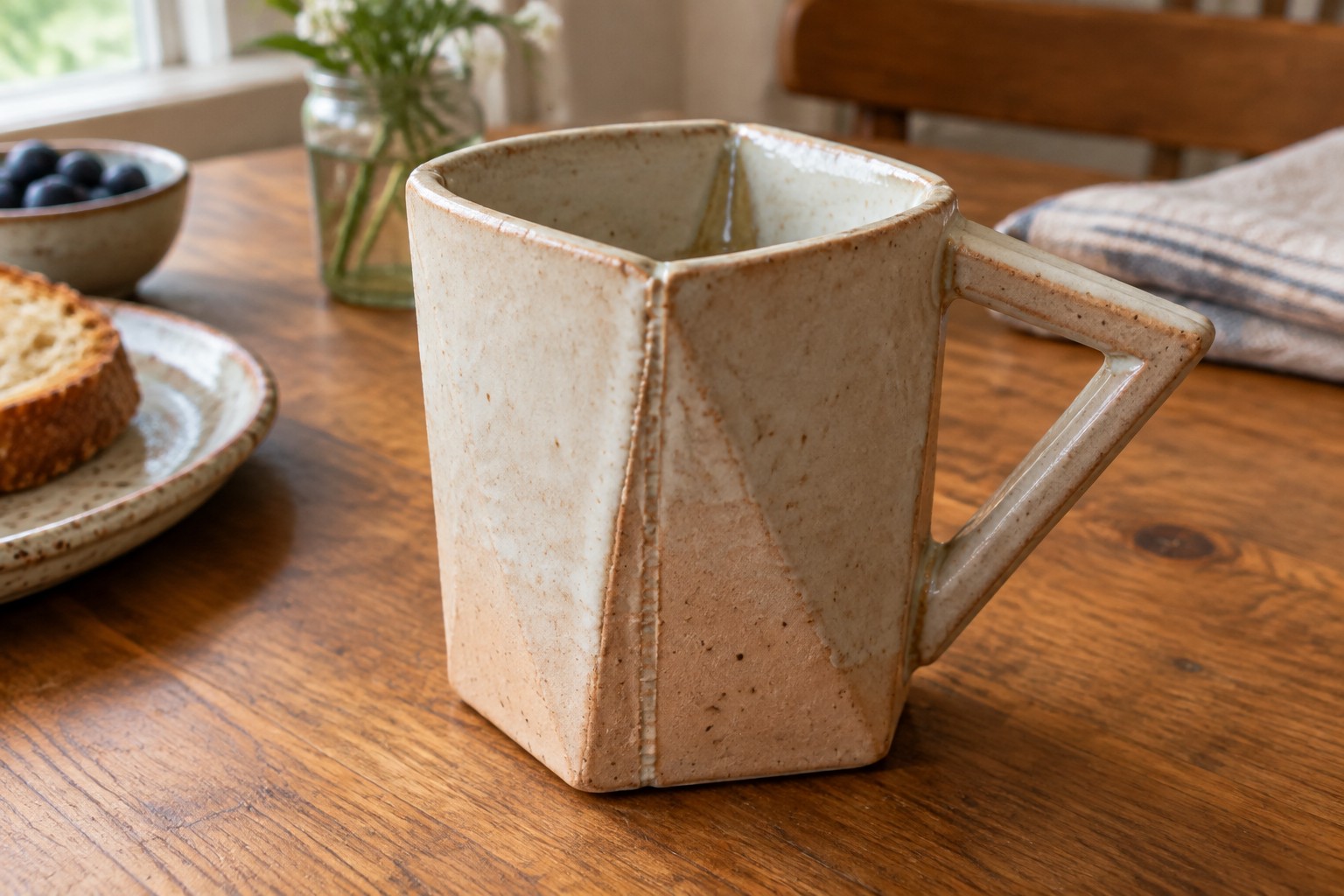
I have been working with slab clay and angular shapes for a while now.
These forms give my pieces a solid feel without much fuss.
I put together this list after testing several variations in my workspace.
Each idea uses basic cuts and joins that most people can manage.
They range from small trays to taller structures.
Faceted Slab Mug with Angular Handle
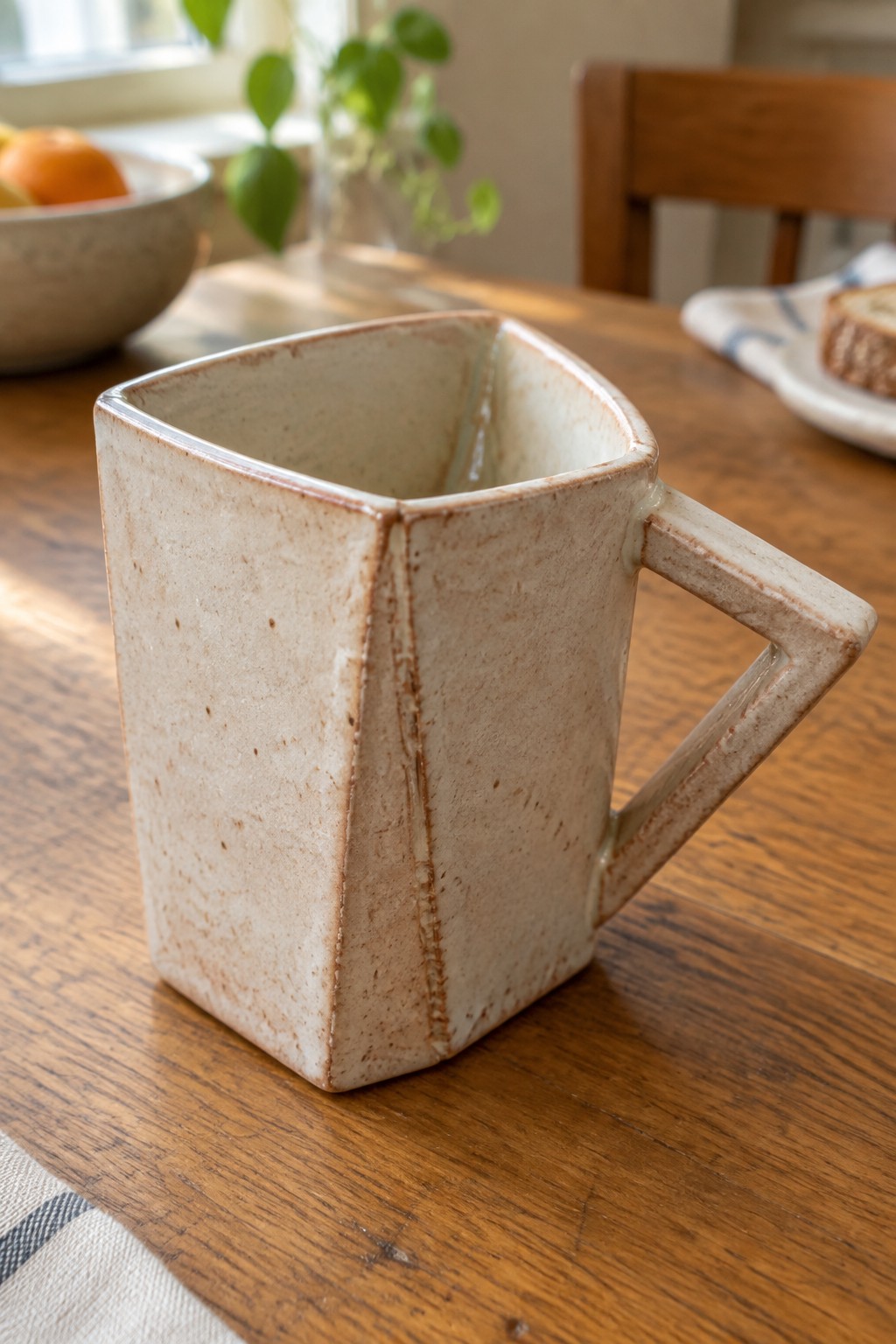
A slab-built mug with flat geometric sides gives a clean, modern alternative to the usual round drinking vessels. The body uses straight vertical panels joined at sharp angles to create a faceted form that feels intentional and structured. A matching triangular slab handle keeps the same angular language throughout the piece and makes the whole object read as one cohesive design. This approach fits squarely in the category of sculptural mugs that still get used daily.
What makes this idea useful is how the flat sides give you easy planes for adding texture or testing different glaze breaks without fighting a curve. You can repeat the same pattern to make a set of four or shrink the template for smaller tumblers. The shape works especially well on open shelving where the edges catch light and create subtle shadows. For a quick variation, try building just the body with fewer sides and pairing it with a simple pulled handle instead.
Faceted Slab Planter with Angular Planes
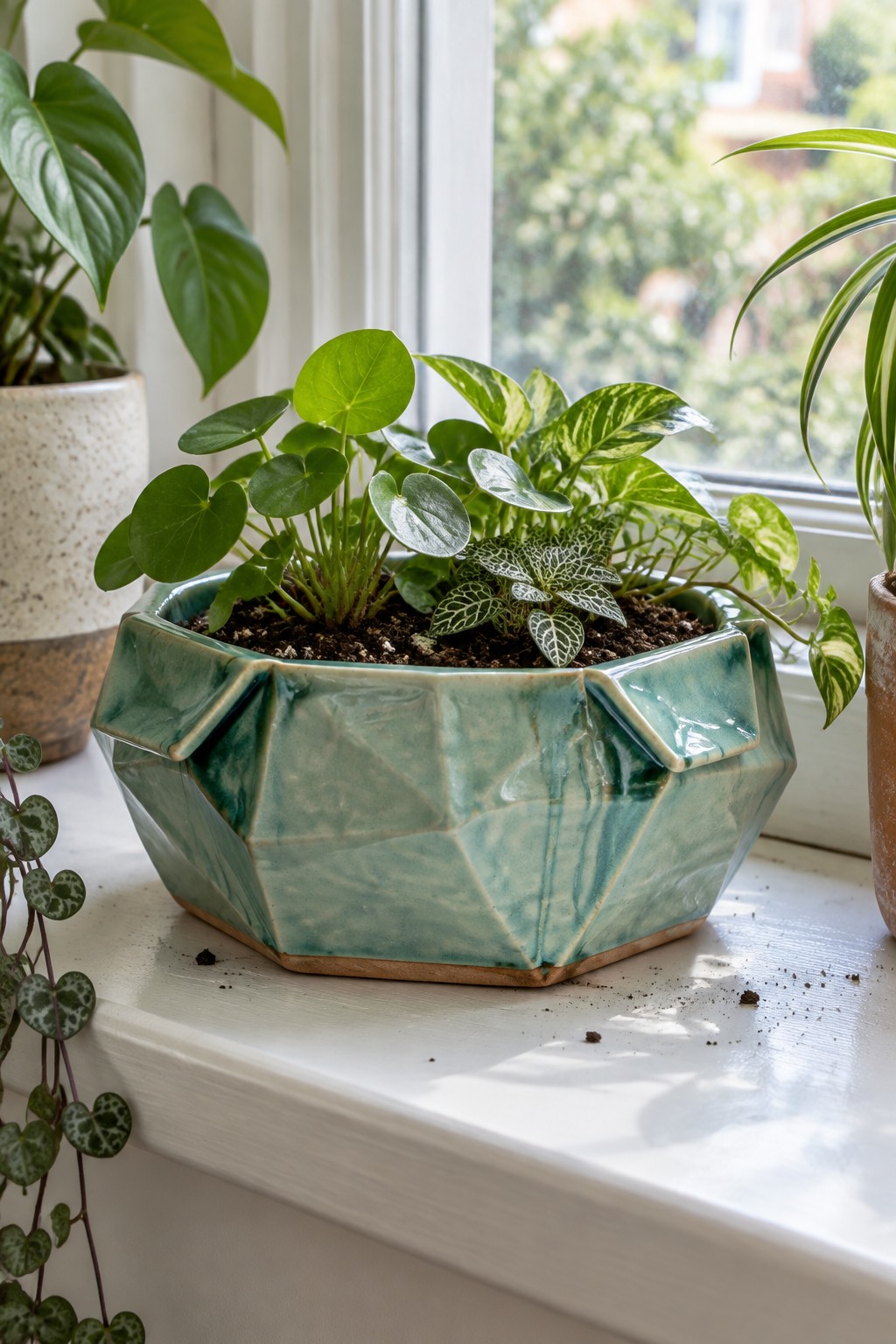
A slab-built planter assembled from flat clay sections cut into irregular polygons produces a faceted form that emphasizes sharp edges and flat surfaces. The construction method lets each plane meet at distinct angles, giving the piece a crystalline outline while still forming a stable container for soil. A glossy teal glaze pools along the seams and reflects light across the facets, which helps the geometric shape read clearly from a distance. This approach belongs in the angular planter category because it replaces curved walls with deliberate flat planes joined at crisp corners.
What makes this idea useful is that the same slab technique works for different plant sizes without changing the overall style. You can shorten the height for a low windowsill piece or add more facets for a taller version that holds larger foliage. The faceted surface also makes it easy to group several planters together in a mix of glaze colors without them looking repetitive. For a gift, repeat the same pattern in two or three sizes so the set stays cohesive but still fits different plant needs.
Angular Slab Vase with Raw Clay Edges
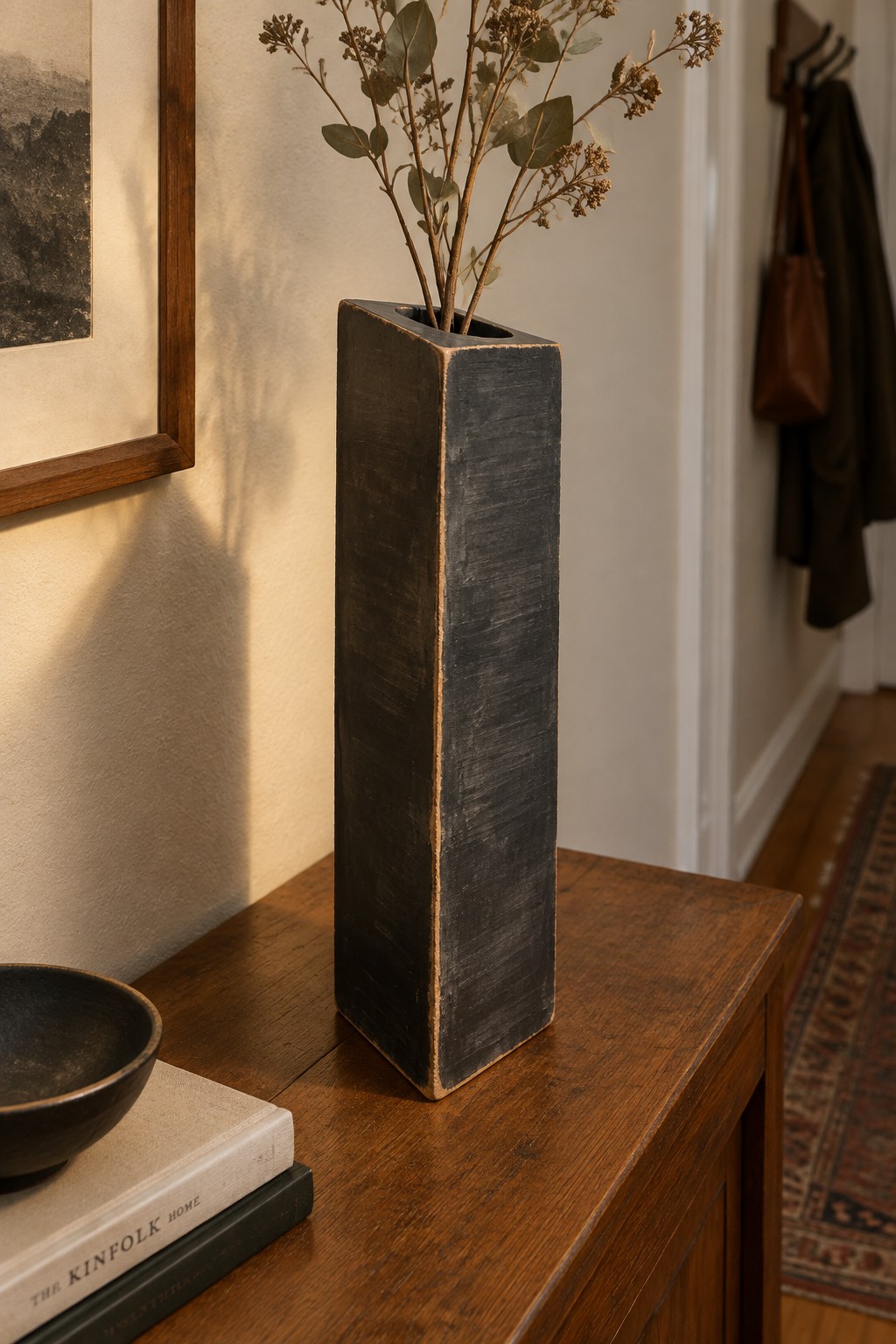
A tall rectangular vase formed from slabs creates strong vertical lines that work well for displaying dried stems or branches. The dark textured surface paired with lighter exposed edges gives the piece contrast and keeps the focus on the form itself. This approach fits the decor object category since the shape handles the visual weight without added surface patterns.
What makes this idea useful is how the narrow footprint lets it fit on narrow consoles or shelves where round vases would crowd the space. You could shorten the proportions for a desk version or widen the opening slightly to hold larger arrangements. The slab method also makes it easy to build a matching pair with slight height variations for a grouped display.
Angular Striped Slab Tray with Cutout Handles
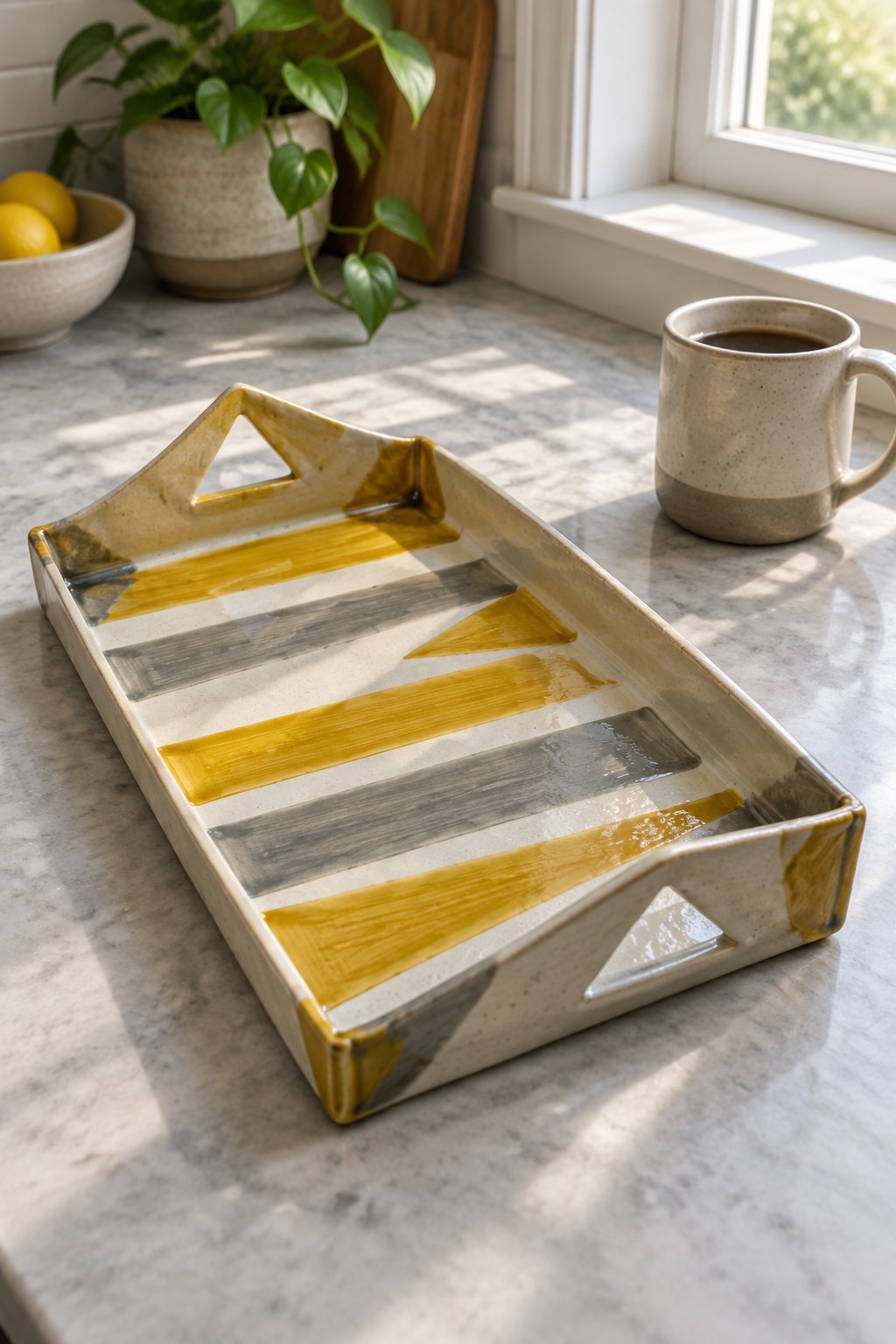
A rectangular slab tray built with straight sides and integrated handles works well here because the triangular cutouts add sharp angles without extra construction steps. The surface uses wide horizontal stripes in yellow and gray that taper to points at the ends, creating directional movement across the form. This approach keeps the tray simple to roll out and assemble while the glaze stripes provide the main visual interest. It fits the category of a kitchen or tabletop serving piece that doubles as decor.
The shape does a lot of the work here since the rectangular body and angled handle openings translate easily to different sizes. You could adapt the stripe layout to a smaller version for jewelry or keys, or swap the colors to match a specific kitchen palette. In a kitchen this kind of piece holds fruit, mugs, or small tools without needing extra compartments. The painted detail helps it stand out on Pinterest because the contrast between the matte base and glossy stripes reads clearly even in small thumbnails.
Angular Slab Bird Figurine

A slab-built bird figurine takes flat clay sections and joins them at angles to form a faceted, geometric body. The design uses clean planes and edges to create a stylized shape that reads as a bird without soft curves. A glossy pink glaze covers the main form while the beak and feet remain matte and lighter in tone to separate those details from the rest of the piece.
What makes this idea useful is how the angular construction gives a simple subject a modern, sculptural look without needing complex carving. The same slab approach can be scaled up or down and applied to other animals or abstract shapes. A piece like this works especially well as a shelf accent or desk object because its compact size fits easily into hand-building projects. You could rework the facets with different glaze colors to highlight the planes or simplify the form for quicker builds.
Angular Slab Candle Holder with Intersecting Wells
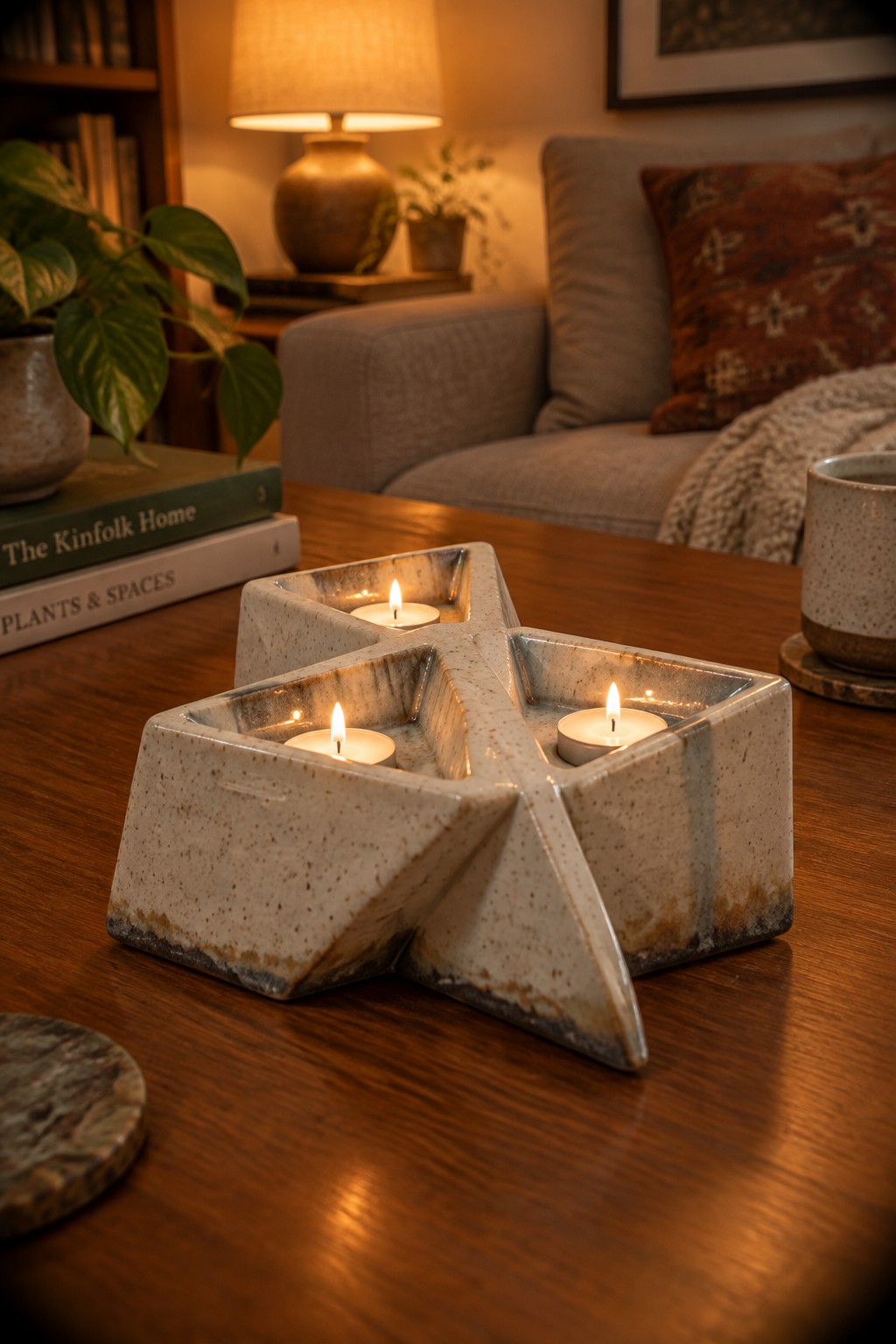
A slab-built candle holder formed from angled planes that cross to create four separate tea light compartments. The design uses flat geometric sections joined at the center, producing a low sculptural shape that holds multiple candles in one piece. The speckled matte glaze shows the slab texture while keeping the emphasis on the sharp edges and overall form. This approach works as a decor object for grouping small candles on a surface.
What makes this idea useful is how the intersecting layout packs four candles into a compact footprint without looking crowded. You could simplify it to three compartments for a smaller table or stretch the angles wider to fit longer pillars. The flat base stays stable on wood or stone surfaces, and the same slab method could be reworked into a two-well version for a mantel or desk. The angular structure also photographs cleanly for project sharing since the lines stay clear against most backgrounds.
Wavy Slab Spoon Rest for Kitchen Use
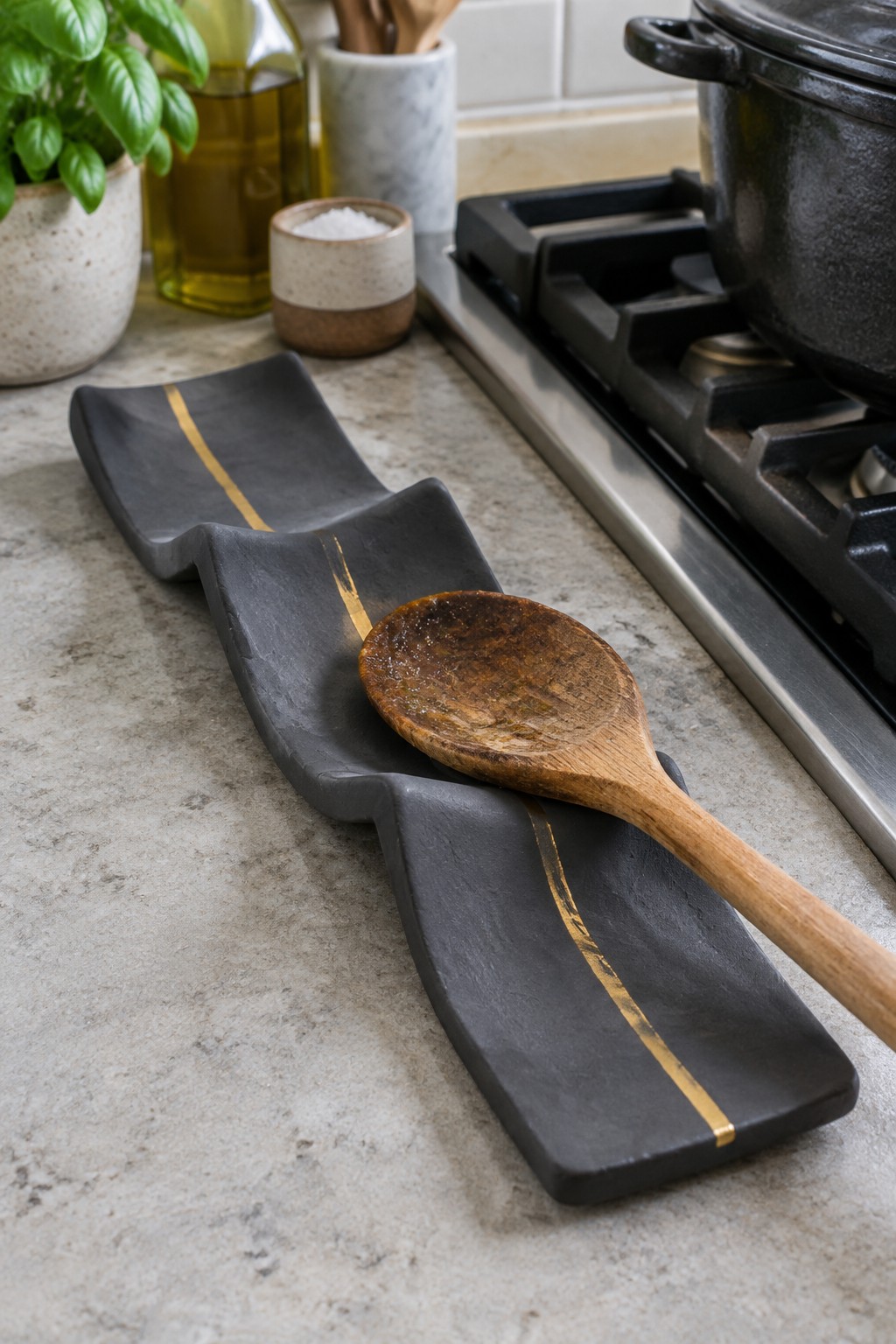
A long slab-built ceramic tray works as a dedicated spoon rest by giving wooden utensils a stable place to rest between uses. The narrow shape features undulating edges that rise and dip to cradle the spoon handle while keeping the bowl elevated. Matte black clay with thin gold lines running the length creates contrast that draws the eye without competing with surrounding kitchen items.
What makes this idea useful is how it solves the common problem of spoons sliding off counters or leaving marks on surfaces. The elongated form fits neatly along the back of a stove or between burners where space is limited. You could adapt the same slab layout into a shorter version for a single spoon or widen it slightly to hold tongs and spatulas at once. In a kitchen, this kind of piece keeps tools within reach while adding a handmade detail that stands out in photos for project boards.
Faceted Angular Ring Dish from Slab Construction
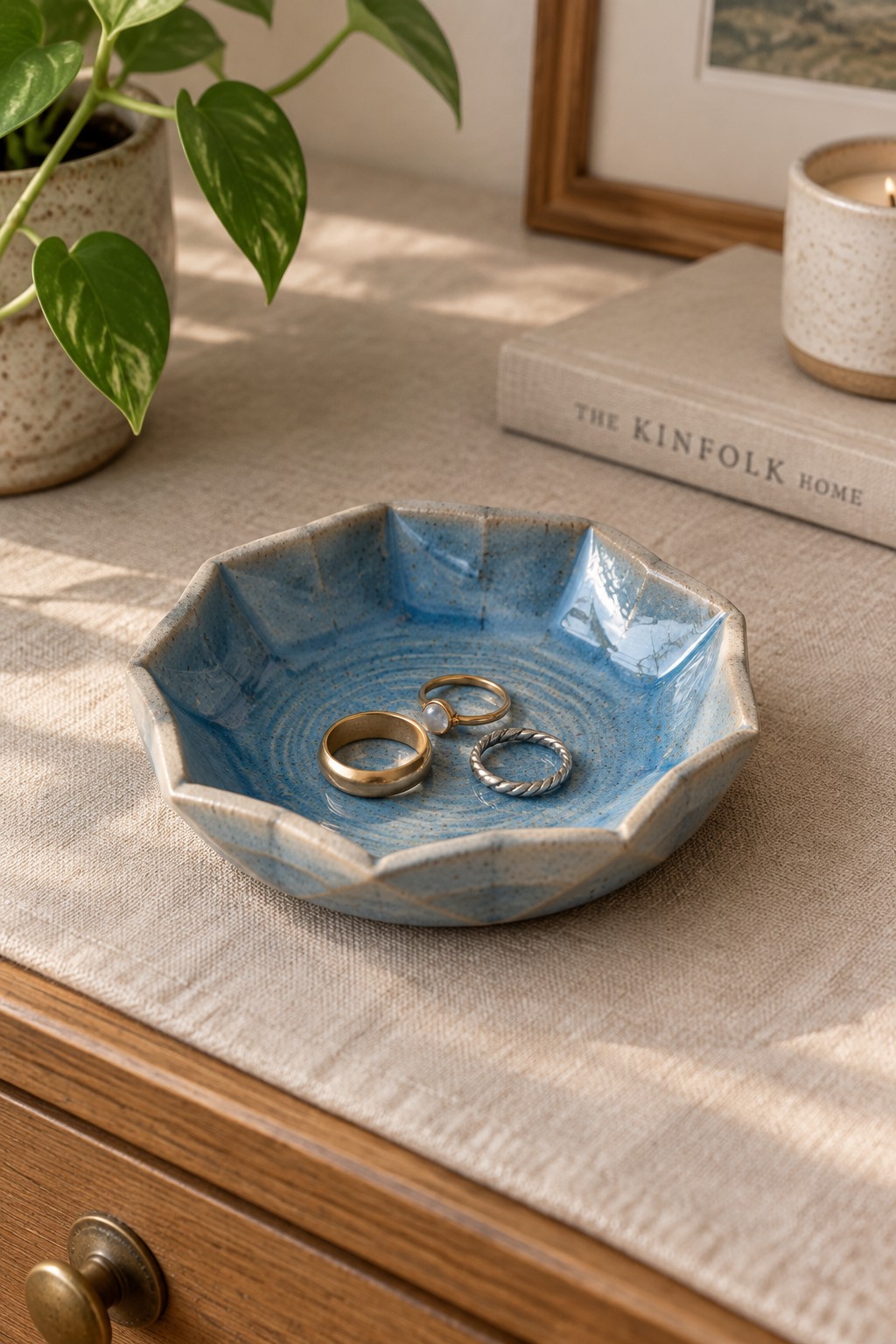
A small slab-built dish with straight angled sides cut into facets creates a low, open bowl shape that works well as a ring dish or trinket holder. The flat planes catch light differently across the surface, and a simple blue glaze with lighter speckling emphasizes the edges without hiding the form. This approach keeps the piece compact while giving it clear geometric structure that stands out from round wheel-thrown dishes.
The shape does a lot of the work here because the angled walls give the dish presence even at a small scale, making it practical for a dresser top or bathroom counter where it can hold rings or earrings without taking much space. You could adapt the same faceted sides to a slightly larger tray for keys or a shallow soap dish by adjusting the slab size and depth. The idea also translates easily to different glaze colors or by adding a simple foot ring on the base for extra lift.
Angular Three-Compartment Slab Holder
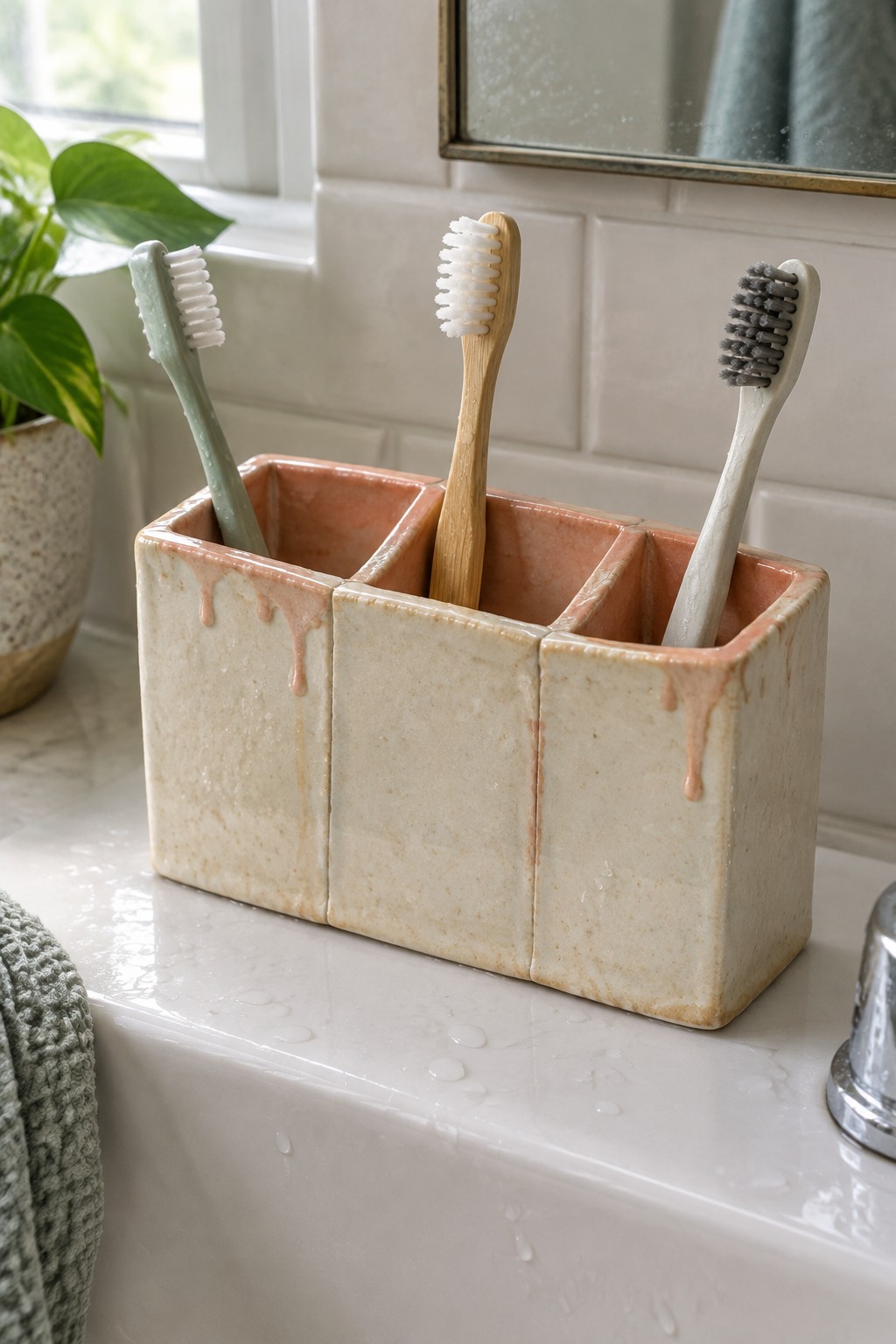
A slab-built rectangular holder divided into three equal compartments creates a simple angular form that works well for organizing toothbrushes or similar small items. Straight walls and sharp corners keep the shape boxy and structured while the open top makes contents easy to grab. The contrast between the matte cream exterior and the glossy peach interior glaze that runs down the sides gives the piece definition without added decoration. This approach stays within basic slab construction and produces a functional bathroom item with clear lines.
What makes this idea useful is how the divided sections keep items separate on a wet counter without taking up much space. You could easily change the number of compartments or adjust the overall width to suit a kitchen utensil holder or desk caddy. The same slab method works for a taller version that holds taller brushes or a shallower tray for rings and small tools. The blocky shape also photographs cleanly for project sharing because the angles stay visible from most views.
Folded Slab Wall Hanging
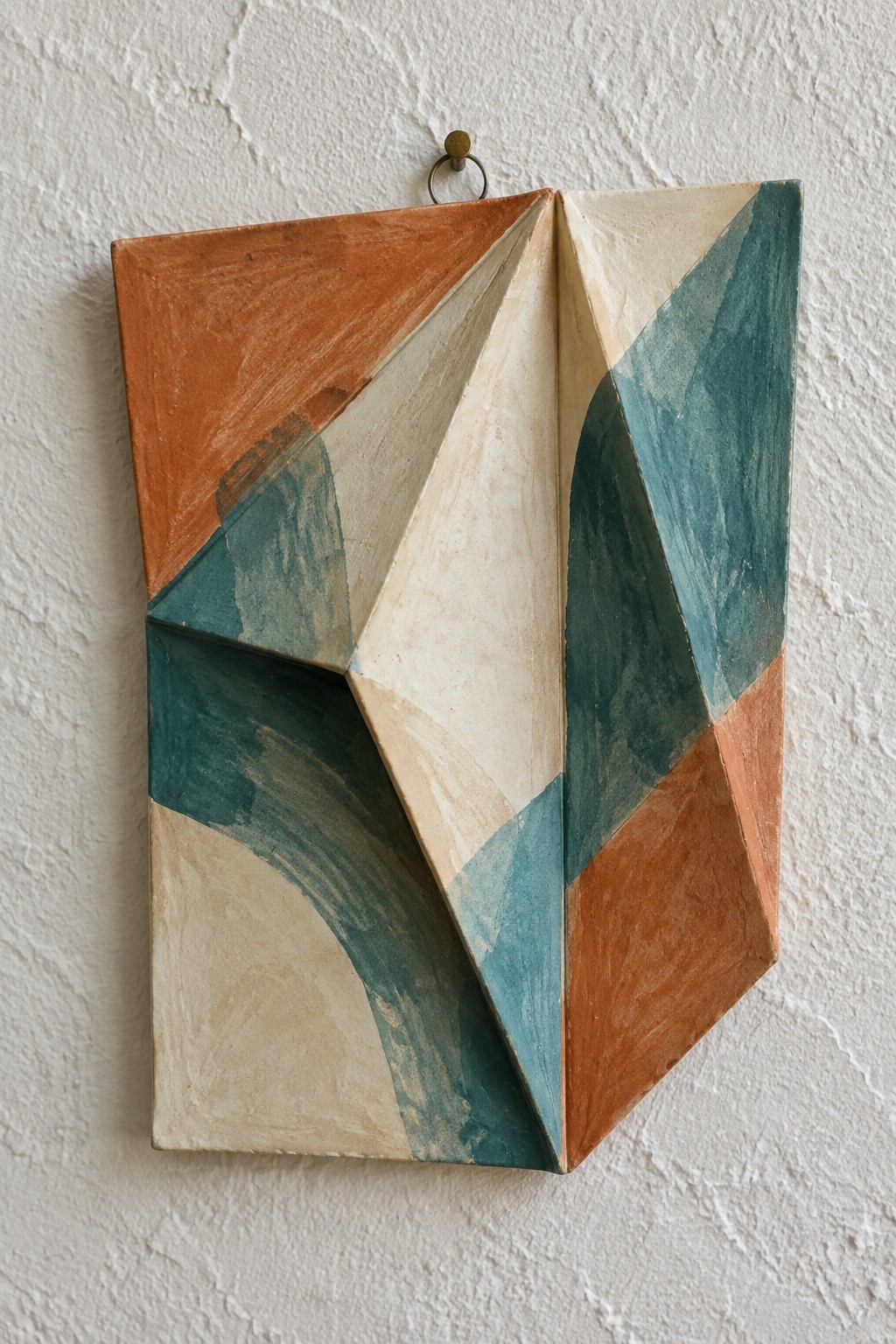
Slab construction lets you join flat clay sections along angled seams to build a dimensional wall piece that stays lightweight enough to hang. The design breaks the surface into large geometric planes finished in three distinct colors so each fold catches light differently. This creates a sculptural decor object that reads as abstract wall art rather than a flat tile or simple plaque.
What makes this idea useful is how the angled seams do most of the visual work once the clay is leather-hard. You can repeat the same folding layout at a smaller scale to make a series of matching pieces for a gallery wall or change the color blocks to match a specific room. In an entryway or above a desk the shape gives you strong geometry without taking up shelf space. The same method adapts easily to a taller vertical version or a wider horizontal one depending on where you want to hang it.
Faceted Slab Bowl with Dripped Earth Tones
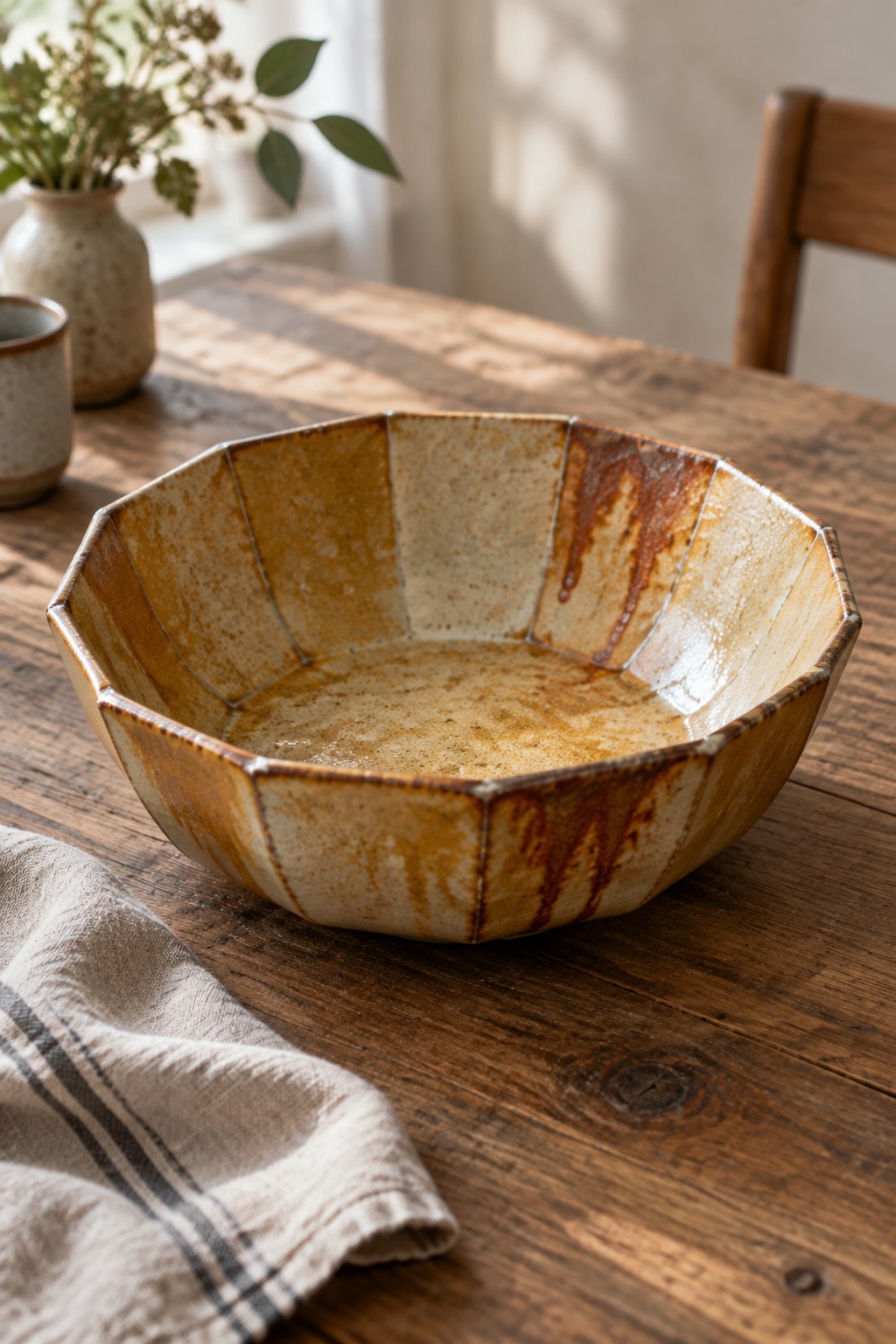
A slab-built bowl formed from straight clay sections joined at angles produces a clear octagonal shape that keeps its structure even after firing. The flat sides make the construction process direct since each panel stays flat until assembled. The glaze in muted browns and creams sits unevenly across the surface, pooling along the seams and running down in short drips that emphasize the joints rather than hide them.
What makes this idea useful is how the angular panels give the finished piece a solid presence without needing complex carving or molds. You can scale the same angles down for individual serving bowls or stretch them into a longer tray shape by adding more sides. In a kitchen setting the faceted form sits well on open shelving and pairs easily with wooden boards or linen. The dripping glaze treatment works as a simple way to add variation, so you could swap in different color combinations or leave some panels unglazed for contrast.
Angular Two-Compartment Slab Dish
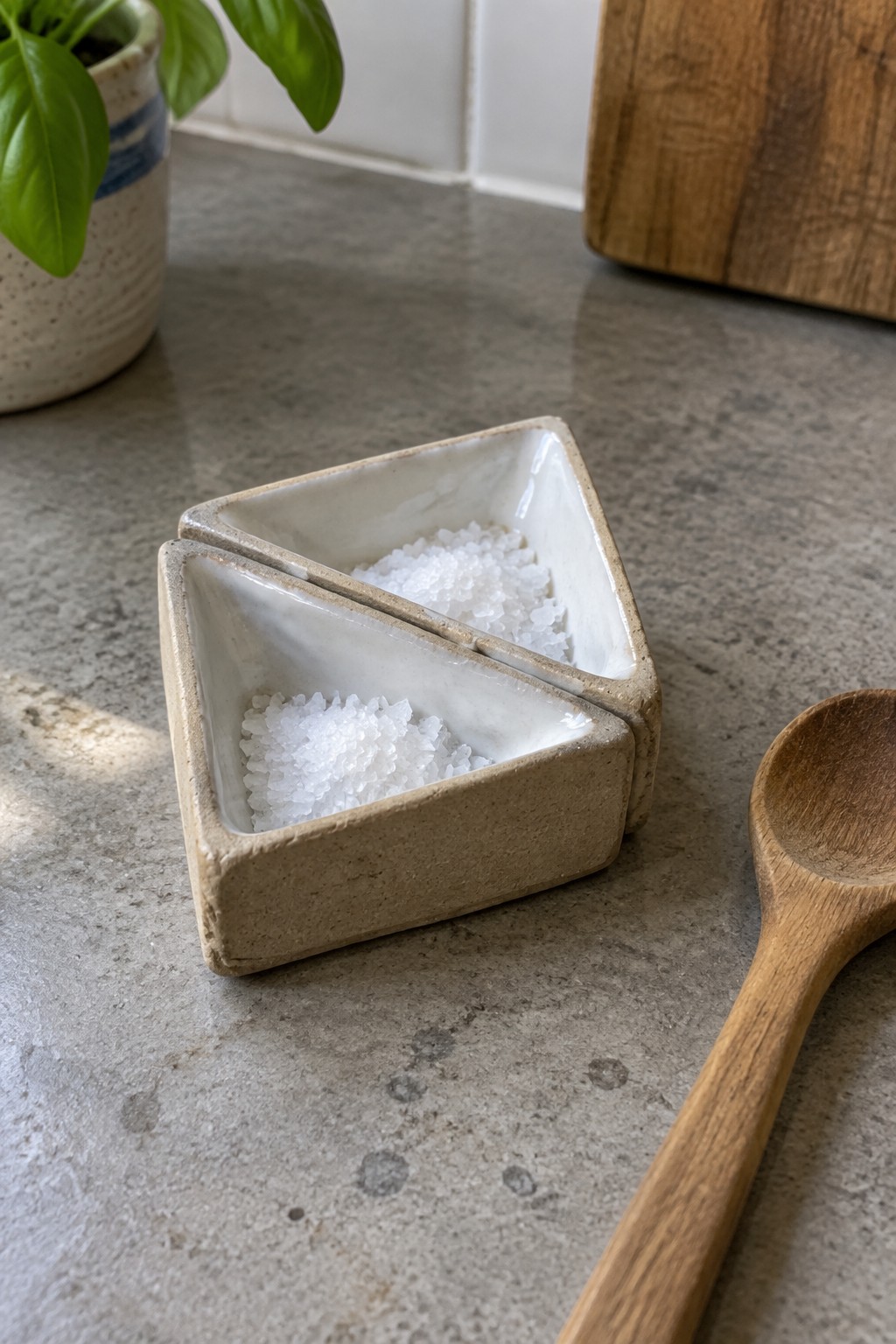
A slab-built divided dish made from two joined triangles creates a compact holder for salt, spices, or small garnishes. The low profile and sharp outer edges keep the form stable on a counter while the angled walls give each compartment a distinct sculptural shape. This approach works well as a kitchen item because the separate sections prevent mixing and the flat base sits securely without tipping. The raw clay exterior paired with a simple glossy interior keeps the focus on the geometry rather than surface decoration.
What makes this idea useful is how the same triangle layout can be adjusted in size or number of sections to suit different needs. The shape does a lot of the work here by turning basic slab cuts into something that reads as intentional design. In a kitchen this kind of piece stays handy for daily seasoning while taking up little space. You could scale the triangles larger for a serving tray, add a third compartment, or shorten the walls to make a shallow ring dish instead.
Faceted Slab Teapot with Angular Planes
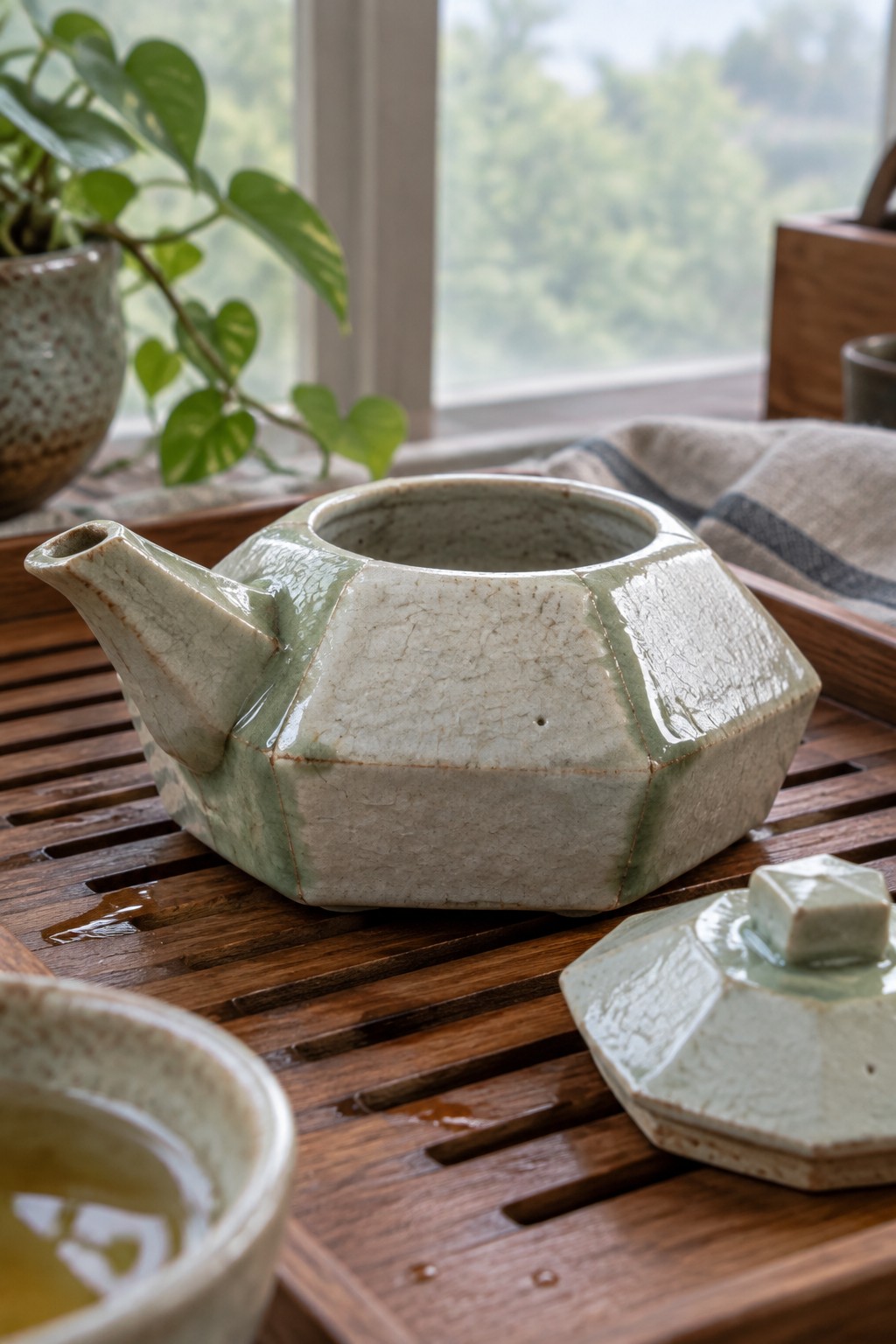
A slab-built teapot made from flat clay sections joined into irregular polygons gives the form strong geometric lines. Each plane meets at crisp angles that create shifting shadows and highlight the handmade construction. The crackle glaze in soft green and cream settles into the seams and emphasizes the edges where the slabs connect. This turns a basic teapot into a kitchen piece that functions for pouring while doubling as a sculptural object on a tray or shelf.
The shape does a lot of the work here because the facets create interest without added surface decoration. You could scale the same angles down to build a creamer or sugar bowl that matches. This kind of teapot suits a simple wooden tray setup for tea service or sits well as a standalone item when not in use. The clean planes also make it easy to adapt the idea into a lidded jar or small pitcher using the same slab method.
Slab-Built Cube Shakers
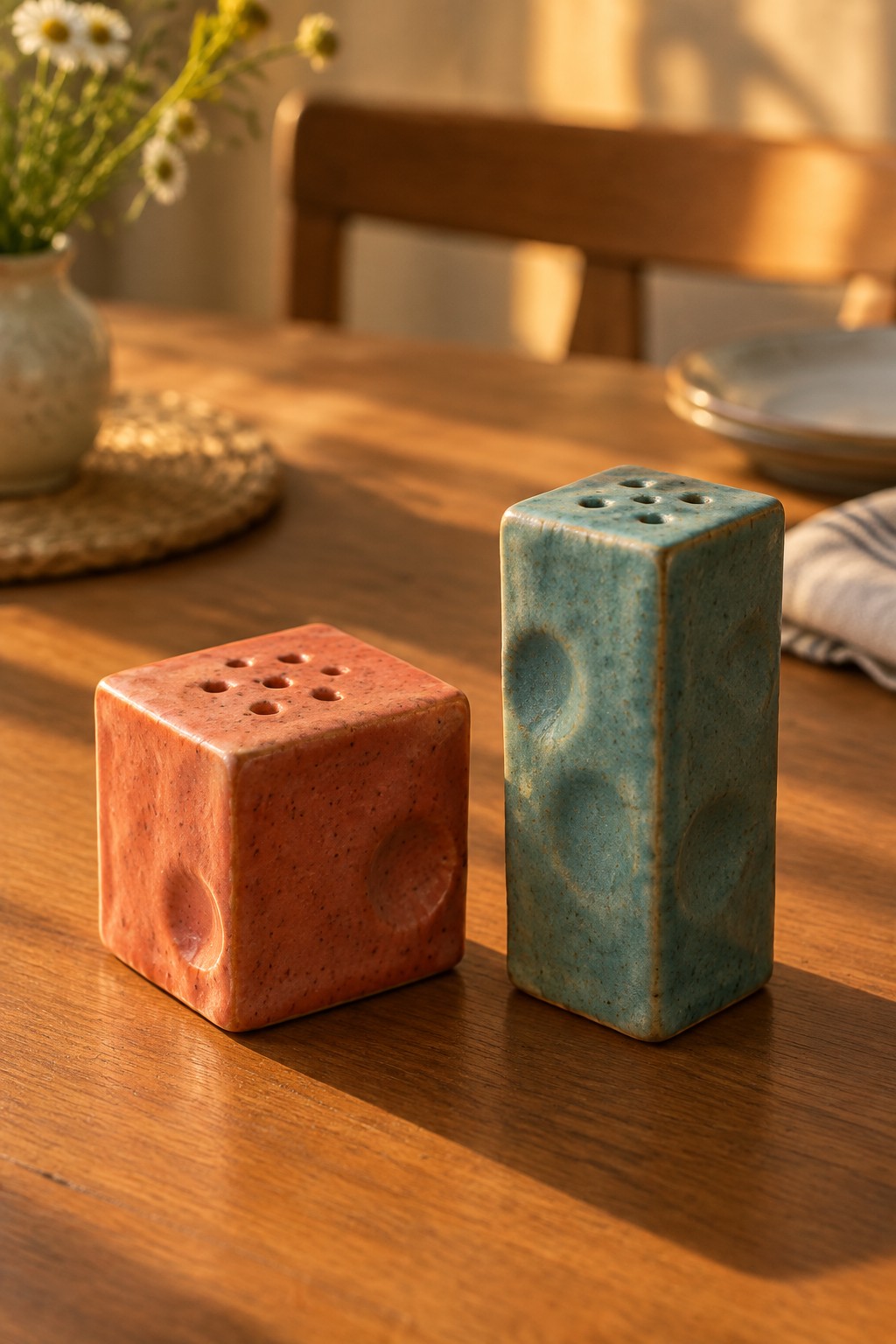
Slab construction produces these compact cube shakers by joining flat panels into an angular body that stands upright on the table. The top receives a grid of small holes for shaking, while the sides are pressed with shallow circular depressions that break up the flat planes without adding extra pieces. Speckled glazes in contrasting warm and cool tones keep the pair easy to distinguish during use. This keeps the project within the angular-forms category while turning a simple kitchen item into a small sculptural set.
The cube shape gives the shakers a low center of gravity so they stay put when passed around the table. You can scale the same template down for single-use spice shakers or up for a larger match holder by adjusting only the slab size. The indented circles catch light and shadow, so the pieces read as intentional design rather than plain boxes when photographed for sharing. The idea works especially well for anyone who wants a functional set that still fits the angular-slab theme without requiring complex assembly.
Angular Slab-Built Wall Candle Holder
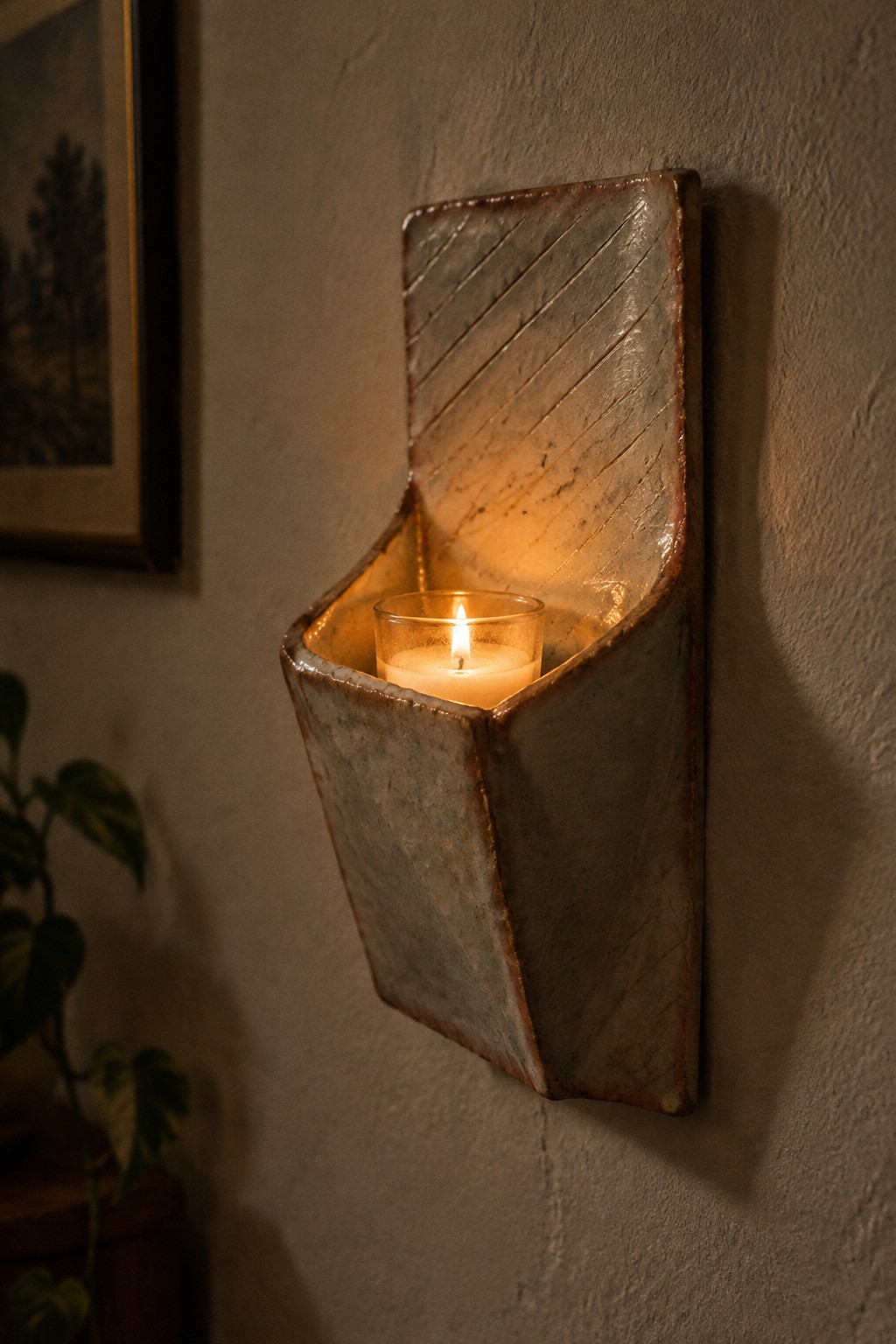
A slab-built candle holder uses flat clay pieces joined at angles to form a shallow wall sconce that supports a tea light. The front panel tilts outward while side walls fold inward to contain the flame and catch wax. Diagonal scoring on the surface creates linear texture that catches light and emphasizes the flat planes. This construction keeps the piece lightweight enough to hang while giving it a clear geometric presence.
The shape does a lot of the work here by turning a flat wall into usable space without taking up shelf room. You could rework the same angled slabs into a small mail holder or a narrow plant pocket by adjusting the depth and adding drainage. The incised lines are simple to vary or omit if you want a smoother surface. In a bathroom or hallway this kind of sconce gives soft light and sculptural interest without needing much width.
Stacked Hexagonal Trays from Slab Construction
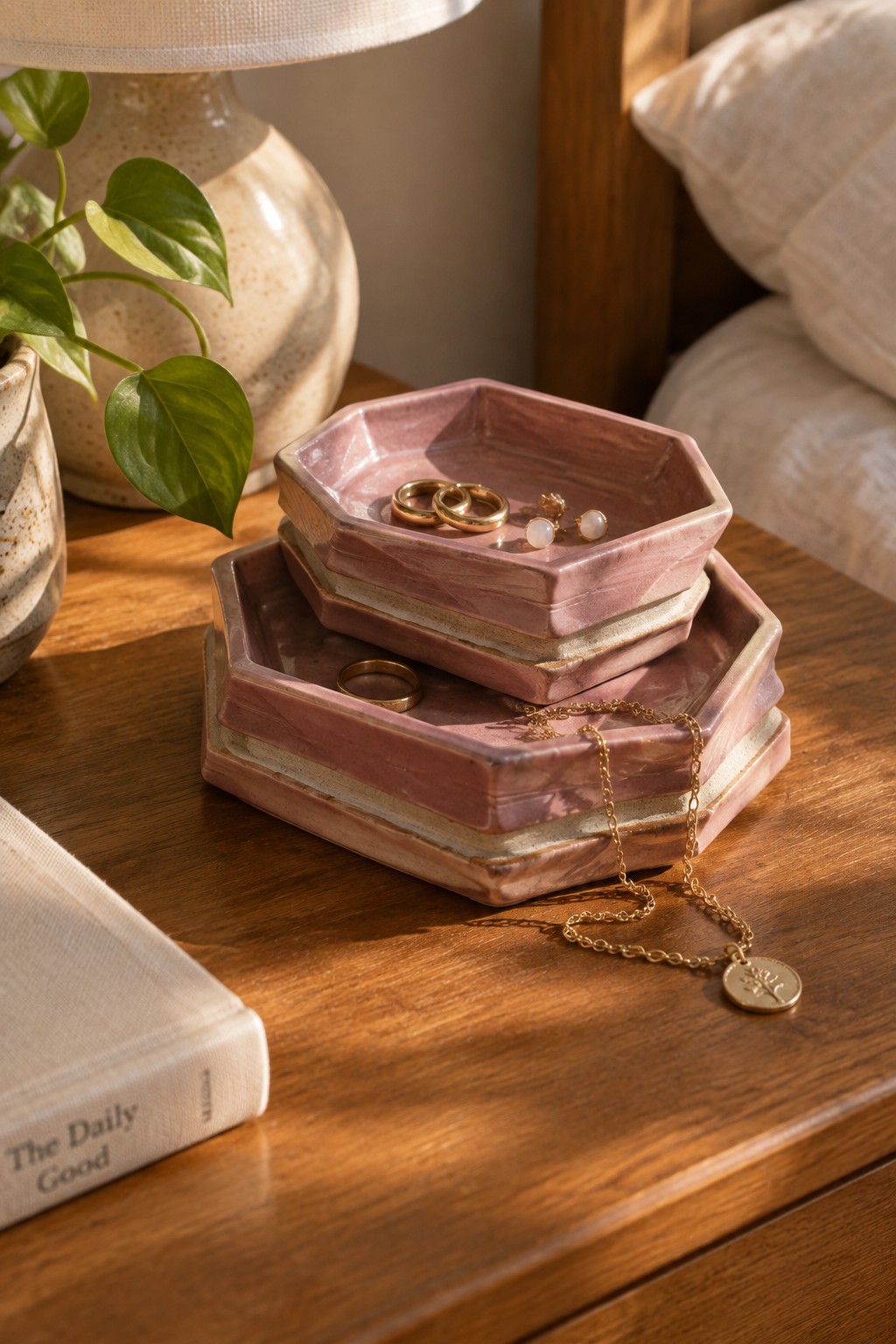
Hexagonal trays built from slabs give you a clean angular form that works well for holding small items like rings or necklaces. The flat sides and straight edges create sharp corners that catch light and make the shape stand out on a surface. Layering two or three trays of slightly different sizes adds height and creates separate compartments without needing extra dividers. The soft pink and beige glaze keeps the focus on the geometry while still showing the handmade clay surface.
The small footprint makes these trays easy to place on a nightstand or dresser where round dishes would blend in. You can scale the template up or down to make matching sets or change the glaze to a single solid color if you want a simpler look. This shape also adapts well to shallow wall shelves or bathroom counters for holding daily essentials. The geometric edges help the piece photograph clearly, which is useful if you want to share the project.
Faceted Slab Pitcher with Angular Planes
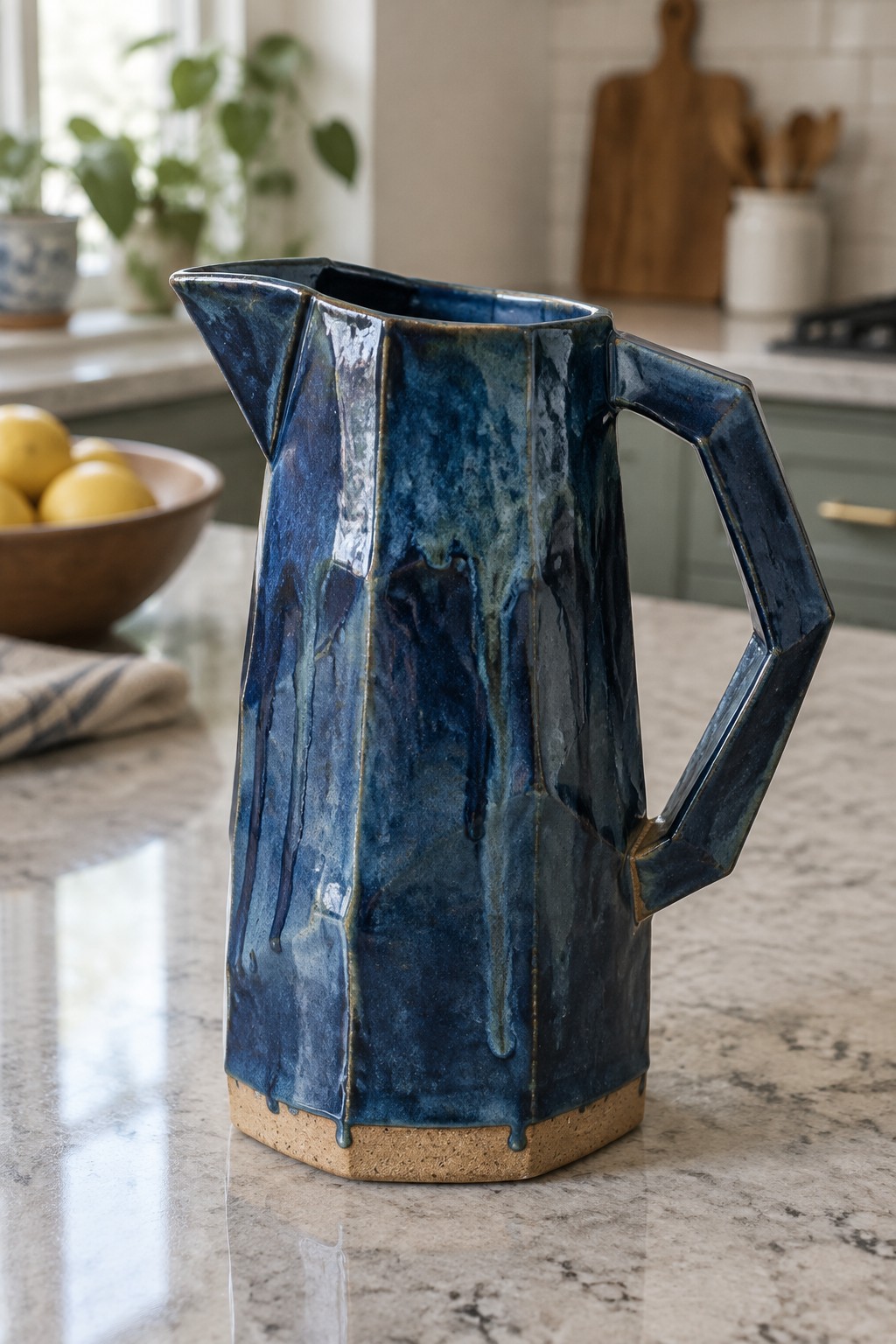
A slab-built pitcher constructed from flat clay sections joined into a multi-sided geometric form gives this piece its sharp, sculptural look. The facets create clean angles and flat surfaces that catch light and glaze differently across each plane, while the blue glaze with its drips adds contrast without covering the structure. This turns a functional pitcher into a strong example of angular slab pottery that still holds liquid.
What makes this idea useful is how the same faceted construction can be scaled down for a smaller creamer or vase, or built taller for a statement water jug. The angular shape stands out on a kitchen counter or table without needing extra decoration, and the flat sides make it easy to add simple stamp or texture details if you want variation. You could reduce the number of sides to four or five for a faster build while keeping the same modern feel.
Angular Slab Yarn Bowl with Notch
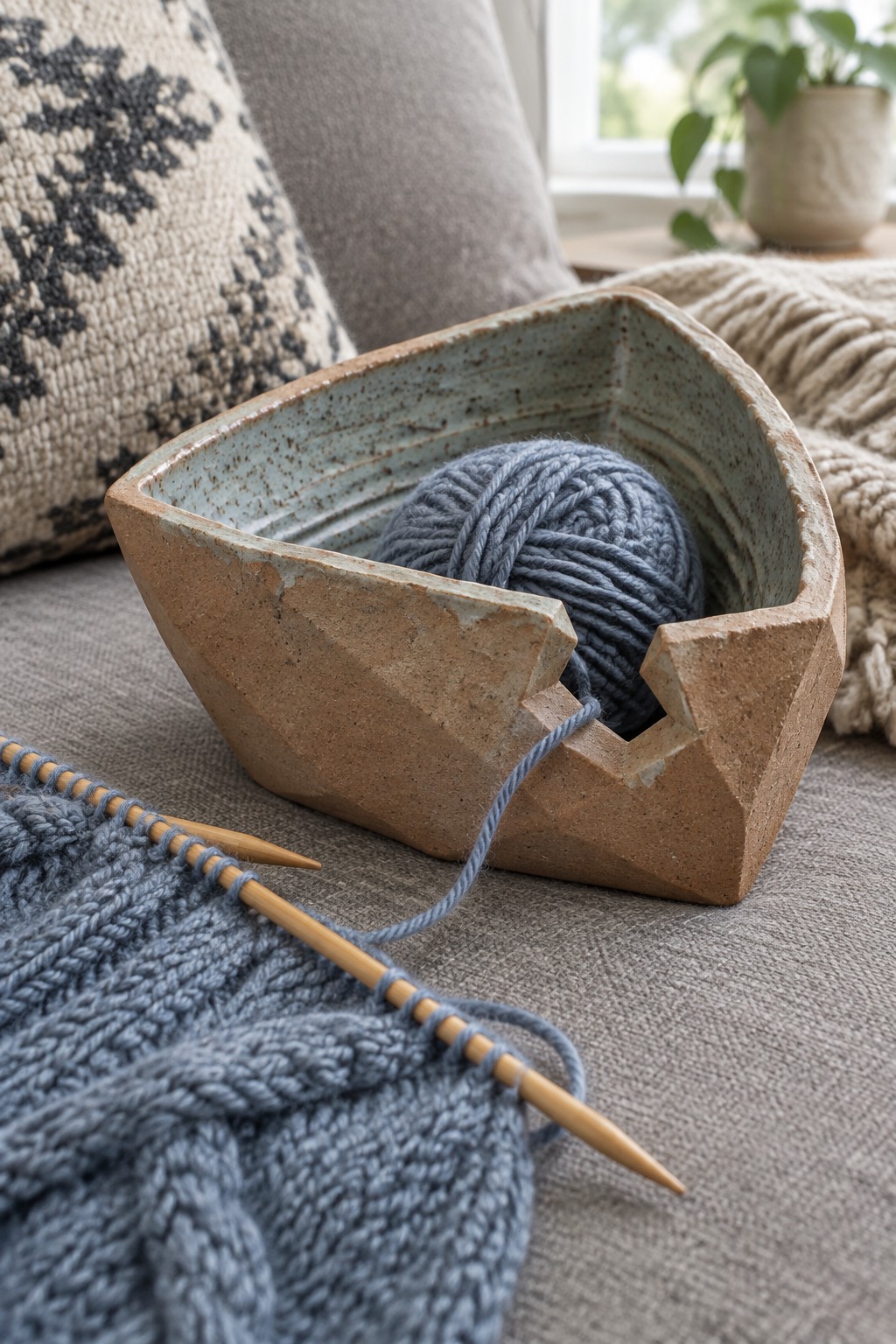
A slab-built yarn bowl uses flat planes and sharp corners to create a stable, geometric holder that keeps yarn in place during knitting or crochet. The design includes a cutout notch along one edge so the strand feeds out cleanly without tangling. The earthy unglazed exterior paired with a simple interior glaze keeps the focus on the angular form rather than surface decoration.
What makes this idea useful is how the notch turns an ordinary bowl into a practical tool without extra parts. The angular shape could be adjusted to a lower profile for a desktop version or stretched into a longer tray for holding multiple skeins. For a gift, something like this works well because the notch is simple to cut while the slabs are still flat before joining.
Angular Slab Sponge Holder

A rectangular sponge holder built from joined clay slabs makes a practical kitchen item that keeps a sponge raised and ventilated. Triangular cutouts along the sides create an open angular structure that allows water to drain while giving the form a sculptural profile. Small square feet lift the base slightly, and a simple matte green glaze covers the entire piece including the joined edges. The design relies on flat planes and geometric negative space rather than added decoration.
What makes this idea useful is how the cutouts solve a drainage problem while turning a plain rectangle into something more interesting. The shape works especially well next to a sink where everyday use matters more than delicate details. You could adapt the same slab construction by varying the angle and size of the triangles to make a matching soap dish or a taller utensil caddy. The pattern is easy to scale or simplify depending on the tools and workspace available.
Angular Slab Tower with Contrasting Glazes
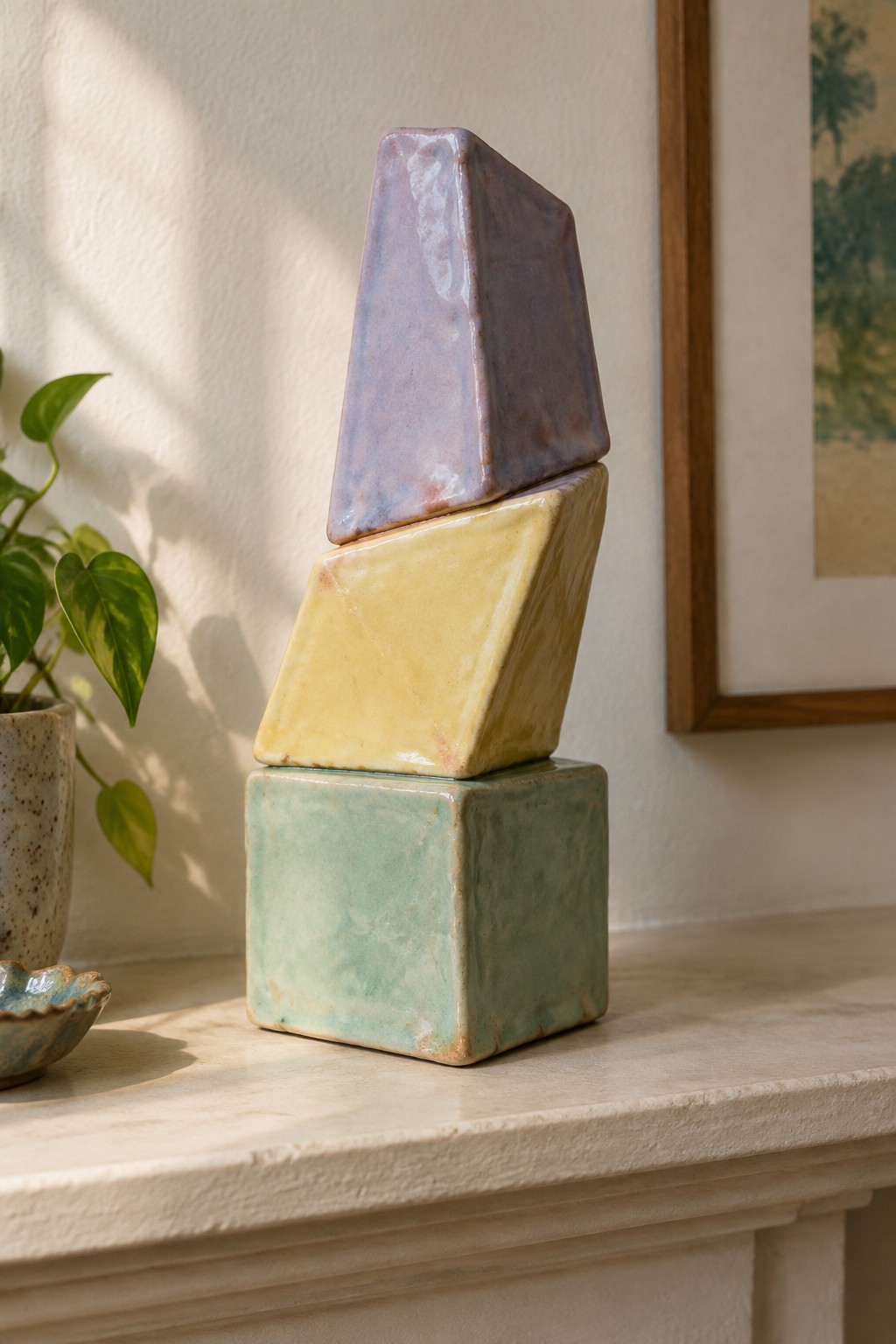
This project uses three slab-built forms stacked into a tall sculpture. A square base supports a tilted rectangular prism, topped by a narrower triangular shape that leans in the opposite direction. The matte glazes in soft green, yellow, and lavender create clear color blocks while the uneven stacking gives the piece its main visual interest. It functions as a standalone decor object meant for a shelf or mantel rather than a vessel or planter.
What makes this idea useful is how the simple stacking method creates height without needing complex carving or handles. The three-color layout works well on a neutral surface where the shapes can cast strong shadows. You could adapt it by using only two slabs for a shorter version or by repeating the same glaze across all pieces for a more unified look. The form stands out in photos because the angles break up the usual symmetry of stacked pottery, which helps it catch attention in a feed of similar projects.
Frequently Asked Questions
What tools are essential for constructing the angular slab forms in these pottery ideas? Use a sturdy work surface, a rolling pin or slab roller for even thickness, metal rulers or straight edges for precise cuts, and scoring tools like a needle tool or serrated rib to join pieces. Start with clay at least 1/4 inch thick to maintain sharp angles without warping, and keep a spray bottle handy to prevent drying during assembly.
How can I avoid cracking when building and drying these angular sculptural pieces? Score and slip all joints thoroughly before pressing slabs together at 90 degree angles or other sharp edges. Dry pieces slowly under plastic for the first day or two, then gradually expose them to air over several days. Avoid direct heat sources and turn pieces occasionally to ensure even moisture loss across the angular sections.
Are the ideas suitable for functional pottery or mainly decorative? Many of the angular slab designs can be adapted for functional use like vases or trays by ensuring walls are thick enough and bases are stable, but the sharp forms often work best as pure sculpture. Test small versions first to check stability, and consider adding feet or stands to prevent tipping on pieces with dramatic angles.
What glazing approaches highlight the angular features effectively? Apply matte or satin glazes in contrasting colors to emphasize edges and planes, using wax resist on some facets to create clean lines. Avoid thick drippy glazes that can pool in corners and soften the angular look. Fire to the clay’s recommended temperature and consider multiple light coats for even coverage without obscuring the form.
How can beginners modify these ideas if they lack experience with complex angles? Start with simpler two or three piece constructions using 45 degree rather than 90 degree joins to build confidence. Practice cutting and assembling basic geometric shapes like triangles or trapezoids before attempting the full 20 ideas. Work with smaller slabs initially to reduce handling difficulties and focus on one angular element at a time.

Pottery Path is my cozy corner of the internet where I share clay ideas, pottery inspiration, and simple projects you can recreate at home. I love exploring everything from air dry clay to handbuilt pottery to cute minis that brighten your day. My goal is to make clay crafting feel easy, fun, and welcoming for anyone who wants to try it.
You will find beginner friendly tutorials, creative pottery painting ideas, and lots of warm inspiration for slow and happy crafting. If you enjoy hands on creativity, this space will feel like home.