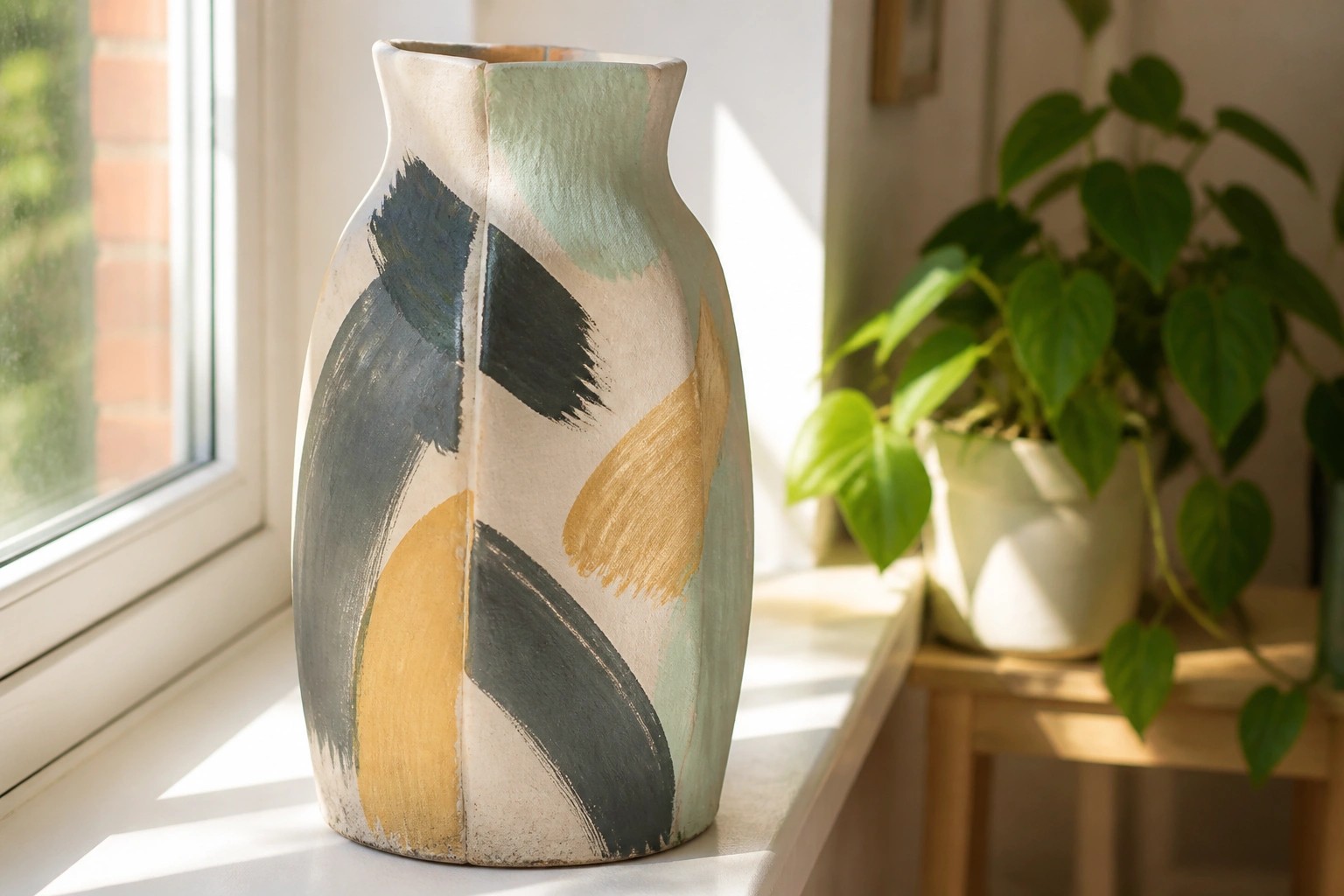
I started experimenting with slab pottery a few years ago because it seemed like a straightforward way to build forms without a wheel.
In my own work I have tried both abstract shapes and more contemporary styles and both have their own appeal.
Abstract pieces let me play with textures and uneven edges while contemporary ones focus on balance and smooth surfaces.
I collected twenty ideas that reflect these styles from projects I have done and from things I have seen in workshops.
They are simple enough that anyone can adapt them with basic tools and clay.
Faceted Slab Vase with Abstract Painted Shapes
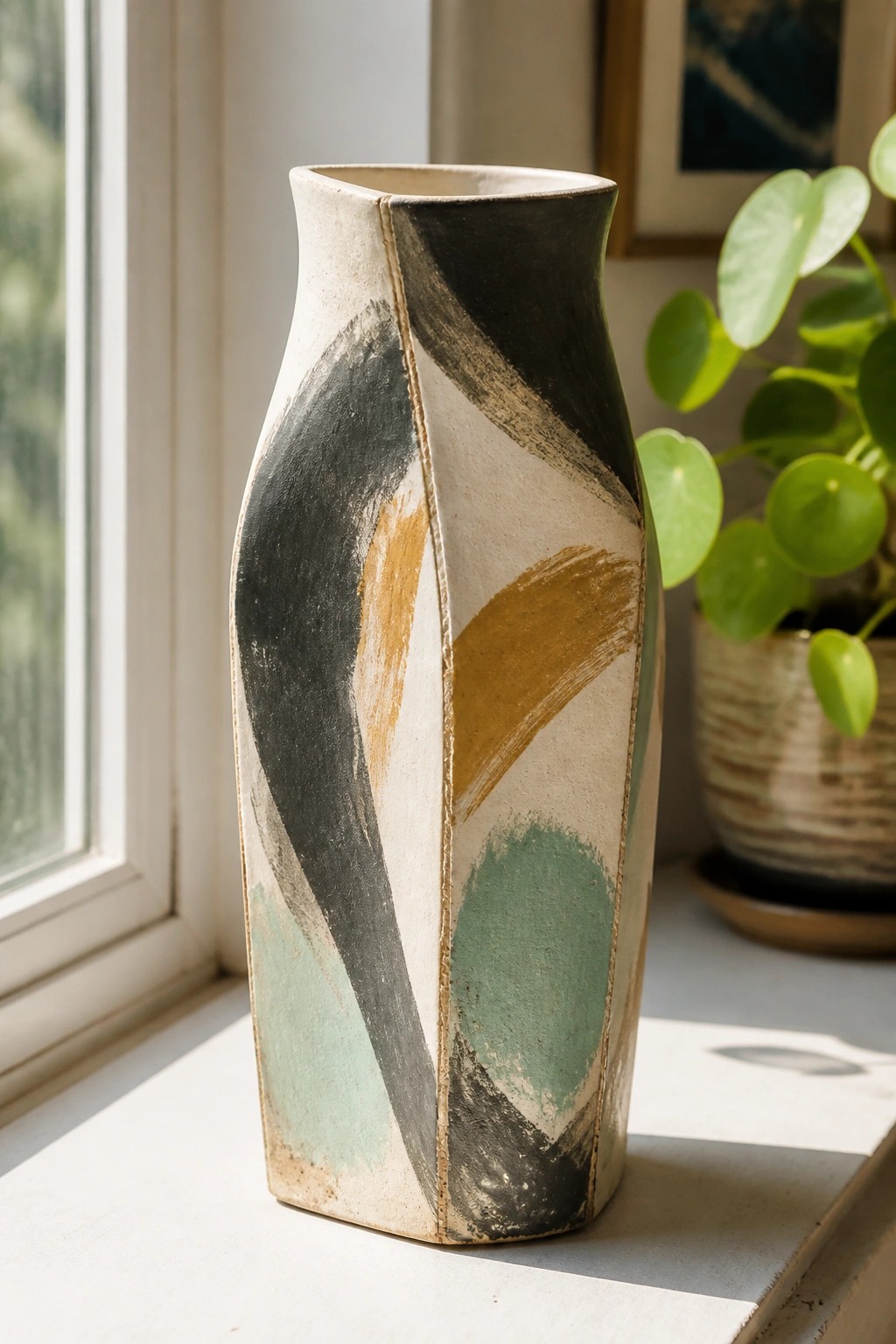
A slab-built vase formed from flat panels creates an angular body that gives abstract decoration a clear structure to follow. The surface uses broad brushstrokes in black, ochre, and soft green on a light base, letting the shapes overlap without needing tight lines or symmetry. This style fits the decor object category because the facets supply visual weight while the painting keeps the overall look loose and contemporary.
The shape does a lot of the work here because each flat side acts like its own canvas for color blocks or strokes. You could build the same form in a shorter height to make a tabletop planter or cut the panels narrower for a bud vase. The painting method adapts easily if you swap in different earth tones or simplify the motifs to just two colors, and the finished piece holds its own in photos without extra styling.
Square Slab Mug with Geometric Color Blocks
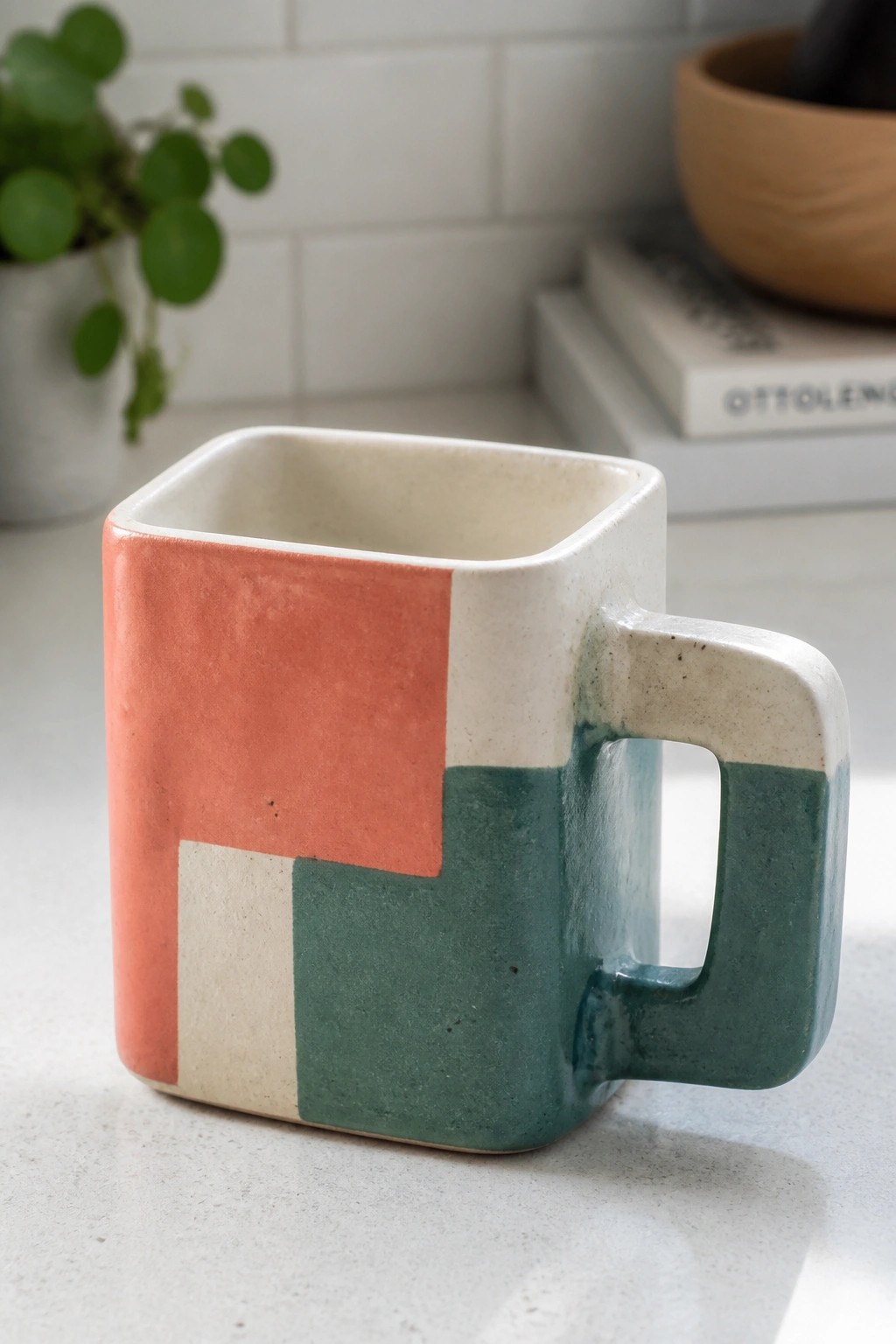
A slab-built square mug starts with flat clay pieces cut and joined to form an angular body instead of a round wheel-thrown shape. Large sections of coral, cream, and teal are applied in clean rectangular blocks that wrap across the sides and handle, letting the flat surfaces carry the abstract pattern. This keeps the design simple while making the color divisions stand out sharply against the matte clay surface.
The shape does a lot of the work here because the flat planes make it easy to mask off and glaze separate color areas without bleeding. A piece like this works especially well as a desk mug or small planter since the square base sits steady and the bold blocks read clearly from a distance. You could adapt the same layout to a low tray or a set of tumblers by repeating the three-color division on different sizes.
Square Slab Bowl with Incised Linear Pattern
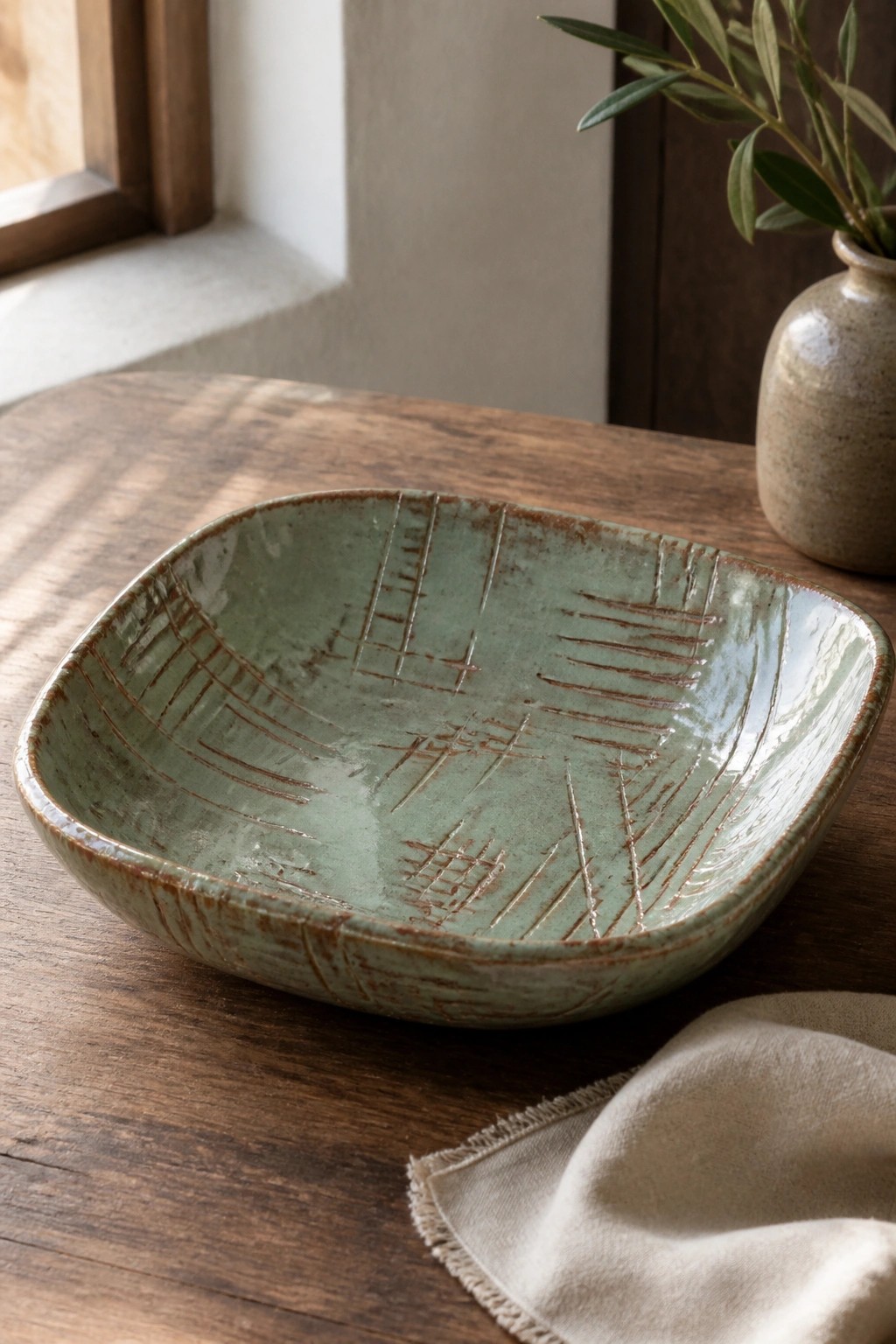
A square slab bowl works well for this style because the flat sides provide a broad surface for carving an abstract arrangement of lines and small grid sections. The design is made by scoring the clay while it is still firm, then applying a translucent green glaze that settles into the grooves to highlight the marks. This creates a contemporary look that stays simple while adding visual interest through the contrast between the smooth glazed areas and the etched details.
The shape does a lot of the work here since the straight edges make the bowl easy to use as a serving dish or catchall on a dining table. You could adapt the same idea by changing the spacing of the lines or adding the pattern only to the rim for a quicker version. This approach also translates easily to a matching tray or low planter using the same slab construction and carving method.
Modular Slab Wall Panels with Cutout Forms
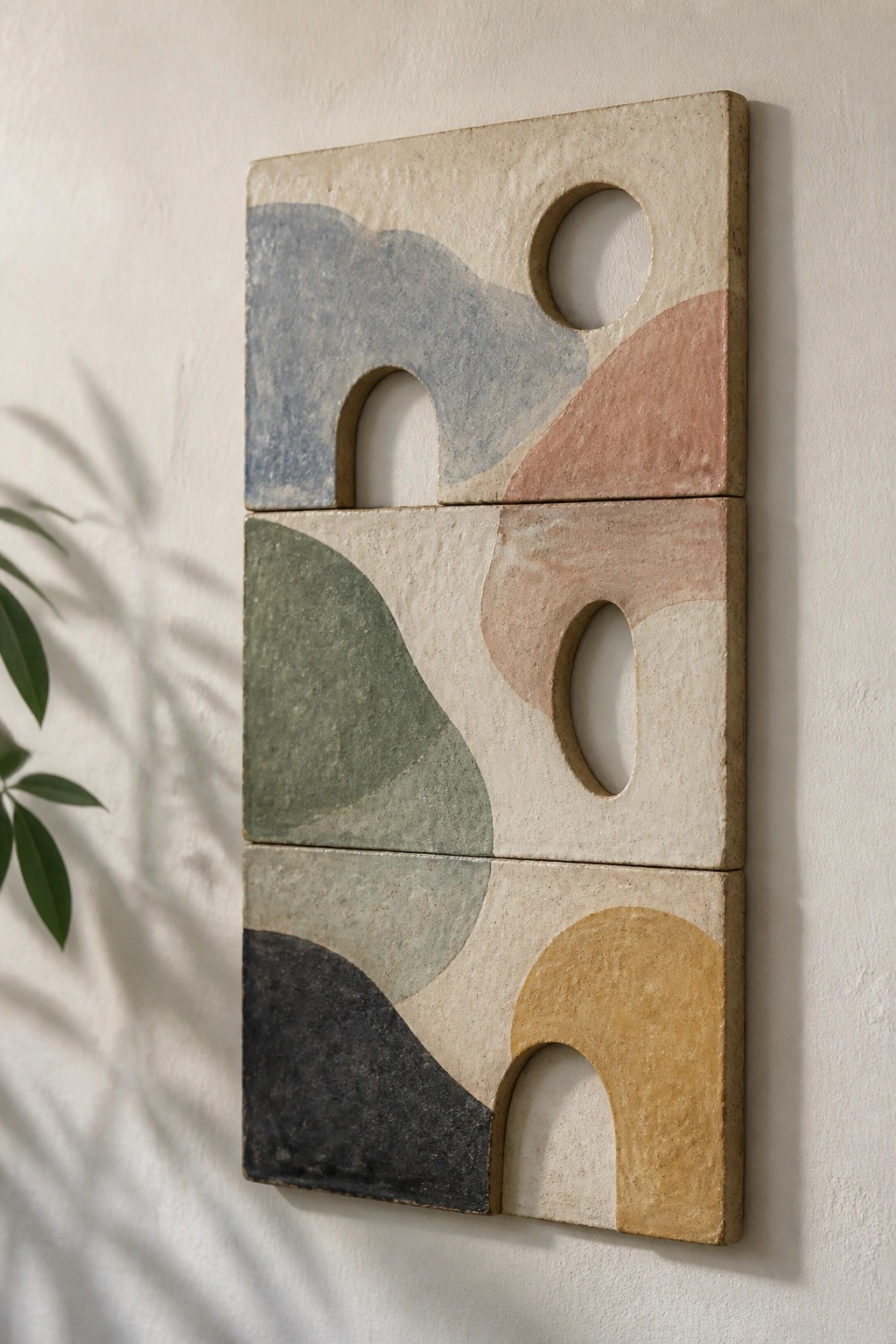
This project builds a vertical wall panel from three separate rectangular slabs joined edge to edge. Each slab carries broad abstract shapes in muted tones with simple arched and circular cutouts that let the background show through. The combination of painted areas and negative space keeps the surface lively while staying flat enough for easy wall mounting.
What makes this idea useful is how the modular format lets you rearrange or resize the sections before firing. You can adapt the same cutout shapes for a single wide panel, a set of smaller tiles, or even a room divider screen. The approach works especially well in entryways or above furniture where a low-relief piece adds interest without taking up shelf space. For a quicker version, reduce the number of colors and repeat one cutout shape across all slabs.
Geometric Slab Planter with Color Blocks
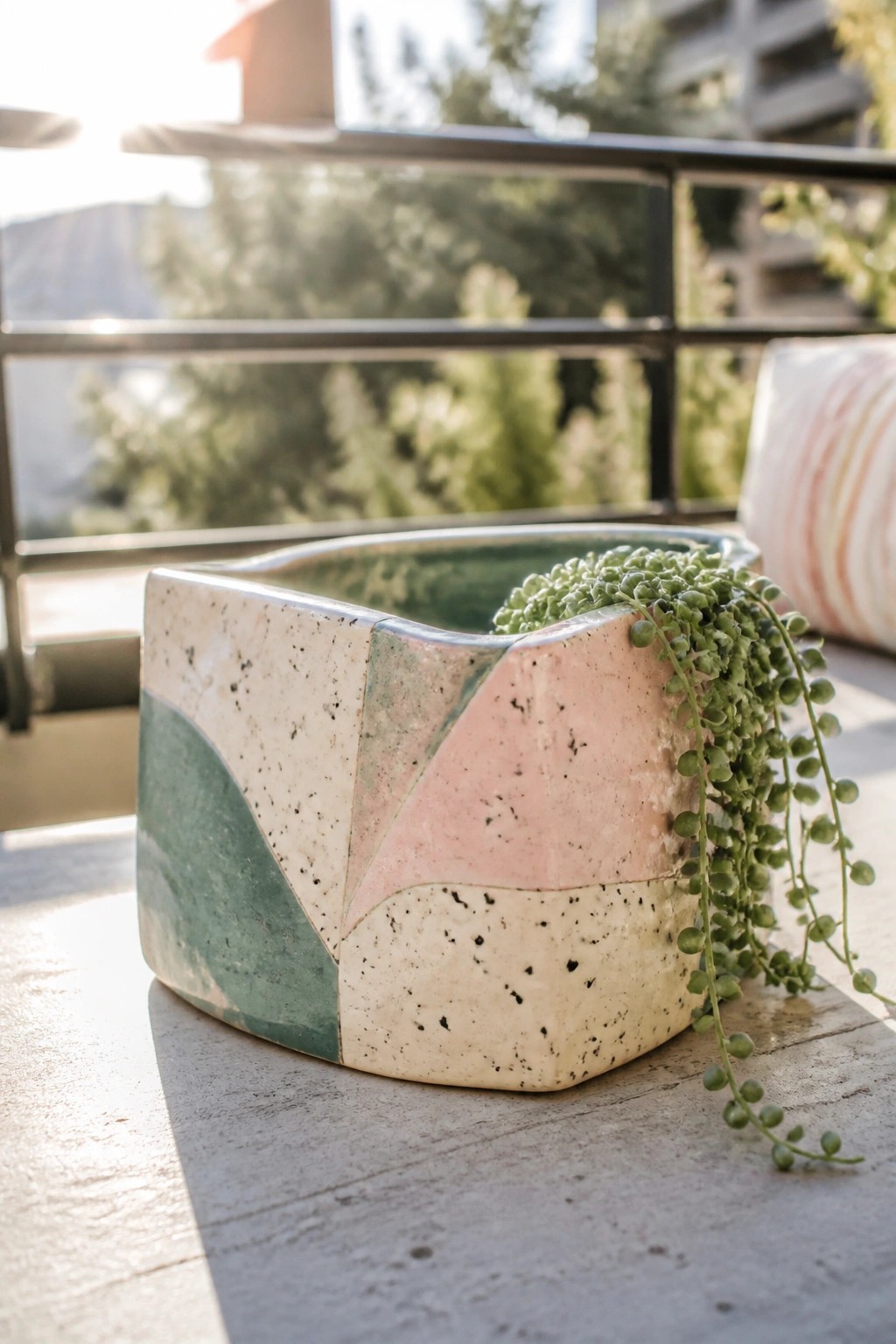
A slab-built planter with flat angular sides gives the piece a faceted, low-profile shape that works well for trailing plants. The surface is split into large sections of green, pink, and speckled cream, with the divisions running along the edges of the slabs. This creates a clean contemporary look while keeping the construction simple enough to build from a few cut pieces of clay.
What makes this idea useful is that the same slab method can be used to make planters in different sizes or slightly altered angles. The color blocking stands out best when kept to three or four tones and can be swapped for other muted shades depending on the room. A smaller version fits easily on a shelf or desk, and the shape works for both indoor houseplants and outdoor use on a balcony.
Split-Glaze Slab Tray with Three Small Cups
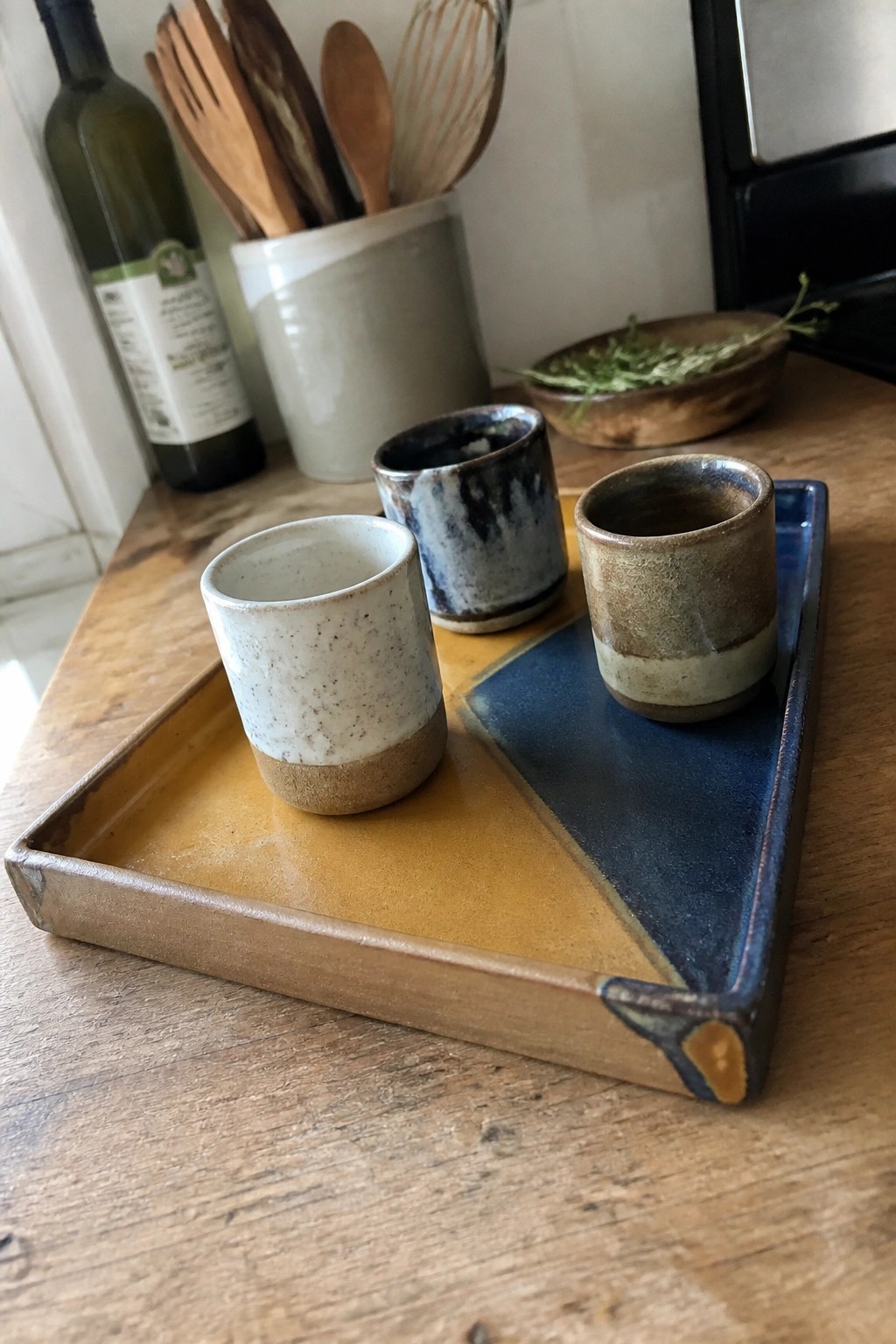
A rectangular slab tray with a diagonal color split forms the base for three short cylindrical cups. One half of the tray carries a matte yellow glaze while the other uses a deep blue, meeting at a clean angle. The cups show different glaze treatments: a speckled white over brown base, a dark blue with black runs, and a brown with a horizontal white band. This combination works as a small serving set for dips, oils, or condiments.
What makes this idea useful is how the tray keeps the cups together as a set while still allowing them to be used separately. You could change the angle of the glaze split or swap the yellow for another strong color to match different kitchen schemes. The compact size makes it easy to adapt into a desk organizer or bathroom tray by shortening the cups or adding simple dividers. In a kitchen this kind of piece stands out on Pinterest because the color blocks read clearly even in small photos.
Slab Built Tea Light Holder with Carved Lines
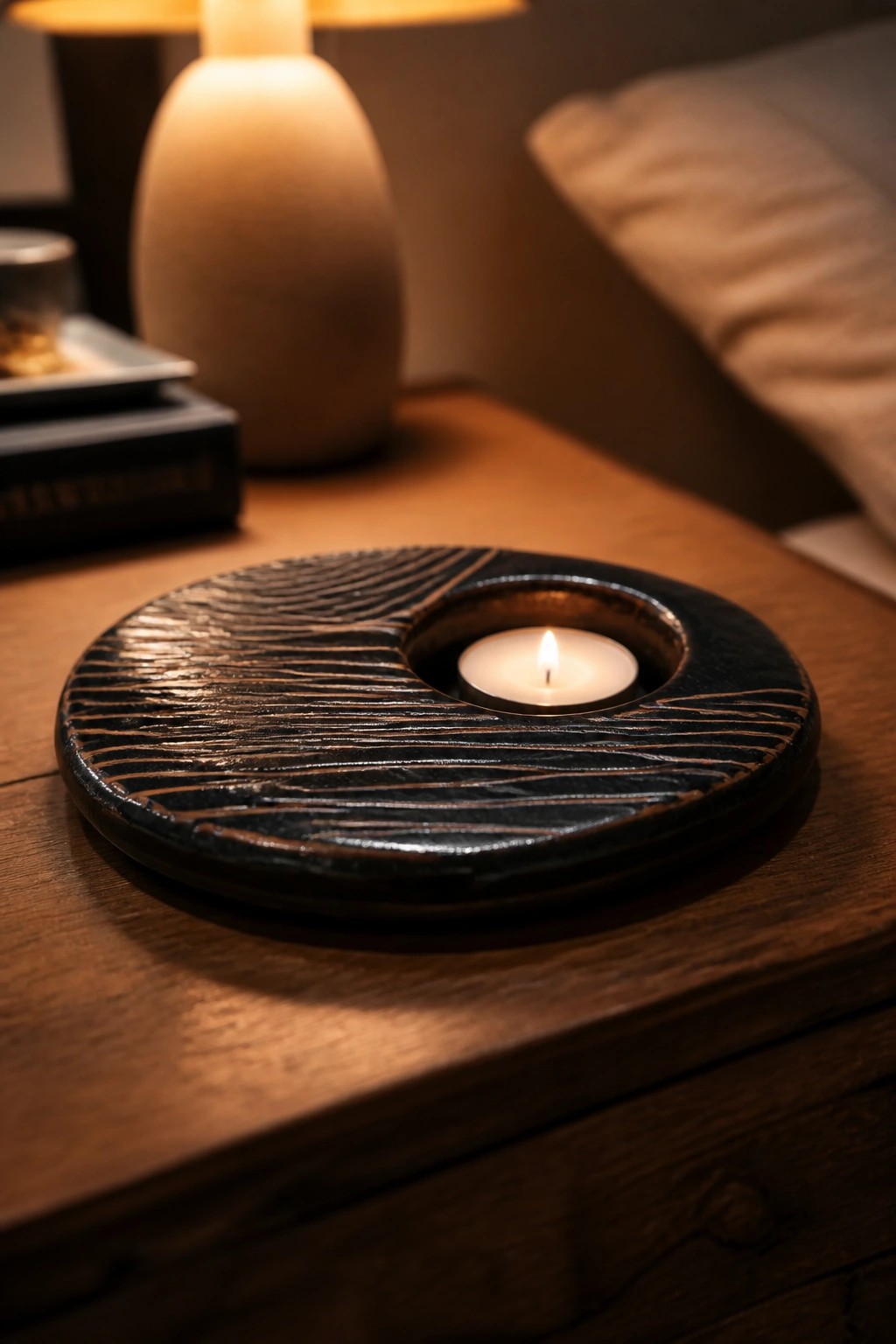
A flat round slab forms the base of this tea light holder, with a shallow central well sized exactly for a standard candle. Carved linear textures run across the surface in irregular parallel strokes that catch light and shadow once glazed. The dark finish keeps the focus on the texture while the low profile keeps the piece stable on any flat surface.
What makes this idea useful is how easily the same slab method scales to different diameters or gets adapted into a small tray or coaster set. The carved detail stands out without requiring complex construction, so you can finish the piece in a couple of sessions. In a bedroom or living room it provides a contained spot for low lighting while the abstract pattern keeps it from looking mass produced. You could swap the lines for stamped marks or leave sections smooth to change the look with almost no extra effort.
Marbled Slab Spoon Rest Tray
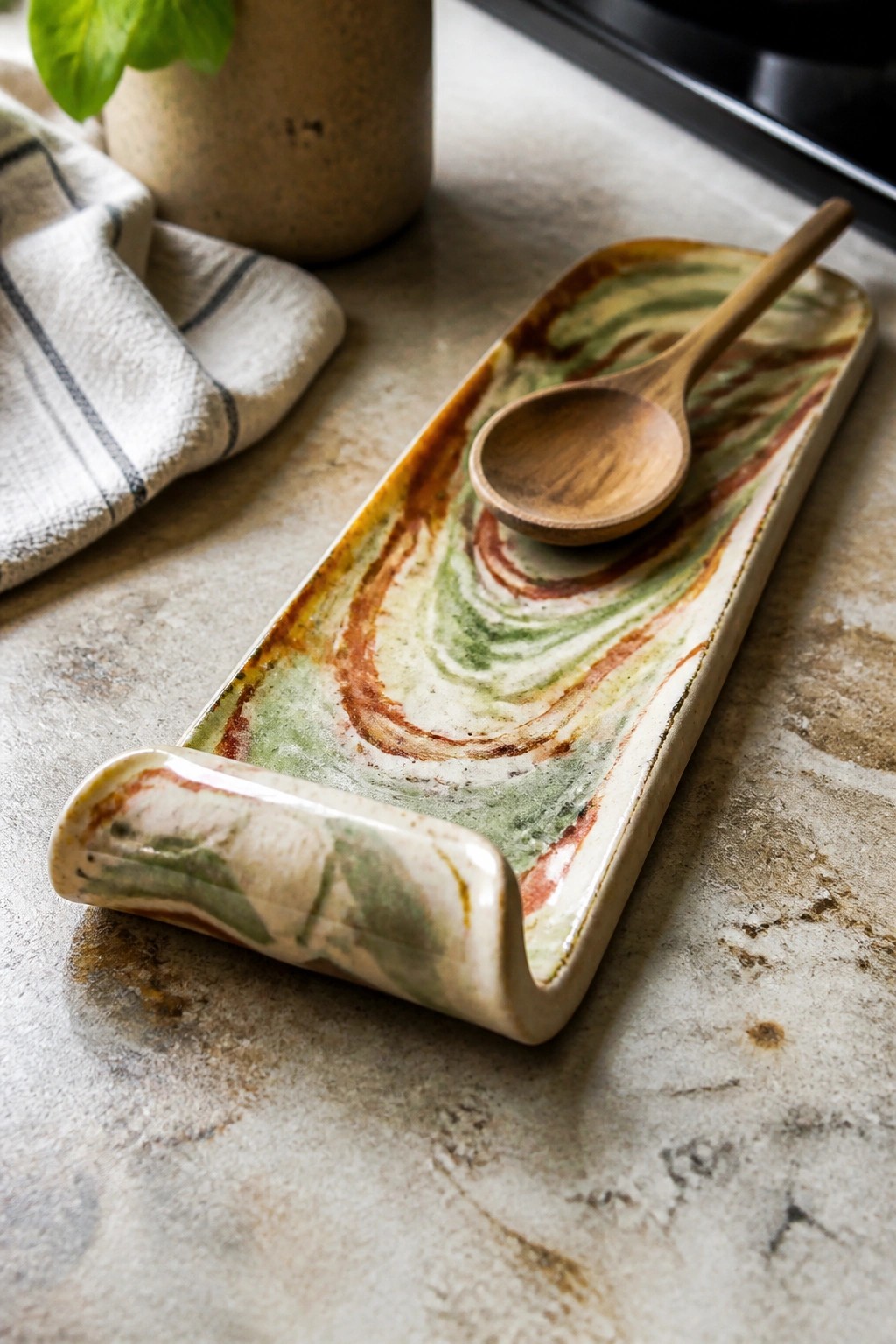
A long rectangular slab tray with one end curved upward forms a simple spoon rest or narrow kitchen tray. The surface carries an abstract swirl of green, brown, and rust glazes that create a marbled effect across the clay. This design keeps the focus on the flat slab shape so the glaze movement stands out without added sculpting or handles.
What makes this idea useful is the compact form that works on a countertop to hold a spoon while cooking or to serve small items. You can adapt the marbled look by brushing underglazes in layers before rolling the slab or change the proportions to make a longer version for chopsticks. The same shape also translates easily into a soap dish or small desk tray if you shorten the length and adjust the curve.
Organic Slab Ring Dish with Gold Line Accents
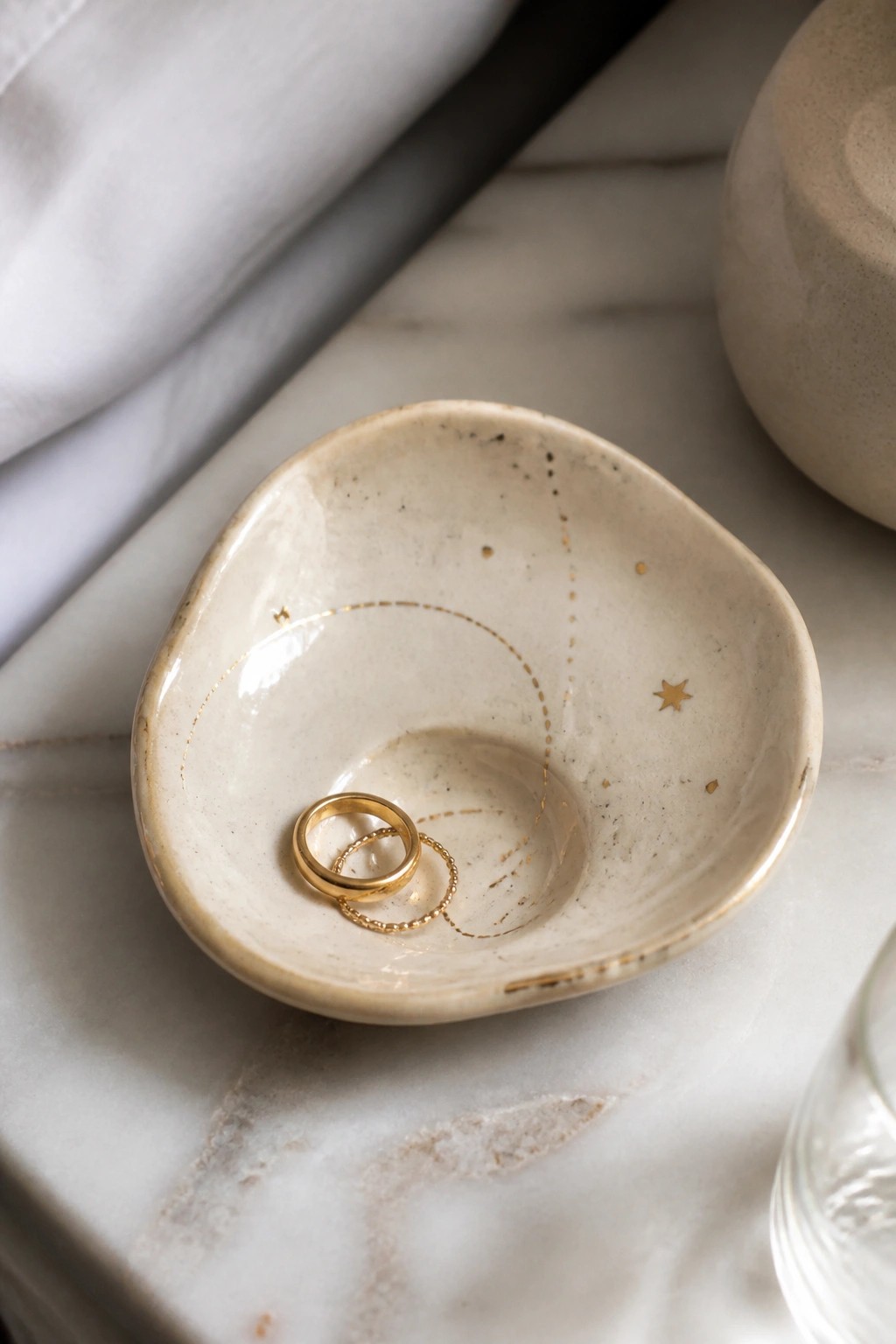
A small slab of clay rolled thin and shaped by hand into an uneven, low bowl creates a functional ring dish. The matte off-white surface carries thin gold lines and small star shapes that sit slightly off-center, giving the piece an abstract feel without clutter. This keeps the form simple while the metallic marks provide contrast that works in both minimal and layered settings. The compact size fits easily on a surface without taking up much space.
What makes this idea useful is how the same slab shape can be scaled up slightly for a soap dish or left as is for jewelry. The gold lines can be swapped for other colors or reduced to just a few dots if you want a quicker version. For a gift, something like this works because it stays decorative but still serves a clear purpose on a bedside table or vanity.
Slab-Built Abstract Bird Figurine
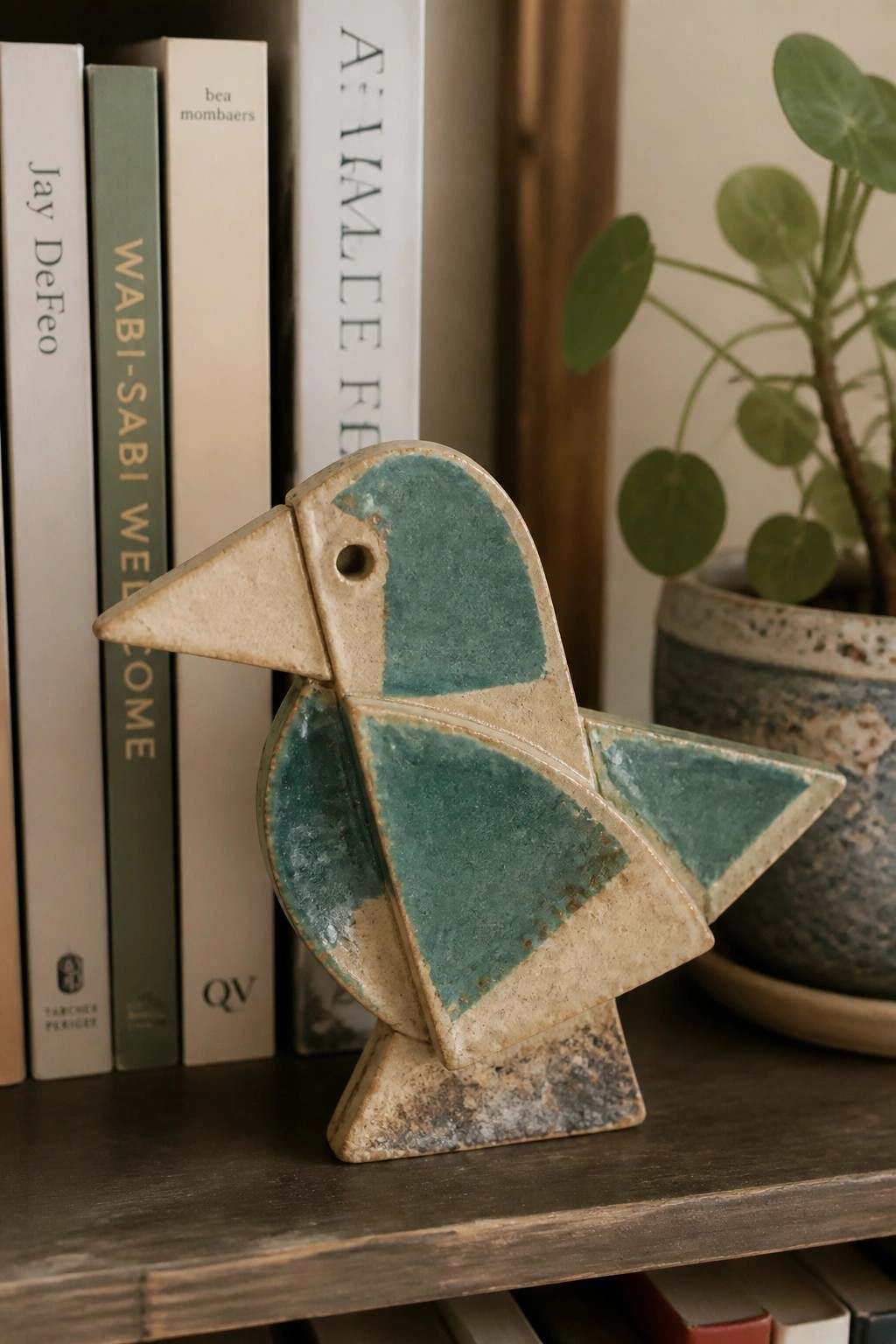
A slab-built bird figurine starts with flat clay pieces cut into angular shapes for the body, wings, beak, and base. These sections are joined at slight angles to create a stylized bird that stays flat and geometric rather than rounded. Blocks of teal glaze over a lighter base highlight the flat planes and make the seams part of the design.
The shape does a lot of the work here because the simple angled pieces are easy to cut and assemble even on a small scale. This kind of piece works especially well as a shelf accent or desk object where it can sit among books or plants without taking much space. You could rework the same method into other animals by swapping out the wing angles or beak shape, or turn the base into a small tray section for holding rings. The block glaze approach also translates easily if you want to test different color combinations on future versions.
Abstract Slab Toothbrush Holder
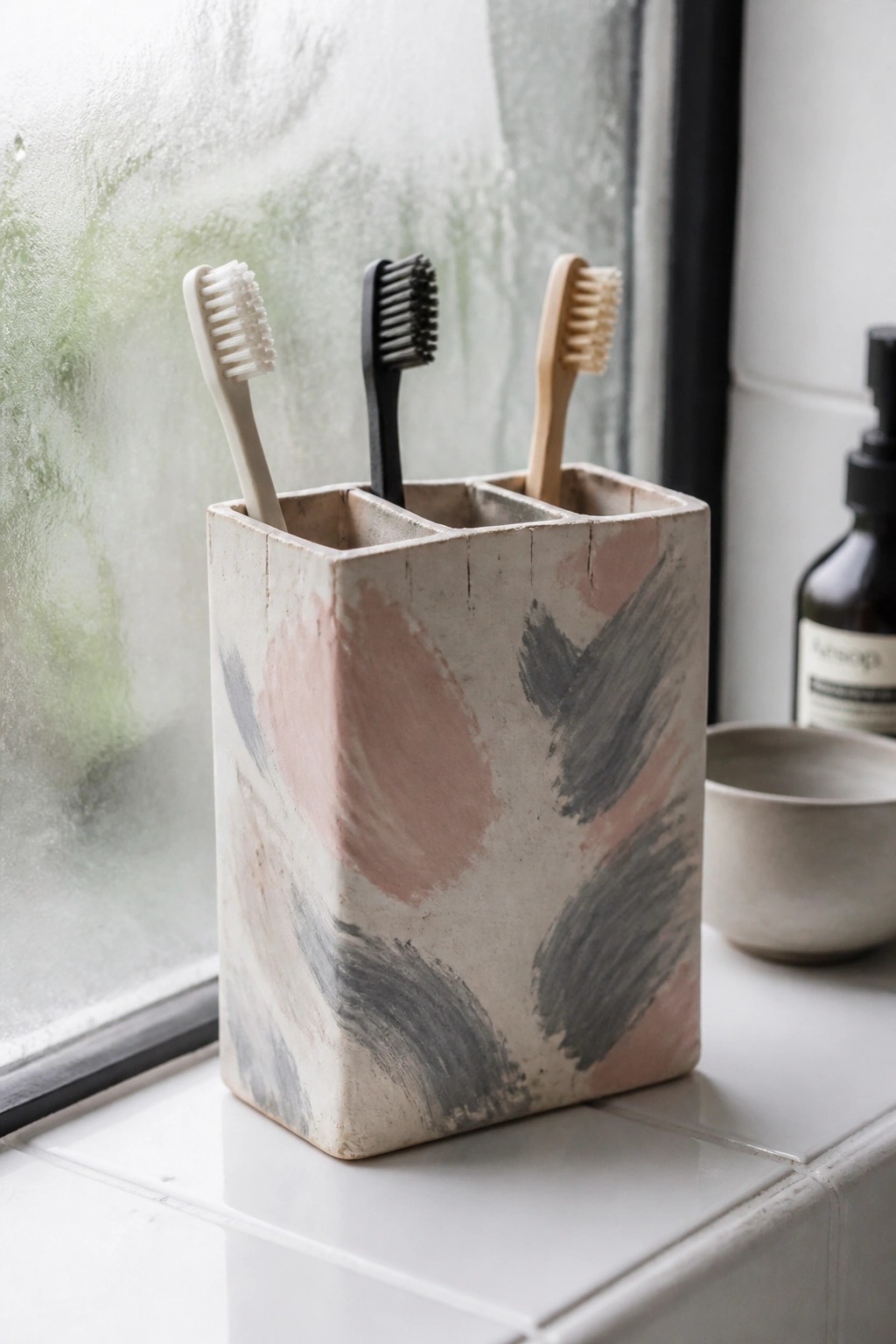
A slab-built ceramic holder with three open compartments keeps toothbrushes upright and separated without any lids or extra hardware. Flat clay slabs are joined into a simple rectangular box, then the exterior is covered with loose brushstrokes in pink and gray over a pale base. The design stays functional while the uneven strokes add movement across the flat sides.
What makes this idea useful is that the same three-compartment layout can be adjusted to two or four sections depending on how many brushes need storage. The painted surface is quick to recreate on new pieces by changing the colors to match different bathroom tiles or towels. For a gift, the form can be shortened into a smaller two-slot version or lengthened into a tray for soap and a razor.
Ridged Slab Soap Dish for Bathroom Use
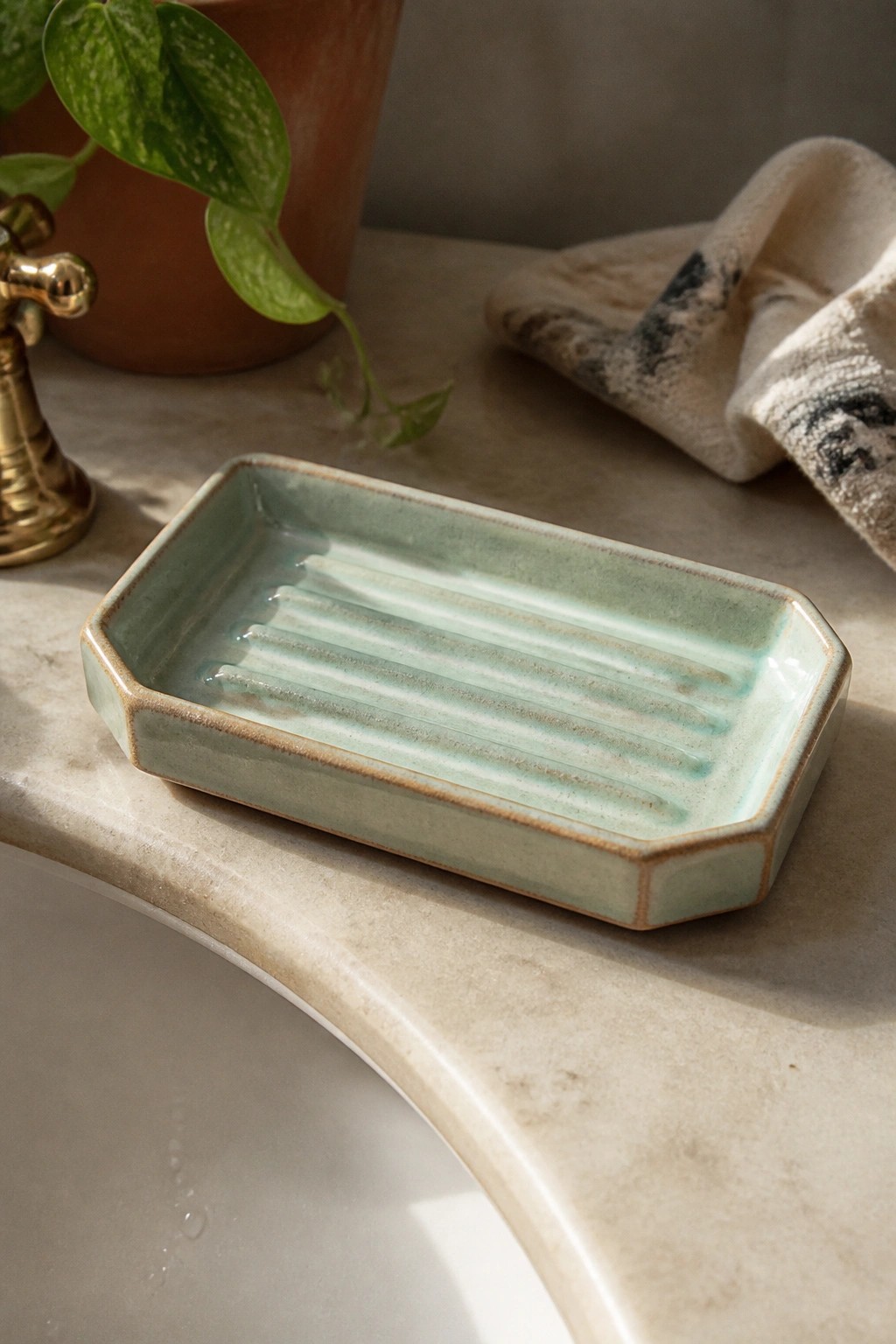
A rectangular slab tray with parallel ridges along the base forms a basic soap dish that lets water drain away from the bar. The octagonal corners and celadon-style glaze create a simple surface that stays practical while looking finished. This project falls into the bathroom item category and uses a single slab cut to shape with added texture for function.
The small footprint lets it sit on a sink ledge or shower shelf without crowding the space. You can scale the same ridge layout to a wider tray for holding rings or keys, or swap the glaze for a matte white or terracotta tone to fit other rooms. For a gift this shape requires only basic cutting and scoring, yet the built-in drainage detail makes it more useful than a flat dish.
Slab-Built Utensil Holder with Vertical Stripes
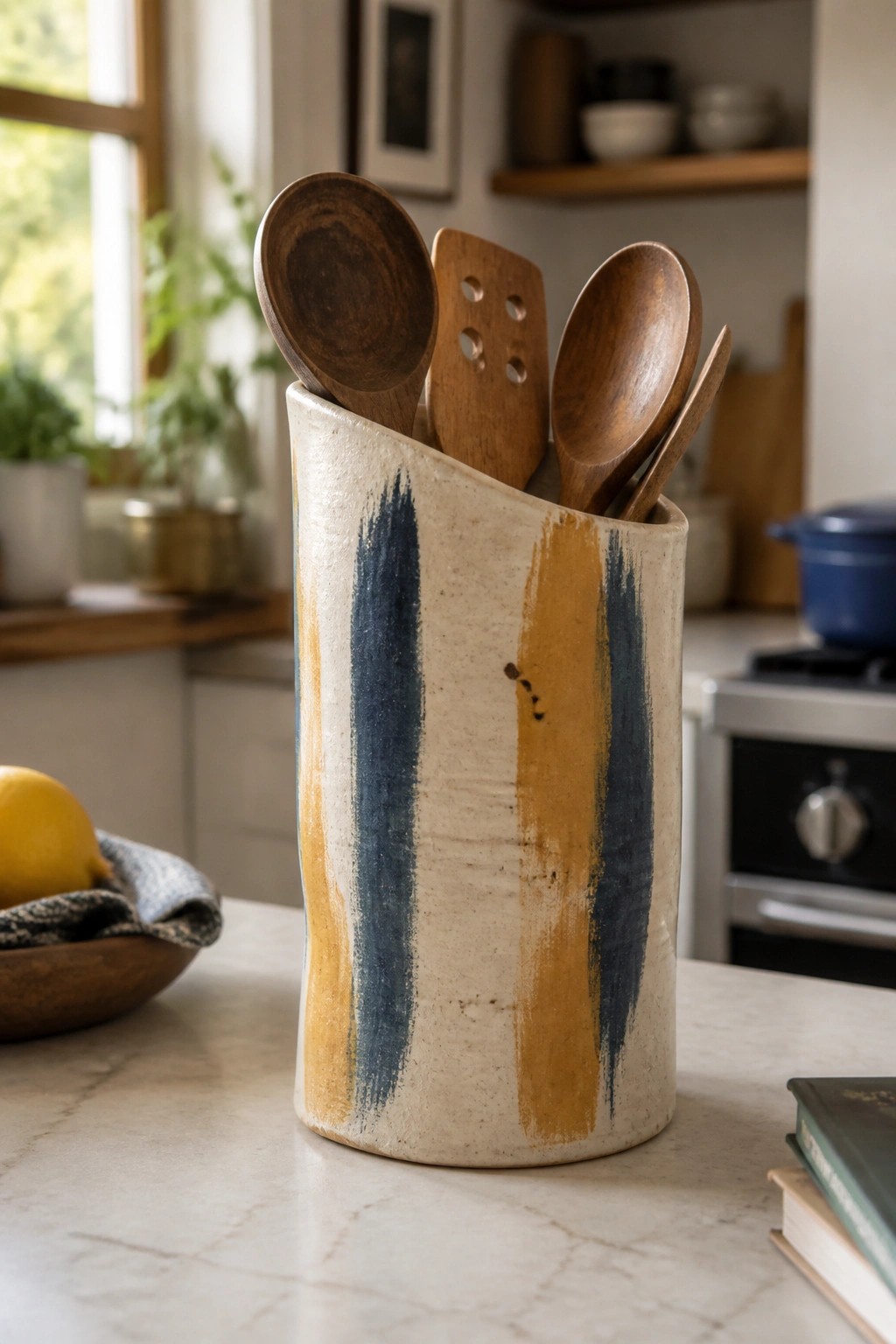
A slab cylinder formed from a single sheet of clay makes a sturdy utensil holder once the seam is joined and the base is attached. The surface carries wide vertical stripes of navy and ochre applied with a brush, leaving the rest of the off-white clay visible for contrast. This keeps the shape simple while the painted lines give it an abstract look that fits contemporary kitchen styling.
What makes this idea useful is that the tall, narrow form keeps spoons and spatulas upright on a countertop without much footprint. You can adjust the stripe widths or switch the colors to match your own dishes, or shorten the height to create a smaller version for desk pens. The same slab construction works for a wider planter if you change the diameter and add drainage holes before firing.
Impressed Leaf Slab Tray for Jewelry
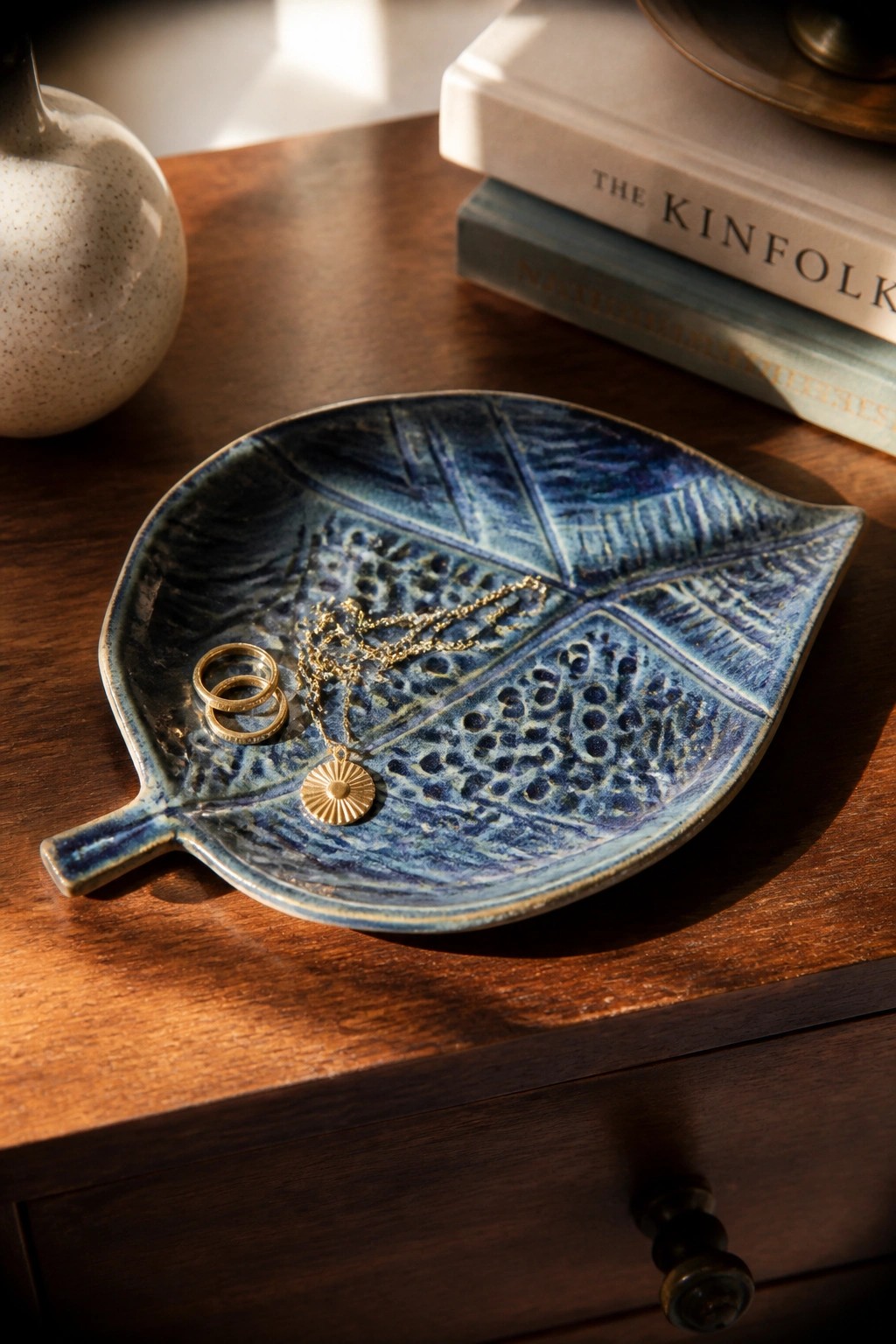
A slab built leaf tray makes a compact dish for rings, necklaces, or small everyday items. Cut a flat piece of clay into an elongated leaf shape, then press leaf veins or similar textures directly into the surface before adding a handle-like stem at one end. The blue glaze settles into the recessed lines and gives the piece a mottled finish that keeps the natural pattern visible.
What makes this idea useful is how the same slab method can be adjusted for different sizes or used as a template for soap dishes and small planters. The impressed texture does most of the visual work, so a single glaze color is enough to create contrast without extra painting. This kind of tray works especially well on a dresser or desk where the leaf outline stays recognizable even from a distance.
Slab-Built Rectangular Vases with Abstract Surface Patterns
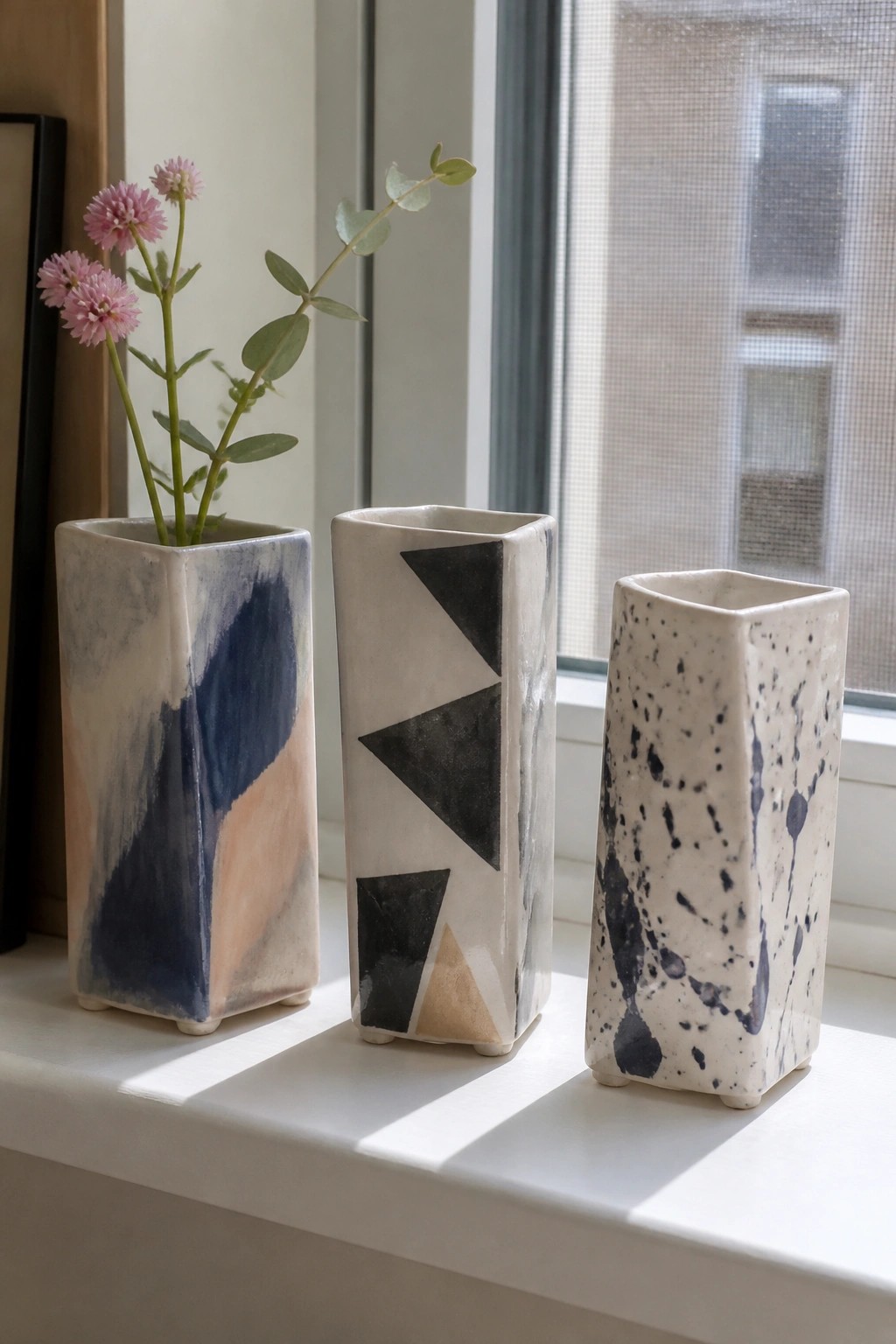
These vases are made by joining flat clay slabs into a tall square form that gives clean edges and flat sides. The surface designs come from different abstract treatments: one uses blended washes of blue and peach, another applies sharp black triangles over a light base, and the third relies on a loose speckle pattern in navy. The flat planes make it straightforward to try multiple decoration styles on the same basic shape without complicated carving or throwing.
The shape does a lot of the work here because the straight sides sit stably on a shelf and leave room for bold patterns that read clearly from a distance. You could scale the same slab template down for smaller bud vases or adapt the geometric version into a desk pencil holder. The three different surface approaches on one form also show how to get variety without building new templates each time. For a gift, something like this fits easily into a simple box and still looks intentional.
Abstract Slab Incense Holder
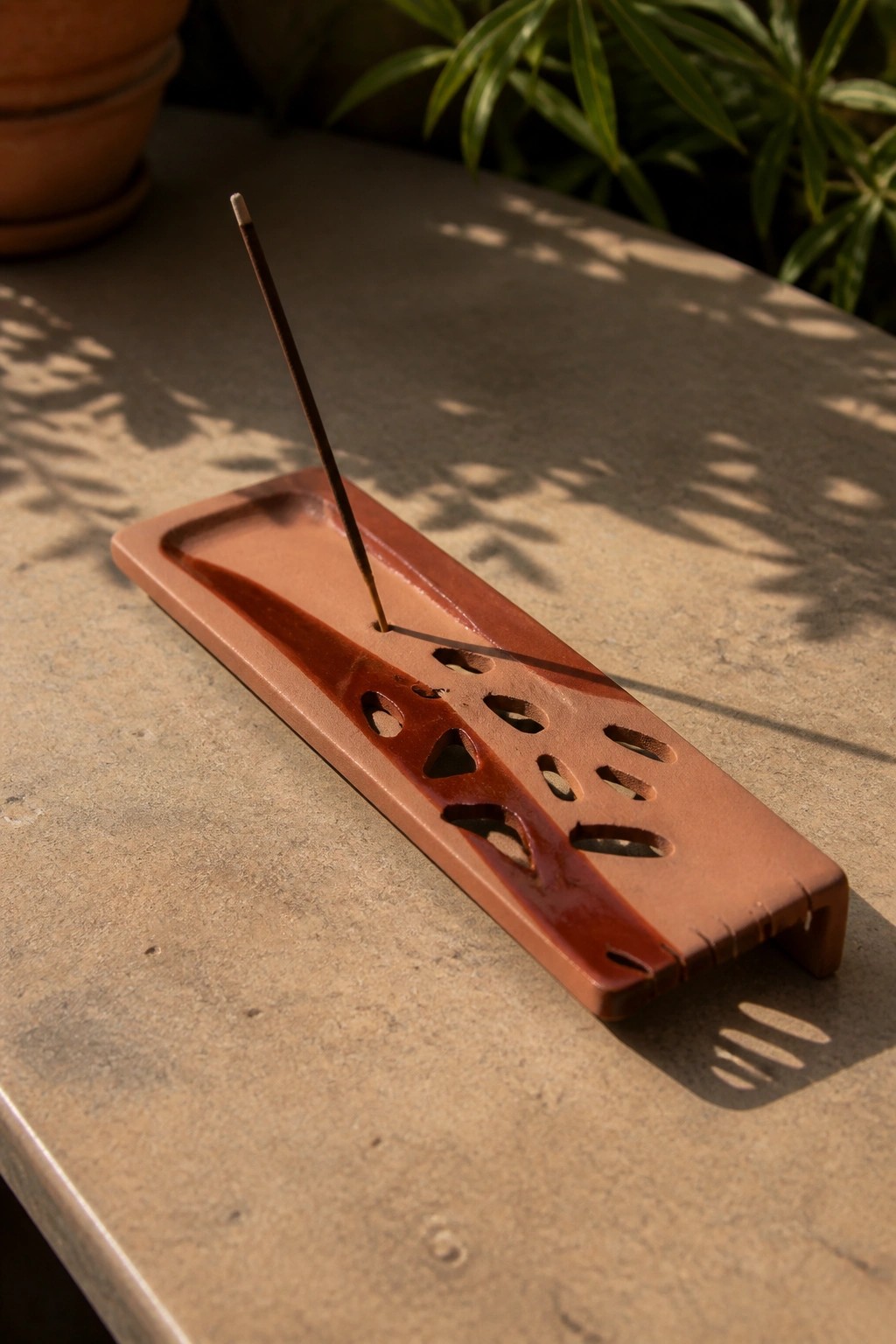
A slab-built incense holder starts with a flat rectangular clay base that includes a small drilled hole near one end to keep a stick upright. A shallow channel runs along one side to catch ash, while a row of irregular cutouts creates an abstract pattern across the surface. The simple shape and negative space design keep the piece functional yet visually light. This type of project falls under contemporary decor objects that serve a specific use without extra ornament.
What makes this idea useful is how the cutout layout can be swapped for circles, lines, or other shapes to change the look quickly. The low profile fits on a desk, nightstand, or windowsill where a taller piece would feel out of place. You could shorten the slab for a travel version or widen the channel to hold a larger stick. The same base shape also works as a small tray for rings or matches if you skip the hole.
Abstract Glaze Block Bowl
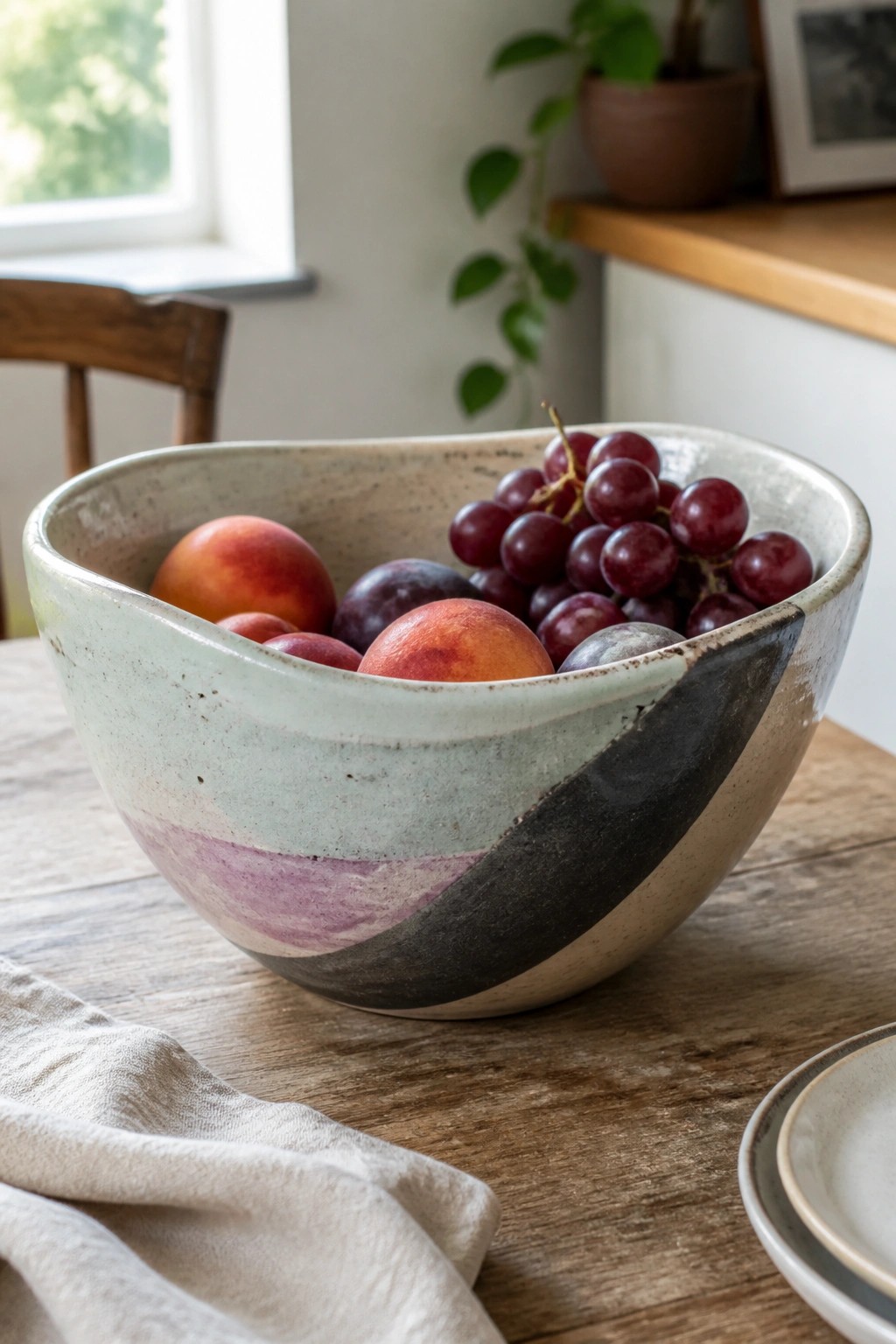
A handbuilt bowl with an uneven oval shape and soft, sloping walls makes a strong base for abstract surface design. Wide bands of sage green, muted purple, and a heavy diagonal black stripe create movement across the form while the speckled clay shows through in places. The idea works because the large color areas stay bold even when the rim and walls stay simple. This approach fits slab or handbuilt construction where the focus stays on glaze placement rather than precise shaping.
What makes this idea useful is how the strong diagonal stripe hides uneven edges and still reads as intentional. You could repeat the same color blocking on a flatter tray or a set of smaller dip bowls for variety. The scale works well on a kitchen counter or dining table for fruit or bread. For a different look, shift the black band to a deep teal or let the colors wrap slightly onto the interior.
Stacked Slab Ring Holder with Watercolor Glaze
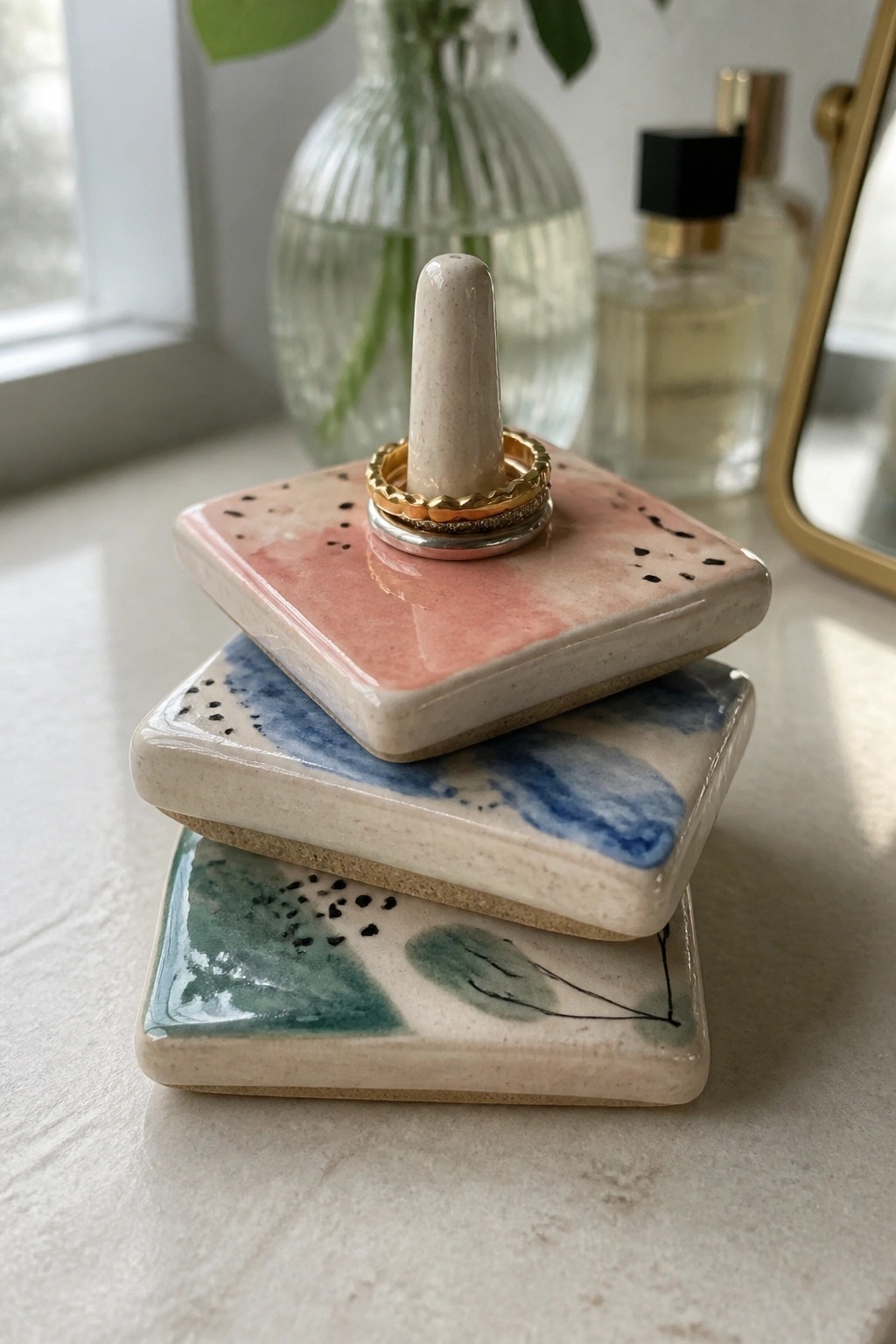
A simple ring holder built from three square slabs stacked at slight angles creates a tiered display surface. Each slab uses a soft watercolor-style glaze in different color families, with the top slab holding a small upright cone that keeps rings in place. The design keeps the focus on flat, slab-built forms and loose abstract patterns rather than detailed shaping.
What makes this idea useful is how the stacked squares turn a basic ring dish into something taller that takes up little counter space on a vanity or nightstand. You can adapt it by using two slabs instead of three, switching the cone for a short cylinder, or repeating the same glaze across all layers for a more unified look. The small scale also makes it easy to fire in a single kiln load and simple to personalize with different color combinations for gifts.
Slab-Built Wall Ledge with Abstract Glaze Patches
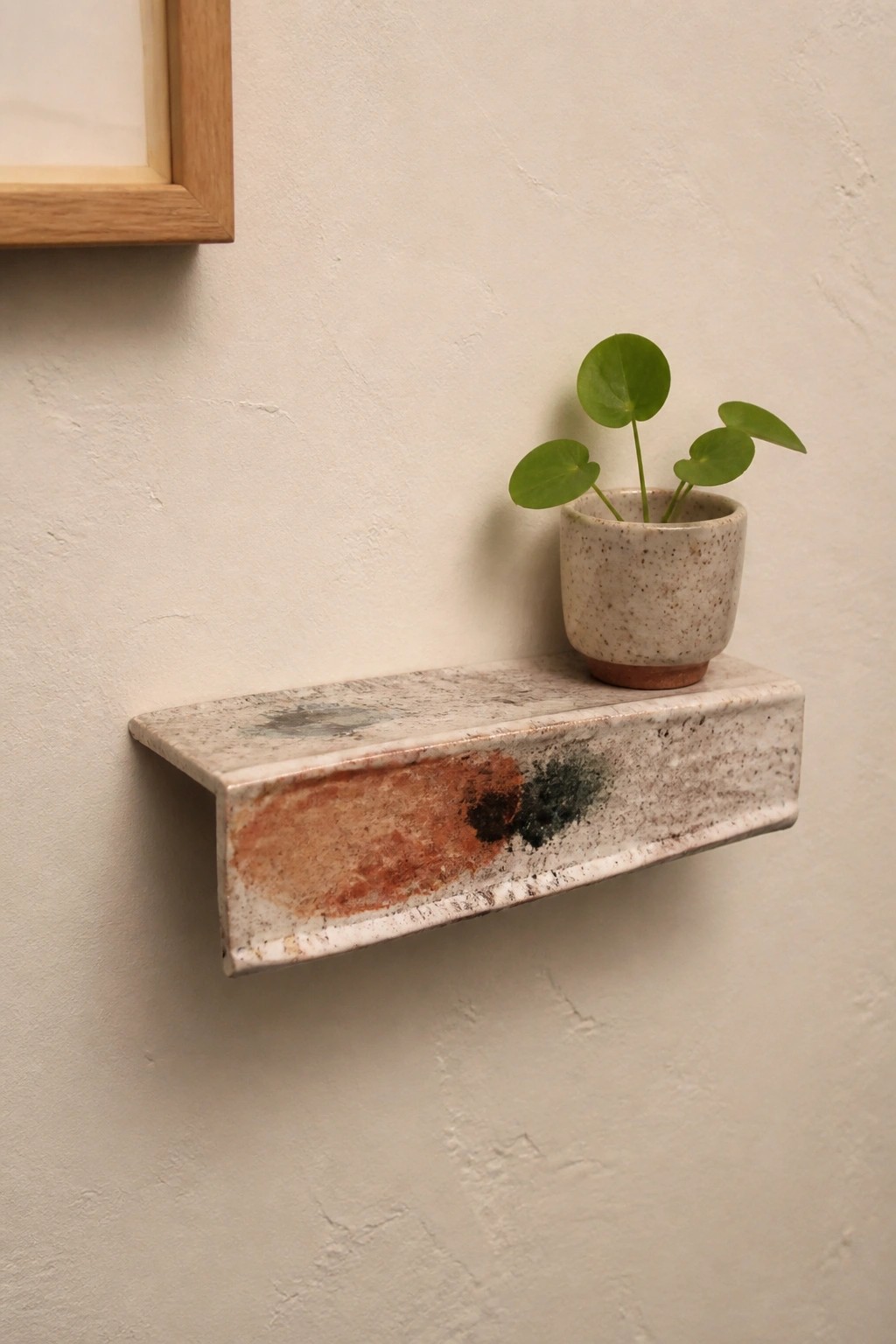
A slab-built wall shelf creates a narrow ledge that mounts directly to the wall and holds small planters or objects. The rectangular form stays flat on top with a raised back edge for support, while the surface carries broad patches of orange, black, and muted green glaze over a light speckled clay body. This keeps the shape simple and lets the glaze application supply the main visual detail without added carving or texture. The result works as a functional decor piece rather than a container or vessel.
What makes this idea useful is how the length can be cut to fit a specific wall spot before firing. The patchy glaze method takes little time yet creates enough contrast to draw attention in photos. A piece like this fits well above a desk or narrow hallway where a full shelf would feel too heavy. You could shorten the slab for a single small plant or widen it slightly to hold two pots side by side.
Assembled Slab Sculpture with Color Blocked Sections
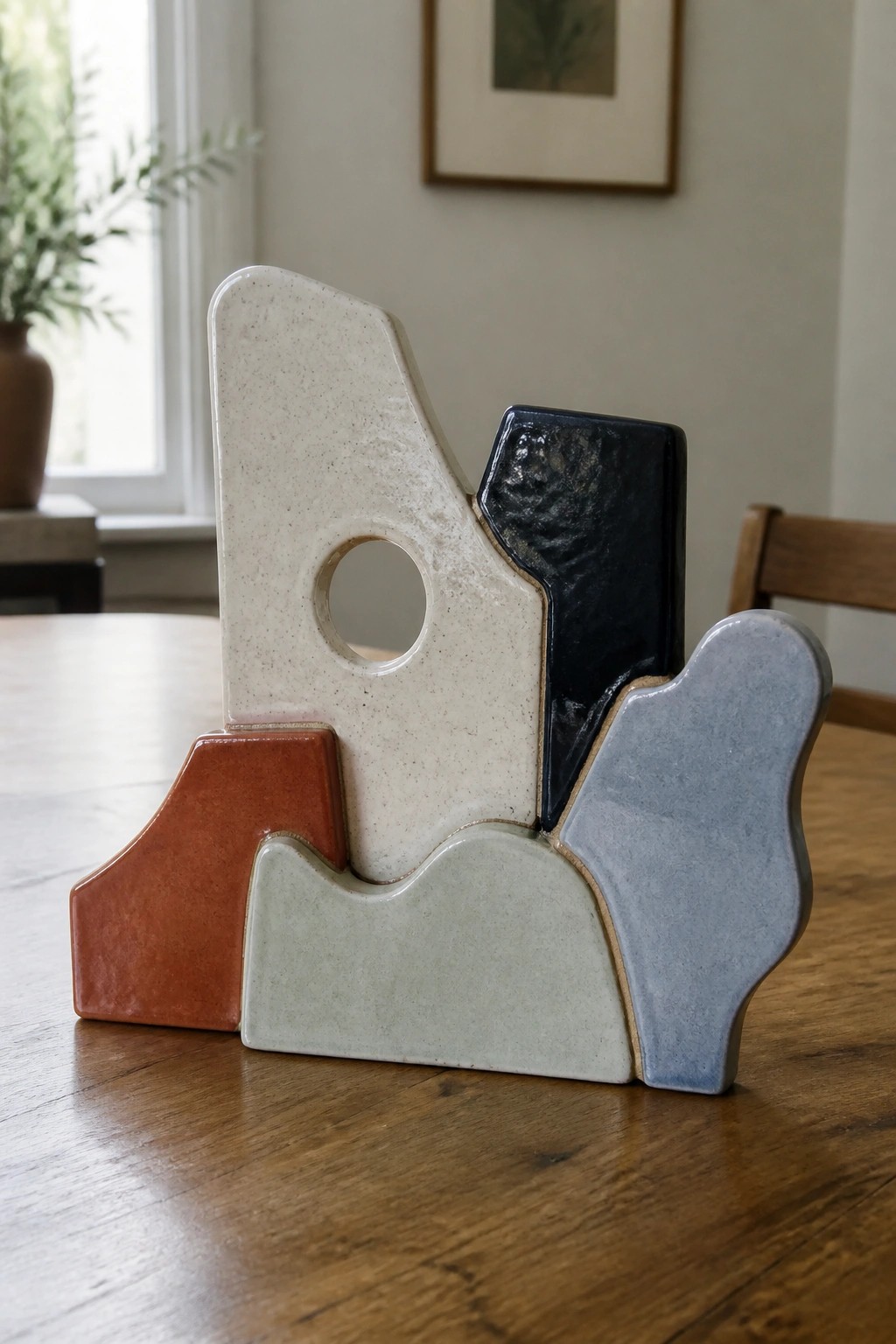
A slab-built abstract sculpture like this starts with flat clay pieces cut into irregular shapes and joined at angles to stand upright. The circular cutout in the largest panel creates negative space that lightens the form, while the stepped base adds stability without needing extra supports. Contrasting glazes on each section keep the separate slabs visible and give the piece a graphic, contemporary look that works as a standalone decor object.
What makes this idea useful is how the same construction method can be adjusted for different sizes or turned into a bookend by adding weight inside the base. You could repeat the color blocking on a smaller scale for a ring dish or tray, or simplify it to two slabs for a quicker version. The cutout and stacked shapes also translate well to a wall-mounted piece if you flatten the bottom edge.
Frequently Asked Questions
What type of clay works best for creating abstract and contemporary slab pottery pieces?
Stoneware or porcelain clays are excellent choices because they hold fine details well and fire to a smooth finish that highlights modern designs. Start with a clay body that has some grog for strength during construction, and test small samples to see how it responds to your textures and forms before committing to larger projects.
How can I add interesting textures and patterns without specialized tools?
Use everyday items like leaves, fabric scraps, lace, or even carved wooden blocks to impress designs into the slab while it is still soft. Roll the slab between two sheets of canvas or plastic to maintain even thickness, then experiment with layering multiple textures for depth in abstract compositions.
What techniques help prevent warping or cracking in slab-built forms?
Allow slabs to firm up to a leather-hard stage before assembling them, and score and slip all joints thoroughly for strong connections. Dry pieces slowly under plastic to control moisture loss evenly, and avoid placing them in direct sunlight or drafts during the initial drying phase.
Are these slab pottery ideas suitable for beginners, or do they require advanced skills?
Many abstract and contemporary slab ideas can be adapted for beginners by starting with simple flat forms like trays or wall hangings before moving to more complex folded or assembled structures. Focus first on mastering basic slab rolling and joining, then gradually incorporate the listed design concepts as your confidence grows.
How should I approach glazing to enhance the modern aesthetic of slab pottery?
Apply matte or satin glazes in bold, contrasting colors to emphasize geometric or organic abstract elements. Layer underglazes for subtle patterns before a final clear or colored glaze coat, and consider multiple firings to achieve depth and variation in the finished surface.

Pottery Path is my cozy corner of the internet where I share clay ideas, pottery inspiration, and simple projects you can recreate at home. I love exploring everything from air dry clay to handbuilt pottery to cute minis that brighten your day. My goal is to make clay crafting feel easy, fun, and welcoming for anyone who wants to try it.
You will find beginner friendly tutorials, creative pottery painting ideas, and lots of warm inspiration for slow and happy crafting. If you enjoy hands on creativity, this space will feel like home.