I like to look outside for ideas when I am making slab pottery.
The textures in wood and stone give me a lot to work with.
I have put together some projects that copy those natural shapes and surfaces.
Most of them are straightforward and do not need special tools.
You can try them with clay you have on hand.
Pressed Fern Slab Tray
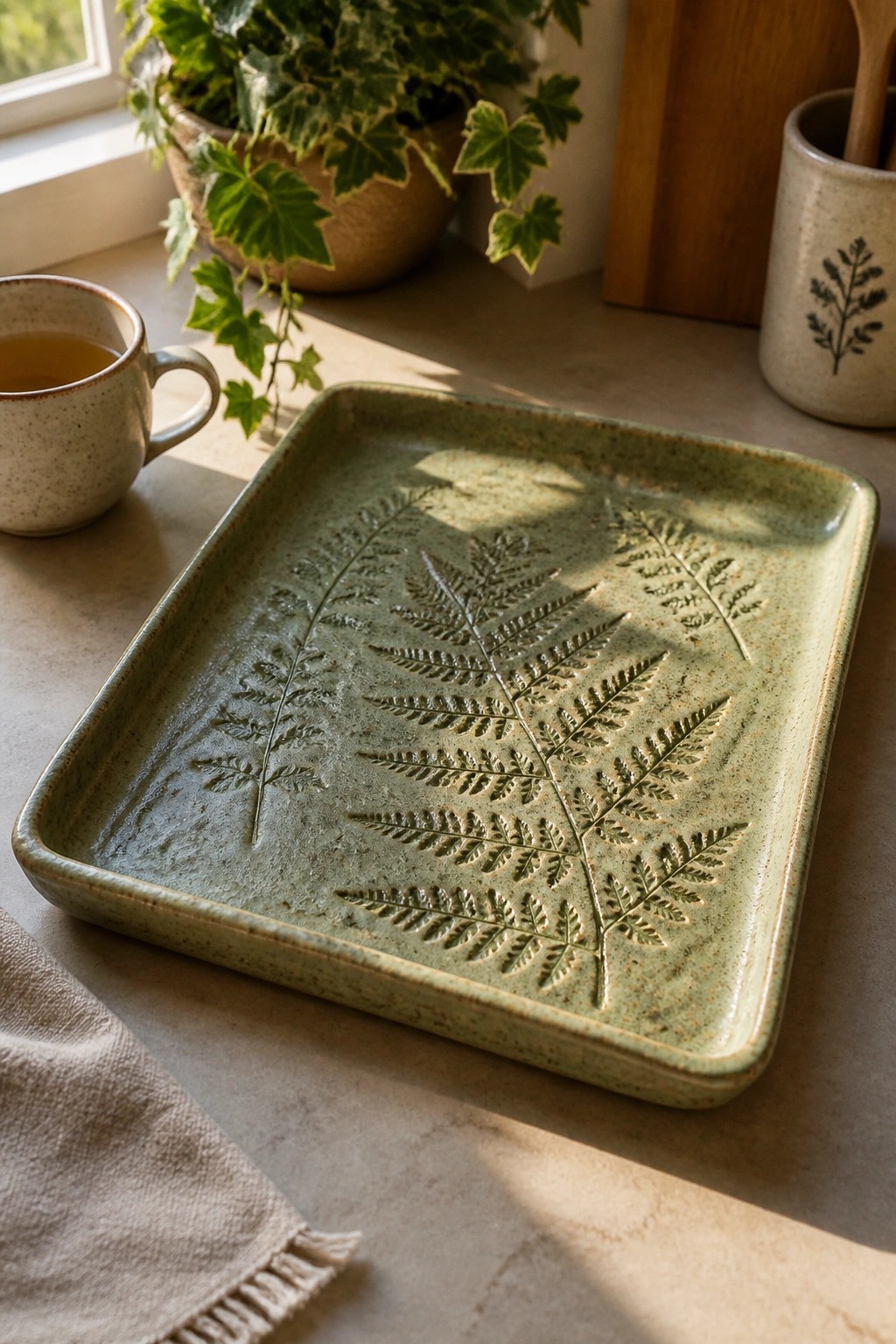
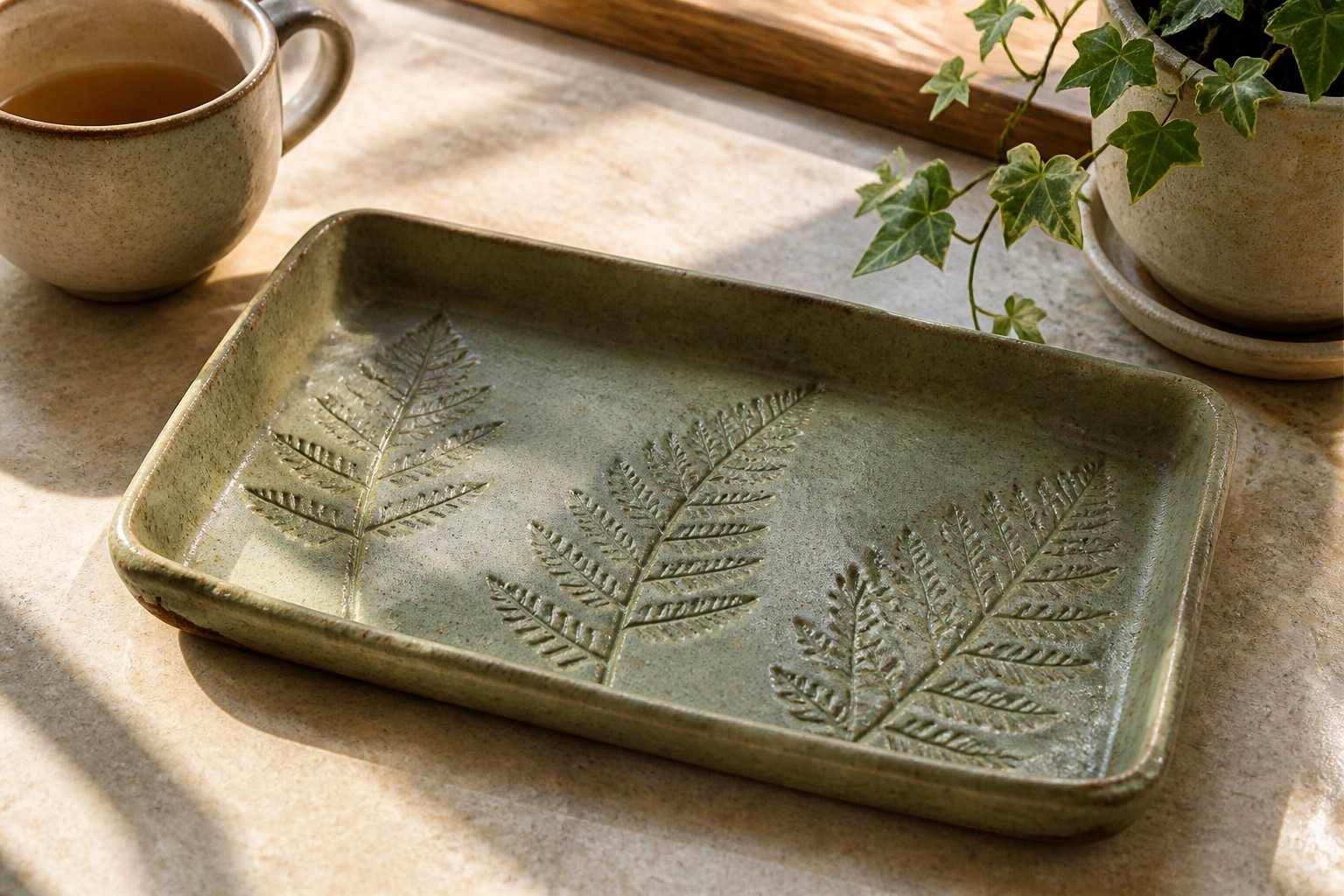
A rectangular slab tray works well here by rolling out a flat piece of clay, pressing fresh fern fronds directly into the surface for clear leaf details, and then forming low sides to create a shallow dish. The speckled green glaze highlights the raised and recessed areas from the impressions while keeping the overall look simple and natural. This approach fits the category of a functional tray that doubles as a decorative piece for holding small items.
The shape does a lot of the work here because the flat base gives plenty of room for multiple leaf prints without crowding. A piece like this works especially well as a kitchen catch-all or plant saucer where the textured surface adds interest without needing extra decoration. You could adapt the same idea by using different leaves on a smaller scale to make soap dishes or ring holders. For a gift, something like this stands out on Pinterest because the plant imprints read clearly even in a thumbnail photo.
Meandering Glaze Stream on a Slab Dish
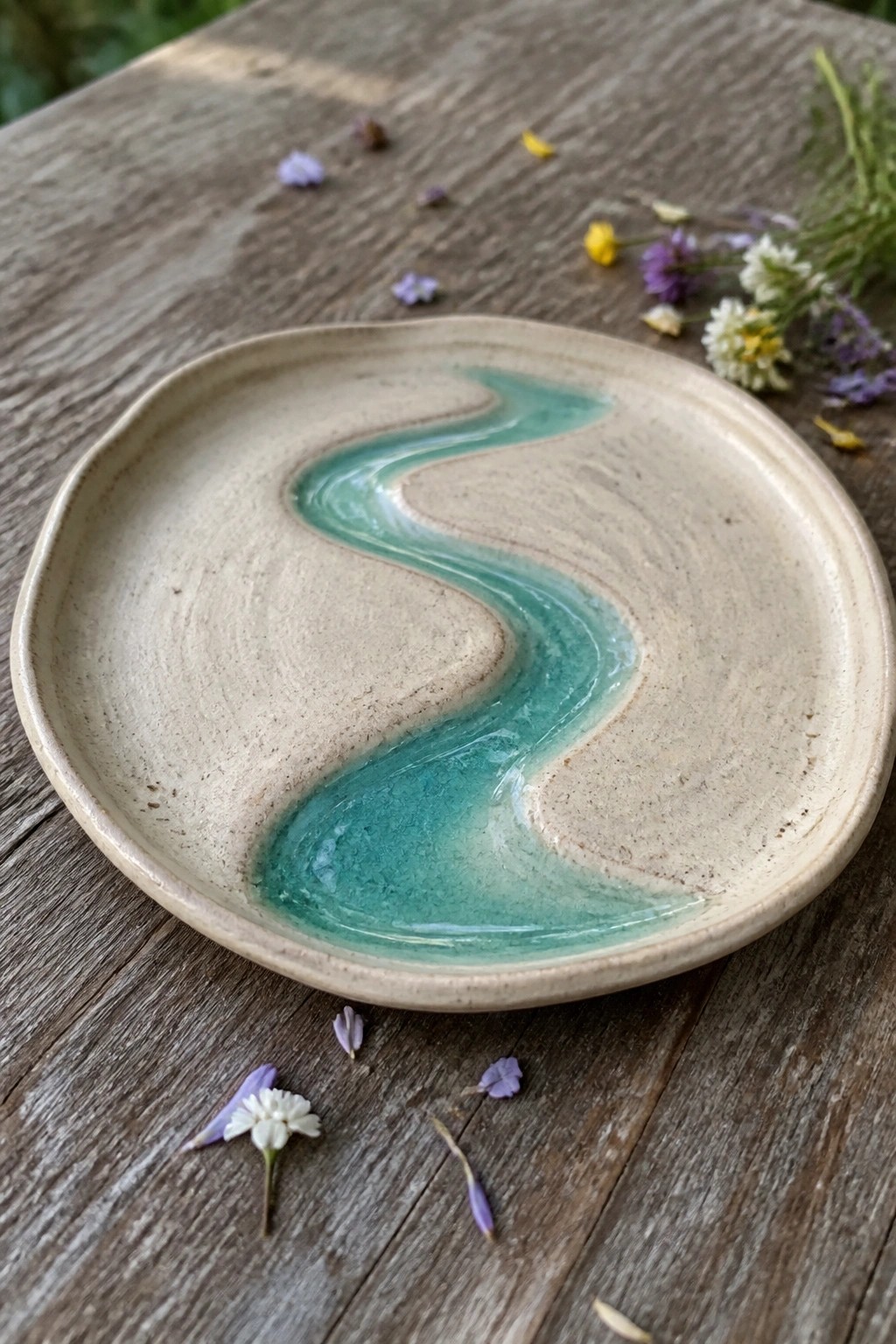
A slab-built shallow dish uses a single flowing line of turquoise glaze to create a winding path across the surface. The rest of the form stays in a matte, speckled clay that provides contrast and keeps the focus on the glaze movement. This approach turns a basic round plate into a nature-inspired piece by letting the glaze suggest water without any added carving or texture tools.
What makes this idea useful is how easily the same glaze path can be repeated on different slab shapes like trays or small catchalls. The flowing line works on both small and medium sizes, so you can scale it down for a ring dish or widen it for a soap holder. In a kitchen or entryway the simple color split keeps it practical while still showing the handmade clay surface clearly.
Bark-Textured Slab Mug
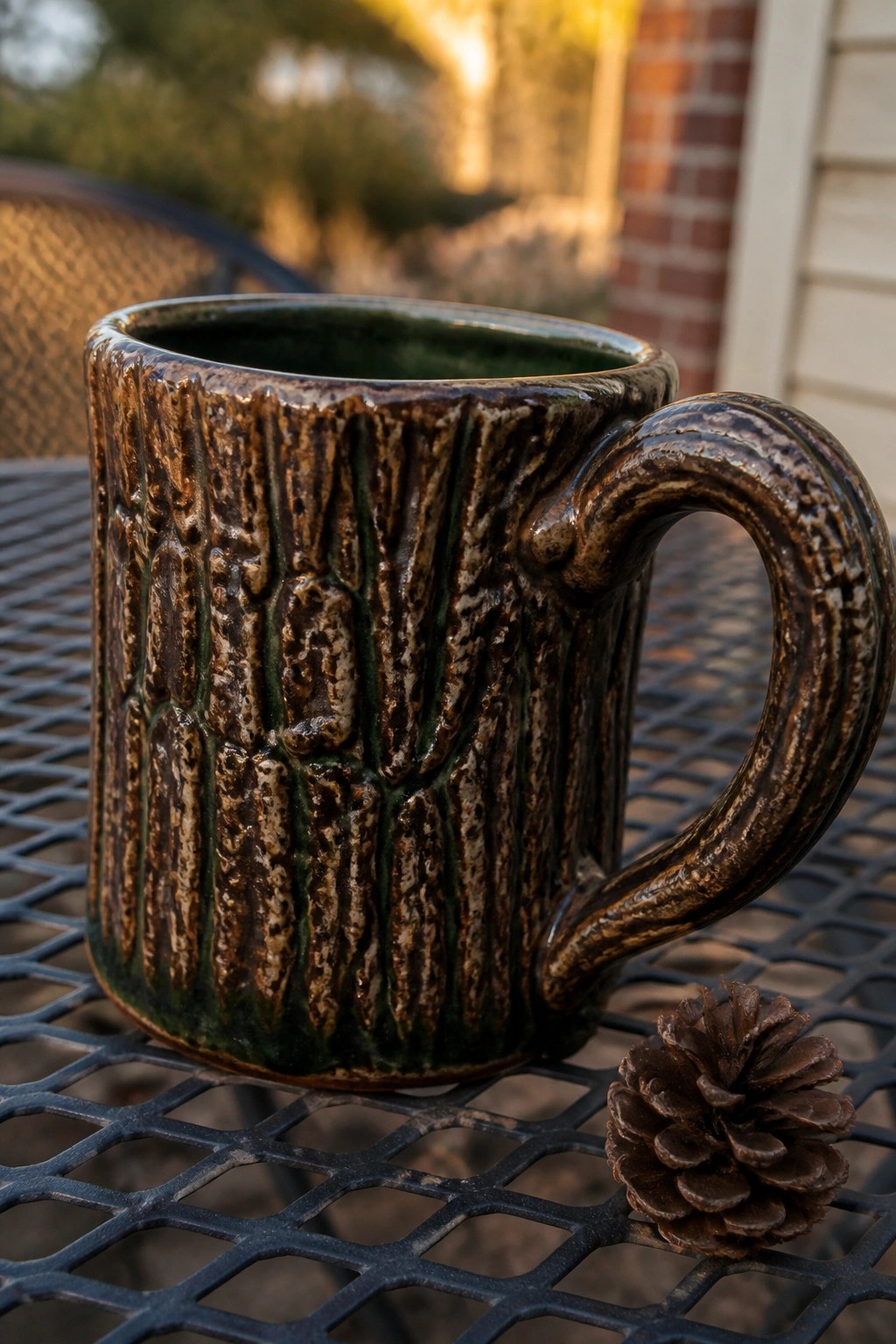
A hand-built ceramic mug formed from slabs of clay carries a strong bark texture pressed into the surface while the clay is still soft. The vertical ridges and deep grooves catch layers of brown and green glaze that settle into the low spots and leave raised areas lighter. This creates a drinking vessel that reads as a small slice of tree trunk without any painted details. The shape stays simple and functional with a sturdy pulled handle.
The shape does a lot of the work here because the texture turns an ordinary mug into something that fits both kitchen use and desk storage. You could roll the same bark impression onto a wider slab and make a small planter or change the rim height to create a pencil holder. The glaze combination works on other forms too, like a low bowl or a lidded jar, so the idea travels easily to different projects. A piece like this stands out on Pinterest because the texture reads clearly even in small thumbnails.
Pressed Leaf Rectangular Planter

A rectangular slab planter made from flat clay sheets uses real leaves pressed into the surface to create raised botanical textures. The exterior gets a light green glaze that settles into the leaf details while the interior stays in its natural terracotta tone. This creates a simple box shape that functions as a small planter or storage holder without extra handles or lids.
What makes this idea useful is how the pressed leaf technique adds surface interest using materials most potters already have on hand. The low rectangular form sits stable on a shelf or windowsill and works for succulents, small tools, or bathroom items. You can swap leaf types for different patterns or change the glaze to a matte white or deeper green, and the same slab method scales easily into a matching tray or soap dish.
Ginkgo Leaf Hanging Plaque
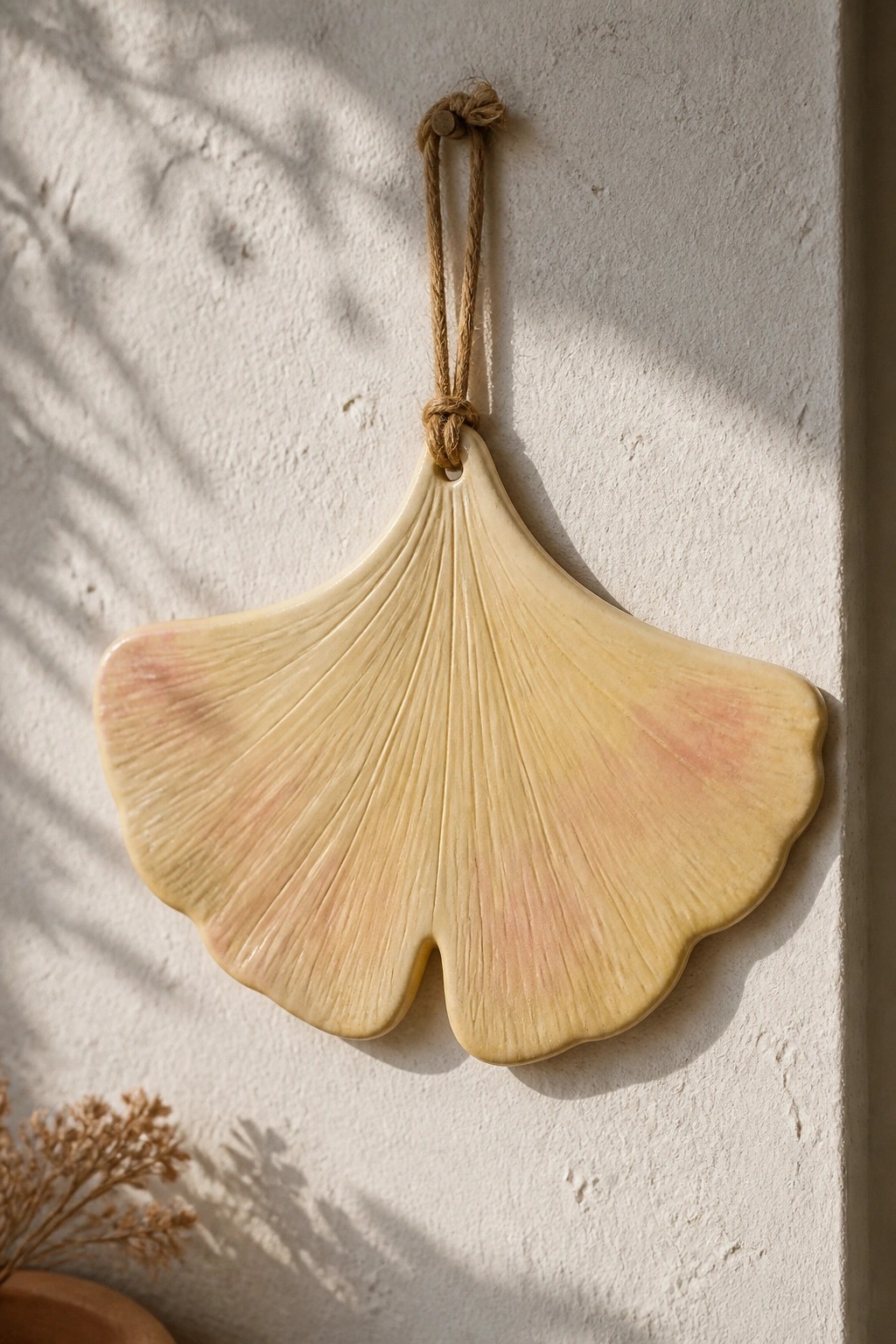
A ginkgo leaf wall hanging starts with a flat clay slab cut into the distinctive fan shape. Press vein lines into the surface for texture, then form a small hole near the stem before glazing. The pale yellow base with soft pink blush at the edges keeps the focus on the leaf form itself. This approach works as a straightforward decor object that hangs easily with cord or wire.
What makes this idea useful is how the single slab and simple hanging method keep the project quick while still looking finished. You can swap in other leaf outlines or make a set of different sizes to group on one wall. In a hallway or near a window, the shape sits flat against the surface without taking up shelf space. For another version, try the same slab technique on a smaller scale to create matching drawer pulls or plant markers.
Leaf-Shaped Slab Dish for Countertop Use
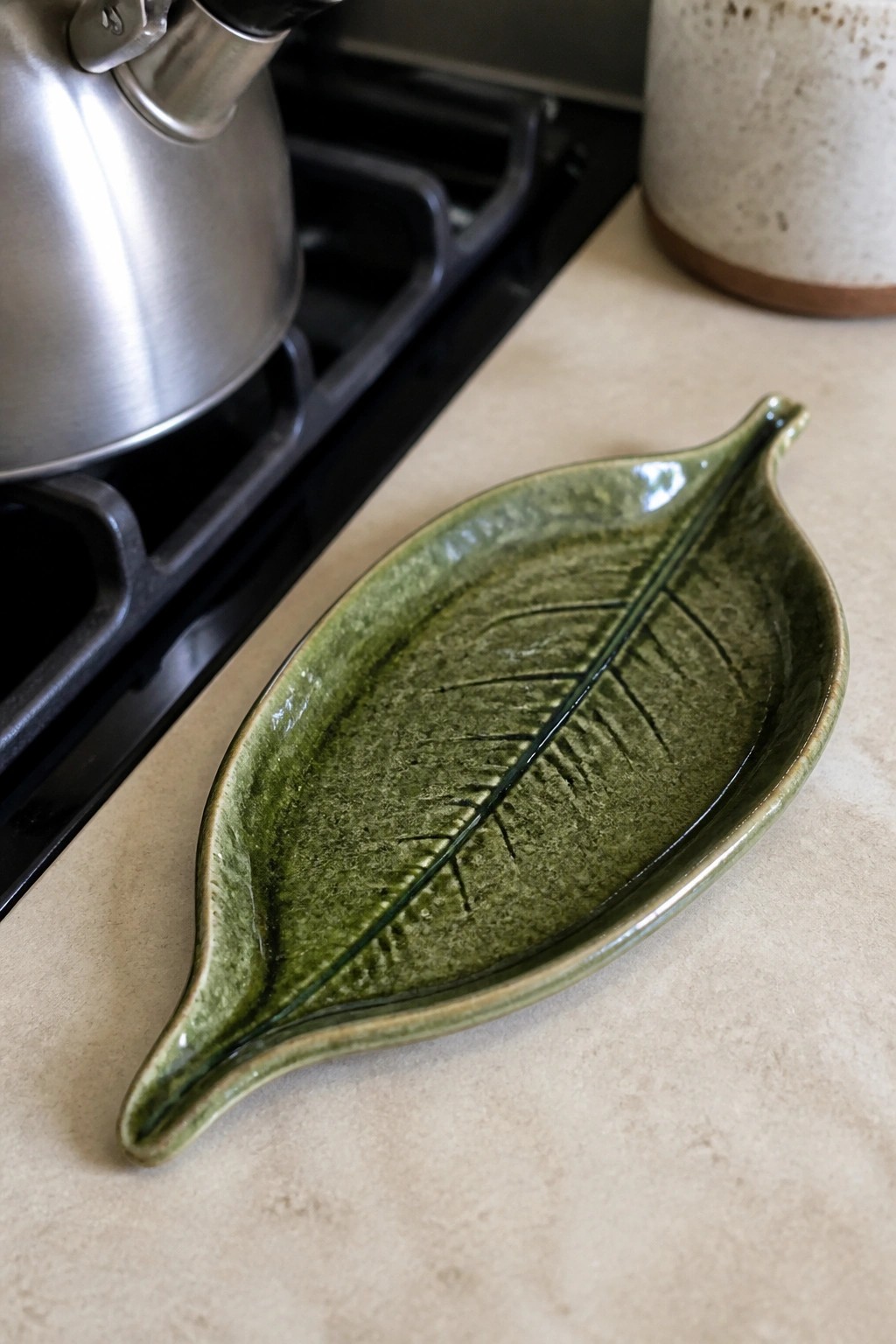
A leaf-shaped slab dish makes a compact tray or holder for small kitchen items like spoons or tea bags. The clay is rolled flat, cut into a pointed oval, and then pressed with lines that follow the natural vein pattern of a leaf before the edges are gently lifted to create a shallow curve. A green glaze with darker pooling in the recesses emphasizes the texture and keeps the surface practical for food contact or wiping clean. This project falls into the category of simple slab-built kitchen pieces that borrow directly from plant forms.
What makes this idea useful is how the leaf outline gives built-in direction for placement on a counter without needing feet or handles. You can scale the same cut-and-impress method up for a larger serving piece or down for a ring dish, and swapping the glaze color lets it match different kitchen palettes. The vein detail stays visible even after glazing, so the piece reads clearly in photos for Pinterest boards focused on organic slab work. For a quick variation, try the same shape in a matte finish for bathroom soap or cotton swabs.
Textured Slab Tea Light Holders with Mottled Coastal Glaze

These slab-built tea light holders are made as low, round discs with a shallow center well sized for standard candles. The surface carries a pressed-in texture that lets the glaze settle unevenly, shifting from turquoise at the edges to a warmer sand tone near the base. The simple construction and low profile keep the focus on the organic finish rather than on complicated forms.
What makes this idea useful is that the same slab and texture technique works for other small items like ring dishes or soap rests without changing much. The mottled glaze effect comes mostly from the surface texture, so it is easy to recreate with basic tools and a single glaze load. Scale the diameter up slightly and the same shape becomes a small tray for keys or jewelry. The low, stable form also makes these pieces practical for outdoor tables where wind could tip taller holders.
Lobed Ceramic Vase with Petal Folds
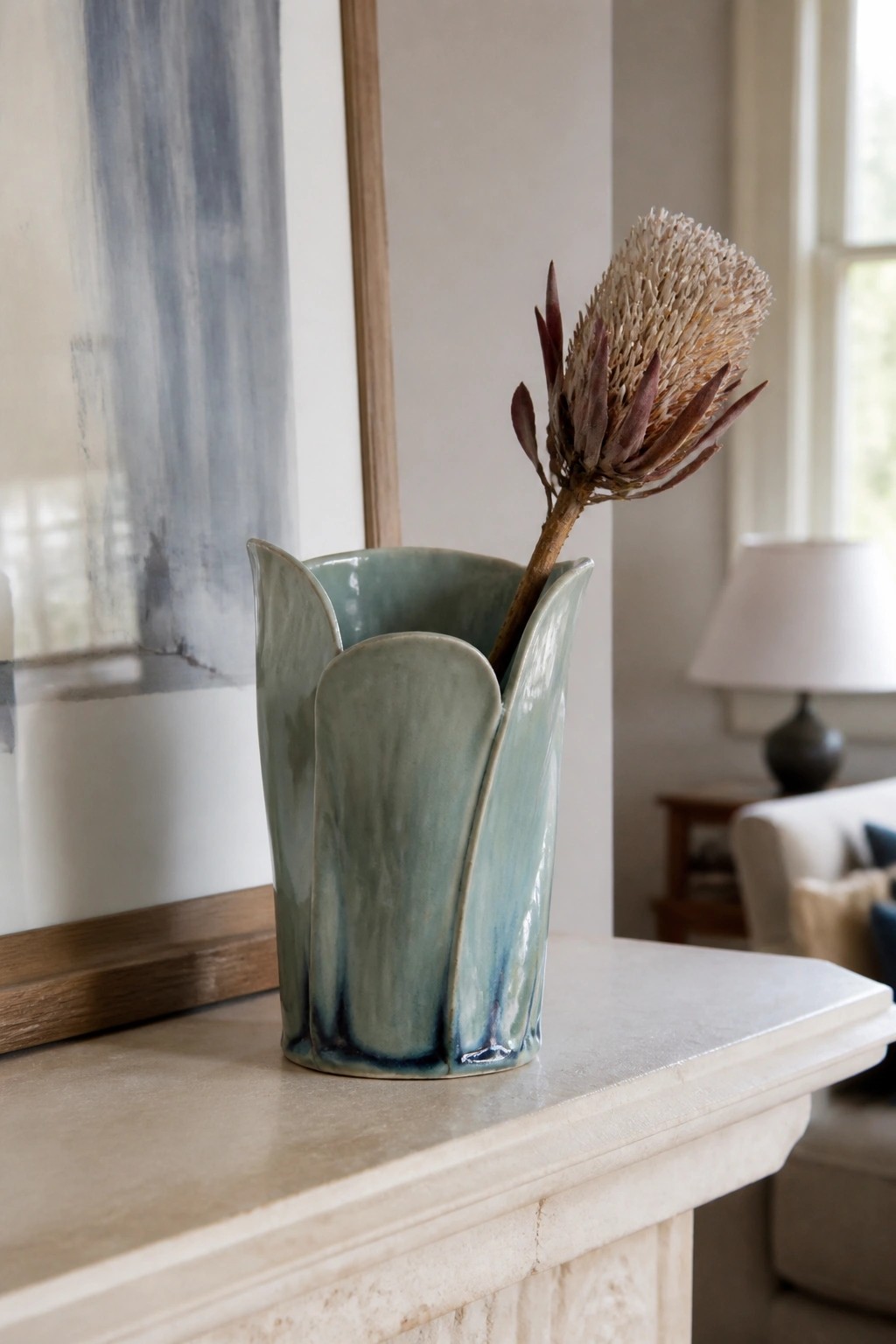
A handbuilt ceramic vase formed with overlapping curved lobes creates a soft, open shape suited for single stems or dried botanicals. The clay is pinched and folded to produce gentle waves along the rim and body, giving the piece an organic outline without surface carving. A flowing blue-green glaze pools in the recesses to emphasize the folds while keeping the overall finish simple. This approach belongs to the category of nature-inspired vases where the sculpted form replaces added texture or pattern.
What makes this idea useful is how the lobed construction can be scaled down for bud vases or widened for larger arrangements by adjusting the number of folds. The same slab method works for shallow trays or small planters if you reduce the height and flatten the base. You can vary the glaze to test different pooling effects or keep the form unglazed in spots for contrast. A piece like this fits on a mantel or side table and translates well to other organic shapes such as leaf-inspired wall pockets.
Seashell Ring Dish with Impressed Spiral
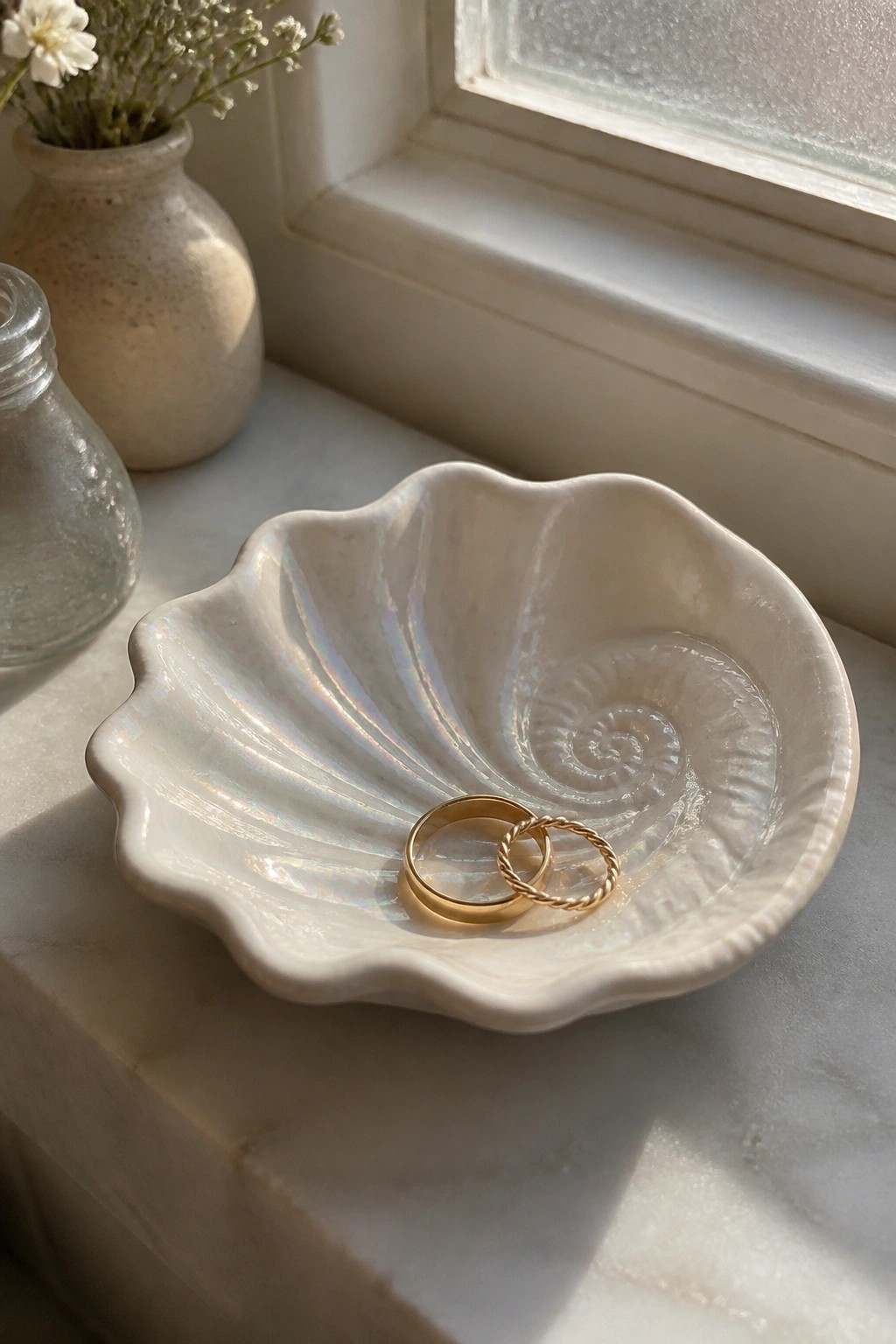
A small slab-built dish shaped like an open seashell makes a practical ring holder or catch-all tray. The interior carries a clear spiral imprint that mimics a fossil or ammonite, while the scalloped edges and glossy finish highlight the natural form. This keeps the piece compact enough for daily use while letting the organic texture do most of the visual work.
The small scale makes it easy to form from one slab and press into a simple mold or drape over a curved support. You can swap the spiral texture for other found objects like real shells or leaves if you want to change the motif. It works well on a nightstand or bathroom ledge for rings and small items, and the same shell shape can be scaled up slightly into a soap dish or small trinket tray.
Spiral Ridge Bowl for Small Servings
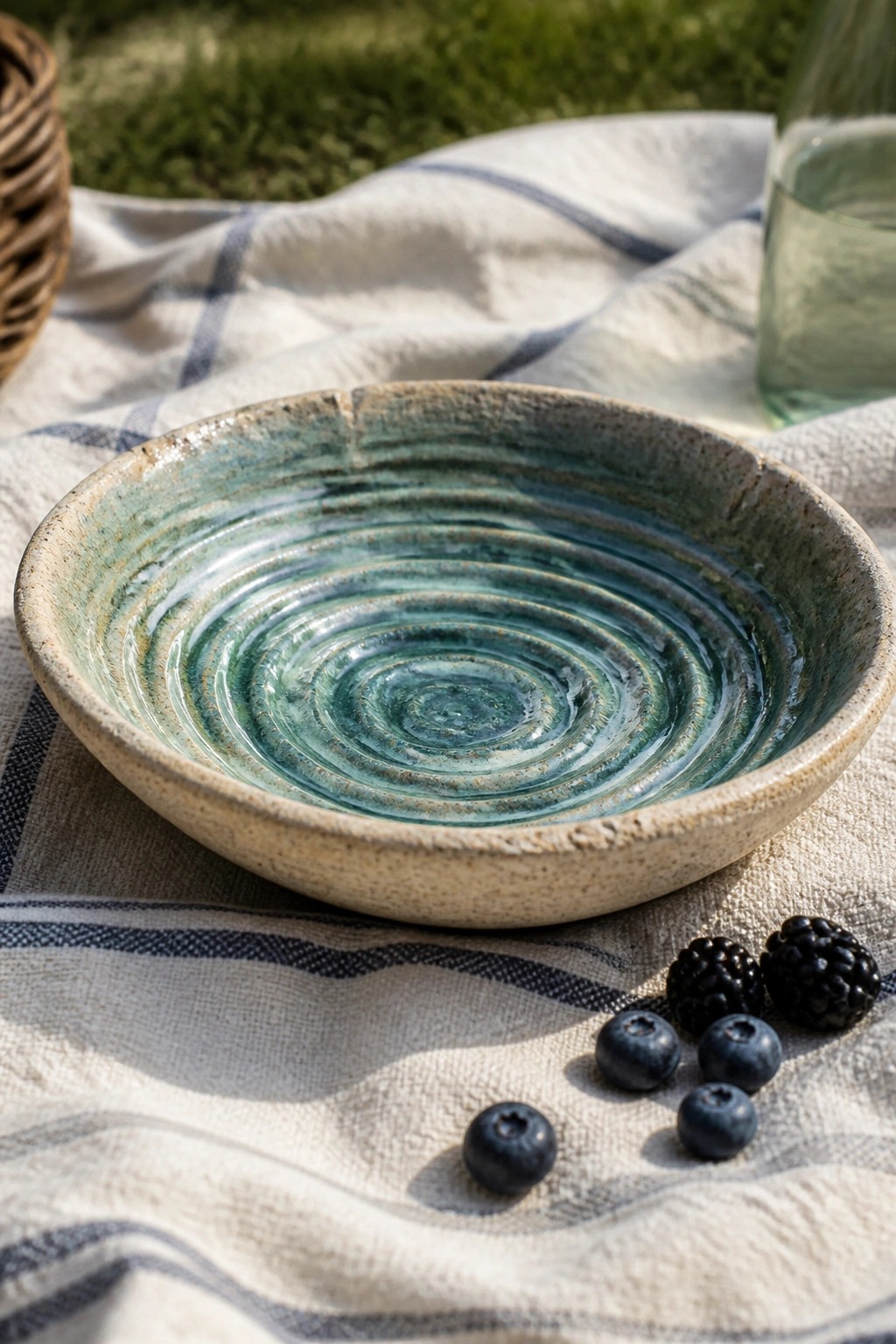
A shallow ceramic bowl formed with raised concentric rings that spiral inward from the rim makes a simple but effective serving piece. The blue-green glaze settles into the grooves to highlight the texture while the flatter center stays lighter. This style works as a small kitchen bowl for fruit, nuts, or condiments and needs only basic shaping plus a textured tool or finger to create the ridges.
What makes this idea useful is how easily the spiral pattern scales to different sizes or gets pressed into a slab before forming. You could repeat the ridges on the outside for a matching set or shorten them into a partial swirl for a quicker version. In a kitchen or on a picnic table the low profile keeps contents visible and the textured surface hides minor scratches better than a smooth glaze.
Beaded Rim Soap Tray with Drainage Ridges
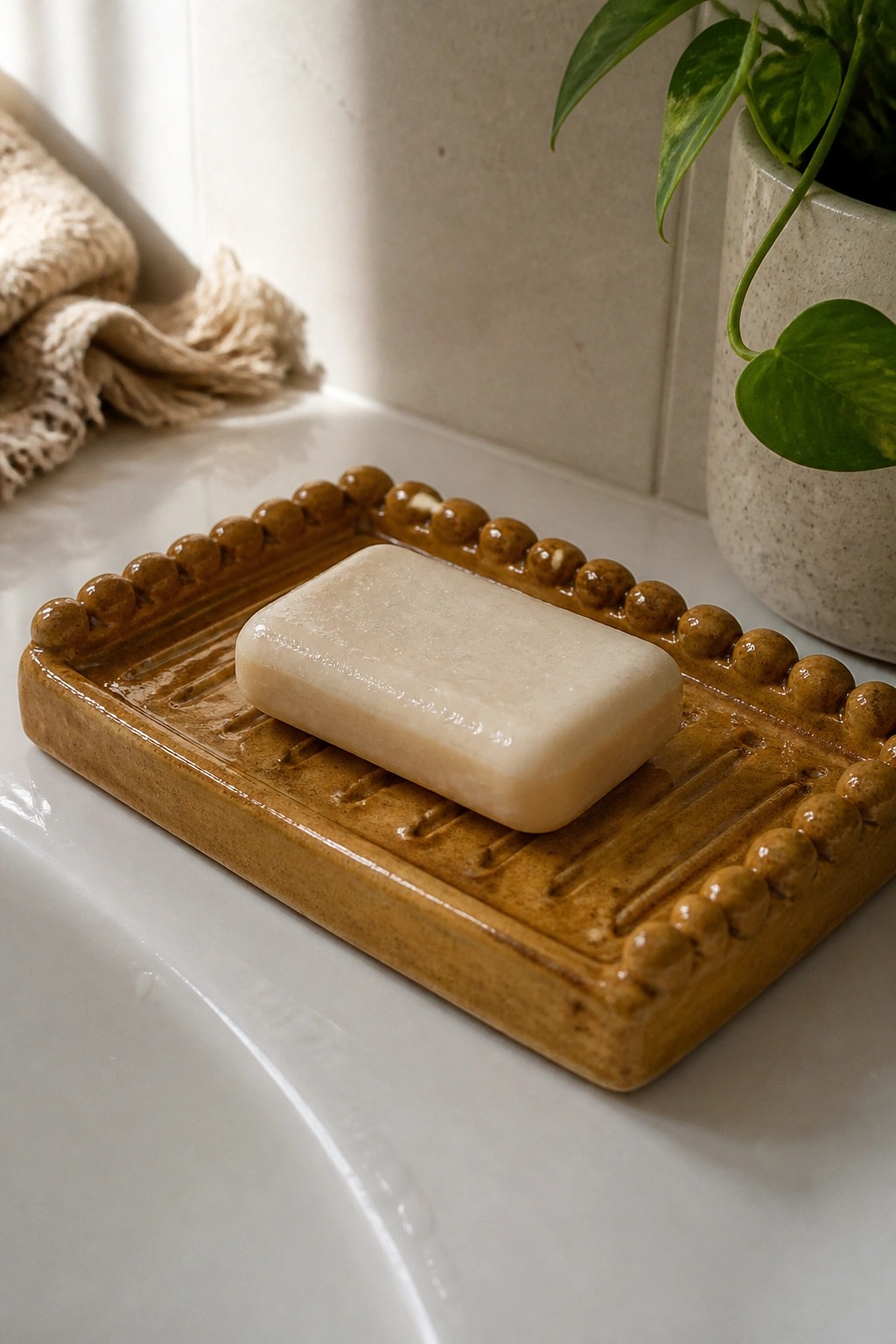
A rectangular ceramic soap tray serves as a practical bathroom item. It uses a border of rounded beads along the outer edges and a set of raised ridges across the base to lift the soap and let water drain away. The warm brown glaze covers the entire surface and highlights the handmade texture of the beads and grooves. This approach keeps the project focused on useful details that improve how the tray performs daily.
The shape does a lot of the work here because the ridges solve the common problem of soggy soap without adding extra parts. You could repeat the beaded edge on a longer version to hold a razor or small bottles. In a bathroom this size fits easily on the edge of a sink or tub shelf. The same tray idea could be reworked into a small ring dish by shortening the length and skipping the drainage lines.
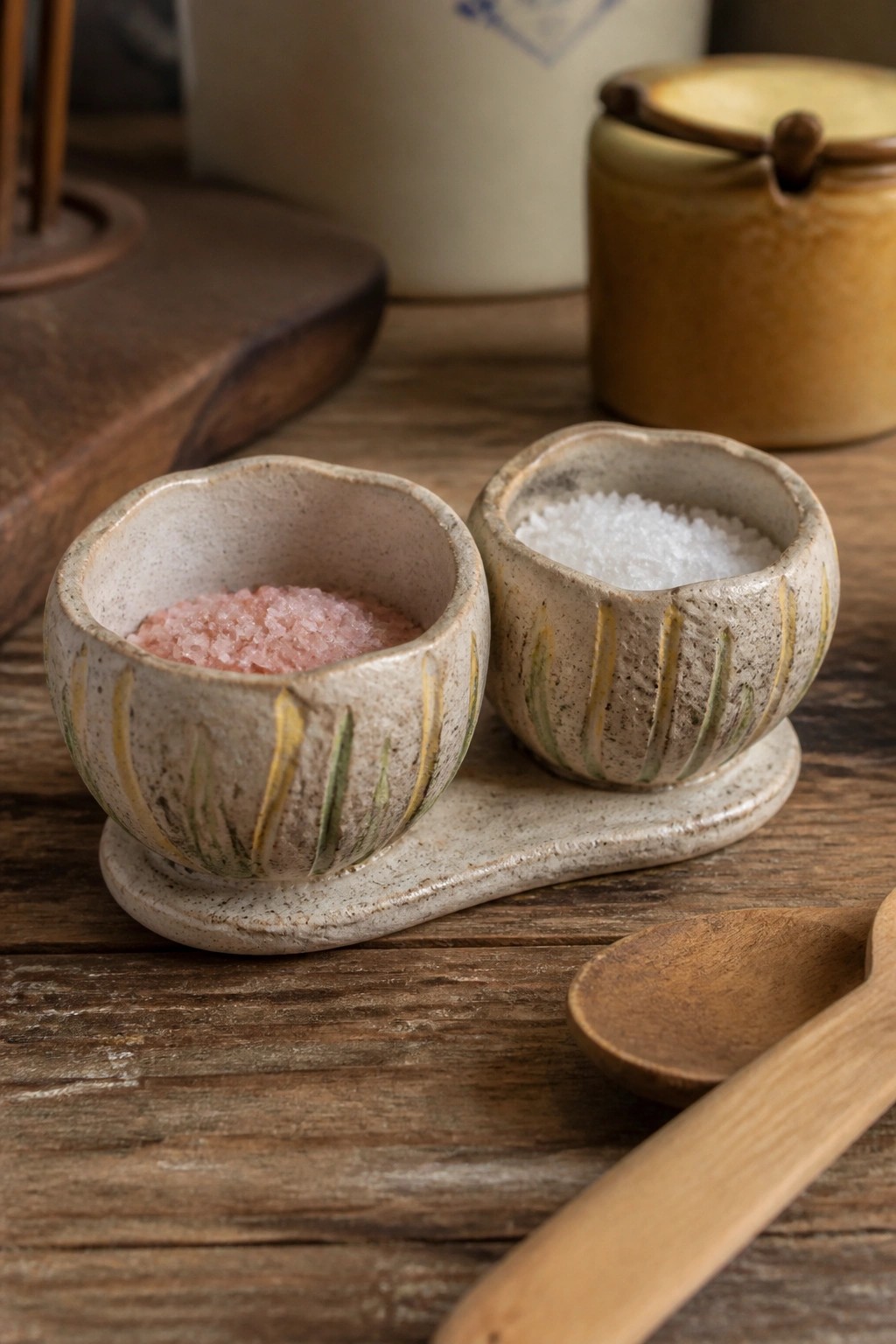
A set of two small ceramic bowls joined on one slab base makes a practical holder for salt, spices, or small condiments. The bowls sit side by side with a simple painted motif of vertical green and yellow lines that read as grass or reeds. The slab base keeps the pair stable and easy to carry while the slightly irregular rims and textured clay surface give it a casual handmade look.
What makes this idea useful is how the connected base turns two ordinary pinch bowls into one tidy kitchen object. You can adapt the same layout for sugar and creamer sets or small dipping sauces. The grass motif is quick to paint with underglaze and works on any light clay body. For a gift, the small scale means less clay and faster drying time while still looking intentional on a table.
Slab Incense Holder with Feather Impression
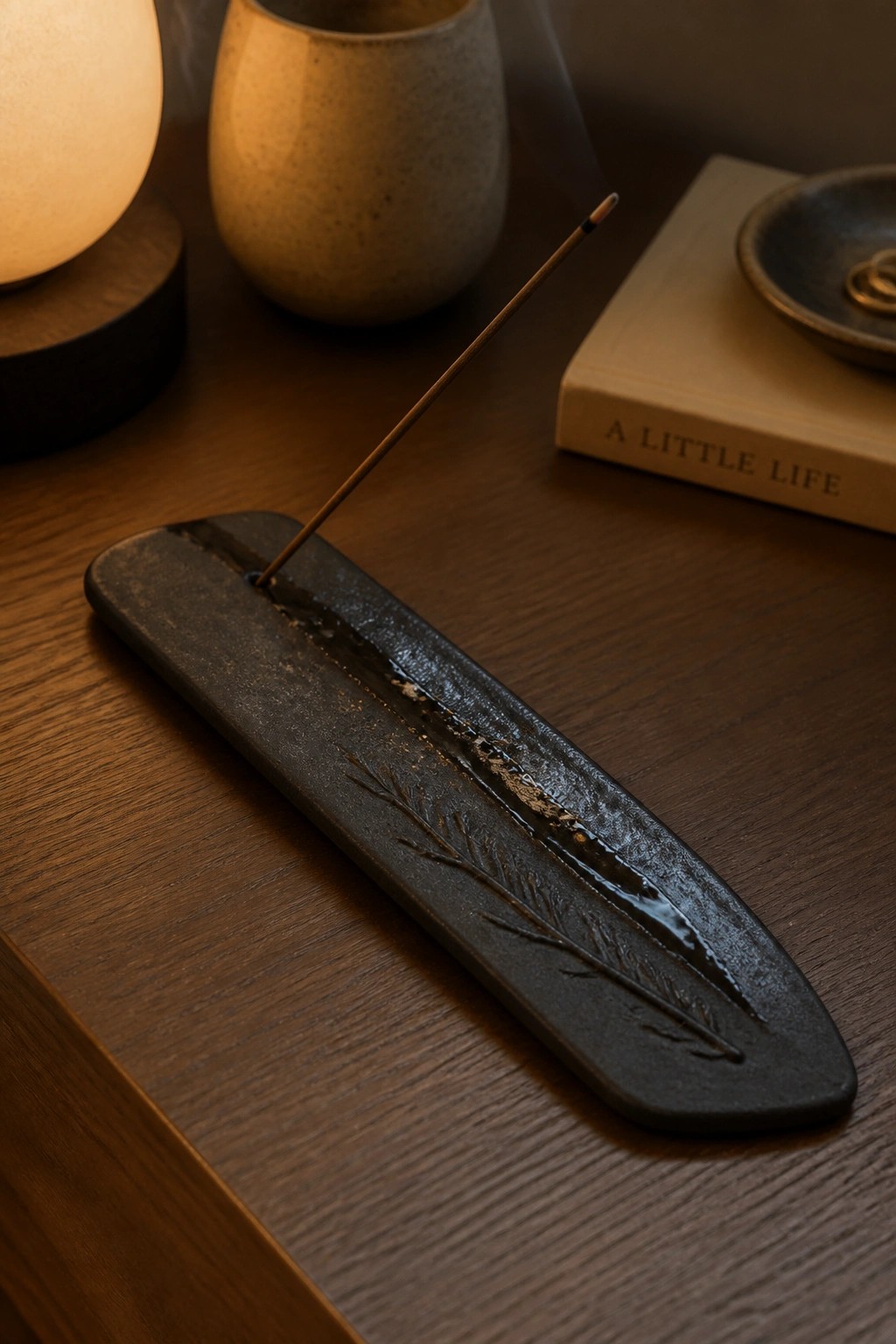
A narrow slab of clay rolled and shaped into a long, low tray makes a simple incense holder. One end gets a small hole to catch the stick while a shallow channel runs down the center to collect ash. An incised feather motif pressed or carved into the surface adds a clear organic detail without extra pieces. The contrast between the matte body and the glossy channel keeps the form clean and easy to read.
What makes this idea useful is how quickly the same slab can be reworked with different natural impressions. Swap the feather for a fern, grass blade, or leaf and the holder still fits on a desk or shelf without taking much space. The built-in groove solves the common problem of ash scattering, so the piece stays practical as well as decorative. For gifts or small-batch sales this shape photographs well on Pinterest because the motif stands out against the dark surface.
Slab-Built Mushroom Sculptures with Contrasting Glazes
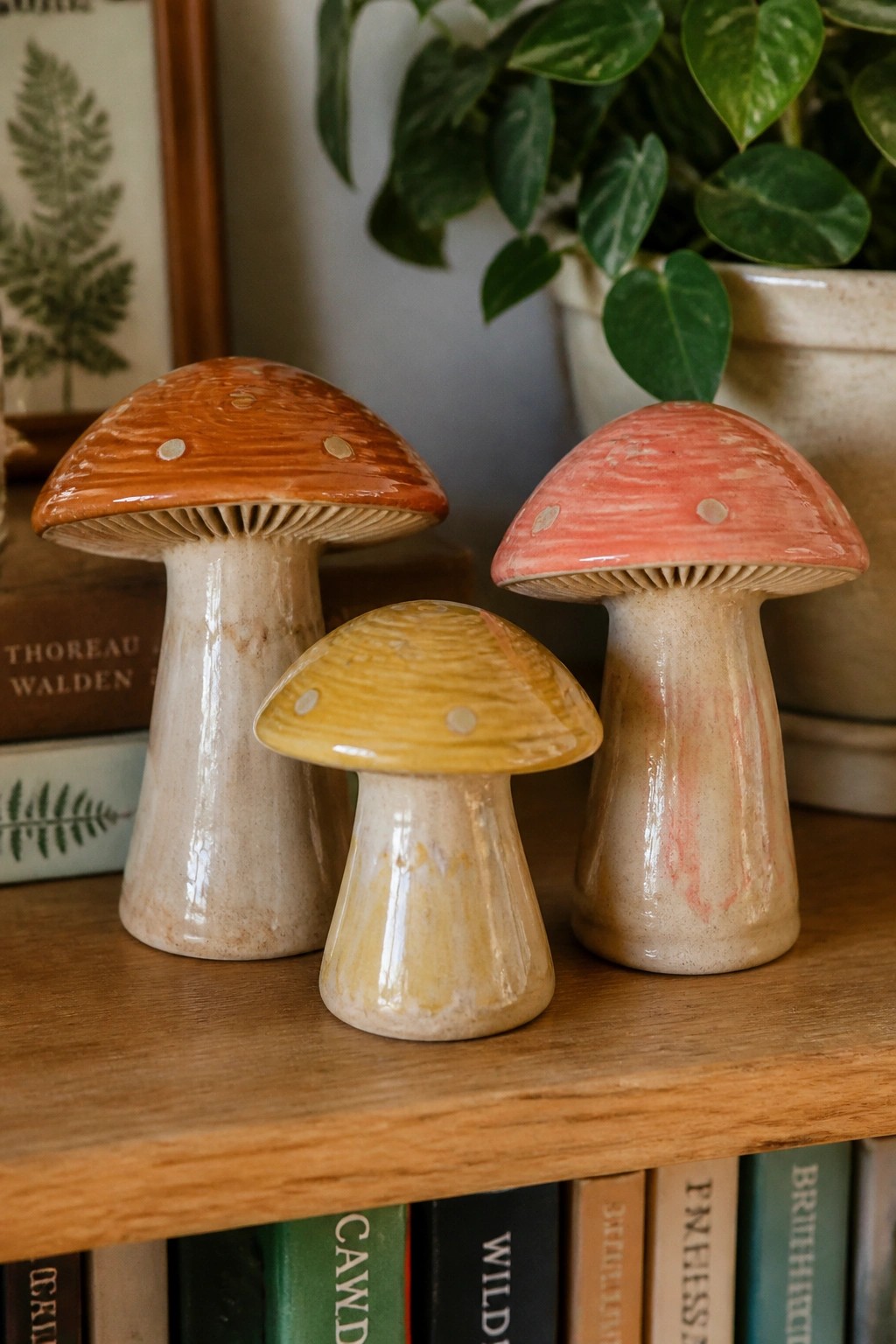
Roll out clay slabs to form the stems and caps, then shape and join them into mushroom forms before adding small clay dots on the caps. Apply a glossy glaze in a solid color to the cap and a matte speckled glaze to the stem so the two surfaces read as separate parts of the same object. The rounded cap shape and tapered stem give these pieces a stable, upright stance that works for shelf or bookcase display.
The small scale makes this easy to adapt into sets of three or five for grouped arrangements. You could rework the same slab shapes into taller versions for plant stakes or shorten the stems to create paperweights. The two-tone glaze approach keeps the forms simple while still giving each piece enough surface variation to stand out in photos.
Sculpted Grass Utensil Holder
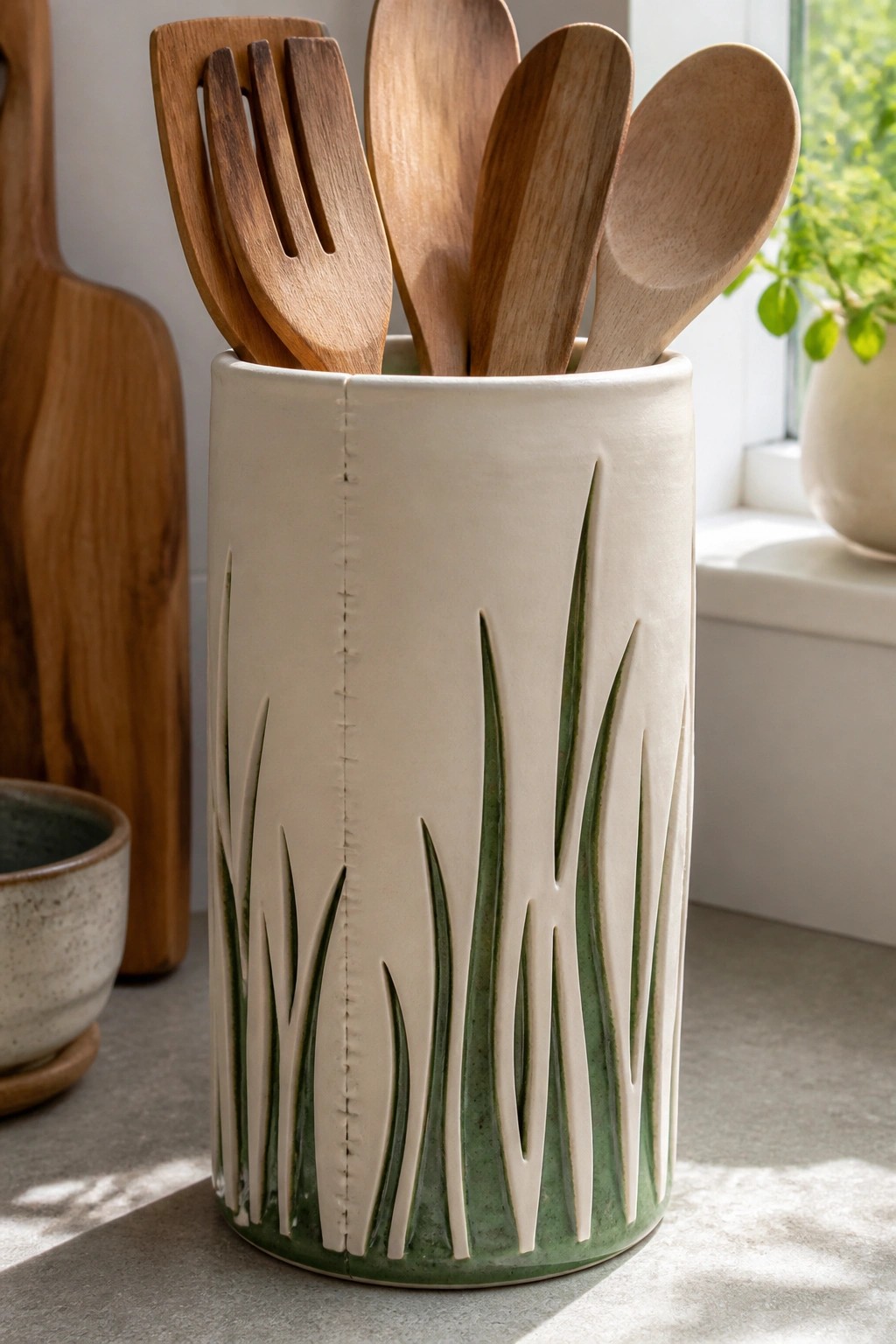
A tall cylindrical ceramic holder built from a slab keeps wooden kitchen tools upright and within reach on a counter. Vertical ridges formed into grass-like shapes run down the sides and receive a green glaze that contrasts with the matte cream surface. The low-relief pattern adds texture while the narrow form stays compact enough to sit beside a sink or stove. This approach fits the kitchen-item category and turns a basic storage shape into a nature-inspired piece through simple surface carving.
What makes this idea useful is how the cylinder shape can be rolled quickly from a slab and the grass motif can be adjusted in height or spacing. The same relief pattern works on a shorter cup for paintbrushes or a wider version for a small herb planter. In a kitchen the holder pairs naturally with wooden boards and bowls without needing extra color. You could reduce the ridges to a few lines on one side if you want a faster build or repeat the motif around a tray for spoons.
Leaf-Shaped Hanging Planter
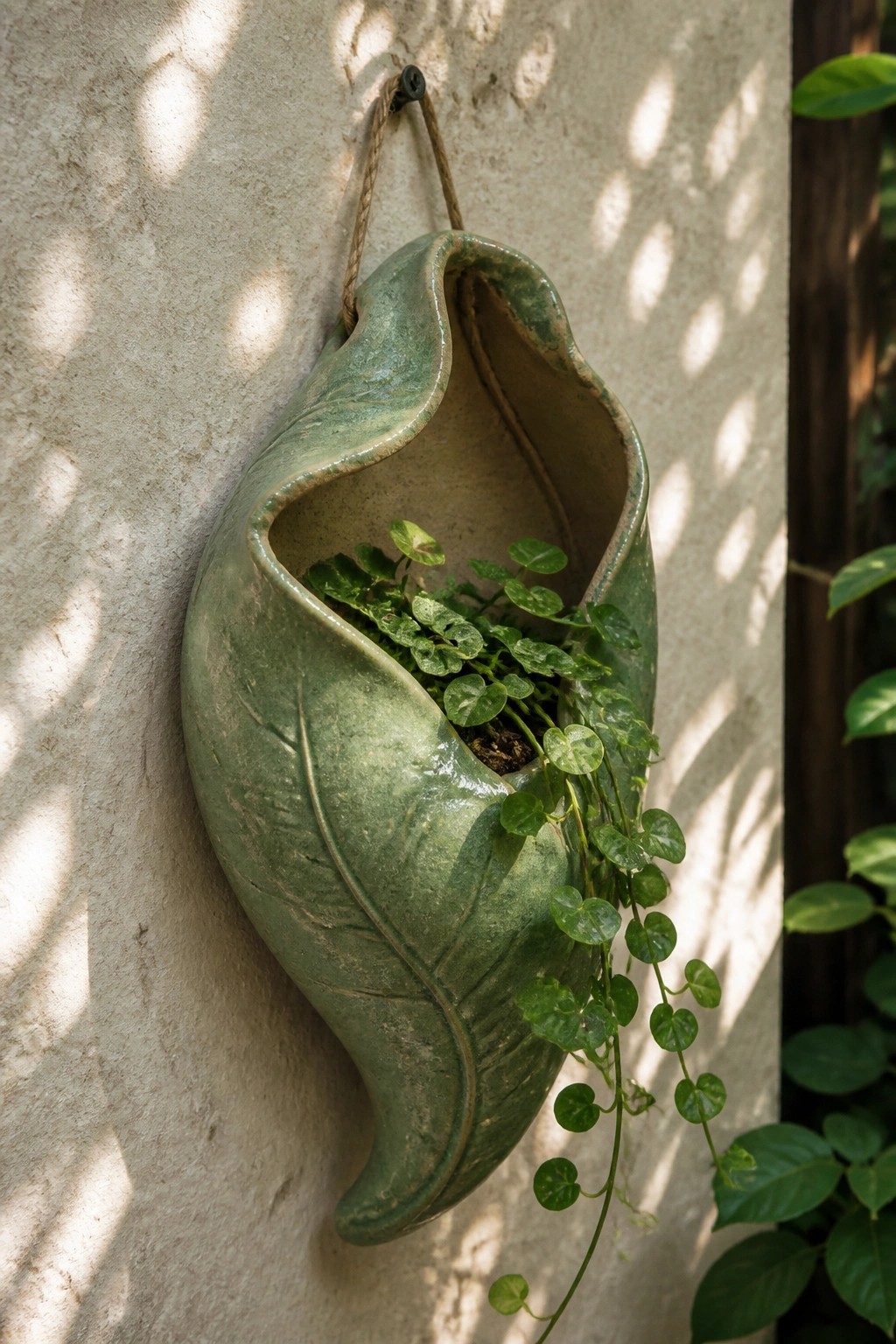
A hand-built ceramic planter formed in the shape of a large curling leaf creates a simple wall-mounted holder for small plants. The open top section holds soil while the lower curve contains it, and the surface shows impressed leaf veins under a green glaze. A cord through two holes at the top allows it to hang from a hook or nail. This type of project falls into the nature-inspired planter category and works especially well with trailing vines.
What makes this idea useful is how the leaf contour already provides both the planting pocket and a natural hanging point without extra hardware. You can scale the form larger for bigger plants or flatten the back slightly for a more stable wall fit. In a bathroom or entryway, this shape keeps greenery off surfaces while staying compact. The same leaf construction could be adapted into a low dish for air plants or repeated in different glaze colors for a grouped wall arrangement.
Leaf-Impressed Yarn Bowl with Rim Notch
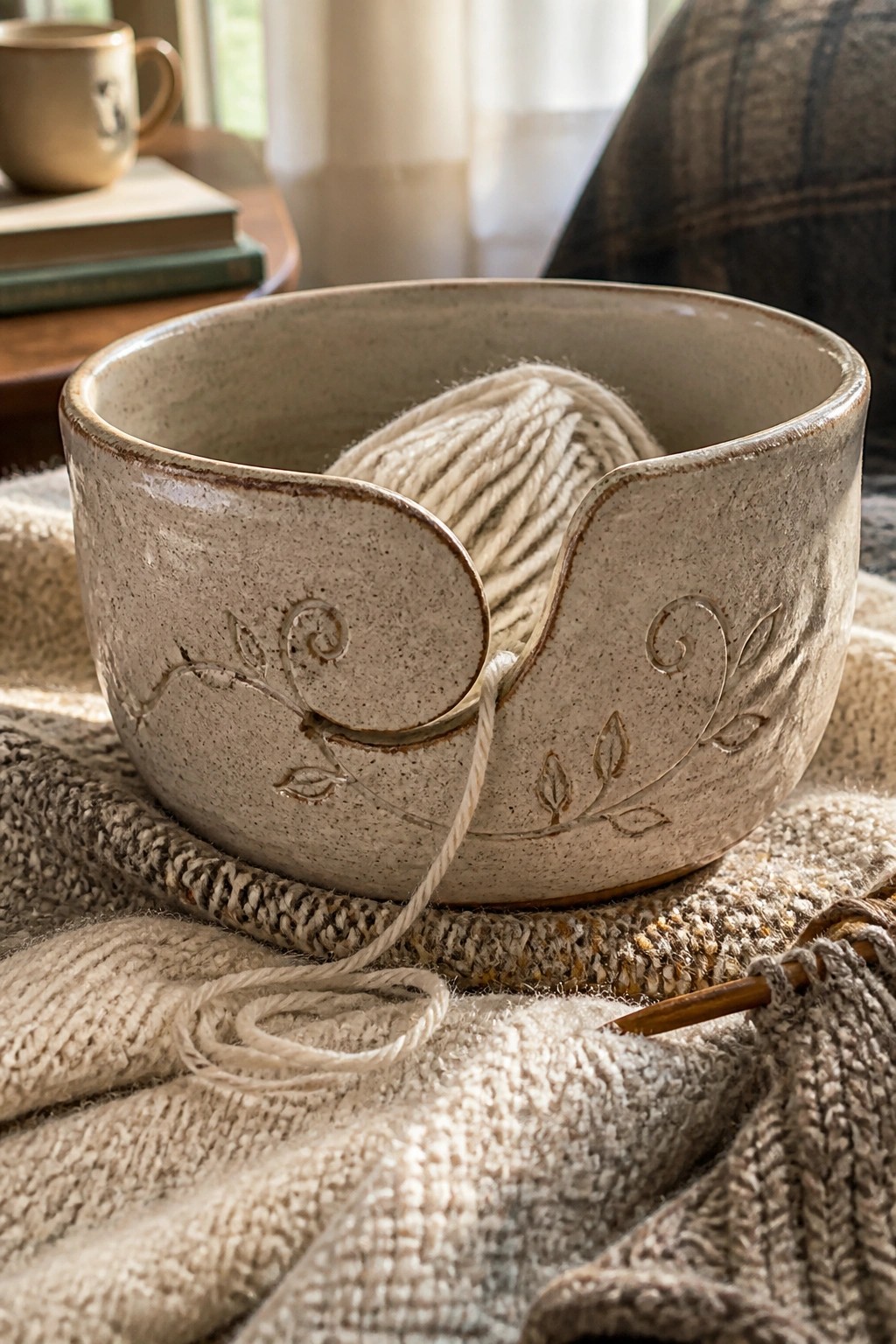
A yarn bowl made from clay uses a wide rounded form with a deep notch cut into the rim to hold and guide yarn as it unwinds. The exterior surface carries pressed leaf and vine details that create raised organic patterns across the sides. This keeps the bowl simple in shape while adding texture that matches the natural theme of the article. The piece functions as a dedicated holder that supports knitting or crochet work without extra tools.
What makes this idea useful is how the notch solves a practical problem by keeping yarn from slipping off the edge. The leaf impressions can be made by pressing actual plants into a slab before shaping the bowl, so the same method works for smaller dishes or larger trays. In a craft room this size sits easily on a table or lap without taking much space, and the design adapts well if you want to change the notch depth or repeat the motif around the full circumference.
Leaf Vein Slab Tray for Candles
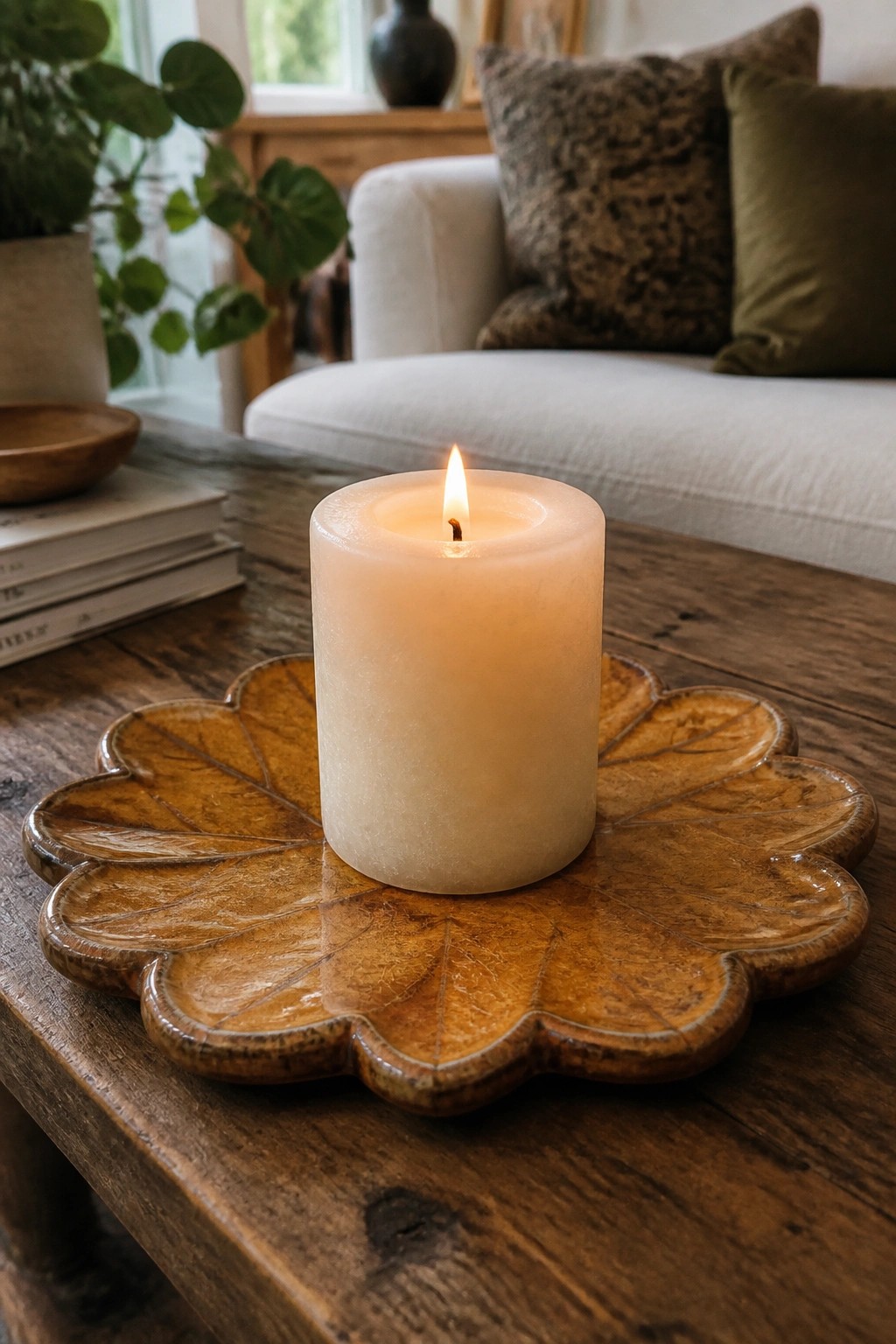
A slab-built tray formed into a broad leaf shape creates a stable base for a pillar candle or similar small item. The design relies on impressed vein lines and a scalloped outer edge to give it an organic outline, then finishes with a mottled brown glaze that settles into the texture. This approach keeps the piece flat and functional while fitting into the decor tray category for tabletop use.
What makes this idea useful is how the wide, shallow form protects wood surfaces from wax or moisture without extra feet or stands. You could scale the same leaf template down for a ring dish or adapt the vein texture onto a rectangular tray for a soap holder. In a living room or entry, the neutral glaze color blends with existing decor while the shape gives it enough detail to photograph well for project boards.
Organic Slab Platter with Coastal Gradient Glaze
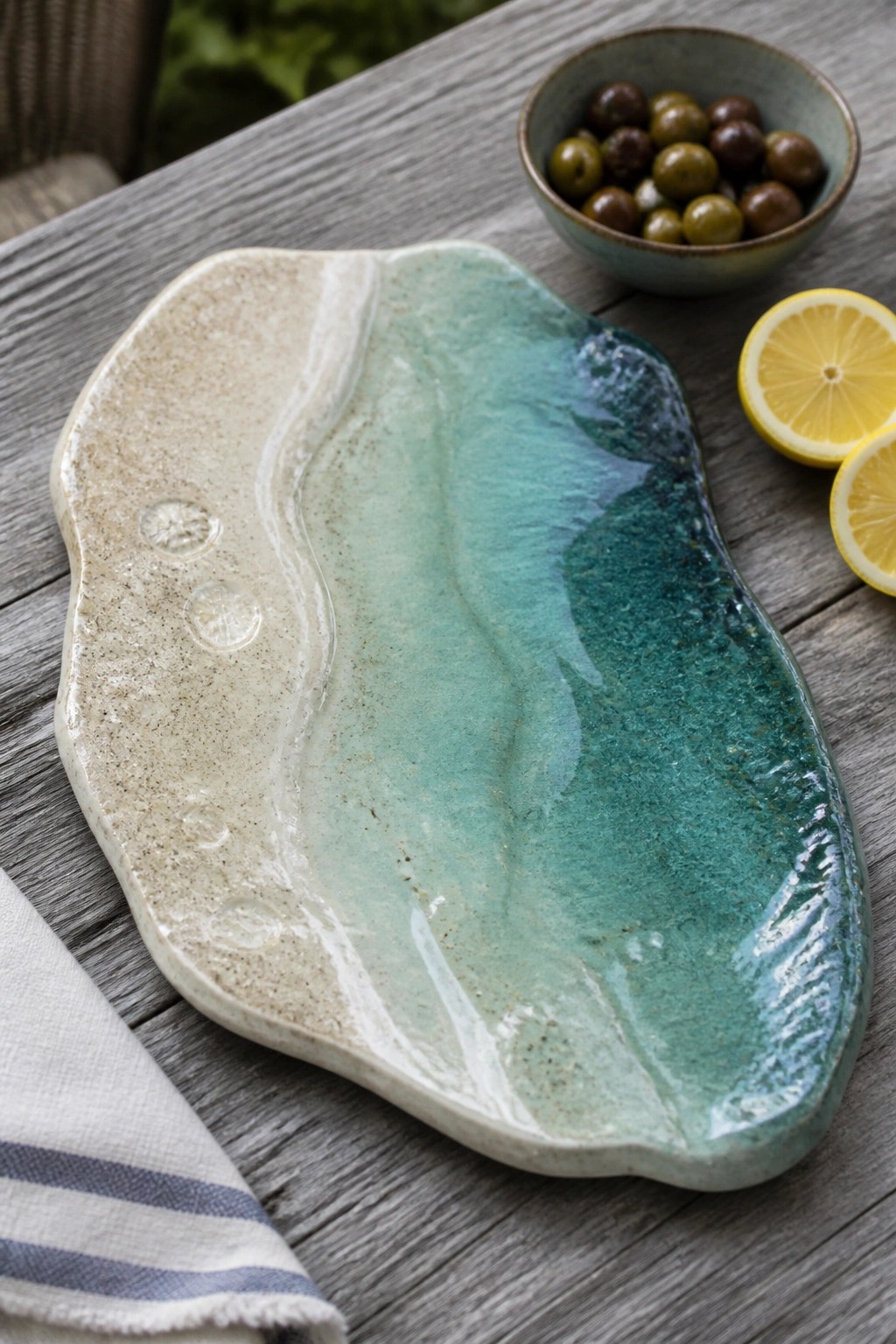
A slab built platter with an uneven, flowing outline gives a simple way to create an organic serving piece. The surface uses a gradual shift from sandy beige into turquoise and deeper teal, which highlights the natural movement of the glaze across the clay. Small impressed circles on one end add light texture while keeping the rest of the form smooth. This kind of project stays focused on the slab shape and how the glaze settles during firing.
What makes this idea useful is how the flat, wide form works as both a snack tray and a decorative accent on a table. You can adapt the edge by cutting a softer curve or change the color blend to match other glazes you already have. In a kitchen this shape holds fruit or appetizers without needing extra decoration. The same slab method could be scaled down into smaller dishes or used with different impressed marks like shells or leaves.
Faceted Slab Pitcher with Shell Spout Detail

A small pitcher built from joined clay slabs creates an angular body that contrasts with the rounded handle and spout. The shell motif pressed into the clay near the pour lip adds a clear nature reference while keeping the overall form simple. A muted green glaze settles into the seams and surface marks, emphasizing the handmade construction without hiding the slab lines. This approach suits a creamer, small milk jug, or everyday kitchen server.
The compact scale lets you experiment with different slab counts or change the shell to a leaf or wave without much extra work. It sits well on a table beside plates or napkins and makes a straightforward gift for someone who uses functional pieces daily. You could repeat the same body shape in a matte white glaze or stretch it taller for a vase version. The shell accent stands out in photos, which helps when sharing the finished piece online.
Impressed Leaf Tiles for a Wall-Mounted Rack
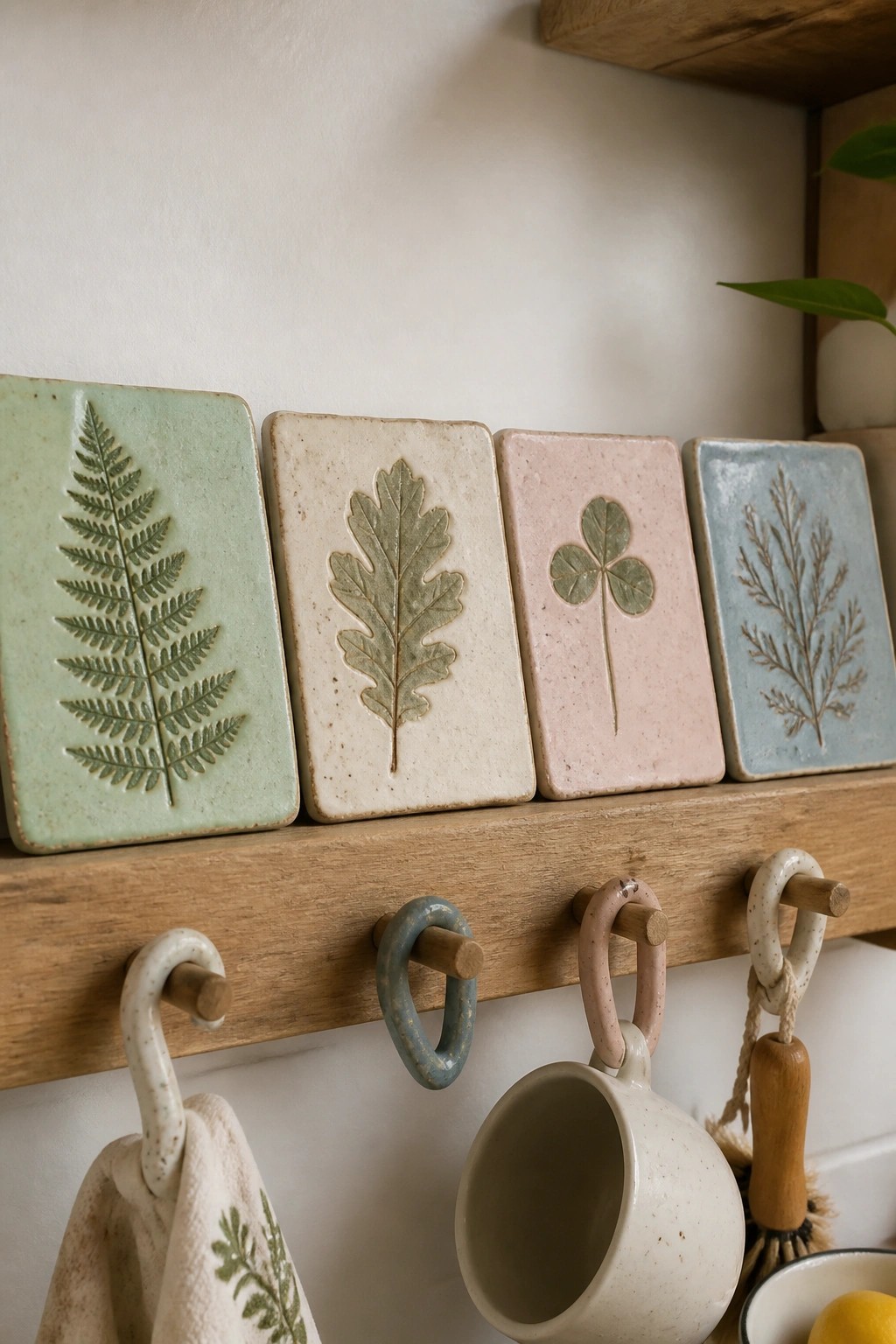
Rectangular slab tiles carry clear botanical impressions from ferns, oak leaves, and clover. Each tile uses a different soft matte glaze in muted green, cream, pink, or blue so the leaf details remain visible. The flat form and simple edges keep the focus on the pressed textures rather than on shape. This project fits the category of decorative kitchen or entryway tiles meant to sit above hooks or shelves.
What makes this idea useful is how quickly you can repeat the same slab size to build a short row that fills empty wall space above a rack. You can change the leaves or glaze colors to match whatever plants grow nearby or whatever tones already exist in the room. The flat tile shape also works for smaller versions that become coasters or drawer pulls. In a kitchen this kind of set adds a natural detail without taking up counter space.
Oval Slab Trays as Jewelry Holders
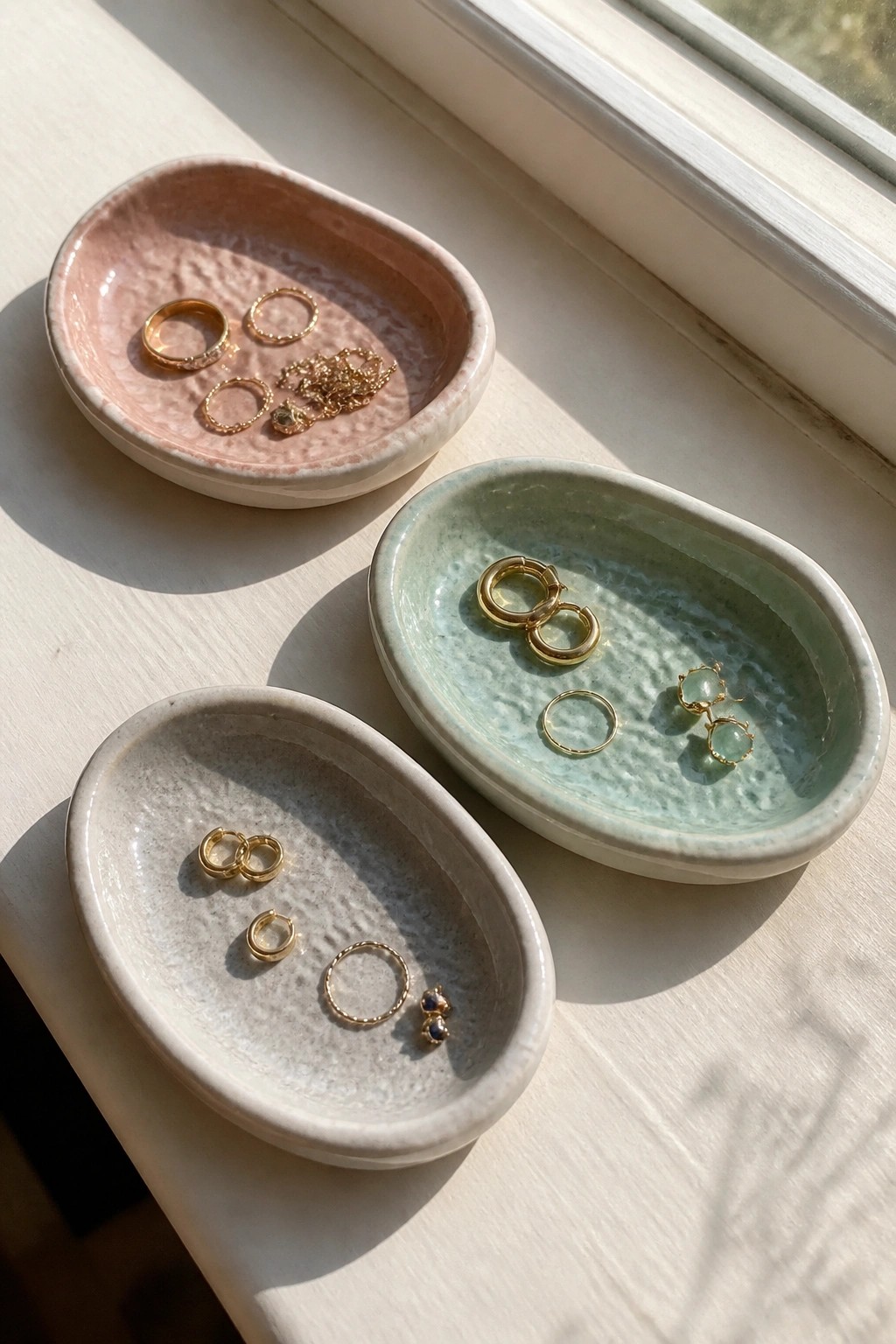
Small oval trays formed from clay slabs make practical jewelry holders that keep rings and small pieces organized on a surface. The design relies on a pressed or stamped texture across the interior, combined with soft flowing glazes in blush, mint green, and speckled gray that highlight the uneven surface. Shallow sides and slightly irregular rims keep the focus on the texture while still containing items without adding bulk.
What makes this idea useful is the compact size that fits on a nightstand, windowsill, or vanity for daily wear. You can adapt it by rolling different textures into the slab before shaping or by glazing a whole set in one color family for a coordinated look. The same form works as a small soap rest in a bathroom or a catch-all for keys by the door. On Pinterest these trays perform well because the neutral glazes and clear function translate easily into simple product shots.
Frequently Asked Questions
Question: How do I start creating slab pottery inspired by nature if I am a beginner? Answer: Begin with basic tools such as a rolling pin, canvas mat, and a few pounds of clay suitable for hand building. Practice rolling even slabs about a quarter inch thick and use simple natural items like leaves to imprint textures. Start with easy projects such as a leaf shaped tray before moving to more complex organic forms.
Question: What natural objects can I use to create organic textures on my pottery? Answer: Press items like tree bark, feathers, shells, or flower petals directly into the clay surface while it is still soft. Rotate or layer multiple impressions to build depth and variety. Always clean the objects first to avoid introducing contaminants that could affect firing.
Question: How can I form organic shapes using slab techniques? Answer: Cut irregular outlines from your slabs to echo natural contours like waves or petals. Drape the clay over rounded supports such as bowls or stones and gently manipulate edges with your fingers for soft curves. Allow slight asymmetry to maintain an authentic organic appearance.
Question: What glazing techniques enhance the natural appearance of these pieces? Answer: Apply matte glazes in earth tones like moss green or terracotta by brushing or sponging them on unevenly. This highlights texture details without creating a uniform shine. Test glazes on sample tiles first to see how they interact with your specific clay body after firing.
Question: How do I prevent my slab pottery from warping during drying? Answer: Cover fresh pieces loosely with plastic for the first day or two to slow moisture loss. Support curved sections with soft props like foam and flip the work periodically for balanced drying. Work in a draft free space and avoid direct heat sources until the clay reaches leather hard stage.

Pottery Path is my cozy corner of the internet where I share clay ideas, pottery inspiration, and simple projects you can recreate at home. I love exploring everything from air dry clay to handbuilt pottery to cute minis that brighten your day. My goal is to make clay crafting feel easy, fun, and welcoming for anyone who wants to try it.
You will find beginner friendly tutorials, creative pottery painting ideas, and lots of warm inspiration for slow and happy crafting. If you enjoy hands on creativity, this space will feel like home.