I started making slab pottery pieces a couple of years ago because I wanted some custom items for my house.
It is a simple technique that lets me shape clay into useful things without needing much equipment.
I have tried a few different styles and some of them turned out to be really practical for everyday use.
A few of my favorites are now sitting on my kitchen counter and in the living room.
These twenty ideas are ones that I think could work for other people looking for similar projects.
Square Slab Mug with Contrasting Glaze
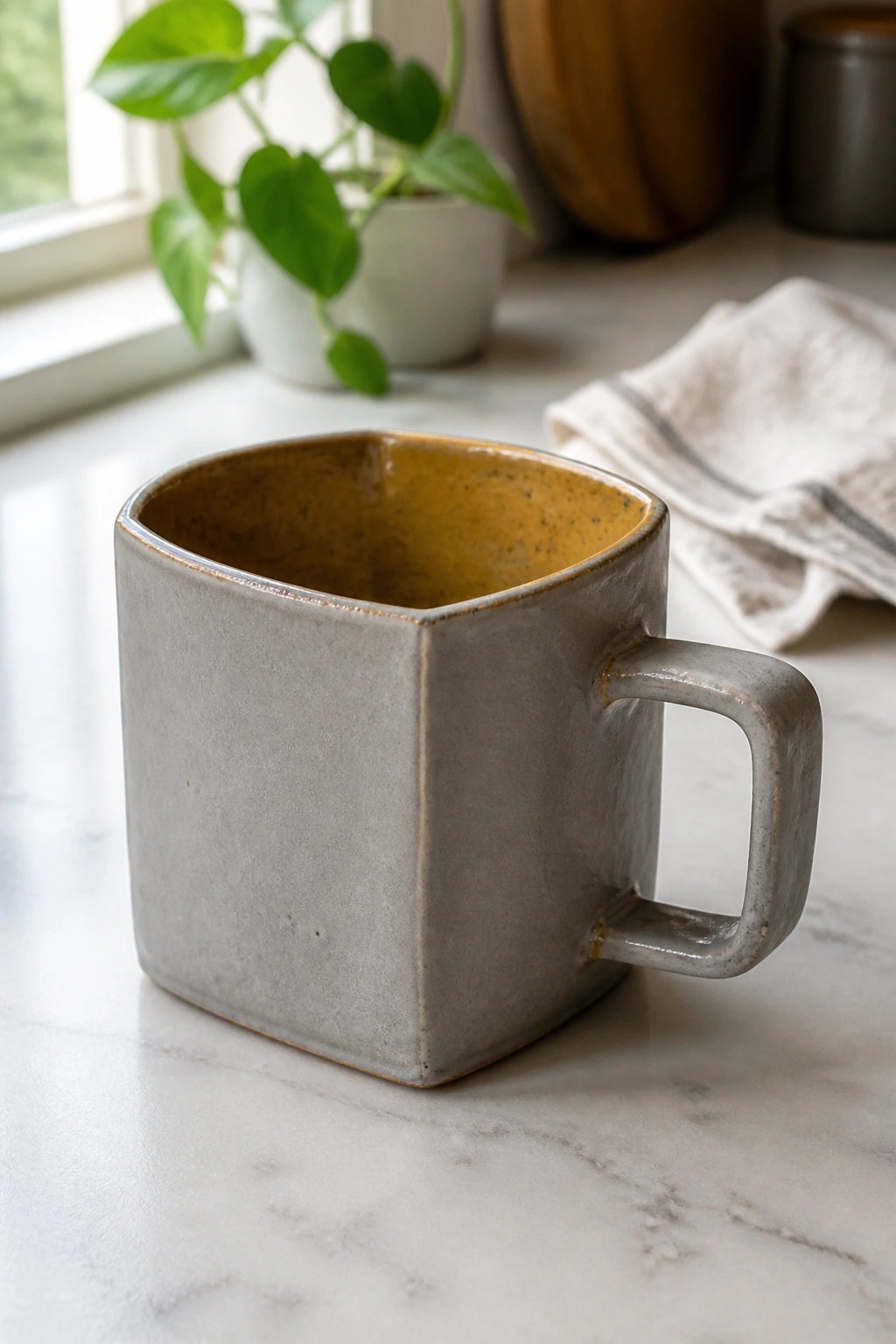
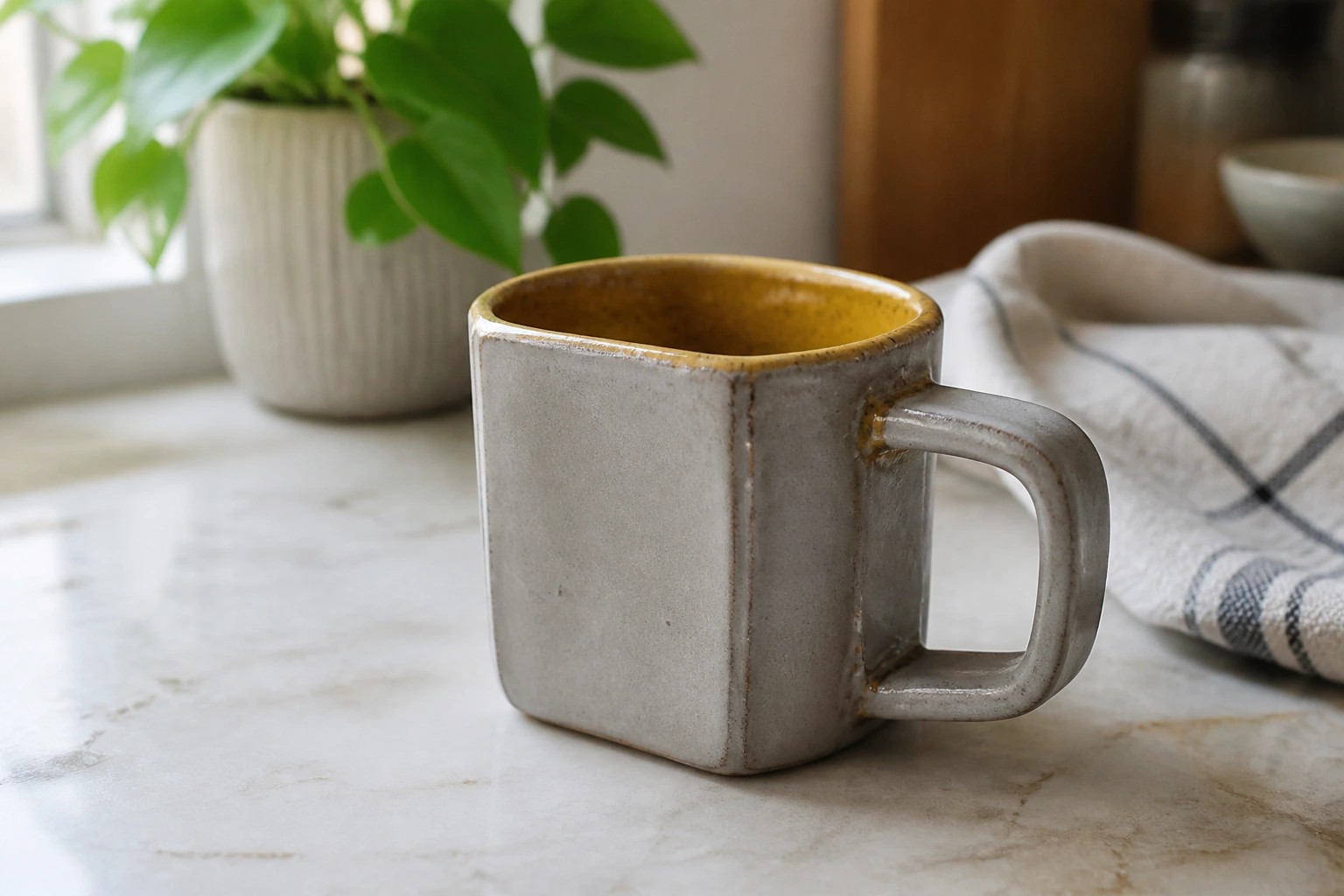
A square mug built from clay slabs gives a simple geometric shape that stands out from round wheel-thrown cups. Flat sides are joined at crisp angles before the handle is added, and the interior receives a separate glaze that creates a clear color break at the rim. The matte gray exterior pairs with the speckled warm interior to keep the piece visually balanced without extra decoration.
What makes this idea useful is the way the flat sides stack or sit neatly in a cupboard. You could change the interior glaze color across a set of four mugs while keeping the same gray exterior for a coordinated look. The compact size works well as an everyday coffee cup and photographs cleanly for boards showing modern kitchen pieces. The same slab method can be adjusted to make a taller version for soup or a shorter one for espresso.
Square Slab Bowl with Brushed Accent
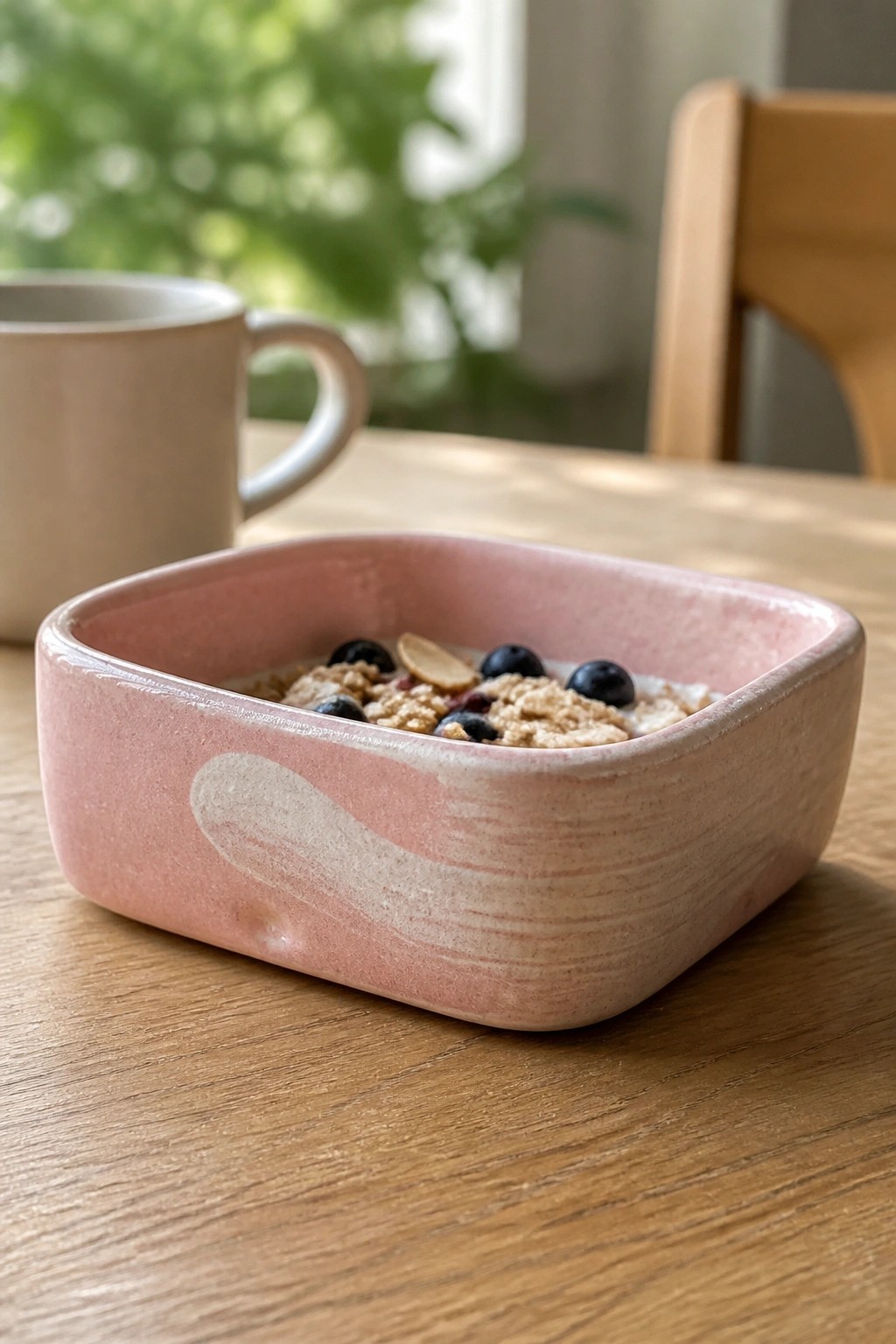
A small square bowl formed from slabs works well as a breakfast or snack dish. The pink glaze covers most of the surface while a single wide white stroke adds contrast across one side. This keeps the piece simple yet visually balanced and highlights the flat planes and soft edges that come from slab construction.
What makes this idea useful is the compact square shape that sits steady on tables or trays without taking much space. You could repeat the same slab method and color blocking to make a set of small dishes or adapt the size for a butter dish or pinch pot holder. The single brush stroke is quick to apply and still gives the piece enough detail to photograph well for inspiration boards.
Rectangular Slab Tray with Two-Tone Rim
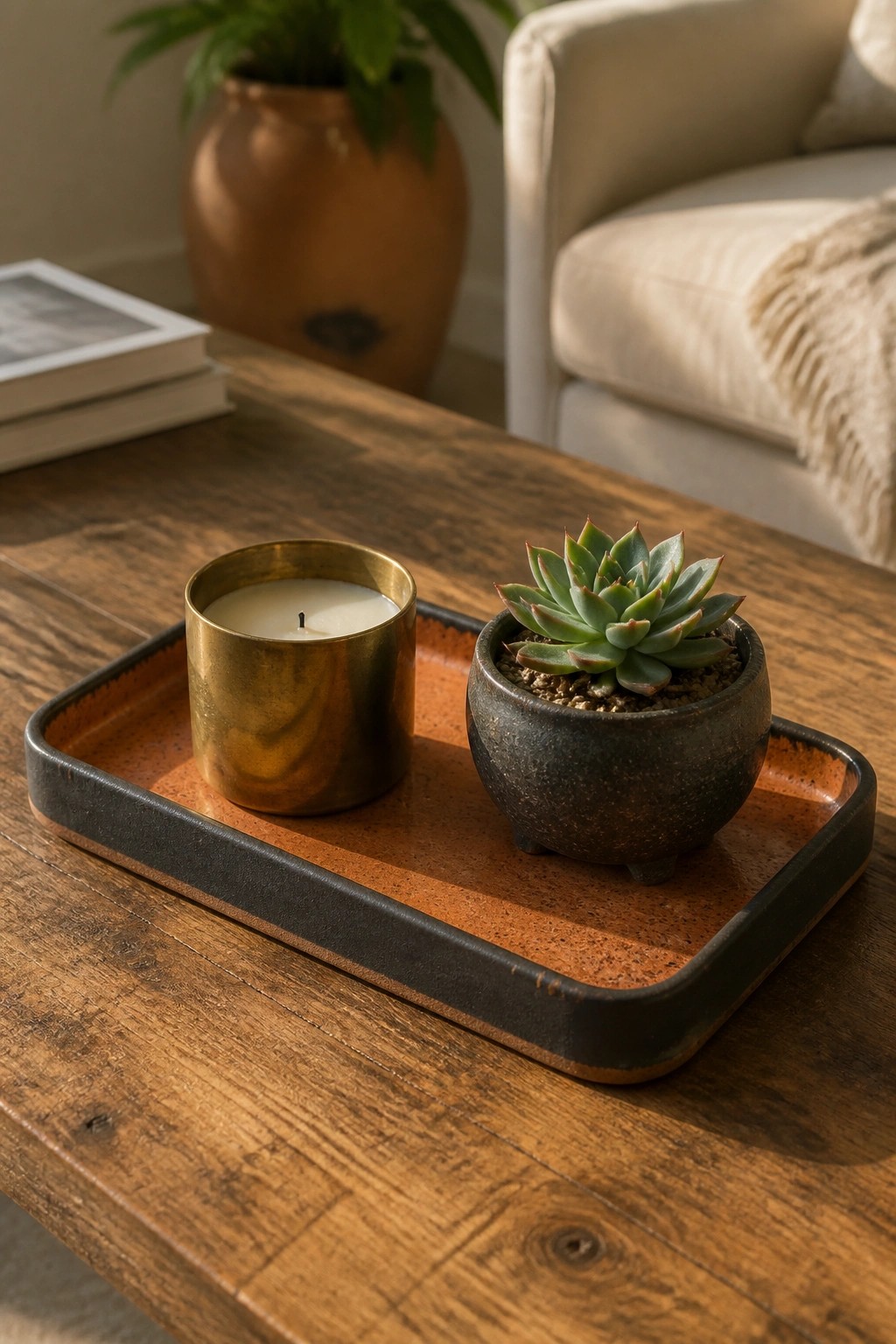
A rectangular tray built from clay slabs forms a flat base with low, squared walls that contain small objects without adding height. The dark outer rim frames a speckled terracotta surface, creating clear visual contrast that keeps the piece simple yet defined. This approach works as a decor tray that can hold a candle, a small planter, or both, and the slab method makes the flat shape easy to repeat at different sizes.
What makes this idea useful is the contained surface area that organizes a few items on a coffee table or shelf without taking over the space. You can scale the same rectangle down for a desk tray or widen it into a longer version for a bathroom counter. The two-tone edge treatment translates to other slab projects like coasters or shallow dishes while still reading as modern rather than rustic.
Square Slab Planter for Small Plants
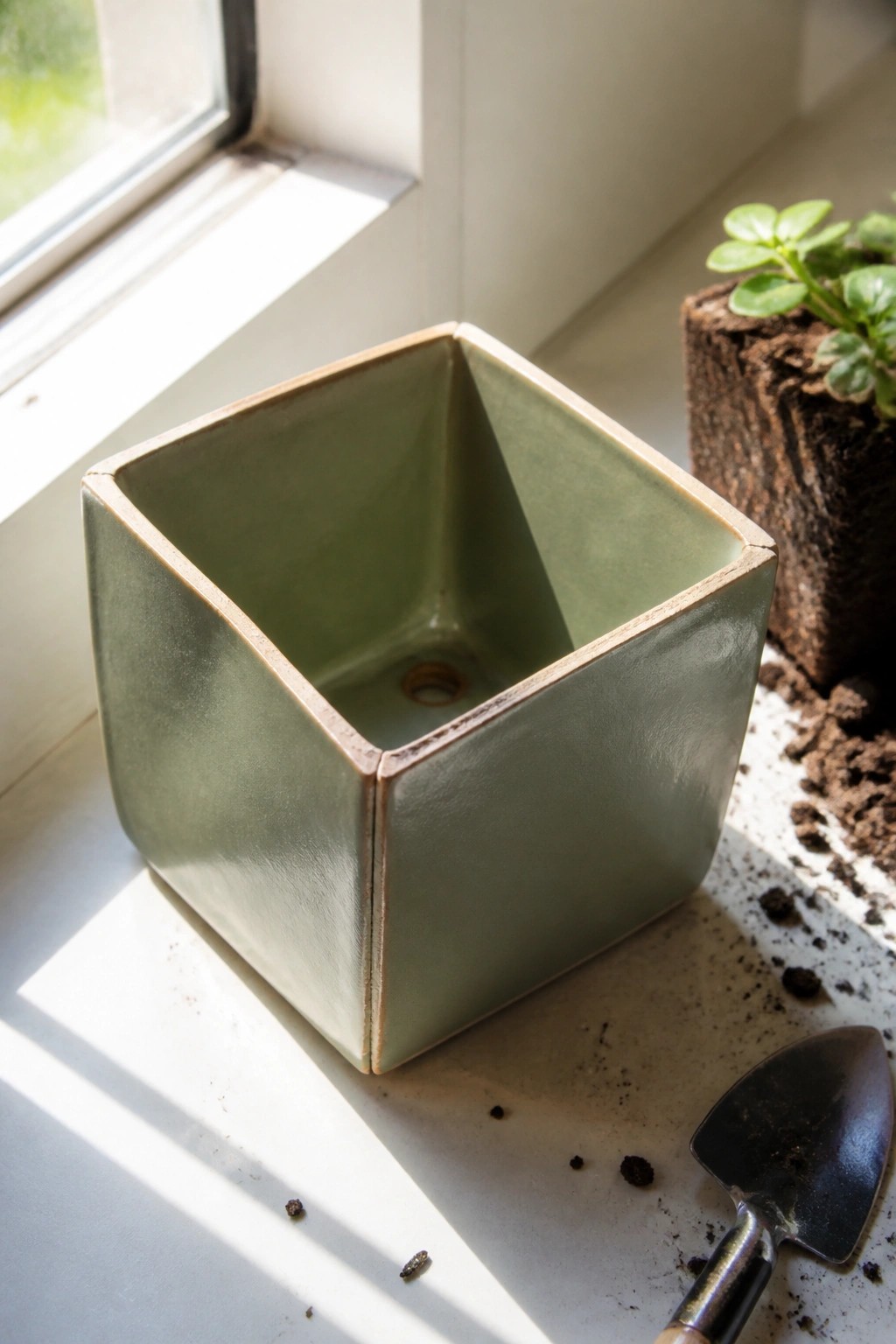
A square planter built from flat clay slabs produces a sharp geometric form that stands out among typical round pots. The light green glaze gives the surface a soft sheen while the joined edges stay visible, adding subtle lines without extra decoration. A small drainage hole at the base keeps the piece functional for actual plants.
What makes this idea useful is how the compact cube shape fits neatly on a windowsill or narrow shelf. You could scale the same slab method up for larger versions or switch the glaze to a deeper tone for different rooms. The straight sides also make it easy to group several together for a uniform plant display.
Geometric Slab Wall Plaque
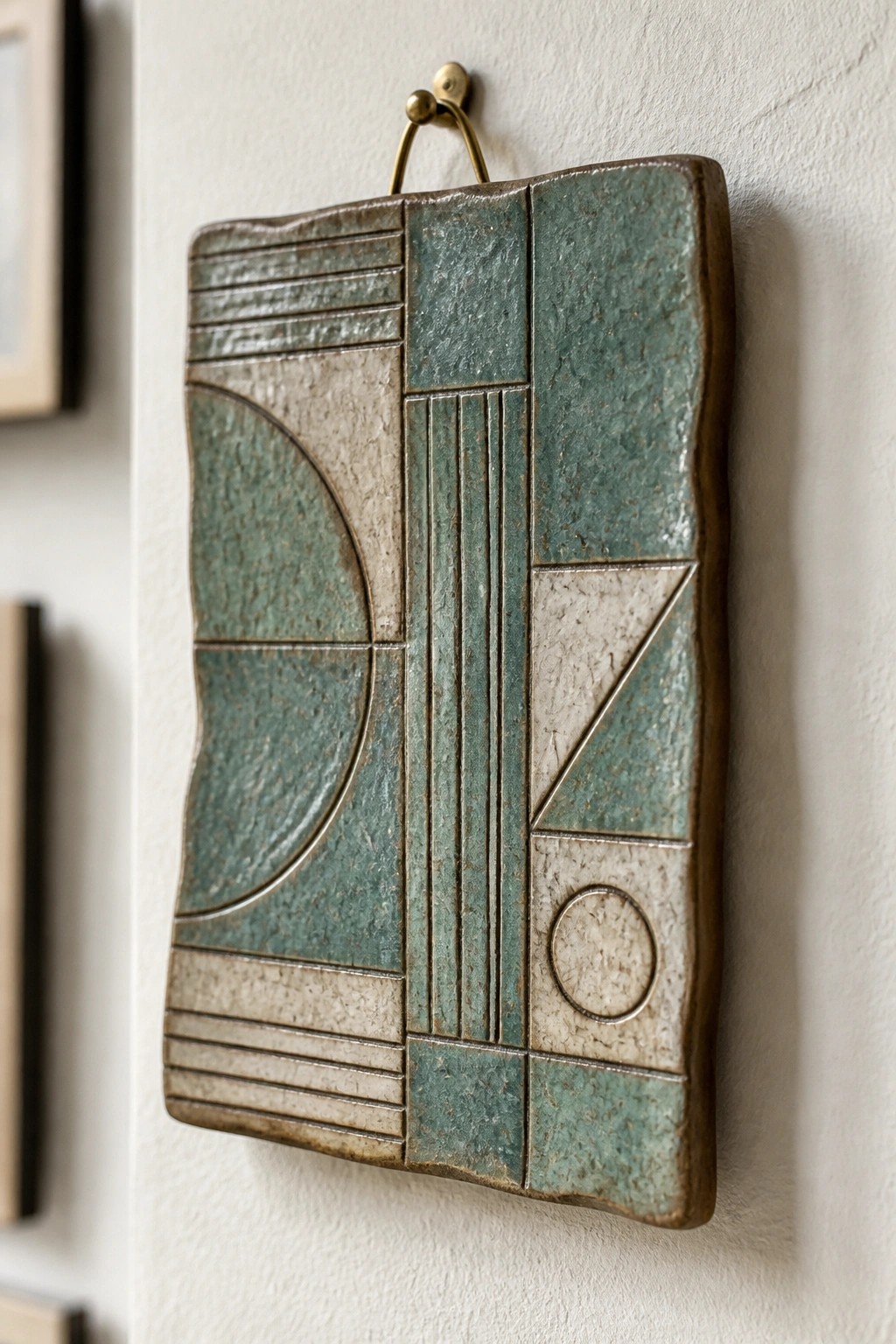
A slab-built rectangular plaque works well as modern wall decor when the surface is divided into sections using straight and curved lines. Two contrasting glazes in teal and off-white fill the shapes, with raised metal lines creating clear separation between the arcs, stripes, triangle, and circle. The textured finish on each section adds depth without extra carving. This style keeps the piece flat and easy to hang while still showing clear handmade details.
What makes this idea useful is how the same layout can be resized for smaller tiles or grouped into a set of three or four pieces. The flat profile fits narrow walls or gallery arrangements where a bulky object would not work. You can swap the teal and cream for any two glazes or drop the curved shapes if you want fewer steps. The strong grid and limited color palette also photograph clearly for project boards.
Slab-Built Vase with Vertical Blue Stripe
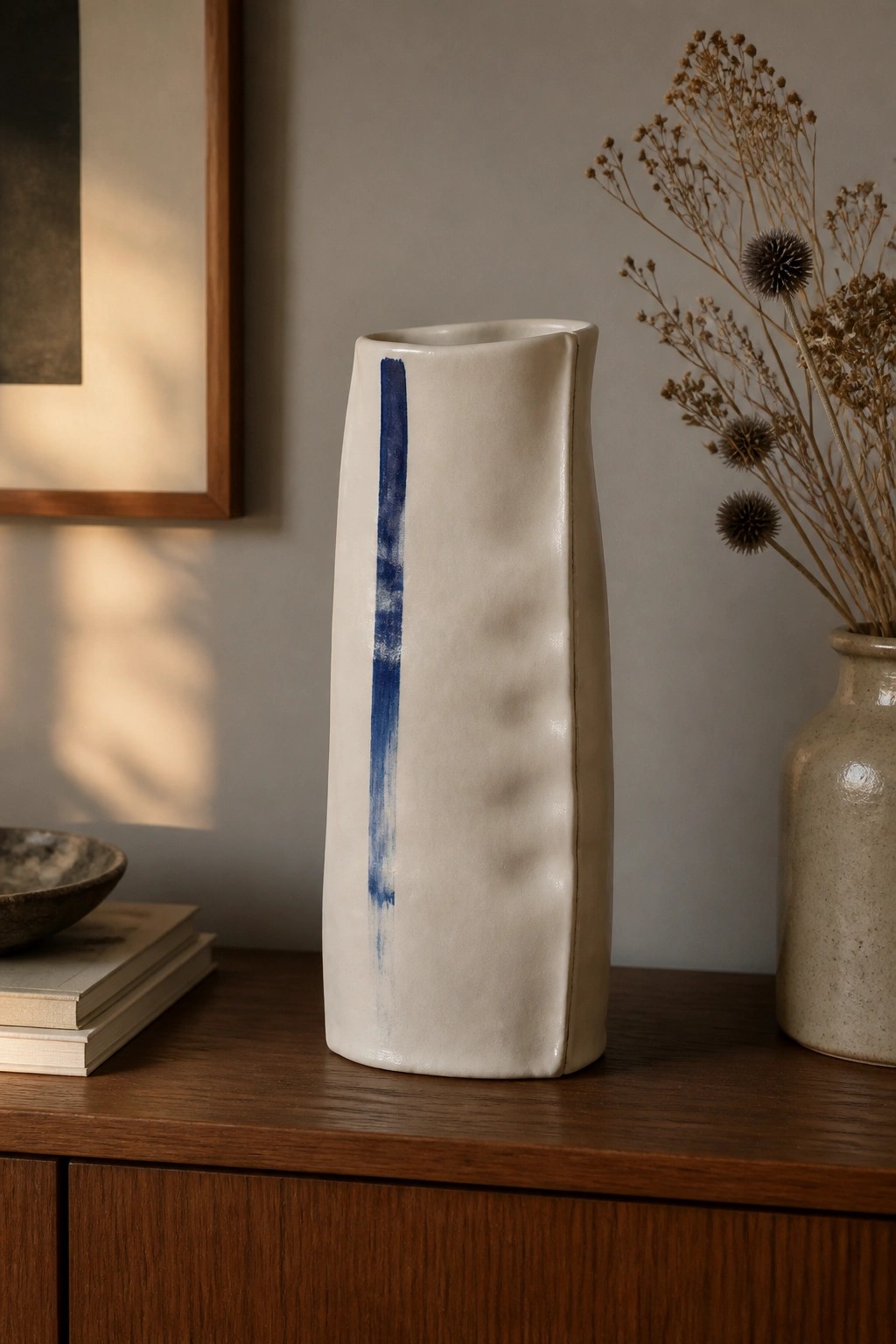
A slab-built vase with flat angled sides and a tall rectangular profile gives a clean geometric shape that stands out on a shelf. The surface uses a matte off-white glaze while one face carries a single vertical blue stripe applied with a loose brush so the edges stay slightly uneven. This keeps the project in the decorative vase category and shows how a minimal painted mark can define the whole piece without added texture or multiple colors.
What makes this idea useful is that the flat sides are easy to cut and join from slabs so the form stays simple to build. You could shorten the height for a desk organizer or widen the base slightly to hold larger stems. The stripe works as a starting point for other colors or multiple thin lines if you want more variation. In a modern room this shape fits well on a mantel or side table where the height adds presence without taking up much surface space.
Incised Slab Utensil Crock
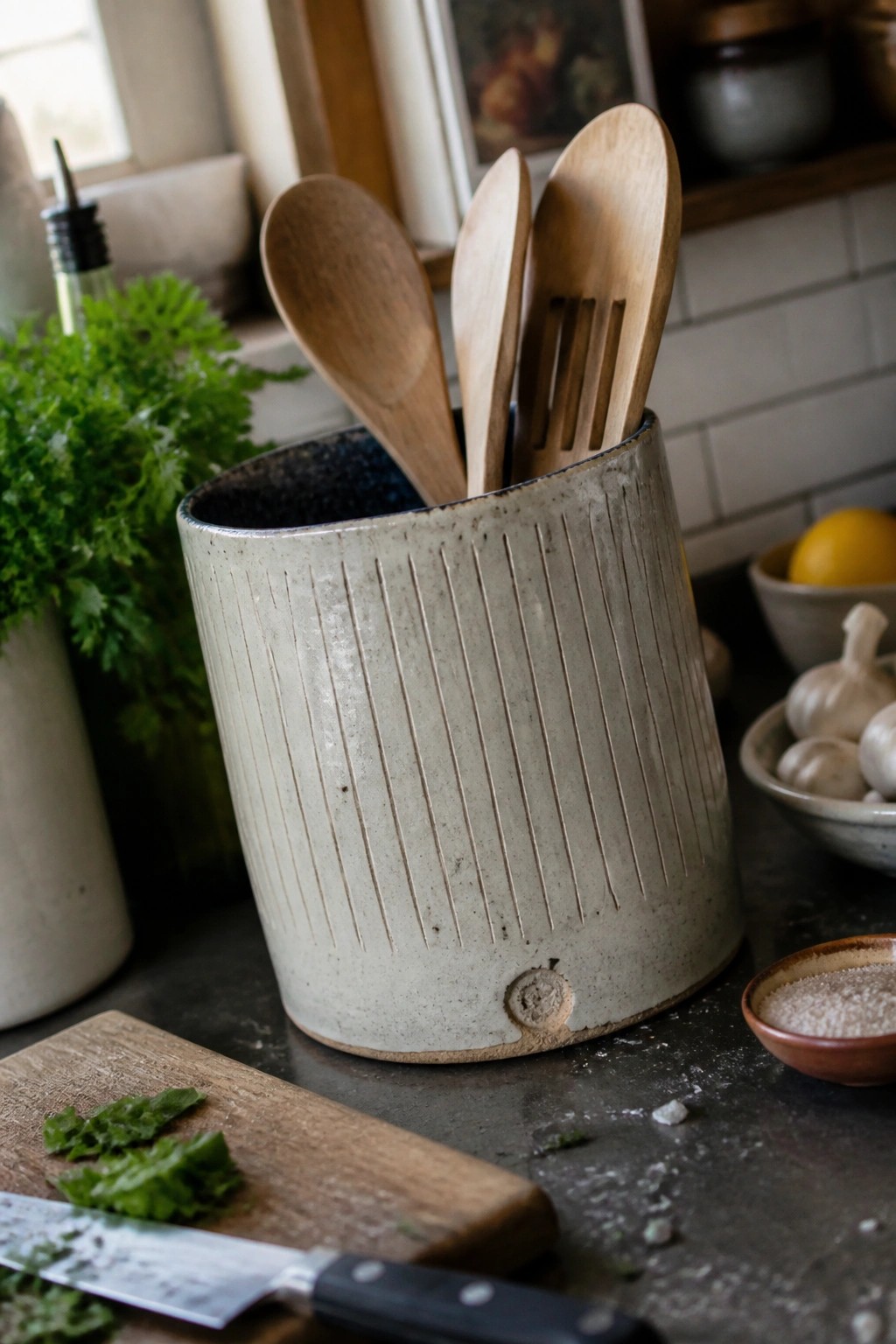
A cylindrical holder built from slabs gives you straightforward kitchen storage for spoons, spatulas, and other tools. Vertical lines carved down the sides create simple texture that catches light and breaks up the plain surface. The light speckled glaze keeps the form looking clean while still showing the clay body underneath.
The shape works especially well on a countertop next to the stove where tools get used often. You could space the lines farther apart or switch to a darker glaze to change the look without changing the build. The same cylinder can be made shorter for a small spoon rest or taller for a bigger canister.
Square Terrazzo Coasters
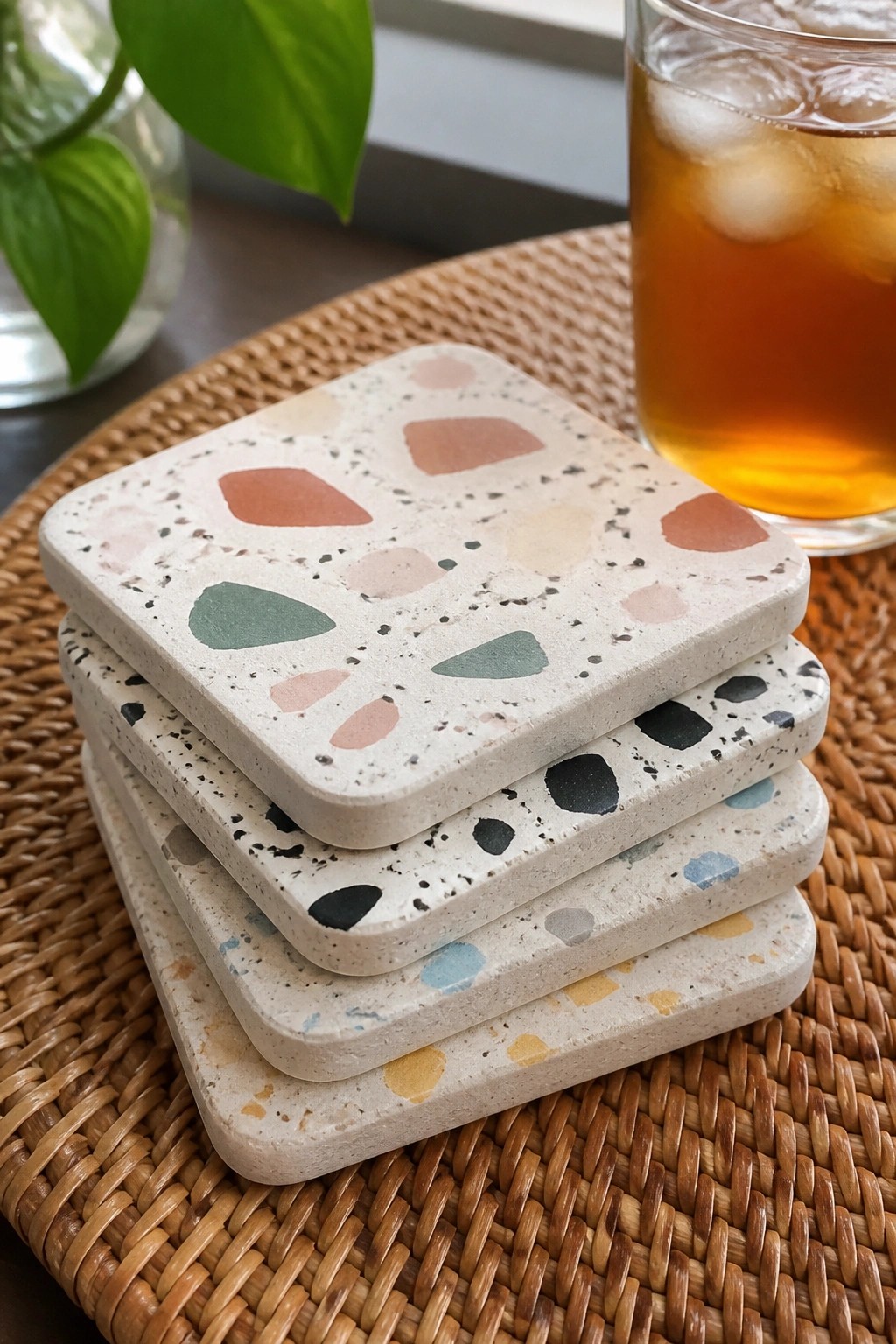
Square ceramic coasters made from flat clay slabs offer a simple way to protect tabletops while adding pattern to a surface. The design uses small pieces of colored clay pressed into a light base to create a scattered terrazzo effect with tones like terracotta, sage, black, and soft blue. The matte finish and slightly irregular chip shapes keep the look handmade rather than printed. This approach fits the category of functional kitchen or living room items that double as decor.
What makes this idea useful is how easily the terrazzo pattern can be adjusted by swapping in different clay colors to match a room. The square shape stacks neatly and takes up little space on a coffee table or kitchen counter. You could scale the same slab method down for smaller ring dishes or up for a matching tray. For a gift, a set of four or six in a neutral palette works well because the pattern reads as current without needing extra decoration.
Grooved Slab Tray with Multiple Wells
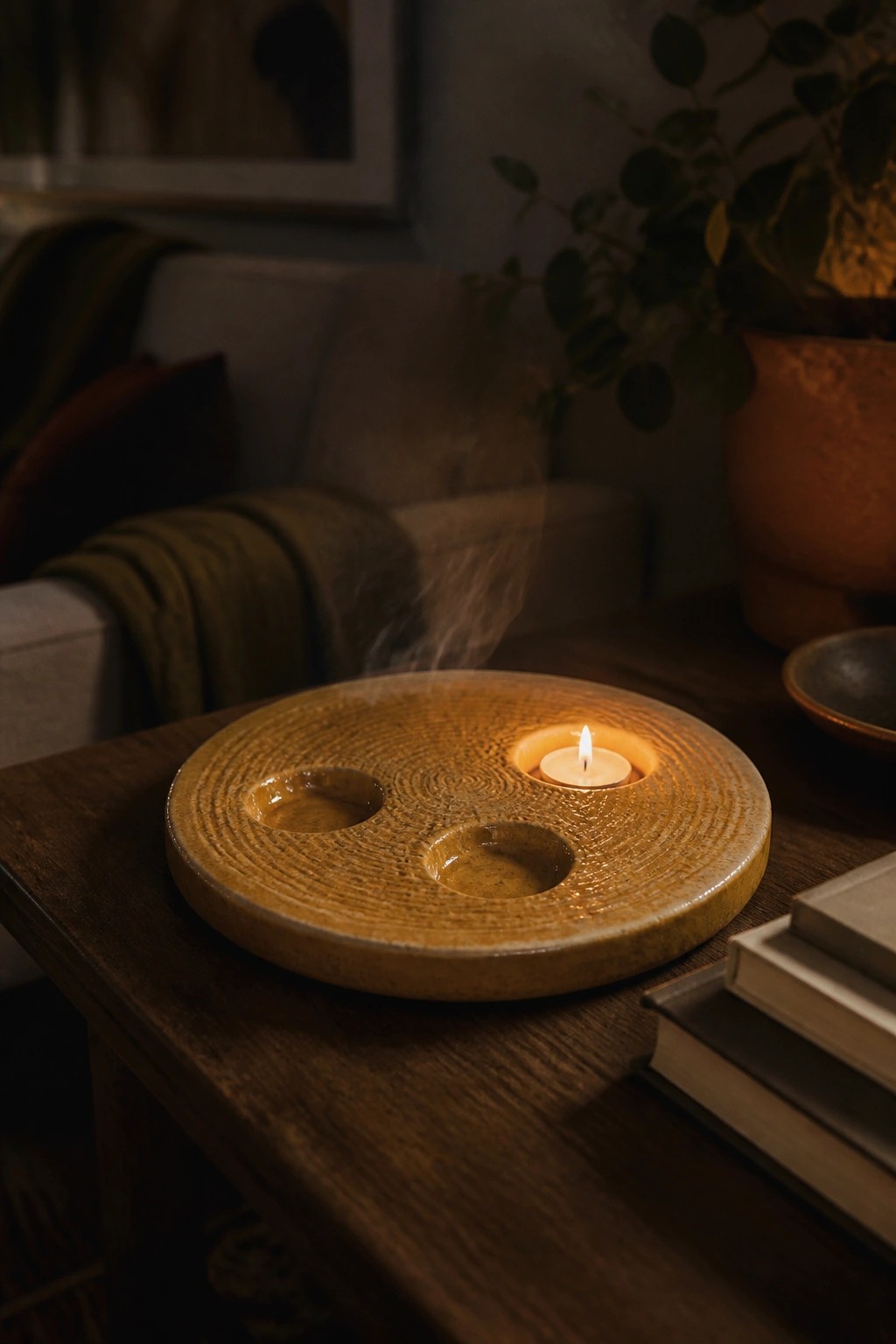
A round slab-built tray works as a candle piece when you form three shallow wells into the surface, with one sized for a tealight and the others left open for small items. Concentric grooves pressed into the clay create a simple repeating texture that catches light and adds surface interest without extra decoration. The warm yellow-brown glaze keeps the focus on the form and texture while making the whole piece feel cohesive. This idea sits in the decor tray category and combines candle use with light storage.
The shape does a lot of the work here because the low, wide circle stays stable on a table and takes up little room. You could adapt it by adjusting well sizes for rings or matches or by skipping the candle well to make a jewelry tray instead. The groove pattern is easy to repeat with a basic tool and gives the piece enough detail to photograph well for inspiration boards. In a living room this kind of tray keeps a candle contained while still looking like intentional decor rather than a basic holder.
Polka Dot Slab Spoon Rest
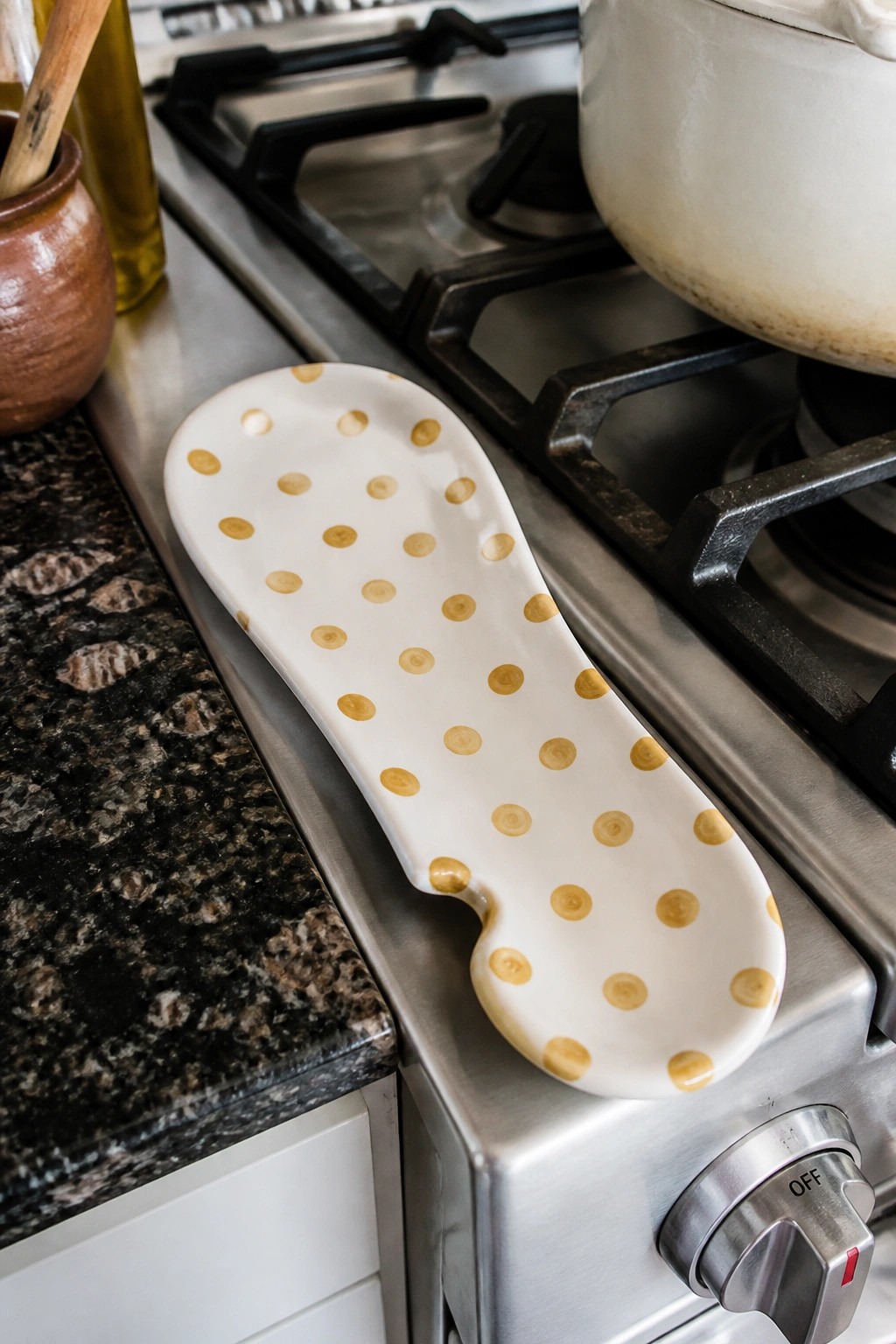
A slab-built spoon rest gives you a flat, functional surface for resting spoons or spatulas while cooking. The long rectangular shape with one wider end holds utensils without tipping, and the white glaze with scattered gold dots adds a simple repeating pattern across the surface. This approach works well as a kitchen item because the slab stays stable on a stovetop and the dots provide contrast without needing complex carving.
What makes this idea useful is how the basic slab form can be cut to different widths or lengths to fit your most-used tools. The dot pattern is easy to adapt with other colors or spacing, and the same method can be used to make a matching small tray or coaster set. In a kitchen this piece keeps counters cleaner during meal prep and takes up little storage space when not in use.
Slab-Built Napkin Rings with Glazed Cutouts
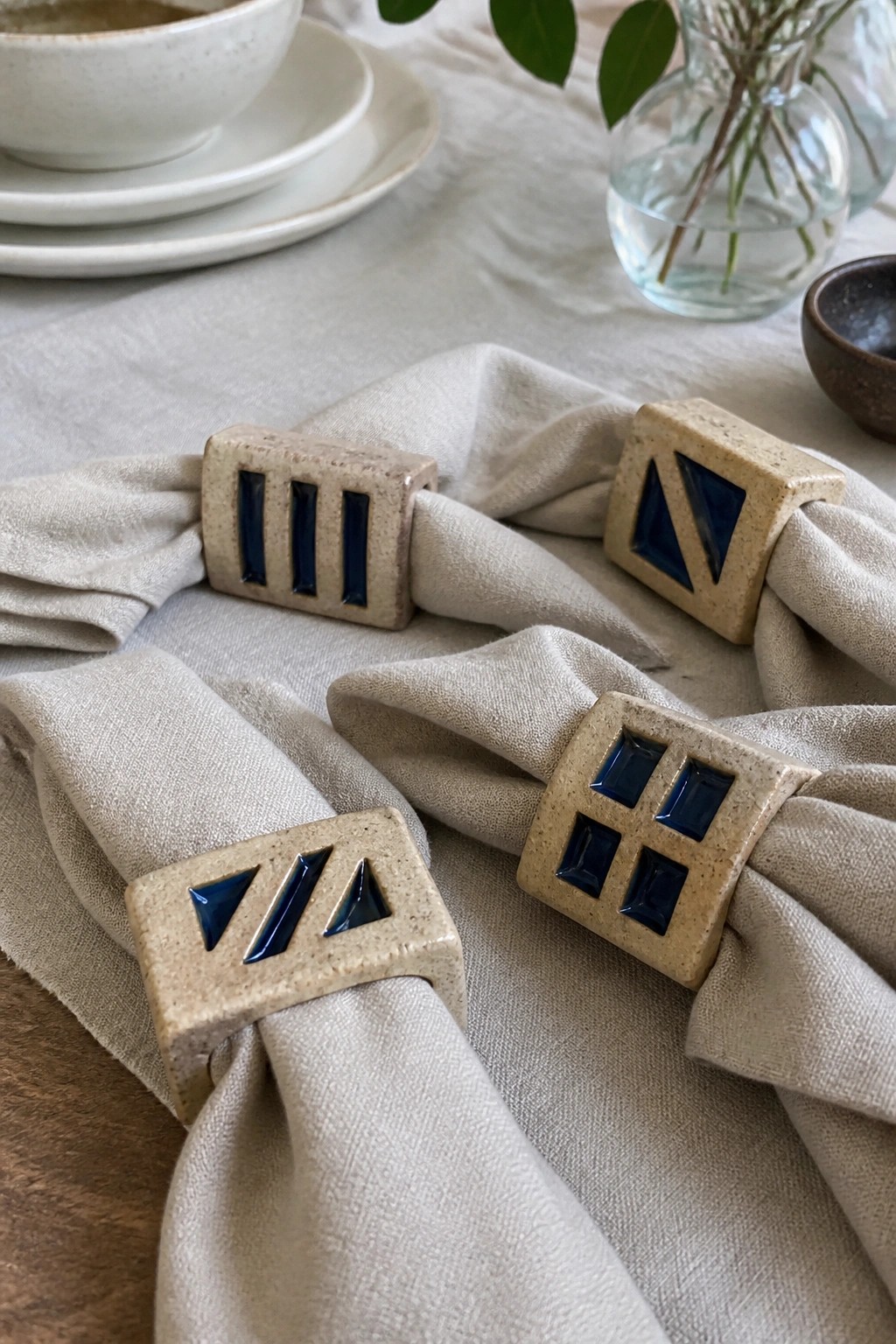
Napkin rings formed from clay slabs give a clean rectangular shape that wraps around folded fabric. Each ring has geometric cutouts—straight lines, triangles, or grids—filled with a deep blue glaze that contrasts against the light speckled clay. The flat surfaces and precise openings highlight the slab method while keeping the overall size small enough to sit neatly on a place setting. This style fits the category of table or kitchen decor made from hand-built clay.
What makes this idea useful is how the cutout patterns can be changed to match different linens or dinnerware colors without altering the basic ring form. You could repeat the same slab template to make a full set or adapt the technique into small handles for cabinet doors. The small scale means you only need a modest amount of clay, and the negative space does most of the visual work once the glaze is applied. It works especially well for anyone already comfortable rolling slabs and cutting simple shapes.
Lidded Divided Salt Cellar
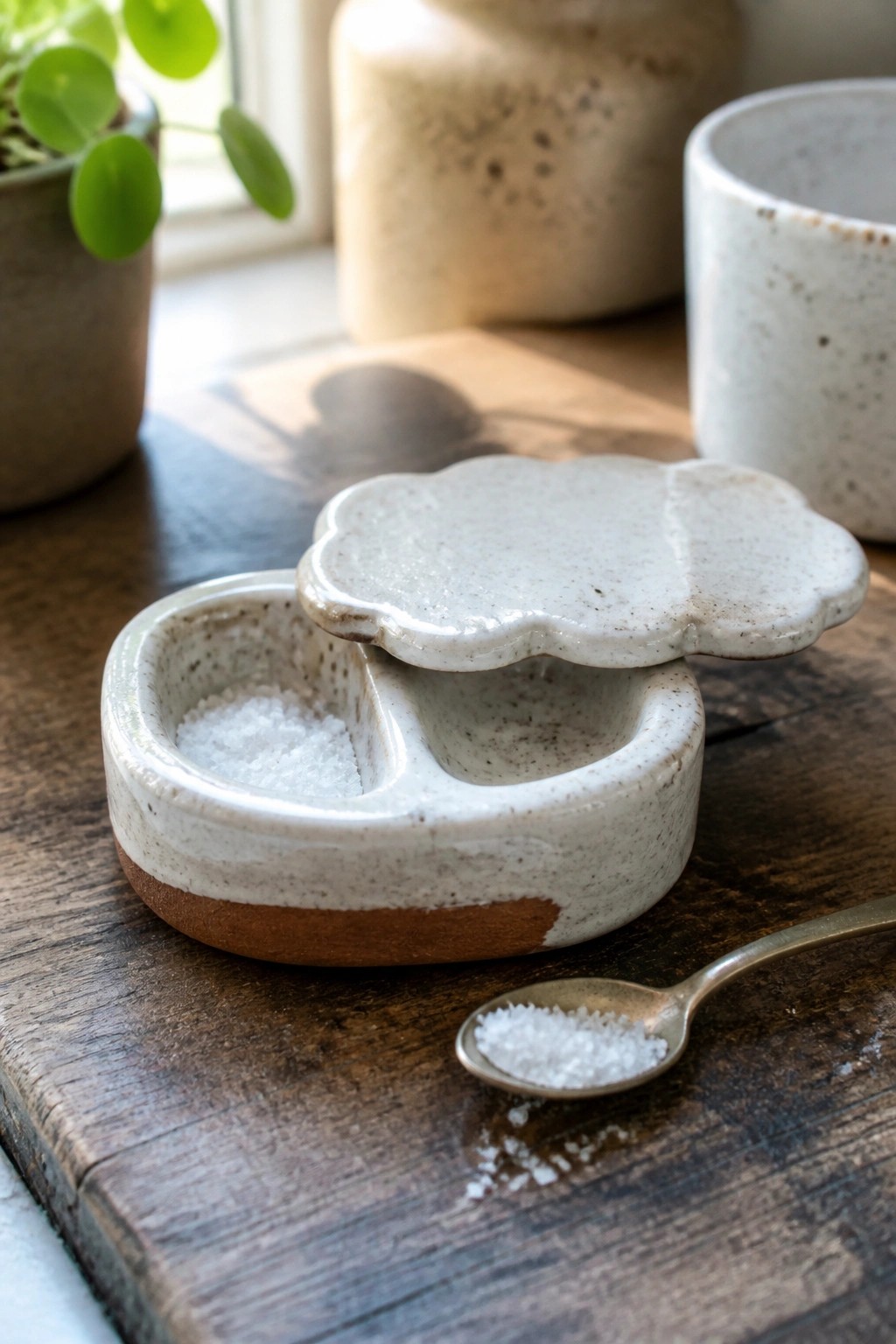
A small slab-built salt cellar with two compartments gives you a compact way to keep salt on the table. One section holds a small pile of salt while the other leaves room for a spoon, and the scalloped lid sits loosely on top to cover the contents. The neutral speckled glaze and simple form keep it looking clean and current rather than decorative.
What makes this idea useful is how little space it takes on a countertop or dining table while still being practical. The divided layout works for keeping coarse salt separate from a pinch bowl or for pairing salt with pepper. You could rework the scalloped lid into a plain rectangle or oval to speed up the build, or stretch the same shape into a small butter dish. The compact size and clear function make it easy to photograph for kitchen-focused boards.
Soft Folded Slab Ring Dish
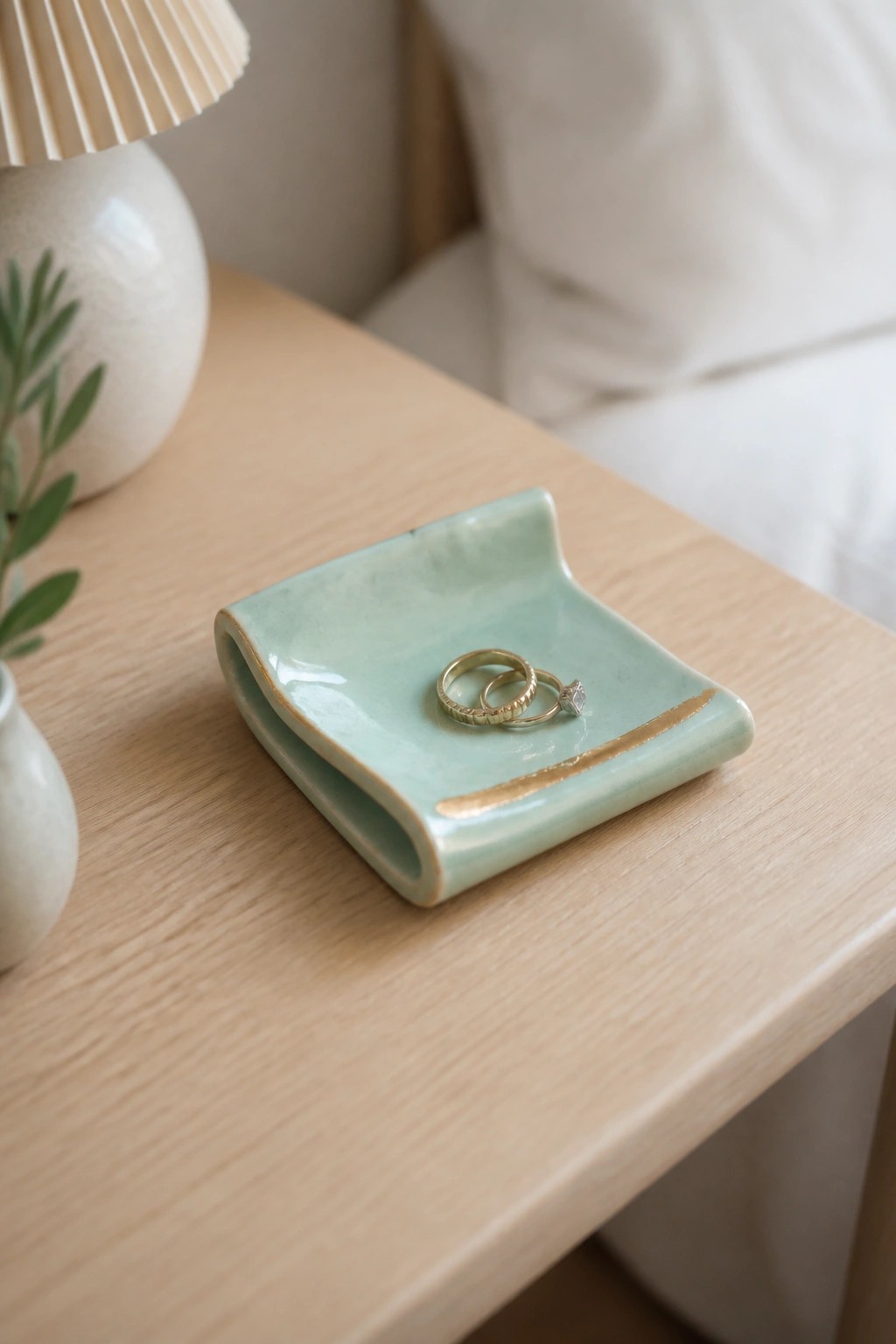
A slab built ring dish gives you a simple flat tray that holds jewelry without taking up much space. Start with a square of clay, then gently fold two opposite sides upward to create low walls that keep small items contained. The mint green glaze with thin gold lines along the edges keeps the surface smooth and reflective while the gold adds a sharp contrast that defines the shape.
What makes this idea useful is how the folded form can be adjusted to different sizes for use as a soap rest or desk catchall. You can change the gold to a matte line or skip the accent entirely for a more minimal version. In a bedroom this shape sits flat next to a lamp and keeps rings organized. The same slab technique works for making matching pieces in other glaze colors for a coordinated set.
Slab-Built Incense Tray with Carved Lines

A flat slab of clay is rolled out, cut into a long narrow shape with slightly curved sides, and fitted with a small cone at one end to hold an incense stick or cone. Parallel grooves are scored across the surface to add texture and break up the flat plane. The dark matte finish keeps the piece simple and lets the carved lines stand out. This type of project falls into the small decor object category and works as a dedicated incense holder.
What makes this idea useful is that the slab base gives you a stable surface that can sit on any flat table without tipping. You could shorten the shape into a rectangle or widen it slightly to hold more than one cone at a time. The same grooved pattern could be adapted for a ring dish or a small tray for keys by skipping the cone entirely. In a bathroom or entryway, the narrow form takes up little space while still looking intentional.
Rectangular Slab Soap Dish with Drainage Slots
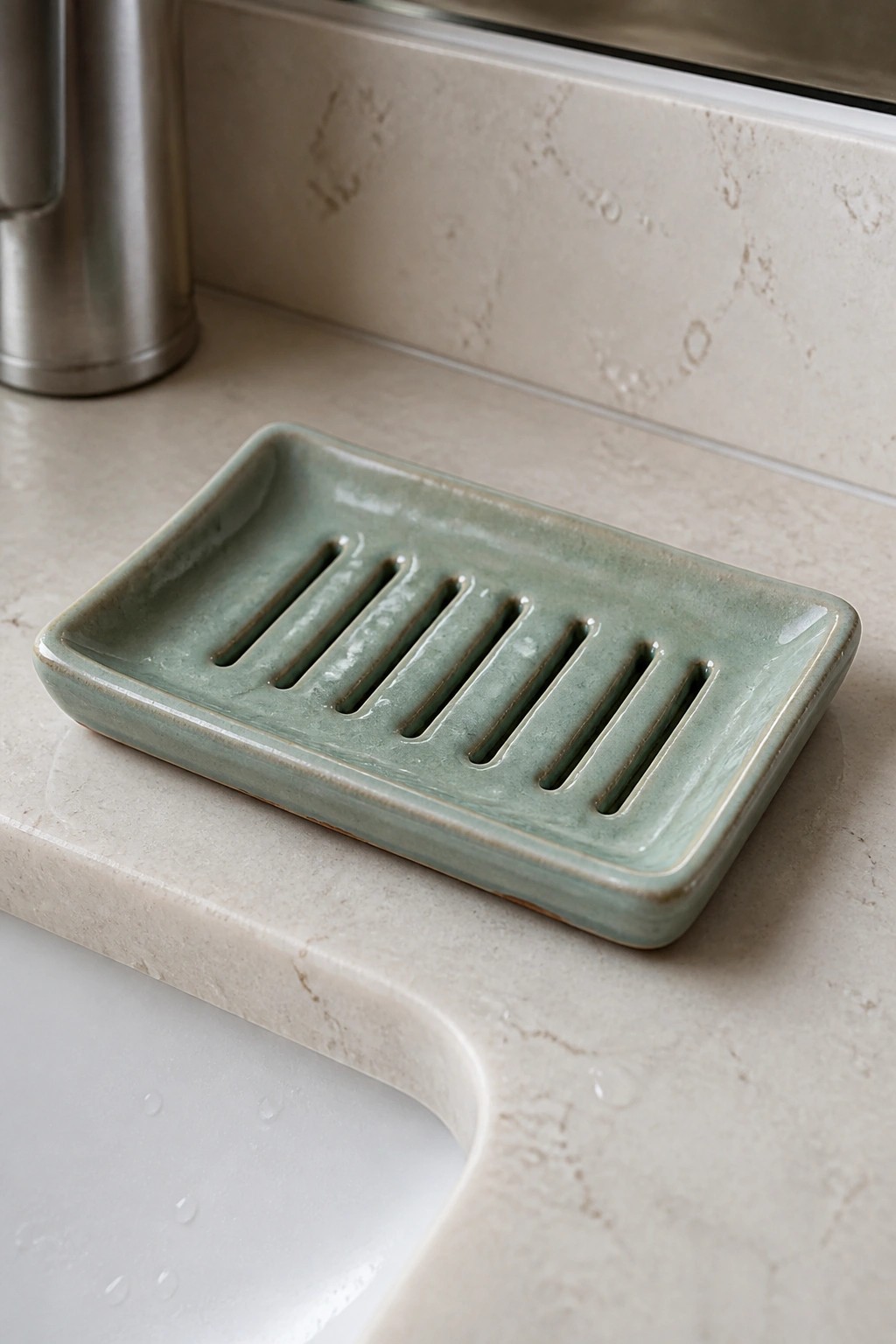
A slab-built soap dish uses a simple rectangular form with evenly spaced slots cut through the base to let water drain away from the bar. The muted green glaze covers the entire surface and creates a subtle variation that highlights the handmade edges without overpowering the clean lines. This bathroom item keeps soap dry on a wet counter and fits the scale of most standard bars.
What makes this idea useful is how the slot layout can be widened or narrowed to suit different soap sizes or even turned into a small tray for sponges. The shape works especially well on bathroom ledges where moisture collects, and the same slab method could be shortened into a ring dish or lengthened for a kitchen sponge holder. For a gift, the project needs only a few basic cuts and one glaze color yet solves a practical daily issue.
Two-Tone Slab Bathroom Holder
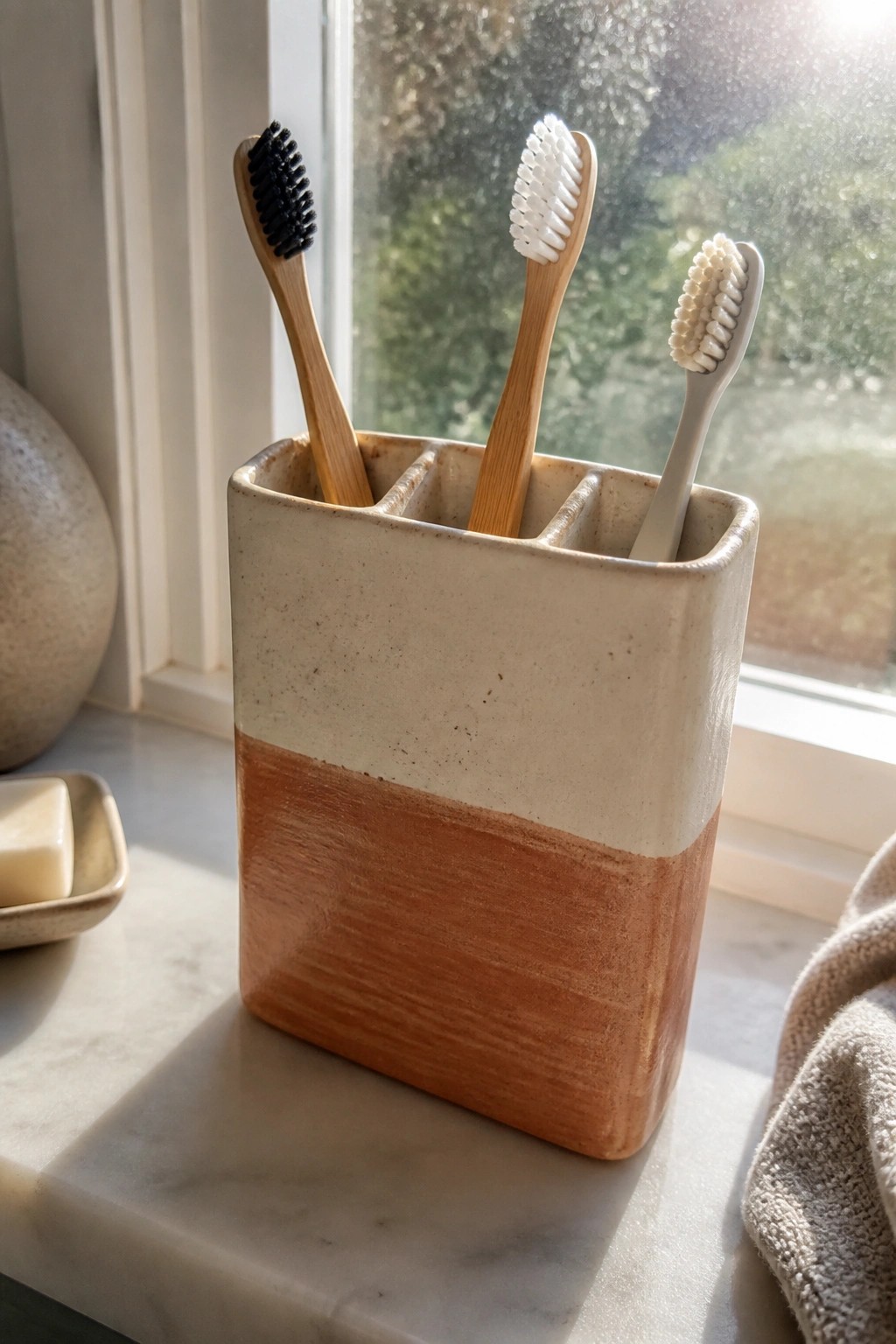
A rectangular slab-built ceramic caddy with three vertical compartments works as a toothbrush holder for a bathroom counter. The form uses a clean division between an unglazed terracotta lower section and a lighter matte upper band, which keeps the piece simple while adding visual weight at the base. This approach turns basic slab construction into a functional bathroom item that separates brushes without extra hardware.
What makes this idea useful is the divided layout that stops bristles from touching while keeping everything upright on a small surface. The same slab template can be adjusted for a desk organizer or kitchen tool holder by changing the number of slots or overall height. The two-tone finish pairs easily with neutral tile or stone, and the earthy bottom color hides minor wear better than an all-light piece. For Pinterest, the contrast between the raw clay section and the lighter top gives the project a clear modern look that still reads as handmade.
Ribbed Yarn Bowl with Built-In Guide
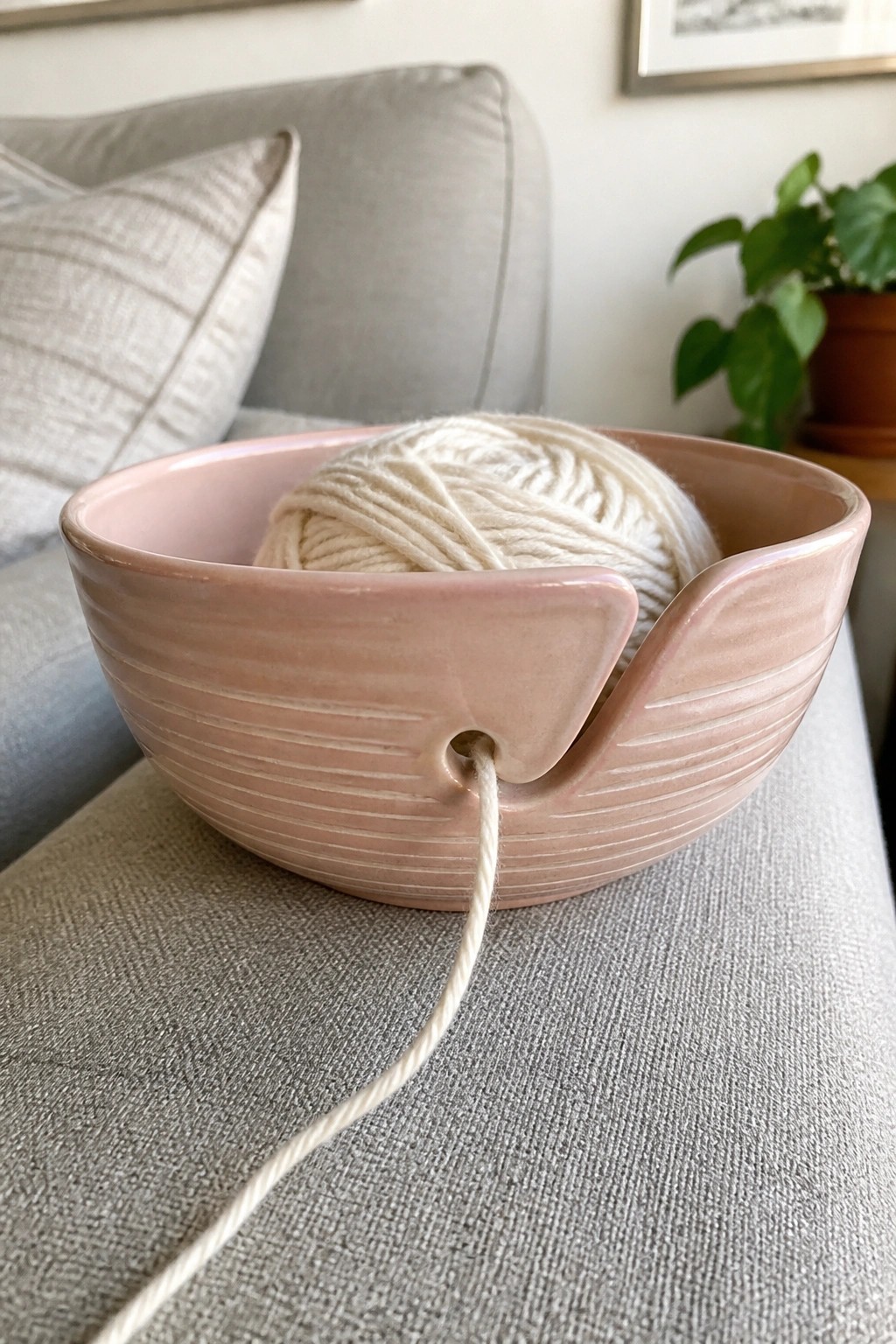
A slab-built yarn bowl uses a low, wide form with horizontal ridges rolled into the clay before assembly. The rim incorporates a simple notch paired with a drilled hole that feeds yarn from the center of a ball without snags or rolling. The matte pink glaze accentuates the texture while remaining durable enough for daily craft use. This project falls into the functional holder category that blends storage with tabletop decor.
What makes this idea useful is the way the cutout solves a practical knitting problem while keeping the piece compact. The ribbed surface and soft color would translate easily to a neutral glaze for a more minimalist look or a deeper bowl shape for larger skeins. You could rework the same notch detail on a smaller oval tray to hold embroidery floss or charging cables. For a gift, something like this stands out because it serves a clear purpose instead of sitting as generic decor.
Slab-Built Hanging Planter with Visible Seams
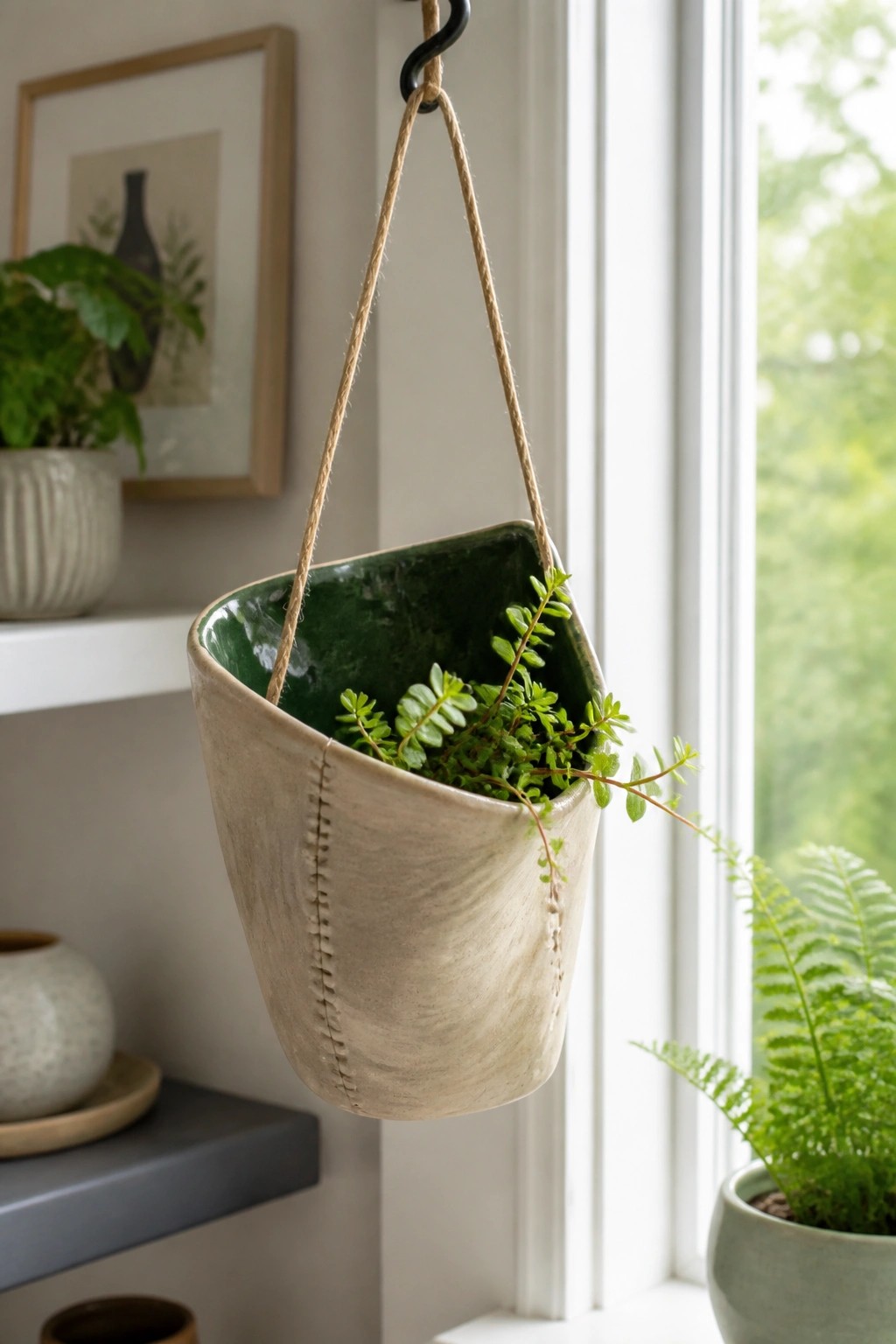
A slab-built hanging planter gives you an angled, pouch-like form that sits well when suspended. Flat clay pieces are joined so the seams remain visible as vertical texture lines, and the inside receives a glossy green glaze while the exterior stays matte and neutral. The open rim tilts slightly to one side, which lets trailing plants spill over naturally without extra carving or handles.
What makes this idea useful is how the rope suspension and compact size let you place greenery near a window without using shelf space. You could simplify the shape into a shorter table version or keep the seams but change the interior glaze color to match different rooms. The angled opening also works for plants that need a bit more room to spread, and the same slab method scales easily if you want a matching pair.
Three-Section Abstract Tray
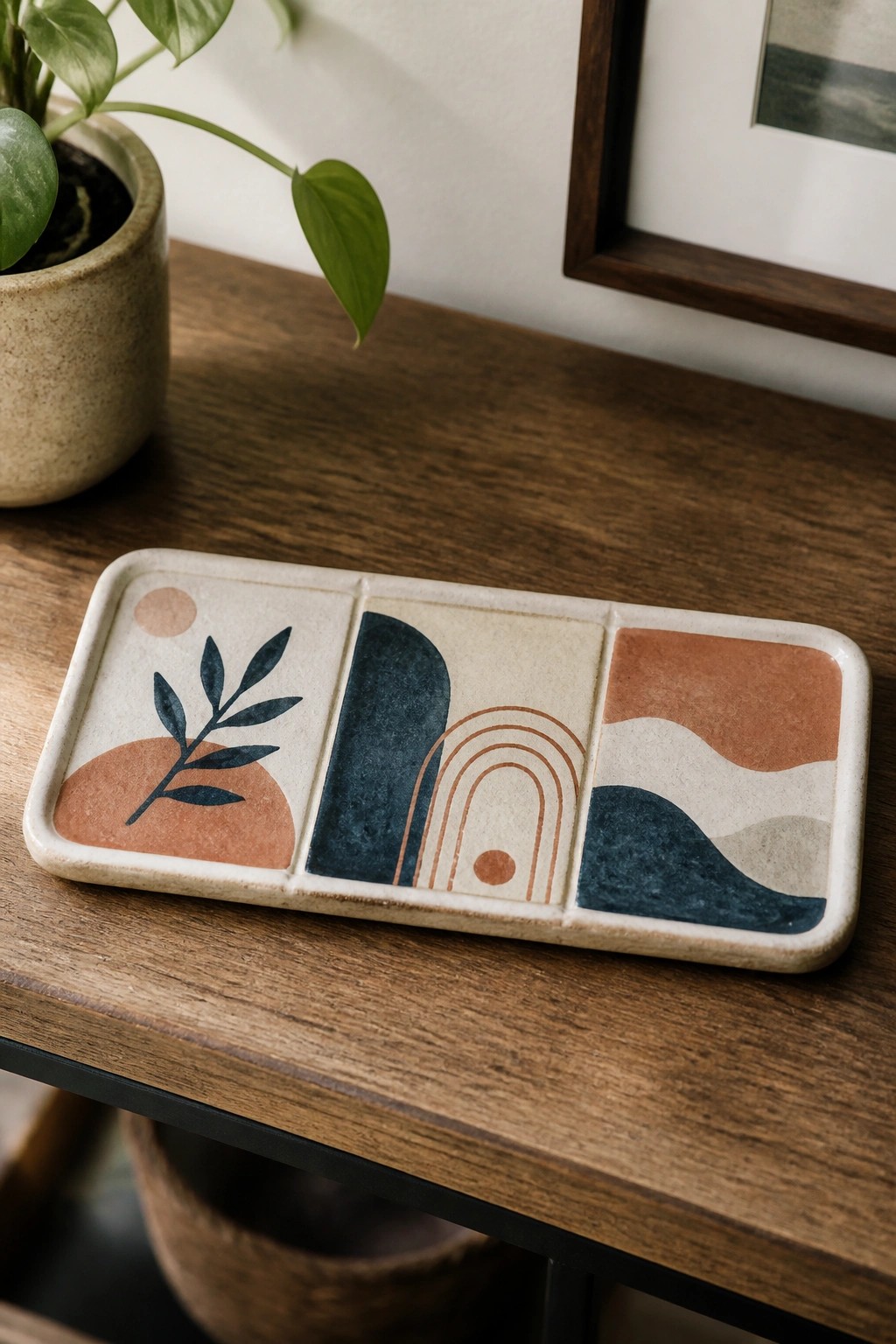
A slab-rolled rectangular tray divided into three sections gives you separate spaces for different painted motifs on a single flat piece. Each panel uses simple shapes like a leaf branch, stacked arches, and wavy lines in terracotta, deep teal, and neutral tones. The matte surface keeps the focus on the color blocks and line work rather than texture or form.
The divided layout works well on a dresser or entry table for sorting small items like keys or jewelry. You can adapt the idea by reducing it to two sections or repeating one motif across all three for a cleaner look. This format also translates easily into a bathroom soap dish or a small desk organizer.
Striped Slab-Built Cat Figurine
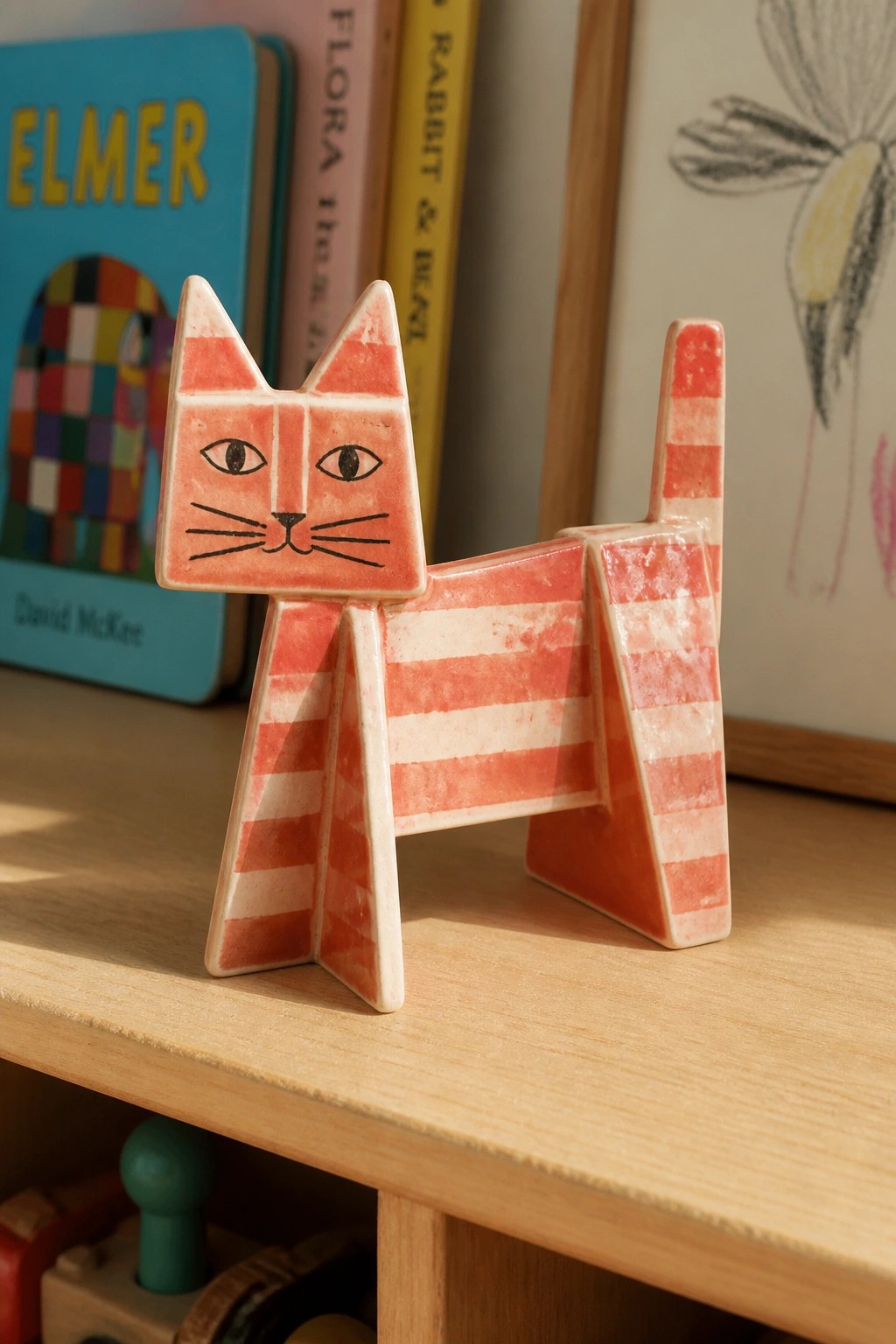
A slab-built cat figurine is formed by cutting and joining flat clay pieces into an angular body, head, and tail. The coral and white stripes run horizontally across the flat surfaces, creating a strong graphic pattern that highlights the geometric shape. Simple painted details on the face give the piece a clear identity while keeping the overall form clean and minimal. This approach works well for small decorative objects that sit on shelves or ledges.
What makes this idea useful is that the striped pattern is easy to repeat on any flat-sided slab form. You could change the colors or swap the cat for another simple animal shape using the same pattern pieces. The small scale makes it practical for testing glaze combinations or trying out painted details without using much clay. In a living room or kid’s room, a piece like this adds color without taking up much space.
Frequently Asked Questions
What type of clay works best for creating modern slab pottery at home?
Stoneware or porcelain clay offers good strength and a smooth finish for modern designs. These clays hold shape well during slab construction and fire to a durable result suitable for decor pieces like vases or trays. Start with a mid fire clay body around cone 6 to achieve professional looking outcomes without specialized equipment.
How can I make my slab pottery food safe for kitchen use?
Apply food safe glazes that are labeled as such and follow the manufacturer’s firing instructions exactly. Avoid using pieces with cracks or unglazed surfaces that could harbor bacteria. Test fire samples first to confirm the glaze matures properly and seals the clay surface effectively.
What basic tools do I need to try these slab pottery ideas without a wheel?
A rolling pin or slab roller creates even clay sheets while a ruler and cutting wire help shape forms precisely. Add a sponge for smoothing edges and basic stamps or texture mats for modern patterns. These affordable items allow you to build items like wall hangings or planters using simple hand building techniques.
How do I prevent warping or cracking in larger slab pottery decor pieces?
Dry slabs slowly under plastic wrap to control moisture loss evenly and flip pieces periodically during the leather hard stage. Score and slip joints thoroughly when assembling forms. Avoid direct sunlight or heat sources that cause uneven drying and lead to structural issues later.
What finishes enhance the stylish modern look in home settings?
Matte glazes in neutral tones like gray or black create a contemporary feel while metallic accents add subtle interest. Experiment with underglaze drawings or sgraffito techniques for clean lines. Layer thin coats and fire at the recommended temperature to achieve a sleek durable surface that complements various interior styles.

Pottery Path is my cozy corner of the internet where I share clay ideas, pottery inspiration, and simple projects you can recreate at home. I love exploring everything from air dry clay to handbuilt pottery to cute minis that brighten your day. My goal is to make clay crafting feel easy, fun, and welcoming for anyone who wants to try it.
You will find beginner friendly tutorials, creative pottery painting ideas, and lots of warm inspiration for slow and happy crafting. If you enjoy hands on creativity, this space will feel like home.