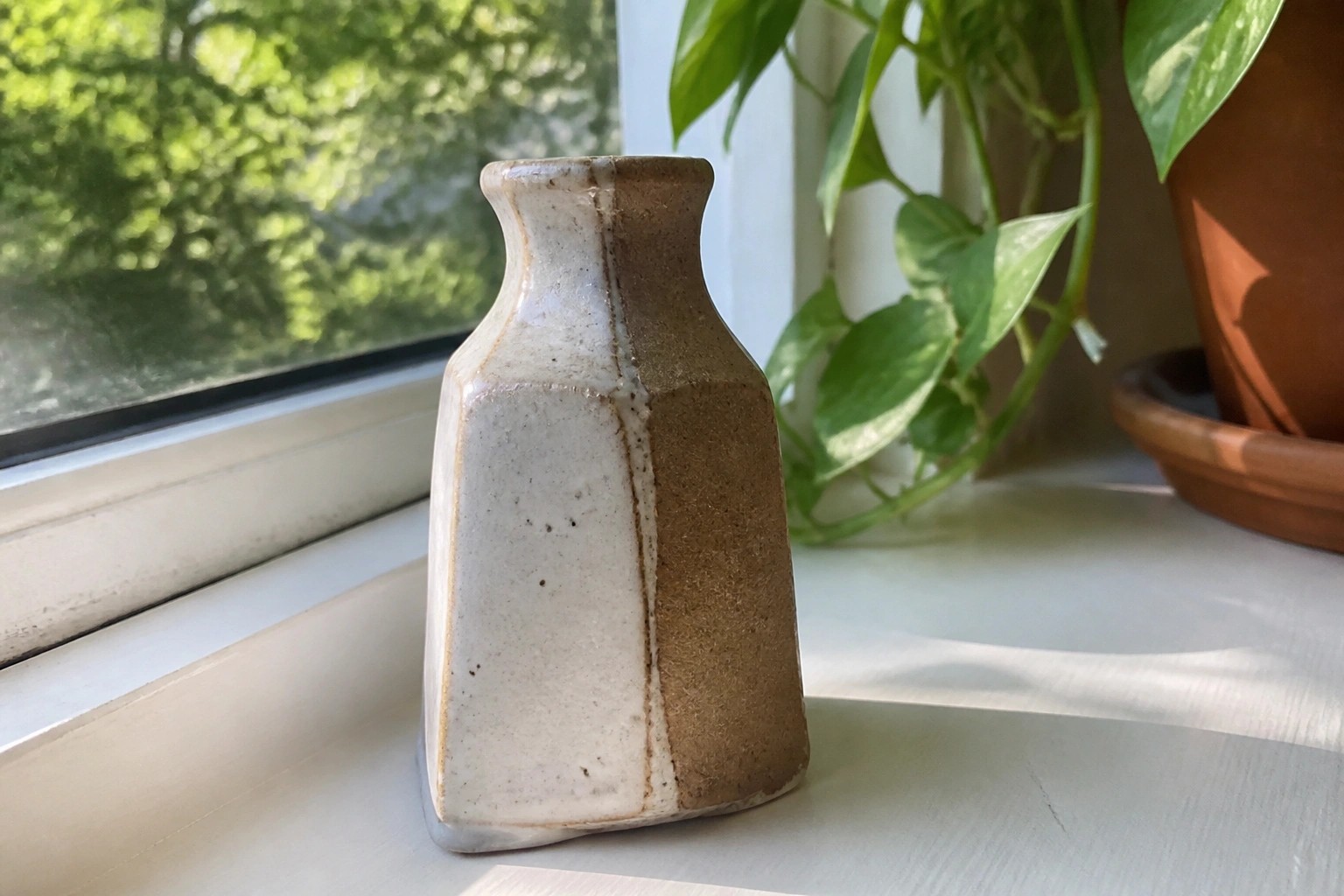
I enjoy making slab built vases because the process gives you a lot of control over the final shape.
I have collected some ideas that mix clean modern lines with softer organic curves.
These are designs I have tried in my own studio or noticed in workshops over the years.
Most use simple hand building steps that do not need fancy equipment.
A few of them might be worth testing out if you are looking for something new to try.
Slab Vase with Split Glaze and Raw Clay
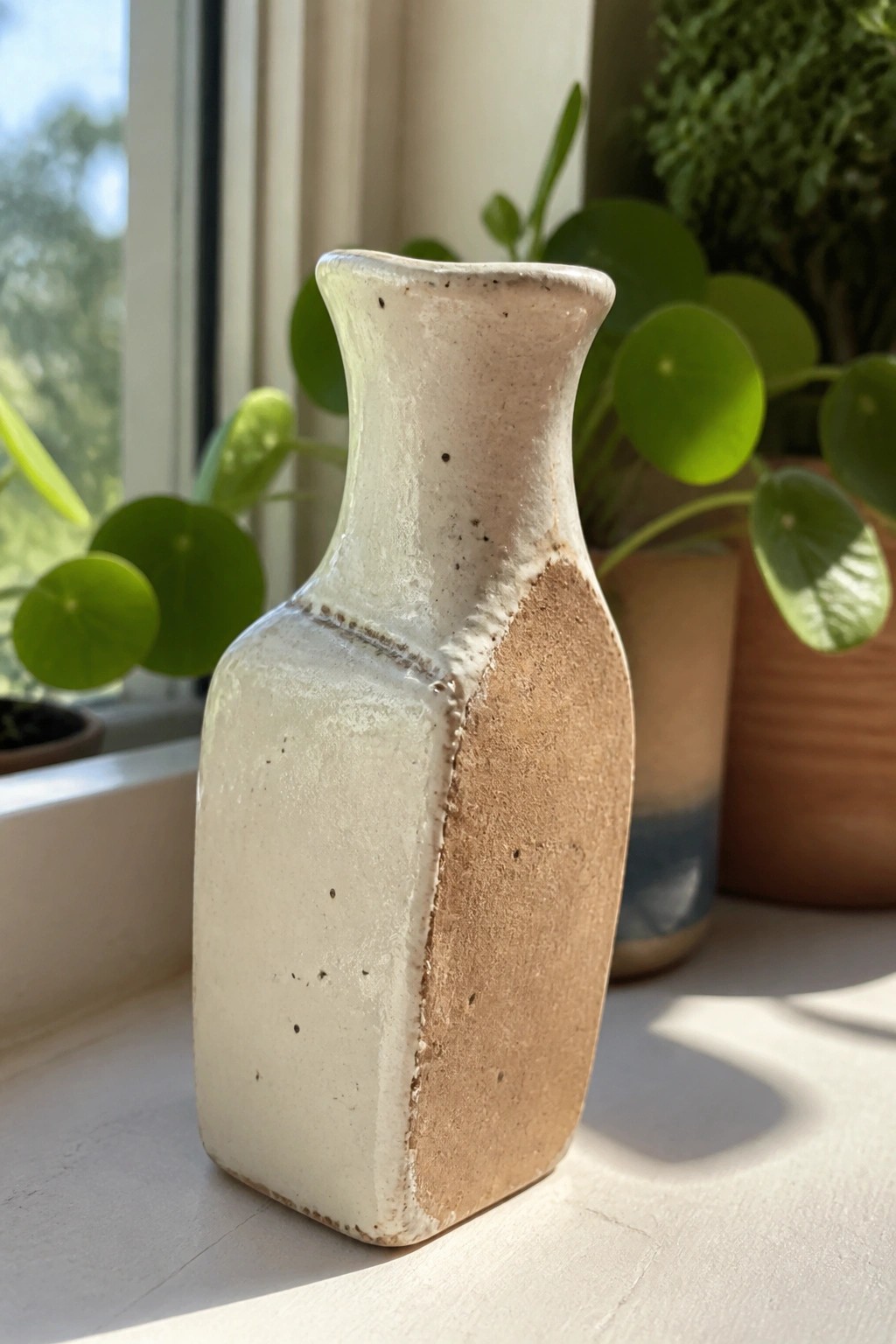
A slab built vase uses flat clay sheets joined at angles to create a squared body that tapers into a short neck. One side receives a light speckled glaze while the adjacent surface stays unglazed, leaving the natural clay texture exposed along a diagonal seam. The contrast draws attention to the construction lines and gives the form a clean contemporary outline without added decoration. This approach works as a simple decorative vase for single stems or small dried arrangements.
What makes this idea useful is how the split finish turns a basic slab shape into something distinct with minimal extra steps. You could adapt the same division on a taller or wider version or repeat the pattern across a set of three vases for a grouped display. The compact size fits easily on a desk or windowsill and pairs well with both modern and natural interiors. For a variation, try swapping the unglazed section for a matte color or pressing a light texture into the clay before assembly.
Organic Twisted Slab Vase

A slab-built vase formed from clay sheets that are joined and shaped into a tall, narrow-necked body with pronounced vertical folds and curves creates an asymmetrical organic silhouette. The surface uses a flowing glaze in layered blues and greens that settles into the recessed areas to highlight the movement of the form. This approach fits the category of contemporary decor vases where the handmade construction is left visible through the irregular contours rather than smoothed away.
The shape does a lot of the work here by turning a basic cylinder into a sculptural piece that still functions for holding flowers or branches. You can adapt the idea by starting with fewer folds if you want a simpler first attempt or by changing the glaze to a single matte color to shift the focus onto the form alone. This kind of vase works especially well on a sideboard or mantel where the profile can be seen from multiple angles. For Pinterest, the strong silhouette against a neutral background tends to perform well because the design reads clearly even in a small thumbnail.
Slab Wall Pocket for Dried Stems

A slab-built wall pocket gives you a flat ceramic holder that hangs directly on a peg or hook. The form starts as a simple rectangle with the lower section folded forward to create a shallow pouch, and a round hole cut near the top for mounting. The matte pink glaze keeps the surface quiet so the shape and the dried stems inside stay the focus.
What makes this idea useful is how little wall space it needs while still holding a small arrangement. You can scale the slab taller or wider to fit different stem lengths or switch the pouch depth for cotton balls in a bathroom. The peg system also lets you change out finished pieces without new hardware, which works well if you like rotating seasonal displays or testing new glaze colors on the same basic shape.
Organic Slab Pitcher with Curved Seams

A slab-built pitcher gives you a tall, slightly tapered form that stays stable while showing clear construction lines. Flat clay slabs are cut and joined along gentle curves, then pulled together at the top to create the spout and rim. A thick handle is added on one side, and the whole piece is finished in a deep green glaze that pools along the seams. This method sits squarely in the slab pottery vase category because it relies on flat pieces rather than throwing or coiling.
What makes this idea useful is the way the seams become part of the design instead of something to hide. You can change the curve angles or height to make a shorter version for a kitchen counter or stretch the same pattern into a narrower vase. The green glaze works well on most clay bodies and shows how a single color can still highlight the slab edges. For a gift or shelf piece, the same construction can be simplified by using fewer slabs or adjusted to hold flowers without the handle.
Leaf-Impressed Tall Slab Vase
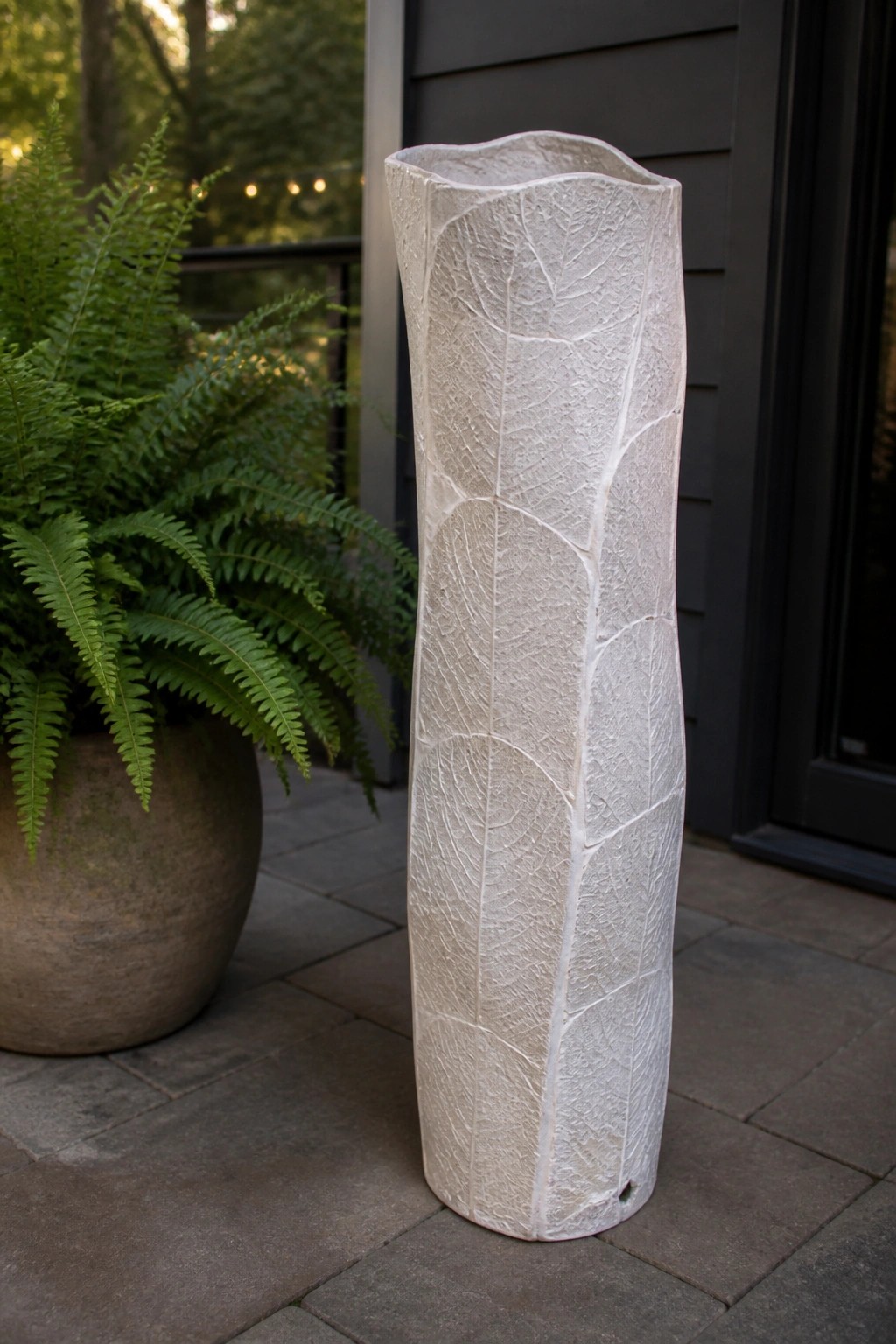
A tall handbuilt vase formed from joined clay slabs creates an upright, faceted shape that narrows slightly toward the base. Large leaf impressions cover the surface, showing clear vein patterns that wrap around the sides and give the piece its main visual interest. The matte off-white finish keeps attention on the texture while the uneven top edge adds a simple organic detail. This approach fits the category of decorative floor or table vases that rely on surface texture rather than color or glaze.
The leaf texture does most of the work here by turning a plain slab form into something worth noticing. A piece like this works especially well as a standalone accent in an entryway or beside a larger plant grouping. You could scale the same pressing method down for medium table vases or apply it to a set of smaller cylinders for shelves. The neutral surface also makes it easy to adapt by changing the clay color or trying different leaf sizes for a new batch.
Double-Necked Slab Vase with Braided Seam

This is a hand-built clay vase formed from slabs into a wide, flattened body with two short necks. The design joins two similar halves along a central line and adds a raised braided clay strip to emphasize the seam. The matte terracotta surface and simple rounded shape keep attention on the construction rather than surface decoration.
What makes this idea useful is the way the twin necks give you two spots for stems or dried flowers in one compact piece. You could adapt the same slab layout for a single-neck version or shorten the body to make a low planter. The braided seam detail is easy to repeat on other slab projects like trays or boxes if you want to practice clean joins. In a kitchen or entryway, this shape takes up little space while still reading as a deliberate handmade object.
Crescent Slab Vase with Horizontal Ridges
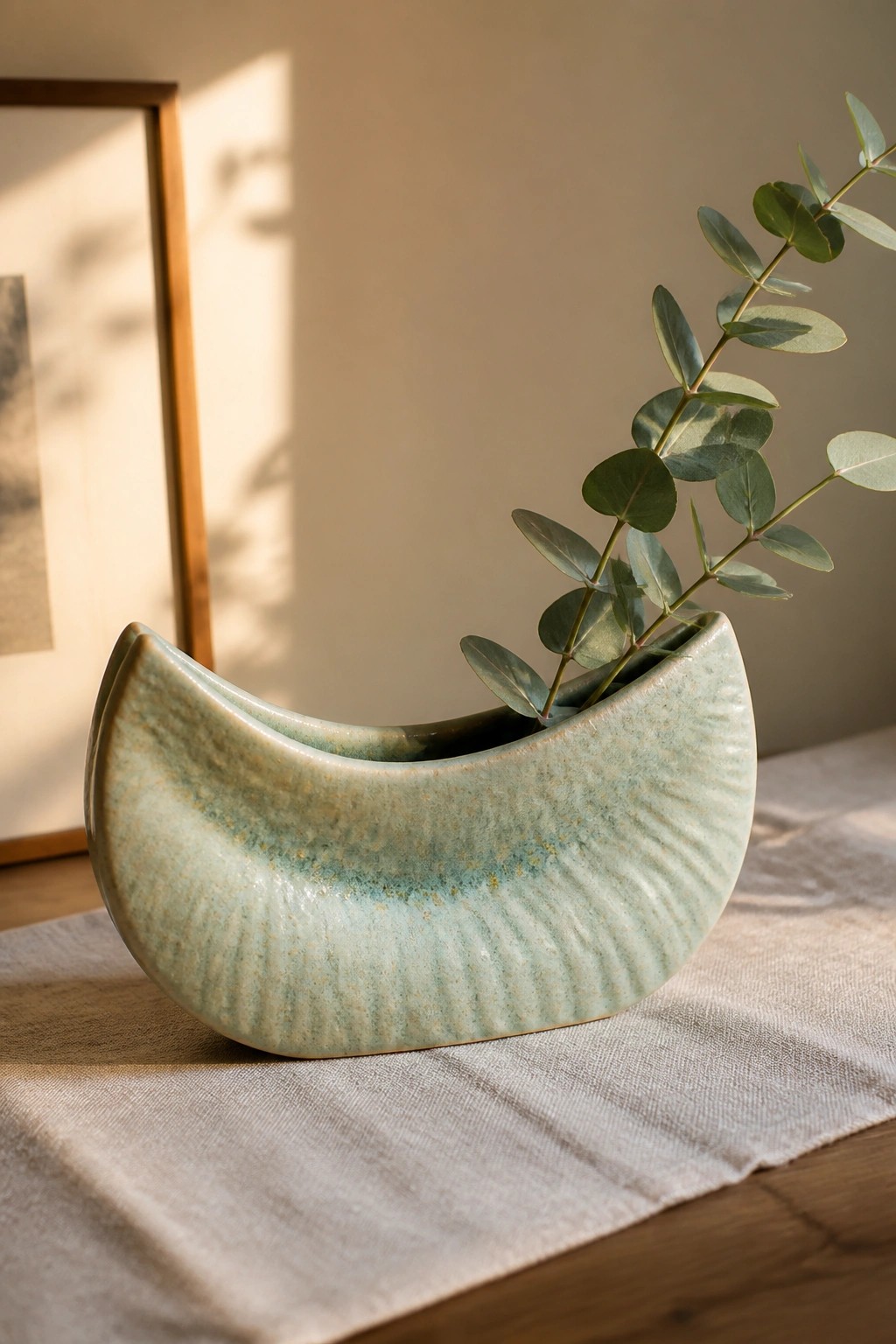
A slab-built vase shaped into a low crescent gives you an organic form that sits flat and stable on any surface. The horizontal ridges pressed into the clay create a simple linear texture that breaks up the smooth glaze without adding extra steps. The soft green speckled finish keeps the focus on the curve and lets the piece work as a vase or a small foliage holder.
The shape does a lot of the work here because the open top and wide base let stems lean naturally to one side. You can adapt the same slab method to make a taller version for bigger arrangements or scale it down for a single bud on a desk. This style stands out on Pinterest when you keep the glaze simple and let the ridged surface catch the light.
Slab Vase with Organic Curves and Vertical Stripe

This slab-built vase uses a single sheet of clay formed into a tall, irregular shape with soft waves along the sides. The off-white clay surface stays mostly matte while a wide vertical stripe of blue glaze runs down one face, creating a clear focal point without extra decoration. The top edge stays open and slightly uneven to match the relaxed form of the body.
The shape does a lot of the work here because the curves already give the piece movement before any glaze is added. A piece like this works especially well as a standalone vase for dried stems or branches on a console or shelf. You could adapt the same idea by narrowing the stripe or switching the blue to a different accent color that fits your room. For a gift, the form scales down easily into a smaller version that still keeps the same slab construction and simple stripe detail.
Stacked Rectangular Slab Vase in Mixed Neutral Glazes
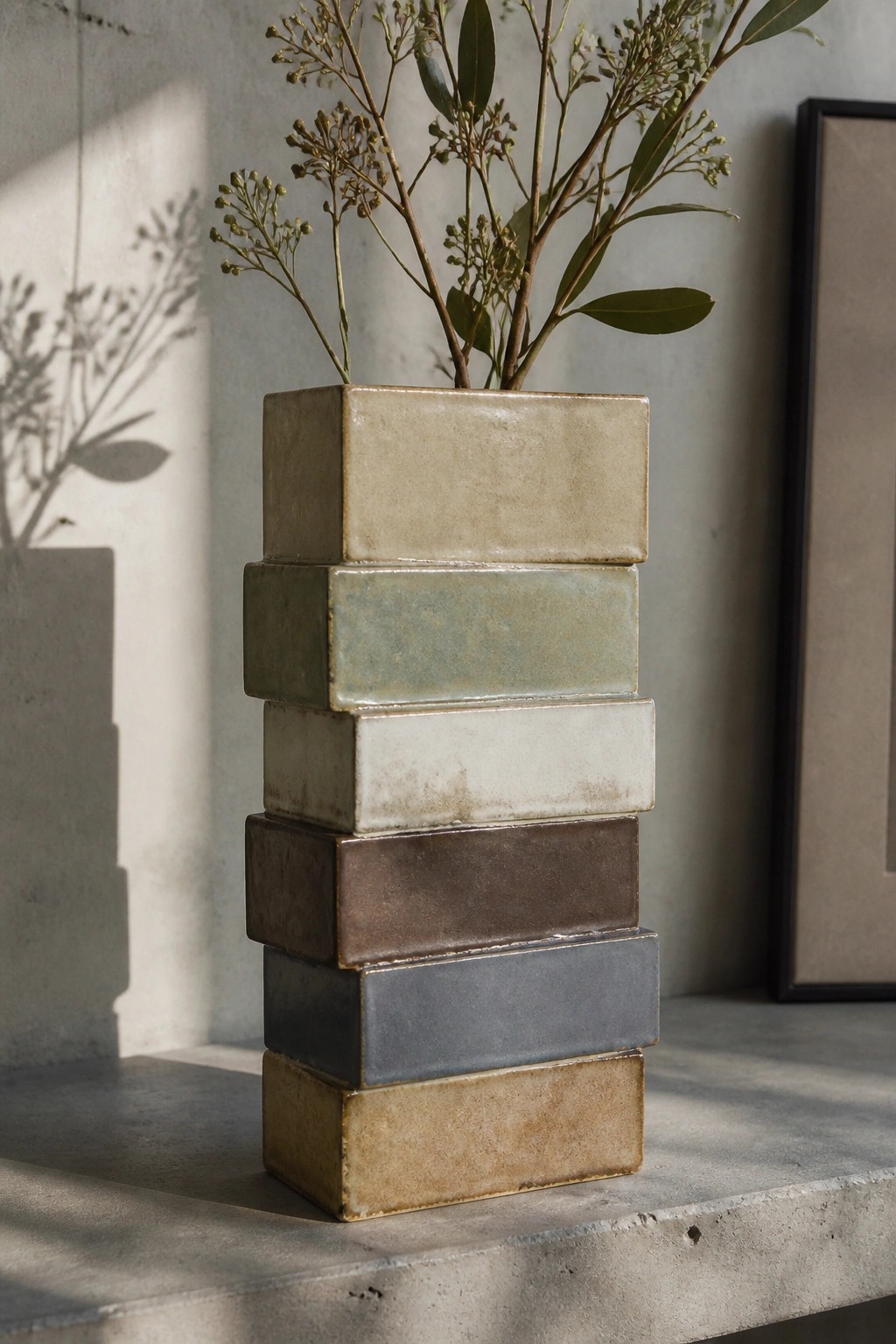
A slab-built vase made from stacked rectangular sections gives a clean vertical shape that stands out on a shelf. Each block is formed flat, then assembled with slight offsets and finished in different matte glazes ranging from soft beige and sage to brown and gray. The flat planes and varied glaze colors create contrast without needing extra surface decoration. This style fits the slab vase category because it relies on simple geometric forms rather than curves or added handles.
What makes this idea useful is that the sections can be made separately and rearranged before final assembly to change the height or color order. The rectangular shape stays balanced even when tall, so it works well as a dried stem holder in a living room or hallway. You can scale the same method down to make shorter versions for a bathroom or desk, or swap in brighter glazes for a different look. The flat surfaces also make glazing easier for beginners who want to test multiple colors on one piece.
Asymmetrical Slab Vase with Wavy Slip Band
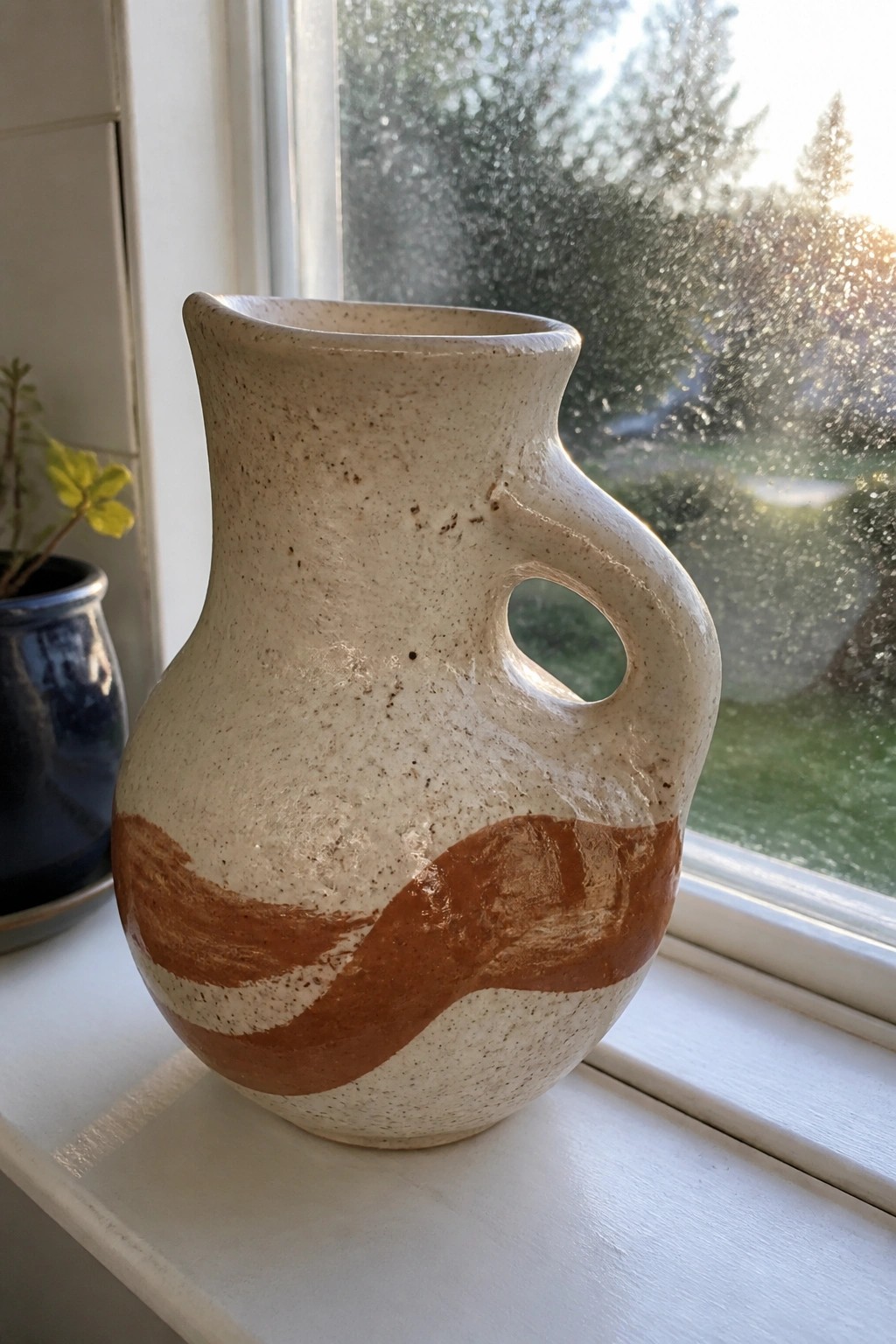
A handbuilt vase made from slabs gives this piece its soft, uneven profile and rounded body. The maker added a wide, flowing band of brown slip across the middle that follows the curve of the form instead of sitting in a straight line. The speckled clay surface shows through around the band, and a simple cutout handle on one side keeps the overall shape balanced without adding extra bulk. This approach fits the organic slab vase category where the goal is movement and texture rather than perfect symmetry.
The shape does a lot of the work here because the gentle bulge and tilted rim already create visual interest before any decoration is added. You could scale the same idea down for a smaller bud vase or stretch it taller for a floor piece. The wavy band is easy to adapt by changing the slip color or by using underglaze and then wiping back for a softer edge. In a living room or entryway, this size and style works as a standalone accent that still leaves room for a few stems.
Slab Vase with Asymmetric Pinched Rim

A slab-built vase like this starts with a flat sheet of clay formed into a tall cylinder, then the top edge is pinched and folded to create an uneven, flowing opening. The matte gray surface keeps the focus on the hand-shaped form and subtle texture rather than color or pattern. This type of project sits firmly in the contemporary organic vase category, where the goal is controlled irregularity instead of wheel-thrown precision.
What makes this idea useful is how the pinched rim gives the piece character while still letting it function as a simple stem holder. The tall, narrow shape works especially well on a narrow shelf or sideboard where a wider vessel would feel too bulky. You could adapt the same construction by changing the height or trying a lighter clay body for a softer look. For a gift or styling piece, the quiet surface and clean profile make it easy to pair with minimal interiors without competing for attention.
Organic Slab Vase with a Narrow Vertical Slit
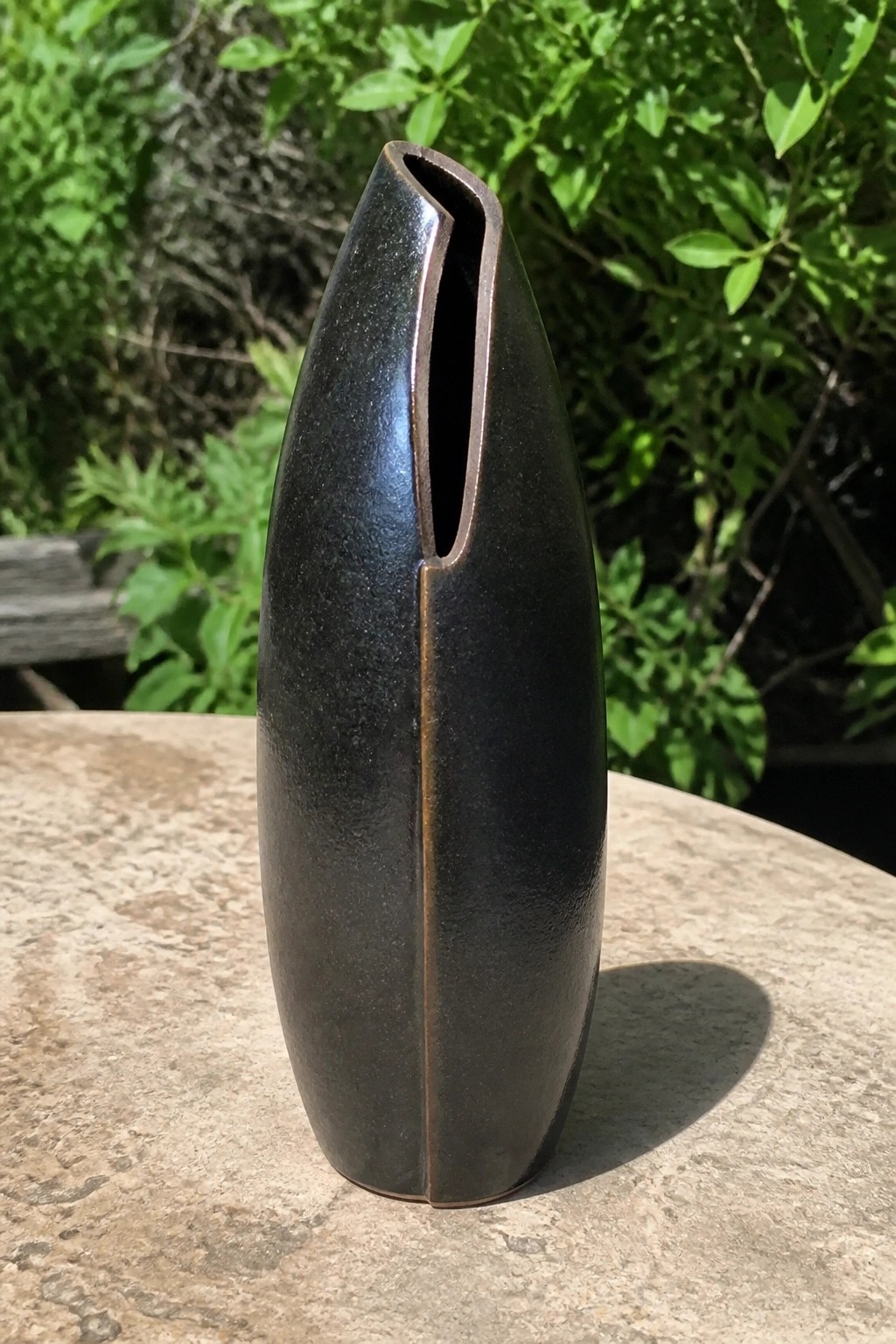
A handbuilt clay vase takes a tall, tapered pod shape that narrows at the top and base. The main feature is the long vertical slit that serves as the opening, with a bronze-toned inner rim set against the dark matte exterior. This creates a simple but striking silhouette that reads as both contemporary and natural.
The shape does a lot of the work here by letting the vase function as a standalone decor piece on a mantel or side table. You could adapt the idea by shortening the slit, widening the overall form, or switching to a lighter clay with a satin glaze for a softer look. In a modern interior this style stands out because the vertical cut gives it a distinct profile that photographs cleanly for idea boards.
Lobed Multi-Neck Vase Built from Slabs
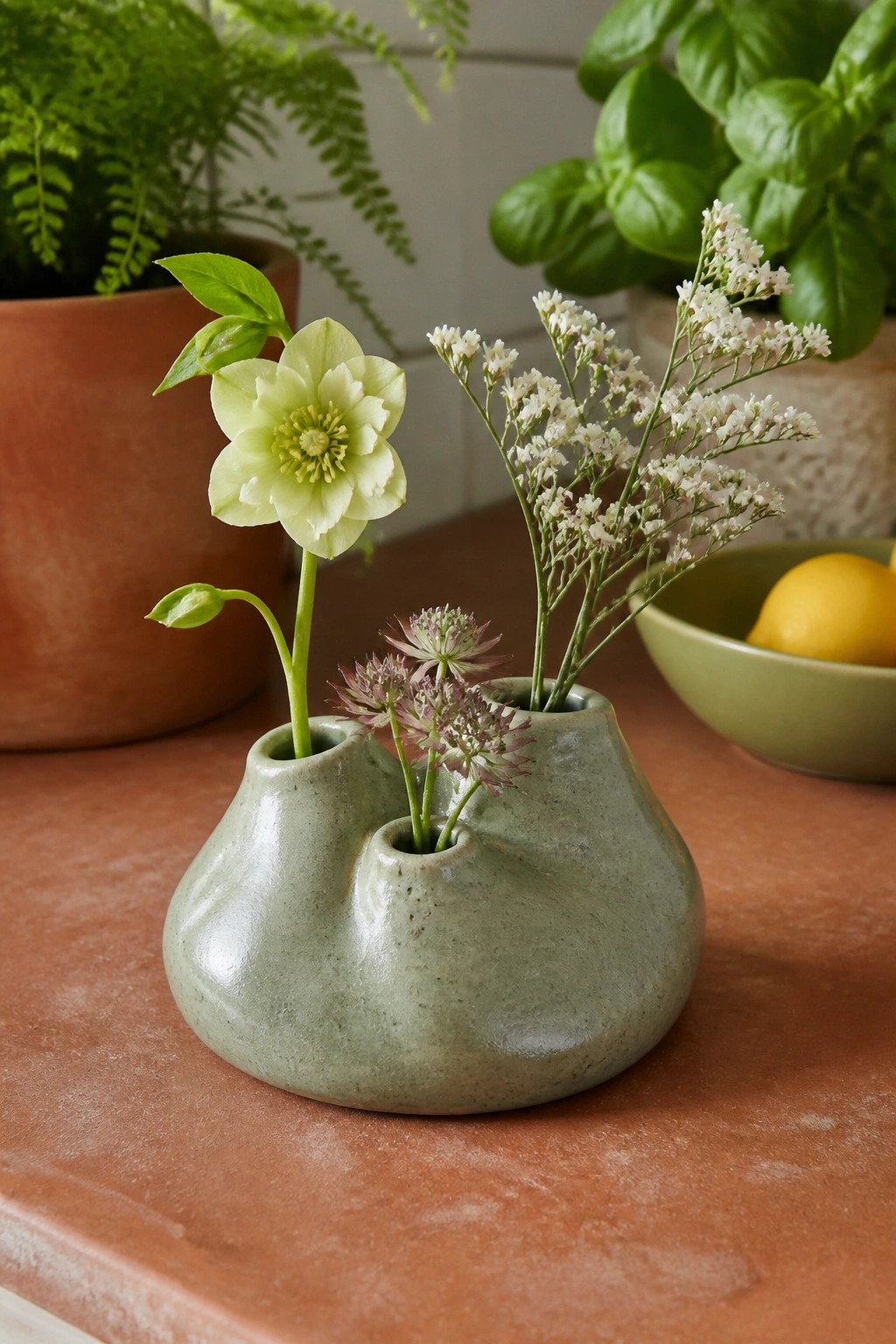
This handbuilt vase uses a low, rounded body divided into three separate necks that let stems stand upright without crowding. The soft, irregular outline comes from slab construction, and the matte green glaze keeps the surface simple while highlighting the form. It fits the organic shape category well because the multiple openings turn a single piece into a functional holder for mixed small bouquets.
The shape does a lot of the work here by letting you arrange flowers at different heights in one compact object. A piece like this works especially well as a table centerpiece or windowsill accent where space is limited. You could simplify it to two necks for quicker building or scale the same lobed profile up for larger stems. For Pinterest, the clean division of openings makes the idea easy to spot and copy in different glaze colors.
Angular Slab Vase with Folded Spout
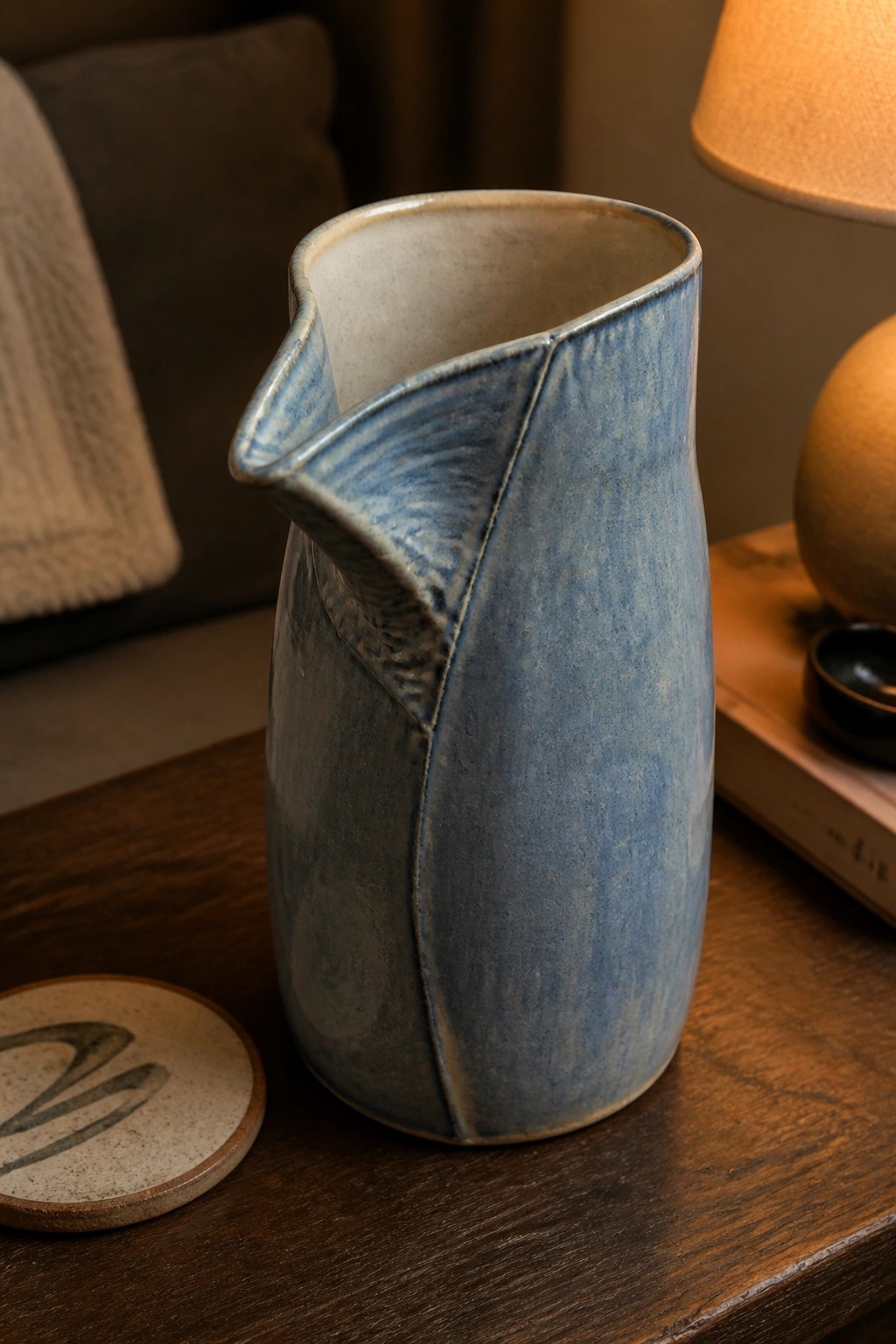
A slab-built ceramic pitcher vase uses flat clay sections joined at angles to create a tall, tapered body with a wide opening. The rim is folded and pinched on one side to form a functional pouring lip while keeping the overall shape geometric. Blue glaze with visible brushstrokes and slight color shifts covers the surface, highlighting the seams and texture without covering them completely. This approach fits the slab vase category because it turns simple construction into a form that works for both display and light use.
The shape does a lot of the work here by giving you clean edges that still feel handmade. You could repeat the same folded rim on a shorter cylinder to make a smaller version for a desk or shelf. The glaze variation would adapt well if you wanted to test other colors or keep the focus on the form alone. In a living room, this kind of piece works as a standalone object or holds a few stems without needing extra styling.
Joined Slab Vases with Spotted Glaze

Slab construction works well for this double vase form where two separate shapes are joined along one edge before firing. The yellow glaze carries white dots across the smooth surfaces while one side is left with its natural textured finish for contrast. This keeps the overall shape simple yet gives the piece more visual weight than a standard single vase.
What makes this idea useful is the way the joined shape creates a ready-made focal point on a shelf without needing extra stands or grouping. The spotted pattern can be scaled up or down easily with different size stamps or brushes, and the same slab method works for making just one vase if the double form feels too large. For a mantel or entry table, the height and color hold attention while the raw texture side adds enough variation to keep it from looking too uniform.
Reclining Slab Cylinder Vase

A slab-built vase shaped as a low horizontal cylinder creates a stable base while letting stems sit at different heights through a top opening and the open end. The form works because the curve keeps the piece from rolling, and the impressed band around the middle breaks up the smooth surface with linear detail. Speckled green glaze covers the outside and inside rim, giving the clay a finished look that still shows the handmade surface. This approach fits the vase category but uses an organic, elongated shape instead of a standard upright pot.
The shape does a lot of the work here by keeping the overall height low so it fits on narrow tables or shelves without tipping. You can adapt the same cylinder by changing the length or adding more cutouts along the top for different flower placements. The impressed texture band is simple to repeat on future pieces with stamps or a textured roller before assembly. For a gift, this kind of vase pairs well with fresh cuttings because the wide opening handles both single stems and small bunches.
Slab Vase with a Sculpted Bird on the Rim
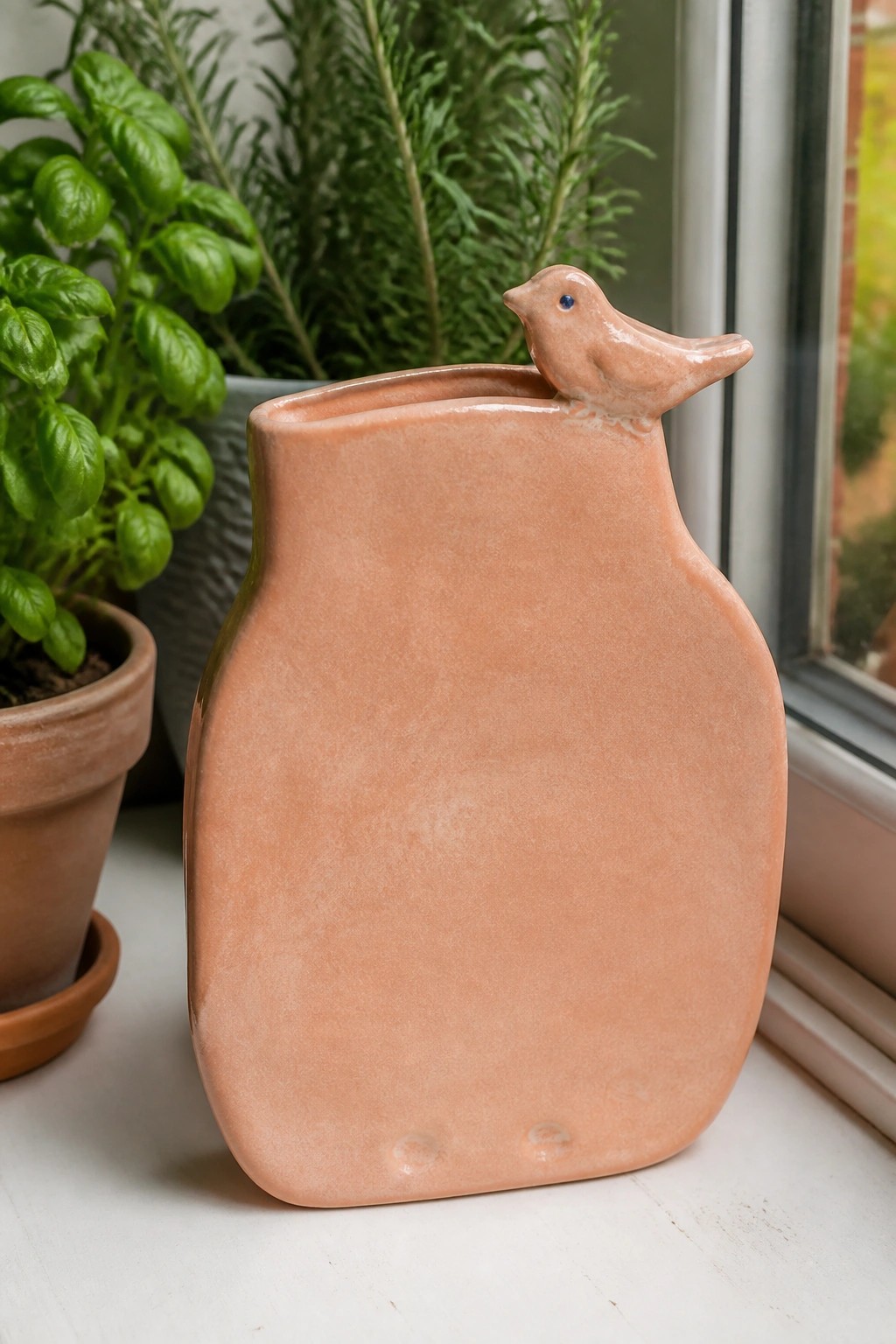
A slab-built vase with a broad, flattened oval body gives this project its clean contemporary outline while the small bird perched on the rim adds a single sculptural accent. The matte peach glaze keeps the surface soft and even, letting the form and the bird stand out without extra decoration. This approach works as a straightforward way to combine a basic slab construction with one small modeled detail for visual interest.
The shape does a lot of the work here because the flat sides and rounded edges are simple to cut from slabs and assemble. You could swap the bird for a leaf, a small loop, or nothing at all and still have a usable vase for a shelf or windowsill. The scale stays manageable for a single firing and fits easily among houseplants or on a table without taking much space. For Pinterest, the combination of organic form and one clear detail tends to photograph cleanly and get saved.
Stacked Ridge Vase with Incised Bands

A stacked ridge vase builds height and volume through repeated horizontal bands that create strong horizontal lines around the body. Each band carries short incised marks that add subtle surface variation without overpowering the form. The matte off-white glaze unifies the layers while letting the stacked construction remain the main visual feature. This approach fits the vase category and works well as a standalone decor piece.
The shape does a lot of the work here because the repeated ridges give the piece presence even in a simple finish. Place one on a console or mantel where the neutral tone can sit against wood or linen. You could scale the same band method down for a shorter planter or widen the base to turn it into a larger storage jar. The incised marks are easy to adapt with different spacing or tools if you want to personalize the surface.
Asymmetrical Slab Vase with Drip Glaze
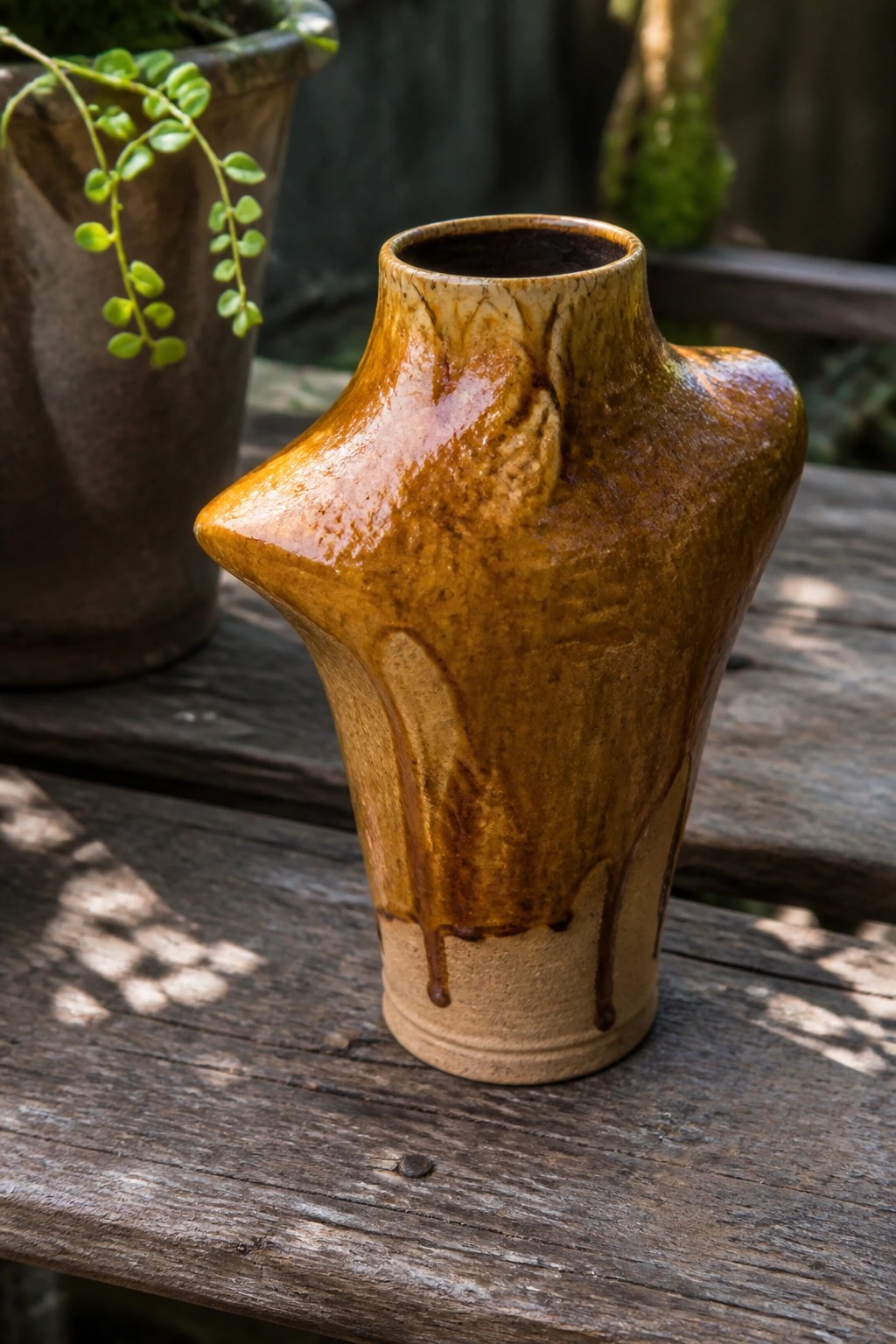
This vase is built from slabs joined into an irregular, pinched form that flares outward on one side before tapering into a short neck. The organic silhouette comes from allowing the clay to slump slightly during assembly rather than forcing a symmetrical cylinder. A glossy amber glaze covers the upper two-thirds and runs down over the unglazed lower section, creating natural drip lines that follow the contours of the form.
The shape does a lot of the work here because the asymmetry gives the piece presence without needing extra texture or carving. You could cut similar curved slabs and shift the seam placement to create your own version of the bulge. This style works especially well as a single stem holder on a windowsill or mantel where the glaze movement shows up against a plain background. For a simpler adaptation, reduce the overall height and keep the same neck proportion to make a set of smaller bud vases.
Joined Slab Vases with Organic Curves

This project uses slabs to form two separate vase bodies that are joined along one side into a single sculptural piece. Each cylinder is shaped by hand into a tall, slightly irregular profile with soft bends and a narrow opening at the top. The matte glazes in a muted pink and sage green keep the surface simple while letting the form carry the visual weight. The result is a contemporary vase that fits the organic shapes category and works for displaying a few stems at once.
What makes this idea useful is how the joined construction adds stability without needing extra bases or supports. The shape works especially well as a dining table centerpiece or on a windowsill where you want height without taking up much surface space. You could adapt the same slab method to create three connected sections instead of two or change the glaze colors to match a specific room palette. For a gift, something like this stands out on Pinterest because the paired form reads as intentional rather than just two separate vases placed together.
Rectangular Slab Vase with Geometric Cutouts
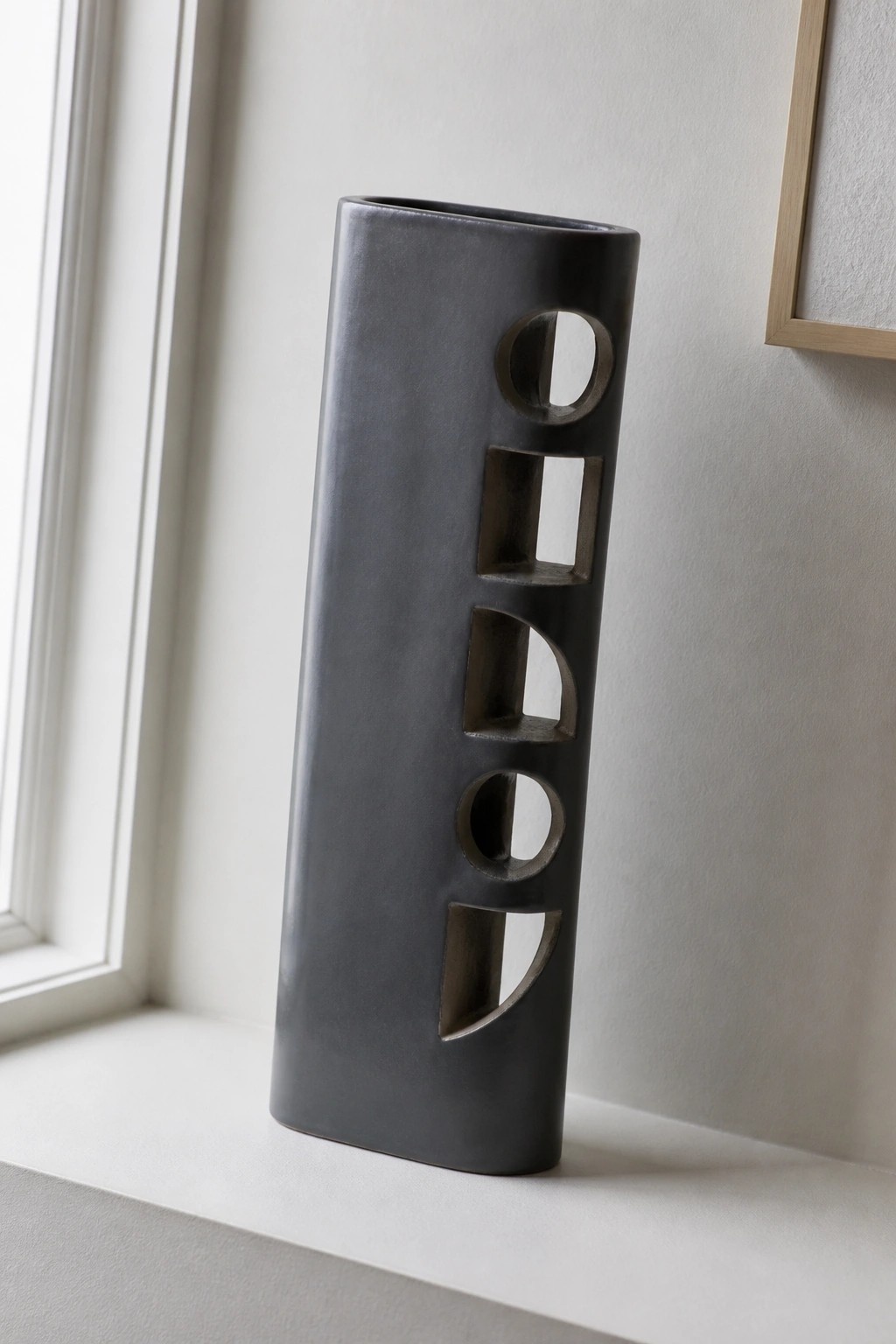
A tall rectangular vase built from slabs uses a vertical row of cutouts to break up the flat surface. The shapes mix full circles, rectangles, and half circles that remove sections of the wall while keeping the form stable. The matte dark finish keeps the focus on the negative space and the clean edges of each opening. This approach fits the slab vase category where the design comes from removing clay rather than adding surface decoration.
What makes this idea useful is how the cutouts create visual interest and let light move through the piece without extra parts or handles. You could scale the same pattern down for a smaller desk vase or stretch it across a wider planter by adjusting the spacing between shapes. In a bright room the openings cast shifting shadows on nearby surfaces, which gives the piece more presence than a plain slab form. For your own version, cut the shapes from a template after the slabs are assembled but before the clay firms up so the edges stay crisp.
Ring-Shaped Vase with Radiating Texture
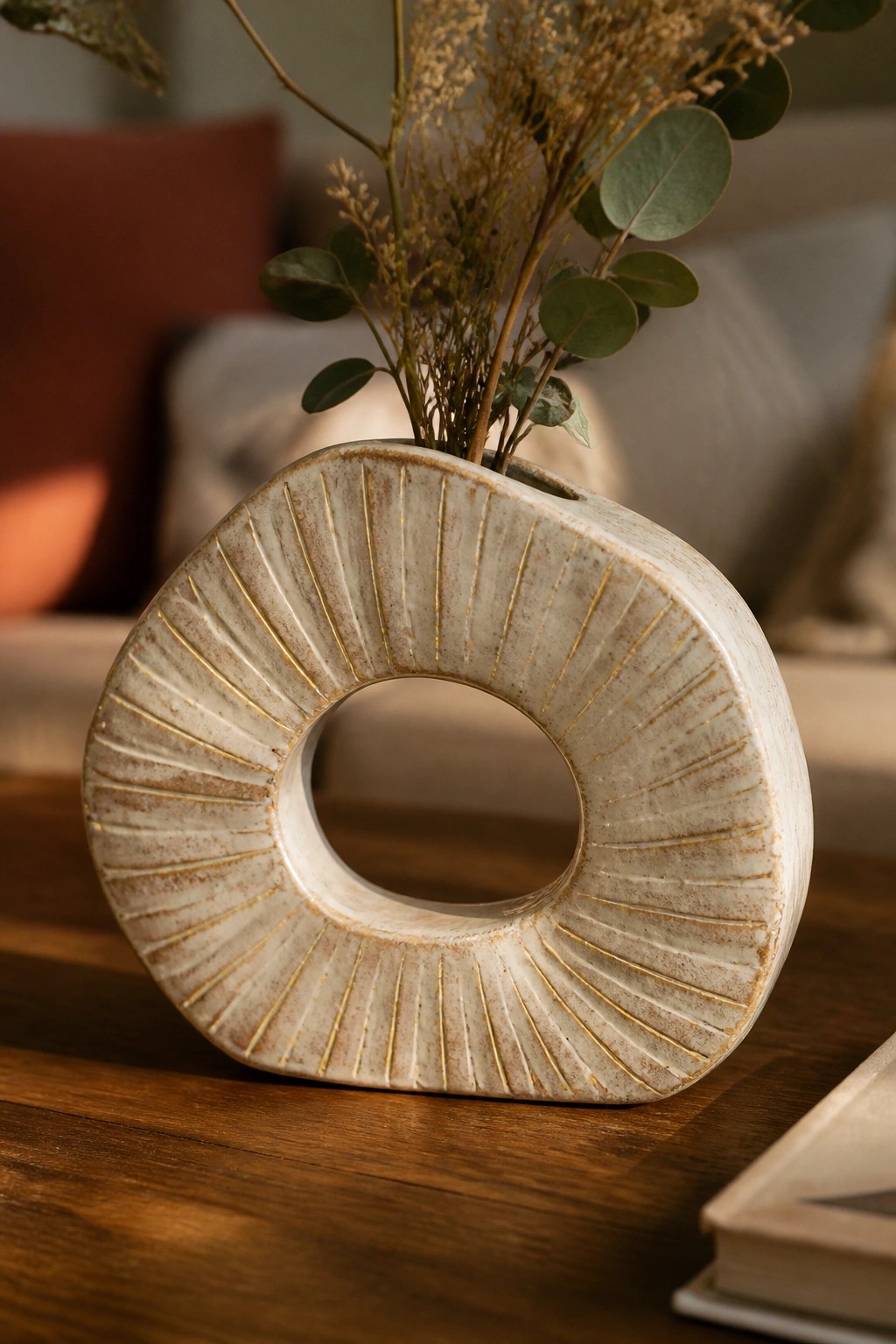
This project is a low, ring-shaped ceramic vase formed from slabs and finished with a matte off-white glaze. The surface carries carved lines that fan out from the center hole, with gold rubbed into the grooves for contrast. The overall form stays compact while the central opening lets stems stand upright without extra supports.
The ring shape works well on a low table or shelf where height is limited. You could adapt the radiating lines by rolling a simple tool across the clay before it dries or by using a stamp for even spacing. Skipping the gold and using one glaze color keeps the focus on the form if you want a quicker build. The same ring idea can be scaled down into a small tray or stretched taller for a different proportion.
Slab Vase with Asymmetrical Form and Blue Glaze Drips

A slab built vase with a tall leaning shape gives you an organic form that still sits stable on a surface. The beige clay body is left mostly bare except for a heavy blue glaze that runs down one side and ends in controlled drips near the base. One large opening at the top takes bigger stems while a smaller hole on the side holds a single flower on its own. This fits the contemporary organic vase category because the shape stays simple and the glaze does the visual work.
What makes this idea useful is how the dual openings let you change the look without new pieces. You could scale the same slab pattern down for a desk version or widen the base for better balance with heavier flowers. The drip glaze works on other clay colors too so you can test small batches before committing to a full piece. For a gift this kind of vase stands out on a shelf because the form is easy to adjust while the glaze pattern stays repeatable.
Frequently Asked Questions
1. How do I get started with slab pottery if I am a beginner interested in contemporary and organic vase shapes? Start by gathering basic supplies like rolling pins, canvas sheets, clay, and a scoring tool. Roll out even slabs of clay about a quarter inch thick, then cut shapes based on simple templates for cylinders or freeform organic curves. Join edges with slip and score marks for strong seams. Practice on small test pieces first to build confidence before attempting full vases from the ideas in the article.
2. What tools are essential for creating the 23 slab pottery vase ideas with smooth contemporary lines or natural organic forms? You will need a clay roller for uniform thickness, a sharp knife or wire cutter for precise edges, ribs for smoothing surfaces, and wooden forms or molds to support organic curves during assembly. A sponge helps keep joints moist, while a kiln is required for firing. These basics allow you to replicate both geometric contemporary designs and flowing organic shapes without specialized equipment.
3. How can I make my slab pottery vases waterproof so they can hold fresh flowers? Apply a food safe glaze to the interior after the initial bisque firing, then fire again at the recommended temperature for your clay type. Test a small sample piece first to confirm the glaze seals properly. Avoid porous unglazed areas inside the vase, and consider adding a liner if the design has many seams that might leak over time.
4. What steps help prevent cracking when building organic slab pottery shapes that involve curves and joins? Work with clay at the right consistency, neither too wet nor too dry, and allow pieces to dry slowly under plastic wrap to reduce stress. Score and slip all joints thoroughly, then support curved sections with foam or newspaper during drying. Avoid rapid temperature changes in the kiln by using a slow firing schedule suited to slab construction.
5. How should I display or care for finished contemporary and organic slab pottery vases to keep them looking their best? Place them on stable surfaces away from direct sunlight to prevent fading if glazed. Dust gently with a soft cloth and avoid harsh cleaners. For long term storage, wrap in bubble wrap to protect delicate edges. Rotate displays seasonally to enjoy different angles of the organic forms or sleek contemporary profiles from the article ideas.

Pottery Path is my cozy corner of the internet where I share clay ideas, pottery inspiration, and simple projects you can recreate at home. I love exploring everything from air dry clay to handbuilt pottery to cute minis that brighten your day. My goal is to make clay crafting feel easy, fun, and welcoming for anyone who wants to try it.
You will find beginner friendly tutorials, creative pottery painting ideas, and lots of warm inspiration for slow and happy crafting. If you enjoy hands on creativity, this space will feel like home.