
I enjoy working with texture on my pottery because it makes the pieces feel more finished in a simple way.
Over time I have tried out different tools and techniques to get various effects.
Some of these projects caught my eye for how they handle surfaces without making things too complicated.
I put together a list of twenty examples that show a range of ideas.
Maybe one or two will give you something new to consider for your next piece.
Mug with Raised Chevron Texture

A handmade ceramic mug works well when the surface carries a repeating chevron pattern that is pressed or carved into the clay. The angled lines run around the body and create strong shadow lines that emphasize the shape. A pale green glaze with brown edges settles into the recessed areas, letting the raised parts stay lighter and more visible. This turns an everyday drinking vessel into a clear example of how surface texture can carry the whole design.
What makes this idea useful is that the pattern gives the mug better grip without needing extra handles or ridges. The same chevron layout can be scaled up for a cereal bowl or scaled down for a small planter by changing the spacing between the lines. In a kitchen the muted green sits comfortably next to wood tools and plants, while the geometric repeat keeps it from looking too soft. For a first try, rolling a stamp or using a simple template makes the pattern repeatable on other forms like trays or jars.
Hedgehog Planter with Carved Texture

A small ceramic planter shaped like a hedgehog uses a low rounded body with one end formed into a simple face and the rest covered in short carved lines that suggest spines. The back stays unglazed and heavily textured while the face receives a light wash of pale slip and minimal painted details for contrast. This approach fits the planter category and turns a basic plant holder into a distinct decorative object through surface carving rather than color or added parts.
The compact size works well on a narrow windowsill or shelf where a standard pot would feel too plain. You could apply the same carved texture to a round bowl or a low tray if the animal form does not suit the space. Keeping the face details minimal makes the idea easy to adapt for different skill levels while the texture still provides the main visual interest.
Spiral Ridges Inside a Shallow Bowl
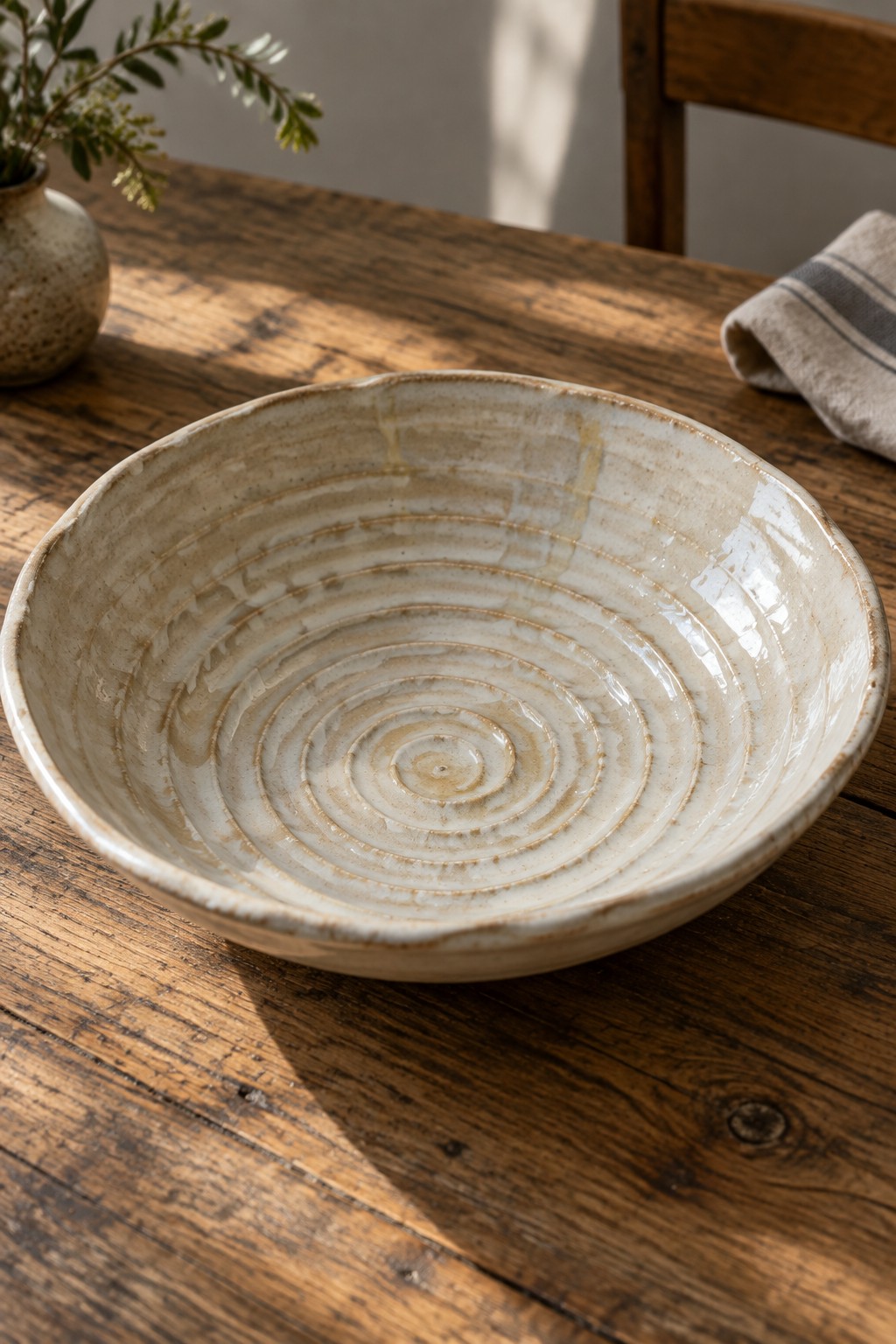
A wide shallow bowl formed from clay carries a continuous spiral of raised ridges that start at the center and move outward to the rim. The light glaze pools in the grooves to make the pattern stand out while the higher ridges stay slightly matte. This kind of surface treatment turns a simple bowl into a piece that works for serving salads or holding fruit on a table.
The shape does a lot of the work here because the open form gives the spiral room to read clearly from above. You can recreate the ridges on a wheel by pulling a rib tool in a steady spiral or by carving them after the clay firms up. The same idea adapts easily to dinner plates or smaller dip bowls if you want to repeat the texture across a set. In a kitchen this style stays practical since the ridges do not interfere with everyday use and the neutral glaze pairs with most tableware.
Ribbed Tall Vase with Soft Green Glaze

A tall vase thrown on the wheel and then carved or tooled with even vertical ridges produces a clean linear texture across the entire surface. The pale green glaze pools slightly in the grooves while leaving the raised ribs lighter, which makes the texture stand out without any extra decoration. This style of vase works as a straightforward way to add surface interest to a simple form that can hold flowers or stand empty.
The narrow shape and strong vertical lines make the piece easy to fit on a mantel, shelf, or side table where wider pots would crowd the space. You can adapt the same ribbing to a shorter cylinder for a tumbler set or a wider bowl by changing the proportions while keeping the tool marks consistent. Using one glaze color keeps the focus on the texture, so the idea translates well to other tones like matte gray or warm beige depending on the room.
Embossed Floral Tray with Blue Glaze

A rectangular ceramic tray with integrated side handles uses an all-over raised floral pattern to build texture directly into the clay. The repeating mandala-style flowers are pressed or carved so the design sits slightly above the surface, catching light and glaze differently across each motif. A blue and cream glaze with some edge wear emphasizes the relief without covering the pattern completely. This approach turns a simple tray shape into a project that relies on surface texture rather than added decoration.
What makes this idea useful is how the tray works for both breakfast service and as a catch-all on a table. The same embossed pattern could be scaled down for coasters or repeated inside a shallow bowl. Using a single glaze color or spacing the motifs farther apart reduces the time spent on the texture while keeping the raised effect. A piece like this stands out on Pinterest because the texture shows clearly even in a flat photo.
Textured Spoon Rest with Bubbled Glaze

A spoon rest formed as a long, narrow tray gives cooks a dedicated spot to rest utensils between stirring tasks. The clay surface carries a dense pattern of rounded depressions that trap glaze unevenly, producing a mottled mix of blue, gray, and brown tones across the piece. This built-in texture creates visual depth while helping the spoon stay in place without sliding. The result is a straightforward kitchen item that combines function with a strong surface pattern.
The narrow shape tucks easily between a stove and prep space without crowding the counter. You can scale the same form down for a smaller rest or stretch it into a longer tray for multiple tools. The bubbled texture forgives small inconsistencies in the clay, so the idea works for both quick slab builds and more measured hand-building sessions. On Pinterest this kind of piece performs well because the glaze pattern reads clearly even in small thumbnail images.
Candle Holder with Raised Dot Texture
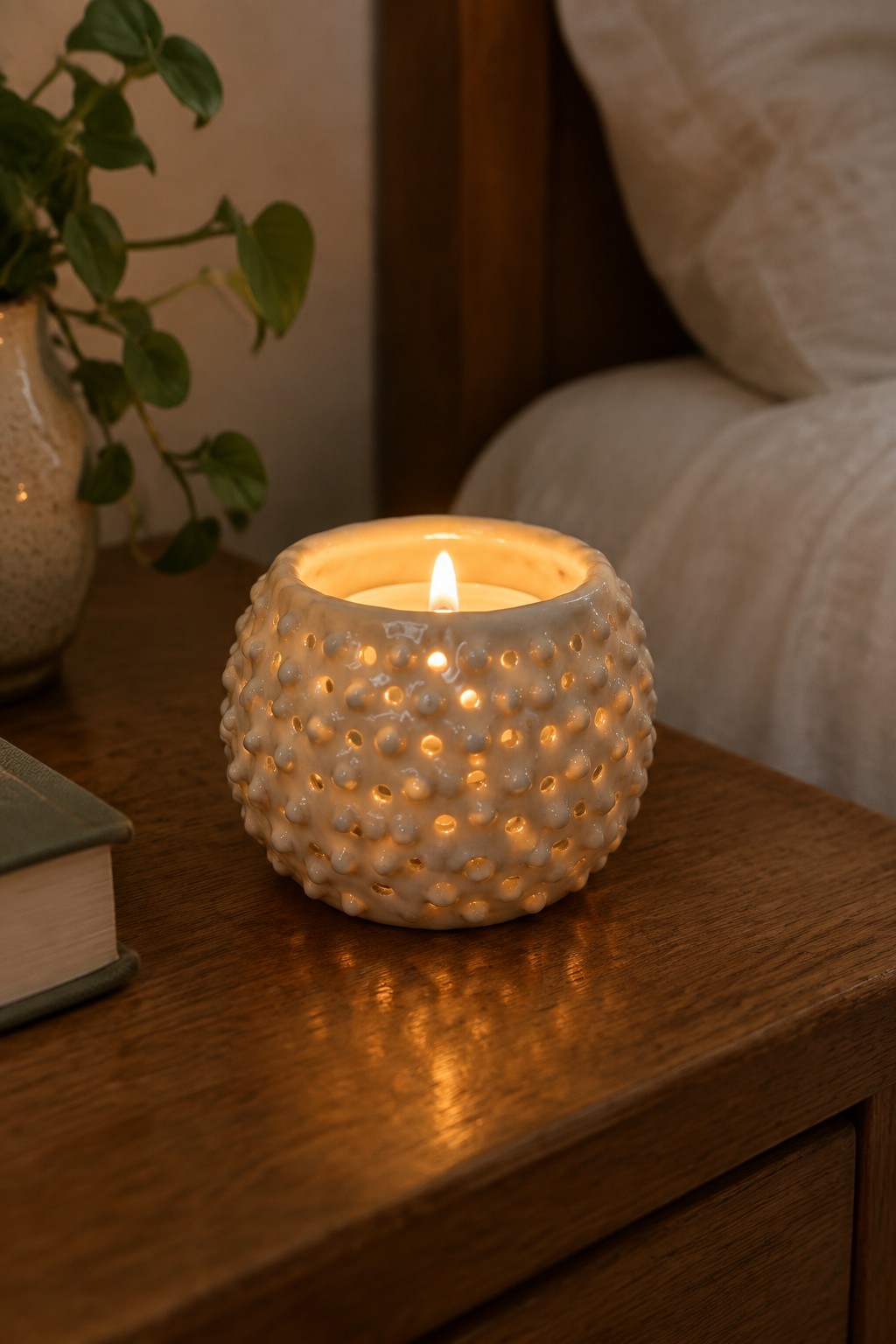
A small rounded ceramic candle holder uses a surface covered in raised dots and small openings to create its main visual impact. The dots cluster densely around the form while leaving gaps that let light from inside shine outward in a scattered pattern. This turns a basic vessel shape into a functional light diffuser that highlights texture as the central design feature. The idea fits the category of a simple decor candle piece rather than a large functional vessel.
The small scale makes this easy to adapt by changing the dot size or spacing to suit different clay bodies or firing temperatures. You could apply the same raised texture to a set of small vases or a shallow tray for a coordinated group. In a living room or bedroom this kind of holder works well because it stays compact while still producing noticeable light patterns on nearby surfaces. The approach also translates easily to other small objects like ring dishes if you want to practice the texture without committing to a full candle form.
Embossed Leaf Ring Dish
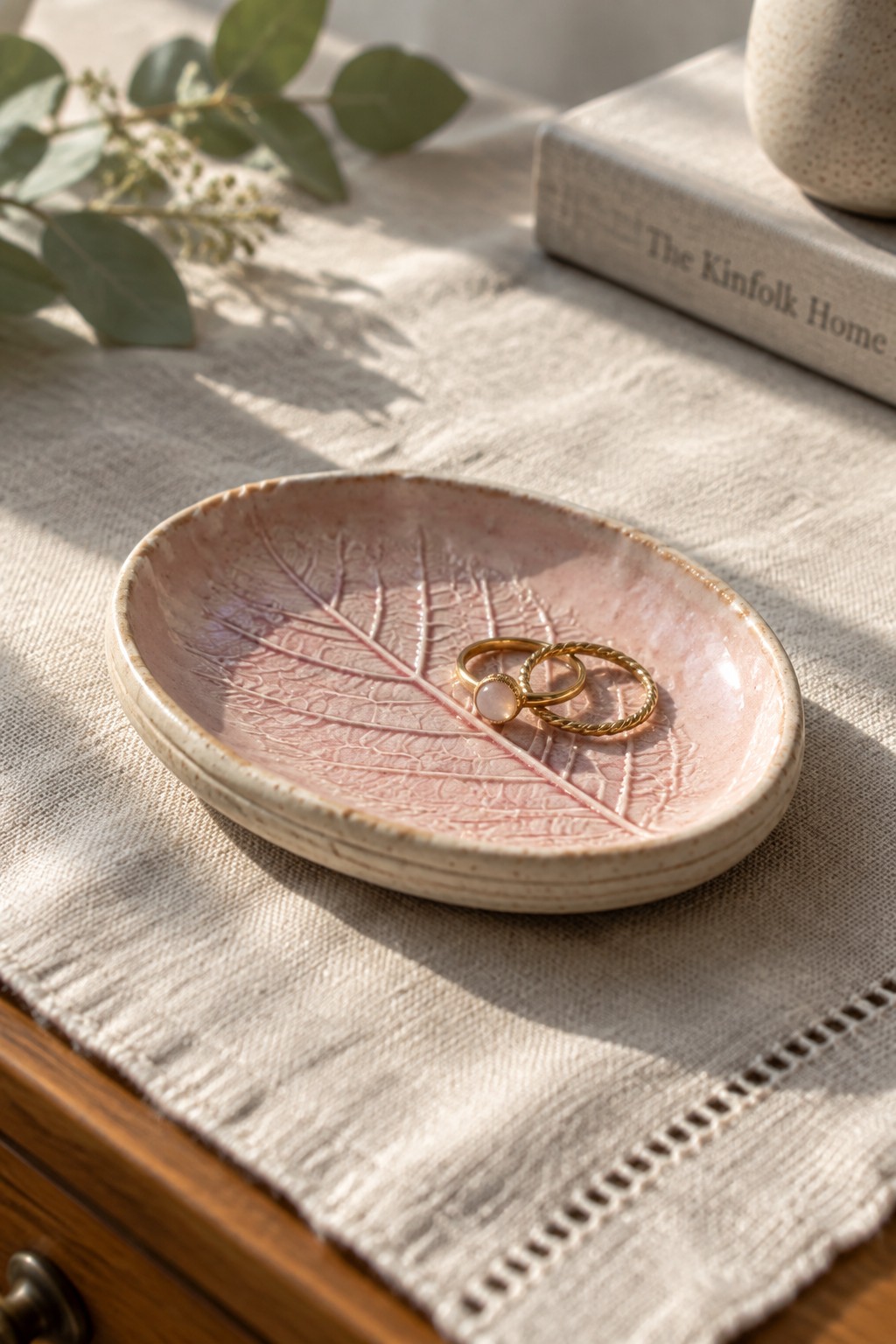
A small ceramic dish formed in the shape of a leaf uses pressed veins to create a raised and recessed surface texture. The soft pink glaze settles into the lower areas to make the leaf details stand out clearly. This turns a simple shallow form into a functional ring dish that stays compact while showing off the sculpted surface.
The shape does a lot of the work here by giving you a ready-made jewelry holder that sits flat on a dresser or nightstand. You could press different leaves for variety or scale the same idea up into a larger tray for keys or small items. The textured surface also makes the piece easy to style in photos without needing extra props.
Coiled Rope Texture Bathroom Holder

A coiled clay toothbrush holder builds the cylinder by stacking and joining ropes of clay so the seams remain visible as deep grooves. The glaze settles into those grooves and creates contrast between the raised coils and recessed areas, giving the surface strong definition in teal and brown tones. The slightly wavy rim comes from the natural give of the coils when they are joined at the top. This approach turns a basic holder shape into a bathroom item that relies on texture rather than added decoration.
The small diameter makes the piece easy to place on a narrow ledge or beside a sink without taking up much room. You can adjust the number of coils to change the height or swap the glaze palette to suit different tile colors. Rolling coils and stacking them gives beginners a clear way to practice wall thickness while still ending up with a finished object. The same coil method works for a shorter cup meant for cotton balls or a wider version that holds a few extra brushes.
Double Bowl Salt and Pepper Cellar

A double bowl salt and pepper cellar keeps both seasonings together in one compact form that sits easily on a countertop or table. The connected shape lets you pick up the whole piece at once, while the spiral ridges inside each bowl add texture that helps hold the contents in place. This handmade ceramic version pairs a speckled clay body with a soft green glaze on the interiors and leaves the outer surface unglazed for contrast. The simple two-part layout fits the kitchen item category without needing extra hardware or stands.
The small scale makes this easy to adapt for other dry seasonings or even small garnishes like chopped herbs. You could swap the spiral texture for straight lines or a dotted pattern if you want a different grip, or change the glaze to a single color for a more uniform look. In a kitchen this shape works well because it combines two functions without taking up much space. It would also translate to a desk version for paper clips and rubber bands if you adjust the bowl depth slightly.
Speckled Flower Ring Dish with Dimpled Texture

A small ceramic tray shaped with overlapping petals forms a compact holder for rings and necklaces. The surface carries a heavily textured, speckled glaze that shifts between blue and cream, with the color pooling in the dimples to add depth without extra decoration. This shape keeps the piece functional while the uneven texture becomes the main visual element.
The small scale makes this easy to adapt by adjusting the number of petals or testing other glazes that break into spots during firing. It works especially well on a nightstand or vanity since the curved edges prevent items from sliding off. The same textured approach could be applied to a simple round tray or a shallow dish for keys near the door.
Ceramic Fish Figurine with Overlapping Scale Texture
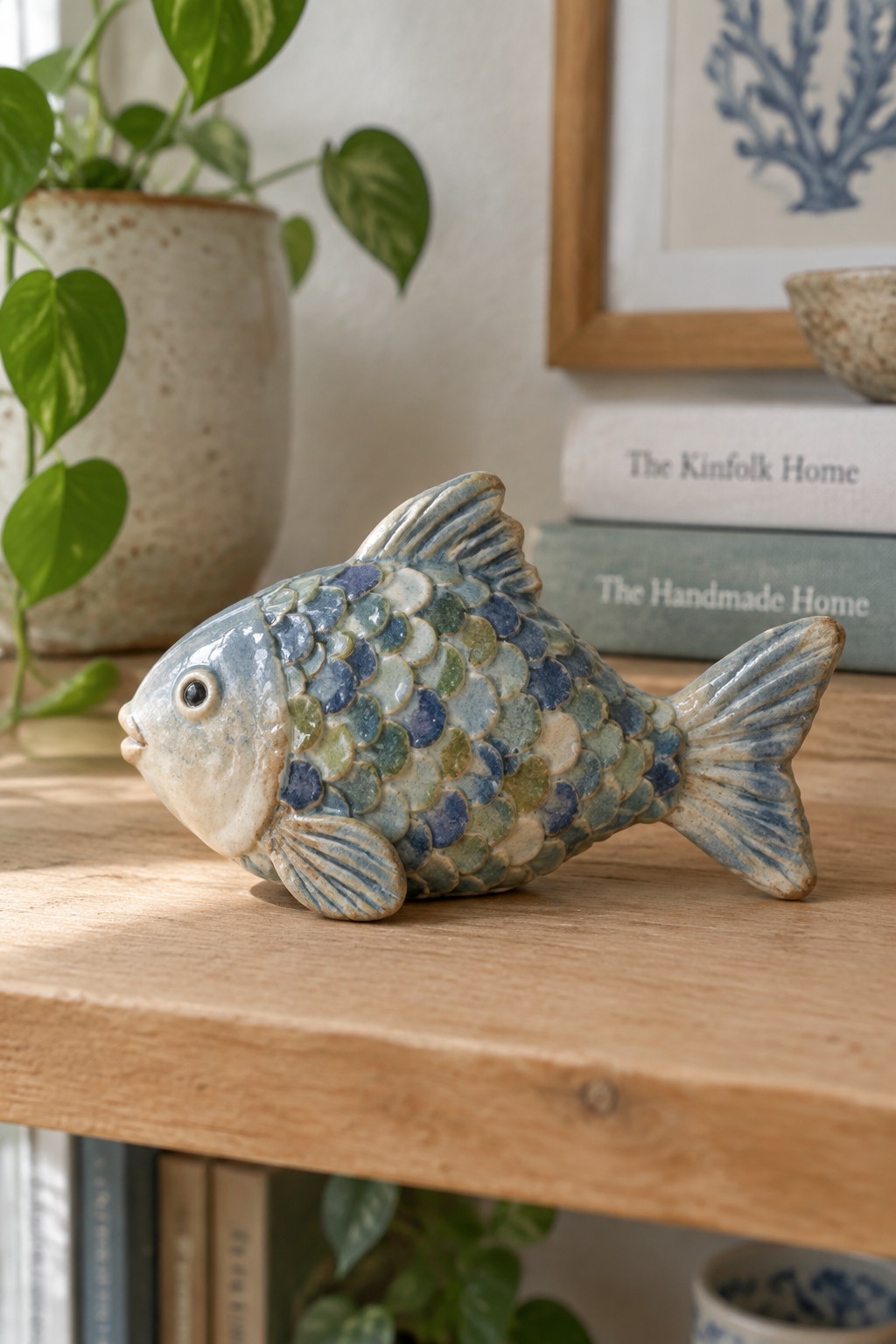
A ceramic fish figurine builds its surface around rows of overlapping sculpted scales. Each scale receives a mix of blue and green glazes that pool at the edges, creating natural color shifts across the body. The head and tail stay simpler with fewer details so the textured midsection stands out. This turns a basic fish shape into a compact decor object that relies on the raised scales for visual interest.
The small size makes it simple to place on shelves or near plants without crowding the space. You could repeat the same scale pattern on a different form like a small tray or candle holder by pressing the texture into slabs before assembly. A single glaze color instead of multiple shades would still show the depth created by the overlapping edges. The idea works well for anyone who wants to practice texture without building a large piece.
Botanical Relief Wall Tile

A square ceramic tile becomes a wall-ready decor piece when you sculpt or impress leaves and a flowering branch straight into the clay surface. The design layers one large leaf with clear vein lines against smaller leaves and a delicate stem of berries to build natural depth through raised texture alone. A light green wash on the raised areas sits against the cream base with raw clay edges showing for contrast. This approach fits the decor object category where the focus stays on handmade surface relief instead of functional use.
What makes this idea useful is the flat square shape that hangs easily in tight spots like hallways or above switches without taking up shelf space. You can adapt the same leaf and berry impressions onto a longer rectangular tray or a set of four smaller tiles for a backsplash section by repeating just one motif per tile. The raised details work well because they create shadow play in any light, so the piece reads clearly even with minimal glaze. For gifts, this format translates to a simple kitchen accent or desk pinboard because it stays compact and needs only a basic hanger.
Incised Ridges on a Stoneware Creamer Pitcher

A small ceramic creamer pitcher with a simple flared spout and vertical ridges carved into one side offers a straightforward way to add texture to everyday drinkware. The matching mug shares the same speckled clay and matte glaze, so the set reads as coordinated without matching exactly. The ridges create contrast against the smoother areas while keeping the form easy to grip and pour from. This approach works well for kitchen items where surface detail supports function rather than competing with it.
The shape does a lot of the work here because the pitcher stays compact enough for daily coffee use while the carved lines give it a clear handmade identity. You could repeat the same ridge pattern on a sugar bowl or small jug to build out a set. In a kitchen, this kind of piece sits nicely on open shelves and holds up to regular washing. The idea adapts easily to other wheel-thrown forms like tumblers or small bowls if you want to explore the texture on different scales.
Incised Floral Plate with Blue Glaze

A shallow ceramic plate finished in a matte blue glaze carries incised floral motifs that create the textured surface. Large daisy-style flowers, leafy stems, and clusters of small berries are carved into the clay so the lines catch the glaze differently and stand out in relief. This style fits the category of a multipurpose serving plate that works for both everyday use and display.
The wide, flat surface gives the carved flowers room to breathe without looking crowded, which makes the design easy to read from a distance. You could scale the same incised pattern down for a set of dessert plates or adapt the carving to a low tray by keeping the flowers near the rim and leaving the center plain. In a kitchen or on a picnic table the blue glaze and raised lines help the piece stand out against food or linens, and the idea translates well to other shapes like a rectangular butter dish or a round trivet.
Rope-Textured Yarn Bowl with Spiral Feed

A yarn bowl formed from clay carries horizontal ridges that mimic thick rope wrapped around the exterior. The form includes a large spiral cutout on one side that guides yarn out while the ball stays inside the bowl. The brown glaze settles into the grooves to emphasize the raised texture and gives the piece a solid, functional weight for repeated use.
What makes this idea useful is how the ridges create natural grip so the bowl stays put on fabric or wood surfaces. You could repeat the rope pattern on a taller cylinder to hold multiple skeins or shrink the spiral opening for finer threads in a smaller dish. The same cutout shape works well as a simple lid rest when the bowl is not in use, and the overall size fits easily on a side table or in a project bag without taking extra space.
Textured Oval Soap Dish with Drainage Ridges

This project is a handmade ceramic soap dish shaped as a shallow oval tray. One half features raised circular dots for texture while the other half has parallel ridges that create drainage channels. The speckled green glaze with brown undertones highlights the surface pattern and gives the piece a durable, water-resistant finish. The design fits the bathroom item category and solves the common problem of soap sitting in pooled water.
What makes this idea useful is the built-in drainage that keeps soap dry between uses. The small oval size works well on sink edges or narrow bathroom counters without taking up much space. You could adapt the same dot texture and ridge layout to make a larger tray for jewelry or a sponge holder for the kitchen. The contrast between the smooth raised dots and the grooved section also gives the surface enough visual interest to stand out in a simple Pinterest photo.
Kitchen Sponge Holder with Sculpted Wave Texture

A rectangular ceramic holder designed specifically for sponges uses a series of horizontal wavy ridges across the front to create strong surface texture. The ridges are formed directly in the clay so the glaze pools and breaks along the edges, producing a mottled blue-green and brown finish that highlights the movement. This keeps the piece simple in shape while making the texture the main feature, which suits a kitchen item meant for daily use near the sink.
The small footprint makes it practical for tight counter space without crowding the workspace. You could repeat the same wave ridges on a matching soap dish or a low tray to create a coordinated set. For variation, try pressing the waves into a slab before assembling the box form so the texture stays consistent on all sides. A piece like this photographs clearly because the ridges catch light, which helps it perform well when shared as a kitchen project idea.
Rope-Wrapped Ceramic Candle Holder

A handmade ceramic candle holder built as a tall cylinder on a wide footed base. Thick coils of clay are wrapped around the body in a loose spiral to create raised rope texture that catches light along the sides. The pale glossy glaze keeps the focus on the sculpted surface rather than color, which makes the holder read as a simple candle piece rather than a busy decor object.
What makes this idea useful is that the rope coils give instant texture without requiring carving tools or stamps. You can adapt the same wrapping method to shorter, wider forms for a set of dinner-table holders or stretch the coils vertically on a small vase instead. In a kitchen or dining area the neutral finish lets it sit with wooden surfaces and everyday dishes without extra styling, and the shape scales down easily if you want to test the texture on a first attempt.
Connected Planters with Carved Linear Texture

A double ceramic planter formed from two joined pots of different sizes creates a compact way to display multiple small plants together. The exterior carries deep carved lines that run in irregular vertical patterns, giving the surface a rough, handworked look under a mottled brown and off-white glaze. This approach keeps the focus on the clay form and texture rather than color, making the piece read as a single sculptural unit while still functioning as two separate planting areas.
The joined shape works especially well on narrow windowsills or shelves where separate pots would crowd the space. You can adapt the same carving technique to a row of three or four pots or simplify it to a single larger vessel with the same surface treatment. The texture adds visual interest without extra glazes or decals, so the idea translates easily to beginner or intermediate work and photographs clearly for sharing.
Frequently Asked Questions
What are the best techniques for adding texture to pottery projects?
You can press natural items like leaves, shells, or fabric into soft clay to imprint patterns. Carving with wire tools or stamps once the clay reaches the leather hard stage creates defined lines and shapes. Layering colored slips with sponges or brushes builds up raised areas that become more pronounced after bisque firing.
How do I make sure my textured pottery survives the kiln firing without damage?
Dry pieces slowly under plastic to prevent uneven shrinkage around textured areas that could lead to cracks. Choose a bisque firing schedule with a gradual temperature increase to allow moisture to escape fully. Test a small sample piece with your intended textures before committing to larger projects.
Which clays work best for projects featuring textured surfaces?
Stoneware clays hold fine details effectively and withstand high firing temperatures without distortion. Porcelain offers a smooth base that makes textures stand out clearly after glazing. Select clays with moderate grog content if you want added grip for heavy impressions without sacrificing workability.
How should I glaze pottery with deep textures to highlight the design?
Apply a flowing glaze in thin layers so it settles into recessed areas and creates contrast. Matte or satin finishes tend to emphasize surface variations better than high gloss options. Wipe excess glaze from raised parts before firing to keep the texture visible and tactile.
What common mistakes should beginners avoid when making textured pottery?
Avoid pressing too hard on wet clay since this distorts the overall form and blurs details. Always let attachments dry slightly before adding more texture to prevent slumping. Score and slip any added elements thoroughly to ensure strong bonds that hold up through drying and firing.

Pottery Path is my cozy corner of the internet where I share clay ideas, pottery inspiration, and simple projects you can recreate at home. I love exploring everything from air dry clay to handbuilt pottery to cute minis that brighten your day. My goal is to make clay crafting feel easy, fun, and welcoming for anyone who wants to try it.
You will find beginner friendly tutorials, creative pottery painting ideas, and lots of warm inspiration for slow and happy crafting. If you enjoy hands on creativity, this space will feel like home.