
I picked up pottery as a hobby a few years back and found that making useful items keeps me motivated to keep going.
My own collection includes a few mugs and planters that I use regularly without thinking twice about it.
Starting with functional pottery seems like a smart choice for first timers since the results have a purpose right away.
I gathered some ideas that are simple enough for someone new to the wheel or even hand building.
Mug with Scattered Dots

A ceramic mug covered in a soft green glaze and finished with scattered yellow dots gives first-time potters a simple way to add pattern without complicated tools. The dots can be brushed on with underglaze after the base glaze sets, or applied with a small sponge for quicker, irregular shapes. The slightly thick walls and organic handle show a relaxed, hand-built form that still functions as a normal drinking vessel.
What makes this idea useful is how the dot layout works on almost any mug size or shape you already throw. You can keep the same green-and-yellow pairing for a set of four or switch the dots to a different color to match existing kitchenware. For a gift, something like this fits easily into a box with coffee or tea, and the pattern stays readable even after repeated dishwasher cycles.
Two-Tone Blue Ceramic Bowl
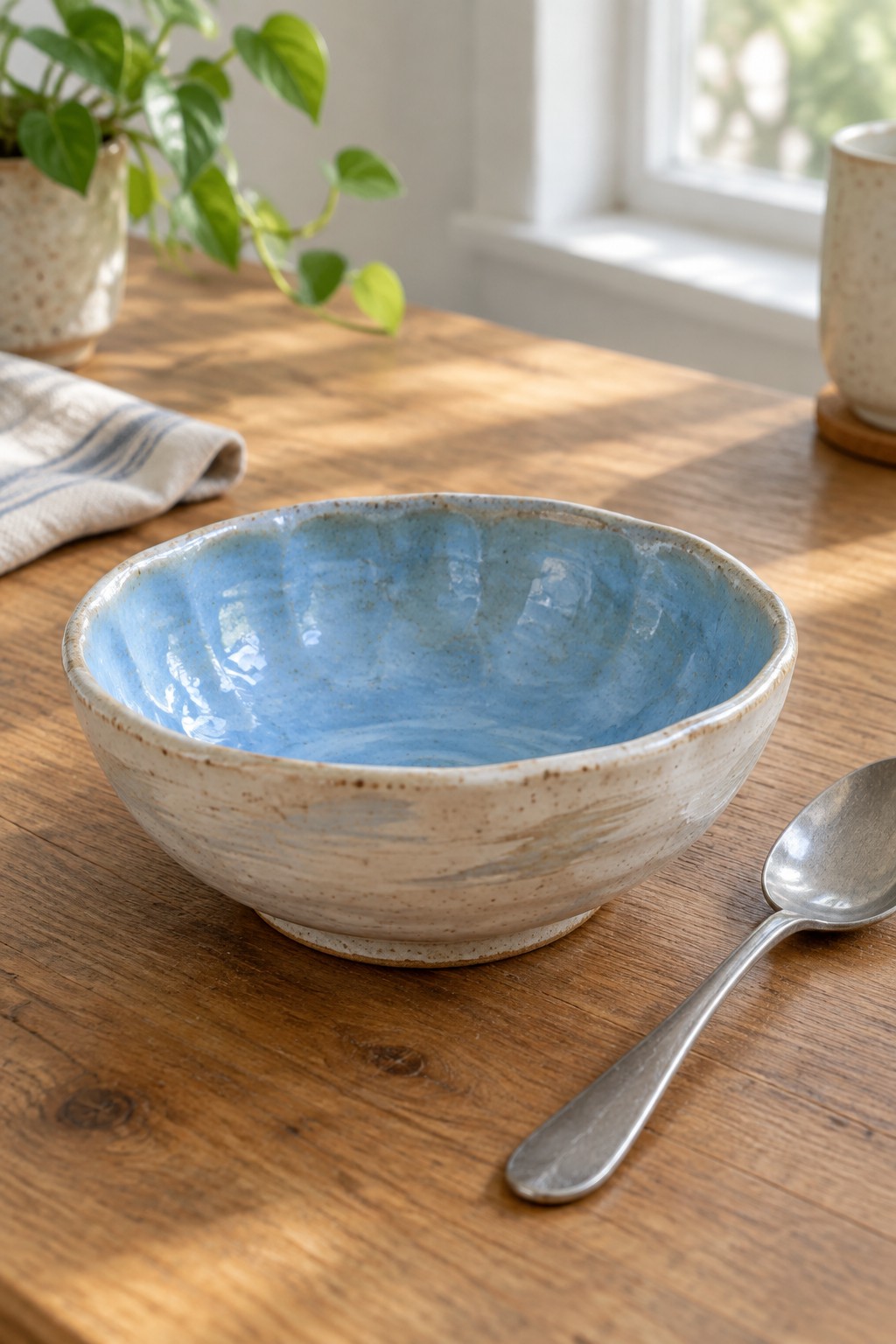
A wide ceramic bowl with a glossy blue interior and a speckled beige exterior makes a straightforward kitchen piece for first-time potters. The shape stays open and shallow so it works for serving, mixing, or eating straight from the bowl. The simple glaze split keeps the focus on the form and color contrast rather than added surface details.
What makes this idea useful is how the same bowl shape can be repeated in smaller sizes for snacks or larger ones for salads. The blue interior shows food clearly and photographs well for sharing. You could switch the exterior to a matte white or try the same glaze split on a set of plates to build a matching collection.
Crescent Moon Spoon Rest
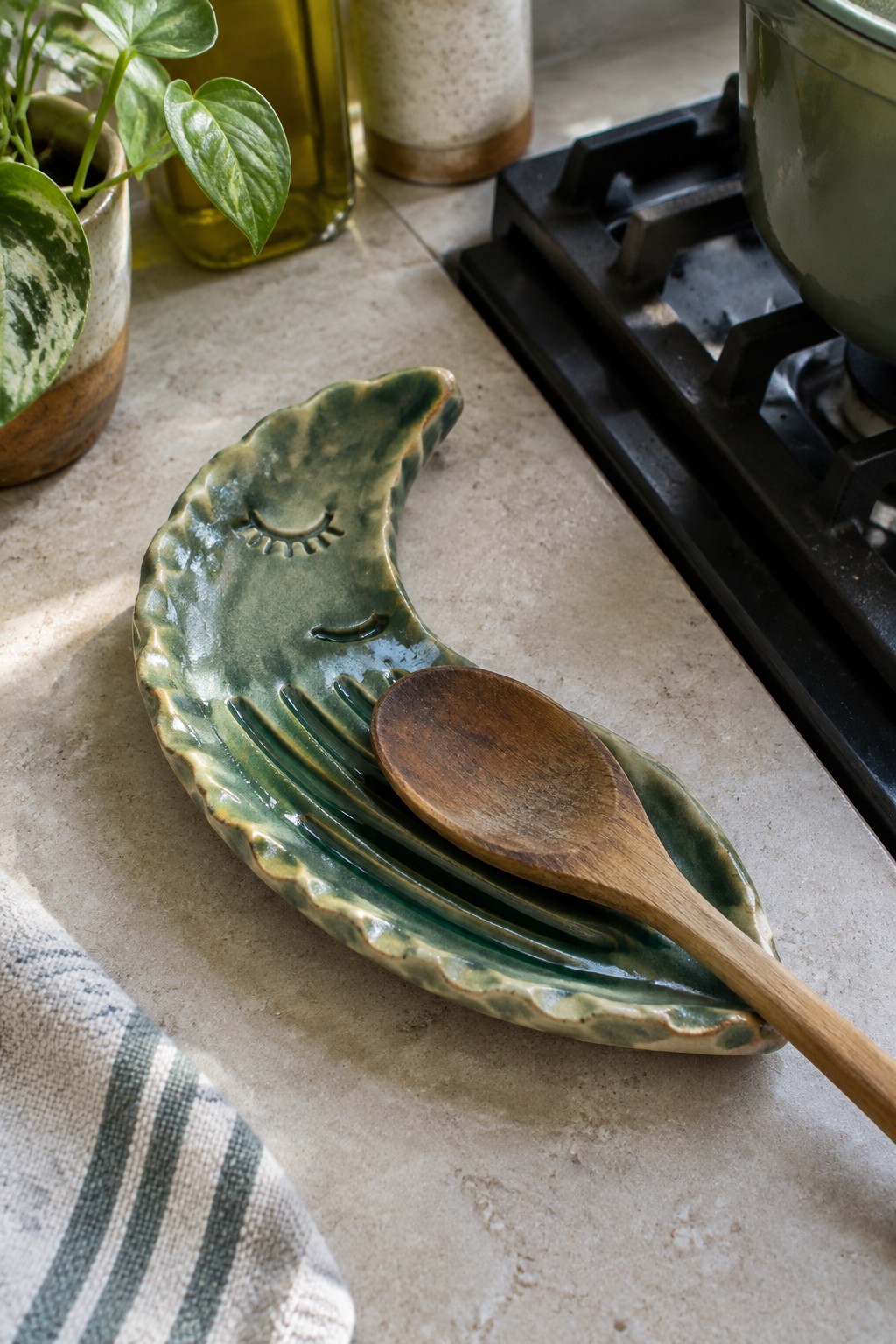
A crescent moon shaped ceramic tray serves as a spoon rest that keeps utensils off the counter during cooking. The form features a curved body with raised scalloped edges and a simple face motif of closed eyes plus sun rays across the top. The glossy green glaze covers the surface and gives the piece enough visual weight to stand out among other kitchen tools. This project falls into the functional kitchen pottery category where the object holds spoons and forks while adding a small decorative element.
The shape does a lot of the work here because the curve and raised rim naturally contain utensils without extra supports. In a kitchen this kind of piece sits beside the stove or prep area and keeps counters clean during daily use. You could scale the same moon form down for a ring dish or swap the glaze for a matte finish to match different dish sets. For a gift this style stays practical since the design works in most kitchen color schemes without needing complex additions.
Citrus Painted Ring Dish

A small scalloped ceramic dish with a painted orange slice in the center works as a ring dish or trinket holder. The white speckled glaze forms the base while the orange segments are brushed on with a simple circular outline. This keeps the piece in the category of small functional dishes that sit on a surface and catch everyday items.
The small scale makes this easy to adapt for a nightstand, bathroom counter, or desk without taking up much space. You could change the fruit to a lemon or lime, keep the scalloped rim but switch to a solid color, or enlarge the shape slightly into a soap dish. For a first project the flat center gives you room to practice underglaze painting without needing complex forms.
Cat-Shaped Planter
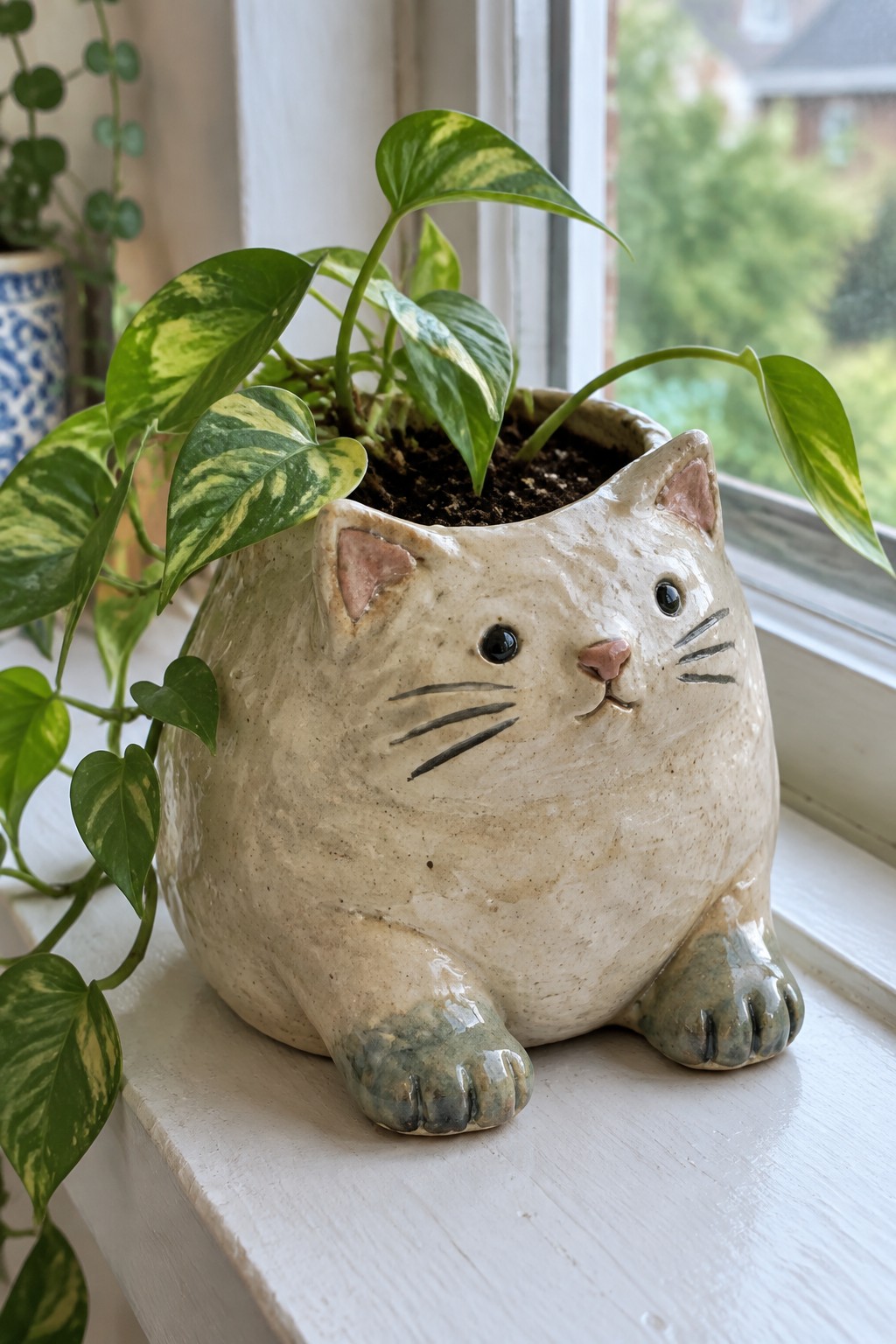
A cat-shaped ceramic planter combines a rounded body with basic sculpted details like ears, a face, and paws to create a functional container for small plants. The wide opening at the top holds soil and roots while the stable base and compact size keep it practical on a flat surface. This idea falls into the planter category and works best with trailing plants that can grow over the edges. The light glaze finish lets the plant remain the main visual focus.
The shape does a lot of the work here by turning the pot itself into the decorative element. You could adapt the same form for other animals or simplify the face details to make the build faster. This kind of piece works especially well as a gift for someone with a few houseplants or as a windowsill accent that does not need extra styling. The idea translates easily to other sizes if you want a larger version for floor plants or a smaller one for a desk.
Multi-Slot Ceramic Toothbrush Holder

A divided ceramic holder with three separate openings serves as a practical toothbrush caddy for a bathroom sink. The low, rounded form stays stable on wet counters while the speckled surface finish hides water spots and toothpaste splatter. Each opening keeps one brush upright and separated, which works especially well for shared bathrooms or couples who want to avoid mixing toothbrushes.
What makes this idea useful is how the same divided layout can be adjusted for different needs. You could make a two-hole version for a smaller sink or widen the base slightly for better balance with heavier brushes. The shape also translates easily into a desk pen holder or a small kitchen utensil caddy. A piece like this performs well on Pinterest because it solves a daily problem with a durable material instead of relying on plastic or metal alternatives.
Tea Light Holder with Dripping Glaze

A small, shallow ceramic bowl makes a straightforward tea light holder. The rounded shape and slightly irregular rim keep a standard tea light centered while allowing easy access for lighting. Red glaze covers the main surface and white glaze runs down the exterior in thick drips, giving the piece a simple two-tone finish without added carving or handles. The compact size keeps the focus on the flame rather than the holder itself.
The small scale makes this easy to adapt by changing the glaze colors or making a matching set for multiple candles. It works well on a coffee table, desk, or windowsill where you need soft light without bulk. You could simplify it further with a single solid glaze or try a matte finish for a different look. In a kitchen or living room, this kind of holder adds a handmade touch that stands out from plain glass versions.
Ridge Soap Dish

A rectangular ceramic tray with evenly spaced ridges across the base creates a simple draining soap holder. The raised lines keep the bar elevated so water can run off instead of sitting underneath. The speckled teal glaze and slightly uneven edges give it a casual, handmade look that suits a bathroom or kitchen sink area.
What makes this idea useful is how the ridges solve a common problem with bar soap. The shape works especially well on a wet counter because it helps the soap last longer. You can adapt it by making the tray wider for larger bars or shortening the ridges into a grid pattern. The same tray form could be scaled down for a sponge rest or used without ridges as a small catch-all dish.
Double-Bowl Salt Cellar with Spoon
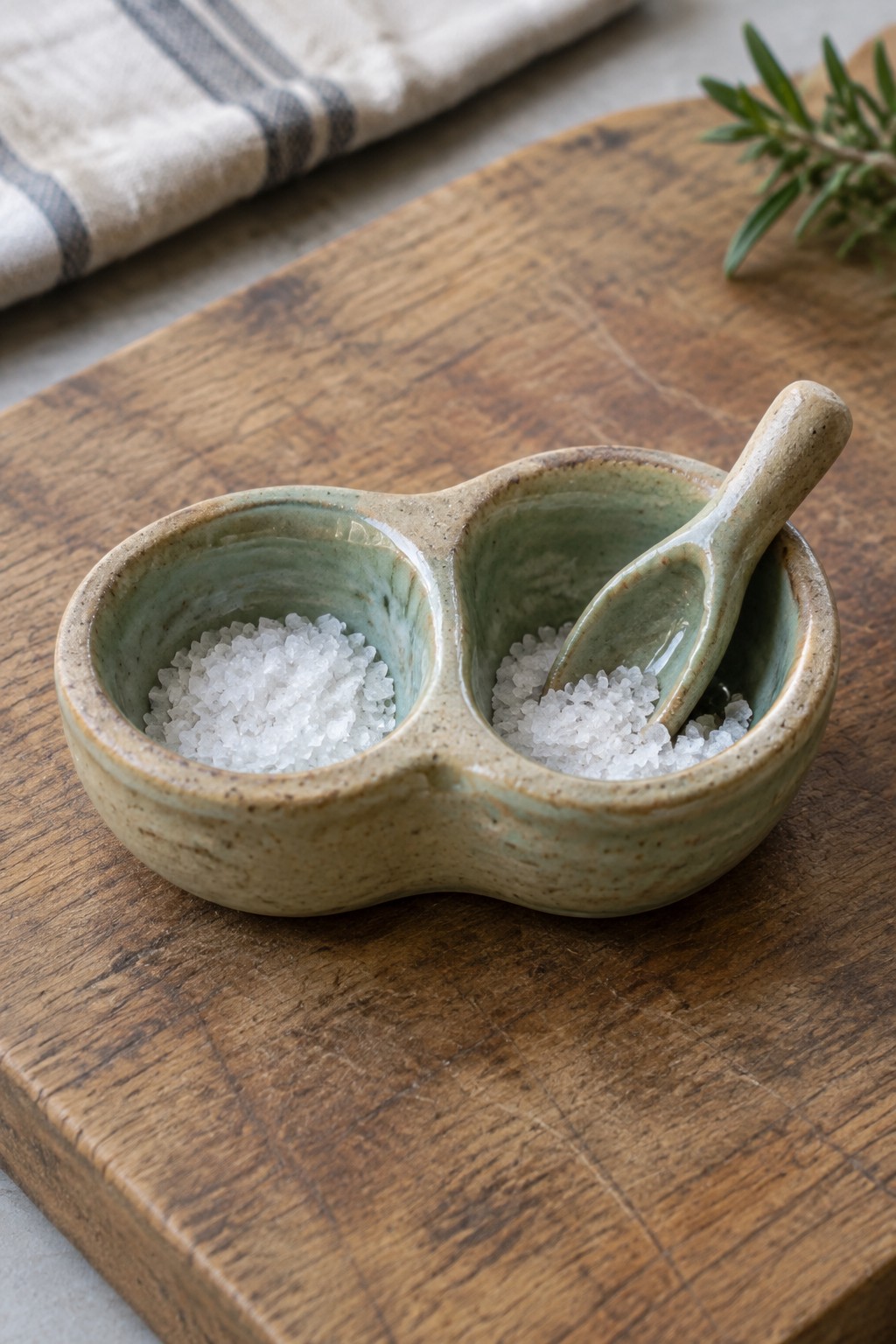
A divided ceramic dish with two connected bowls creates a compact server for salt and another seasoning. One section holds coarse salt while the second holds pepper or a different spice, and the small matching spoon stays inside the dish for quick scooping. The oval shape and simple two-tone glaze keep the piece low-profile on a countertop or table.
What makes this idea useful is how the connected bowls combine two small containers into one easy-to-move object. You could adapt the same form for sugar and creamer at breakfast or for holding two different herbs during cooking. The built-in spoon makes it a ready-to-use set that works well as a gift, and shrinking the scale slightly would turn it into a desk tray for paper clips or push pins.
Ceramic Utensil Crock with Painted Leaf Band
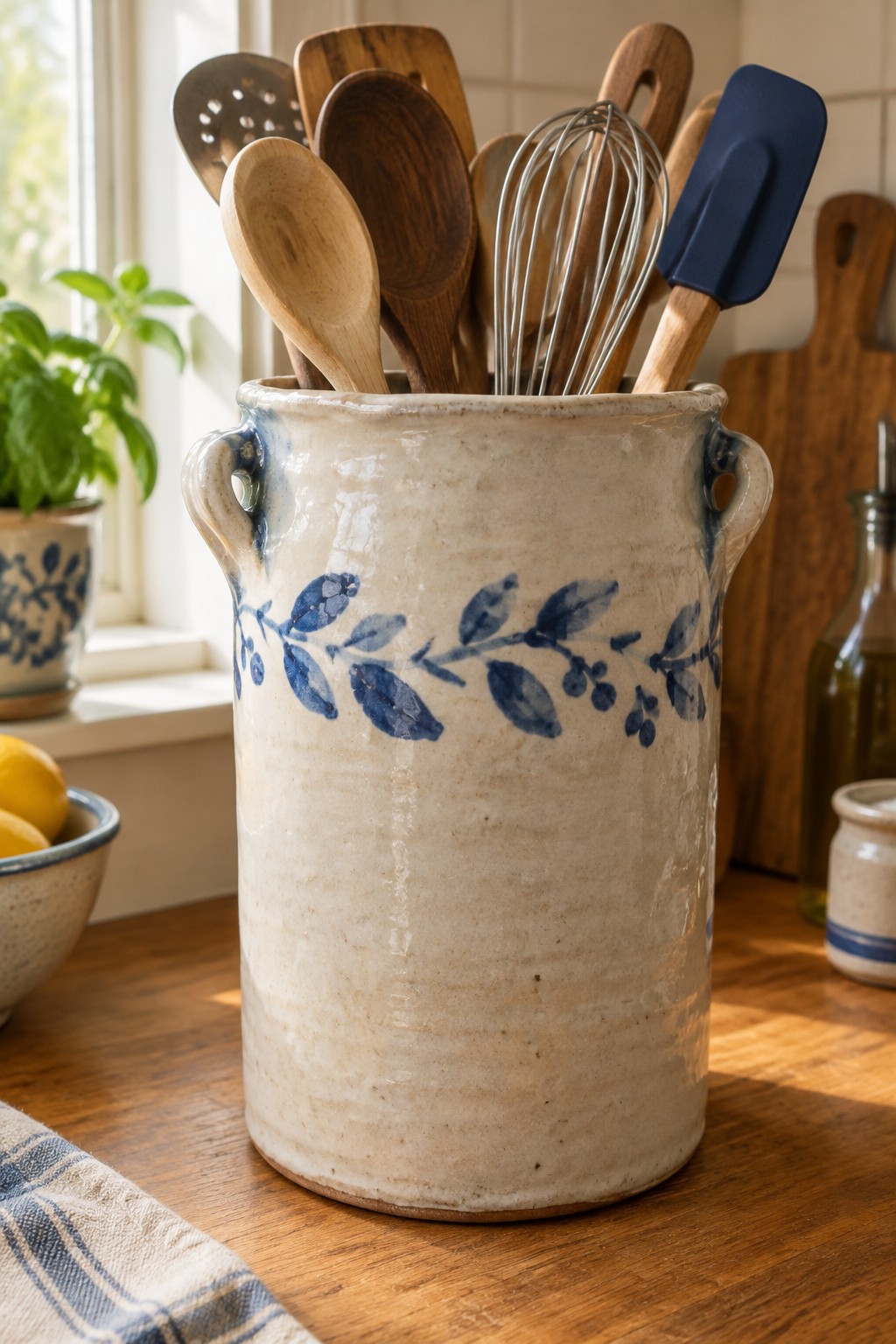
A wide cylindrical ceramic crock with two side handles works well as a kitchen utensil holder. The off-white glaze shows a natural clay texture, and a simple blue painted band of leaves and berries wraps around the middle for decoration. This piece fits the category of functional kitchen storage that keeps tools within reach while adding surface detail.
The handles make it easy to carry the crock across the counter when it is full. You can adapt the painted band by changing the color or spacing the leaves differently on your next version. The same shape works for holding paintbrushes or garden tools if you adjust the size. A painted detail like this keeps the form from looking plain while staying practical for everyday kitchen use.
Lidded Butter Dish
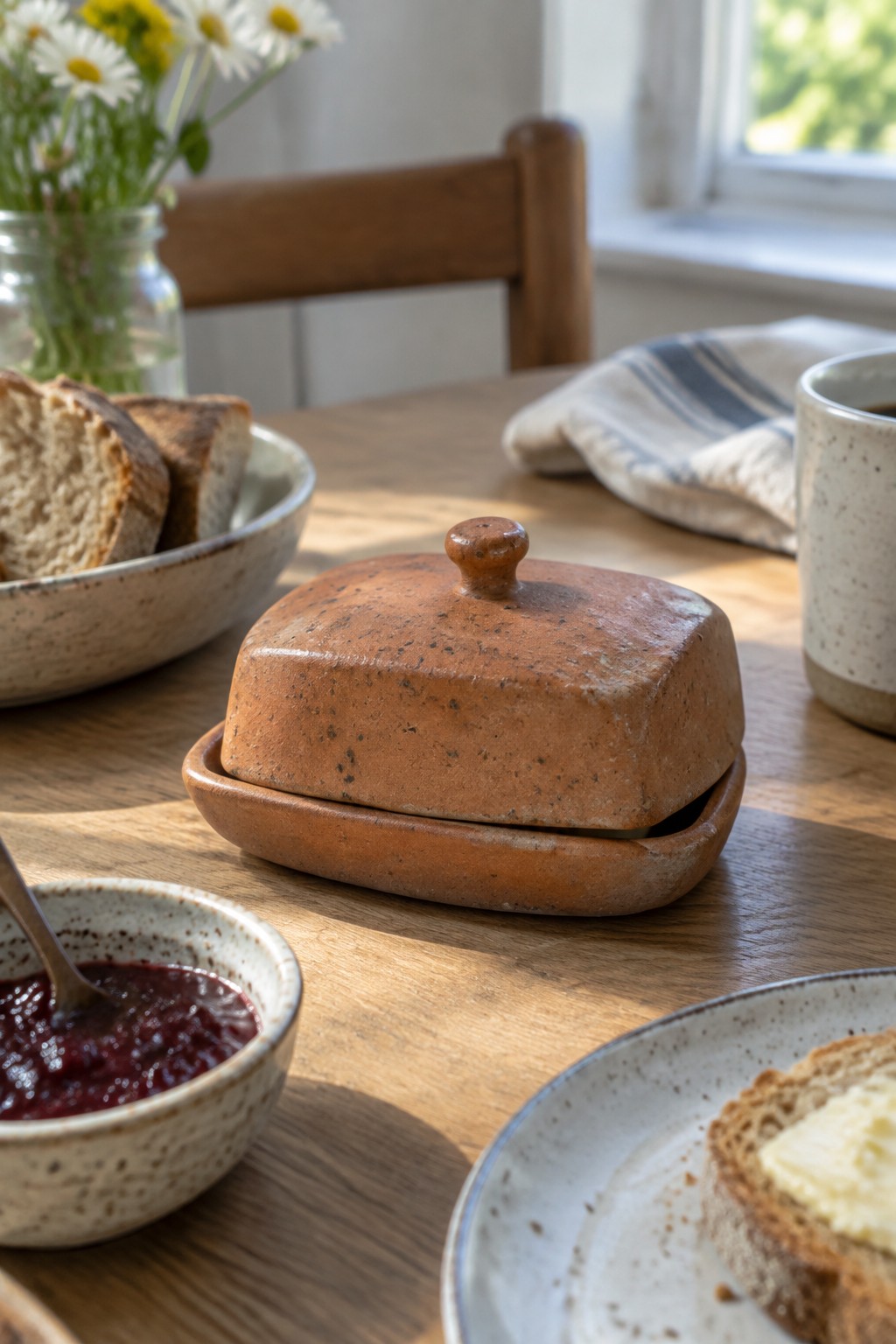
A covered butter dish made from clay holds a stick of butter on the table while keeping it protected under a fitted lid. The rectangular base and slightly domed lid with a simple knob create a stable, stackable form that works for daily use. The matte terracotta clay with its natural dark speckles gives the piece an earthy surface that pairs well with other kitchen pottery. This project fits the kitchen item category and stays focused on function over decoration.
What makes this idea useful is how the lid and base can be sized to match standard butter blocks or adjusted for smaller portions. The shape works especially well as a template for other covered dishes like a small cheese dome or sugar bowl. In a kitchen, this kind of piece keeps butter spreadable without refrigeration and avoids the need for complex glazing. You could rework the same proportions into a round version or add a shallow tray underneath for crumbs.
Wall Pocket Planter with Painted Raindrops

A wall pocket planter is a flat-backed clay form with a deep curved opening that hangs on two wall hooks. This version uses a textured off-white clay body with a simple blue raindrop pattern painted across the front and sides. The raindrops vary slightly in size and shade, which keeps the surface lively without crowding it. The wide top opening easily holds soil and small herb plants like basil or thyme.
What makes this idea useful is how it turns a plain wall into growing space for kitchen herbs. You can swap the raindrop motif for dots, leaves, or lines depending on the room. The flat back and two holes make it straightforward to build from slabs and hang securely. The same shape works as a small mail holder or bathroom caddy if you skip the drainage hole.
Yarn Bowl with Notch for Knitting

A yarn bowl is a low, wide ceramic dish made specifically to hold a ball of yarn while you knit or crochet. The key feature is the cutout or notch along the rim that lets the strand feed out steadily without the ball rolling off the table. The simple rounded form and durable glaze finish make it practical for daily use rather than purely decorative. This type of project falls into the craft holder category.
What makes this idea useful is how the notch solves a common problem for anyone who knits regularly. You can adapt the same shape for different yarn thicknesses by widening or narrowing the opening during construction. It works especially well on a side table or desk where you want supplies contained but accessible. For a gift, something like this combines easily with a new skein of yarn.
Small Bud Vase for Fresh Cuttings

A small ceramic bud vase holds a single stem or small bunch without taking up much space. The narrow neck keeps flowers upright while the rounded body provides balance on a ledge or table. The blue glaze that runs down the sides over a light speckled base adds color variation without extra carving or painting.
The shape does a lot of the work here because it fits on narrow windowsills where bigger pots would crowd the view. You could rework the same form into a desk brush holder or a small bathroom cotton swab container by adjusting the opening width. For a first project this uses little clay and still looks complete with one glaze layer.
Ceramic Egg Cups
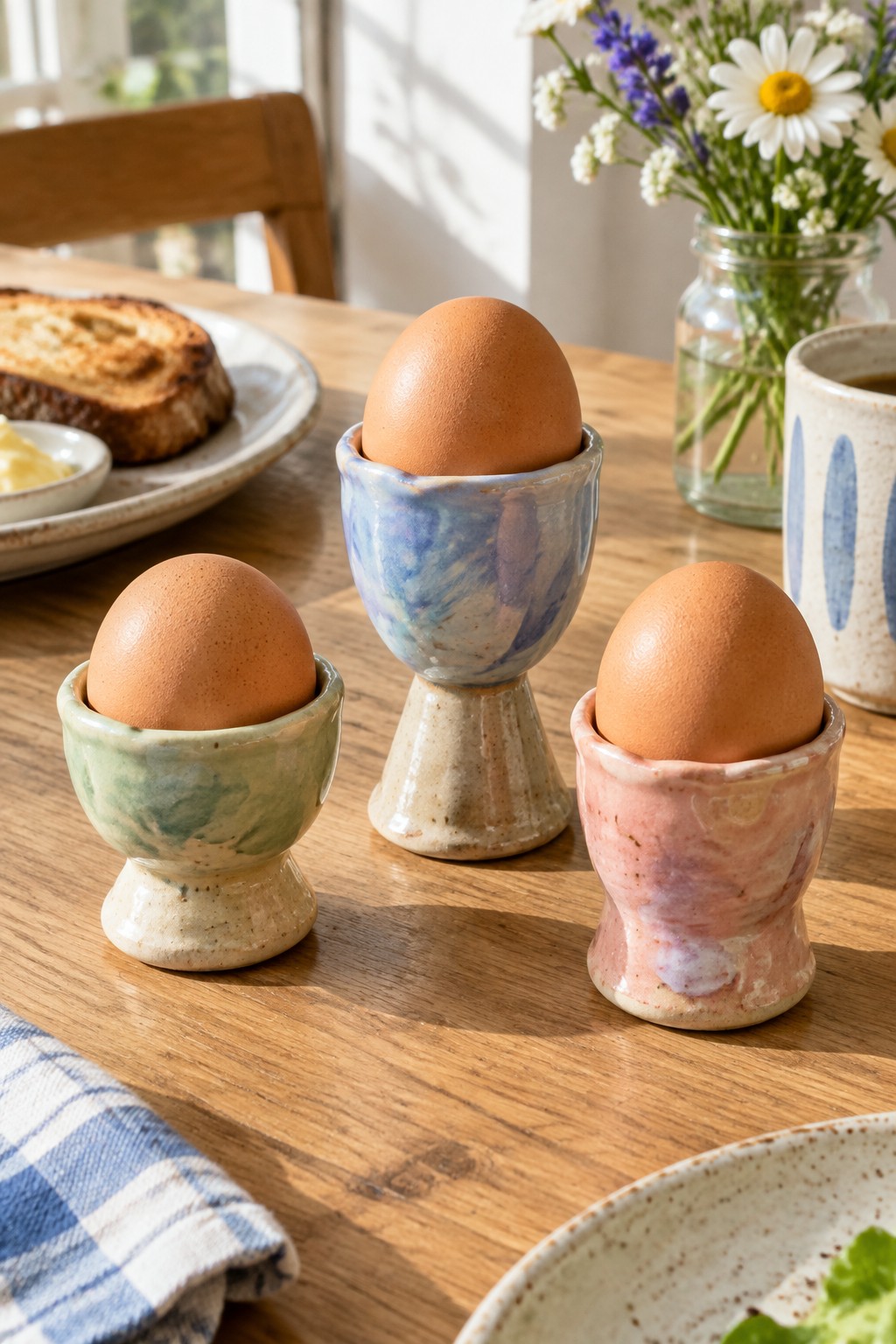
Egg cups are small, footed ceramic holders made to keep a soft-boiled egg upright at the table. The shape combines a rounded bowl section that cradles the egg with a short pedestal base that lifts it off the plate. These examples use marbled glazes in green, blue, and pink over a speckled clay body, which creates variation without extra carving or painting.
What makes this idea useful is how little clay and space it takes to make a full set. The same basic form works for salt dishes or small pinch pots if you shorten the pedestal. You can swap glaze colors or try a single solid color to match different tableware. In a kitchen, these stand out on Pinterest because they turn a common breakfast item into a quick, repeatable project that looks finished even on a first attempt.
Ceramic Match Striker Tray

A rectangular ceramic tray split into two sections gives you a ribbed striking surface on one side and a recessed compartment on the other for storing matches. The dark glaze covers the whole form and the parallel ridges are pressed or carved directly into the clay before firing. This layout turns a simple slab-built or molded piece into a self-contained holder that keeps matches dry and ready without needing a separate box.
What makes this idea useful is how the divided shape solves two needs in one object. The ribbed area can be adjusted in width or depth to match different match sizes, and the storage side can be made deeper or left shallow depending on how many matches you want to keep out. A piece like this works especially well on a mantel, near a wood stove, or on a kitchen counter. You could shrink the same proportions to hold incense sticks or widen the storage area to keep small candles or lighters instead.
Nesting Bowls with Dimpled Exteriors

Small nesting bowls give you a simple way to produce a matching set that stores compactly. The exterior dimples add texture and grip while keeping the overall form straightforward. Variegated glazes in yellow and orange create visual interest across the pieces without requiring complex decoration. This project fits the kitchen item category and works for prep, dips, or small servings.
What makes this idea useful is the stacking ability that saves space in cabinets or drawers. The small size makes it easy to throw multiple bowls in one session and adapt the dimple pattern by pressing in different tools or skipping it entirely. You could rework the same shape into a single larger bowl or a set of ramekins by adjusting the scale. The textured surface helps the finished pieces photograph clearly for sharing online.
Crescent Moon Chopstick Rests

Small crescent-shaped ceramic rests give chopsticks a stable spot during meals. The curved form with indented ridges keeps the sticks elevated and prevents them from rolling off the table. This kitchen item uses a compact size and simple two-tone glaze to create a set that works for everyday use or multiple place settings.
What makes this idea useful is how the small scale lets you make several pieces quickly from one slab of clay. You could adapt the same curve into longer versions for larger utensils or switch to a single solid glaze color to finish them faster. In a kitchen, these rests keep surfaces clean and add a consistent detail across a table setting without needing much storage space.
Fluted Ramekin for Individual Desserts
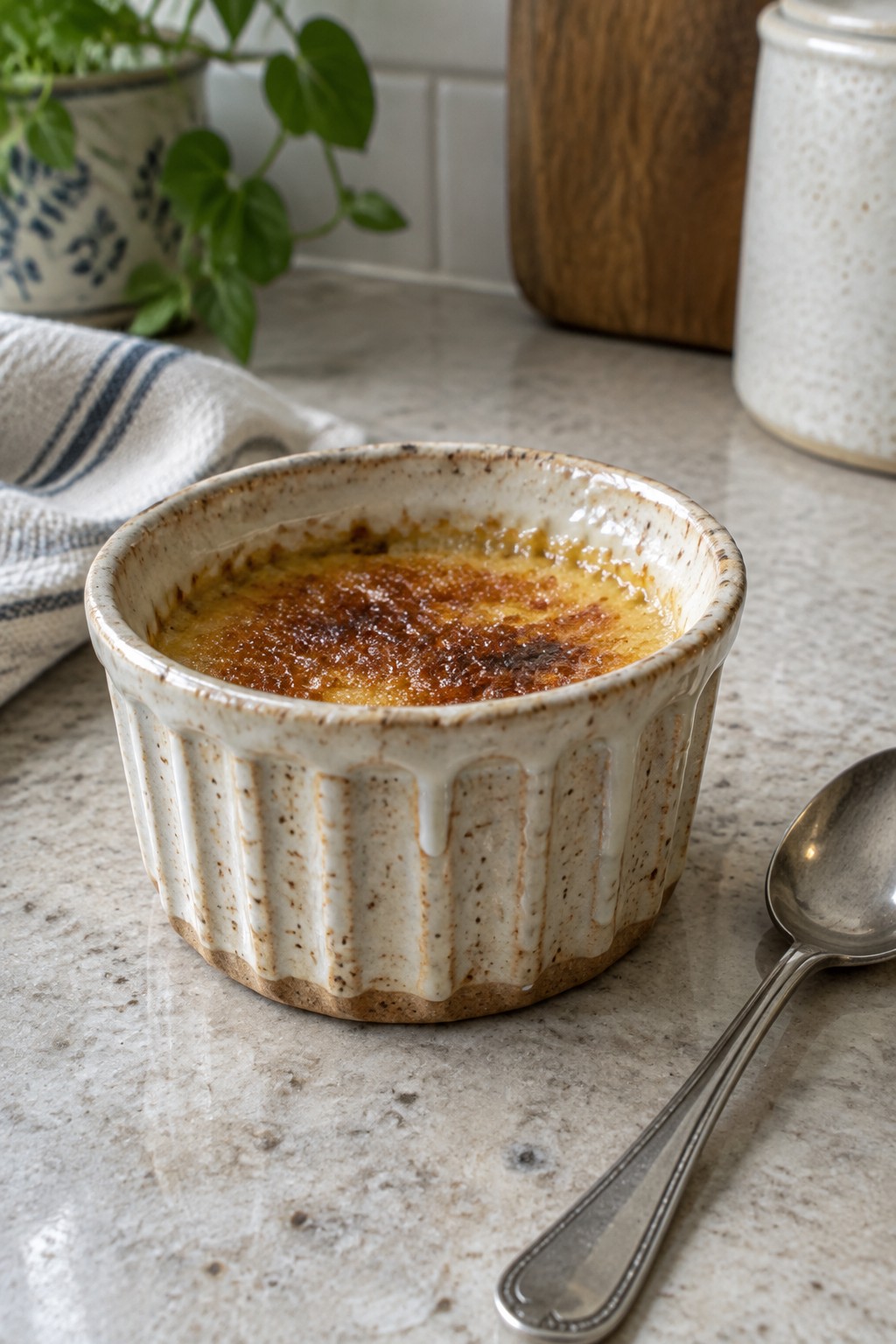
A small ramekin with vertical fluted sides gives you a straightforward form for baking and serving single portions. The ribbed texture adds grip and a finished look while the speckled glaze keeps the surface simple and durable for repeated oven use. This shape suits custards, small gratins, or side dishes because the walls are thick enough to handle heat without cracking.
The compact size makes it easy to throw several at once on the wheel or hand-build them from slabs. You can adjust the depth for taller desserts or widen the rim slightly for better spoon access. In a kitchen these stack without taking much space and work well as gifts when made in sets of four or six. The same fluted detail can be applied to a slightly larger bowl if you want one piece that doubles for dips or snacks.
Ridged Ceramic Herb Planter with Saucer
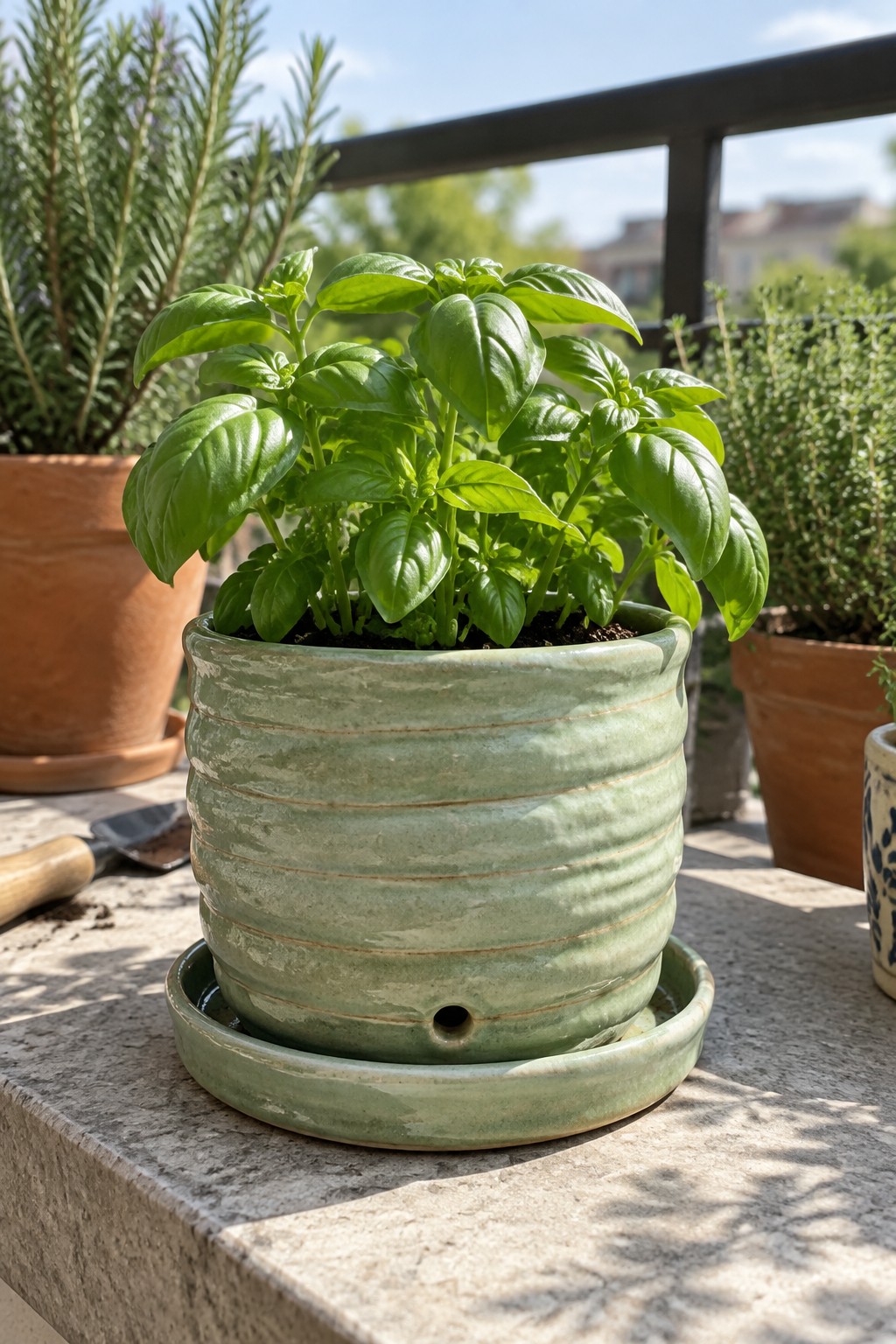
A ceramic planter with evenly spaced horizontal ridges gives herbs like basil room to grow while the built-in drainage hole and matching saucer handle excess water. The pot rests directly on the saucer so moisture stays contained rather than pooling on tabletops or railings. The light green glaze with visible clay texture adds surface interest without extra decoration. This project sits squarely in the planter category and stays practical for anyone who wants a reusable container for kitchen herbs.
What makes this idea useful is the drainage system that works for both outdoor patios and indoor windowsills. You can adapt the same shape by widening the ridges or switching to a matte brown glaze for a different look. The compact size fits easily on a balcony railing or kitchen counter where fresh herbs get daily sun. For a gift, pair the finished pot with a small herb start so the recipient can use it right away.
Cone-Shaped Ceramic Ring Holder
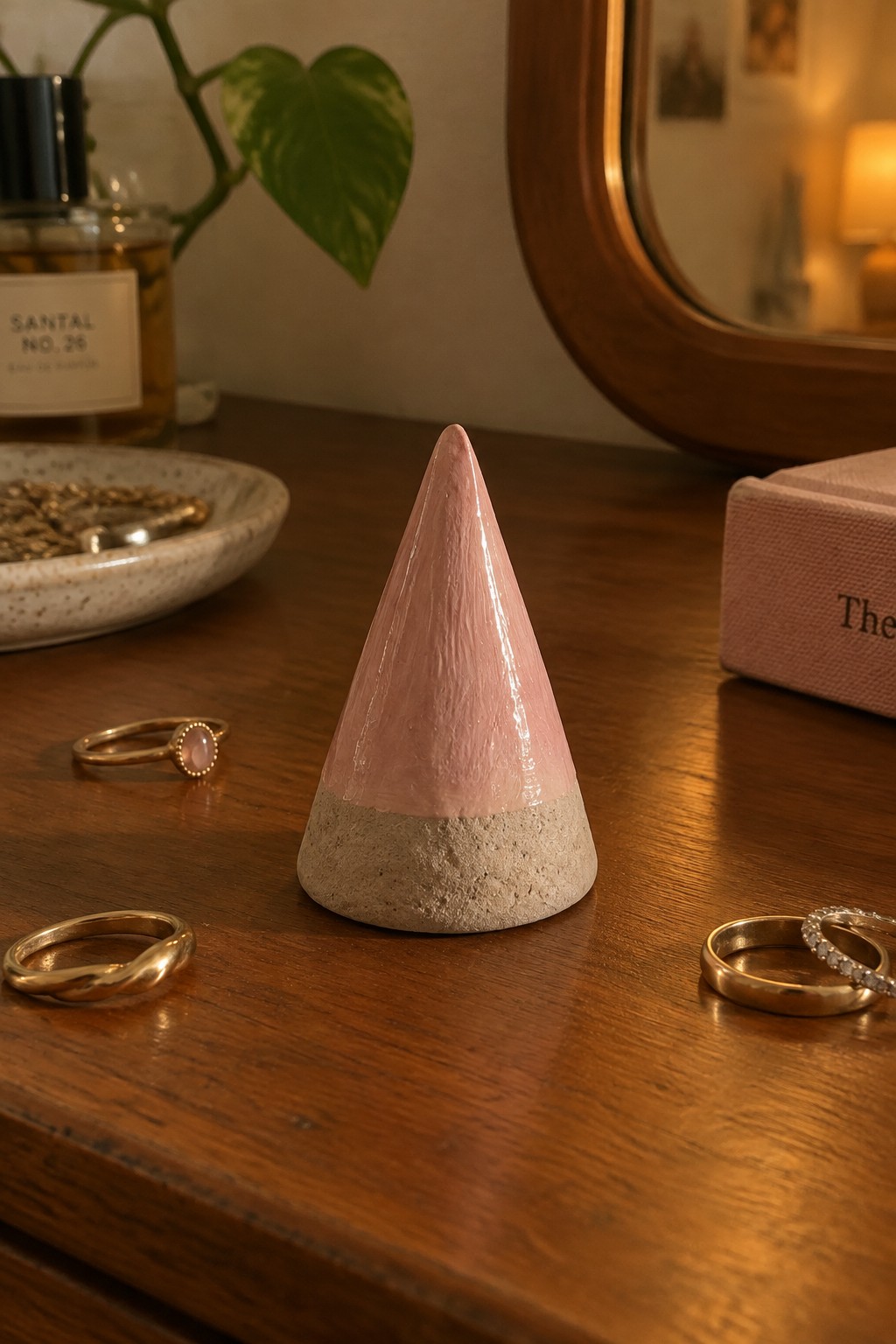
A cone-shaped clay ring holder gives rings a stable place to rest without taking up much surface space. The tapered form lets multiple rings slide down and stack neatly along the sides. A two-tone finish with a smooth upper section and a rougher base keeps the piece simple while still showing clear handmade texture.
The small scale makes this easy to adapt for different spots like a nightstand, bathroom counter, or entryway tray. You can swap the colors or shorten the height to fit whatever rings you own most. This shape also doubles as a minimal desk object when jewelry is not on it, so it stays useful without needing extra storage.
Ceramic Measuring Spoons Linked by Clay Chain
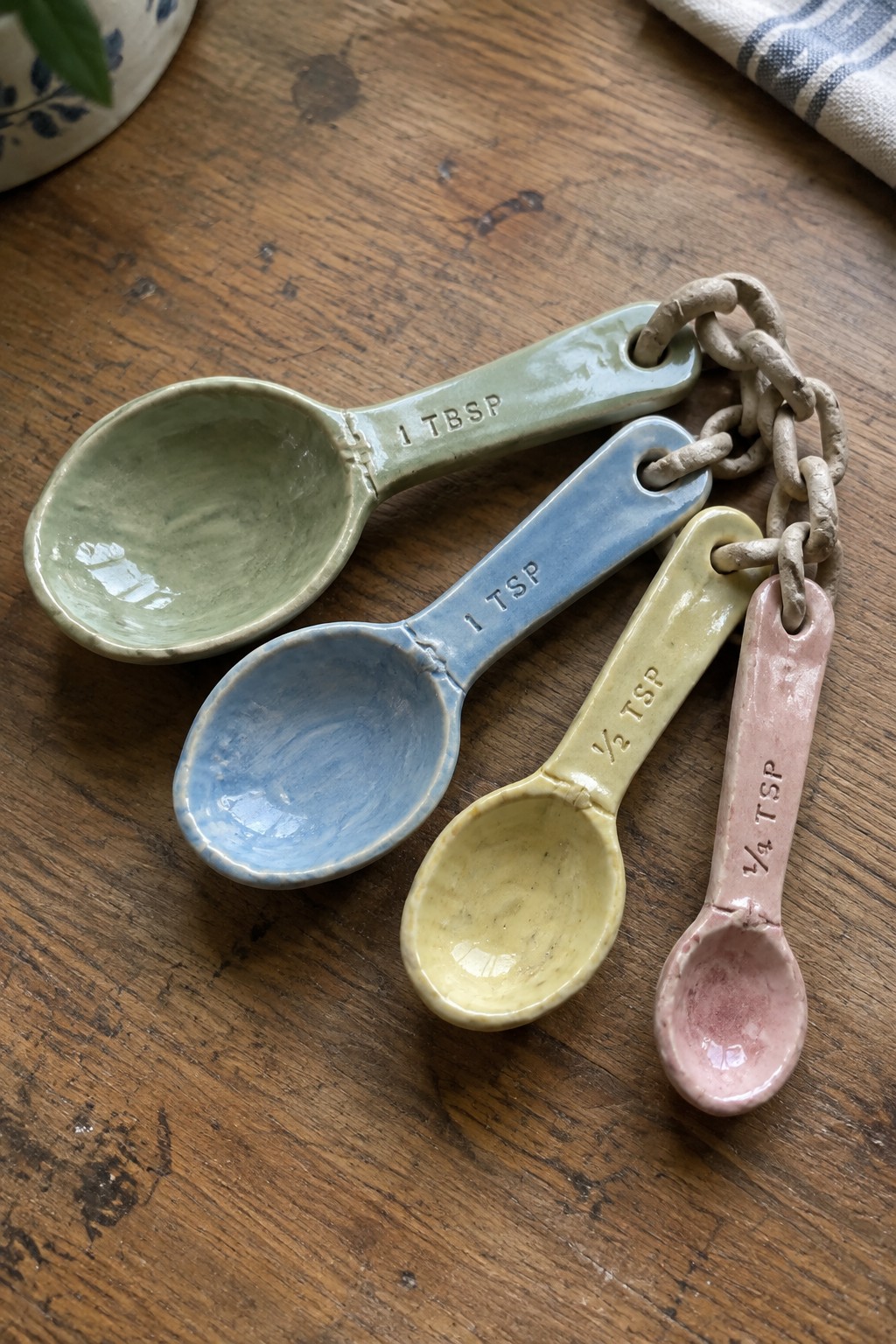
These ceramic measuring spoons come in four standard sizes with the measurements stamped directly into the handles. Each spoon has a simple rounded bowl and a glossy glaze in muted green, blue, yellow, and pink, while the handles connect through a short looped clay chain. The design keeps the full set together as one kitchen item rather than four separate pieces that can get lost in a drawer. The clear stamps and distinct colors make it easy to reach for the right size while measuring ingredients.
What makes this idea useful is that the chain turns a basic set of spoons into something you can hang on a hook or drape over a canister. The small scale works well for compact storage and lets you try the project without needing a lot of clay. You could adapt it by making only the sizes you use most often or switching the colors to match your kitchen. For a gift this kind of piece photographs cleanly on Pinterest and shows the maker thought about daily use.
Ceramic Trivet with Concentric Ring Grid

A square ceramic trivet built from terracotta clay and covered in white crackle glaze gives you a flat, heat-resistant surface for setting down hot pans or pots. The design uses nine evenly spaced circular motifs, each made of multiple concentric rings that add visual layers while keeping the top level for stable use. This layout turns a basic slab into a functional kitchen piece that still reads as intentional rather than plain.
What makes this idea useful is how the repeating ring pattern can be recreated with basic tools like round cutters or a compass on a slab of clay. The square format fits neatly beside a stove or on a dining table without taking up much space. You could simplify the grid to four larger circles for a bigger version or shrink the whole thing into a rectangular spoon rest. The crackle glaze also helps disguise small scratches that come from regular kitchen use.
Frequently Asked Questions
What supplies do I need to get started with these pottery ideas?
Start with a basic set of tools including a rolling pin for slabs, a needle tool for cutting, sponges for smoothing, and wooden ribs for shaping. Choose beginner-friendly clay like earthenware that fires at lower temperatures. You will also need access to a kiln for firing, though some community studios offer rental space. Glazes suitable for functional ware come next, and always test small batches first to avoid issues with fit or toxicity.
How do I ensure my finished pieces are waterproof and durable?
Apply two to three coats of a reliable glaze that matures at the same temperature as your clay body. Fire to the recommended cone for your materials to achieve a strong, nonporous surface. Avoid underfiring, which leaves pieces absorbent, and always check for cracks before the final firing. Pieces meant for food use should use lead-free glazes labeled as dinnerware safe.
Are there any safety considerations when making functional pottery for everyday use?
Select food-safe glazes and avoid those containing heavy metals like lead or cadmium. Test new glaze combinations on sample tiles to confirm they do not leach. Handle raw clay with care to limit dust inhalation, and wash hands thoroughly after working. For items like mugs or bowls, ensure walls are thick enough to withstand daily use without breaking easily.
What if I don’t have access to a pottery wheel?
Many of the functional ideas work well with handbuilding techniques such as coiling, pinching, or slab construction. Start with simple forms like trays or planters that do not require symmetry. Practice on a flat surface with guides to keep walls even, and use molds like buckets for consistent shapes. Local maker spaces often provide wheel access if you want to try thrown pieces later.
How can I personalize these ideas to make them unique?
Add textures with stamps, leaves, or carved patterns before the clay dries. Experiment with colored slips or underglazes to create custom designs that show through the final glaze. Change proportions slightly, such as making handles longer or adding feet to bases, to suit your style while keeping the item practical.

Pottery Path is my cozy corner of the internet where I share clay ideas, pottery inspiration, and simple projects you can recreate at home. I love exploring everything from air dry clay to handbuilt pottery to cute minis that brighten your day. My goal is to make clay crafting feel easy, fun, and welcoming for anyone who wants to try it.
You will find beginner friendly tutorials, creative pottery painting ideas, and lots of warm inspiration for slow and happy crafting. If you enjoy hands on creativity, this space will feel like home.