
I got into the slab method because it does not require much equipment to begin with.
It felt straightforward to roll out the clay and form simple shapes by hand.
My first few tries were basic but they helped me get comfortable without too much fuss.
I have gathered some projects that worked well for me as a beginner.
They focus on everyday items you can make at home with basic tools.
Cloud-Shaped Slab Tray
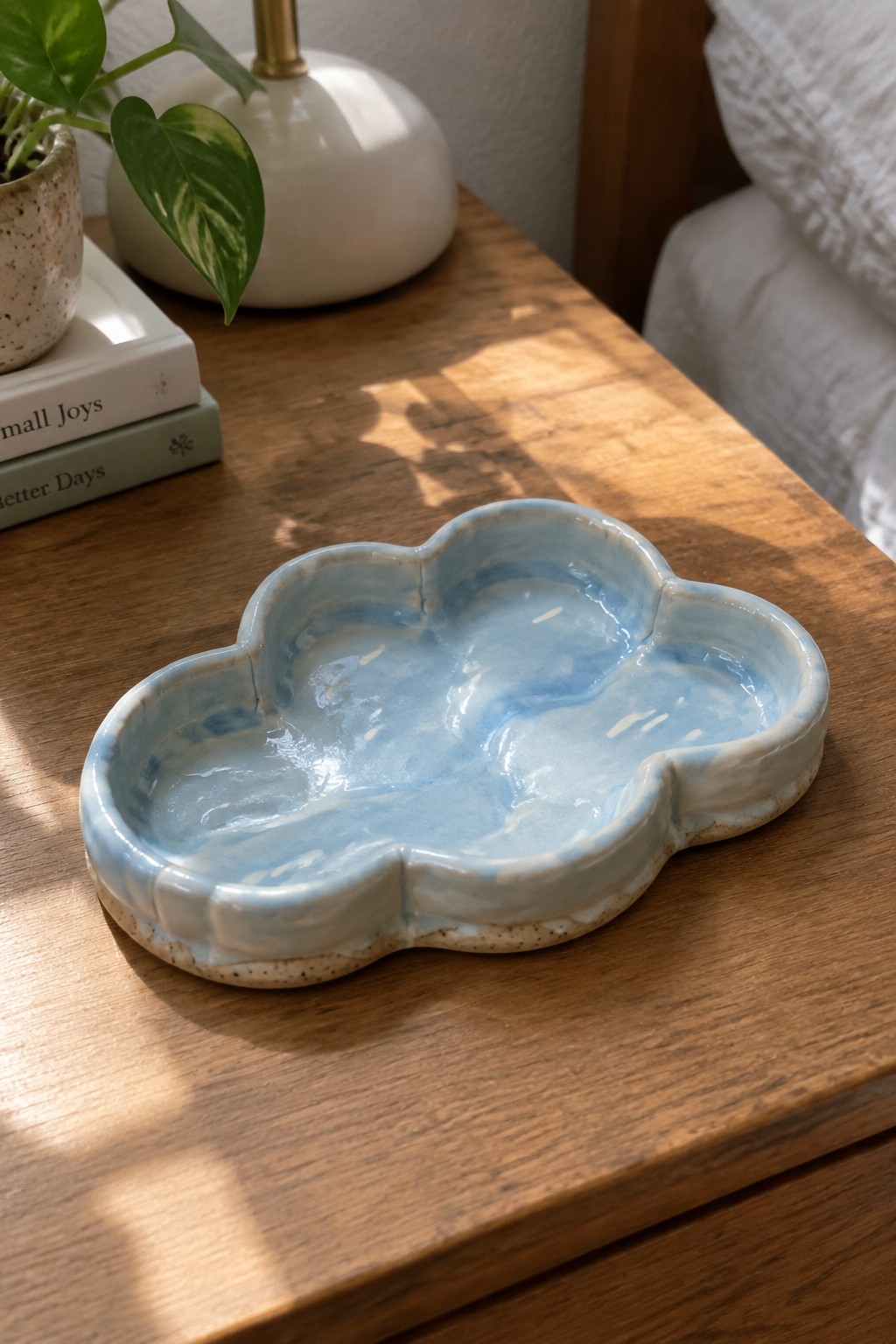
A cloud-shaped tray cut from a flat clay slab makes a simple holder for rings, small jewelry, or loose change. The wavy outline is formed by cutting the slab into an irregular cloud form, then gently pressing it into a shallow curve so the edges stay raised. The light blue glaze with its streaky application shows the clay texture underneath and keeps the piece looking soft rather than uniform.
What makes this idea useful is that the same cloud template can be resized easily for different uses, such as a smaller version for a desk or a slightly wider one for a bathroom soap rest. The cut-out shape itself does most of the visual work, so you can keep the surface plain or add light texture with stamps before the bisque firing. For a gift, this kind of tray works well because it stays functional while still looking distinct from plain round dishes.
Square Slab Mug with Painted Face
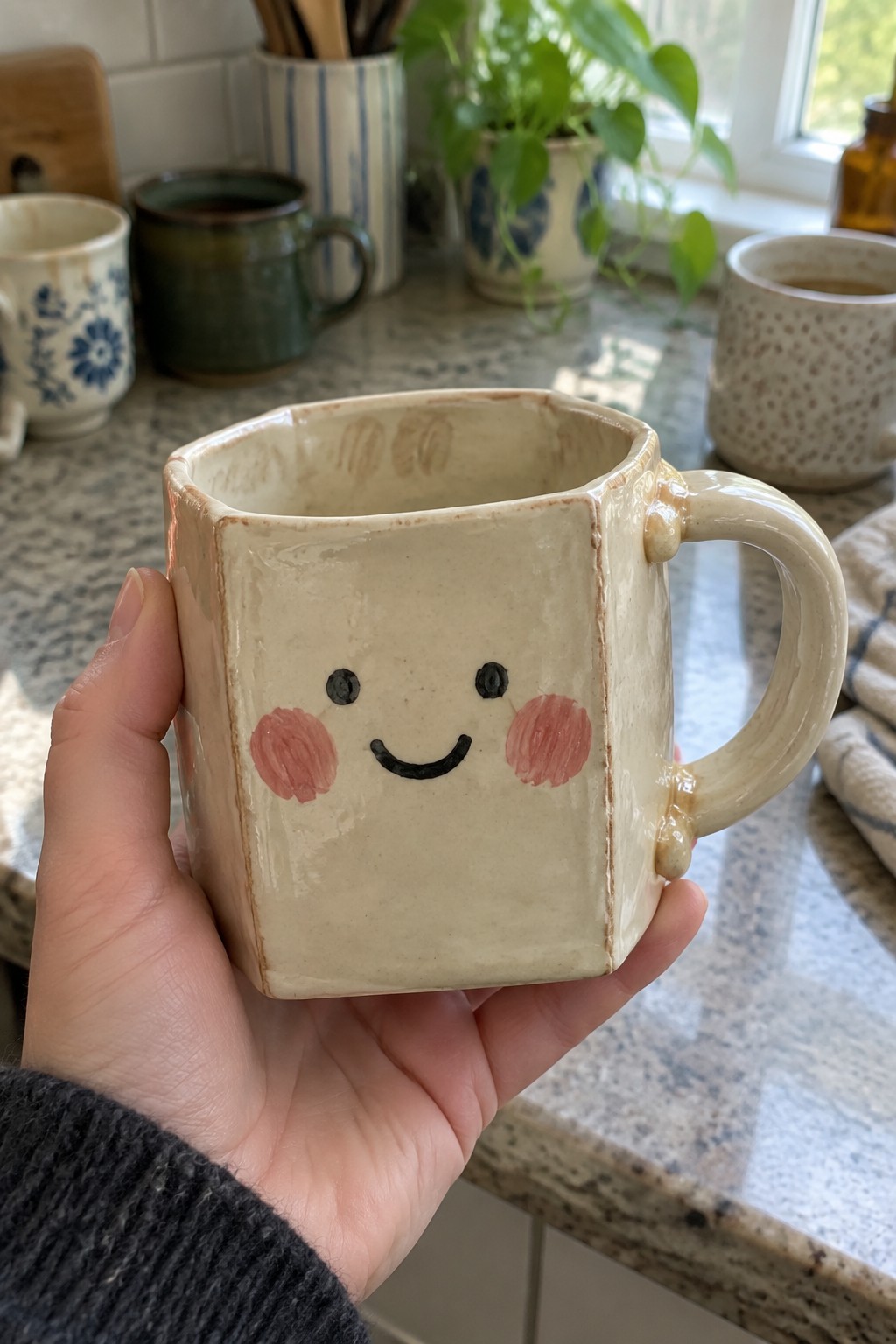
A square mug formed from clay slabs creates flat sides that work well for adding surface decoration. The design uses a minimal face motif with two black dots for eyes, a curved line for the mouth, and two pink circles for cheeks. This keeps the decoration simple while the geometric shape gives the piece a distinct look compared to round mugs. The light glaze with visible clay edges at the rim and handle reinforces the handmade slab construction.
What makes this idea useful is how the flat panels give you clear space to paint without fighting curves. You could replace the face with stripes, dots, or initials if you want a less literal version. The compact size works for daily coffee use or as a small desk container. For a gift, the same slab shape adapts easily by changing the glaze color or trying a different simple motif on each side.
Scalloped Rim Planter

A small cylindrical planter formed from a slab works well when you cut the top edge into a series of gentle curves before joining the seam. The scalloped rim gives the piece a finished look without needing extra attachments or handles. A matte green glaze with brown speckles covers the surface evenly while still letting some of the clay texture show through.
What makes this idea useful is how the compact size and wide opening suit a single small plant or a few cuttings on a windowsill. You can change the rim pattern by making deeper or shallower curves, or switch to a different glaze color to match other pieces in a set. The same slab cylinder can be shortened into a ring dish or lengthened slightly into a desk holder if you want to reuse the basic form.
Fern Pressed Slab Wall Hanging

A flat rectangular slab serves as the base for this wall piece, with multiple fern fronds pressed into the clay to leave clear raised impressions across the surface. Layered green glazes settle into the textures and create contrast between the leaves and the background. A single hole drilled near the top edge turns the finished slab into a simple hanging. This project stays within slab method basics while using plant material for the main decoration.
The shape does a lot of the work here because the rectangle hangs cleanly without needing extra supports or stands. You can swap in different leaves or arrange fewer fronds if you want a simpler version, and the same slab size works for both small test pieces and larger finished hangings. In a hallway or above a shelf, the flat profile takes up little depth while still showing the pressed details. For a gift, this kind of piece packs flat and needs no special wrapping.
Leaf-Shaped Ring Dish

A leaf-shaped ring dish is a straightforward slab project that produces a shallow, irregular tray for keeping rings and small jewelry in one spot. The form is created by pressing or draping a slab over a leaf template to capture the veins and pointed edges, then finished with a mottled pink glaze that pools in the texture. This keeps the piece functional as a desktop or nightstand holder while the organic outline avoids a rigid geometric look.
The small size makes it simple to adapt by choosing different leaf varieties or switching to a matte glaze for a different finish. It works especially well on a dresser or bathroom counter where space is limited and a few rings need a dedicated spot. The same slab approach can be adjusted to make a matching small tray for earrings or a shallow dish for loose change.
Polka Dot Slab Spoon Rest
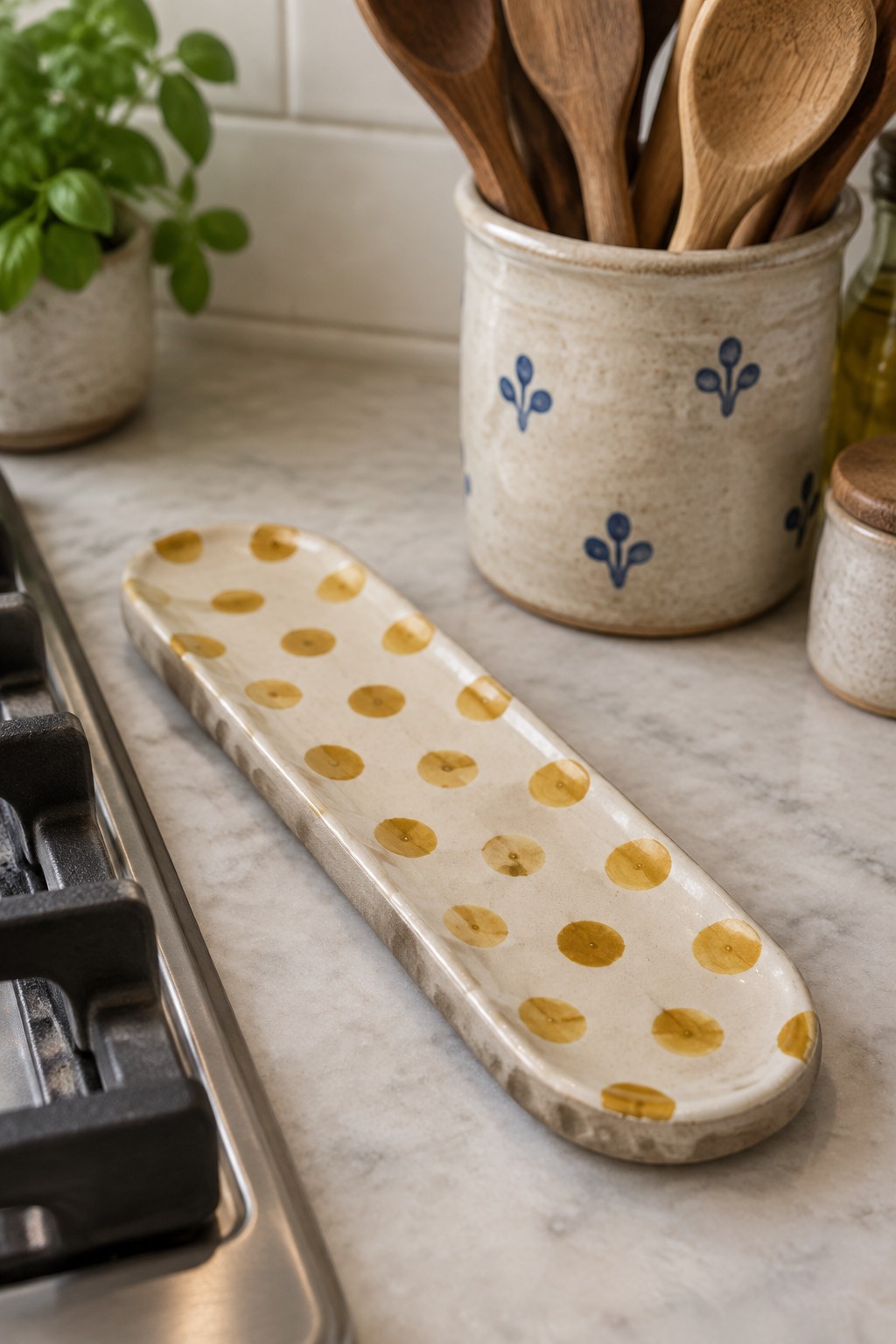
A long, narrow slab tray makes a practical spoon rest or small kitchen tray. Cut a flat rectangle or oval from a rolled slab, then gently fold up the edges to create a shallow rim before firing. After the bisque stage, cover the surface with a light glaze and add rows of gold circles with underglaze or gold luster to create the dotted pattern.
This shape sits neatly next to a stove or on a counter without taking much space. You can shorten the length for a desk tray, swap the dots for stripes, or widen it slightly for a small serving piece. The flat construction keeps the project simple to resize or repeat in different colors.
Square Trinket Box with Raised Flower Lid

A small square lidded box made from slabs gives you a compact storage piece that works as a jewelry holder or catch-all for small items. The flat lid surface makes it simple to add a raised flower made from clay pieces, with the petals and center creating a clear focal point. The speckled turquoise glaze keeps the surface interesting while letting the sculpted detail stand out.
What makes this idea useful is how the square shape and flat lid can be adapted easily. You could swap the flower for leaves, a simple knob, or even a monogram stamp depending on who the piece is for. This size works well on a bedside table or desk without taking up much space, and the same box form could be lengthened into a rectangular version for letters or craft supplies.
Smiling Face Candle Cup
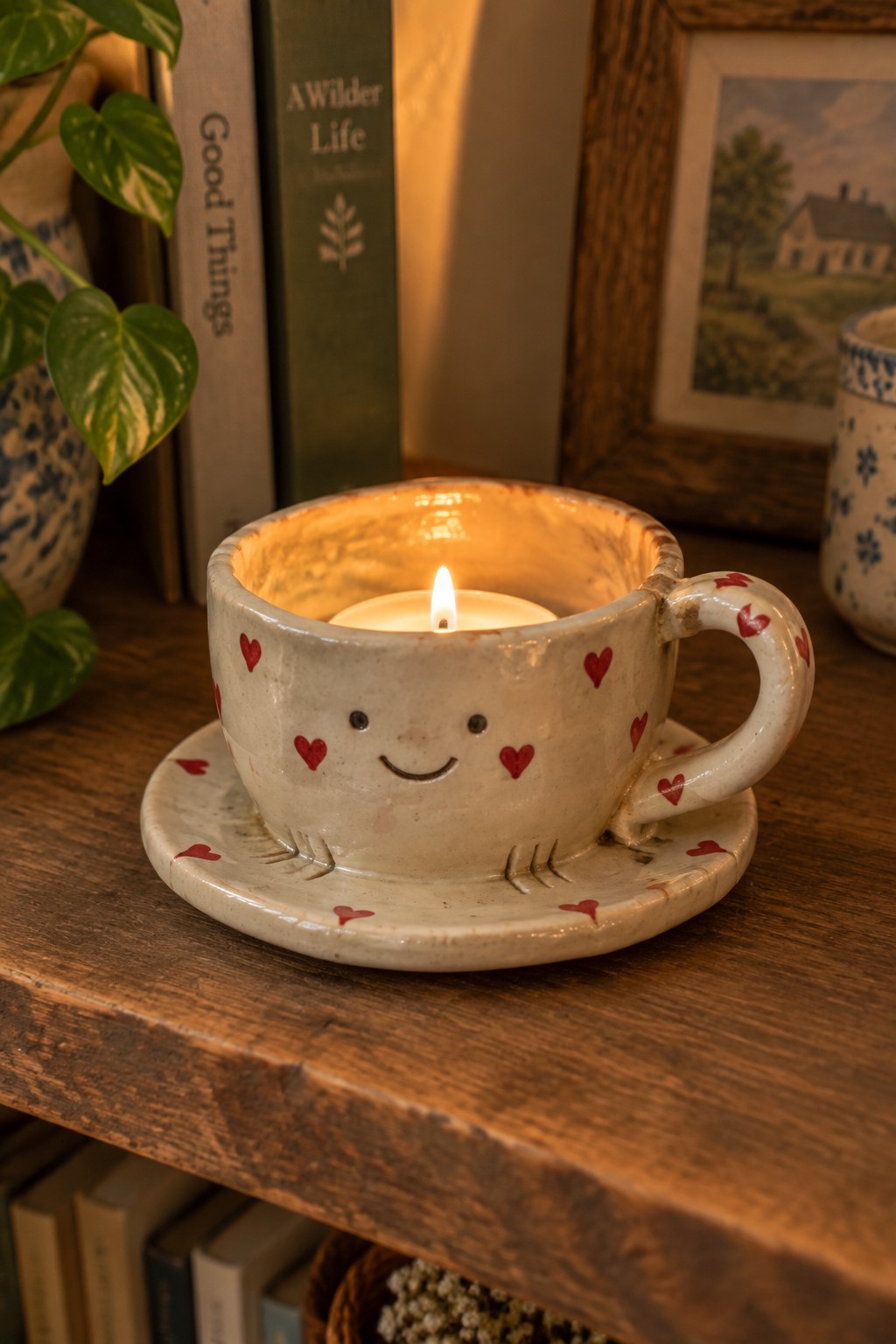
A small handmade ceramic mug with a handle works as a candle holder when set on a matching saucer. Two black dots and a curved line form the face on the front, with red hearts scattered across the surface and rim. The simple painted details keep the focus on the flame while the cup shape contains the candle safely.
What makes this idea useful is the compact size that fits easily on a desk, shelf, or nightstand. You can adapt the same face and heart pattern to a shallow dish for jewelry or a small tray for keys. Switching the heart color or trying a different mouth shape lets you match the piece to other decor without rebuilding the whole form. The design stands out in photos because the contrast between the white clay and red accents reads clearly even at small sizes.
Slab-Built Soap Dish with Drainage Grooves

A rectangular soap dish built from a single clay slab creates a simple bathroom accessory that keeps bar soap dry. Parallel grooves cut into the surface let water run off instead of pooling underneath the bar. The piece uses a muted green glaze with natural speckling while the lower edges remain unglazed to show the clay body. This style of project falls into the category of functional bathroom items that rely on basic slab construction and minimal shaping.
What makes this idea useful is how the built-in grooves solve a practical problem without extra parts. You can change the overall size to fit a double sink or swap the glaze color to match existing tiles. The same flat slab approach works for a small sponge rest or a jewelry tray by skipping the grooves or adding a shallow lip. A piece like this stays easy to store and gives beginners a finished item they can actually use daily.
Two-Compartment Salt Cellar
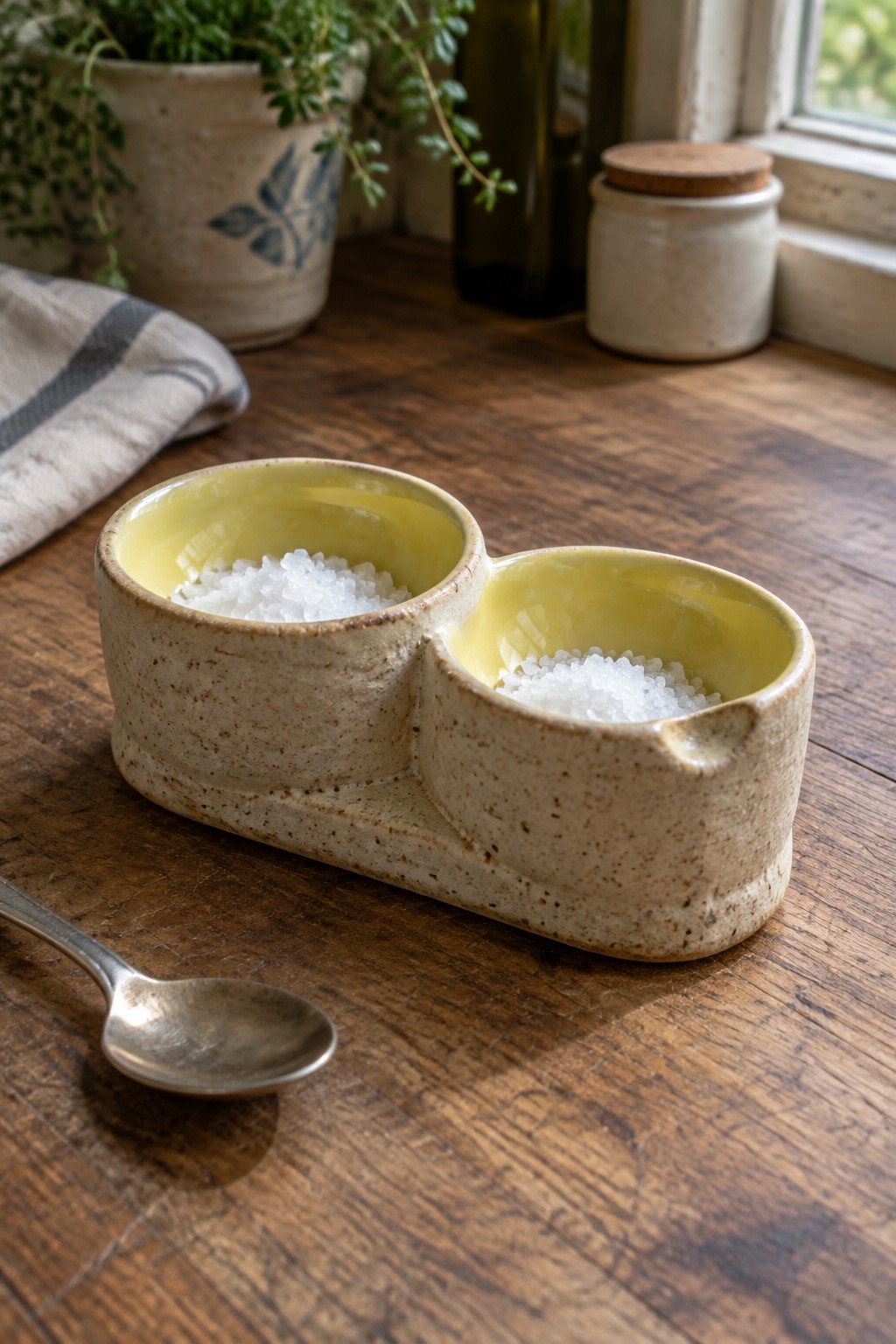
A two-compartment salt cellar built from slabs creates two shallow wells joined on a single base so you can keep separate salts or seasonings within reach at the table. The rounded forms have a speckled clay exterior and a bright yellow glaze lining each interior, which makes the contents easy to see and scoop. This shape works well as a kitchen item because the connected sections stay stable while the open tops keep access simple.
What makes this idea useful is how the same divided layout can be adjusted to hold spices, small snacks, or condiments instead. You can shorten one well or add a slight pour spout on the rim to change how it functions without starting over. The compact size uses little clay and fits easily on a shelf or windowsill when not in use. In a kitchen, this kind of piece keeps everyday seasonings visible and within reach without taking up much space.
Pressed Fern Slab Coasters

These coasters are made by rolling out clay slabs and cutting them into circles, then pressing a real fern leaf into the surface to create the raised detail. Different glazes in soft green, peach, and blue are applied so the leaf stands out once fired. The finished set stacks neatly and serves as a simple way to protect surfaces while adding a natural pattern.
The small round shape makes these easy to produce in batches with basic slab tools. You could swap the fern for other flat leaves or even try a single larger slab cut into squares for a different look. They work especially well as a first project because the process stays straightforward yet produces something usable on a desk or side table. For gifts, a tied stack like this photographs cleanly and shows off the slab method without extra steps.
Dandelion Utensil Holder
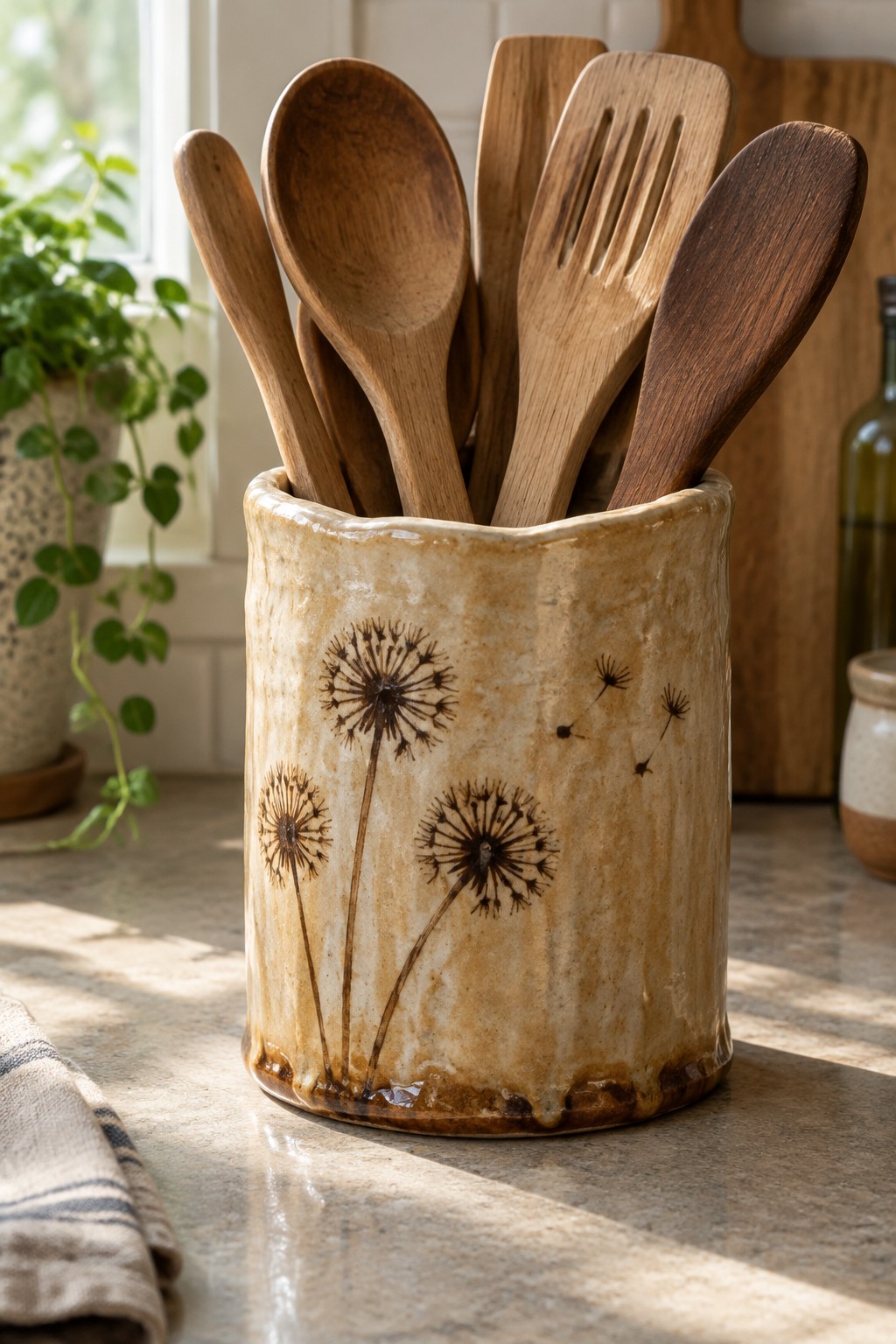
A slab-built cylindrical holder gives you a simple way to keep wooden spoons, spatulas, and ladles upright on the counter. The form is rolled from a flat sheet of clay, seamed into a tube, and fitted with a base before the dandelion seed heads are stamped or painted in a dark oxide. The light, mottled glaze lets the repeated botanical motifs stand out without extra decoration. This keeps the project focused on basic slab construction while still producing a functional kitchen piece.
What makes this idea useful is that the height and diameter are easy to adjust to match your largest utensils. You can replace the dandelion stamp with other simple line drawings such as leaves or herbs if you want a different look. The same cylinder shape can be shortened into a small utensil crock or lengthened into a vase for wooden tools or dried flowers. In a kitchen, the neutral glaze and dark print keep the piece from feeling fussy while still giving it a clear handmade identity.
Faceted Slab Bud Vase with Blue Band

A small bud vase built from slabs gives you clean angles and flat sides that hold their shape well during construction. The form stays narrow at the base and widens slightly toward the top, with a simple blue stripe added near the rim for contrast against the speckled surface. This approach keeps the project in the vase or holder category and works for displaying one or two stems without needing complex handles or lids.
The shape does a lot of the work here since the facets create visual interest even with minimal surface decoration. You could reuse the same template to make a set of three in different heights or swap the blue band for a different color that matches your space. On a desk or shelf this size fits easily and keeps flowers upright without extra support. For a gift the straightforward form and single accent color make it quick to repeat while still looking intentional.
Slab Built Fox Figurine
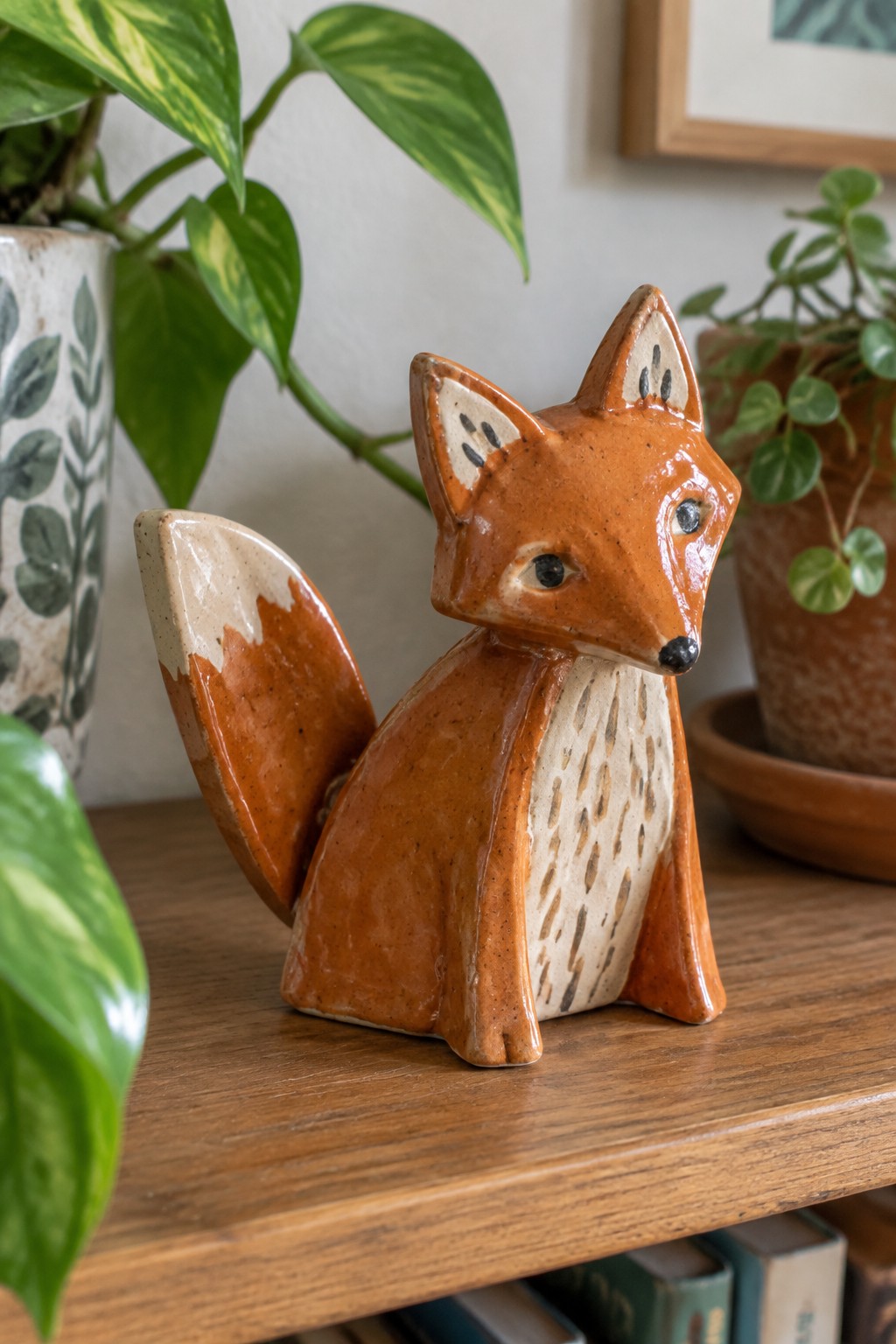
A seated fox figurine built from clay slabs gives beginners a clear way to practice joining flat pieces into a stable animal form. Cut rectangles and triangles for the body, legs, head, and tail, then score and slip the seams before adding simple carved lines on the chest and tail for texture. The orange glaze on the main body contrasts with the lighter cream sections on the ears, tail tip, and underbelly, which helps the shape read clearly from a distance. Black details on the face and fur markings finish the piece without requiring advanced painting skills.
The small scale keeps the project manageable on a standard worktable and makes the finished piece easy to fit on a shelf or desk. You can reuse the same body template for other animals by changing only the ears and tail shape. For gifts, the straightforward construction and neutral colors work across different home styles. If you want more stability during drying, roll the slabs a bit thicker and let the pieces firm up before final assembly.
Citrus Motif Slab Tray

A rectangular tray formed from a single slab of clay gives you a flat surface that is easy to decorate with fruit slices. The design uses orange and lemon rounds with small green leaves arranged across the surface in a loose pattern. The light base glaze lets the fruit colors stand out while the raised rim keeps small objects from sliding off. This project works as a kitchen tray for holding napkins or as a catchall for everyday items.
The shape does a lot of the work here because the flat slab can be cut to any size you need. You can change the fruit to other simple cutouts like leaves or stars if citrus does not fit your space. In a kitchen this kind of tray keeps counters clear while adding color through the painted details. For a first slab project the rectangle is forgiving and the surface design can be simplified to just a few shapes if you want to keep it basic.
Slab-Built Napkin Holder

A napkin holder made from clay slabs gives you flat sides and a low base that keep a stack of folded napkins upright on the table. The form is simple to cut and join, and the soft pink glaze with a white rim keeps the piece light while still showing the clay edges. A single thumbprint pressed into the side adds a small handmade mark without extra tools or steps. This type of project fits the kitchen or dining table category and stays useful every day.
What makes this idea useful is how little space it takes while still organizing napkins or even mail. You can swap the pink glaze for any color that matches your dishes or try a plain white version for a cleaner look. The same slab layout works for a smaller letter holder or a recipe card stand if you shorten the height. For a gift, this shape is easy to repeat and quick to glaze in batches.
Slab-Built Incense Holder
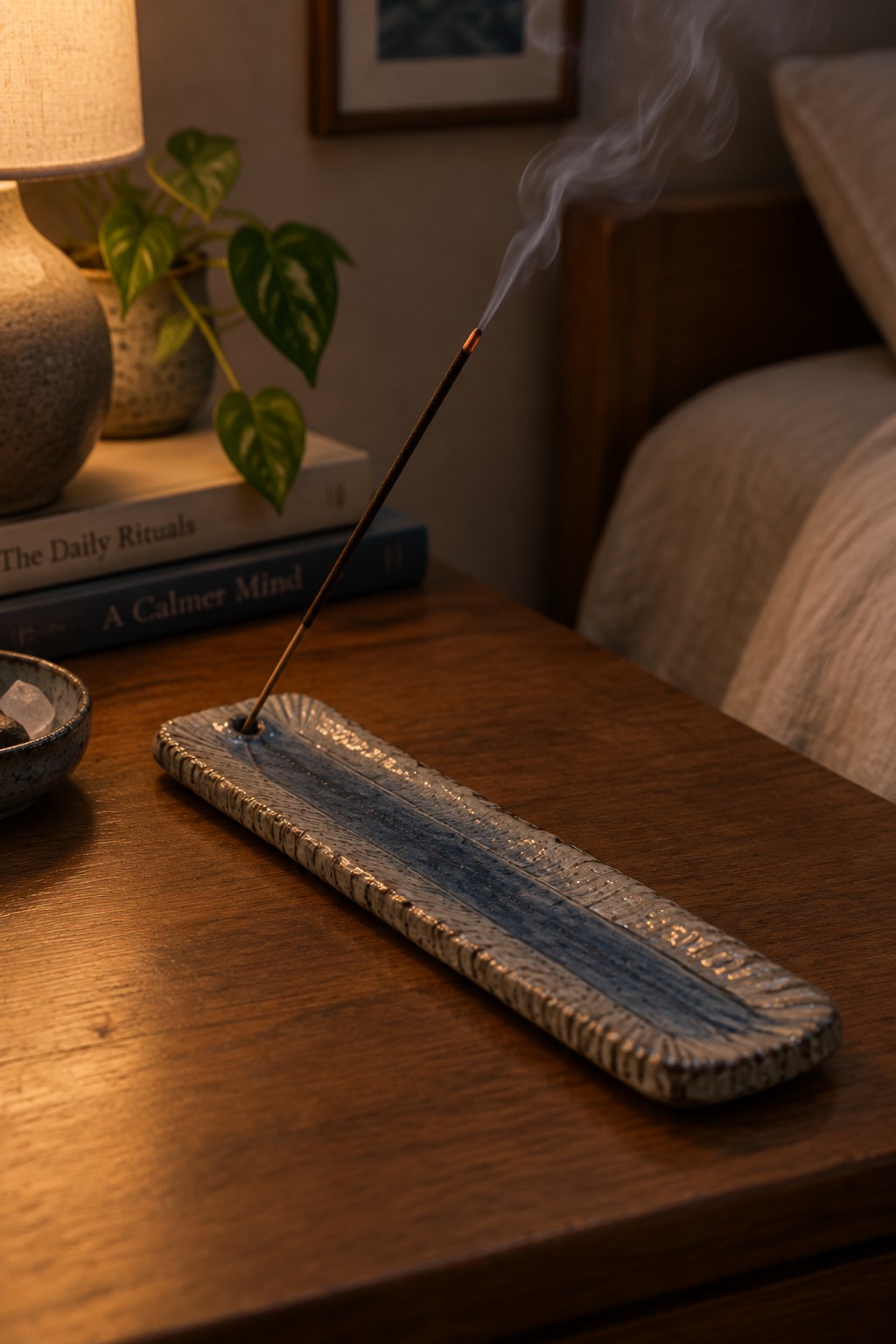
A rectangular slab tray with a hole at one end makes a straightforward incense holder. The form is cut from a flat piece of clay, with the edges pinched or textured to create a shallow border that contains ash. A simple hole near the short end holds the stick at an angle, and a streaked blue glaze adds contrast while keeping the surface practical for catching residue. This type of project sits in the functional decor category and works as a small tabletop piece.
The narrow rectangular shape keeps everything contained without taking up much space on a shelf or nightstand. You could shorten the slab for a compact desk version or add a second hole if you want to burn two sticks at once. The textured edges give the piece enough weight and grip to stay put, and the same slab layout could be reworked into a narrow tray for jewelry or small tools. This idea shows up well in photos because the long line of the tray leads the eye toward the smoke.
Wall Pocket Planter with Face Detail

A slab-built wall pocket planter gives you a flat back panel that hangs easily while the front pouch holds soil and a small plant. The mint green glaze covers the entire surface, and simple black dots for eyes plus a curved line for the mouth create the face without needing extra pieces. This approach keeps the form shallow enough to sit close to the wall yet deep enough for roots.
What makes this idea useful is how the single slab back lets you mount it with one screw or hook in any sunny spot. You can swap the face for different expressions or leave it plain, and the same pouch shape works for holding mail or kitchen tools if you skip the plant. The small size means you can make several in one session and group them on a wall without taking up much shelf space.
Scalloped Dip Bowl

A small slab-built bowl with a hand-cut scalloped rim works well as a dip or condiment server. The wavy edge is formed by tracing a template along the top of the slab before joining the walls, which gives the piece an organic shape without extra carving. A simple two-tone glaze treatment keeps the interior bright while leaving the exterior matte and speckled, so the bowl stays in the background while the food stands out.
What makes this idea useful is how quickly the rim shape can be changed by swapping the template for straighter or deeper curves. The small scale makes it easy to batch out several bowls in one session for a set of appetizers. You could adapt the same base form into a slightly taller version for holding olives or nuts, or keep the diameter but flatten the curve for a shallow butter dish.
Rectangular Slab Built Butter Dish

A slab built butter dish uses simple flat panels joined into a low rectangular box with a fitted lid on top. The shape stays wide and shallow so it holds a standard stick of butter while taking up little counter space. A single glossy glaze across the whole piece creates a smooth surface that wipes clean easily after meals.
What makes this idea useful is how the lid keeps butter covered at room temperature without needing extra wraps or containers. You can change the proportions to fit a larger block or shorten the sides for a smaller daily dish. For a gift this form works well because the same slab template can be adjusted to different sizes and finished in any kitchen friendly glaze.
Three-Slot Ceramic Toothbrush Holder

A three-slot ceramic toothbrush holder built on a rectangular base gives you a compact bathroom item that keeps brushes separated and upright. The form uses joined cylinders with a flat slab-style base, finished in a solid blue glaze and accented by simple daisy motifs spaced along the front edge. This layout works because the base stays low and stable while the separate compartments prevent brushes from touching.
What makes this idea useful is how the rectangular footprint fits narrow windowsills or counter edges without taking much space. You could shorten the base to two slots for a single user or stretch it to four for a shared bathroom. The painted daisies demonstrate an easy way to add pattern using only underglaze or slips before the final glaze. In a small bathroom, this shape keeps the counter clear while still holding the brushes you reach for every day.
Mushroom-Shaped Slab Planters

These planters use a simple two-part form where a domed cap sits on a short cylindrical stem. The cap creates a wide opening for soil and small plants while the stem raises the piece off the surface. Solid glazes on the cap contrast with a speckled matte finish on the base, which keeps the shape readable and the surface easy to clean. The design works as a compact indoor planter that fits on shelves or windowsills without taking much space.
The rounded cap and straight stem are both easy to cut from slabs and assemble, so the shape stays beginner-friendly while still looking distinct. You can swap the cap color or add light texture to the stem to match different rooms or plant types. A piece this size also makes a quick gift that does not require a lot of clay or kiln space. The form adapts well to other small plants or even as a holder for pens or kitchen tools if you skip the drainage hole.
Frequently Asked Questions
1. What is the slab method in pottery and why does it work well for beginners tackling these projects? The slab method involves rolling out flat sheets of clay and then cutting shaping and joining them to build forms like boxes trays or simple vessels. It suits beginners because it requires minimal wheel throwing skills and allows precise control over shapes using basic templates and tools. Start with even thickness slabs around quarter inch to avoid cracking and score and slip joints thoroughly for strong bonds in any of the 22 projects.
2. What essential tools and materials should I gather before starting one of the 22 beginner projects? You will need a rolling pin or slab roller a set of wooden or metal guides for even thickness a sharp knife or clay cutter a scoring tool slip made from clay and water and basic molds like boxes or cylinders for shaping. Choose a low fire clay body that is forgiving for new users and have access to a kiln or community firing service. These items cover most projects from simple coasters to more involved planters without needing advanced equipment.
3. How can I prevent my slab projects from warping or cracking during the drying process? Dry pieces slowly under plastic sheeting for the first day or two to control moisture loss then move to a shaded area with gradual exposure to air. Place flat items on a porous surface like drywall or canvas and turn them periodically for even drying. For curved forms like bowls support them with foam or newspaper until leather hard. Consistent thickness and proper joining reduce stress points so your finished pieces from the list stay intact through bisque firing.
4. What are some common mistakes beginners make with the slab method and how can I avoid them in these projects? Uneven slabs often lead to weak spots so always use guides when rolling. Poor scoring and slipping causes seams to separate so apply slip generously and press edges firmly together. Rushing the drying stage creates cracks so follow a slow schedule over several days. Test small test tiles first if trying a new clay and keep your workspace clean to prevent debris from marring surfaces in charming items like mugs or vases.
5. How should I finish and fire the completed projects to make them functional and durable? Once pieces reach the bone dry stage bisque fire them in a kiln to around cone 04 then apply food safe glazes if desired and do a glaze firing to cone 06 or higher depending on your clay. For decorative only items you can use underglazes or paints without a second firing. Always check local studio rules for firing schedules and test glazes on sample tiles to achieve the colors and textures shown in the article examples.

Pottery Path is my cozy corner of the internet where I share clay ideas, pottery inspiration, and simple projects you can recreate at home. I love exploring everything from air dry clay to handbuilt pottery to cute minis that brighten your day. My goal is to make clay crafting feel easy, fun, and welcoming for anyone who wants to try it.
You will find beginner friendly tutorials, creative pottery painting ideas, and lots of warm inspiration for slow and happy crafting. If you enjoy hands on creativity, this space will feel like home.