
I’ve tried making a few pottery items to help organize my kitchen space.
It started with needing better ways to store small tools and ingredients.
Over time I came up with some shapes that turned out to be really handy.
These ideas are simple and based on what I use every day.
I hope they give you a starting point for your own projects.
Ceramic Utensil Crock with Textured Base

A tall cylindrical crock made from stoneware or similar clay serves as a kitchen utensil holder. The form keeps spoons, spatulas, and whisks upright and grouped together on the counter. Its reactive green glaze with dark speckles covers most of the surface while the lower half features raised circular textures that catch light and add depth. This approach turns a basic functional shape into a durable kitchen item that handles daily use.
What makes this idea useful is the wide stable opening that fits a full set of tools without tipping over. You could rework the same proportions in a shorter, wider version for storing brushes or as a small planter. The textured band gives the piece enough detail to stand out on open shelving while the neutral glaze color works with most kitchen styles. Scaling it down slightly and switching the glaze would make it easy to adapt for gifts or different rooms.
Radish Spoon Rest
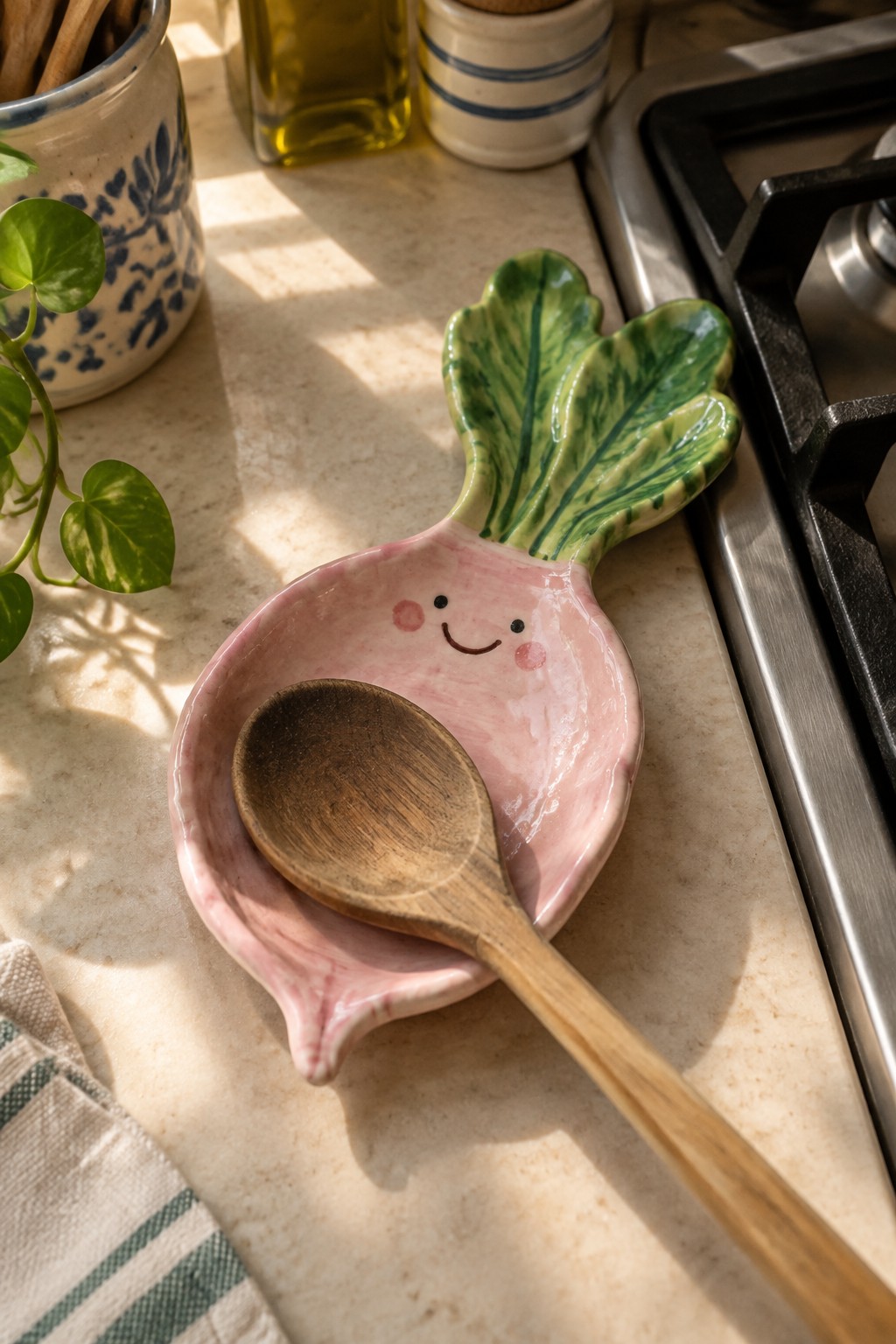
A ceramic spoon rest formed as a radish keeps cooking spoons off the counter and within reach. The pink body holds the spoon in a shallow well while the attached green leaf section adds height and a clear vegetable shape. Simple painted details on the face and the glossy finish make the form easy to read from across the counter.
What makes this idea useful is the built-in spoon well that actually works during cooking. The small scale fits on crowded counters near the stove without taking much space. You could rework the same shape into a carrot or beet version or skip the face for a cleaner look that still reads as a vegetable. In a kitchen, this kind of piece gives you both a functional spot for spoons and a quick way to add color to the workspace.
Ceramic Sponge Dish with Drainage Ridges

A shallow oval ceramic dish with raised ridges along one side keeps a sponge lifted above pooled water in the sink. The ridges create channels that let suds and water flow straight into the drain while the opposite end holds the sponge in place. A durable speckled glaze in muted blue-green covers the surface and helps it resist daily moisture. This kitchen item stays put on the sink ledge and handles the wettest part of dishwashing without needing extra space.
What makes this idea useful is how the ridged section solves the problem of a soggy sponge sitting in its own water. You could scale the same shape down to hold a dish brush or steel scrubby instead. The flat base and slight lip make it easy to slide under a faucet or tuck beside the sink edge. In a kitchen, this kind of piece cuts down on counter mess and works in any glaze color that matches your dishes.
Small Ceramic Salt Cellar with Pouring Lip

A small ceramic salt cellar shaped with a short pouring lip gives cooks a simple way to keep coarse salt on the counter or table. The piece uses a reddish clay body paired with a white glazed interior that makes the salt easy to see while protecting it from moisture. The compact form and angled rim let you either pinch out a small amount or tilt to pour directly into a pan or over food.
What makes this idea useful is how the spout and shallow bowl reduce the need for a separate spoon or shaker during daily cooking. You could adapt the same shape for other dry ingredients like peppercorns or flaky salt by adjusting the rim width or making a set in matching glazes. In a kitchen, this kind of piece sits neatly beside the stove or cutting board without taking up much space. For a quick variation, try the same form in a taller profile to hold a single spice blend.
Ceramic Butter Dish with Painted Floral Lid

A lidded butter dish made from speckled ceramic has a domed top that rests on a shallow tray base, both finished in a light glaze with scattered blue flowers. The rounded form and simple painted motif keep the piece practical for daily counter use while protecting the butter inside. The design uses a repeating floral pattern that follows the curve of the lid without overcrowding the surface.
What makes this idea useful is how the lid and base pair to hold a standard stick of butter without taking up much space. You could adapt the same shape for a small cheese dome or a covered jam dish by changing the scale slightly. The floral painting works well as a template for other kitchen items like a sugar bowl or spoon rest, and the speckled glaze hides minor imperfections during making. In a kitchen, this kind of piece keeps butter handy while matching other handmade dishes.
Nested Ceramic Measuring Cups
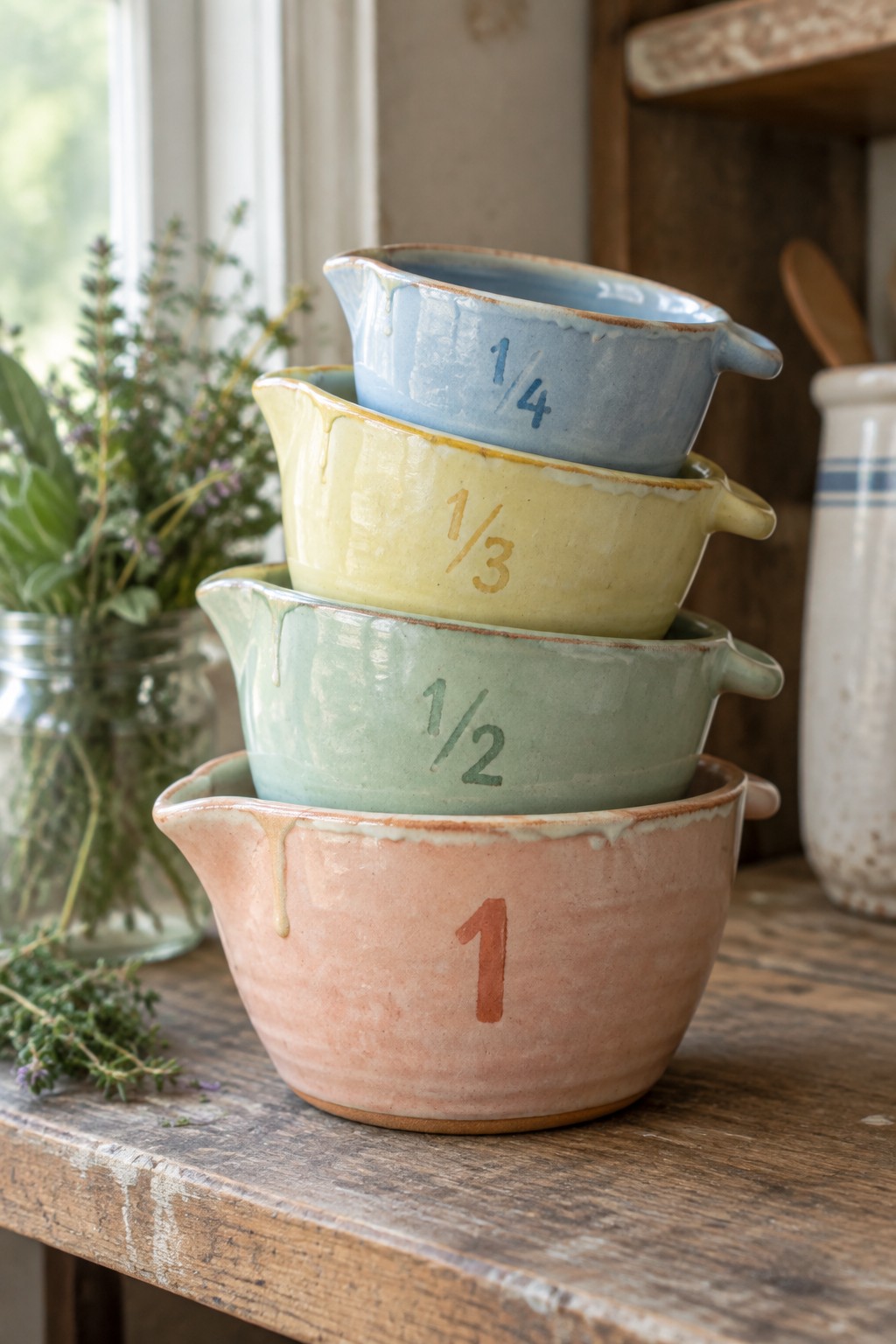
These ceramic measuring cups nest inside one another to form a compact stack, with each bowl marked in large numbers for one cup, one half, one third, and one quarter. Each piece includes a spout and small handle for pouring, and the different glaze colors make the sizes easy to tell apart at a glance. The simple form keeps the focus on function while the soft, uneven glaze edges add a handmade touch that still works in everyday kitchen use.
What makes this idea useful is how the nesting shape solves storage problems on open shelves or in small kitchens. You could rework the same concept into unmarked prep bowls or change the color order to match your own dishes. In a kitchen, this kind of piece stands out because the markings stay visible even when the bowls are stacked, and the design scales easily if you want to add a two-cup size at the bottom.
Wall-Mounted Ceramic Caddy with Leaf Imprints

A three-compartment ceramic caddy designed to hang on a wall gives you dedicated spots for scissors, tongs, and other kitchen tools. The piece uses impressed leaf patterns across the front and a speckled matte glaze that shows the clay texture underneath. Small holes at the base allow for drainage while the single hanging point keeps installation simple.
The compact shape works especially well in kitchens with limited counter space. You could swap the leaf motif for herbs, lines, or nothing at all and still keep the same three-section layout. This kind of piece is easy to adapt for different tools by adjusting the width of each compartment during the build.
Windowsill Herb Planter

A handmade ceramic planter with a wide, low profile and a two-tone glaze gives you a practical spot to grow kitchen herbs. The textured stoneware body holds a good amount of soil while the turquoise rim and base add a simple color break that still reads as functional. This shape keeps the plant stable on a narrow ledge and lets the leaves get light without crowding the workspace.
What makes this idea useful is how it keeps fresh herbs within reach for cooking without taking up counter space. The wide opening works well for basil or similar plants that need room to grow, and you could make a matching set in different sizes to group several herbs together. In a kitchen, the same form could be adapted into smaller versions for windowsill spices or even turned into a shallow tray for storing root vegetables.
Ceramic Canister with Wooden Lid for Dry Goods Storage

A handmade ceramic jar with a fitted wooden lid serves as a practical kitchen canister for storing coffee beans, tea, or spices. The straight-sided cylinder shape with a slightly flared rim gives it a stable, scoop-friendly opening, while the speckled glaze in soft grays and browns keeps the surface easy to wipe clean. This type of lidded storage piece fits squarely into the kitchen organization category because it combines airtight function with everyday durability.
What makes this idea useful is the way the wooden lid adds a simple seal without requiring complex pottery hardware. You could adapt the same form into a smaller sugar jar or a taller pasta container by changing the height and diameter. In a kitchen, this kind of piece keeps bulk items visible yet contained on open counters or shelves. The neutral glaze also makes it easy to match existing dishware if you want a coordinated set.
Polka Dot Ceramic Napkin Holder
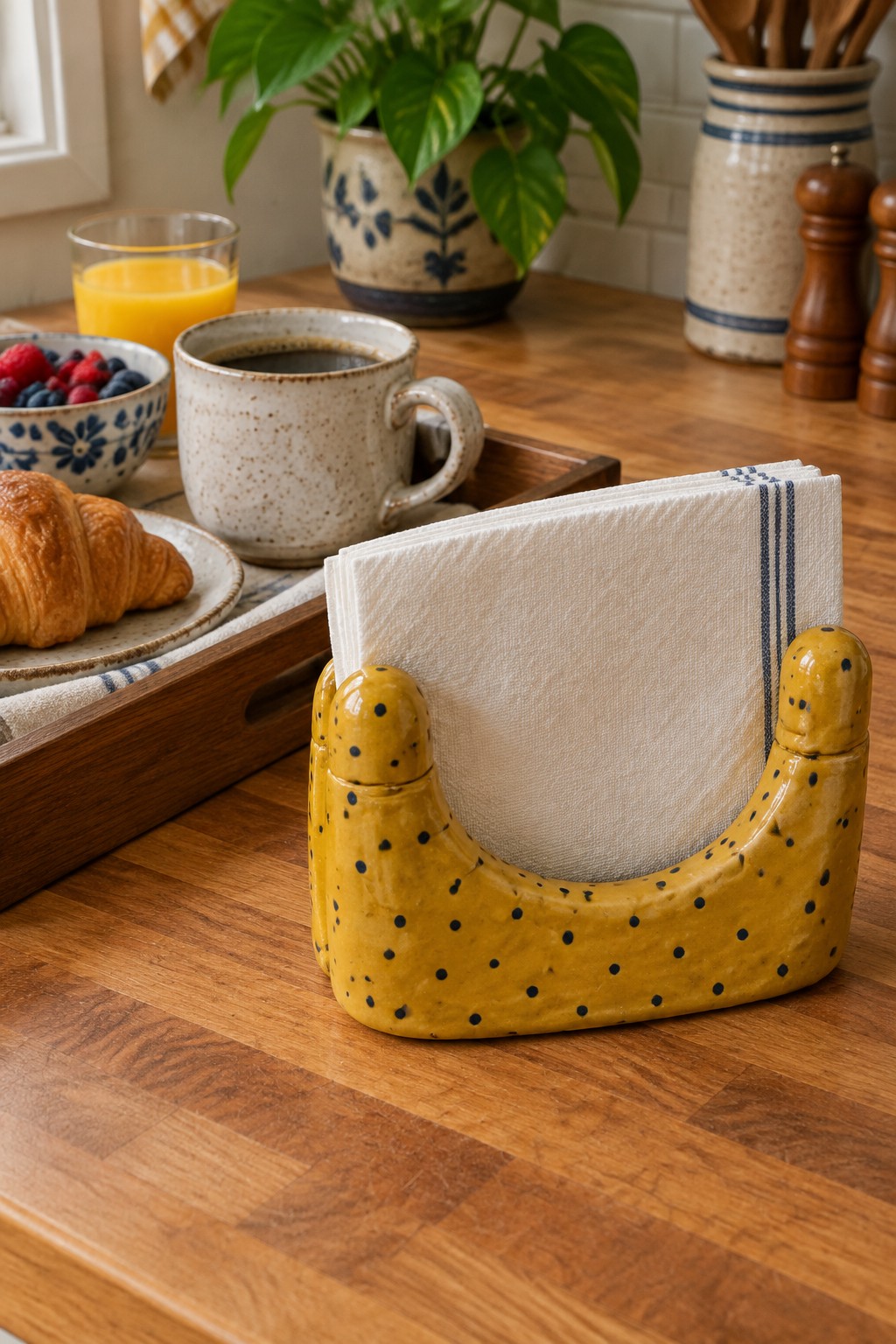
A ceramic napkin holder formed as a low curved trough with raised rounded ends keeps a stack of napkins upright and easy to grab. The yellow glaze dotted with black spots creates a simple pattern that stands out against neutral linens without competing with other tableware. This kitchen item works as a compact organizer that sits flat on a counter or tray.
The curved shape does a lot of the work here by cradling the napkins while leaving room for fingers to pull one free. You could rework the same form in a matte white glaze with a single accent line or scale it down slightly to hold recipe cards or small envelopes. In a kitchen this kind of piece keeps paper goods tidy without the bulk of a box or basket. A version in two or three colors would photograph well for a board focused on small handmade organizers.
Ceramic Oil Cruet for Stovetop Use

A ceramic oil cruet with a narrow spout and rounded body lets you pour oil directly into pans with better control than a bottle. The earthy green glaze with brown streaks gives it a simple, durable finish that holds up to kitchen heat and handling. This piece keeps oil within reach on the counter while the closed shape helps limit air exposure.
What makes this idea useful is the spout shape that reduces drips when adding oil to hot pans. You could make a matching set in different sizes for oil and vinegar or switch the glaze to a matte white for a brighter kitchen. In a kitchen, this kind of piece sits neatly beside the stove and cuts down on reaching for store bottles during cooking. The same form works for other liquids if you adjust the opening width.
Polka Dot Ceramic Trivet

A square ceramic trivet made from terracotta clay with a grid of turquoise dots offers a simple way to protect counters from hot pots and pans. The piece uses a flat, sturdy form with slightly uneven edges that show its handmade construction, while the raised dots add both grip and visual contrast against the warm base color. This type of kitchen item works as a functional pottery project because it turns basic surface decoration into something practical for daily use.
What makes this idea useful is that the size can be scaled down to make matching coasters or enlarged for bigger serving dishes. The dot pattern is easy to adapt by changing the spacing, color, or even switching to stripes if you want a different look. In a kitchen, this kind of trivet keeps surfaces safe while adding a handmade detail that blends with both modern and rustic styles. You could make several in different color combinations to keep on hand for entertaining or gifts.
Ceramic Egg Tray with Individual Wells

A ceramic egg tray formed with six indented wells keeps fresh eggs organized on the counter without stacking or crowding. The shape follows the natural curve of each egg, with a slightly irregular outer edge that connects the compartments into one stable piece. A speckled turquoise glaze covers the surface, creating a smooth finish that wipes clean easily and resists moisture from the kitchen.
What makes this idea useful is how the wells prevent eggs from rolling while still leaving them visible for quick checks on freshness. You could scale the tray down to four wells for smaller households or add a shallow rim around the edge to catch any stray bits. In a kitchen, this kind of piece works as dedicated egg storage that frees up bowl space and keeps eggs at room temperature for daily baking. For a gift, the same layout could be made in a neutral glaze or with a matte finish to suit different countertop styles.
Ceramic Citrus Juicer Bowl

A ceramic citrus juicer merges a fluted reamer directly into a shallow collection bowl so juice flows straight into the basin while pulp and seeds stay behind. The ridged center is molded in one piece with the bowl, and the yellow glaze covers both the interior and the reamer for easy cleaning. This kitchen pottery keeps the task contained without extra strainers or separate tools. The terracotta rim adds stability on a countertop and gives the piece a finished edge.
What makes this idea useful is the single-piece form that handles both pressing and catching in one step. The size works well for everyday lemons and oranges during meal prep or breakfast. You could widen the bowl slightly for larger fruit or change the glaze to coordinate with other dishes already in use. For a gift, something like this gives a clear function without taking up much shelf space.
Ceramic Salt and Pepper Shakers in Fun Shapes

Ceramic salt and pepper shakers work well when shaped like everyday objects such as a mushroom and a small honey jar. The mushroom version uses a domed top with multiple holes for shaking, while the jar version adds a separate perforated lid that sits on a rounded body. Simple painted details like white spots on red and a black bee on yellow give each piece clear visual separation so the two are easy to distinguish. This keeps the project in the kitchen item category and focuses on functional seasoning storage.
What makes this idea useful is that the distinct shapes let you grab the right shaker quickly while cooking. The small size fits on a tray next to the stove or on open shelving without taking much space. You could rework the same forms into other food shapes like an apple or a lemon to create a matching set for different spices. For a gift, something like this stays practical because it solves a daily kitchen task while remaining easy to personalize with different colors or motifs.
Ceramic Wall Hook Rack

A rectangular ceramic plaque fitted with three rounded knobs creates a sturdy wall-mounted rack for hanging kitchen items. The piece features a soft gray-green glaze and a row of stamped botanical motifs across the surface, giving the knobs a simple but finished look. Each knob extends outward enough to hold the straps of a fabric bag or the looped handles of wooden spoons and spatulas. This type of pottery fits the kitchen organization category, turning a plain wall into usable storage space.
What makes this idea useful is how the flat back and multiple knobs let you group similar items in one spot without taking up counter space. You can adapt the design by shortening the bar to two knobs for a smaller wall or by changing the stamp pattern to match other dishes you already own. In a kitchen, this kind of piece keeps everyday tools and produce bags within reach while staying out of the way. The same basic shape could be reworked into a smaller bathroom version for towels or a desk version for cords and headphones.
Marbled Ceramic Trays for Drawer Organization
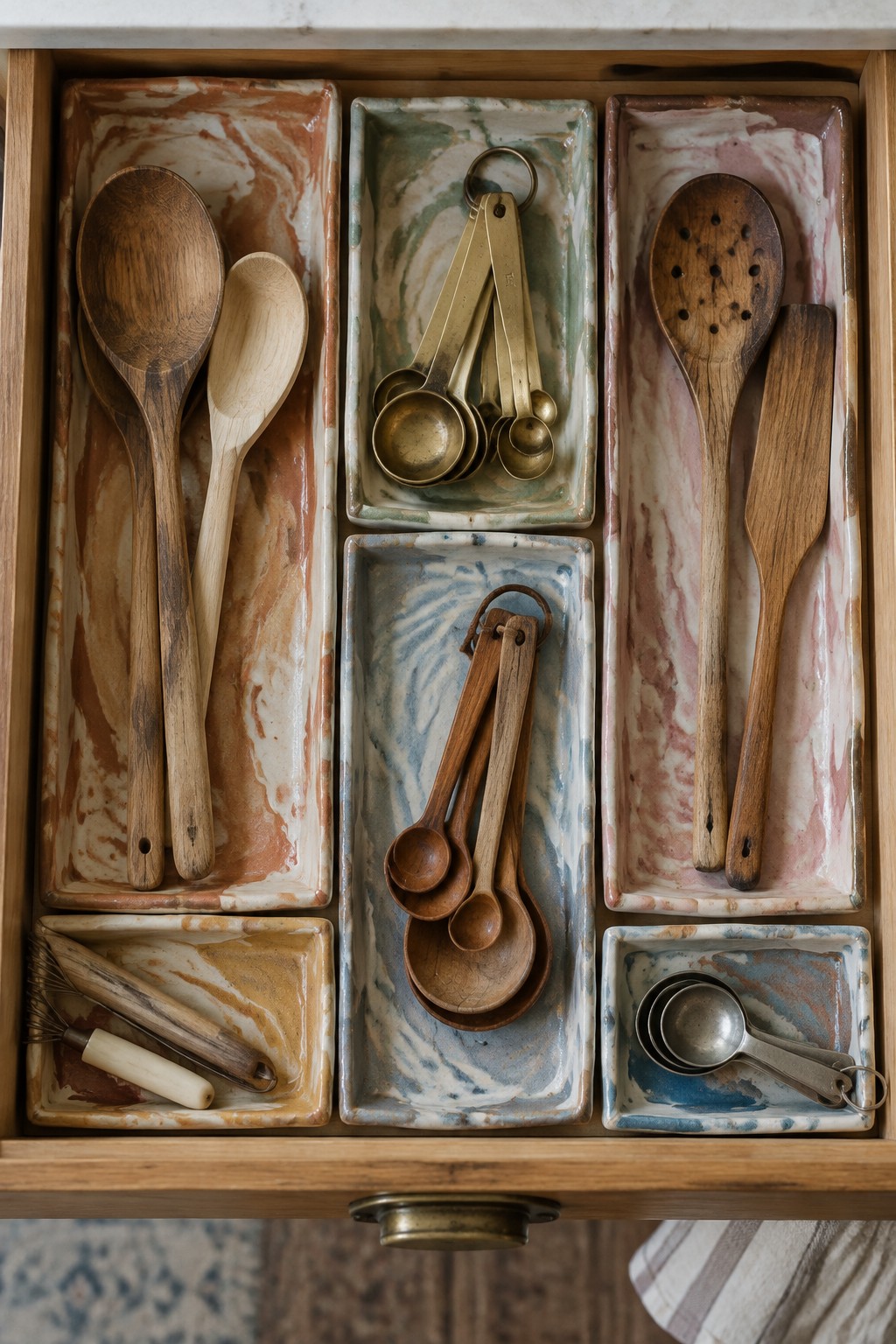
Rectangular ceramic trays with marbled glazes offer a simple way to divide and organize kitchen drawers. These trays come in varied sizes and colors such as rust, green, blue, and pink, each one shaped to sit flat and hold groups of wooden spoons, spatulas, or measuring spoons. The handmade form keeps the pieces stable in the drawer while the swirled glaze patterns add visual interest without extra decoration.
What makes this idea useful is how the trays create clear sections that stop utensils from sliding around. You can scale the sizes to match your drawer dimensions and pick glaze colors that coordinate with your existing kitchenware. This approach works especially well for keeping measuring tools and wooden spoons separated so you can reach what you need quickly. The same tray shape could be adapted into smaller versions for spice packets or tea bags in a different drawer.
Ventilated Terracotta Garlic Keeper

A handmade clay jar with a domed lid and multiple small holes punched through the sides serves as a garlic storage container. The rounded form and unglazed terracotta surface allow air circulation while keeping light out, which helps garlic stay fresh longer. This kitchen item belongs to the category of functional pottery designed for produce organization rather than display.
What makes this idea useful is the way the holes solve a common storage problem without needing extra parts. The same shape and hole pattern adapts easily to an onion keeper or a small shallot bin on a pantry shelf. You could scale it down for a countertop version or add a simple stamped mark on the front to tell similar jars apart. In a kitchen, this kind of piece keeps garlic within reach while cutting down on countertop clutter.
Frequently Asked Questions
1. How can I select pottery pieces that fit my specific kitchen organization needs without overwhelming the space? Start by measuring your available areas like countertops or cabinets and match them to ideas such as compact pottery herb planters or stackable jar sets for spices. Focus on multi-purpose items like a large pottery bowl that doubles as a fruit holder and a mixing station to maximize function while keeping things tidy.
2. What steps ensure pottery kitchen organizers remain safe for food contact and everyday use? Choose pieces labeled as food-safe and lead-free from reputable makers. For storage of dry goods like flour or snacks opt for glazed interiors and avoid porous unglazed areas. Test new items by washing them thoroughly before first use and rotate contents regularly to prevent moisture buildup.
3. How should I clean and care for functional pottery to keep it looking good over time? Hand wash most pottery with mild soap and a soft sponge since many pieces are not dishwasher safe. Dry them immediately to avoid water spots and store away from direct heat sources. For stubborn stains apply a baking soda paste gently and check manufacturer guidelines for any sealing treatments needed annually.
4. Can these pottery ideas work in a small kitchen with limited counter space? Yes by selecting vertical or wall-mounted options such as hanging pottery racks for utensils or slim cylindrical jars that fit on narrow shelves. Ideas like nested pottery bowls allow compact storage when not in use and you can combine several small pieces into one corner station to free up room for cooking.
5. Where are good sources to find or create custom pottery for these organization projects? Look at local artisan markets craft fairs or online platforms specializing in handmade ceramics for unique finds. If making your own start with air-dry clay kits for simple holders and progress to wheel-thrown classes for more complex items like divided trays. Always verify dimensions against your kitchen layout before purchasing.

Pottery Path is my cozy corner of the internet where I share clay ideas, pottery inspiration, and simple projects you can recreate at home. I love exploring everything from air dry clay to handbuilt pottery to cute minis that brighten your day. My goal is to make clay crafting feel easy, fun, and welcoming for anyone who wants to try it.
You will find beginner friendly tutorials, creative pottery painting ideas, and lots of warm inspiration for slow and happy crafting. If you enjoy hands on creativity, this space will feel like home.