
I’ve been making clay gifts for friends and family for a few years now and these are some of the simpler ones that turned out well.
Most of them only need basic tools and a bit of time so they suit beginners who are still figuring things out.
I tried to pick projects that don’t require a wheel or lots of special supplies.
A few of them are things I made myself and gave away last holiday season.
There are 19 in total and I hope you find one or two that fit what you’re looking for.
Speckled Mug with Pink Polka Dots

A basic ceramic mug built with a slightly rounded body and a simple pulled handle can be finished with a speckled clay body and scattered pink dots. The dots are spaced unevenly across the surface, leaving plenty of the cream base visible so the pattern stays light. This style works as a kitchen or gift item because the shape stays functional while the surface decoration adds interest without extra sculpting. The soft pink color stands out against the speckled texture without overpowering it.
What makes this idea useful is how the dot pattern can be changed in size or density to fit other forms like a small tumbler or a larger soup bowl. The speckled clay already gives the piece some visual texture, so the painting step stays simple even for newer potters. You could swap the pink for another color or cluster the dots near the rim to create a different look on the same mug shape. In a kitchen, this kind of piece works well as an everyday cup that still feels distinct from plain store-bought versions.
Painted Daisy Rim Bowl
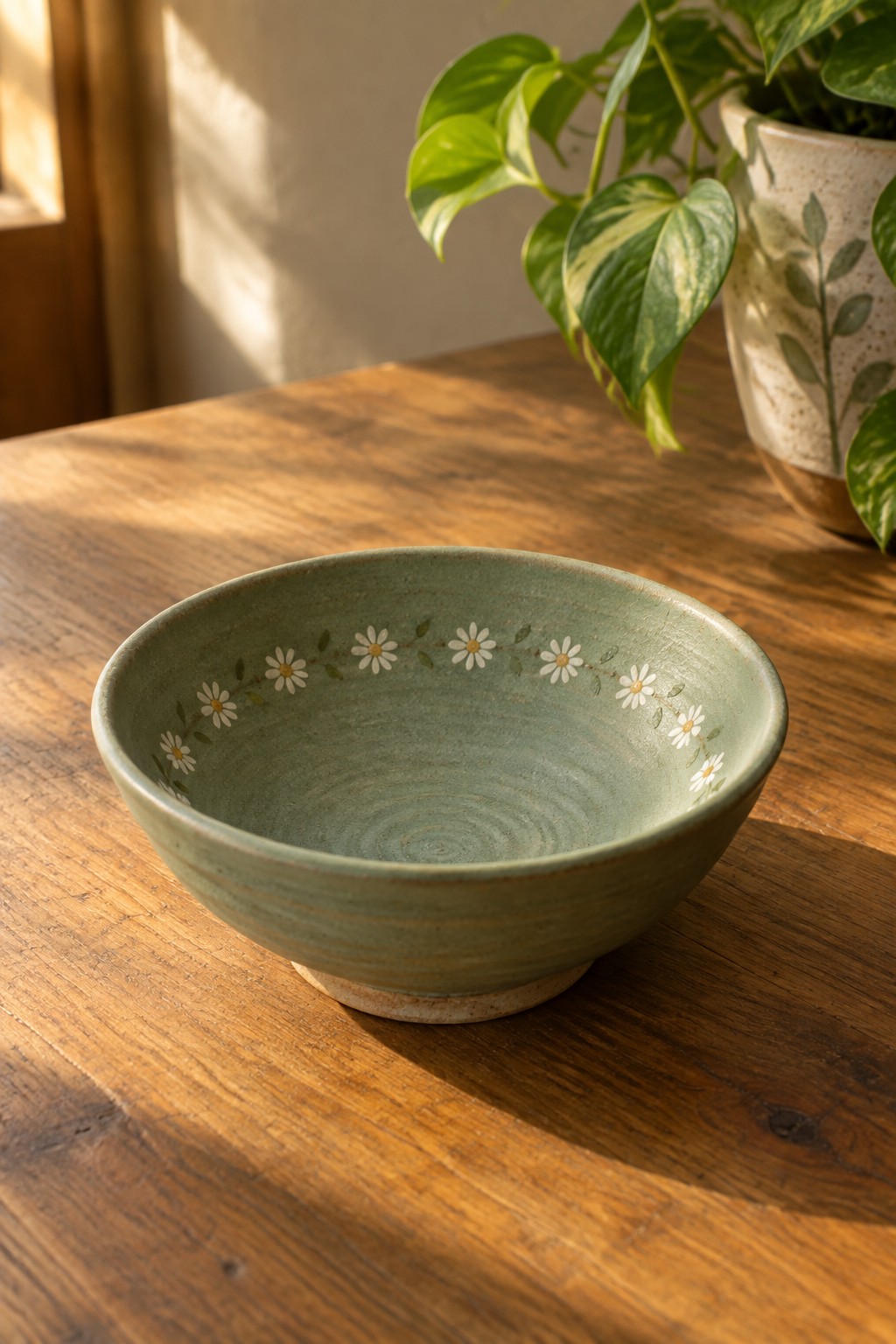
A shallow ceramic bowl finished in a soft sage green glaze features a narrow painted border of small white daisies and green leaves just below the rim. The repeating floral motif uses simple brushstrokes to create a clean, repeating pattern that follows the curve of the bowl without overwhelming the surface. This approach keeps the focus on the handmade form while adding a light decorative element that works for both everyday use and gifting.
What makes this idea useful is how the narrow band of painting limits the amount of detail work required while still giving the piece a finished look. The same border design could be adapted to the outside of a taller cylinder or repeated around a set of small plates for a matching gift. In a kitchen this shape holds fruit or snacks easily, and the contained motif leaves room for color changes if you want to match different glaze bases or seasonal themes.
Leaf-Shaped Ring Dish
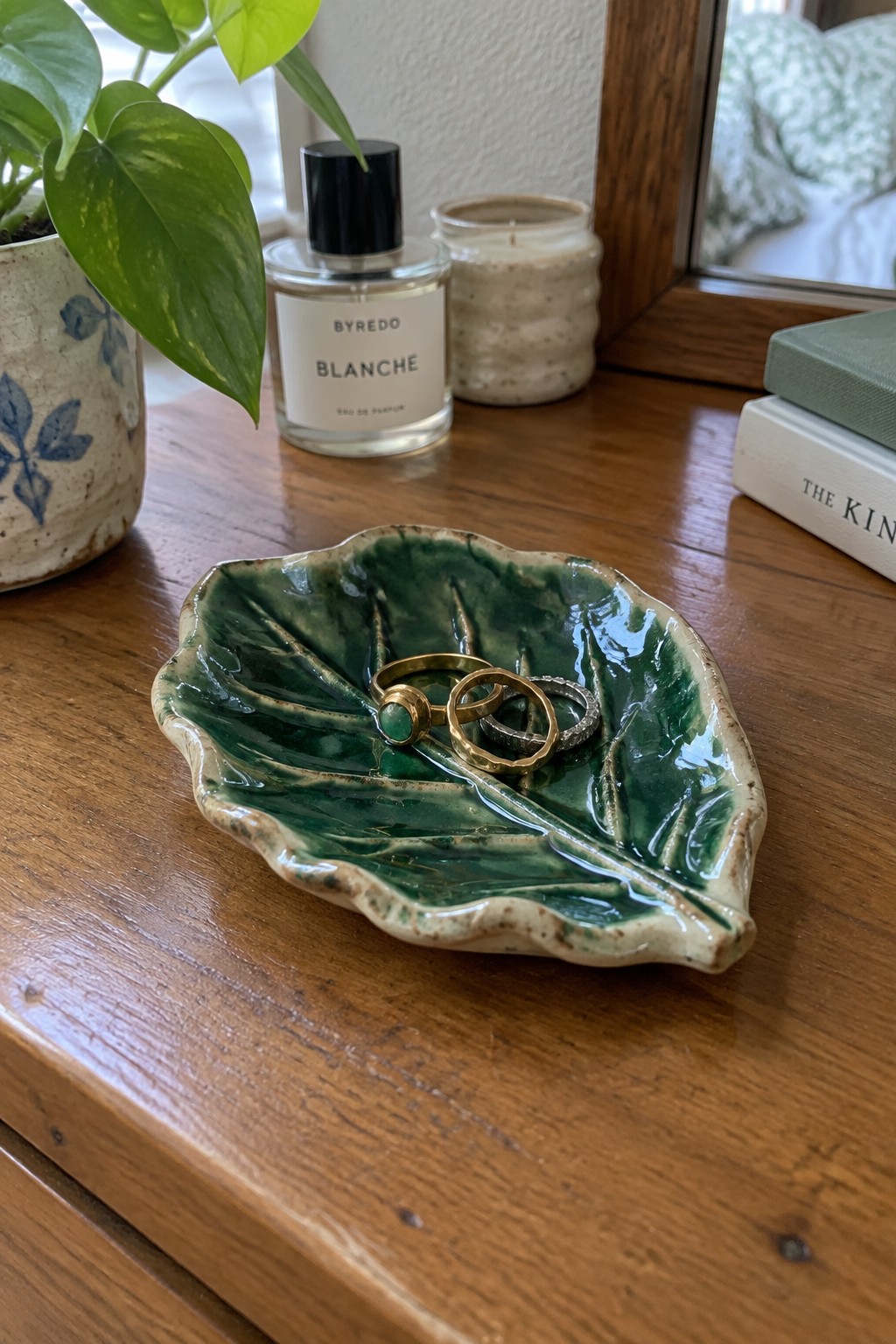
A leaf-shaped ring dish gives you a compact place to keep rings and small jewelry on a dresser or nightstand. The clay is formed into a broad leaf with raised veins and slightly upturned edges that help contain the pieces. A glossy green glaze brings out the texture and makes the dish read as a natural object rather than a plain tray.
What makes this idea useful is the small scale, which lets it sit anywhere without crowding other items. You can change the leaf shape or glaze color to match different rooms or try a simpler outline if you want fewer details to carve. For a gift, something like this works especially well for anyone who takes rings off at home and needs one consistent spot for them.
Heart-Shaped Ring Dish
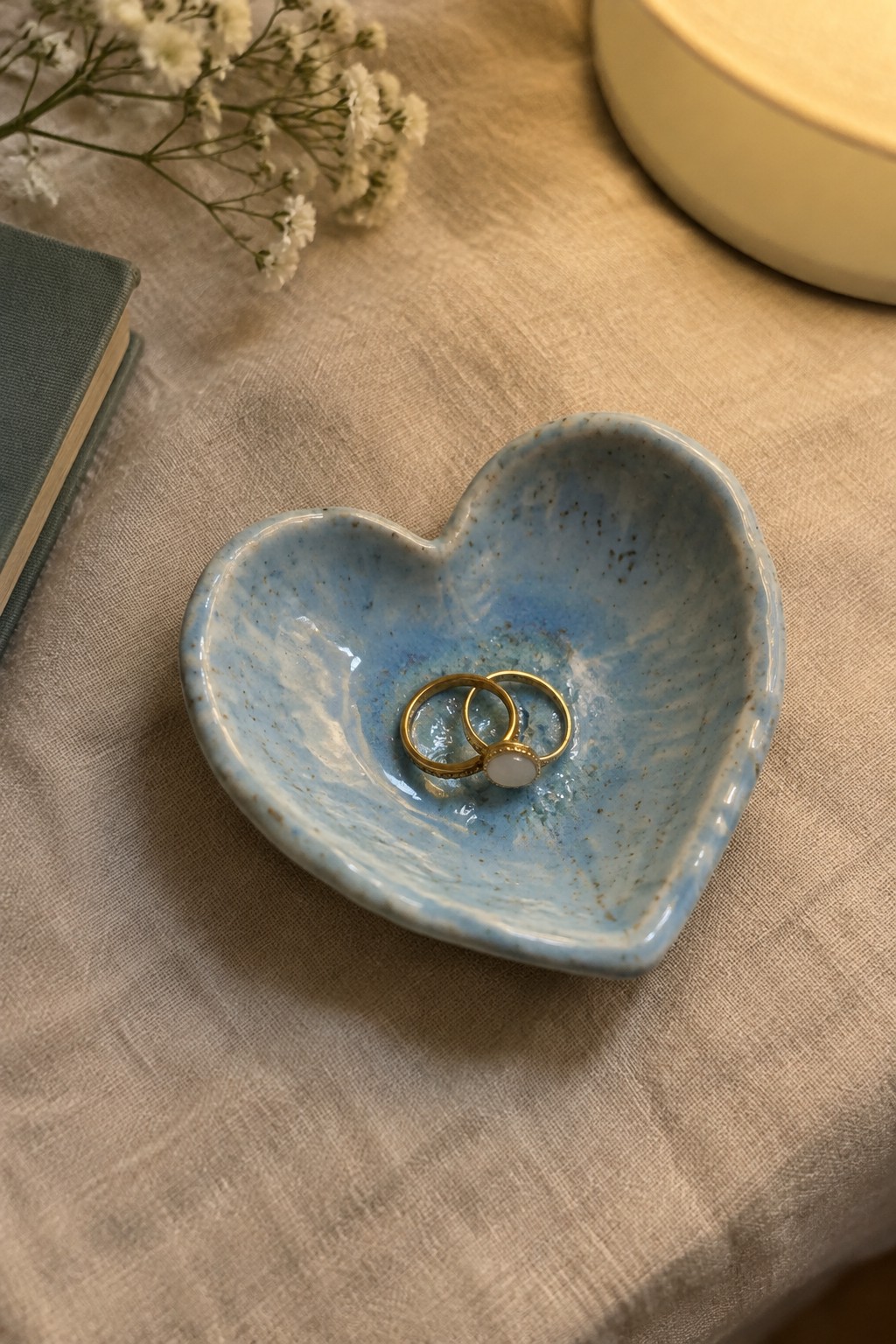
A heart-shaped ceramic dish with a glossy blue speckled glaze works as a small ring holder. The shallow, curved walls and compact size keep rings visible and contained without taking up much surface space. This project uses a simple molded form finished with one glaze layer, placing it in the ring dish category of beginner gifts.
What makes this idea useful is how the small scale keeps clay use low and drying times short for quick batches. It fits easily on a nightstand or dresser for daily jewelry storage. You could switch the heart outline for an oval or rectangle to match different recipient styles while keeping the same shallow dish structure.
Cat-Shaped Planter
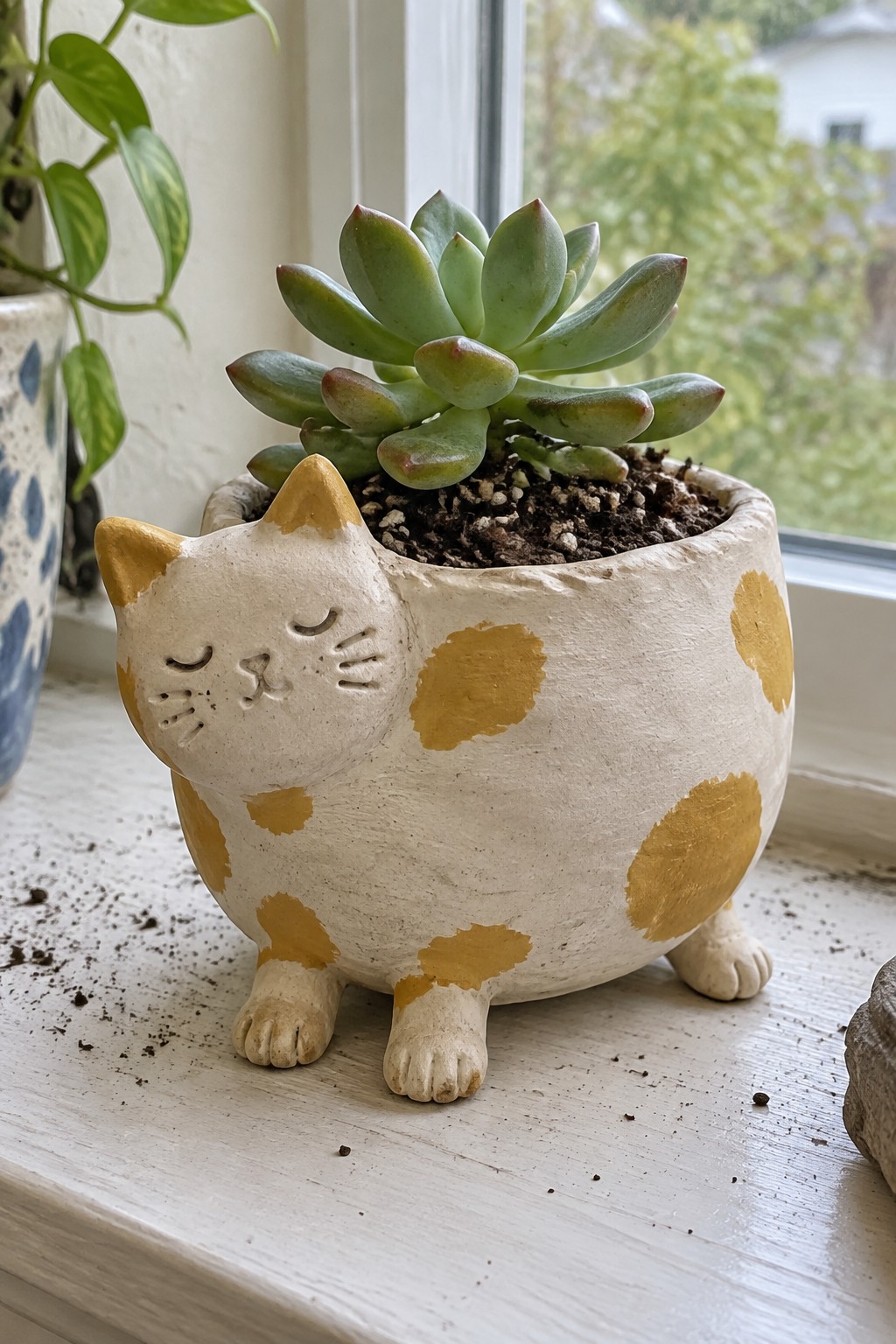
A cat-shaped planter uses the animal’s rounded body as the main container while the head, ears, and legs are sculpted directly into the form. The closed-eye face and simple whisker lines are carved in before firing, and the yellow spots are added as underglaze or paint afterward. This turns a basic small pot into a figurine-style planter that still holds soil and a plant.
The shape does a lot of the work here since the wide body gives decent planting space without needing a large piece of clay. You could swap the spots for stripes, skip the face details entirely, or make a version without legs to simplify the build. For a gift, something like this pairs well with a small succulent and fits on a desk or shelf where a plain pot would feel ordinary.
Scalloped Tealight Holder

A small ceramic dish with an irregular scalloped rim works as a tealight holder. The shallow bowl shape and two-tone glaze in rust brown and cream keep the focus on the flame while the wavy edge adds visual interest without extra decoration. This project suits basic slab or pinch techniques and needs only enough clay to form a dish roughly four to five inches across.
What makes this idea useful is how the same rim shape can be repeated in different glaze colors or scaled up slightly for a larger votive. It fits easily on a nightstand, bathroom counter, or desk without taking much space, and the form doubles as a ring dish or small catch-all when a candle is not needed. For gifts, pair it with a few tea lights and a simple box so the recipient can use it right away.
Textured Ceramic Spoon Rest
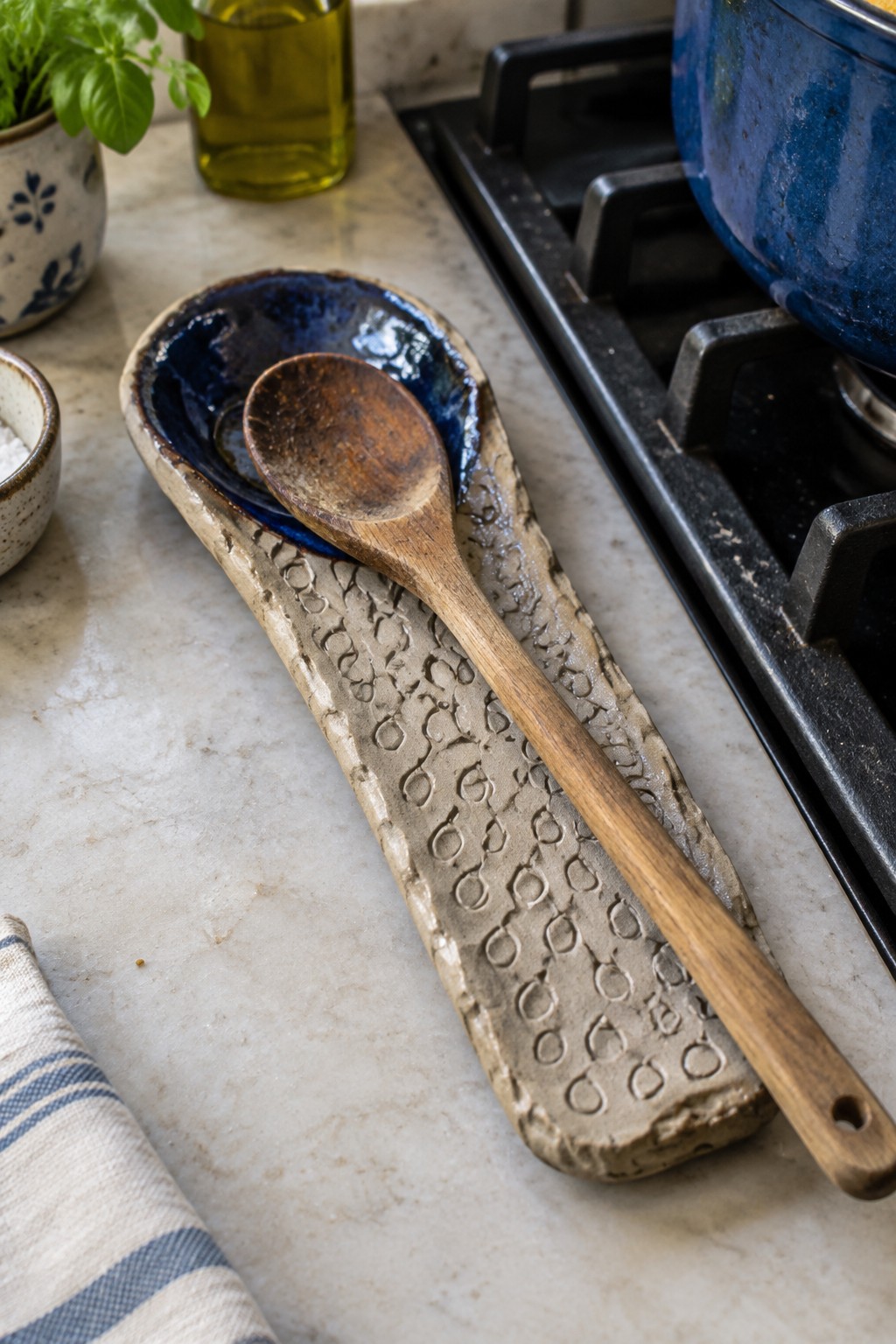
A handmade ceramic spoon rest gives you a long, narrow slab with a shallow glazed well at one end to hold a spoon and catch drips. The blue interior contrasts with the matte, impressed circle texture that covers the rest of the piece and keeps the spoon from sliding. This shape works as a basic kitchen item that stays flat enough to sit beside a stove or on a countertop without taking much space.
What makes this idea useful is how the long form supports different spoon sizes while the impressed texture adds function without extra steps. You can press the circles with a simple tool like a straw or bottle cap before the clay firms up. The same slab approach could be shortened into a single-spoon version or lengthened into a multi-utensil rest. In a kitchen it keeps wooden spoons off the counter and makes a straightforward gift that solves an everyday problem.
Double Salt Cellar
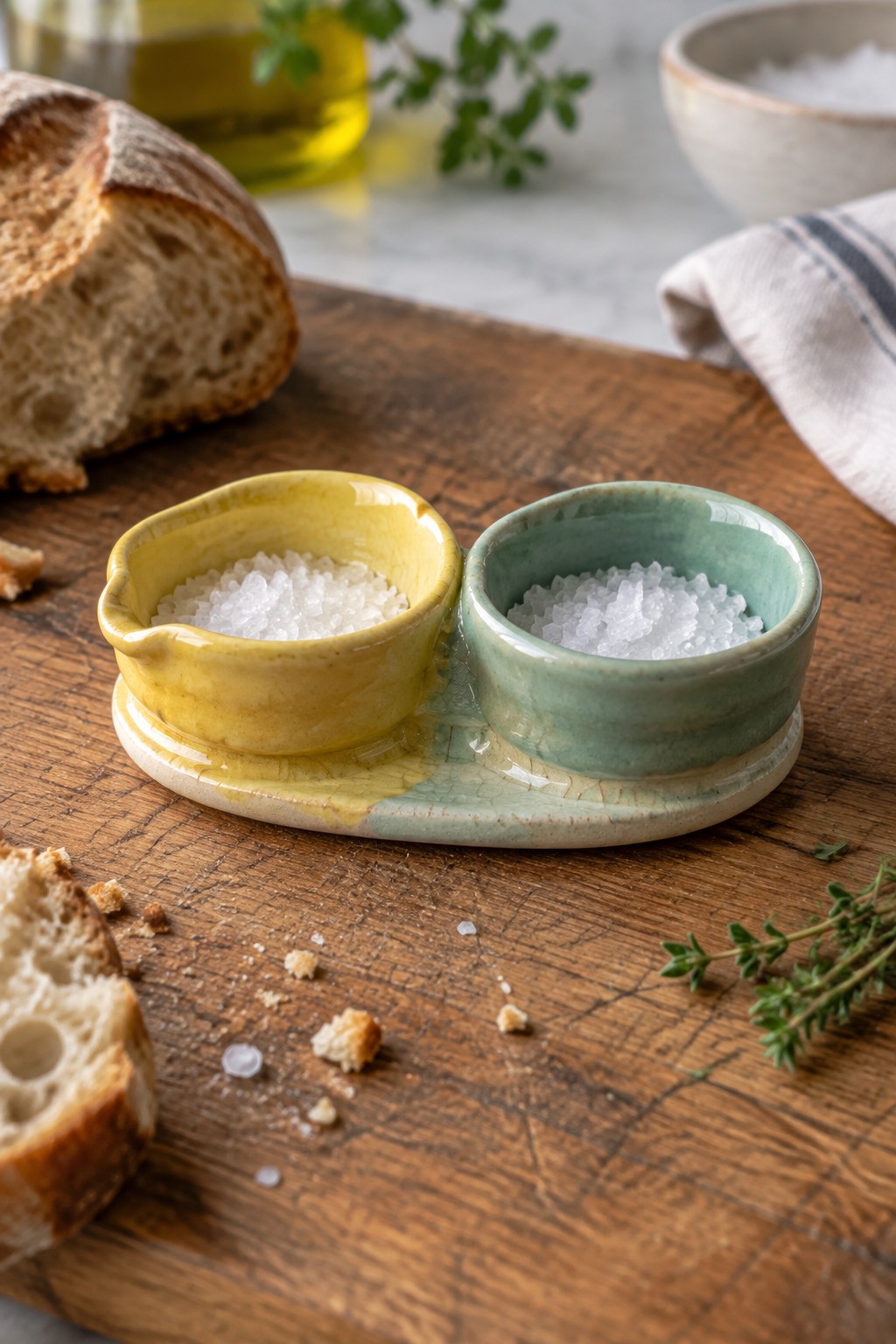
A double salt cellar made from two small bowls joined along one side creates two separate compartments for different salts or seasonings. The yellow and green glazes keep the sections easy to tell apart while the shared base holds everything steady on the table. Each bowl has a simple pinched lip that makes scooping easier without needing extra tools.
What makes this idea useful is how the connected shape takes up less space than two loose dishes. You can change the glaze colors, adjust the size of one side, or add a small handle on the back to match your own kitchen setup. For a gift, something like this works well because it stays compact and gets used daily rather than stored away.
Small Espresso Mugs with Contrasting Glazes
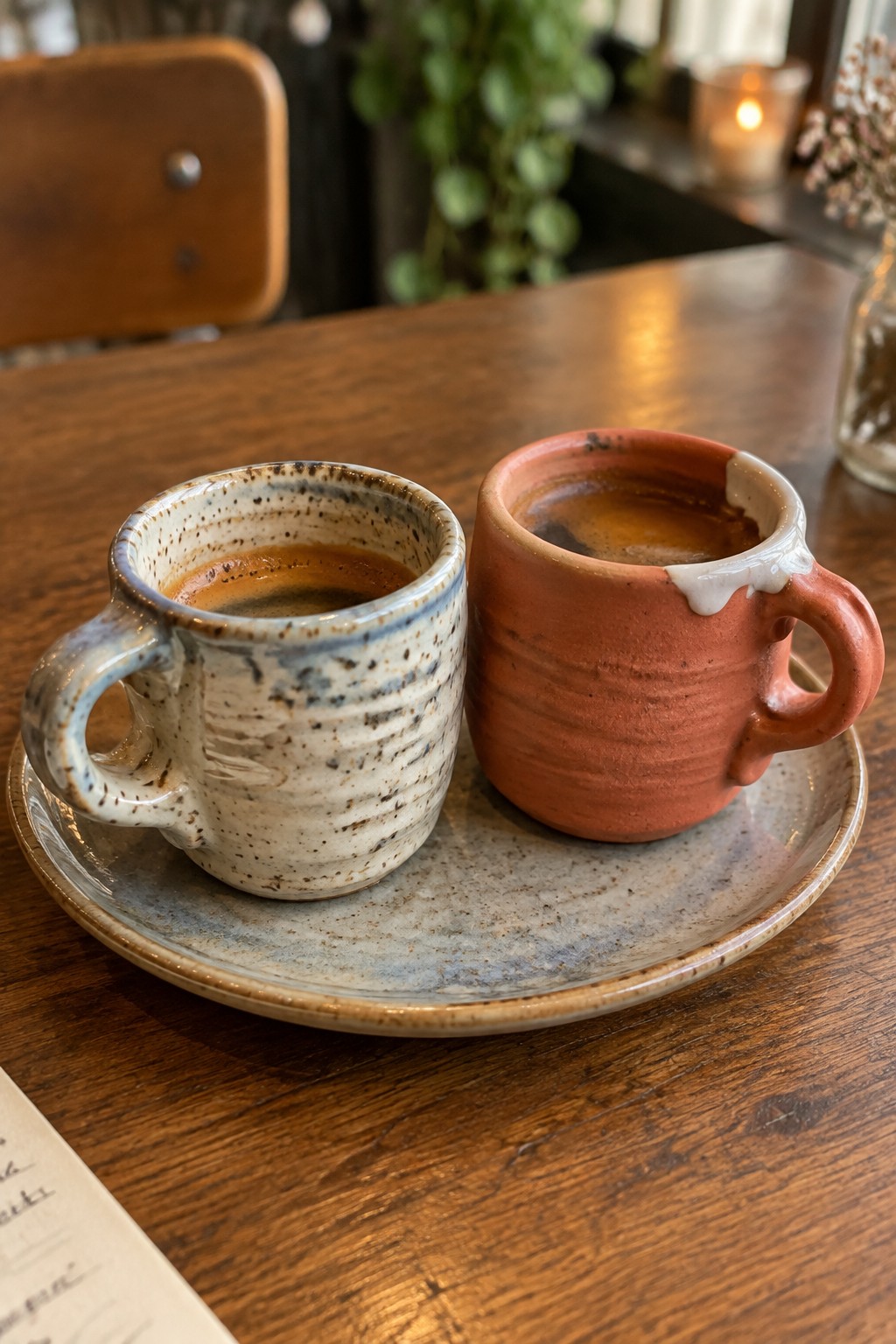
Small espresso mugs work well as a beginner project because they use little clay and dry quickly. One mug uses a speckled white glaze with blue accents while the other keeps a solid red surface with a simple white drip along the rim. Both sit on a matching plate, showing how the same basic shape can look different just by changing the glaze. This approach fits the mug category and gives new potters practice with glazing without needing complex forms.
What makes this idea useful is that you can repeat the mug shape and test any glazes you already have. The small size makes it easy to produce several at once for gifts. You could swap the drip detail for a band of underglaze or leave the second mug unglazed on the outside for a raw clay look. In a kitchen these cups take up little space and pair naturally with a small plate.
Ceramic Soap Dish with Drainage Ridges

A rectangular ceramic soap dish makes a practical bathroom item for holding bar soap. It uses a set of raised ridges across the base to keep the soap elevated and allow water to drain. The soft green glaze with light speckling adds subtle color and texture while keeping the overall form clean and simple. This shape stays easy to throw or hand-build and fits neatly on most sink ledges.
What makes this idea useful is how the ridges address a basic functional need without adding extra steps. You can adjust the length or width to fit different sink sizes or make a smaller version for travel. Switching the glaze color lets it match towels, tiles, or other bathroom pieces. For a gift, pair it with a bar of soap or keep the form plain so the recipient can choose their own finish.
Multi-Slot Ceramic Toothbrush Holder
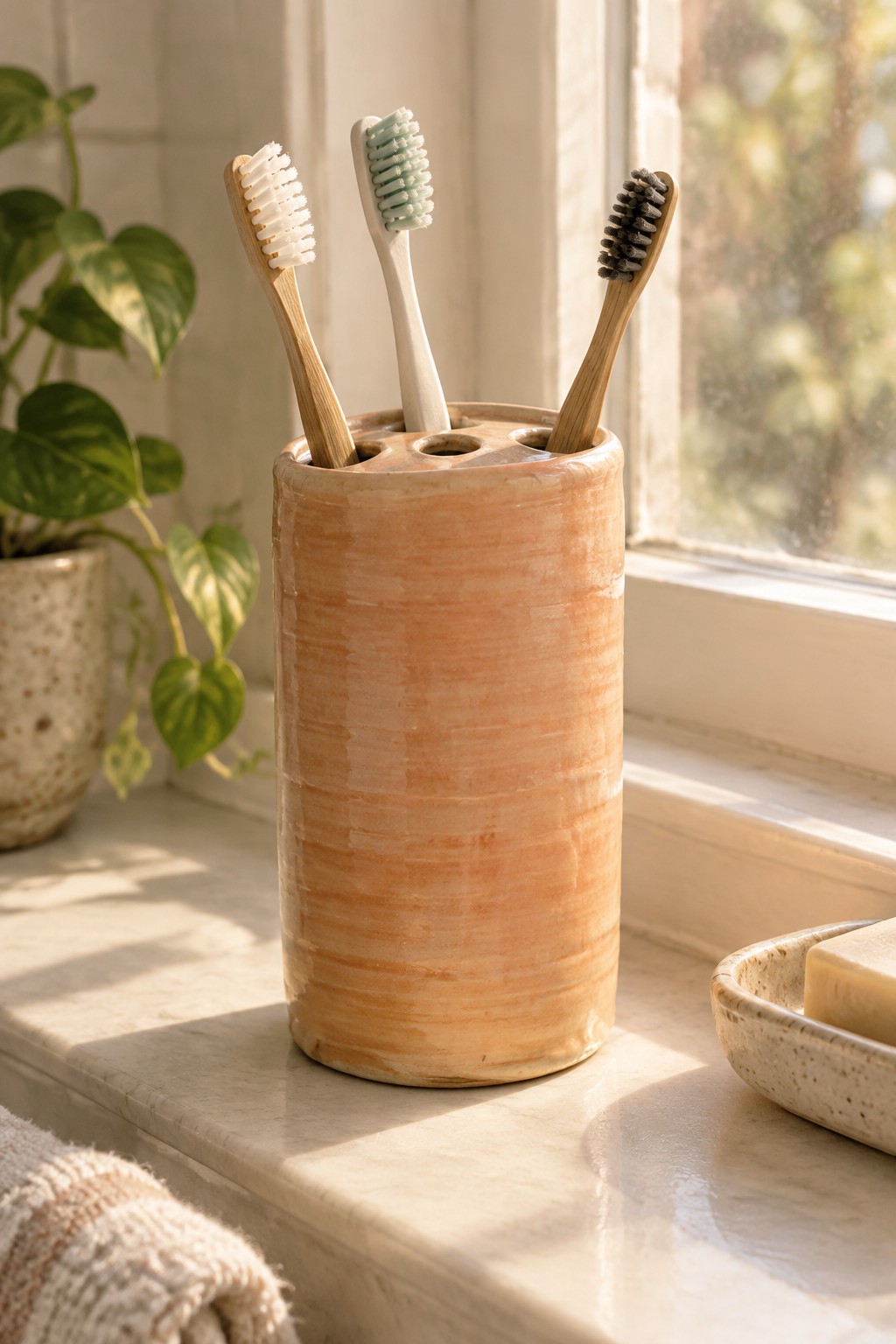
A cylindrical clay holder with several holes cut through the top serves as a practical bathroom organizer for multiple toothbrushes. The form stays simple and upright, with the holes spaced evenly so brushes stand clear of each other and the rim stays stable on a counter. This project falls into the bathroom item category and uses basic wheel-thrown or hand-built cylinder techniques with minimal added detail.
What makes this idea useful is how the same cylinder shape can be adjusted for one, three, or five holes depending on household size. The small footprint works well on narrow ledges or windowsills where space is limited. You could rework the idea into a shorter version for a single brush or change the clay color to match existing bathroom tiles. For a gift, the holder needs only a basic finish and still looks complete without extra decoration.
Sun Relief Hanging Tile

A rectangular clay plaque with a raised sun design offers a simple wall decor project. The sun sits centered with carved rays radiating outward, created by pressing or carving into a flat slab before glazing. A light speckled glaze covers most of the surface while the raised sun and rays stay exposed in the original terracotta for contrast. A hole at the top allows the finished piece to hang from twine or cord.
The rectangular shape keeps the focus on the sun motif without extra framing or detail. You could scale the same design down for a smaller desk tile or repeat the motif across multiple plaques for a set. This works as a gift because it requires only basic slab construction and one carving step, then hangs without needing a stand. The style also adapts easily to other motifs like moons or stars using the same hanging format.
Small Clay Bird Figurine
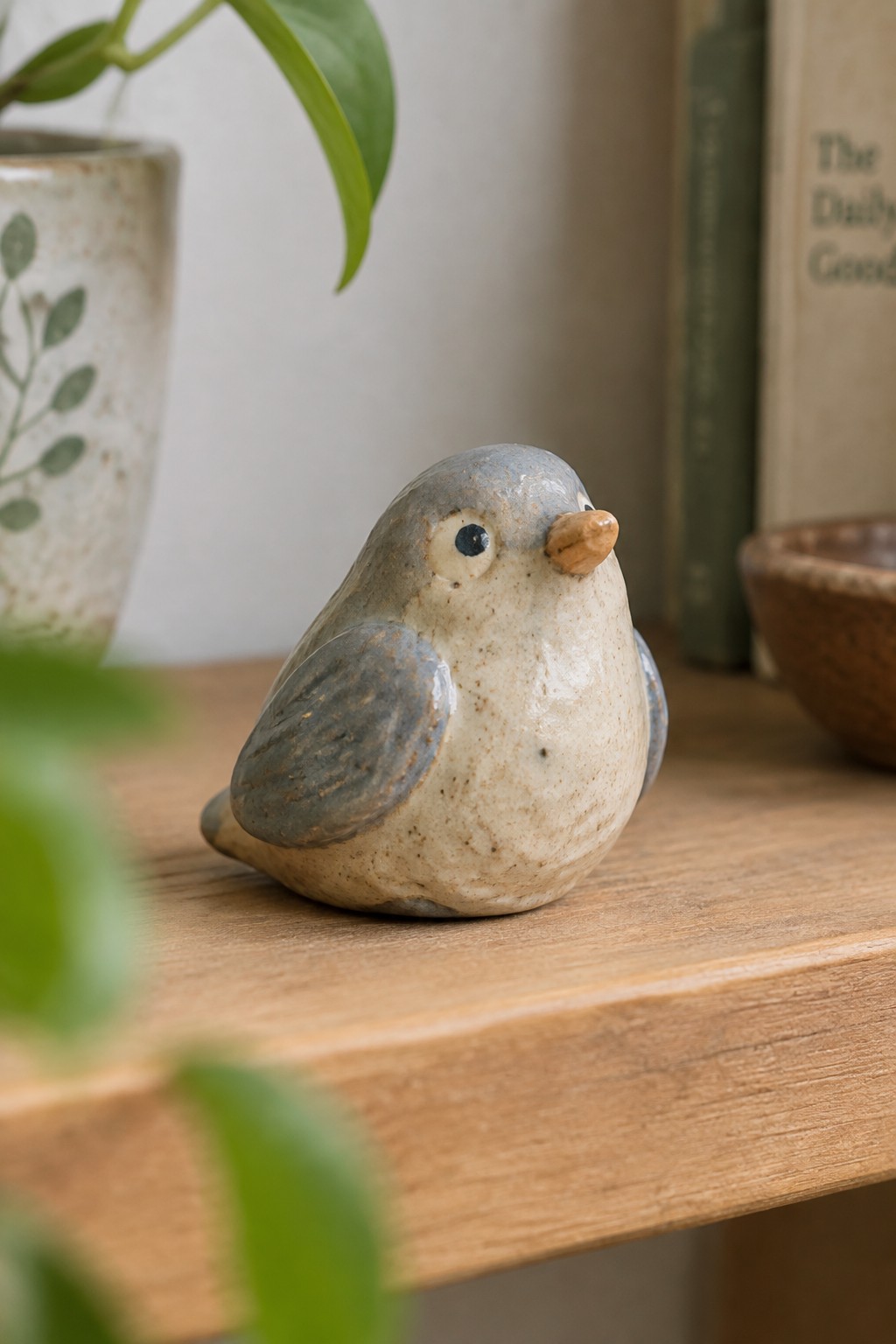
A small bird figurine shaped from clay makes a simple decorative object for shelves or tabletops. The rounded body with one defined wing keeps the sculpt straightforward while the two-tone glaze creates clear separation between the head and body. A basic pinched beak and single dot eye finish the form without extra carving.
What makes this idea useful is how the compact size works on narrow ledges or beside plants. You can swap the glaze colors to match different decor styles or make a set of three birds in the same shape. The same rounded form could flatten into a paperweight or stretch into a small tray by adjusting the base during building.
Incense Holder Tray

A long, narrow ceramic tray with a hole at one end serves as a basic incense holder. The shape lets the stick stand upright while the tray catches ash as it burns. A blue glaze with some dripping and variation adds surface interest without extra steps. This project fits the holder category and stays small enough to make from a simple slab or coil.
What makes this idea useful is how little material it needs and how quickly it forms on a table. The length works on a nightstand or desk without crowding other items, and the same shape can be shortened into a shorter version or widened slightly for a different look. Changing the glaze color or skipping the hole turns it into a plain tray for small objects. For a gift, the form is easy to repeat in batches while still looking intentional.
Notched Yarn Bowl
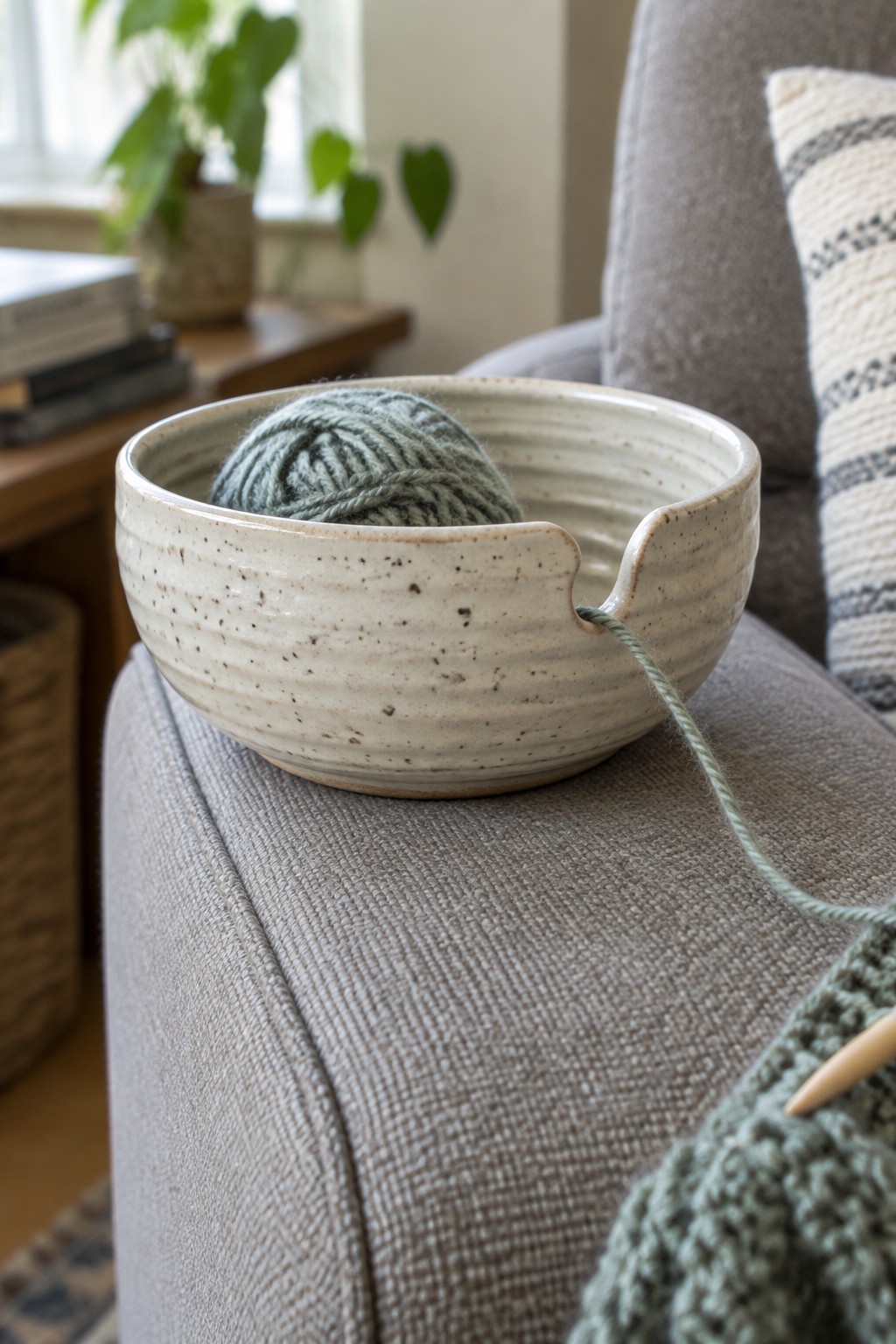
A yarn bowl is a simple ceramic form with a notch cut into the rim to hold and guide yarn as you knit or crochet. The speckled clay and horizontal ridges give the bowl enough texture to stay put on fabric surfaces without sliding. This turns an ordinary bowl into a dedicated holder that keeps yarn tidy and prevents it from rolling off tables or laps.
What makes this idea useful is how the notch size can be adjusted to match different yarn weights. A piece like this works especially well as a gift for knitters because it solves a common practical problem. You could scale the same shape down for embroidery thread or add a lid to turn it into a small storage container for craft supplies.
Ceramic Butter Spreader
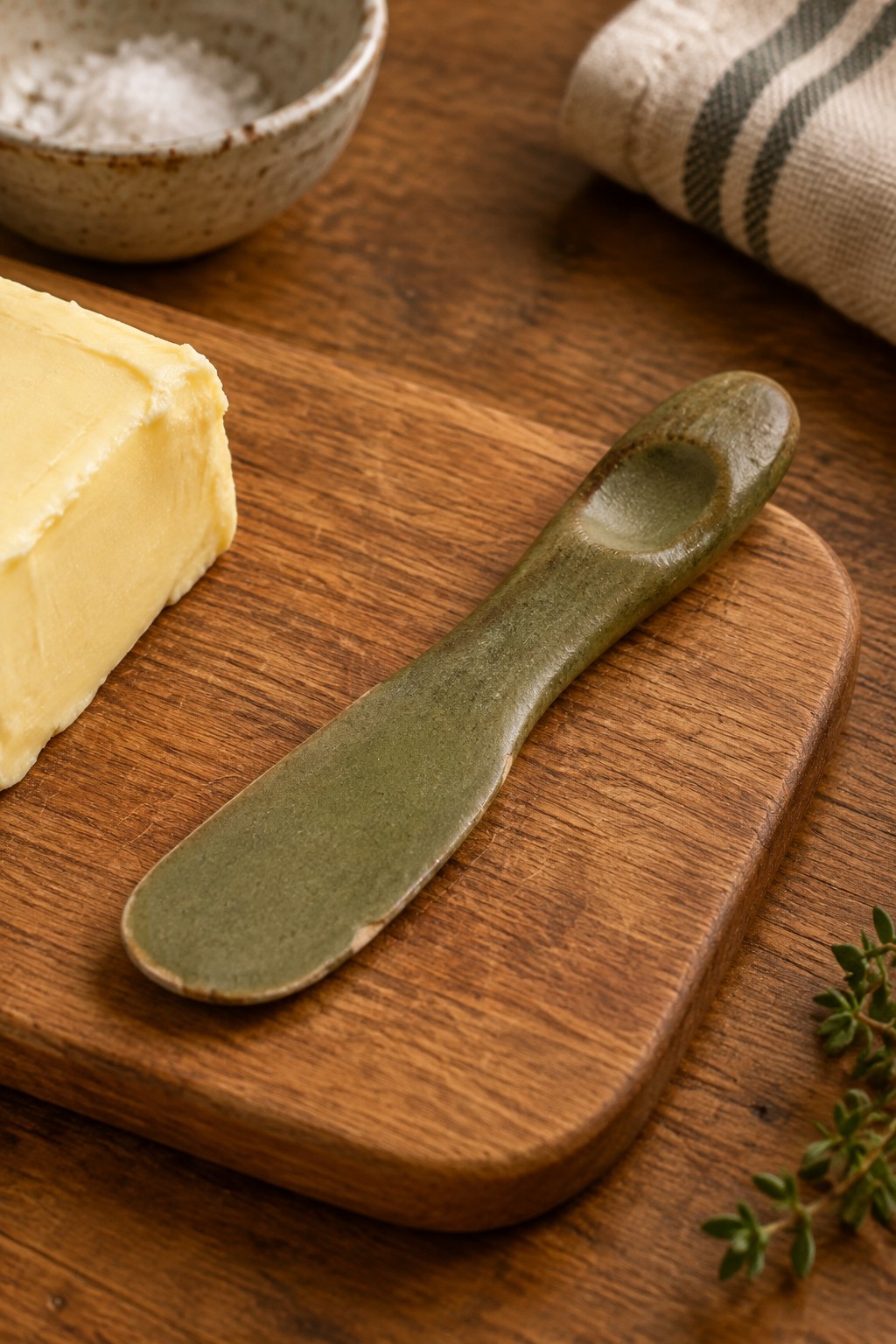
A ceramic butter spreader is a flat, hand-built tool with a wide blade and a short handle that includes a shallow thumb rest. The form is simple enough to shape by hand or with basic slab techniques, and the green glaze covers the surface evenly while leaving the clay body visible at the edges. This type of kitchen item works well as a gift because it stays small, uses little clay, and requires no advanced wheel skills.
What makes this idea useful is how the handle detail improves function without adding much work. You can easily change the blade width or swap the glaze color to match different kitchen styles or make sets for multiple gifts. The same shape could be shortened into a cheese spreader or lengthened slightly for a small serving knife. For beginners, the project stays practical because it needs only basic forming and one glaze firing to become a usable item.
Star Cutout Clay Candle Holder

A small clay bowl formed into a candle holder becomes more effective when you cut multiple star shapes through the sides before firing. The warm glaze allows the inner light to pass through the openings and cast star patterns onto the surrounding surface. This approach keeps the project in the decor object category while using a simple pinch or coil form that stays easy to handle at a small scale. The irregular rim and uneven glaze application add to the handmade look without requiring extra tools.
What makes this idea useful is how the cutout method can be swapped for other shapes like moons or leaves to match different seasons or recipients. The compact size works well on a desk or shelf where it doubles as both a holder and a light source. You could simplify the same base into an uncut bowl for small items or stretch the walls taller to make a narrow vase. For gifts, the light projection gives it a clear function that photographs well for sharing.
Ceramic Salt and Pepper Shakers
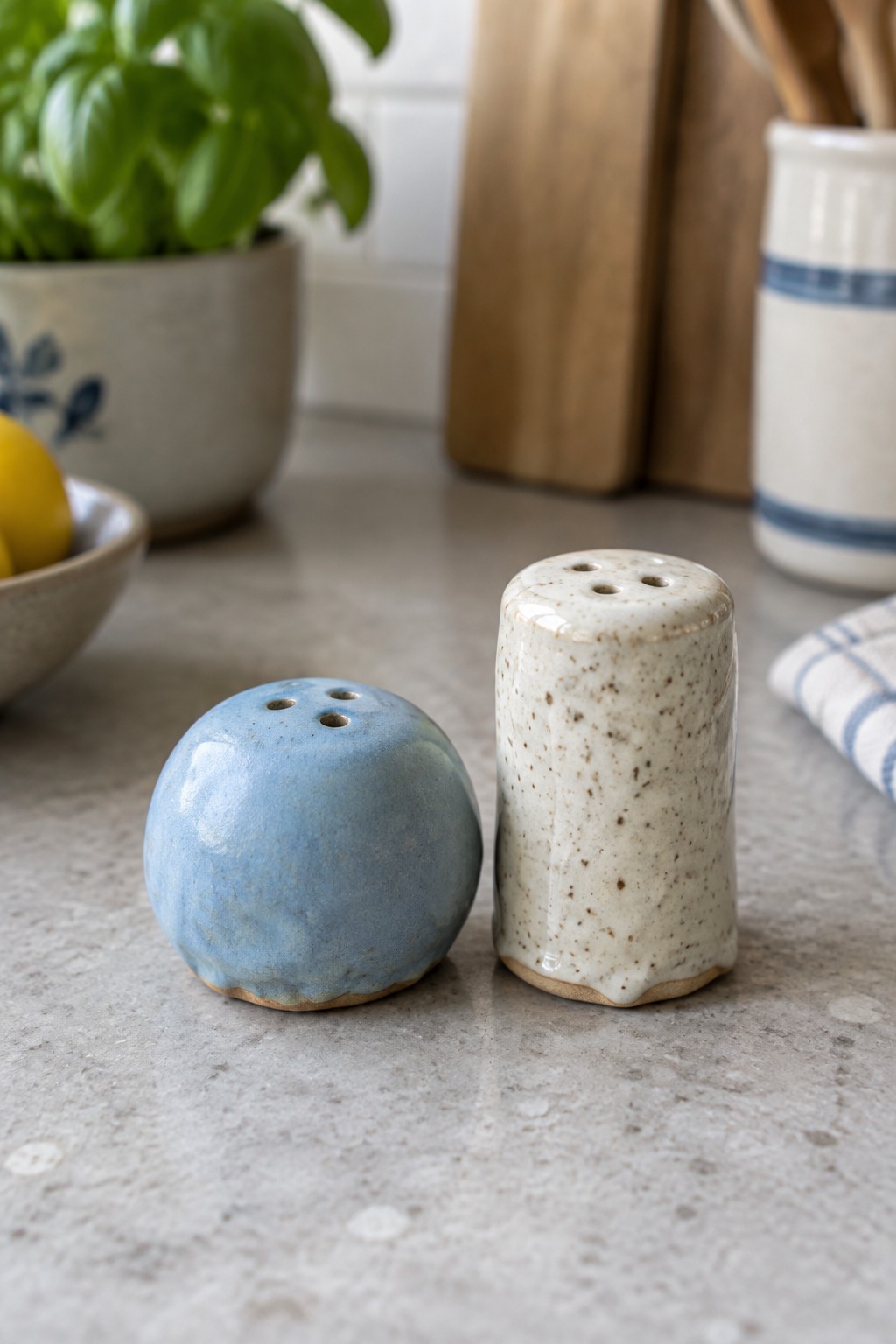
These handmade ceramic salt and pepper shakers consist of one low rounded form finished in a soft blue glaze and one taller cylindrical shape with a speckled off-white surface. Both pieces use simple drilled holes on top for dispensing and sit on unglazed bases that show the clay body. The contrast in shape and glaze treatment gives the set visual balance while keeping the overall design minimal. This approach fits the kitchen item category and works well for potters testing different forms in a single firing.
The small scale makes these quick to form and easy to fit into a bisque load. You could adapt the idea by making a matching set in one glaze or scaling the shapes up slightly for larger capacity. In a kitchen they sit neatly on a counter or table without taking much space. For gifts the two-piece format feels complete and the straightforward construction leaves room to experiment with other surface textures on future versions.
Clay Phone Stand

A clay phone stand shaped like a low wedge with a narrow slot cut into the top holds a phone at an angle for easy viewing. The simple form is made from one piece of clay, left unglazed or finished with a matte terracotta surface that shows the handmade texture. This type of project fits into the holder category and gives beginners a quick way to make a useful desk object without needing complex construction.
What makes this idea useful is how the same wedge shape can be adjusted for different phone sizes or even a small tablet. You could widen the base slightly to add a shallow groove for a charging cable or shorten the height if you want a lower viewing angle. In a home office or workspace, this kind of stand keeps a phone upright and reachable while taking up little room. For a gift, something like this works well paired with a notebook or pen cup made from the same clay.
Frequently Asked Questions
What basic supplies and tools will I need to create most of the clay gift ideas listed in the article?
You can start with air dry clay or oven bake clay for simple projects since both require no kiln. Gather a rolling pin, cookie cutters, a plastic knife for shaping, and some acrylic paints or glazes for finishing. A small sponge and water help smooth surfaces. These items are inexpensive and available at craft stores so you can try several ideas without a big investment.
How long does it typically take for air dry clay projects to dry completely before painting or gifting?
Most air dry clay pieces need 24 to 48 hours to dry fully depending on thickness and humidity levels in your space. Place items on a wire rack for even airflow and rotate them halfway through. Once dry test by tapping gently for a solid sound. Rushing this step can lead to cracks so plan ahead if you need gifts ready by a certain date.
Are there any of the 19 ideas that work well with kids or as family activities?
Several projects such as handprint ornaments, simple pinch pots, and stamped coasters are ideal for beginners of all ages. Use non toxic clay and supervise younger children during rolling and cutting steps. These activities build fine motor skills while creating keepsakes that parents or grandparents will treasure for years.
What should I do if my clay piece cracks during drying or after baking?
Small cracks can often be repaired by mixing a bit of clay with water into a paste and smoothing it over the area before it dries again. To prevent cracks in the first place roll clay to an even thickness and avoid thin edges. Store unfinished pieces in a sealed plastic bag to slow drying if needed. For baked pieces consider using the item as a decorative accent rather than a functional one.
How can I make these clay gifts more durable for everyday use like in the kitchen or bathroom?
Choose oven bake clay for items that will hold water or face frequent handling and follow package instructions for baking time and temperature. Apply a waterproof sealant or food safe glaze after baking to protect surfaces. Avoid making very thin walls on bowls or trays and test pieces gently before gifting them to ensure they hold up well.

Pottery Path is my cozy corner of the internet where I share clay ideas, pottery inspiration, and simple projects you can recreate at home. I love exploring everything from air dry clay to handbuilt pottery to cute minis that brighten your day. My goal is to make clay crafting feel easy, fun, and welcoming for anyone who wants to try it.
You will find beginner friendly tutorials, creative pottery painting ideas, and lots of warm inspiration for slow and happy crafting. If you enjoy hands on creativity, this space will feel like home.