I’ve tried a lot of different ways to cut slabs of clay for my projects.
Templates have made it much easier to get consistent shapes without wasting material.
I put together some of the ones that worked best for me when I was starting out.
They are simple to make or print and they help keep things accurate.
Beginners might find them useful for building basic forms like trays or boxes.
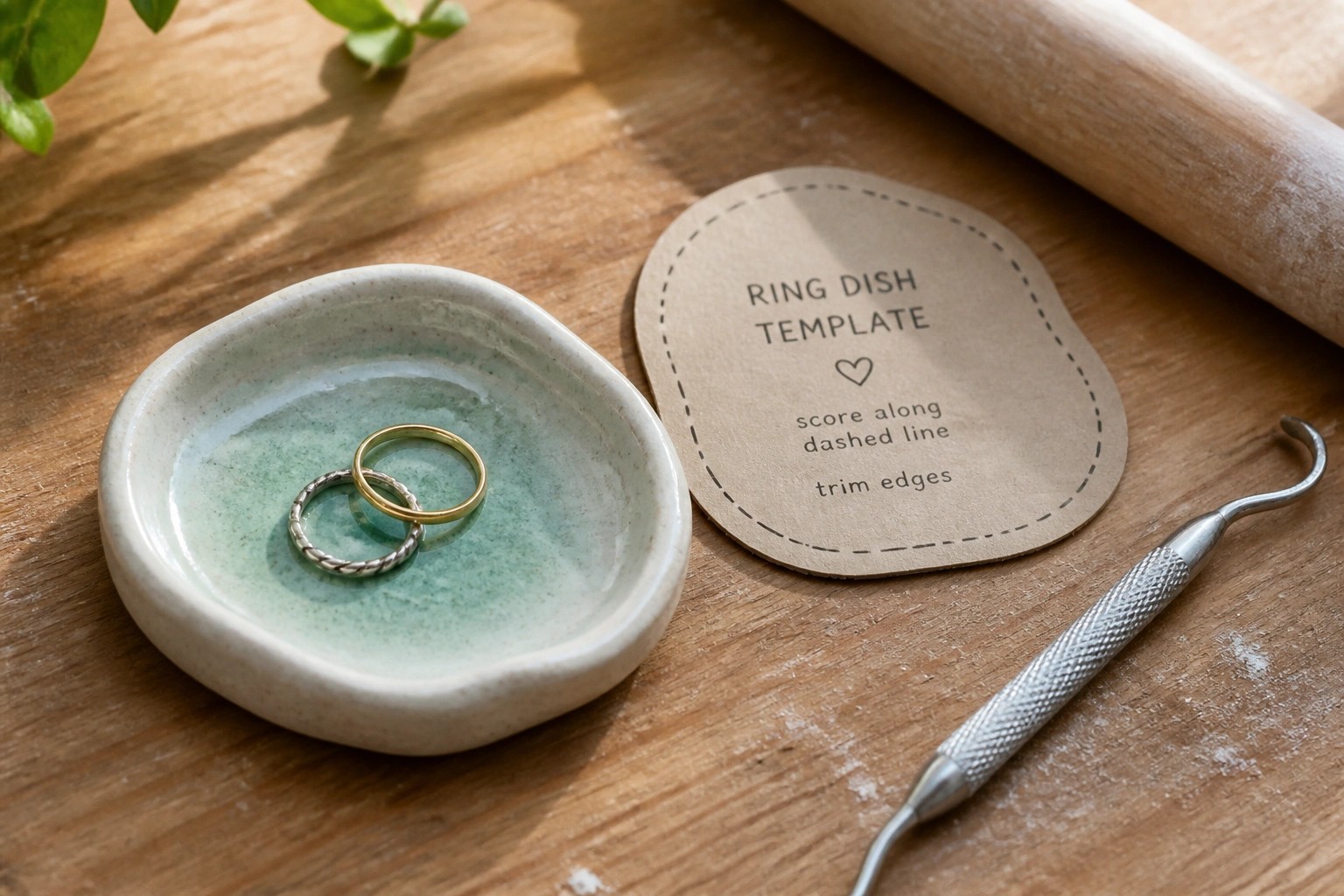
Ring Dish Template for Small Jewelry Storage

A ring dish cut from a clay slab gives you a compact holder that keeps rings and small earrings in one place on a dresser or nightstand. The template outlines an organic shape with a shallow rim created by scoring and folding up the edge after cutting. A light speckled turquoise glaze adds subtle color and texture while keeping the focus on the simple form.
What makes this idea useful is how the same pattern can be resized or slightly reshaped to make a soap dish or a small tray for keys. The scoring line built into the template helps beginners form a consistent rim without guessing the depth. You can swap the glaze for a matte finish or leave the clay bare if you want a more minimal look that still functions well.
Oval Slab Tray with Dot Pattern
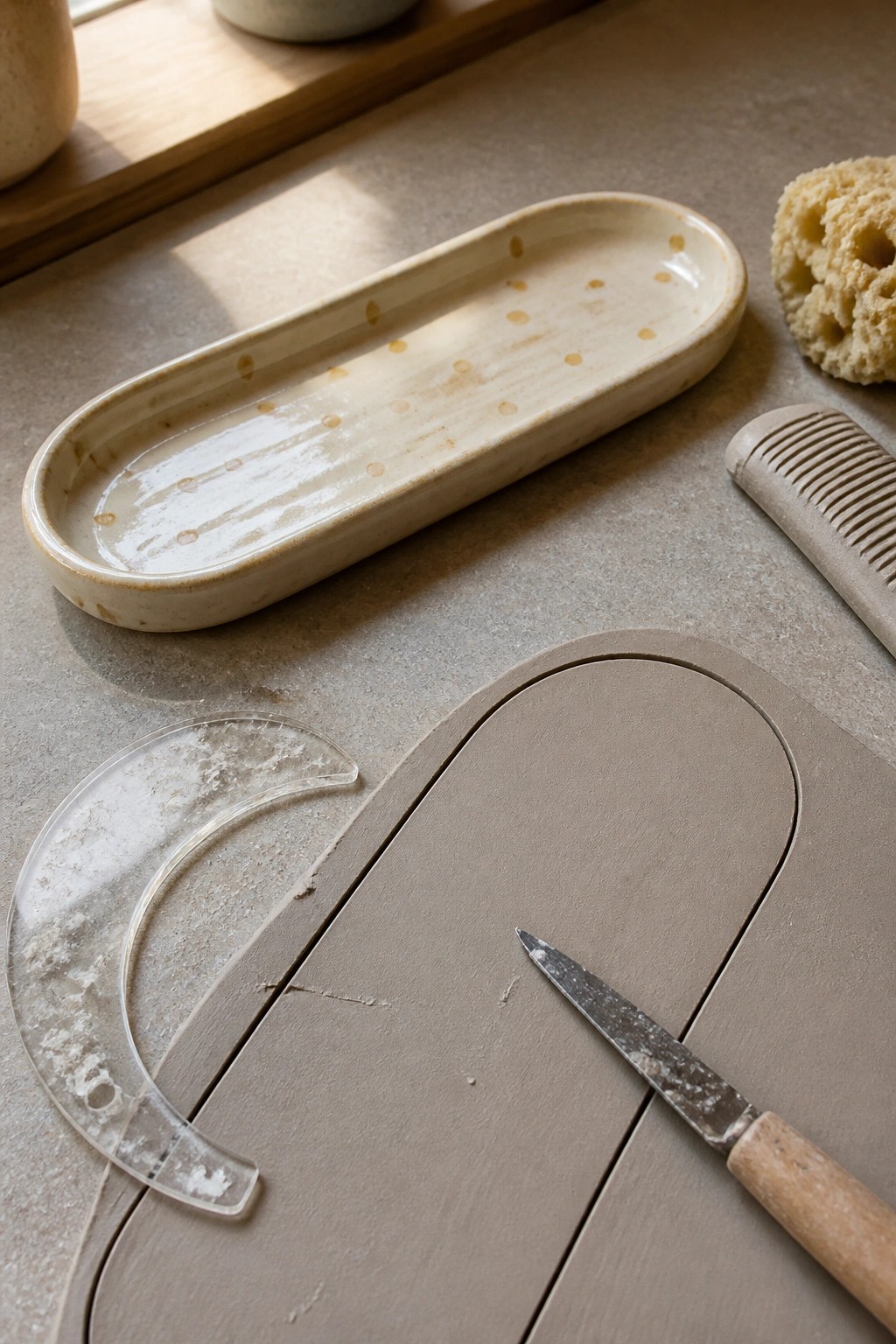
A long oval tray formed from a flat clay slab creates a low-profile piece suited for holding small items. Templates guide precise curved cuts to keep the sides even and the overall shape balanced. Simple dots spaced along the rim give the surface a light repeating detail that works with most glazes. This approach belongs in the tray or vanity dish category for bathroom or desk use.
What makes this idea useful is how the same templates can be resized to make matching sets or smaller versions for rings and keys. The oval shape sits flat on counters without taking much space and adapts easily to different color schemes. You could replace the dots with short lines or skip decoration entirely if the glaze already has variation. In a bathroom this kind of tray keeps soap or small bottles organized while staying simple to produce.
Cylindrical Slab Mug from a Basic Template
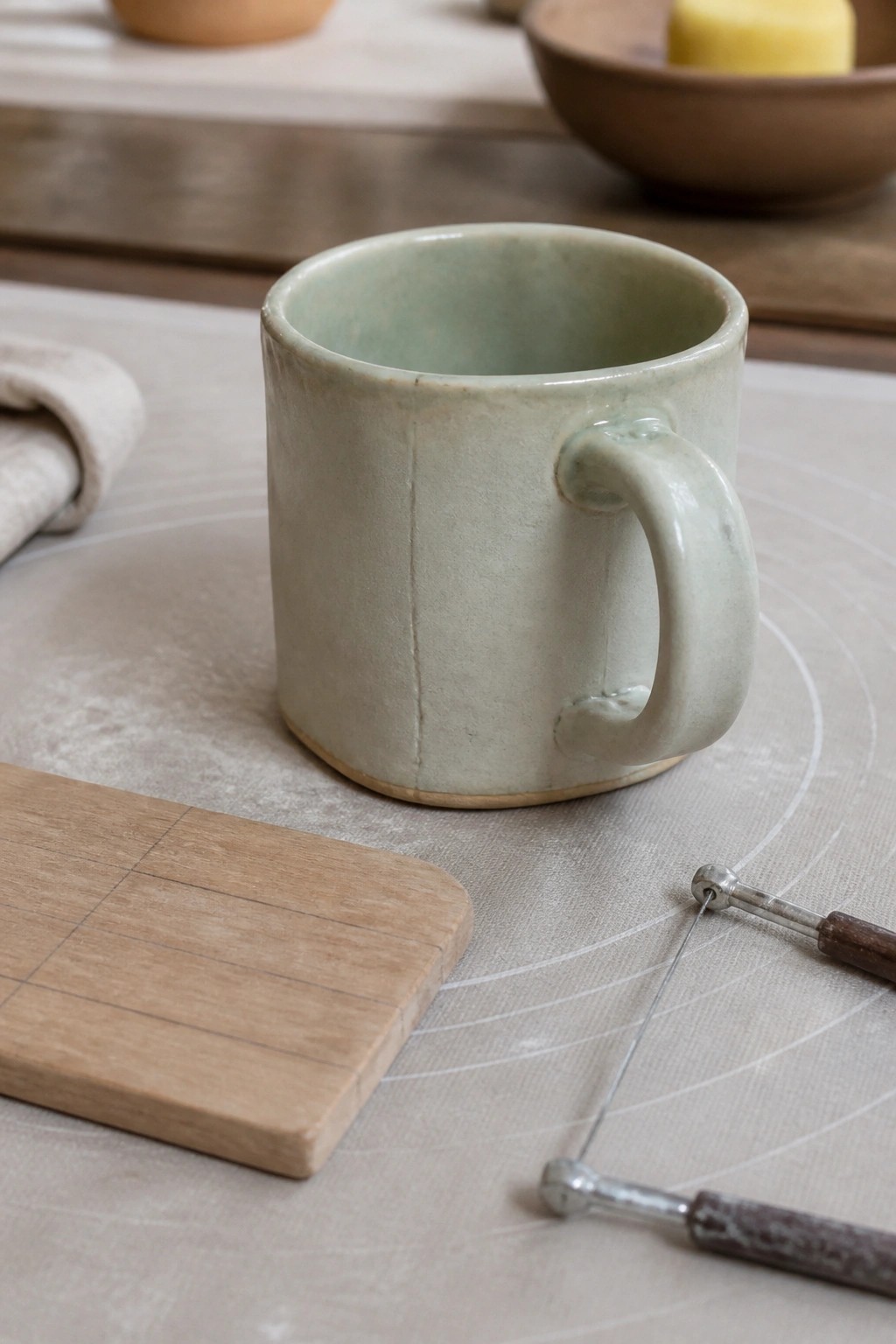
A slab mug starts with a rectangle of clay cut to a consistent height and width, then rolled into a cylinder and joined along one seam. The attached handle comes from a separate strip of the same thickness, shaped with a gentle curve before attaching. A pale green glaze gives the finished piece a soft, even surface that still shows the slight texture from the slab work. This keeps the project firmly in the mug category and relies on accurate template cuts for even walls and a stable base.
What makes this idea useful is how the straight cylinder template lets you change the diameter or height in seconds to make matching sets. The simple form adapts easily into a small creamer or desk pencil holder by shortening the handle or skipping it. In a kitchen, the shape stacks neatly and works for hot drinks without tipping. You could swap the glaze color or add a single stamp line near the rim to give the same template a completely different look.
Whale Planter Built from a Matched Body Template

This project uses a simple slab template to cut two identical whale body shapes that are scored and slipped together to form a hollow planter. The template creates a rounded body with a flat base, a tail fin, and a side fin, leaving an open top for soil and a small plant. A light blue glaze covers the joined form, and a minimal face is added before firing. The approach fits the category of small decorative planters made from basic slab construction.
What makes this idea useful is that the two-piece body template gives beginners a reliable way to create a balanced shape without freehand cutting. The finished piece works well as a windowsill or desk planter, and the same template could be shortened or lengthened to make a fish or dolphin version. You could also skip the facial details and keep the surface plain if you want faster production. For Pinterest, the clear template card next to the finished piece makes the method easy to understand at a glance.
House Slab Templates for Hanging Ornaments
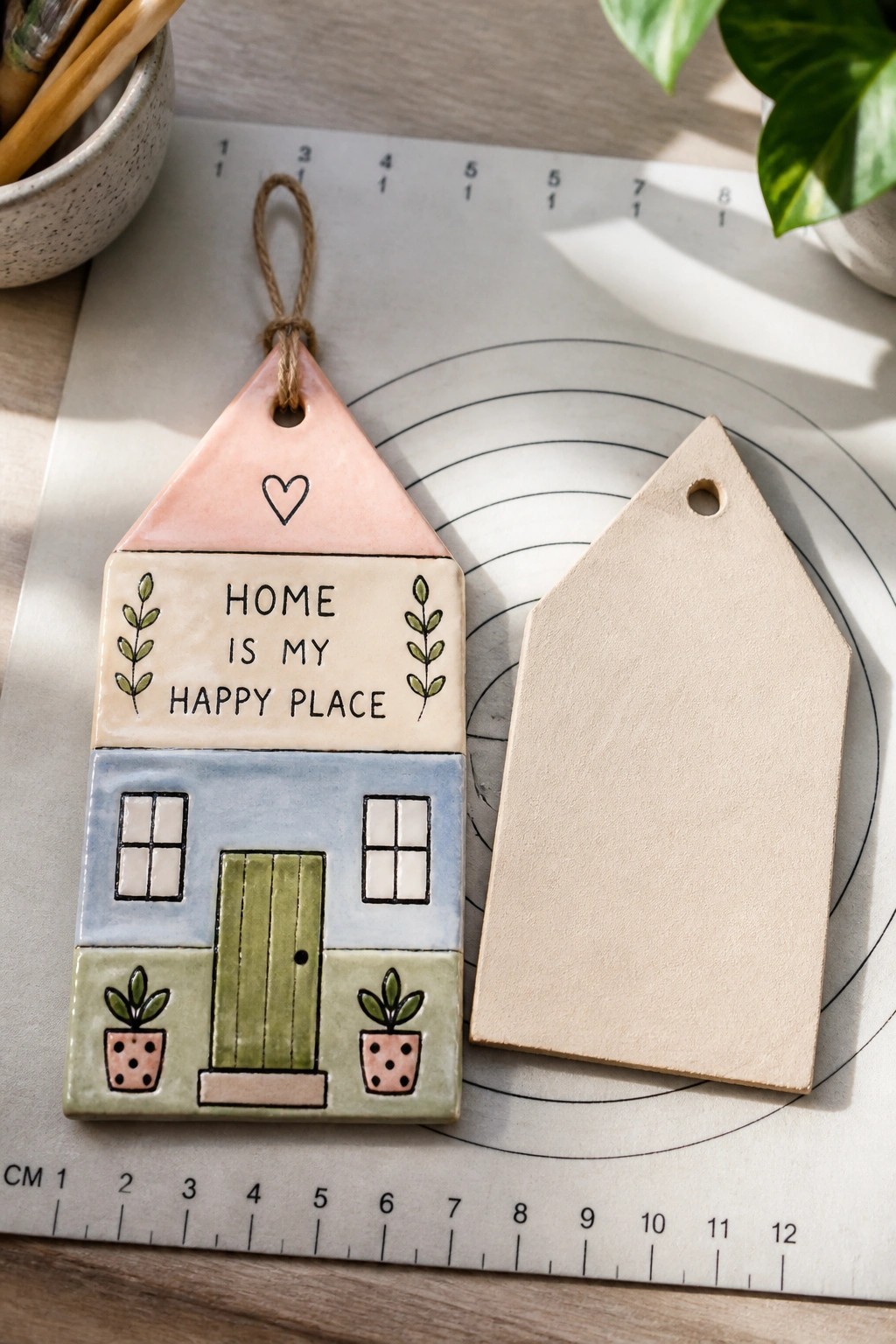
A house shaped ornament is a straightforward slab project that uses a single template to cut the main form and roof in one piece. The design divides the surface into clear sections for glazing or painting, with simple additions like windows, a door, and small plants that stay flat against the clay. Text can be added with stamps or freehand before firing, and the top hole allows for a cord or wire hanger. This approach keeps the piece lightweight and easy to repeat with the same template.
The shape does a lot of the work here because the outline already reads as a house once the basic details are added. You can scale the template up or down depending on whether you want a small tag or a larger wall piece, and the blank version next to it shows how quickly the same cut can be adapted with different colors or motifs. This kind of ornament works especially well for gifts or seasonal displays since it takes little shelf space and hangs easily from a hook.
Ridged Slab Soap Dish Template

A slab pottery soap dish starts with a flat rectangle of clay cut using a simple template, then pressed onto a ridged wooden form to create parallel grooves. The grooves raise the soap bar and let water drain through, keeping the surface drier. This shape works as a bathroom item because the low profile and stable base sit flat on sink edges or shower ledges. The finished piece shows a light speckled glaze that emphasizes the ridges without filling them completely.
What makes this idea useful is how the wooden ridge form acts as a reusable template that guarantees consistent drainage lines every time. You can adapt the same cut-out by shortening the slab for a compact travel version or adding side walls for a deeper tray. In a bathroom the grooves reduce soap scum buildup on counters, and the basic rectangle makes it easy to batch out several at once for gifts. The unfired slab stage also lets you test different ridge spacing before committing to the final form.
Leaf Template for Slab Built Trays

A leaf-shaped slab tray uses a simple outline template to cut clay, then presses in vein lines for added surface detail before the piece is gently curved into a shallow dish. The finished result works as a small holder once glazed, with the veins creating subtle ridges that catch light and give the form more interest. This approach keeps the project flat and easy to manage during the slab stage while producing a recognizable natural shape.
The small scale makes this easy to adapt for a ring dish, soap rest, or key catch on a shelf. Swap the leaf outline for a different plant type by redrawing the template edges and vein layout, or skip the curve entirely to keep it fully flat as a coaster. A piece like this stands out on Pinterest because the template method produces clean, repeatable results that still look handmade.
Circular Slab Template for Small Bowls
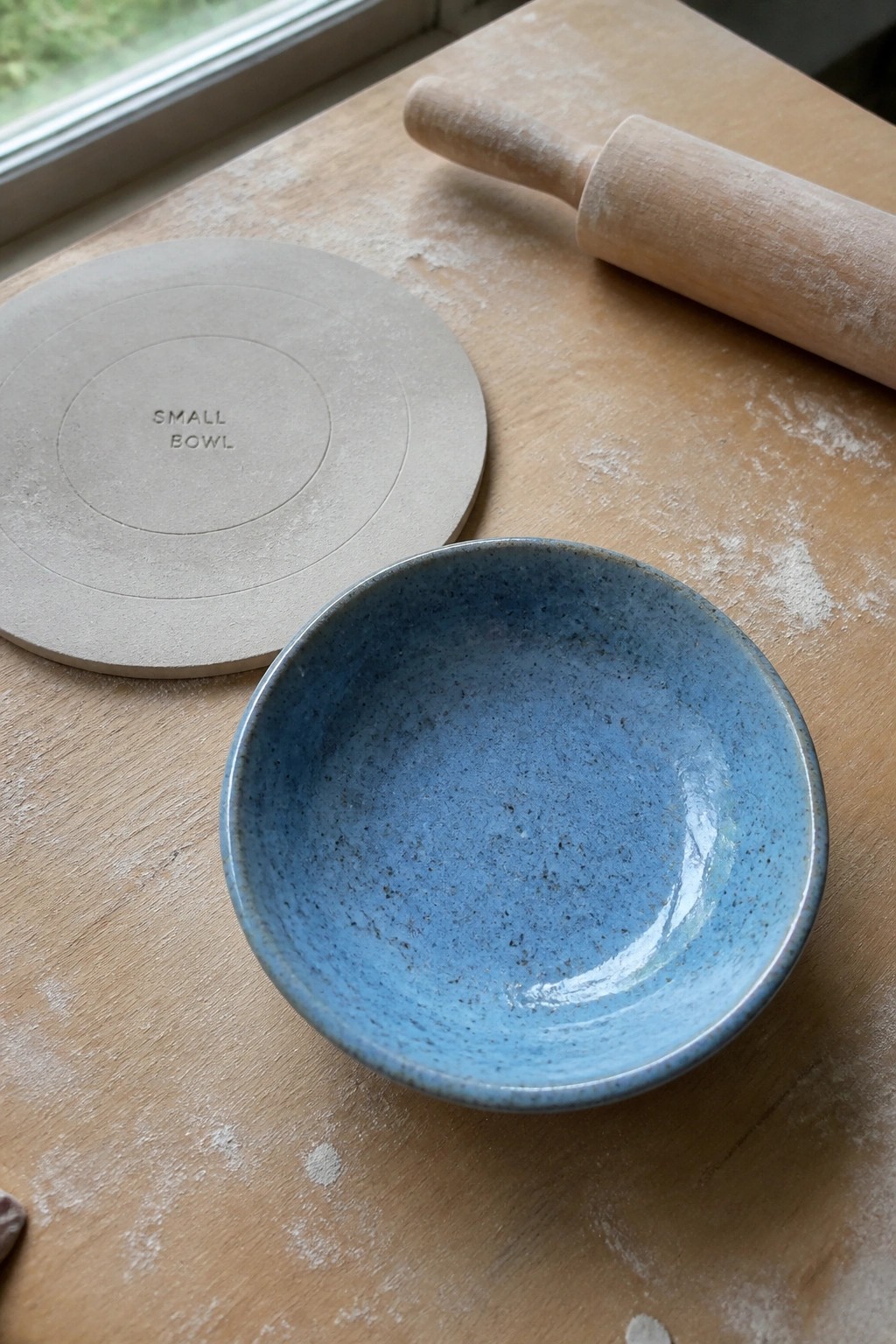
A flat circular template cut from stiff material gives you an exact outline to trace onto a rolled clay slab before lifting and shaping the edges into a bowl. The finished piece keeps a low profile with gently curved sides and a wide base that sits flat. A single glaze color with light speckling highlights the simple form without extra decoration. This method belongs in the slab bowl category where the goal is repeatable shape and even thickness.
What makes this idea useful is the template removes the need to freehand the circle so the final size stays consistent across multiple pieces. You can enlarge or shrink the template to make deeper bowls or shallower dishes without changing the basic steps. A small bowl like this fits easily on a desk or shelf for holding keys or jewelry. The same circle cut can be adapted into a plate by keeping the edges flatter during forming.
Yarn Bowl Slot Cut with a Template

A yarn bowl formed from clay uses a wooden slot template to mark and cut an opening that feeds yarn evenly during knitting or crochet projects. The bowl shape stays simple and rounded while the swirl cutout on the side keeps the strand from pulling free or tangling. This turns an ordinary bowl into a dedicated holder that sits steady on a table without extra hardware. The template markings at one inch help set the width and depth so the opening works the same way each time it is made.
The template approach removes guesswork when shaping the slot and lets you repeat the same cut on multiple bowls without measuring by eye. You can scale the template smaller for a desktop version or widen it for thicker yarns and ribbons. This piece fits well in a craft room or living space where someone knits regularly and needs the yarn contained. The same slot idea can be adapted to a slab-built tray or a low planter once the basic cut is mastered.
Two-Well Slab Dish Template
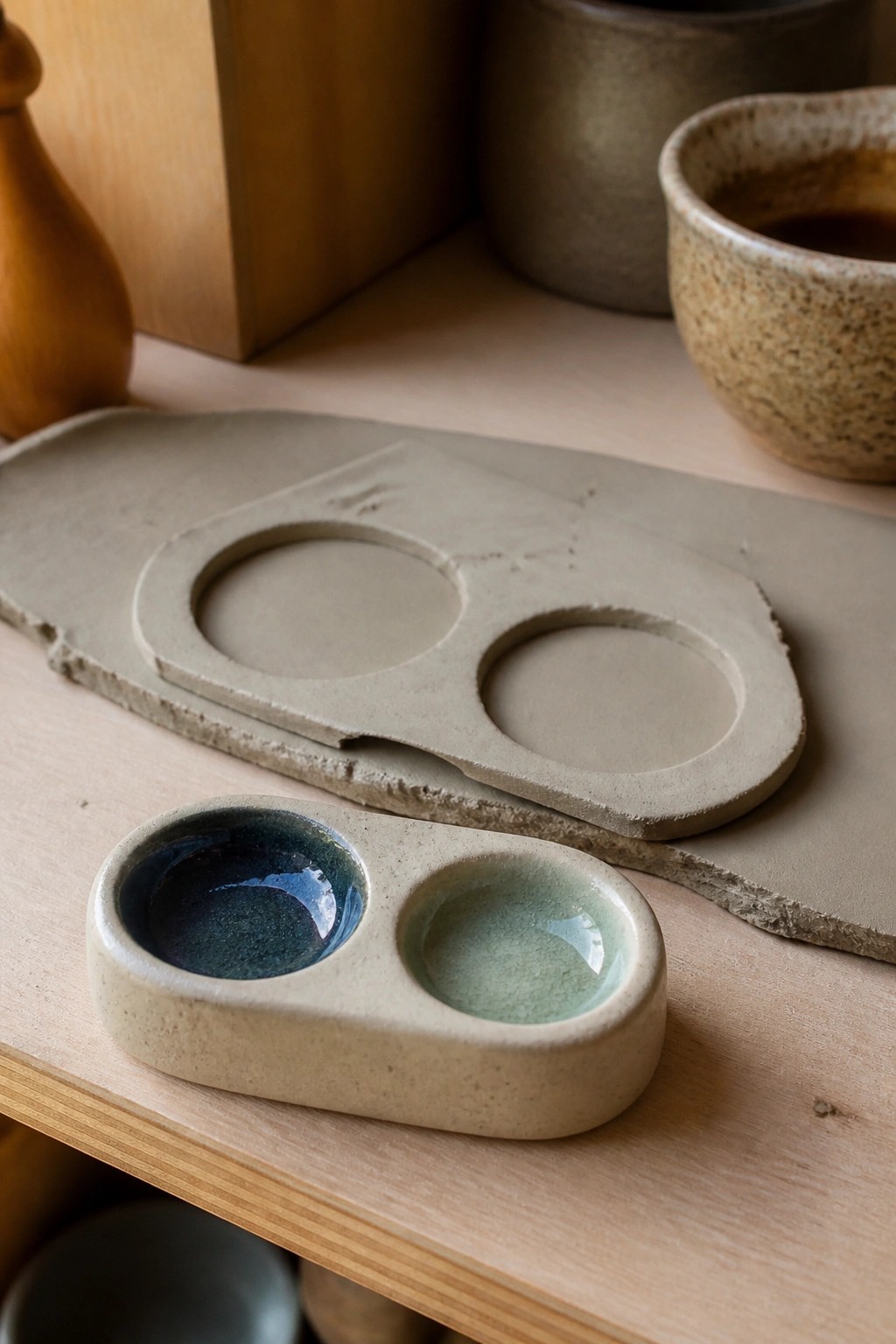
A small double-well dish makes a practical kitchen piece for holding dips, sauces, or seasonings. The shape is cut from a flat clay slab using a simple template that outlines an oval base with two circular wells. One well gets a dark blue glaze while the other receives a light green, creating contrast without added surface details. This keeps the project focused on accurate slab cutting rather than complex forming.
What makes this idea useful is how the template guarantees both wells line up evenly and the outer edge stays uniform every time. You can enlarge the template for a bigger serving tray or reduce it for single-use portions. The same cut-out approach adapts easily to a two-section soap dish or a small jewelry tray. Changing the glaze colors or leaving one well unglazed gives quick variations without new templates.
Flower Tealight Holder from a Slab Template
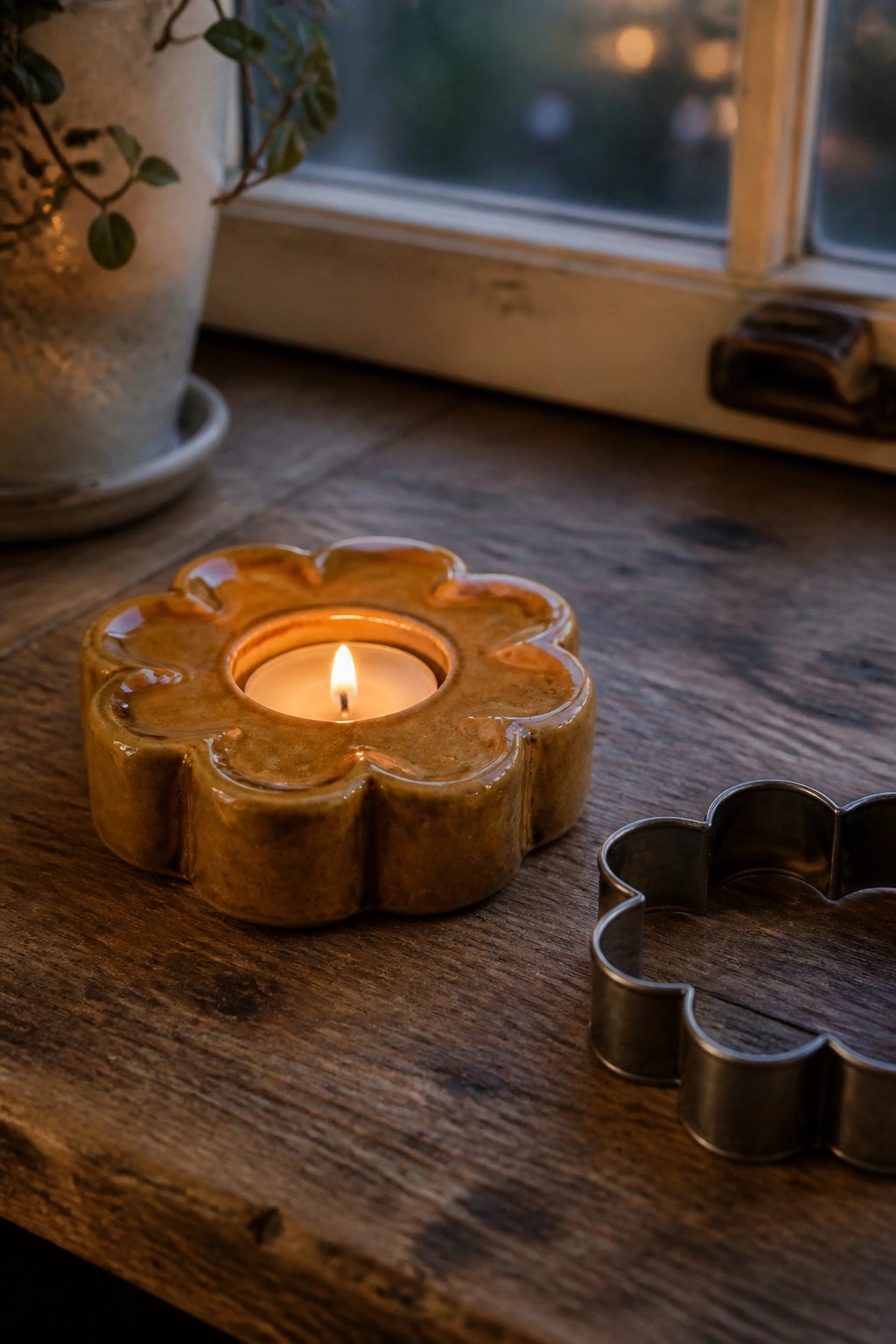
A flower-shaped tealight holder is a straightforward slab project that uses a single cookie-cutter template to create both the outer edge and the center well. Cut a thick slab, press the template twice to form the scalloped rim and a smaller inner circle, then gently push down the middle while the clay is soft to make a shallow dish that fits a standard tealight. The glossy brown glaze highlights the repeated petal shapes and helps the flame reflect off the surface without needing extra decoration.
What makes this idea useful is how the same flower template can be resized or combined with a plain circle base to create ring dishes or tiny soap rests. The small finished size keeps material use low and lets you test glazes on several pieces in one firing. A piece like this works especially well as a quick gift or windowsill accent where the shape stays visible even when the candle is unlit. You can adapt it further by leaving the surface matte or pressing a light texture into the slab before cutting.
Three-Slot Toothbrush Holder from Slab Templates
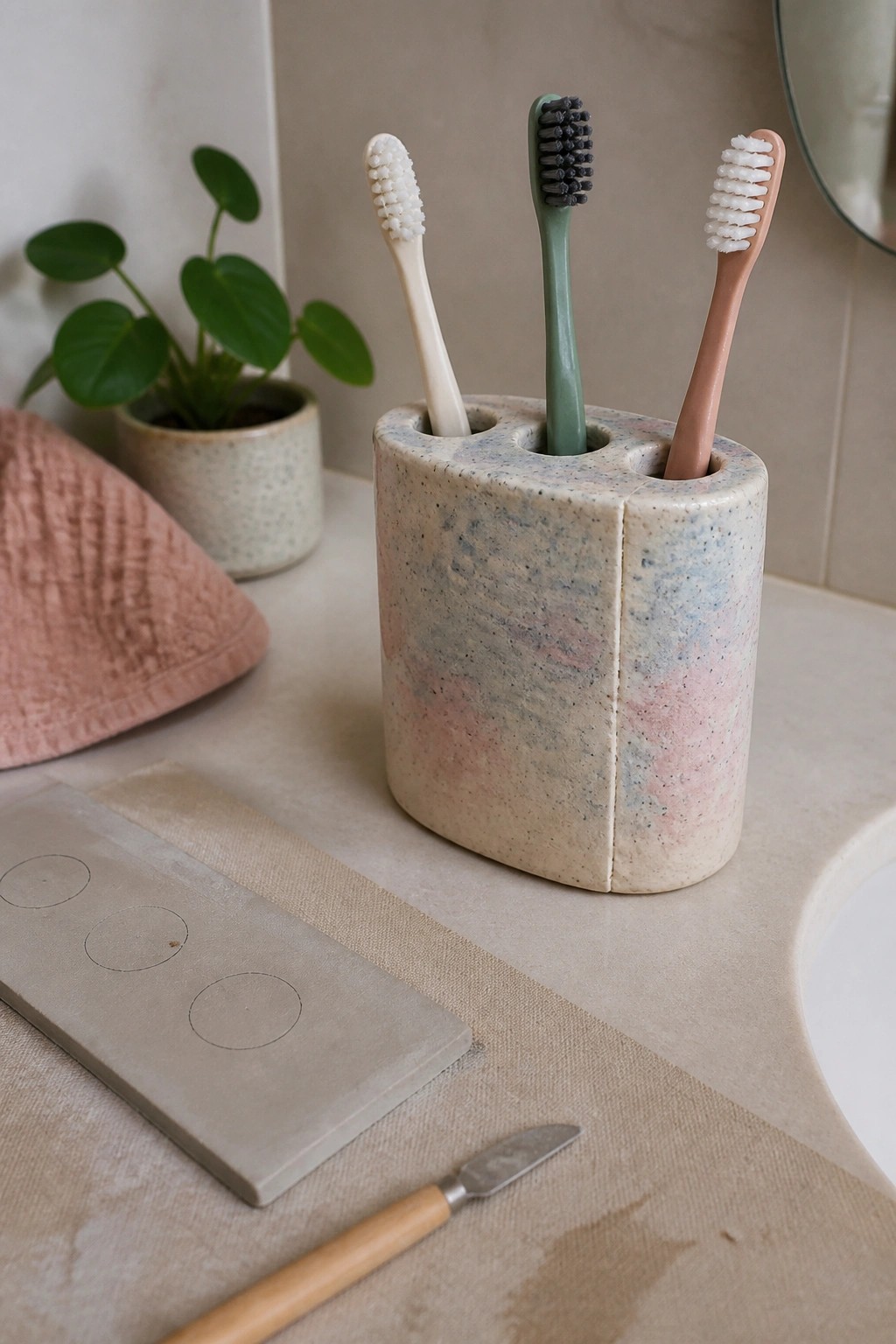
A slab-built toothbrush holder gives you an easy way to keep brushes upright and separated on a bathroom counter. Cut three identical circles from a flat clay slab using a template, then wrap and join each circle into a short tube before attaching them to a base. The holder shown here uses a single wide slab formed into an oval shape with three openings, and the speckled surface comes from blending colored clays or adding texture before drying.
What makes this idea useful is how the template keeps the holes consistent in size and spacing without measuring each one by hand. You can change the number of slots or the overall height to fit two brushes or four, and the same circle template works for a matching soap dish or small tray. A piece like this stays practical in a shared bathroom while letting you practice slab construction and basic joining on a small scale.
Slab Pitcher Built with a Handle Template
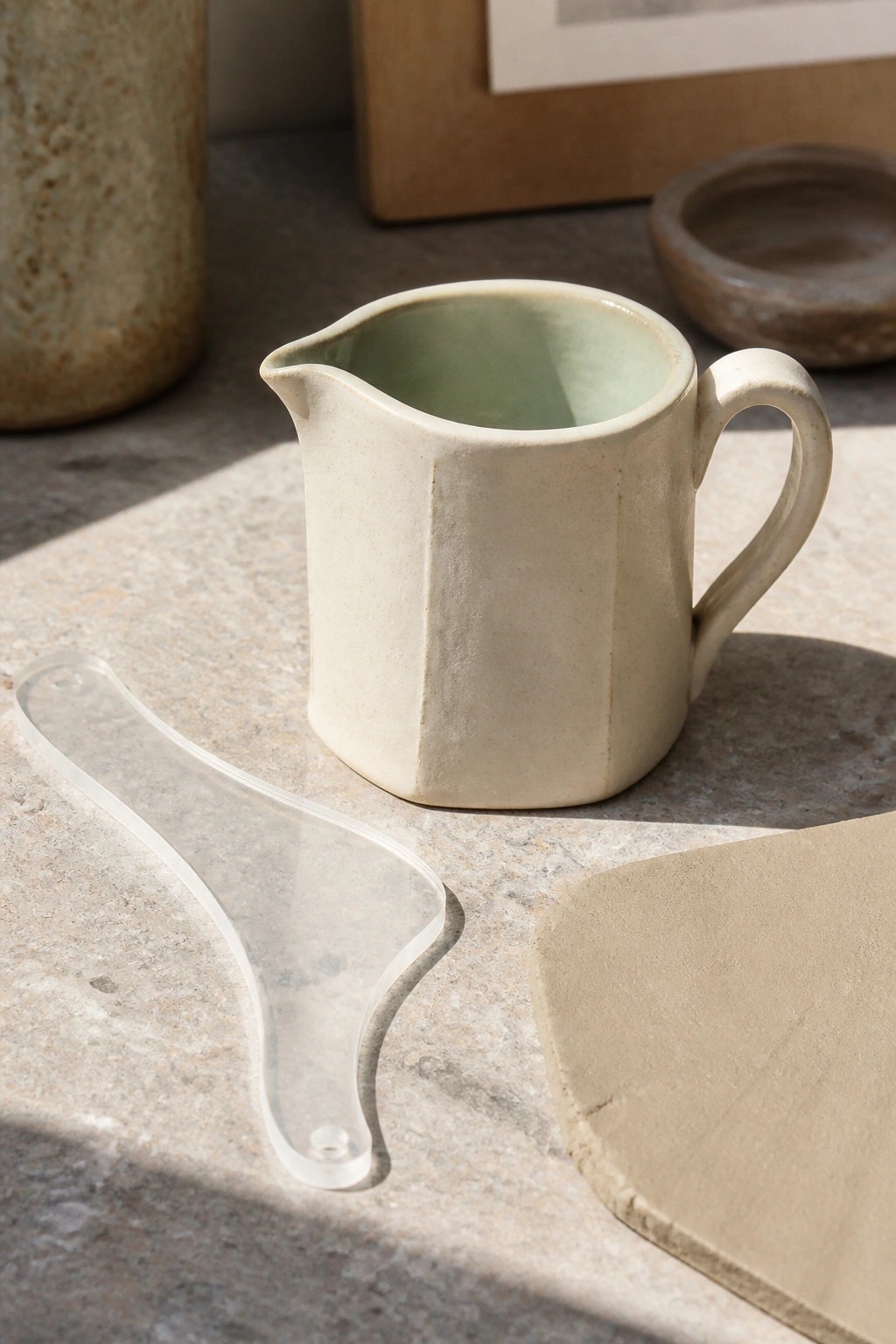
A small slab pitcher takes shape when flat clay panels are joined at angles to form the faceted body and a separate template cuts the handle to a consistent curve. The handle template includes small holes that line up with the body for secure attachment before firing. A matte off-white exterior with a pale green interior glaze keeps the finished piece simple and practical for pouring. This method belongs in the kitchen item category and produces a compact creamer or syrup jug.
What makes this idea useful is that the reusable template removes guesswork from the handle every time you repeat the project. You can keep the same handle pattern and adjust only the body slab widths to create a taller jug or a wider bowl form. In a kitchen setting the pitcher works for daily table use without taking up much space. The template approach also transfers directly to slab mugs or small trays by swapping the body pieces while keeping the handle cut.
Shaped Slab Rests Using Simple Cutters
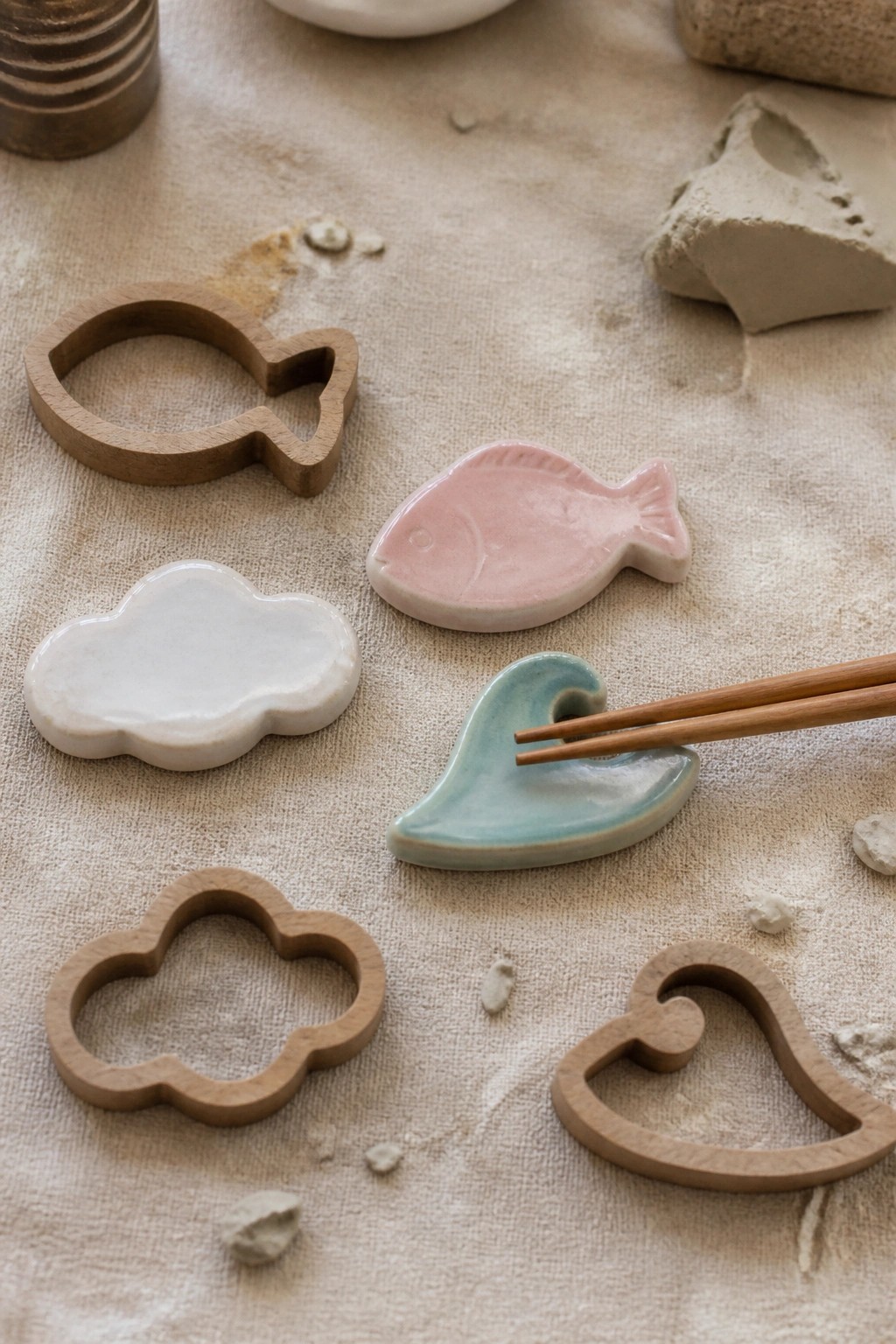
Small slab pieces cut into fish, cloud, and wave forms create compact rests or tiny dishes that fit easily on a table. Wooden templates give clean edges that hold their shape during forming and glazing, and the finished pieces receive soft single-color glazes that keep the focus on the outline. These work as chopstick rests, small spoon holders, or jewelry dishes depending on how deep the slab is pressed.
The shape does a lot of the work here because the same template can be reused for different functions without extra carving. A wave form makes a natural chopstick rest while a fish or cloud can become a ring dish or tiny soap tray. The small size keeps drying time short and lets you fire several color tests at once. For a gift, swap the wave for the heart template and keep the glaze simple so the object reads as useful rather than decorative only.
Slab Templates for Heart and Hexagon Dip Bowls
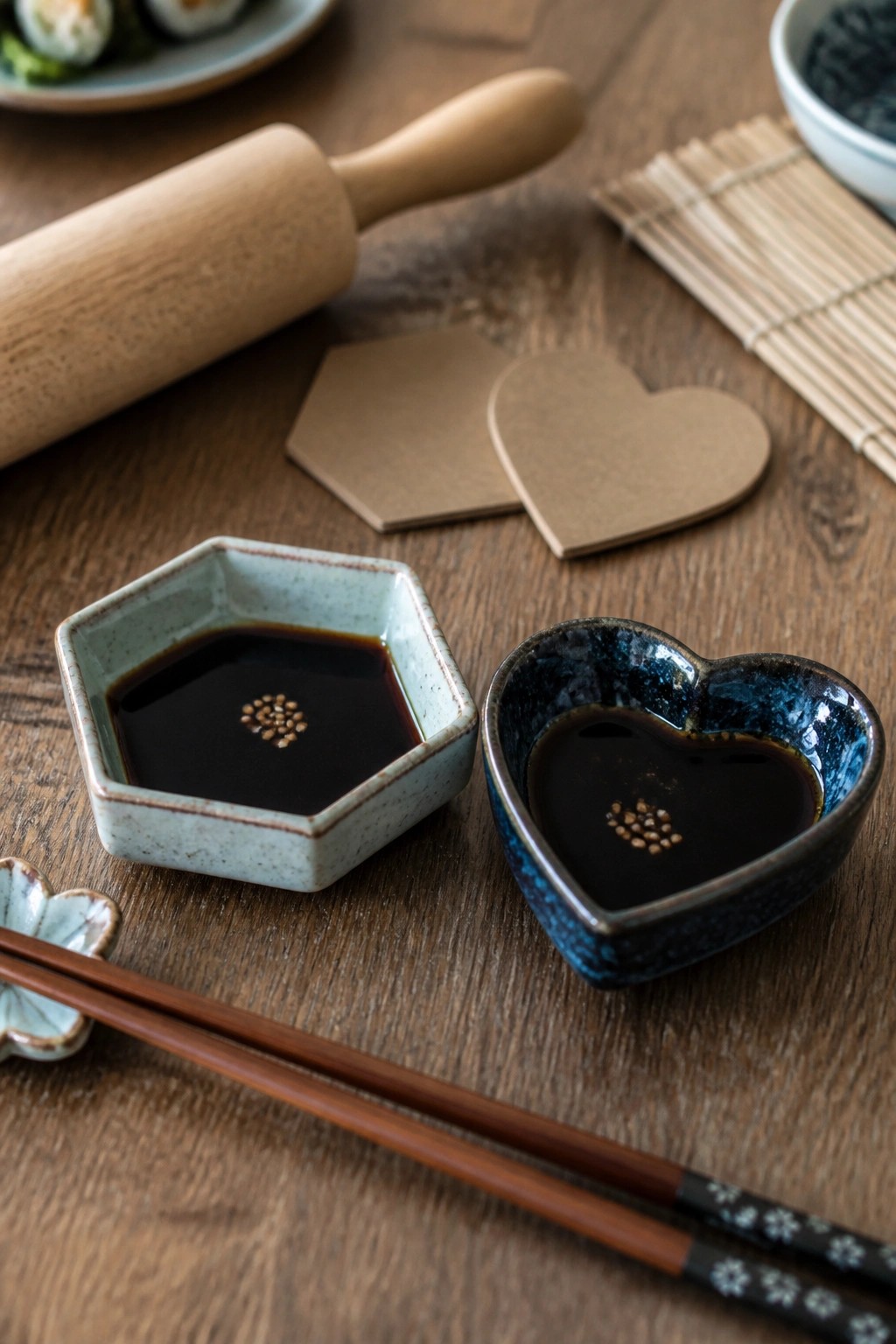
Small dipping bowls cut from clay slabs work well as sauce dishes because the flat templates produce consistent walls and clean rims without needing a wheel. The hexagon and heart shapes here show how simple outline cuts create functional low-profile forms that sit steady on a table. A light speckled glaze on one and a darker reactive glaze on the other keep the focus on the cut edges rather than added decoration. These pieces fit the kitchen item category and pair naturally with chopsticks or small serving trays.
The shape does a lot of the work here since both forms use minimal clay yet hold enough liquid for individual portions. You can scale the same templates down for ring dishes or up slightly for small condiment bowls. A set in matching glazes would photograph cleanly for Pinterest while staying quick to produce from one slab of clay. For a gift, try cutting several shapes from the same template sheet so the pieces coordinate without extra effort.
Slab-Built Cat Figurine
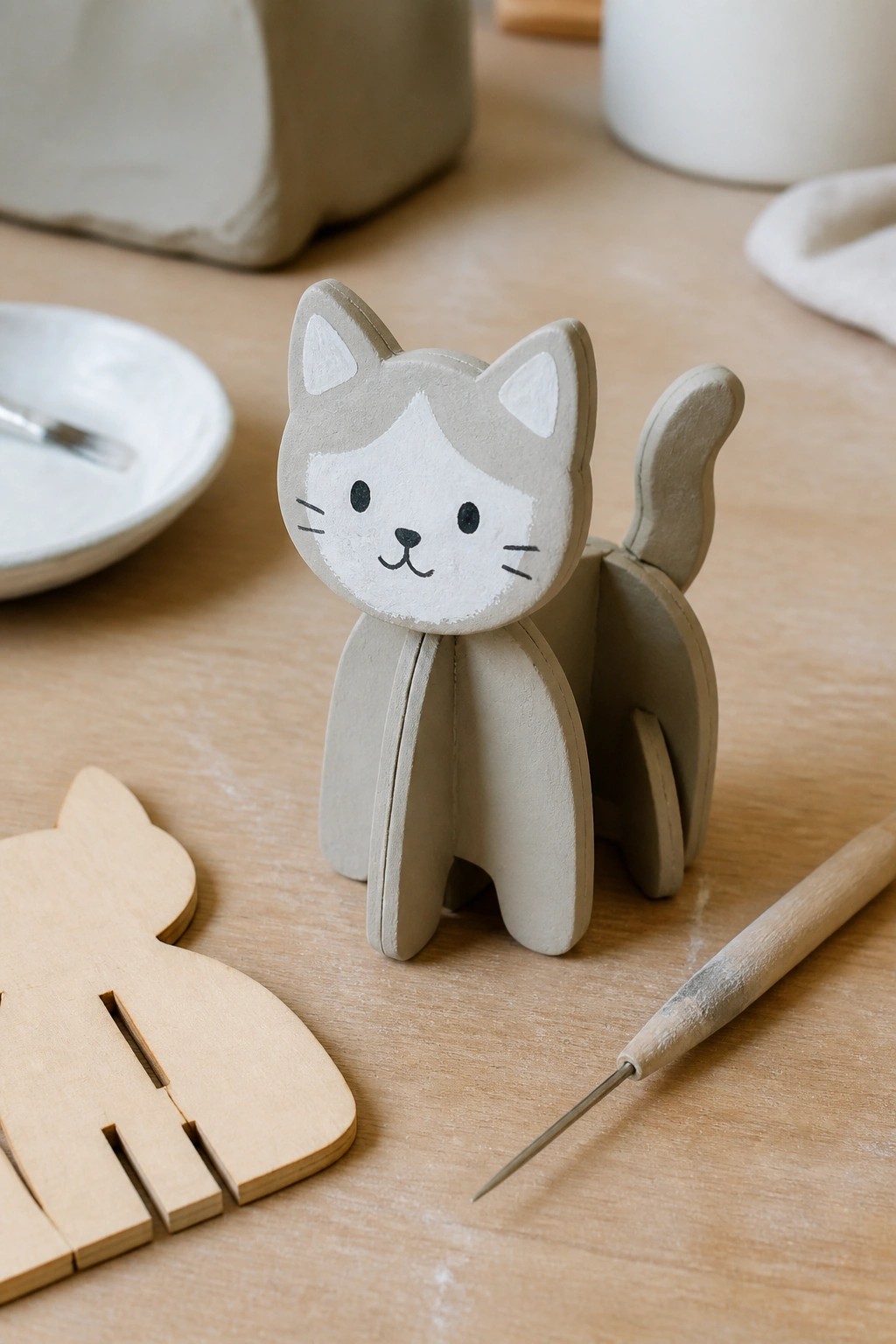
A slab cat figurine starts with flat clay pieces cut from a template to form the body, legs, and tail, then joined along the seams to stand upright. The head sits on top as a separate slab with simple painted eyes, nose, and whiskers added after the clay firms up. This method keeps the overall shape compact and stable while using the flat surfaces to hold the painted face details.
What makes this idea useful is how the same templates can be resized or slightly altered to create other animals without starting from scratch. The small scale works well as a shelf or desk accent and can be left matte or painted with basic underglaze. You could adapt the body into a small holder by widening the base or change the ear shape for a different animal. Templates help keep the legs and sides even so the finished piece stands straight.
Elongated Oval Tray from a Basic Slab Template
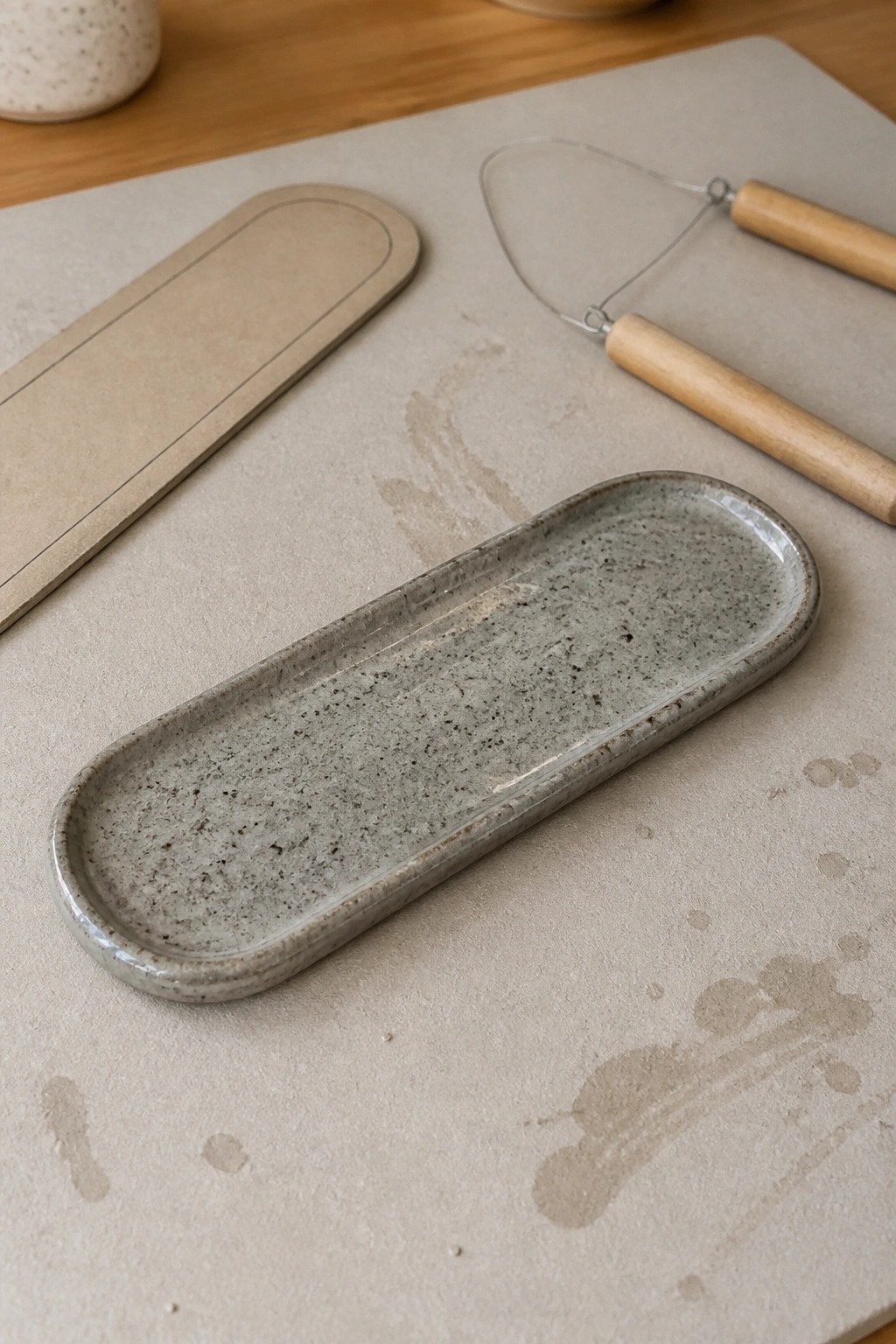
An elongated oval tray starts with a simple slab cut to a rounded rectangular shape using a template, then gently curved along the edges to create a shallow dish form. The narrow proportions make it practical for holding small items without taking up much space. A speckled glaze finish adds subtle texture and keeps the surface interesting even when the tray is empty.
What makes this idea useful is how the template lets you repeat the same clean shape quickly while still allowing small adjustments to length or width. You could scale it down for a jewelry dish or stretch it longer for a kitchen utensil rest. The same template works for testing different glazes or surface textures on future pieces.
Scalloped Flower Ring Dish
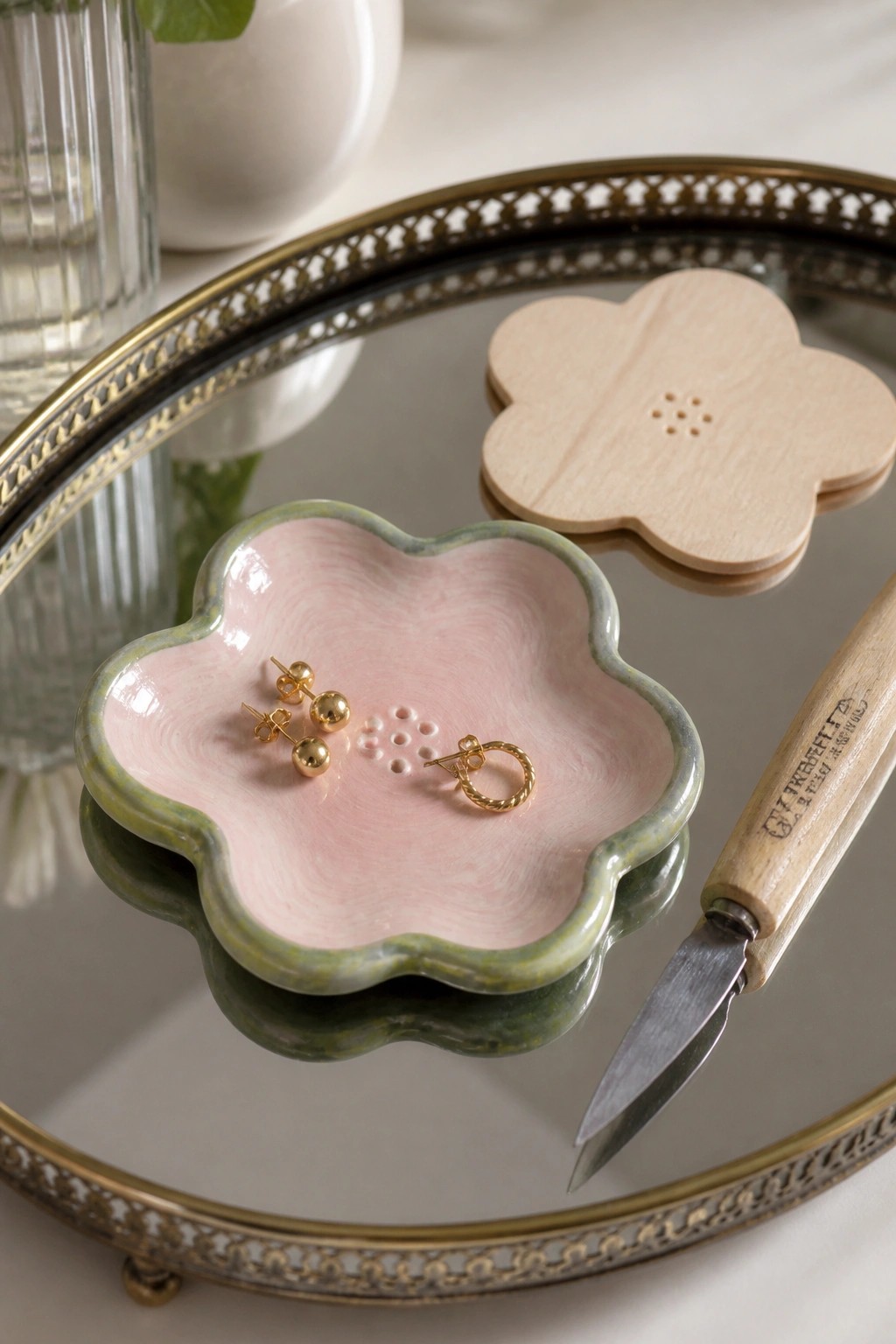
A flower-shaped ring dish cut from a clay slab gives you a compact holder for rings and small earrings. The template cuts the outer edge into even petals while the center stays flat for the jewelry to rest on. A two-tone glaze keeps the focus on the shape instead of added surface details.
What makes this idea useful is how the template removes the guesswork from the outline so the dish comes out the same size every time. The finished piece fits on a vanity or bedside table without taking up much space. You can reuse the same template to make a matching soap rest or a smaller version for travel by simply adjusting the slab thickness before you cut.
Grooved Slab Soap Dish Template

A square slab of clay cut with evenly spaced parallel slots creates a simple soap dish that lets water drain through the gaps. The ridges formed by the cuts keep the bar elevated so it stays drier between uses. This design fits the bathroom item category and works especially well when the finished piece is glazed in a single soft color that highlights the clean lines rather than competing with them.
What makes this idea useful is how the template controls both the overall size and the spacing of the slots in one step. You can shorten the rectangle for a narrower sink or widen the gaps if you want a bolder look. The same slotted pattern also translates directly to a small sponge holder or a coaster tray with better airflow. Once you have the template, repeating the shape in different clay colors takes almost no extra effort.
Asymmetrical Slab Bud Vase
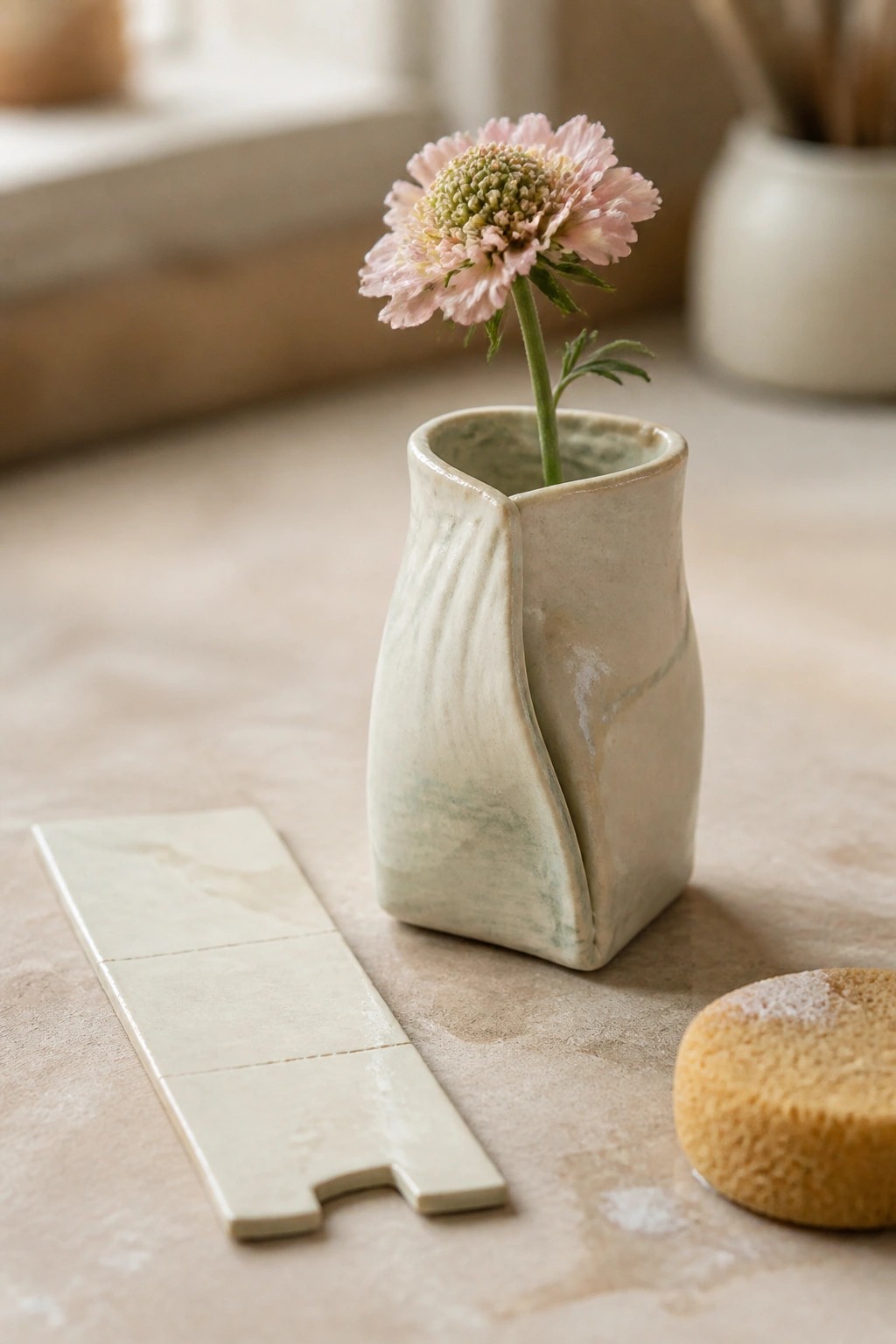
A small vase built from one or two clay slabs can be pinched along the sides to create a soft, folded shape that narrows at the top. The vertical seam becomes a design feature instead of something to hide, and the gentle curves give the piece movement without extra carving or handles. This approach keeps the project simple while still producing a form that stands out from straight-sided slab cylinders.
What makes this idea useful is how the same basic template can be pinched tighter or left wider to change the final look. The small scale works well on a desk or shelf for a single stem, and the flat base with a small notch helps it sit evenly after firing. You could adapt the template to make a taller version for a bathroom or shorten it into a small holder for makeup brushes.
Divided Three-Section Tray from Slab Templates

A divided tray built from slabs works well when you cut three matching rectangles and join them with short internal walls to create separate compartments. Simple rectangular templates keep the sides straight and the divisions even so each section holds roughly the same volume. Different glazes fired in each compartment give the piece a clear visual separation without extra carving or handles. This approach fits the kitchen item category and shows how slab construction turns basic shapes into an organized serving dish.
What makes this idea useful is how easily you can change the number of sections or resize the compartments using the same templates. A piece like this works especially well as a condiment or sauce tray on a dinner table or as a small snack organizer. You could shorten the overall length for a two-section version or widen one compartment if you want to hold larger items. The small scale makes this easy to adapt into a desk tray for paper clips and pens if you use a non-food glaze.
Square Slab Napkin Rings

Napkin rings made from clay slabs give you a simple table accessory that stays consistent when cut with a ring template. These square versions use a 2.25-inch template to create uniform openings and soft outer corners before the clay is joined into a ring. The matte glazes in muted green, cream, and blue keep the surface smooth and the form easy to stack or store.
What makes this idea useful is how the template removes guesswork so every ring in a set matches without extra measuring. The small size works well for both everyday meals and special table settings, and the same template can be adjusted to make slightly larger or round versions. You can also change the glaze colors to coordinate with existing plates or try a single solid color for a more uniform look across the whole set.
Star Template for Slab Ornaments

A star template lets you cut matching shapes from a rolled clay slab for small hanging ornaments. Place the paper cutout on the clay, trace around it, and remove the excess to leave a clean five-point star. Punch a hole near the top point before the clay dries so a ribbon or string can be added later. Mixing small colored specks into the clay creates a light patterned surface without needing extra glaze layers.
What makes this idea useful is how the template keeps every star uniform when you want to make a set. The finished pieces work as tree decorations, gift tags, or simple wall accents. You can swap the star for other basic shapes like a circle or heart using the same slab method. The small size also means you can cut multiple pieces from one sheet of clay without much waste.
Frequently Asked Questions
What types of pottery projects work best with these slab templates? These templates suit beginner friendly projects like simple trays, coasters, small planters, and decorative wall tiles. They provide precise shapes that reduce waste and help new potters focus on assembly and finishing rather than freehand cutting errors.
How should clay be prepared before placing a template on it? Roll the clay to an even thickness of about one quarter inch using guides such as wooden slats or a slab roller. Let the slab rest briefly under plastic to relax any tension, then lightly dust the surface with cornstarch so the template lifts away cleanly without pulling the clay.
Can the templates be resized for different project scales? Yes, print or trace the designs at a different percentage in a basic editing program while keeping the proportions locked. Test the new size on scrap paper first, then transfer it to cardstock or thin plastic for a durable cutting guide that still delivers accurate results.
Which cutting tools give the cleanest edges when using these templates? A sharp needle tool or a thin craft knife held at a slight angle works well for most shapes. For straight lines, a metal ruler placed along the template edge adds stability. Always cut in a single smooth motion and avoid sawing to prevent ragged edges or clay distortion.
How are the templates best stored after use to keep them reusable? Wipe them clean with a damp cloth and dry fully before stacking between sheets of paper. Store the set in a flat folder or binder away from direct sunlight and moisture so the edges stay crisp and the templates remain accurate for many future slabs.

Pottery Path is my cozy corner of the internet where I share clay ideas, pottery inspiration, and simple projects you can recreate at home. I love exploring everything from air dry clay to handbuilt pottery to cute minis that brighten your day. My goal is to make clay crafting feel easy, fun, and welcoming for anyone who wants to try it.
You will find beginner friendly tutorials, creative pottery painting ideas, and lots of warm inspiration for slow and happy crafting. If you enjoy hands on creativity, this space will feel like home.