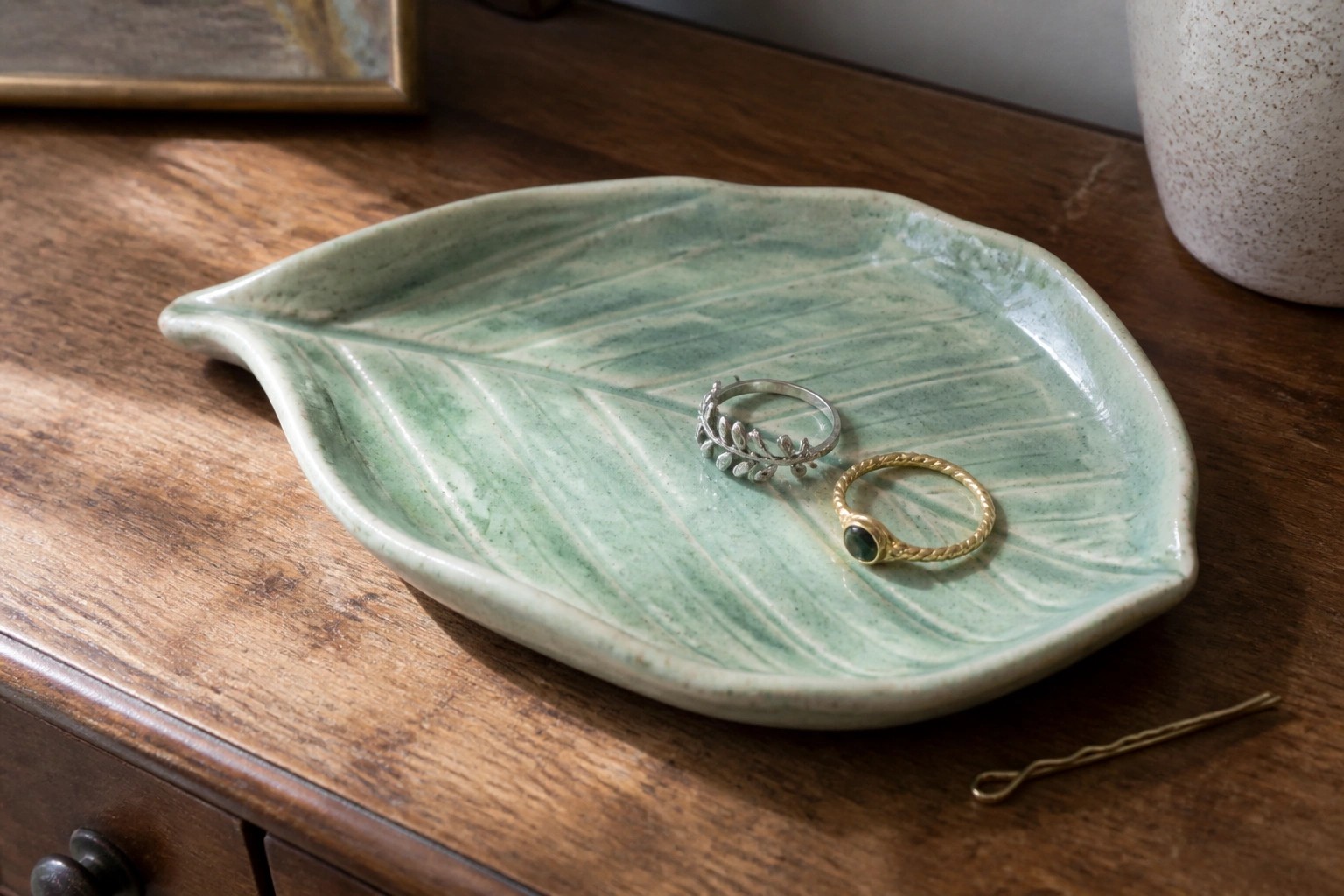
I’ve been working with slab pottery for a few years now and it has become one of my go to methods for making simple pieces that fit into my home.
The flat surfaces are easy to handle and I like how they turn into trays or small wall pieces with just basic tools.
I put together 19 ideas that focus on decorative accents made this way.
Some came from things I actually made and others are variations I sketched out over time.
They stay practical so you can try them without needing a big setup.
Leaf-Shaped Slab Ring Tray
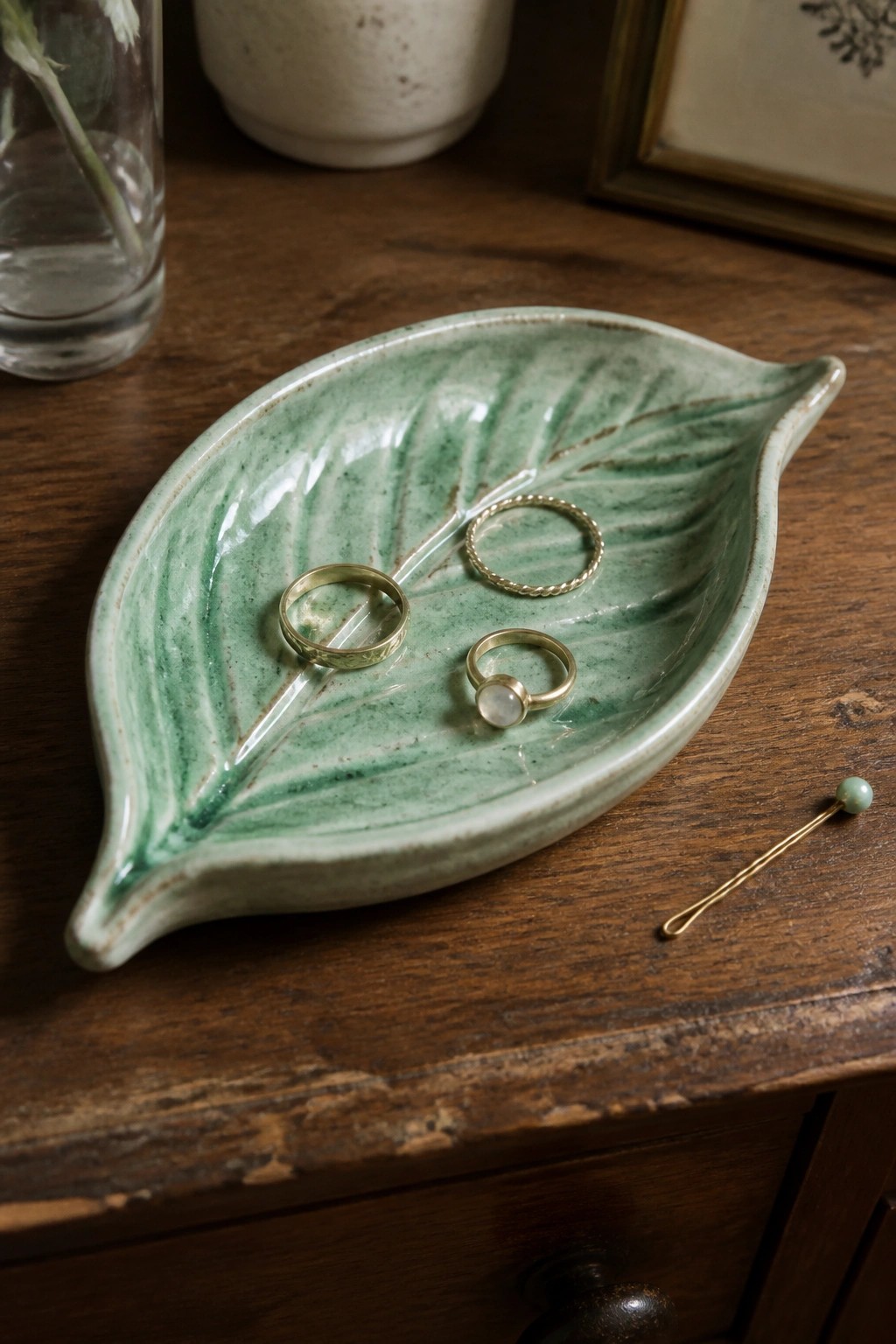
A leaf-shaped slab dish makes a simple ring holder or small trinket tray. Cut a flat piece of clay into a pointed oval, then press leaf veins directly into the surface before adding a shallow rim. The glossy green glaze brings out the impressed texture while the uneven edges keep the form looking natural.
The shape does a lot of the work here because it stays flat and shallow, so it fits on a dresser or bathroom counter without taking much space. You can scale the same pattern down for a smaller version or swap the glaze for a matte finish if you want it to blend with wood furniture. The leaf impression method also transfers easily to a soap dish or small spoon rest if you want to repeat the idea across a few pieces.
Nature Motif Slab Tiles for Wall Displays
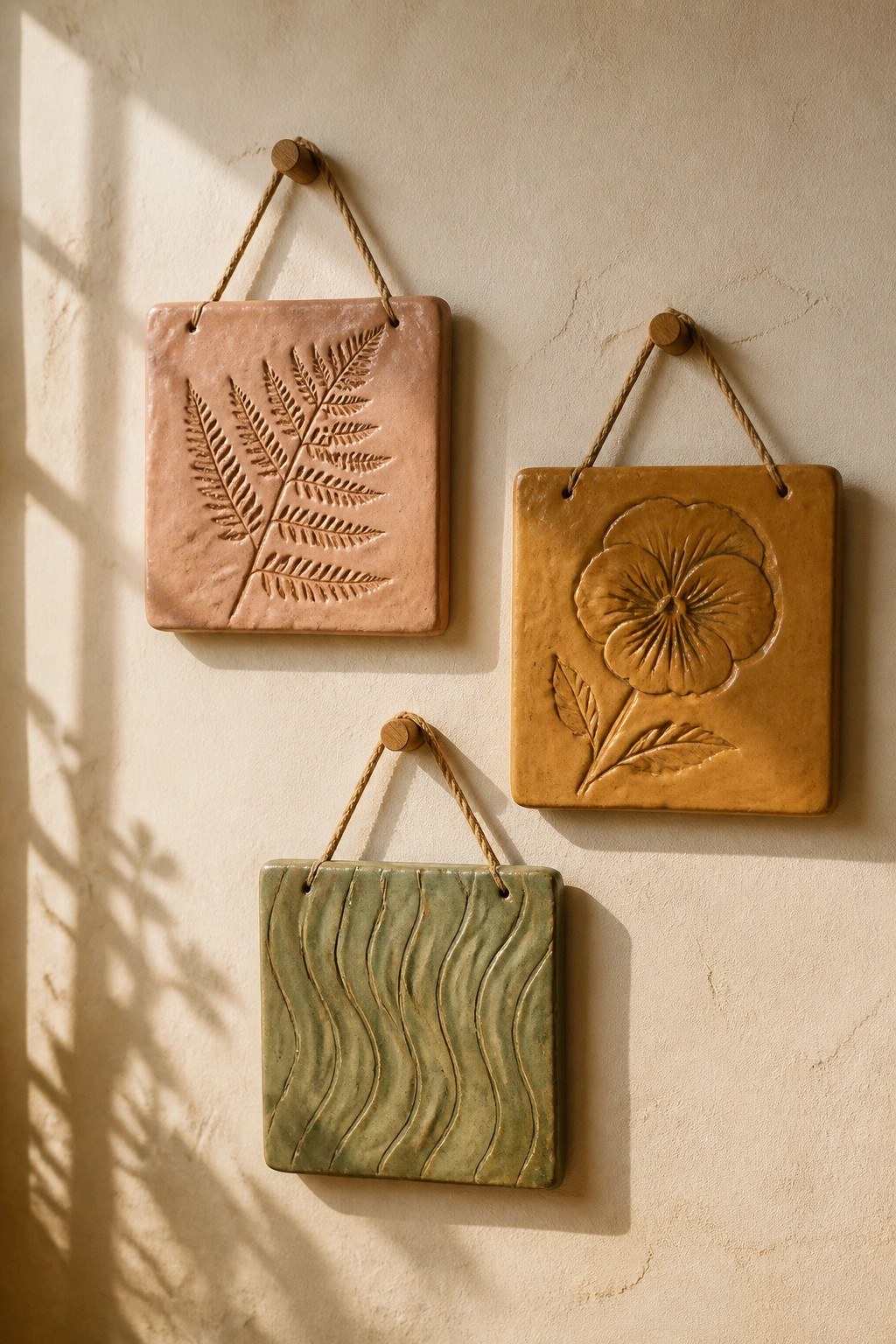
Square clay slabs rolled to a consistent thickness work well for these hanging tiles because they stay flat during drying and firing. Each tile carries a single pressed or carved design such as a fern frond, a full flower, or simple wave lines, then receives a colored glaze that settles into the recessed areas to make the pattern stand out. Small holes drilled near the top edge let you thread cord or wire for hanging without frames. The result is a lightweight, repeatable decor piece that needs only basic slab tools and a few glaze colors.
What makes this idea useful is that the same slab size and hanging method can be reused with different stamps or texture tools you already own. You can swap the flower for a leaf print from your yard or change the waves to straight lines for a more modern look. Grouping three to five tiles on one wall gives an easy focal point in a hallway or above a desk. For gifts, make one tile with a recipient’s favorite plant and leave the others plain so the set stays flexible.
Rectangular Slab Planter with Dimpled Texture
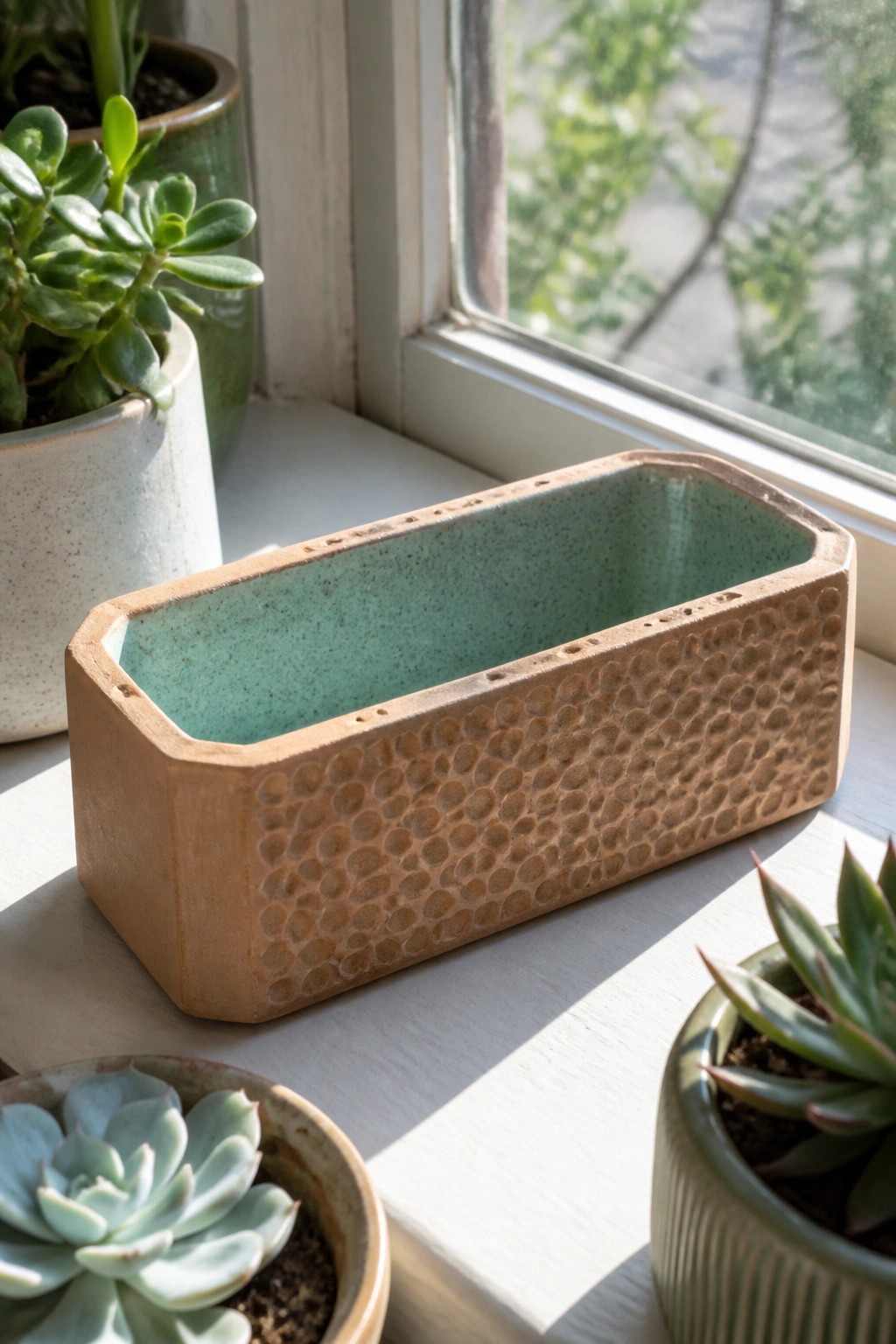
A slab built rectangular planter gives you a long narrow shape that works for lining up several small succulents or trailing plants in one piece. The exterior gets its dimpled surface from pressing a rounded tool into the clay while it is still flat, then the slabs are joined and the inside is coated with a light turquoise glaze that contrasts with the matte brown clay. This approach keeps the build straightforward yet creates visual interest through the texture and color change rather than added details. It belongs in the slab pottery planter category for windowsills or narrow shelves.
What makes this idea useful is how the elongated form holds multiple plants without taking up much depth on a ledge. You can shorten the length for a smaller version or swap the interior glaze for a different color to match existing pots. The texture stays simple to repeat on future pieces and helps hide minor seam lines from assembly. For a gift this shape stands out on Pinterest because it looks more intentional than a basic round pot while still staying practical for plant styling.
Lemon Slice Slab Tray
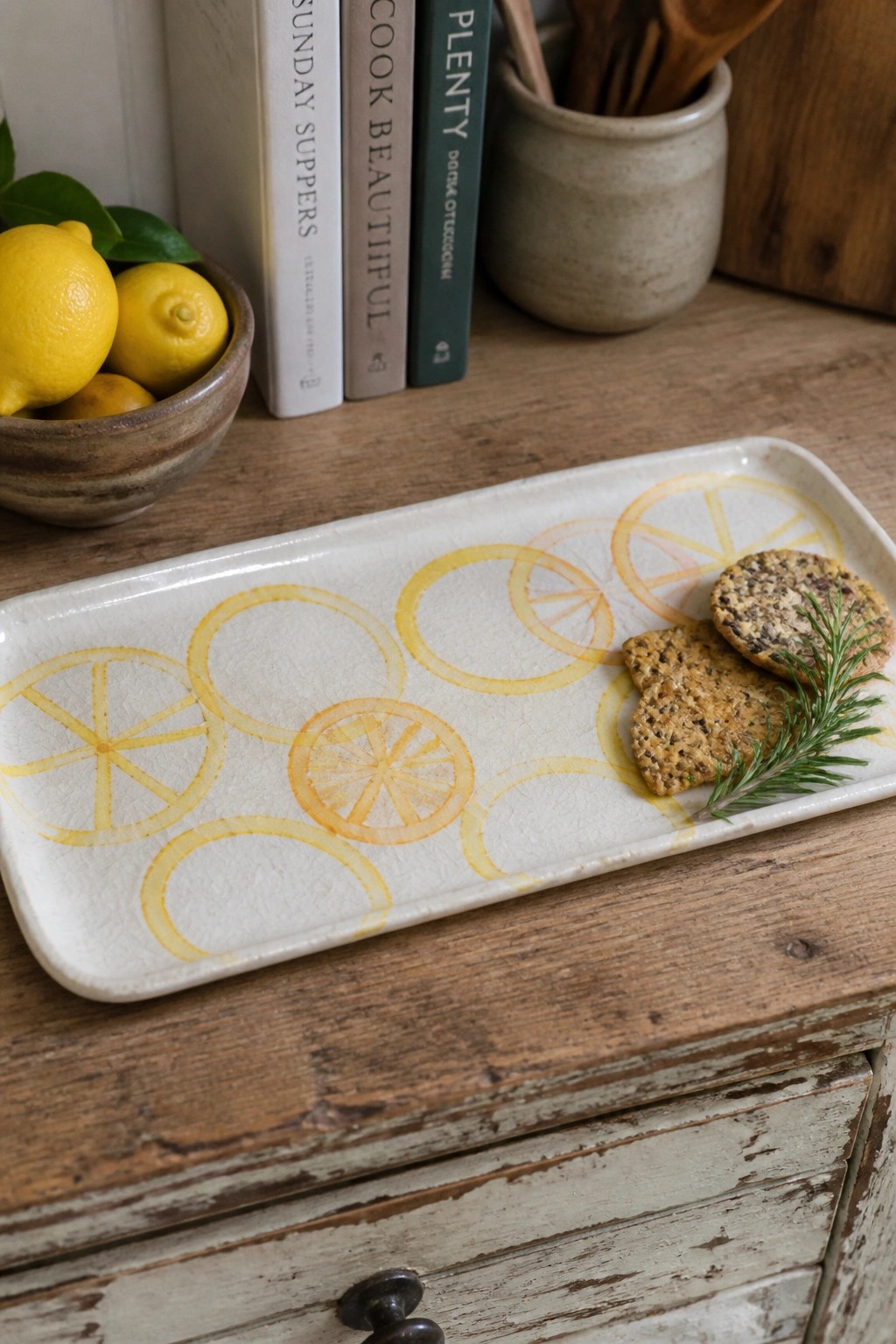
A rectangular tray built from a single slab of clay carries a repeating pattern of lemon slices painted in yellow and orange tones. The design uses overlapping circles with simple radial lines to suggest citrus without filling the entire surface. This keeps the piece functional for holding snacks while the painted motif gives it a clear kitchen theme.
The shape does a lot of the work here by creating a stable, low-profile surface that works for serving or display. You can swap the lemon slices for other fruit outlines or abstract rings if you want a different look without changing the construction. In a kitchen this kind of tray handles crackers, cheese, or small produce and can be scaled smaller for a soap dish or desk tray. The same slab method also works for making matching coasters to go with it.
Painted Face Ceramic Mug
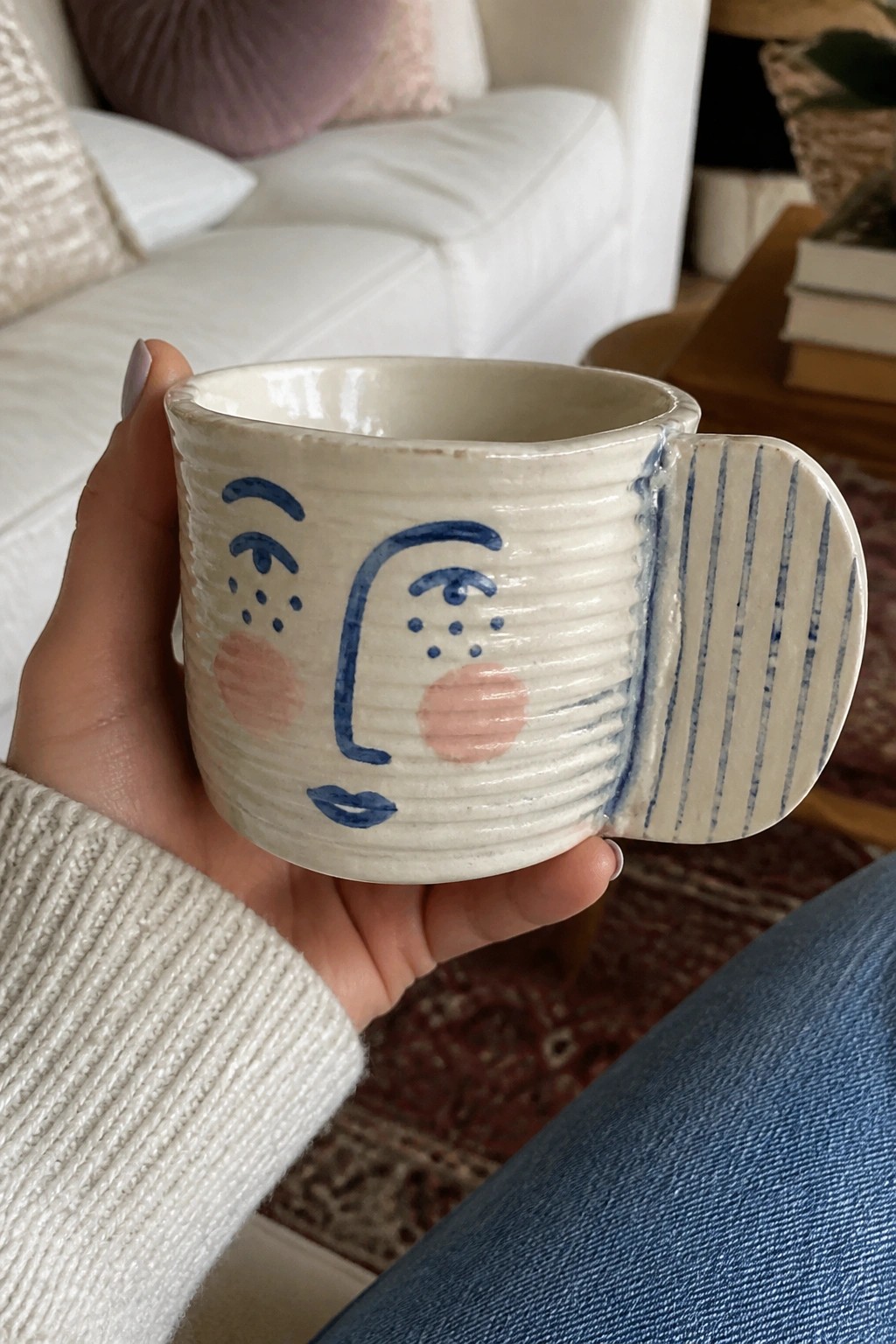
A hand-built ceramic mug with a stylized face turns a basic drinking vessel into a small decorative accent. Blue painted lines form the eyes, nose, and mouth while soft pink circles mark the cheeks on a lightly ridged white surface. The handle repeats the blue color with simple vertical stripes that match the face. This approach belongs to the category of functional mugs that also serve as everyday decor.
What makes this idea useful is how the painted details make the mug easy to spot on a shelf or desk without adding bulk. The small scale and limited color palette would work well for making a matching set of four or six. You could adapt the same face motif to a small bowl or a ring dish by keeping the lines minimal and the background texture consistent. In a kitchen or office, this kind of piece gives a personal touch that still stays practical for daily use.
Triple Tea Light Tray with Sunburst Carvings
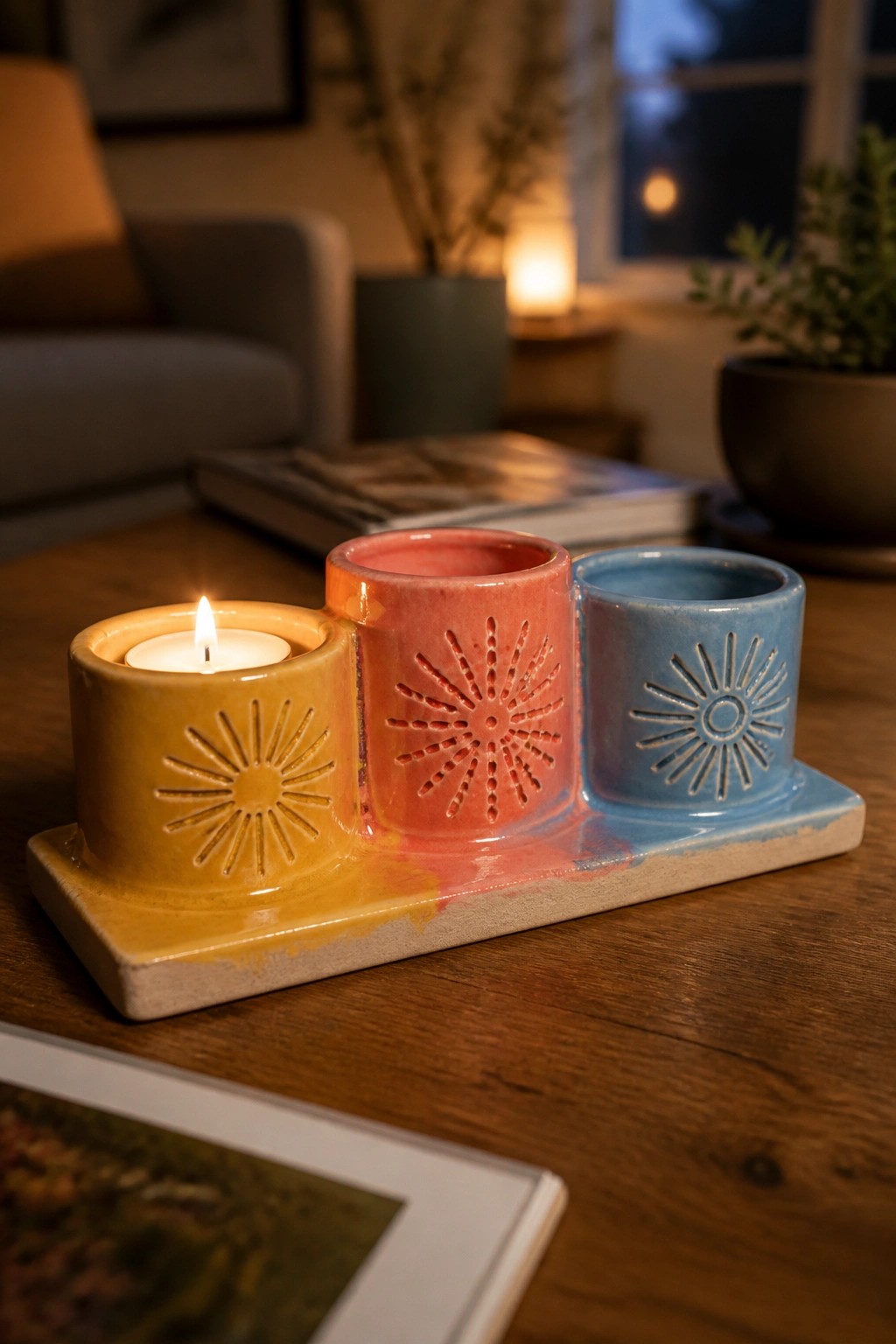
A hand-built ceramic tray holds three short cylindrical cups on one rectangular base. Each cup carries a simple sunburst motif carved through the wall, and the glazes run in yellow, coral, and blue with some color blending along the base edges. One cup is sized to fit a standard tea light while the other two stay empty or hold small items. The connected layout turns three separate forms into a single stable piece.
The joined base makes the set easy to move without tipping and keeps the cups from sliding apart on a shelf. You could shorten the tray to hold only two cups or stretch it for four if you want more lights in a row. Changing the carved pattern to lines or dots gives the same structure a different look without new molds. The compact size fits on a side table or windowsill and still leaves room for other objects nearby.
Textured Slab Tray as a Kitchen Spoon Rest
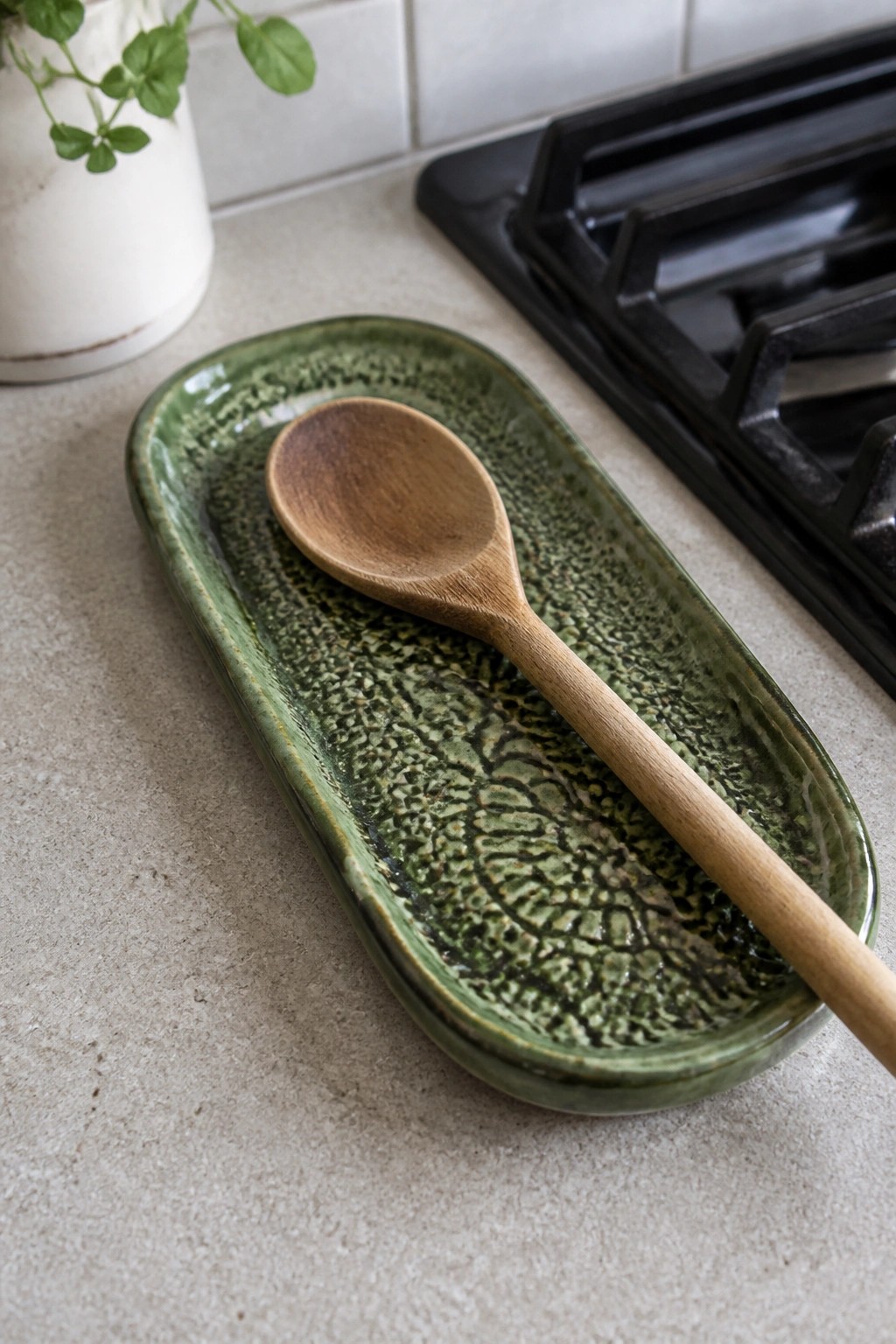
A slab-rolled oval tray works well as a spoon rest because the elongated shape holds a utensil without tipping. Form the piece by rolling out a flat slab, curving the edges upward slightly, and adding a simple impressed texture before glazing. The green glaze that pools and breaks over the texture creates contrast and makes the surface look more finished than a plain coat would.
What makes this idea useful is how it keeps cooking tools off the counter while fitting right next to the stove. You could change the glaze color to match other kitchenware or stretch the slab longer to hold several spoons at once. The same basic shape also works as a small tray for salt and pepper or as a narrow plant saucer on a windowsill. The textured glaze approach is easy to repeat with different colors when you want quick variations.
Slab-Built Vase with Angled Opening and Glaze Band
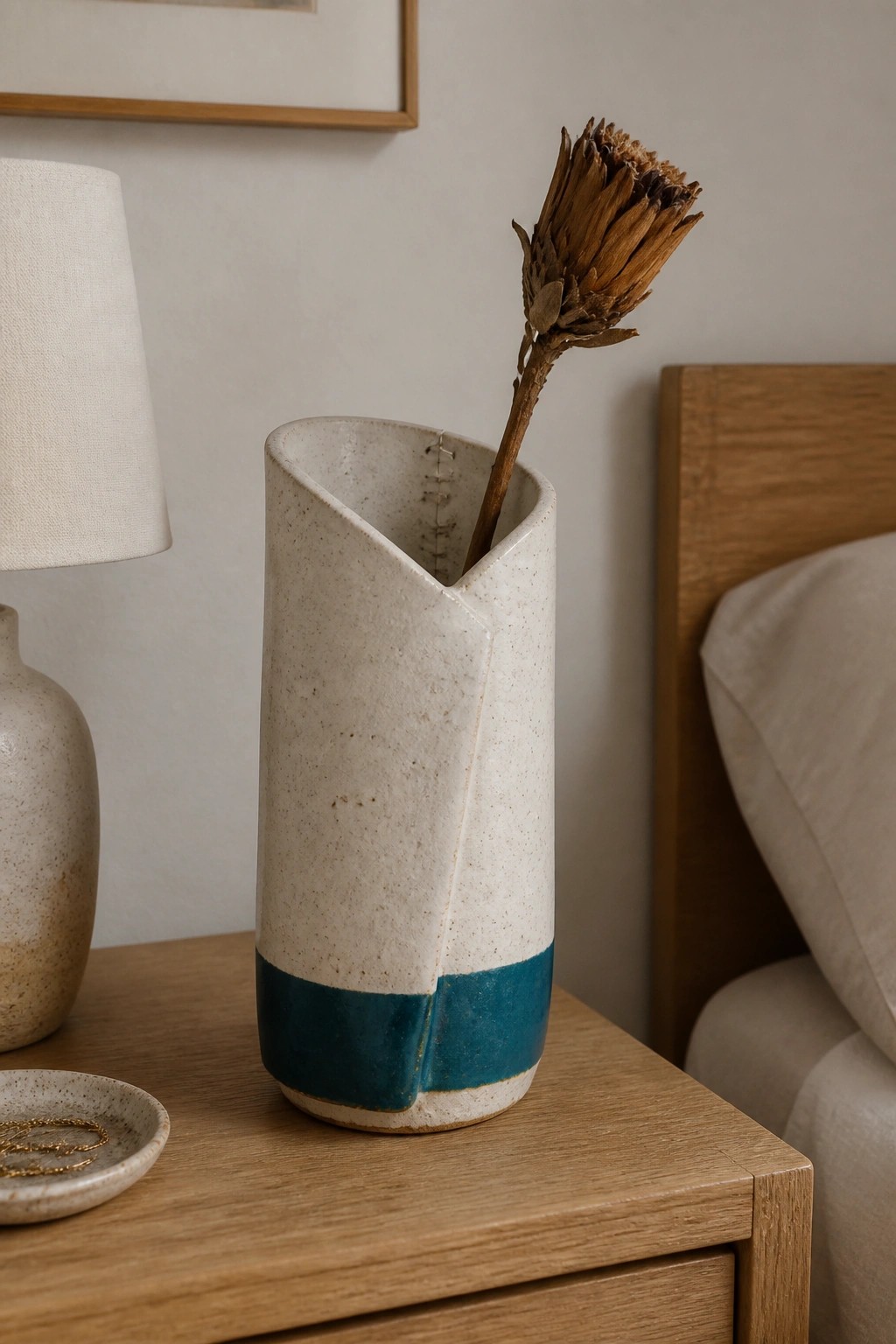
A hand-built ceramic vase made from slabs stands tall with an angled, irregular rim that creates an asymmetrical opening. The speckled off-white clay is interrupted by a solid teal band wrapped around the lower section, and a scored seam runs along one side of the upper edge. This style suits a simple stem holder or dried-flower vase rather than a wide planter.
The shape does a lot of the work here by giving a basic cylinder more visual interest through the cut rim alone. Place it on a nightstand or entry table where its height fits without taking up much surface space. You could rework the same slab method into a shorter version for a desk pencil holder or change the band color to match other room accents. The clean contrast between the neutral body and the single glaze stripe also makes it easy to style in photos for sharing.
Arched Slab Napkin Holder
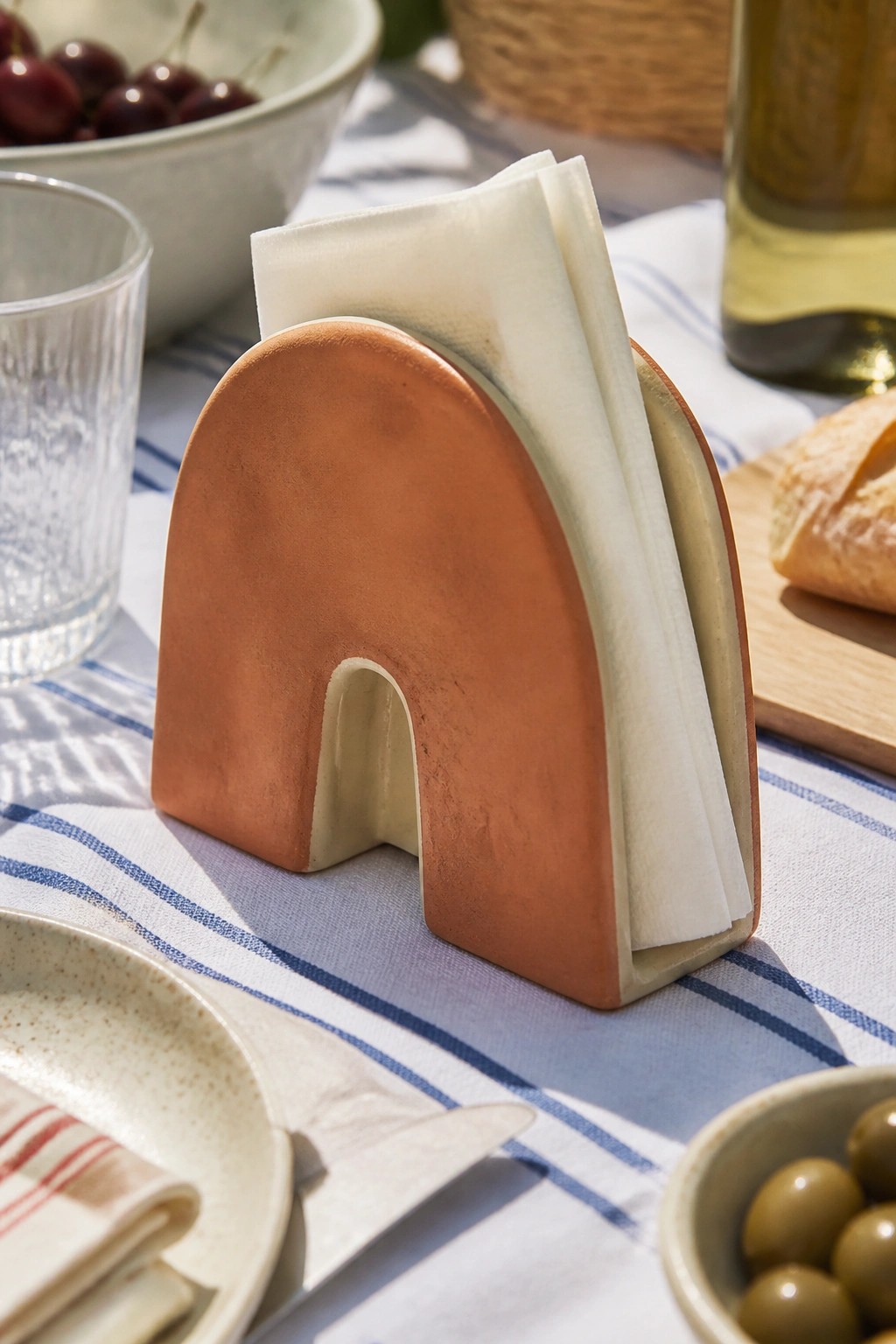
A slab-built ceramic napkin holder formed into a wide arch creates a stable slot for stacking paper or cloth napkins on a table. The shape uses a curved top and open base to hold the stack upright while the thicker walls keep the piece from tipping. The matte terracotta surface on the outside paired with a lighter clay tone inside gives the holder a clean, two-tone look that stays simple. This project falls into the kitchen and table accessory category where basic slab construction produces a functional item with minimal added detail.
What makes this idea useful is how the arch provides both balance and a place to grip the holder when moving it. You could change the width to fit different napkin sizes or adjust the height for a lower profile on crowded tables. In a dining area or outdoor setup the same form works as a small tray for mail or recipe cards if you close the base. The straightforward shape also makes it easy to try different clay colors or add texture to the surface without changing the overall construction.
Scalloped Ring Dish with Embossed Floral Center
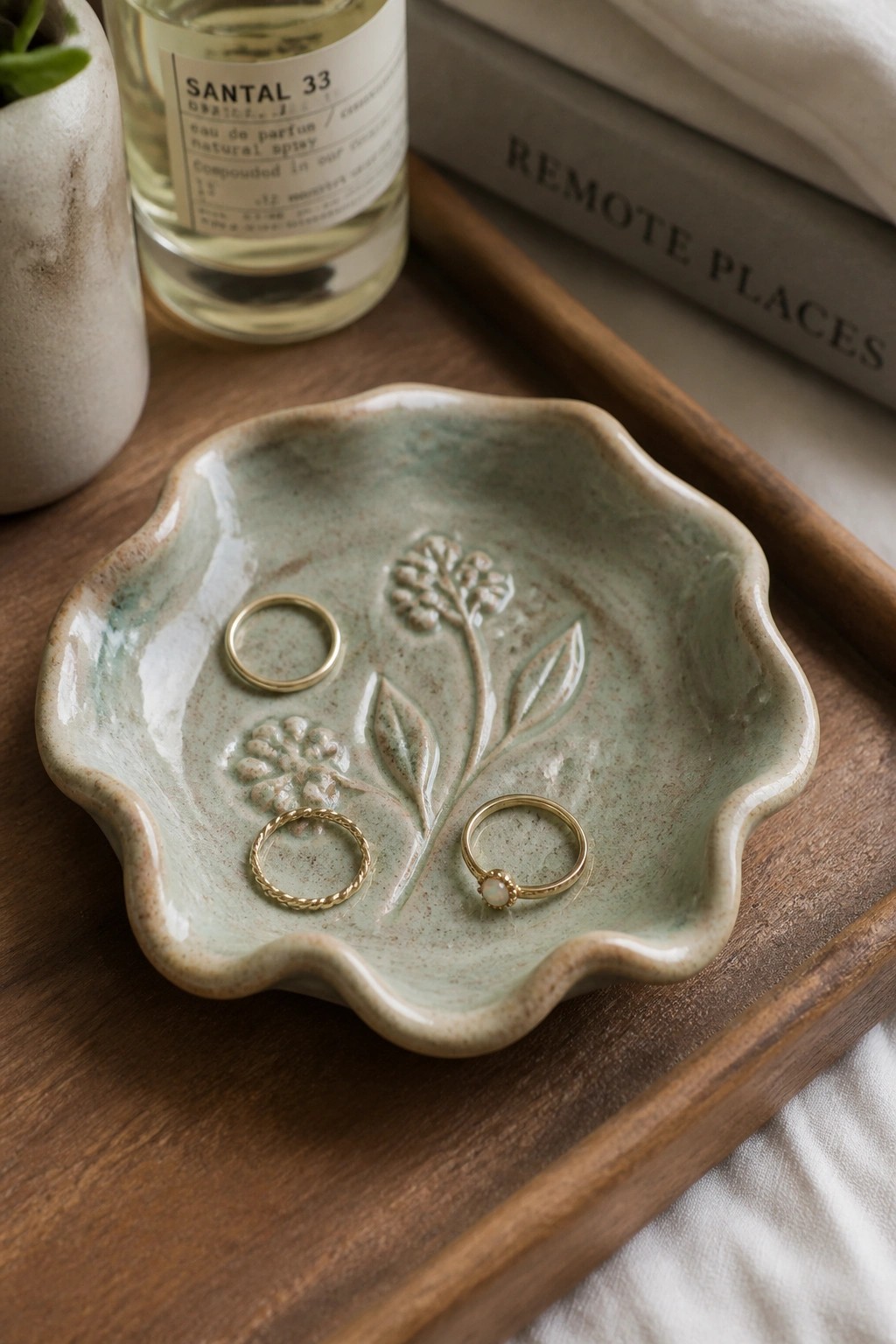
A small slab-built ring dish gains structure from a wavy rim and a simple floral motif pressed into the base before firing. The light green speckled glaze settles into the recessed areas around the raised leaves and flower heads, making the texture readable without extra color. This format keeps the piece practical for holding rings while the embossed detail supplies the main visual interest.
The small scale works well on a dresser or bathroom ledge where jewelry is removed daily. You can change the pressed motif to different plants or abstract shapes and adjust the glaze to fit existing decor colors. Rolling out several at once lets you test rim variations or test glazes on the same form without much extra effort.
Rectangular Soap Dish with Drainage Slits
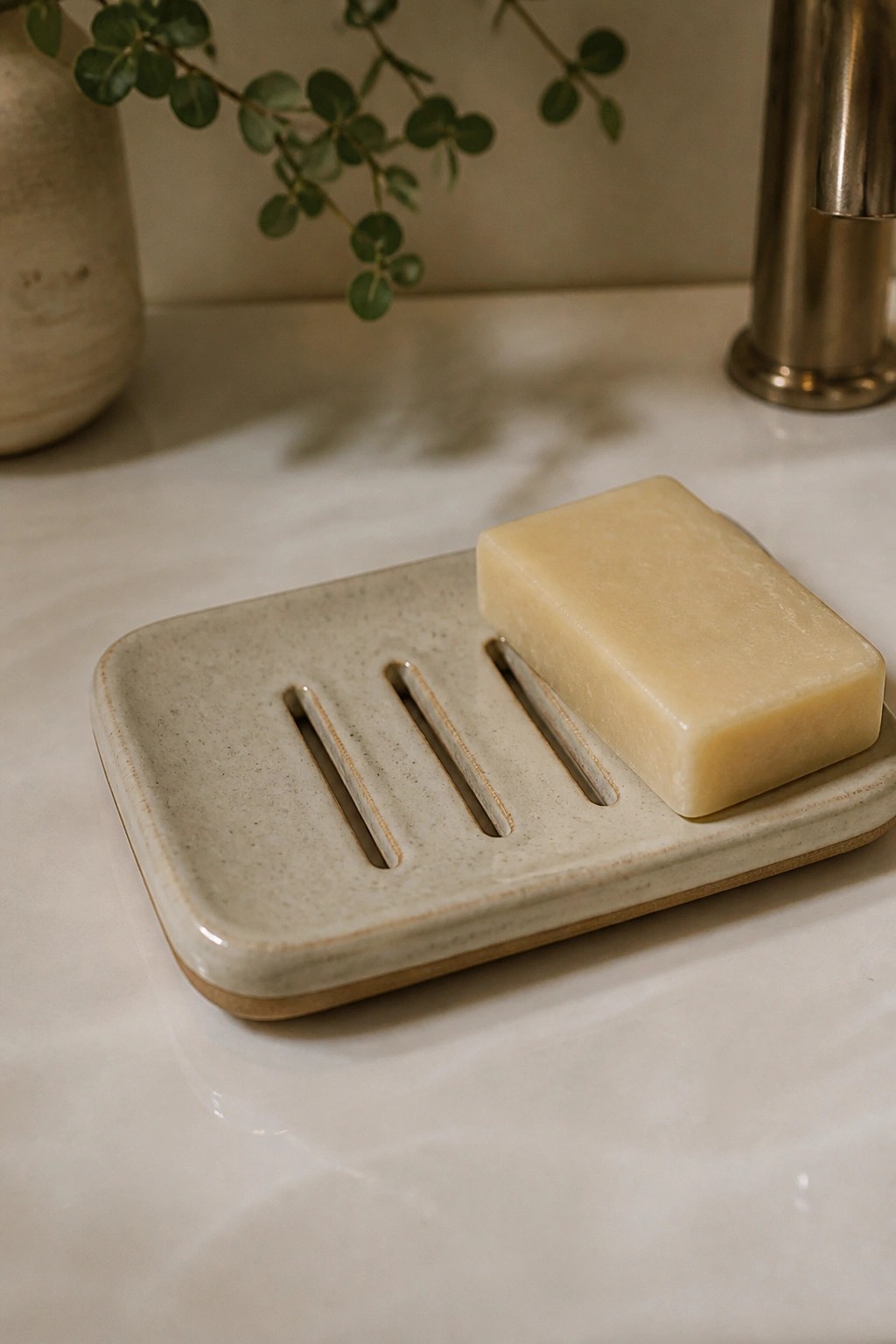
A slab-rolled soap dish forms a flat rectangular tray with three elongated slots cut through the center to let water drain away from the bar. The neutral speckled glaze keeps the surface matte and slightly textured, which helps the soap grip without sliding. This setup turns a basic bathroom item into something both functional and visually simple, with the slots serving as the main design element rather than added decoration.
The shape does a lot of the work here because the low profile and drainage slots make it practical for daily sink use without extra parts. You could scale the tray longer for a double vanity or shorten it into a smaller version for guest bathrooms. For a gift this idea works well since the form stays easy to customize with different glazes or by adding a shallow rim around the edge. The clean lines also help it show up clearly in photos for project sharing.
Wall-Mounted Pouch Planter
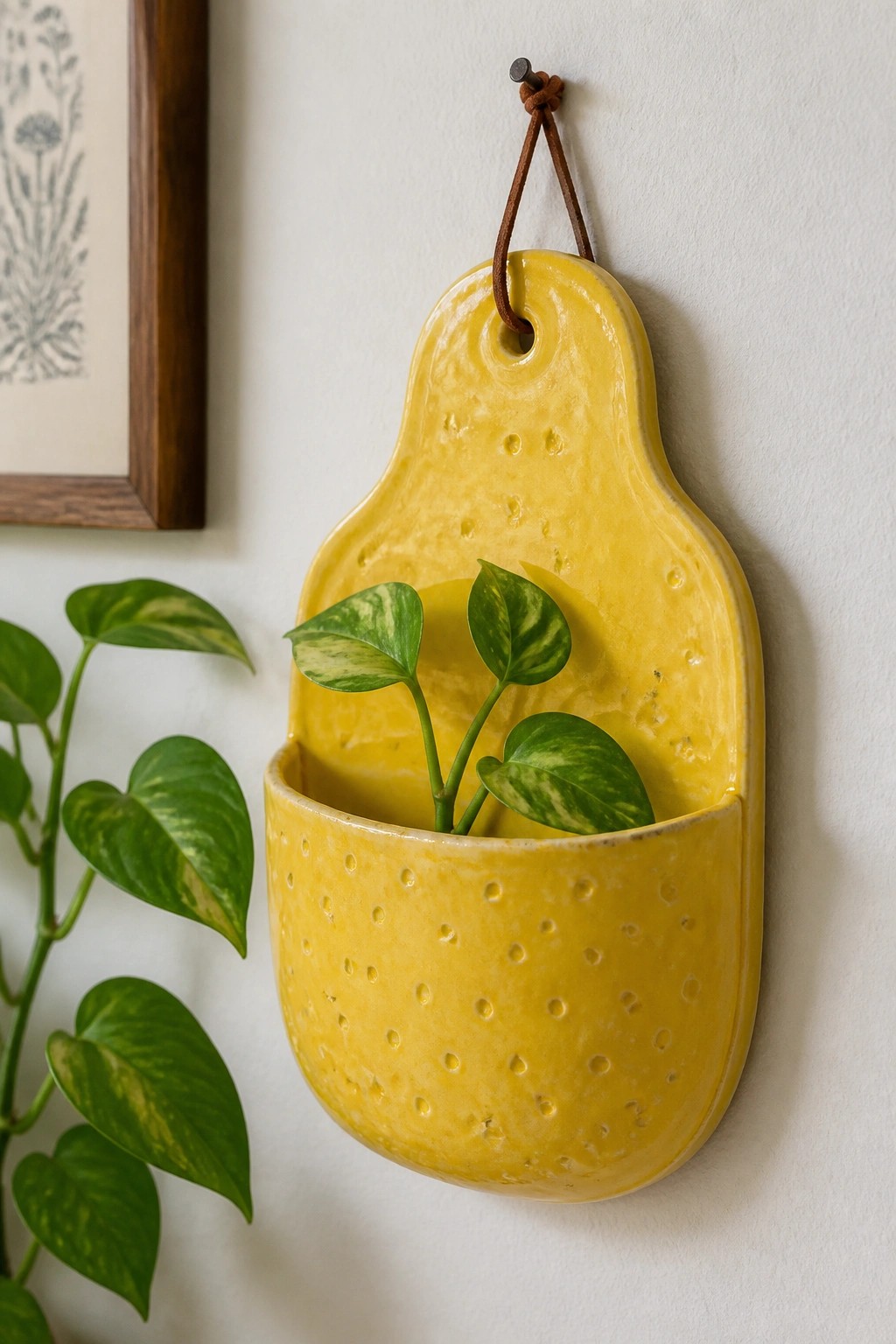
A slab-built wall planter in a rounded pouch shape gives you a compact way to display small trailing plants. The bright yellow glaze covers the entire surface, while rows of small stamped dots create texture across the lower half. A simple hole at the top lets the piece hang from a leather loop, so it sits flat against the wall without taking up shelf space. This project uses basic slab construction to turn a single piece of clay into a ready-to-hang planter.
What makes this idea useful is how the pouch form keeps soil contained while the flat back makes wall mounting straightforward. You could scale the same shape down for a smaller version or swap the glaze for a matte finish in another color to match different rooms. In a kitchen or hallway, the design keeps plants visible without cluttering surfaces. The stamped dots are simple to add with a basic tool, so the same idea works for making several pieces at once.
Striped Slab Utensil Holder
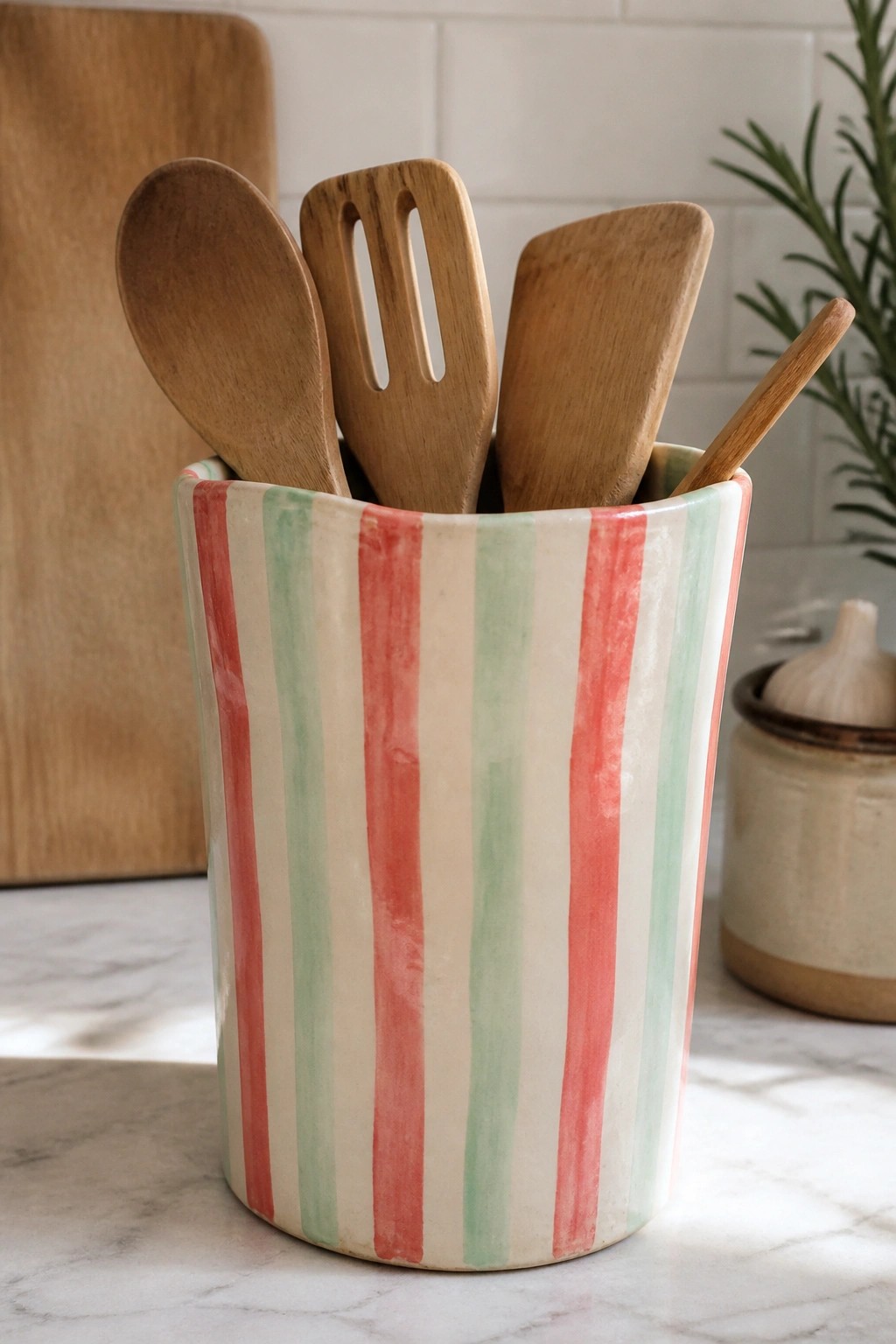
A tall cylindrical holder formed from clay slabs makes a straightforward kitchen caddy for wooden spoons and spatulas. Vertical stripes in red and mint green run the full height of the piece, giving the surface a bold repeating pattern while the cream background keeps the overall look light. The simple shape stays functional for countertop storage and the flat sides make the stripes easy to apply with underglaze or slip before firing.
What makes this idea useful is how the striped layout works with any color pairing and still reads clearly from a distance. The same cylinder proportions could be shortened into a desk cup or widened slightly for a small planter. In a kitchen this kind of piece keeps tools within reach without taking up much space, and the pattern can be simplified to just two colors if you want a quicker paint session.
Slab-Built Incense Tray with Gradient Glaze
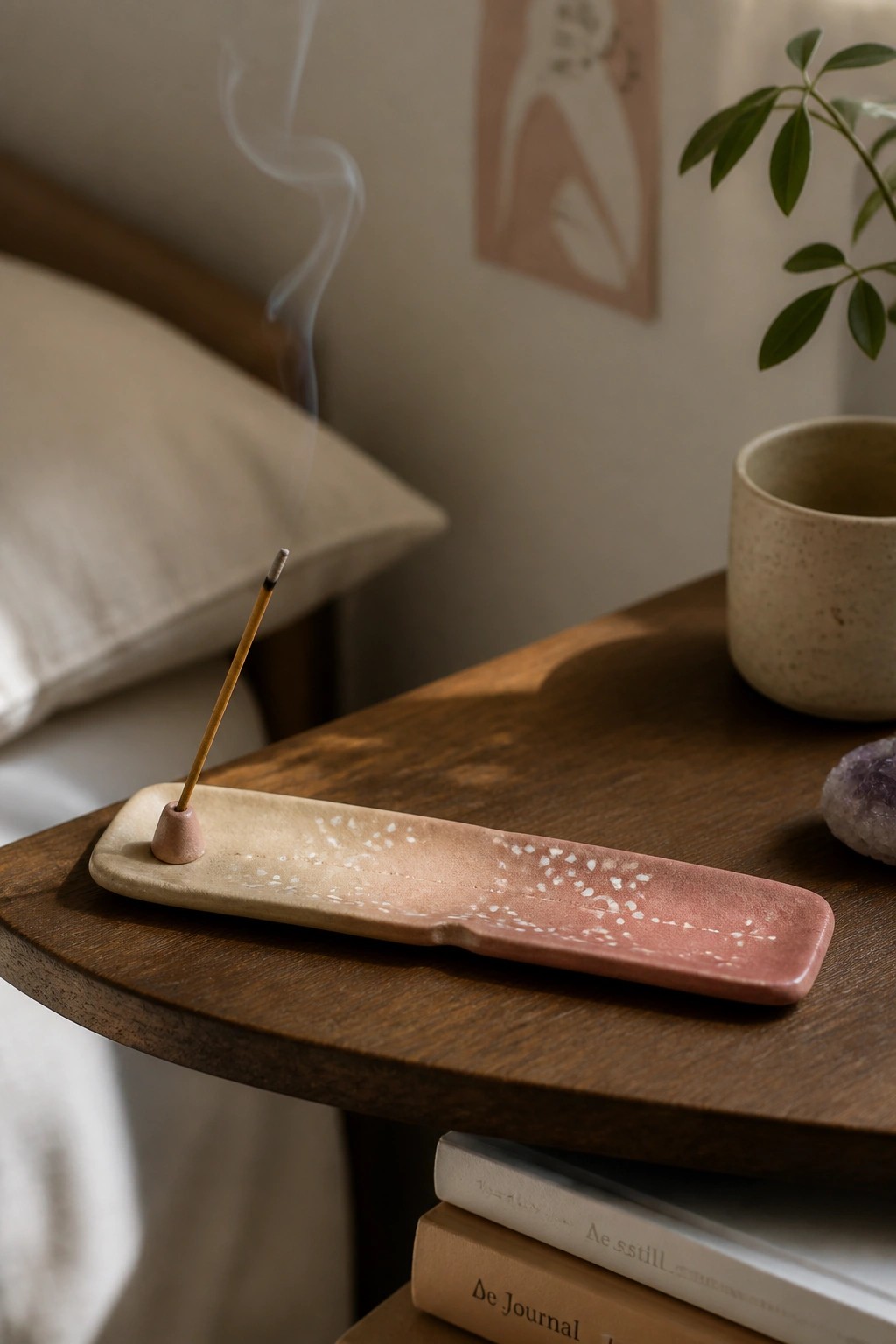
A flat slab of clay rolled into a simple rectangular tray becomes an incense holder once you add a small pinched cone at one end to support the stick. The surface stays mostly smooth so ash stays contained, while a blended glaze that shifts from beige to soft pink with scattered white flecks creates movement across the form. This style of project sits in the decorative holder category and works as a low-profile piece that can rest on a nightstand or shelf without taking up much space.
What makes this idea useful is how the same slab technique can be adjusted for different lengths or widths to fit whatever surface you need to cover. The cone holder can be made taller or shorter depending on the incense size you prefer, and the glaze blend is easy to recreate with any two colors that melt together. For a gift, something like this stays practical because it serves a clear purpose while still looking intentional on its own.
Three-Section Ceramic Holder with Glazed Compartments
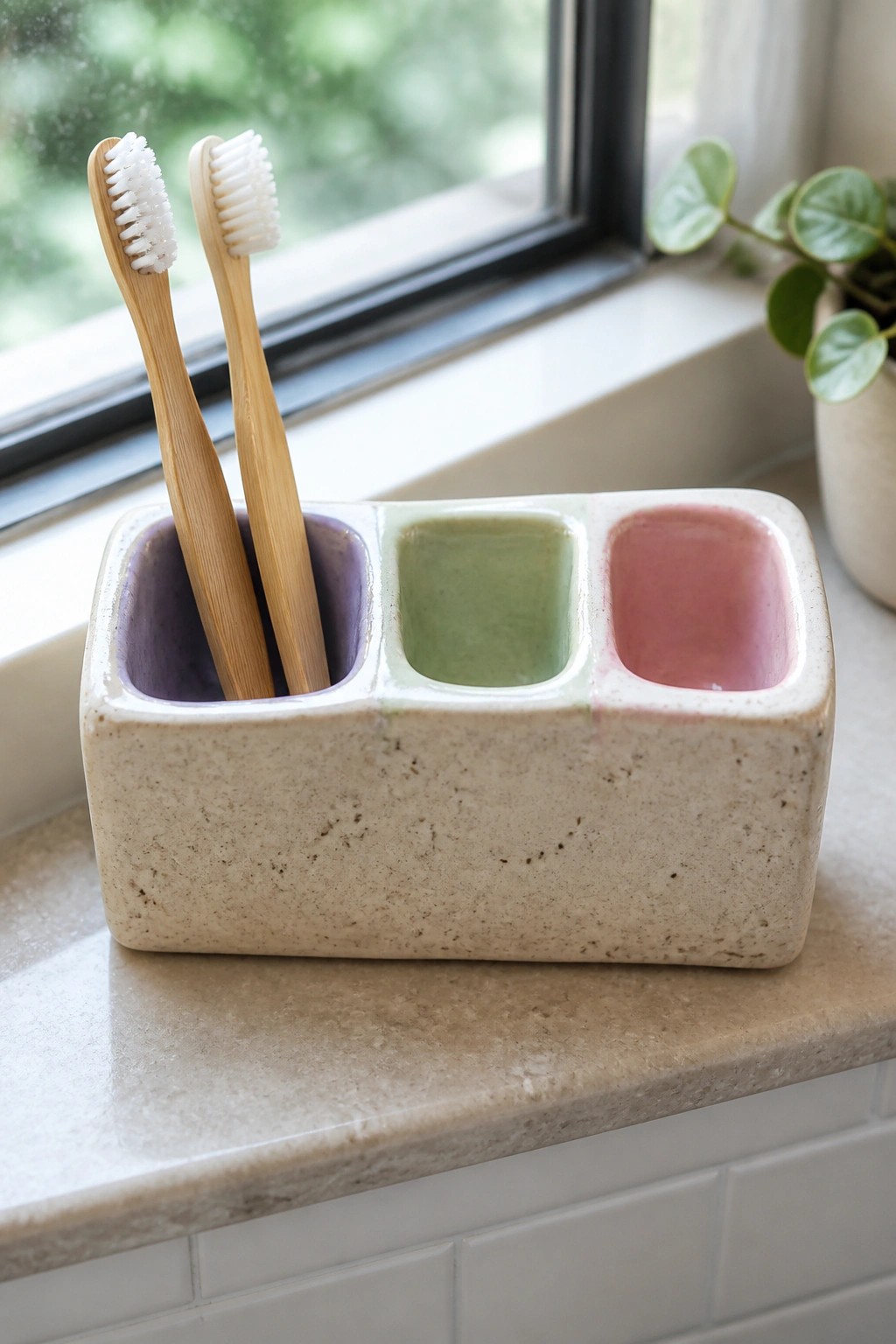
A slab-built rectangular holder with three separate compartments makes a practical bathroom organizer. Each section receives its own glaze color while the outer surface stays in a speckled matte finish, letting the interior tones stand out without extra decoration. The rounded edges on the compartments keep toothbrushes upright and separated while the overall size stays compact enough for a narrow ledge or counter.
What makes this idea useful is that the same divided shape works for other small bathroom items like razors or cotton swabs. You can swap the glaze colors to coordinate with existing tile or towels, or reduce it to two sections if space is tight. For a gift this form feels more intentional than a plain cup because the color blocks give it instant visual order.
Carved Slab Coasters with Relief Motifs
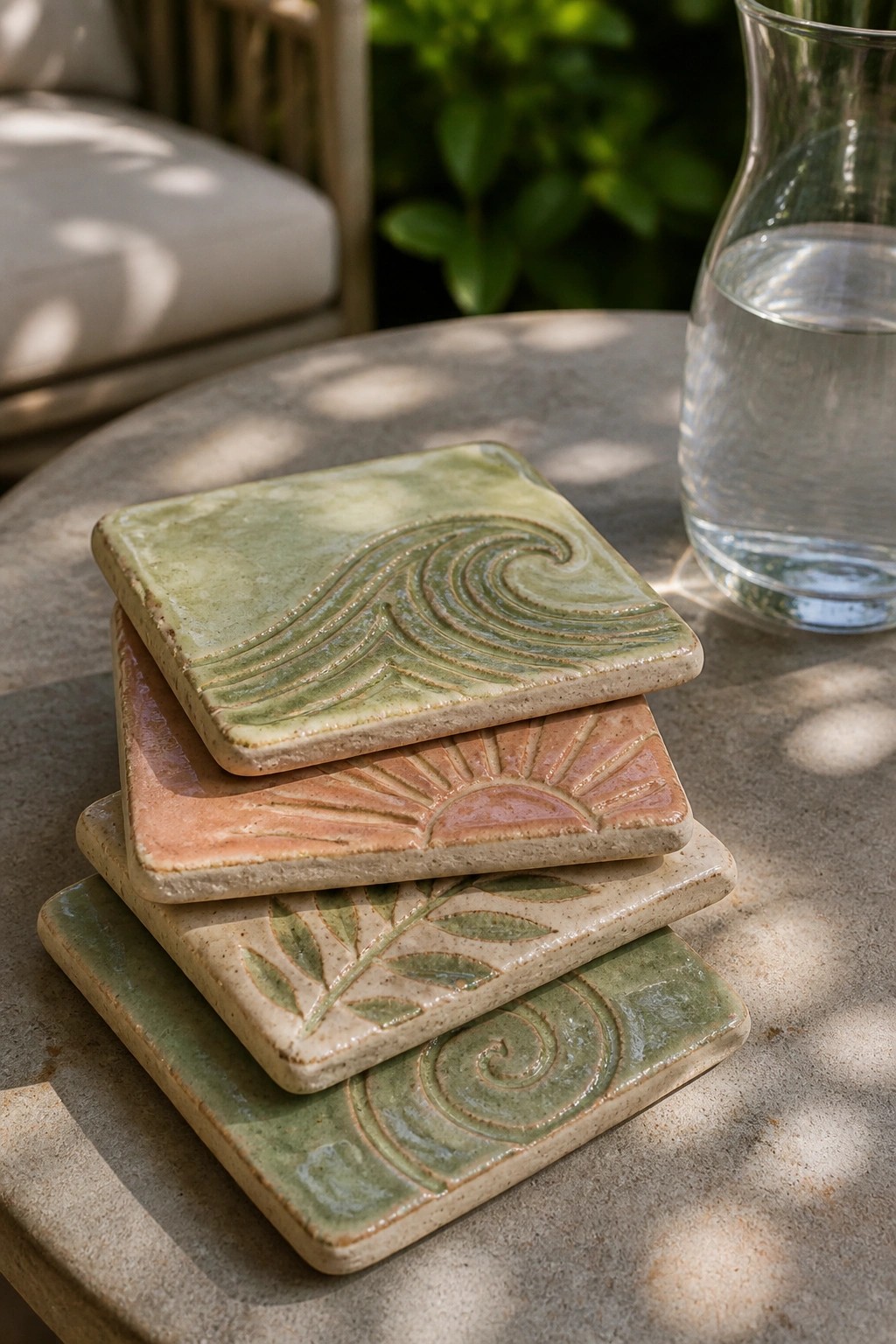
Square slab coasters work well when you roll out even clay sheets, cut them to size, and press or carve simple repeating patterns into the surface before bisque firing. The designs here use flowing lines for waves, radiating lines for a sun, branching leaves, and a tight spiral, each one catching glaze in the recessed areas to create contrast. Green and terracotta glazes accent the textures without covering the entire surface, letting the clay body show through at the edges. This keeps the project focused on flat construction while still producing usable pieces that protect tabletops.
What makes this idea useful is how quickly you can produce a matching set by varying only the stamp or carving tool on identical slabs. The small scale lets you test new patterns without much material waste, and the same carved approach adapts easily to larger trivets or narrow soap dishes by adjusting the template. In a kitchen or on a side table the raised motifs stand out more than flat color alone, especially once glaze pools in the lines. For a gift set you can mix two or three designs rather than repeating one pattern across all four pieces.
Scalloped Slab Bird Wall Hanging
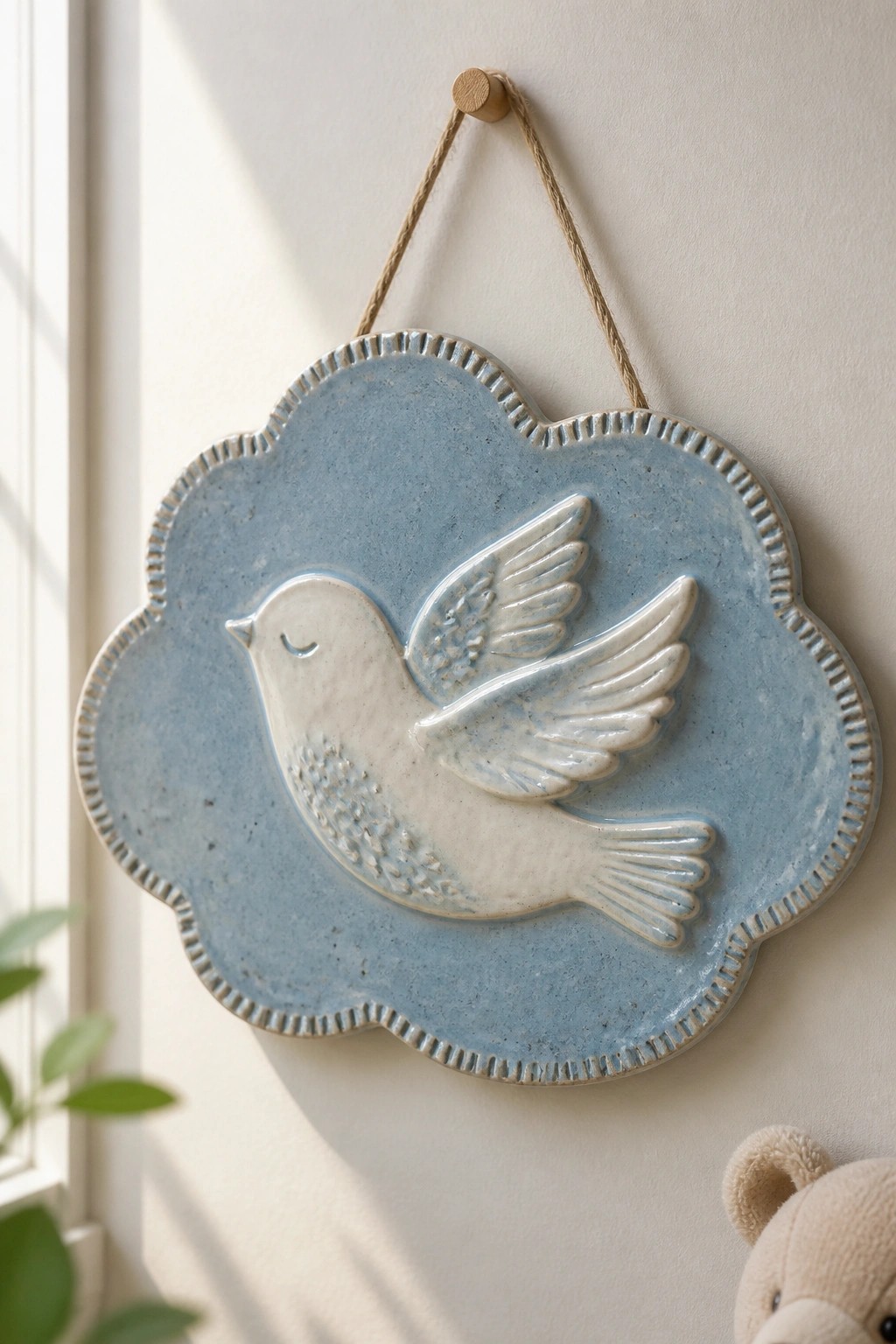
A slab-built wall plaque with a scalloped cloud shape makes an easy decorative piece for any room. The background uses a matte blue glaze while the raised bird sits in white with simple texture pressed into the wings and body. The form stays flat and lightweight so it hangs cleanly from a cord without needing extra hardware. This approach falls into the category of relief decor objects that start as rolled-out clay sheets.
What makes this idea useful is how the scalloped edge gives the piece a finished look without extra carving. You could repeat the same slab method with a different center motif like a leaf or star to create a small series for one wall. The compact size works well over a desk or in a hallway where larger pieces would feel crowded. For a gift, change the bird to a short initial or date stamp to make it personal while keeping the same construction steps.
Rectangular Ceramic Lidded Box for Salt or Spices
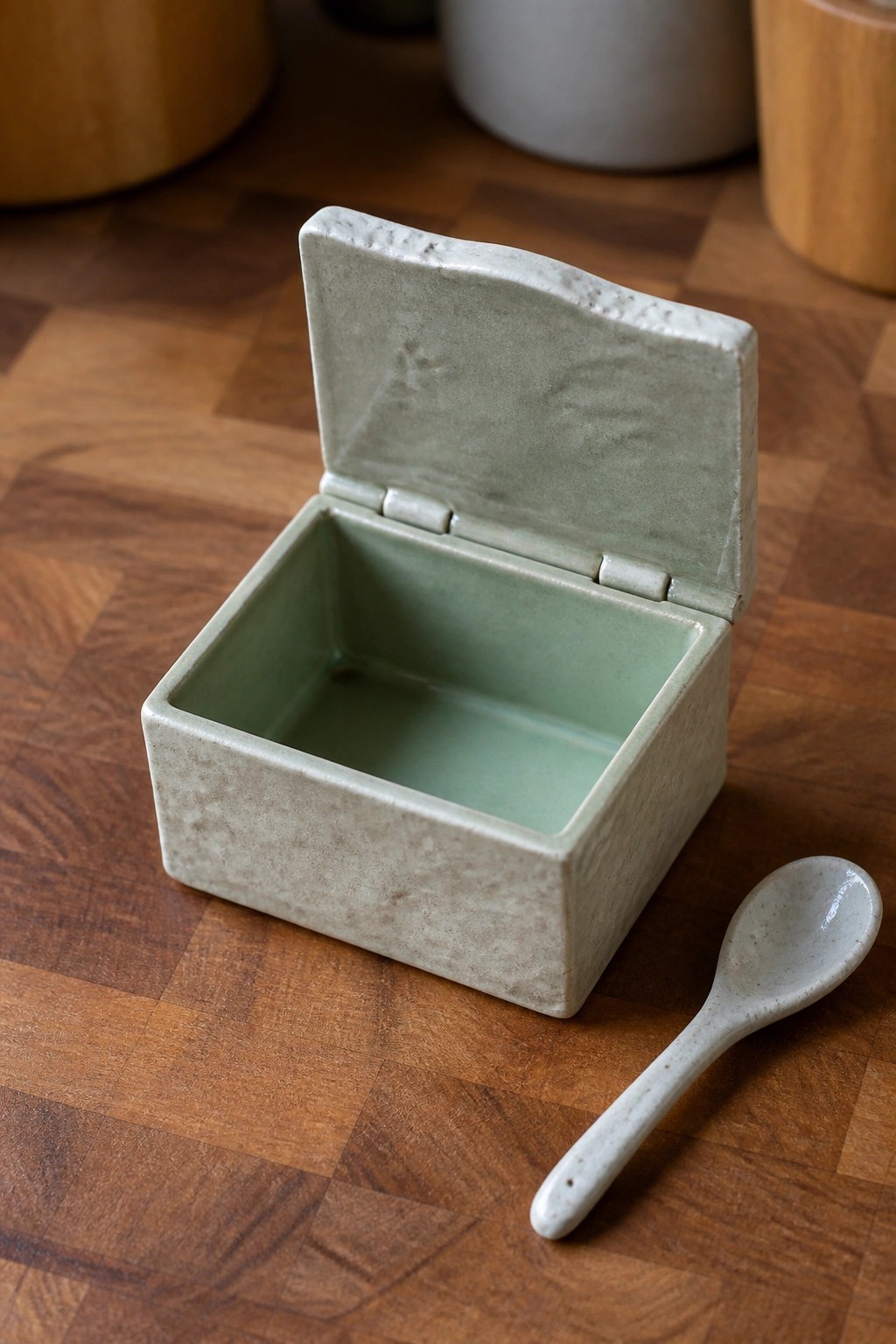
A small rectangular ceramic box with a hinged lid and matching spoon creates a compact kitchen storage piece for salt, spices, or other dry ingredients. The slab-built form keeps the shape clean and functional while the lid sits flush when closed. A speckled matte glaze covers the outside and the interior uses a smoother contrasting glaze that makes the contents easier to see. This approach fits the kitchen item category and keeps the whole set together without needing separate utensils.
What makes this idea useful is the built-in spoon that turns the box into an all-in-one serving solution. The small size works well on a countertop or near the stove where you need quick access. You could scale the same shape larger for sugar or tea or make a few in different glaze colors to match other kitchen pieces. The hinged lid detail also gives it more presence than a simple open bowl while still staying simple to form.
Hanging Slab Disc Mobile
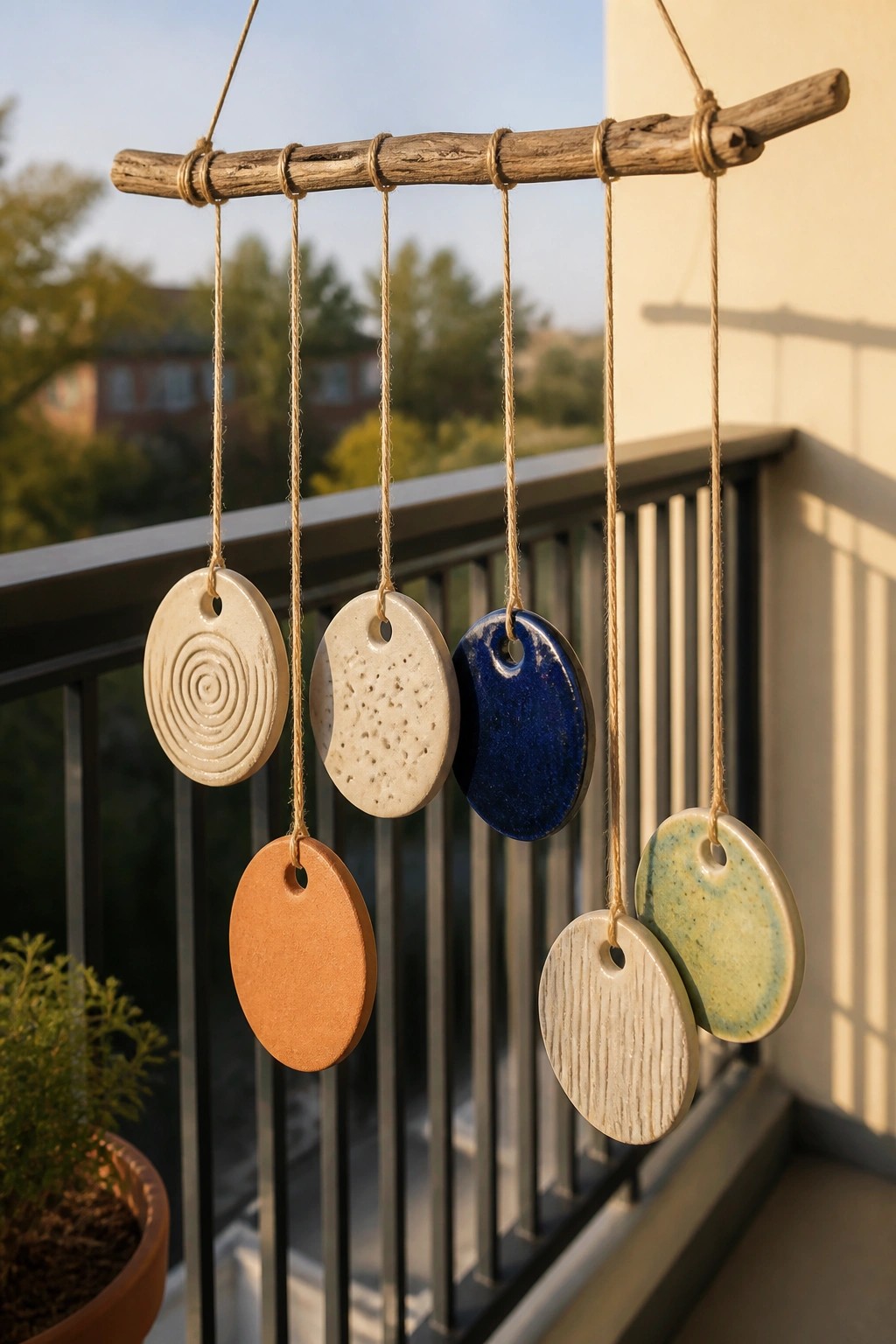
Cut flat clay slabs into circles of varying sizes, add surface textures like spirals, lines, or speckles, then apply simple glazes in a few colors before firing. String the finished discs from a found branch or dowel using twine or cord to create a lightweight hanging piece. The mix of matte and glossy finishes plus the contrast between plain and patterned discs keeps the overall look balanced without needing complex shapes.
What makes this idea useful is how easily the discs can be scaled up or down to fit different spaces like a balcony railing or indoor window. You can swap in one solid color glaze across all pieces for a calmer look or keep the variety if you want more visual interest. The same slab circles work just as well turned into individual ornaments or attached to a wall frame instead of a branch. For Pinterest, the simple hanging format and clear texture differences photograph cleanly and get saved often.
Frequently Asked Questions
What type of clay is best for creating the decorative slab pottery ideas mentioned in the article?
Earthenware or stoneware clay works well for most slab projects because they hold shapes firmly after rolling and cutting. Choose a clay with grog for added strength if your designs include larger accents like wall hangings or trays. Test small samples first to see how the clay responds to your textures and drying conditions.
How can beginners adapt the 19 ideas if they lack access to a kiln?
Many of the ideas can be made with air-dry clay instead of firing in a kiln. Roll out your slabs, add the suggested decorative elements like imprints or cutouts, and let them dry slowly over several days. Seal the finished pieces with a waterproof varnish to protect them for home display.
What steps help prevent cracking in slab pottery during the drying process?
Dry your pieces slowly by covering them loosely with plastic for the first day or two. Keep slabs at an even thickness of about a quarter inch and avoid thin edges that dry faster. Turn items regularly and work in a space with consistent humidity to reduce stress on the clay.
How do I add color and texture to make the home accents more eye-catching?
Apply underglazes or slips before the first firing to create patterns that match the article’s suggestions. Use tools like stamps, leaves, or fabric for textures, then layer glazes in complementary shades for depth. Experiment on test tiles to see how colors interact after firing.
What maintenance is needed to keep slab pottery accents looking their best over time?
Dust the pieces gently with a soft cloth and avoid harsh cleaners that could damage glazes. For items used in humid areas, ensure they are fully sealed. Store fragile designs away from direct sunlight to prevent fading, and check for any chips that might need touch-up with matching paint.

Pottery Path is my cozy corner of the internet where I share clay ideas, pottery inspiration, and simple projects you can recreate at home. I love exploring everything from air dry clay to handbuilt pottery to cute minis that brighten your day. My goal is to make clay crafting feel easy, fun, and welcoming for anyone who wants to try it.
You will find beginner friendly tutorials, creative pottery painting ideas, and lots of warm inspiration for slow and happy crafting. If you enjoy hands on creativity, this space will feel like home.