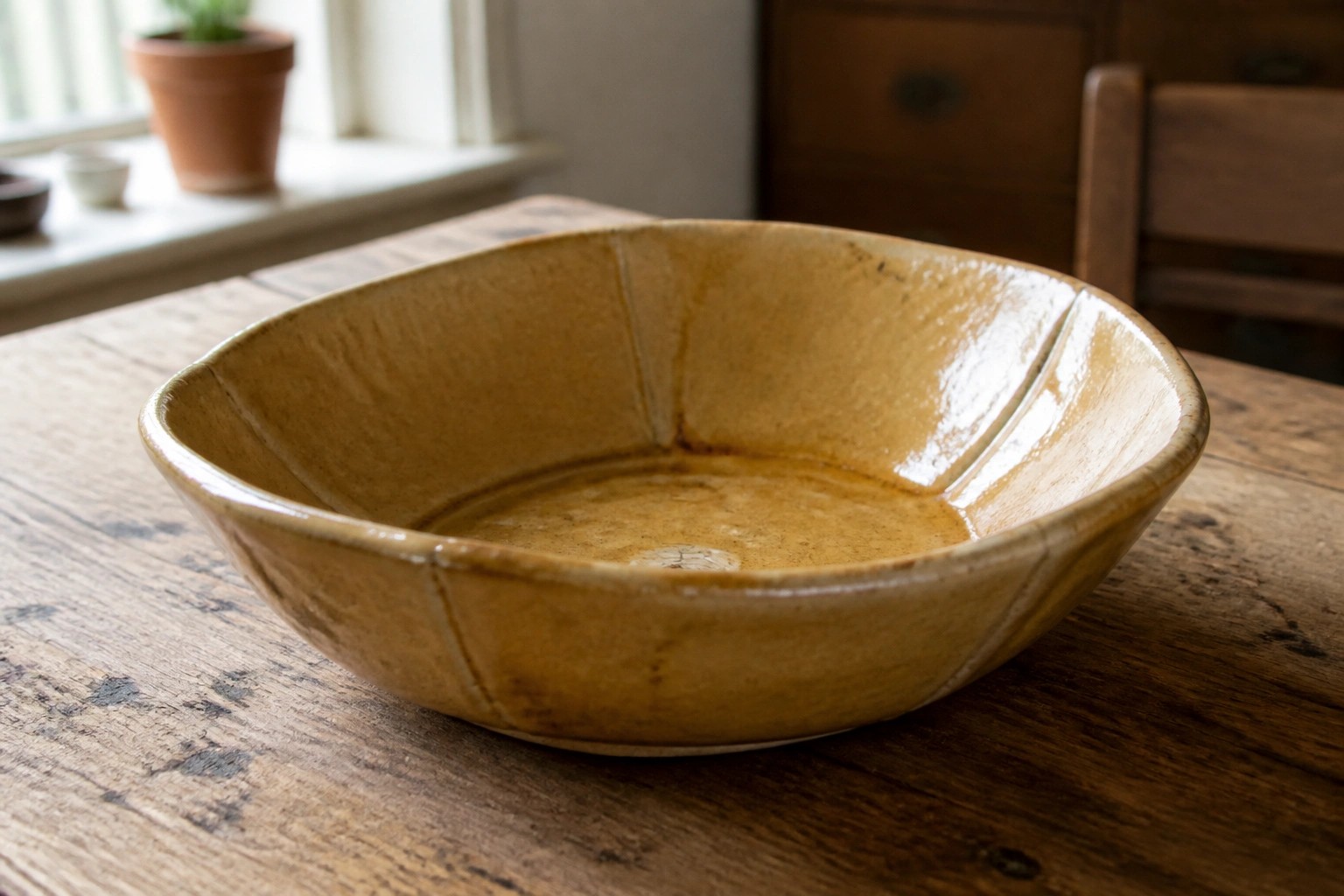
I have been making slab pottery bowls for a few years now and it is one of the easier ways to create something that actually gets used around the house.
My own kitchen has a couple that I made from simple slabs and they work fine for holding fruit or serving side dishes.
The process does not require a wheel so it feels more approachable if you are working at home with basic tools.
I have gathered some ideas that keep the shapes practical while still looking decent on the table.
These are the kind of pieces that blend into everyday routines without needing special care.
Faceted Slab Bowl with Straight Sides
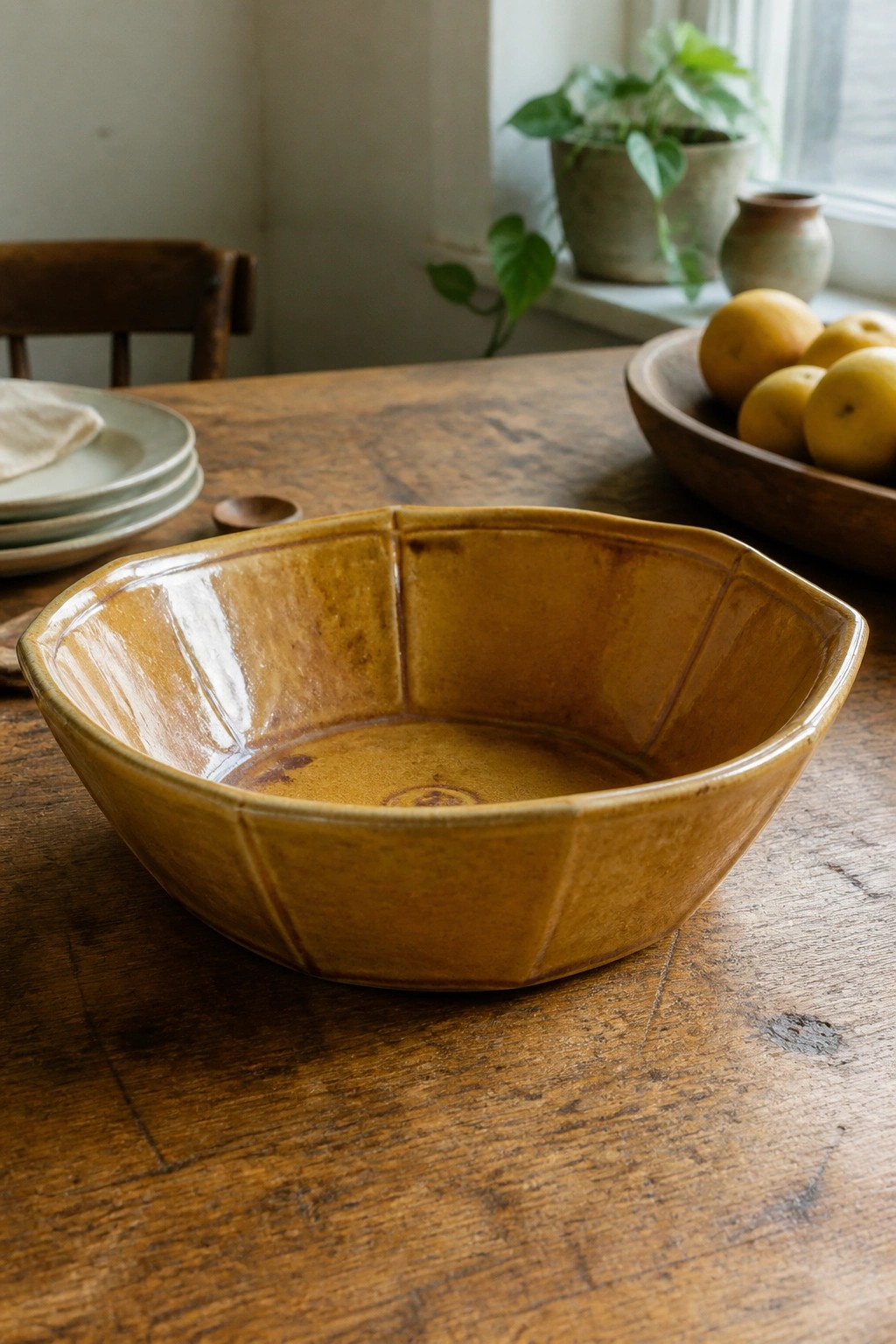
A slab-built bowl made from flat clay sections joined at angles produces a multi-sided shape that feels structured and stable. The warm ochre glaze pools slightly along the seams and gives the surface a soft sheen without hiding the construction lines. This style works well as a serving bowl because the wide, open form holds fruit, bread, or salad while the straight sides keep everything contained.
What makes this idea useful is the way the flat panels let you build consistent shapes without a wheel. You could scale the same faceted pattern down for smaller prep bowls or switch the glaze to a matte finish for a more rustic kitchen look. In a dining area the angular form stands out on a table and pairs easily with both modern and simple dishware.
Square Slab Bowl with Spout and Notched Rim
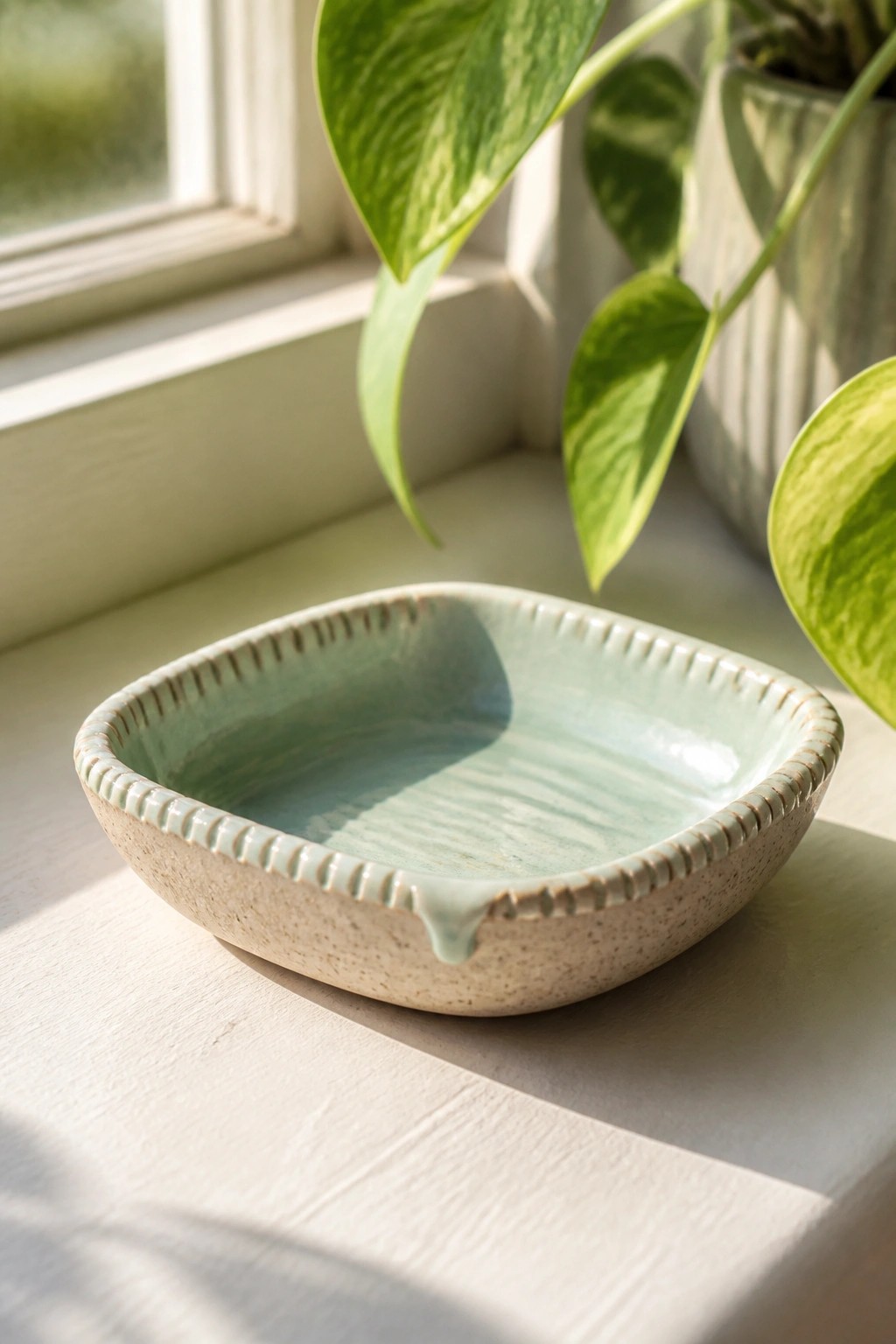
A slab-rolled square bowl with a small pouring lip works well as a dish for sauces, snacks, or small sides. The flat sides and corners come directly from joining cut slabs, while the notched rim gives the edge a finished look with minimal extra effort. A light glaze on the inside contrasts with the bare speckled clay on the outside, letting the texture of the clay show through.
What makes this idea useful is how the spout turns a basic square dish into something that can pour as well as hold. The same slab method works for different sizes, so you can make a set of small dip bowls or scale it up for a larger serving piece. It fits easily on a kitchen counter or table without needing much space, and swapping the rim detail for stamping or leaving it plain keeps the project quick to repeat.
Blue Striped Slab Bowl for Noodle Servings
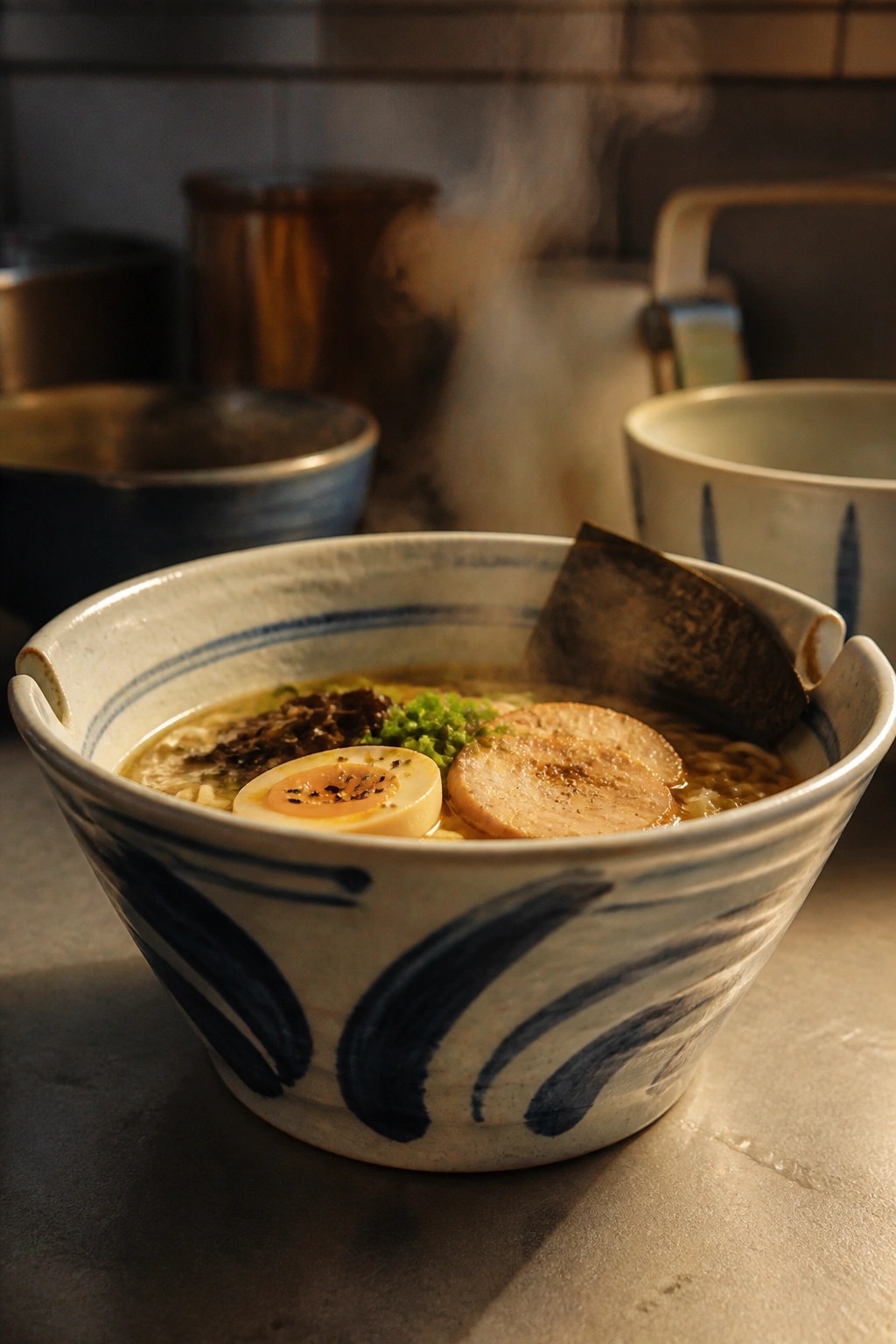
A slab-built ceramic bowl gives you a wide, shallow form that works especially well for ramen or soup servings. Flat clay sheets are cut and joined to create the body and rim, then finished with broad blue brush marks over a white glaze. The irregular edge and cutout details come directly from the slab construction, keeping the piece sturdy enough for daily kitchen use. This approach lands in the category of functional serving bowls where the surface pattern stays simple but visible.
The shape does a lot of the work here because the generous diameter holds broth and toppings without crowding. You could rework the same slab method into smaller individual bowls or change the stripe width to match different glaze colors. In a kitchen, this style holds up to hot food and stacks reasonably on shelves, so it stays practical rather than purely decorative. For a gift, the same pattern scales easily to a set of two or three bowls.
Nesting Bowls with Reactive Glazes
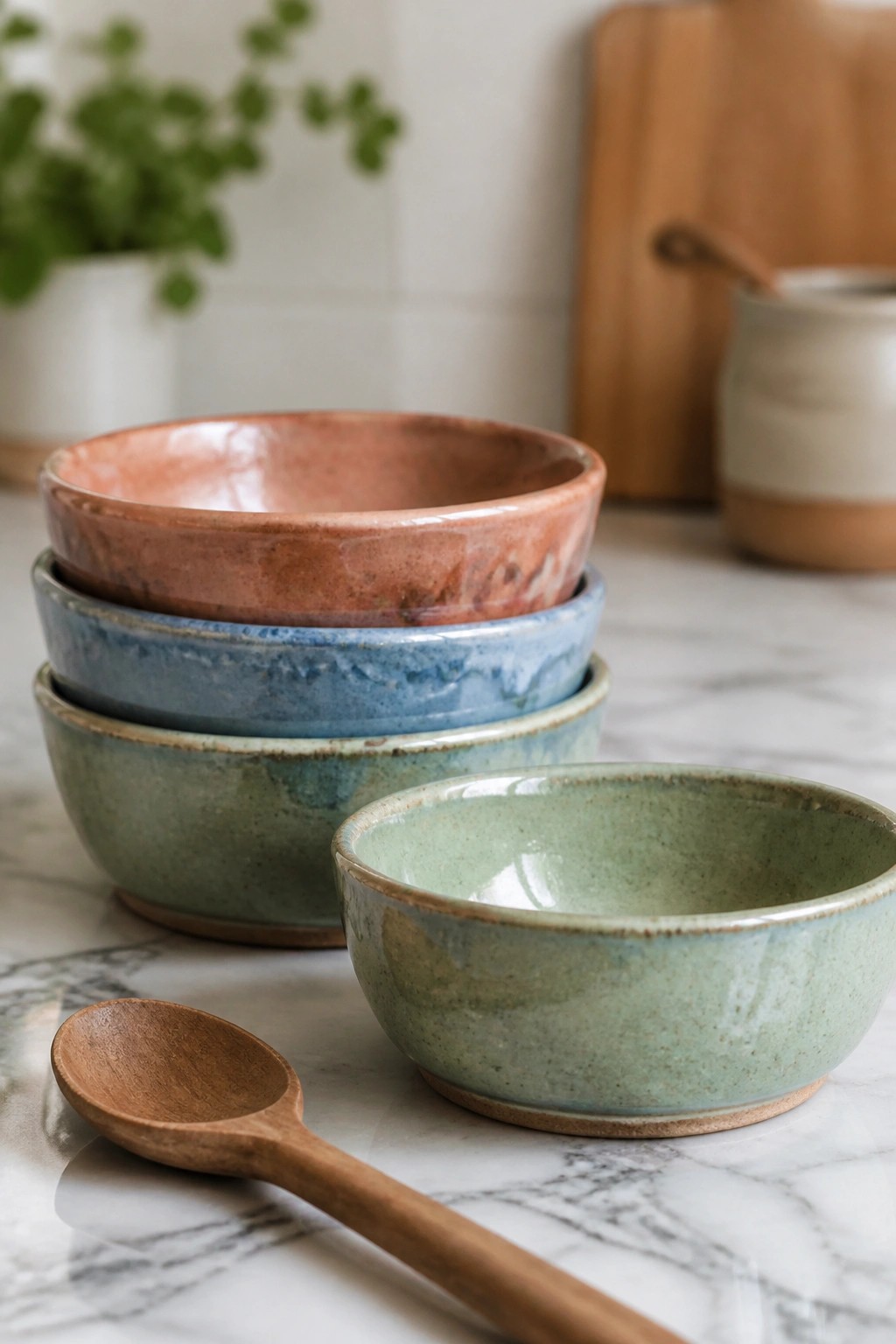
A set of four nesting bowls made from clay shows how simple rounded forms can stack cleanly for storage. Each bowl carries a different reactive glaze in terracotta, blue, or green, which breaks and pools during firing to create variation across the surfaces. The rims stay slightly irregular, giving the group a handmade look while still allowing the bowls to sit inside one another without wobbling. This approach fits the category of everyday kitchen bowls that double as both prep and serving pieces.
What makes this idea useful is the way the color changes let you build a small collection without buying separate sets. You could make just three bowls in two sizes and swap the glaze palette to match existing dishes or countertops. The nesting shape saves cabinet space, so the same idea works well for small kitchens or as a practical gift. For a different version, try the same forms as shallower dishes or add a single accent color inside each bowl instead of full coverage.
Low Slab Pet Bowl With Textured Exterior
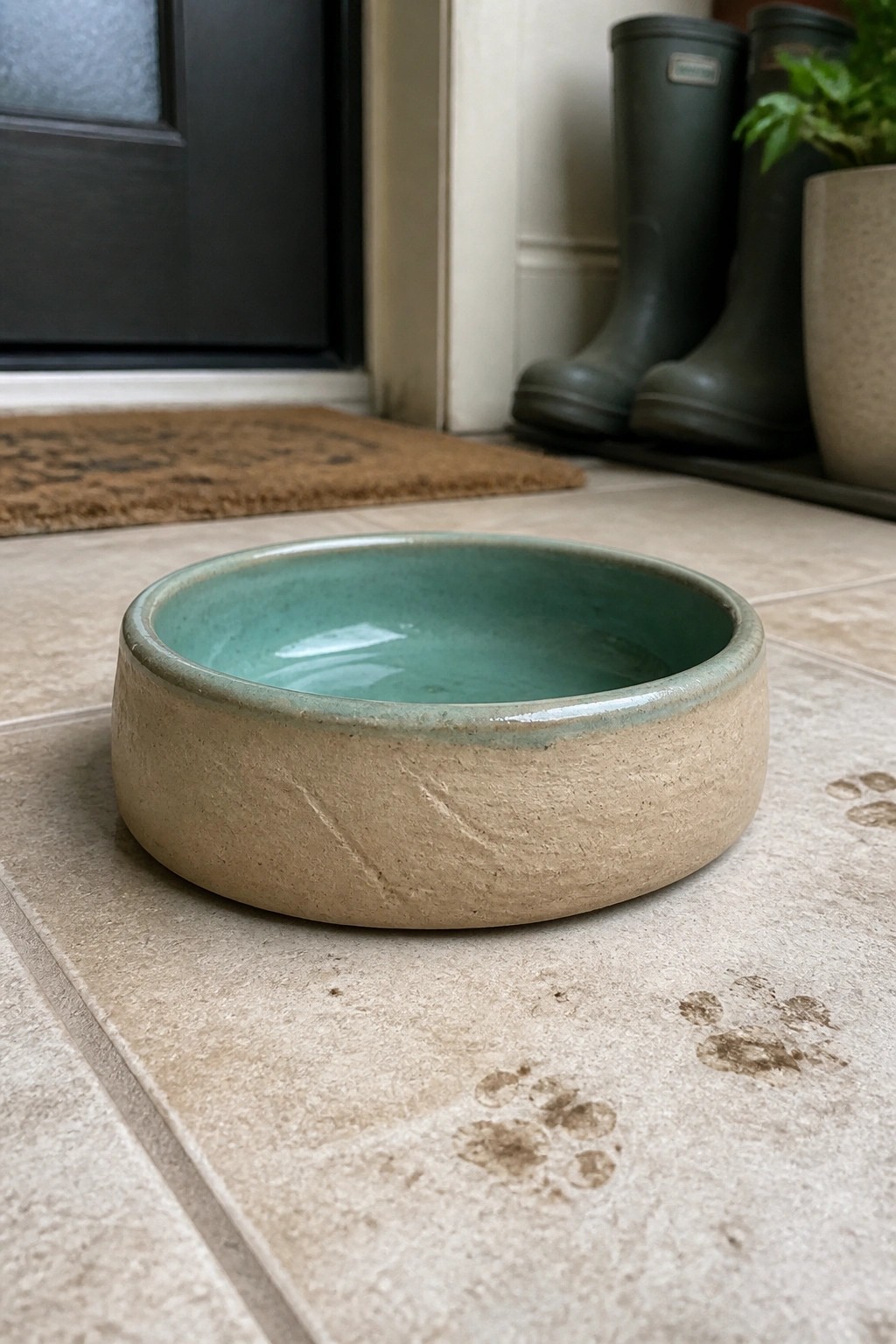
A slab-built bowl like this makes a practical pet dish because the wide, low form stays stable on the floor. The sides are formed from a single thick slab that curves gently upward, keeping the overall height minimal so dogs or cats can reach inside easily. Leaving the outside in its natural clay state with visible tool marks creates a matte, earthy surface that pairs with a simple turquoise glaze on the inside for a clean, wipeable finish. This approach keeps the project quick since it relies on basic slab construction rather than wheel throwing.
What makes this idea useful is how the low profile and heavy base prevent tipping during meals. You can scale the same slab template down for a cat bowl or widen it further for multiple pets. The unglazed exterior also hides scuffs from being nudged around on tile. In a kitchen or mudroom, the two-tone look gives it a grounded, functional presence without needing extra decoration.
Pedestal Bowl with Textured Base Band
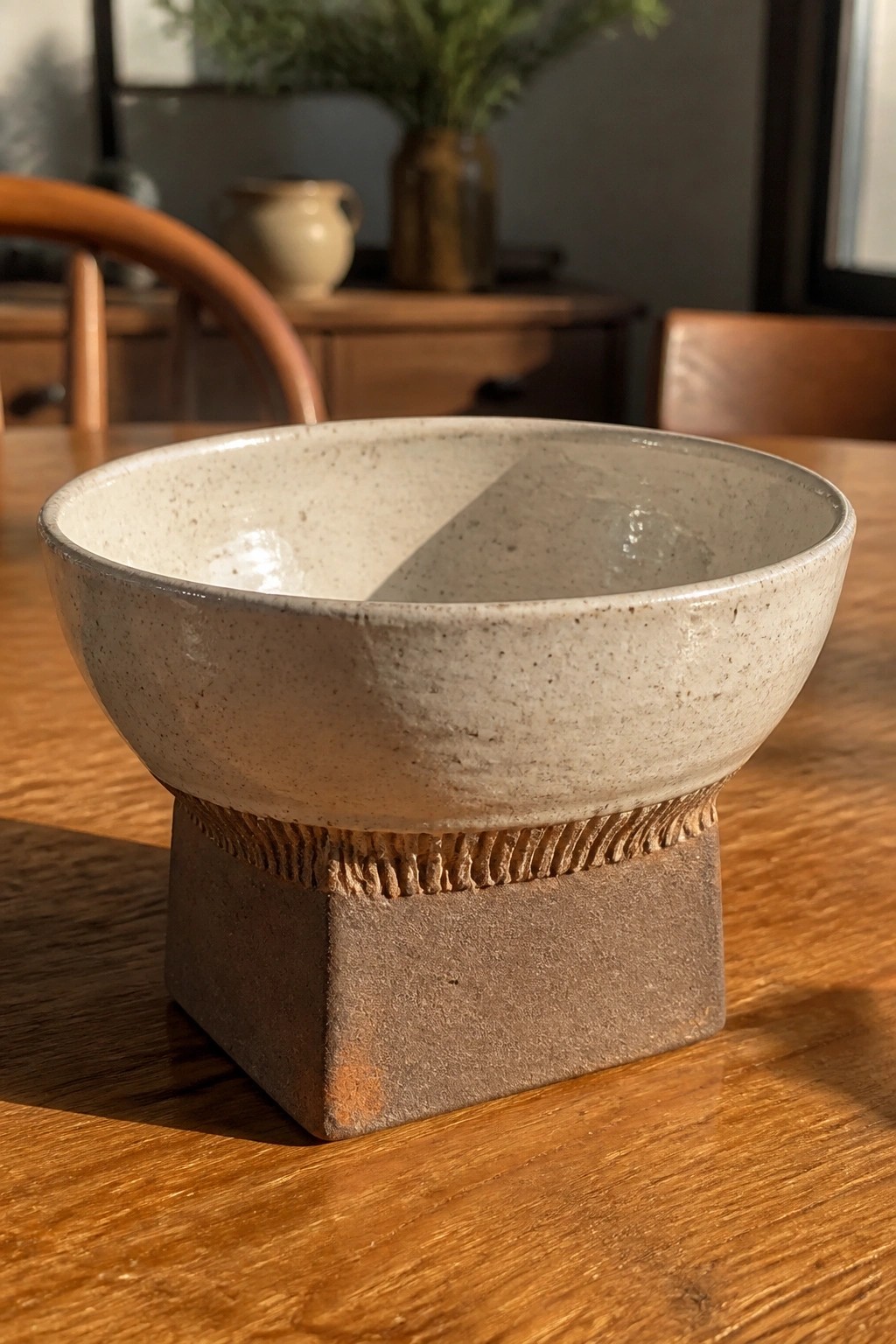
A low, wide bowl raised on a square pedestal base combines two clay sections for a clear visual break. The upper bowl uses a light speckled glaze that covers the interior and rim, while the base stays unglazed in a darker tone. A simple ridged strip where the sections meet adds texture and helps define the transition without extra tools or steps. This approach fits the category of a functional serving or table bowl that uses basic form contrast rather than surface decoration.
The shape does a lot of the work here by lifting the bowl slightly off the table for better presence. You can adapt the same idea by switching the base to a round cylinder or making the bowl deeper for soup or salad use. The textured band is easy to recreate with a rib tool or stamp and gives the piece enough detail to stand out in photos for Pinterest without complicating the build. In a kitchen or dining setting, this style works as a fruit bowl or small centerpiece that still feels practical for everyday use.
Divided Bowl with Glaze on One Side and Painted Lemons
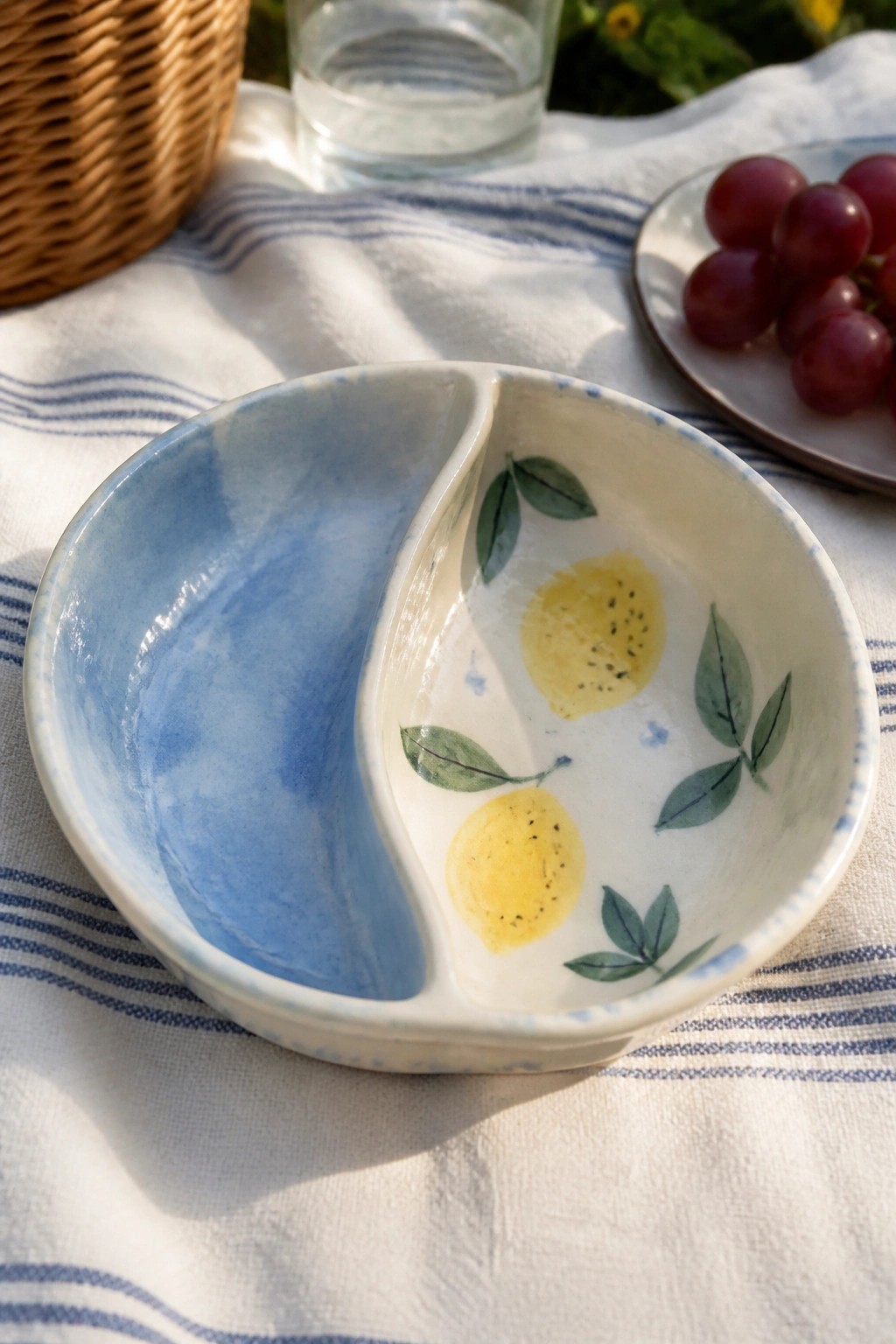
A two-section bowl built with a low central divider keeps foods like dips or snacks from mixing while keeping everything in one dish. One half uses a solid blue glaze that covers the surface evenly, and the other half stays light so the lemon and leaf motifs stand out clearly. The rim carries a few blue specks that connect the two sides without adding extra steps. This layout fits the kitchen item category and works as a simple serving piece for small gatherings.
What makes this idea useful is how the divider adds function without complicating the build. You can change the painted fruit to match whatever produce is in season or skip the painting and use a second glaze color instead. The compact size works for picnic spreads or countertop snack setups, and the same shape can be made larger for chips and salsa or smaller for individual portions. For a gift, something like this gives a practical serving option that still feels personal.
Slab-Built Yarn Bowl with a Swirling Rim Cutout
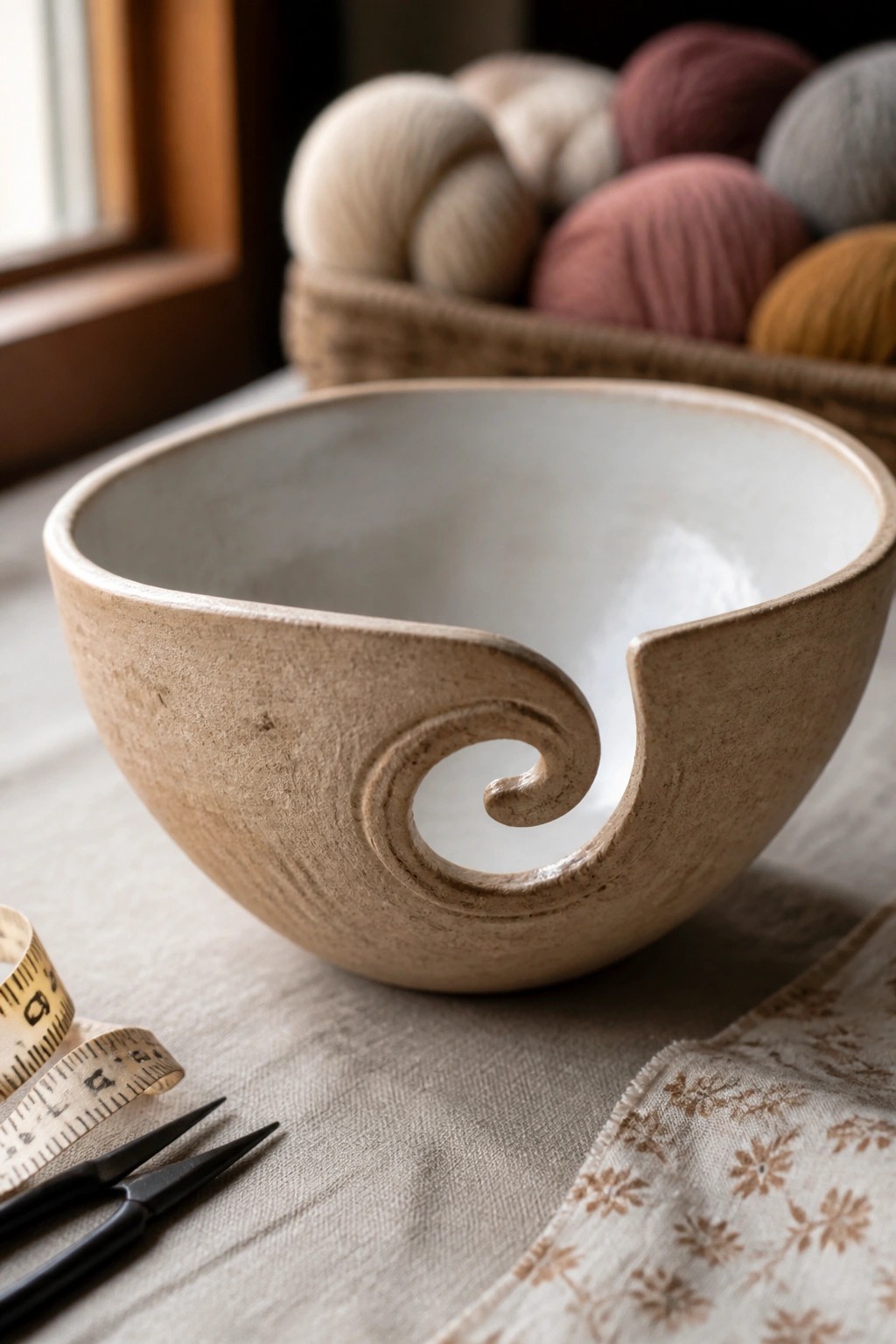
This project is a low, wide ceramic bowl formed from slabs, with one section of the rim pulled and shaped into a tight spiral that creates a side opening. The spiral acts as a yarn guide, letting the strand feed out smoothly while the rest of the ball stays contained inside the bowl. The matte, sandy-toned surface keeps the focus on the form and the practical cutout rather than on bright glaze or decoration.
What makes this idea useful is how the spiral detail turns a plain bowl into a dedicated tool for knitting or crochet without adding extra parts. The wide base and low profile work well on a table or lap, and the same rim shape can be scaled down for smaller project bowls or widened for bulkier yarns. You could adapt the cutout into a simple U-shape if the full spiral feels too involved, or repeat the idea in a set of three bowls in different diameters for gifting. The built-in function helps the piece stand out in searches for knitting accessories or craft-room storage.
Dipping Bowl with Sculpted Ledge
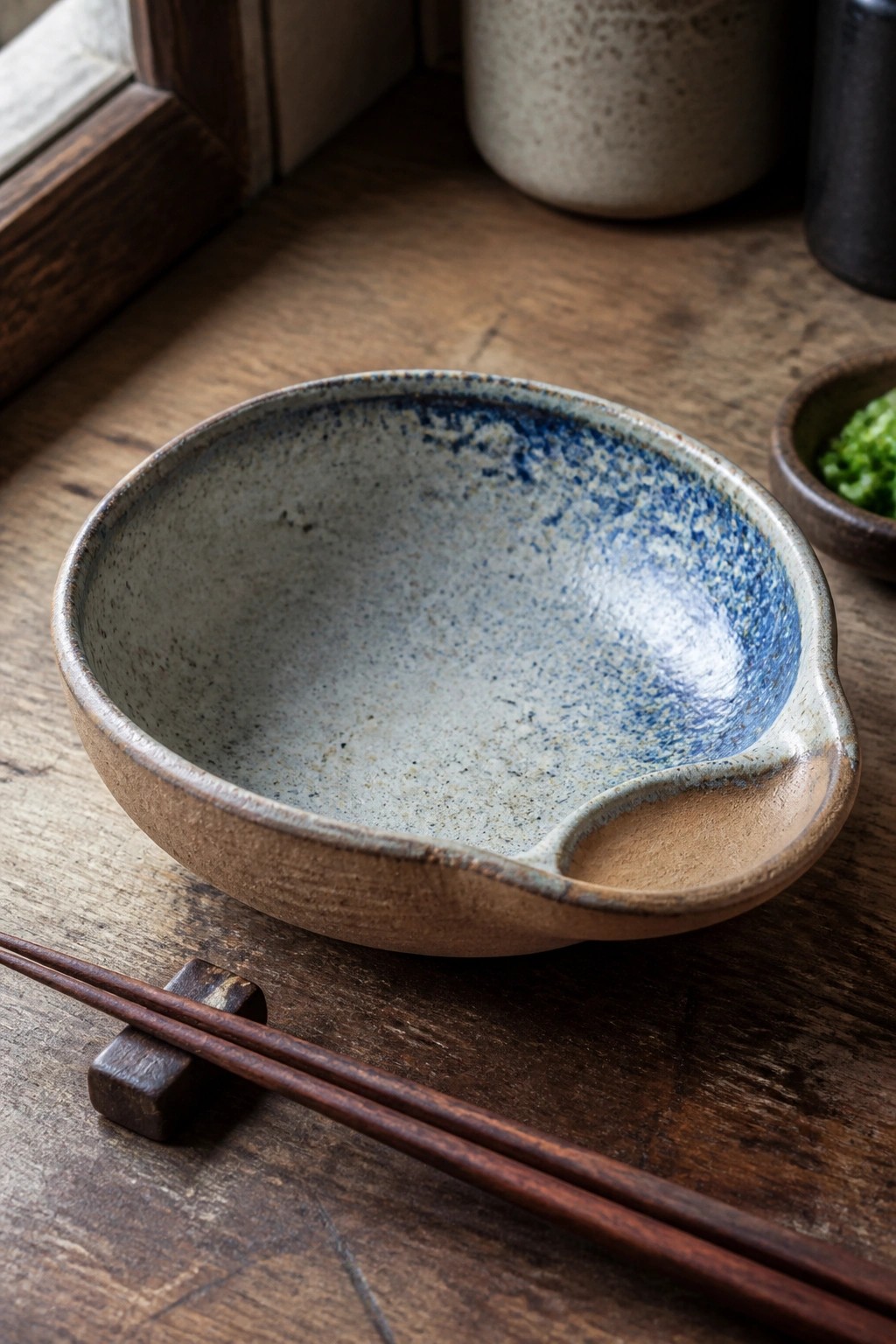
A handbuilt ceramic bowl shaped with a low profile and one side extended into a small ledge works well as a dipping or condiment dish. The interior uses a speckled blue glaze that fades into a lighter tone, while the ledge stays in the warmer base clay color. This contrast draws attention to the ledge without extra decoration. The form stays simple enough to make from a single slab or pinched section.
What makes this idea useful is how the ledge keeps utensils from sliding into sauces while also serving as a small pour spout. You can adapt it by widening the ledge for chopsticks or narrowing it for a more compact soy dish. In a kitchen this shape works especially well for appetizers or small sides, and the same ledge detail could be added to a larger serving bowl or a set of matching ramekins.
Flower Petal Bowl for Small Storage
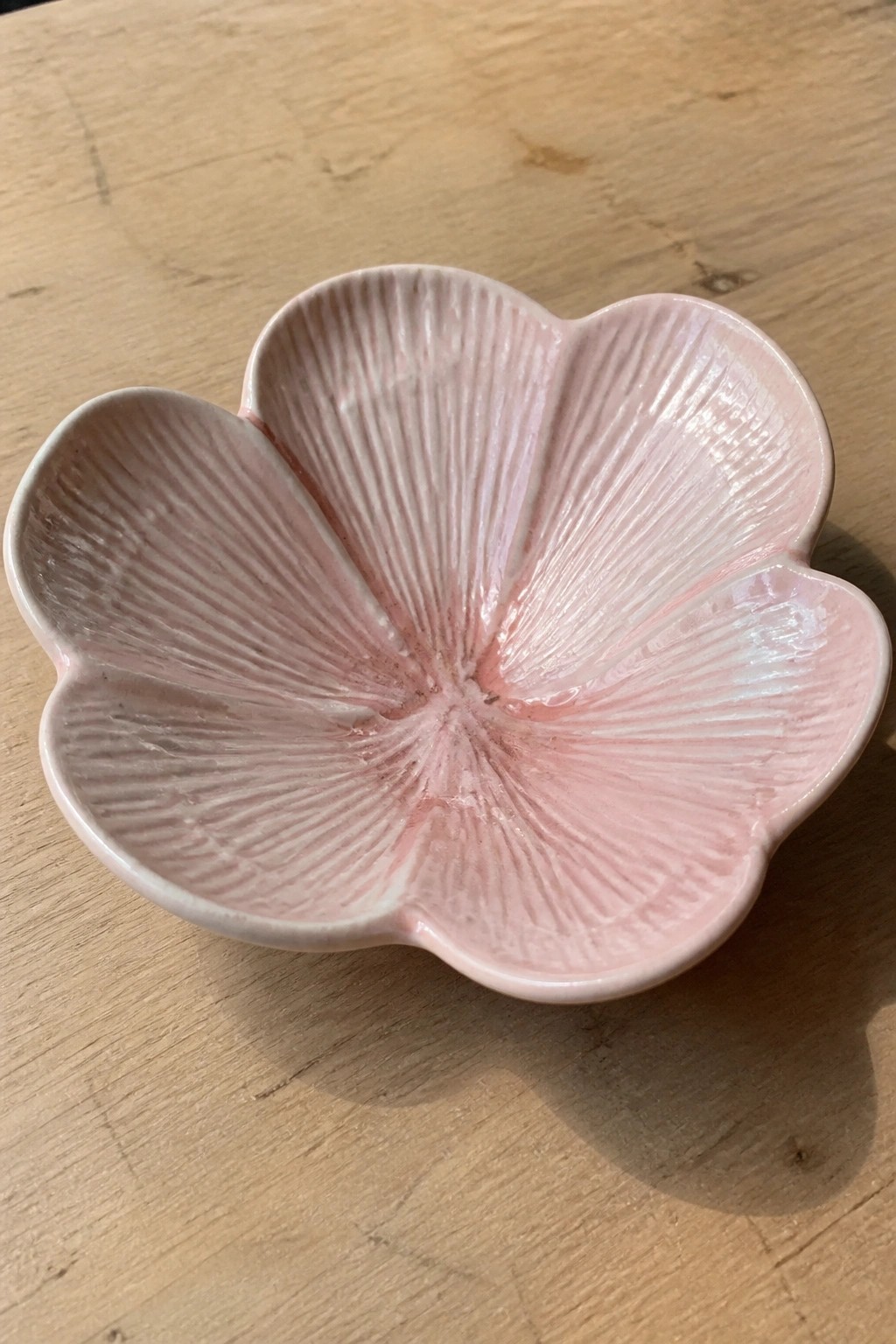
A slab-formed flower bowl starts with a simple scalloped outline that you cut from a flat sheet of clay before pressing lines outward from the center to define each petal section. The soft pink glaze sits in the grooves and catches light across the surface, giving the shallow form more visual depth without extra carving. This shape stays low and wide so it holds rings, keys, or loose change while still reading as a decorative accent on a table or shelf.
The small scale means you can roll out and shape the piece quickly on a work table without needing large molds or supports. You could swap the pink for a matte white or speckled clay body to fit a different room color scheme, or add a foot ring on the back if you want it to sit higher. A version like this shows up well in photos because the lines create natural contrast that draws attention on a feed or board.
Footed Colander Bowl for Kitchen Draining
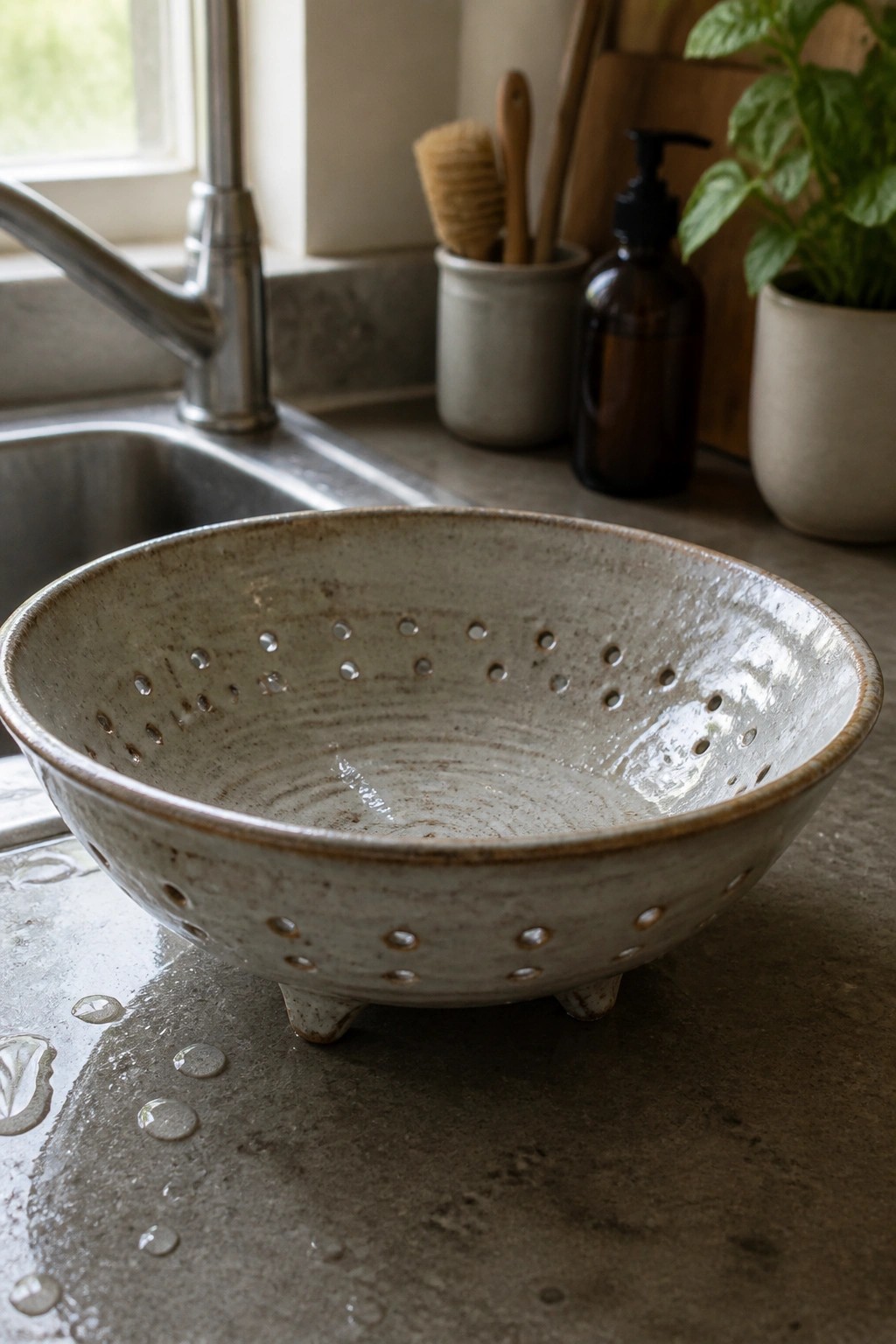
A handbuilt pottery colander bowl uses a wide, shallow shape with rows of small holes punched through the walls and base. Short feet raise the entire piece so water drains away from whatever sits inside. The speckled glaze and rounded rim give the form a sturdy look that holds up to repeated use at the sink. This approach turns a simple bowl into a dedicated kitchen tool for rinsing vegetables or draining cooked pasta.
What makes this idea useful is the built-in drainage that keeps counters dry without needing a separate insert. You could shrink the same hole pattern for smaller berry bowls or stretch it across a longer slab tray for soap bars. The feet add just enough lift to work on any flat surface while keeping the overall shape easy to store in a cabinet. In a kitchen, this kind of piece replaces plastic colanders with something that can sit out as a serving bowl once the water is gone.
Marbled Slab Bowl with Wavy Rim
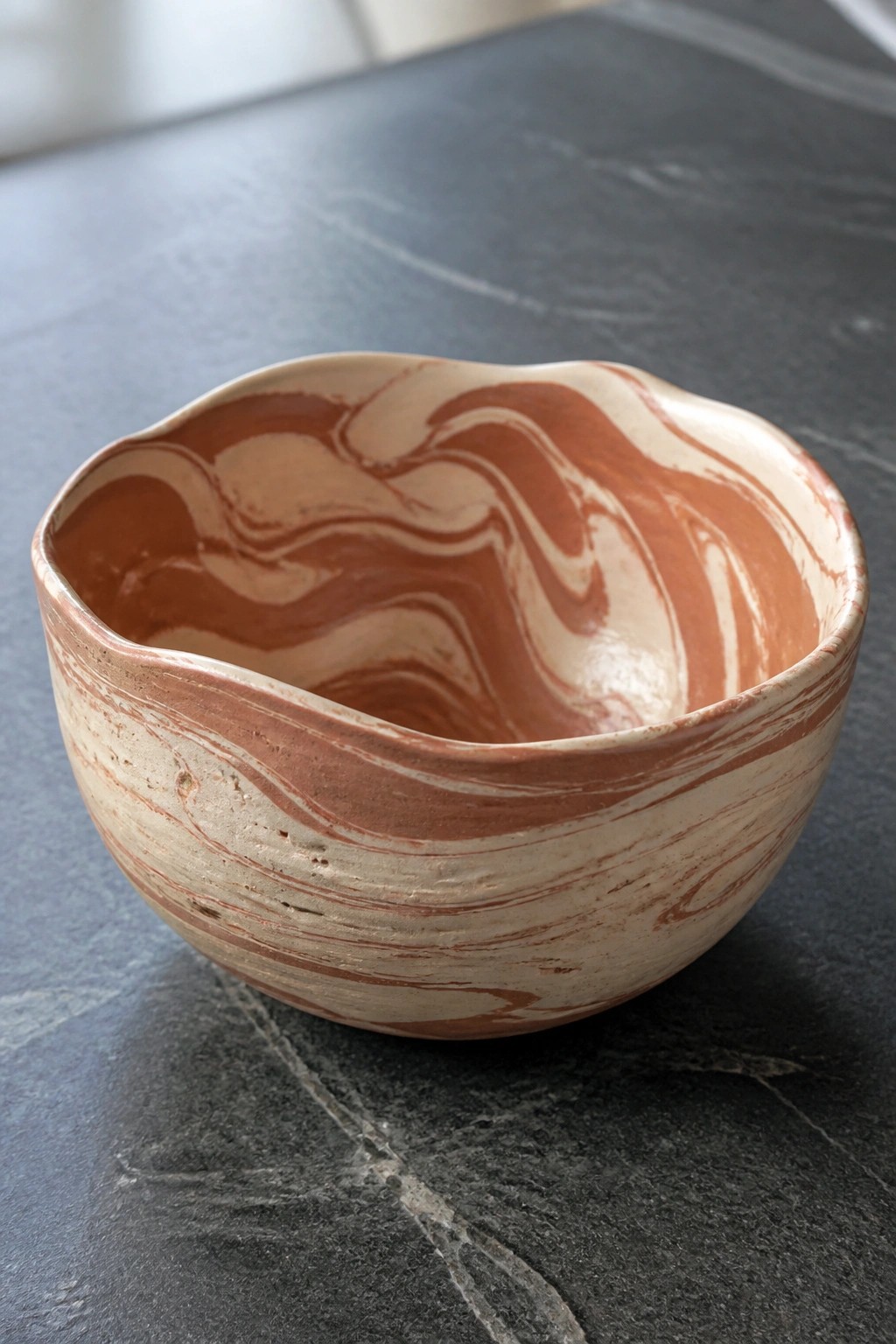
A handbuilt bowl formed from slabs of two different clays creates a flowing marbled pattern that runs through the walls rather than sitting on the surface. The maker kept the rim uneven so the swirls follow the organic shape instead of stopping at a clean edge. This style works as a simple mixing or serving bowl where the pattern adds interest during daily use.
What makes this idea useful is that the marbling does the decorative work during the building stage so no extra glazing steps are needed later. The compact size fits easily on a counter for holding keys, fruit, or small kitchen tools. You could rework the same colored clay technique into a shallow slab tray or a set of smaller dishes by rolling out thinner sheets and joining them at softer angles.
Carved Leaf Pattern on a Sage Green Bowl
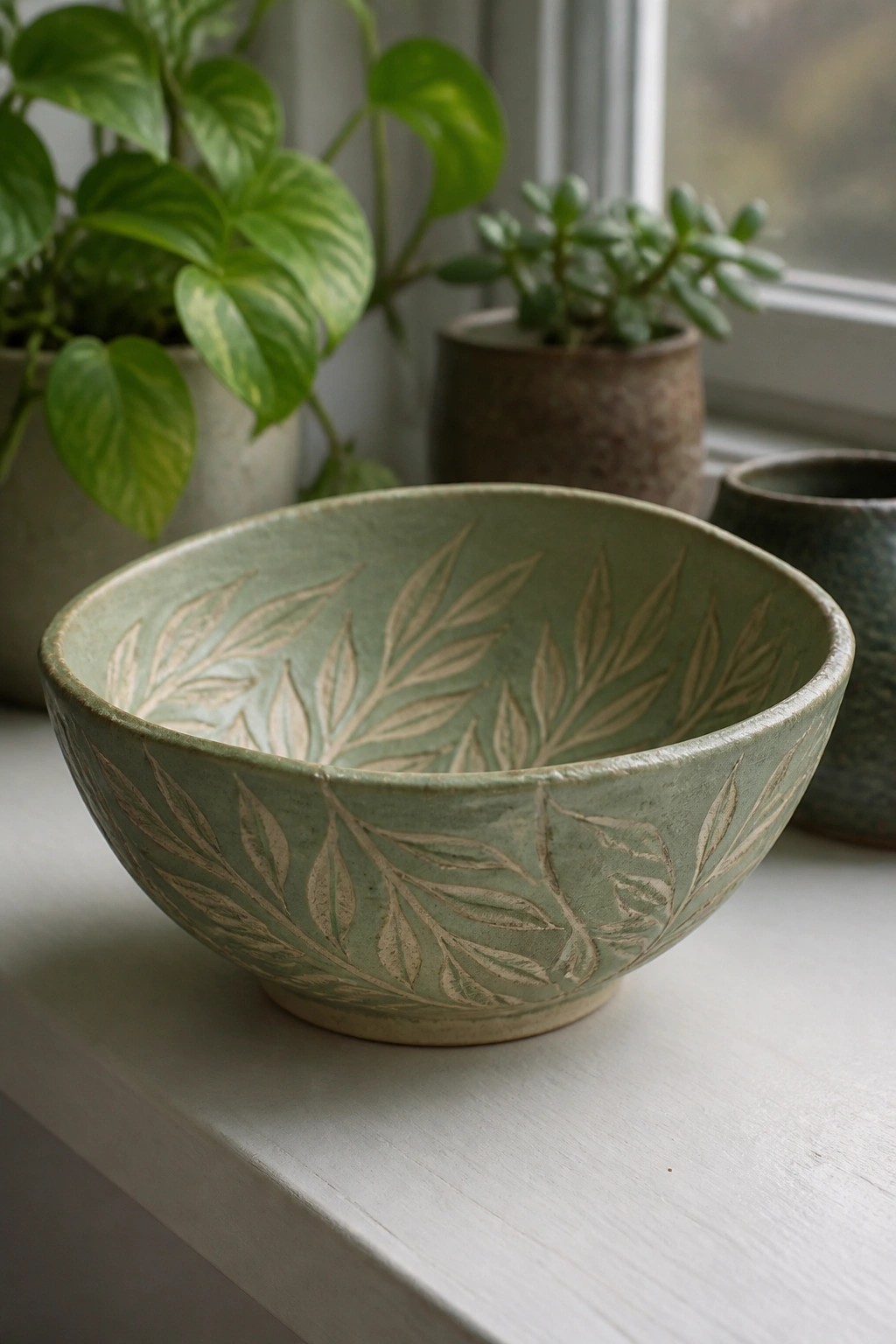
A medium bowl formed from clay slabs or a simple thrown shape gains visual interest from an all-over pattern of carved leaves. The muted green glaze allows the lighter clay body to show through each incision, creating contrast without extra color layers. This keeps the surface functional for food use while adding a clear botanical texture that reads well from a distance.
What makes this idea useful is how the carving can be done with basic loop tools after the clay firms up. The same leaf layout works on smaller bowls for snacks or larger ones for salads, and the motif scales down easily to just a few leaves around the rim if time is short. In a kitchen, the finished piece handles both serving and storage tasks without needing extra decoration.
Pinched Rim Slab Bowl
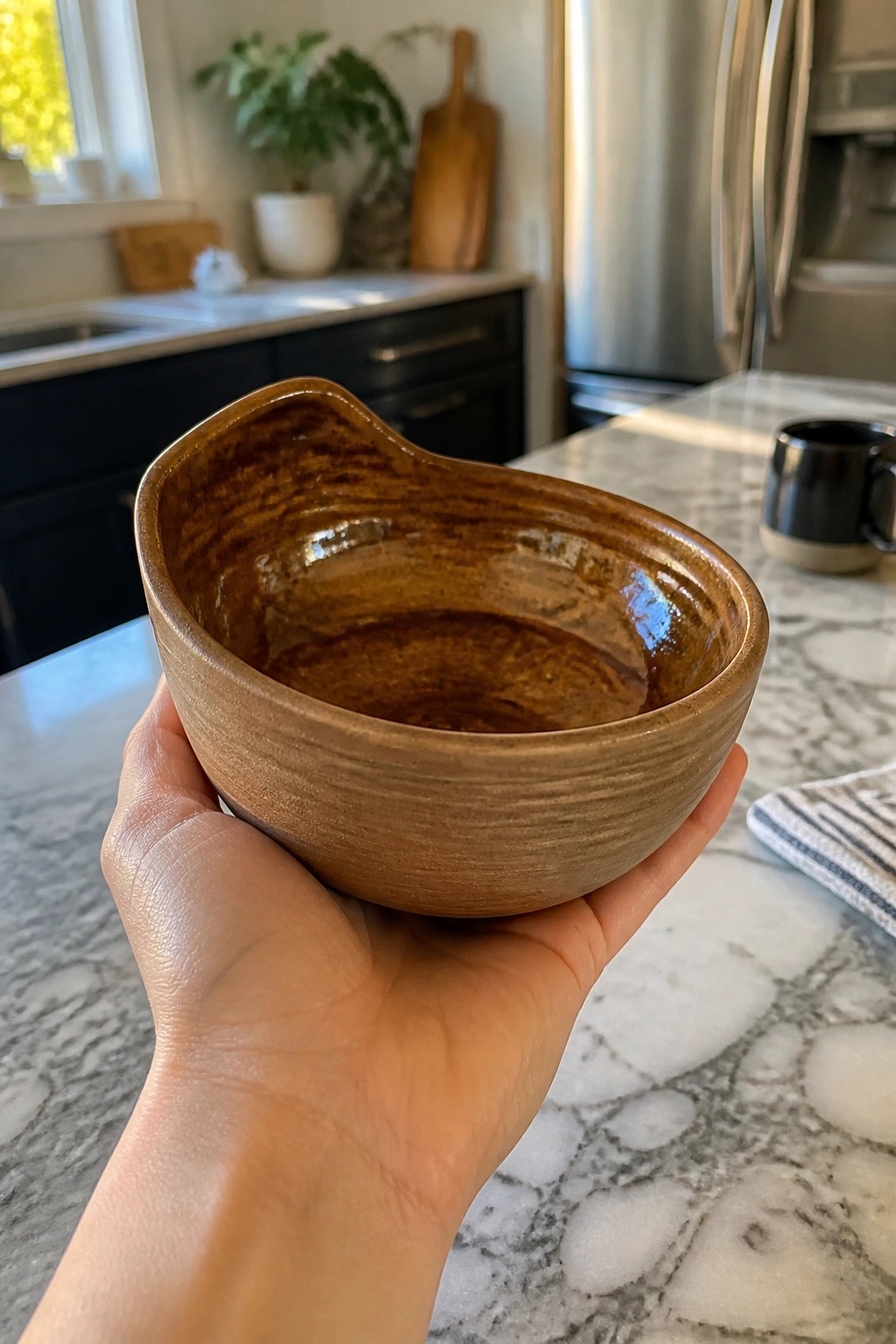
A slab-built bowl shaped with one section of the rim pinched inward creates an asymmetrical opening that doubles as a natural pour lip. The low, wide form stays stable on a table while the folded edge gives it a distinct profile without adding extra parts. An earthy brown glaze with visible horizontal texture keeps the surface simple and highlights the handmade clay layers.
What makes this idea useful is how the pinched rim adds function without extra steps, turning the bowl into a good choice for serving dips, nuts, or small sides in the kitchen. You could repeat the same fold on a taller cylinder to make a creamer or adjust the pinch depth for a more dramatic spout on a larger serving piece. The neutral tone also pairs easily with everyday dishes, so the shape stands out more than the color when you photograph it for a board.
Spouted Bowl with Contrasting Matte and Glossy Glaze
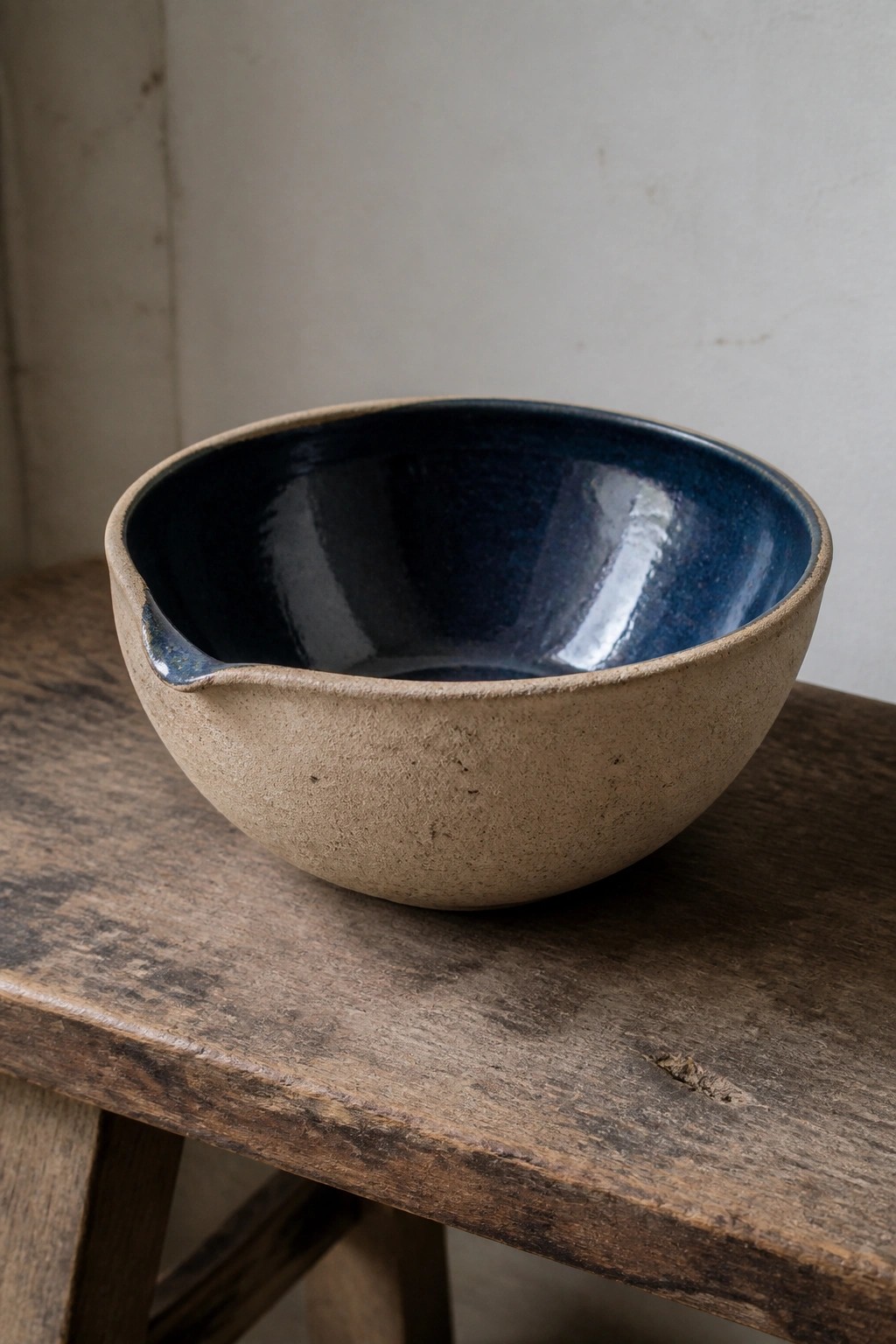
A spouted ceramic bowl gives you a simple way to handle mixing or serving tasks that involve pouring. The rounded form stays easy to hold while the built-in lip directs liquid cleanly without drips. The matte sandy exterior pairs with a deep blue glossy interior to create clear contrast that highlights the bowl shape without added patterns or texture work. This approach fits the kitchen bowl category and keeps the piece fully functional for everyday use.
The shape does a lot of the work here by turning a standard bowl into a pouring tool without extra parts. You could rework the same idea by switching the interior glaze color to coordinate with other dishes or making a second version at a smaller scale for sauces. In a kitchen this kind of bowl handles both prep and serving duties well, and the clean two-tone finish makes it simple to photograph for project boards.
Painted Citrus Serving Bowl
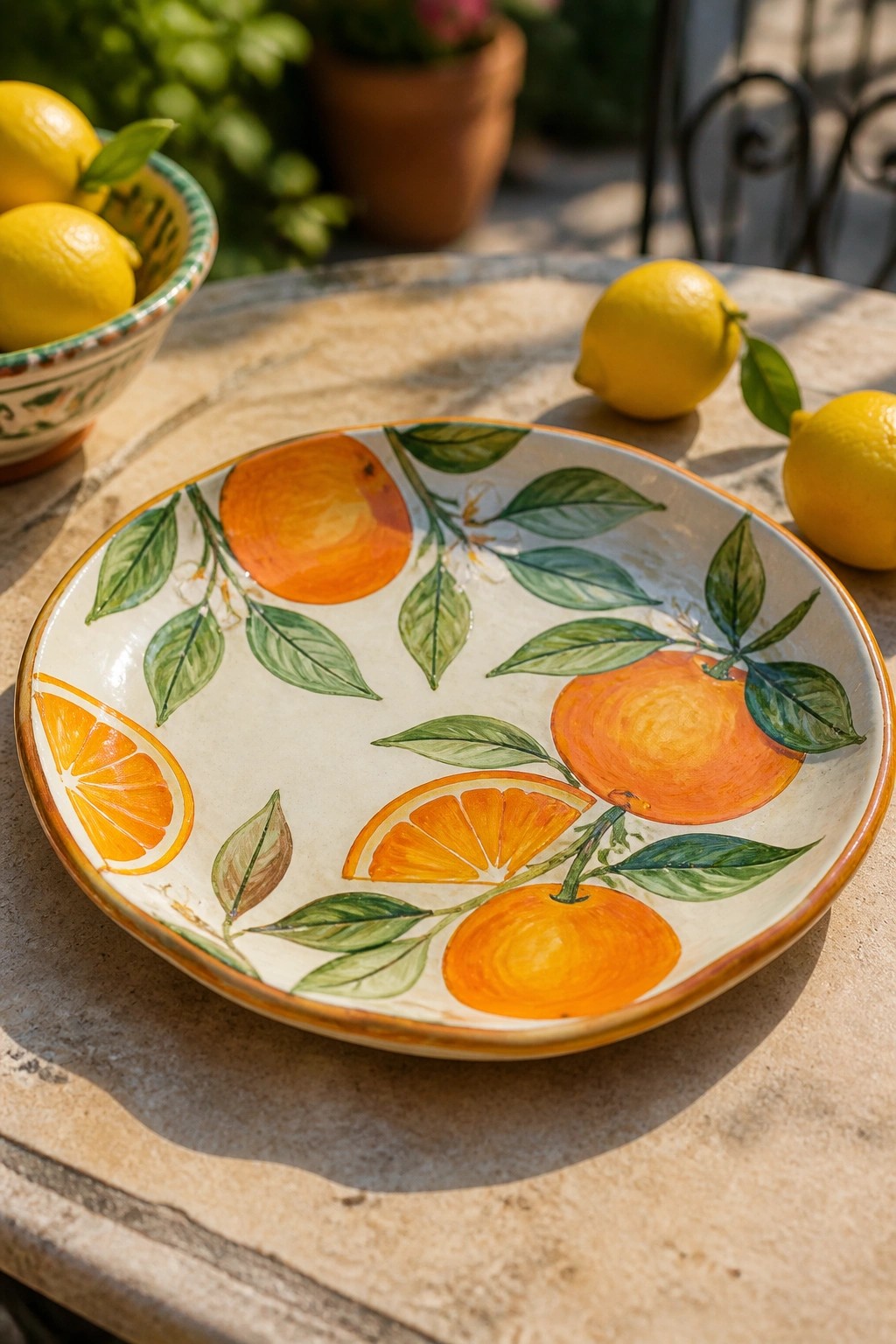
A wide, shallow ceramic bowl works well as a serving piece when the surface is covered with hand-painted citrus. Oranges, sliced fruit, and green leaves are spaced across the light clay body so the pattern stays readable from a distance. The orange rim ties the colors together and keeps the design from looking unfinished. This style fits a kitchen bowl that can hold fruit, bread, or salad on the table.
The painted fruit gives the bowl enough color to stand out on a counter without needing extra texture or carving. You could repeat the same motif on a set of smaller plates or swap in lemons if you want a lighter palette. In a kitchen this shape stays useful for everyday serving while the simple painting keeps it from looking too formal. The idea adapts easily to slab construction if you roll out a flat base and build up low sides.
Lidded Snack Bowl with a Reach-Through Notch
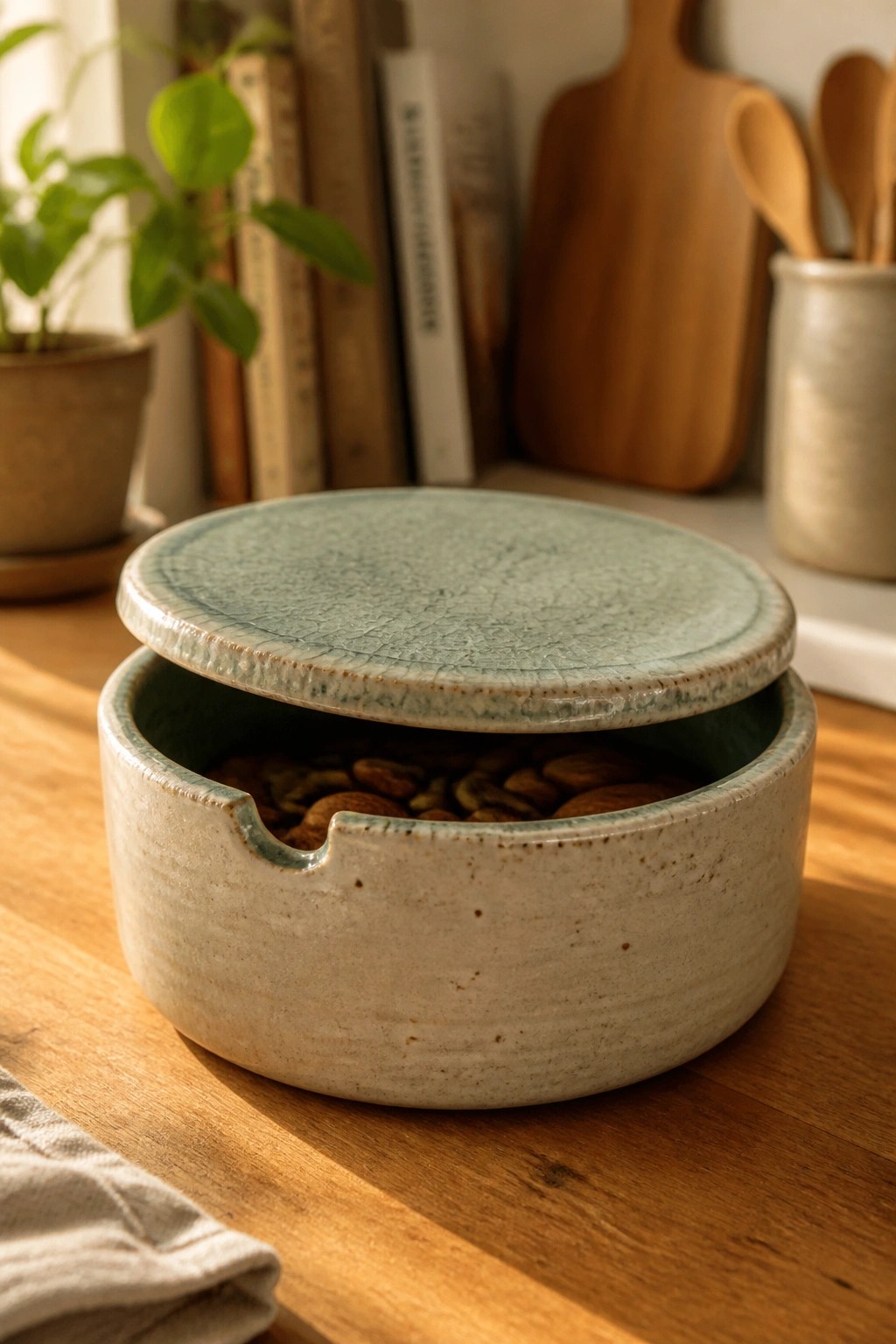
This lidded bowl is a low, round ceramic container made for holding snacks such as nuts or seeds. The body has a simple matte finish while the lid features a soft green crackle glaze, and a small notch cut into the rim lets you reach inside without removing the lid. The shape keeps contents covered yet accessible, turning a basic covered form into a practical kitchen piece.
What makes this idea useful is the notch detail that solves the common problem of having to lift a lid every time you want a few nuts. You could scale the same form down for a sugar bowl or up for a larger serving dish, or swap the crackle glaze for a solid color to match different kitchen styles. In a kitchen this kind of piece works well on a counter or table because it protects food while staying easy to use, and the compact size makes it a quick project to repeat in different glazes.
Mottled Blue Slab Bowl with Textured Foot
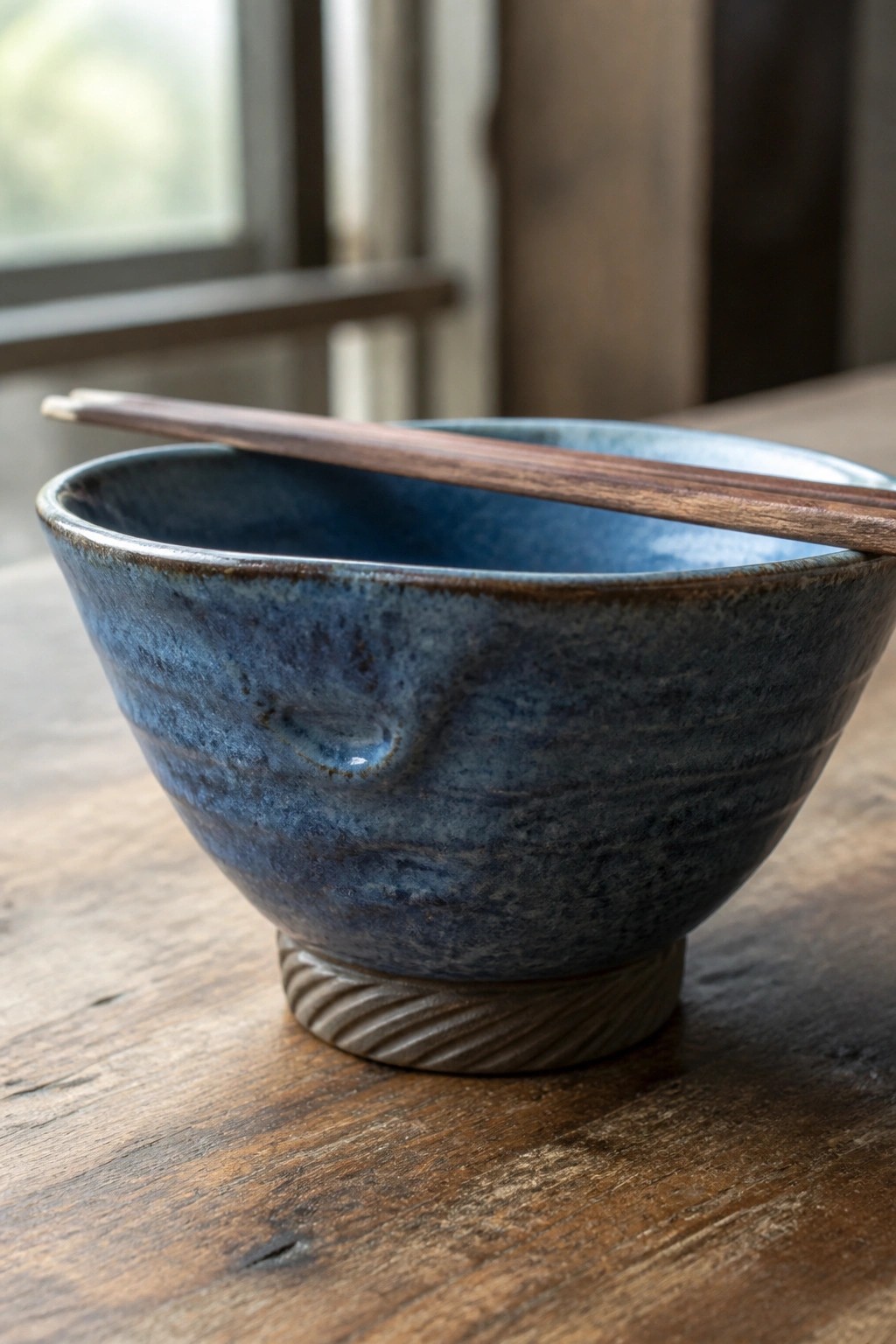
A slab-built bowl with a deep, slightly uneven form makes a solid choice for serving soups, noodles, or rice dishes. The blue glaze with darker speckling gives the surface enough variation to look interesting next to food without competing with it. The wide rim holds chopsticks or a spoon in place, and the ridged foot raises the bowl just enough to keep the bottom stable on a table.
What makes this idea useful is how the basic shape works for both everyday meals and small batch prep. You can change the glaze color or press different textures into the foot on future versions to match other dishes in a set. In a kitchen, the depth and opening size make it practical for one or two servings while still looking good left out on a counter. The same slab approach could be adjusted into a shallower salad bowl or a slightly taller vessel for storing utensils.
Divided Serving Dish With Two Compartments
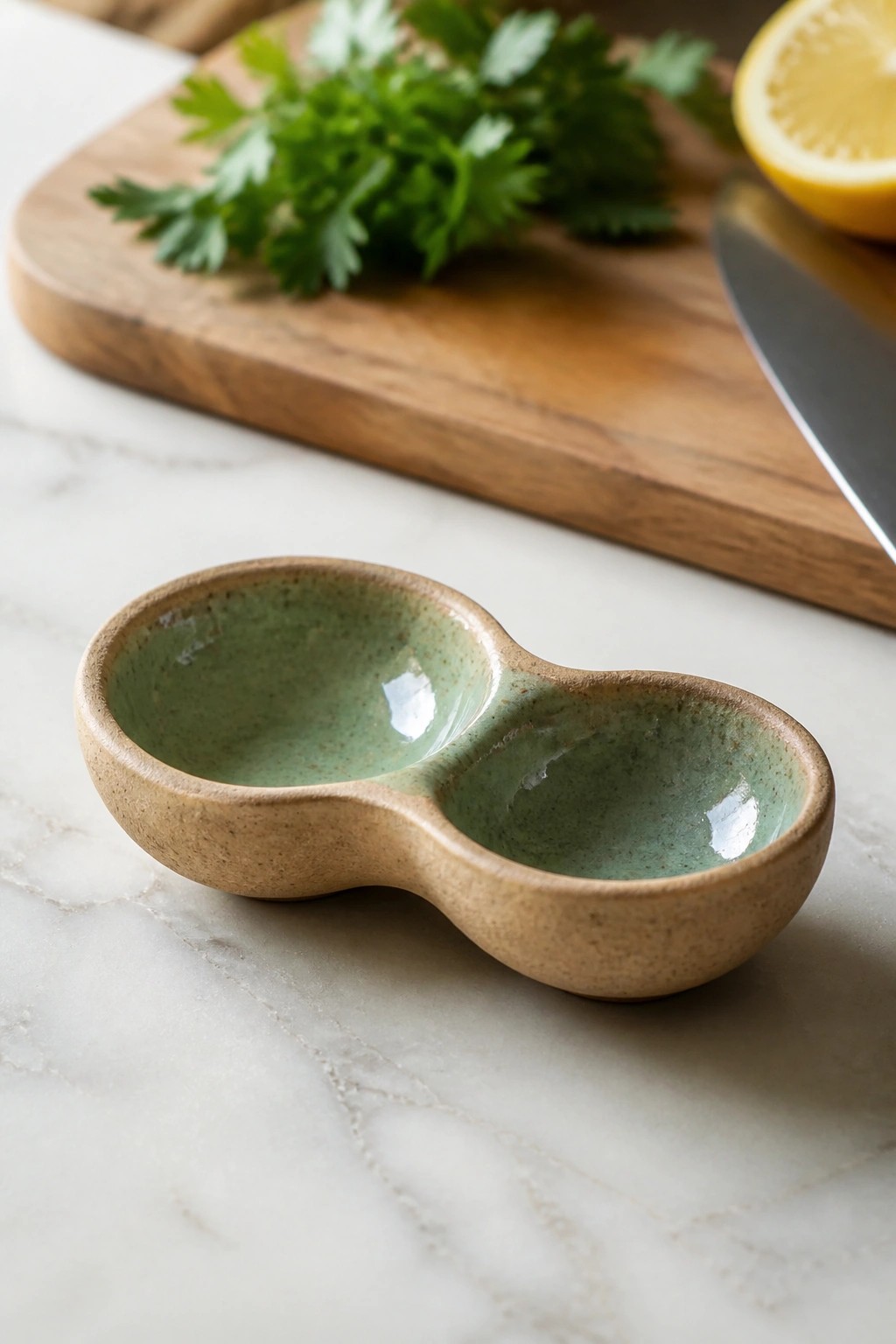
A small divided dish made from clay gives you two connected bowls in one compact form. The rounded compartments join at the center so the piece stays together on the counter or table. A matte tan clay body on the outside pairs with a soft green glaze inside, which helps define the separate sections while keeping the overall shape simple. This type of project fits the kitchen item category for holding sauces, seasonings, or small snacks.
What makes this idea useful is how the connected shape keeps two items organized without needing multiple separate dishes. You can adjust the size of each bowl or swap the glaze colors to match other pieces you already use. In a kitchen this kind of form works well next to a cutting board for quick access during cooking. The same basic layout could be reworked into a double salt and pepper holder or a small tray for jewelry by flattening the compartments slightly.
Loose Painted Floral Slab Bowl
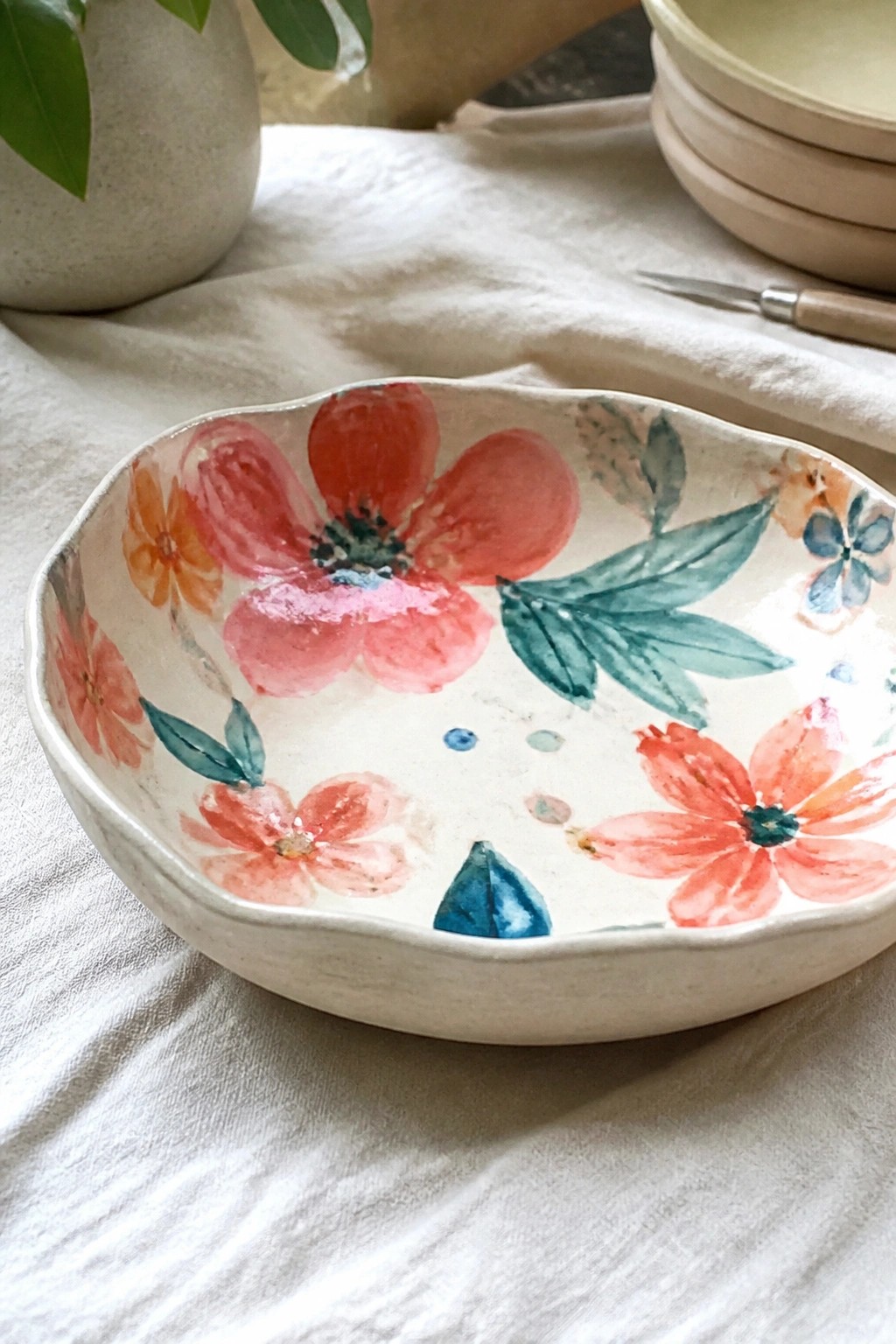
A handbuilt shallow bowl like this uses a simple slab form with an organic rim to create a wide surface for painted decoration. The design relies on loose clusters of coral, peach, and teal flowers applied with a watercolor effect that lets the clay color show through in places. This approach keeps the piece functional as a fruit bowl, snack server, or catchall while making the painted surface the main feature.
What makes this idea useful is that the same loose floral layout can be adapted to smaller ring dishes or a set of side plates without changing the color palette. The irregular rim helps hide small shaping inconsistencies, so the focus stays on the brushwork instead of perfect symmetry. In a kitchen or on an entry table this shape holds everyday items while the painted motif keeps it from looking plain. You could rework the same idea into a deeper bowl by adjusting the slab curve before attaching the walls.
Two-Tone Speckled Mixing Bowl
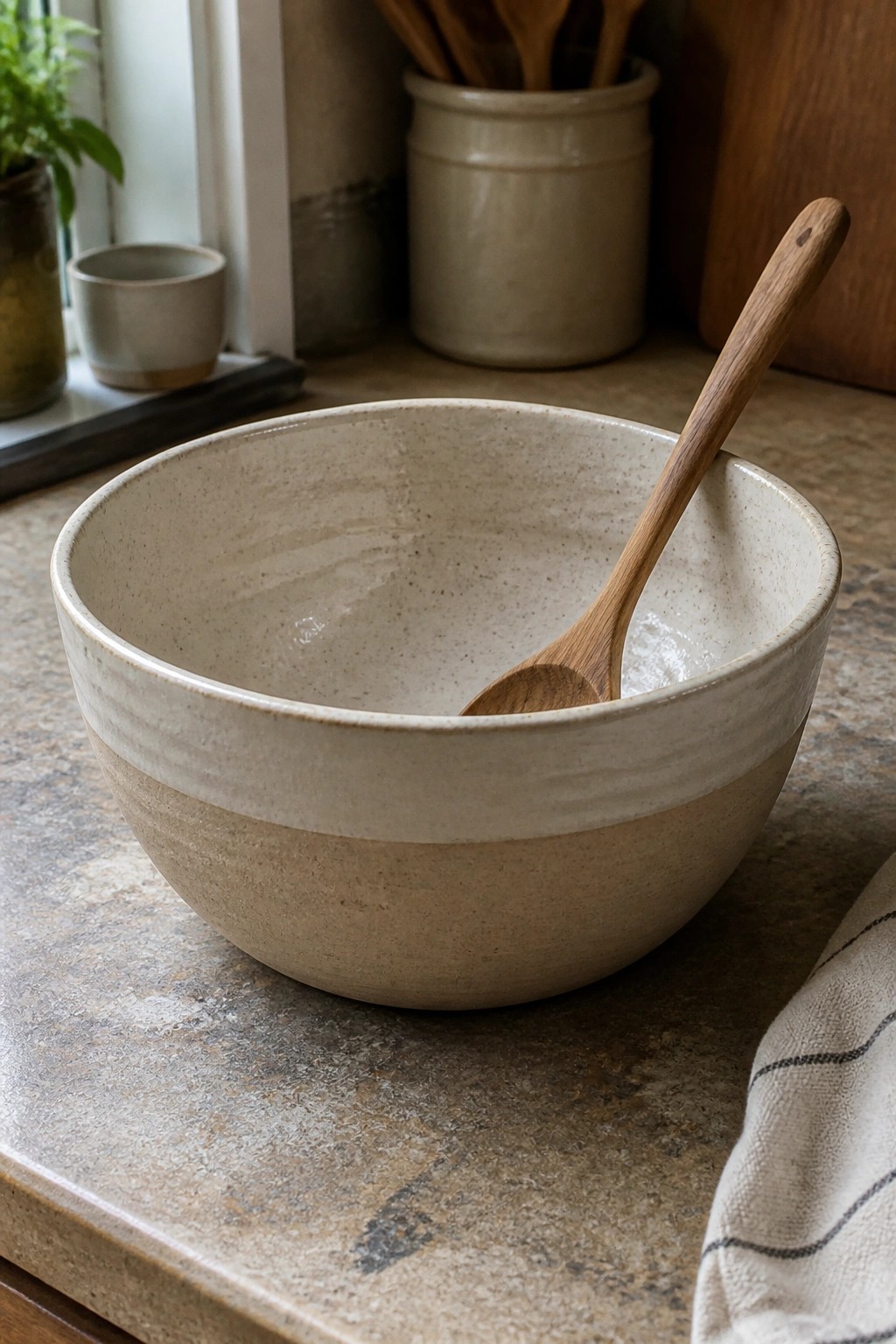
A wide slab-built bowl gains visual interest from a single horizontal band of lighter glaze across the upper section. The speckled lower surface pairs with the smooth band to create a clean break without extra decoration. This shape suits mixing, serving salads, or holding bread on a kitchen counter.
The shape does a lot of the work here because the open form and generous size handle real kitchen tasks while still looking good on a shelf. You could adapt the band by changing its width or trying a matte finish on the lower half for your next slab piece. In a kitchen, this kind of bowl works as both a daily tool and a simple display item without needing extra accessories.
Frequently Asked Questions
What is slab pottery and how does it work for creating bowls? Slab pottery involves rolling out flat sheets of clay and then shaping them into forms like bowls by draping, folding, or joining the slabs. This method allows for precise control over the shape and thickness, making it ideal for producing bowls that are both visually striking with geometric patterns or textures and practical for holding food or decor items on a daily basis. Start with even clay slabs around a quarter inch thick, use templates for consistent shapes, and score and slip the edges before joining to prevent cracking during drying or firing.
How can I make sure my slab pottery bowls are food safe for everyday use? Choose clay bodies rated as food safe and apply non toxic glazes that are certified for dinnerware after firing to the proper temperature. Avoid using metallic lusters or certain underglazes that may leach chemicals. Test the finished bowl by checking for smooth, non porous surfaces and consider a second firing if needed for extra durability. Always follow manufacturer guidelines for your specific clay and glazes to ensure they withstand regular washing and use without issues.
What tools and materials are essential for beginners trying slab pottery bowl projects? Basic supplies include a rolling pin or slab roller for flattening clay, canvas or fabric to prevent sticking, a ruler and cutting tools like a fettling knife for clean edges, and a sponge for smoothing seams. Start with a wedged ball of stoneware or earthenware clay that is easy to handle. Additional helpful items are templates cut from cardboard for bowl shapes and wooden ribs to refine curves. These allow you to create sturdy, functional bowls without advanced equipment while experimenting with the 21 design ideas.
How do I prevent warping or cracking in my handmade slab pottery bowls during drying? Dry the bowls slowly and evenly by covering them loosely with plastic for the first day or two to control moisture loss. Place them on a flat surface and rotate occasionally to avoid uneven shrinkage. Keep slab thickness consistent throughout and avoid thin areas that dry faster. Adding grog to the clay mix can help with stability, and once bone dry, bisque fire gradually to minimize stress on the form.
What are good ways to add decorative elements to slab bowls while keeping them practical? Incorporate textures by pressing fabrics, leaves, or stamps into the wet slabs before shaping, or carve simple patterns that do not interfere with the interior smoothness needed for function. Use colored slips for subtle designs that withstand daily handling. Focus on exterior embellishments like feet or handles that enhance stability without making cleaning difficult, ensuring the bowls remain versatile for meals or display.

Pottery Path is my cozy corner of the internet where I share clay ideas, pottery inspiration, and simple projects you can recreate at home. I love exploring everything from air dry clay to handbuilt pottery to cute minis that brighten your day. My goal is to make clay crafting feel easy, fun, and welcoming for anyone who wants to try it.
You will find beginner friendly tutorials, creative pottery painting ideas, and lots of warm inspiration for slow and happy crafting. If you enjoy hands on creativity, this space will feel like home.