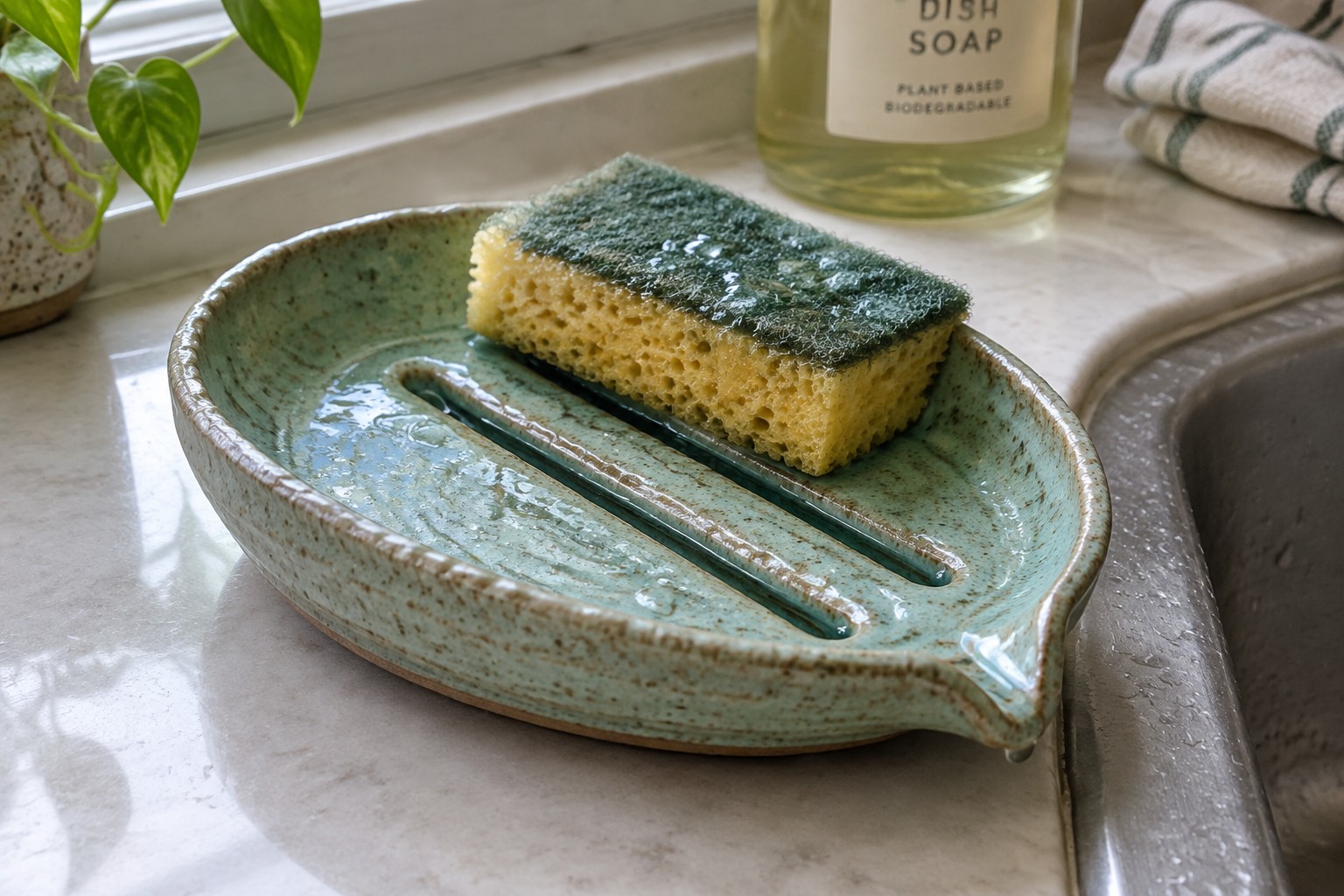
I’ve had a ceramic sponge holder next to my sink for a while and it helps keep the area from getting cluttered.
My own one is simple and I like how it holds up without any fuss.
Over time I’ve noticed a few small changes that make these holders more practical for daily use.
Here are some ideas that have fit well with the way I organize my kitchen.
Ceramic Sponge Holder with Drainage Grooves and Spout
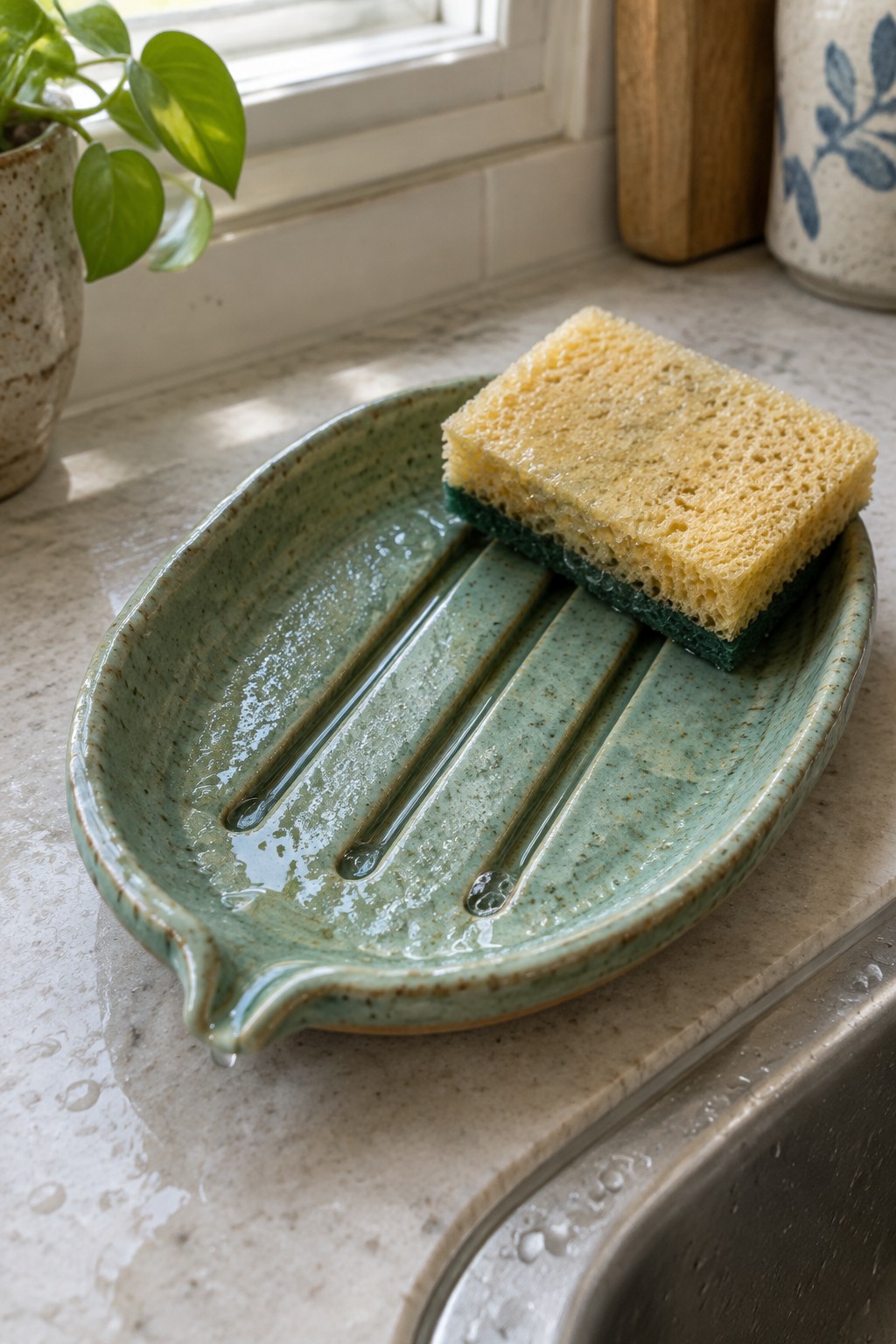
A handmade ceramic sponge holder in the form of a shallow oval dish works well for sink-side use. Three parallel grooves run down the center to lift the sponge and channel water toward a small spout at one end. The speckled green glaze and slightly irregular rim give it a simple, functional look that fits kitchen settings.
What makes this idea useful is the built-in drainage that keeps the sponge from staying wet on the counter. You could scale the same groove pattern down for a smaller bar of soap or widen the dish for two sponges. In a kitchen, the shape tucks neatly beside the sink without taking much space. The design would also translate easily to a plain rectangle if you want to skip the leaf outline.
Striped Mug Sponge Holder
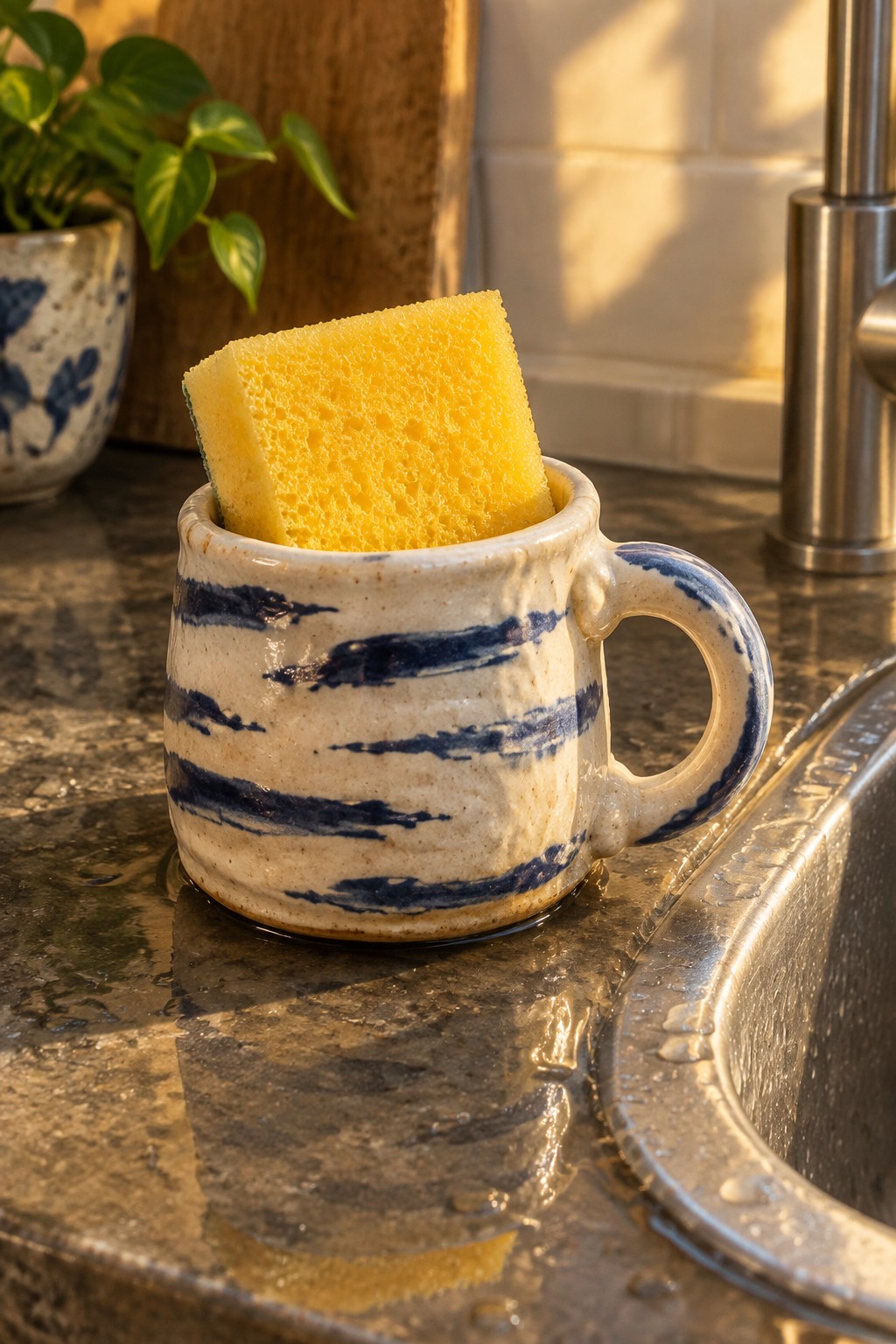
A small ceramic mug makes a straightforward sponge holder when the opening is wide enough to fit a standard sponge upright. The horizontal blue brushstrokes on a speckled light clay body create contrast that keeps the piece visible on a busy countertop. This version uses the classic mug shape with a handle, so the holder stays easy to lift and rinse.
The handle gives you a quick way to move the holder out of the way during sink cleaning. You could simplify the stripes to a single color band or skip the handle entirely if you want a faster project. This size works well next to a kitchen sink because it stays compact yet stable on wet surfaces. For a bathroom version, the same mug form could hold a small bar of soap instead.
Wall-Mounted Ceramic Sponge Holder

A wall-mounted ceramic sponge holder gives sponges a dedicated spot above the sink instead of leaving them on the counter. The piece forms a shallow curved pocket with an open top and two keyhole slots on the back for hanging. The soft pink glaze and slightly irregular rim show the handmade quality while keeping the focus on function. This fits into the kitchen holder category and works especially well in small sink areas where counter space matters.
What makes this idea useful is how the keyhole slots let you position it at the right height without drilling a big bracket. You could scale the same shape down for a dish brush or swap the pink glaze for a color that matches your tiles. The open front keeps the sponge visible so you know when it needs replacing. In a kitchen, this kind of piece stays practical because it solves the wet sponge problem without taking up extra surface area.
Whale-Shaped Ceramic Sponge Holder

A ceramic sponge holder formed as a whale gives the kitchen sink a dedicated spot for the sponge while keeping it off the wet counter. The whale body creates a wide, stable base, and the open mouth acts as the actual holding area so the sponge stays upright and drains. Blue glaze with visible brush marks and slight pooling adds surface interest without extra decoration. This fits the category of functional kitchen ceramics that double as small sculptural pieces.
What makes this idea useful is how the curved whale shape naturally cradles the sponge and takes up little counter space. You could adapt the same form by shortening the tail or using a different glaze color to match your dishes or sink hardware. In a small kitchen, this kind of piece keeps the sponge in reach but still looks intentional rather than cluttered. The compact size also makes it easy to test the idea on a wheel or with hand-building before committing to larger work.
Divided Ceramic Sponge Holder with Soap Draining Ridges

A two-section ceramic tray keeps a dish sponge and bar soap together at the sink. One compartment holds the sponge upright while the other has raised ridges that let a bar of soap drain instead of sitting in water. The simple rectangular shape and earthy green glaze make it sturdy enough for daily kitchen use without taking up much counter space.
What makes this idea useful is the built-in drainage that extends the life of bar soap. The divided layout works especially well when counter space is tight since it combines two items into one stable piece. You could adapt the same form by adjusting the ridge spacing or making the sponge side slightly deeper for larger scrubbers. In a kitchen this kind of holder also prevents the sponge from sliding into the sink basin.
Hanging Ceramic Sponge Caddy

A small wheel-thrown ceramic cup with an extended back handle and hanging loop creates a simple wall-mounted sponge holder. The form uses a bright yellow glaze and a slightly flared, wavy rim that keeps the sponge contained while the loop slips over a suction cup or wall hook. This keeps the sponge off the counter and within reach near the sink without needing permanent hardware.
The hanging loop lets the holder work in tight sink areas where a countertop caddy would crowd the space. You could adapt the same extended handle on a wider bowl shape for scrub brushes or shorten the cup into a shallow dish for soap. Adding a small drainage hole in the bottom would help the sponge dry faster and reduce mildew. The basic cylinder form is straightforward to repeat in different glaze colors to match other kitchen pieces.
Leaf-Shaped Ceramic Sponge Tray
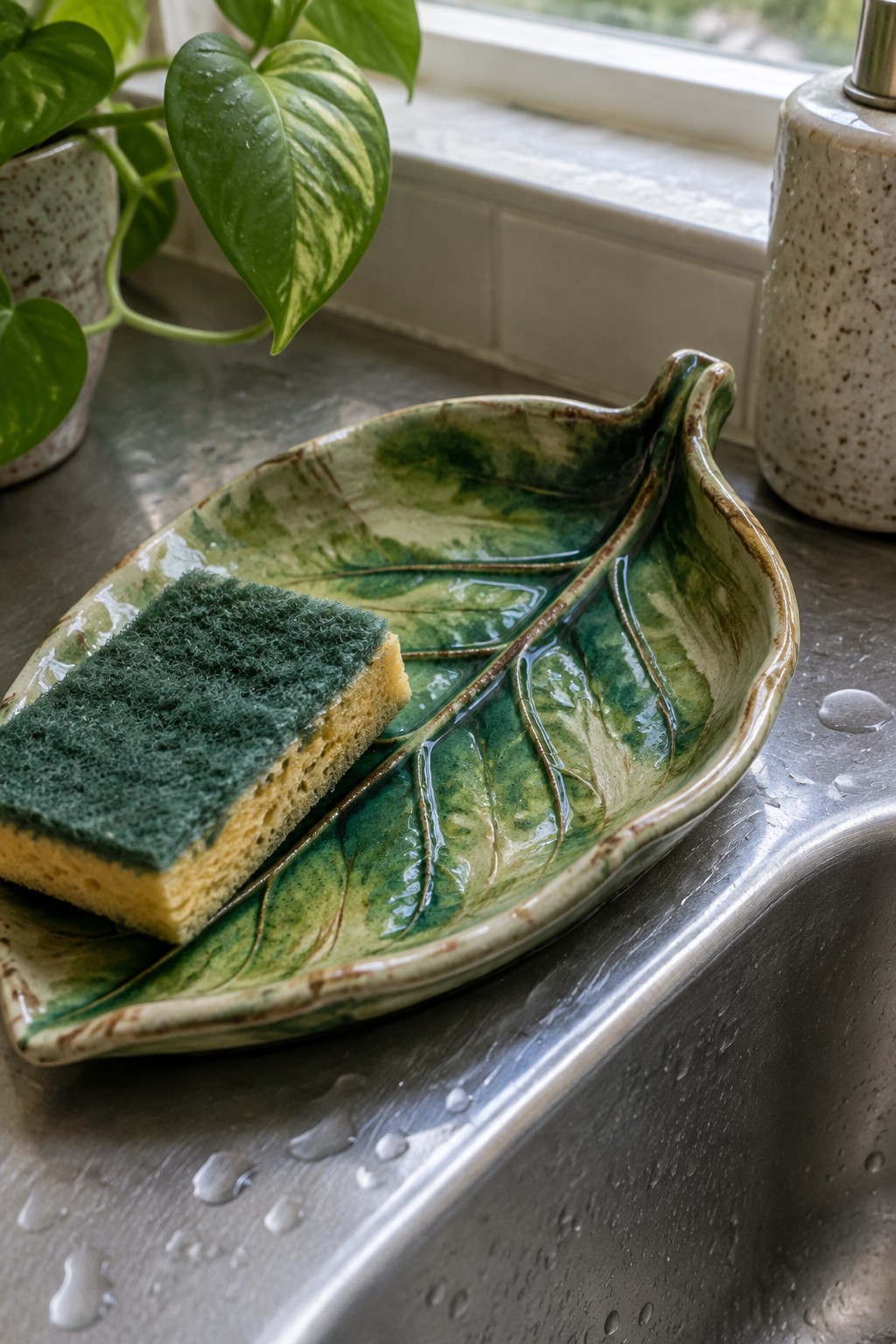
A leaf-shaped ceramic tray works as a sponge holder by creating a shallow, elongated basin with raised vein details that keep the sponge in place. The mottled green glaze and brown edges give the piece a foliage-like appearance that suits a kitchen setting. This project falls into the kitchen item category and uses the natural leaf form to contain a sponge while letting excess water flow toward the sink edge.
What makes this idea useful is the narrow profile that fits along the back of a sink without crowding the counter. You could adapt the shape by making a smaller version for a bar sink or stretching it into a longer tray for scrub brushes. In a kitchen, this kind of piece keeps the sponge off the metal surface so it dries faster. The same leaf form could be simplified into a plain oval dish if you want a faster slab build.
Ceramic Sponge Holder with Central Brush Post

A ceramic sponge holder with a tall central cone creates a compact sink organizer that keeps both a sponge and dish brush in one spot. The rounded bowl shape leaves room for a sponge on one side while the tapered post holds the brush upright by its handle. The speckled terracotta glaze and simple form make it easy to produce on a wheel or with basic hand-building. This kitchen item turns two everyday tools into a single functional piece.
What makes this idea useful is how the central post solves the problem of a brush sliding around or lying flat on the counter. You could rework the same shape with a shorter post for just sponges or add a small drainage hole at the base. In a busy kitchen, the design keeps things tidy without needing extra trays or racks. For a gift, something like this stands out because it is practical and easy to customize with different glaze colors.
Ridged Ceramic Sponge Bowl

A shallow ceramic bowl with concentric ridges pressed into the base serves as a sponge holder for sink-side use. The ridges create channels that let water drain away from the sponge instead of pooling underneath. The blue glaze with subtle variation gives the piece a simple, functional appearance that blends into a kitchen without extra decoration. This approach turns a basic bowl form into a dedicated kitchen item that keeps the sponge elevated and easy to grab.
What makes this idea useful is how the ridged bottom solves the common problem of a soggy sponge sitting in water. You could make the same shape in a smaller diameter or switch the glaze to match your countertop or existing dishes. In a kitchen, this kind of piece stays practical while looking more intentional than a plastic holder. The small scale makes it simple to adapt into a soap dish or small drainage tray if you want to try the ridge technique on another object.
Seashell Ceramic Sponge Holder

A ceramic sponge holder formed as an open clam shell gives the sponge a dedicated spot right beside the sink. The sculpted piece uses a wide, wavy rim and shallow curved base to cradle the sponge while letting excess water drain away from the counter. This bathroom item relies on an organic, handheld scale and a soft beige glaze with faint coral streaks to echo natural shell coloring without competing with other sink surfaces.
What makes this idea useful is how the shell shape keeps the sponge contained and slightly elevated so it dries faster between uses. The small footprint fits narrow ledges or marble counters where a larger tray would crowd the space. You could rework the same form by changing the shell type or rim height to match different sponge sizes or by adding a simple drainage hole in the base. In a kitchen or bathroom, this holder stands out on Pinterest because the nature-inspired shape feels more intentional than a plain dish while still serving a clear daily purpose.
Ridged Ceramic Sponge Tray with Elevated Feet

A rectangular ceramic sponge holder features a series of parallel ridges molded into the base to keep the sponge from sitting in standing water. Four short rounded feet raise the entire piece off the counter so airflow can reach the bottom. The form is finished in a speckled sage green glaze that resists moisture and wipes clean easily.
What makes this idea useful is how the ridges solve the common problem of a soggy sponge while the small feet add practical elevation without extra parts. The compact size works well on narrow sink ledges or between the faucet and edge. You could adapt the same shape into a longer version for holding multiple brushes or shorten it into a smaller tray for scrub pads.
Braided Rim Ceramic Sponge Holder

A shallow ceramic bowl becomes a sponge holder when the rim is formed from thick coils of clay twisted together to create a braided edge. The inside carries a soft green glaze while the outer surface stays in a speckled brown tone that matches wood counters. This shape keeps the sponge centered and lets excess water collect at the bottom instead of spreading across the sink area.
What makes this idea useful is the raised braided rim that stops the sponge from slipping out during use. You can scale the same coil technique down for a smaller holder or swap the glaze colors to fit different kitchen styles. In a sink setup this kind of piece stays practical because it holds one sponge neatly and wipes clean easily. The form also works as a holder for scouring pads or small brushes if you want to adapt it for other tasks.
Mushroom Cap Ceramic Sponge Holder

A mushroom-shaped ceramic sponge holder uses the cap as an open compartment that keeps a sponge elevated and accessible right at the sink. The red glazed top with white dots sits over a beige stem base that holds the weight steady on the counter. The design keeps the sponge from sitting in water while taking up very little space between the faucet and the edge of the sink. This fits the kitchen holder category and works because the hollow cap shape directly solves the problem of where to store a damp sponge.
The shape does a lot of the work here by hiding the sponge inside while still letting it air out. You could rework the same idea with a different mushroom type, solid color, or no face if you want it to blend in more with plain kitchenware. In a small kitchen this kind of piece stays practical because it combines storage and decoration without needing extra shelf space. For a gift, something like this would be easy to adapt by changing the spot pattern or scaling the stem height to match other handmade dishware you already own.
Divided Ceramic Tray for Sponge and Brush

A divided ceramic tray serves as a sink-side sponge holder by giving the sponge its own compartment while the dish brush rests in a separate slot with a side hole for the handle. The oval form and low divider keep the two items from mixing together during use. A ridged texture on the interior helps with grip and water flow, and the matte off-white glaze keeps the piece simple and practical. This kitchen item fits the standard counter space beside a sink without taking up extra room.
What makes this idea useful is the built-in handle slot that lets the brush dry upright instead of lying flat. You could rework the same layout with a drain hole in the sponge section or try a darker glaze to hide water spots. In a kitchen this shape keeps both tools organized and within reach during dishes. The design would also translate easily to a smaller version for a bathroom sink or a wider tray for extra scrubbers.
Avocado-Shaped Ceramic Sponge Holder

A ceramic sponge holder shaped like an avocado half keeps a sponge centered in the recessed pit area while the curved edges contain water. The piece uses a green exterior glaze and a brown center section to mimic the fruit’s natural look. This kitchen item fits directly on the sink ledge or counter without taking much space.
What makes this idea useful is the built-in oval dip that stops the sponge from sliding around. The same avocado form could be reworked into a soap dish or small scrub brush holder by adjusting the center depth. In a kitchen, this kind of piece keeps the counter dry and organized while matching other produce-themed items. You could simplify the shape into a plain oval tray if you want a faster project that still holds a sponge.
Dual-Compartment Ceramic Sponge and Soap Holder

A dual-compartment ceramic piece combines a shallow oval dish with a taller cylindrical cup joined at the base. This layout lets the bar of soap rest in a small amount of water on one side while the sponge stands upright in the other. The speckled surface and blue-green lower band create a simple water-resistant finish that holds up to daily sink use.
What makes this idea useful is the connected base that stops the holder from shifting when the counter gets wet. The taller sponge side keeps the sponge from soaking in soapy residue, which helps it last longer. You could rework the same form by widening the sponge cup or adding a small drainage hole at the bottom. In a kitchen, this kind of piece keeps both items in one spot without taking much counter space.
Creature Ceramic Sponge Holder with Scalloped Rim and Feet

A ceramic sponge holder shaped like a small creature works as a sink-side organizer by combining a wide bowl form with practical drainage features. The scalloped rim keeps the sponge contained while the cutouts on each side allow airflow and water to escape. Four short feet lift the base off the counter so moisture does not pool underneath. The marbled green glaze gives the surface enough variation to hide water spots between uses.
What makes this idea useful is the way the feet and side openings solve the common problem of a soggy sponge sitting in a puddle. You could simplify the same form by skipping the face and keeping only the feet and cutouts if you prefer a cleaner look. The compact size also makes it easy to move when you need to wipe the counter. For a gift, the same shape could be made slightly larger to hold dish brushes instead of sponges.
Divided Tray for Sponge and Soap

A divided ceramic tray creates a simple sink-side holder by giving a natural sponge its own section next to a bar of soap. The long oval form with a raised center divider keeps the two items from sliding into each other while still fitting on a narrow counter ledge. The dark speckled glaze and unglazed rim give the piece enough weight to stay put even when water splashes around it. This style of kitchen item solves the basic need to store both objects together without a messy puddle forming underneath.
What makes this idea useful is the way the divider handles two different shapes at once. The larger compartment easily fits a natural sponge while the smaller one cradles a standard bar of soap, and the same layout could be shortened to hold a dish brush instead. You could add a couple of small drainage holes on the sponge side to help it dry faster. The narrow footprint also makes it easy to slide onto a windowsill or the edge of a utility sink where space is tight.
Ceramic Crock Sponge Holder for Sink Ledges

A small ceramic crock with a wide opening and slightly tapered body makes an effective sponge holder because it keeps multiple sponges and scrubbers upright while letting water collect at the bottom. The turquoise glaze with brown speckling and drip marks gives the piece a sturdy, kitchen-appropriate finish that resists showing water spots. This shape fits the category of functional kitchen pottery and works because the handmade form is stable enough to sit on a wet countertop edge without tipping.
What makes this idea useful is the low profile that tucks neatly against the sink without blocking the faucet. You could rework the same rounded shape in a matte white or gray glaze to match different kitchen styles or make a second smaller version for holding steel wool. In a kitchen, this kind of holder keeps sponges off the tile so they dry quicker and reduces countertop clutter. The simple form is also easy to adapt into a soap dish or small utensil caddy if you want to repeat the shape across other tasks.
Frequently Asked Questions
What factors should I consider when selecting a ceramic sponge holder for my kitchen sink? Consider the size of your sink area and how the holder will fit without crowding other items. Opt for designs with drainage holes or raised bases to keep sponges dry and reduce mold risk. Look for holders that complement your existing decor, such as those with simple glazes or patterns that match your countertops. Many ideas in the article show compact options that attach via suction or sit stably on the edge for easy access during daily tasks.
How can I keep my ceramic sponge holder from sliding around on a wet sink surface? Apply a small strip of adhesive rubber padding to the bottom of the holder before placing it down. This creates friction without permanent changes to your sink. Some clever ideas suggest using holders with built-in grooves that hook onto the sink lip for added stability. Wipe the surface dry first and test the placement with a damp sponge to confirm it stays put during regular use.
What is the best way to clean and maintain a ceramic sponge holder over time? Rinse the holder weekly under warm water and use a soft brush with mild dish soap to remove any buildup. For tougher spots, soak it in a solution of equal parts water and white vinegar for 15 minutes before scrubbing. These steps help preserve the ceramic finish while preventing bacteria from transferring to your sponges. Rotate between multiple holders if you have space, as suggested in several organization ideas, to allow thorough drying between uses.
Can ceramic sponge holders work well in small kitchens with limited counter space? Yes, many designs focus on vertical or wall-mounted options that free up flat surfaces. Choose slim profiles or those that clip onto the faucet for compact storage. Pair them with matching ceramic soap dishes to create a cohesive setup that organizes multiple items without clutter. This approach keeps sponges elevated and accessible while making the most of tight sink areas.
Where might I source affordable ceramic sponge holders that match article ideas? Check local thrift stores or online marketplaces for plain ceramic dishes and bowls that can be repurposed with minor adjustments like adding drainage. Craft supply shops often carry unglazed pieces you can customize with paint or sealant for a personal touch. These budget-friendly finds allow you to recreate various clever concepts, such as stacked holders or those integrated with utensil racks, without high costs.

Pottery Path is my cozy corner of the internet where I share clay ideas, pottery inspiration, and simple projects you can recreate at home. I love exploring everything from air dry clay to handbuilt pottery to cute minis that brighten your day. My goal is to make clay crafting feel easy, fun, and welcoming for anyone who wants to try it.
You will find beginner friendly tutorials, creative pottery painting ideas, and lots of warm inspiration for slow and happy crafting. If you enjoy hands on creativity, this space will feel like home.