
I started making coil vases a few years ago when I wanted something simple to hold flowers on my table.
They work well with the plain shelves and quiet colors I already have around the house.
Building them by hand lets me go at my own pace without needing much equipment.
I have tried different heights and shapes over time and kept the ones that felt right for daily use.
These are the designs I come back to when I want to make a few more.
Speckled Coil Vase with Visible Horizontal Ridges

A coil vase built from stacked clay rings creates a rounded body that narrows into a short, stepped neck. The ridges left by the coils give the surface a clear handmade texture, while the light speckled glaze keeps the overall look simple and bright. This style of vase works as minimalist decor because the form stays functional for dried stems or small flowers without added decoration.
The small scale makes it practical for a desk, shelf, or windowsill where space is limited. You can adapt the same coil method by adjusting the body width or neck height to fit different stem lengths or to turn it into a small planter. The neutral glaze lets the piece blend with existing decor while the ridges add enough detail to stand out in photos. This approach is worth trying if you want a vase that shows the construction method without needing advanced wheel skills.
Coiled Vase with Visible Horizontal Ridges
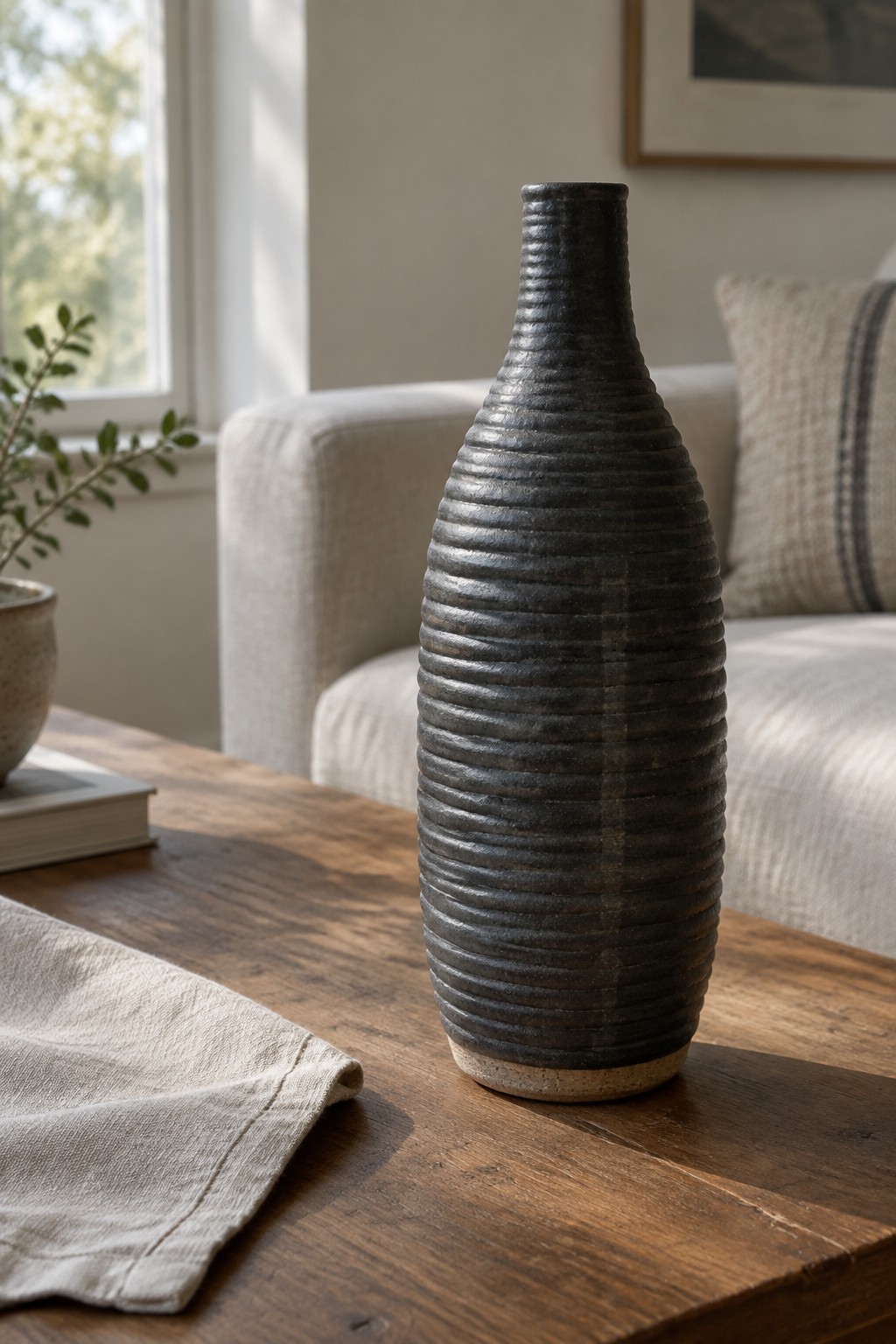
This vase is built entirely from coils stacked and smoothed just enough to leave distinct horizontal bands around the form. The shape tapers from a narrow neck to a wider base, with the dark matte glaze applied over the ridges while leaving the foot unglazed. The technique keeps the construction marks as the main surface detail, which suits a minimalist setting where texture replaces pattern or color.
What makes this idea useful is how the ridges give the piece structure and shadow without extra carving or slip work. You can adapt it by spacing the coils farther apart for a bolder look or closer together for a finer texture. A piece like this works especially well on a low table or shelf where the vertical lines stand out against plain walls. For a different version, use the same coiling method but stop the form at mid-height to make a shorter vessel for single stems.
Distressed Slip Coil Vase

A coil vase built from terracotta clay shows the construction method through its horizontal ridges. White slip covers most of the surface but wears away in patches to expose the clay color beneath. The rounded body sits low with a short neck and a small pinched detail on one side that functions as a handle. This combination keeps the form basic while letting the clay and slip create visual interest.
The shape does a lot of the work here since the low profile fits easily on shelves or mantels without taking much space. You can adapt the same coiling and slip technique to taller versions or swap the white slip for another light color that still contrasts with the terracotta. The chipped finish happens naturally during handling or light sanding after the bisque fire, so it requires no extra painting skills. In a minimalist room this approach gives texture and warmth without adding patterns or bright glazes.
Coil-Built Mini Vases with Horizontal Ridges

These vases are formed by stacking coils into compact, slightly tapered shapes that keep the construction lines visible as even horizontal ridges. The rims are left softly uneven rather than trimmed smooth, and each piece is finished in a single matte glaze—sage green, dusty pink, or warm beige—applied thinly enough to let the clay texture show through. The result is a set of small bud vases that rely on form and surface rather than color or pattern for their interest.
The small scale works well on narrow shelves or grouped with books and small objects where a larger vase would dominate. You can vary the number of coils to adjust height while keeping the same diameter, or change just one glaze color to shift the whole group’s tone. This approach is easy to adapt for single-flower holders or tiny dry arrangements, and the clear coil texture photographs distinctly, which helps it stand out in a feed of smoother ceramics.
Bulbous Coil Vase with Footed Base

A coil vase built with a wide rounded body that narrows into a short neck and sits on a small foot works well for minimalist setups. The matte speckled surface and faint horizontal ridges from the coils keep the look simple while still showing the handmade construction. This shape holds a few stems without needing extra decoration and blends into neutral rooms because the form carries the interest.
What makes this idea useful is how the curved profile and small base let it sit on a windowsill or shelf without taking much space. You could scale the same coil shape taller for a floor version or shorten it for a desk piece. The speckled finish also adapts easily if you want to test different clay bodies while keeping the same silhouette.
Double Neck Ribbed Vase
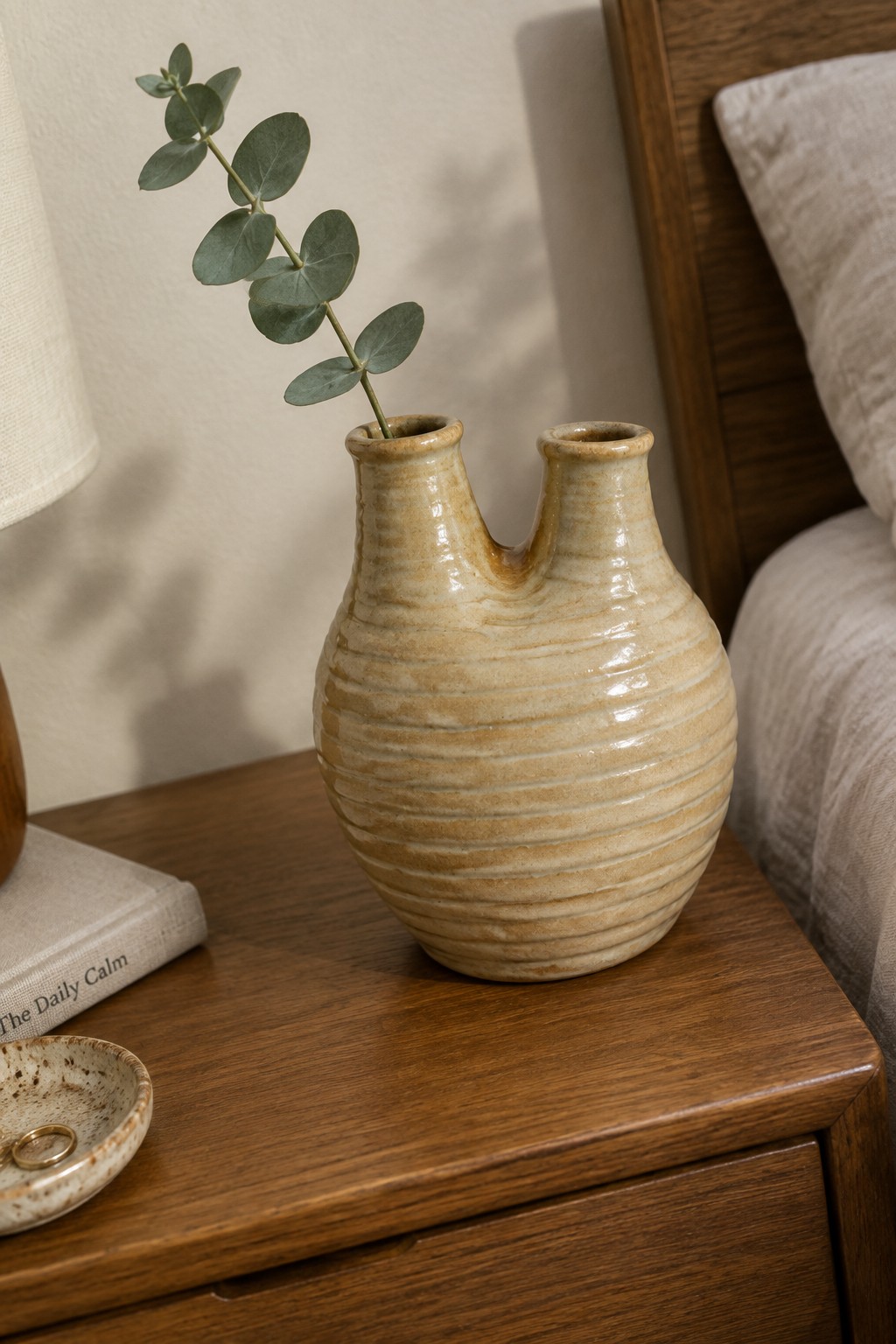
A double-neck vase made by joining two spouts to a rounded body creates two separate openings in one piece. The horizontal ridges give the surface a clear handmade texture while keeping the overall shape simple and balanced. A neutral tan glaze with slight variation in tone lets the clay show through without adding extra color. This approach works well for anyone wanting a vase that holds one or two stems without needing extra containers.
What makes this idea useful is the way the two necks let you arrange a single branch or split a few stems for better balance. The ridged texture helps mask small bumps if your coils or throwing lines are not perfectly even. You could shrink the same form for a desk version or stretch it taller for floor placement. For Pinterest saves, the split opening gives the piece a distinct profile that stands out from standard single-neck vases.
Coil Vase with Organic Shape and Single Loop Handle
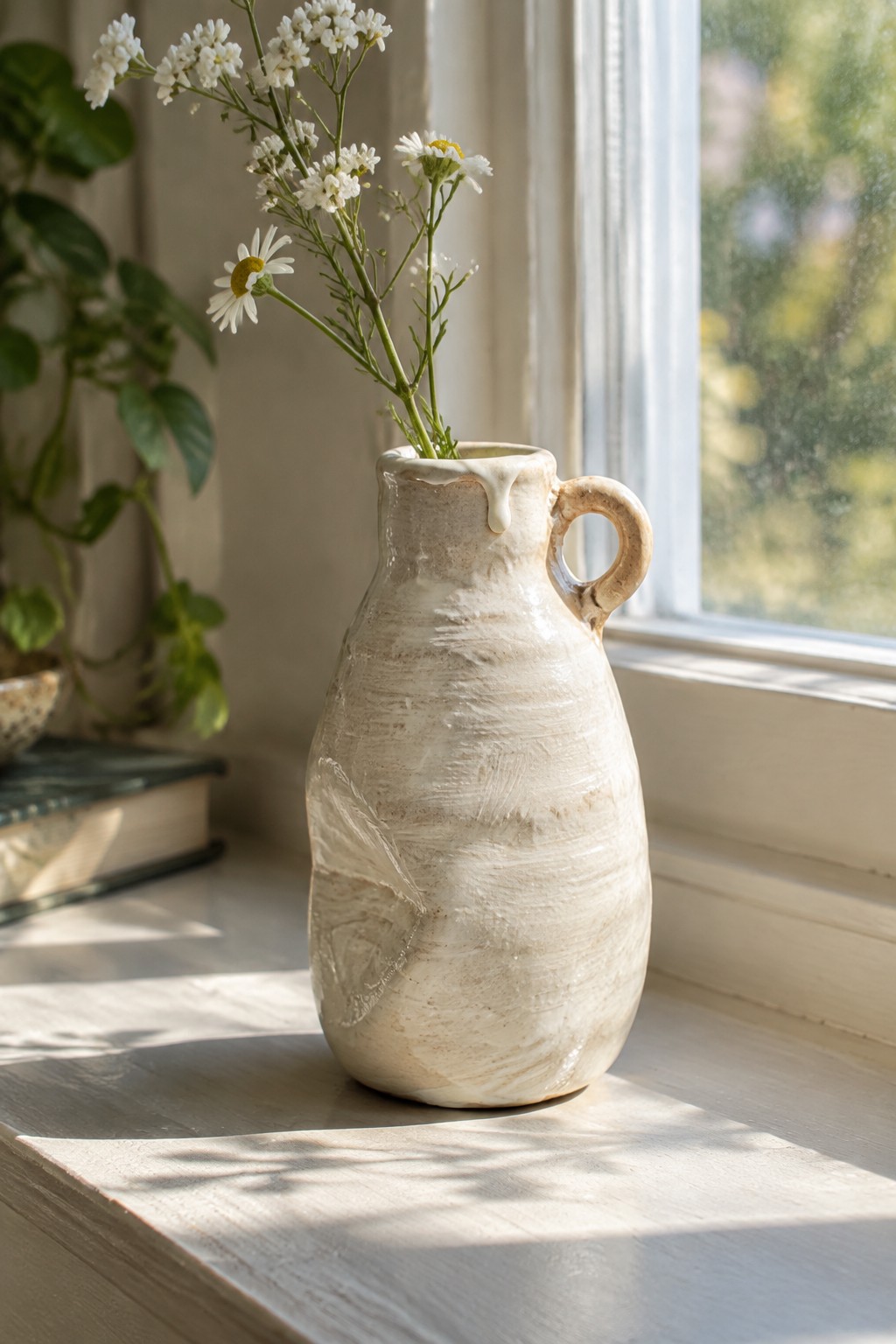
A coil-built vase with an asymmetrical body and a small looped handle works well for minimalist displays. The form stays simple with a wider base that tapers toward the top, while the visible texture from the coils shows through a soft white glaze that drips slightly at the rim. This approach keeps the piece functional as a flower vase without adding extra decoration or color.
What makes this idea useful is how the single handle gives it a slight pitcher feel that works on a windowsill or shelf next to books and plants. You could easily adapt the same shape without the handle for a smoother look or change the glaze to a matte gray for a different neutral. The coiling method lets you adjust the width or height without needing a wheel, and the textured surface holds up visually even in a simple all-white arrangement.
Fluted Coil Vase with Vertical Ridges

A coil-built vase formed with evenly spaced vertical ridges creates a textured surface that adds depth while staying simple in shape. The soft green glaze sits matte on the high points and settles darker in the grooves, highlighting the ridges without extra color or pattern. This approach keeps the focus on the form itself and works as a vessel for cut flowers or as a standalone table piece.
The shape does a lot of the work here by giving the vase presence on a table without needing bright glaze or painted details. You can adapt the same ridge spacing to taller or shorter versions, or use it on a wider bowl form for a different use. In a minimalist room the neutral tone and linear texture help it blend with wood and plants while still reading as handmade.
Ribbed Wall Pocket Vase

This project uses coils to build a compact wall-mounted vase with a flat back and rounded front. Horizontal ridges run across the surface, created by pressing or carving into the clay while it is still workable. The black matte finish covers the exterior while the rim stays light and unglazed, giving a clean contrast that suits minimalist rooms. The oval shape keeps the piece narrow enough to hang without protruding far from the wall.
The shape does a lot of the work here since the flat back and vertical form let it hang in tight spots where a round vase would not fit. You could simplify the ridges by using a rib tool for even lines or skip the black glaze and leave the clay in its natural tone for a lighter look. This style works well above a desk, next to a doorway, or in a narrow hallway where shelf space is limited. For another version, shorten the height and turn the same coil method into a small planter or match holder.
Horizontal Ridge Coil Vase

A coil vase built from stacked horizontal segments creates this rounded, sculptural form. The visible ridges add texture and shadow across the surface while the speckled earthy glaze keeps the overall look simple. This method suits larger vases because the coils provide structure and the finished surface needs little additional decoration. The narrow neck and wide body work well for holding mixed stems without extra supports.
The shape does a lot of the work here since the bulbous profile balances a full bouquet while the ridges give visual interest on their own. You could adapt the same coiling technique to make a shorter version for a side table or stretch the form taller for a floor piece. In a minimalist room the neutral tone lets the vase sit quietly among other objects without competing. For a gift this style translates easily to smaller bud vases using the same ridge pattern.
Coil Vase With Exposed Clay Base And Single Stripe
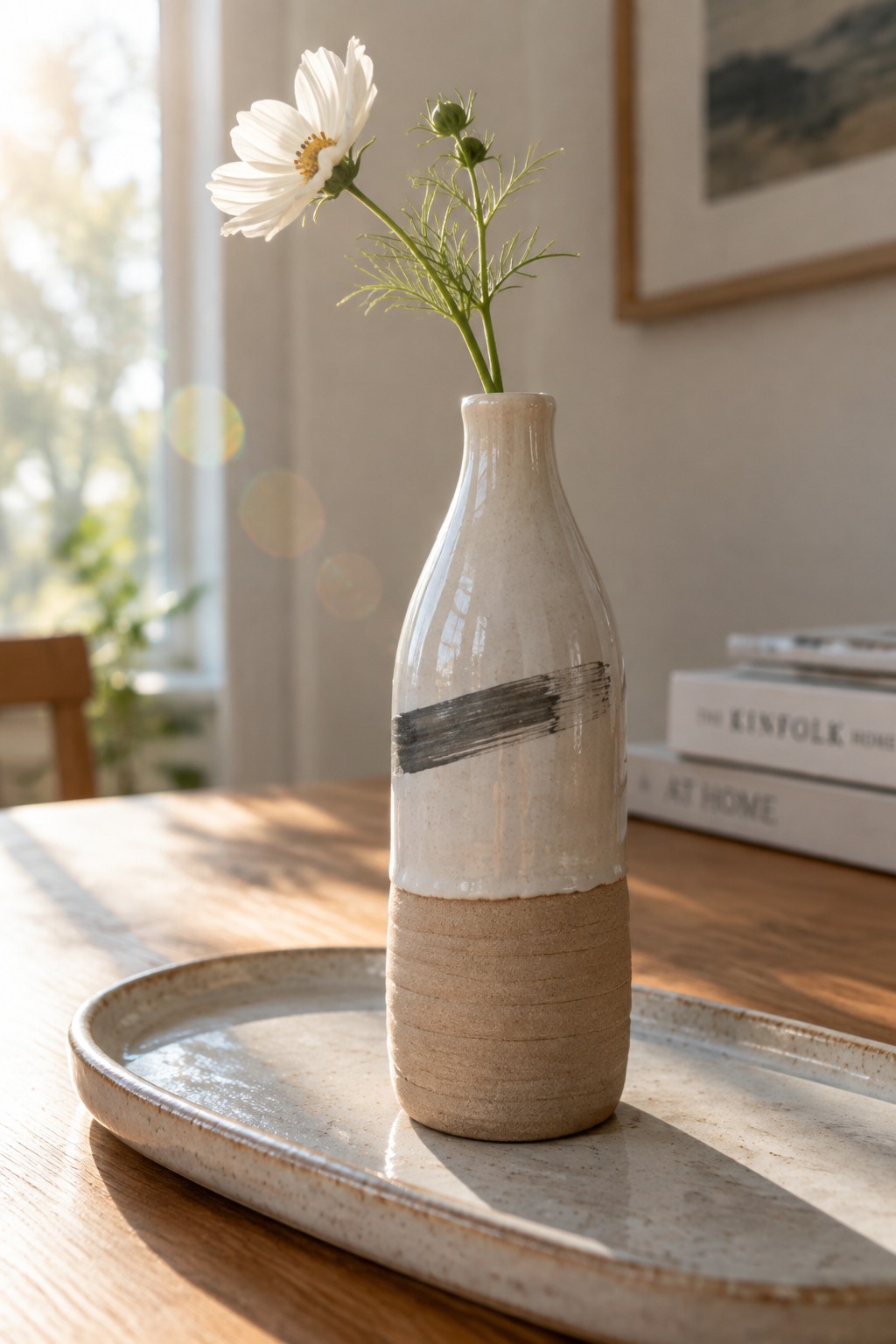
A coil-built vase works well here because the lower half keeps the natural clay color and shows the stacked rings from construction while the upper half gets a clean white glaze. The black brushstroke across the transition adds contrast and keeps the surface from looking too plain. This narrow bottle shape suits single stems or small cuttings and stays compact enough for tight surfaces.
The coil texture gives the bottom section enough detail to hold interest on its own so the piece still reads as handmade. You can adapt the same build by changing how far up the glaze stops or swapping the stripe color to match other accents in a room. A vase this size works on a desk, nightstand, or kitchen counter where you want something small that does not take over the space.
Coiled Neck Pitcher with Speckled Glaze

A coil-built pitcher vase uses visible horizontal coils around the neck to create texture while the rounded body stays plain below. The spout turns it into a functional serving piece instead of a straight vase, and the speckled beige glaze keeps the surface simple and neutral. This approach works as a minimalist decor object because the coils add structure without needing extra carving or color.
What makes this idea useful is how the coil ridges can be spaced wider or tighter to change the look on the same basic shape. A piece like this works especially well as a water pitcher on a kitchen counter or a vase for a few stems on a dining table. You could rework the same coil method into a taller cylinder form for a bathroom tumbler or shorten the body into a small creamer. The neutral speckled finish helps it blend with other handmade pieces without competing for attention.
Coiled Ring Vase for Air Plants

A coil-built ring vase forms a circular shape with visible stacked coils that create both structure and surface texture. The open center leaves room for a small plant while the outer ring adds a sculptural element without extra decoration. A simple two-tone glaze, pale on the outside with a soft pink interior, keeps the overall look minimal and clean.
What makes this idea useful is how the ring shape lets you combine a vase and plant holder in one piece. It fits well on a tray with pebbles or stones, and the same coil method can be adapted to change the ring width or height for different plant sizes. You could also skip the interior color and keep it one tone if you want an even simpler version for a desk or shelf.
Connected Double Vase with Horizontal Coils
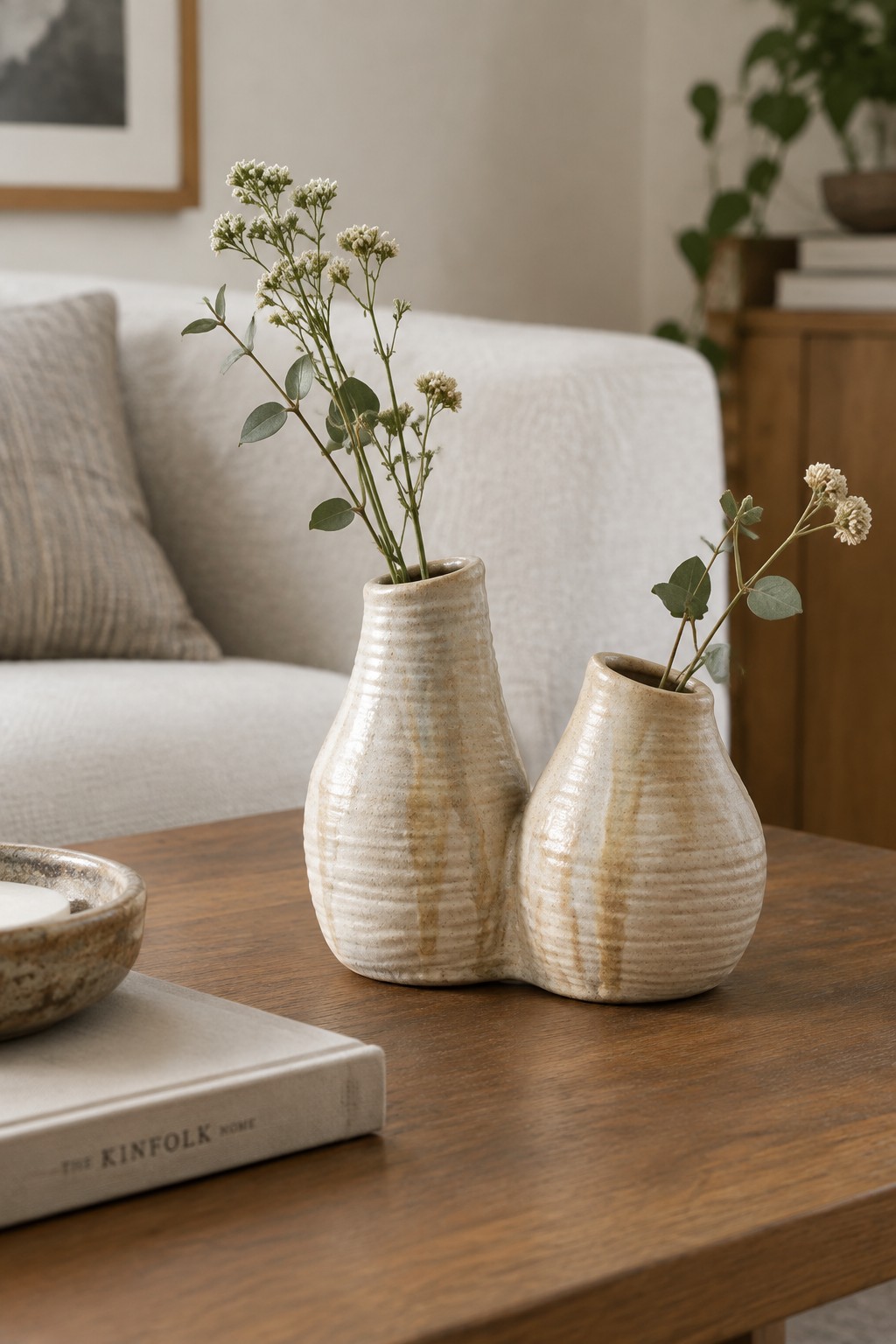
A double vase formed by joining two coil-built shapes side by side creates one connected piece instead of two separate vases. The visible ridges from the coiling process give the surface a simple textured finish while the light glaze with natural brown streaks keeps the overall look neutral. This type of object works as both a vase for dried stems and a sculptural decor piece that fits the minimalist category.
The joined shape lets you style two small arrangements in a single object without needing extra vases on the table. You could rework the same idea into three connected forms or shrink the scale for a smaller shelf version. The ridged texture is straightforward to repeat with coils and helps the piece read as handmade rather than mass-produced.
Spiral Coil Vase in Neutral Glaze

A coil vase formed by stacking horizontal coils creates a continuous spiral texture that runs from base to rim. The shape tapers upward into a narrow neck, and a soft gray-beige glaze settles into the ridges to emphasize the handmade lines without adding color contrast. This type of vase fits the coil-built decor category because the visible coils give it structure and surface interest while the neutral tone keeps it simple enough for minimalist settings.
What makes this idea useful is how the coil spacing can be tightened or loosened to change the final height or width. You could repeat the same coiling method to make shorter versions for a windowsill or wider ones for dried branches. The neutral glaze also lets the piece blend with existing decor, and the same texture works on smaller forms like bud vases or lidded jars if you want a matching set.
Interlocking Coil Vase Built from Thick Clay Ropes

A vase constructed by coiling thick ropes of clay into an overlapping, basket-style form with intentional gaps between the loops. The structure uses the coils themselves to create both the walls and the visual interest, leaving open spaces that let light move through the piece. The matte, lightly speckled surface keeps attention on the form rather than any surface treatment. This sits in the sculptural vase category, where the shape serves as the main decorative element.
What makes this idea useful is how the open coil method builds height and presence without adding weight or using much clay. You can adapt the same wrapping technique at a smaller scale to make a dried-flower holder or close the bottom loops to create a shallow tray. The neutral tone and irregular texture work well in minimalist rooms where the silhouette needs to stand out against plain walls. The same looping approach could be tightened or loosened depending on whether you want more negative space or a denser look.
Coil Vase with Raw Clay Base and Dripping White Glaze

A coil-built vase that keeps the lower half in unglazed clay while coating the upper half in white glaze creates a simple two-tone effect. The horizontal ridges left by the coils add texture to both sections, and the glaze is applied thick enough to drip down over the transition line. This design suits a medium vase meant for a single cutting or small houseplant.
The exposed clay base gives the piece a grounded look that fits shelves, mantels, or desks without competing with other objects. You could rework the same shape by switching the glaze color or adjusting how far the drips travel to suit different rooms. For a gift, the form stands out because it needs no extra decoration beyond the glaze line.
Horizontal Striped Coil Vase in Terracotta and White

A coil vase built with alternating bands of terracotta and off-white clay produces a clean striped effect through simple repetition. The ridges left by the coils create subtle texture that catches light across the surface. This shape stays rounded and balanced, making the stripes the main visual element rather than any added decoration. The two-tone approach keeps the overall look grounded and easy to place in a minimalist setting.
What makes this idea useful is how the stripes emphasize the coil lines without needing extra tools or carving. You can change the band widths or swap one color for black or deep brown to shift the mood. A vase of this size works well on a side table or desk as a standalone piece or for holding a few dried stems. The same banding method can be applied to a taller cylinder or a low bowl if you want to reuse the color idea in a different form.
Stacked Coil Vase with Wavy Bulges

Coil construction works well here because stacking rings of different widths creates the rounded, irregular bulges that give the vase its shape. The soft pink matte glaze with fine speckling adds subtle texture without competing with the form. This single-color approach keeps the piece simple enough for minimalist settings while the stacked silhouette still reads as intentional handmade work.
The shape does a lot of the work here since the bulges create visual interest without any carving or added details. You could scale the same coil method down for a smaller version to hold dried stems or use wider coils for a taller floor piece. In a living room or entryway this kind of vase stands out on a shelf because the form catches light and shadow, and the idea adapts easily if you switch to a different neutral glaze color.
Horizontal Coil Vase with Speckled Glaze
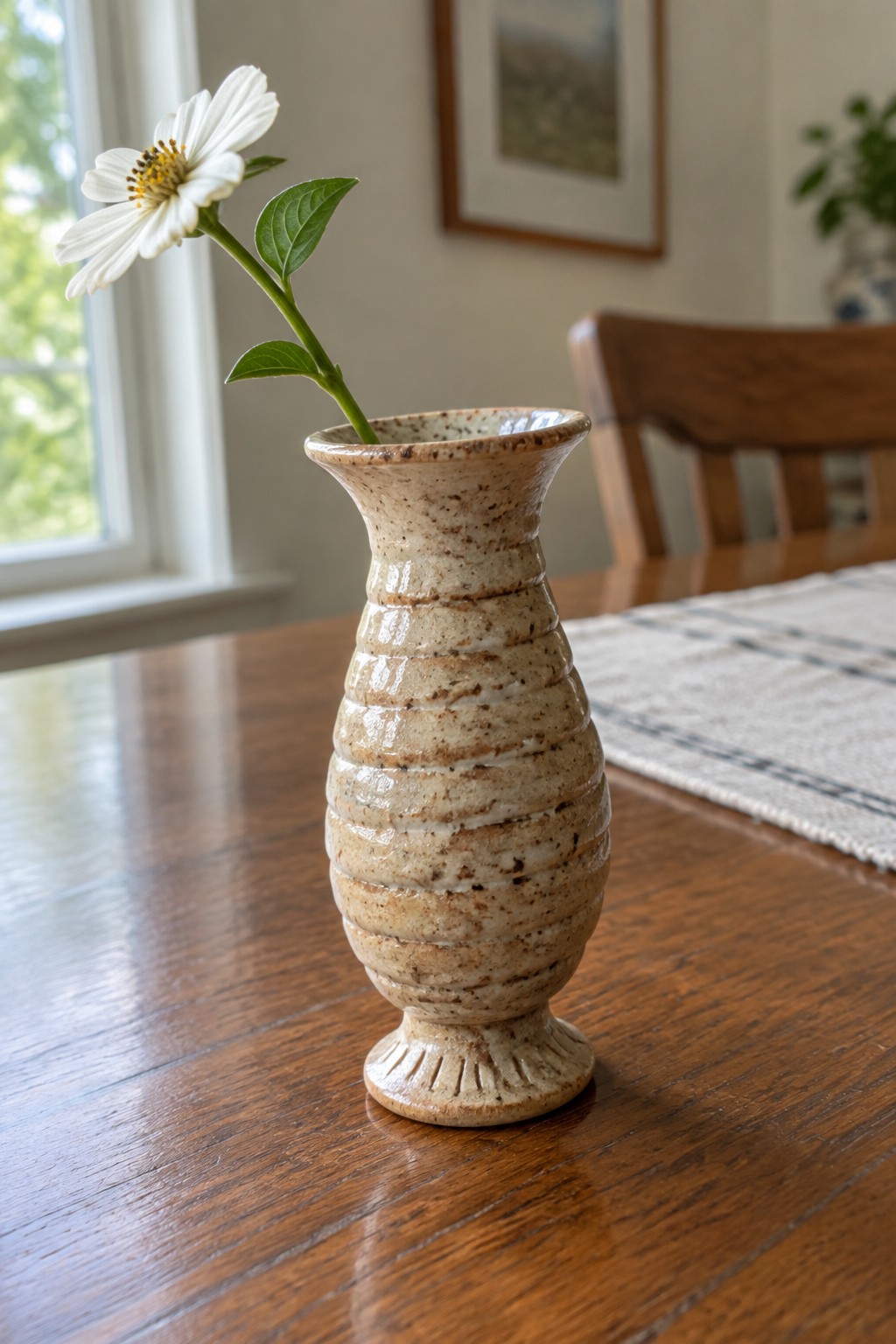
A coil vase formed from stacked horizontal coils creates this rounded body that tapers into a narrow neck before flaring at the rim. The visible ridges from the coils give the surface a consistent linear texture, and a light speckled glaze in neutral tones keeps the focus on the form rather than added color. This type of project works as a basic vase shape that highlights the coil construction method itself. The compact size makes it practical for holding one or two stems without overwhelming a surface.
What makes this idea useful is how the repeated coils build both structure and pattern in one step. A piece like this works especially well as a table accent or shelf piece in a minimalist setting where the neutral glaze fits with simple decor. You could adapt the same coil-stacking approach to make a shorter version for a desk or adjust the rim width for a different proportion. The texture also helps the vase photograph clearly for sharing ideas online.
Exposed Coil Vase with Horizontal Texture

A coil vase built from stacked ropes of clay produces clear horizontal ridges that run around the body. The rounded shape widens through the middle then narrows toward an irregular rim, and a dark matte finish makes the construction lines stand out without added decoration. This approach fits the vase category in minimalist ceramic decor because the visible coils and simple form do the visual work.
The shape does a lot of the work here since the wide belly gives it presence on a shelf or windowsill without needing extra detail. You can adapt the same coil method by changing the height or neck width to suit different spaces, or switch the dark finish for a lighter tone if the room calls for it. This style stands out on Pinterest because the ridges catch light and show the handmade process clearly, making it easy to recreate at home with basic tools.
Nested Coil Vases in Soft Pastel Glazes

Three small vessels built from coils sit stacked inside one another, each showing the horizontal ridges left by the hand-rolling process. The top piece is finished in a light blue glaze, the middle in a warm pinkish tone, and the bottom in sage green, all with the same slightly irregular rim shape. The nesting format turns three simple forms into one compact display piece that still reads as a group. This approach fits the minimalist vase category because the color variation and texture do the work without added patterns or handles.
The small scale makes these easy to move around and try in different spots on a shelf or table. You could adapt the idea by making all three in the same glaze for a quieter look or by stretching the same coil method into taller single vases. For a gift, the set gives more impact than one piece alone while staying simple to store. The ridged surface also photographs cleanly, which helps the finished project stand out if you share it online.
Coil-Built Low Bowl with Two-Tone Finish
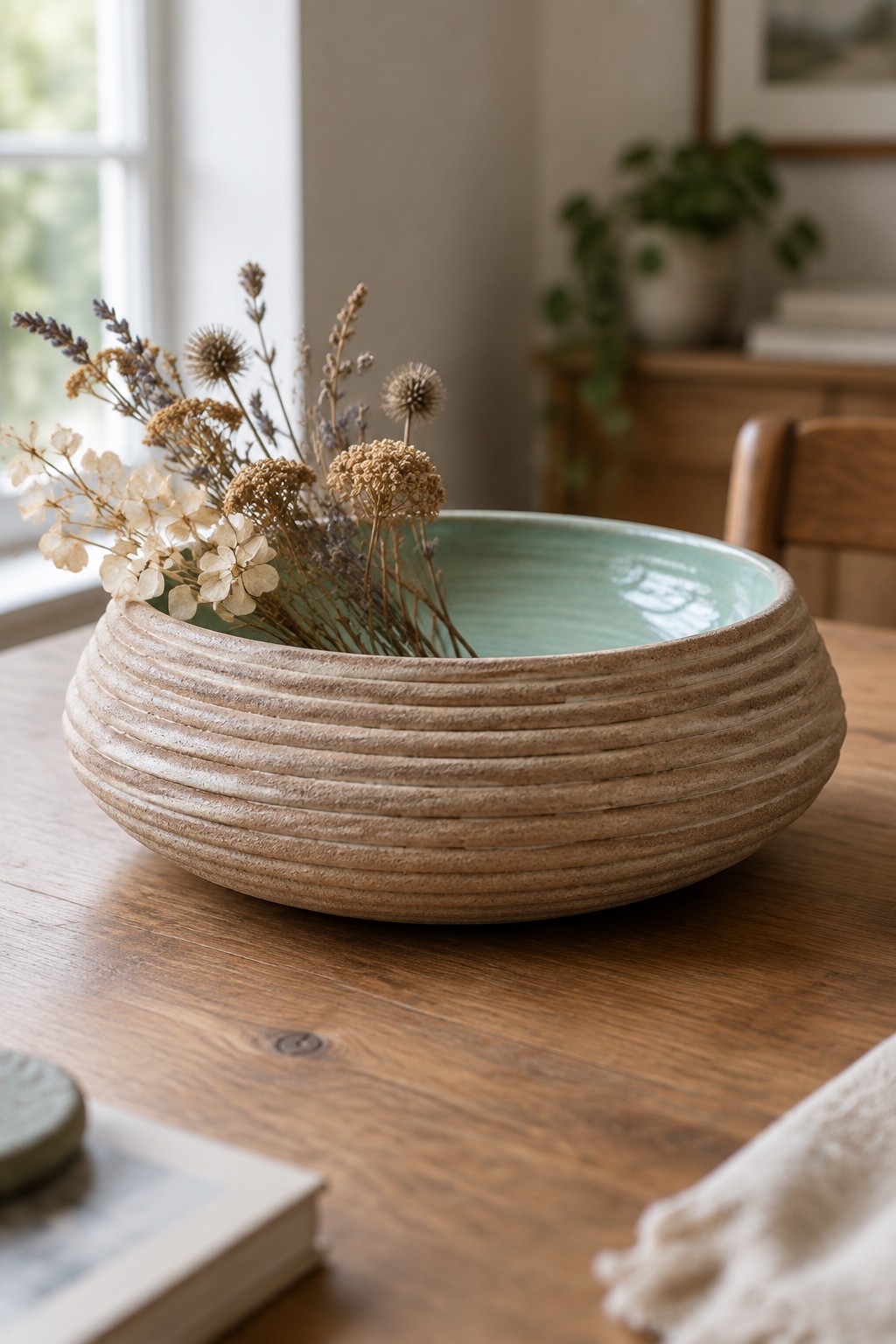
This coil-built ceramic bowl uses stacked horizontal coils to create a wide, shallow form with visible ridges across the exterior. The outside stays in its natural clay color with a matte, slightly rough texture, while the interior is coated in a pale mint glaze that catches light along the curved surface. The low profile and open shape make it well suited for holding dried stems or branches without overwhelming a tabletop.
What makes this idea useful is how the coil ridges do most of the visual work, so the form stays simple while still looking intentional. The contrast between the unglazed exterior and the glazed interior keeps the piece from feeling too plain, and the same shape could easily be made taller for a different proportion or scaled down for a smaller table. In a minimalist space, a piece like this works as a neutral vessel that still has enough texture to stand out against wood or linen.
Coil Vase with Impressed Shell Details

A coil-built vase with an organic, slightly uneven body gives you room to add raised shell motifs without needing extra surface decoration. The off-white glaze sits thin enough to show the clay texture underneath while keeping the overall look simple. Placing two or three shells at different heights and angles breaks up the form just enough to hold interest in a minimalist setting. The small loop handle on the side turns the piece into something you can actually pick up and move around.
The shape does a lot of the work here because the narrow neck keeps stems steady while the wider base prevents tipping. You could repeat the same shell impressions on a shorter, wider coil vase for a different proportion or leave the handle off for a cleaner profile. This kind of vase works especially well on a shelf or windowsill where the raised details catch side light. For a quick variation, try pressing the shells into leather-hard clay on a taller cylinder before adding the neck.
Frequently Asked Questions
What clay works best for making coil vases at home? Stoneware or earthenware clay with medium plasticity is ideal for coil building because it holds shape well during construction and fires reliably. Choose a clay body that matches your kiln temperature range and test small samples first to check for cracking or warping in minimalist forms.
How do I keep coils from slumping or separating in tall minimalist vases? Score and slip each coil thoroughly before adding the next one then smooth the interior and exterior joints with a rib tool. Work in sections allowing partial drying between layers to maintain structure while building height gradually for clean simple silhouettes.
Do these handmade vases need to be glazed for everyday use? Glazing is optional but recommended for water resistance if you plan to display flowers. Apply a clear or matte minimalist glaze in neutral tones after bisque firing then fire again according to the clay specifications to achieve a durable surface that fits modern decor.
Can beginners complete these coil vase projects without prior ceramic experience? Yes start with short wide shapes to practice even coiling and basic smoothing techniques. Follow step by step tutorials for each idea focusing on one design at a time and use simple tools like a wooden rib and sponge to refine surfaces before attempting taller minimalist pieces.
How should finished coil vases be displayed in a minimalist setting? Place them on low shelves or neutral pedestals with plenty of negative space around each piece. Group odd numbers of varying heights in one corner or use a single vase as a focal point on a clean table to emphasize their handmade texture without overwhelming the room.

Pottery Path is my cozy corner of the internet where I share clay ideas, pottery inspiration, and simple projects you can recreate at home. I love exploring everything from air dry clay to handbuilt pottery to cute minis that brighten your day. My goal is to make clay crafting feel easy, fun, and welcoming for anyone who wants to try it.
You will find beginner friendly tutorials, creative pottery painting ideas, and lots of warm inspiration for slow and happy crafting. If you enjoy hands on creativity, this space will feel like home.