
I started trying handbuilt pottery a few years back when I was looking for a new hobby.
These projects are ones that I found helpful as a beginner because they focus on basic techniques.
Most of them can be done with just a few tools and some clay from a local store.
I have included a mix of useful items and simple decorations that don’t take too long to finish.
Maybe one of them will give you a good place to begin.
Compact Handbuilt Mug

A small handbuilt mug gives beginners a straightforward project that focuses on basic shaping and a simple pulled handle. The rounded body stays easy to form by hand, while the streaked green and cream glaze adds visual interest through color blending rather than added texture or carving. This type of mug fits the everyday drinking vessel category and works at a scale that requires little clay.
What makes this idea useful is how the compact size suits tight kitchen counters or small breakfast setups. You can adapt the same form by changing the glaze colors to blues or earth tones for different rooms. In a kitchen, this kind of piece holds just enough for coffee or tea without taking up much space. The shape could also be shortened into a small bowl if you want to reuse the same handbuilding steps for another object.
Painted Floral Bowl

A shallow bowl formed from light clay uses simple painted flowers in blue and yellow to add pattern across the interior surface. The design relies on basic daisy shapes with yellow petals, blue outlines, and contrasting centers placed at different angles. This keeps the form straightforward while the painted motif supplies the visual interest.
What makes this idea useful is how the same flower pattern can be scaled up or down depending on the size of the bowl. In a kitchen this shape works well for snacks or fruit because the wide rim shows off the design. The motif could be reworked into fewer flowers on a mug or repeated on a small tray for jewelry.
Leaf Shaped Ring Dish

A small leaf-shaped dish formed from clay makes a simple ring dish or catch-all tray. The design relies on a flat slab cut into a pointed leaf outline with veins pressed or carved into the surface so the glaze pools and highlights them. The glossy pink finish keeps the piece light and easy to match with other items. This project falls into the small holder category that beginners can finish in one or two sessions.
The small scale makes this easy to adapt for a nightstand, desk, or bathroom counter where it holds rings, earrings, or loose change. You could swap the leaf shape for a different plant or try a matte glaze in another color to change the look. For a gift, something like this stays practical without needing much space or clay. The same slab method works for a longer tray version if you want to hold more items.
Cat-Shaped Handbuilt Planter

A handbuilt clay planter shaped like a sitting cat turns a basic pot into a small sculptural object. The rounded body holds the soil while the head, ears, and front paws are formed as part of the same piece. Simple painted details in orange and white mark the face, ears, and paws, with cut lines for whiskers and eyes that keep the decoration minimal. This idea sits in the planter category but uses basic sculpting to add character without extra attachments.
What makes this idea useful is how the compact cat form fits on a narrow shelf or windowsill while still giving the plant room to grow. You can rework the same shape for other animals or drop the painting step and just add a few carved lines for a faster version. The small scale makes it easy to try in one or two sessions and works especially well for succulents or small herbs. For a gift, the finished piece stands out without needing extra decoration.
Notched Spoon Rest for Kitchen Use

A handbuilt spoon rest gives you a flat ceramic tray with a cutout notch along one side to hold a wooden spoon or utensil handle. The rectangular slab shape keeps the spoon bowl elevated so drips land on the tray instead of the counter. A simple two-tone glaze with speckled texture and blue accents adds contrast while staying easy to clean. This fits the kitchen item category and works as a basic project using one slab of clay.
What makes this idea useful is the notch detail that solves a common stovetop problem without needing extra hardware. You can scale the tray smaller for a single spoon or widen it to hold tongs and a spatula at once. In a kitchen this piece stays put next to the range and doubles as a small landing spot for lids or tasting spoons. The same slab and notch approach could turn into a soap dish by swapping the notch for a shallow groove down the center.
Organic Handbuilt Candle Holder

A small handbuilt candle holder like this uses a simple pinched form that stays slightly asymmetrical on purpose. The clay is worked into a rounded shape with a wide opening at the top to hold a tea light or small votive. A mottled green glaze covers the surface and creates subtle variations in tone that catch the light from the flame.
What makes this idea useful is how little clay and time it requires while still giving you a finished piece ready for daily use. The same shape adapts easily if you want a matte finish instead or a row of shallow thumb impressions around the base for texture. In a bedroom or living room, this size works on a nightstand or shelf without taking up much space, and you could scale it down further to make matching ring dishes from the same batch of clay.
Divided Smiley Face Holder

A divided ceramic holder makes a practical bathroom organizer. The round form with two internal walls creates separate compartments that keep toothbrushes or small brushes upright. Simple smiley faces painted in different colors across the matte white surface create a repeating pattern that stays easy to read even from a distance.
This shape works well on a bathroom counter or shelf where you want items separated but still visible. You could make a shorter version for a desk or paint the faces in one color only if you want something quicker. The same divided layout also works for makeup brushes or kitchen tools, so the basic form gives you several options without changing the build much.
Citrus Slice Plates
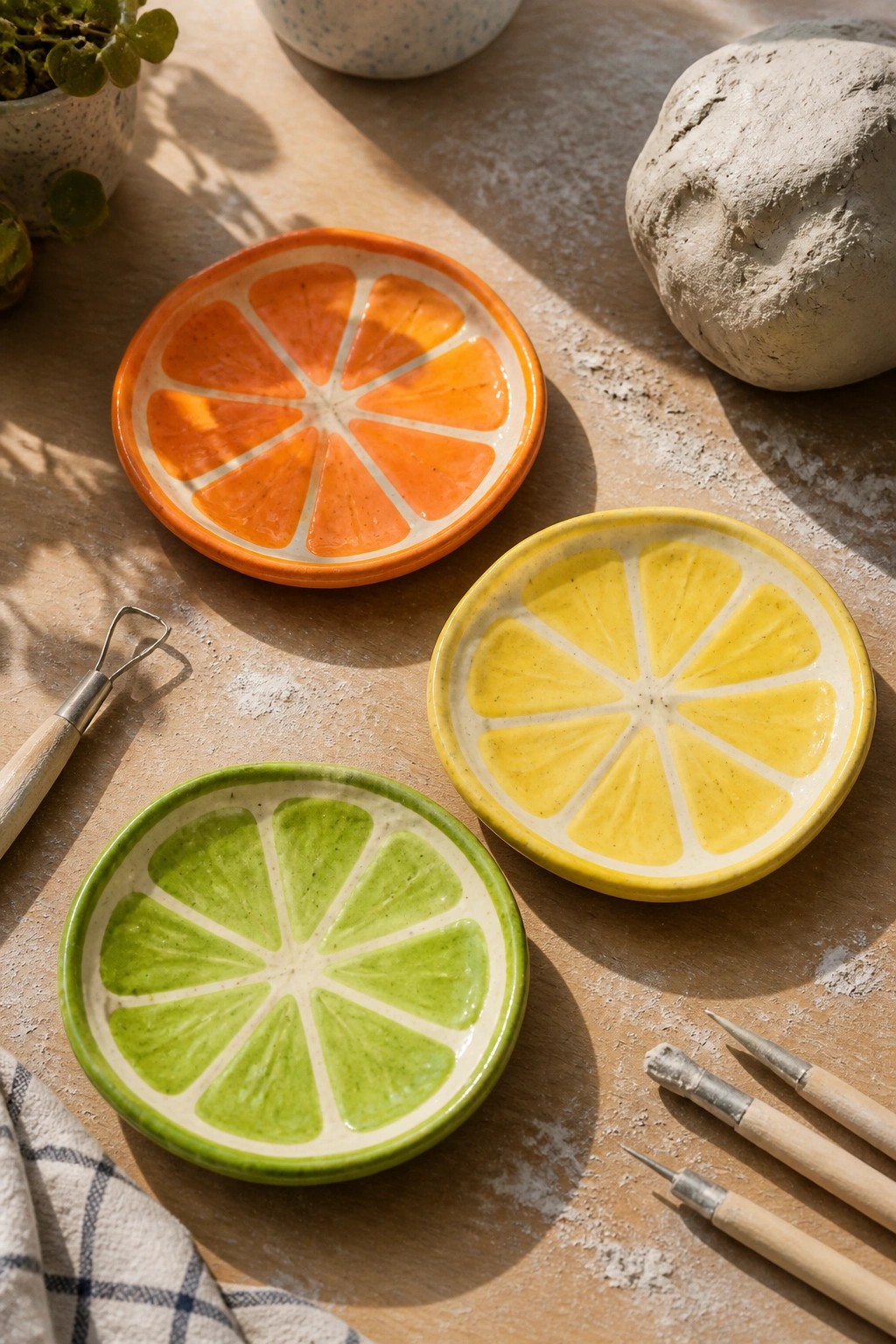
Handbuilt ceramic plates shaped like citrus slices give a simple way to practice slab work and surface decoration at the same time. Each plate is formed as a flat round disk, then divided into wedge sections with clay lines or carved grooves that suggest fruit segments. Bright glazes in orange, yellow, and green fill the wedges while the outer rim stays lighter to stand in for the rind. The finished pieces work as small plates, dessert dishes, or decorative trays.
The shape does a lot of the work here because the round form and radiating lines are easy to lay out with basic templates. You can scale the same pattern up for larger serving plates or shrink it for coasters by adjusting the slab size before firing. In a kitchen these plates add color without taking up much shelf space, and the design adapts quickly if you swap the glaze colors for different fruits like grapefruit or blood orange. For a beginner project the motif also photographs well for sharing, which helps when you want to document early work.
Striped Bud Vase

A small bud vase like this keeps a single stem upright while taking up little space on a shelf or sill. The shape narrows at the neck to hold the flower steady and widens through the body before tapering again at the base. Two painted blue bands sit on a crackle-glazed surface that shows the clay texture underneath.
What makes this idea useful is how quickly the stripe pattern can be changed or repeated on the same form. The size works for a desk, bathroom counter, or kitchen window and can be adapted into a small planter or holder for dried stems. You could shorten the body for a ring dish version or stretch the same lines across a taller cylinder.
Small Ceramic Salt Cellars

A pair of small handbuilt bowls makes a practical set of salt cellars or seasoning dishes for the kitchen. One uses a dark matte glaze and the other a light speckled surface, with a short ceramic spoon that rests across both. The rounded shapes and low profile keep the set compact while still holding enough for daily use. Contrasting glazes on the same form give the project visual interest without added decoration.
What makes this idea useful is how the small scale fits on a countertop or table without crowding other items. You can adapt the same pinched or slab-built shape into separate dishes for different spices or change the glaze colors to suit your kitchen. For a gift, something like this turns basic handbuilding into a functional object that gets used often. The spoon keeps the set together and adds one extra step that still stays simple for beginners.
Hedgehog Figurine

A handbuilt ceramic hedgehog makes a compact animal figurine for shelves or desks. The body is formed into a low dome then textured with repeated lines or stamps to suggest spines while the face stays smoother with pinched ears feet and a small nose added separately. This approach keeps the project in the decor object category and relies on simple sculpting rather than wheel work or complex glazing.
The small scale lets you finish and fire the piece quickly without needing much clay or kiln space. You could rework the same dome shape and surface texture into other animals by swapping the head and feet details for something like a mouse or armadillo. Place one on a bookshelf where its rounded form fits between books or use it as a paperweight on a desk. The carved texture gives the surface more visual interest than a plain shape so the finished result photographs well for sharing.
Leaf Relief Hanging Tile

A square clay tile with an impressed leaf design creates an easy wall ornament. The raised leaf sits centered on the tile and catches light under a light green glaze that keeps the surface simple and clean. This approach turns a flat slab into a finished decor piece by adding one clear motif and a small hole for hanging.
What makes this idea useful is how quickly it adapts to different rooms or sizes. You can press the same leaf stamp into several tiles for a grouped display, or change the motif to a different plant shape while keeping the square format. The hanging style works well above a desk or near plants without taking up shelf space, and the compact shape makes it simple to fit into a single kiln load or gift box.
Divided Ridge Soap Dish

A small square clay dish with a center divider and parallel ridges on each section makes a practical soap holder. One side holds the bar while the ridged area lets water run off and keeps the soap from sitting in a puddle. The soft green speckled glaze covers the form evenly and highlights the handmade texture without adding extra decoration. This project falls into the bathroom item category and uses basic handbuilding to create a functional shape.
What makes this idea useful is how the ridges handle both drainage and grip in one step. You could scale the same layout down for a ring dish or widen it slightly into a sponge tray by adjusting the divider placement. The compact size keeps material use low and makes it easy to fit on a sink or shelf. In a bathroom setting the divided design keeps things tidy while still looking like a deliberate handmade piece.
Polka Dot Ceramic Utensil Holder

A simple cylinder shape built from clay makes an effective kitchen utensil holder once it is glazed in a solid base color and finished with painted dots. The warm orange tone paired with evenly spaced white circles creates enough contrast to keep the surface interesting while still letting the form stay practical for daily use. This project falls into the kitchen item category and works well because the straight sides and open top make it easy to reach in and grab spoons or spatulas without tipping.
What makes this idea useful is how the painted motif can be changed to match different kitchen colors without altering the basic shape. You could scale the same cylinder down for a smaller holder on a desk or turn the idea into a shallow bowl version for storing produce. In a kitchen this kind of piece keeps tools in one spot and off the counter while still looking intentional next to other everyday items. The painted detail helps the holder stand out on Pinterest boards when you vary the dot size or try a different base glaze on the next attempt.
Notched Yarn Bowl for Knitting

A yarn bowl is a round ceramic form with a notch cut into the rim that holds a strand of yarn in place. The bowl keeps the ball contained while the notch stops the yarn from rolling off the table during use. This version uses a soft purple glaze over a simple pinched or slab-built shape that sits low and stable.
What makes this idea useful is how the notch turns an ordinary bowl into a practical tool without extra parts. You can widen the opening or add a second notch if you often switch between yarn colors. The same form works as a small desk holder for earbuds or as a bathroom dish for hair ties. Try making a few in different sizes so one fits a full skein and another holds leftover scraps.
Small Ceramic Creamer Pitcher

A small ceramic pitcher with a spout and handle makes a practical creamer or milk server for the table. The rounded body and simple pulled handle keep the form easy to shape by hand while the neutral speckled glaze gives it a quiet, usable finish. This project falls into the kitchen item category and works at a scale that stays manageable for beginners.
What makes this idea useful is how the basic pitcher shape adapts without much extra work. You can stretch the same form into a syrup server or shorten it for a small gravy boat. The neutral glaze pairs with most dishes, so the piece fits daily use or gifting. For Pinterest, the clean lines and functional size make it easy to style in flat lays with food or drinks.
Small Handbuilt Bowls in Mixed Glazes

Handbuilding a few small bowls gives beginners an easy way to practice even walls and simple shaping without needing a wheel. These examples use a soft speckled green, a peach glaze that runs slightly at the rim, and a matte gray to show how basic forms can look finished with different surface treatments. The rounded shapes and modest sizes make them practical for holding rings, loose change, or small amounts of salt or spices.
What makes this idea useful is that each bowl takes only a small amount of clay, so you can finish several in one sitting. Scale them down further for ring dishes or make a matching set in two sizes for a simple gift. The varied glaze colors help the group stand out in photos without extra decoration, and the same shapes work just as well for desk organizers or bathroom holders.
Ghost Ring Dish with Central Holder
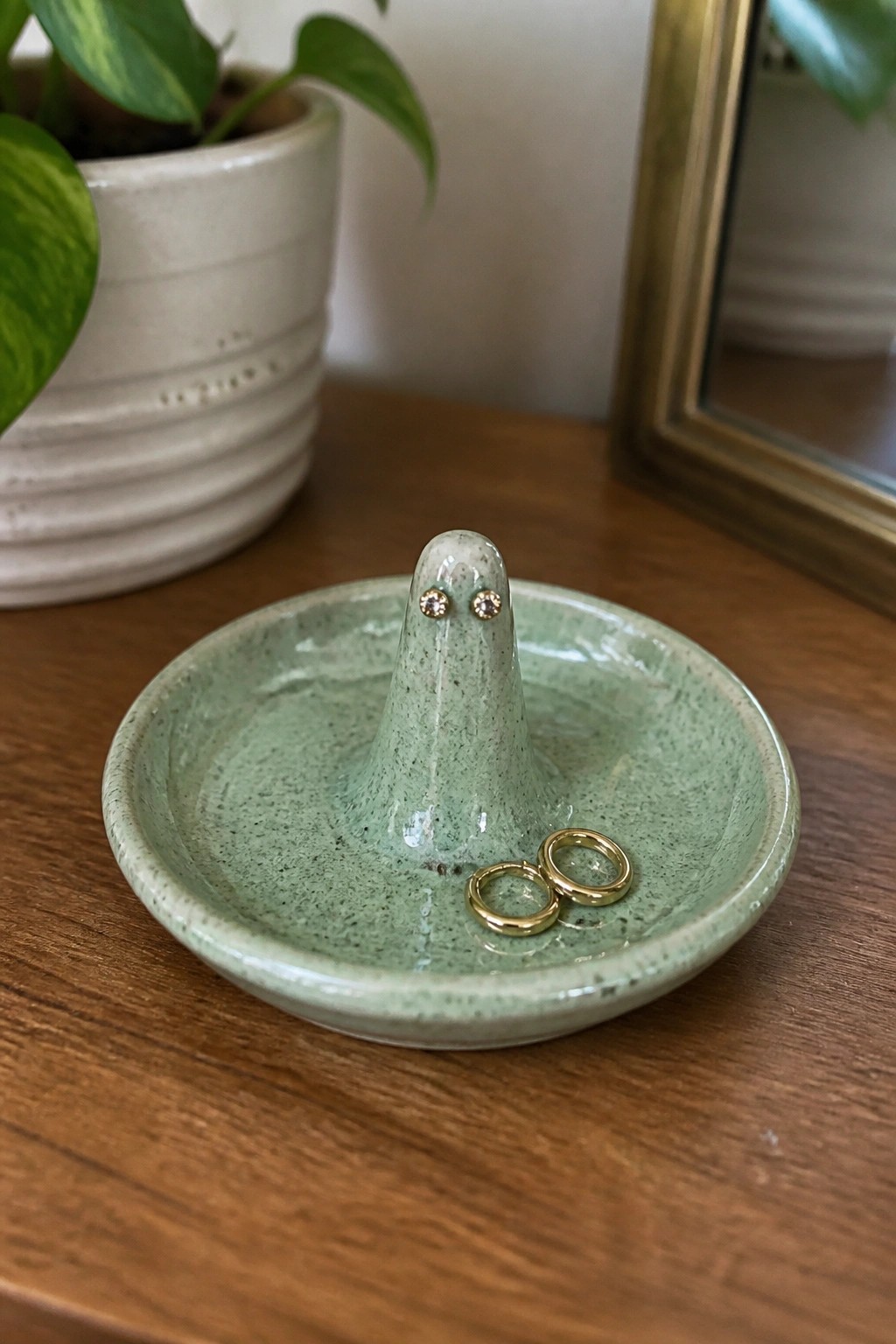
A handbuilt ceramic ring dish uses a shallow bowl base and a tall central cone to keep rings and small jewelry in place. Two small gems pressed into the upper part of the cone add simple detail while the light green speckled glaze covers the whole surface. The form stays compact and the glaze shows variation from the speckles without extra decoration. This stays in the ring dish category but adds one sculpted element that beginners can shape by pinching and attaching.
The small overall size lets the piece sit on a dresser or nightstand without crowding the surface. You can skip the gems and keep the cone plain or swap them for stamped marks if you want less detail. The same base shape works for holding earrings or loose change, and a different glaze color changes the look without changing the construction. For beginners, the form uses basic pinching and smoothing steps that do not require a wheel.
Sponge Holder with Drainage Holes
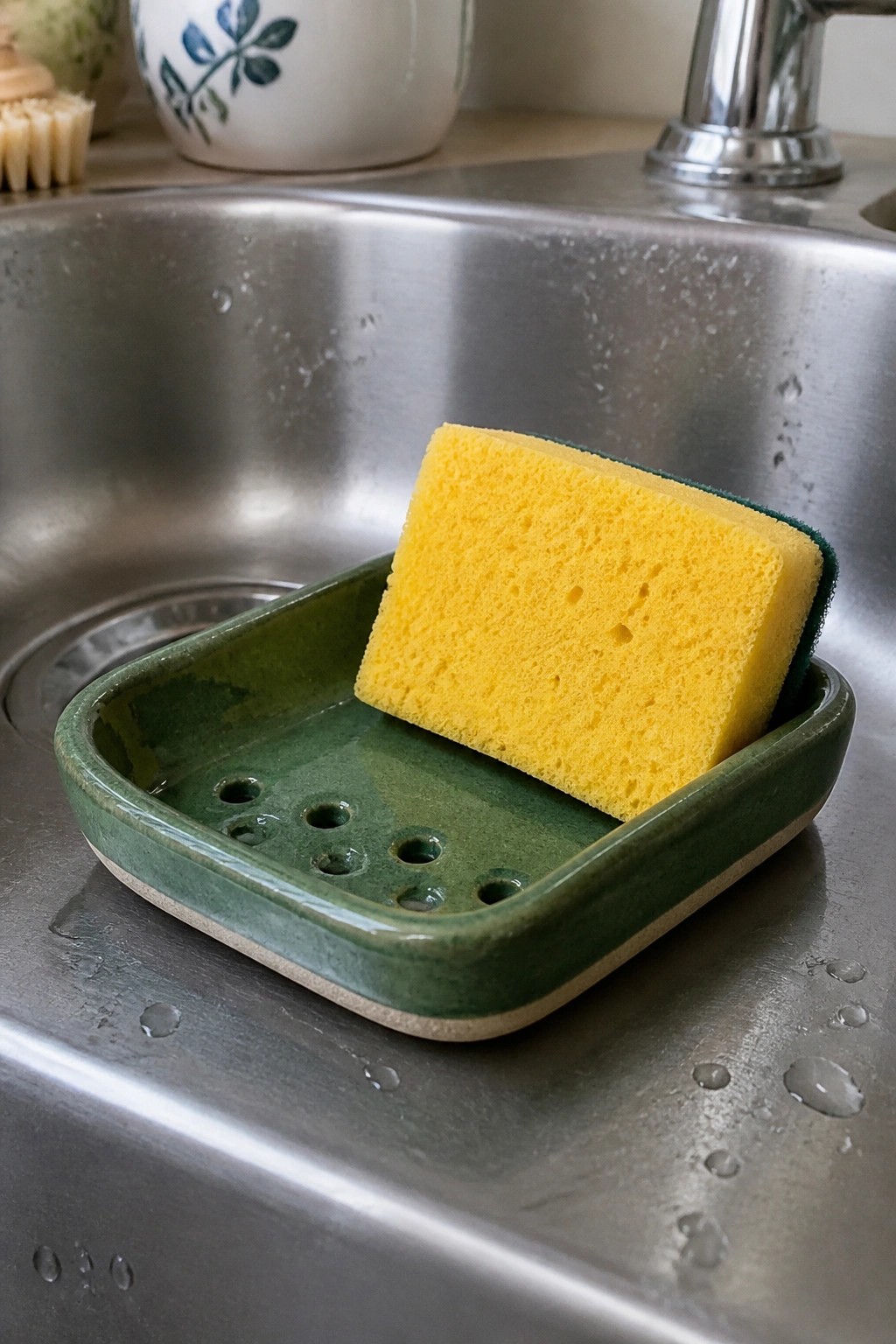
A small rectangular tray with several drainage holes works well as a sponge holder for the sink area. The low walls keep the sponge in place while the holes let water drain straight into the sink below. This project falls into the kitchen item category and uses a basic handbuilt slab form that requires only simple cutting and shaping. The solid green glaze keeps the focus on the functional shape rather than surface decoration.
What makes this idea useful is how the size can be scaled up or down to match different sponge types or even hold a bar of soap. You can add more holes or change the corner shape without complicating the build. In a kitchen it sits right by the faucet for daily use and still looks neat when the sink is empty. The same tray form could be adapted into a small bathroom soap dish by adjusting the hole pattern or glaze color.
Small Ceramic Spoons with a Rest
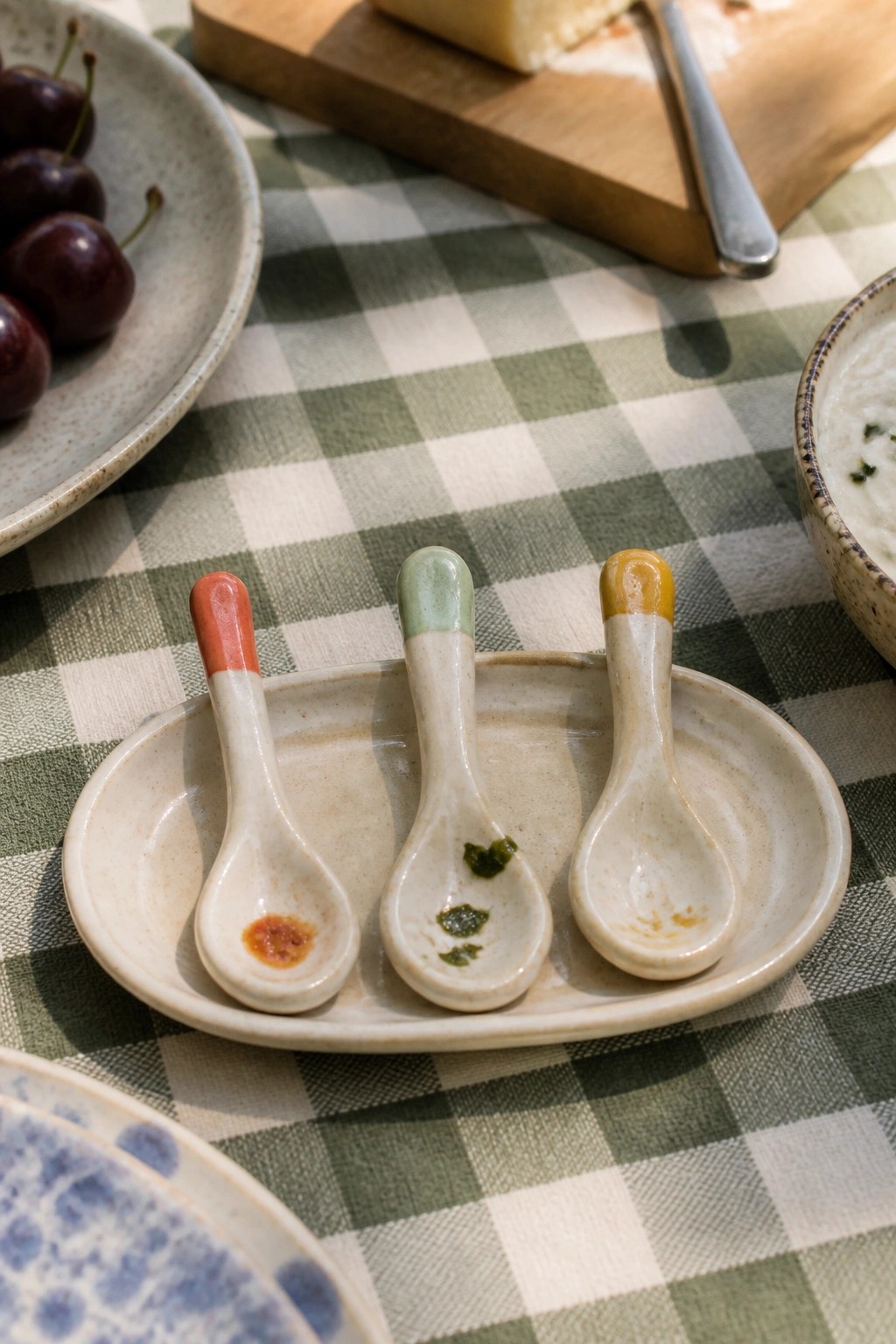
A set of three small handbuilt spoons sits in a shallow oval dish made from the same clay. Each spoon has a simple dipped color on the handle tip while the rest of the piece stays unglazed or lightly finished. This project falls into the kitchen item category and works as a compact serving set for sauces, jams, or small tastings.
The shape does a lot of the work here because the dish keeps the spoons together and ready to grab. You could scale it down to two spoons or swap the handle colors to match a specific dinnerware set. In a kitchen this kind of piece sits well beside a cheese board or charcuterie spread and takes up little space when stored. For a beginner it stays manageable since the forms are basic and the color comes from quick dips rather than detailed painting.
Frequently Asked Questions
What materials do I need to get started with these handbuilt pottery ideas? Start with basic earthenware or stoneware clay that is easy to work with for beginners. You will also need simple tools like a rolling pin for slabs, a needle tool for scoring, a sponge for smoothing, and a wire cutter for separating pieces from the block. Many of the ideas can be done with household items such as plastic containers for molds and old credit cards for scraping edges.
How do I prevent my clay projects from cracking during the drying process? Allow pieces to dry slowly in a covered area like a plastic bin with a loose lid to control moisture loss. Turn them occasionally and avoid direct heat or sunlight. For thicker handbuilt items keep walls under half an inch and score and slip joints well to reduce stress points that lead to cracks.
Which of the 20 ideas are best for absolute beginners with no prior experience? Focus first on simple pinch pots, slab trays, or coil bowls since they require minimal tools and build basic skills quickly. These projects let you practice centering and shaping before moving to more complex ideas like layered boxes or textured mugs that involve multiple steps.
Can I complete these handbuilt ideas without access to a kiln or professional firing? Many projects can be finished as air dry clay pieces for decorative use only, or you can look for local community centers and pottery studios that offer firing services on a pay per piece basis. Always check the clay type since some air dry formulas do not need heat at all while others require it for durability.
What common mistakes should I avoid when trying the listed pottery ideas? Do not rush the drying stage or skip scoring and slipping when joining pieces since this often causes separation later. Also measure your clay thickness consistently to prevent uneven drying and test small samples of any surface decoration like stamps or textures before applying them to the final project.

Pottery Path is my cozy corner of the internet where I share clay ideas, pottery inspiration, and simple projects you can recreate at home. I love exploring everything from air dry clay to handbuilt pottery to cute minis that brighten your day. My goal is to make clay crafting feel easy, fun, and welcoming for anyone who wants to try it.
You will find beginner friendly tutorials, creative pottery painting ideas, and lots of warm inspiration for slow and happy crafting. If you enjoy hands on creativity, this space will feel like home.