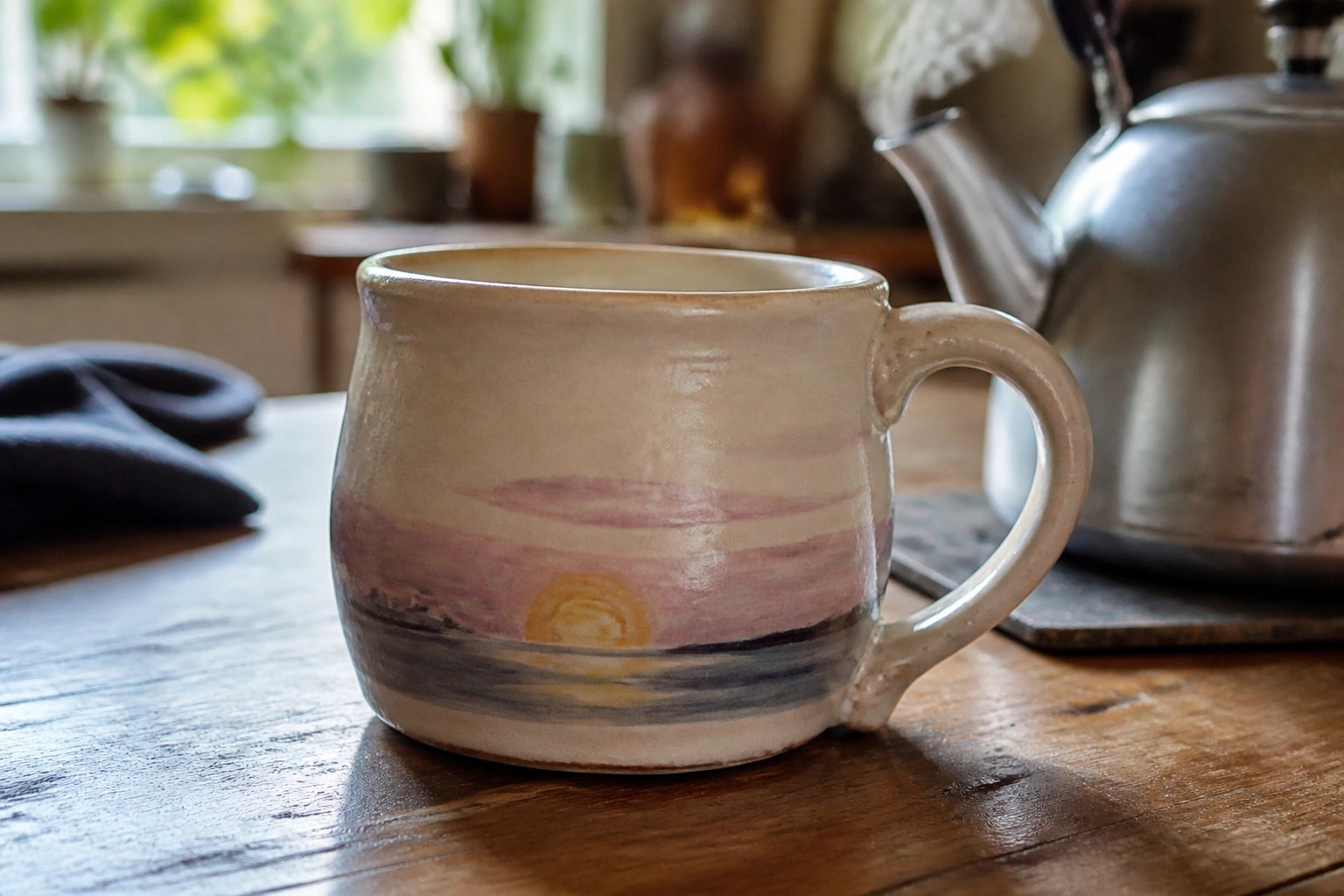
I have been making pottery for my kitchen over the past few years because the things I use every day work better when they fit my habits.
I wanted pieces that feel solid in my hands and do not take up too much space on the counter.
These ideas came from trying to fix small problems like needing a bowl that pours cleanly or a mug that keeps tea warm longer.
I kept the shapes simple so they would be easy to throw on the wheel and practical once they are fired.
Most of them are things I still use regularly in my own cooking.
Painted Landscape Mugs
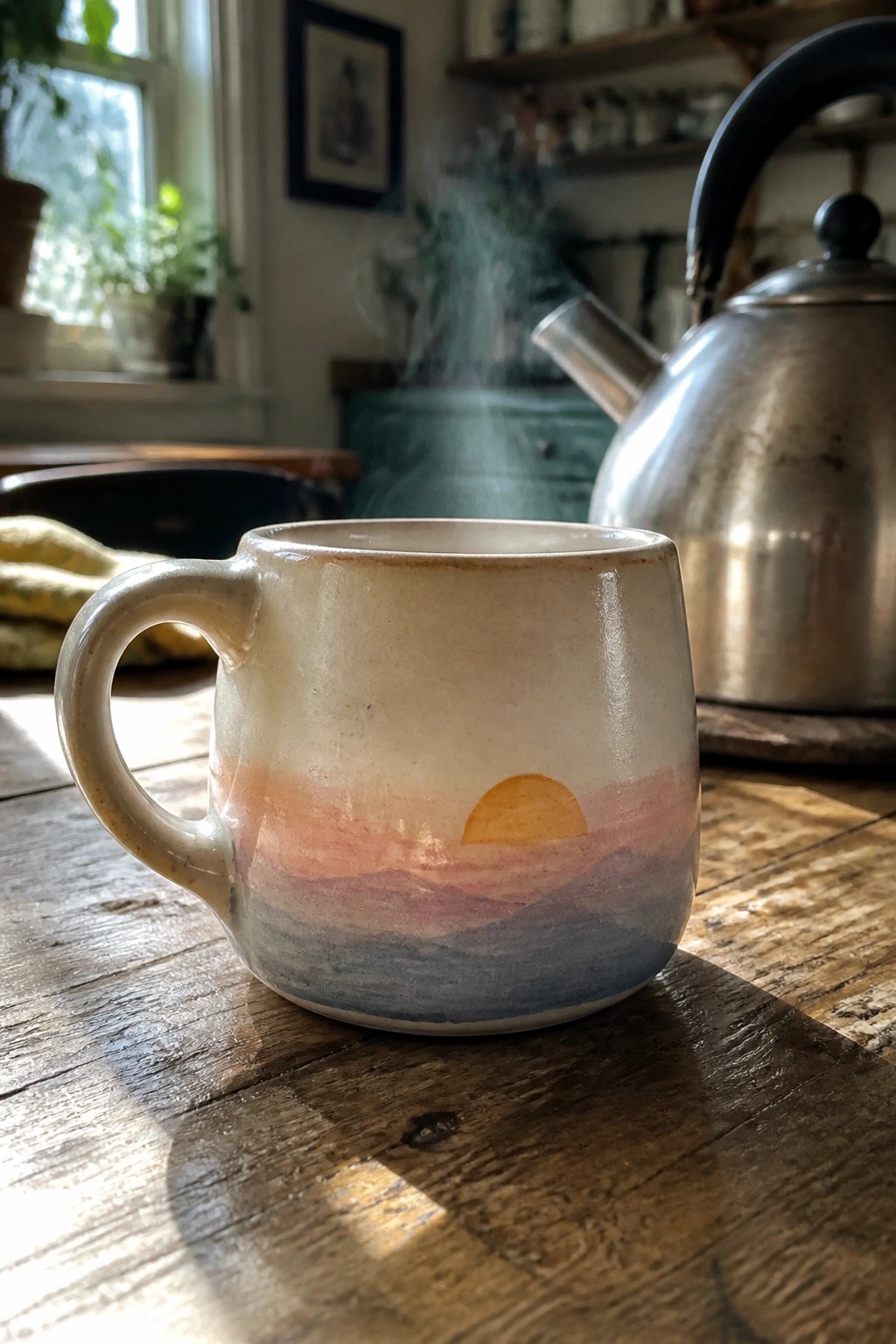
A wide ceramic mug with a sturdy handle gives plenty of room for a simple painted scene across the lower half. Horizontal bands of blue, purple, pink, and orange build up a mountain range, with one solid orange circle placed as the sun. The design stays flat and easy to repeat, so the mug remains comfortable to hold while still showing a clear landscape. This approach turns a basic kitchen mug into a piece that works for daily drinks without extra sculpting or texture.
What makes this idea useful is how the band layout can be copied onto different mug sizes or bowls using the same color steps. In a kitchen, the muted tones sit well with wooden counters or white dishes and still read clearly from a shelf. The small scale means you can test the pattern on a few test tiles first before glazing a full set. For a gift, the same layout can be adjusted to match a favorite hike or changed to a single color for a quicker version.
Two-Tone Ceramic Mixing Bowl

A large wheel-thrown ceramic bowl makes a practical kitchen piece when the inside gets a food-safe green glaze and the outside is left with its natural speckled surface. The horizontal throwing lines give the interior some texture that helps keep ingredients from sliding around while mixing. This shape works for dough, salads, or batters because the wide opening and sturdy walls handle bigger batches without tipping.
What makes this idea useful is the contrast between the glazed interior and raw exterior, which keeps the bowl from looking too uniform on open shelves. You could repeat the same glaze split on smaller prep bowls or swap the green for a different color to match your dishes. In a kitchen, this size stays useful daily and stands out in photos because the glaze catches light without needing extra decoration.
Leaf-Shaped Ceramic Spoon Rest

A leaf-shaped spoon rest gives you a dedicated spot to set cooking spoons during meal prep without leaving drips on the counter. The form is built with a shallow basin and raised edges that follow a leaf outline, plus impressed vein lines that add texture to the surface. A glossy green glaze covers the clay, creating a smooth finish that wipes clean easily and holds up to regular kitchen use.
What makes this idea useful is how the curved shape cradles the spoon head while the handle rests along the length. You can adapt the same leaf form to different sizes or try other vein patterns to suit your style. In a kitchen, this kind of piece fits neatly beside the stove or on a prep area and works just as well for holding small tools like tasting spoons. For a gift, something like this is quick to make in batches with basic hand-building steps.
Divided Ceramic Salt Cellar

A divided ceramic dish makes a practical kitchen piece for holding two different salts or seasonings side by side. The low partition and two-tone glaze keep the sections distinct while the small spoon rests neatly across the top. This shape works as a compact salt cellar that sits easily on a counter or table.
What makes this idea useful is how the divided form keeps ingredients organized without extra containers. You could adapt the same layout for sugar and spice mixes or different finishing salts. In a kitchen this kind of piece stays handy during cooking and takes up little space. The simple two-part design also translates easily to other small storage needs like a dual dip dish.
Ceramic Butter Dish
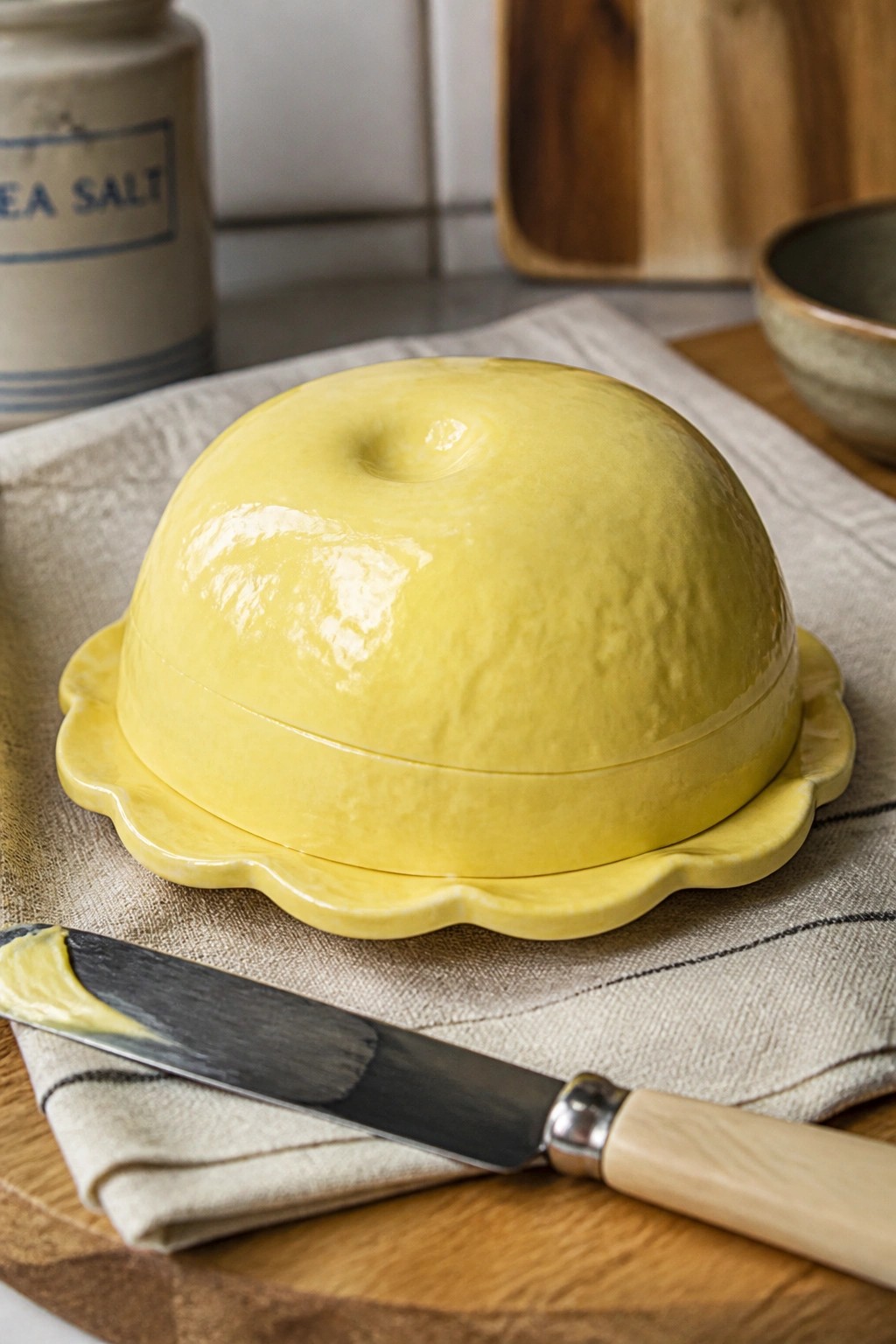
A ceramic butter dish uses a domed lid that rests on a flat base with a scalloped rim to hold a standard stick of butter. The glossy yellow glaze covers the entire form and creates a smooth, wipeable surface that works well for food contact. This kitchen item keeps butter covered on the counter while the simple dome shape makes the lid easy to lift and replace.
What makes this idea useful is how the scalloped edge gives the base a finished look without extra steps. You could change the glaze color to match existing dishes or skip the scallop and keep the form plain for faster production. In a kitchen this piece stays practical on the counter and makes a straightforward gift that people actually use. The same dome-and-plate shape could be adapted for a small cheese cover or a covered dish for leftovers.
Painted Terracotta Utensil Holder

A tall terracotta cylinder with a simple white daisy pattern painted around the outside makes a sturdy holder for wooden spoons, spatulas, and ladles. The unglazed clay surface keeps the form basic and functional while the scattered flowers provide enough detail to make the piece stand out on a counter. This fits the kitchen storage category where pottery holds everyday tools instead of sitting unused.
What makes this idea useful is the height and open shape that keeps multiple utensils upright and easy to grab. You could swap the daisies for stripes, dots, or herb silhouettes to match different kitchen colors. In a kitchen, this kind of piece organizes tools near the stove while turning a basic storage need into visible handmade pottery. The same cylinder shape could be shortened into a smaller crock for brushes or whisks.
Tall Ceramic Pitcher for Kitchen Pouring

A tall, narrow ceramic pitcher with a pinched spout serves as a practical carafe for water, oil, or salad dressings on the counter. The tapered form keeps the piece stable while the simple deep blue glaze creates a smooth surface that is easy to wipe clean. This shape fits the kitchen item category because the spout allows controlled pouring without needing a separate lid.
What makes this idea useful is how the slim profile takes up little space on a crowded counter yet holds enough liquid for daily meals. You could adapt the same proportions into a shorter version for cream or syrup, or switch to an earthy glaze color to match different kitchen styles. In a kitchen, this kind of piece stays handy for refilling glasses or drizzling over food without extra tools. The clean lines also photograph well for Pinterest boards focused on functional handmade tableware.
Ceramic Mortar and Pestle for Everyday Kitchen Use
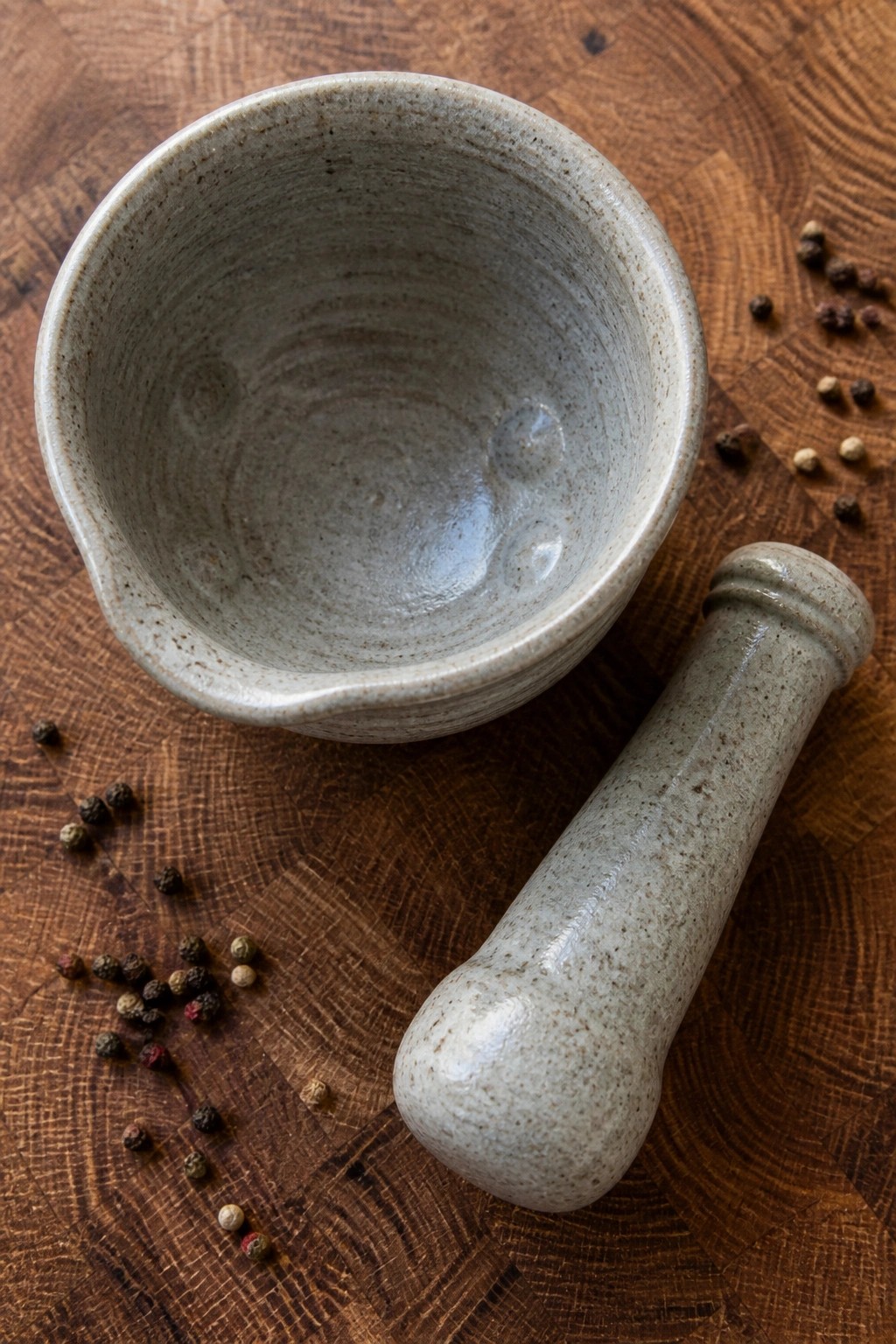
A mortar and pestle set thrown from stoneware clay gives you a sturdy tool for grinding spices and herbs directly on the counter. The deep bowl shape holds ingredients in place while the heavy pestle delivers enough force to break them down. A speckled matte glaze covers the exterior and handle, leaving the working surfaces slightly textured for better grip. This project belongs in the functional kitchen item category and stays effective when the walls stay thick and the form stays simple.
What makes this idea useful is how the same basic shape can be adjusted for different amounts of spices without changing the overall design. The size works well on a countertop where it can stay out and still look like part of the kitchen setup. You could adapt it by adding a small pouring lip or making a shorter pestle for lighter tasks. In a kitchen, this kind of piece replaces multiple gadgets and holds up to daily use without wearing out quickly.
Nesting Bowls in Soft Pastel Glazes
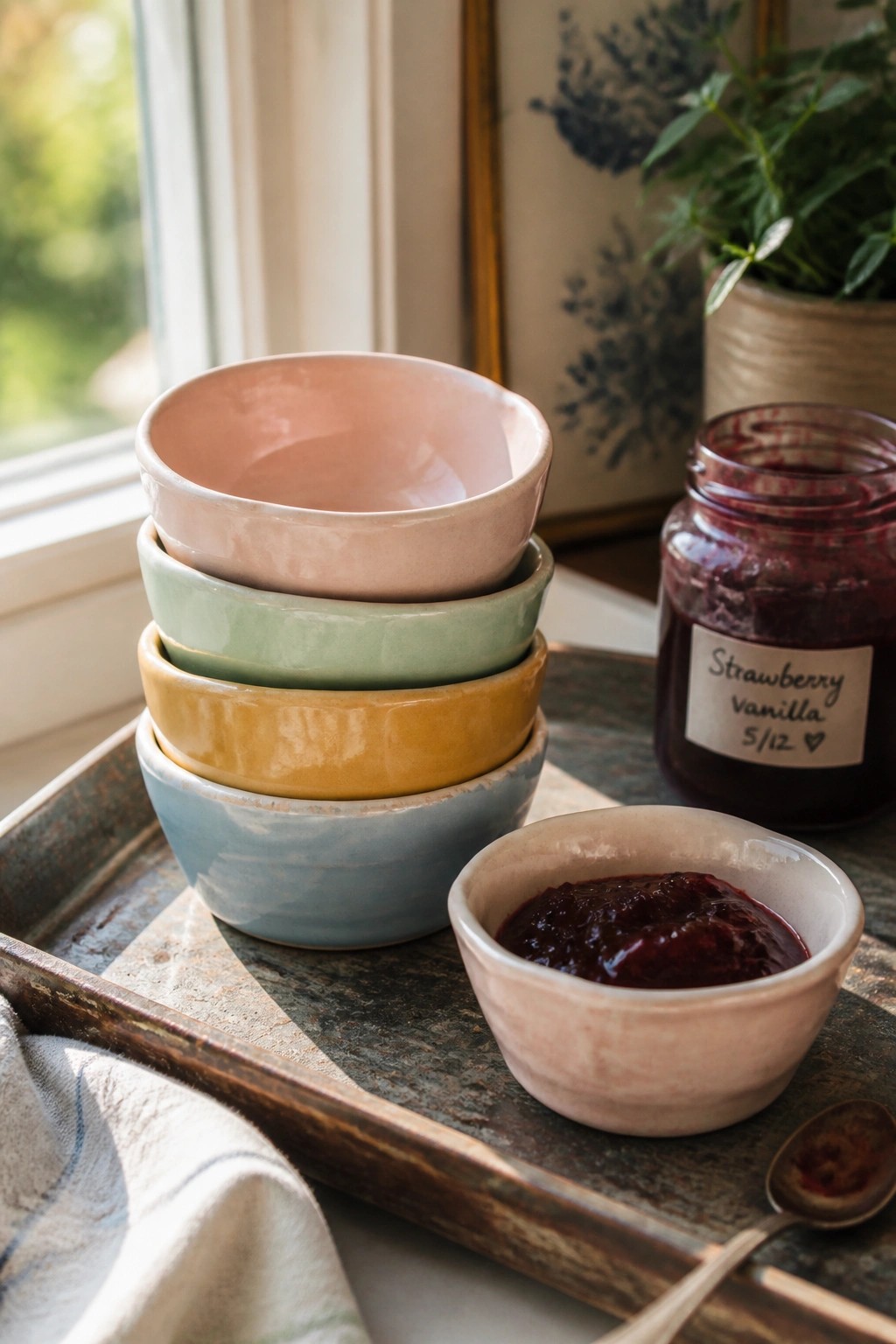
These are four ceramic bowls made in graduated sizes so they nest together for compact storage. Each bowl uses a single solid glaze in a different pastel color, with simple rounded walls and a slightly wider rim that helps them stack cleanly. The smooth, glossy surfaces make them easy to clean and suitable for both food prep and serving. This approach fits the category of functional kitchen bowls that stay useful on a daily basis.
What makes this idea useful is how the nesting shape saves space while the color variation helps you grab the right size quickly. You could adapt it by using just two or three sizes for a smaller set or by switching to a single glaze color across all bowls for a more uniform kitchen look. In a kitchen, this kind of piece works well for holding ingredients during cooking or bringing sides to the table. The same form could be reworked into a set of smaller ramekins or dipping bowls.
Ceramic Measuring Cup Set

Ceramic measuring cups work well as a nested set with built-in spouts and handles that include small holes for hanging. The speckled glaze gives each piece a durable, easy-to-clean surface while the graduated sizes stack neatly to save space. This kitchen item category turns a basic measuring tool into something that can stay out on the counter without looking out of place.
What makes this idea useful is the way the handles double as both a grip and a storage solution on a hook or rack. You could adapt the design by changing the glaze color to match your dishes or adding simple stamped marks on the handles for a personal touch. In a kitchen, this kind of piece keeps measurements accurate while doubling as everyday decor on open shelves. For a gift, the same nested form can be scaled down into smaller spice spoons or made larger for serving scoops.
Three-Section Herb Planter with Sculpted Lips

A three-compartment ceramic planter lets you grow several kitchen herbs together in one container. The central sculpted lips create a clear focal point on the front while the soft green crackle glaze covers the rounded oval body. Drainage holes along the base keep soil from staying too wet. This form fits the functional kitchen category because it groups plants that need similar light and watering.
What makes this idea useful is the divided layout that keeps different herbs from crowding each other. The compact size works on a narrow windowsill where a single large pot would not fit. You could simplify the design by dropping the face detail and using a plain oval shape or swap the glaze color to match existing kitchenware. For a gift, a two-section version would suit someone who only needs space for basil and parsley.
Citrus Tile Trivet for Hot Cookware
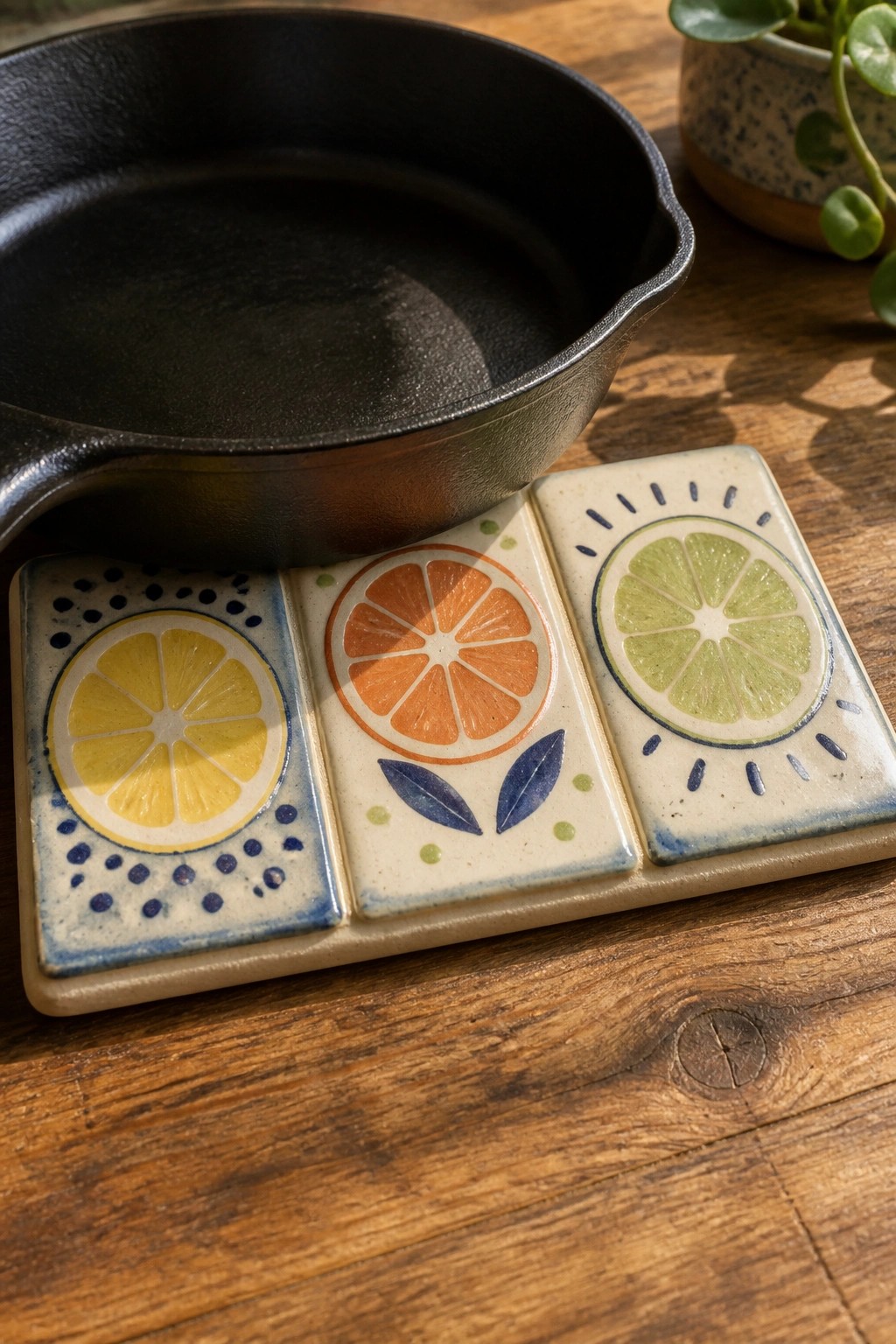
Three rectangular ceramic tiles with painted lemon, orange, and lime slices form a compact trivet that supports hot pans on a countertop or table. Each tile uses a white base glaze with colored fruit motifs and simple border patterns in blue and green. The flat slab shape and glossy surface make the tiles stable and easy to clean after kitchen use. This approach turns basic hand-built tiles into a practical kitchen item that handles heat from cast iron or stoneware.
What makes this idea useful is that you can produce the tiles from one rolled slab and fire them together in a single load. The small scale lets you adjust the layout for different pan sizes or turn the same fruit designs into matching coasters. In a kitchen this kind of piece keeps counters safe without taking up drawer space when stored. You could rework the motif into a spoon rest or a narrow tray by changing only the tile dimensions.
Ceramic Egg Cups for Breakfast

Egg cups make a compact pottery project that delivers a practical kitchen item from a simple thrown or hand-built form. The design uses a small bowl shape raised on a foot, sized to cradle a standard egg while the rim catches any drips from a soft-boiled top. Glazes in speckled stoneware or solid turquoise keep the surface durable and easy to clean for daily use. This approach falls squarely into the functional holder category, where the form stays minimal yet serves a clear purpose at the table.
The shape does a lot of the work here because the foot keeps the cup stable on a tray next to toast or coffee. You can throw several at once, trim them quickly, and fire them in a single load to build a matching set. The same basic cylinder can shift into salt dishes or small ramekins by widening the opening or lowering the foot. In a kitchen, these pieces stay useful without crowding the counter and photograph cleanly for recipe posts or gift guides.
Three-Section Ceramic Sauce Server

A three-compartment ceramic dish serves as a compact holder for multiple sauces or condiments during meals like sushi. Each section carries its own blue painted motif on a light speckled surface, with one using scattered dots, the center showing repeating waves, and the third holding rows of small fish. The elongated form with curved ends keeps the divisions clear while taking up little table space. This kitchen piece combines everyday serving function with simple painted details that stay visible during use.
The shape does a lot of the work here by keeping different sauces separate in one object. You could adapt the same layout for spice mixes or oils, or shorten it to two sections for simpler meals. Painted motifs like these help the dish match a Japanese or coastal table setting, and the overall form is easy to scale or rework into a larger tray. In a kitchen this kind of piece reduces the need for multiple small bowls while staying practical for regular use.
Mushroom Salt and Pepper Shakers

Mushroom-shaped ceramic shakers make practical salt and pepper holders for the kitchen table. Each piece uses a rounded cap with drilled holes for dispensing and a narrower base that keeps the form stable. The two different glazes—one speckled light tone and one solid green—create an easy matching set without extra decoration. This approach turns a simple kitchen item into a recognizable shape that still functions as everyday tableware.
What makes this idea useful is how the mushroom form keeps the shakers compact and easy to move around the counter. You could adapt the same stacked shape for other small seasonings by adjusting the number or size of the holes. In a kitchen these pieces work well on a breakfast tray or near the stove because they take up little room. The design also scales down for a single shaker or expands into a three-piece set if you want to include a third option like chili flakes.
Ceramic Chopstick Rests and Dipping Dishes

A small curved ceramic rest holds chopsticks above the table surface while a low rectangular dish keeps sauces contained in one spot. Both pieces are made from the same speckled clay body, with the dish finished in a dark glossy interior glaze that contrasts the lighter exterior. This pairing fits the kitchen item category and works especially well for meals that use chopsticks and small condiments.
What makes this idea useful is the way the rest keeps utensils clean and the dish stays compact enough for everyday table use. You can adapt the rest shape into a simpler cylinder or add a small notch for extra stability, and the dish can be made slightly deeper if you want it to double as a small prep bowl. In a kitchen, this kind of set stands out on Pinterest because it solves a practical problem without needing much space or material.
Small Lidded Sugar Bowl
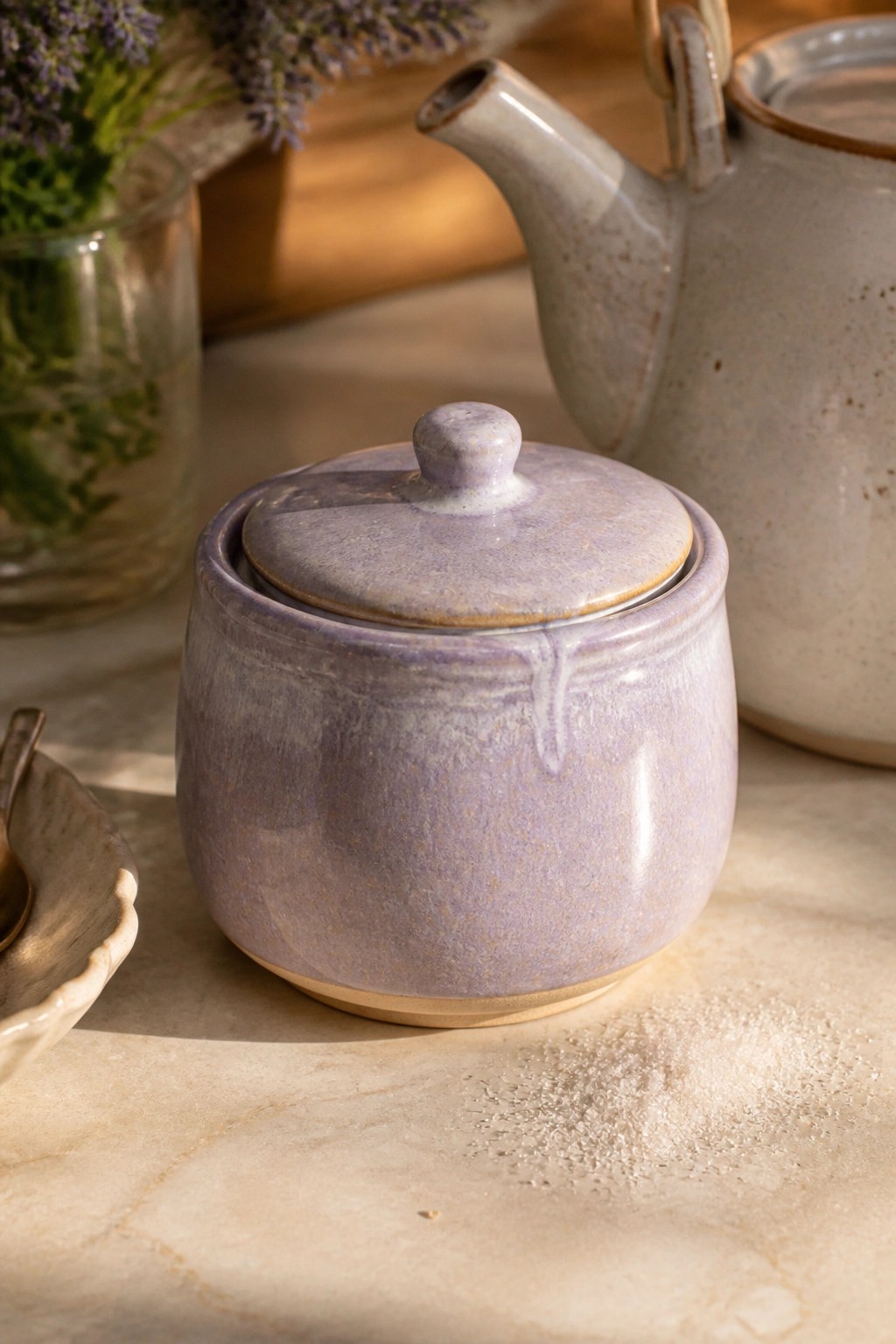
A small lidded jar like this makes a practical sugar bowl or storage container for tea, salt, or spices. The rounded body and snug lid keep contents contained, while the knob on top allows easy handling during daily use. The soft purple glaze with its slight texture gives the piece a simple, cohesive finish that pairs well with other kitchen ceramics.
What makes this idea useful is how the compact size fits neatly into a tea setup or on a counter without crowding the space. You can adapt the same shape for a creamer or small honey pot by adjusting the lid or adding a spout. The form is easy to repeat in different glaze colors so it can match existing dishware or serve as a quick gift option.
Ceramic Napkin Rings with Surface Patterns

Ceramic napkin rings offer a straightforward way to make functional tableware that keeps cloth napkins neatly rolled. These pieces were formed as short cylinders and finished with different surface treatments, including carved leaves, flower-shaped cutouts, stamped dots, and incised lines. The muted glazes in blue, pink, yellow, and green let the textures stand out while creating a coordinated set.
What makes this idea useful is that the small scale lets you test multiple patterns and colors in one firing without much clay. You can easily adjust the diameter to fit thicker napkins or simplify the designs to just a few repeating stamps for faster production. The same approach works for matching pieces like small spoon rests or cord holders. Sets with varied but related textures tend to perform well in search results because they show clear process and variation.
Lidded Honey Pot with Dipper Notch

A wheel-thrown ceramic honey pot gives you a compact container that keeps honey or syrup covered while letting you serve it straight from the jar. The lid sits flush on the rim but includes a cutout notch sized for a wooden dipper or spoon so it stays in place between uses. A simple brown glaze covers the rounded body and provides a smooth, wipeable surface that handles sticky spills without absorbing moisture. This setup turns a basic lidded jar into a dedicated kitchen tool rather than just a storage vessel.
The notch detail makes the pot more practical than a plain jar because the dipper never needs a separate rest or plate. You can adapt the same form for jam, mustard, or small batches of sauce by adjusting the opening width or glaze color to suit the contents. Its small footprint works well on a breakfast table or countertop near the stove, and the shape translates easily to a taller version if you need more capacity.
Strawberry Border Plate

A round ceramic plate with a gently scalloped edge makes a good base for painting small strawberries around the rim. The strawberries sit evenly spaced with their leaves pointing inward, keeping the center clear for food. A light speckled glaze covers the surface and gives the plate a soft texture that pairs with the simple painted details. This fits the category of functional kitchen plates that still carry a decorative element.
What makes this idea useful is how the border design leaves the middle open while still giving the plate a clear look. You can adapt the same spacing and scale for other small motifs like cherries or leaves if you want to change the theme. In a kitchen, this kind of piece works well for serving slices of cake or small portions where the painted detail shows without getting in the way. The layout is also easy to repeat across a set of plates or smaller dishes for a matching set.
Ventilated Garlic Keeper Jar

A ceramic garlic keeper is a rounded storage jar designed with a fitted lid and a pattern of small ventilation holes punched into the front. The compact, bulbous shape holds several heads of garlic while the holes allow airflow to keep the cloves from sprouting or molding. Made from matte stoneware with a simple knob on the lid, this kitchen item fits easily on a counter or shelf alongside other pantry staples.
What makes this idea useful is how the same basic form works for onions or shallots with only minor changes to the hole layout. The small scale keeps it from crowding a workspace yet still holds enough for regular cooking. In a kitchen, the ventilation feature turns a plain jar into a functional piece that actually extends produce life. You could adapt the design by adding a small tray base or changing the hole pattern to match other handmade storage jars.
Spouted Pinch Bowl Salt Cellar

A small ceramic salt cellar with a pinched spout lets you scoop or pour salt straight from the bowl without a lid or shaker. The compact round form and matte speckled glaze keep the piece simple and sturdy for daily counter use. This project falls into the kitchen item category and solves the common problem of salt clumping or spilling from open dishes.
What makes this idea useful is the spout detail that controls flow while the small scale fits neatly beside a stove or cutting board. You could adapt the same shape for other dry seasonings by making a set in different sizes or glazes. In a kitchen this kind of piece stays practical because it is easy to wipe clean and refill from a larger container. For a gift, something like this works well paired with a small wooden spoon or a jar of coarse salt.
Frequently Asked Questions
What materials do I need to start making functional pottery for the kitchen?
To begin creating items like bowls or mugs from the list of ideas you will need a suitable clay body such as stoneware or porcelain that can withstand kitchen use. Gather basic tools including a pottery wheel if throwing forms, hand building tools like ribs and sponges, and access to a kiln for firing. Start with small batches of clay to practice and consider joining a local studio for equipment access while learning proper wedging and centering techniques.
How can I make sure my handmade pottery is safe for food contact?
Select food safe glazes that are labeled as lead free and nontoxic then follow the manufacturer’s firing instructions precisely to achieve a proper melt. Test pieces by firing them to the recommended cone temperature and avoid using any glazes with metallic lusters on food surfaces. Always check local regulations if selling your work and consider consulting a ceramics expert for initial glaze tests to confirm safety.
Are these pottery ideas suitable for beginners or do they require advanced skills?
Many of the 22 ideas such as simple pinch pots or slab built trays can be made by beginners using hand building methods without a wheel. Focus on basic forms first and practice consistency in wall thickness to avoid cracking during drying or firing. As skills improve you can progress to more complex thrown items like pitchers or colanders by taking classes or following tutorials that break down each step.
What are some ways to decorate these kitchen pottery items while keeping them functional?
Apply underglazes for colorful patterns before a clear food safe glaze coat or use carving techniques to add texture that improves grip on handles. Experiment with wax resist methods to create clean lines that do not interfere with stacking or pouring. Keep decorations minimal on interior surfaces to maintain smooth easy to clean areas and ensure all designs are fully vitrified during firing.
How do I properly maintain and clean my handmade pottery kitchen items to ensure longevity?
Hand wash items with mild soap and a soft sponge to prevent scratching the glaze then dry them thoroughly before storage. Avoid sudden temperature changes such as placing hot pieces directly into cold water and do not use abrasive cleaners that could wear down the surface. Store pieces with care to avoid chipping and periodically inspect for cracks that might affect usability over time.

Pottery Path is my cozy corner of the internet where I share clay ideas, pottery inspiration, and simple projects you can recreate at home. I love exploring everything from air dry clay to handbuilt pottery to cute minis that brighten your day. My goal is to make clay crafting feel easy, fun, and welcoming for anyone who wants to try it.
You will find beginner friendly tutorials, creative pottery painting ideas, and lots of warm inspiration for slow and happy crafting. If you enjoy hands on creativity, this space will feel like home.