
I’ve been experimenting with underglaze on my handmade pots for a while now.
It adds a nice layer of color without being too complicated to work with.
Over time I’ve come up with several designs that I keep going back to.
This article shares 18 of those hand painted ideas.
They are all fairly straightforward and use basic techniques.
Two-Color Floral Mug

A standard ceramic mug becomes more interesting when covered with a loose arrangement of underglaze flowers in two contrasting colors. Blue and rust-orange blooms with simple leaves are spaced around the body so the pattern reads clearly without feeling crowded. The speckled clay body keeps the painted elements from looking too flat and gives the colors a softer edge. This approach works especially well on everyday drinking vessels because the design stays visible from multiple angles.
The shape does a lot of the work here because the curved surface lets the flowers follow natural curves without extra planning. You could repeat the same flower layout on a smaller espresso cup or stretch it vertically on a taller tumbler. In a kitchen the two-color mix stands out against both light and dark counters, and the idea is simple to scale down if you only want to paint three or four motifs instead of a full band. For a first underglaze project this size gives you room to practice brush control without committing to a large piece.
Multicolor Dot Planter with Vertical Stripes
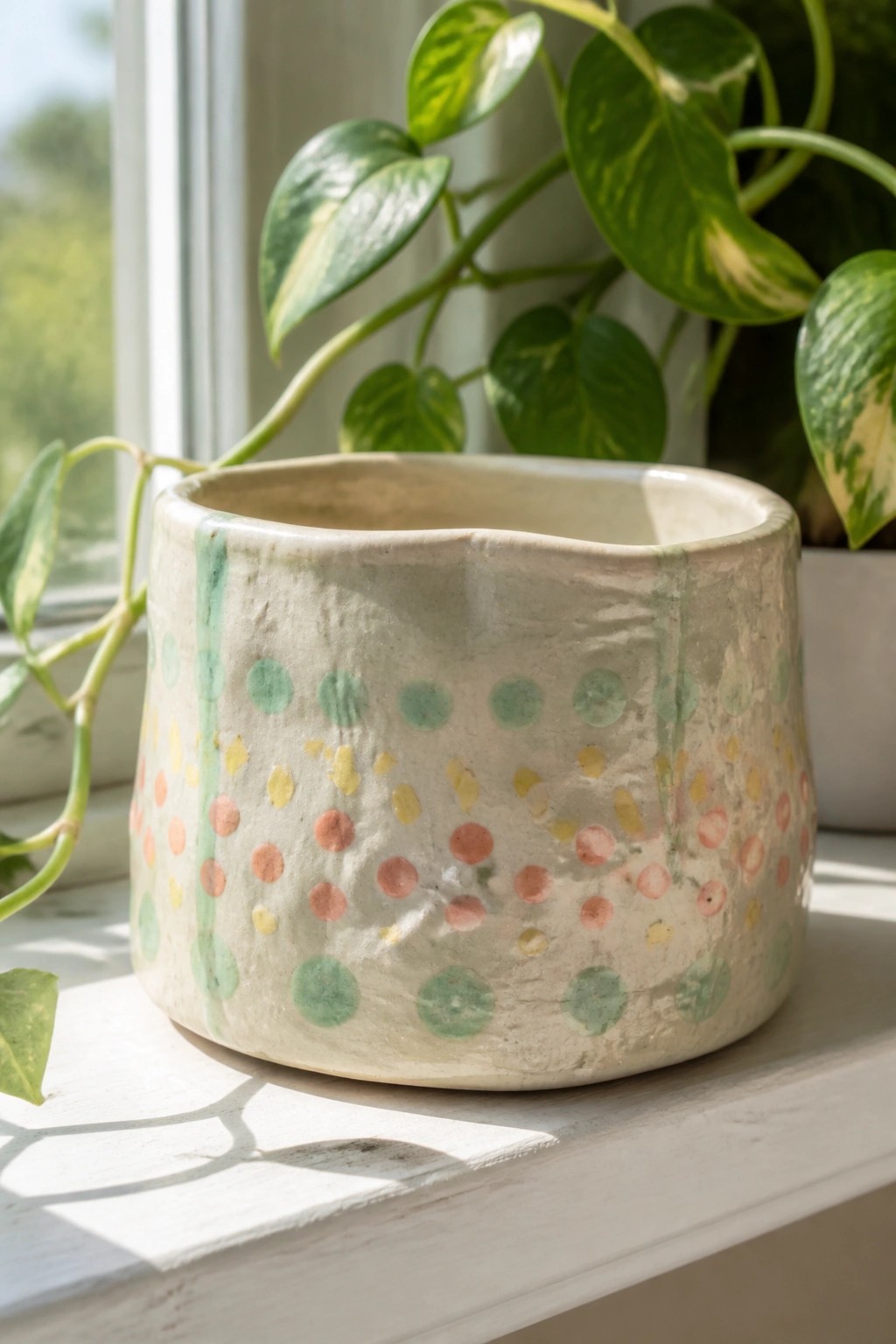
A low, wide ceramic planter takes the dotted underglaze idea and spreads it around the full outside surface. Rows of small circles in green, yellow, peach, and coral sit against the light clay, with two thin vertical green stripes breaking the pattern at the sides. The rough texture of the clay shows through the dots, keeping the overall look simple while the scattered colors add visual interest without crowding the form.
The shape does a lot of the work here because the wide opening and short height fit neatly on a windowsill or shelf for small plants. You could repeat the same dot colors and spacing on a set of matching mugs or switch to larger dots on a taller vase for a different scale. For a gift, something like this works well since the pattern stays easy to paint even on uneven surfaces.
Lemon Slice Plate

A flat ceramic plate gets its look from simple underglaze painting of lemon slices scattered across the surface. Each slice uses a solid yellow fill with green outlines and a few light interior lines to suggest segments. The design stays practical for a kitchen plate because the painted areas remain smooth and food-safe once fired.
What makes this idea useful is how easily the same slices can be resized or rearranged on bowls, mugs, or a set of dessert plates. The light clay background keeps the yellow bright without extra layers. You could swap lemons for oranges or limes on the same shape to create a matching collection. For a gift, painting just three or four slices on a smaller plate keeps the work quick while still looking intentional.
Leaf-Shaped Ring Dish
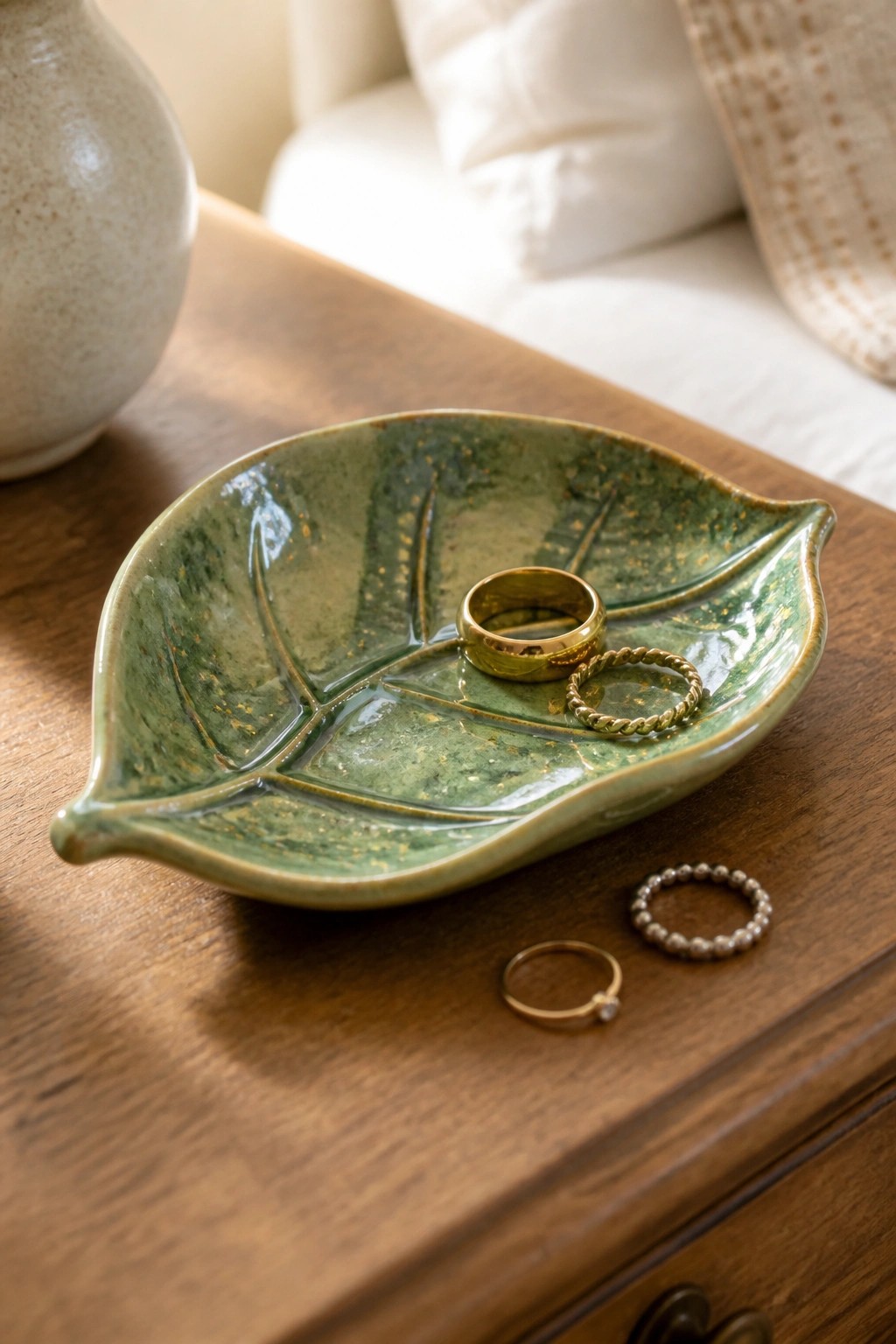
A leaf-shaped ring dish gives you a compact place to keep rings and small jewelry in one spot. The molded veins add structure to the form while the mottled green glaze with scattered gold flecks creates visual depth across the surface. This style works as a simple tray that stays functional without extra parts or hardware. The idea falls into the ring dish category, where the shape itself does most of the work.
The small size makes it simple to fit on a nightstand or bathroom counter without taking up much room. You could swap the green glaze for other underglaze colors or shorten the leaf into a smaller oval if you want a quicker build. For gifts, the same leaf form can be repeated in different sizes to hold earrings or keys. The clear practical use combined with the natural outline helps it show up well in searches for jewelry storage ideas.
Star Motif Tealight Holder

A small round ceramic tealight holder makes a straightforward project for underglaze painting. The curved surface gives room to repeat simple star shapes without crowding, and the speckled base glaze sets them apart once fired. This shape stays low and stable so the candle sits safely inside the rim. It works as a basic decor piece that holds a standard tea light.
The small scale means you can finish and fire several at once. You could repeat the same stars on a matching ring dish or small tray using the same underglaze colors. In a living room or bedroom, this size fits on a side table without taking much space. For a gift, make two or three holders and vary the star color on each one.
Hand-Painted Fruit Bowl for Kitchen Use
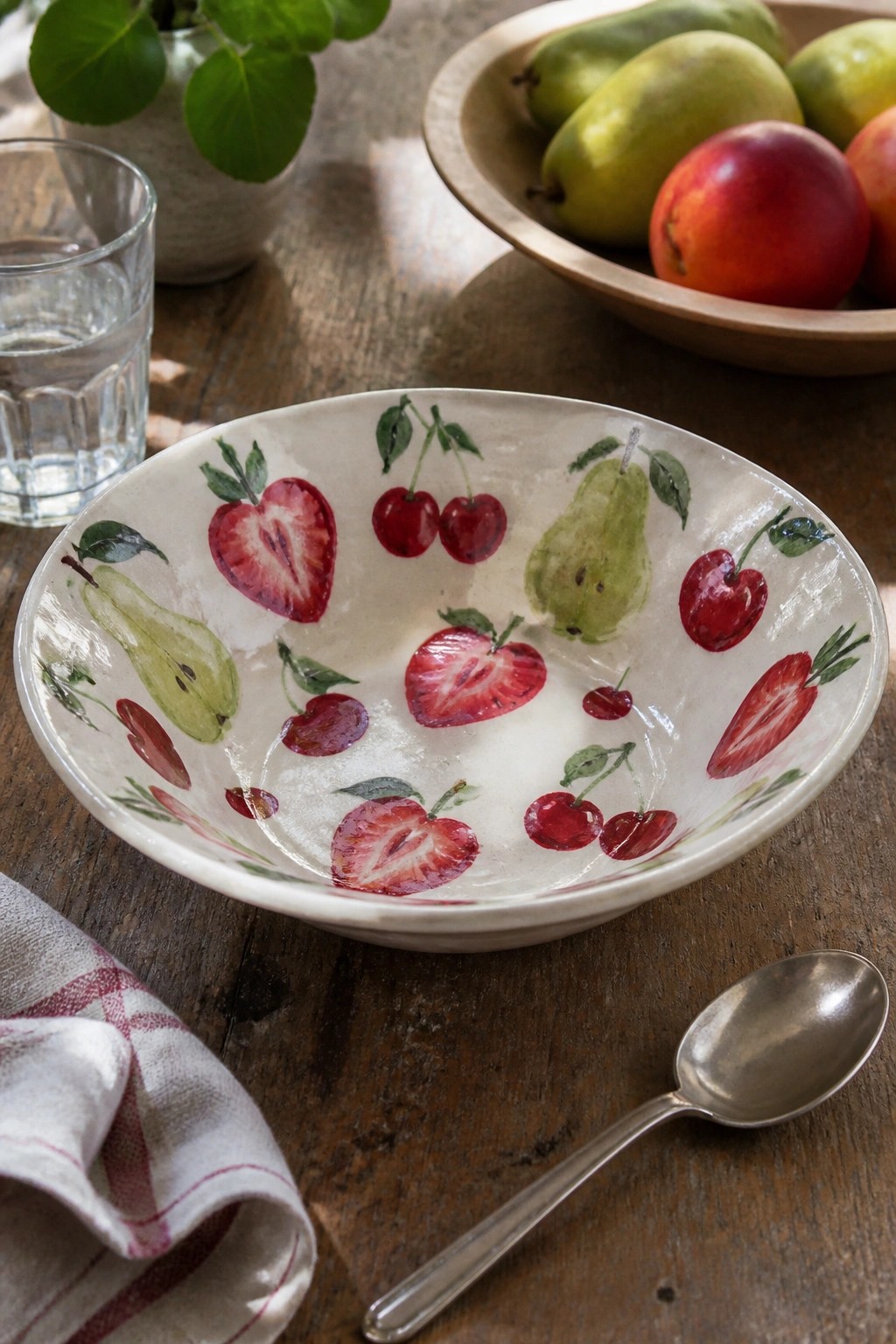
A shallow white ceramic bowl decorated with scattered fruit paintings makes a simple project using underglaze. Strawberries cut in half, clusters of cherries, and green pears are placed at different angles across the interior so the design feels casual rather than arranged. The white background keeps the red and green colors bright while leaving breathing room between each motif.
What makes this idea useful is how the loose placement of fruit lets you cover a curved surface without needing perfect symmetry. In a kitchen this kind of bowl works well for holding actual fruit or serving salads because the painted theme matches the contents. You could repeat just the cherry motif on smaller ramekins or switch to a single pear on the outside of a taller pitcher for a matching set. The same approach scales easily to plates or a larger platter if you want to expand the project.
Botanical Spoon Rest
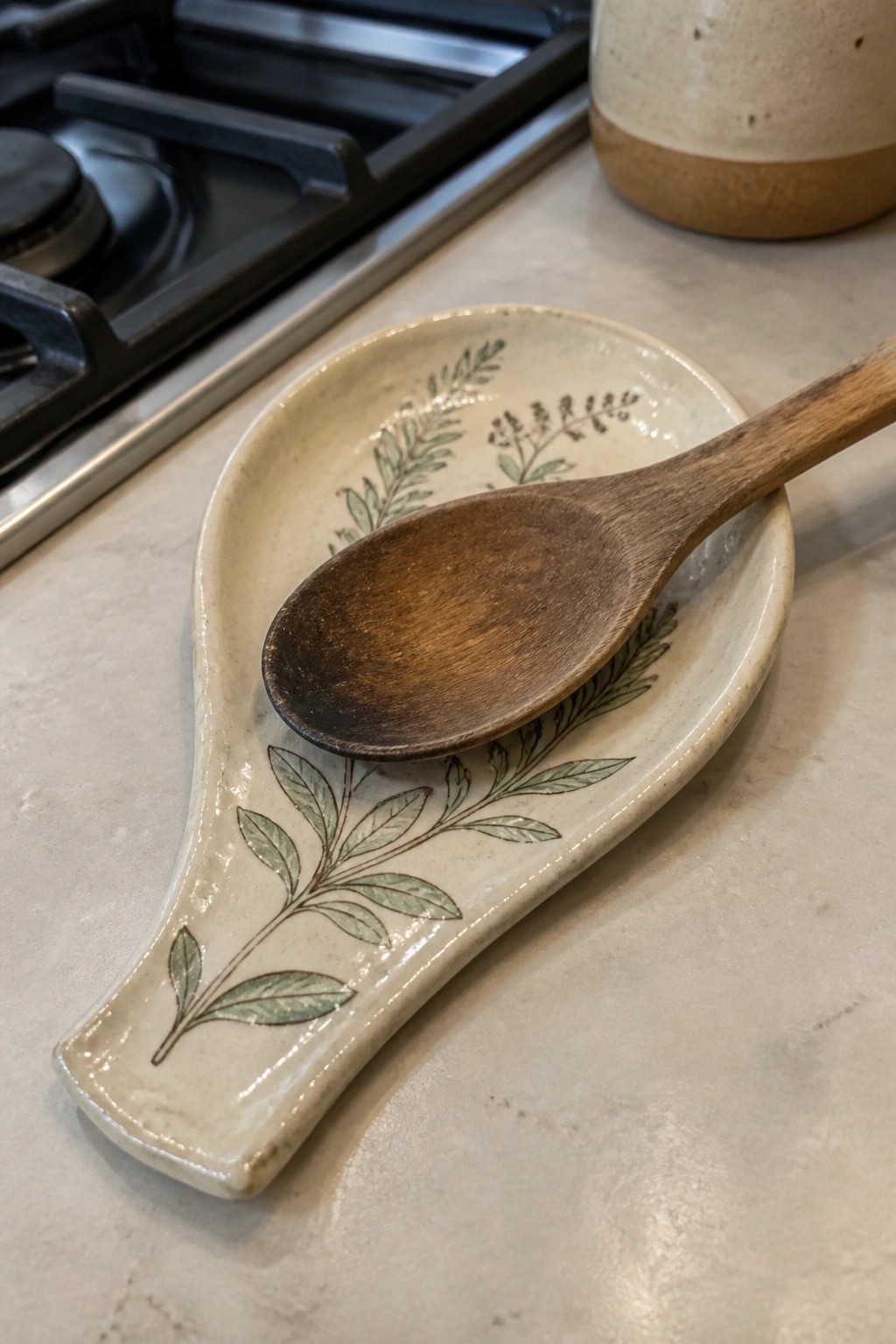
A spoon rest shaped from clay takes an elongated, shallow form that cradles a cooking spoon without taking up much counter space. Hand-painted underglaze leaves and stems run along the surface in muted green with soft brown outlines, giving the piece a simple botanical pattern that stays visible after glazing. This fits the kitchen item category and works because the narrow shape matches the tool it holds while the painted foliage adds interest without clutter.
What makes this idea useful is how the long, low profile keeps spoons steady during cooking and catches drips in one spot. You could scale the same leaf motif down for a smaller butter dish or repeat it on a matching set of plates. In a kitchen this kind of piece stays practical for everyday meals while the painted detail gives it more presence than a blank rest. The idea also adapts easily if you want to try a different plant motif or switch the shape to a narrow tray for utensils.
Abstract Face Toothbrush Holder
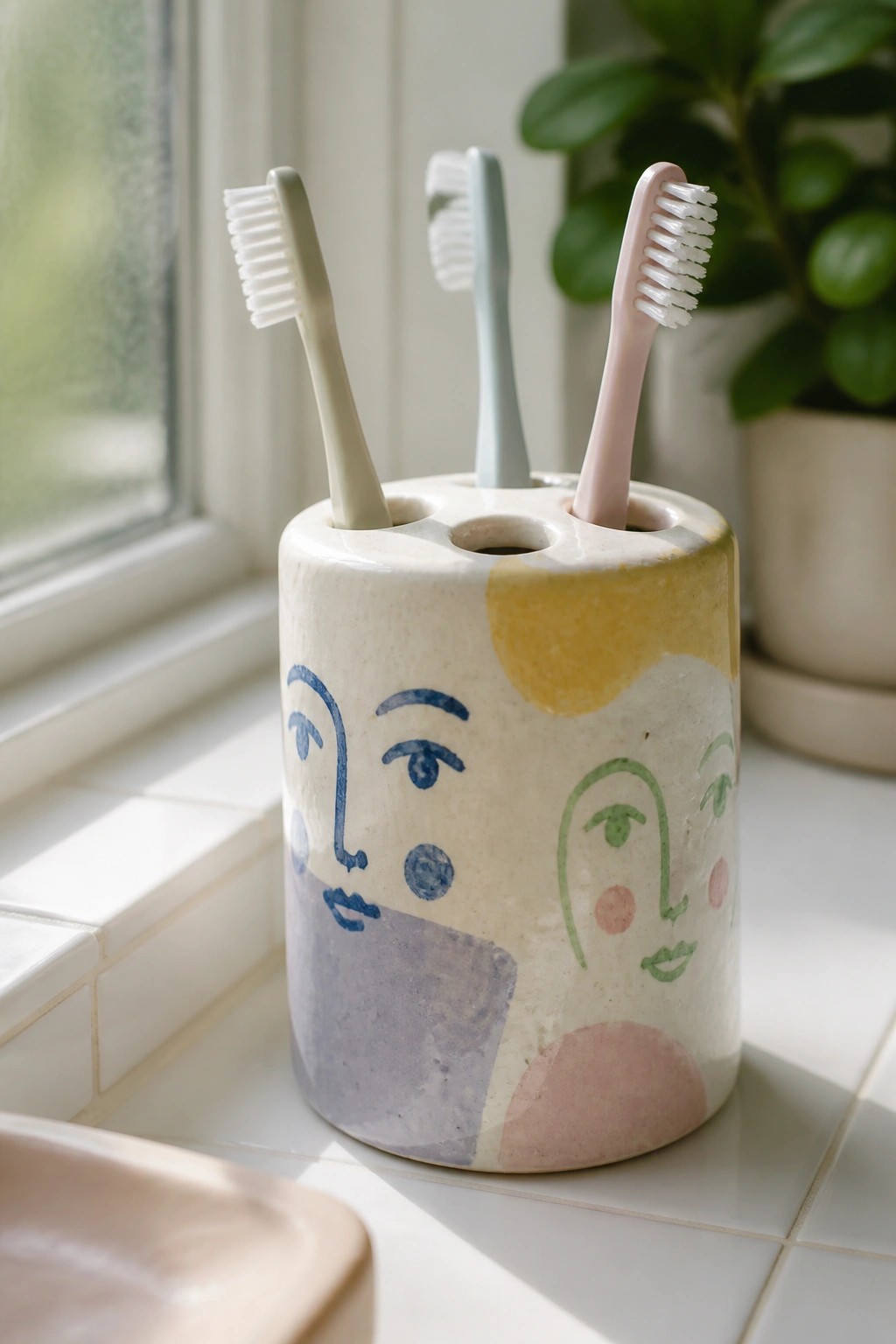
A toothbrush holder made from clay serves as a bathroom item when decorated with underglaze portraits. The cylindrical form includes three holes at the top to hold brushes, while the surface shows two stylized faces painted in blue, green, pink, and yellow. This keeps the design simple yet distinct by letting the painted motifs stand out against the light clay.
The painted detail helps this stand out as a straightforward way to customize a basic holder shape. You could repeat the same faces on a matching soap dish or small cup to build a set. The compact size makes it easy to try different color mixes without much material. For a gift, something like this works because the underglaze painting adds interest to an everyday object.
Gradient Underglaze Bottle Vase

A tall bottle-shaped vase gives a clean surface for layering underglaze in horizontal bands that shift from teal at the top through pale green into pink near the base. The angled rim breaks the symmetry just enough to keep the form interesting while still letting the color bands stay the main focus. This style works because the stripes remain visible after firing yet soften into one another, creating a simple transition that reads well from a distance.
The shape does a lot of the work here because the narrow profile shows off the full color run without needing extra motifs or texture. You could repeat the same banding on a wider cylinder or a small pitcher by keeping the color order consistent and adjusting the width of each stripe. For a gift, the same gradient would translate easily to a matching set of two or three bud vases in different heights.
Fern Underglaze Painting on a Hanging Ceramic Tile
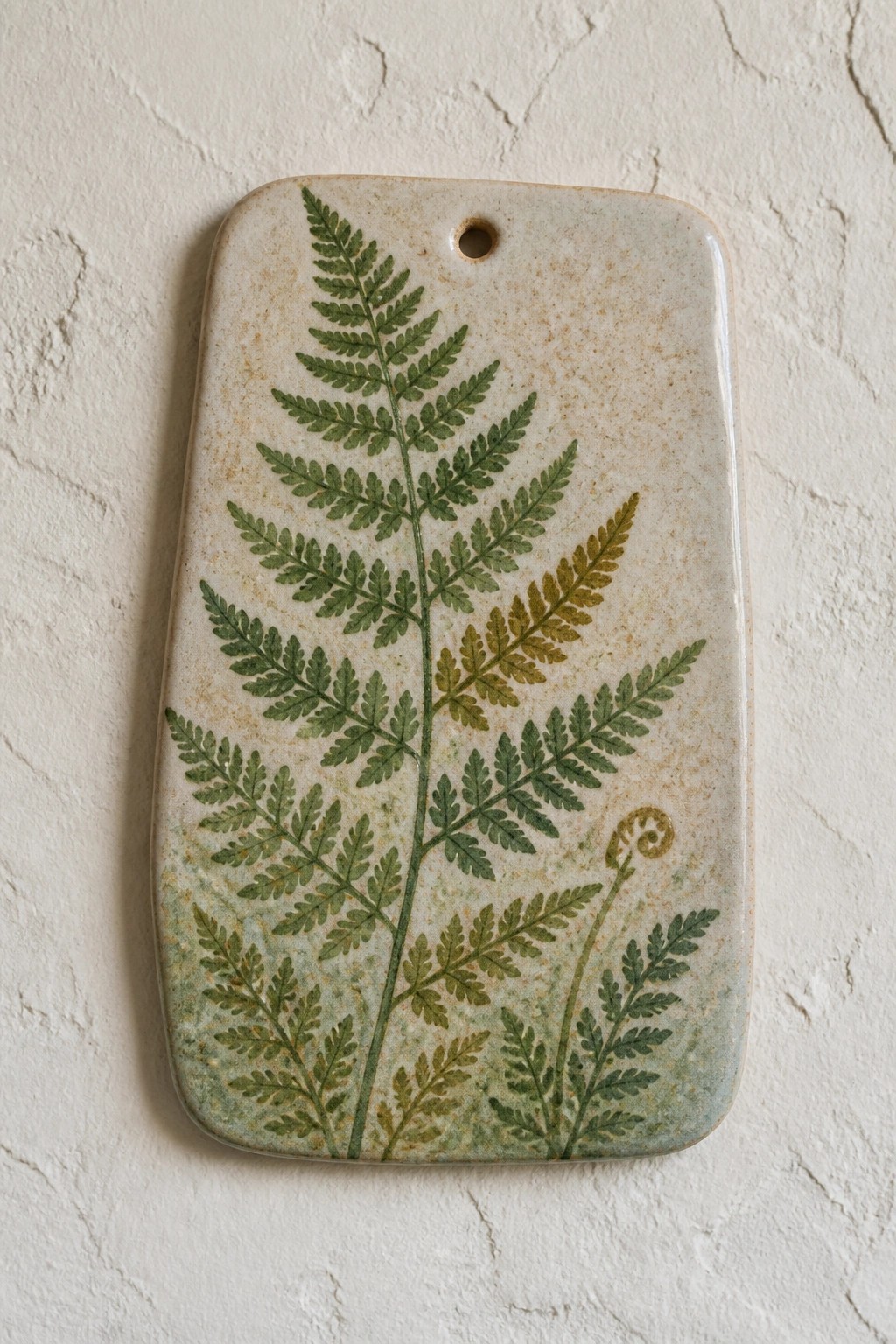
A flat rectangular ceramic tile serves as an easy base for painting detailed fern fronds in underglaze. Multiple shades of green create depth across the leaves, with one smaller fiddlehead added near the base to show growth stages. The design stays contained on the smooth surface so the botanical shapes remain clear after firing. This approach works as a straightforward decor object that can hang from a single hole drilled before firing.
What makes this idea useful is how the same fern layout can be repeated on smaller squares to make matching coasters or drawer pulls. The muted background glaze keeps the painted details visible without extra contrast work. In a bathroom or hallway, the shape hangs flat against the wall and takes up little space. Scaling the pattern down to a set of four tiles gives a simple way to turn the idea into a gift while keeping the underglaze technique the same.
Divided Salt Cellar with Painted Fish

A small two-compartment ceramic dish makes a practical salt cellar or seasoning holder for the table. Each section carries a few simple fish painted in blue and rust underglaze on the pale clay body. The glossy finish inside the wells keeps salt from sticking while the low divider keeps the contents separate. This layout fits the kitchen item category and uses the underglaze to add color without crowding the surface.
What makes this idea useful is how the divided shape directly solves the problem of keeping two seasonings apart in one compact piece. You could swap the fish for other small kitchen motifs like herbs or dots and still keep the same clean layout. The small scale also works for a gift or for everyday use next to the stove. For a variation try the same painting approach on a longer tray with three or four wells instead.
Underglaze Waves on a Rectangular Soap Dish
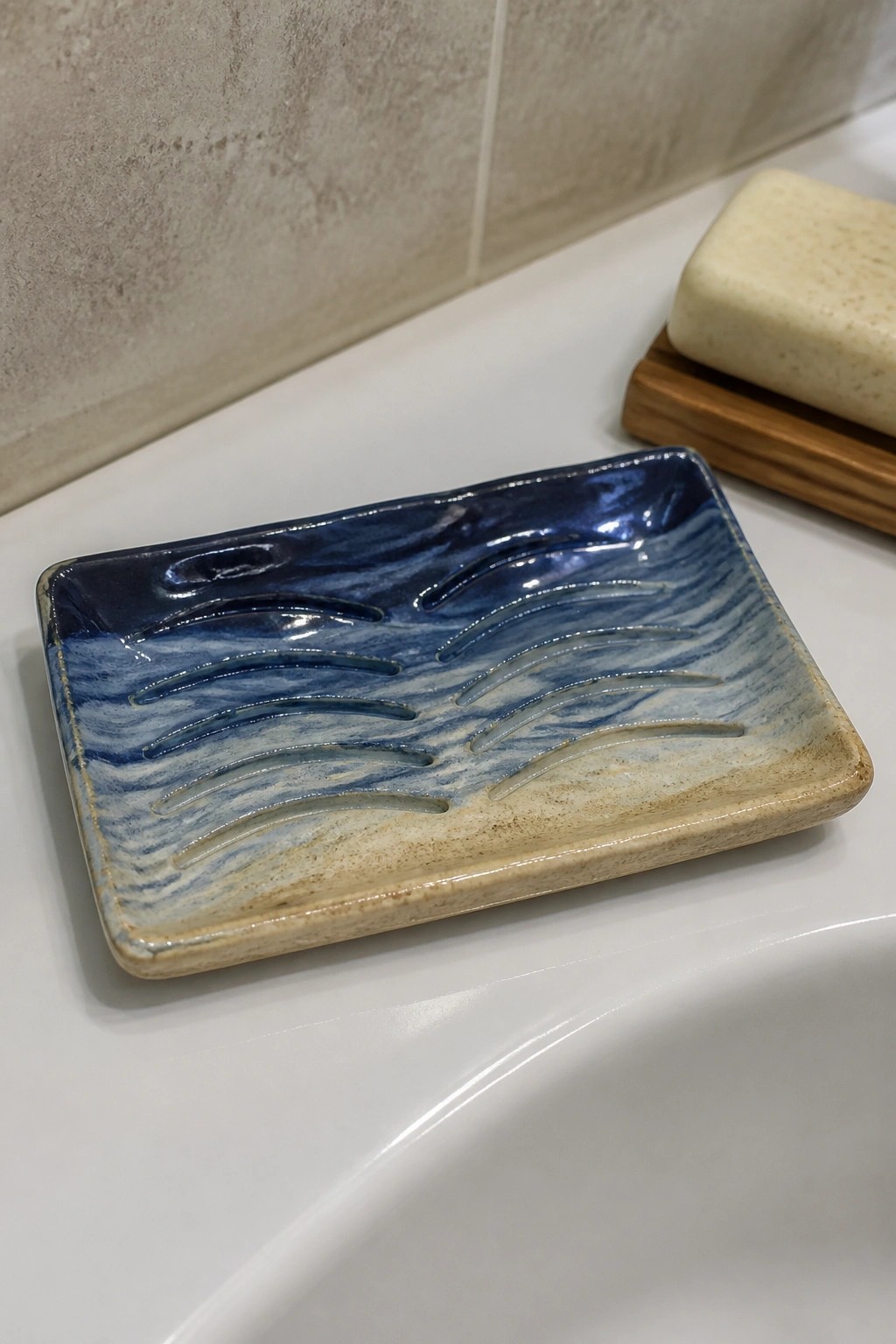
A rectangular ceramic soap dish gains visual interest when you apply blue underglaze in loose, flowing strokes that run across the surface. Several shallow ridges molded into the base create drainage channels while the marbled blue tones suggest water movement. This keeps the form functional for bathroom use without adding extra pieces or hardware.
The small scale makes the dish simple to produce on a standard slab or by hand-building, and the same underglaze pattern adapts easily to a matching toothbrush holder or small tray. It works well on a sink edge or shower shelf where drainage matters. You could swap the blue for other colors or stretch the ridges into a longer tray shape if you want a different size for guest bathrooms.
Floral Yarn Bowl with Spiral Notch

A yarn bowl is a straightforward pottery project that keeps yarn from rolling away during knitting or crochet. This example uses a wide, low bowl shape with a spiral cutout on the rim that guides the strand smoothly as it unwinds. The design includes a narrow band of hand-painted flowers in pink, purple, and blue along the upper edge, created with underglaze on a white clay body before the final clear glaze. The exterior shows subtle throwing ridges that add texture without competing with the painted motif.
What makes this idea useful is how the notch turns an ordinary bowl into a dedicated tool that sits stably on a lap or table. You can adapt the same form by making it taller for larger skeins or by swapping the flower band for a simpler stripe or dot pattern if you want less detail. It works especially well as a gift for fiber artists and takes up little space when stored. The painted rim also carries over easily to other small bowls meant for holding notions or jewelry.
Owl Figurine with Layered Feather Patterns

A small ceramic owl figurine makes a simple decor object when decorated with underglaze in repeating feather motifs. The design relies on scalloped rows across the body and radiating lines around the eyes to add visual texture. Brown and teal colors applied over a light base keep the patterns readable while following the rounded form.
The compact shape fits easily on a shelf, mantel, or desk without crowding other items. You can reuse the same layered feather pattern on a small vase or candle holder by adjusting the scale of the rows. For a gift, this type of figurine gives you a finished piece that requires only basic underglaze brushwork and one firing.
Geometric Mosaic Tray with Underglaze Blocks

A rectangular tray with side handles makes a strong base for this underglaze idea. The surface is divided into a loose grid of squares and rectangles filled with orange, blue, and yellow, plus a few blue star or cross shapes that interrupt the pattern. White underglaze lines keep the blocks distinct and give the whole surface a tiled look without actual separate pieces. The design stays flat and even, so the colors sit cleanly against each other once fired.
What makes this idea useful is how the tray shape turns a simple grid into something that can hold cups, keys, or small plants. You could repeat the same block layout on a set of square tiles for a backsplash or shrink it down for coasters by keeping just four or six sections per piece. The high contrast between the warm and cool colors helps the pattern stay readable even on a busy table. For a different version, swap the star shapes for circles or leave the grid plain and change only the color placement.
Scattered Dot Creamer
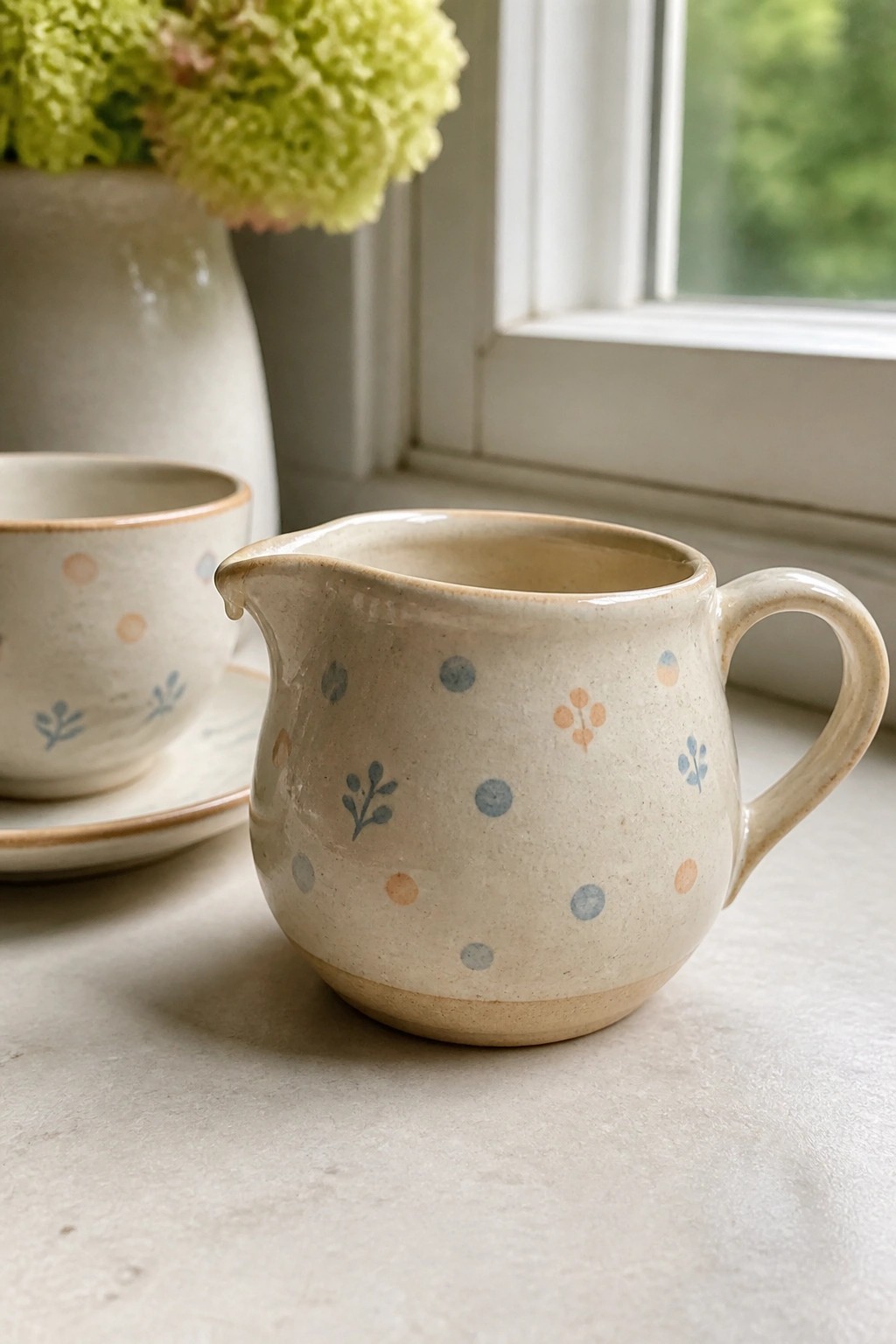
A small ceramic creamer works well for underglaze painting when the surface is kept simple. Blue and orange dots are spaced across the body with small leaf sprigs filling some of the gaps. The speckled clay shows through the glaze and adds texture without extra work. This layout suits any rounded pitcher or jug shape where the motifs can sit evenly around the curve.
The shape does a lot of the work here because the handle and spout already give it function. You can repeat the same dot and sprig pattern on a matching mug set or a small bowl to create a cohesive group. The scale stays easy to manage on a wheel or with hand building so the idea transfers to other kitchen pieces without much change. For gifts this size also keeps material costs low while still looking finished.
Small Ceramic Tealight Holders with Simple Motifs
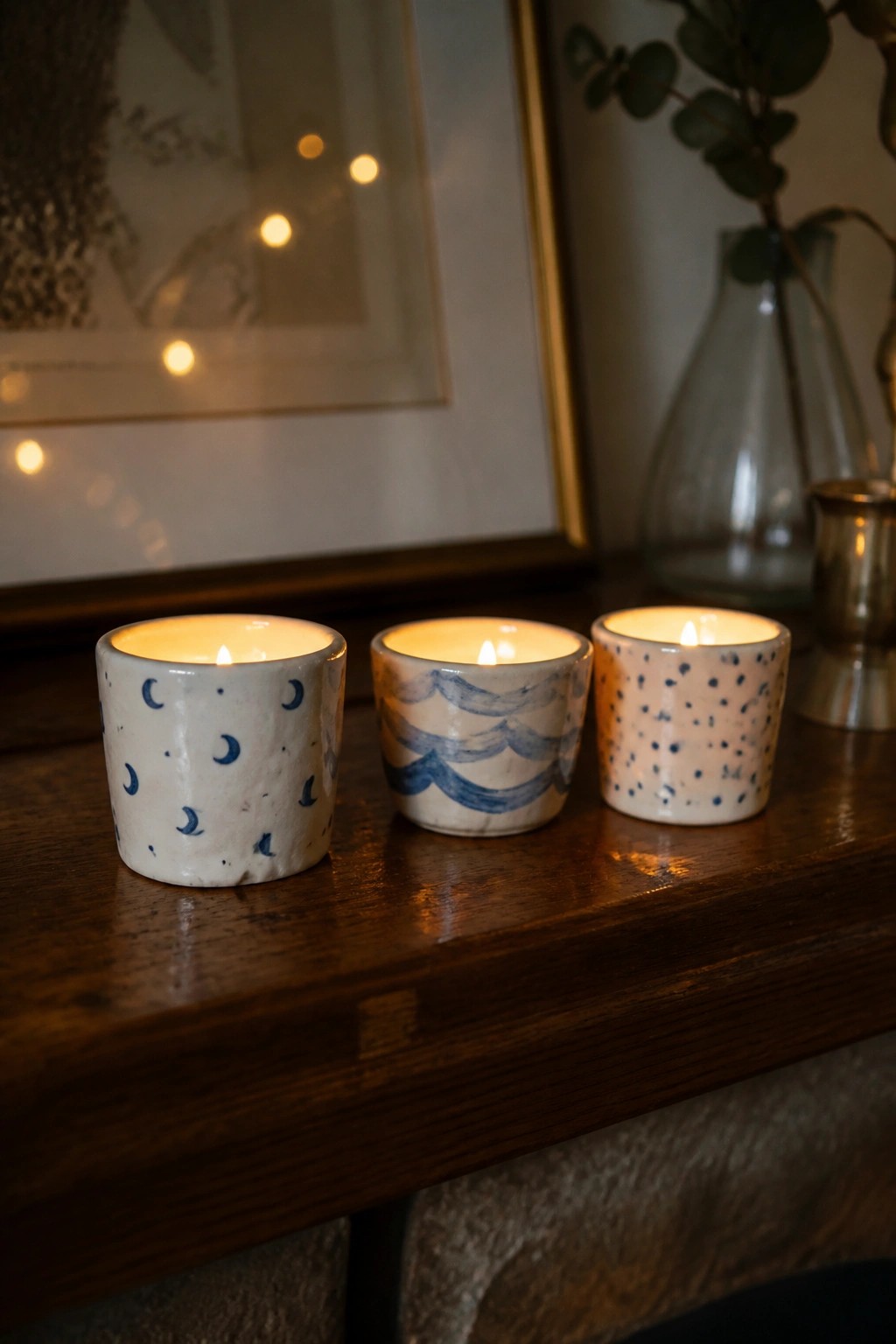
Small cylindrical pottery forms make effective tealight holders when decorated with underglaze in loose, repeating patterns. One holder shows scattered crescent moons and dots, another uses horizontal wavy lines, and the third relies on fine speckling across the surface. The light clay body keeps the blue designs visible without competing colors. These pieces fit the candle holder category and stay easy to produce in matching sets.
The compact shape lets you line several up on a shelf or mantel without taking much space. You can reuse the same cylinder form for small bathroom cups or desk organizers by adjusting the motif size and spacing. Speckling requires the least control so it serves as a quick test before trying moons or waves on new pieces. Grouping holders with different patterns creates a ready-made Pinterest layout that highlights multiple underglaze options at once.
Underglaze Landscape Ring Dishes
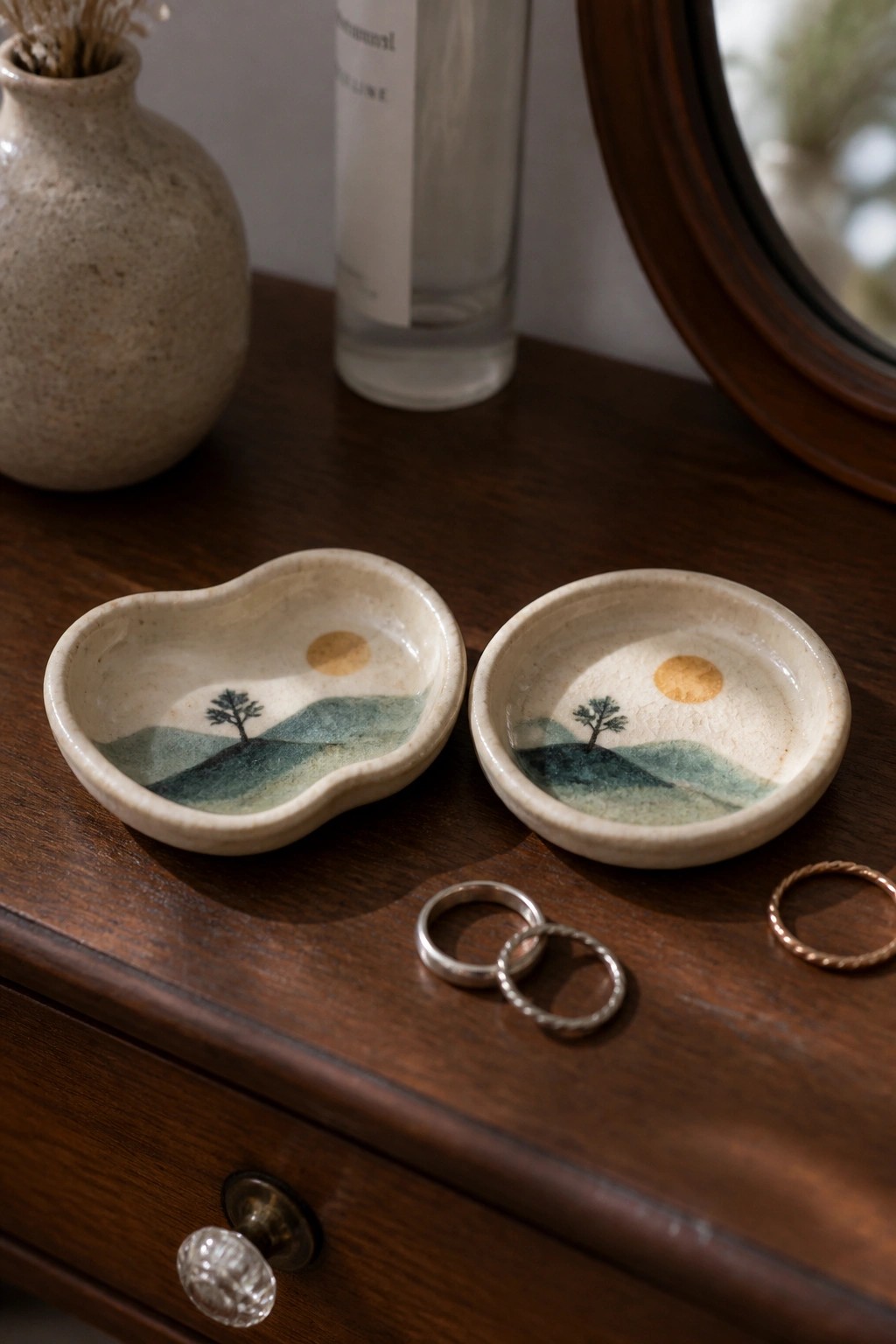
Small ring dishes like these use a simple underglaze painting of hills, a single tree, and a sun to turn basic forms into jewelry holders. The light clay body lets the soft greens and warm gold stand out without extra layers. One dish has an organic curved shape while the other stays round, both keeping the painted scene as the main detail. This style works as a quick way to add a functional piece for rings or small items using underglaze on bisque.
The shape does a lot of the work here because the compact size fits easily on a dresser or nightstand without taking up space. You could swap the landscape for other simple motifs like waves or abstract lines while keeping the same dish forms. These pieces stand out on a vanity because the painted scene gives them more presence than plain dishes. The idea also scales down well for testing underglaze colors on test tiles before committing to larger work.
Frequently Asked Questions
1. How should I prepare my pottery surface before applying underglaze? Start with clean, dry bisque ware to ensure good adhesion. Wipe the surface with a damp sponge to remove dust, then let it dry completely. Sketch your design lightly with a pencil if needed, and test your underglaze colors on a scrap piece first to see how they look after firing.
2. What firing schedule works best for underglaze painted pieces? Fire to cone 04 to cone 6 depending on your clay and underglaze brand, following the manufacturer’s guidelines. Ramp up slowly at first to avoid cracking, hold at peak temperature for 10 to 15 minutes, then cool gradually. Always test a sample to confirm the results match your expectations.
3. Can I combine underglaze with other techniques like sgraffito? Yes, this works well for adding texture and depth. Apply underglaze in thin layers, let it dry to the touch, then use a sgraffito tool to carve through the color and reveal the clay body underneath. Finish with a clear glaze and fire as usual for a polished look.
4. How many layers of underglaze are recommended for opaque coverage? Apply two to three thin coats for solid color, allowing each layer to dry fully between applications. Use a soft brush and build up gradually to prevent drips or uneven spots. Thicker layers may crack during firing, so thin and even is better for clean results.
5. Are there any common pitfalls to avoid when trying these hand-painted ideas? Avoid painting on wet clay or greenware unless the underglaze is specifically labeled for it, as this can cause bubbling. Do not skip the clear glaze step if you want durable, food-safe surfaces. Always label your colors and keep a firing log to track what works best for future projects.

Pottery Path is my cozy corner of the internet where I share clay ideas, pottery inspiration, and simple projects you can recreate at home. I love exploring everything from air dry clay to handbuilt pottery to cute minis that brighten your day. My goal is to make clay crafting feel easy, fun, and welcoming for anyone who wants to try it.
You will find beginner friendly tutorials, creative pottery painting ideas, and lots of warm inspiration for slow and happy crafting. If you enjoy hands on creativity, this space will feel like home.