I have been playing around with slab pottery lately because it is straightforward and lets me focus on the shape of each piece.
Geometric forms with clean edges have been showing up more in my studio and I like how they keep things simple yet structured.
I gathered some ideas that stick to these elements and tried them out with basic tools I already have.
They turned out to be practical projects that do not require advanced skills.
Most of them work well as everyday items or small decorative pieces.
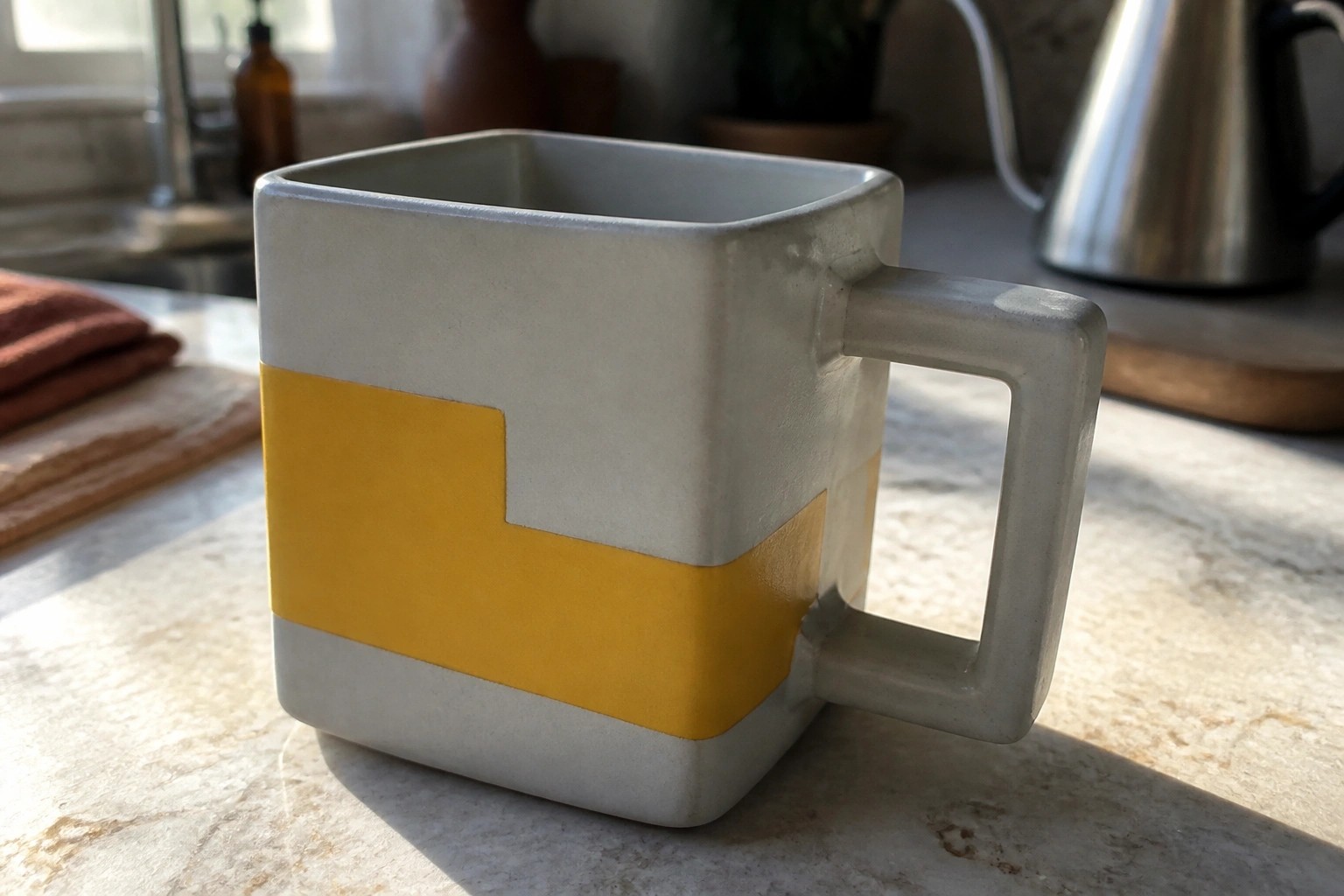
Square Slab Mug with Stepped Yellow Band

A square mug built from clay slabs gives you sharp 90-degree edges and a flat-sided form that highlights geometric decoration. The gray matte surface carries a wide yellow band that steps across the front in an angular shape, creating contrast through simple color blocking rather than added texture or carving. This keeps the project focused on clean lines and precise placement of the accent color.
The shape does a lot of the work here because the flat walls make it easy to mask off straight edges for the yellow section with tape or a template. You could adapt the same stepped motif to a taller pitcher or a set of small tumblers by changing only the height of the slabs. In a kitchen this style mixes well with other modern pieces and stands out in photos for a Pinterest board on slab work.
Hexagonal Slab Tray With Two-Tone Glaze
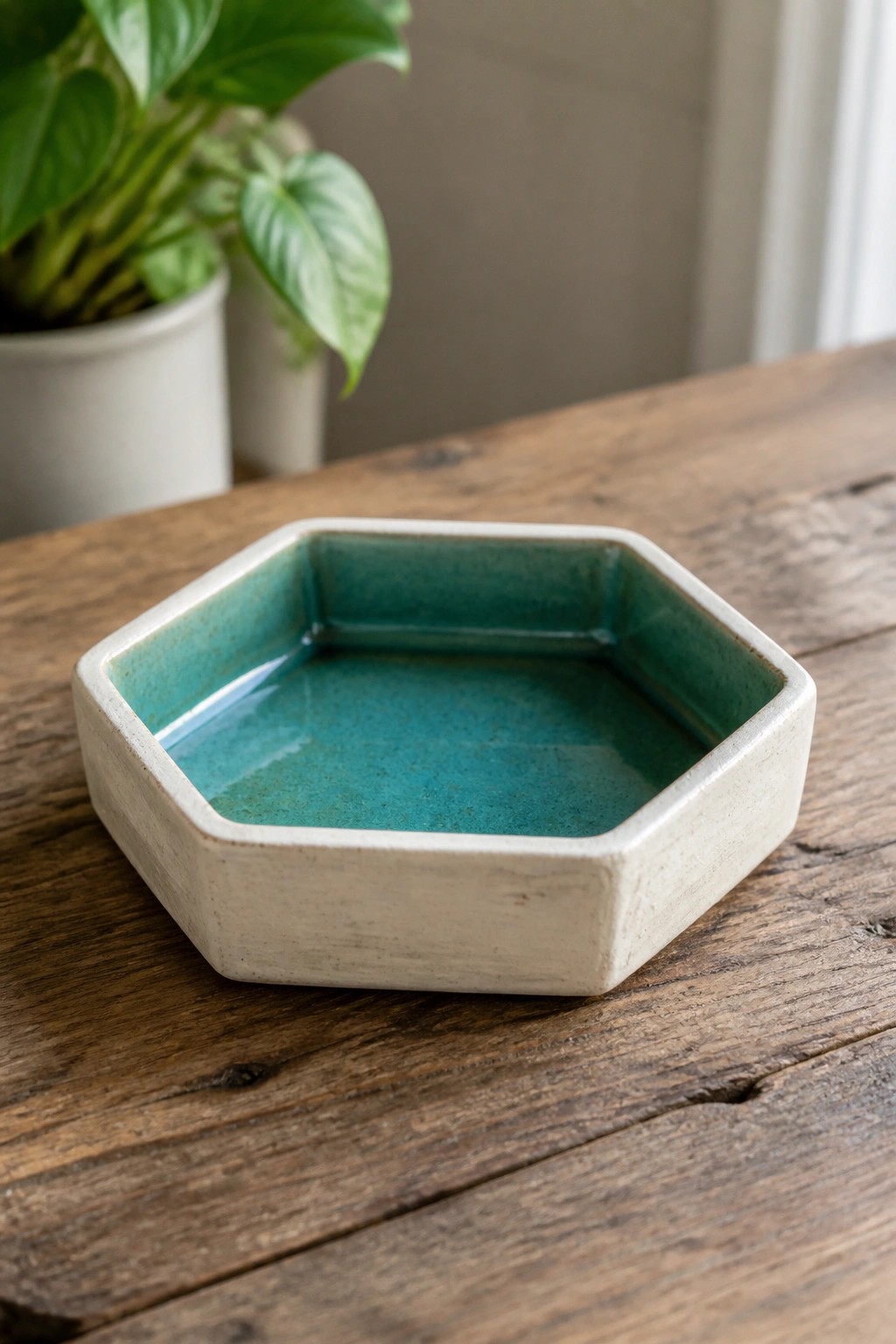
A slab-built hexagonal tray gives you a shallow dish with straight, precise sides that hold small items without taking up much space. The form comes from cutting and joining flat clay pieces into a six-sided shape, then adding a simple rim for stability. The matte white exterior next to the glossy teal interior makes the geometry stand out clearly. This kind of project sits in the modern slab category where clean edges and basic forms do most of the visual work.
What makes this idea useful is how the flat base and low walls keep the tray practical for holding rings, keys, or small tools on a desk or nightstand. You could scale the same hexagon template down for a soap dish or widen it slightly for a plant saucer. Switching the interior color or leaving the outside unglazed changes the look without new templates. The strong shape and color split also translate well to photos for sharing project ideas.
Split-Tone Slab Vase with Triangle Line Pattern
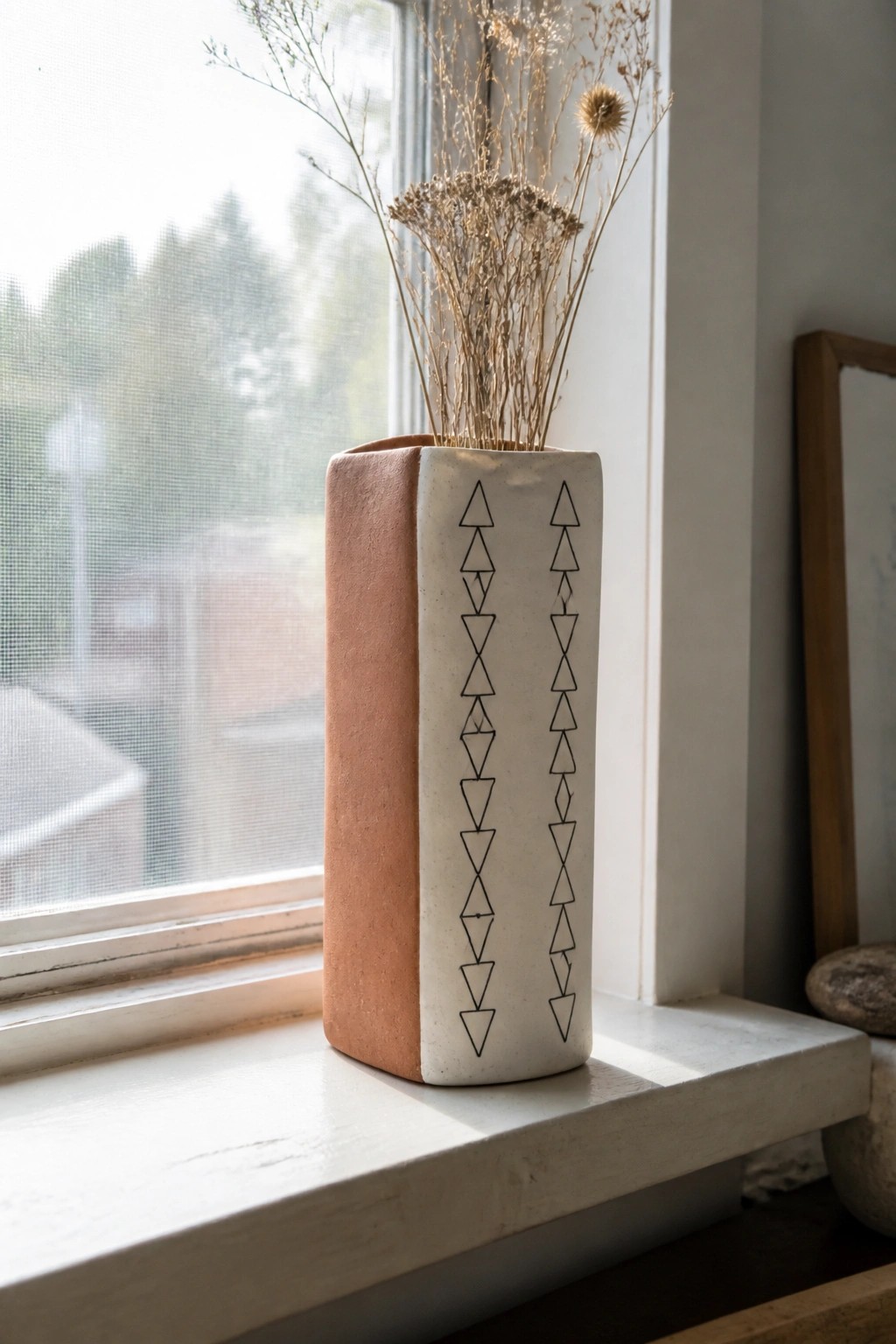
A rectangular slab vase built from two joined panels uses one section of unglazed terracotta clay next to a white panel marked with vertical rows of black triangle outlines. The triangles connect point to point to create a chain of diamonds down the length of the form. Clean vertical edges and flat faces keep the focus on the contrast between the raw clay color and the crisp black geometric marks.
The shape works well as a holder for dried stems on a windowsill or narrow shelf. You could adapt the split-panel layout to a shorter square box for desk supplies or scale the same triangle chain down for a set of small trays. Keeping the pattern to simple line work makes it straightforward to transfer onto leather-hard slabs before assembly.
Rectangular Slab Planter With Clean Edges
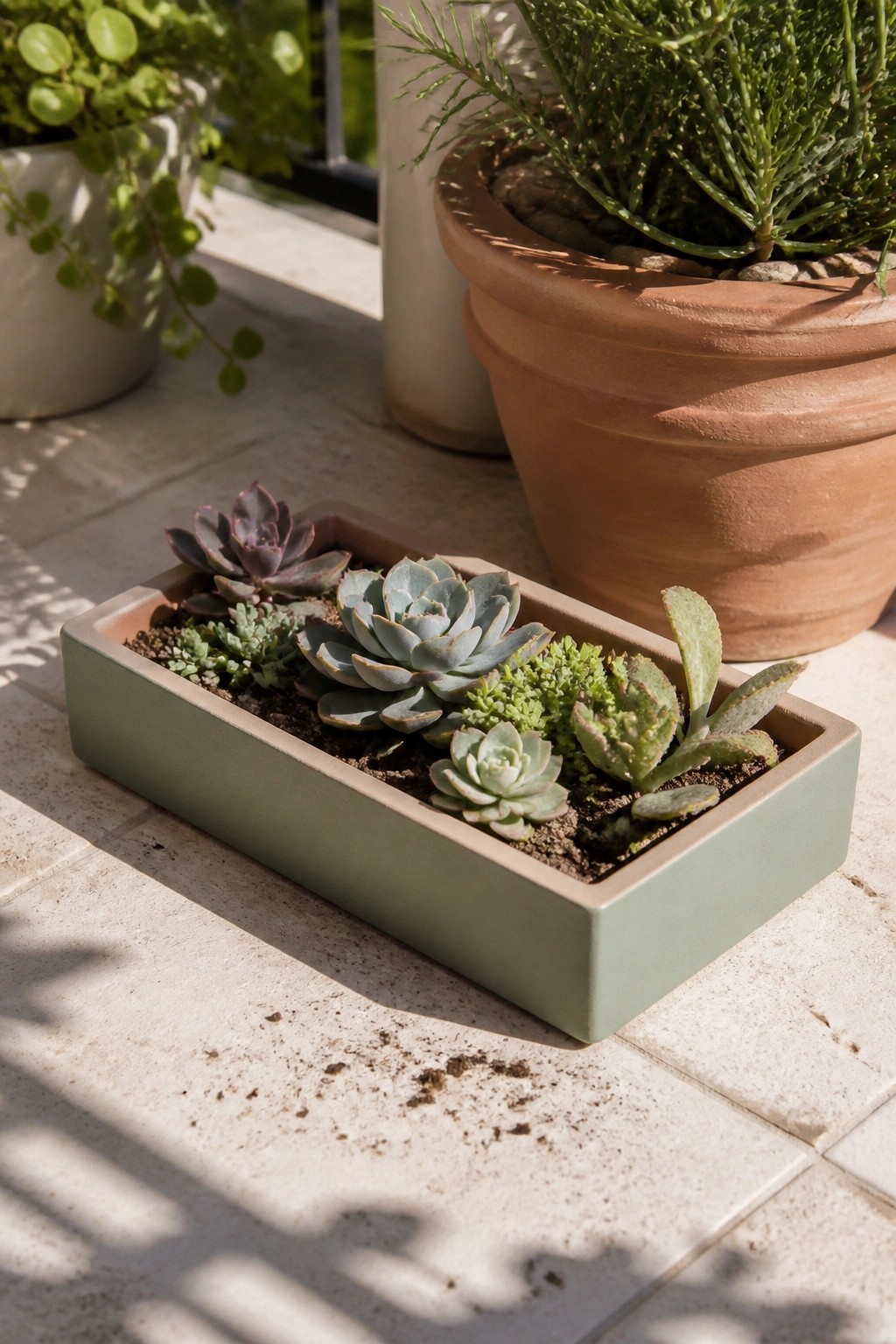
A low rectangular planter built from slabs gives you straight sides and sharp corners that highlight the geometric form. The piece holds a mix of small succulents in one contained space, with the flat base and even height keeping everything level. A matte sage glaze on the outside creates a quiet contrast against the soil and plants while the clean rim stays simple.
What makes this idea useful is how the proportions can shift to match a windowsill or shelf without losing the look. You can shorten the length for a tighter space or widen it slightly to fit more plants. The same slab method works for a matching tray or shallow box to hold small tools. The straight edges make the piece stand out in photos, which helps when sharing plant displays online.
Two-Tone Octagonal Slab Tray
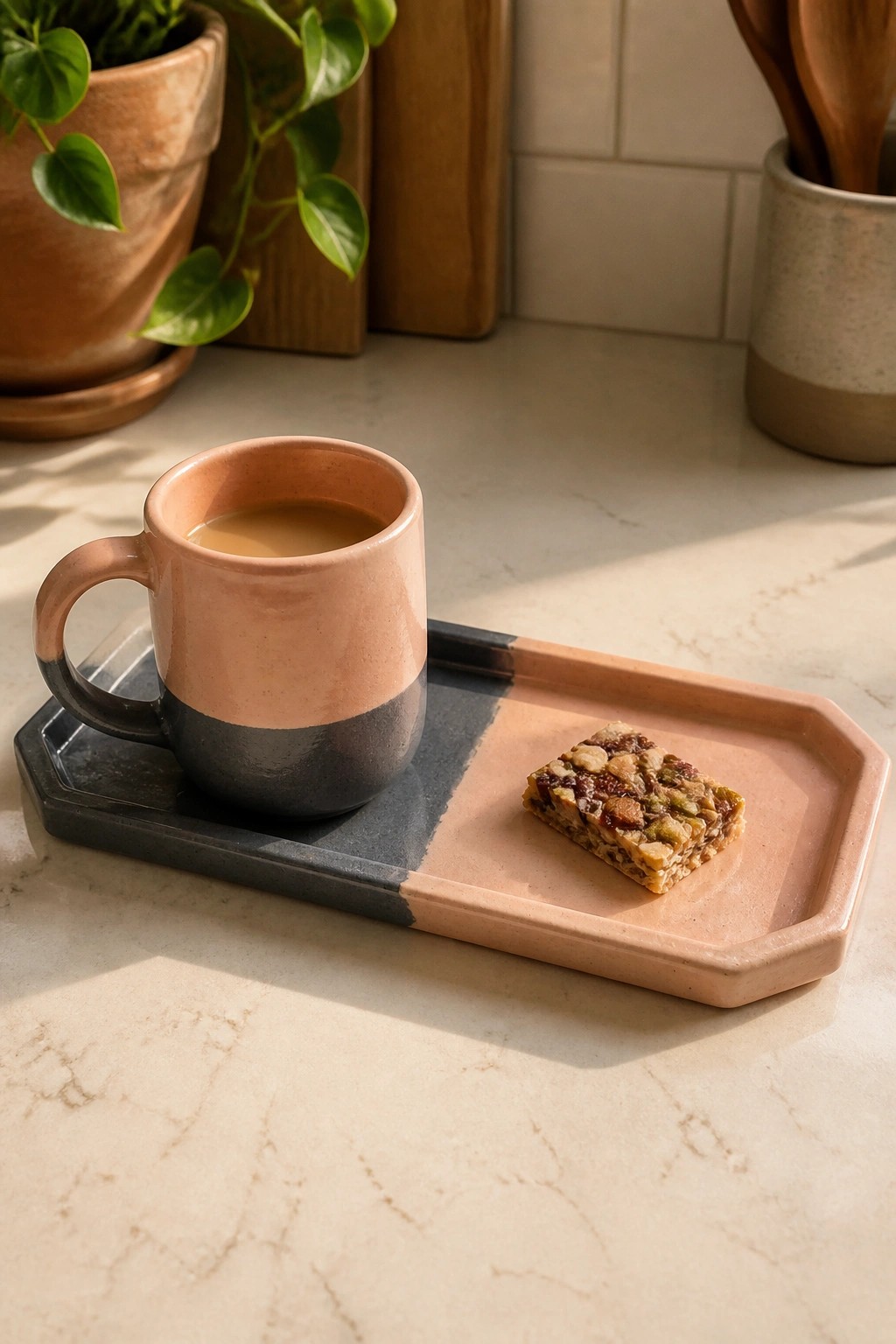
A slab tray cut into an octagon and finished with a split two-tone glaze creates a clean, modern serving surface. One half gets a matte peach glaze while the other takes a dark charcoal, letting the color break form a simple geometric line across the piece. The flat slab construction keeps the edges sharp and the overall form low and stable for holding small items.
What makes this idea useful is how the octagon shape adds interest while staying easy to cut from a single slab. You could repeat the same two-tone split on a set of coasters or shorten the sides to make a smaller catch-all for keys and mail. The divided color also helps the tray stand out in photos for Pinterest without any added texture or carving.
Striped Triangular Tea Light Holder
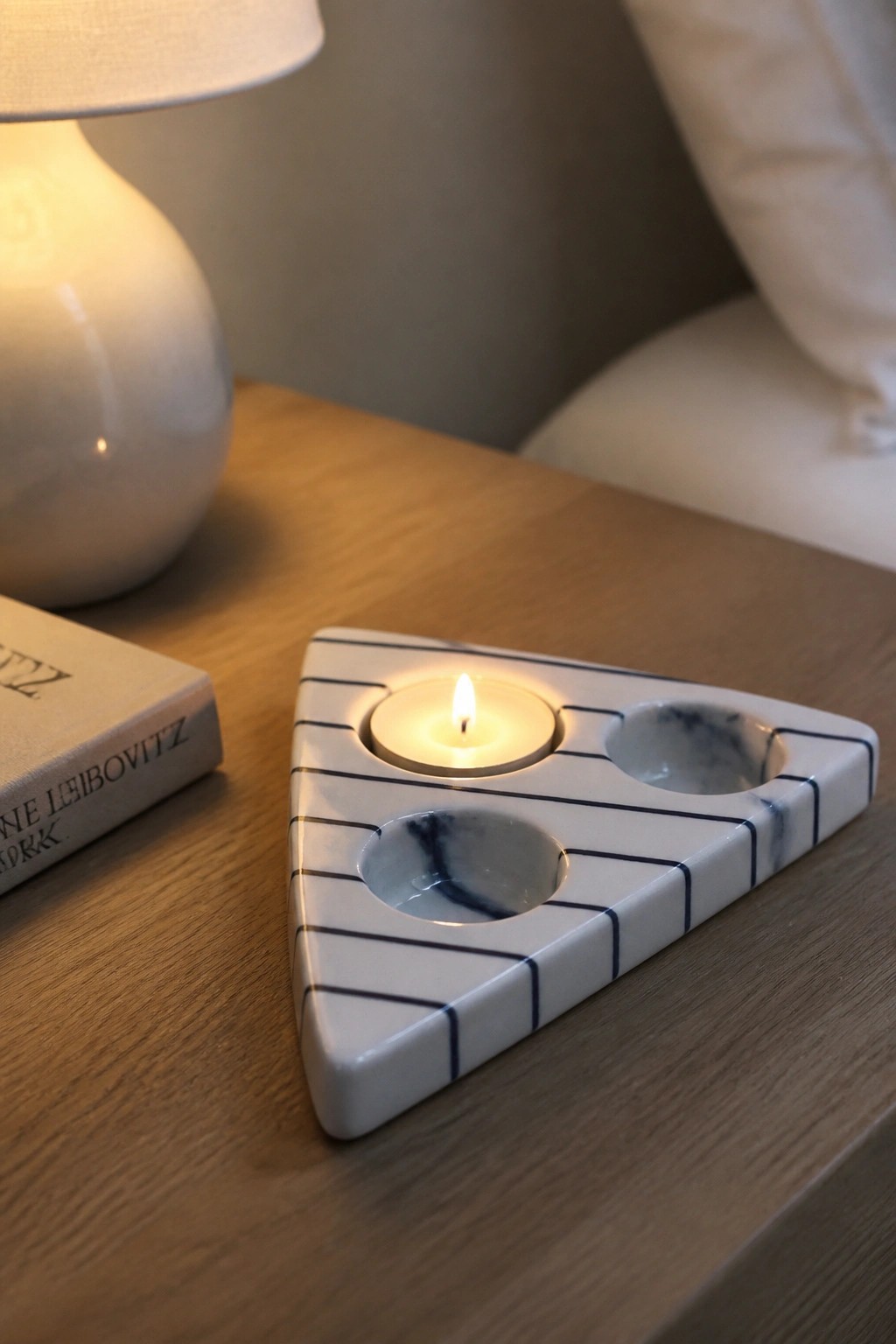
A triangular slab candle holder built from one flat piece of clay offers three separate wells for tea lights in a compact geometric form. The straight edges stay sharp when you cut the triangle after rolling the slab, and the circular depressions are pressed in while the clay is still soft. Black stripes applied across the white surface add clear linear contrast that emphasizes the clean shape without extra texture or carving.
The shape does a lot of the work here because the triangle fits neatly into corners on a nightstand or shelf while still holding multiple candles. You could easily rework the same base into a small tray by leaving the wells shallower or turn it into a ring dish by making just one larger depression. The stripe pattern adapts quickly with tape masking, so the finished piece photographs well for sharing and keeps the focus on the geometry rather than surface detail.
Geometric Slab Tile with Overlapping Circles
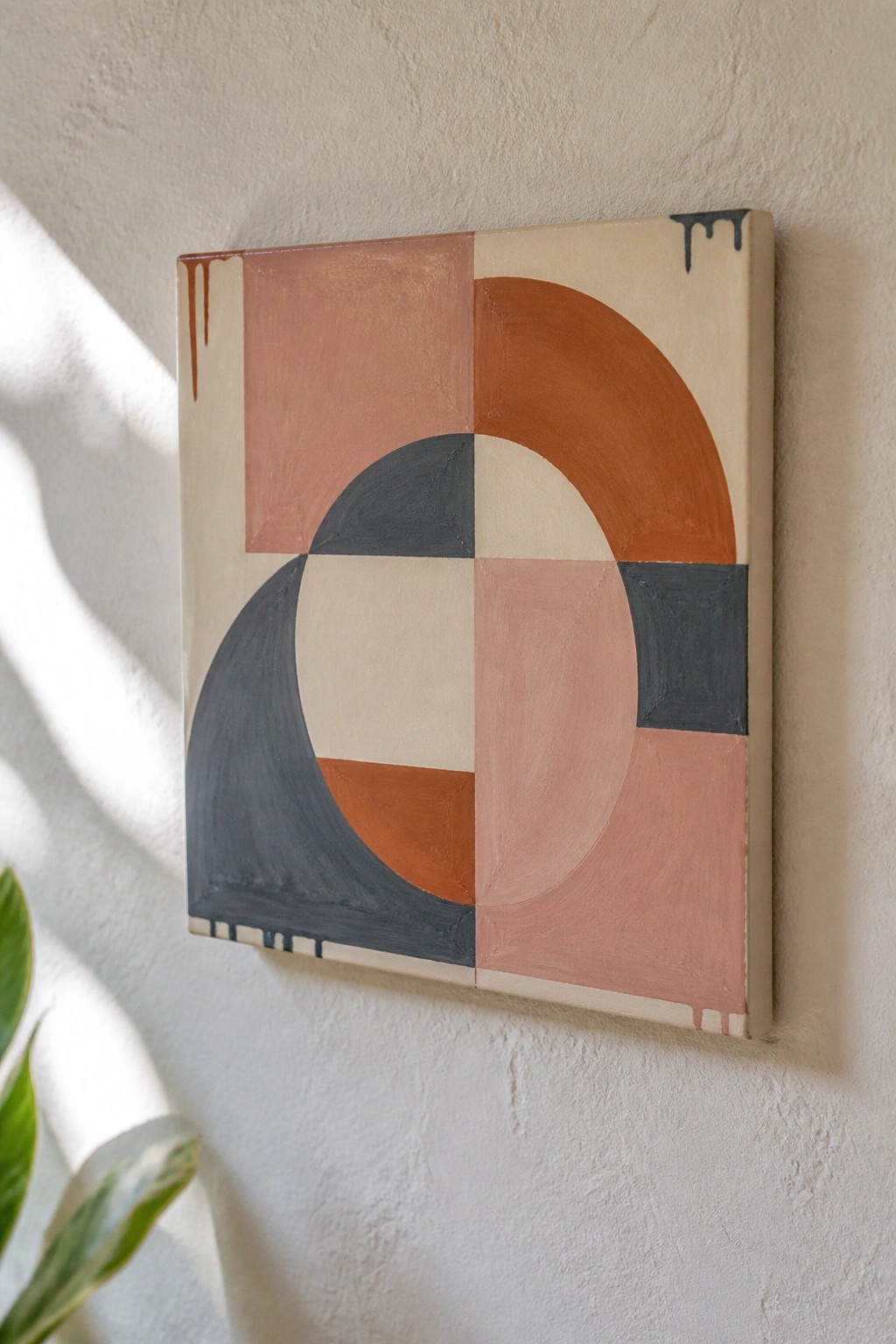
A square ceramic tile formed from a flat slab serves as a simple wall decor object. The surface features large overlapping circles and rectangles divided into muted terracotta, peach, gray, and cream sections, with controlled glaze drips along two edges. This layout relies on bold color blocking and negative space to create contrast while keeping the overall shape clean and balanced.
What makes this idea useful is how the flat format works as a quick test piece for new color combinations or glaze tests. You can adapt the same circle-and-rectangle layout to smaller tiles for a grouped display or scale it up for a single larger statement piece. The design also translates easily to a tray or shallow dish by adding low walls around the edges.
Grid Slab Tray with Square Compartments
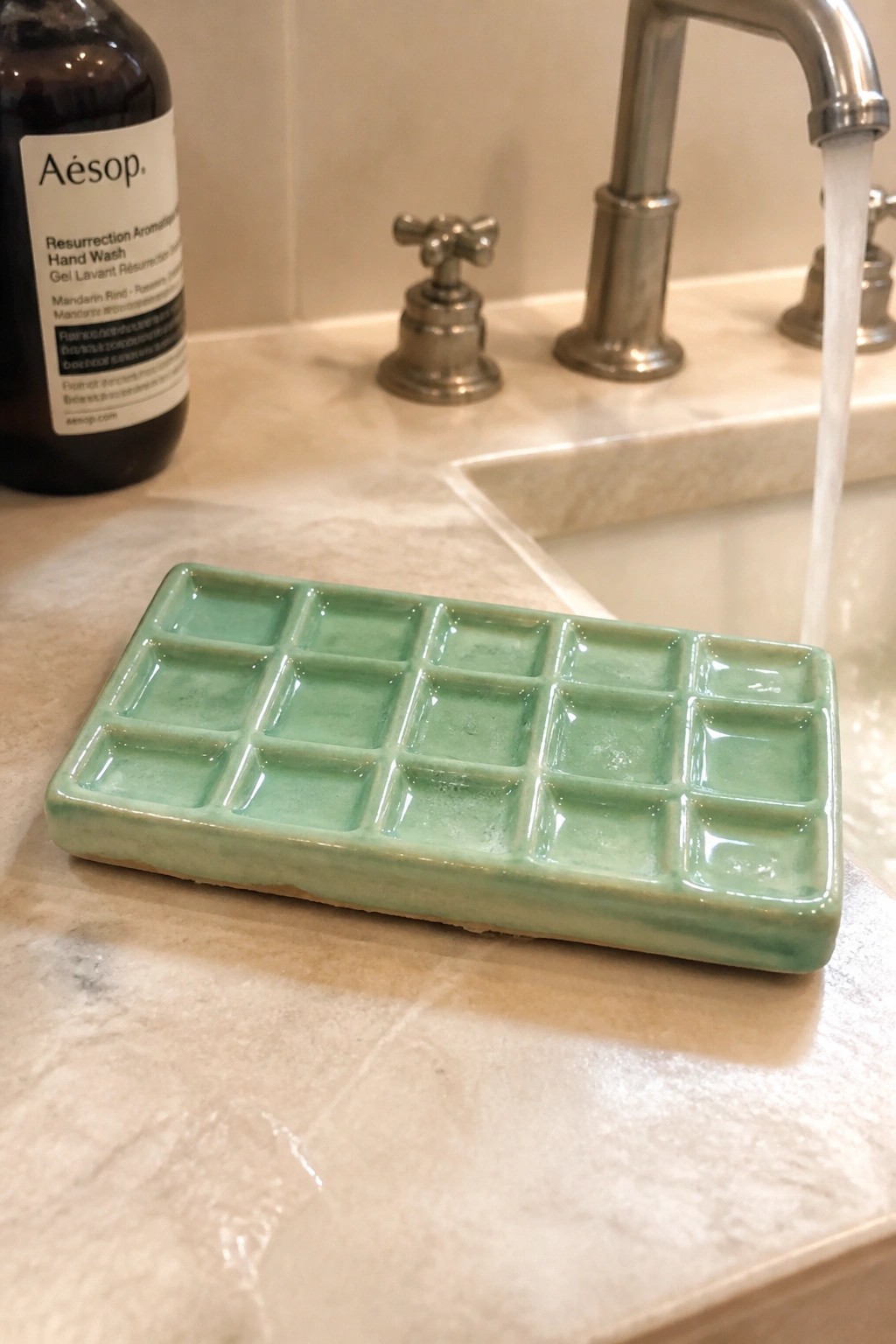
A rectangular slab tray divided into twelve equal square sections forms a simple geometric layout that suits bathroom counters or vanities. Low internal walls keep the overall profile flat while creating separate spots for soap, small bottles, or daily items. The glossy green glaze highlights the clean edges and helps the piece handle moisture without absorbing water.
What makes this idea useful is how the grid turns a basic tray into a sorting tool without adding bulk. You could shorten it to six sections for a smaller ring dish or stretch the same layout into a longer version for a kitchen windowsill. The repeating squares stay easy to cut from a single slab and look sharp in any solid glaze color.
Hexagonal Slab Ring Dish
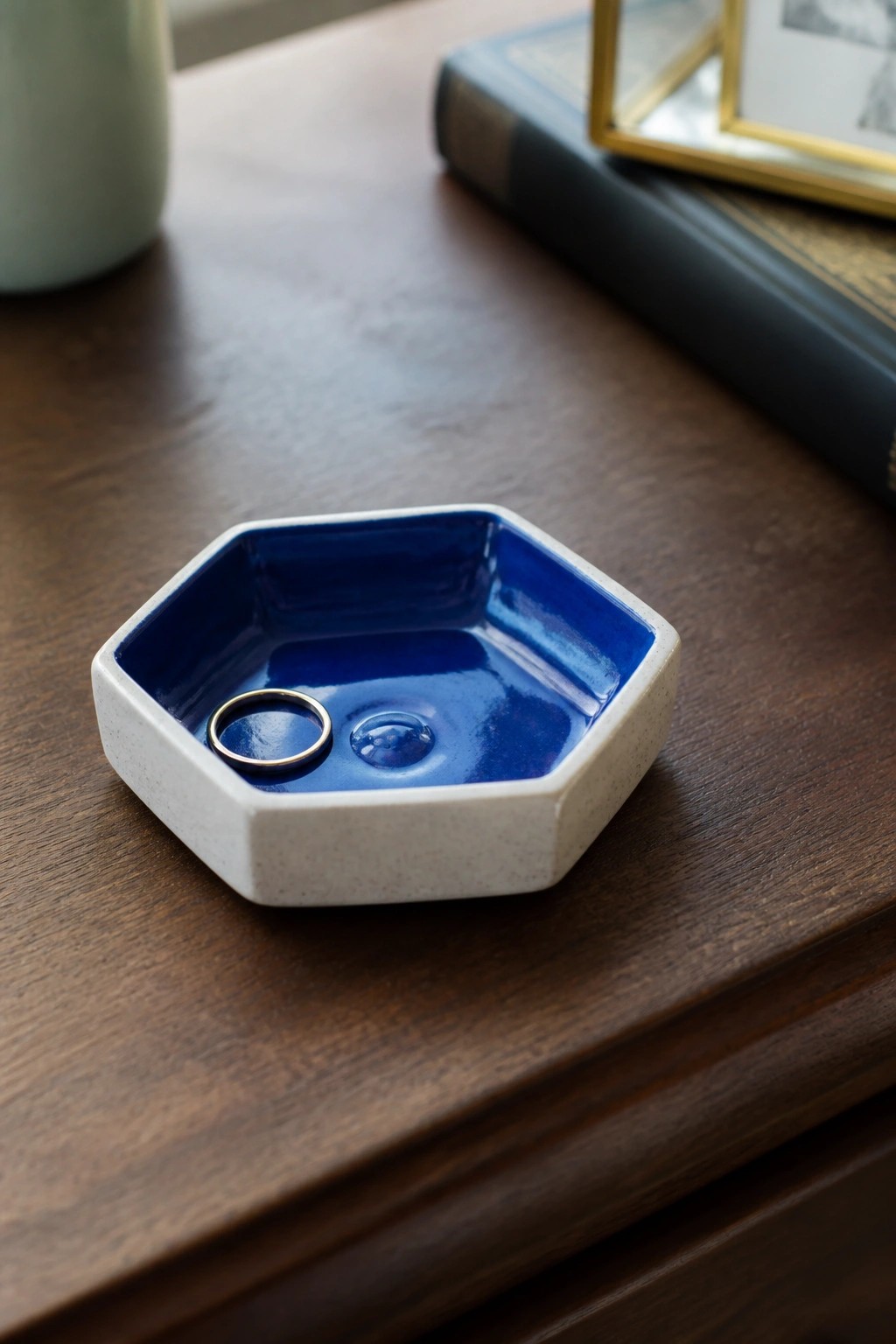
A small hexagonal dish formed from a single slab of clay creates a compact ring holder with straight, precise edges. The flat bottom and angled walls give it a stable, modern shape that sits neatly on a surface. A glossy blue glaze covers the interior while the exterior rim keeps a matte, speckled finish for simple contrast. This style of project fits the ring dish category and works well for holding small jewelry or loose items on a desk or dresser.
What makes this idea useful is how the hexagon template can be cut once and folded into a finished form with minimal seams. The small scale keeps material use low and lets you test glaze combinations quickly without wasting clay. You could adapt the same cut and assembly steps into a square or rectangular tray by changing the template, or add a small divot in the base for a single ring. The clean edges and two-tone glaze also make the finished piece easy to style in flat-lay photos.
Minimal Slab Tray with Single Angled Line
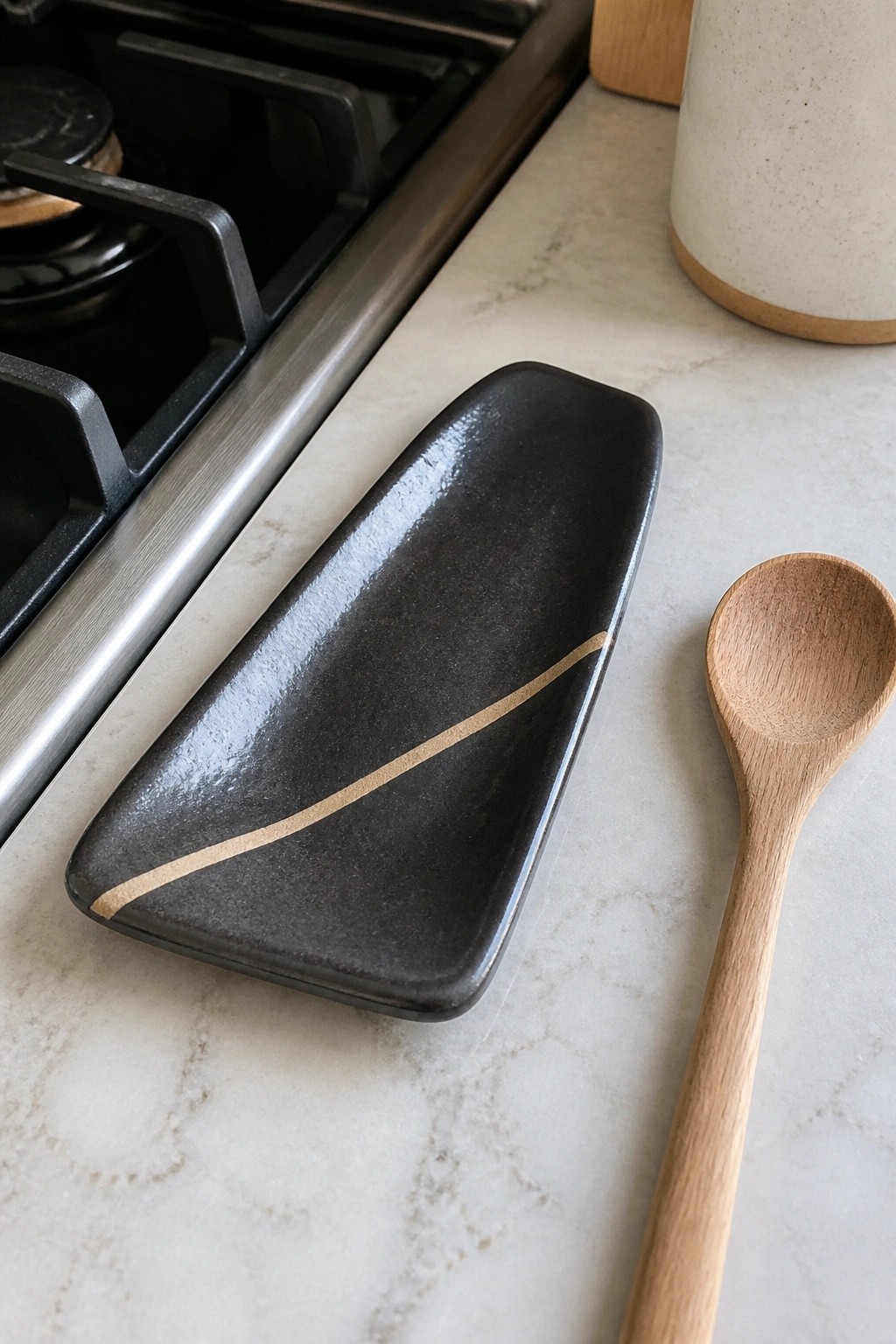
A slab-built rectangular tray gives you a simple geometric form that works well for small kitchen tasks. The clean edges and flat surface make it easy to form by hand, while the dark glaze provides a strong base for a single thin metallic line running at an angle. That narrow accent breaks up the solid color without adding extra shapes or layers.
What makes this idea useful is how the line can be repositioned or recolored to fit different spaces. Try it as a spoon rest next to the stove or a small tray for butter and salt on the counter. The same slab shape can be shortened into a ring dish or lengthened for a narrow serving piece, and the line detail transfers easily to other slab projects like coasters or small plates.
Stacked Slab Planters with Clean Rectangular Forms
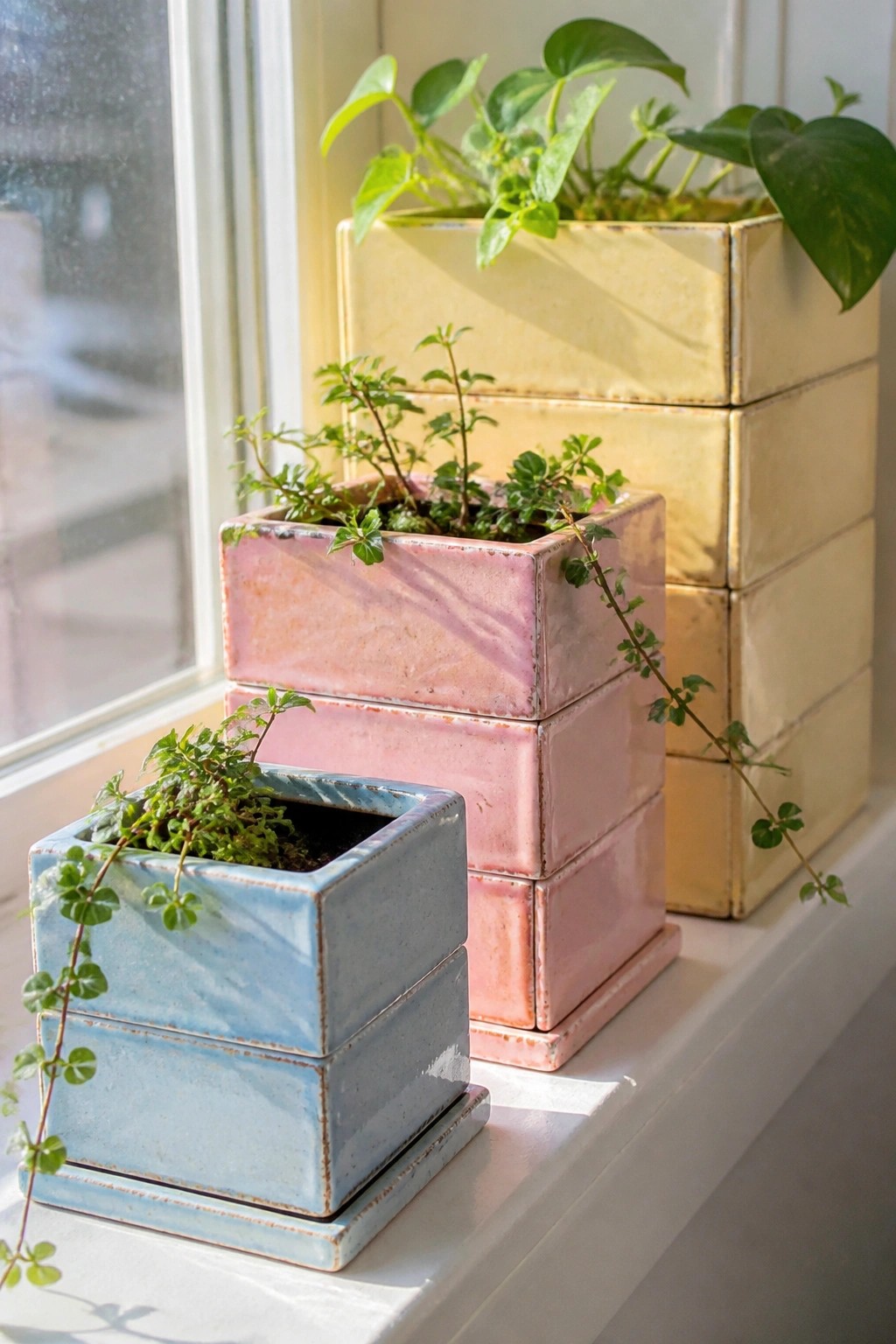
Rectangular planters built from flat clay slabs create simple box forms that stack easily into different heights. The clean edges come from cutting and joining the slabs at right angles, then finishing them with matte glazes in soft colors. This method produces stable, open-top containers that suit small trailing plants while keeping a modern, geometric look.
The shape does a lot of the work here because the flat sides let you mix and match stack heights without the arrangement feeling random. You could scale the same slab pattern down for single desktop versions or widen the base slabs to hold larger plants. These work especially well on narrow surfaces like windowsills since the low center of gravity keeps them steady. The idea also translates quickly to other slab projects such as small herb trays or desktop organizers.
Octagonal Slab Candle Vessel with Contrasting Interior

An octagonal candle vessel built from clay slabs gives you flat planes and crisp corners that read as modern and deliberate. The matte terracotta exterior keeps the focus on the geometry while the dark interior creates a simple contrast that frames the candle. This shape works as a contained candle piece because the sides rise high enough to hold wax without extra trimming or handles.
What makes this idea useful is that the same slab layout can be adjusted to make a matching tray or small planter by changing the height and base size. The octagon sits stably on a table or shelf and pairs easily with neutral linens or wood surfaces. You could adapt the form into a square or hexagon version using the same templates, or change the interior color to match other pieces in a room.
Faceted Two-Tone Slab Utensil Holder

A slab-built utensil holder with multiple flat sides creates a strong geometric shape that fits neatly on a counter. The form is constructed from flat clay slabs joined into clean angles, giving it a hexagonal outline that feels structured rather than round. A simple horizontal division in glaze separates the light upper section from the green lower half, keeping the focus on the edges and planes.
What makes this idea useful is how the faceted sides prevent the holder from looking bulky while still offering good capacity for spoons or tools. You can adapt the same slab layout by shortening the height for a desk organizer or adding more sides for a different silhouette. In a kitchen the straight edges help it sit stable next to other items, and the two-tone split is easy to recreate with any glaze colors you already have on hand.
Two-Section Rectangular Dish with Contrasting Glazes
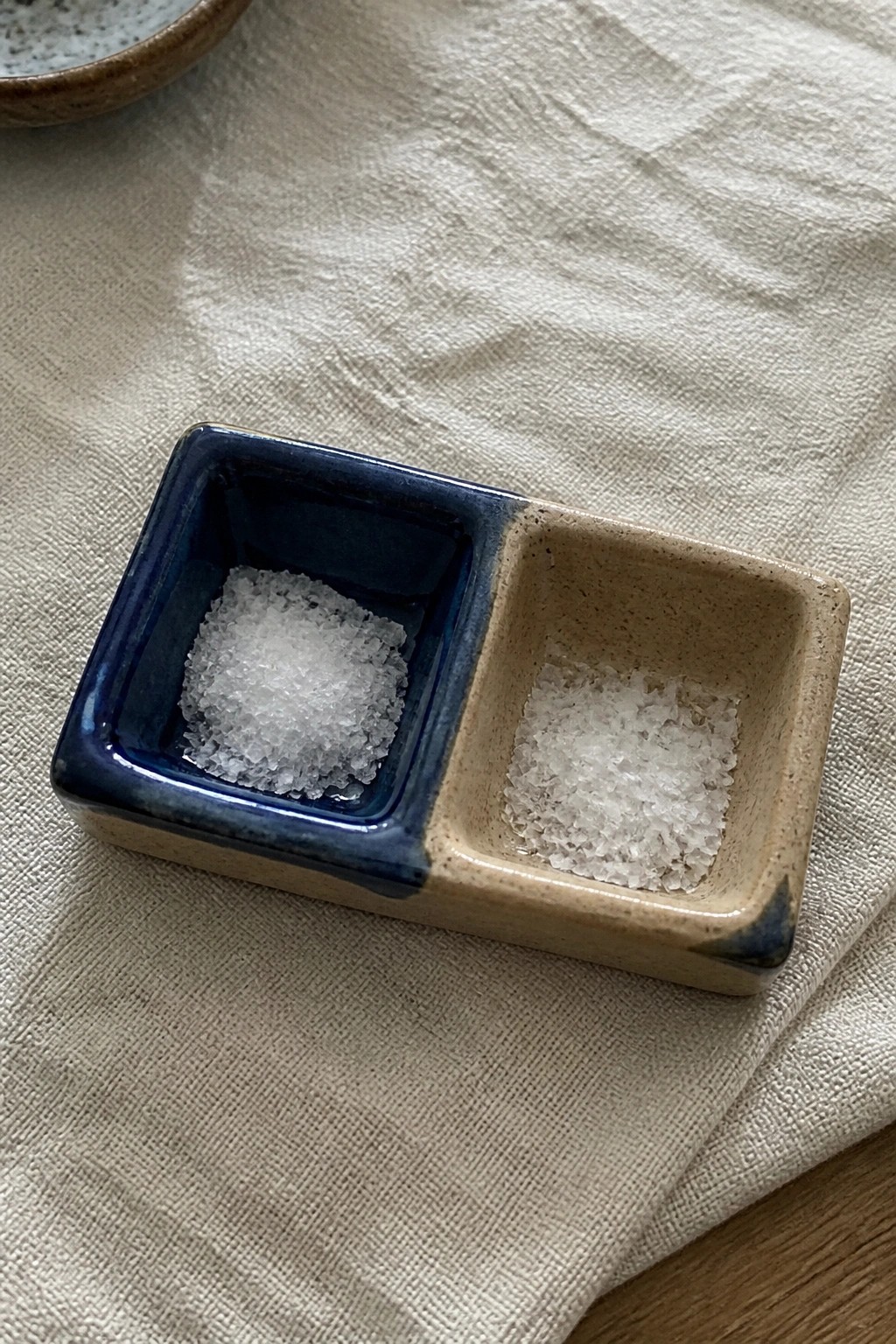
This project is a small slab-built ceramic dish divided into two equal square compartments. One side uses a glossy deep blue glaze while the other keeps the natural clay color with a matte finish. The clean straight edges and sharp center division create a simple geometric form that works well for holding two different dry ingredients at once. The piece stays compact and functional without extra decoration.
The shape does a lot of the work here because the two compartments keep contents separated while staying easy to reach. This kind of dish works especially well on a table for salt and pepper or as a small organizer for tea bags and sugar packets. You could adapt the same layout into a longer version with three sections or scale it down further for desk use with paper clips and push pins. The contrast between the two finishes also helps the piece read clearly in photos, which makes it useful for sharing project ideas online.
Stacked Square Slab Ring Stand
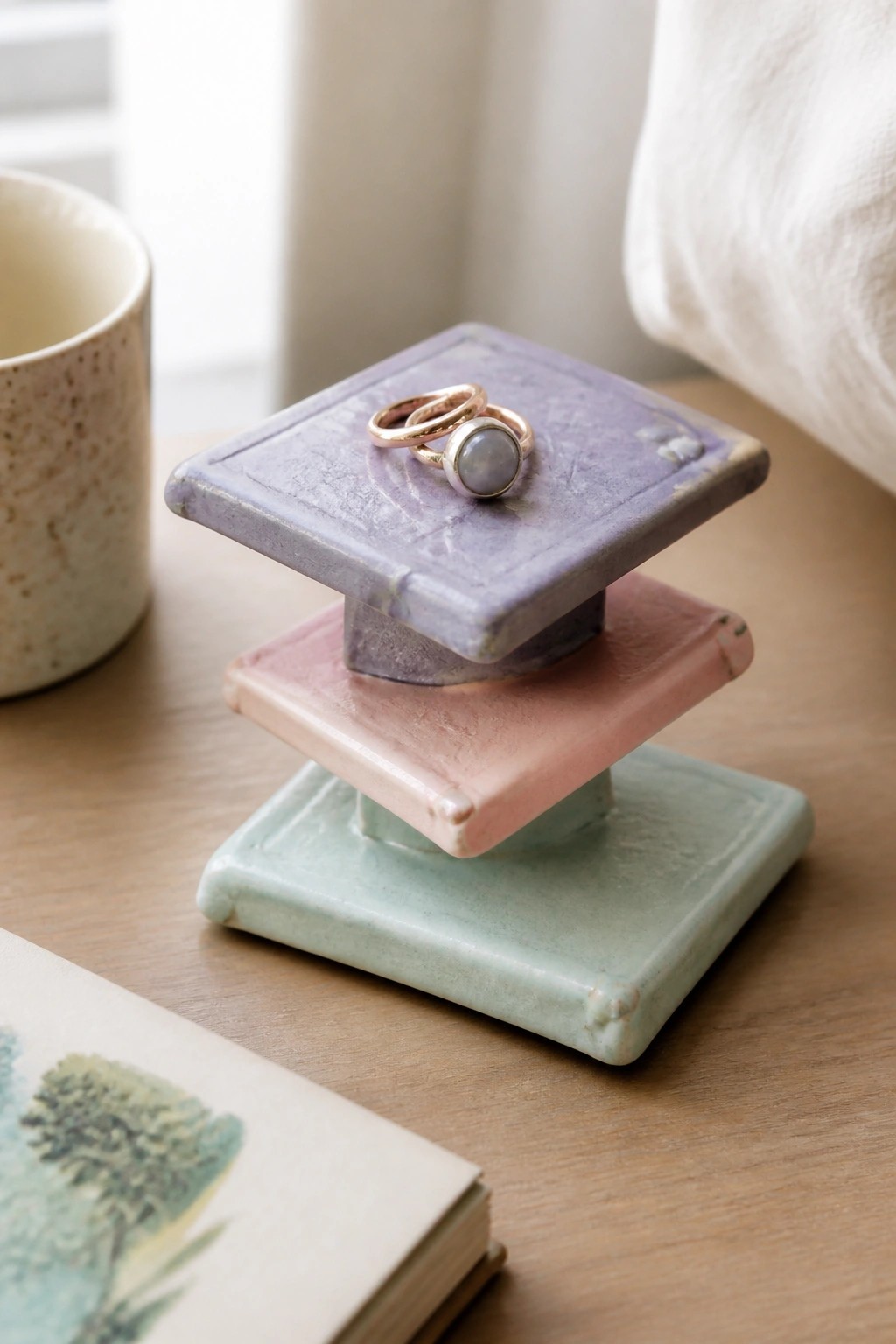
A slab-built ring stand uses three square platforms of decreasing size stacked on a central column to create a tiered display. Each platform is cut with straight edges and assembled into an offset tower, then glazed in matte finishes of soft purple, pink, and mint green. The flat tops and clean corners give the form a modern look while the staggered heights provide multiple resting spots for rings or small items. This approach works as a compact decor object or dedicated ring holder rather than a traditional dish.
What makes this idea useful is how the square geometry keeps the piece stable and easy to build even with basic slab tools. It works especially well on a desk or nightstand where the tiers keep rings visible and separate. You could rework the same stacked squares into a two-tier version for a quicker build or add a shallow rim to one level to hold earrings instead. The simple color blocking and geometric shape also photograph cleanly for project boards.
Three-Color Divided Slab Tray
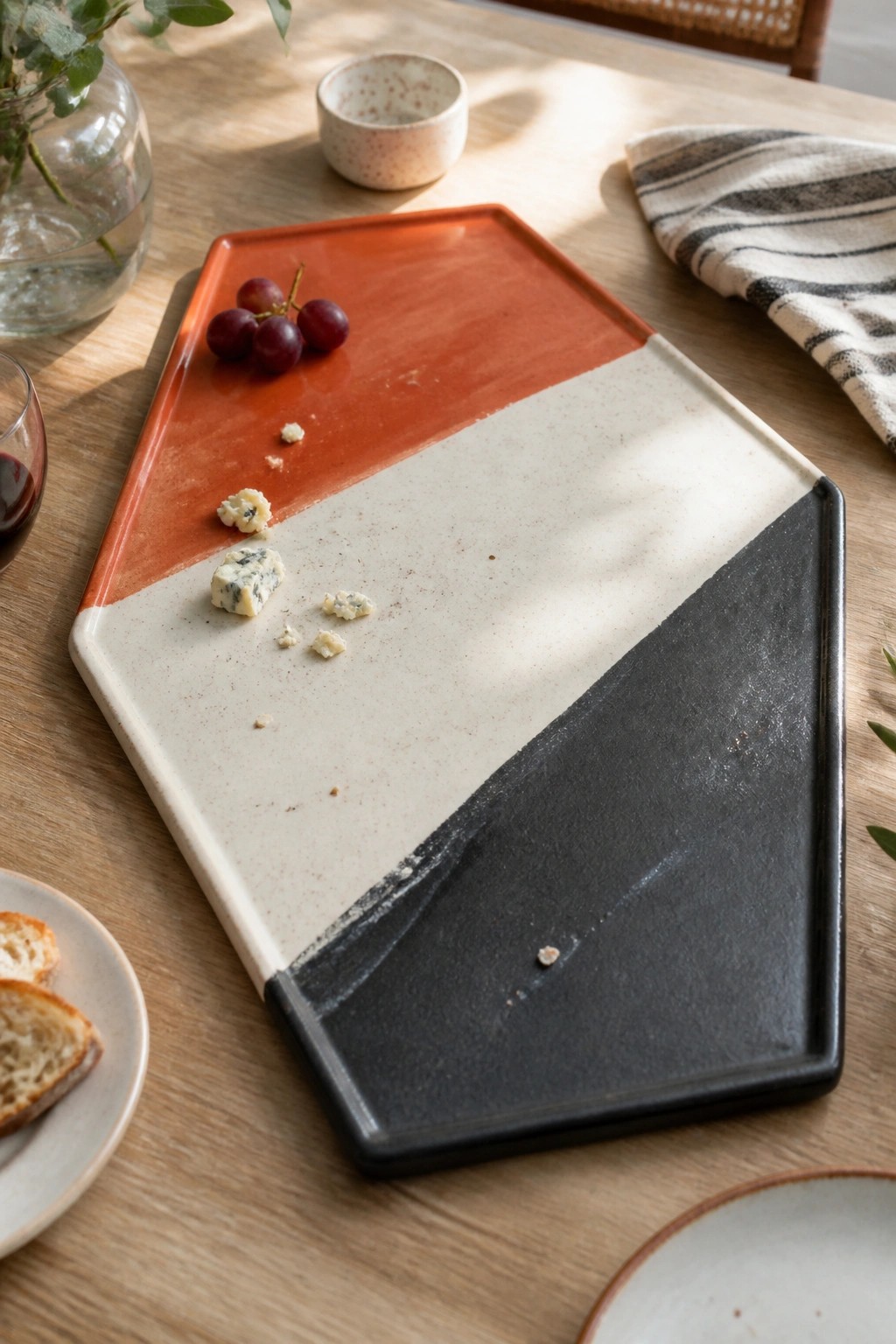
A slab-built ceramic tray with an angled hexagonal shape uses three separate glaze sections to divide the surface into clean geometric zones. The top area takes a matte terracotta red, the middle stays in a light speckled clay tone, and the bottom finishes in solid black, with each color meeting at crisp edges. This layout keeps the focus on the flat form and the sharp color changes rather than added texture or pattern. The result works as a serving piece for cheese or small bites.
What makes this idea useful is how the color blocks emphasize the slab edges without extra carving or stamps. You can adapt the same layout to a rectangular tray or a set of coasters by shifting the angle of the divisions or swapping one color for a different matte glaze. In a kitchen this shape sits flat on a table and gives clear zones for different foods. For a gift the divided surface makes the piece look more finished than a single-color slab while still using basic construction steps.
Multi-Slot Slab Holder for Bathroom Use
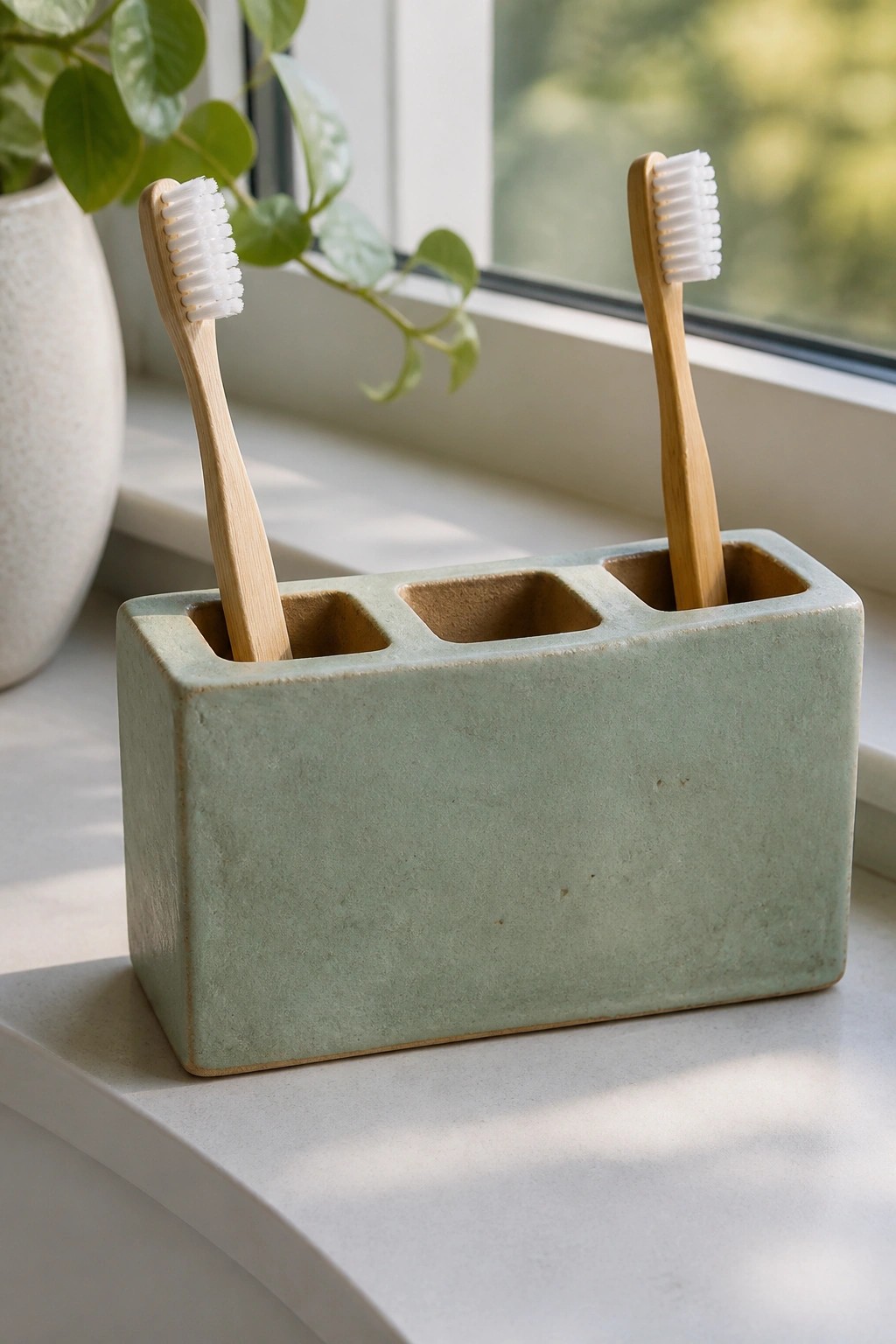
This project is a rectangular slab-built ceramic caddy with four open compartments formed by clean vertical walls. The form uses straight edges and a low profile to create a stable, functional holder that works well for toothbrushes, razors, or small grooming tools. A soft matte green glaze covers the exterior while the interior stays unglazed, giving contrast and keeping the piece simple to produce from a single slab.
What makes this idea useful is how easily the same base shape can be adjusted for different needs. You can reduce it to two or three slots for a smaller sink area or add a back wall to turn it into a desk tray. The geometric layout photographs cleanly, which helps it perform well in bathroom organization searches on Pinterest. Changing the glaze to a neutral tone or leaving sections unglazed gives quick options for matching existing tile or hardware without extra decoration.
Slab Incense Holder with Straight Rectangular Form
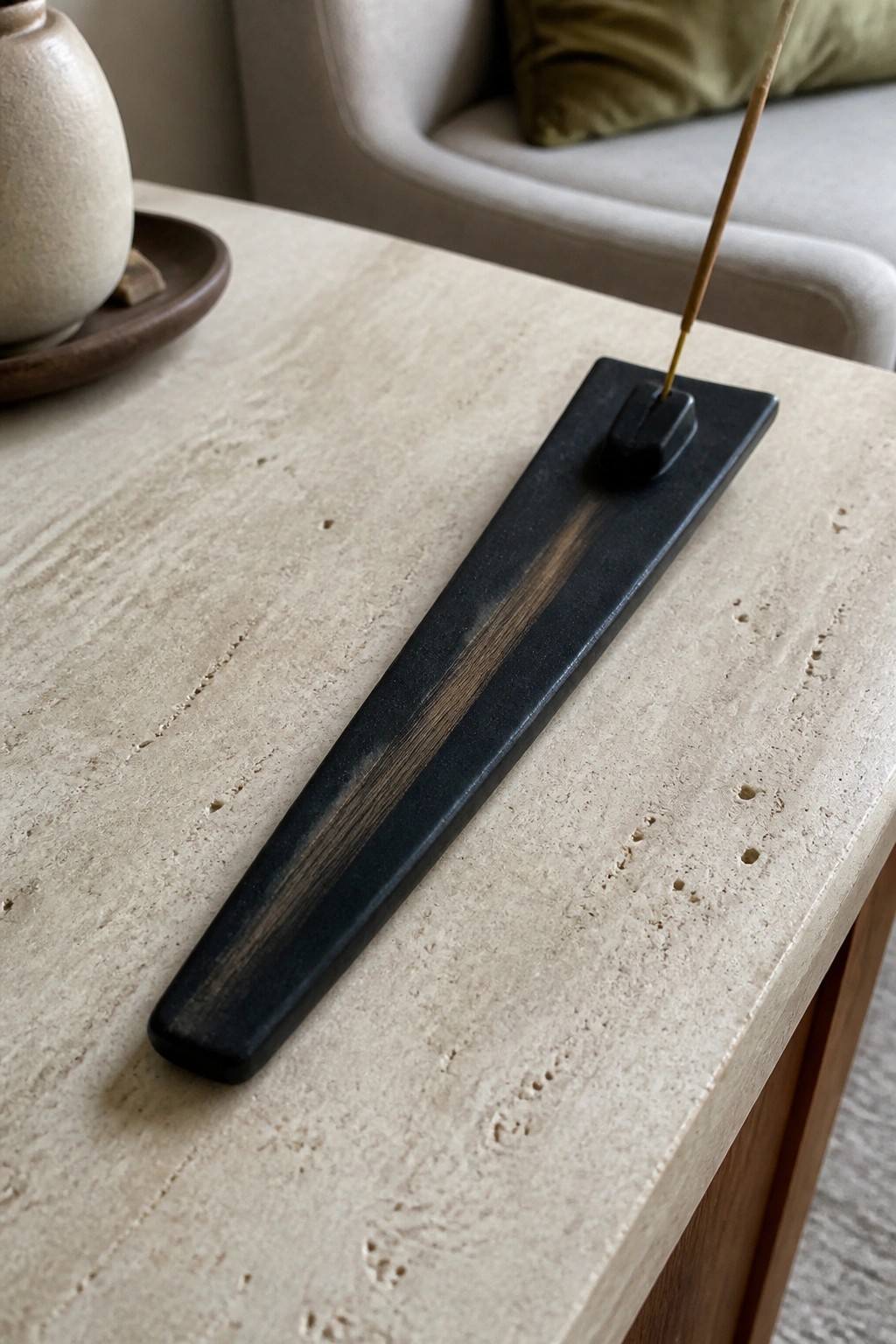
A single slab of clay rolled and cut into a long tapered rectangle creates the base for this incense holder. One end stays wider for balance while a small raised post near the opposite end keeps the stick in place as it burns. The dark finish and crisp edges keep the focus on the simple geometry without added decoration. This approach turns a basic slab into a dedicated holder that also works as quiet tabletop decor.
The straight lines make it easy to cut multiple versions from one slab of clay and adjust the length to fit different spaces. A piece like this fits well on a desk or shelf where you need something low and narrow that still catches ash. You could shorten the same shape into a ring dish or lengthen it for a tray that holds several sticks at once. The minimal profile helps it photograph cleanly for project boards.
Geometric Slab Cat Figurine
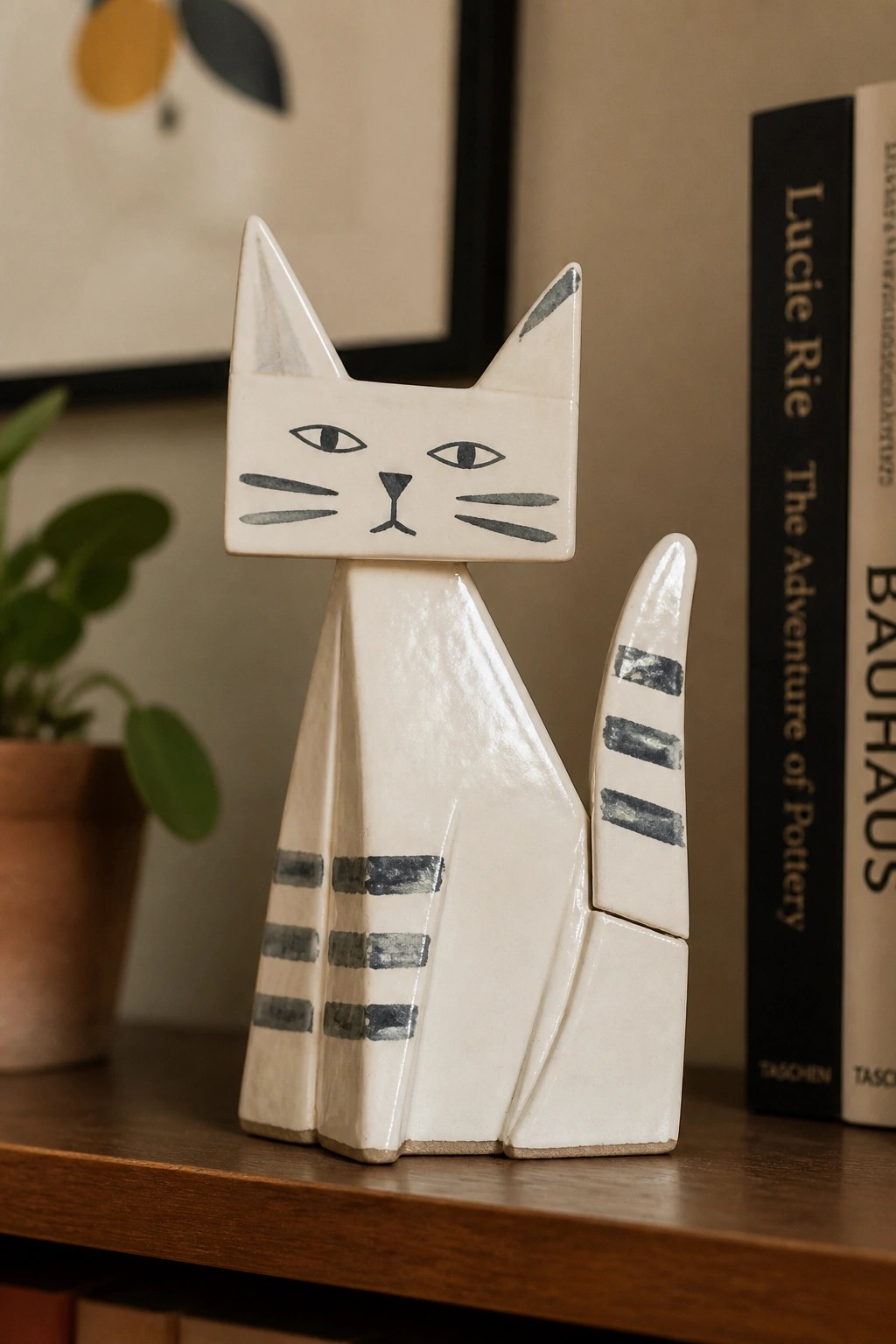
A slab-built cat figurine uses flat clay pieces joined at angles to form a blocky body, head, and tail. The design relies on clean edges and simple painted lines in black over a white glaze to define the face and stripes. This keeps the overall shape minimal and graphic. It works as a small decor object that highlights how slab construction can produce recognizable animal forms without curves or complex modeling.
The shape does a lot of the work here because the flat planes and sharp corners give the piece presence even at a small scale. You could adapt the same method to make other animals or abstract figures and swap the stripe pattern for dots, lines, or solid color blocks. A piece like this works especially well on a shelf or desk where it adds a focal point without taking much space. For a gift, the idea translates easily to different sizes or glaze colors while keeping the same slab construction.
Triangular Slab Planter for Small Plants
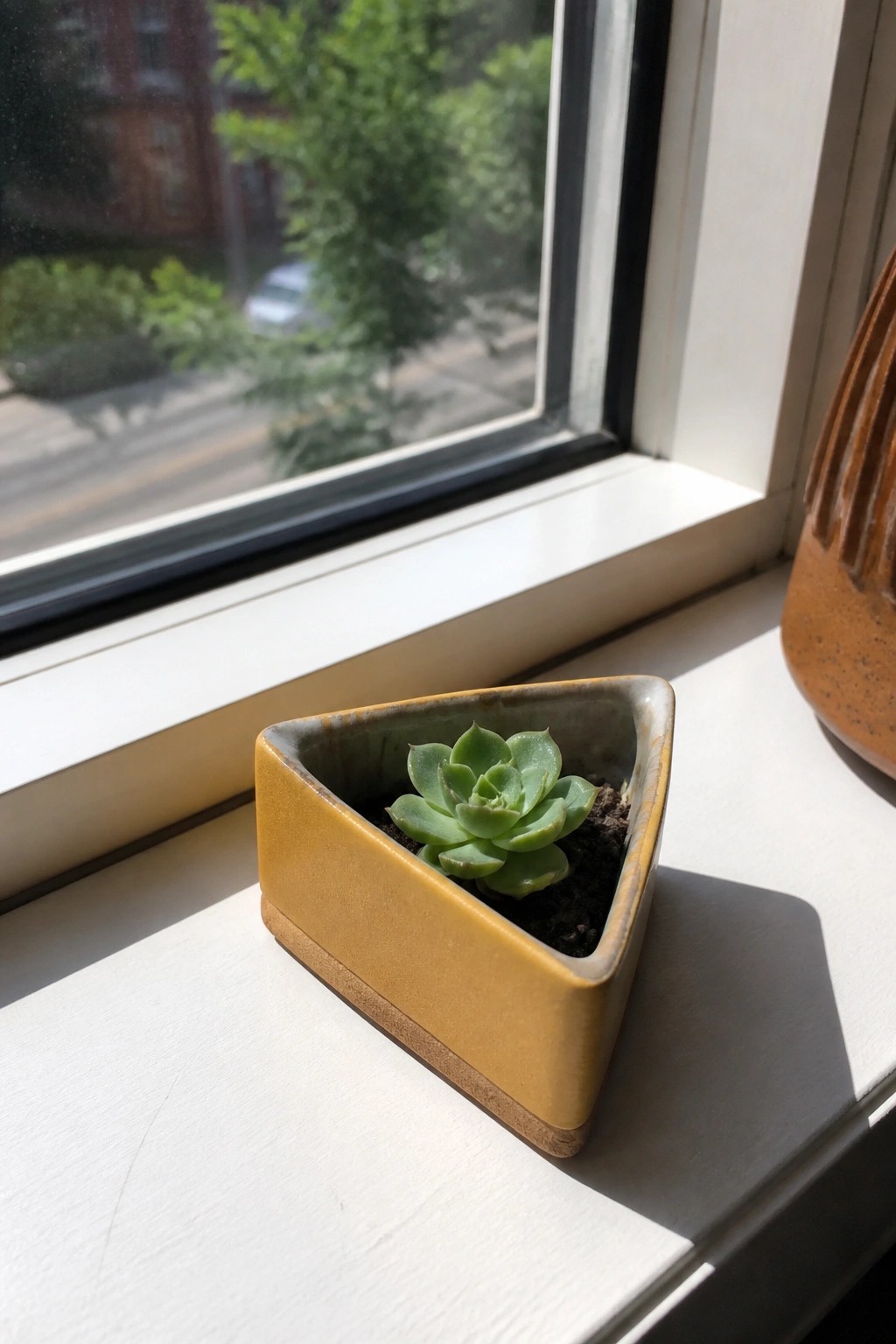
A triangular planter formed from three flat slabs creates a compact vessel suited for succulents or small houseplants. The clean edges and flat sides produce a sharp geometric profile that stands out against softer plant shapes. A single warm glaze covers the exterior while the base stays unglazed to allow drainage. This project fits the slab category because it relies on simple cut pieces joined at angles rather than wheel throwing or hand building curves.
What makes this idea useful is how the small triangle fits narrow ledges or grouped displays without taking much room. You can repeat the same slab layout in different sizes or swap the triangle for a pentagon to build a quick series. The solid glaze keeps the piece versatile for modern rooms where the plant itself provides the color. For a gift, the shape photographs cleanly and reads as a deliberate choice rather than a basic pot.
Frequently Asked Questions
What tools are essential for creating clean edges in modern slab pottery projects?
A sharp metal rib tool or a dedicated clay cutter paired with a straightedge ruler works best for precise cuts. Roll your clay to an even thickness using guides like wooden slats, then press the straightedge firmly and slice downward in one smooth motion. Wipe the blade clean between cuts to avoid dragging clay particles that could roughen the edge. This approach keeps forms sharp and modern as seen in geometric slab ideas.
How can I prevent warping when building geometric slab forms with multiple angles?
Support the structure with internal props or foam inserts during the leather-hard stage to maintain straight lines and angles. Dry pieces slowly under plastic sheeting for several days, rotating them occasionally for even moisture loss. Avoid placing work near direct heat sources or drafts, which cause uneven shrinkage. These steps help preserve the crisp geometric integrity across various slab designs.
Which clay bodies suit projects that emphasize clean lines and minimal surface texture?
Porcelain or a smooth stoneware blend with low grog content performs well because it holds fine details without adding unwanted grit. Test small slabs first to observe shrinkage rates, aiming for bodies that fire to a tight surface. This choice enhances the modern aesthetic by allowing edges to remain sharp after bisque and glaze firing.
How do I join multiple geometric slabs without visible seams or weak points?
Score both surfaces thoroughly with a serrated tool, apply slip generously, and press pieces together firmly while supporting from inside. Wipe away excess slip immediately with a damp sponge to maintain clean surfaces. For added strength on larger forms, reinforce interior joints with small coils of the same clay body smoothed flat. This method ensures durability in complex angular constructions.
What glazing methods highlight the clean edges of geometric pottery without softening the overall look?
Apply underglazes in solid colors using a fine brush or tape resist for sharp boundaries, then follow with a clear or matte transparent glaze. Avoid heavy pooling glazes that can blur lines. Fire to the clay’s recommended temperature with a slow ramp to prevent movement. This technique keeps the modern, precise appearance intact on slab pieces.

Pottery Path is my cozy corner of the internet where I share clay ideas, pottery inspiration, and simple projects you can recreate at home. I love exploring everything from air dry clay to handbuilt pottery to cute minis that brighten your day. My goal is to make clay crafting feel easy, fun, and welcoming for anyone who wants to try it.
You will find beginner friendly tutorials, creative pottery painting ideas, and lots of warm inspiration for slow and happy crafting. If you enjoy hands on creativity, this space will feel like home.