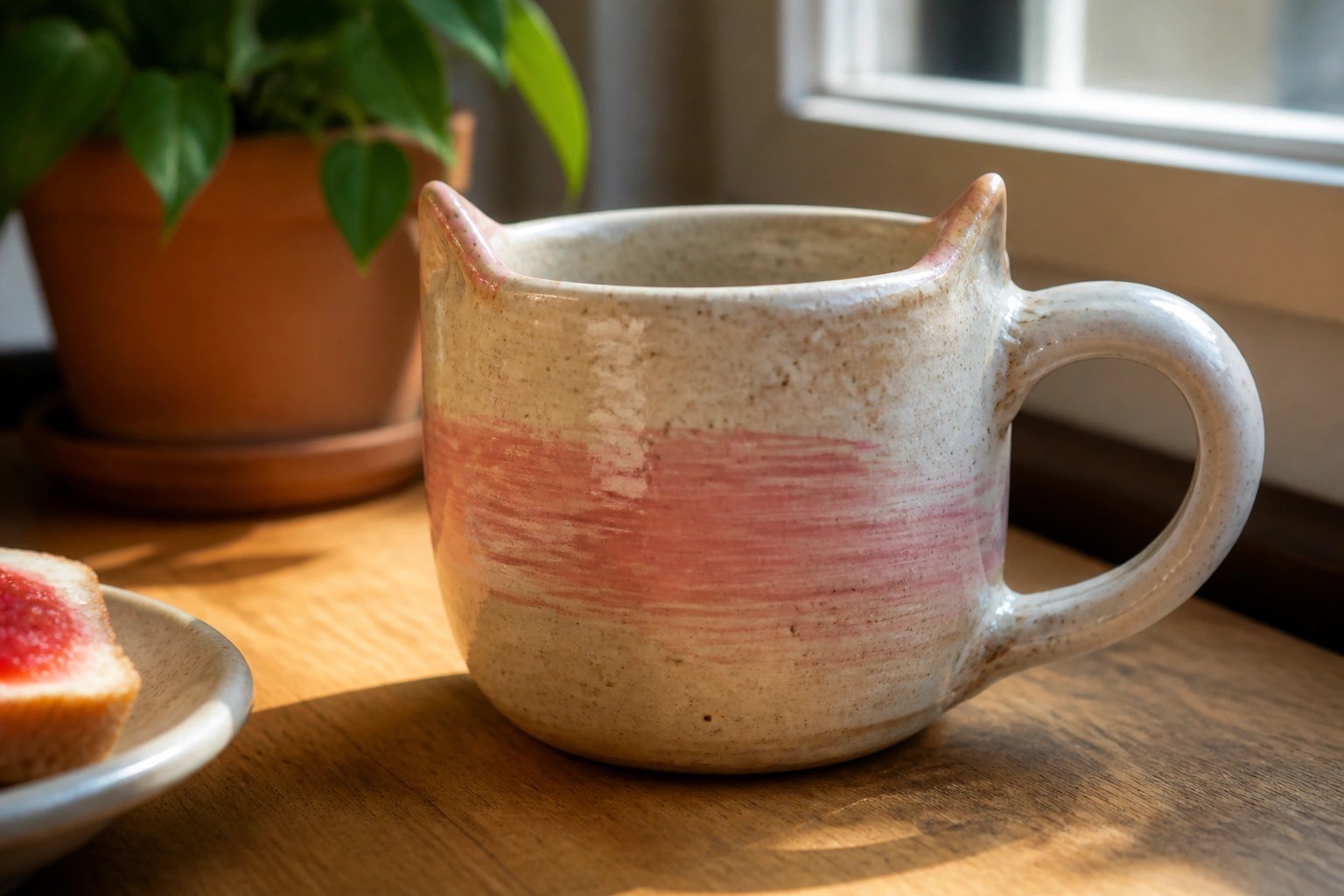
I started making pottery by hand a couple years ago because it seemed less intimidating than using a wheel.
Hand building lets me shape things slowly and fix mistakes easily.
Over time I came up with some simple designs that turned out cute without needing much skill.
These ideas are ones I still go back to when I want a quick project.
They work well for beginners who just want to try something new.
Cat Ear Ceramic Mug
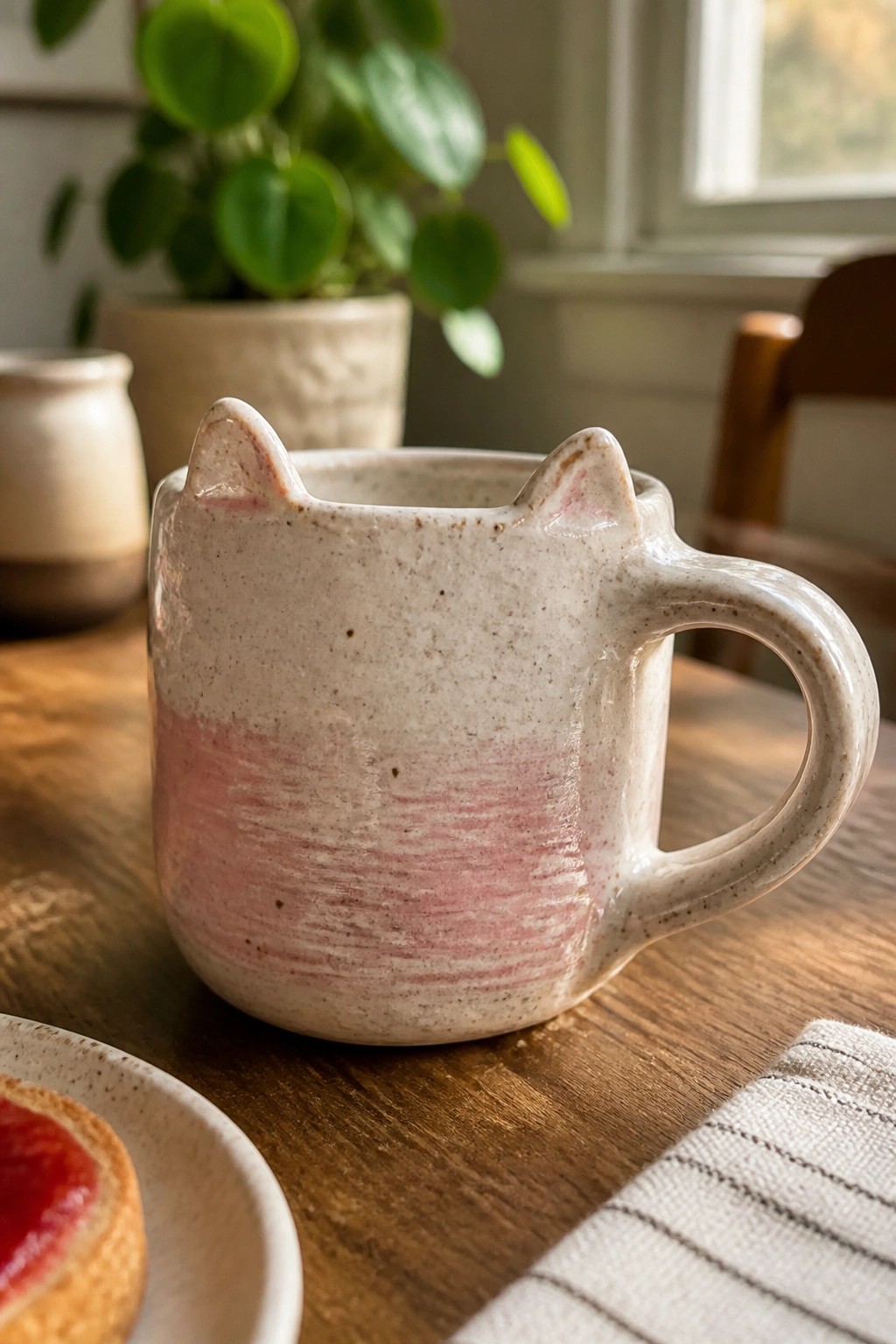
A hand-built mug gains a distinct look when small cat ears are pinched and attached right along the rim before firing. The ears stay low-profile so the cup still pours and drinks normally while the handle remains on the opposite side. A simple dip or brush of pink glaze on the lower half with a speckled clear glaze over the rest adds color and texture without extra tools. This approach turns a standard cylinder into a themed mug using only basic hand-building steps.
What makes this idea useful is how little extra clay the ears require yet how much they change the finished shape. The same rim technique adapts quickly to bunny ears, bear ears, or even leaf shapes if you want a non-animal version. In a kitchen or on a desk the mug stays practical for daily use while the sculpted detail photographs well for sharing. You can keep the glaze simple or swap the pink for any single color to match other pieces you already make.
Polka Dot Ceramic Bowl
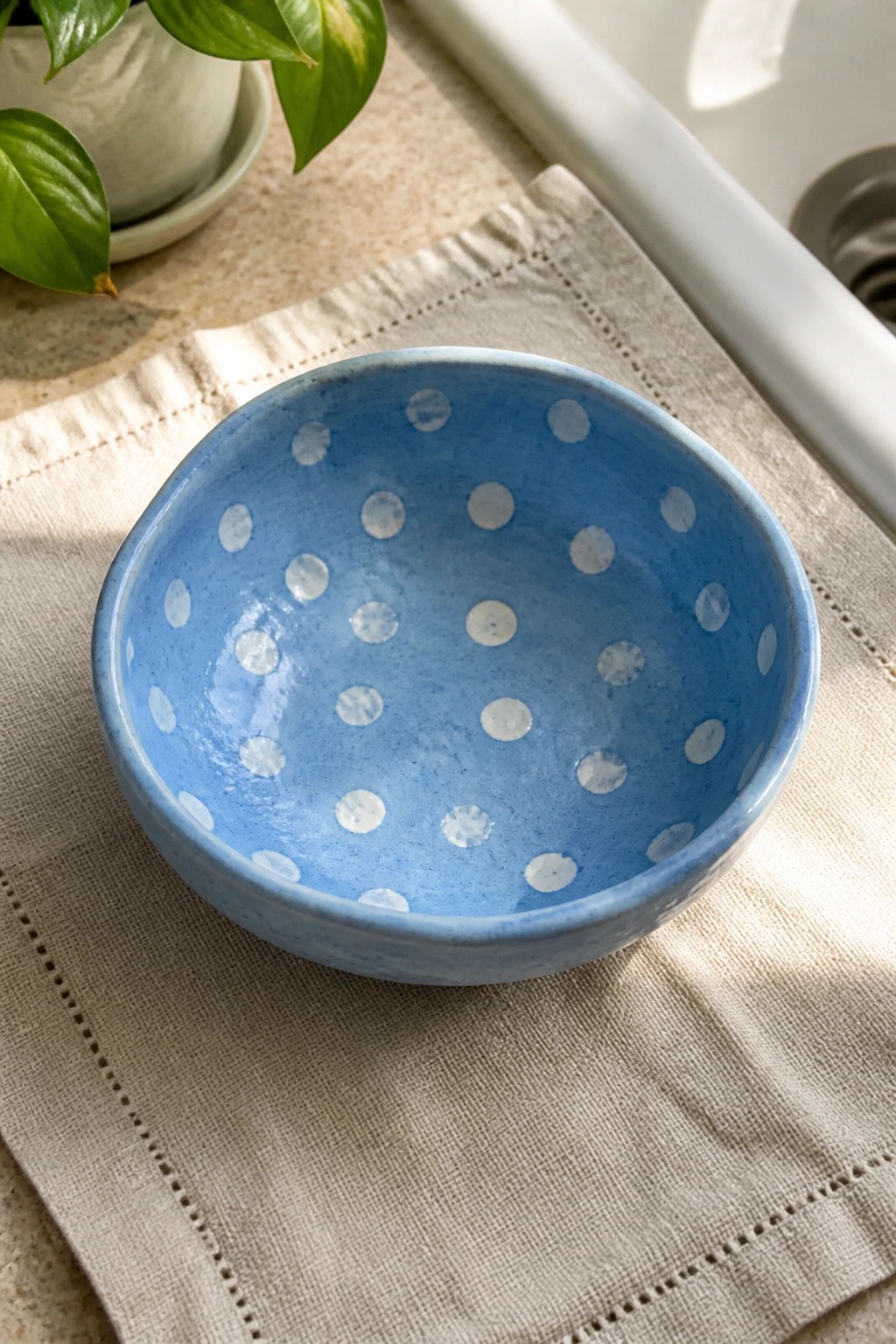
A small round ceramic bowl finished in a matte blue glaze with hand-painted white dots offers a straightforward painting project. The dots are applied in an irregular pattern across the interior, creating visual contrast against the blue surface without needing precise placement. This approach suits a basic pinch-pot or wheel-thrown bowl and works as a small kitchen dish or desk catch-all.
The painted dots let you refresh a plain bowl shape with minimal tools, and the same technique can be scaled down for ring dishes or expanded to larger serving bowls. A piece like this fits easily on a countertop or shelf and pairs well with neutral linens or plant displays. You could adapt the idea by switching to a different base color or using the dots only on the rim to change the look quickly.
Leaf-Shaped Ring Dish

A leaf-shaped ring dish starts with a simple slab of clay cut into a pointed oval and then pinched or draped to create a shallow well. Veins are pressed in with a tool or stamp to give the surface clear leaf structure, and the piece is glazed in two colors so the rim and veins read as green while the center stays yellow. This keeps the form easy to recognize even after firing and turns the dish into a small holder for rings or other tiny items.
What makes this idea useful is how the leaf outline already provides the shape without needing extra handles or feet. You can scale it smaller for earrings or widen it slightly to hold keys by the door. The two-tone glaze approach also works if you want to try different color pairs later or switch the same leaf form into a soap rest for a bathroom sink.
Sitting Fox Figurine
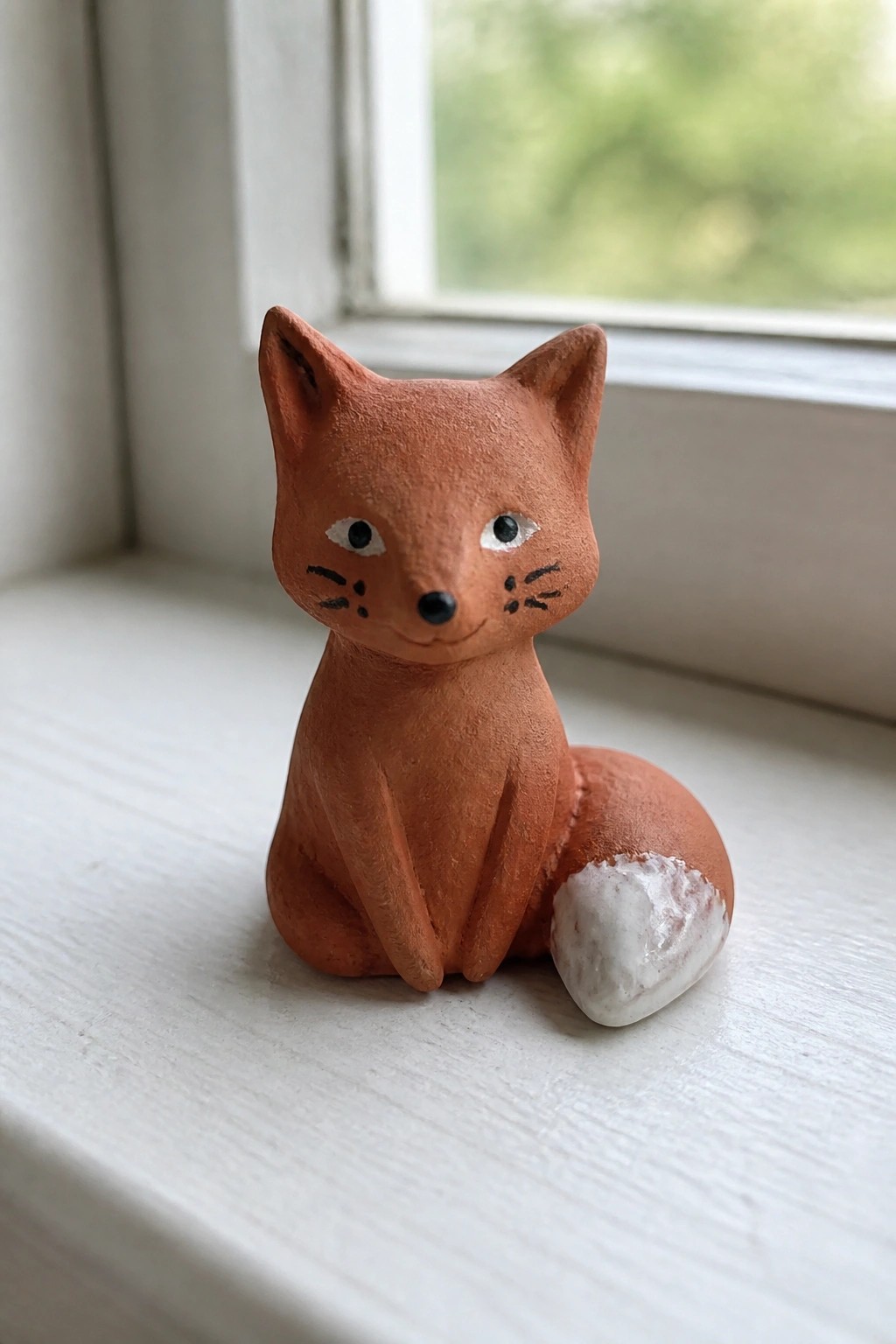
A hand-built sitting fox made from clay forms a compact decorative object. The shape uses a rounded body, pointed ears, and a thick tail that curves to one side. White paint on the eyes and tail tip plus black lines for whiskers and nose create contrast against the matte terracotta surface. This approach keeps the project focused on simple sculpting and minimal surface detail.
The small scale works well on a shelf, desk, or windowsill where larger pieces would crowd the space. You can swap the fox for another animal by changing ear shape or tail length while keeping the same sitting posture. The painted accents are easy to adjust with underglaze or acrylic after firing, so the same form can become a cat, rabbit, or dog. For gifts, this size requires little clay and finishes quickly once the basic form is set.
Hedgehog-Shaped Succulent Planter
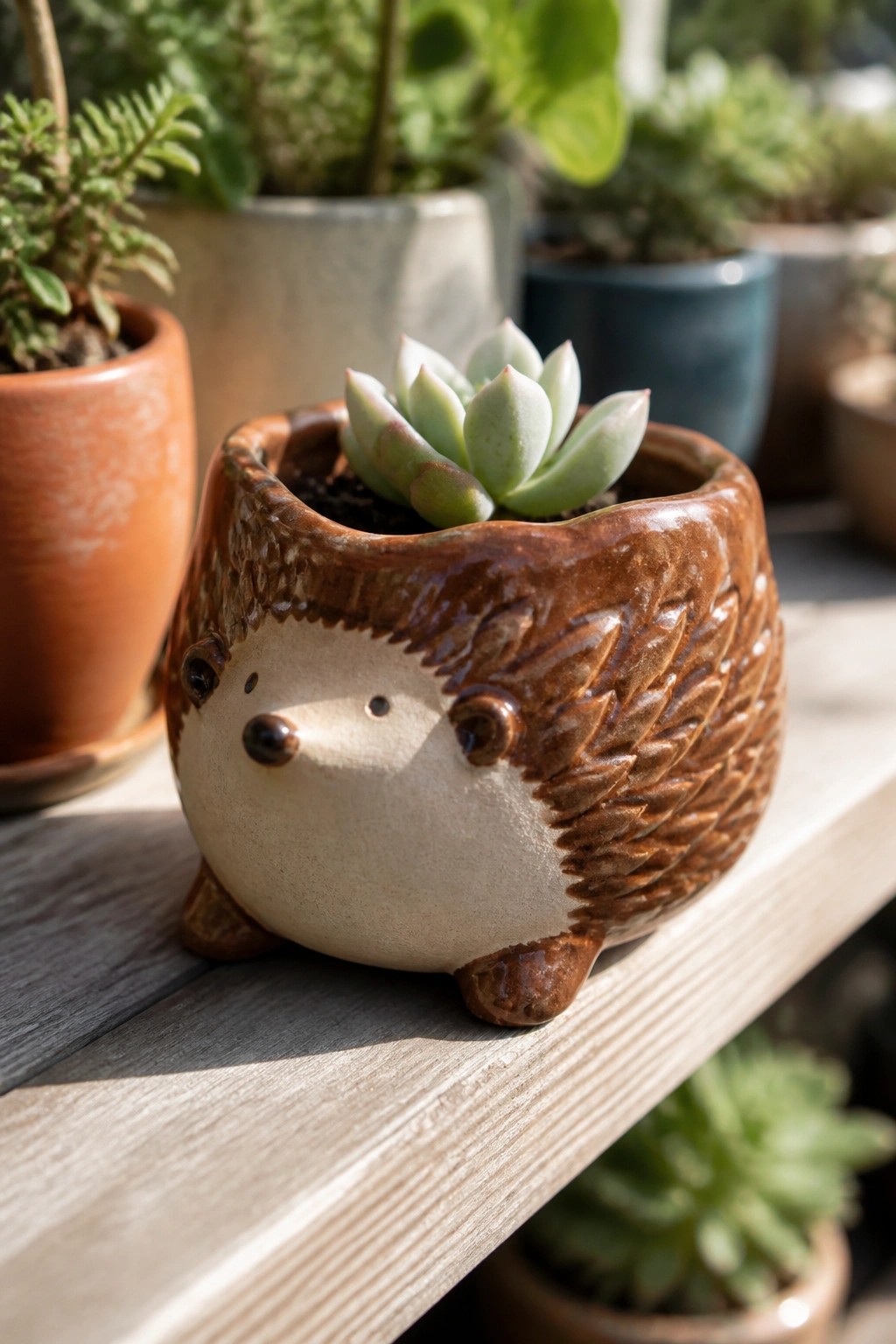
A hedgehog planter is a small hand-built ceramic pot formed in the shape of the animal with a hollow center that holds soil and a small plant. The body uses a rounded pinch-pot base with added feet and a face created from simple clay attachments while the back gets scored lines for texture before a two-tone glaze is applied. The light beige covers the face and belly while the brown glaze highlights the textured spines and feet. This idea falls into the animal planter category that combines a functional pot with a clear sculptural form.
What makes this idea useful is the compact size that fits easily on a narrow shelf or windowsill while still giving the plant room to grow. You can adapt the same hedgehog shape by making it taller for a different plant or by swapping the glaze colors to match other pots you already own. For a gift the animal form separates it from basic terracotta without adding extra steps. The same construction method works for other small animals if you want to make a set.
Fish-Shaped Spoon Rest
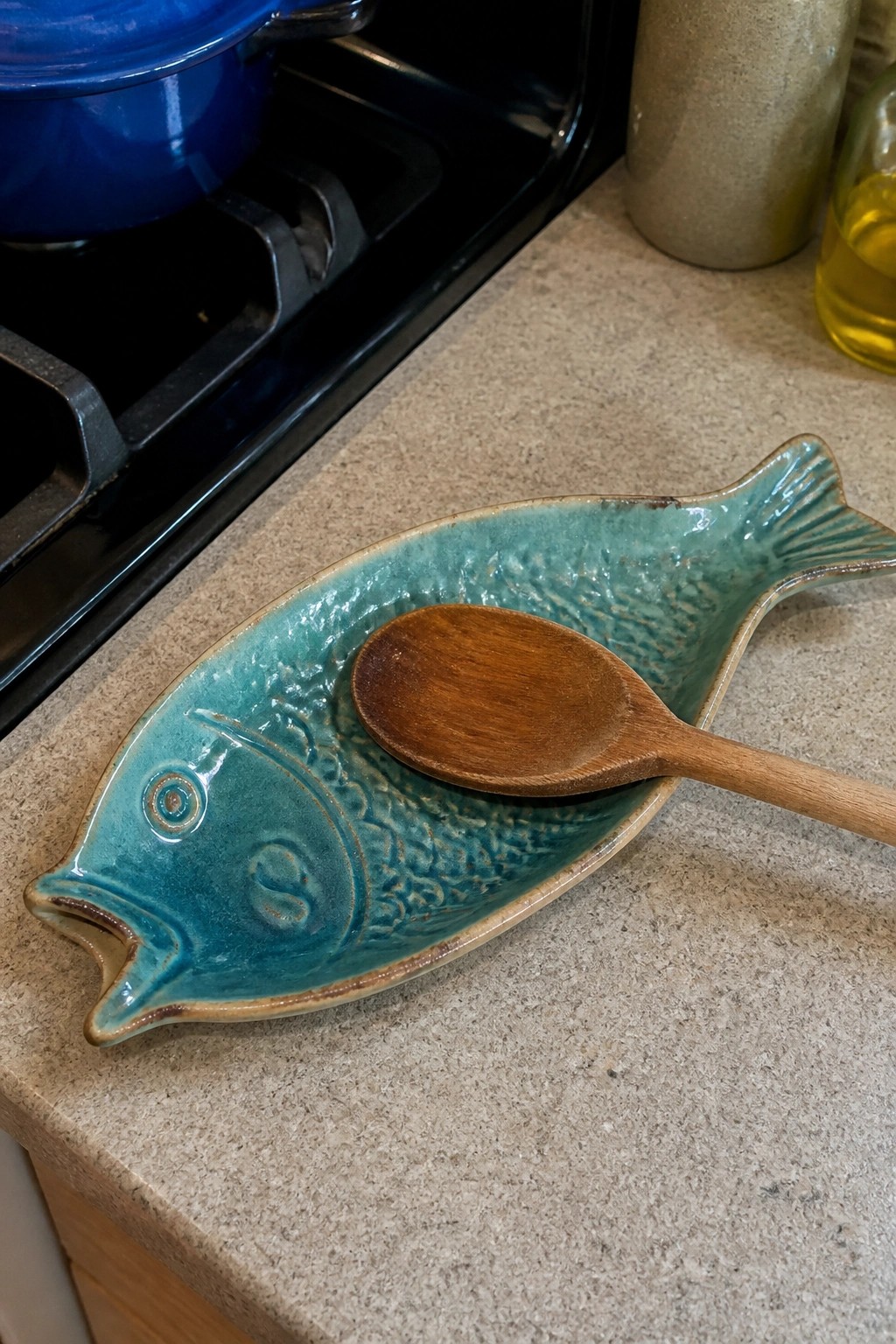
A hand-built ceramic spoon rest shaped like a fish works as a simple kitchen item for holding utensils while cooking. The elongated body forms a shallow tray area, and the sculpted scales, fins, and eye give it clear definition without needing extra decoration. The turquoise glaze highlights the textured surface and keeps the focus on the fish form itself. This kind of project fits the category of small functional kitchen pieces that can be made from a single slab or coil build.
What makes this idea useful is how the fish outline doubles as both the shape and the functional space for a spoon. In a kitchen it sits neatly on the counter near the stove and keeps drips off the surface. The same basic shape could be scaled down for a ring dish or lengthened into a soap holder for the bathroom. For Pinterest, the animal form stands out quickly in search results compared to plain rectangular rests.
Small Cup Candle Holder with Painted Hearts

A small handmade ceramic cup with a short handle works well as a candle holder when fitted with a tea light or small pillar candle. The off-white speckled surface provides a neutral base that lets the simple red heart shapes stand out without competing for attention. This approach turns a basic cup form into a candle piece that stays stable on a flat surface thanks to the included saucer.
The small scale makes this easy to adapt for different rooms or gift sizes. You could swap the hearts for other quick motifs like lines or dots, or use the same cup shape without the saucer for a more minimal look. In a living room or bedroom, this kind of holder keeps the candle contained while adding a painted accent. For Pinterest, the combination of a useful object and one-color motif tends to save well because it reads clearly in small thumbnails.
Daisy Ceramic Toothbrush Holder
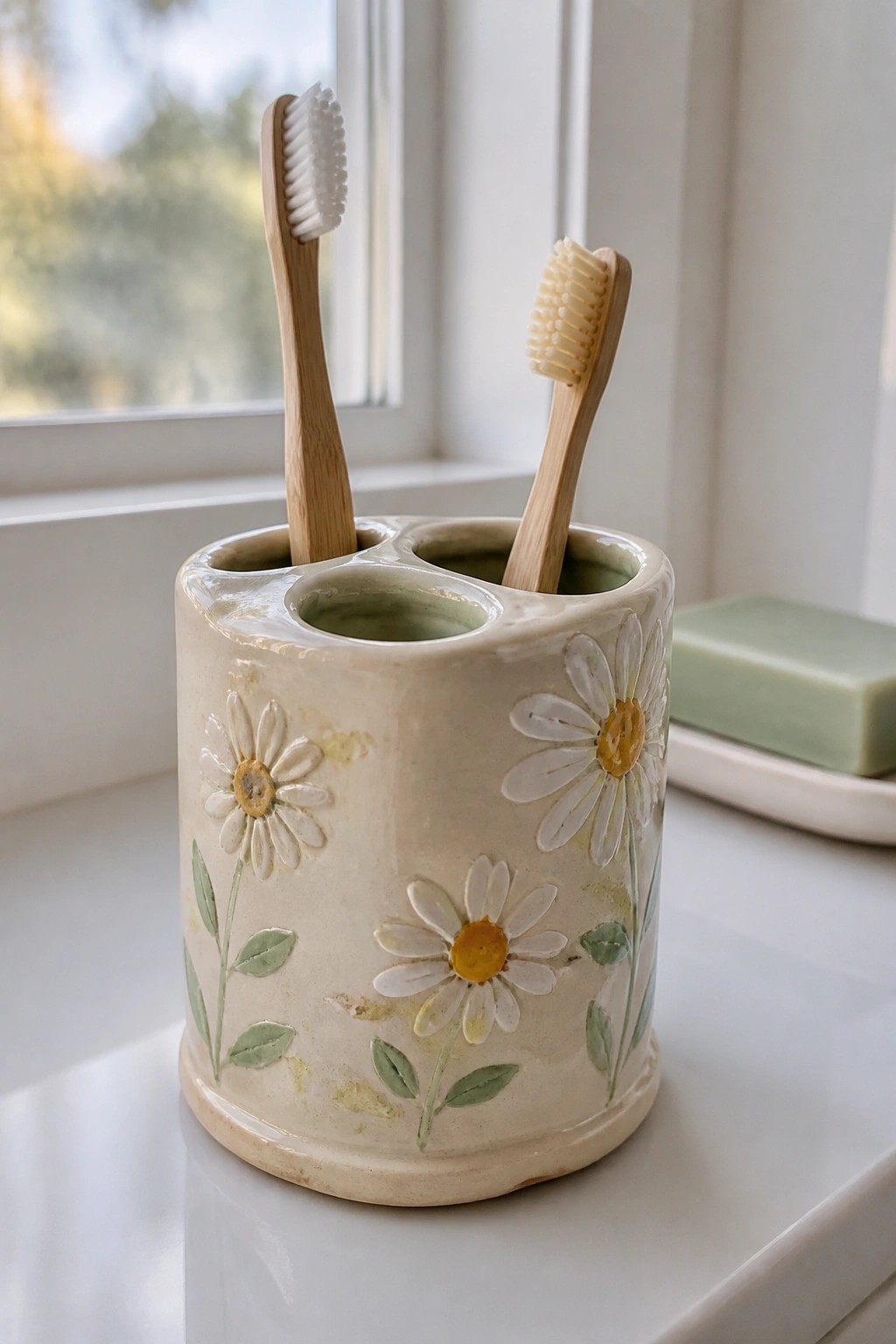
A hand-built ceramic toothbrush holder with three separate compartments serves as a practical bathroom item. The form uses a simple cylinder shape with added clay daisies that stand out in low relief, finished in a soft cream glaze that lets the white petals and yellow centers show clearly. Green leaves and stems complete the motif without crowding the surface. This approach keeps the piece functional while using basic sculpting to create the design.
What makes this idea useful is how the multi-hole shape can be adjusted to hold two or four brushes depending on the household size. The same cylinder base works for other small items like makeup brushes or razors if you change the hole layout. You can swap the daisies for simpler leaf patterns or different colors to fit your bathroom palette. The compact size also makes it easy to produce in small batches for gifts.
Shell-Shaped Salt Cellar

A small hand-built ceramic dish shaped like a scallop shell works well as a salt cellar or pinch bowl for seasonings. The fluted edges and ridged interior come from simple hand-shaping or pressing clay over a form, then adding a light glossy glaze that catches light along the curves. This keeps the piece easy to wipe clean while giving it a clear function on a counter or table. It fits the category of compact kitchen dishes meant for daily use rather than display only.
The small scale makes it simple to form from a single ball of clay without needing a wheel. You could adapt the same shell outline into a ring dish or a holder for loose herbs by adjusting the depth during shaping. A piece like this works especially well next to a stove or on a dining table where you need quick access to salt or spices. The natural shell form also photographs cleanly for sharing, which helps it perform well as a project pin.
Sun Face Clay Plaque

A round clay plaque formed as a sun with a simple sculpted face makes an easy wall decor project. The design centers on raised rays around the edges and a smiling expression in the middle, finished with a warm orange glaze that shows the texture of the clay. This fits the decor object category and stays compact so it hangs without much space.
What makes this idea useful is how the round shape keeps the focus on the face and rays without needing extra elements. You could scale the same pattern down for a smaller version near a plant or swap the sun for a moon face using the same sculpting steps. In a kitchen or hallway this kind of plaque adds interest on a blank wall while using basic hand-building techniques.
Fruit-Shaped Ring Dishes

Small hand-built dishes formed into fruit shapes make simple ring holders or trinket trays. The strawberry version uses a rounded red form with a pinched green top, the lemon slice shows divided yellow segments on a flat base, and the kiwi uses a green oval with raised seed details. Each piece stays shallow so rings and earrings stay visible and contained. These fit the category of decorative storage that doubles as tabletop decor.
What makes this idea useful is the shallow profile that keeps small jewelry from sliding around on a dresser or nightstand. You could swap the fruit shapes for other simple motifs like citrus wedges or berries while keeping the same size and rim height. The painted sections and carved details help the dishes stand out in photos, which makes them easy to adapt for gifts or a matching set. For a first project, the forms can be made from slabs or pinched clay without needing a wheel.
Ceramic Napkin Rings With Heart Cutouts

Hand-built napkin rings give a straightforward way to add a finished detail to a table setting. These rectangular rings use a simple slab form with a heart cutout that shows the fabric underneath. Glossy pastel glazes in soft yellow, blue, pink, and green keep the surface smooth and light while the cutout creates the main visual interest. The project fits the kitchen or tableware category and works as a small, repeatable item for beginners.
What makes this idea useful is how fast you can repeat the same shape to build a full set. The cutout stays visible once the ring is on the napkin, so the design reads clearly without extra decoration. You could swap the heart for another simple motif or adjust the glaze colors to match plates or linens already in use. A set like this works well as a gift because the pieces are compact to store, quick to produce in batches, and show up cleanly in photos for sharing.
Leaf Incense Holder Tray

A hand-built clay tray shaped like a leaf works as an incense holder. Form the base into an elongated oval with a pointed tip, then add raised vein lines across the surface for texture. The green glaze with exposed brown clay at the edges gives the piece a natural appearance that helps it blend into a tabletop setting while catching ash from the stick.
The leaf shape works well as a small holder on a nightstand or desk. You could shorten the form slightly to make a ring dish or key tray instead, or use the same vein texture on a round plate for a different use. This idea stands out on Pinterest because the sculpted detail is simple to repeat with basic tools and looks finished even with basic glazing.
Chick-Shaped Ceramic Egg Cup

A hand-built ceramic egg cup shaped like a chick makes a practical kitchen item for serving soft-boiled eggs. The rounded body with a narrow base holds the egg in place, while the yellow glaze creates a clean surface for simple painted details like eyes and a beak. This keeps the project focused on basic forming and surface decoration without needing complex techniques.
The small scale makes this easy to adapt by swapping the face for other animals or skipping the sculpting and just painting details on a plain cylinder. It works especially well for breakfast table use or as a quick gift that fits standard egg sizes. You could also make a set in different glaze colors to match plates or mugs you already have.
Scalloped Soap Dish with Drainage Ridges
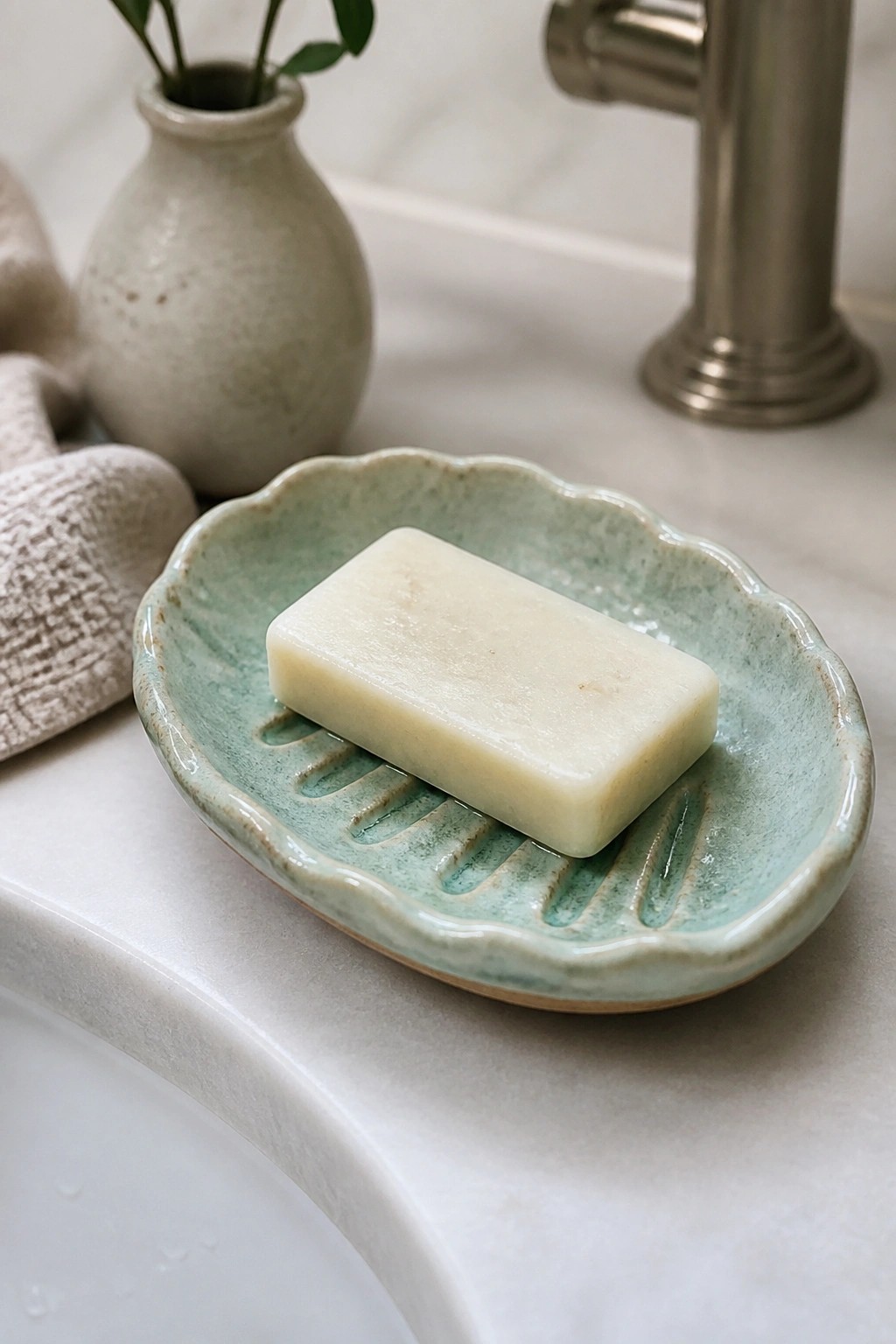
A small hand-built soap dish with a wavy scalloped rim and raised ridges along the base lets a bar of soap sit above any pooled water. The light turquoise glaze with soft speckling gives the piece a clean look that works on a bathroom counter. This kind of tray is formed from a simple slab or pinched form, then the edges are shaped by hand before the ridges are added with a tool.
What makes this idea useful is how the ridges solve a practical problem while the scalloped edge adds an easy visual detail. You could adapt the same base shape into a slightly deeper tray for a kitchen sponge or a small holder for cotton pads. The compact size makes it quick to build and dry, and the functional ridges help it stand out in searches for bathroom pottery.
Smiley Face Coasters
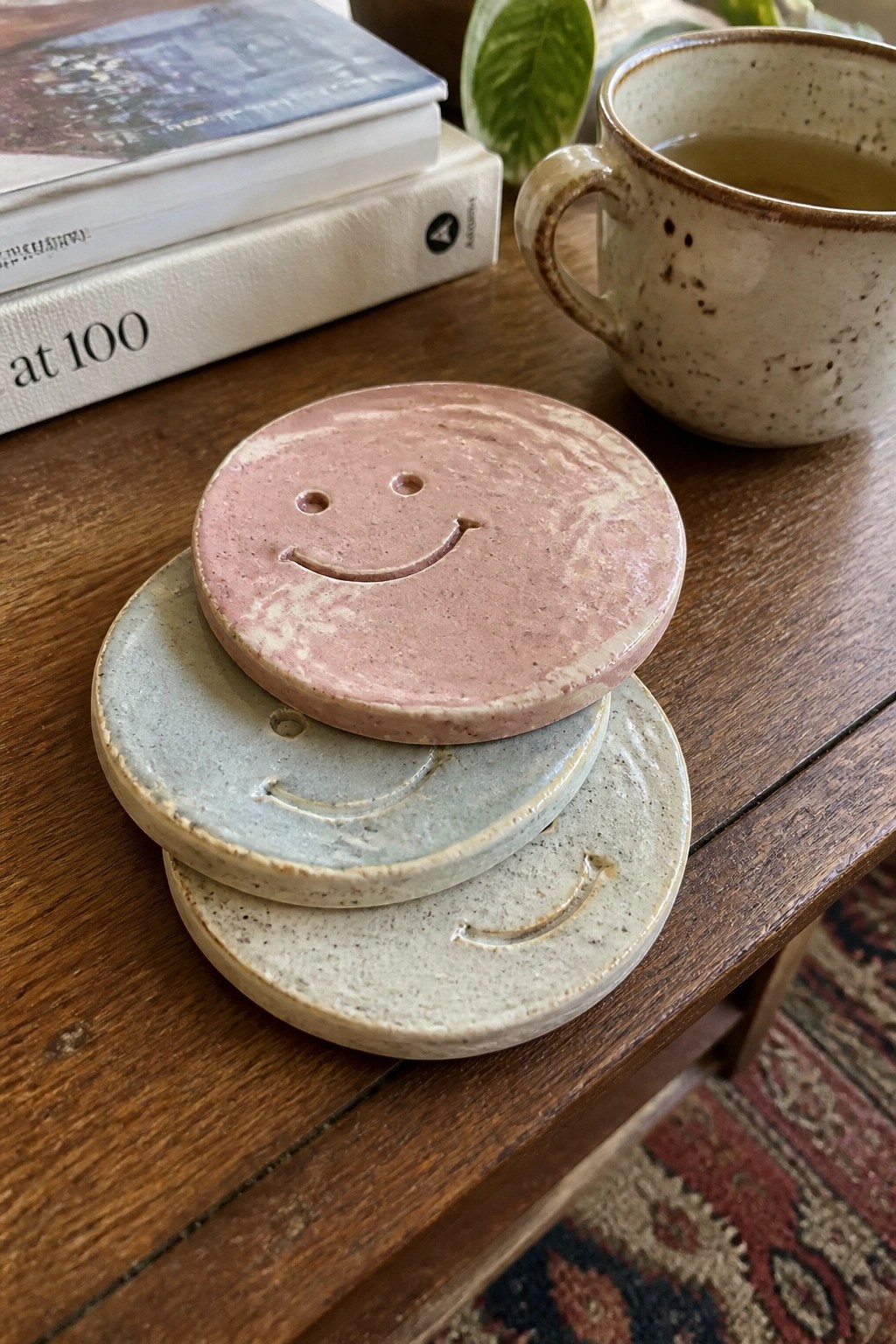
Smiley face coasters are round clay discs formed by hand and impressed with a simple face design before glazing. The carved eyes and curved mouth sit slightly recessed so the surface stays flat enough to hold a mug or glass. Different glaze colors on each coaster create a coordinated set without extra decoration. This approach works as a basic kitchen or table accessory that needs only basic slab work and one stamp or carving tool.
What makes this idea useful is how the coasters handle daily drink rings while staying compact enough to store in a stack. You can change the size to fit larger mugs or swap the smile for other simple cutouts like stars or hearts on the same round form. Mixed glaze colors let you use up small batches of leftover glaze instead of mixing new ones. A set of four or six also makes a quick gift that photographs clearly for sharing online.
Hand-Built Daisy Bud Vase

A small hand-built vase with a rounded body and narrow neck works well for displaying a single flower stem. The surface carries an impressed daisy motif created with a stamp or carved tool, and a simple dip or wipe glaze leaves the upper section light while the lower portion picks up a soft green tone. This keeps the project in the decorative holder category rather than a larger functional piece.
The compact shape fits easily on a windowsill or desk without taking much room. You can change the impressed motif to leaves or stars and adjust the glaze colors to match different rooms or seasons. The same form adapts quickly into a small toothbrush holder or a narrow pencil cup by widening the opening slightly. Small projects like this photograph cleanly for sharing and require only basic clay and one stamp tool.
Crescent Moon Chopstick Rests

These small hand-built ceramics work as chopstick rests with a crescent shape that props the sticks off the table surface. Each piece uses a simple two-tone glaze split between deep blue and white, with the curve providing both support and visual balance. The compact size keeps them from taking up much room on a table setting while still making the chopsticks easy to pick up.
What makes this idea useful is how the curved form does the main job without extra sculpting. You could adapt the same shape for spoon rests or small knife holders by widening the base slightly. In a kitchen or at an Asian-style meal, these stand out on Pinterest because the color split gives them a clean look that works with both modern and traditional tableware. The small scale also means you can make several pairs from one slab of clay without much material.
Ceramic Ring Cone Holder

A cone-shaped ceramic ring holder keeps rings stacked neatly at different heights so they stay visible and untangled. The tapered form with horizontal ridges gives each ring a resting spot while the gradient blue glaze adds subtle color without competing with the jewelry. This style works as a small decor object that fits on a bedside table or vanity.
What makes this idea useful is how easily the same cone shape can be made shorter for a desk or taller for more rings. The ridges are simple to carve into the clay before it dries, and the glaze can be swapped for a single color if you want a cleaner look. For a gift, something like this takes up little space yet feels personal when the glaze matches a favorite color.
Square Match Striker Tray

A small square tray like this serves as a dedicated match holder with a built-in striker. The handmade ceramic form has a smooth glazed interior across most of the surface and a rough textured band along the lower edge that works for striking matches. This keeps the matches contained in one spot while the shallow walls prevent them from sliding out. The compact size makes it easy to move between a kitchen counter or mantel.
What makes this idea useful is how it turns a simple slab into a functional object without extra parts. The same square shape could be made slightly deeper for a small ring dish or left plain for a desk catch-all. You can adjust the textured section to run along any edge or make it narrower depending on how you want the matches to sit. The straightforward form also works well for batch making since the basic construction stays the same.
Wall Pocket Planter for Trailing Succulents

A wall pocket planter formed from clay creates a compact holder that sits flat against a surface while leaving room for soil and roots inside. The shape tapers into a rounded pouch with an open top, and the rim is finished in a lighter clay tone that creates a clear edge against the main terracotta body. A single hole near the top allows it to hang from a hook or nail. This project belongs in the planter category and suits anyone who wants to add vertical plant space without shelves or stands.
What makes this idea useful is how the pocket form keeps soil contained while the hanging hole frees up floor or table room. You can change the rim color, widen the opening, or shorten the overall height to fit different plant sizes. In a kitchen or entryway, the same shape works for small herbs or air plants if you adjust the depth. For another version, flatten the back more so it sits evenly on a shelf instead of hanging.
Painted Teapot Ring Dish
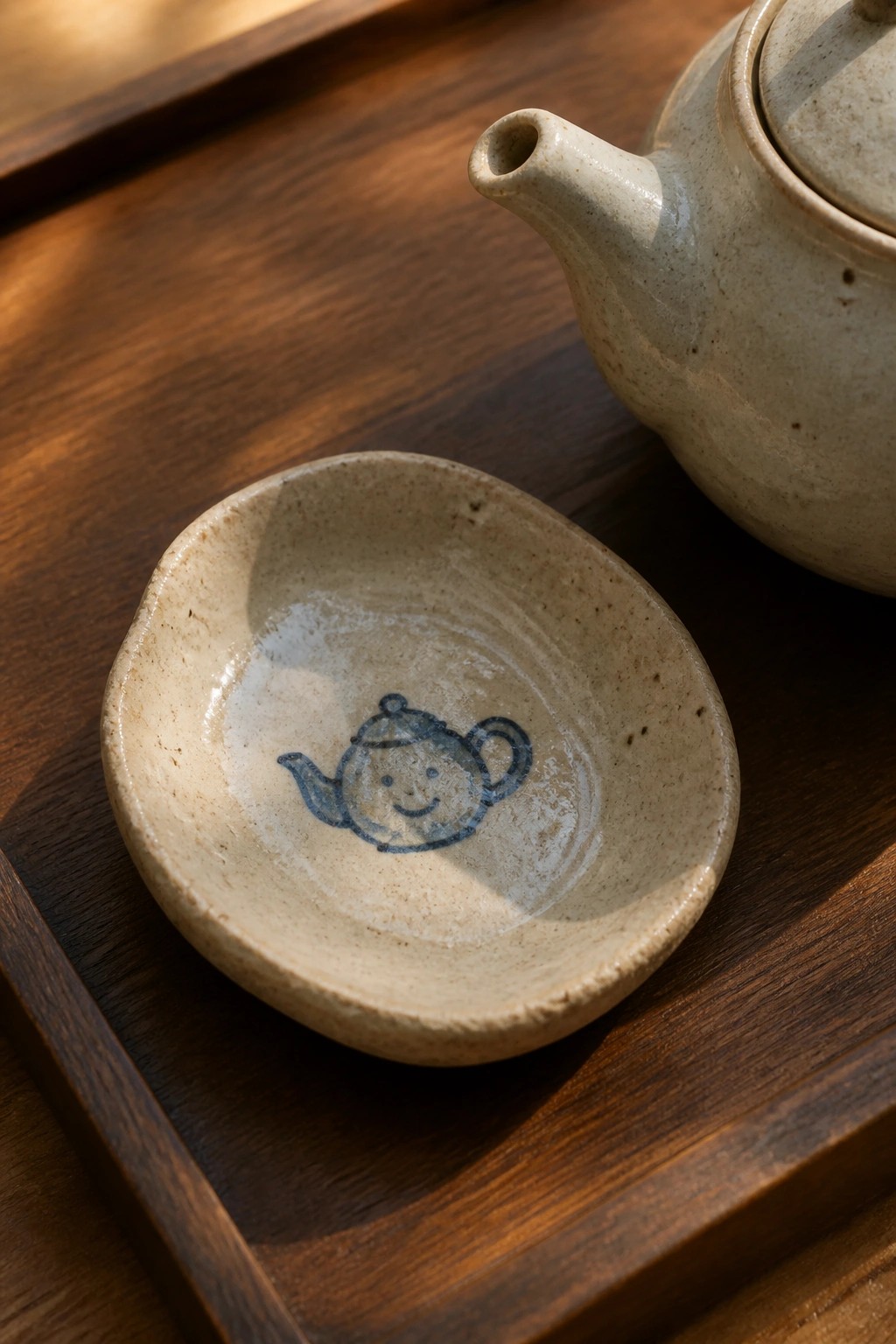
A small hand-built ring dish with a simple line drawing of a smiling teapot makes an easy entry point into painted pottery. The dish uses an organic, slightly uneven rim and a light speckled glaze so the blue illustration stays visible without competing with heavy texture. The teapot motif is scaled to fit the center of the form, turning a basic shallow bowl into a themed catch-all that still reads as functional.
What makes this idea useful is how the painted detail can be swapped for other simple motifs like a coffee cup or flower without changing the dish shape. The small scale works well on a dresser for rings or next to a kettle for holding tea bag tags. You could stretch the same approach into a matching spoon rest or a set of two dishes with different faces. The painted style also photographs cleanly for sharing, which helps the project stand out in a feed of similar small dishes.
Frequently Asked Questions
What kind of clay should beginners use for these hand-built pottery projects? Air dry clay is a great starting point for new potters because it does not require a kiln and is easy to shape with your hands. It works well for small items like mugs or ornaments and allows you to add cute designs such as animal faces or simple patterns before it dries. If you have access to a kiln, try low-fire earthenware clay instead, as it is forgiving and holds details nicely after firing.
How can I keep my hand-built pieces from cracking during the drying process? Dry your pottery slowly and evenly by covering it loosely with plastic wrap for the first day or two, then move it to a shaded area away from direct heat or sunlight. Roll out slabs to an even thickness and avoid joining thick and thin sections together, which can cause stress. For cute designs like raised flowers or dots, apply them in thin layers and let each one dry slightly before adding the next to reduce moisture differences.
What simple tools help create cute designs on beginner pottery? Everyday household items work well, such as a toothpick for drawing faces, a spoon for smoothing surfaces, or cookie cutters for shapes like hearts and stars. Use a small sponge to add texture for fur or leaves, and press in beads or stamps for patterns. Practice on scrap clay first so your designs stay neat and proportional on the final piece.
Can I finish these projects without a kiln or professional glaze? Yes, air dry clay pieces can be sealed with acrylic paint and a waterproof varnish for a cute, durable finish that protects against moisture. For kiln-fired clay, basic underglazes in bright colors let you paint on designs like cartoon animals before a clear top coat. Always test your materials on a small sample to see how colors turn out after drying or firing.
How do I adapt the 22 ideas if my first attempts do not match the examples? Start with the simplest shapes like pinch pots and add one design element at a time, such as ears or eyes, rather than trying full scenes. Take photos of your progress and adjust proportions as you go by gently reshaping while the clay is still soft. Over time, your versions will develop a personal style that still captures the cute, beginner-friendly charm of the original ideas.

Pottery Path is my cozy corner of the internet where I share clay ideas, pottery inspiration, and simple projects you can recreate at home. I love exploring everything from air dry clay to handbuilt pottery to cute minis that brighten your day. My goal is to make clay crafting feel easy, fun, and welcoming for anyone who wants to try it.
You will find beginner friendly tutorials, creative pottery painting ideas, and lots of warm inspiration for slow and happy crafting. If you enjoy hands on creativity, this space will feel like home.