
I’ve been trying to make better use of my kitchen cabinets lately and pottery seems like a good way to do that.
Stackable pieces help keep things organized without taking up extra space.
I’ve come up with some ideas for bowls and containers that fit together well and handle daily use.
They focus on simple shapes that are easy to make and practical for storing food or tools.
Here are the ones I think work best for most kitchens.
Stackable Ceramic Spice Jars

A set of three small cylindrical ceramic containers creates compact stackable storage for kitchen spices. Each jar includes a fitted lid and a wide colored band across the middle with the spice name pressed directly into the clay. The off-white speckled surface and simple horizontal stripes keep the design clean while making the jars easy to tell apart when stacked on a counter or shelf.
What makes this idea useful is how the stack keeps multiple seasonings organized without taking up much space. You could adapt the same shape for tea bags or loose leaf herbs by adjusting the height slightly or swapping the stripe colors to match your kitchen palette. In a small kitchen these jars stand out because the stamped labels remove the need for separate tags and the flat lids allow stable stacking.
Ceramic Flour Canister

A lidded flour canister gives you dedicated dry-goods storage in a simple cylindrical form. The straight walls and flat lid let the jar sit flush against other containers, which supports the stackable kitchen storage theme. An embossed label keeps the function obvious while the matte speckled surface hides everyday scuffs better than glossy glazes.
What makes this idea useful is the tall, narrow profile that takes up little counter space yet holds a standard bag of flour. You can repeat the same shape in shorter heights for sugar or tea and keep the whole set looking consistent on open shelves. The neutral glaze works with most kitchen colors, so the set stays practical even if your style changes later. Scaling the diameter slightly smaller on follow-up pieces makes them nest more tightly when empty.
Nesting Speckled Prep Bowls

Small ceramic bowls with a rounded profile and light speckled glaze work well as stackable kitchen pieces. The tapered sides let them nest tightly, while the neutral cream and soft blue finishes keep the set looking uniform even when colors are mixed. An unglazed foot on the base prevents slipping during stacking and makes them stable on a counter.
What makes this idea useful is the compact size that fits neatly inside cabinets or on open shelves without wasting space. You can adjust the diameter slightly to match different needs like holding spices or chopped ingredients, and the same form scales easily into a larger version for leftovers. Matching the glaze across a set keeps things simple, or you can vary the tones for a quick visual update if you want them to double as table serving dishes.
Nesting Mixing Bowls

A set of three graduated ceramic bowls designed to nest inside one another offers a straightforward solution for storing kitchenware without taking up extra shelf space. The bowls are thrown in sizes that allow each one to drop cleanly into the next, with slightly flared rims that keep the stack stable. The horizontal streaked glaze in deep blue and warm brown gives the set a unified appearance while still showing the natural variation typical of handmade pieces.
What makes this idea useful is the simple proportioning that turns ordinary bowls into a space-saving stack. You can adapt the same nesting approach to different diameters depending on whether you need small prep bowls or larger serving sizes. In a kitchen these bowls stay protected from chips when stored and free up counter space when put away. The same shape works equally well for everyday use or as a base for building other matching sets like ramekins or small colanders.
Stackable Mugs with Interlocking Handles

These mugs use a basic cylindrical shape with handles formed so one sits inside the other and the handles nest together. The matte mint glaze covers the surface evenly and shows the slight ridges from hand throwing. The design fits the category of functional kitchen mugs meant for daily use and compact storage.
What makes this idea useful is the handle placement that lets the mugs stack tightly without tipping. You could adapt the same shape in different sizes or colors to build a full set that stays organized on open shelves. In a small kitchen this approach frees up cabinet space while keeping the mugs easy to reach. The same interlocking handle idea could be reworked for small bowls or measuring cups.
Stackable Ceramic Pouring Bowls

Handmade ceramic bowls with built-in pouring spouts are formed in graduated sizes so they nest into a single tall stack. The soft yellow glaze covers the slightly uneven rims and lips, keeping the focus on the functional shape rather than decoration. These pieces work as small prep or mixing bowls that store neatly on a counter or shelf when not in use.
What makes this idea useful is the way the spouts and tapered walls let the bowls lock together without sliding. You could adapt the same nesting profile to make a set of small measuring cups or sauce servers in matching glaze. In a kitchen, this kind of piece keeps tools handy while taking up minimal space. The stack also photographs cleanly for project sharing, which helps it stand out when people search for compact storage solutions.
Stacked Ceramic Jars for Spices and Seasonings

A set of three matching ceramic cylinders stacks to form compact kitchen storage for spices, salts, or small condiments. Each jar has a lid with a side notch sized to hold a small spoon in place without lifting the cover. The straight walls and consistent form keep the stack stable while the muted glaze unifies the set on a countertop or shelf.
What makes this idea useful is how the notches keep spoons accessible without adding extra dishes to the counter. You could change the heights or make four tiers if you need more storage for different seasonings. In a kitchen this shape keeps small staples organized and easy to grab during cooking. The same notch idea could be adapted for a single larger jar or turned into a set of stacking tea containers.
Nesting Ceramic Measuring Cups

Ceramic measuring cups work well as a stackable kitchen project because each piece is shaped with a rounded bowl and a short handle that includes a hanging hole. The set includes four graduated sizes that fit inside one another, with the largest cup sitting inside a matching mixing bowl. Speckled matte glazes in soft tones give the pieces a unified look without making them identical. This design turns ordinary measuring tools into a compact set that stores neatly.
What makes this idea useful is the tapered form that lets the cups nest tightly while still allowing quick access. You can adjust the handle length or bowl depth to fit different measuring volumes or to match your existing kitchen tools. The same nesting shape can be reworked into small prep scoops or spice measures. In a busy kitchen, this kind of set keeps measuring tools together and reduces clutter in drawers.
Stackable Ceramic Utensil Crocks

Two simple cylindrical crocks made from speckled stoneware create a compact storage system for kitchen utensils. The larger base piece supports a smaller cylinder that sits inside its rim, letting the pair stack vertically while still holding spoons, spatulas, and slotted tools. The matte, neutral glaze keeps the focus on the clean tube shapes and the way the pieces fit together without extra hardware or lids.
What makes this idea useful is the way the graduated diameters turn two ordinary holders into one tidy unit that frees up counter space. You can adapt the same form by making three or four graduated sizes for different tool groups or by leaving the top piece unglazed on the inside for better grip on wooden handles. In a kitchen, this kind of piece works well on a narrow stretch of counter or beside the stove where single crocks would crowd each other. The small scale also makes it simple to produce a matching set for gifts.
Stackable Ramekins in Neutral Glazes

These ramekins are formed as a matching set of nesting ceramics that fit inside one another to save cabinet space. Each bowl uses a different glaze color from light tan through olive, warm brown, and dark charcoal, while keeping the same simple cylindrical shape with a subtle rim. The design works because the straight sides and consistent proportions allow the bowls to stack tightly without wobbling or scratching. This turns ordinary kitchen bowls into a compact storage solution that stays organized even when used daily.
What makes this idea useful is how the varied glazes give visual interest without needing extra decoration or handles. You could adapt it by making three bowls instead of five for a smaller kitchen or by changing the glaze lineup to match your existing dishes. In a pantry or on open shelves, the stack keeps items visible and accessible rather than buried in a cabinet. For a different version, try the same shape in smaller sizes to create nesting prep bowls or sauce dishes.
Lidded Butter Dish for Fridge and Counter Storage

A low, wide ceramic dish paired with a flat fitted lid creates a simple butter keeper that holds one standard stick. The rounded walls and shallow depth keep the butter accessible while the lid protects it from air and odors during fridge storage. A matte speckled glaze in neutral tones helps the set match other everyday kitchen pottery without standing out.
What makes this idea useful is the lid design that turns basic storage into something stackable on shelves or inside the fridge. You can rework the same proportions into a slightly taller version for holding small blocks of cheese or compound butter. In a kitchen this shape keeps items organized while fitting into a larger set of matching dishes. The compact size makes it practical to produce in batches for gifts or daily use.
Speckled Plates with Alternating Rim Colors

These plates are wheel-thrown ceramic dinnerware made from a speckled clay body and finished with a light glaze that leaves the throwing rings visible in the center. Each one carries a thin band of color along the rim, alternating between coral and teal across the set. The shallow profile and matching diameters let them nest tightly without wobbling or wasting vertical space. The approach keeps the plates functional for everyday meals while turning the stack itself into an organized storage solution.
What makes this idea useful is the way the colored rims create a clear visual cue for how many plates are in the stack without adding bulk. You could simplify it to a single rim color or swap the accents for shades that match your existing dishes. In a small kitchen, this kind of plate set fits neatly on a shelf or inside a cabinet and still looks intentional when left out. The same rim treatment would translate easily to smaller salad plates or bowls if you want to build a matching collection.
Stackable Ceramic Jars for Pantry Staples

Ceramic jars in a basic cylinder shape work well for storing dry goods like grains and legumes. The flat lids create stable stacking so multiple jars fit in a small shelf area without tipping. Two glaze colors keep the set unified while letting you group similar items, and the stamped labels give quick identification without extra tags or stickers.
What makes this idea useful is how the simple form saves space in a pantry or on open kitchen shelves. You can make the jars in a few different heights to hold varying amounts, or repeat the same size for a uniform look. The stacking feature also works for other kitchen items like tea bags or small baking supplies if you adjust the diameter slightly.
Stackable Salt Shaker with Nesting Ceramic Holder

A ceramic salt shaker sits inside a matching blue holder that keeps it upright and contained on the counter. The holder has a rounded, slightly textured surface and a simple open shape that lets the shaker drop in neatly for compact storage. This setup turns two separate pieces into one stable unit that fits easily among other kitchen items without taking extra space.
What makes this idea useful is the way the holder doubles as both a stand and a storage solution so the shaker stays in one spot instead of rolling around a drawer. The rounded form works well for everyday kitchen use and could be adapted into a pepper shaker version or even a small oil cruet set by changing the top shape. You could simplify the holder to a plain cylinder or add a handle if you want to move the whole stack together. For a gift, this kind of piece stands out because it solves a common countertop clutter problem without extra parts.
Stackable Mug Planters for Windowsill Herbs

Handmade ceramic mugs with a marbled green and cream glaze can be stacked to form a compact vertical planter system for kitchen herbs. The irregular rims and side openings let plants grow outward while the handles stay accessible for lifting individual pieces. This turns ordinary mug forms into modular containers that hold soil and small root balls without needing extra shelves. The design fits the category of stackable kitchen planters meant for tight spaces like windowsills.
What makes this idea useful is how the stacking keeps several herbs together yet lets you separate them for watering or harvesting. You could rework the same shape in different heights or with a single solid glaze to match other kitchenware. In a kitchen this kind of piece gives quick access to fresh thyme or mint while using vertical space instead of spreading pots across the counter. The small scale also makes it simple to try as a first attempt at functional stacking forms.
Stackable Ceramic Spoon Rests

These oval and round ceramic dishes serve as spoon rests or small kitchen holders. Each piece carries a simple painted motif such as dots, dashes, or soft washes of color on a light clay body. The low, flat form lets spoons sit steady without tipping while the matching sizes stack cleanly for drawer storage.
What makes this idea useful is the elongated shape that cradles a wooden spoon yet nests tightly when not in use. You could swap the dot patterns for stripes or solid bands to match your existing dishes or scale the same shape down for smaller tasting spoons. In a kitchen, these keep counters free of drips during cooking and take almost no room when stacked. This would be easy to turn into matching small plates for butter or garnishes by widening the base slightly.
Stackable Handled Bowls with Nesting Plates

These are simple ceramic bowls with one small handle each, made to sit directly on flat matching plates that act as both saucers and lids. The rounded shapes and straight rims let the pieces nest tightly so multiple sets take up little cabinet space. A light speckled glaze covers the surface and keeps the look plain enough to mix with other dishes.
What makes this idea useful is the way the plates serve a double purpose while keeping the stack stable. You can change the bowl depth to suit cereal, soup, or side dishes without losing the nesting fit. In a small kitchen the sets free up shelf room because they store vertically instead of spreading out. The same shape works just as well scaled down for coffee cups if you want a matching set for drinks.
Ceramic Measuring Spoons That Nest for Easy Storage

A set of graduated ceramic measuring spoons designed to stack inside one another creates compact kitchen storage. The handles carry stamped measurements such as 1 TBSP and 1 TSP, while the bowls follow a simple tapered shape that allows each piece to sit flush inside the next. A neutral speckled glaze unifies the set and keeps the focus on the functional form rather than decoration.
What makes this idea useful is the way the nesting shape solves drawer clutter without needing extra hardware. You can scale the same concept to a full measuring cup set using the same glaze for a matched collection. In a kitchen, this kind of piece works especially well hung from a small hook or kept in a jar with other tools. The stamped lettering also makes the spoons easy to personalize with different units or branding if you want to adapt them for gifts.
Stackable Rectangular Ceramic Trays
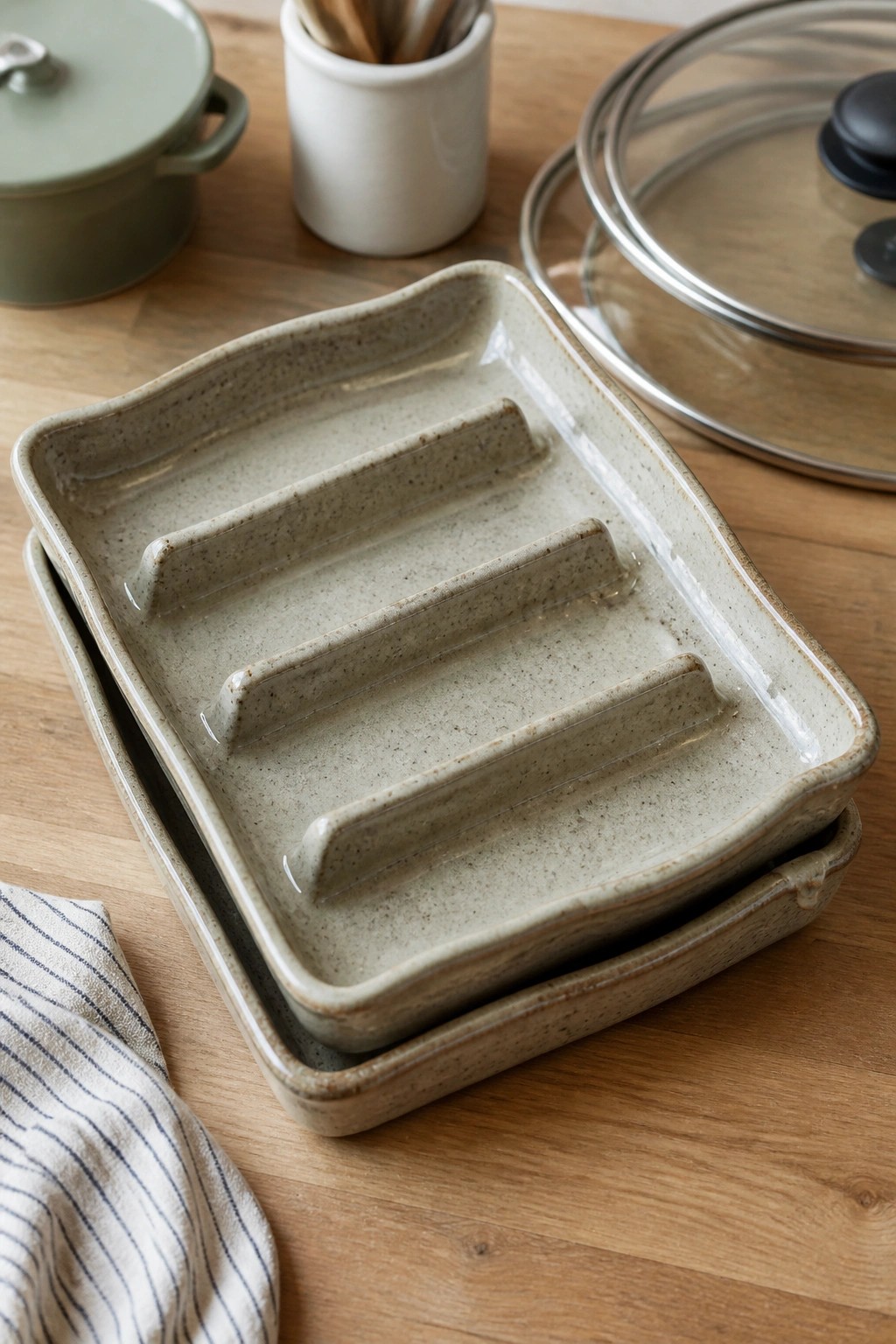
Rectangular ceramic trays like these are formed to nest directly inside one another so they take up minimal cabinet space when not in use. One tray stays plain while the second adds three raised parallel ridges that can separate small portions or keep foods from touching. The straight sides and matching proportions make the set practical for both serving and storing without extra bulk.
The shape does a lot of the work here because the flat rims and consistent depth let several pieces stack cleanly without tipping or rocking. You could adapt the ridge spacing to fit specific items such as butter sticks, asparagus, or small utensils. In a kitchen this kind of tray solves real storage problems while still working as a simple serving piece.
Stackable Ceramic Spice Drawer Cabinet

A modular set of ceramic drawers forms a compact cabinet for storing and organizing spices and herbs. Each drawer is individually labeled with embossed text and finished in soft matte glazes that range from pale blue to sage green, creating clear visual separation between sections. The finger-pull openings and rectangular shape allow the pieces to stack neatly while remaining easy to pull out during cooking.
What makes this idea useful is the way the drawers protect contents from light while keeping labels visible at a glance. You could adapt the same stacking layout for tea, coffee accessories, or small baking tools by adjusting drawer depth and label wording. In a kitchen, this kind of piece fits on a counter or open shelf without needing extra hardware. For a gift, something like this works well if you customize the labels to match common pantry staples.
Stackable Ceramic Jars with Painted Fruit Motifs

These are small cylindrical ceramic jars made for stacking in the kitchen. Each one carries a white base glaze with simple hand-painted fruit images such as lemon, watermelon, cherries, pineapple, and banana. The rounded shape and flat lids allow stable stacking while the painted designs help identify contents quickly. This turns ordinary storage jars into a matching set that keeps spices, nuts, or tea organized on a counter or shelf.
What makes this idea useful is the way the stackable form reduces needed space and the painted motifs replace the need for labels. You could swap the fruits for vegetables or herbs to match a different kitchen theme or make just two or three jars instead of a full set. In a small kitchen these jars keep dry goods visible and accessible without taking up much room. The same basic cylinder shape works for bathroom items like cotton balls if you change the painted details.
Frequently Asked Questions
What are the best pottery shapes for maximizing stackable kitchen storage?
Choose pieces with straight or slightly tapered sides and flat bases, such as cylindrical canisters or nesting bowls. These designs allow stable stacking without wobbling, and they fit neatly into cabinets or on shelves. Avoid rounded or irregular forms that leave gaps and waste space.
How can I prevent chipping when stacking multiple pottery items daily?
Select pottery made from durable stoneware or porcelain with reinforced rims. Always place a soft cloth or silicone mat between layers during stacking, and limit stacks to three or four pieces high. Store heavier items at the bottom and handle each piece by the sides rather than the rim to reduce stress points.
Are these stackable pottery ideas suitable for storing food directly?
Many functional designs like lidded jars or covered bowls work well for dry goods such as flour, rice, or spices. Ensure the pottery is food-safe and nonporous by checking for a clear glaze on the interior. For wet or perishable items, add a liner or use the pottery only for dry storage to maintain hygiene.
What maintenance steps keep stackable pottery looking and working well over time?
Wash pieces by hand with mild soap and avoid abrasive scrubbers that can scratch glazes. Dry thoroughly before stacking to prevent moisture buildup. Inspect regularly for cracks and rotate items in the stack so no single piece bears weight constantly.
How do I adapt these pottery ideas to a small kitchen with limited cabinet space?
Focus on vertical stacking solutions like graduated canister sets or modular bowls that nest inside one another when empty. Measure your shelves first and choose compact heights under six inches per piece. Combine with wall-mounted racks for overflow storage to free up counter space.

Pottery Path is my cozy corner of the internet where I share clay ideas, pottery inspiration, and simple projects you can recreate at home. I love exploring everything from air dry clay to handbuilt pottery to cute minis that brighten your day. My goal is to make clay crafting feel easy, fun, and welcoming for anyone who wants to try it.
You will find beginner friendly tutorials, creative pottery painting ideas, and lots of warm inspiration for slow and happy crafting. If you enjoy hands on creativity, this space will feel like home.