
I picked up pinch pot making because it seemed like a low pressure craft to try at home.
My first attempts were basic but I kept going and made some useful pieces.
A few turned into trinket bowls that sit on my dresser and others became mini planters for the kitchen.
I put together some of the ones I liked best in case anyone else wants to give them a go.
Scalloped Trinket Bowl
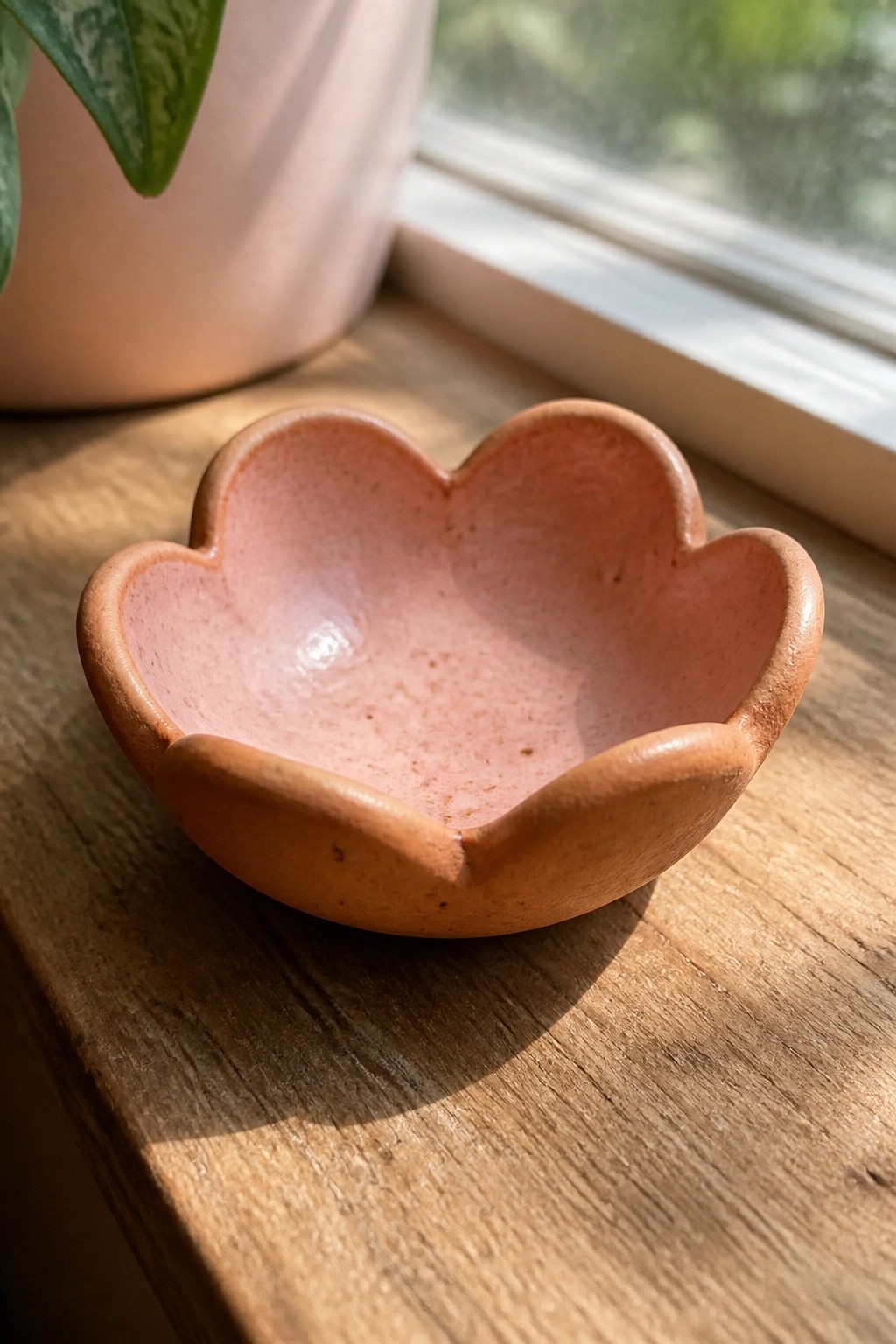
A pinch pot formed into a shallow bowl with a repeating scalloped rim gives this piece a flower-like outline. The interior carries a matte pink glaze while the outside remains the natural clay color, creating a simple two-tone effect that emphasizes the hand-shaped edge. This approach fits the trinket bowl category and keeps the focus on form rather than added surface patterns.
The shape does a lot of the work here by turning a basic pinch pot into something more distinctive without extra tools. It works especially well on a nightstand or desk for holding rings or small items. You could repeat the same rim style on a slightly taller form to make a mini planter or swap the glaze color to match other pieces in a set. For a gift, something like this packs easily and stands out in photos because of the clear edge detail.
Speckled Dimple Pinch Pot Bowl
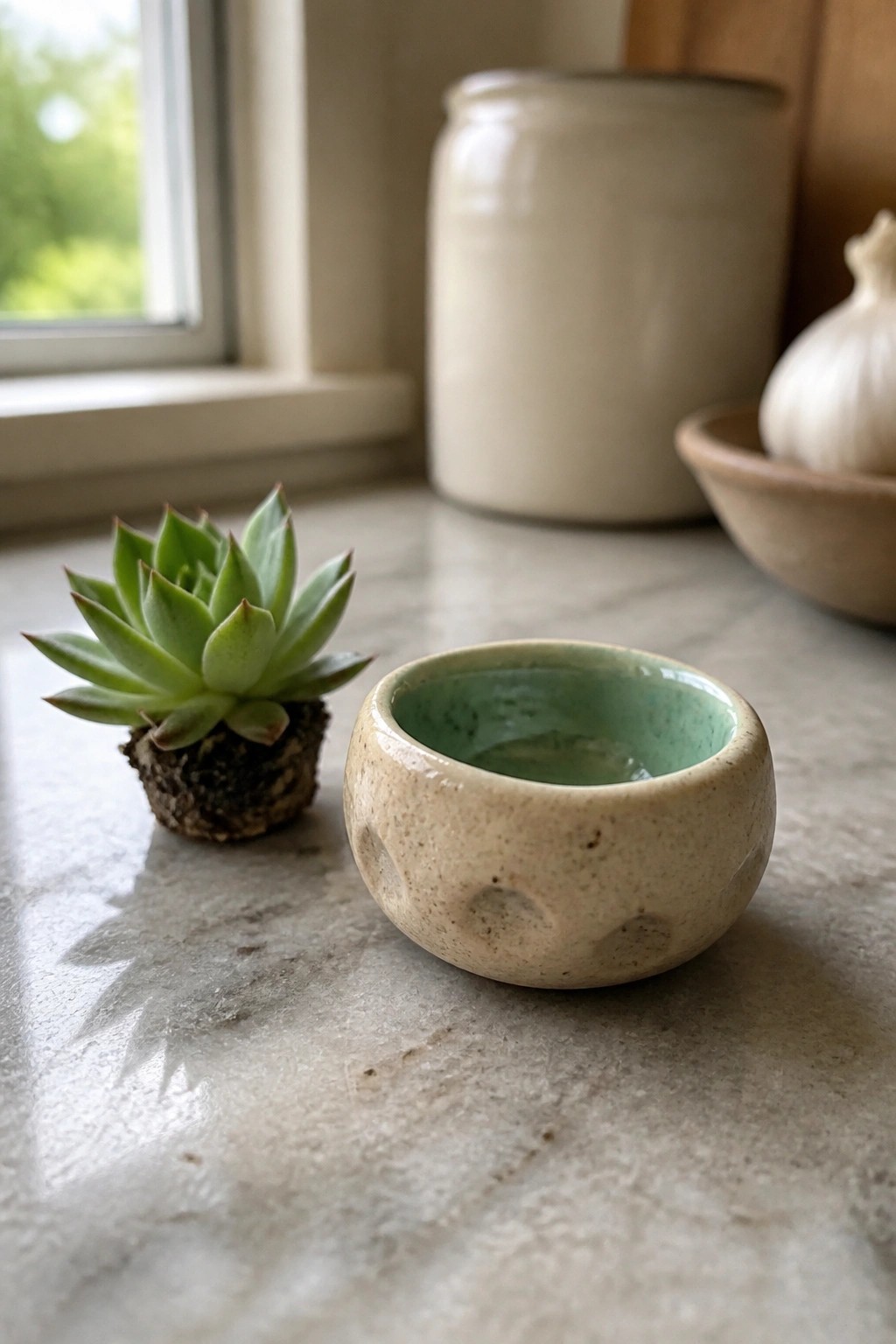
A small pinch pot bowl like this works as a trinket dish or tiny catch-all. The maker left the outside mostly unglazed to show the speckled clay body and pressed several shallow dimples around the sides for texture. The interior received a simple turquoise-green glaze that covers the bottom and lower walls. The compact round shape and limited color palette keep the focus on the form and surface contrast.
The small scale makes this easy to adapt for a desk, bathroom counter, or windowsill. You could vary the number or depth of the dimples or swap the interior glaze for a different color to change the look without much extra work. For a gift, fill it with a few small items so it feels finished. The same pinched shape can be made slightly deeper to hold a tiny plant or left shallow for rings and keys.
Heart Shaped Ring Dish
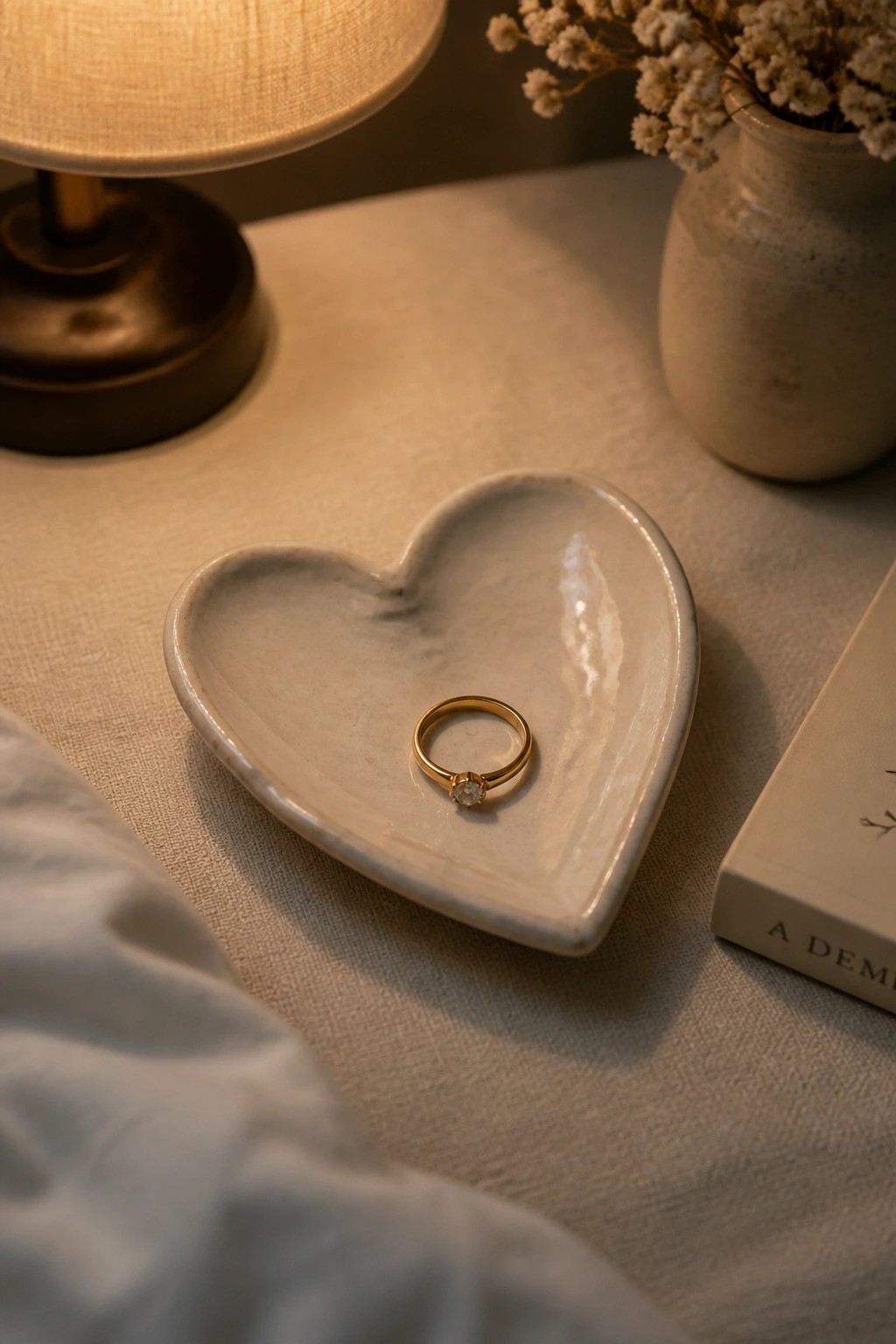
A heart-shaped pinch pot makes a compact ring dish by flattening the base into a heart outline and pinching up low sides to contain small items. The white glaze creates a smooth, light-reflecting surface that keeps the focus on the objects placed inside. This approach takes a standard pinch pot and gives it a clear function as a jewelry holder rather than a generic bowl.
What makes this idea useful is how well the shape works on a bedside table or vanity for everyday ring storage. You can adapt it by adjusting the depth of the sides or switching to a matte finish if you want less shine. For gifts, the same form can be made slightly larger to hold earrings or keys. The small footprint also means it takes little clay and fires quickly, which helps when making several at once.
Mini Blue Mug for Trinkets or Small Items
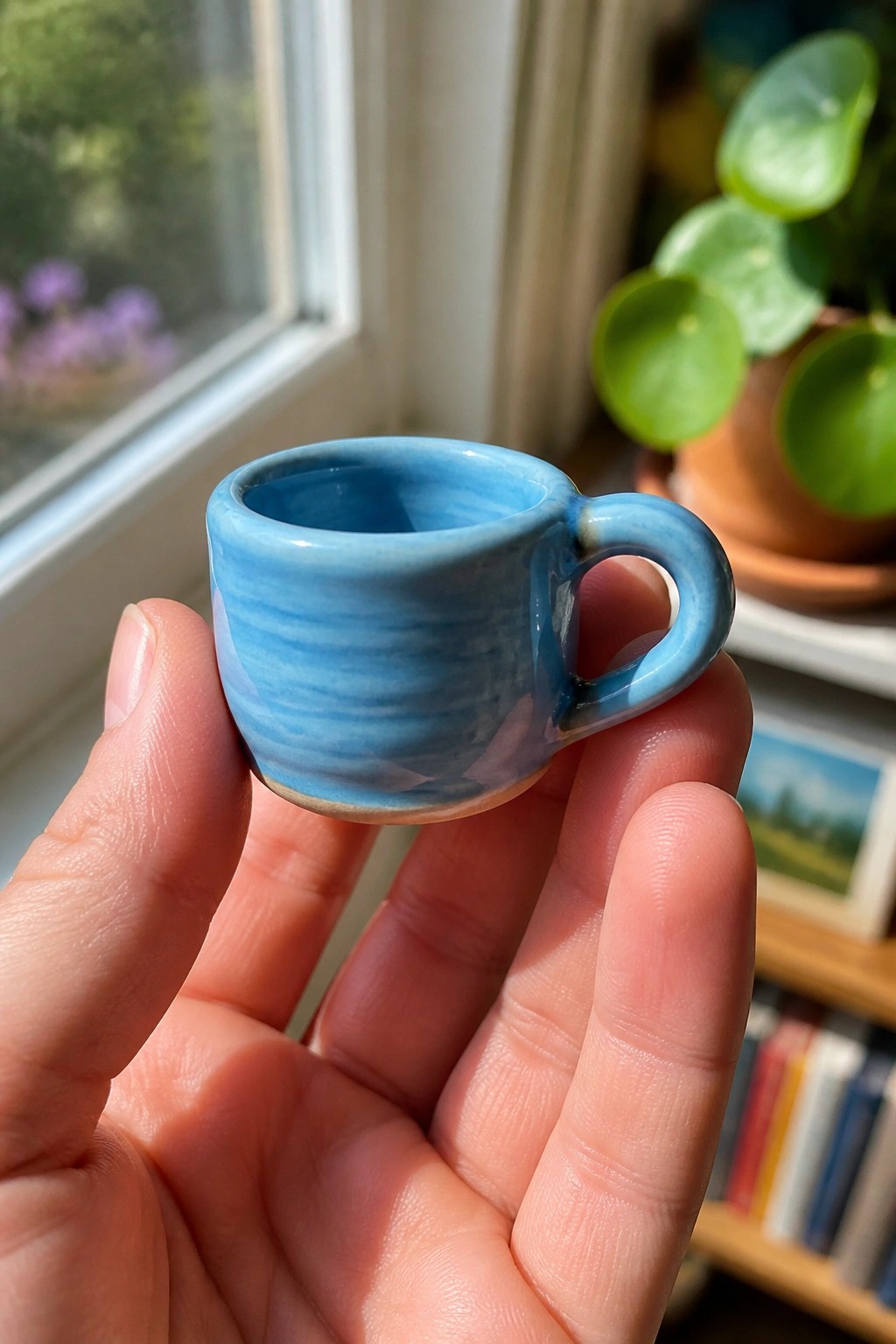
A small ceramic mug built from a pinch pot base with an added handle creates a compact cup shape ideal for holding tiny objects. The blue glaze with its horizontal streaks gives the surface texture and depth while keeping the form simple. This project belongs in the mini mug category and pairs well with the beginner pinch pot approach since the basic bowl shape only needs a small handle attached.
The small scale makes this easy to adapt into a ring holder or loose change cup that fits on a desk or shelf without crowding the space. You could repeat the same shape in a few different glaze colors to build a quick matching set. For a gift this works as a practical catch-all that still feels personal because of the handmade proportions.
Moon Phase Trinket Bowl
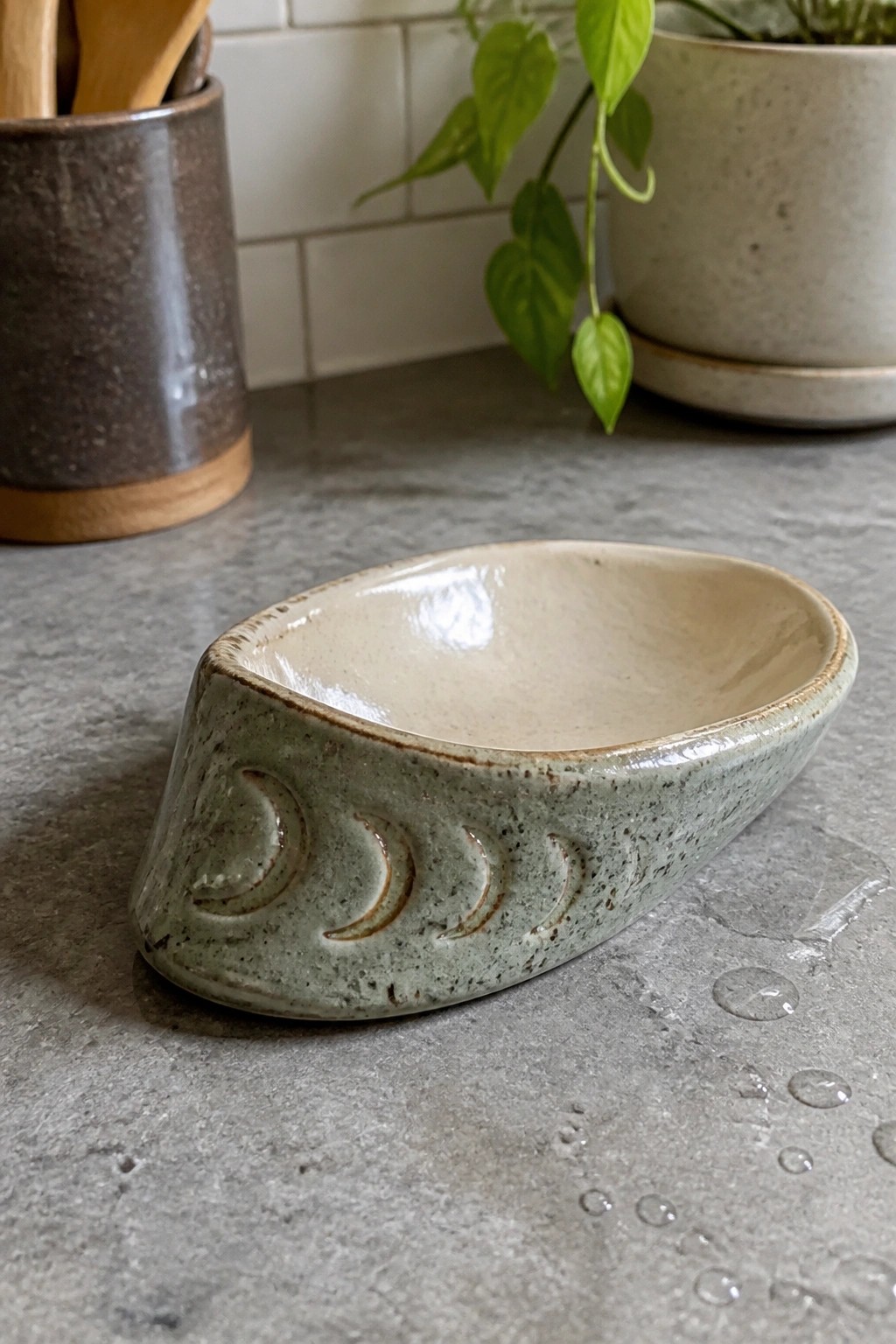
A small oval pinch pot bowl makes a simple trinket dish when the sides are gently flattened and the rim is left slightly irregular. The design uses a row of impressed crescent shapes along one side to create a moon phase pattern that stands out against the speckled green glaze. The interior is left in a lighter glaze so the open space stays clean and functional for holding rings or small items. This approach keeps the project quick while giving the finished piece a clear handmade detail that reads well even at small scale.
The shape does a lot of the work here because the elongated form gives more storage space than a round bowl without taking up extra counter room. You could repeat the same moon impressions on a round version or swap them for other simple stamps like leaves or lines. For a gift this size stays easy to pack and works on a nightstand or desk. In a kitchen it can hold loose change or tea bag tags while the green glaze pairs with most countertop colors.
Joined Pinch Pots for Seasonings
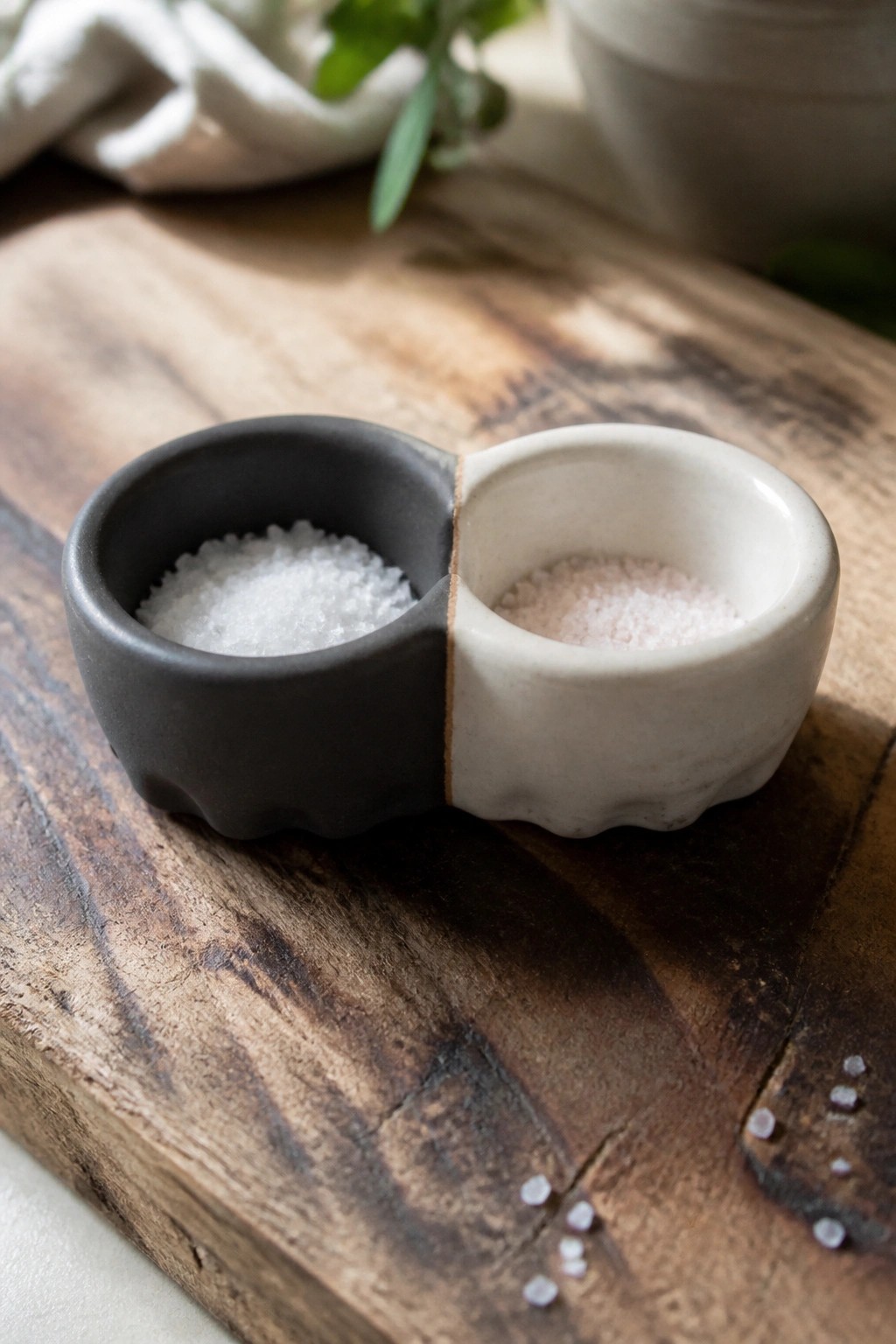
A double pinch pot dish works by pressing two small bowls together while the clay is soft so they fuse into one connected piece with two separate compartments. The contrast between a dark matte glaze on one side and a light one on the other makes the division clear and gives the dish a simple two-tone look. This shape keeps different salts, spices, or small items neatly separated without needing extra dividers or lids. It fits the category of small kitchen or table bowls that stay useful even when left out.
The shape does a lot of the work here because the joined form already creates two usable sections in a single object. You can swap the glaze colors or leave one side unglazed to change how it reads on a table. This kind of piece works especially well next to a stove or on a dining table where you want salt and pepper or finishing salts in one spot. It would also translate easily into a small trinket holder by skipping the food-safe glaze.
Cat Face Pinch Pot Planter
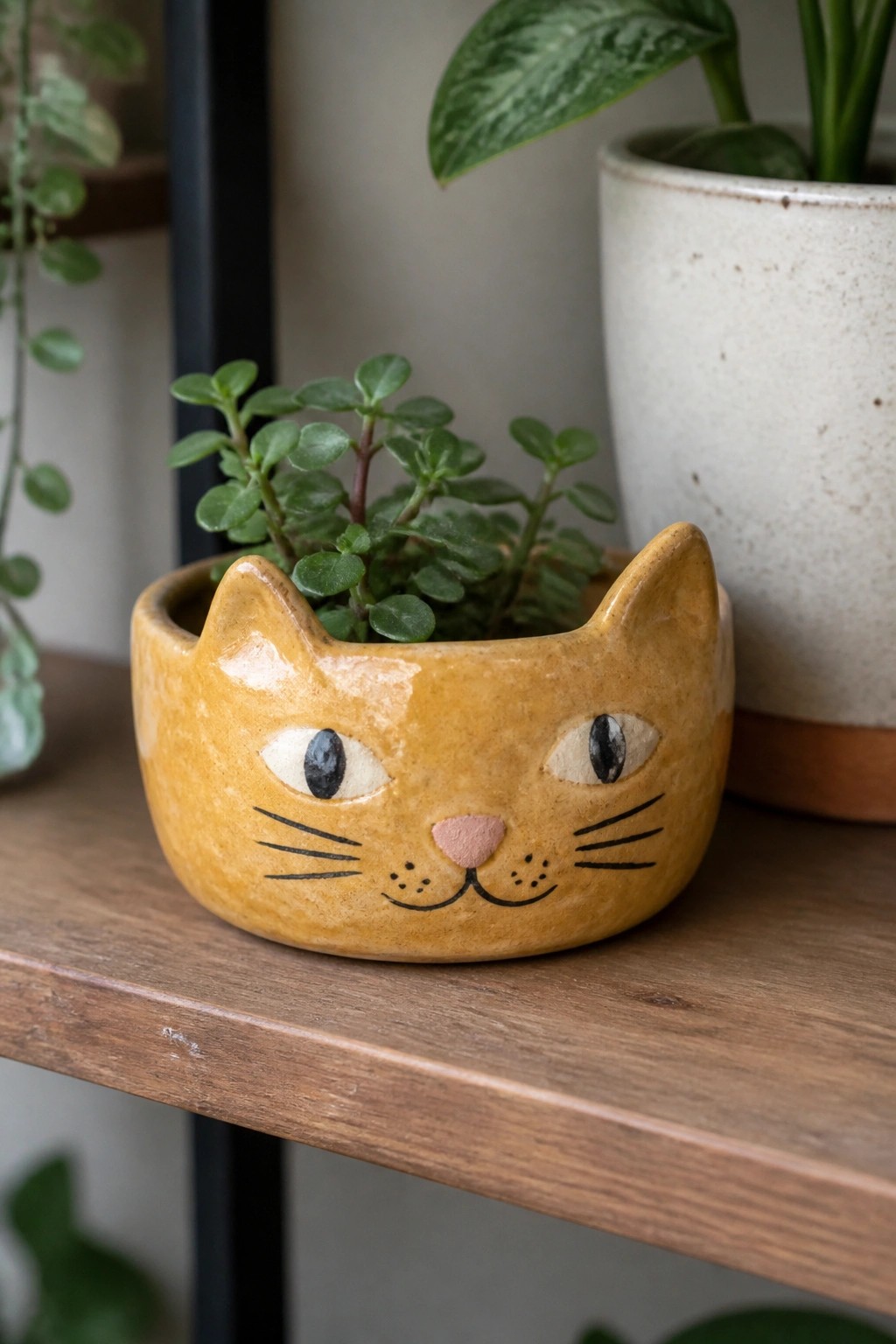
A pinch pot shaped into a shallow bowl with two pinched ears forms the base for this mini planter. The cat face is created by adding simple sculpted ears and then painting on eyes, whiskers, and a nose after glazing in a solid warm yellow. This approach keeps the form low and wide, which suits small plants that do not need deep soil. The project stays in the mini planter category and relies on basic shaping plus surface painting rather than intricate carving.
The small scale makes this easy to adapt for different shelf spaces or to group with other planters. You can change the face details by switching the eye shape or using underglaze colors that match a room’s palette. For a gift, something like this works well because the painted motif adds interest without requiring extra tools. The same pinched bowl shape could be turned into a trinket dish by leaving out any drainage hole and adjusting the rim height slightly.
Orange Slice Pinch Pot Bowl
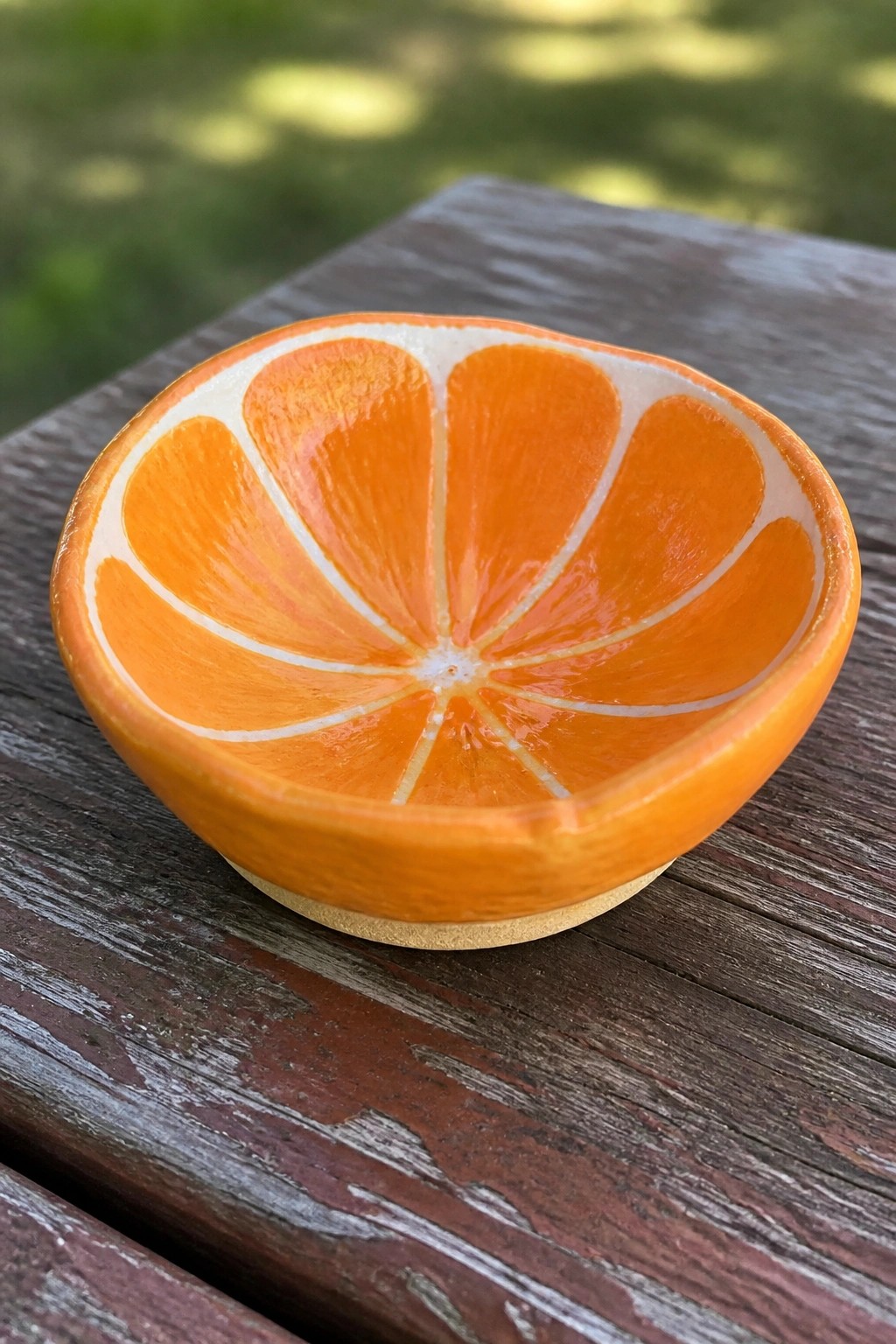
A small pinch pot bowl painted to resemble a halved orange makes a simple trinket dish. The surface is divided into wedge shapes with white lines against an orange base, creating a clear citrus pattern that stays readable even after glazing. This approach turns a basic round form into a themed holder without needing extra sculpting.
What makes this idea useful is its compact size that fits on a dresser or bathroom counter for rings or keys. The painted segments can be swapped for other fruits like lemons or grapefruits to match different color palettes or seasons. For a gift, something like this works because the motif is quick to repeat and shows up well in photos for sharing.
Leaf Impressed Oval Trinket Dish
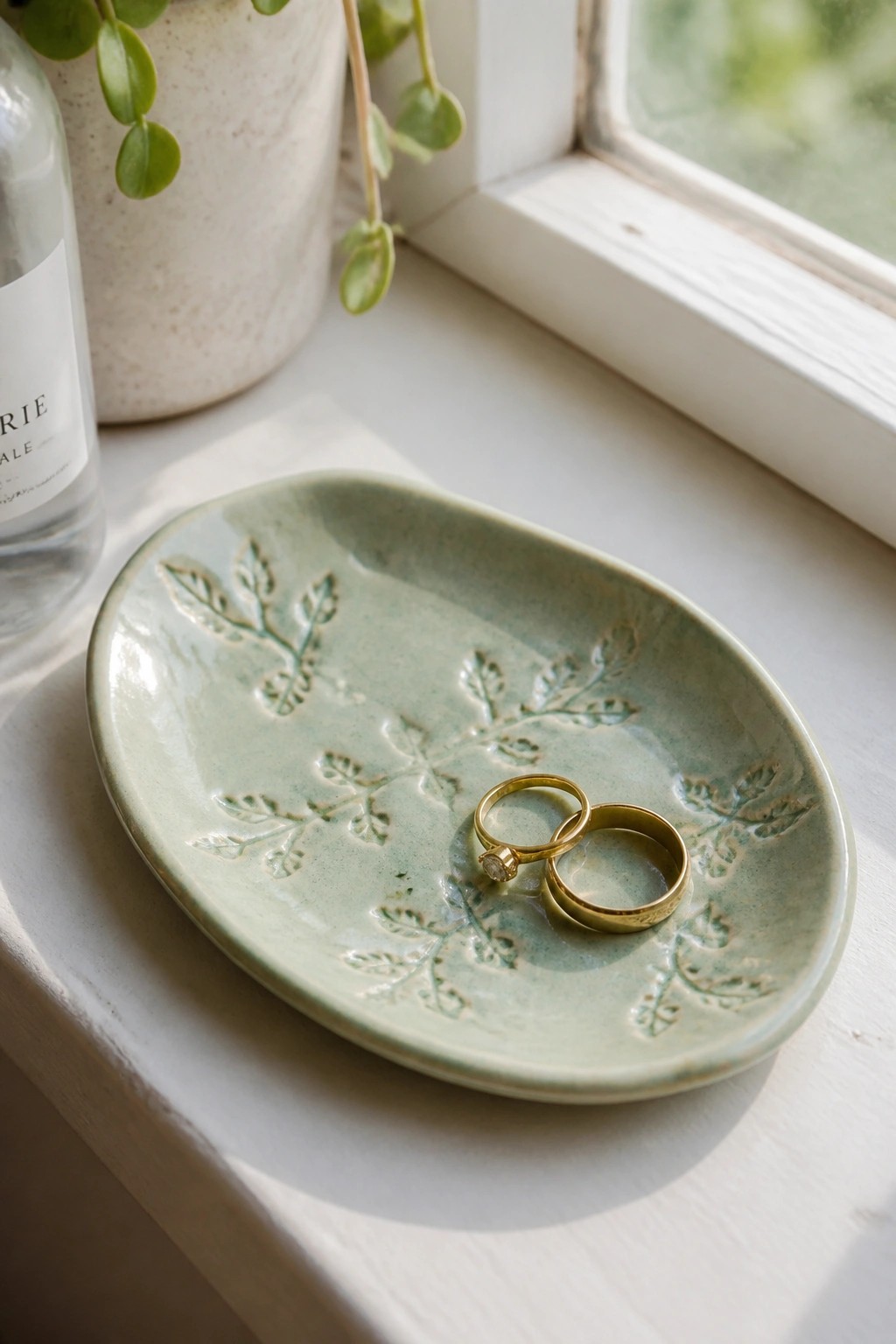
A shallow oval dish formed from clay makes a simple ring holder when you press actual leaves into the wet surface to create texture. The raised leaf patterns hold glaze in the recesses and leave the raised areas lighter, which keeps the design readable after firing. A muted green glaze works with the organic shapes without overpowering them. This approach turns a basic pinch pot into a functional trinket bowl that needs no extra tools beyond leaves and a rolling pin.
What makes this idea useful is that the oval shape keeps rings from sliding around while staying small enough for a nightstand or windowsill. You can repeat the leaf pressing on a round dish or a low square tray if you want variety for different rooms. The same texture also works on a small soap dish for the bathroom since the impressed areas help with grip. The finished piece photographs cleanly for sharing because the glaze contrast does most of the visual work.
Pinch Pot Mini Planters in Varied Glazes
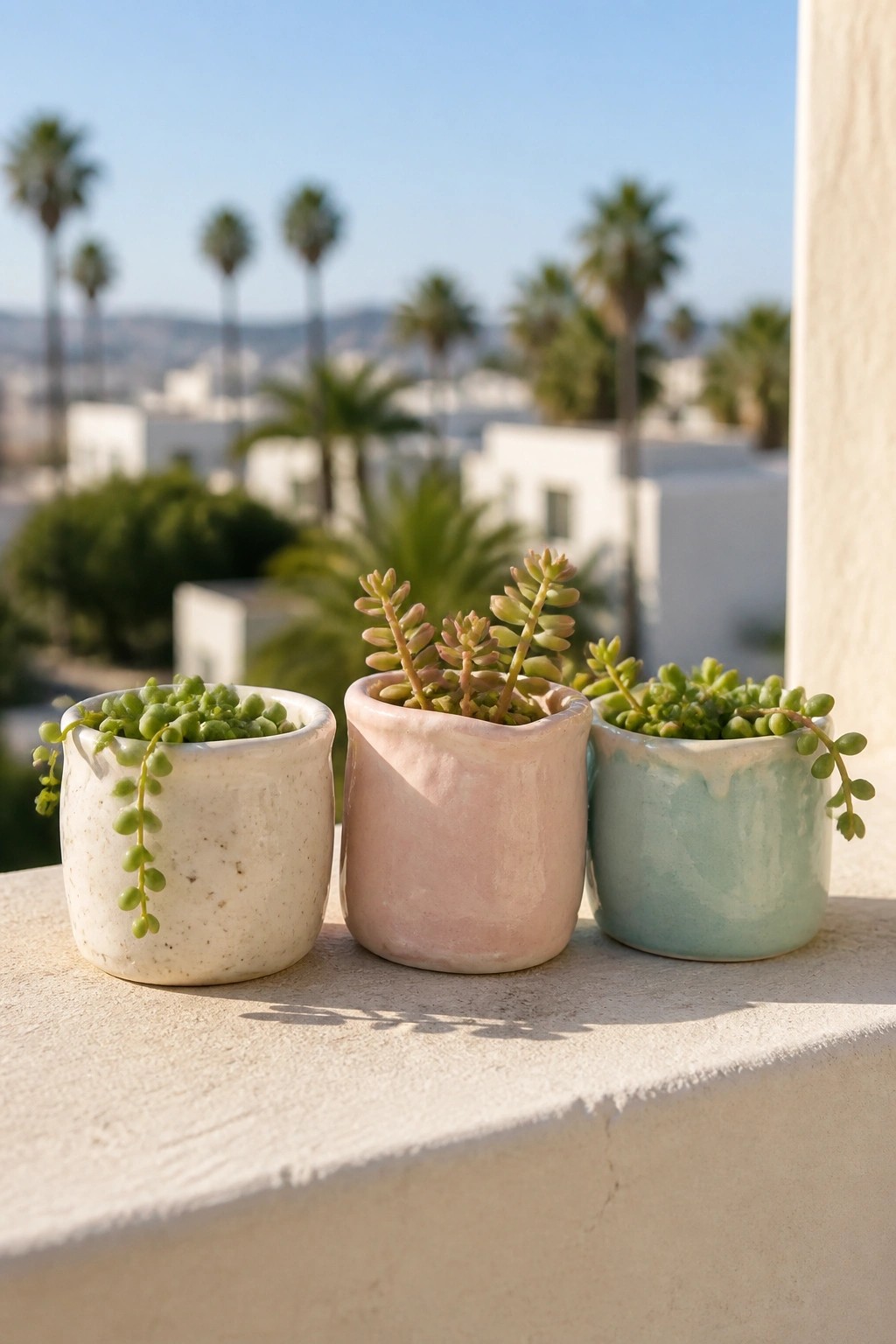
These three small pinch pots function as simple planters sized for succulents and trailing plants. Each pot has a rounded body and slightly irregular rim created by basic hand forming, then finished with a single glaze color on the outside. The white speckled glaze, soft pink, and turquoise options show how one shape can produce a coordinated group through color alone. The compact scale keeps the focus on the plants while the handmade form stays visible.
What makes this idea useful is that the same pinch pot shape works for any small plant and requires no extra tools beyond your hands. You can adapt it by mixing glaze colors within one batch or skipping glaze on some pots for a raw clay surface. A group like this fits on a narrow ledge, desk, or bathroom counter where larger pots would not. For a different use, keep the same size and shape but add a small loop at the rim to turn one into a hanging holder.
Flower Petal Trinket Bowl
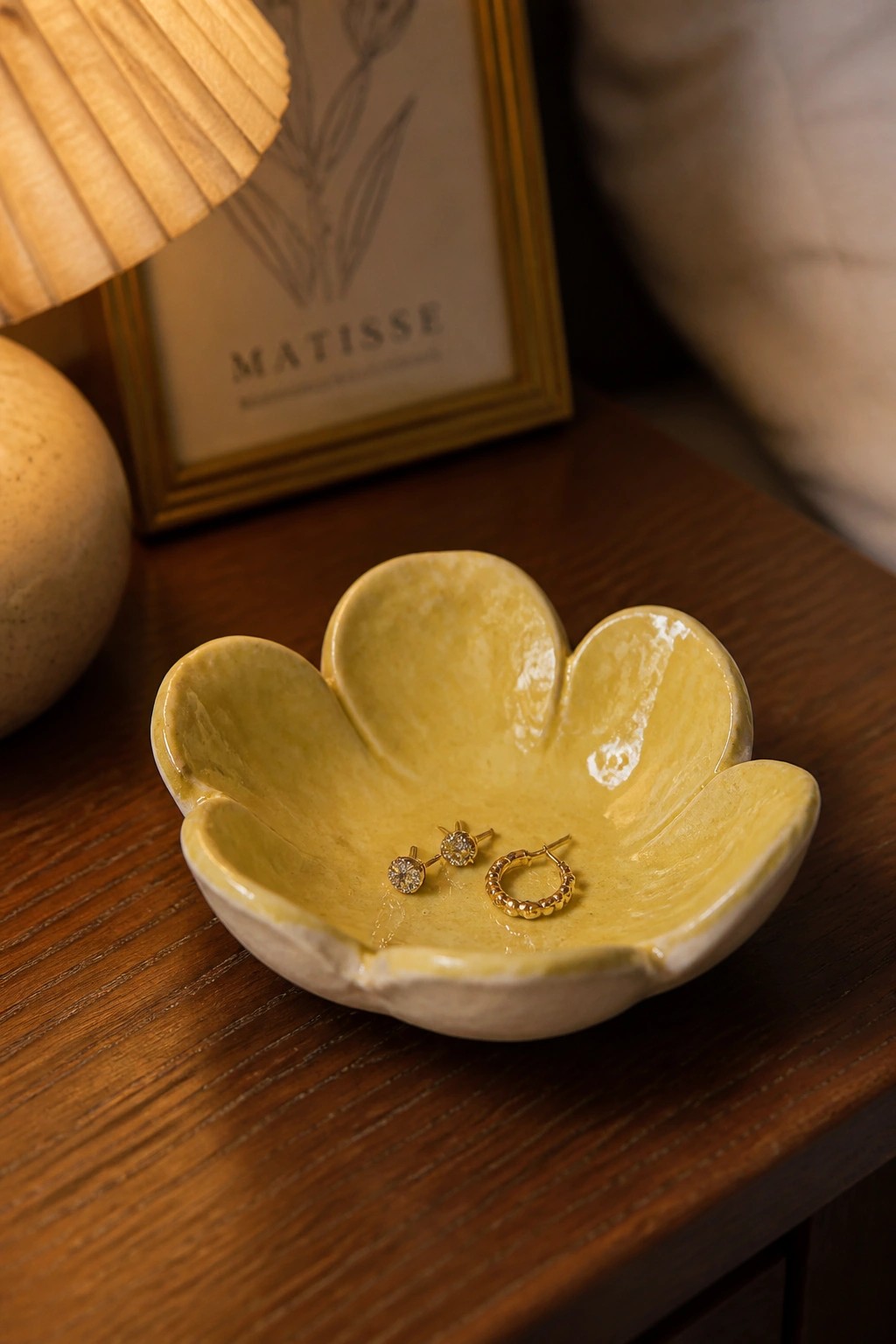
A simple pinch pot shaped into a five-petal flower creates a small trinket bowl that holds rings or earrings. The edges are gently pinched outward to form rounded petals, and a yellow glaze covers the interior and rim for a smooth, glossy finish against the matte base. This keeps the form low and wide so small items stay visible and easy to reach. The project stays in the trinket bowl category and uses only basic hand-shaping steps.
What makes this idea useful is how the petal edges add shape without needing extra pieces or molds. You can repeat the same outline in a slightly deeper version to hold a tiny plant or change the glaze to match bathroom or desk colors. The small scale means it takes little clay and fires quickly, so it works well for testing new glaze colors or giving away as a quick gift.
Star Shaped Trinket Dish
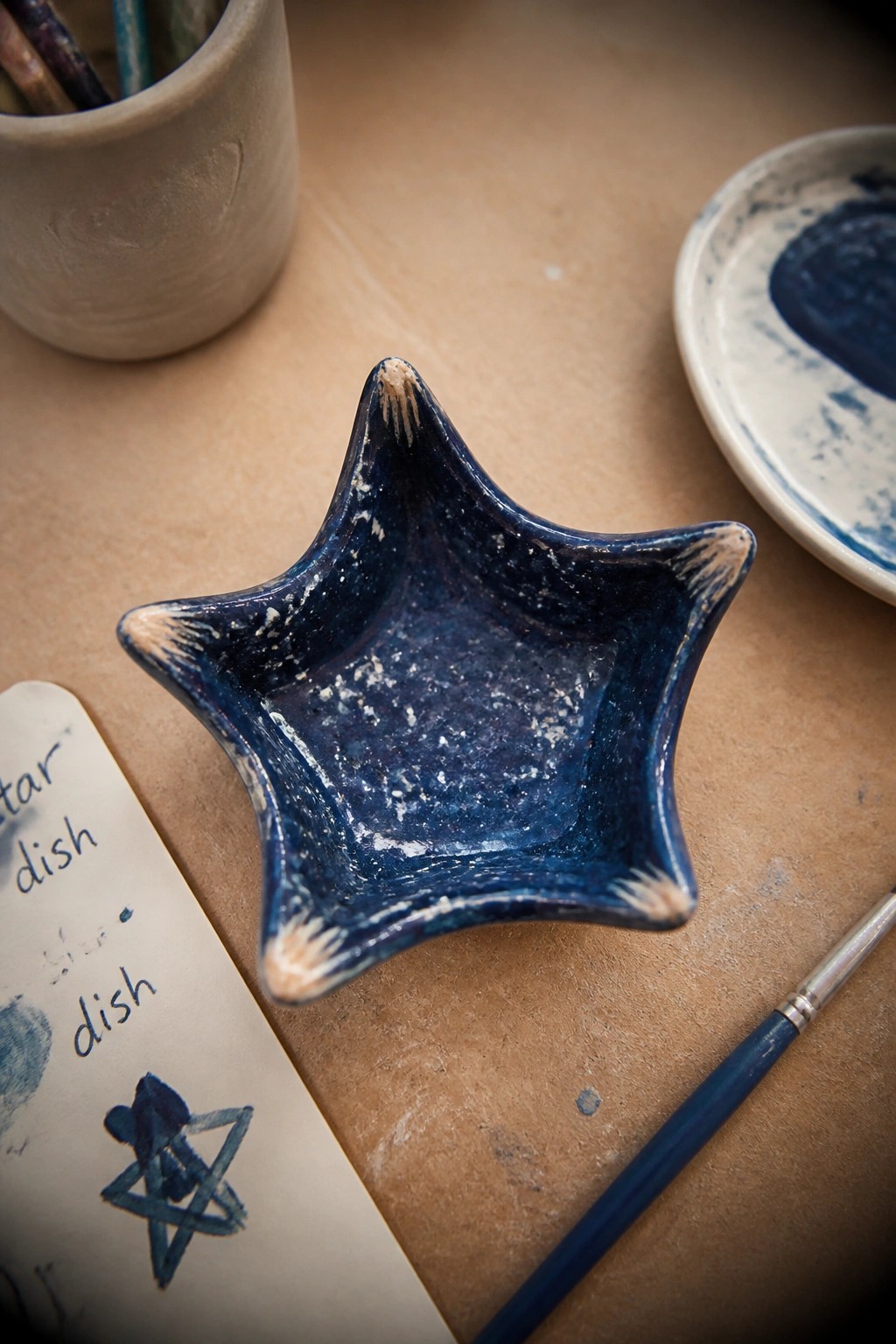
A star-shaped pinch pot forms a small open dish that works as a trinket bowl. The clay is pinched and pulled into five points, then glazed in a deep blue that pools unevenly across the surface while the tips stay lighter and unglazed. This shape keeps loose items like rings or coins from sliding into one pile because the points create natural edges.
What makes this idea useful is how the star form doubles as both storage and a visual accent on a desk or bedside table. You can repeat the same shape in different glaze colors or press small stamps into the clay before the bisque fire to add texture. For a gift this size travels well and still feels distinct from basic round dishes. Scale the points down or widen the center slightly and the same method turns into a mini planter for a single succulent.
Smiley Face Pinch Pot Bowl
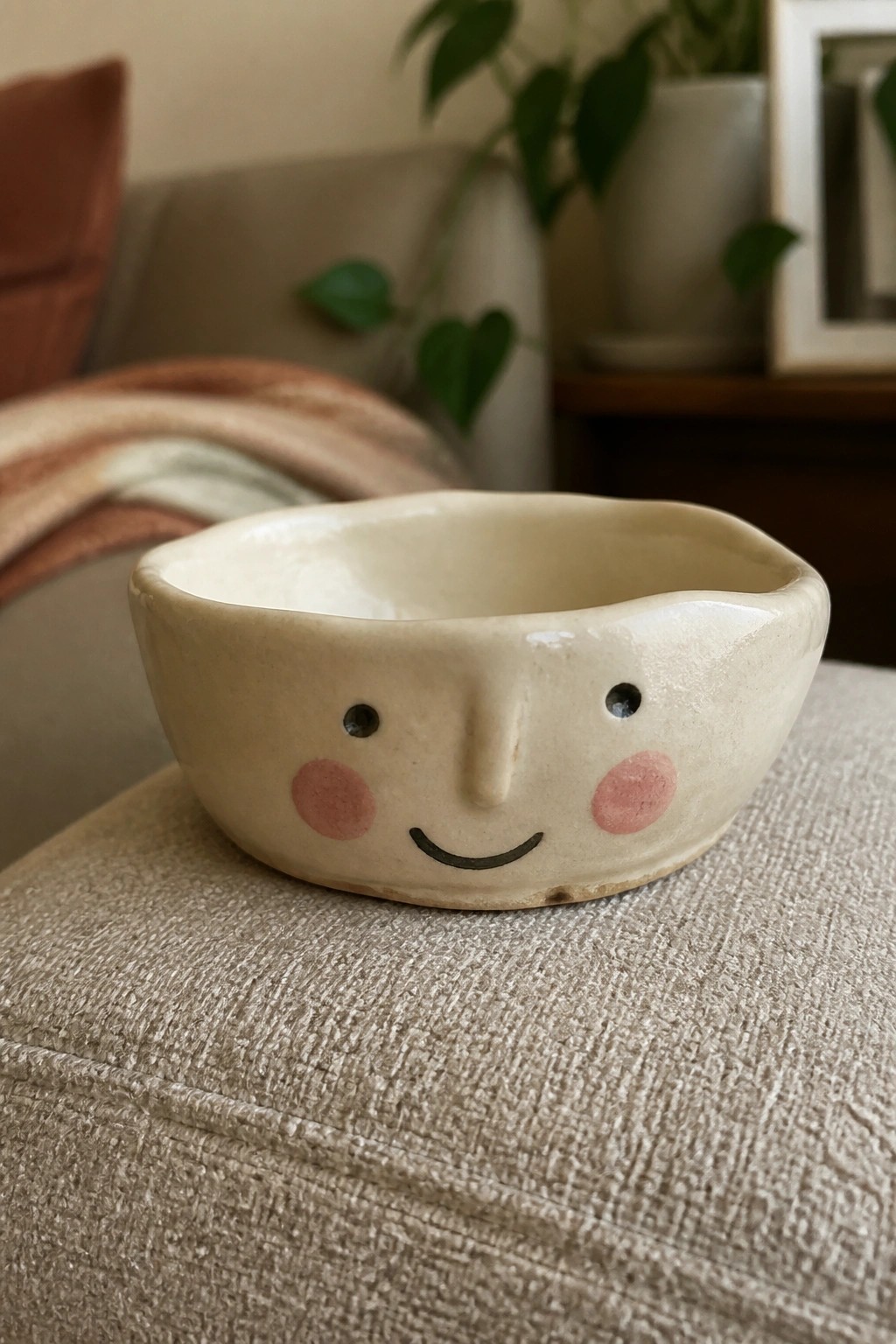
A small pinch pot bowl with a painted face works as a simple trinket holder or catch-all dish. The rounded form and minimal face details—two eyes, a nose line, pink cheeks, and a curved mouth—keep the design clean and easy to repeat. This approach fits the trinket bowl category well because the shape stays functional while the face adds a clear focal point without extra sculpting.
The small scale makes this easy to adapt for jewelry, keys, or loose change on a dresser or desk. You could change the expression, swap the cheek color, or leave the face off entirely to turn the same base shape into a plain mini planter. A piece like this stands out on Pinterest because the face is quick to paint and works in any color combination.
Bird Shaped Mini Planter
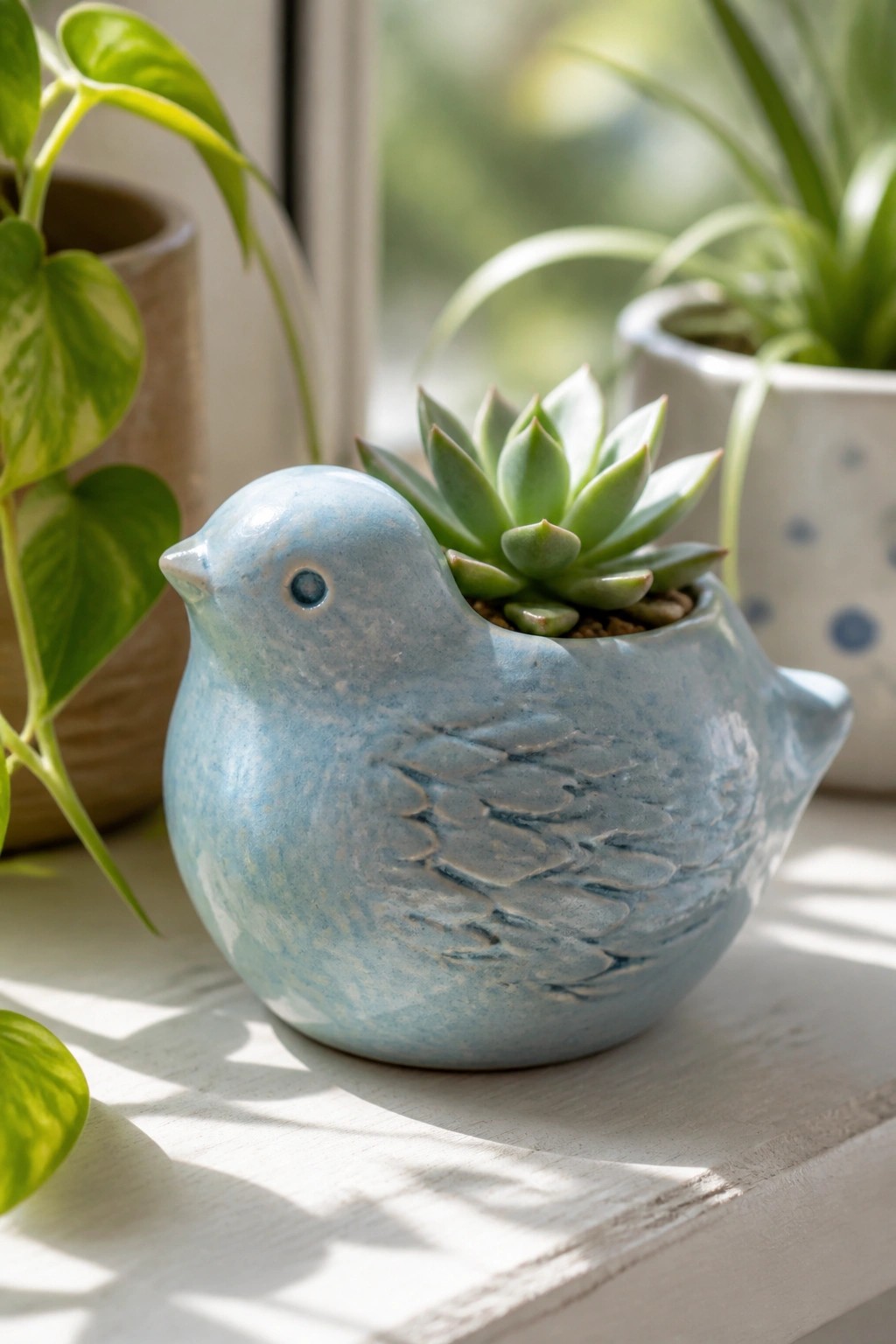
A bird shaped mini planter starts with a simple pinch pot that forms the body and then adds a pinched head, tail, and wing details to create the full shape. The hollowed center holds soil directly while the sculpted feathers on the sides give the surface texture and pattern. A single blue glaze covers the clay and unifies the form so the details stand out without extra decoration. This project fits the mini planter category for small succulents or similar plants.
The compact size makes it easy to move around a windowsill or shelf when you need to rearrange plants. You can adapt the same idea by changing the glaze color or making the body slightly wider for different plant types. For gifts the sculpted bird shape gives a clear handmade look that sets it apart from plain pots. If you want a faster version, flatten the wing details and keep the body rounder while still using the same pinch pot base.
Scalloped Pinch Pot Trinket Bowl
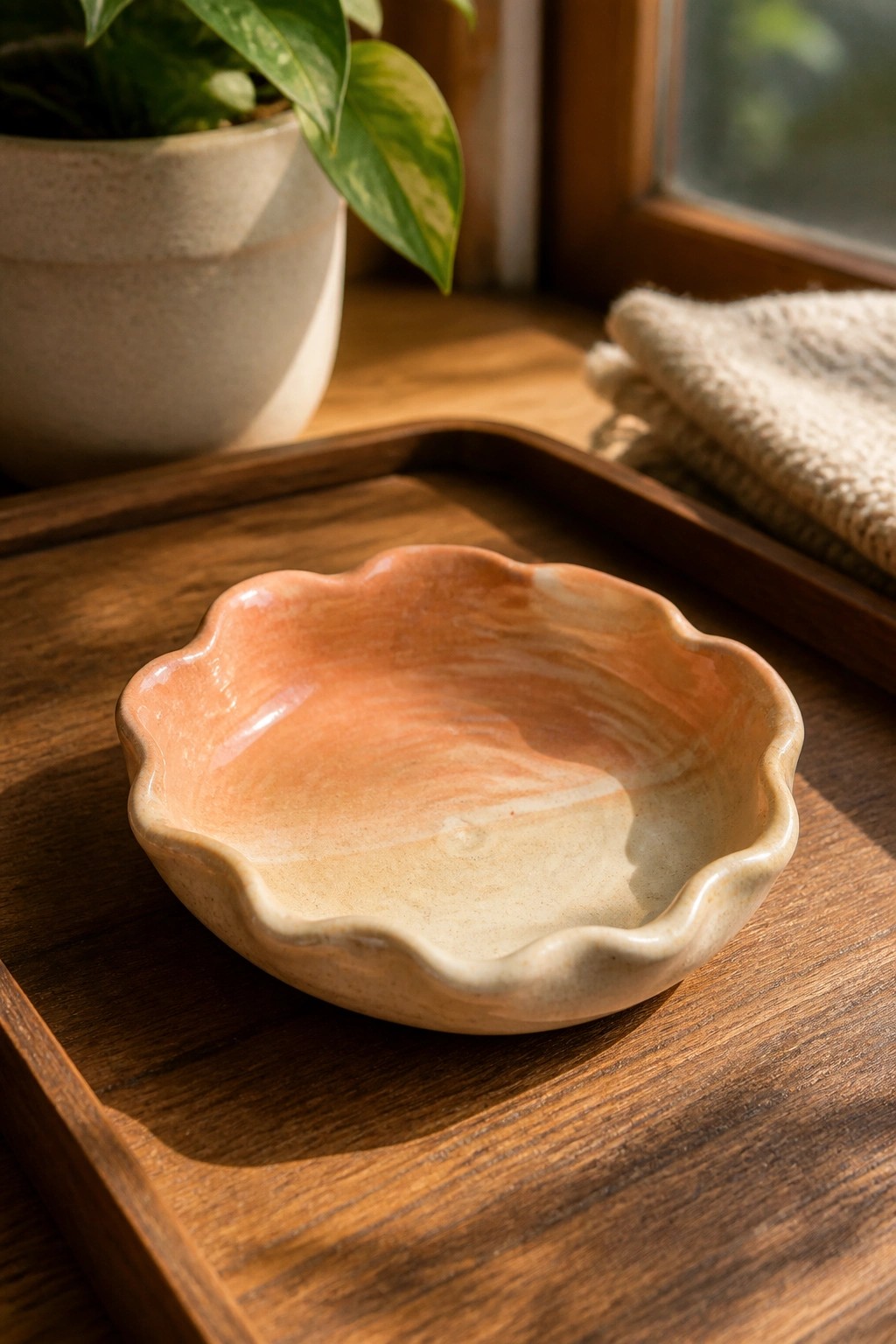
A shallow pinch pot bowl with a wavy rim formed by pinching the clay edge at intervals gives this project its shape. The marbled glaze blends coral and cream tones that streak across the surface during firing. This style works as a basic trinket bowl or ring dish where the rim detail and glaze movement do most of the visual work.
The small scale makes this easy to adapt for holding jewelry on a nightstand or small items on a desk. You could rework the same rim by spacing the pinches wider or narrower, or swap the marbled glaze for two solid colors that still contrast. For a gift, something like this packs flat and keeps the focus on the handmade edge rather than complicated form.
Mini Planter with Sculpted Swirl Detail
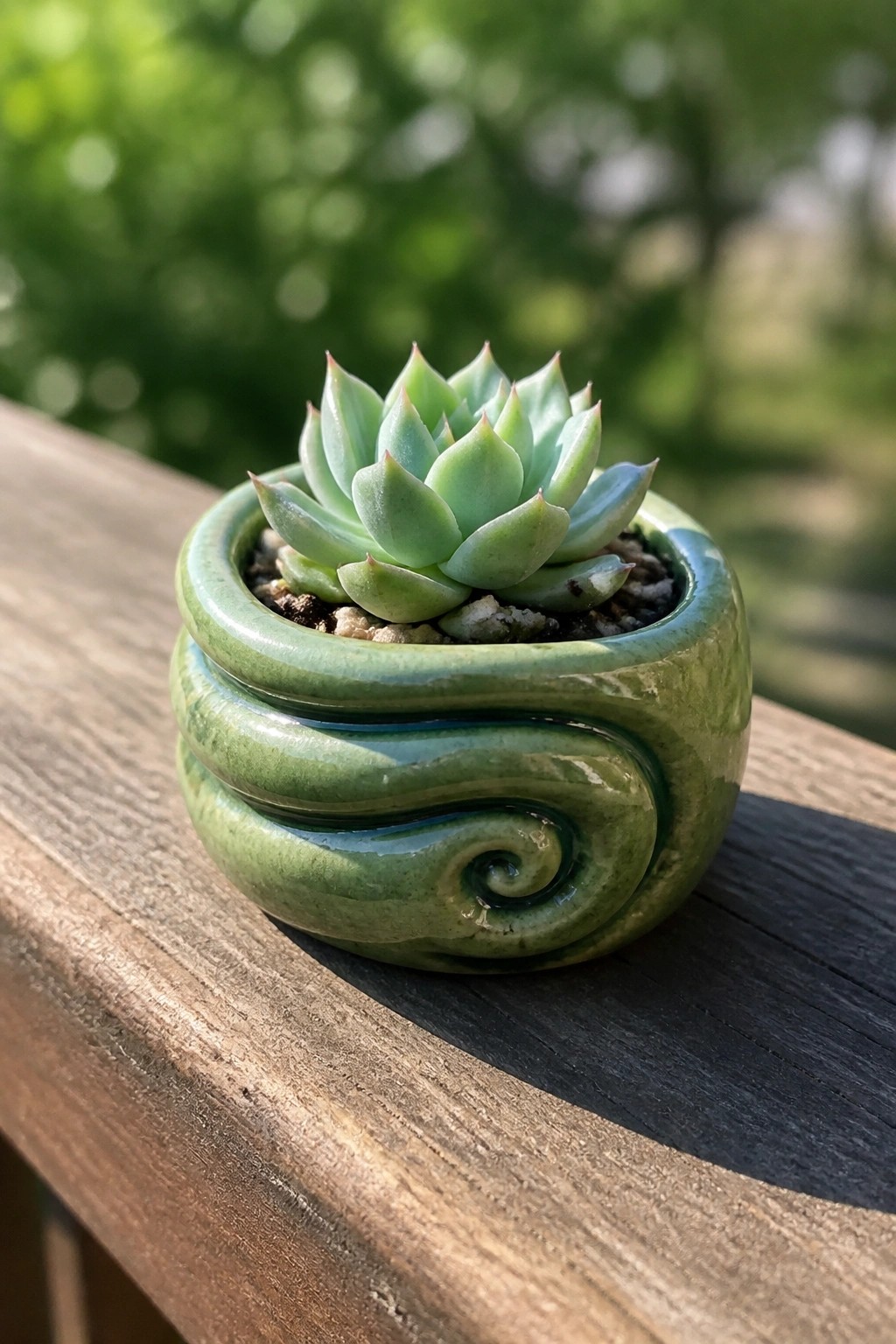
A small round ceramic planter formed from pinched or coiled clay carries a raised spiral wave that wraps around the lower half of the body. The glaze moves from a lighter green on the upper rim to a deeper shade across the sculpted swirl, which creates contrast and catches light on the curves. This keeps the pot simple in overall shape while the hand-formed wave gives it a clear focal point. The compact size works as a mini planter for succulents or small houseplants that need limited root space.
What makes this idea useful is the way the swirl adds surface interest without requiring extra tools or multiple colors. You could press a similar wave into a basic pinch pot before firing or stretch the same motion into a slightly wider bowl shape for a different plant. The small scale makes it easy to fit on a desk, shelf, or windowsill where bigger pots would crowd the space. For a trinket version, leave out the drainage hole and use the same form to hold rings or small items instead.
Nested Pinch Pot Trinket Bowls
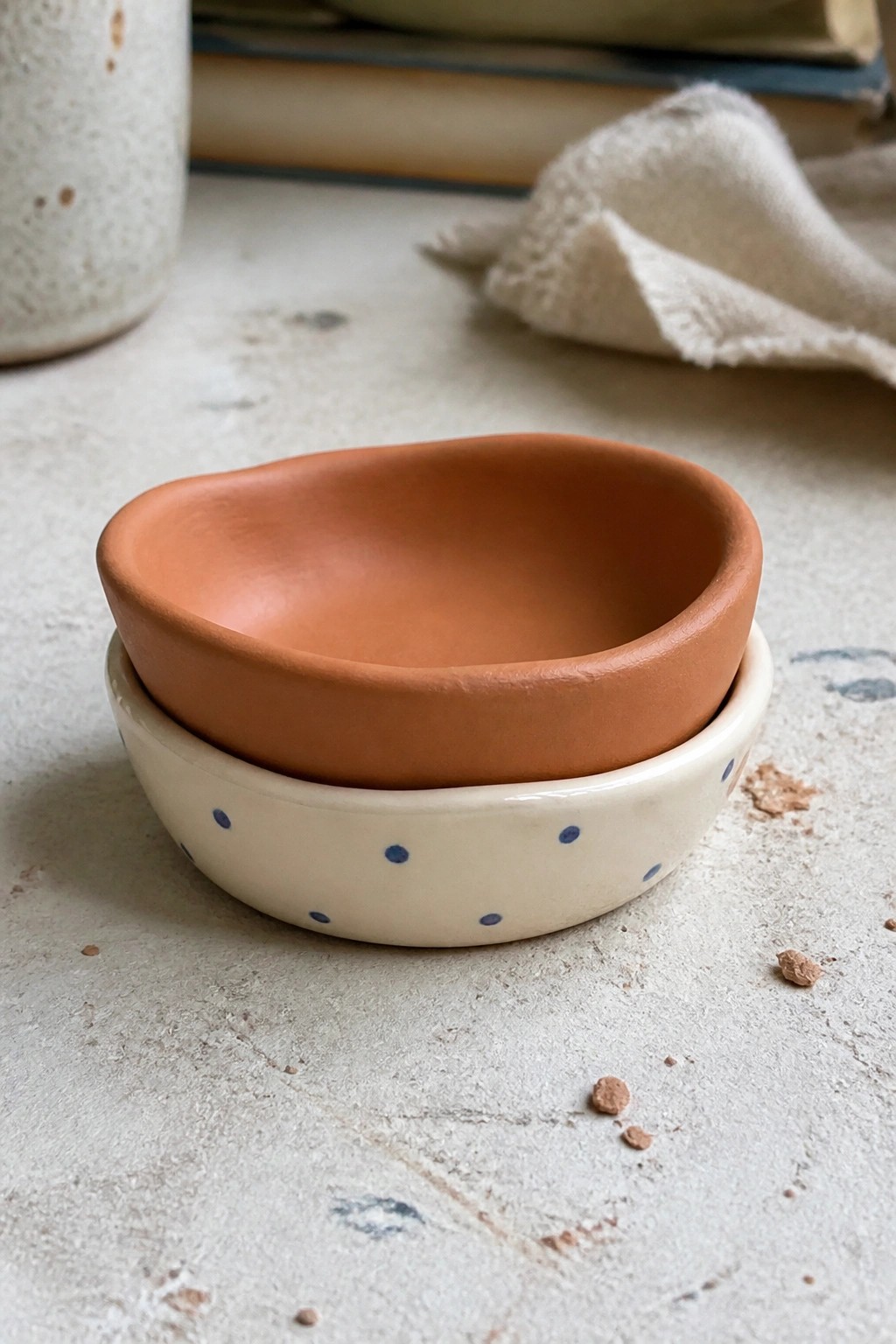
Two small pinch pots are stacked to create a simple set of trinket bowls. The top bowl keeps its natural terracotta finish while the bottom one is glazed white and finished with scattered blue dots. The round, slightly irregular shapes allow the bowls to nest neatly, and the contrast between the matte clay and the glossy dotted surface gives the set visual interest without extra decoration. This idea works as a basic trinket bowl project that stays functional on its own or as a pair.
What makes this idea useful is how easily the same pinch pot shape can be repeated in different finishes to create a matching set. You can leave both bowls unglazed for a uniform matte look or change the dot colors to coordinate with other pieces you already have. The small size makes them practical for holding rings, earrings, or loose change on a dresser or desk. The nesting detail also lets you turn the project into a quick gift by making three bowls in slightly different sizes.
Pinch Pot Tea Light Holder
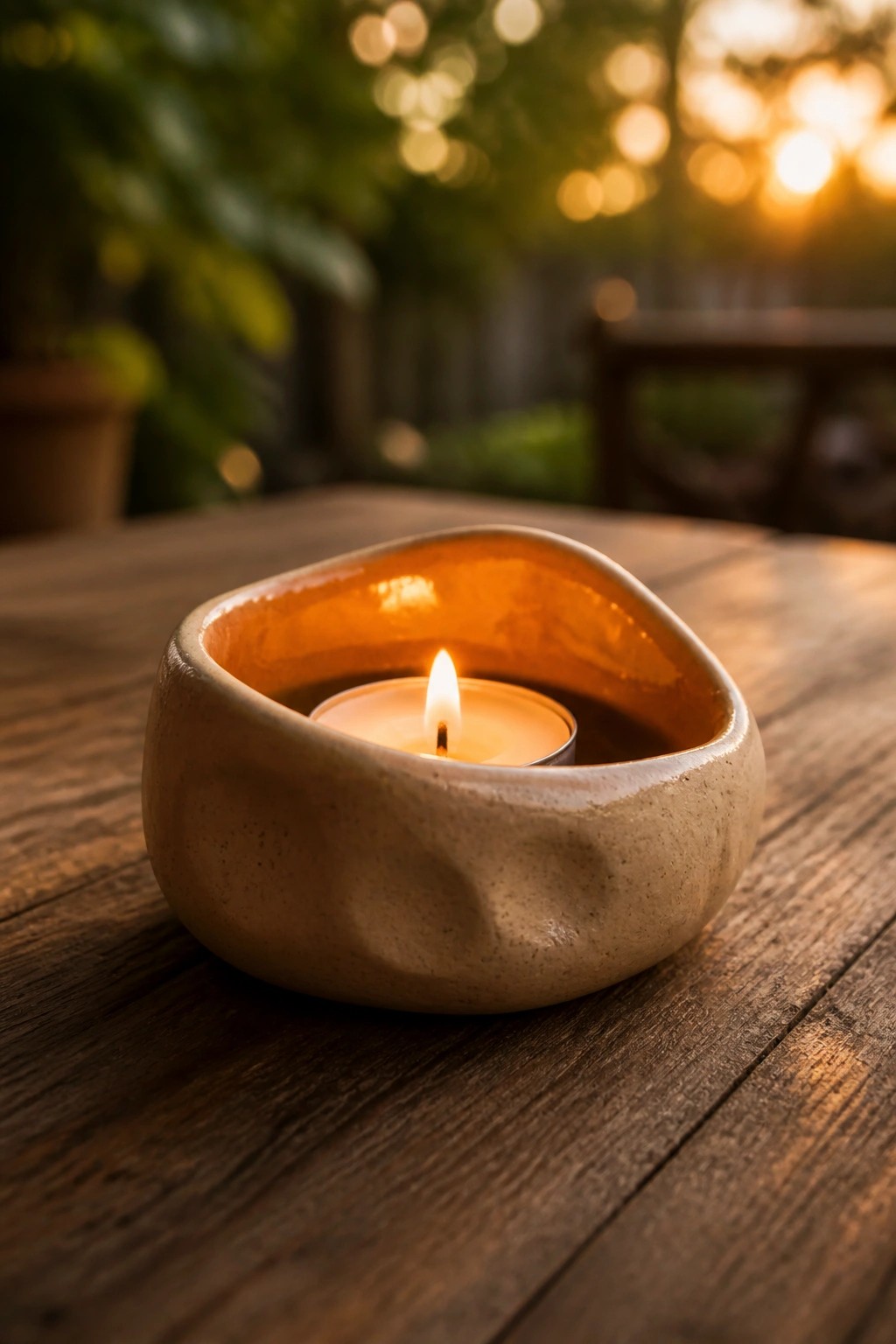
A pinch pot candle holder turns a small ball of clay into a compact dish sized for a standard tea light. The uneven rim and hand-pressed texture give the form an organic shape while the glossy interior glaze bounces light from the flame. This keeps the project simple yet creates a finished holder that sits neatly on any flat surface.
What makes this idea useful is how the same shallow bowl shape works for holding rings or loose change once the candle burns out. The small size makes it easy to batch out several in one sitting and try different glaze colors on the inside. You could also widen the base slightly if you want the holder to feel more stable on a desk or bathroom counter.
Polka Dot Rim Trinket Bowl
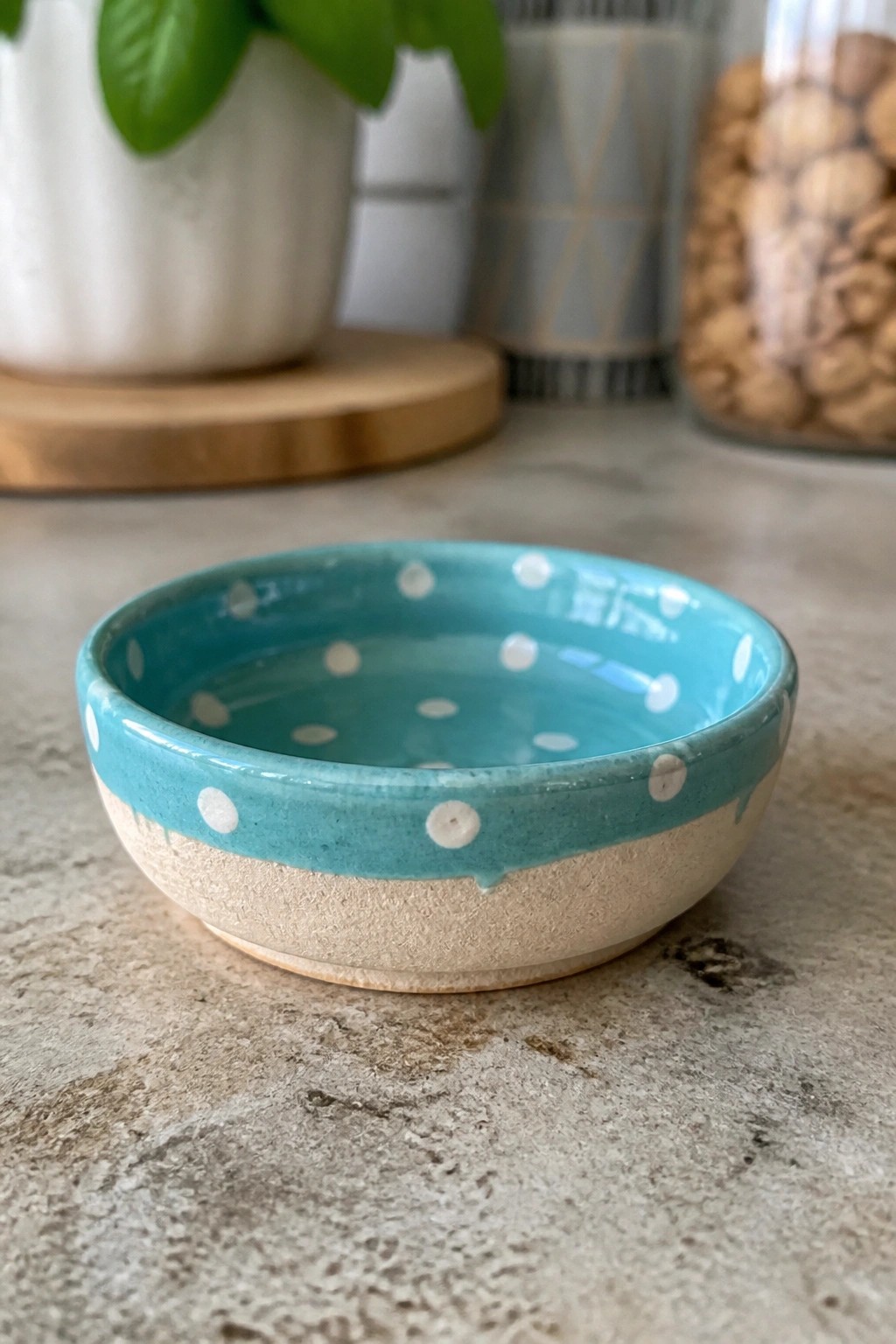
A small pinch pot bowl makes an effective trinket dish when the rim gets a band of white dots over a turquoise glaze. The speckled beige clay on the lower half gives the piece a grounded texture that contrasts with the smooth, glossy upper section. This simple two-tone approach keeps the focus on the rounded form while the dots add just enough pattern to make the bowl stand out on a shelf or tabletop.
What makes this idea useful is how the compact size fits easily on a dresser or desk for rings and small items. The dotted rim can be changed to any color combination or swapped for lines if dots feel too busy. You could also use the same base and glaze split on a slightly taller pinch pot to hold a small succulent.
Footed Mini Planter for Succulents
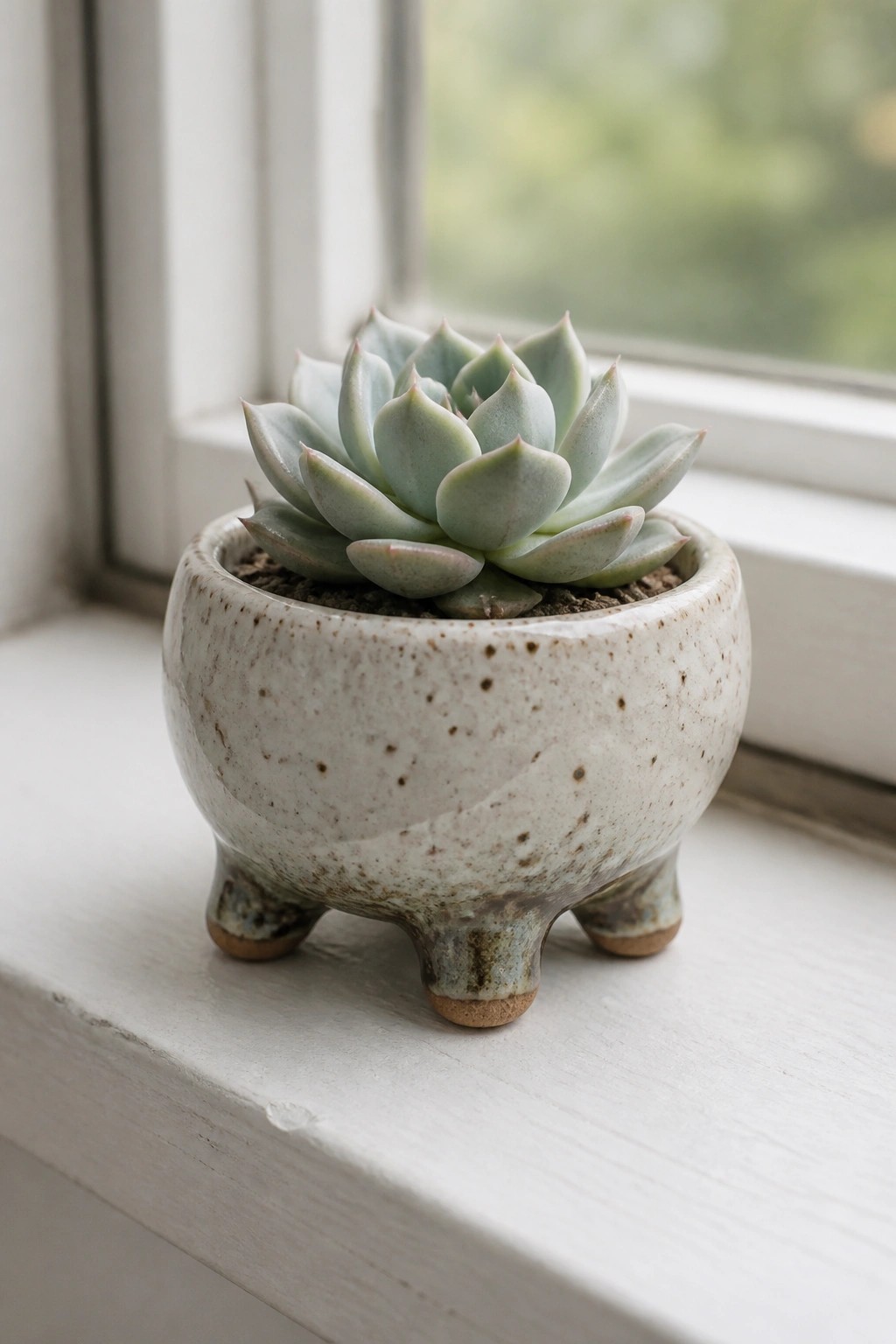
A small rounded bowl pinched from clay and lifted on three short legs makes a practical mini planter. The speckled neutral glaze keeps the surface simple while the legs add height and keep the base from sitting directly on a surface. This shape works especially well for succulents because it gives the plant room to sit slightly above the soil line without extra hardware. It belongs in the small planter category of pinch pot projects.
What makes this idea useful is that the legs improve airflow and drainage while creating a clean display on a shelf or sill. You can scale the same form down for a ring dish or widen it slightly for a small herb starter. In tight spaces like a desk or bathroom window, the compact tripod shape keeps the plant stable without taking much room. For variation, try the same base with a matte glaze or add a shallow groove around the rim before the clay dries.
Pressed Leaf Trinket Bowl
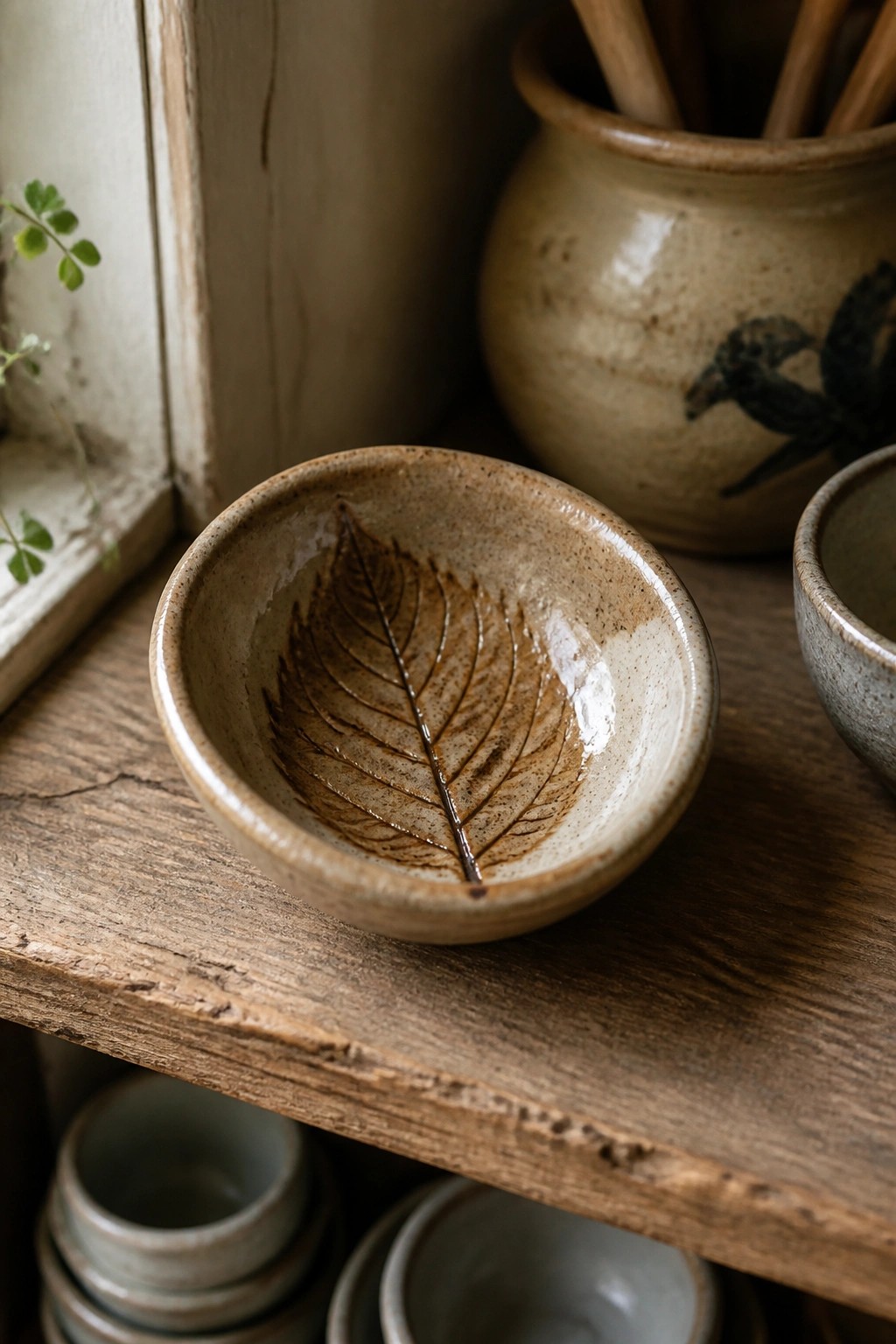
A pinch pot bowl becomes a trinket dish when you press a leaf into the wet clay to leave a clear vein pattern on the interior. The leaf detail stays visible under a light, speckled glaze that lets the texture show through without covering it. This keeps the project simple while turning a basic round form into something more specific.
What makes this idea useful is how the leaf imprint can be swapped for any leaf shape you find outside, letting you match the size of the bowl to the plant material. The small scale works well for rings or coins on a bedside table or entry shelf. You could use the same press method on a deeper pinch pot to make a mini planter instead, or skip the glaze on the outside for a more matte finish.
Marbled Pinch Pot Trinket Bowl
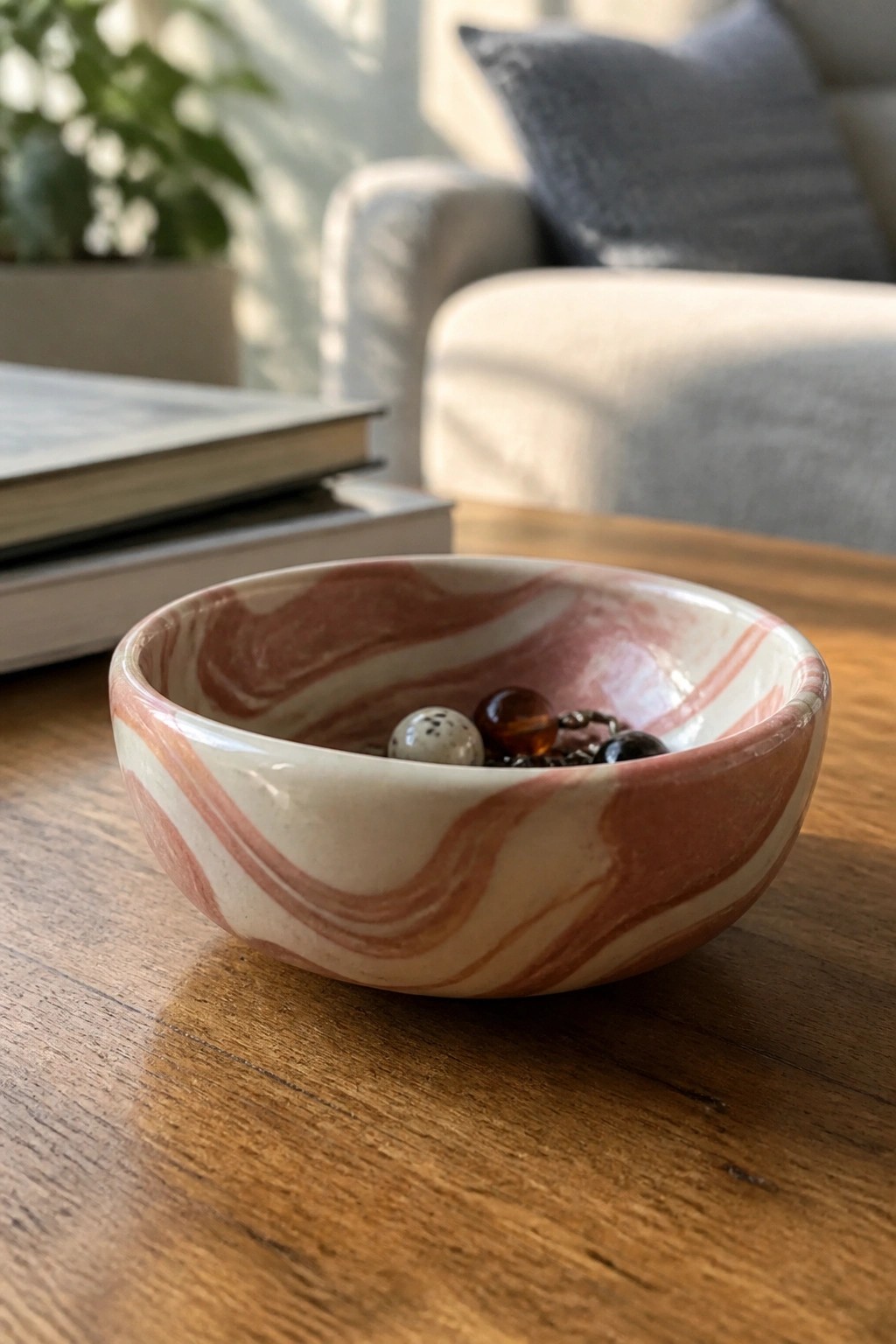
A small pinch pot bowl made with two tones of clay swirled together creates a simple marbled effect in soft pink and white. The shallow round shape works well as a trinket bowl for holding jewelry, keys, or small desk items. The pattern comes from mixing the clays before forming the pot, so each one ends up slightly different. This approach keeps the project quick while giving the finished piece a clear handmade look.
What makes this idea useful is how the small size fits easily on a dresser, nightstand, or entry table without taking up much space. You can repeat the same marbling with other color pairs or keep the bowl plain and add a simple glaze instead. The shape also works for holding plant saucers or small bathroom items like hair ties. For a quick variation, try making two or three bowls in the same session with different color mixes so you end up with a matching set.
Hanging Pinch Pot Planter with Face Detail
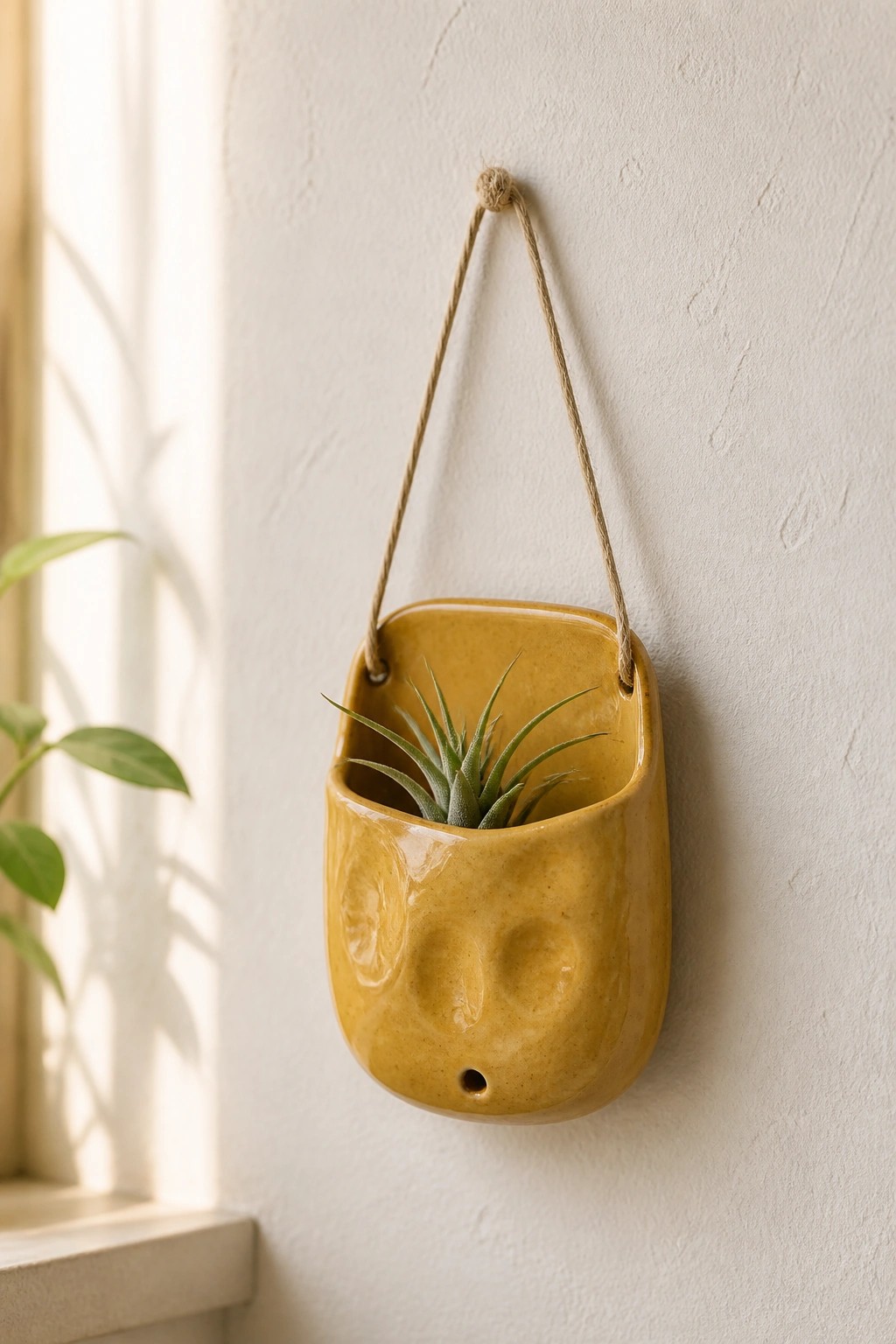
A small wall planter made from a pinched clay pouch gives you a compact spot for an air plant or tiny succulent. The rounded form includes raised circles and lines that create a simple face on the front, and a glossy mustard glaze covers the entire surface. Two holes near the rim hold the hanging cord while a drainage hole at the base prevents water from pooling. This approach turns a basic pinch pot into a vertical planter that mounts easily on any wall.
What makes this idea useful is the hanging setup, which works well in tight spaces where shelf room is limited. You can skip the face details and keep the surface smooth if you want a faster version, or change the glaze color to match other room accents. The same pinched shape also works as a small bathroom holder for cotton balls if you leave out the drainage hole. The bright glaze and plant pairing make the finished piece easy to photograph for project boards.
Frequently Asked Questions
What materials do I need to start making pinch pots at home?
Start with air dry clay or oven bake clay from any craft store, as these require no kiln. You will also need a small bowl of water for smoothing, a rolling pin or bottle for flattening, and basic tools like a toothpick or plastic knife for details. For decoration, gather acrylic paints, brushes, and a clear sealant spray. All of these items are inexpensive and available online or in local stores, making it easy to begin without special equipment.
Which clay works best for air drying pinch pots if I do not have access to a kiln?
Air dry clay is ideal for beginners because it hardens at room temperature in one to three days depending on thickness. Choose a brand labeled for crafts that stays flexible while wet but becomes rock hard when dry. Avoid polymer clays unless you have an oven, since they need baking. Test a small piece first to check drying time in your climate, and cover projects loosely with plastic wrap overnight to prevent uneven cracking.
How can I ensure my mini planters are waterproof for real plants?
Line the inside of the finished planter with a waterproof sealant like Mod Podge or a ceramic glaze alternative after painting. Add a drainage hole by poking a small opening in the base before the clay dries fully. Use a plastic insert or small pot inside the clay one for extra protection against moisture. This setup keeps the clay intact while allowing plants to thrive without leaks.
What are some easy ways to decorate trinket bowls without special tools?
Press textures into the wet clay using household items like lace, leaves, or the end of a pencil for patterns. Once dry, apply acrylic paints in layers and add simple designs with markers or washi tape. For a polished look, finish with a matte or glossy sealant. These methods let you create unique pieces that match the 23 ideas while keeping the process simple and fun for all skill levels.
Are pinch pot projects suitable for kids or complete beginners?
Yes, these projects work well for children ages five and up with adult supervision, as the pinching technique builds fine motor skills without complex steps. Beginners should start with small amounts of clay and practice basic shapes like bowls before trying detailed designs. Focus on the trinket bowl and mini planter ideas first, since they use forgiving forms that hide minor imperfections. Always work on a protected surface and wash hands after handling clay.

Pottery Path is my cozy corner of the internet where I share clay ideas, pottery inspiration, and simple projects you can recreate at home. I love exploring everything from air dry clay to handbuilt pottery to cute minis that brighten your day. My goal is to make clay crafting feel easy, fun, and welcoming for anyone who wants to try it.
You will find beginner friendly tutorials, creative pottery painting ideas, and lots of warm inspiration for slow and happy crafting. If you enjoy hands on creativity, this space will feel like home.