
I started painting fruit on my pottery a few months ago when I wanted something simple to try.
Lemons, strawberries, and blueberries turned out to be easy shapes that look good on different items like bowls and cups.
I have collected twenty ideas that use these fruits in various ways.
Some focus on just one fruit while others mix them together.
Most of them are basic enough that anyone can give them a go with some practice.
Lemon Slices Painted Across a Ceramic Mug

A standard ceramic mug receives a light speckled glaze as its base, then gets finished with several lemon slices painted directly onto the surface. The slices appear in different sizes and angles, with one cut showing the inner segments and others rendered as round cross-sections. The yellow tones sit on the neutral background without heavy outlining, so the design stays readable while the mug keeps its everyday shape and size.
The shape does a lot of the work here because the low, rounded body gives the lemon slices room to sit without crowding the handle. You could repeat the same loose painting style on a small pitcher or a set of matching bowls by keeping the slices spaced out. In a kitchen, this kind of piece fits on open shelving where the fruit detail shows up against plain dishes. For a gift, something like this works well with a simple linen towel in matching tones.
Blueberry Clusters Painted Inside a Ceramic Bowl

A wide ceramic bowl painted with scattered blueberry clusters offers a simple way to bring fruit motifs into a kitchen piece. The design repeats round berry shapes in varying sizes, using blue tones with small white highlights and leafy accents to suggest depth on the curved interior surface. This layout works on a functional bowl because the open shape lets the pattern show clearly whether the bowl sits empty or holds food. The light base glaze keeps the blue details visible while the handmade form gives the piece an irregular, organic edge.
What makes this idea useful is how the same cluster arrangement can be copied onto plates or a smaller cereal bowl to build a set without starting from scratch each time. In a kitchen this shape doubles as both a mixing bowl and a serving dish, so the painted details stay visible during daily use. You could simplify the motif to just a few berries along the rim if you want a quicker version on a mug or pitcher. The single-color approach also makes it easy to try on secondhand ceramics before committing to new pieces.
Strawberry Border Plate
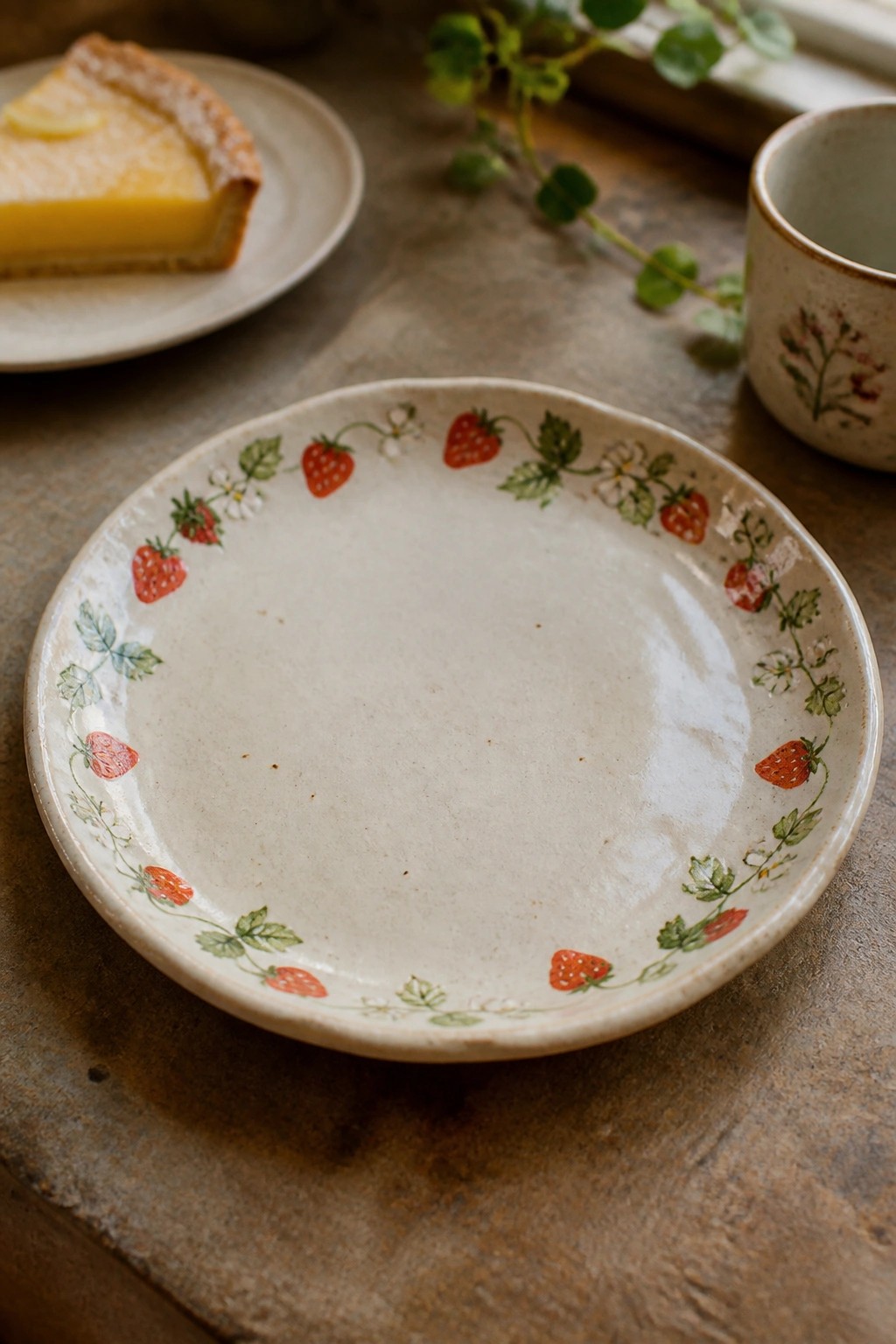
A handmade ceramic plate with a repeating strawberry border gives you a clean fruit motif that stays focused on the rim. The design uses small red strawberries, green leaves, and tiny white flowers spaced evenly around the edge, leaving the center plain for serving. This approach works especially well on a shallow plate shape where the painted detail frames whatever sits inside without competing for space.
What makes this idea useful is how the border treatment scales easily to other plate sizes or a full set. You could paint the same vine pattern on dessert plates or shorten the spacing for a larger serving platter. In a kitchen this kind of piece mixes well with other fruit themes like lemon or blueberry designs. The motif stays simple enough to freehand or trace if you want to adapt it onto plain store-bought plates.
Speckled Yellow Tray with Raised Strawberry Accent

A rectangular ceramic tray with built-in side handles uses a soft yellow glaze scattered with small blue specks as its base. One corner features a sculpted strawberry with separate green leaves and a glossy red body that sits slightly above the tray surface. The contrast between the flat speckled glaze and the raised fruit keeps the design simple while making the strawberry the clear focal point.
What makes this idea useful is how the sculpted detail stays out of the way during actual use. You could apply the same yellow speckle glaze to a smaller square dish or a rectangular butter tray and swap the strawberry for a lemon slice or a cluster of blueberries. In a kitchen this shape works well for holding spoons or resting a hot pan. The idea also scales easily to a soap dish by shrinking the tray and moving the fruit accent to one short end.
Lemon Segment Painted Bowl
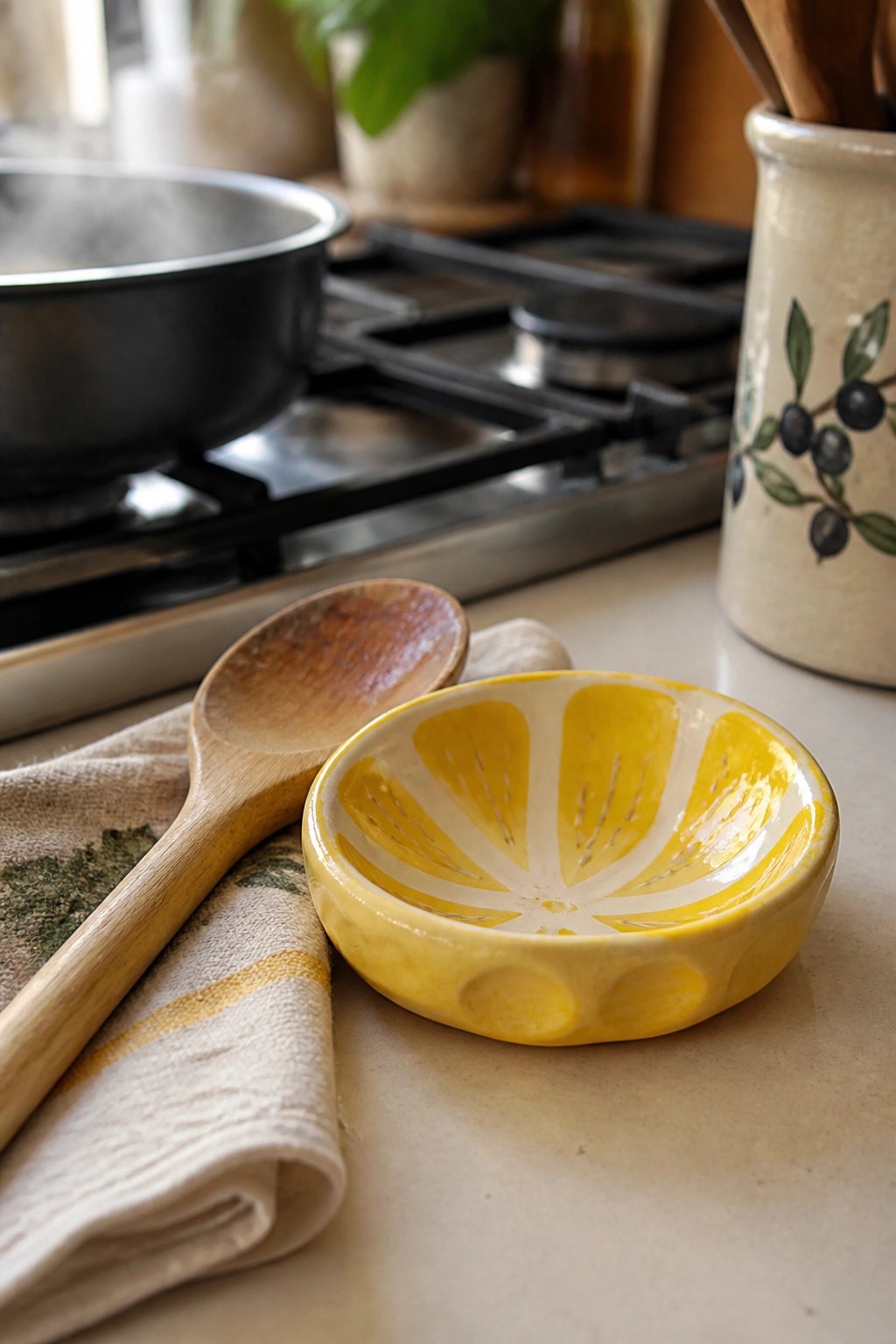
A small ceramic bowl works as a fruit-themed project when the interior is divided into yellow segments separated by white lines to suggest a sliced lemon. The glossy yellow glaze contrasts with the lighter lines and adds a few seed marks for detail. This approach turns an ordinary dish shape into a kitchen item that can hold salt, spices, or small utensils.
The compact size makes the bowl easy to adapt into a ring dish or a pinch pot for loose tea. You can repeat the same segment layout on a larger plate or shorten the lines for quicker versions on mugs. In a kitchen this piece stands out on open shelving because the bold yellow reads clearly from a distance.
Blueberry Border Ring Dish
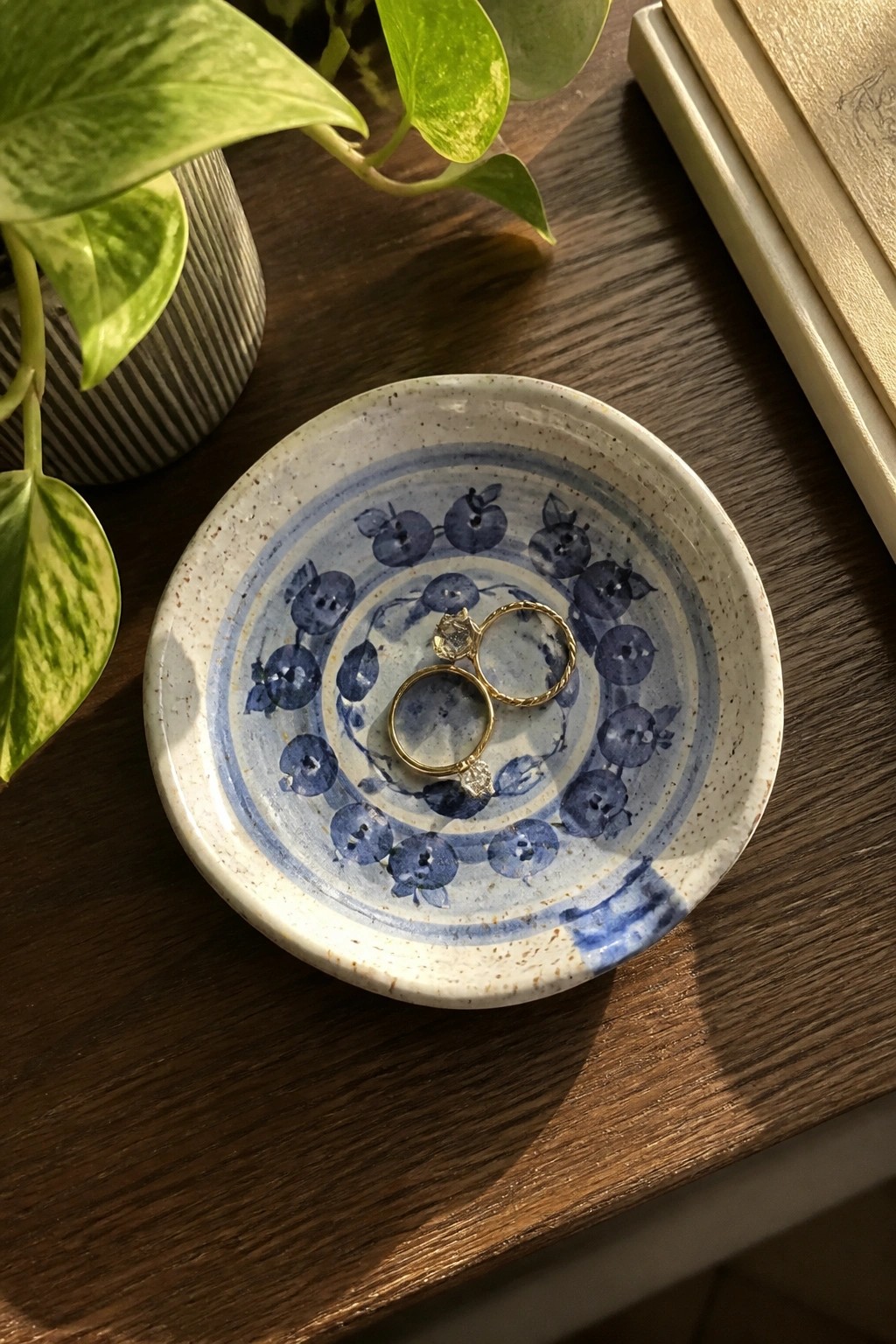
A small ceramic dish painted with a repeating blueberry border makes a practical ring holder or trinket bowl. Clusters of berries in blue underglaze circle the inner rim and leave the center clear for placing jewelry or small items. The speckled white glaze background keeps the fruit motif visible without crowding the surface. This approach turns a basic thrown or hand-built dish into a fruit-themed piece that stays functional.
What makes this idea useful is how the circular border pattern adapts easily to other small shapes like soap dishes or coaster sets. The open center works for jewelry storage on a nightstand but could also hold keys or loose change near a door. For a simpler version, painting just three or four berry clusters on one side still reads as blueberry-themed while cutting down on brushwork. The same motif scales well for matching kitchen items like a butter dish or small serving bowl.
Strawberry Faces on a Rounded Ceramic Planter

A small round ceramic planter gets its main impact from hand-painted strawberries placed at different heights around the body. Each strawberry is filled in red with simple black facial features and a green calyx on top, creating a repeating fruit pattern that covers most of the visible surface. The matte off-white base lets the red stand out while the slightly irregular rim adds a handmade touch without competing with the design. This approach works as a painted planter idea that stays functional for small succulents or herbs.
The rounded form gives you a curved canvas that makes the strawberries easy to space evenly without much measuring. You can copy the same face style onto a larger pot, a mug, or even a small tray if you want to match a set. In a kitchen or on a windowsill the bright red repeats well against neutral backgrounds and still leaves room for soil and a plant. If you prefer fewer details, paint only three strawberries and leave more of the base color showing.
Sculpted Strawberry Figurine

A small ceramic strawberry figurine makes a simple decor object that stands on its own. The rounded body is formed as a single piece with added arms and legs, then finished in red glaze with a green top and basic black facial lines. This approach keeps the shape recognizable while the limbs turn the fruit into a sitting character. The category fits best under decorative figurines or small shelf pieces rather than functional ware.
What makes this idea useful is the compact size that works on a desk, bookshelf, or windowsill without crowding other items. The same body shape can be reworked as a tiny planter by hollowing the center or turned into a paperweight by adding weight to the base. You could drop the arms and legs entirely and paint just the face on a simpler berry form for quicker results. The bright red glaze against the green top gives strong color contrast that shows up clearly in photos for sharing.
Three-Section Tea Light Holder with Painted Fruit
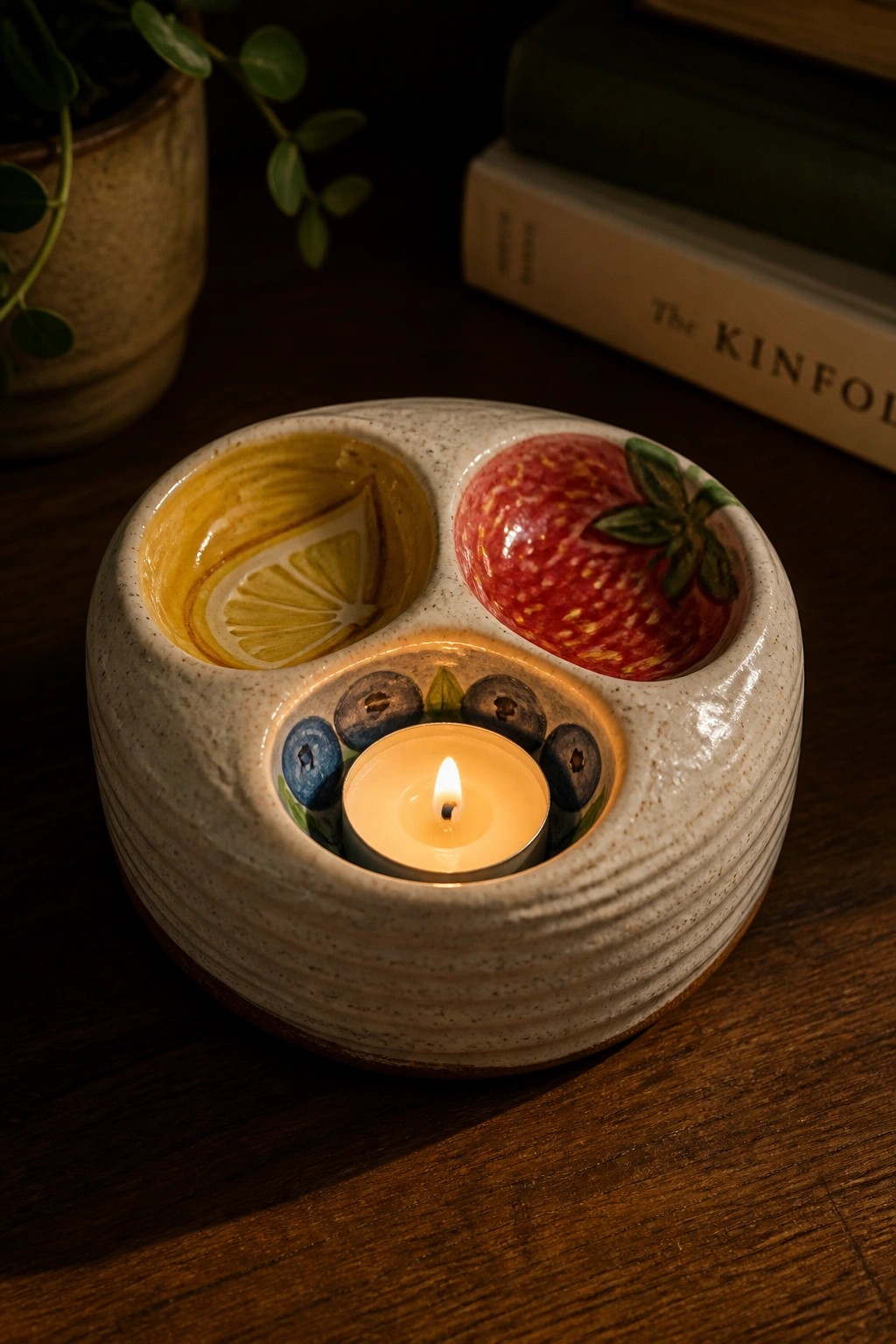
A divided ceramic tea light holder gives you three separate painting areas around a central candle spot. One compartment shows a simple lemon slice in yellow, another holds a red strawberry with green leaves, and blueberries ring the base of the tea light. The speckled clay surface and basic brushwork keep the fruit motifs clear and easy to read. This shape works as a small kitchen or tabletop candle piece.
What makes this idea useful is the built-in division that lets you paint three different fruits without them running together. You could copy the layout on a plain round dish and leave out the candle recess for a jewelry or trinket holder instead. The compact size fits on a windowsill or shelf without taking much space. For gifts the same divided form works well because each section can be personalized with a different fruit or color scheme.
Divided Pinch Bowl with Blueberry and Lemon Sections

A small two-compartment ceramic bowl works well for this idea because the divider keeps the blueberry cluster and lemon slices separate while still tying them together on one piece. The hand-painted fruits sit on a speckled off-white glaze that lets the blue and yellow stand out without extra decoration. This format fits the fruit painting theme by using the two sections to show different produce instead of repeating the same motif.
What makes this idea useful is how easily the divided shape adapts to salt cellars, spice holders, or small snack dishes. You could swap the blueberries for strawberries or shrink the same layout onto a set of four single-compartment bowls. In a kitchen, the compact size keeps it practical for daily use while the fruit details make it more interesting than plain whiteware.
Berry-Painted Lidded Jam Jar
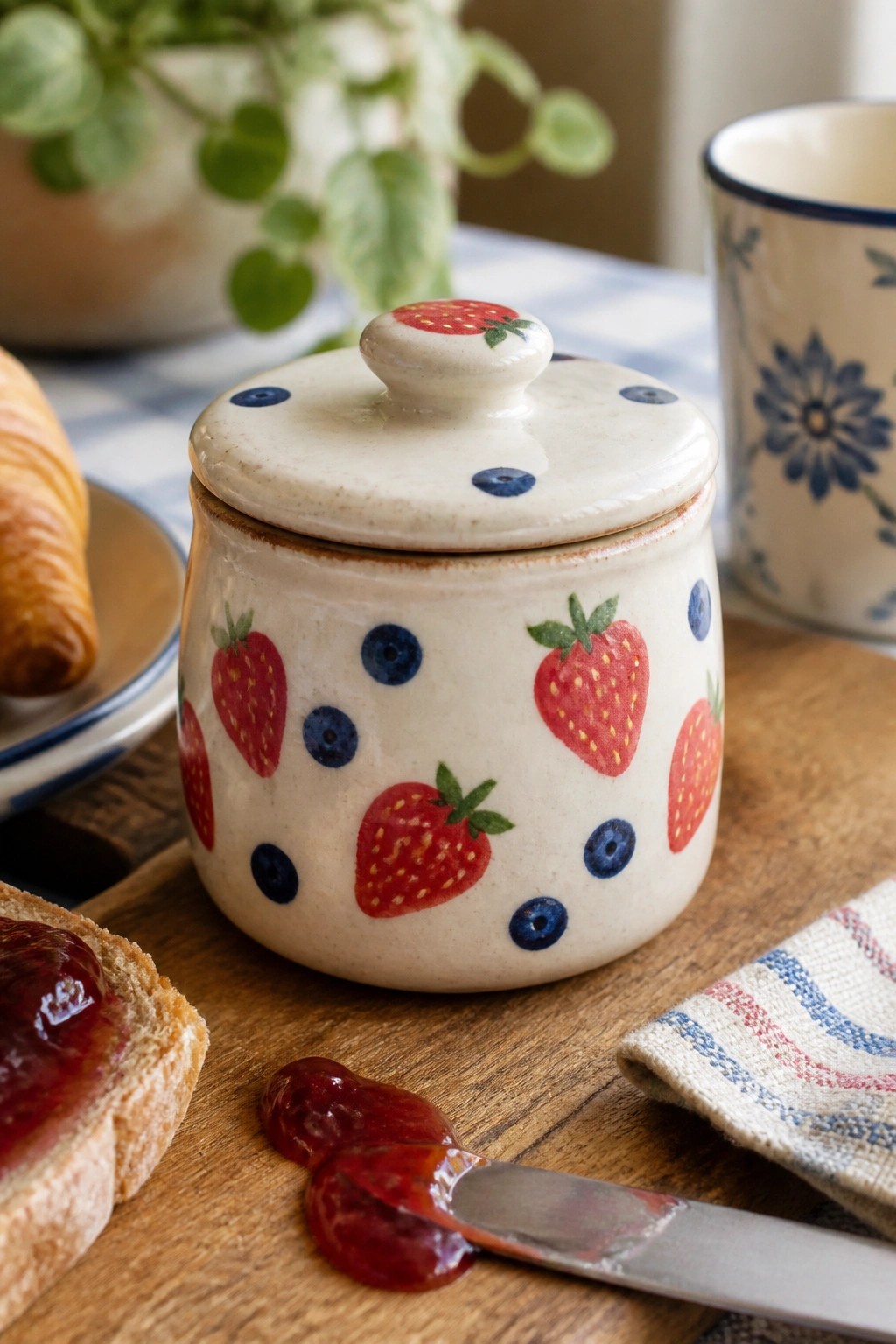
A small lidded ceramic jar makes a practical jam pot when decorated with strawberries and blueberries. The pattern places the fruit motifs around the body with simple blue dots filling the spaces, and a sculpted strawberry on the lid knob ties the design together. This keeps the decoration tied to kitchen use without overcrowding the surface.
What makes this idea useful is how the compact shape stores jam or sugar while sitting neatly on a table or counter. The same berry layout can be simplified for a set of small bowls or expanded onto a taller canister. In a kitchen this painted jar stands out because the motif matches what it holds and works as an easy gift.
Lemon Branch Ceramic Wall Plaque
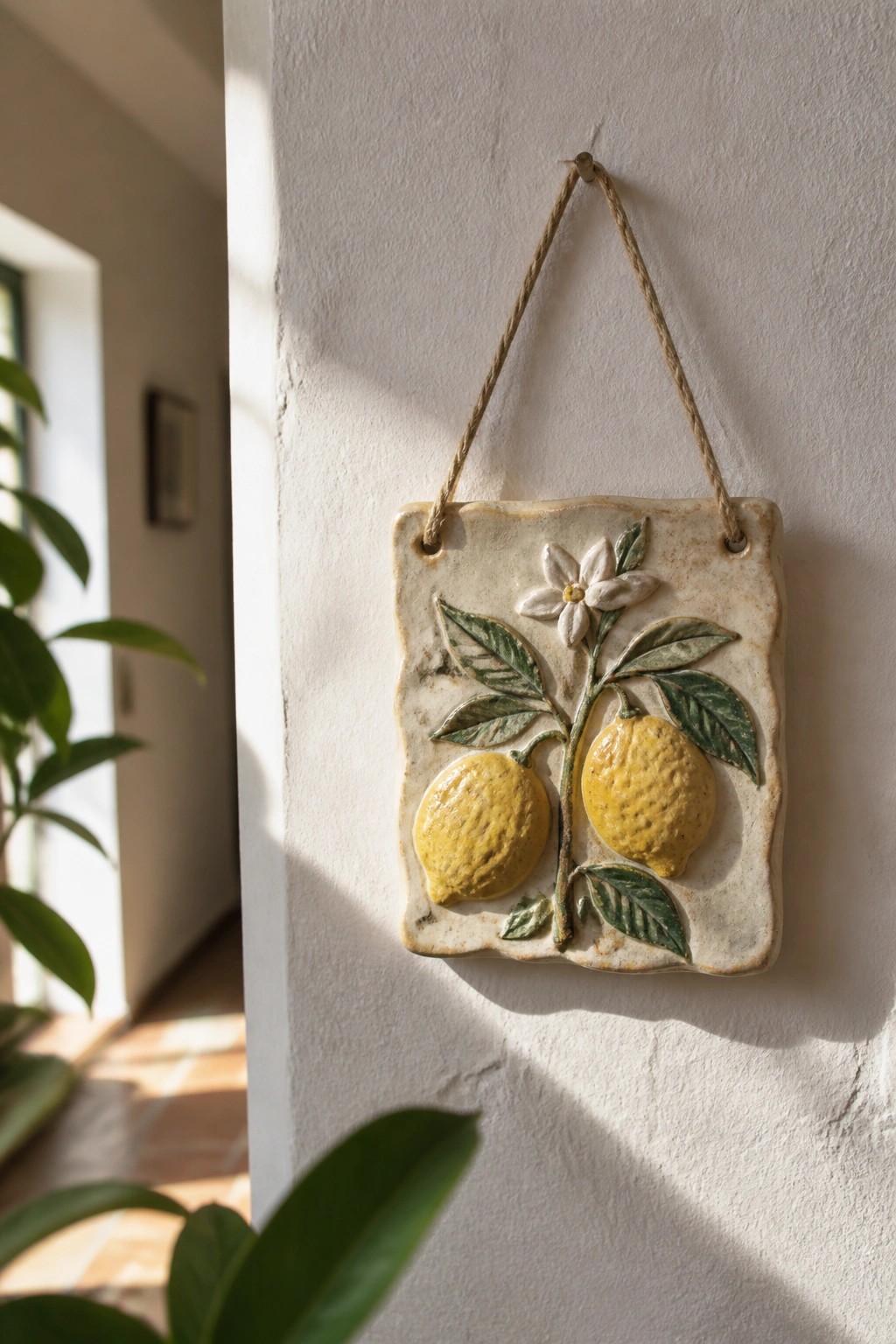
A rectangular ceramic plaque works well here as a wall hanging because the low-relief lemons, leaves, and flower sit raised on the surface without overpowering the flat tile shape. The yellow and green glazes on the fruit and foliage stand out against the off-white background, while the two holes at the top let you hang it easily with cord or wire. This approach fits the decor object category and keeps the focus on the sculpted branch rather than adding extra borders or frames.
The small scale makes this easy to adapt into a set of matching tiles for a kitchen backsplash or turn into a single accent piece above a sink. You could simplify the relief to just one lemon if you want faster drying and firing times, or repeat the branch pattern on a longer rectangular tray for holding utensils. In a kitchen this kind of piece draws attention without taking up counter space, and the same layout works just as well painted with oranges or figs if you want variety on a gallery wall.
Strawberry Accent Soap Dish

A small ceramic soap dish with raised ridges gives you a simple way to add a fruit motif without crowding the surface. The blue glaze fades from light to deep tones across the piece while a single strawberry painted in one corner keeps the design balanced. The ridges serve a practical purpose by lifting the soap slightly for drainage and the compact square shape fits easily beside a sink.
What makes this idea useful is how the ridges and small scale let you adapt it for other bathroom items like a sponge holder or ring dish. You could paint a blueberry or lemon cluster in the same spot or change the glaze color to match different towels and tiles. The painted detail stands out on a plain background so the piece photographs well for sharing. For a gift this shape works especially well because it stays functional while the fruit adds a quick personal touch.
Painted Fruit Coasters
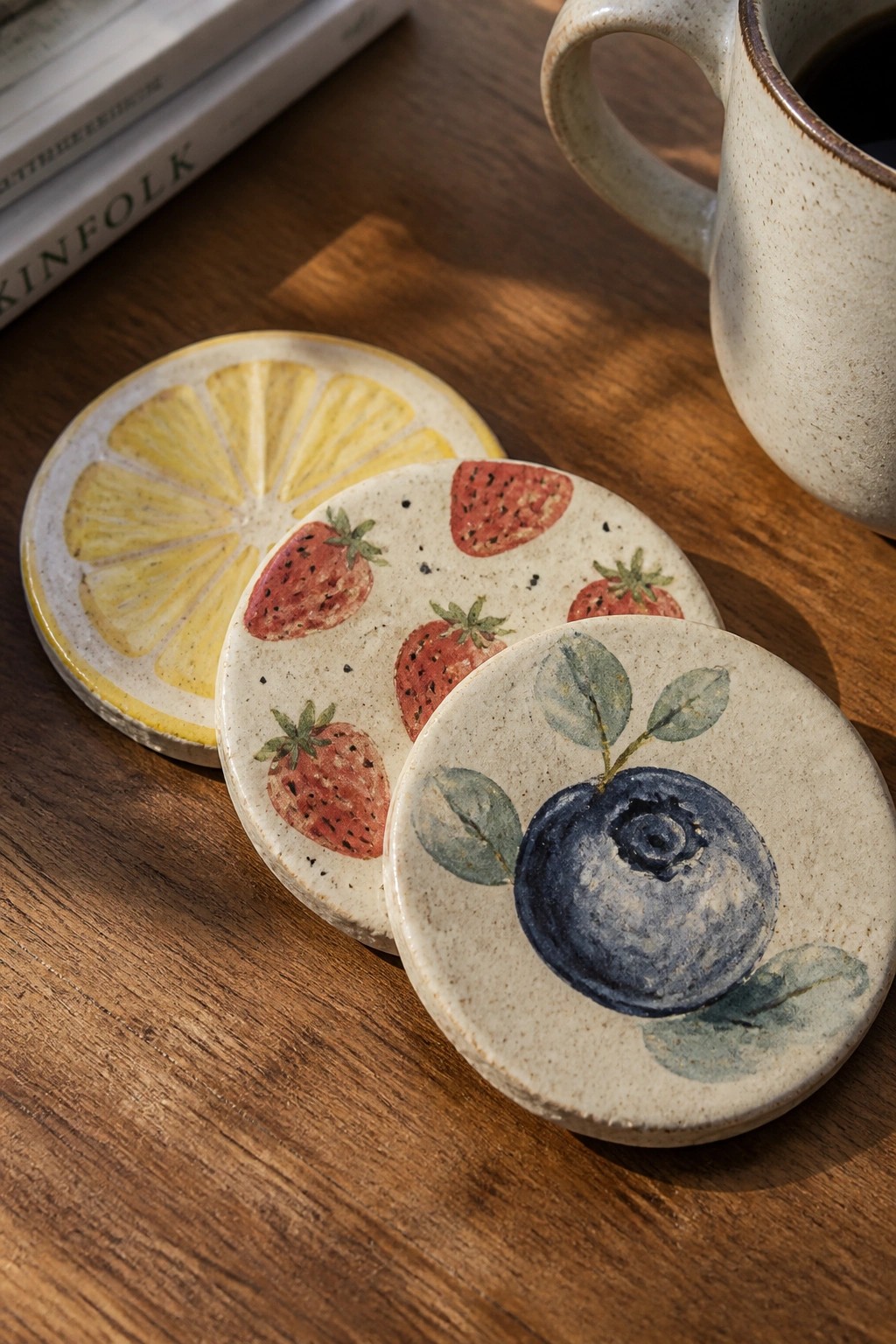
Ceramic coasters with hand-painted lemon slices, strawberries, and blueberries offer a simple way to use fruit motifs on flat surfaces. The round form matches standard glass and mug sizes, while the light speckled clay lets the watercolor-style fruit stand out through soft color blocks and leaf details. This approach fits the kitchen item category and works on any basic bisque or stoneware blank without needing extra sculpting.
What makes this idea useful is how the flat shape turns basic clay into something that protects surfaces during daily use. You can scale the same fruit paintings down for smaller ring dishes or repeat them across a set of four or six by varying the fruit placement. In a kitchen these coasters handle condensation from cold drinks and pair easily with plain mugs or plates. The painted detail helps this stand out on Pinterest because the fruits read clearly even in small thumbnail views.
Berry Vine Utensil Crock

A tall cylindrical ceramic crock serves as a utensil holder when painted with a single vertical vine of strawberries and blueberries. The design places the fruit along a curving stem that runs the full height of the piece, using small clusters of blue berries and red strawberries with green leaves for contrast against the pale clay. The motif stays narrow enough to leave room on the sides while still reading clearly from a distance. Light blue vertical accents break up the surface and echo the berry tones without competing with the main pattern.
This kind of holder works on a kitchen counter where wooden spoons and whisks are stored daily. You can stretch the same vine across a shorter jar or repeat it around a wider bowl by spacing the fruit farther apart. Keeping the painting to one side makes the project faster to finish if you want to test the colors first. The kitchen setting also shows how the fruit motif stays useful instead of turning purely decorative.
Fruit-Dotted Ceramic Toothbrush Holder
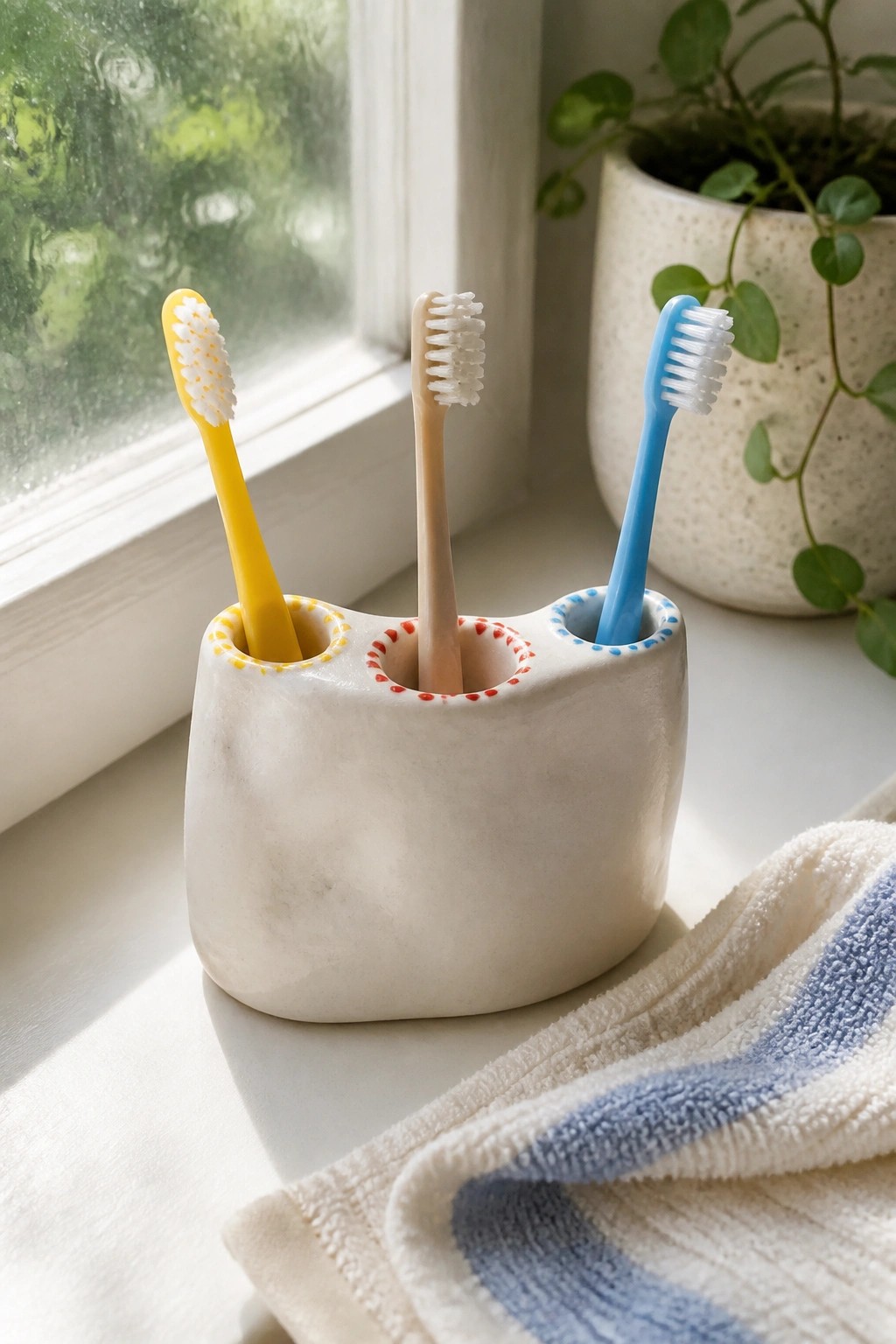
A three-compartment ceramic toothbrush holder works as a compact bathroom item when each rim gets a ring of small dots in yellow, red, and blue. The colors directly reference lemons, strawberries, and blueberries while the rest of the piece stays plain white clay with a matte finish. The rounded rectangular shape and separate holes keep the toothbrushes upright without extra hardware.
What makes this idea useful is how the simple dotted rims add a fruit theme without covering the whole surface or needing complex painting. You could repeat the same color dots on a matching soap dish or small cup to build a set. The compact size fits narrow sink ledges or windowsills where larger planters or trays would not work. For a different take, drop the blue dots and repeat the yellow and red pattern across all three openings to focus on just lemons and strawberries.
Blueberry Branch Yarn Bowl

A yarn bowl with a notched rim gives knitters a steady place to feed yarn from a skein without it rolling away. The design uses a curving branch painted with clusters of blueberries and small leaves that wrap around the exterior and frame the notch. The speckled clay body and simple two-tone glaze keep the fruit motif clear while the bowl shape stays practical for everyday use.
What makes this idea useful is how the notch becomes part of the painted branch so the yarn appears to grow from the design. You can swap the blueberries for strawberries or lemons by adjusting the cluster shapes and leaf count while keeping the same branch layout. The bowl also works as a small holder for scissors and notions if you leave the notch off. A clean version like this photographs well for project boards because the fruit detail stays readable even at small sizes.
Strawberry and Blueberry Lidded Trinket Box

A small round ceramic box with a flat lid works well for this fruit painting idea. The lid features a centered red strawberry surrounded by several blue berries and green leaves on a white glazed surface, while the lower half stays plain in a matte finish. This keeps the design focused on the painted fruit without adding extra detail to the body. The compact size makes it a straightforward project for anyone wanting to try simple food motifs on functional pottery.
The shape does a lot of the work here because the flat lid gives you a clear canvas for the strawberry and berries without needing to curve around edges. You could paint the same fruit layout on a matching soap dish or scale it down for a ring holder. This kind of piece fits on a bathroom counter or bedside table for small items and stands out on Pinterest when the colors stay bright against the white background. For a variation, swap the strawberry for a lemon slice on the same style of box.
Lemon Slice Creamer Pitcher
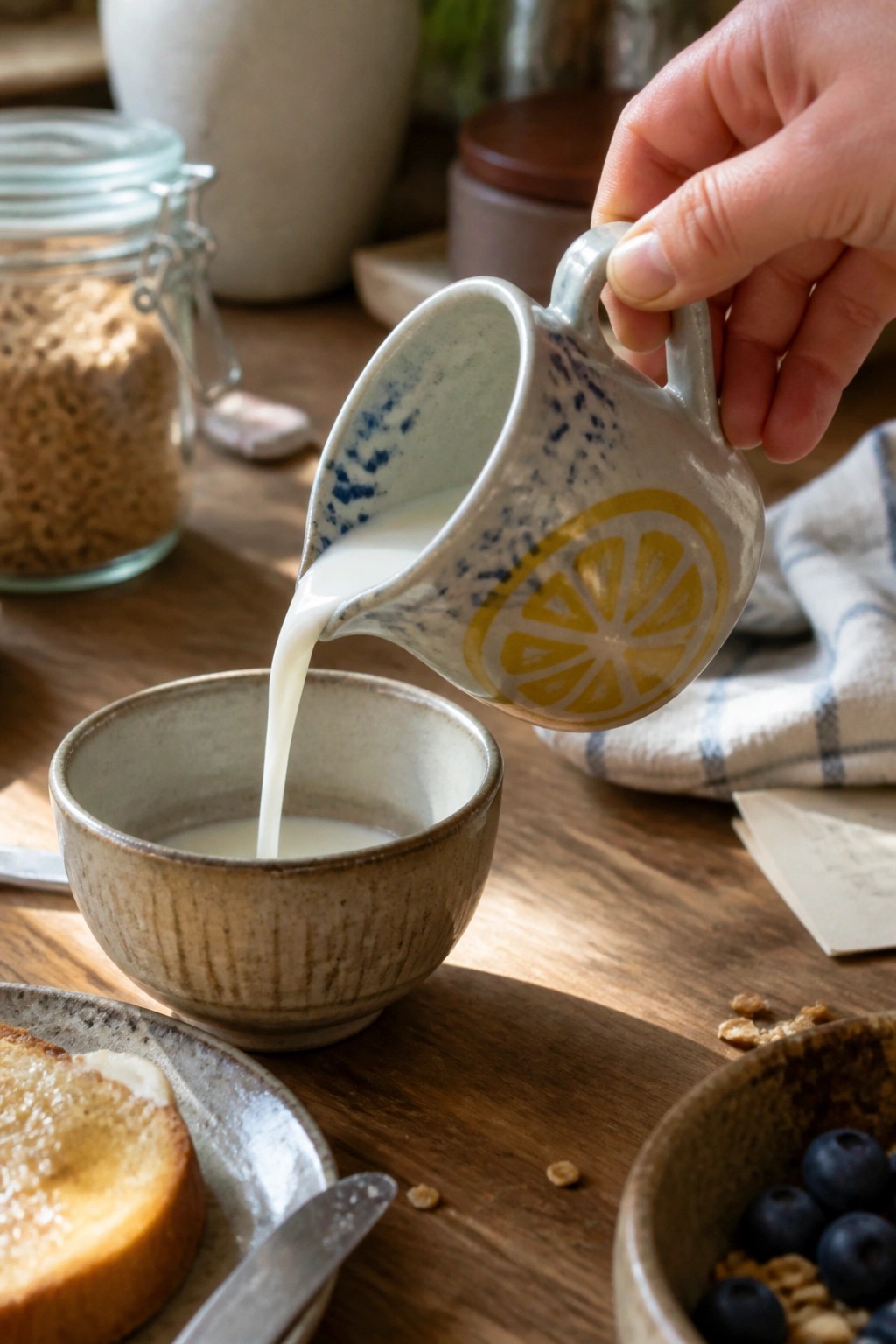
A small ceramic creamer pitcher makes a simple fruit-inspired project when you paint a single yellow lemon slice on the side. The design uses flat color blocks for the segments and rind, which read clearly even on a busy speckled glaze. This approach keeps the focus on the lemon while turning a basic kitchen shape into something more specific.
The shape does a lot of the work here because the pitcher already fits breakfast or coffee setups without extra explanation. You could repeat the same lemon motif on a set of small bowls or a sugar jar to build a matching group. For a gift, the compact size stays useful and easy to wrap, and the painted detail helps it stand out from plain store-bought creamers.
Hanging Ceramic Fruit Ornaments
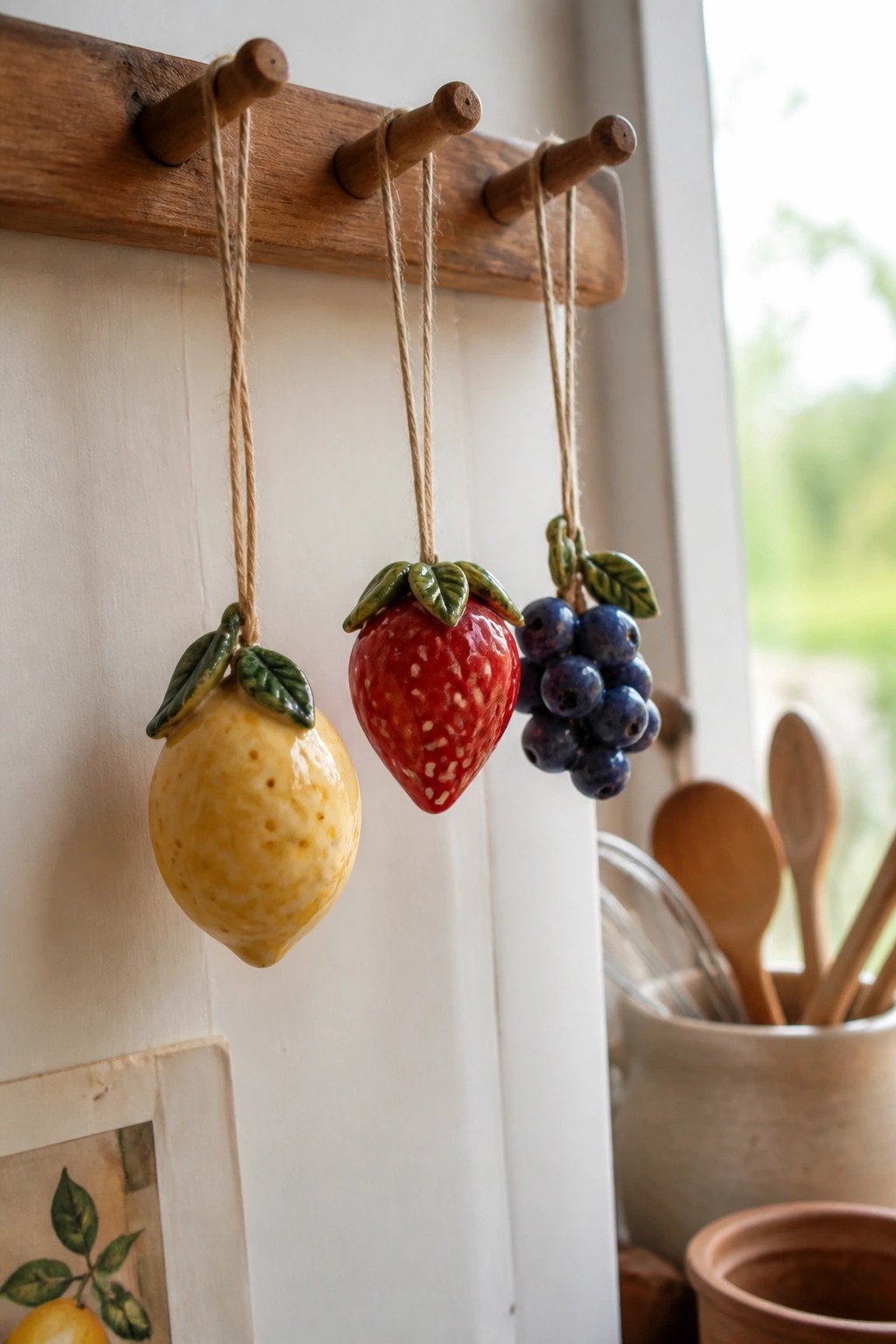
Ceramic fruit ornaments work well as small hanging pieces when you shape clay into whole fruits like lemons, strawberries, and blueberry clusters, add simple leaf details on top, and finish them with glossy glazes in natural colors. Each piece gets a hole or loop for twine so it can suspend from a rack, hook, or branch. This approach keeps the project in the decor object category and gives you three-dimensional fruit forms instead of flat painted surfaces.
What makes this idea useful is that the same fruit shapes scale down easily for magnets, keychains, or a short garland. In a kitchen these ornaments fit along a window frame or above a sink where they catch light without needing shelf space. You could rework the design by making just one fruit type per piece or skipping the sculpted leaves and adding them with underglaze instead if you want fewer steps.
Frequently Asked Questions
What supplies are essential for trying out fruit-inspired pottery painting with lemons, strawberries, and blueberries?
Acrylic paints in bright yellows, reds, and blues form the foundation, along with fine-tipped brushes for details, a palette for mixing shades, and unpainted ceramic pieces like mugs or bowls. Include a pencil for light sketching and a sealant or glaze to protect the finished work.
How do I make strawberry designs stand out with realistic texture on pottery?
Layer a base coat of red, then add tiny yellow dots for seeds using a small brush. Shade one side with a darker red mixed with a bit of brown to create depth, and finish with green leaves at the top. This approach works well on curved surfaces like vases.
What steps ensure the blueberry patterns remain vibrant after the pottery is fired?
Apply multiple thin coats of blue paint rather than one thick layer, allowing each to dry fully. Mix in a hint of purple for richness and use white highlights for a fresh look. A clear food-safe glaze applied before firing locks in the colors effectively.
How can I combine lemons, strawberries, and blueberries on a single pottery item without overcrowding?
Arrange them in a repeating border pattern, placing lemons on one side, strawberries opposite, and blueberries as accents in between. Use consistent sizing for balance and leave negative space to let each fruit pop. Sketch the layout first to plan spacing.
What common mistakes should I avoid when painting these fruit ideas on ceramics?
Do not skip the base coat, as it helps colors adhere evenly. Avoid rushing the drying process between layers, which can cause smudging. Test colors on a scrap piece beforehand to match the vibrant tones described in the ideas.

Pottery Path is my cozy corner of the internet where I share clay ideas, pottery inspiration, and simple projects you can recreate at home. I love exploring everything from air dry clay to handbuilt pottery to cute minis that brighten your day. My goal is to make clay crafting feel easy, fun, and welcoming for anyone who wants to try it.
You will find beginner friendly tutorials, creative pottery painting ideas, and lots of warm inspiration for slow and happy crafting. If you enjoy hands on creativity, this space will feel like home.