I have tried painting a few pottery items with moon and star designs over the past year.
It started as a way to use up some darker glazes I already had on hand.
The results were simple but I liked how they turned out on mugs and small bowls.
These ideas come from what worked for me and a few adjustments I made along the way.
I hope they give you something easy to try if you feel like picking up a brush.
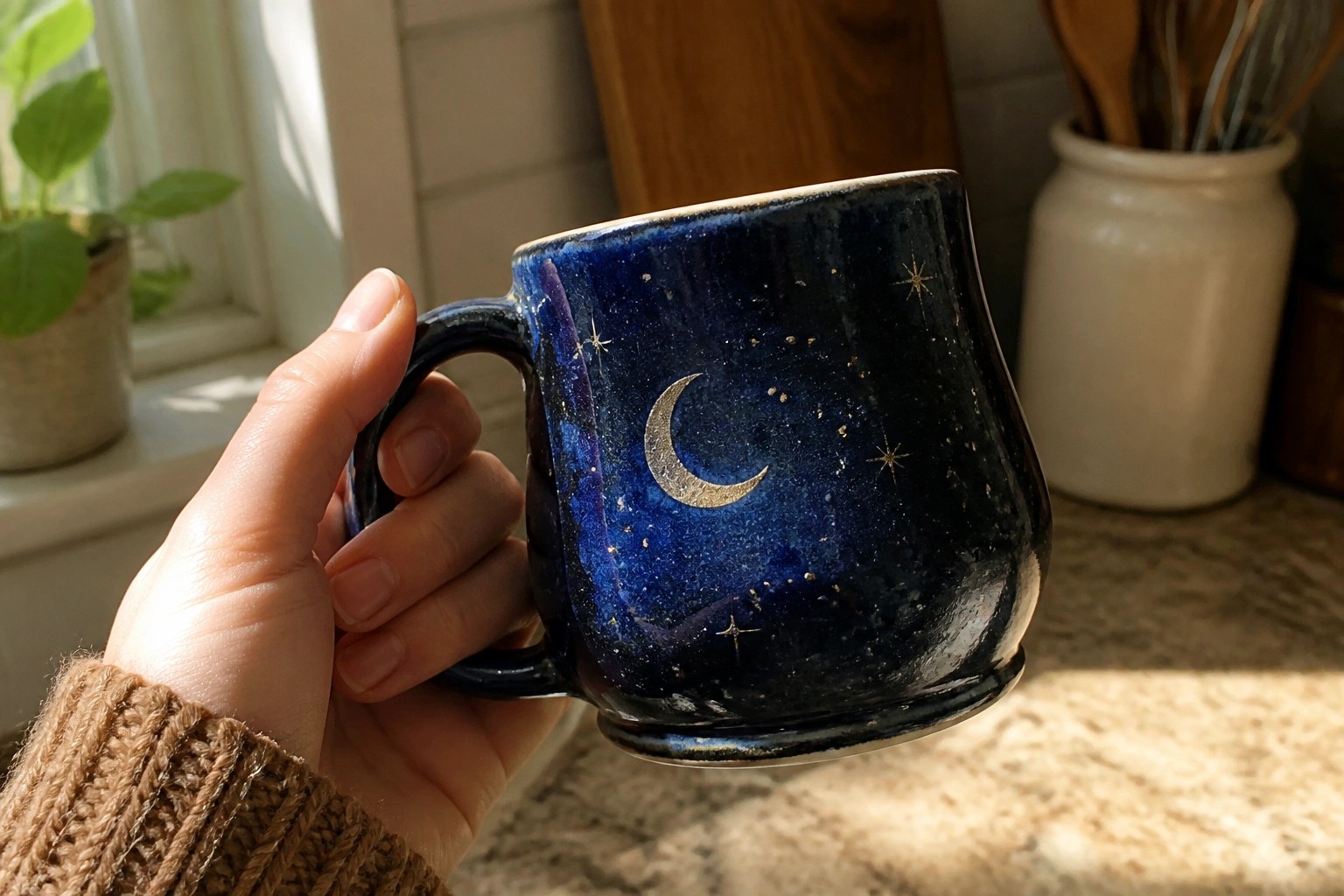
Gold Crescent Moon and Stars on a Speckled Blue Mug

A stoneware mug finished in a deep blue glaze forms the base for this project, with a single large gold crescent moon and scattered gold stars of different sizes painted across the surface. Small gold speckles fill the remaining space to suggest a starry field without crowding the design. The rounded mug shape lets the moon sit naturally on one side while the stars spread around the curve.
What makes this idea useful is how the limited color palette keeps the painting simple while still reading clearly from a distance. The shape works especially well as a kitchen mug or desk cup because the handle stays free of decoration. You could scale the same moon and star layout down for an espresso cup or repeat it around a small bowl. The strong contrast between the dark glaze and gold paint also makes the finished piece easy to photograph for sharing.
Crescent Moon Wall Hanging Disc

A round ceramic disc with a drilled hanging hole works as a straightforward wall plaque. Deep blue glaze covers the surface while a raised crescent moon curves across one side and small white stars are painted at different sizes and angles. The design keeps the focus on the night sky motif without adding extra layers or textures. This fits the category of a simple decor object that can hang anywhere a nail or hook fits.
What makes this idea useful is how the flat round shape and single hanging point make it easy to display without needing a stand or shelf. You could rework the same blue glaze and star layout onto a smaller disc for an ornament or stretch it across a rectangular tile for a set. The contrast between the solid glaze and the lighter painted details helps the piece read clearly from a distance. In a bedroom or hallway this kind of hanging works especially well because it stays out of the way while still showing the motif.
Orion Constellation Ceramic Planter

A small ceramic planter uses a gradient glaze that moves from dark blue at the rim to teal near the base, giving it a night sky look. The Orion constellation is painted in white dots and connecting lines across the front, with the name added in simple lettering. This turns an ordinary plant pot into a piece that fits the celestial pottery category while still functioning as a holder for small houseplants.
What makes this idea useful is how the constellation can be swapped out for any star pattern without changing the rest of the design. The rounded shape and size work well on a windowsill or desk with trailing plants. You could apply the same glaze and paint approach to a mug or small vase if you want a non-plant version. The clean lines of the constellation keep the surface easy to paint even on curved pottery.
Starry Tray with Crescent Moon Handle

A rectangular ceramic tray with a sculpted crescent moon on one short edge gives you a flat surface for a night sky design. Deep blue glaze covers the base while small gold stars in different sizes are painted across it to suggest constellations. The moon handle adds a raised detail that reinforces the theme and provides a practical grip.
The shape does a lot of the work here because the tray stays useful for holding tea accessories, jewelry, or small desk items while the star pattern keeps it on theme. You could repeat the same gold stars on a round plate or simplify them to white dots on a smaller dish. The moon handle makes the piece easy to carry or hang, and metallic paint helps the stars show up even in low light. This layout also works well on Pinterest because the contrast between the dark glaze and bright stars reads clearly in thumbnails.
Crescent Moon Swirl Bowl

A ceramic bowl with a dark matte exterior uses its interior surface for the main design. Loose concentric brushstrokes in deep blue and purple create a simple night sky pattern that covers the inside walls. A small white crescent moon sits on one side with tiny white dots scattered around it as stars. The painting stays inside the form so the bowl remains practical for food use.
What makes this idea useful is that the design stays hidden until the bowl is in use, which keeps the outside simple and easy to stack. You could repeat the same loose swirl technique on smaller bowls or try it on plates where the moon sits near the rim. The dark background color makes the lighter moon and stars stand out without needing extra layers of paint. For a first celestial project this shape gives you a large curved surface to practice on while still ending up with something you can eat from every day.
Crescent Moon Ring Dish

A crescent moon shaped ceramic dish serves as a compact ring holder or trinket tray. The interior features a blue glaze dotted with gold stars and a small painted crescent moon, while the rim remains lighter to frame the design. This painted detail turns the curved form into a functional night sky piece that sits flat on a surface.
The compact crescent shape makes this ring dish practical for small surfaces like bedside tables or vanities. You could adapt the idea by changing the star layout or using a different metallic color on the same bisque form. The small scale also makes it straightforward to produce in batches for gifts without requiring much clay or kiln space.
Star Cutout Tea Light Holder

A small round ceramic vessel becomes a tea light holder when star shapes are cut through the walls before the final firing. The deep blue glaze covers the exterior while the cutouts let the flame shine through as points of light. This approach keeps the surface plain and relies on the negative space for the night sky pattern instead of added paint or carving.
The compact size works on a nightstand or windowsill where you need a contained light source. You could repeat the same star cutouts on a wider low bowl for a different proportion or swap the blue glaze for black to change how the light reads at night. For gifts this shape needs only a basic pinch or slab form plus a star cutter, so it adapts quickly to other small holders like incense burners.
Constellation Hand Spoon Rest

A hand-shaped ceramic spoon rest gives you a practical kitchen item that keeps spoons from touching the counter. The palm area carries a simple constellation made from etched stars and connecting lines that show clearly against the dark teal glaze. The curved fingers create a natural dip that holds the spoon in place without sliding. This turns a basic utensil holder into a small celestial project using only surface carving and a single glaze color.
The compact size works well next to the stove or on an open shelf where it stays visible but takes little space. You could repeat the same star pattern on a flat rectangular tray or a round plate if the hand form does not suit your setup. The lines and dots are straightforward to score into leather-hard clay before bisque firing. For a gift this shape offers both function and a clear night-sky theme that stands out in a kitchen without needing extra color layers.
Moon Phase Rim on a Crackled Bowl
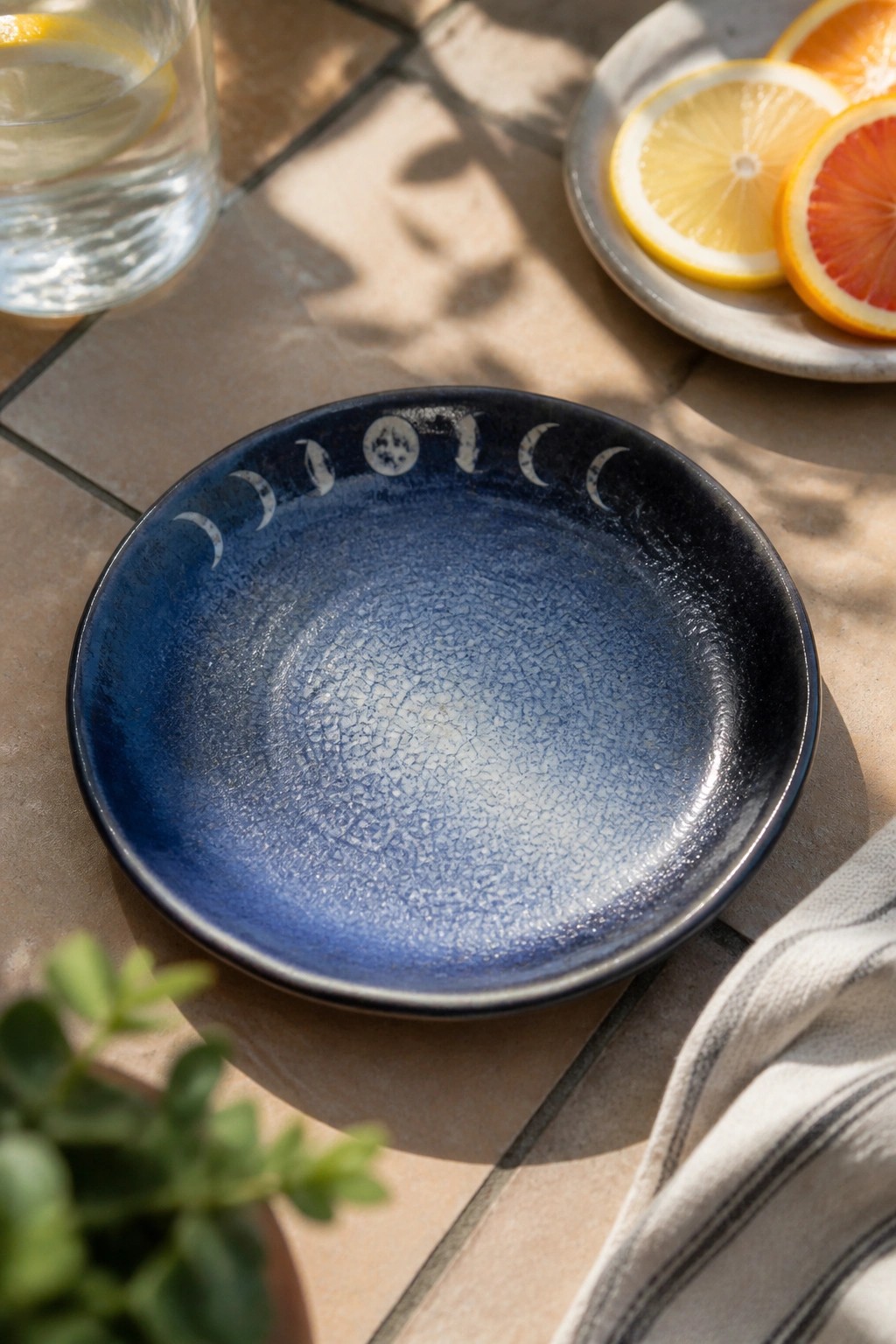
A shallow ceramic bowl finished in a deep blue crackled glaze carries a simple border of white moon phases painted along the upper rim. The phases are shown as basic crescent and circle shapes that follow the curve without crowding the surface. The crackle texture in the glaze creates contrast that helps the white moons read clearly from a short distance.
What makes this idea useful is how the rim motif transfers easily to plates or small trays without changing the rest of the form. The painted moons stay visible even when the bowl holds food or small objects, so the design does not get lost in use. For a gift this shape works well because it stays functional while the border adds a clear celestial detail that stands out in photos. You can simplify the same idea by using just three or four phases instead of a full cycle if you want a quicker project on a different piece.
Galaxy Glaze Yarn Bowl with Cutout Stars
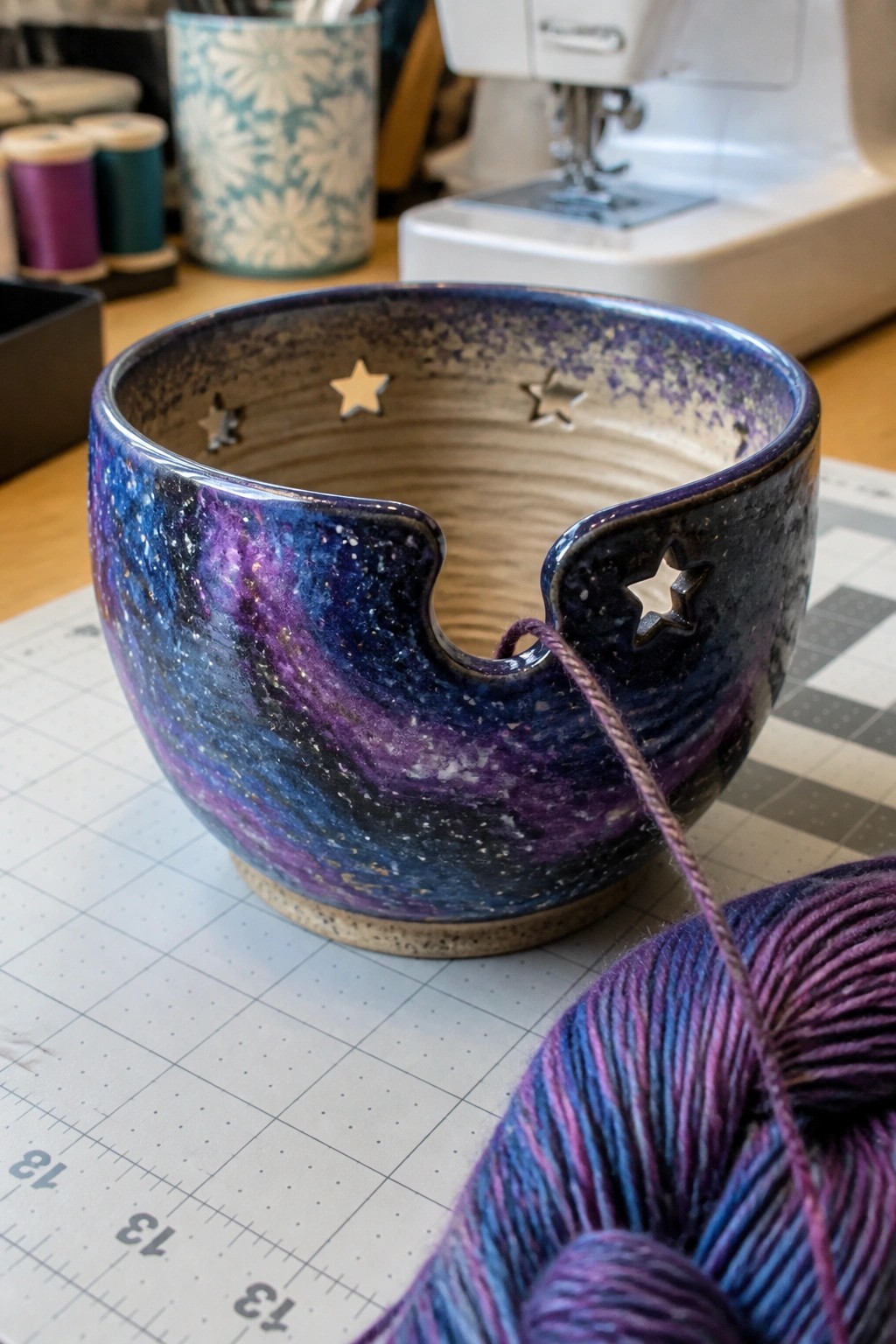
A yarn bowl made from wheel-thrown clay features a wide notch on the rim and several small star cutouts spaced around the upper section. The glaze blends deep blue, purple, and black with scattered white speckles to mimic a night sky across the curved surface. This approach turns a functional holder into a celestial project by combining the cutouts with the mottled glaze rather than relying on painted details alone.
The shape does a lot of the work here because the notch keeps yarn from rolling away while the star cutouts add the theme without needing extra tools. This kind of piece works especially well on a craft table or near a window where the cutouts can catch light. You could adapt the same notch and glaze idea to a smaller lidded jar for storing knitting needles or to a plain mug for holding crochet hooks. The small scale also makes it easy to repeat the design on different forms if you want a matching set.
Divided Constellation Salt Cellar
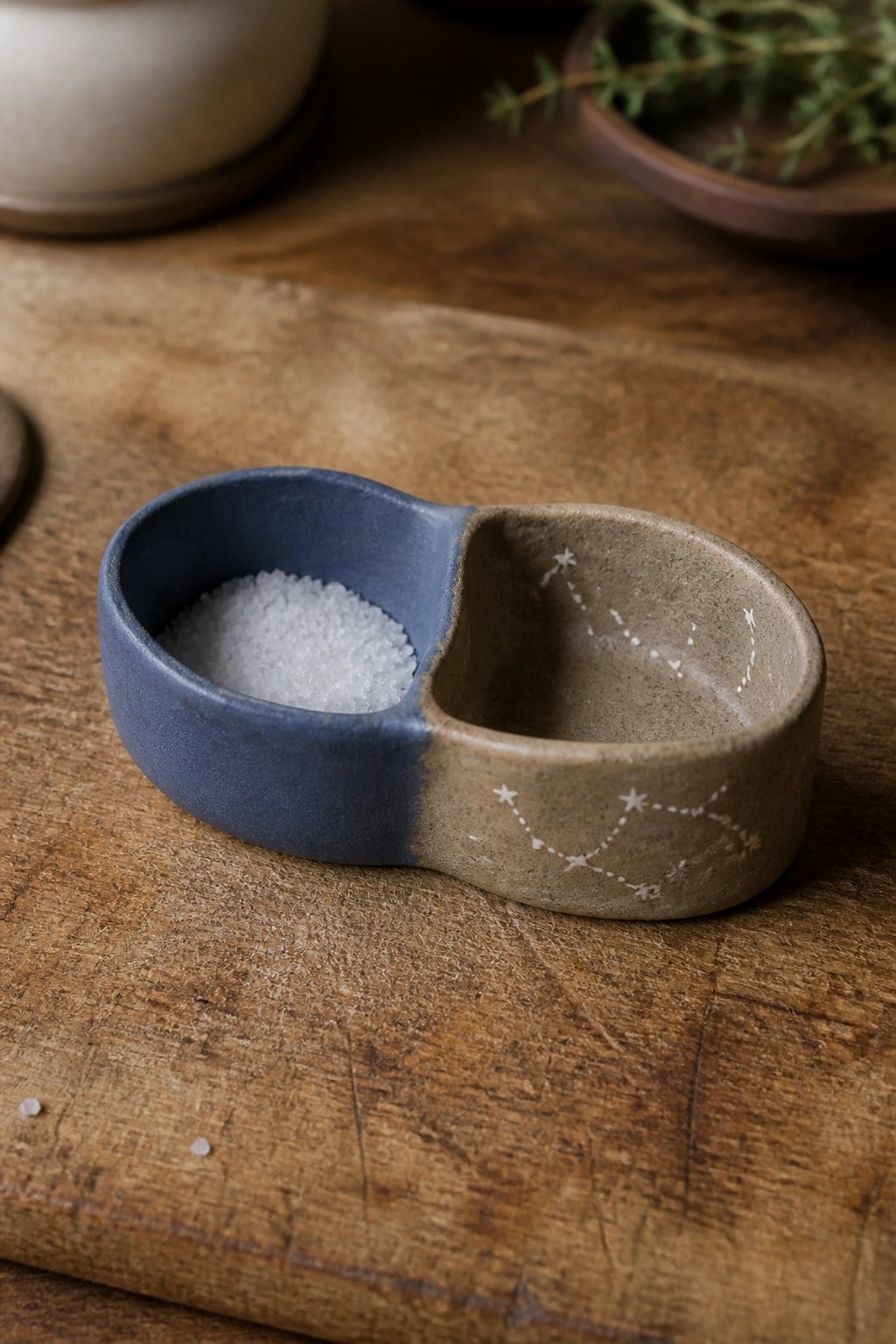
A small two-part ceramic dish gives you separate sections for salt and herbs or spices in one compact piece. One half is finished in a solid blue glaze while the other keeps a natural clay tone and carries white dotted lines that form simple constellations. The contrast between the two sections keeps the painted stars visible without crowding the surface.
What makes this idea useful is the divided shape that turns a basic pinch bowl into something practical for a kitchen counter or dining table. You can copy the constellation pattern onto any small dish by sketching the lines first with a pencil then adding white underglaze before the final firing. The same layout works on a single larger tray or a set of matching ring dishes if you want to scale it up. For a gift this format stays small enough to make quickly yet looks finished once the stars are added.
Long Ceramic Incense Tray with Gradient Sky and Moon Rest
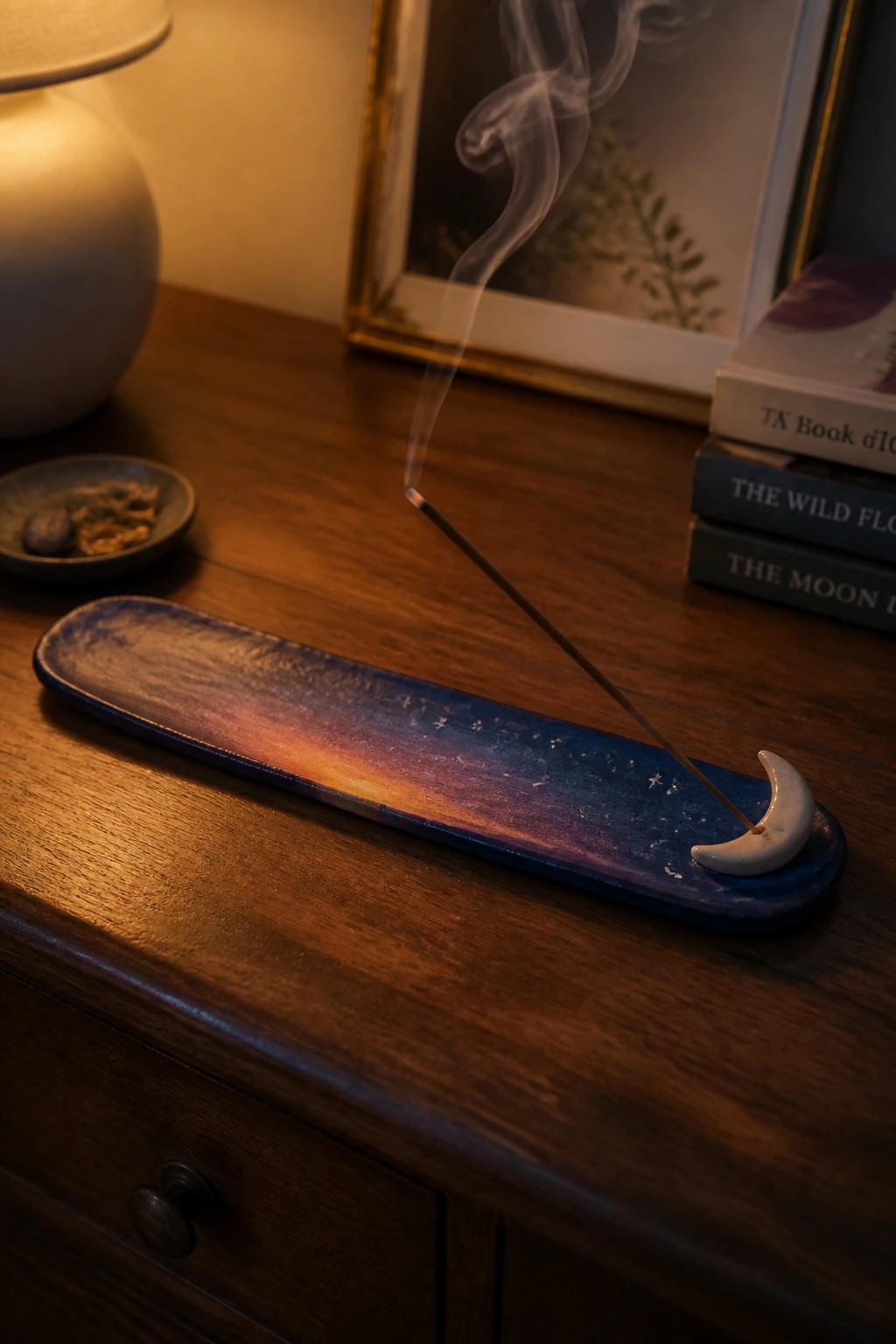
A narrow rectangular clay tray serves as an incense holder when finished with a blended glaze that shifts from deep blue to orange and purple tones. Small white stars are dotted across the surface to suggest a night sky, while a raised crescent moon at one end holds the stick in place. The shape keeps the length functional for catching ash while the moon detail adds a clear focal point without extra pieces.
What makes this idea useful is the slim profile that slides easily onto a nightstand or desk corner. You could rework the same tray base into a narrow ring dish by omitting the moon and using a matte glaze instead. The gradient and star pattern also transfers well to smaller round dishes if you want to make a matching set for different rooms.
Constellation Toothbrush Holder in Night Sky Glaze

A ceramic holder with multiple openings suits this celestial idea well. The deep blue glaze forms a dark background while white lines and dots create simple constellation shapes around the sides. This turns an everyday bathroom item into a painted project that uses basic line work instead of detailed images.
What makes this idea useful is how the compact shape fits easily on a sink or shelf without taking much space. You could repeat the same glaze and constellation lines on a matching soap dish or small cup to build a set. The design also scales down to a single-hole cup if you want a quicker version for a desk or nightstand.
Oval Crescent Moon Jewelry Tray

An oval ceramic tray glazed in deep blue with scattered white speckles and a single crescent moon in the center creates a compact dish for rings or small jewelry. The simple painted moon stands out against the dark surface because of the strong color contrast and minimal layout. This kind of project keeps the form basic so the glaze and motif carry the design.
What makes this idea useful is how the oval shape sits flat on a nightstand or dresser without taking much space. You could adapt it by painting different moon phases across a set of trays or changing the base glaze to a lighter tone for more contrast options. The small scale also makes it a quick project to repeat with new colors or to give as a gift for someone who needs a dedicated spot for daily jewelry.
Star-Impressed Soap Dish

A rectangular clay tray designed as a soap dish uses impressed stars and short lines along the base to create a night sky pattern. The dark blue glaze settles into the recessed shapes and leaves a lighter tone on the raised surfaces so the motifs stand out without extra painting. This bathroom item keeps a bar of soap raised above pooled water while the tray edges contain drips.
The compact size fits easily beside a sink or on a shower ledge. You can scale the same impressed stars down for a ring dish or spread them across a larger vanity tray by adjusting spacing. The idea works well for gifts because the functional shape needs only basic clay tools and one glaze color to read as celestial.
Crescent Moon Wall Planter

A crescent moon wall planter is formed from clay into a curved half-moon shape that creates a natural pocket for a small plant. The inner surface is coated with a deep blue glaze and dotted with white specks plus a simple star stamp to suggest a night sky. The outer edge is left with a speckled matte finish for contrast. A small hole near the top allows it to hang flat against the wall.
What makes this idea useful is how the curved form already provides the right depth and angle for succulents or air plants. You can adapt the same shape for a key dish or small soap holder by widening the base slightly and skipping the plant hole. The compact size works well in kitchens or entryways where wall space is tight. The painted star detail keeps the piece simple enough to finish in one glazing session while still reading clearly as a celestial motif.
Moon Head Figurine with Star Cutouts
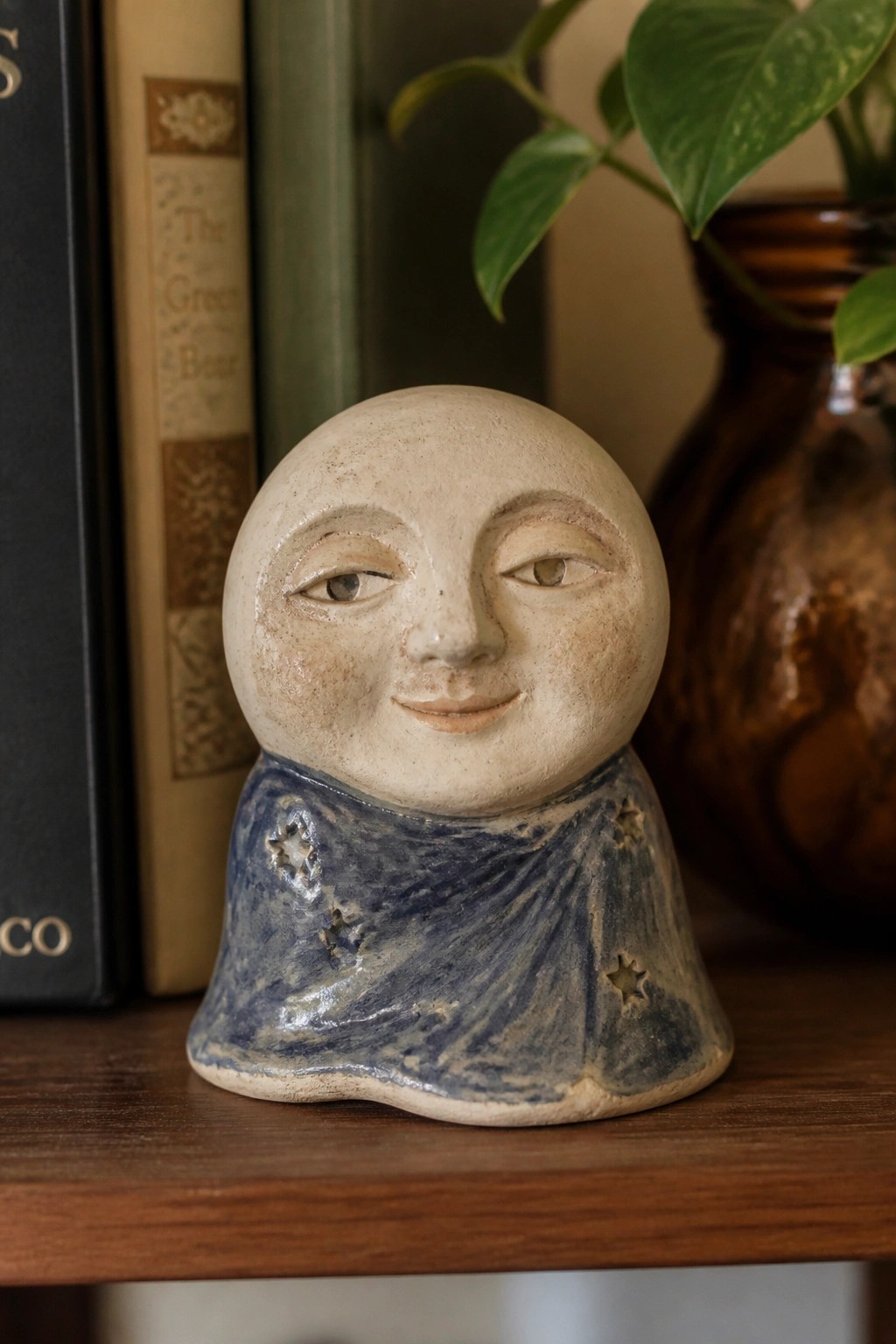
A small ceramic moon head with a sculpted face rests on a tapered base that has been glazed deep blue. Several star shapes are cut through the base so light can pass through when the piece sits near a window or lamp. The pale round form of the moon contrasts with the darker base to keep the focus on the celestial theme. This approach turns a simple head shape into a standalone decor object that fits the night sky category.
The small scale makes it easy to fit on a shelf or desk without crowding other items. You could repeat the star cutouts on a candle holder or small vase to carry the same pattern across different pieces. For a gift, swap the random stars for a simple constellation layout or change the base glaze to a deeper indigo. The cutout detail helps the idea photograph clearly for Pinterest while staying simple to form by hand.
Cutout Moon and Stars Luminary

A tall cylinder of dark clay becomes a candle holder when stars and a crescent moon are cut through the walls before firing. The black finish keeps the light contained so it only escapes through the openings, creating a simple glowing pattern once a tea light is added inside. This method relies on the contrast between the solid clay and the open shapes rather than surface painting.
The compact cylinder shape works well on a table or shelf where the light can be seen from multiple angles. You could repeat the same cutout layout on a shorter form for a tea light tray or stretch it taller for a larger lantern. For a different take, swap the single crescent for several moon phases while keeping the scattered stars the same size.
Constellation Storage Jar with Moon Lid

A lidded ceramic jar makes a strong base for a night sky design. The piece uses a vertical glaze gradient from deep blue down to pale lavender and white, then adds small gold constellation lines across the surface. A simple crescent moon knob tops the lid and gives the jar a clear focal point without extra decoration.
What makes this idea useful is how the jar shape turns painted stars into everyday kitchen storage for salt, tea, or spices. You can swap the constellation pattern for your own star map or repeat the same gradient on a set of matching canisters. The moon knob is easy to adapt to other lids, and the compact size keeps the finished piece practical for a countertop or shelf.
Impressed Star Jewelry Tray

A small ceramic tray with an irregular organic shape and deep blue glaze uses impressed star motifs scattered across the surface to create a simple night sky pattern. The stars are pressed into the clay before firing, leaving recessed details that catch the glaze and add subtle texture. This approach suits a ring dish or catch-all tray that keeps the celestial theme minimal and easy to repeat.
The compact size works well on a dresser or bedside table for holding jewelry or small items. You could scale the same impressed star technique to a larger serving tray or apply it to the interior of a bowl for a different use. The solid blue glaze also makes the design easy to adapt with other colors if you want to change the night sky effect.
Speckled Blue Candle Snuffer Holder

A small handmade ceramic bowl with a dark blue glaze and scattered gold flecks works as a dedicated holder for a brass candle snuffer. The compact round shape includes a simple side loop that keeps the tool from sliding, while the speckled surface gives the piece a night-sky look without extra painting. This fits the holder category and pairs naturally with candle setups on a mantel or side table.
What makes this idea useful is the practical scale that lets you keep a snuffer within reach during evening use. The dark base color with light flecks can be recreated on other small forms like ring dishes or tiny trays by using the same glaze combo. For a gift, the same shape adapts easily to hold matches or wick trimmers instead. In a living room, it keeps tools organized without taking up much space.
Crescent Moon Dish with Gradient Star Glaze

A crescent moon shaped ceramic dish makes an effective small tray or serving plate. The surface uses a blended glaze that moves from deep blue at the upper curve through purple into a peach tone at the base, with scattered white stars applied on top. The curved form itself creates the moon outline while the simple star pattern keeps the night sky theme clear without crowding the space. This approach works as a straightforward painted pottery project that highlights shape and color rather than added sculpting.
What makes this idea useful is how the moon outline directs where the gradient and stars sit, so the design reads immediately. You could scale the same glaze blend down to a ring dish or apply it to a round plate for a different function like holding snacks or keys. The small size means less clay and quicker glazing time if you want to test the color shift. For Pinterest photos, the curve and sky colors stand out even with minimal props.
Ceramic Moon and Star Wind Chime

A hanging wind chime built from multiple ceramic crescent moons and star circles strung on twine from a wooden dowel creates a simple night-sky mobile. The pieces are glazed in a mix of light blue to dark navy tones, with some moons showing a small face and others paired with flat circles stamped with stars. The repeated shapes and graduated sizes give the piece visual rhythm while the blue glaze range adds contrast between the pendants.
What makes this idea useful is that the individual pendants can be made in one firing session and then arranged in different orders or lengths on the strings. This shape works especially well as porch or window decor where the pieces can move slightly in the breeze. You could scale the same moon and star forms down for a smaller mobile over a crib or switch the dowel for a metal ring to hang the pieces as a wall cluster instead.
Frequently Asked Questions
What supplies do I need to paint celestial designs on pottery? You will need ceramic underglazes or paints designed for pottery, a set of fine and medium brushes, a palette for mixing colors, and items like mugs or vases as your canvas. Start with a dark base coat such as navy or black to represent the night sky, then layer in whites, silvers, and golds for moons and stars. If your pieces will be used for food, choose food-safe options and plan to fire them in a kiln for lasting results.
How do I create a starry night effect on curved pottery surfaces? Apply your dark base color first and let it dry completely. Then dip an old toothbrush in white or metallic paint and flick it gently over the surface to scatter tiny dots that look like stars. For larger stars, use a fine brush to add points or dots in clusters. Work in sections on curved areas to keep the design even and avoid smudges.
What techniques help beginners paint moons and constellations accurately? Sketch your design lightly with a pencil before painting so you can adjust placement. For moons, paint a circle and add soft shading with lighter blues or grays to show craters. Constellations can be made by connecting small dots with thin lines in gold paint. Practice on scrap paper first and choose simpler ideas from the list, such as a single crescent moon with scattered stars, to build confidence.
How can I protect my finished celestial pottery so the paint lasts? After the design dries, apply a clear ceramic sealant or glaze in thin layers. For the most durable finish, fire the piece in a kiln following the paint instructions. If firing is not an option, use a brush-on ceramic sealer made for air-dry projects, but test it on a small area first since it may not withstand heavy washing or heat.
Which color combinations work best for night sky pottery ideas? Deep navy, indigo, and black create a rich background that makes stars pop. Add layers of purple or teal for depth in the sky, then use white, silver, and gold for moons and star details. Metallic accents catch the light nicely on pottery and give a magical feel without overpowering the design.

Pottery Path is my cozy corner of the internet where I share clay ideas, pottery inspiration, and simple projects you can recreate at home. I love exploring everything from air dry clay to handbuilt pottery to cute minis that brighten your day. My goal is to make clay crafting feel easy, fun, and welcoming for anyone who wants to try it.
You will find beginner friendly tutorials, creative pottery painting ideas, and lots of warm inspiration for slow and happy crafting. If you enjoy hands on creativity, this space will feel like home.