
I started painting pottery a couple of years ago and it took me some time to get comfortable with it.
When I was first beginning I wished I had more simple ideas to try instead of looking at complicated designs.
These are the ones I came back to again and again because they are easy and still look nice when finished.
You do not need special tools or years of practice to make something you will want to keep.
I picked out 24 of them to share here so you can choose what feels right for your first try.
Pastel Striped Mug

A small ceramic mug painted with three wide horizontal bands gives beginners an easy way to practice clean glaze lines on a functional form. The bottom band uses a yellow glaze, the middle a soft pink, and the top a muted mint green, with each color meeting in straight edges around the body. The handle is left mostly plain so the stripes stay the main focus. This style fits the painted mug category and works on any standard wheel-thrown or hand-built cup shape.
The shape does a lot of the work here because the rounded body shows off the bands without extra detail. You could swap the colors or change the band widths to match other kitchen items like a matching sugar bowl or small pitcher. For a gift, something like this travels well and still looks finished even if the lines are slightly uneven. The same banding idea scales down easily to a tiny espresso cup or up to a larger soup bowl.
Citrus Slice Painted Bowl

A small ceramic bowl becomes a standout piece when the interior is painted with radiating orange segments that form a citrus slice pattern. The design uses overlapping wedges in warm orange tones against the light clay to create a simple fruit motif that draws the eye inward. This fits the category of painted bowl projects where the focus stays on the interior surface rather than added sculpting.
The shape does a lot of the work here because the open, shallow form gives a clear canvas for the wedge layout. What makes this idea useful is how easily the same pattern can shift to lemon yellows or grapefruit pinks on a matching set of dishes. For a gift, something like this works well as a small trinket dish or spoon rest that still feels intentional. The painted detail helps this stand out on Pinterest when paired with other fruit-themed kitchen items.
Painted Daisy Wall Tile

A flat square ceramic tile painted with three blue daisies offers a simple wall decor project for beginners. Each flower uses a yellow center with blue petals and sits above a green stem and leaves, arranged in a row across the light clay surface with a thin blue line at the bottom. The repeating motif keeps the painting straightforward while the flat shape avoids the need to work around curves or handles.
This kind of tile fits well in a kitchen or hallway where a small hanging piece adds color without taking up shelf space. You could scale it down to a single flower on a smaller tile for a plant stand or swap the blue petals for another color to match different rooms. The layout also translates easily to a rectangular tray shape if you want something more functional later on.
Sleeping Cat Planter

A ceramic planter formed as a curled cat creates a ready-made spot for a small succulent or cactus. The body shape supplies the planting area while the head and paws stay visible as the main design. Painting the face with a white muzzle, simple closed eyes, and whisker lines gives clear definition using only a few colors and basic brushwork.
What makes this idea useful is that the small size fits easily on a windowsill or shelf where most planters would crowd the space. You can adapt the same lying-down form to other animals by swapping the ear shape and face pattern, or keep the cat but change the color scheme to match your room. For a first project, buying or making a plain cat bisque and adding just the facial details keeps the steps limited. This shape also photographs cleanly for Pinterest because the animal form and plant together read as one finished piece.
Polka Dot Ceramic Tray

A rectangular ceramic tray with rounded edges and a glossy surface works well as a small jewelry holder. The design uses scattered polka dots in teal, coral, and pale pink on a light base, which keeps the pattern simple while adding color. This approach fits the ring dish or catch-all tray category and gives beginners an easy shape to paint without needing complex forms.
The small scale makes this easy to adapt into a soap dish or a desk tray for paper clips by adjusting the depth during building. You could repeat the same dot layout on a larger platter or switch to fewer colors for a quicker version. A piece like this works especially well on a nightstand because it keeps rings and chains in one spot without much space.
Wave Pattern Ceramic Spoon Rest

A handmade ceramic spoon rest with an elongated oval shape works well for keeping utensils off the counter during cooking. The piece is glazed in a soft teal that pools slightly along the edges, and white wave lines are painted across the center to create a simple repeating motif. The shallow depth and smooth glossy surface make the waves stand out without needing extra texture or layers. This approach fits easily into the kitchen item category for beginners who want to practice brushwork on a functional form.
The shape does a lot of the work here because the long, narrow base naturally guides where the design should sit. You can adapt the same wave motif to a larger tray or a set of small plates by keeping the lines loose and repeating them. In a kitchen this kind of piece stays practical while still showing a clear handmade detail that stands out in photos. For a first project, the limited surface area keeps the painting manageable and lets you test glaze colors without committing to a full dinnerware set.
Scalloped Ring Dish with Gold Dots

A small ceramic dish with a scalloped rim works well as a ring holder when finished with a light pink glaze and a scattered pattern of gold dots. The dots sit inside the dish so they stay visible even when jewelry rests on top. This approach keeps the surface simple while the repeated dots create enough detail to make the piece feel complete.
What makes this idea useful is that the scalloped shape naturally contains small items without needing extra height or dividers. You can adapt the same base by changing the dot color to match other room accents or by placing fewer dots along the rim only. A piece like this fits easily on a dresser or bathroom counter where it keeps rings and earrings in one spot. The small size also means you can try the same idea on a slightly larger tray form if you want space for more pieces.
Painted Ceramic Bird Figurine
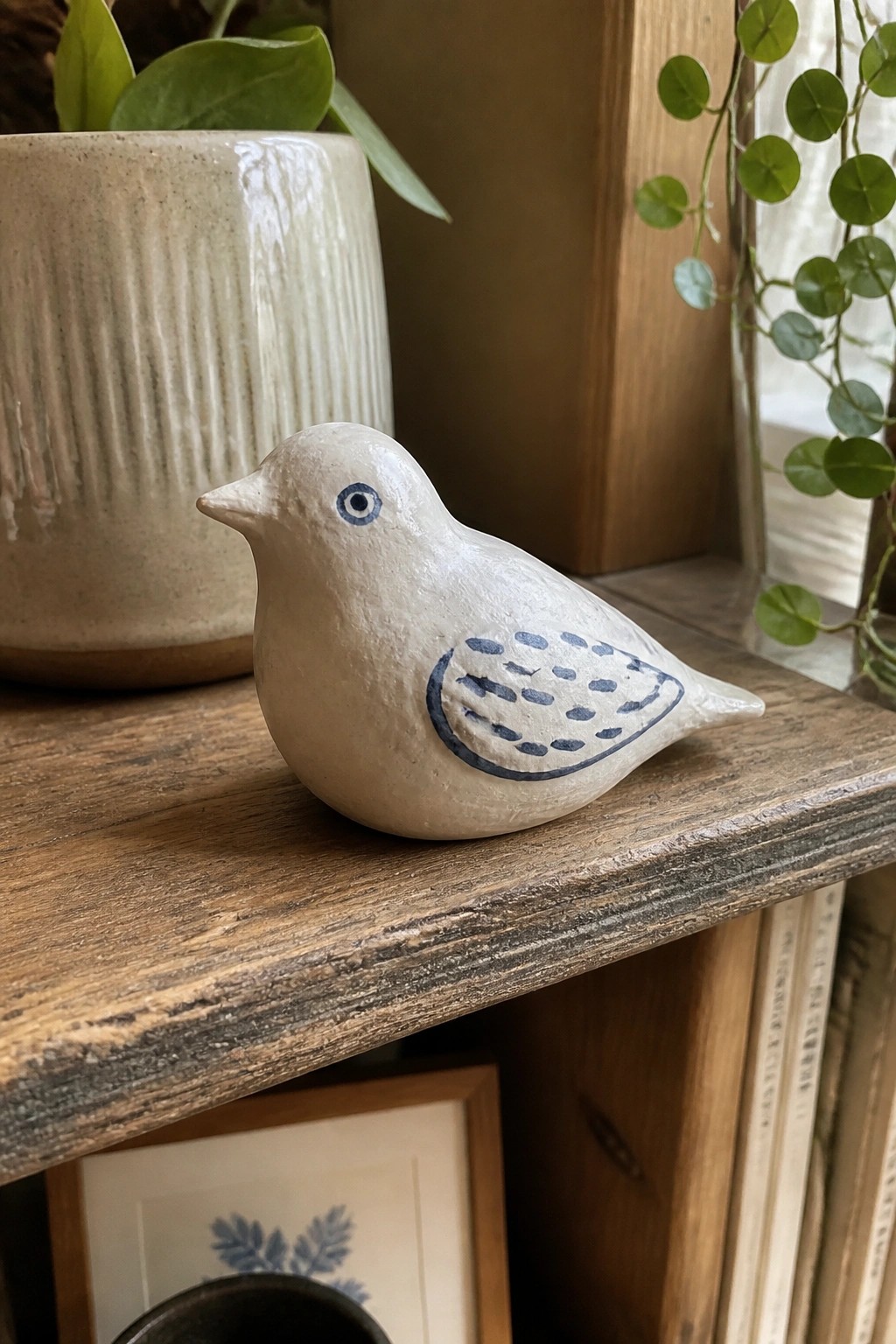
A small ceramic bird figurine gives you a simple decor object that relies on basic shaping and minimal painting. The rounded body and pointed beak form the main structure, while a single blue painted wing pattern and eye add the only detail against the matte white surface. This approach keeps the focus on the bird shape itself rather than complex glazing or sculpting.
The small scale makes this easy to adapt into other figurines like a cat or rabbit using the same plain body and one-color motif. You can swap the wing design for stripes or dots if you want a faster painting step. In a living room or entryway, the compact size lets it sit on a shelf without competing with larger plants or frames. For a first project, the idea works because it needs only basic clay forming and a few brushstrokes.
Ceramic Tea Light Tray with Painted Wells

A round ceramic tray with three recessed sections makes a practical tea light holder that also includes two small side dishes. One well holds a standard tea light while the others carry simple painted patterns, such as blue dots in one and a green leaf sprig in the other. Vertical blue stripes run along the outer edge on a light speckled glaze. The shape keeps the flame contained and gives the extra wells a clear purpose for small objects.
The small overall size lets this piece fit on a nightstand, desk, or coffee table without crowding the surface. You could adapt the same layout by swapping the leaf and dot designs for other simple motifs or by making one well larger for a bigger candle. For gifts, the tray works well with a pack of tea lights added inside one section. The divided layout also makes it easy to turn the idea into a jewelry dish by leaving out the candle well entirely.
Divided Ceramic Salt Cellar

A small divided ceramic dish makes a practical salt cellar or seasoning holder for the kitchen counter. One compartment holds coarse salt while the other keeps a finer variety or a second spice, with the curved divider keeping them separate. The two-tone glaze in deep blue and soft green creates clear visual sections without added decoration. This kitchen item stays simple to form and glaze, relying on the shape and color contrast to define its use.
What makes this idea useful is how the divided layout can be adapted for other pairs like sugar and cinnamon or two different herbs. The compact size fits easily beside a stove or on a dining table without taking much room. You could rework the same form into a double dip dish for snacks or a small holder for tea bags. The straightforward glazing approach also makes it easy to personalize with different color combinations on future pieces.
Smiley Face Ceramic Toothbrush Holder

A simple ceramic cup painted with three smiley faces turns a basic toothbrush holder into a bathroom piece that still keeps brushes organized and upright. The design uses minimal black lines on a light speckled surface to create the faces without covering much of the clay. This approach works well on a cylindrical form because the rounded shape gives each face its own space while the holder stays functional on a counter.
What makes this idea useful is how the same face motif can be scaled down to one or two faces if you want a smaller holder for fewer brushes. The painted detail stands out on a plain clay body so you can use whatever glaze or clay color you already have on hand. This shape also translates easily to a matching soap dish or small cup for cotton swabs if you want a set. For a gift it stays practical while giving you room to change the face expressions or spacing.
Leaf Motif Sponge Holder
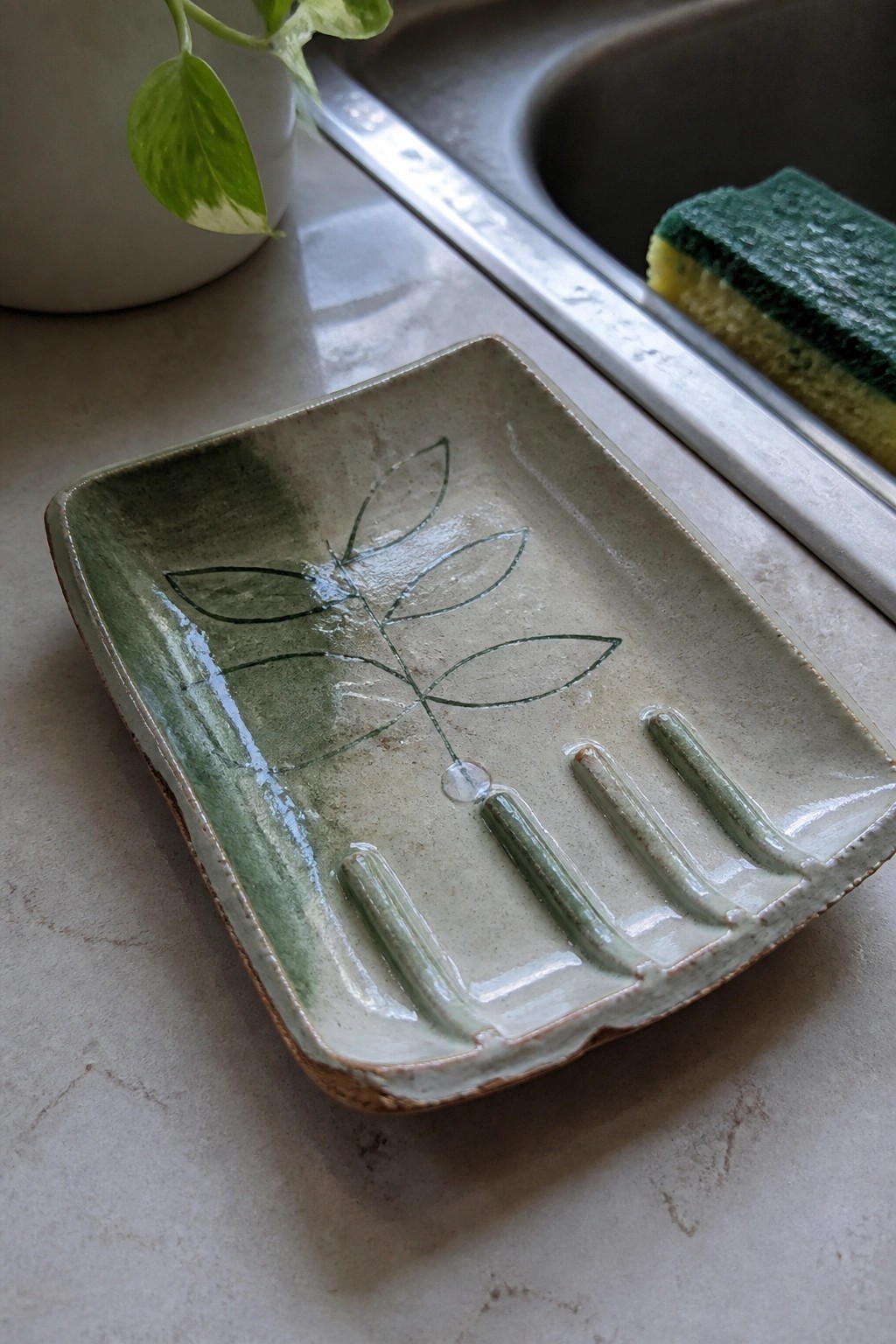
A rectangular ceramic sponge holder uses raised ridges on one side to keep a sponge elevated while a simple leaf design is painted across the flat surface. The motif consists of a central stem with several pointed leaves drawn in a darker green line over a mottled cream and sage glaze. This approach turns a basic tray shape into a functional kitchen or bathroom item that handles daily use without extra hardware. The painted element stays minimal so the focus stays on the form and the drainage ridges.
What makes this idea useful is how the ridges solve a real problem by letting water drain instead of sitting under the sponge. The leaf design can be reduced to three or four lines if you want to finish faster, or repeated across a longer tray for a different look. A piece like this works especially well beside a sink for everyday access, and the same shape and ridges could be scaled down into a soap dish by changing the glaze colors. The compact size also makes it straightforward to test a new motif without committing to a large piece.
Streaked Glaze Bowl Planter for Small Cacti

A small rounded ceramic bowl finished with a streaked green and yellow glaze works well as a planter for a compact cactus. The low, wide shape keeps the plant stable while the mottled glaze creates soft color shifts that echo the cactus’s natural tones without competing with its spines. This fits the simple planter category where the surface treatment carries the design and the form stays minimal.
What makes this idea useful is how the bowl’s modest size fits on a desk, shelf, or windowsill without taking much space. You could repeat the streaked glaze on a taller cylinder for a different plant or swap the colors to match other succulents you already own. For a gift, this shape pairs easily with a small cactus and requires only basic glazing skills to recreate at home.
Spiral Sun Design on a Small Ceramic Bowl

A small handmade ceramic bowl gets its main interest from a hand-painted sun motif. The design uses a loose spiral at the center with short, uneven rays extending outward in a warm terracotta paint on an off-white speckled surface. This approach keeps the painting simple while still filling the interior space without crowding it. The shallow shape works as a ring dish, salt cellar, or small trinket holder.
The small scale makes this easy to finish in one sitting and simple to adapt for other beginner projects like coasters or shallow plates. You can change the sun color or swap the spiral for straight lines if you want less detail. A piece like this fits well on a bathroom counter or bedside table where it stays visible but does not take up much room. The same sun motif could be repeated on a matching set of four small dishes for a quick gift project.
Yarn Bowl with a Functional Notch

A ceramic yarn bowl holds a ball of yarn in place while the strand feeds through a spiral notch cut into the side. The form is a low, rounded bowl with a simple light blue glaze that shows the clay texture underneath. This setup keeps the yarn from rolling away and prevents tangles during knitting or crochet sessions. The notch is the main feature that turns an ordinary bowl into a specialized holder.
What makes this idea useful is the way the notch solves a common problem without adding extra parts. You can adapt the same shape for smaller versions that hold embroidery thread or thin cord. A single glaze color keeps the focus on the function rather than decoration, which works well for a first project. Try scaling the bowl wider or deeper depending on the size of yarn you use most often.
Leaf-Shaped Ceramic Catch-All Bowl
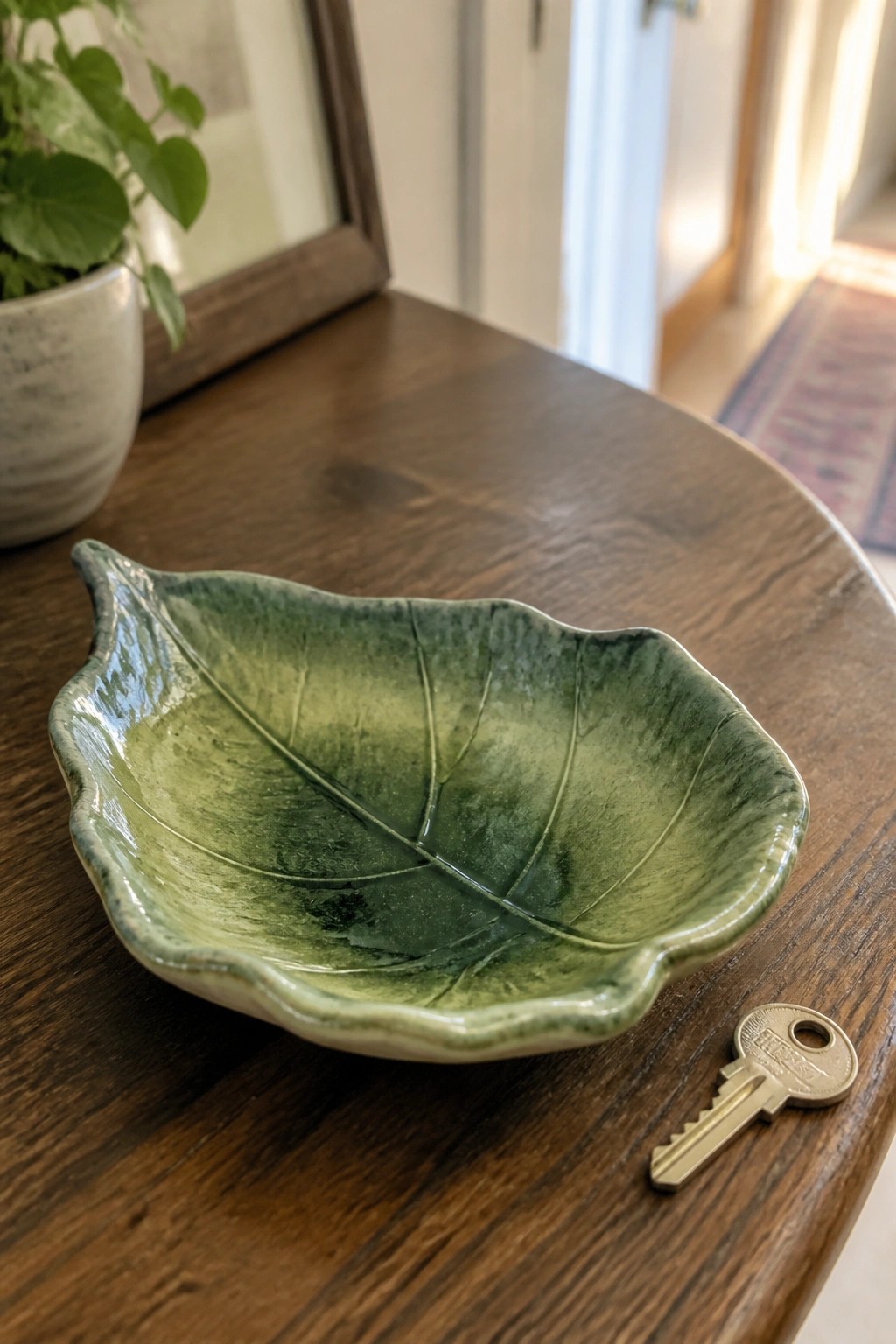
A leaf-shaped ceramic bowl gives you a simple way to make a small tray or dish that still feels intentional. The form copies the outline and vein structure of a real leaf, with the center left smooth and slightly concave so it can hold keys, rings, or loose change. Green glazes blended from light to dark follow the sculpted details and make the veins stand out without extra brushwork. This approach stays in the small functional decor category and works for anyone who wants to practice shaping and glazing on one piece.
The shape does a lot of the work here because the natural leaf outline already looks finished once the glaze is applied. You can scale the same idea down for a ring dish or widen it slightly for a soap rest in a bathroom. Changing the glaze to earth tones or keeping the veins unglazed gives you quick variations without changing the mold or hand-building steps. A piece like this shows up well in searches for nature pottery because the form is easy to recognize even in a small thumbnail.
Painted Daisy Bud Vase
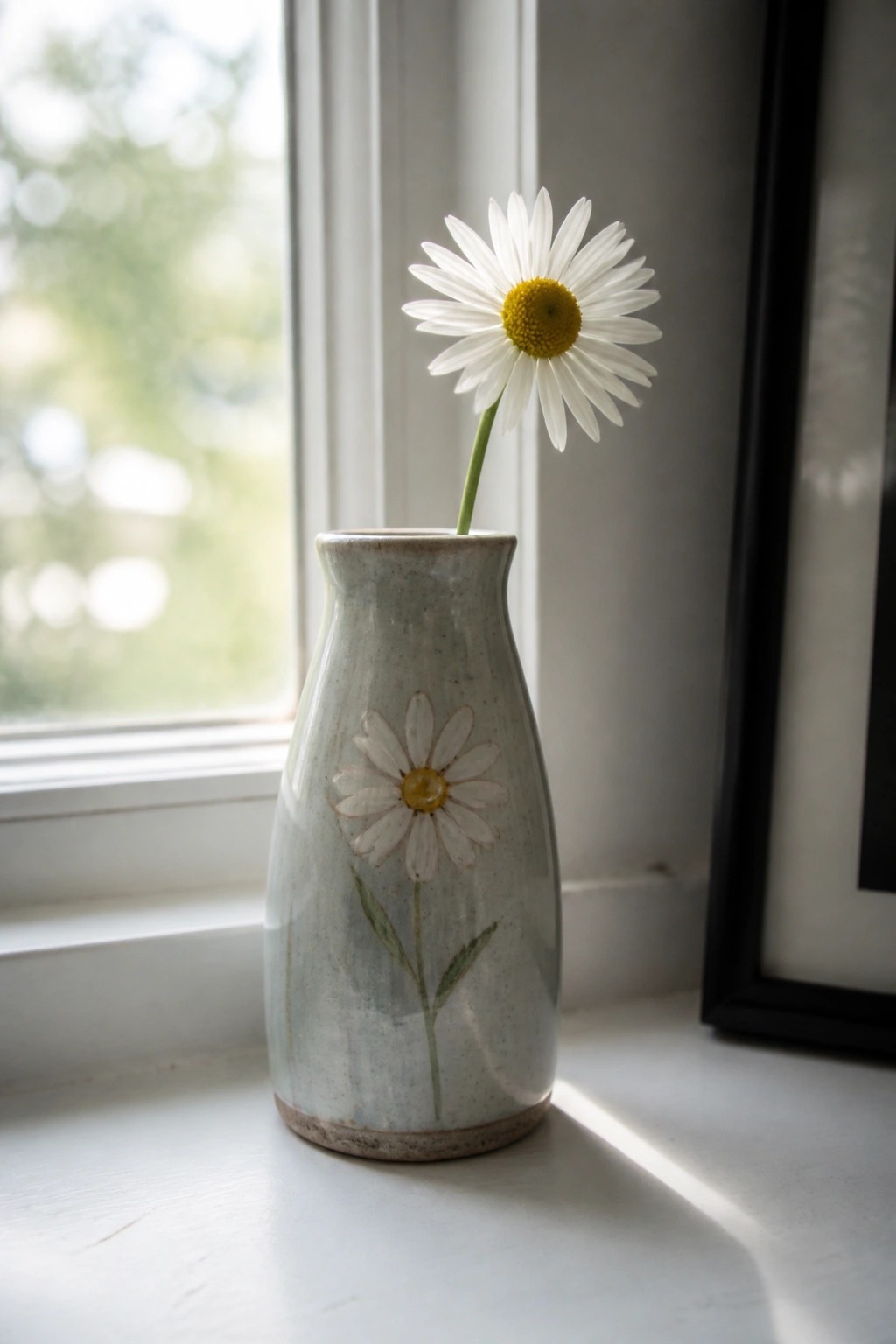
A small ceramic vase with a rounded body and slightly tapered neck gives you a simple surface for a single painted daisy. The design places the flower low on the front with a green stem and leaves so it reads clearly without covering the whole piece. The soft glaze keeps the background light so the painted motif stands out while still letting the form show through.
The shape does a lot of the work here because the compact size fits on a narrow windowsill or shelf without crowding other items. You could repeat the same daisy on a taller vase or change the flower to match whatever you have in season. For a gift this works well since the painted detail gives it a finished look without needing extra layers or complicated patterns.
Lemon Slice Sponge Holder

A small round ceramic dish with drainage slots works as a sponge holder when painted with a simple lemon slice on the inside. The design uses sections of yellow for the fruit, green along the edge, and white lines to suggest segments, keeping the pattern contained within the bowl shape. This approach turns a basic kitchen item into something both functional and easy to paint without covering the whole surface.
What makes this idea useful is how the fruit motif matches the scale of a sponge holder and stays visible during daily use. You could adapt the same yellow and green color blocks to a soap dish or a small tray by adjusting the size of the slices. In a kitchen, this kind of piece sits next to the sink and keeps sponges elevated while adding a clear accent. For a first project, painting one large fruit motif like this stays simple and can be copied onto other small dishes without extra tools.
Stacked Salt Cellars with Matching Spoons

Small ceramic bowls paired with short-handled spoons make practical salt cellars or spice dishes for the table. The solid glaze colors on the outside contrast with the white interior, and the spoon handles pick up the same color at the tip for a simple coordinated look. Stacking two bowls per set keeps them compact while giving you separate containers for different seasonings.
What makes this idea useful is how easily the shape adapts to everyday kitchen use without needing much surface decoration. You could paint each set in different solid colors to match your dishes or keep them plain with just a colored rim or spoon tip. The small scale also works for holding loose tea, sugar, or even small desk items like paper clips. For a gift, making two or three matching sets takes little extra time once you have the basic forms.
Painted Heart Soap Tray

A small rectangular ceramic tray painted with scattered blue and pink hearts serves as a simple base for a soap dispenser. The light speckled surface keeps the hand-painted hearts visible while still looking understated. This approach works as a bathroom item where a basic tray shape gets decorated with repeated motifs instead of a full scene or pattern.
What makes this idea useful is that the tray stops bottles from sliding on damp counters and adds color without much effort. You could paint the same hearts on a round dish for a ring holder or stretch the shape into a longer version for toothbrushes. The small scale and loose placement of the motifs make it easy to finish in one sitting and still look intentional.
Create a Small Sculpted Owl Figurine

A small clay owl figurine makes a straightforward project for practicing basic sculpting. Form the body into a rounded, compact shape, then add simple carved lines for feather texture and small circular indentations for the eyes. The matte gray finish and visible tool marks keep the surface simple while the overall form stays stable on a shelf or windowsill. This type of decor object works as a quick standalone piece rather than something meant for daily handling.
What makes this idea useful is how the rounded body shape translates easily to other small animals or birds without changing the core technique. You can adapt the size for a desk paperweight or shrink it further for a plant shelf accent. The carved details can be reduced to just the eyes and beak for faster versions or left as is for a more textured result. For a gift, something like this fits into a small box without needing extra packaging.
Blue Striped Serving Bowl

A wide ceramic bowl with multiple blue stripes painted around the rim creates a clean serving piece for salads or other dishes. The off-white base lets the repeating stripes stand out as the main detail without extra decoration. This approach keeps the project simple while turning an everyday bowl into something more finished.
The shape does a lot of the work here because the wide opening handles larger portions while the rim stays easy to paint with basic brush lines. You could repeat the same stripes on smaller bowls or plates to build a matching set. In a kitchen this kind of piece handles regular use and still looks put together for meals. Changing the stripe color gives you a quick way to match different table settings or existing dishes.
Painted Sun and Cloud Egg Cups

Ceramic egg cups formed with a narrow foot and wider rim give a stable base for holding eggs. One cup uses a warm speckled glaze and a simple yellow sun face with short rays while the second uses a cooler blue-gray glaze and a white cloud with basic eyes and mouth. The painted details stay minimal so they read clearly on the curved surface without crowding the small form. This approach turns a basic kitchen holder into a quick surface-decoration project.
The small scale makes this easy to adapt into other holders like spice dishes or small creamers by adjusting the rim width. Painted faces like these work well for batch production since they require little time once the shapes are bisque fired. In a kitchen these cups keep soft-boiled eggs steady on the table and can be made in sets with matching colors. You could repeat the same sun and cloud motifs on tiny bowls to create a coordinated breakfast set.
Wall Pocket Planter with Painted Wave Line

A wall-mounted ceramic planter in a simple pocket shape gives plants a place to hang without taking up shelf space. The design uses one continuous wavy line in a darker tone across the front to break up the plain surface and add movement. This keeps the painting minimal while letting the form and the plant do most of the visual work. The two-tone finish comes from leaving parts of the clay exposed or using a light slip before the final glaze.
What makes this idea useful is how the pocket shape turns a basic slab into vertical plant storage that works in small spaces. The single wave line can be swapped for dots, dashes, or a second color if you want more contrast without adding detail. You could make the same form narrower for a bathroom version or wider for larger trailing plants. For a gift, this shape stays practical because it hangs flat and needs only a small nail or hook.
Frequently Asked Questions
What basic supplies will I need to try these pottery painting ideas? You will want to gather acrylic paints designed for ceramics or underglazes if working on bisque ware, along with fine and medium brushes, a palette for mixing colors, water cups for cleaning brushes, paper towels, and a clear sealant spray or varnish. Many beginners also keep a notebook handy to sketch their chosen design from the 24 ideas before applying it to the piece.
How do I prepare my pottery piece before starting to paint? Begin by washing the item with mild soap and water to remove any dust or oils, then let it dry completely. Lightly sand any rough spots with fine grit sandpaper if needed and wipe it down again. This step ensures the paint adheres evenly and helps your chosen design from the list turn out smoothly on the first try.
Are there any specific techniques recommended for beginners to achieve good results? Start with simple base coats using broad strokes and let each layer dry before adding details. Use tape or stencils for clean lines on ideas like geometric patterns or stripes, and practice on paper first to get comfortable with the brush pressure. Thin coats build better color than thick ones and reduce the chance of cracking as the paint dries.
How can I seal my painted pottery to make it durable and safe for use? Once the paint is fully dry, which may take 24 hours, apply two to three thin layers of a food safe sealant or ceramic varnish following the product instructions. Allow each coat to cure properly between applications. This protects the design from water and wear while keeping the piece suitable for display or light use.
What should I do if I make a mistake or want to change my design midway? Let the paint dry and gently sand the area with fine sandpaper to remove the error without damaging the surface, then wipe clean and repaint over it. For wet mistakes, blot with a damp cloth right away. Many of the beginner ideas allow for easy layering so you can adapt as you go without starting over.

Pottery Path is my cozy corner of the internet where I share clay ideas, pottery inspiration, and simple projects you can recreate at home. I love exploring everything from air dry clay to handbuilt pottery to cute minis that brighten your day. My goal is to make clay crafting feel easy, fun, and welcoming for anyone who wants to try it.
You will find beginner friendly tutorials, creative pottery painting ideas, and lots of warm inspiration for slow and happy crafting. If you enjoy hands on creativity, this space will feel like home.