
I’ve been painting bowls in my spare time for a few years now and I often reach for brighter colors when I want something different on the table.
Some of my recent pieces have simple patterns or small details added by hand which makes each one feel a bit more personal.
I gathered 21 ideas that worked well for me and I thought they might be useful if you’re looking to try something similar.
Most of them use basic supplies and don’t require any special skills just a steady hand and some patience with the paint.
If you’re new to this it can be fun to start with one or two and see what you come up with.
Concentric Blue and Yellow Striped Bowl

A wide ceramic bowl with thick alternating rings of deep blue and yellow creates a simple bullseye pattern across the interior. The bands start wide at the rim and narrow toward the center, letting the high-contrast colors carry the design without added motifs or texture. This approach suits any basic bowl form, whether thrown or hand-built, because the smooth curved surface keeps the stripes clean and readable.
The shape does a lot of the work here since the open bowl profile shows off the full ring pattern at once. You could repeat the same bands on a smaller soup bowl, switch the yellow for orange, or extend the stripes partway down the outside for extra impact. In a kitchen this kind of piece works well for serving salads or snacks where the color draws attention on a table. The pattern also photographs clearly, which helps it stand out if you want to share finished work online.
Bold Brushstroke Petal Bowl

A standard ceramic bowl gets painted with a teal exterior and a cream interior that serves as the base for loose magenta brushstrokes. The strokes are applied in overlapping layers to create a simple petal or leaf pattern that radiates from the center. Small white dots are added last to break up the solid color areas. This method relies on broad, visible brush marks rather than precise lines to create the finished design.
What makes this idea useful is how the loose strokes let you cover the surface quickly without needing perfect symmetry. The same approach works on different bowl sizes by changing how many petals you fit around the inside. In a kitchen setting the bright interior shows up well against neutral dishes or open shelves. You could adapt the pattern to plates or mugs by keeping the teal rim and scaling down the strokes to fit the smaller surface.
Bold Black Waves on an Orange Footed Bowl
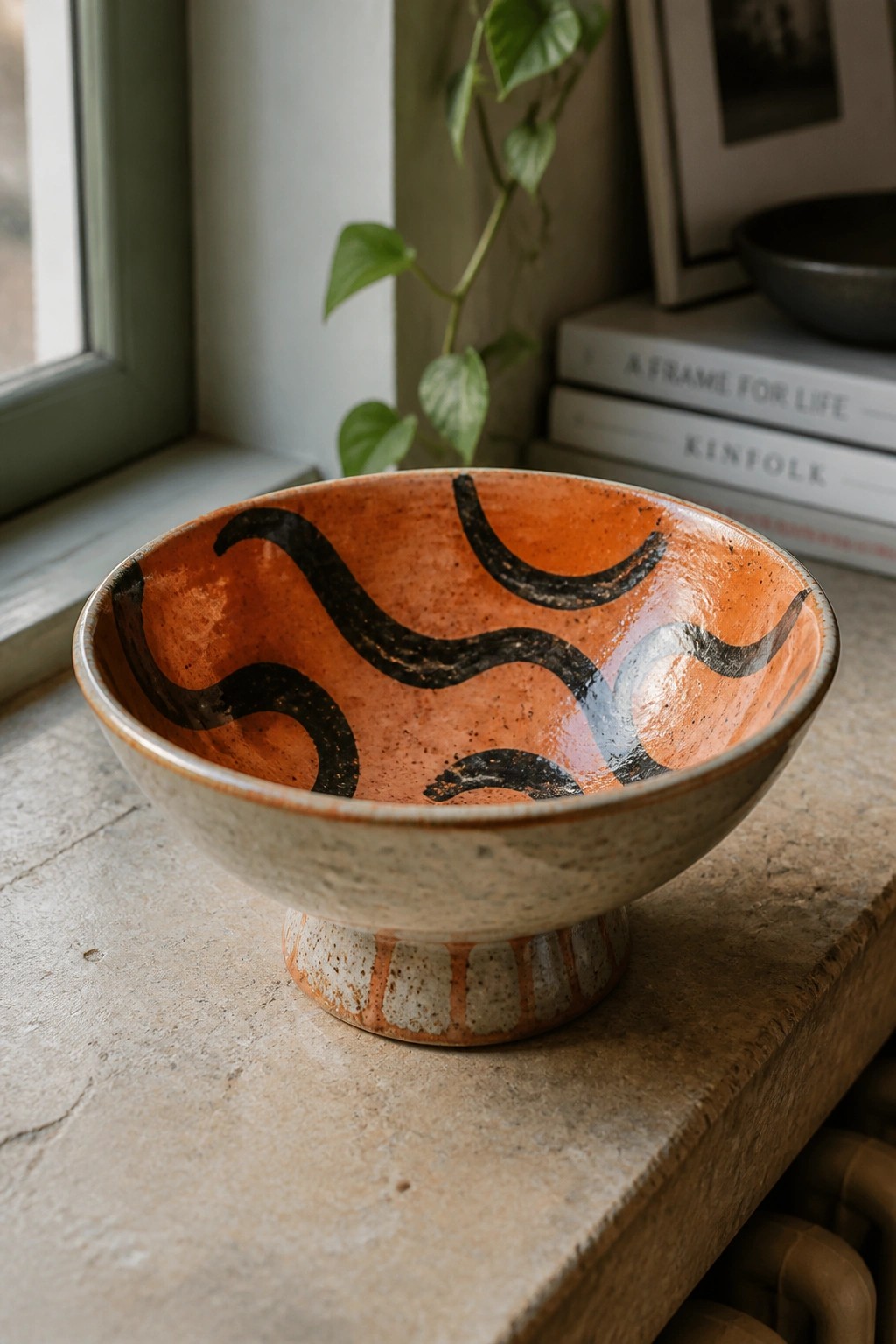
A footed ceramic bowl uses an orange glaze base with loose black wave patterns painted across the interior. The lines curve and overlap in different directions, creating movement while leaving plenty of the orange surface visible. This approach works as a decorative bowl for the table or counter, where the raised foot adds height and the color contrast keeps the design clear.
The painted detail helps this stand out because the black lines remain readable even when the bowl holds food or objects. You could adapt the same wave motif to plates or a shallow tray by spacing the lines farther apart. In a kitchen, this kind of piece works well for fruit or bread because the foot keeps the base off the surface and the pattern adds interest without extra colors.
Sunflower Motif on a Wide Ceramic Bowl

A shallow ceramic bowl gets painted with a single large sunflower using bright yellow petals and a deep blue center. The petals are applied with loose brush strokes that fan outward, while the center includes small gold dots for added detail. Blue accents fill the spaces between petals to create contrast against the light clay background. This style fits the hand-painted bowl category and works because the simple radial layout fills the space without needing many elements.
What makes this idea useful is how the large flower scale keeps the design readable even on bigger serving bowls. You can adapt the same petal shape and color split to smaller bowls by shrinking the center or using fewer petals. The strong yellow and blue combo photographs well for sharing, and the motif could be reworked onto a tray or planter by repeating just the center pattern. In a kitchen, this kind of piece works as both a functional dish and a quick way to add color without extra decor.
Bold Color Block Bowls with Scalloped Borders

These bowls rely on large sections of solid color painted across the inside and outside surfaces, with a white scalloped line marking the division between each block. The approach works on basic wheel-thrown or molded bowl forms and uses the contrast of saturated hues like coral red, teal, and cobalt blue to create a clean graphic effect. The scalloped border adds a simple hand-painted detail that breaks up the color fields without adding complexity.
What makes this idea useful is that the same color blocking can be applied to any bowl size and works especially well for mixing and matching sets on open shelving. You can adapt the scallop to a straight line or dashed line if freehand curves feel difficult, and the strong color choices make the bowls easy to spot in a kitchen or on a table. For a gift, paint a small stack in two or three color pairings so the recipient can use them together or separately.
Bold Radial Brushstroke Bowl

A ceramic bowl becomes the canvas for this idea by using a solid black exterior paired with loose, overlapping brushstrokes of bright pink and lime green inside. The strokes start from the center and fan outward, allowing the colors to mix slightly where they meet and creating a dynamic pattern without needing tight control. This style works well on a rounded form because the curve helps the radiating lines feel natural and energetic.
What makes this idea useful is how the black background makes the neon colors stand out without extra effort. You could repeat the same brushstroke approach on a set of smaller bowls or a matching tray to create a coordinated group. The loose painting style also translates easily to plates or a larger serving dish if you want to expand the look. In a kitchen setting, the finished bowl works for holding fruit or snacks while the bold colors keep it from blending into the background.
Green Glaze Leaf Bowl with Gold Vein Lines

A small leaf-shaped ceramic bowl uses a deep green glaze across its surface and adds thin gold lines that trace realistic leaf veins. The shape stays low and wide so the veins become the main detail without needing extra sculpting. This approach fits into simple bowl painting projects where the form already suggests the motif and the gold provides contrast against the glossy base color.
The shape does a lot of the work here since the leaf outline already gives the piece its character. You can adapt the same gold veining on a plain round bowl by tracing a printed leaf template after the base glaze fires. This kind of dish works well as a ring holder or small trinket tray near a sink or on a nightstand. The scale stays compact enough to try on leftover test tiles before committing to a full piece.
Radial Sunburst Bowl with Layered Patterns

A shallow terracotta bowl takes on a sunburst look when painted with rings of triangles and a central flower motif. The outer band uses teal and black triangles outlined in white, the middle ring adds yellow triangles, and the center features teal petals around a solid black circle. The white lines keep each section sharp and prevent the colors from blending together.
The wide, flat rim gives room for the outer triangle band without crowding the design. Scale the same rings down for a smaller dip bowl or drop the outer triangles and keep only the petal ring on a plate. This layout works well for kitchen pieces because the high-contrast colors stay visible even when the bowl holds food.
Red Glazed Bowl with Scattered Blue Dots

A small ceramic bowl covered in a glossy red glaze and finished with loose navy blue dots creates a bold, high-contrast look that stays simple to paint. The solid base color makes the dots stand out clearly, and the round shape keeps the pattern from feeling crowded even when the dots vary in size. This style fits the catch-all or trinket bowl category, where a bright glaze and basic motif turn an everyday form into something more noticeable.
What makes this idea useful is how the small size lets it work on a dresser, desk, or entry table for keys or jewelry. The polka dot pattern adapts easily by changing the base glaze color or spacing the dots differently on a taller cup or wider plate. For a gift, the same red-and-blue combination stands out on Pinterest boards because the colors read well in photos without extra detail.
Marbled Swirl Glaze on a Ridged Bowl

A ceramic bowl with a marbled blue and yellow interior glaze gives a simple form bold color impact through swirling patterns. The exterior stays plain with visible horizontal ridges in the natural clay body, creating clear contrast between the decorated inside and textured outside. This style fits a serving bowl or kitchen centerpiece where the bright interior shows when the bowl is in use or displayed empty.
What makes this idea useful is that the marbled effect can be recreated with any bold color pair to match existing dishware or decor. The ridged exterior provides texture that hides minor imperfections during forming and adds grip for handling. Scale the same swirl pattern down for smaller dip bowls or apply it only to the rim of a larger mixing bowl. The approach also translates easily to a planter or tray by keeping the marbling contained to one visible surface.
Overlapping Scale Pattern on a Spouted Bowl

A round ceramic bowl with a pour spout features rows of overlapping semicircles painted across the interior in teal, orange, and yellow-orange. The design uses simple curved brushstrokes to build a scale-like motif that fills the surface with bold color blocks and visible texture from the brushwork. Keeping the exterior unglazed and plain lets the painted interior stand out while the spout keeps the shape practical for pouring.
What makes this idea useful is how the repeating scale pattern works on bowls of different sizes without needing complex drawing skills. You can adapt the same color blocks and curves to a set of smaller prep bowls or a larger serving piece. The spout makes it handy for dressings or sauces in the kitchen, and switching the palette to other bright shades keeps the idea fresh for new projects.
Chevron Zigzag Bowl with Layered Colors

A small ceramic bowl works well with a bold chevron pattern painted inside using overlapping magenta, yellow, and green sections. The design relies on wide, repeating zigzags that create movement across the curved surface while the outside stays plain with a rough, unglazed texture. This keeps the piece simple to make yet visually strong through color contrast and geometric lines rather than fine detail.
What makes this idea useful is that the pattern can be masked with tape for straight edges or painted freehand for a looser look. The compact size fits easily on a desk or shelf as a small catch-all or plant accent. You could scale the same zigzag layout to a larger serving bowl or swap the colors to match kitchen linens or bathroom tiles.

A ceramic bowl with a mint green rim uses a simple hand-painted dot pattern to create a strong visual effect. Coral and navy dots form tight concentric rings that expand into a radiating starburst from a solid center dot. The design stays contained to the interior surface and leaves the rest of the white area open. This approach fits the bowl shape because the curve helps the rings feel balanced without extra lines or fills.
What makes this idea useful is how the dot layout can be adjusted by changing ring spacing or color count to fit larger or smaller bowls. The mint rim gives a clean contrast that works in kitchens or on open shelves next to plain dishes. For a gift, the same pattern can be applied to a set of small bowls using the same two colors. The idea also transfers easily to plates or trays if a flatter surface is preferred.
Bold Diagonal Stripe Dip Bowl
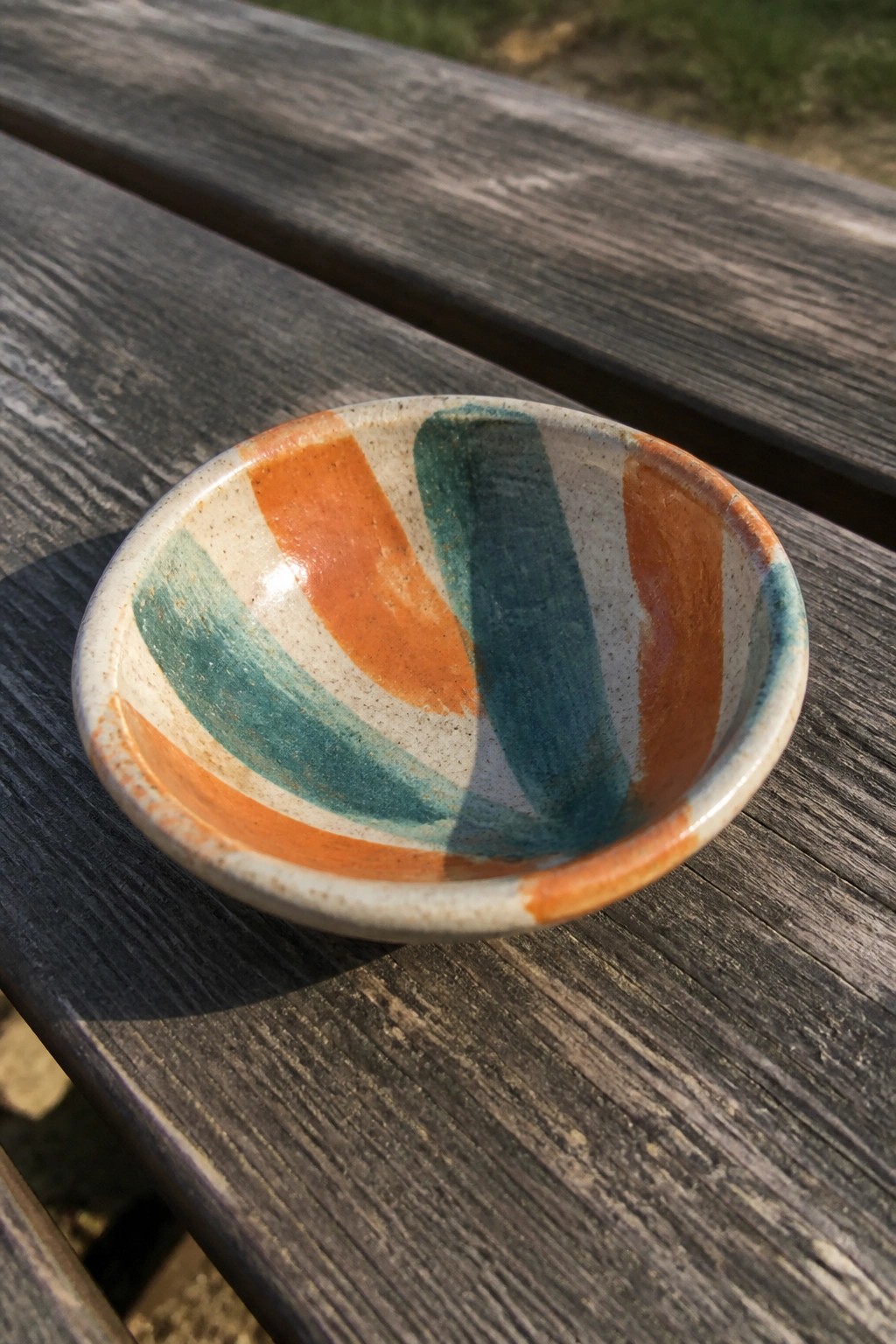
A small ceramic bowl uses wide diagonal stripes in bright orange and teal across a speckled light base to create a simple but eye-catching pattern. The stripes run from rim to center on the inside and continue around the exterior edge, letting the brushwork and color contrast do the visual work. This fits the painted bowl category where the design itself turns an everyday shape into something more interesting.
What makes this idea useful is how the stripe layout stays effective even on a compact form without needing extra details. You could scale the same blocking to a larger mixing bowl or try narrower lines on a set of small plates. In a kitchen this piece works well for dips, nuts, or sides while adding color to a table setting. For gifts the pattern is easy to adapt by swapping the two colors or changing their width to suit different tastes.
Two-Tone Split Glaze Scalloped Bowl

A small ceramic bowl with a scalloped rim gets a strong look from a simple vertical split in the interior glaze. One side uses a deep blue and the other a bright yellow, meeting in a straight line down the center. The outside stays unglazed or lightly finished in a neutral tone with a few small indentations near the base. This color-blocking approach works because the wavy edge already adds shape, so the two glazes stand out without extra decoration.
The shape does a lot of the work here since the fluted rim makes the bowl feel finished even with a basic color layout. It fits well on a kitchen counter for holding fruit, snacks, or small utensils. You could repeat the split-glaze idea on a set of matching ramekins using different color pairs or scale it up for a larger mixing bowl. The clean division also photographs clearly, which helps when sharing the finished piece online.
Oversized Floral Motifs on a Yellow Ceramic Bowl

A ceramic bowl painted bright yellow gives a simple base for large-scale flower painting. Bold pink and red blooms with dark centers fill the surface, while black leaves and stems add sharp contrast without crowding the design. The loose brushwork keeps the pattern graphic and easy to read from a distance.
This approach works well for a kitchen or dining table bowl that holds fruit or snacks. You can scale the same flower shapes down for a set of smaller bowls or plates by using fewer repeats. The strong color contrast also makes the pattern forgiving if your brushwork varies slightly during painting.
Bright Green Bowl with Loose Magenta Brushstrokes

A ceramic bowl uses a glossy lime green interior glaze against a black exterior to create high contrast. Freehand magenta and purple brushstrokes curve across the green surface in simple, uneven lines that leave plenty of background showing. This painted bowl idea works because the solid glaze lets the bold strokes read clearly without needing intricate detail.
The painted detail helps this stand out on a table or shelf where solid colors would blend in. Use the same approach on a set of smaller prep bowls by varying the stroke direction on each one. The small scale makes this easy to adapt if you want to test new color combinations before trying them on larger pieces.
Bold Plaid Grid on a Small Ceramic Bowl

A basic white ceramic bowl becomes more interesting when covered inside with loose intersecting lines in red and blue. The pattern uses simple brush strokes that cross to form a grid, letting the natural curve of the bowl shape the design without extra effort. This style fits the kitchen item category and works for holding snacks, sides, or small portions at the table.
The shape does a lot of the work here because the round surface makes the lines look dynamic without needing exact spacing. You can adapt the same grid by switching to other color pairs or stretching it across a larger mixing bowl. For a gift, something like this packs easily and gives a fresh look that stands out in photos.
Abstract Face Painted Inside a Small Ceramic Bowl

A small ceramic bowl with a hand-painted abstract face makes a simple project that uses the curved interior as a canvas. Large blocks of teal, mustard yellow, and dark green form the eyes, nose, and lips against a light base, with the dark rim keeping the design contained. The style relies on bold color areas and minimal line work rather than fine detail, which suits the limited space inside the bowl.
What makes this idea useful is the way a single motif can turn a basic bowl into a desk catch-all or jewelry holder without needing extra pieces. You could repeat the same color blocks on a set of four bowls for a coordinated look or scale the face down for the bottom of a larger planter. The graphic style also photographs clearly, which helps it stand out in a feed of painted pottery ideas.
Horizontal Color Bands on a Pedestal Bowl
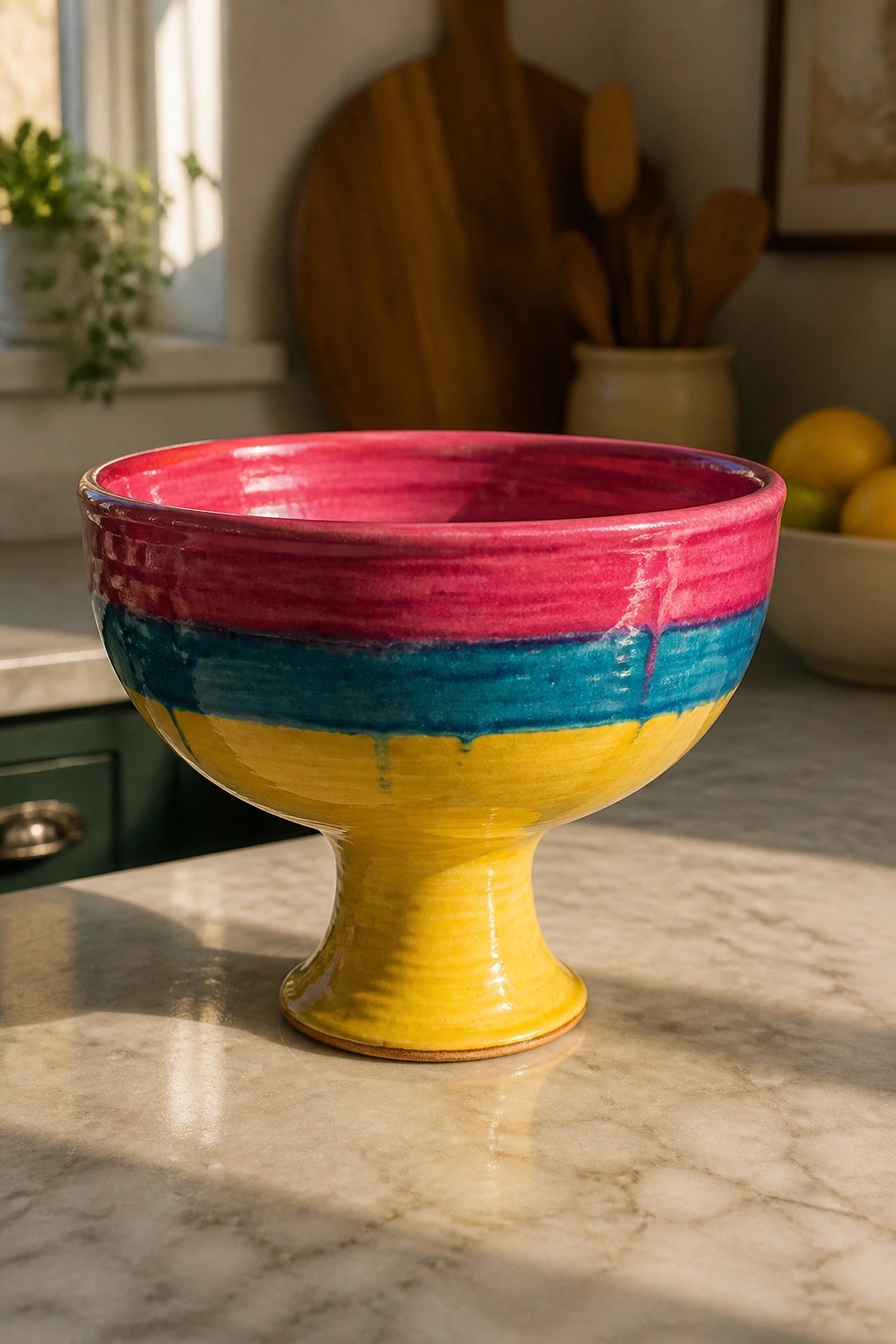
A handmade ceramic pedestal bowl uses three thick horizontal stripes in magenta, teal, and yellow to create a strong visual break across the form. The glaze is applied so it moves slightly down the curves, adding movement without any additional pattern or carving. This keeps the focus on the shape while letting the bold color blocks do the work. The yellow continues down the foot, grounding the whole piece.
What makes this idea useful is how the raised base lifts the stripes so they read clearly from the side as well as from above. You could repeat the same banding on a shallower serving bowl or scale it down for a set of small dip bowls by keeping the color order consistent. In a kitchen the piece works well for fruit or snacks because the bright bands contrast with most countertops and cabinets. The dripping is simple to copy by brushing a second coat of glaze a little thinner so it runs just enough.
Monstera Painted Yarn Bowl with Rim Notch

A ceramic yarn bowl gains function from a simple notch cut into the rim so the yarn stays in place while you work. This version uses a large green monstera leaf that wraps most of the way around the outside, with pink flowers filling the remaining spaces on a white base. The painted leaves have enough white space left between the veins to keep the design from looking crowded. The shape stays low and wide, which helps the bowl sit steady on a table during use.
The notch turns this into a practical tool for knitters or crocheters instead of just another decorative bowl. You could repeat the same leaf pattern on a standard bowl without the cutout if you only need a catch-all for small items. In a craft space the bold colors make the piece easy to spot among other supplies. For a quicker version, paint just two leaves on a smaller bowl and skip the flowers.
Frequently Asked Questions
What supplies do I need to create bold colorful bowl paintings with intricate hand details?
Start with ceramic or terracotta bowls that have a smooth surface for easy painting. Gather acrylic paints in vibrant shades like turquoise, magenta, and sunny yellow along with fine detail brushes for patterns such as florals or geometric lines. Add a primer if your bowls are porous, painter’s tape for clean edges, and a clear sealant to protect the finished work. These basics allow you to experiment with the 21 ideas without frustration.
How do I prepare my bowls so the paint adheres well and the colors stay bold?
Clean each bowl thoroughly with soap and water then wipe with rubbing alcohol to remove oils. Apply a thin layer of primer designed for ceramics and let it dry fully. Sketch your designs lightly with a pencil before painting in bold base colors. This preparation prevents chipping and helps the hand painted details stand out sharply against the background.
What techniques help add fine hand painted details without smudging the bold colors?
Use small round brushes or liners loaded with thinned paint for outlines and accents. Work in sections allowing each layer to dry before adding the next to avoid bleeding. For ideas involving patterns like mandalas or abstract swirls consider stencils as a guide then freehand the details. Practice on paper first to build confidence and keep your hand steady by resting your wrist on the table.
How can I make painted bowls functional for everyday use after applying bold colors and details?
Choose food safe acrylic paints and apply multiple thin coats rather than one thick layer for even coverage. Once dry bake the bowls in the oven according to paint instructions or apply a dishwasher safe sealant. Test a small area first and avoid using the bowls in the microwave to preserve the vibrant hues and delicate hand painted elements.
What common mistakes should I avoid when trying the creative bowl painting ideas?
Do not paint over wet layers as this causes colors to mix and details to blur. Skip skipping the sealing step since it leads to fading over time. Work in a well ventilated area and let each coat cure completely before handling. These steps ensure your bold designs with hand painted accents turn out professional and last longer.

Pottery Path is my cozy corner of the internet where I share clay ideas, pottery inspiration, and simple projects you can recreate at home. I love exploring everything from air dry clay to handbuilt pottery to cute minis that brighten your day. My goal is to make clay crafting feel easy, fun, and welcoming for anyone who wants to try it.
You will find beginner friendly tutorials, creative pottery painting ideas, and lots of warm inspiration for slow and happy crafting. If you enjoy hands on creativity, this space will feel like home.