
I’ve been trying out different color combinations on pottery lately and some palettes just seem to suit the shapes better than others.
I gathered these ideas from things that worked in my own projects without requiring special tools or techniques.
Most of them stick to a few tones that still look put together once fired.
You can pick and choose based on what you already have or what feels right for the piece you’re working on.
They cover a range from soft neutrals to slightly brighter mixes that still read as calm overall.
Striped Warm Tone Ceramic Mug

A ceramic mug finished with wide horizontal stripes in terracotta red, soft pink, and cream glazes creates a simple painted pattern that follows the curve of the form. The stripes wrap around the body and continue onto the handle, with the colors layered so some areas show more blending than others. This style of glazing works on a rounded mug because the bands add visual interest while keeping the surface smooth for daily use.
What makes this idea useful is how easily the stripe widths and color order can be changed on future pieces. The same approach works on small bowls or pitchers if you want a matching set. In a kitchen setting the warm palette fits with wood counters and neutral linens without competing for attention. You could reduce it to two colors for a quicker version or shift the placement of one stripe higher or lower to change the balance.
Speckled Bowl with Muted Dot Accents

A wide ceramic bowl finished in a light speckled base glaze with scattered dots of teal, beige, and gray creates a simple painted pattern. The interior ridges give the surface extra texture that shows through the glaze without overpowering the dots. This approach fits the category of a casual serving or decorative bowl where the color stays soft and the pattern stays loose.
The shape does a lot of the work here because the wide opening lets the speckled dots show clearly from above. You could adapt the same dot layout to smaller bowls or plates by using just two of the colors instead of three. In a kitchen or on open shelving the neutral palette keeps the piece versatile so it pairs with everyday dishes or other handmade items. For a first try at this look, start with a plain white or off-white base and add the dots after the initial glaze layer dries.
Marbled Blue Glaze Plate
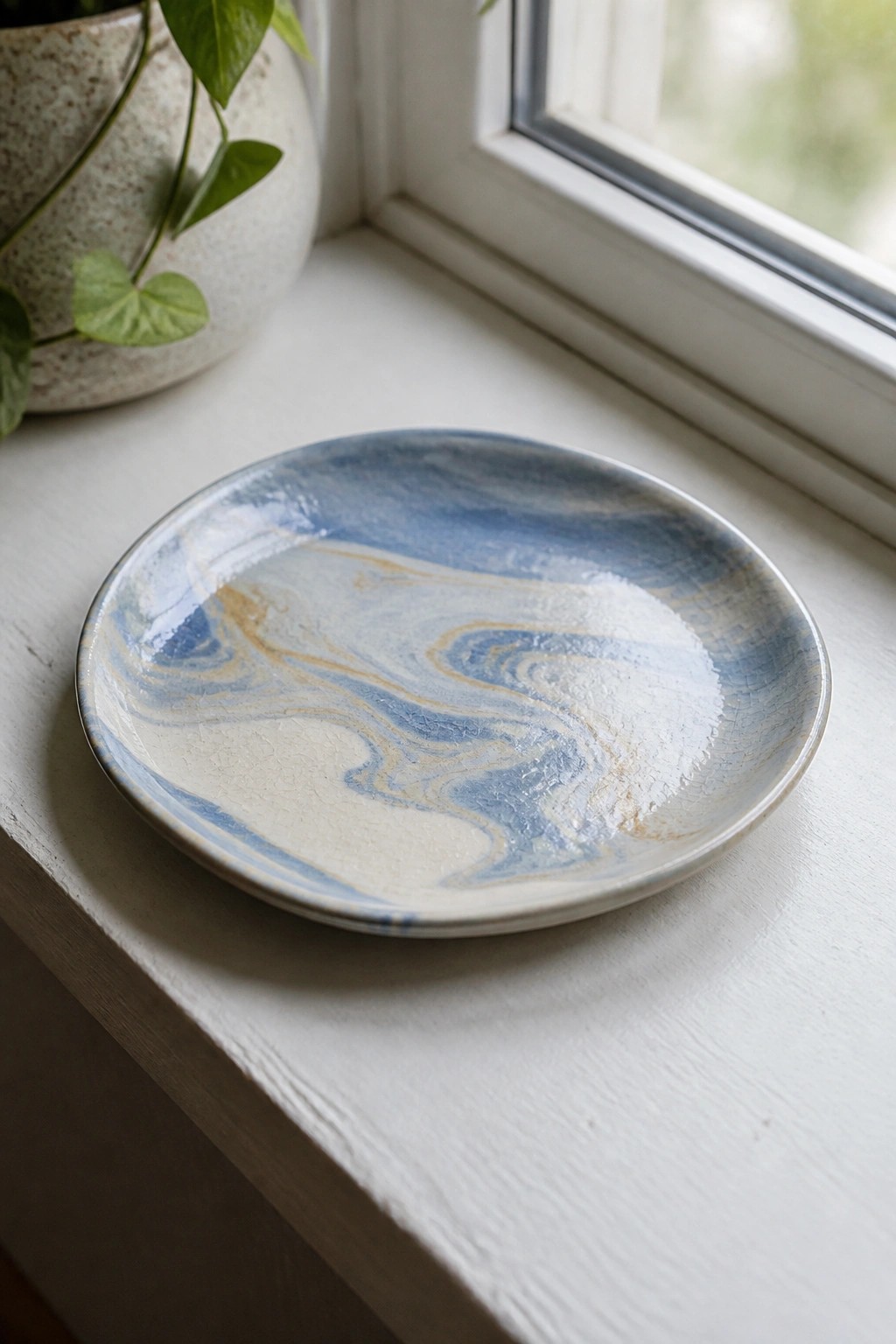
A round ceramic plate finished with a flowing marbled glaze that blends soft blue, cream, and faint gold tones across the surface. The reactive glaze creates organic swirls and streaks that move naturally from the center outward. A fine crackle texture runs through the glaze, giving the pattern extra depth without adding separate painted lines. This idea suits any flat or shallow form where the glaze application becomes the main design element.
A piece like this works especially well as a catch-all tray on a dresser or desk. You could scale the same marbling method down to smaller dishes or coasters by pouring and tilting the same color mix. The neutral blue palette stays easy to match with existing kitchenware or plant pots. The shape also translates directly to a wall-hung version if you add a simple hanging hole before firing.
Terracotta Fox Planter with Painted Face Details

A handbuilt ceramic planter shaped like a curled fox gives a small plant holder both structure and a clear animal form. The natural terracotta surface serves as the main color, while painted white accents on the ears, cheeks, and tail plus simple black lines for eyes and whiskers define the face without covering the whole piece. This keeps the focus on the sculpted shape while using paint only for key details.
The compact size works well on a shelf or plant stand where it can sit among other pots without taking much room. You could repeat the same curled-body shape for other animals or swap the painted markings for a different palette to match existing decor. For a gift this approach stays practical because the planter still holds soil and a plant while the motif makes it easy to recognize.
Color Blocked Ceramic Catch-All Tray
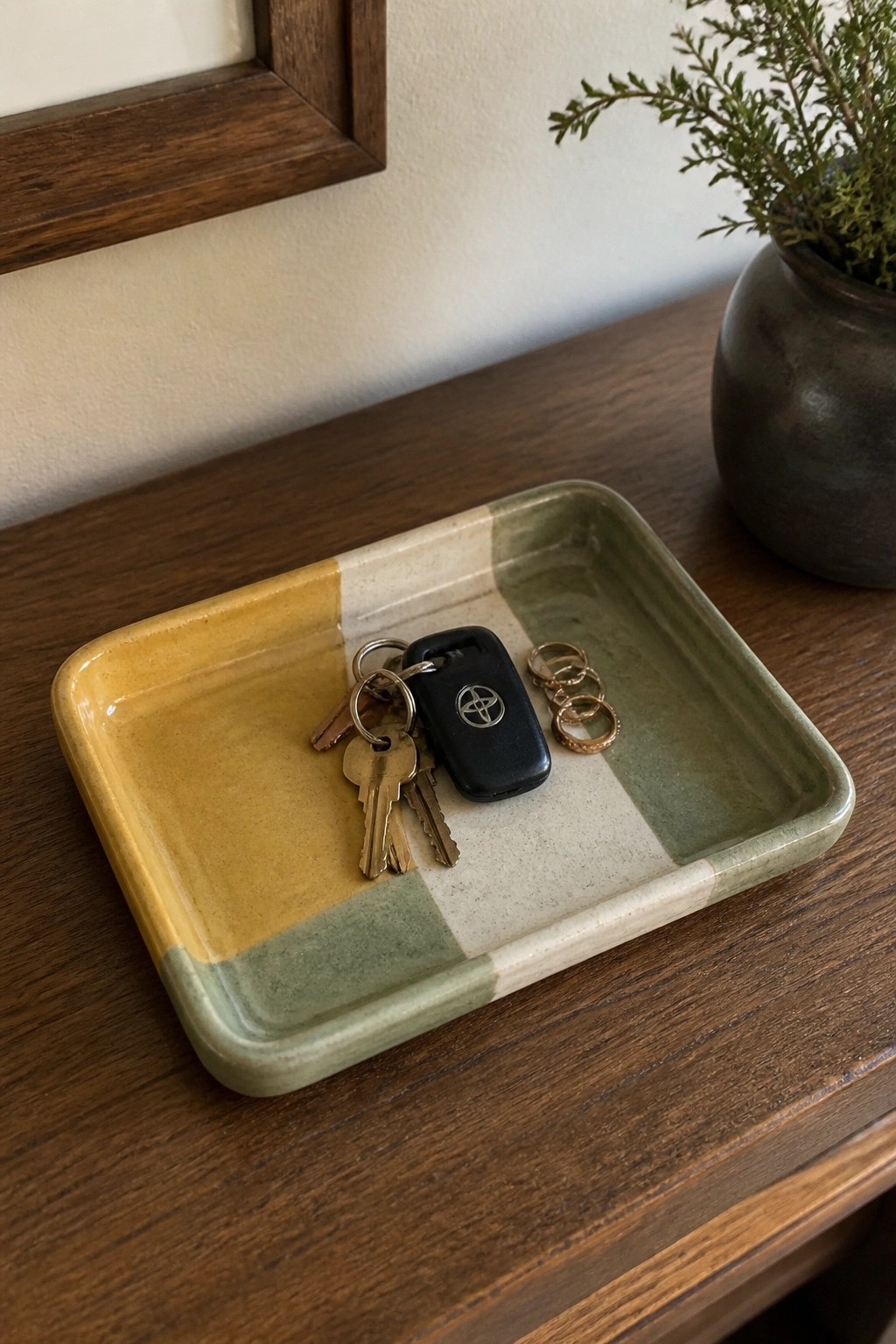
A rectangular ceramic tray divided into three glaze sections of mustard yellow, sage green, and off-white creates a simple catch-all for keys, rings, and small metal items. The straight color divisions run across the flat surface and up the low sides, giving the piece clear visual structure without added decoration. This format works as an entryway or desk tray where everyday objects need a defined spot.
What makes this idea useful is how the color blocks organize the surface into zones while keeping the overall shape compact. The same glazing layout could be applied to a longer version for mail or to a round tray for jewelry. In a kitchen or bathroom, the flat rectangular form holds small tools or accessories without taking much space, and the approach scales easily to different tray sizes.
Crescent Moon Ceramic Ring Dish

A crescent moon ring dish gives you a compact ceramic tray shaped specifically to hold small jewelry pieces. The curved basin keeps rings from sliding around while the smooth glazed surface stays easy to wipe clean. A soft purple glaze with light gold flecks creates a gentle contrast that still reads as simple rather than busy. This approach stays firmly in the ring dish category and works at a scale that fits on a nightstand or vanity without extra space.
What makes this idea useful is how the crescent form naturally contains items without added walls or compartments. You could rework the same shape in a matte white glaze or swap the moon curve for a simple oval if you want something faster to throw. For a gift, something like this takes little clay yet still feels finished once glazed. The small footprint also makes it easy to batch out several in one afternoon for stocking stuffers or desk organizers.
Open Hand Ceramic Trinket Dish

A small ceramic dish formed in the shape of an open palm makes a compact holder for rings, keys, or small jewelry. The fingers are spread with simple carved lines in the center, and the piece is finished in a glossy turquoise glaze that shifts to deeper blue where it pools in the recessed areas. The thumb curves outward to create a natural edge that keeps items from sliding off. This approach turns a basic slab form into a functional tray while keeping the overall size small enough for everyday surfaces.
The shape does a lot of the work here by giving the dish clear boundaries without needing extra walls or rims. You could adapt the same idea by making a flatter version for a soap dish or pressing a handprint into a larger slab for a catch-all tray on a desk. For a gift, something like this works especially well because the sculptural detail makes it easy to photograph and share while still serving a clear purpose. The small scale also means it uses less clay and fits into a standard kiln load without much planning.
Scalloped Tealight Holder with Horizontal Glaze Bands
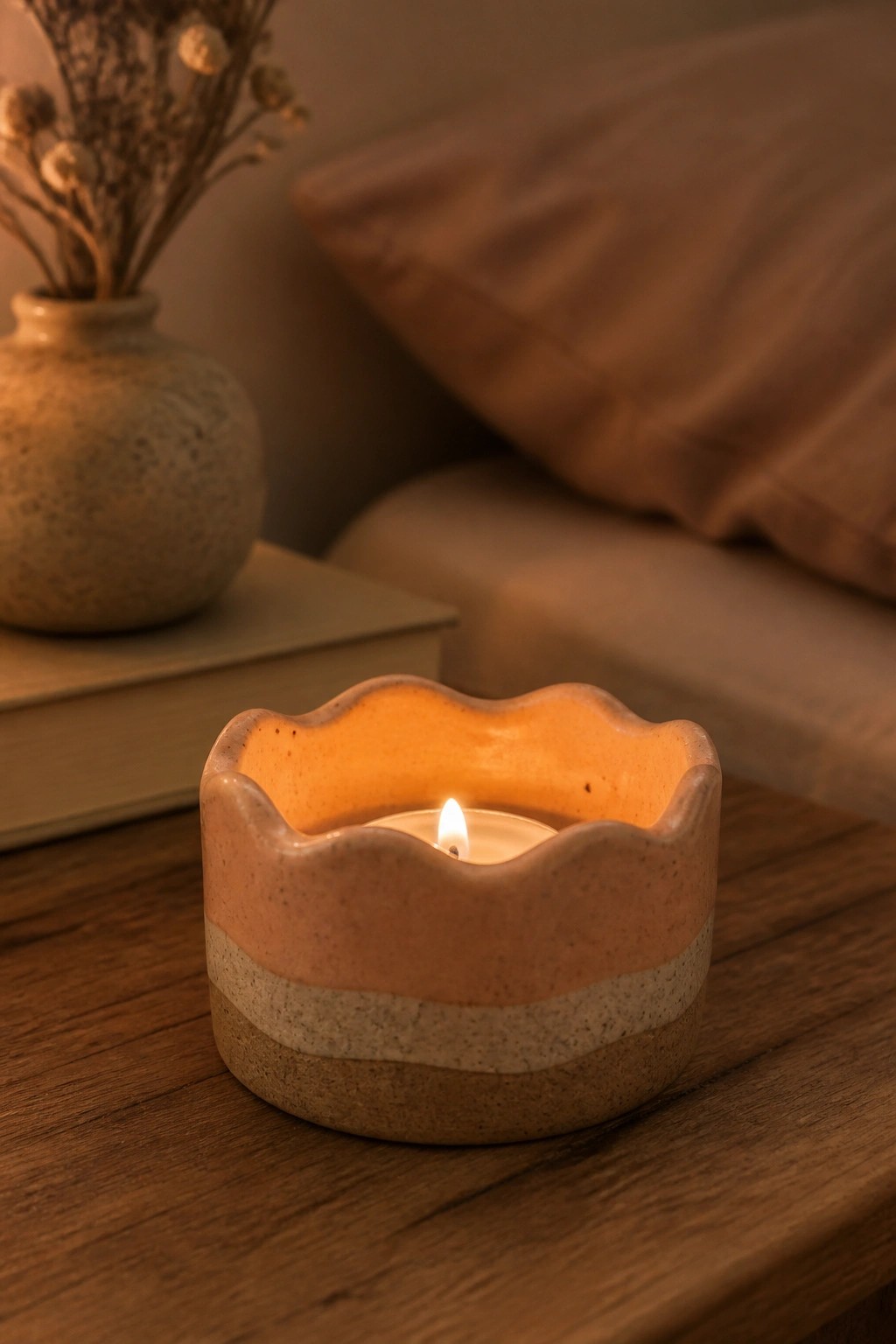
A small ceramic tealight holder features a wavy scalloped rim and three horizontal glaze bands in warm peach, soft beige, and brown. The stripes sit evenly around the form while the rim adds a simple curved detail that breaks up the straight lines. This creates a compact candle piece that stays functional yet visually balanced without extra painting or carving.
What makes this idea useful is how the banded glazing works on any small round form and can be swapped for other colors from the same palette. The shape fits on a nightstand or shelf for evening light and can be made slightly taller for a votive. You could apply the same stripe layout to a ring dish or small tray and keep the scalloped edge for consistency across a set.
Banded Glaze Toothbrush Holder
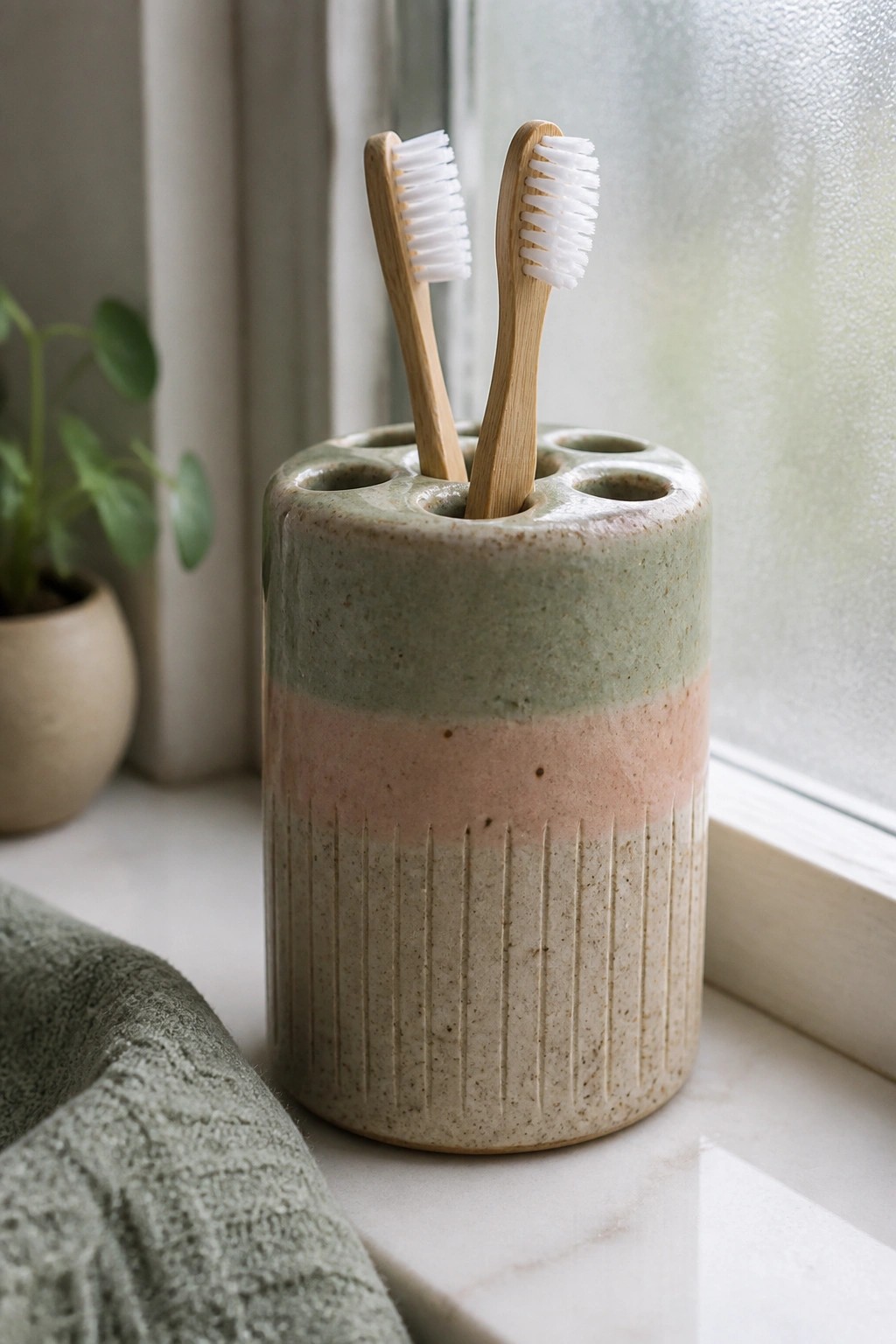
A multi-hole ceramic holder gives you a practical way to store several toothbrushes upright in one spot. The piece uses stacked glaze bands in muted green, pink, and beige to create a simple color transition across the surface. Vertical lines carved into the lower half add light texture that breaks up the smooth glaze without adding extra color. This keeps the project focused on glaze placement rather than detailed painting.
What makes this idea useful is how the banded layout works on any cylinder shape, so you can repeat it on a soap dish or small cup. The soft palette stays neutral enough for most bathrooms and pairs easily with wood or linen accents. You could drop the texture lines or swap one band for a different shade to match your existing towels or tiles. For a gift, the same glaze sequence can be applied to a shorter, wider form that still holds multiple brushes.
Sage Green Botanical Relief Plaque

A rectangular ceramic plaque with carved or pressed plant motifs gives you a flat wall piece that highlights natural forms. The design features umbel flowers and fern-like leaves raised from the surface, covered in a matte sage glaze that keeps the focus on the texture rather than added paint. This keeps the project simple while still producing a clear botanical pattern across the whole tile.
What makes this idea useful is how the flat rectangular shape works in narrow spaces where a vase or bowl would not fit. You can swap the plant impressions for different leaves or flowers depending on the season or room. Scale the same relief method down to smaller tiles for a set of coasters or up to a larger panel for a bigger wall. The muted glaze also pairs easily with other neutral pieces without competing for attention.
Strawberry Ceramic Ring Dish
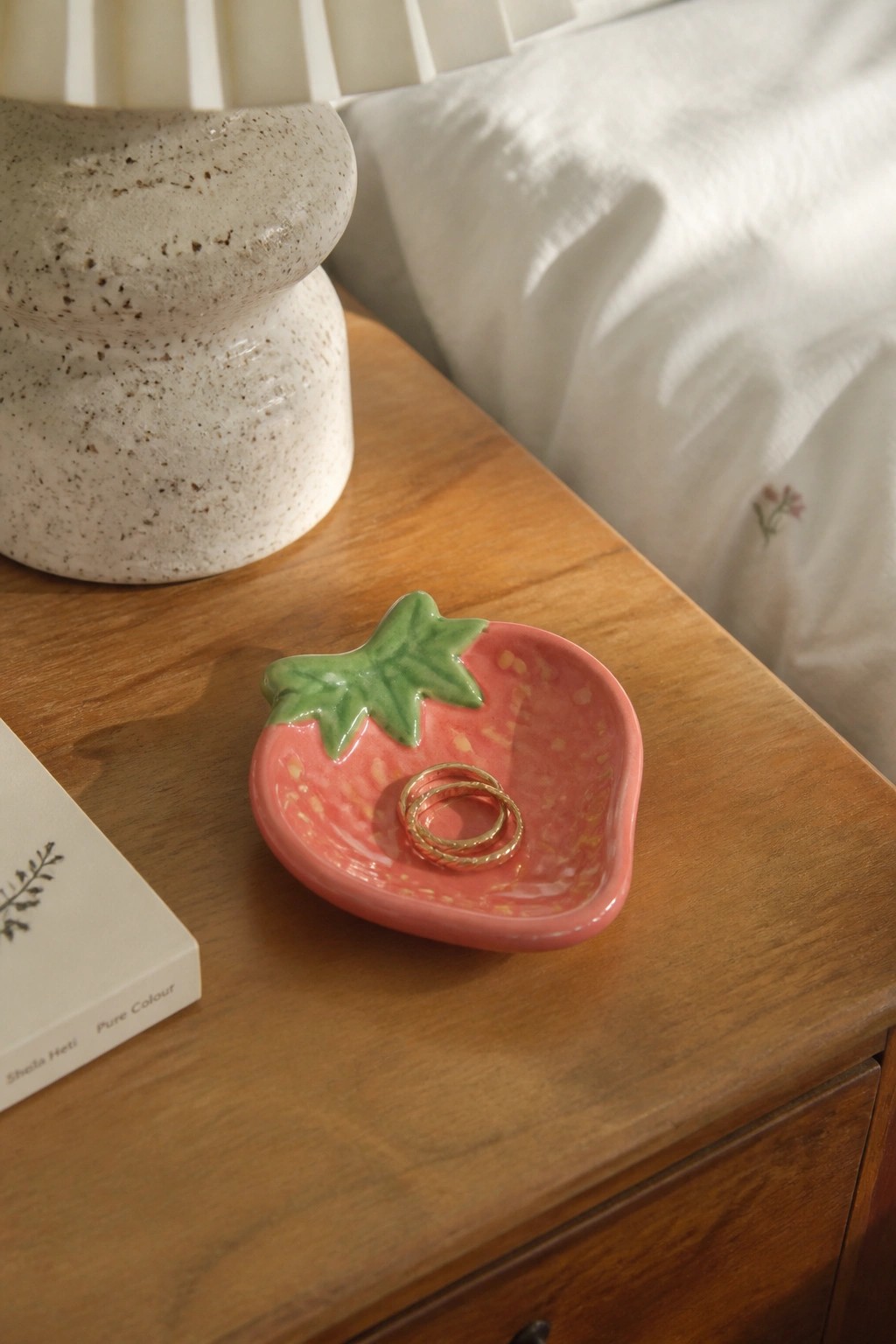
A strawberry-shaped ceramic ring dish gives you a small, shallow tray with a pink speckled glaze and a sculpted green leaf detail at one end. The form stays low and open so rings sit flat without slipping, while the leaf adds a simple raised edge on one side. This project falls into the ring dish or small jewelry holder category, where the fruit shape turns a basic dish into something more specific.
What makes this idea useful is how the compact size slips onto a nightstand or vanity without crowding other items. You could rework the same shape by switching the pink to another fruit color or by making a matching set in different berry forms for gifts. The leaf detail helps the dish read clearly as a strawberry even with minimal painting, so the idea stays easy to adapt for beginners who want to try basic sculpting.
Divided Dish with Two Glaze Colors

A small divided ceramic dish makes a practical kitchen item for holding two seasonings or condiments at once. The connected shape joins two shallow bowls into a single piece, and each compartment receives its own glaze color to keep the sections distinct. A speckled base clay shows through the edges and adds subtle texture while the brown and blue glazes stay contained within their rims. This approach keeps the design simple and focused on the contrast between the two sides.
What makes this idea useful is how the divided form solves the need for separate small bowls without cluttering a table. The compact size works on a countertop or in a spice setup, and the same shape adapts easily to a double dip server or a small tray for rings. Change the glaze pairing to match other kitchen pieces or swap one color for a matte finish to test different surface looks. The two-tone split stands out in photos because the clear division reads quickly even at small sizes.
Soft Striped Ceramic Cat Figurine

A small sitting cat figurine made from clay uses wide horizontal stripes in a muted lavender and cream palette across the body, head, and tail. The face stays minimal with closed eyes, simple whiskers, and a small nose so the stripes remain the main visual element. This keeps the piece light and works well as a standalone decor object rather than a functional item like a planter or dish.
The small scale makes this easy to group with other pieces on a shelf or windowsill without crowding the space. You could adapt the stripe layout to a different animal shape or change the color to another soft tone if you want to match a specific room. The same approach also translates to making a few versions at once for simple gifts.
Yarn Bowl with Painted Coastal Scene
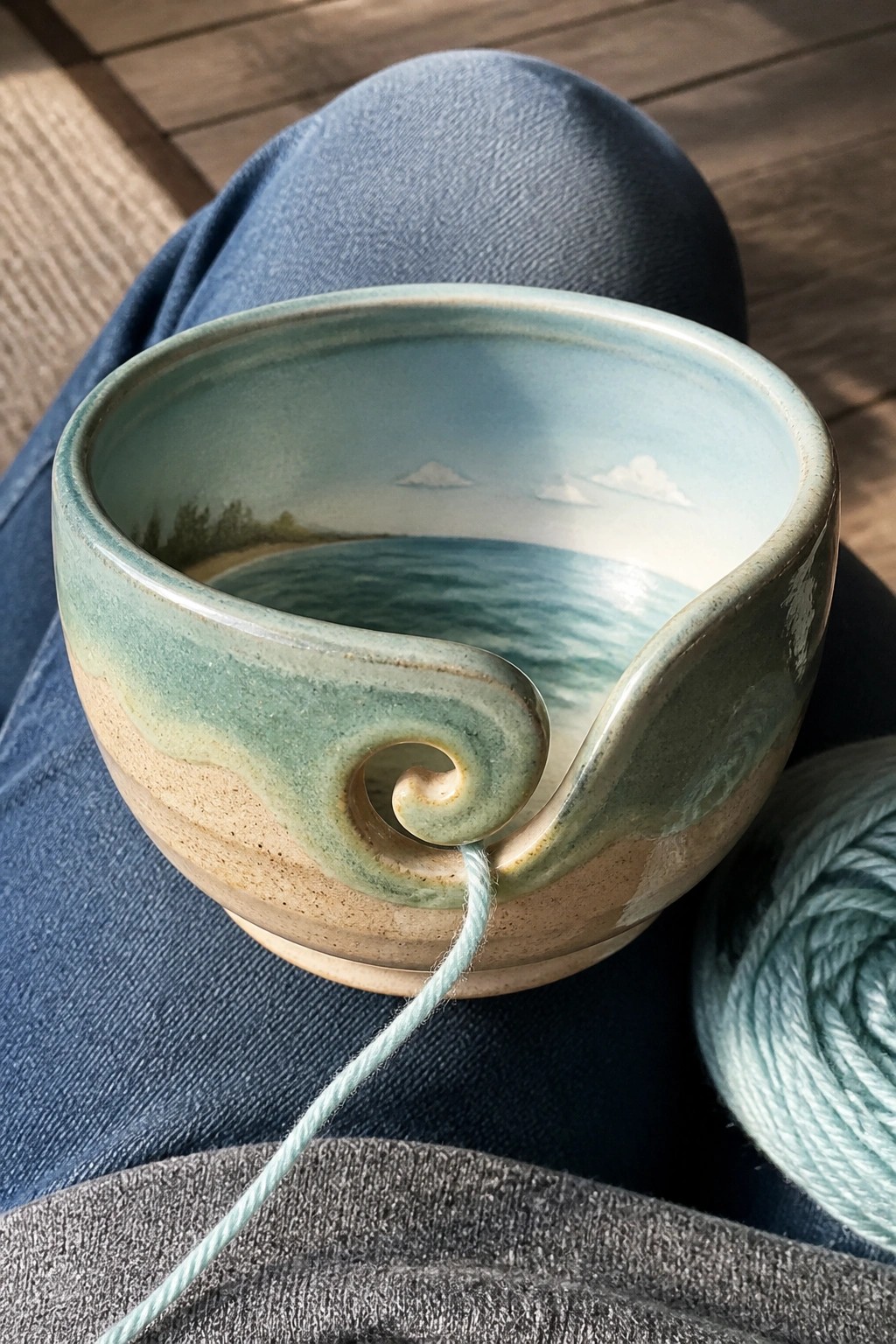
A yarn bowl keeps strands from tangling during knitting or crocheting by feeding the yarn through a dedicated notch in the rim. This example uses a sculpted spiral cutout that guides the thread smoothly while the bowl rests on a lap or table. The interior carries a simple painted seascape in muted blues and greens that follows the curve of the form, with a sandy lower band and lighter sky tones above. The exterior glaze shifts from sea green to a warmer base, creating a cohesive look without extra decoration.
What makes this idea useful is how the notch turns a standard bowl shape into a practical tool that actually gets used. You can scale the same painted motif down to a smaller pinch pot for embroidery floss or up to a wider bowl for bulkier yarns. The coastal palette works especially well in craft rooms or living spaces with blue and green accents, and the notch detail could transfer easily to a mug or small tray if you want a different function. A piece like this stands out on Pinterest because the painted scene gives it a clear theme without needing complex techniques.
Mini Mugs with Muted Glaze Contrast

Small mugs finished in two different matte glazes create a coordinated set without extra decoration. One uses a soft pink glaze and the other a sage green, both showing light speckling and slight color variation from the firing. The simple rounded shape and small handles keep attention on the glaze pairing itself. This works as a straightforward way to make matching drinkware that still feels varied.
The small scale makes these quick to throw and easy to fire together. You could repeat the same two glazes on bowls or larger cups to build a full set over time. A pair placed on a wooden tray works well for gifting or as a compact coffee station setup. The color contrast stands out in photos, which helps when sharing the project online.
Oval Tray with Raised Daisy Relief

An oval ceramic tray formed from terracotta clay features three daisies with stems and leaves pressed or carved in relief across the surface. A light slip wash covers the clay, leaving the raised flowers slightly darker and more defined against the lighter background. The elongated shape works well for serving or as a decorative table piece, and the simple floral motif keeps the focus on the texture rather than busy colorwork.
The shape does a lot of the work here because the oval form gives enough room for the flower stems to stretch without crowding. This same relief approach could be scaled down for smaller appetizer plates or adapted to a rectangular tray for a different layout. In a kitchen setting the tray handles light food service while doubling as a surface for candles or small bowls when not in use. The contrast between the raised design and the washed background is what makes the idea easy to recreate in other color combinations.
Leaf-Shaped Ring Dish with Vein Texture

A small leaf-shaped tray makes a practical ring dish or catchall for jewelry and small items. The molded veins create a natural surface pattern, and the glossy green glaze highlights those details while the unglazed back keeps the piece simple. This approach works as a decor object that fits plant styling or desk use without extra painting steps.
What makes this idea useful is how the leaf form handles the shape work so the glaze can stay straightforward. It sits well on a windowsill beside a plant or on a bathroom counter for daily items. You could scale the same mold up for a larger tray or swap the green for other palette colors to match different rooms. For a gift this stays compact yet distinct from plain round dishes.
Scalloped Soap Dish with Painted Daisies
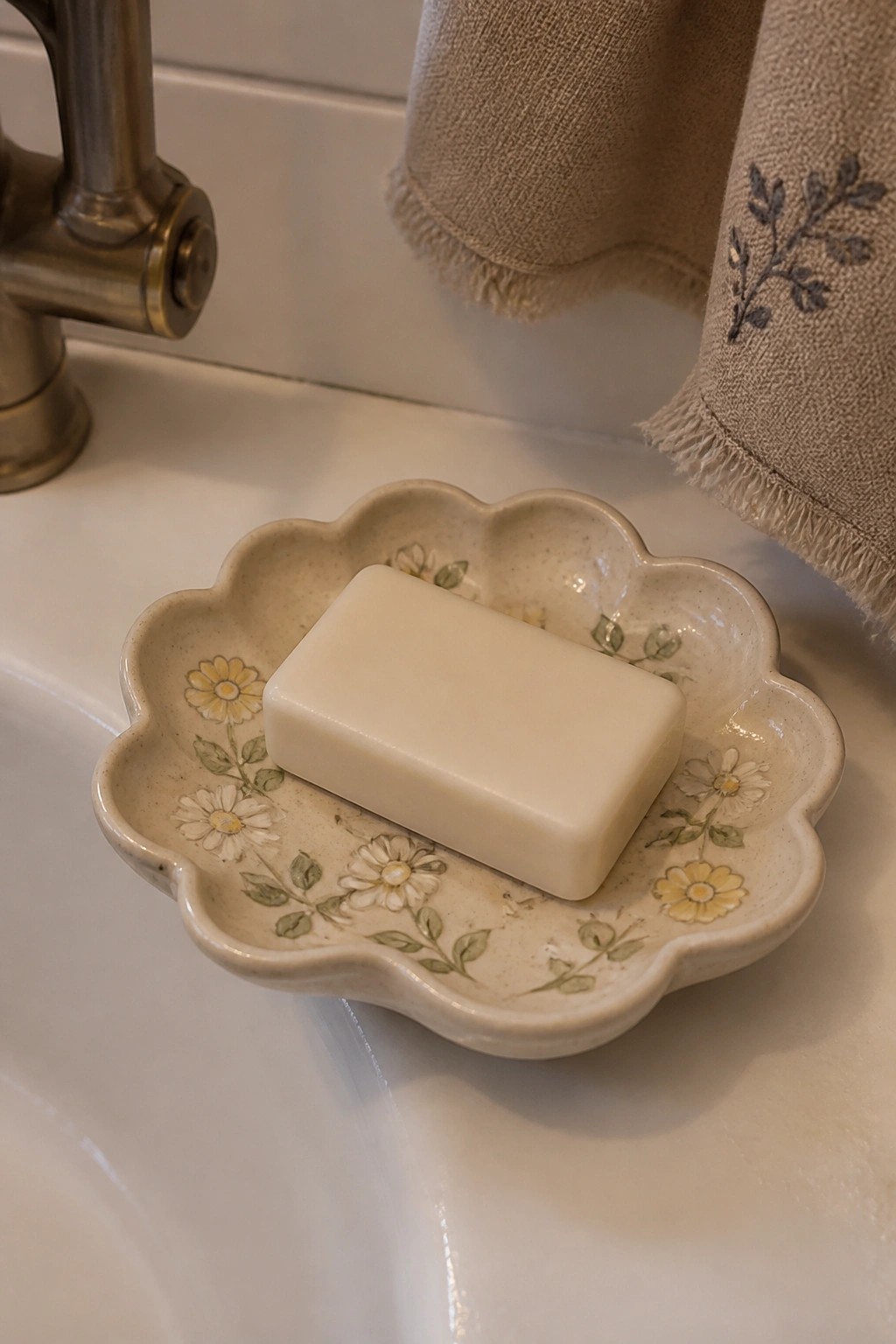
A small scalloped-edge soap dish makes a practical bathroom item when painted with clusters of daisies along the rim. The cream speckled base keeps the surface light while the yellow-centered flowers and green leaves add simple color without crowding the center space. This approach works because the design stays on the outer edge, leaving room for the soap to sit flat.
What makes this idea useful is how the scalloped shape gives the piece built-in detail without extra carving. You could repeat the same daisy motif on a matching toothbrush holder or a small tray for the same sink area. The neutral background also makes it easy to swap in different flower colors later if you want to match new towels or tiles. For a quick project, this size lets you finish the painting in one session while still getting a finished piece that fits on most bathroom counters.
Smiley Face Egg Cup in Pale Blue Glaze

A small ceramic egg cup finished in a light blue glaze provides a simple surface for a hand-painted smiley face in darker blue. The design uses just three curved lines and two dots to create the motif, keeping the focus on the rounded form and glossy finish. This approach turns a basic kitchen holder into a painted piece that fits easily into a set of matching cups or stands alone on a table.
The shape does a lot of the work here because the compact size leaves room for the face without crowding the surface. You could repeat the same motif on small bowls or spoons to build a quick matching set for everyday use. The limited color palette also makes the idea easy to adapt with other neutral glazes or swap the smile for simple geometric marks if you want a less literal version. In photos the contrast between the face and glaze color helps the piece read clearly even at small sizes.
Gradient Glaze Incense Holder

A long rectangular clay incense holder uses a simple hole near one end to keep a stick upright while the flat surface catches ash. The piece relies on a smooth glaze that blends from soft purple into teal across its length, giving the surface a continuous color shift without added patterns or lines. This keeps the focus on the glaze application itself rather than extra decoration.
What makes this idea useful is how the narrow shape slips into small spaces like a desk corner or shelf edge. You could rework the same gradient on a shorter block for a single stick or stretch it into a wider tray for holding multiple sticks at once. The color blend works especially well for anyone who wants to practice glaze testing on a form that stays functional.
Frequently Asked Questions
What supplies do I need to start painting pottery with aesthetic color palettes?
Start with bisque or unglazed ceramic pieces for better paint adhesion, along with acrylic paints or ceramic-specific underglazes in your chosen palette. Gather fine detail brushes, a palette for mixing, painter’s tape for clean edges, and a sealant or varnish to protect the finish. Many projects also benefit from a turntable for even application and access to reference images of trendy designs.
How do I pick and combine colors for trendy aesthetic palettes on pottery?
Focus on 3 to 5 hues that work together, such as soft sage greens paired with warm terracotta and creamy neutrals for an earthy vibe or blush pinks with dusty blues for a modern minimalist feel. Test combinations on paper first to ensure balance, and draw inspiration from current trends like monochromatic schemes or nature-based tones to keep the look cohesive across your 20 ideas.
What techniques help beginners achieve professional results with these pottery designs?
Begin with simple methods like color blocking or stenciling using washi tape to outline shapes before filling in with paint. Layer thin coats and allow drying time between applications to avoid smudges. For added texture, try dry brushing or sponging to create depth in aesthetic palettes without needing advanced skills.
How do I make my painted pottery durable and safe for everyday use?
Apply 2 to 3 coats of a food-safe sealant after the paint fully dries, or opt for kiln-fired paints if you have access to one. Avoid placing painted items in the dishwasher or microwave unless the materials specify otherwise. Test a small area first to confirm the finish holds up to light handling.
Where can I find more inspiration beyond the 20 ideas in aesthetic palettes?
Explore online platforms like Pinterest or Instagram by searching terms such as minimalist ceramic art or cottagecore pottery to discover variations. Local craft stores often carry idea books, and experimenting with seasonal color shifts, like adding metallic accents to existing palettes, can generate fresh designs tailored to your style.

Pottery Path is my cozy corner of the internet where I share clay ideas, pottery inspiration, and simple projects you can recreate at home. I love exploring everything from air dry clay to handbuilt pottery to cute minis that brighten your day. My goal is to make clay crafting feel easy, fun, and welcoming for anyone who wants to try it.
You will find beginner friendly tutorials, creative pottery painting ideas, and lots of warm inspiration for slow and happy crafting. If you enjoy hands on creativity, this space will feel like home.