
I like painting my own coffee mugs because it lets me use something I made every day.
I have tried different designs on cups I already own and some work better than others once they go through the dishwasher.
These ideas are ones I came back to because they are simple to do and the paint stays on after regular use.
I focused on colors and patterns that match what I already have in my kitchen rather than anything too fancy.
Most of them do not take much time so I can finish a mug in an afternoon and start using it soon after.
Pink Polka Dot Ceramic Mug

A handmade ceramic mug with a light speckled surface gets its pattern from simple pink circles painted across the body. The dots sit at different heights and sizes so the design feels relaxed rather than measured. A thin brown rim at the top gives the whole piece a finished edge without extra decoration.
What makes this idea useful is how quickly the dots can be added to any plain mug you already own or have thrown. You can adjust the spacing or color to match plates or towels you already use, and the same motif transfers easily to a smaller espresso cup or a larger soup bowl. In a kitchen this kind of mug stays practical because the pattern does not interfere with the handle or lip.
Moon and Star Motifs on a Brown Ceramic Mug

A wheel-thrown or hand-built ceramic mug finished in a deep brown glaze provides a strong base for simple hand-painted celestial designs. Small crescent moons and stars in a lighter metallic tone are spaced across the exterior, keeping the pattern loose rather than symmetrical. The contrast between the dark glaze and the lighter motifs makes the design readable even on a curved surface, and the same approach works on mugs of different sizes.
The dark glaze does most of the visual work here, so you only need basic brushwork to get a clear result. You could repeat the same motif on a set of smaller espresso cups or shift the placement lower on the mug to leave more room for the handle. Because the color scheme stays neutral, the finished piece mixes easily with other kitchenware or makes a straightforward gift without needing extra packaging. If you want to adapt it further, swap the metallic paint for white underglaze on a lighter clay body to test how the pattern reads in daylight.
Striped Ceramic Travel Mug

A ceramic travel mug painted with wide horizontal bands of teal, mustard yellow, and white creates a simple, graphic look that reads clearly from a distance. The stripes sit between plain white sections at the top and bottom, keeping the design balanced while the cork base adds a practical non-slip detail. This approach turns a standard functional mug into a painted project that still works with a lid for daily use.
What makes this idea useful is how the stripe layout lets you test color combinations without complex brushwork. A piece like this works especially well as a commuter cup because the shape and lid already handle real-world needs. You could rework the same bands onto a shorter coffee mug or swap the teal for a deeper blue to match different kitchen palettes.
Daisy Bands Wrapped Around Ceramics

A ceramic bowl with a repeating daisy pattern shows how a simple floral band can work on a rounded form. The flowers sit in a single row around the exterior, painted with white petals, yellow-orange centers, and thin green stems that connect them. This layout keeps the design balanced and easy to read against the light clay surface.
The shape does a lot of the work here because the curve lets the band flow naturally without extra planning. You can adapt the same daisy spacing and stem lines directly onto a mug body so the pattern stays visible during use. For a gift, something like this translates well to smaller mugs or even a matching sugar bowl set. The motif also stands out on Pinterest when kept to one color story instead of adding extra layers.
Lemon Slice Painted Mug with Matching Saucer

A tall ceramic mug gets its main decoration from a band of painted lemon slices that wrap around the lower half. The slices sit on a blue glazed section while the upper body stays plain in an off-white finish, and the matching saucer repeats the same lemon motif on a larger blue area. This layout keeps the fruit design visible even when the mug is in use and pairs the bright yellow with a cooler blue to balance the overall look. The project falls into the category of painted mugs that use simple repeating shapes instead of full-surface coverage.
What makes this idea useful is how the blue band anchors the yellow slices and stops the design from looking scattered on a tall form. The same lemon slices could be scaled down for a shorter mug or used on a small tray to create a matching set. In a kitchen this kind of piece stands out on open shelves because the fruit motif reads clearly from a distance. The saucer adds a finished feel that works well for gifts without needing much extra painting time.
Swirl Motif Spoon Rest

A spoon rest shaped from clay gives you a practical spot to set coffee tools without marking the counter. This version uses an oblong form with one deeper well to hold drips and a flatter area that carries a single white swirl painted over a brown speckled surface. The simple curve of the design sits off-center, so it reads clearly against the darker glaze without crowding the space.
What makes this idea useful is how it pairs with painted mugs in a coffee setup. You can repeat the same swirl on a matching mug or scale it down for a smaller rest if you want a set. The shape works just as well on a breakfast tray or next to the kettle, and the painted detail stays visible even when the piece sits among other kitchen items. For a gift, something like this gives a functional object that still feels tied to the mugs you already made.
Flower Border Tray to Pair With Your Mug

A rectangular ceramic tray with a repeating border of small painted flowers offers a straightforward way to add color around a plain mug. The design uses simple tulip shapes in red, yellow, purple, and pink with green stems, spaced evenly along the inner edge, while the rim carries a soft green band. This approach works well for kitchen or serving pieces where the painted detail stays visible during daily use.
What makes this idea useful is that the tray keeps crumbs and drips contained while holding a mug and a small snack. You could scale the same flower border down for a coaster set or repeat it around the rim of a larger plate. For a gift, something like this combines easily with a plain mug and a few cookies. The small motifs also translate well if you want to try the pattern on a different shape without crowding the surface.
Gradient Glaze Creamer for Daily Coffee Use

A small handmade ceramic pitcher works well as a cream or milk server next to coffee mugs. The rounded body tapers to a simple spout and sturdy handle, while the speckled glaze shifts from warm beige at the top to a muted green at the base. This two-tone finish gives the piece visual interest without added decoration or patterns.
What makes this idea useful is the compact size that fits easily on a kitchen counter or breakfast tray. The gradient glaze approach can be copied on standard mugs by brushing or dipping two glazes so they blend in the middle. A piece like this also serves as a template for other kitchen items such as small syrup pitchers or sugar bowls using the same shape and color transition.
Cherry Clusters for Coffee Mugs

Painting pairs of cherries with simple stems and leaves creates a repeating motif that works cleanly on rounded ceramic surfaces like mugs or small jars. The design stays balanced by spacing the clusters evenly and keeping the colors limited to red and green against a light base so nothing gets crowded. A small sculpted detail on the lid can echo the same handmade feel without competing with the painted pattern.
The shape does a lot of the work here because the curve of a mug lets the cherries follow the form without extra adjustment. You could shrink the clusters slightly and wrap them around the middle of a coffee cup to match a kitchen jar you already have. This motif adapts easily if you want to drop the leaves or use just one cherry per group for a faster paint session. It shows up clearly in photos, which helps when saving ideas for later projects.
Simple Line-Drawn Cat Face Mug

A handmade ceramic mug works well with a minimal cat face painted in black lines across the front. The design uses just a few strokes for whiskers, eyes, nose, and mouth, letting the speckled glaze show through without extra color or detail. This approach keeps the mug functional while adding a clear animal motif that reads easily from a short distance. The idea fits the painted mug category and relies on contrast between the light clay surface and the thin lines.
What makes this idea useful is how quickly the same line technique can be copied onto other mugs or even small bowls. The shape stays practical for daily coffee or tea use, and the small painted area leaves most of the surface clean for easy cleaning. You could swap the cat face for another simple animal or repeat the lines in a different color to match kitchen dishes. For Pinterest, the clean look photographs well against neutral backgrounds and translates to quick weekend projects without needing advanced painting skills.
Etched Wildflower Mug

A stoneware mug with a matte blue-gray glaze uses sgraffito to carve simple wildflower silhouettes around the exterior. Stems, leaves, and flower heads like daisies and coneflowers are scratched through the glaze to expose the lighter clay body, creating clean line work that contrasts with the dark surface. The design wraps the full circumference without overcrowding, leaving negative space so the pattern stays readable on the curved form. This style fits the carved motif category for mugs and keeps the focus on line rather than color.
What makes this idea useful is that the carved lines stay sharp after repeated dishwasher cycles and daily handling. You could scale the same set of flower outlines down for a smaller espresso cup or repeat just one stem motif on a matching sugar bowl. In a kitchen, the neutral glaze color lets the mug pair with most dish sets while the etching adds enough detail to keep it from looking plain. The vertical plant layout also translates easily to a tall tumbler or a small vase if you want to try the technique on a different shape.
Marbled Swirl Glaze Mug

A ceramic mug finished with a marbled glaze uses several colors blended on the surface before firing to produce flowing streaks and soft transitions. The rounded body and standard handle keep the shape simple so the glaze pattern remains the main feature. This idea belongs in the painted or glazed mug category where surface treatment carries the design instead of added carving or texture.
What makes this idea useful is that the marbled effect can be achieved by layering two or three glazes and letting them run together during application. A piece like this works especially well as an everyday coffee cup because the busy pattern hides small drips or uneven spots. The same approach adapts easily to different color palettes such as cool neutrals or one bright accent against a light base. For a gift this shape stays practical while the glaze makes it look more finished than a plain mug.
Sunrise Gradient Mugs with Matching Saucers

Handmade ceramic mugs painted with a simple sunrise design use a smooth color gradient that shifts from pale beige at the rim down through orange into deep red near the base. A half-circle sun with short radiating lines sits centered on each piece, and the matching saucers repeat the same motif and color bands. The design works because the gradient and linework stay bold yet minimal, letting the shape of the mug and saucer carry most of the visual weight.
The small scale makes these easy to adapt for daily use or as gifts without needing much clay or kiln space. You could apply the same gradient and sun layout to a larger mug, a small bowl, or even a tray by adjusting the placement of the rays. The painted detail stands out on a shelf or table because it reads clearly from a distance while still leaving room for personalization with different color combinations.

A ceramic mug finished in a deep navy glaze gives a clean dark background for a constellation design. Small star shapes connected by thin lines are painted across the surface to form a clear star map that wraps around the curve. This keeps the motif simple while making good use of the mug’s rounded form. The high contrast between the glaze and the lighter stars makes the pattern easy to read at a glance.
What makes this idea useful is how the constellation can be swapped for any star pattern or even a custom set of coordinates. The mug shape works well for daily use because the design stays visible whether the cup sits on a desk or hangs on a rack. You could scale the same layout down for an espresso cup or spread it across a larger bowl. The painted detail also photographs clearly for sharing project ideas online.
Layered Landscape Ceramic Coffee Bowl

A wide, low ceramic bowl uses horizontal bands of colored glaze to form a simple landscape across the surface. An orange circle sits as the sun above layered hills in pink, blue, green, and brown tones. The approach suits a drinking bowl shape that holds a full latte or soup while keeping the design visible from all angles.
What makes this idea useful is how the wide rim displays the full scene without extra painting effort. You could adapt the banding method to a standard mug by stacking fewer layers or switch the colors to match your kitchen palette. In daily use the bowl works for coffee or cereal because the design stays clear even after many washes. For a gift the same landscape wraps easily around a smaller cup or a desk pencil holder.
Stamped Leaf Mug

A handmade ceramic mug works well when small leaf shapes are stamped repeatedly into the clay before glazing. The leaves sit in loose vertical rows around the body, and the light speckled glaze leaves the impressions visible as a subtle raised pattern. This gives the mug texture without needing painted lines or complex drawing skills.
What makes this idea useful is that stamping lets you cover the surface quickly and evenly even if your placement is not perfect. The everyday mug shape stays practical for coffee or tea, and the textured surface helps hide small throwing marks or uneven spots. You could swap the leaf stamp for other simple shapes like dots or lines if you want a different look, or scale the same method down for smaller cups or espresso mugs.
Striped Ceramic Travel Mug with Cork Grip

A handmade ceramic travel mug uses wide diagonal stripes in teal, soft coral, and cream across a tapered body. The pattern is applied under a clear glaze and paired with a fitted lid and a thick cork band around the middle. This approach turns a basic mug shape into a functional piece meant for daily coffee use.
What makes this idea useful is the cork band that improves grip and protects hands from heat without extra hardware. You could adapt the same stripe layout to a standard handle mug by using tape to mask clean lines before glazing. The neutral color mix works well on a desk or in a kitchen where bright patterns might clash. For variety, swap the stripe direction or limit it to two colors on a smaller cup size.
Citrus Slice Painted Mug

A white ceramic mug decorated with overlapping watercolor-style slices of orange, lime, and lemon gives a straightforward painted mug project. The round fruit shapes sit flat against the curved surface and use just three colors plus white space to keep the pattern readable. This idea belongs in the painted mug category because it relies on simple brushwork rather than carving or added clay details.
What makes this idea useful is how the circular fruit motifs can be spaced out or clustered to fit taller or shorter mugs without redrawing the whole design. In a kitchen, the bright slices stay visible even when the mug is stacked or stored on open shelves. You could rework the same slices onto a small pitcher or turn the pattern into a single large orange on a cereal bowl for a matching set.
Abstract Brushstroke Ceramic Coasters
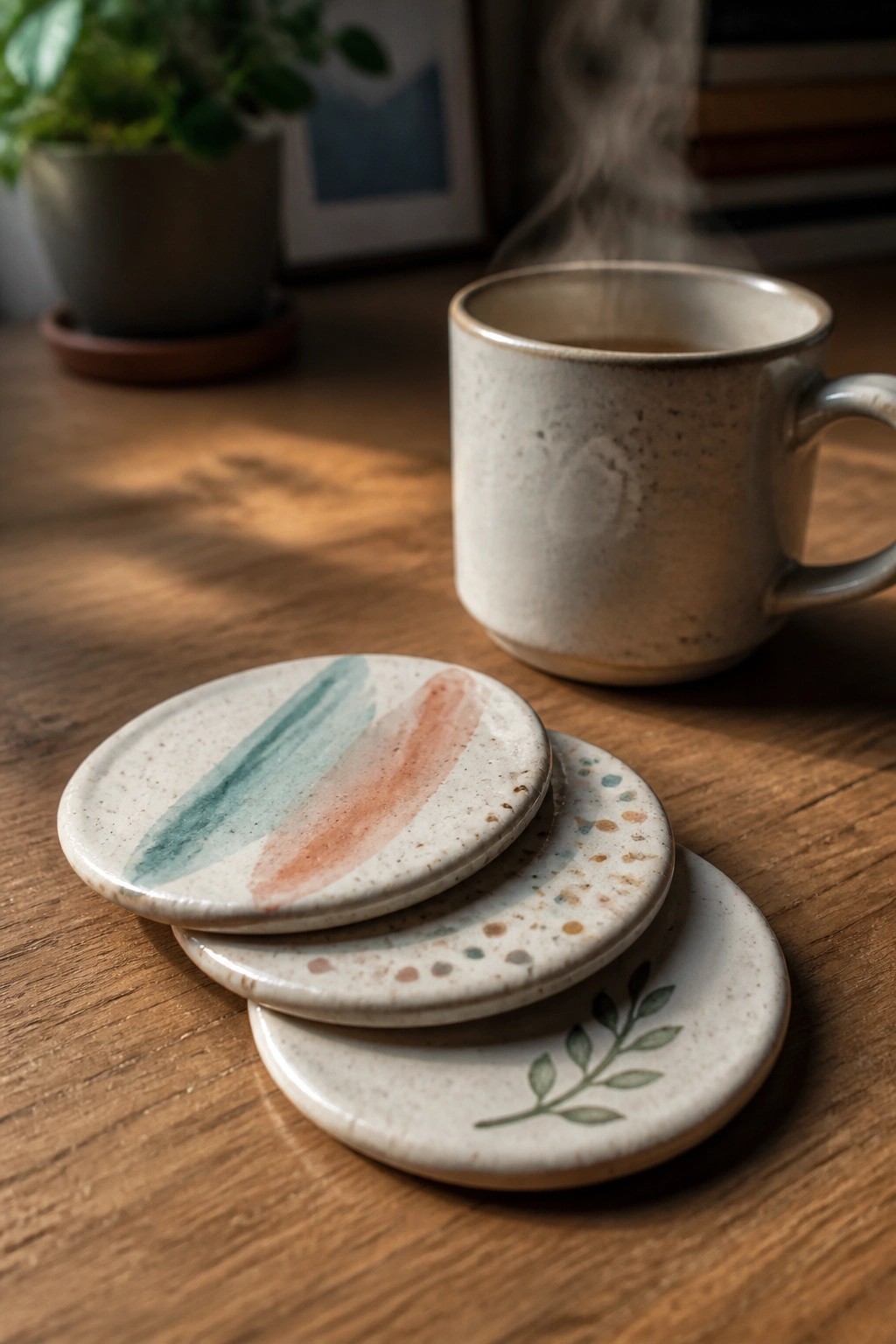
Hand-painted ceramic coasters give you a quick way to protect surfaces while adding color around your coffee setup. The round shape with a speckled clay body lets simple brushstrokes, dots, or small leaf motifs stand out clearly without needing complex patterns. These pieces fall into the kitchen item category and pair naturally with everyday mugs.
What makes this idea useful is how the same painted motifs can be repeated on a matching mug to create a coordinated set. You can change the color palette to fit your kitchen or gift the coasters on their own since the small size makes them easy to produce in batches. The flat surface also lets you test new designs before trying them on curved mug walls.
Breakfast Doodle Mug

A plain white ceramic mug gets covered in loose blue line drawings of croissants, donuts, steaming coffee cups, and small hearts. The motifs sit at different angles and sizes so they wrap around the curved surface without looking planned. This kind of scattered breakfast sketch works because the simple outlines stay readable even after glazing and the white background keeps the blue lines crisp.
What makes this idea useful is how little drawing skill it actually takes. You can trace basic shapes with an underglaze pencil, then fill in details by hand, and the same set of icons fits just as well on a smaller espresso cup or a cereal bowl. The light color palette also leaves room to add a name or date later if you want to turn one into a gift.
Mug Decorated with Raised Ceramic Flowers

A ceramic mug gains texture from small hand-sculpted flowers attached around the exterior before glazing. Each flower is formed separately and added in clusters, then finished with pastel glazes in blue, pink, purple, and yellow that contrast with the off-white speckled body. The raised details create shadows and highlight the handmade surface while leaving plenty of plain space for comfortable handling. This approach suits any standard wheel-thrown or handbuilt mug shape.
What makes this idea useful is how the flowers stay out of the way of the handle and rim, so the mug remains practical for daily coffee or tea. You can scale the design down to just three or four blooms on one side if you want a quicker version, or repeat the same flower shape in a single color for a more uniform look. The same applique method transfers to small bowls or planters without much adjustment. It performs well on Pinterest because the three-dimensional detail shows up clearly in photos and gives the piece a finished quality that flat painting alone does not achieve.
Simple Floral Line Painting
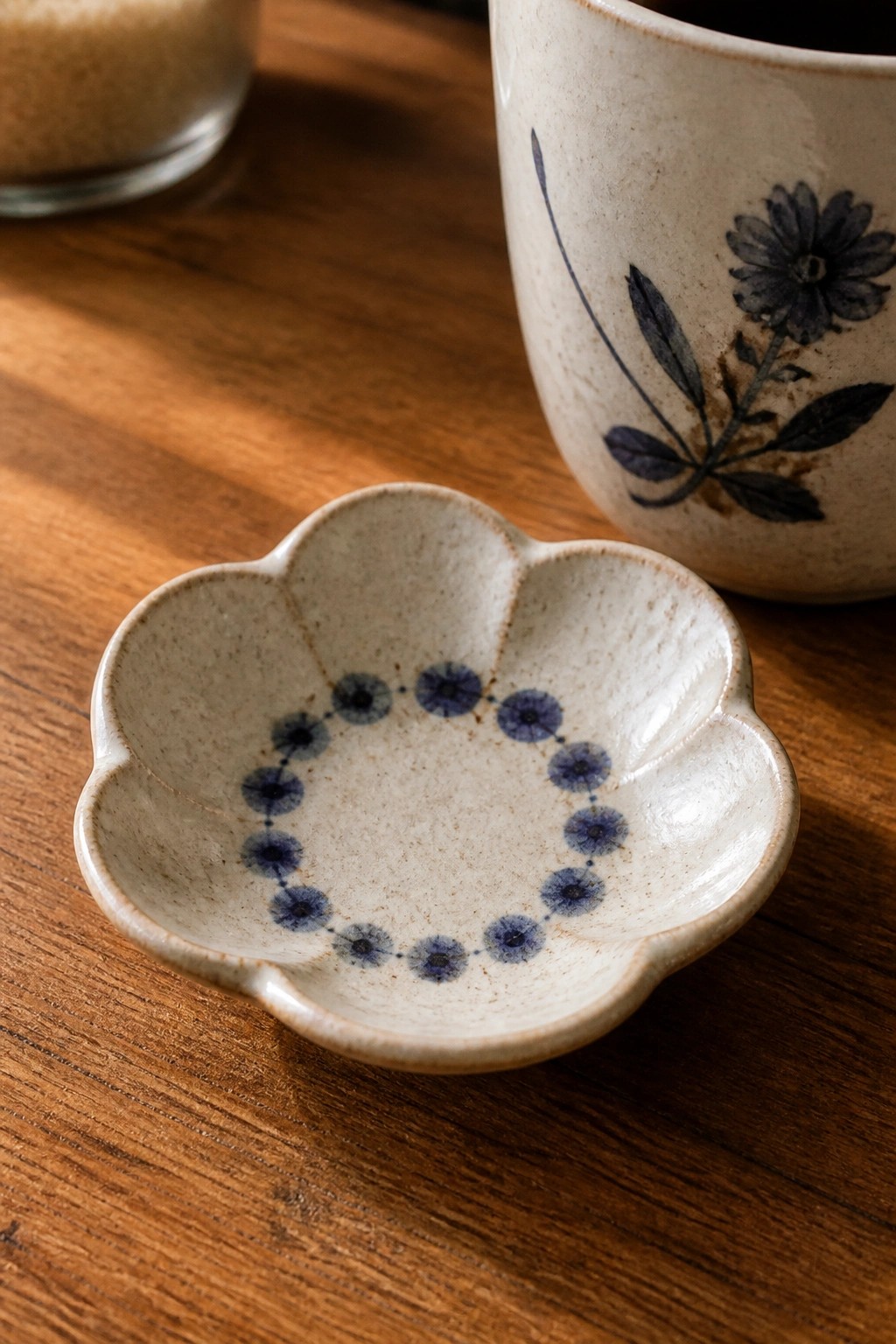
A hand-painted ceramic mug gets its look from a single blue flower with a long stem and leaves applied directly to the finished surface. The design uses basic brush strokes and solid color fills that stand out against the light speckled glaze without needing extra layers or shading. This approach fits the painted mug category and works because the motif stays small enough to leave plenty of negative space around it.
What makes this idea useful is how easily the same flower can be resized or repeated on other mugs without new tools. The shape and placement leave room for the handle area and keep the design readable even after daily washing. You could simplify it further by using just the flower head or stretch it into a taller stem on a larger cup. In a kitchen or on a desk, a mug with this kind of detail stands out on Pinterest boards because it looks finished but still handmade.
Landscape Scene on a Ceramic Mug

A handmade ceramic mug painted with horizontal bands of color to show rolling hills, a winding river, a single tree, and a small sun. The design uses simple brushwork and muted earth tones so the landscape reads clearly from a distance while still fitting the curved surface. This turns a standard drinking mug into a piece of functional pottery that carries a nature motif without extra texture or sculpting.
What makes this idea useful is how the painted bands follow the mug’s shape so the scene stays visible from multiple angles. You could swap the tree for a different element or change the color palette to match another season while keeping the same layout. In daily use the design stays subtle enough for coffee or tea without competing with the handle or rim. The same approach works on smaller cups or larger travel mugs if you adjust the scale of the hills and sun.
Frequently Asked Questions
1. What paints work best for creating durable designs on everyday coffee mugs? Use ceramic or porcelain paints specifically labeled as food-safe and dishwasher-safe. Apply thin layers and bake the mug in the oven according to the paint instructions to set the design. This approach keeps the charming patterns intact through regular use and washing.
2. How do I make sure painted mugs remain safe for hot drinks? Select paints that are explicitly non-toxic and lead-free. After painting and baking, allow the mug to cool completely before filling it with coffee or tea. Test one mug first by running it through the dishwasher to confirm the finish holds up without chipping.
3. What simple techniques help beginners achieve professional-looking results on mugs? Start with stencils for clean shapes like hearts or letters, then fill in with a small brush. Practice on paper first to control paint flow. Choose light base colors on dark mugs or vice versa for better contrast in your finished ideas.
4. Can I personalize mugs with names or dates using these painting ideas? Yes, sketch the name lightly with a pencil before painting over it with fine-tip markers or brushes. Add small accents like stars or flowers around the text to tie into the charming theme. Let each layer dry fully to avoid smudging.
5. How should I store or care for painted mugs to keep them looking new? Hand wash with mild soap and avoid abrasive sponges. Store them upright in a cabinet to prevent scratches on the designs. If the article suggests multiple coats, reapply a sealant every few months for extra protection during daily coffee routines.

Pottery Path is my cozy corner of the internet where I share clay ideas, pottery inspiration, and simple projects you can recreate at home. I love exploring everything from air dry clay to handbuilt pottery to cute minis that brighten your day. My goal is to make clay crafting feel easy, fun, and welcoming for anyone who wants to try it.
You will find beginner friendly tutorials, creative pottery painting ideas, and lots of warm inspiration for slow and happy crafting. If you enjoy hands on creativity, this space will feel like home.