
I have been painting cups for a while now and often look to cafe decor for inspiration.
My favorite designs are the simple ones with clean lines and soft colors.
It feels good to make something that looks like it belongs in a modern coffee shop.
These ideas came from trying different techniques on my own pottery at home.
I think they are easy enough to try if you have some basic paints and brushes.
Loose White Wave on a Matte Beige Mug

A handmade ceramic mug in a soft beige clay body carries a single white brushstroke that sweeps across the side in a loose wave. The interior and rim are finished in a warm brown glaze, creating a simple contrast that keeps the focus on the painted line. This approach works as a painted mug idea that uses minimal marks on a neutral surface rather than full coverage or patterns.
What makes this idea useful is how the wave can be adjusted in thickness or length to fit taller or wider mugs without needing extra tools. The shape of the mug itself does most of the work, so the same stroke translates easily to smaller cups or even a matching set. In a kitchen or on a cafe-style shelf, the neutral tones and single accent keep it from competing with other items. You could rework the motif in a different color or repeat it on the back side for a subtle variation.
Speckled Stoneware Espresso Cup with Green Rim Glaze

A small rounded cup made from speckled stoneware gives you a compact vessel suited for espresso or short pours. The exterior stays matte with visible clay texture in warm brown tones, while a green glaze covers the interior and creeps over the rim for contrast. This combination keeps the shape simple and lets the surface treatment define the style without added decoration. The overall form fits the category of functional drinkware that works in a cafe setting.
The small scale makes this easy to throw in multiples and fire efficiently on a single kiln shelf. You could adapt the speckled body and green rim to slightly wider shapes for cortado cups or even small dipping bowls. In a kitchen this cup sits well on open shelving next to a coffee setup or wooden tray. For a quicker version, apply the green glaze only to the rim and leave the rest in the base clay for a similar look with less glazing time.
Crescent Moon Accent on a Blush Ceramic Cup

A small handmade ceramic cup finished in a soft pink glaze works well as the base for this idea. The white crescent moon is painted directly onto the side in a simple curved stroke that stands out against the textured surface. This approach keeps the painting minimal while turning an everyday cup shape into a distinct piece that fits modern cafe styling.
The shape does a lot of the work here because the compact size makes it easy to paint and display on a shelf or tray. You could adapt the same moon motif to a set of four cups with different moon phases or shift the color to a deeper tone for more contrast. In a kitchen or small cafe setup this kind of cup doubles as both a drink vessel and a quick decor accent without needing extra space.
Dark Speckled Mug and Saucer Set

A simple wheel-thrown cup with a wide rim and sturdy pulled handle pairs with a shallow saucer to create a complete drink set. The matte dark glaze carries fine light speckles that add quiet texture without pattern or decoration. This approach keeps the pottery idea focused on form and surface rather than painted motifs or added details.
The shape does a lot of the work here because the low, rounded profile fits comfortably in the hand while the saucer catches drips. You can adapt the same glaze to an espresso cup or a larger breakfast mug without redesigning the profile. In a kitchen this kind of set stays useful for daily coffee and still photographs cleanly for recipe posts or menu boards. For a gift, repeat the glaze on a small creamer or sugar bowl to make a matching group.
Neutral Speckled Bowl with Rich Brown Interior

A small wheel-thrown ceramic bowl uses a light speckled clay body on the exterior and a deep brown glaze on the interior that fades toward the center. The glaze settles into the throwing rings, adding natural texture and depth without extra decoration. This simple two-tone approach fits the small bowl category and suits cafe-style setups by relying on form and glaze contrast rather than painted details.
What makes this idea useful is the way the darker interior draws focus while the light exterior keeps the piece versatile for open shelving or table settings. You can adapt the same glaze split on actual cups or mugs by brushing the darker tone only inside the rim. The compact size also works for holding spices, small snacks, or as a desk catch-all, and the lack of complex patterns makes it straightforward to repeat for a set.
Speckled Glaze Tumbler

A tall cylindrical ceramic cup uses a light speckled glaze to give a simple drinking vessel subtle visual texture. The glaze shows small blue and brown dots scattered across a pale gray-blue surface, while the lower edge remains unglazed to expose the natural clay body. This combination keeps the cup functional for everyday use while adding enough surface detail to stand out on a table or shelf.
What makes this idea useful is how the straight sides and neutral speckle pattern translate easily to other sizes. The same glaze approach works for a shorter coffee cup or a wider tea bowl without changing the overall look. You can recreate the effect with commercial speckled glazes or by mixing small amounts of colored oxides into a base glaze. The exposed clay foot also gives a clean way to finish the piece without extra trimming or painting steps.
Two Tone Cup with Brushed Clay Stripe

A small ceramic cup uses a glossy white glaze on the upper half and leaves the lower half in its natural matte clay finish. A single thin horizontal stripe of white slip or glaze creates the division between the two surfaces. This straightforward painted treatment suits a simple tapered drinking cup because the contrast emphasizes the form while keeping the surface mostly plain.
What makes this idea useful is how the same split can be repeated on different cup sizes or even small bowls without extra tools. The exposed clay section gives a subtle texture that works well next to wood or cork in a kitchen or coffee corner. You could change the stripe thickness or swap the white glaze for another color to match existing dishes. The small scale also makes it easy to try on a few pieces at once for consistent results.
Single Colored Rim Bands on Stacking Cups

Small ceramic cups gain a clean modern look from a narrow band of colored glaze applied only along the rim. The speckled off-white clay body stays simple while the thin pink, green, or blue stripe adds just enough contrast to make each cup distinct. This approach suits a set of compact stacking cups meant for espresso or small servings in a cafe setting.
The shape does a lot of the work here because the straight walls and slight taper let the rim band stand out without extra decoration. You can adapt the same narrow stripe to mugs, small bowls, or even tiny planters by changing only the band color. In a kitchen these cups work well for daily use or as a quick gift set since the limited painting keeps the project fast and consistent. The idea also translates easily to a Pinterest-friendly series by varying the band colors across a whole collection of neutral forms.
Swirling Brushwork on a Wide Ceramic Bowl

A wide ceramic bowl with a tapered base and unglazed terracotta exterior pairs a clean white interior with loose, concentric brown brushstrokes that radiate from the center. The painted lines stay thin and uneven, letting the glaze pool slightly to create soft depth without covering the whole surface. This approach keeps the design simple while still giving the bowl a finished, cafe-inspired look that works as both a serving piece and a decorative object.
The shape does a lot of the work here because the wide opening shows off the swirl pattern clearly when the bowl sits on a table or shelf. You can adapt the same idea to smaller bowls or even mugs by keeping the brushwork loose and stopping the color short of the rim. In a kitchen or dining setup, this style stands out on Pinterest because the contrast between the earthy outside and the light, patterned inside reads as intentional rather than busy.
Swirled Glaze Coffee Mug

A ceramic mug finished with flowing brown and cream swirls uses a marbled glaze effect to create irregular stripes that wrap around the body and handle. The contrast between the darker and lighter tones gives the surface movement without any sharp lines or added details. This idea falls into painted mug projects where the glaze itself does the work of adding pattern during application and firing.
The shape does a lot of the work here because the rounded form lets the swirls curve naturally around the mug for an easy visual flow. You could adapt the same glaze movement on a taller travel mug or a smaller espresso cup by changing the color pairing to match other kitchen items. In a home setup this style works well for daily use since the pattern hides minor wear better than solid colors. For Pinterest, the fluid design photographs cleanly from multiple angles and pairs with simple wood surfaces.
Drip Glaze on a Small Ceramic Cup

A small ceramic cup uses a light speckled base glaze covered by brown glaze applied at the rim so it runs down the sides in controlled drips. The drips vary in length and thickness, ending in small rounded beads before reaching the foot. Horizontal ridges inside the cup come from the throwing process while the outside remains smooth under the glaze layers. This style keeps the form simple and lets the glaze movement create the main pattern.
The small scale makes it a good first piece if you want to test how far a glaze will run on a curved surface. You could repeat the same rim-drip method on slightly taller mugs or small bowls by changing how much glaze you load at the top. It works as a daily coffee or tea cup and also as a desk holder for pens or small tools. The strong contrast between the light body and the brown streaks makes the finished cup easy to adapt for different color combinations.
Ribbed Texture on a Small Cafe Cup

A small ceramic cup with vertical ridges pressed into the clay gives the surface a clear linear pattern. The blue-gray glaze pools slightly in the grooves while the raised areas stay lighter, creating contrast across the form. This works as a compact cup or small bowl that stays functional for daily drinks.
What makes this idea useful is how the ridges do most of the visual work once the glaze is applied. You can repeat the same texture on a taller mug or a set of four matching cups to keep a consistent cafe style. The neutral glaze also translates well to other colors if you want to test warmer or cooler tones on the same shape.
Sage Green Crackle Cup with Dark Brown Saucer

A small handmade ceramic cup finished in a light green crackle glaze and paired with a glossy dark brown saucer gives a clean, modern cafe look. The crackle texture shows through the glaze on the interior and exterior while the handle stays simple and functional. This combination works as an everyday espresso or coffee cup that still feels intentional rather than plain.
What makes this idea useful is the contrast between the two glazes, which keeps the set from looking too matchy. You could recreate the same effect on slightly larger cups or swap the brown saucer for a matte black one to change the mood. The small scale makes it easy to test new glaze colors without using much material, and the shape translates well to sets meant for gifting or daily kitchen use.
Incised Coffee Cup Mug with Bean Motifs

A wheel-thrown stoneware mug uses sgraffito carving to create a central steaming cup surrounded by scattered coffee beans. The design sits on a matte gray-green glaze that lets the lighter clay body show through the cuts, giving the motif clear contrast without added paint layers. The rounded form keeps the carving readable from multiple angles while the rim and foot stay plain to frame the main image.
What makes this idea useful is how the carved motif turns a basic mug into a cafe-themed piece that still functions for daily drinks. The small scale of the beans and steam lines makes the design easy to adapt onto other round forms like small bowls or travel tumblers. In a kitchen, this kind of piece stands out on open shelves because the single-color glaze keeps it simple while the relief catches light. For a gift, the same layout works well if you swap the carving for underglaze lines or stencil work on a similar shape.
Organic Mug with Sculpted Leaf Handle
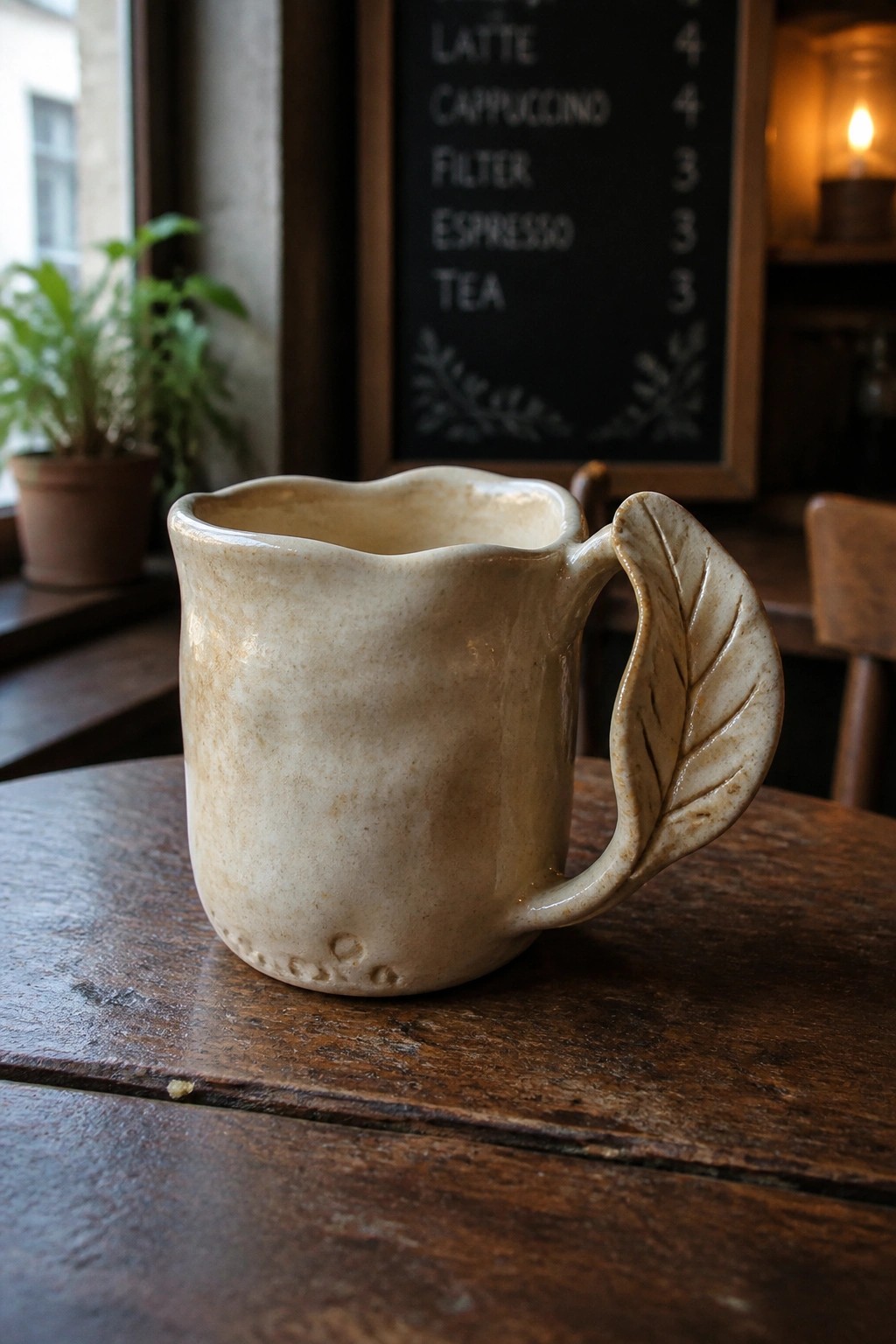
A basic mug gains interest when the handle is replaced with a single sculpted leaf that includes visible veins and a slight curve. The irregular rim and soft matte glaze keep the focus on the form rather than added decoration. This approach fits the mug category and works because the clay detail replaces a standard handle without complicating the overall shape.
What makes this idea useful is how the leaf handle can be sized up or down depending on the mug volume you need. The neutral tone makes the piece easy to use daily or give as a gift without clashing with other kitchen items. You could repeat the same leaf on a small pitcher or adapt the shape into a simple bowl if you want to test the detail on a different object.
Grid Lines with Drip Accents on a Cylinder Cup

A handmade ceramic cup finished in an off-white glaze gets its main interest from a black grid pattern painted across the sides. The lines form even squares that wrap around the form, with a few short drips added at the top edge to break the regularity. This combination gives the cup a structured look that still feels relaxed because of the irregular drip marks.
The shape does a lot of the work here since the straight sides make it simple to lay out even squares with basic tools like painter’s tape. You could adapt the same grid on a shorter tumbler or a wider bowl by adjusting the spacing to match the new surface area. In a kitchen or cafe setup this style stays practical because the neutral base hides minor wear while the dark lines keep the design visible from a distance.
Ombre Pink Drip Glaze Mug

A small rounded ceramic mug finished with a pink glaze that blends down into an off-white base creates a simple ombre effect. The colors meet in a soft drip line that adds texture without extra carving or stamping. This approach fits the mug category and works well for espresso or small coffee drinks where the shape stays compact and easy to hold.
What makes this idea useful is how the glaze fade does the visual work with just two colors. You can adapt the same technique on taller mugs or small bowls by brushing the top glaze thinner near the base so it breaks naturally. In a kitchen or on a cafe-style shelf, the cup pairs easily with plain white dishware. For gifts, the small size keeps it simple to make multiples and package with a few coffee beans.
Speckled Matte Cup with Glossy Brown Interior

A small handmade ceramic cup combines a rough, speckled beige exterior with a deep brown glossy interior. The thick walls and slightly irregular rim create a simple, sturdy form that works well for espresso or small servings. This approach fits the cup category by using texture on the outside to contrast with a smooth, easy-to-clean inside.
The compact size suits a home coffee station or small kitchen setup where space is limited. You can adapt the same shape by changing the interior color to black or keeping the exterior unglazed for a drier finish. This style stands out in searches because the natural surface texture reads as handmade without extra painted details.
Wavy Steam Lines Painted on a Cafe Mug

A ceramic mug gets a simple steam motif from three curved brown brushstrokes placed side by side on the front. The lines vary slightly in width and curve to suggest rising heat without extra shading or outlines. This painted mug idea works because the motif stays small and centered, leaving most of the white surface untouched so the design stays legible even on a busy shelf.
What makes this idea useful is how the steam pattern can be copied onto other mug shapes or resized to fit smaller cups by dropping one line. The plain white base lets the brown strokes stand out clearly, so the same motif can switch to black or blue paint for different color schemes. In a kitchen this style mixes easily with other plain ceramics without looking busy. For a gift the design adapts fast to travel mugs by shortening the curves and testing the spacing on paper first.
Speckled Mustard Cups with Raw Clay Bases

A small handmade ceramic cup finished in a speckled mustard glaze gives a simple way to capture modern cafe style. The glaze sits unevenly across the surface, creating natural dark flecks and a slight darker band near the foot, while the base stays unglazed to show the clay. This approach works well for compact drinking vessels meant for espresso, tea, or small servings where the color and texture do most of the visual work.
The small scale makes these cups easy to produce in batches and simple to adapt by testing different speckling underglazes or adjusting the rim flare for a wider bowl shape. They fit neatly on marble or wood tables without taking much space, and the warm tone contrasts nicely with neutral cafe settings. You could rework the same glaze idea onto slightly taller mugs or a set of matching small bowls for snacks.
Frequently Asked Questions
What supplies do I need to try these cup painting ideas at home?
Gather acrylic paints in soft neutral tones like beige, sage green, and terracotta, along with fine detail brushes, a palette, and painter’s tape for clean lines. For the modern cafe style, include gold or silver metallic accents and stencils for simple shapes such as leaves or abstract waves. Start with plain ceramic or glass cups that are dishwasher safe if you plan to use them daily, and have a sealant spray ready for the final step.
How do I make sure the painted designs stay durable on my cups?
Apply a thin base coat of primer if working on glass, then let each layer of paint dry fully before adding the next to avoid smudging. After completing your design inspired by the cafe themes, bake the cups in the oven at a low temperature according to the paint instructions or use a clear acrylic sealer for extra protection. Hand washing is recommended to preserve the aesthetic details longer.
Are these 20 ideas suitable for beginners with no prior painting experience?
Many of the suggestions focus on simple patterns like minimal line art, watercolor washes, or repeating motifs that mimic cafe menus and latte art. Beginners can start with basic shapes and build up, using the provided step by step guidance to practice on scrap paper first. The modern cafe inspiration keeps things approachable by emphasizing clean, understated designs rather than complex details.
Can I adapt these painting ideas to different cup materials beyond standard ceramic?
Yes, the concepts translate well to glass, porcelain, or even reusable plastic cups by adjusting the paint type. Use enamel paints for glass to achieve that sleek cafe vibe, and test a small area first to ensure adhesion. The aesthetic elements like soft gradients or geometric accents work across surfaces when you scale the designs to fit the cup shape.
What common mistakes should I avoid when creating these modern cafe inspired designs?
Avoid overloading the brush with paint which can cause drips and blur the clean lines typical of cafe style. Work in a well ventilated area and allow ample drying time between coats to prevent colors from mixing unintentionally. Sketch your idea lightly with a pencil before painting to match the elegant simplicity seen in the 20 examples.

Pottery Path is my cozy corner of the internet where I share clay ideas, pottery inspiration, and simple projects you can recreate at home. I love exploring everything from air dry clay to handbuilt pottery to cute minis that brighten your day. My goal is to make clay crafting feel easy, fun, and welcoming for anyone who wants to try it.
You will find beginner friendly tutorials, creative pottery painting ideas, and lots of warm inspiration for slow and happy crafting. If you enjoy hands on creativity, this space will feel like home.