I like to paint pottery on weekends when I have some time to myself.
It started as a way to relax after work and now I do it pretty often.
I have tried a lot of different designs over time and some turned out better than others.
I put together a list of ideas that might give you something new to try on your own pieces.
Some of these are simple and others take a bit more time but they all use basic supplies.
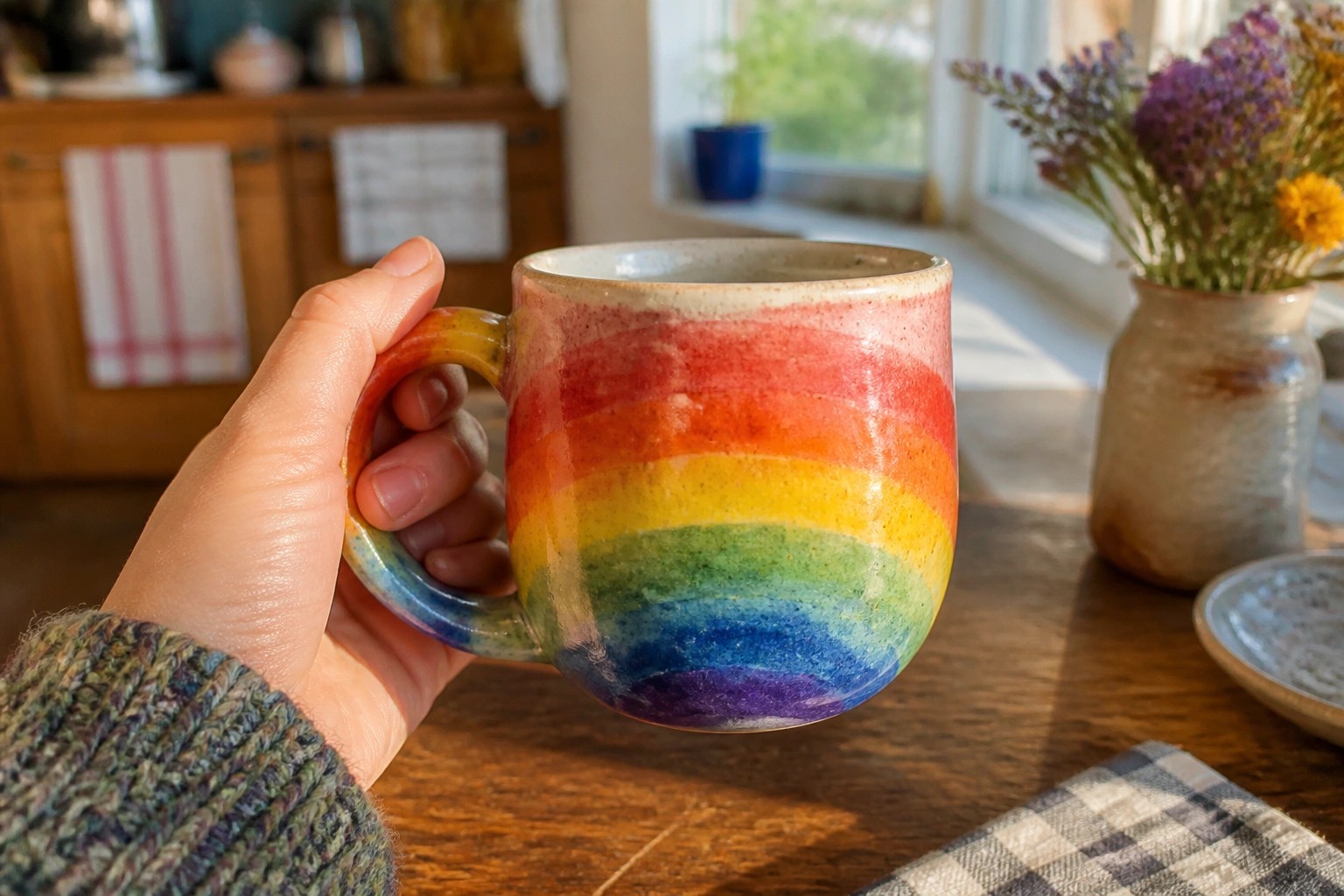
Rainbow Brushstroke Mug

A ceramic mug painted with wide, overlapping brushstrokes of rainbow colors creates a bold but simple project. The stripes run from red at one side through orange, yellow, green, blue, and purple, leaving some of the white clay visible between the colors for contrast. Carrying the same colors onto the handle makes the design feel complete rather than just added to the front.
What makes this idea useful is how the loose stripe layout works on almost any mug shape without needing perfect lines. You can adapt it by using fewer colors, switching the order, or painting the pattern on a small bowl or pitcher to build a set. In a kitchen it stands out on open shelves because the bright bands catch the light, and the same approach makes an easy gift that still feels personal.
Gradient Glaze Bowl with Painted Daisies

A large ceramic serving bowl gets its main impact from a blended glaze that moves from pale peach at the rim to deeper coral and pink toward the center. White daisy shapes with small yellow centers are spaced around the inside wall, painted directly on the glazed surface before a final firing. The glossy finish lets the simple flower outlines read clearly while the color shift gives the whole piece a unified look without extra detail.
What makes this idea useful is that the gradient does most of the visual work, so only a handful of daisies are needed to finish the design. The same approach scales down easily to cereal bowls or plates by using fewer flowers or switching to a single glaze color. In a kitchen the bowl functions as a salad or bread server, and the motif could be adapted with stamps or stencils if hand painting feels inconsistent. A bright glaze like this photographs well for sharing, especially when paired with light linens or wood surfaces.
Citrus Slice Painted Serving Plate

A handmade ceramic plate gets its look from overlapping circles painted as citrus slices in lime green, orange, and pink. Each slice uses a simple outline with wedge segments inside, placed across a speckled off-white surface that shows through between the shapes. The glossy glaze makes the colors stand out while the irregular placement keeps the pattern from feeling stiff. This approach works as a kitchen serving piece or decorative tray.
The round shape and open layout let you scale the same fruit slices onto smaller plates or a set of coasters without crowding the surface. You could swap in other produce like berries or leaves if you want a different season, or keep the citrus theme but change the background color for a fresh batch. A piece like this stands out on Pinterest because the bold color blocks read clearly even in small thumbnails.
Abstract Color Block Oval Tray

An oval ceramic tray decorated with large overlapping abstract shapes in teal, mustard, and terracotta creates a clean, graphic look on a speckled light base. The design keeps the shapes simple and flat so the colors carry the visual weight without extra line work or shading. Side holes turn the tray into something that can be carried or hung, while the elongated form gives plenty of room for the color areas to sit without crowding.
What makes this idea useful is how quickly the same layout can be copied onto other flat surfaces like platters or low bowls. The color blocks work especially well for matching existing decor because you can swap the palette to fit a kitchen or entryway without changing the shape arrangement. You could shrink the pattern down for small dishes or repeat it across a matching set of coasters. The open background also leaves room to add initials or a date if the piece is meant as a gift.
Floral Painted Cat Figurine
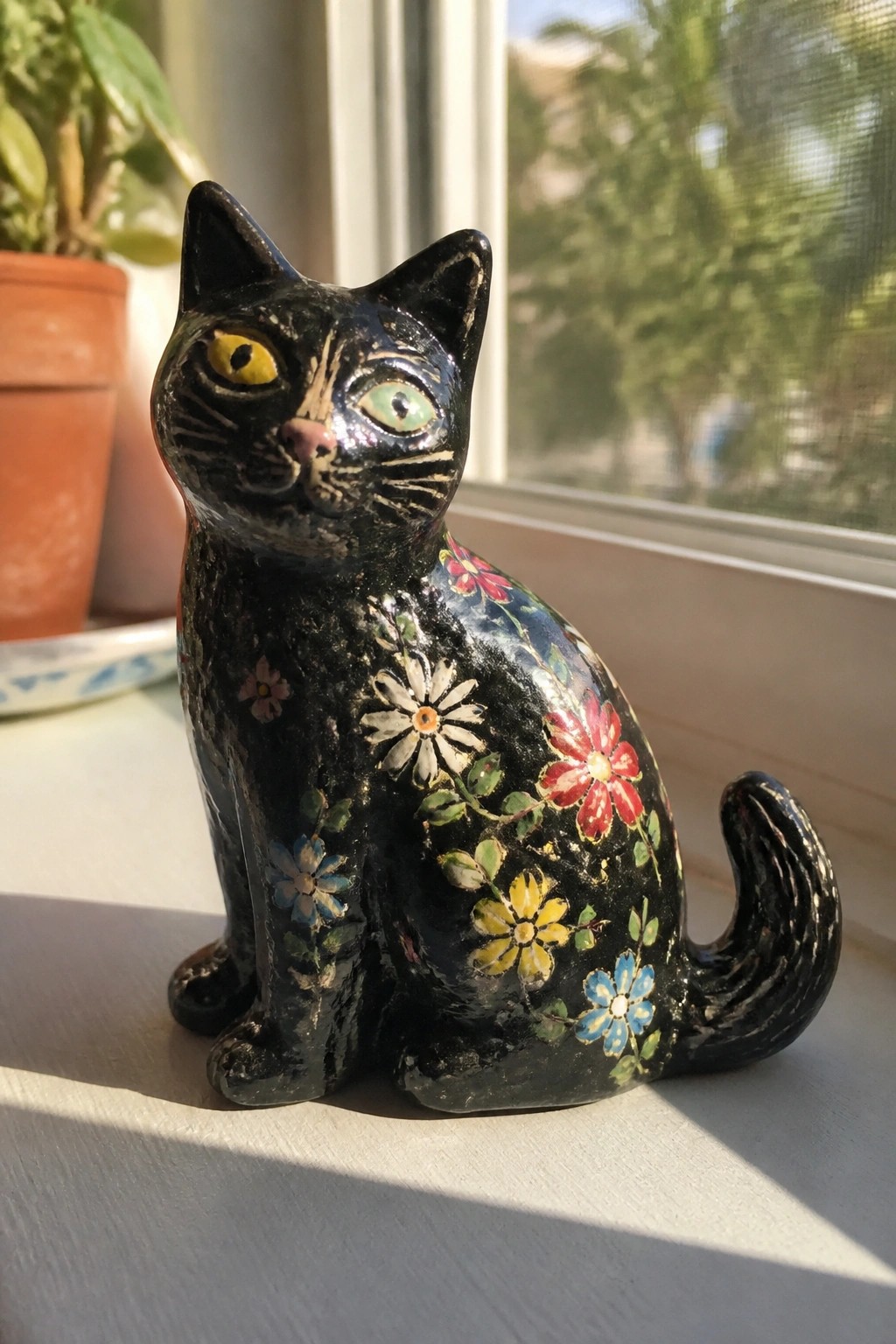
A small ceramic cat figurine works well as a decor object when the body receives a dark base glaze that makes painted flowers pop. Clusters of red, yellow, blue, and white blooms with green vines cover the sides and back while the face stays simple with yellow and green eyes plus basic line details. The sitting pose and compact size keep the focus on the surface painting rather than complex sculpting.
The shape does a lot of the work here because the curved back and sides give plenty of room for repeating flower motifs without crowding. You can scale the same idea down to smaller animals or swap the flower colors to fit a specific room. For a gift, something like this finishes quickly and fits on a desk or narrow shelf without taking up much space.
Swirling Wave Planter
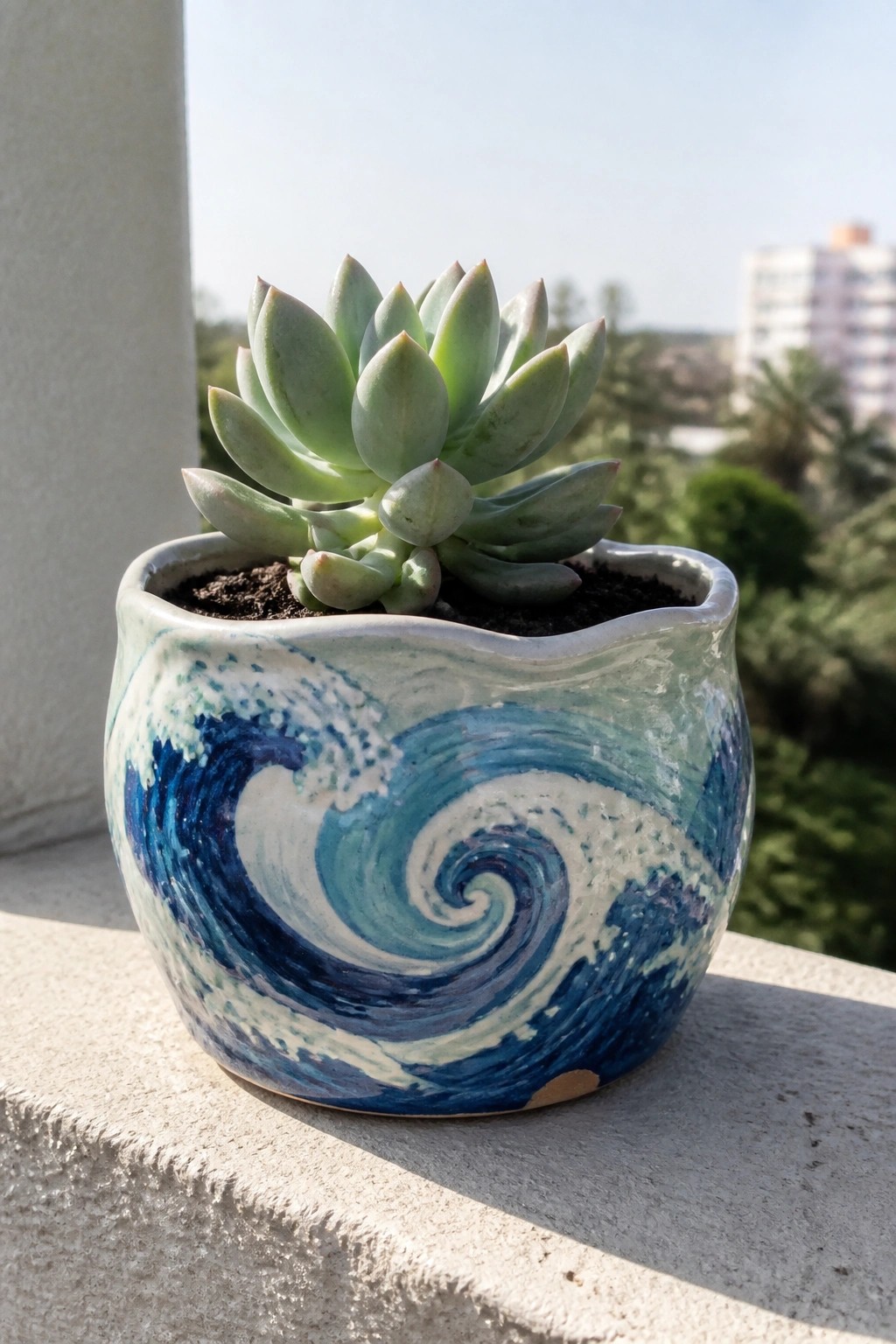
A round ceramic planter features a hand-painted blue and white swirling wave design that wraps around its exterior. The motif uses broad, overlapping brushstrokes to form a loose spiral that follows the pot’s curved shape. This style suits planters because the rounded surface lets the pattern move continuously without sharp edges breaking the flow. A glossy glaze seals the surface and makes the colors stand out against the clay body.
What makes this idea useful is how the wave pattern gives a basic round pot instant visual interest while still leaving room for the plant to take center stage. You can scale the same motif down for a set of smaller pots or stretch it across a wider bowl shape for a different plant display. The compact size makes it simple to finish in one or two painting sessions and easy to match with other handmade pieces on a shelf or table. For plant styling, the design works especially well on a windowsill or balcony where the blue tones pick up surrounding light.
Scalloped Tealight Holder

A small ceramic dish with a ruffled scalloped rim makes a simple tealight holder. The glaze mixes off-white with blue-green washes and brown speckles that catch the light from the flame. This approach turns a basic pinch or slab form into a functional candle piece that stays compact on a table or shelf.
The small scale keeps the project quick to make and easy to fire. You could repeat the wavy rim on a slightly wider base to hold a votive or shorten the edges for a ring dish instead. The speckled glaze works on stoneware or earthenware and shows up well against plain tabletops or trays. This shape also photographs cleanly for sharing, which helps it perform on Pinterest boards focused on small handmade decor.
Linear Fish Pattern on a Yellow Ceramic Spoon Rest
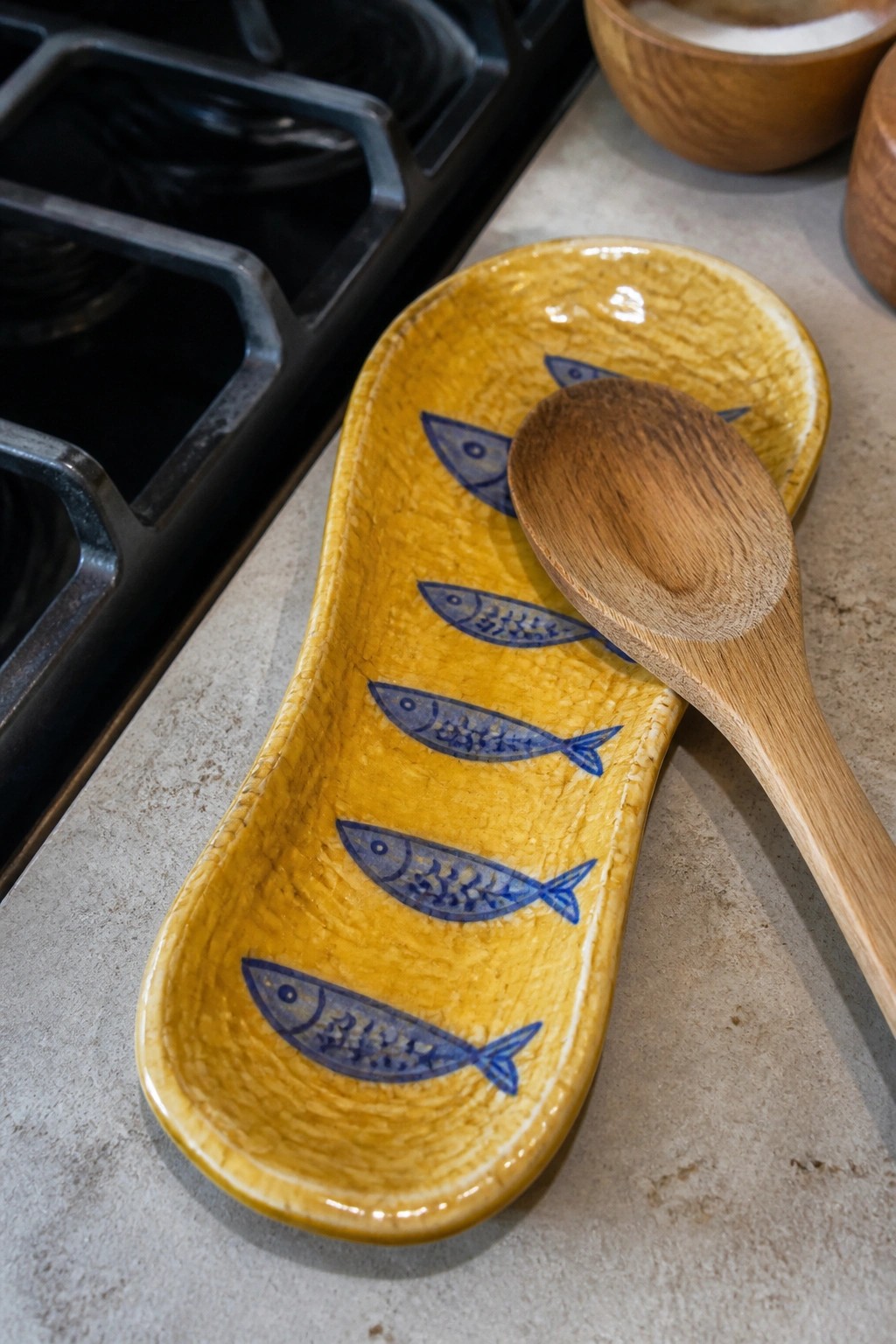
A long narrow ceramic tray with a textured yellow glaze serves as the base for a row of simple blue fish painted down the center. The fish decrease slightly in size from top to bottom, which fits the shape and keeps the design balanced without crowding. This approach turns an everyday kitchen item into a functional piece that holds spoons or small utensils while staying flat enough for easy stacking or storage.
The shape does a lot of the work here because the elongated form stays stable next to a stove or on a countertop without taking much space. You could repeat the same fish motif on a shorter version for a soap dish or stretch it across a larger serving plate by spacing the fish farther apart. Keeping the design to one color on a single glaze color makes the project fast to finish and easy to adapt for gifts or seasonal kitchen updates.
Watermelon Slice Ring Dish

A small oval ceramic dish formed like a watermelon slice creates a simple ring holder. The green striped exterior suggests the rind while the glossy red interior uses scattered black dots to represent seeds. This color-blocked approach relies on basic painting rather than complex sculpting to make the fruit motif stand out. The low profile keeps it functional for holding rings or small chains without taking up much surface space.
The compact oval shape fits easily on a nightstand or bathroom counter for daily jewelry storage. You can adapt the idea by painting the same striped and dotted pattern onto a purchased bisque dish or by rolling out a simple slab form if you make it from scratch. Swapping the colors for a different fruit like a lemon or kiwi gives you quick variations without changing the base shape. The strong red and green contrast photographs well for sharing finished pieces.
Sun Motif Ceramic Wall Tile

A rectangular ceramic tile becomes a wall hanging when you add two holes at the top for twine and cover the surface with painted sun designs. One large sun with bold rays takes the upper half while a smaller sun sits lower in a contrasting yellow. Broad teal and mustard shapes break up the beige background and keep the layout balanced without extra detail. The result is a straightforward decor piece that works as a single accent or part of a small group on a wall.
What makes this idea useful is how the flat shape lets you hang it anywhere or lean it on a shelf without taking up much space. You can repeat the same sun layout on smaller tiles for a matching set or change the colors to match a room. The design adapts well to a square or oval blank if you want a different outline. For gifts, keep the same layout but swap in the person’s birth month colors or a favorite plant motif in one corner.
Ombre Glazed Scalloped Ring Dish

A small scalloped ceramic dish works well as a ring dish when finished with a soft ombre glaze that shifts from purple on one side to mint green on the other. Gold dots scattered across the surface and a gold rim give the gradient extra definition without adding complicated patterns. The flower-like edge keeps the piece simple while still giving it a distinct shape that stands out from plain round dishes.
What makes this idea useful is how the small size fits easily on a nightstand or bathroom counter for everyday jewelry storage. The same ombre approach can be repeated on other small forms like soap dishes or catch-all trays by changing the color pair to match different rooms. Gold dots are quick to add with a brush or luster and help the piece photograph clearly for sharing online. This style adapts well if you want to scale the shape up slightly for a larger desk tray while keeping the color blend as the main focus.
Divided Ceramic Salt Cellar

A divided salt cellar made from wheel-thrown clay gives you two separate compartments in one compact pot. One side holds salt while the other keeps a second spice or herb within reach. The lid sits on a raised rim and the knob is finished with a simple dot of contrasting glaze. Bold color blocking separates the two halves, with one side showing raised circular texture and the other side using a smoother pattern of overlapping circles.
What makes this idea useful is the built-in division that keeps ingredients from mixing while still keeping them together on the counter. The small scale works well next to the stove or on a kitchen table where space is limited. You could swap the colors or change the texture pattern on one half to match different kitchen styles. For a gift, the same shape can be made without the spoon and used for sugar and cinnamon instead.
Striped Yarn Bowl for Knitting

A yarn bowl is a ceramic vessel made to hold a ball of yarn while knitting or crocheting. This one has a rounded shape with a spiral notch cut into the rim so the yarn can pull through cleanly without rolling away. The surface uses radiating stripes of brown, orange, green, and cream glaze that wrap around the form and highlight the notch area. The size and cutout turn a basic bowl into a tool that keeps yarn contained during use.
What makes this idea useful is how the notch solves a common problem with loose yarn balls on a table or lap. You could repeat the striped glaze on a smaller bowl for thread or on a deeper shape for bulkier projects. In a living room or craft space, the bowl keeps supplies tidy and visible at the same time. The radiating stripe pattern would translate easily to a tray or a set of matching mugs if you want to try the same glaze layout on other forms.
Smiling Cloud Toothbrush Holder

A round ceramic toothbrush holder with a light green speckled glaze serves as a practical bathroom organizer. Several holes across the top keep multiple brushes upright while the painted clouds with simple faces add a clear decorative layer. The soft background color lets the pink and off-white clouds read easily without crowding the surface.
What makes this idea useful is how the same cloud motif can be repeated on other small bathroom pieces like a soap dish or rinse cup for a matching set. The compact cylinder shape also works as a desk pen cup if the holes are left out during making. Scaling the clouds smaller or using just two or three per piece keeps the design from feeling busy on tighter surfaces.
Leaf-Shaped Ceramic Sponge Holder

A leaf-shaped ceramic dish makes a practical sponge holder for the kitchen sink area. The form includes sculpted veins along the surface and a glossy green glaze that highlights the leaf structure. This keeps the sponge raised slightly so water drains away instead of pooling underneath. The design fits the category of small kitchen accessories that combine storage with a natural motif.
The compact size works well on any countertop edge without crowding the workspace. You could rework the same leaf shape into a soap dish by adding a small center ridge or use a similar outline for a ring tray on a dresser. The idea stands out on Pinterest because the functional object doubles as decor and can be glazed in other colors to match different kitchen styles.
Star Motifs Painted Over a Blue Glazed Vase

A small ceramic vase with a rounded body and narrow neck is covered in a deep blue glaze, then decorated with scattered gold stars of varying sizes. The stars sit flat against the glossy surface and catch light at different angles because of the curved form. This painting idea works on any simple thrown or hand-built vase since it only requires a steady hand and basic brushwork rather than complex carving or layering.
What makes this idea useful is how quickly the star pattern can be added to other shapes like mugs, small pitchers, or ring dishes. You could scale the stars down for a tighter repeat or switch the gold paint to white or copper depending on the glaze color underneath. The compact size keeps it practical for a windowsill or desk, and the same motif stands out in photos when posted online because the contrast between the dark glaze and metallic stars reads clearly.
Striped Ceramic Utensil Crock

A wide cylindrical crock painted with thick horizontal bands and vertical blocks in teal, coral, and cream creates a simple utensil holder for kitchen counters. The hand-brushed glaze lines give the surface texture while the repeating color blocks keep the pattern easy to paint. This kitchen item keeps wooden spoons and spatulas upright and within reach during cooking.
What makes this idea useful is how the stripe layout can be changed to match different kitchen colors without needing new tools. You could repeat just the teal and cream bands on a shorter jar for a spoon rest or stretch the same blocks around a taller vase shape. In a kitchen, this kind of piece takes up little space yet keeps tools sorted and visible. For a gift, something like this works well if you swap in the person’s favorite colors on the same form.
Fruit Painted Ceramic Napkin Holder

A ceramic napkin holder with a U-shaped base and flat front panel gives you a simple way to store napkins upright on a table. The front surface carries hand-painted fruit clusters including a large yellow lemon, an orange, grapes, and a smaller reddish fruit, all set against a light speckled glaze. This kitchen item works because the broad flat area lets the painted motifs stay visible while the curved sides and base keep the piece stable without extra supports.
What makes this idea useful is how the same holder shape can be painted with different motifs like vegetables or leaves to match other tableware. In a kitchen or on a patio table it keeps napkins tidy and within reach while taking up very little space. You could repeat just one fruit across multiple holders for a set or shrink the design to fit a smaller salt and pepper caddy. The flat panel also makes it straightforward to try the same layout on a rectangular tray or a low planter.
Gradient Glazed Incense Holder with Dotted Channel

A long, narrow clay tray serves as an incense holder with a hole at one end to keep the stick upright and a shallow groove to catch ash. The surface uses a blended glaze that moves from yellow through orange-red into blue, with a straight line of small white dots running down the center. This approach turns a basic holder shape into a piece of functional decor that stays low and stable on a flat surface.
What makes this idea useful is how the elongated form fits easily on a desk or shelf without taking much space. You can adapt the gradient by limiting it to two colors or by using the white dots alone against a single glaze for a simpler look. The same tray shape works for holding incense or could be shortened into a small catch-all for jewelry or matches. This style stands out in project roundups because the color blend and dot detail read clearly even in small photos.
Mushroom-Shaped Wax Warmer with Polka Dots

A mushroom-shaped ceramic wax warmer works as both a functional candle piece and a small decor object. The cap forms the top bowl for wax melts while the hollow stem holds a tealight underneath. Scattered pastel polka dots in pink, green, blue, and purple stand out against the white glazed surface and give the rounded form quick visual interest without detailed drawing. The idea stays simple because the shape itself carries most of the design.
What makes this idea useful is how the mushroom silhouette already defines the object before paint goes on. You can copy the same dot pattern onto a plain bowl or small vase to create a matching set for a shelf. The compact size fits easily on a desk or bedside table and still reads clearly from a distance. For a gift, change the dot colors to match a room or season while keeping the same basic layout.
Painted Sea Creature Soap Dish

A handmade ceramic soap dish in an oval tray shape gives a practical bathroom item extra detail through painted sea life. The piece uses a turquoise glaze across the surface with ridges molded into one side to support a bar of soap. Small orange crabs, a starfish, and an octopus are painted near the edges in a simple style that stands out against the glaze color.
What makes this idea useful is how the painted motifs turn an everyday sink item into a quick project that fits a coastal or kid-friendly bathroom. The same oval tray shape and ridge layout could be reworked with different colors or themes like leaves or abstract lines instead of sea creatures. Its compact size keeps it from taking up much counter space and makes it easy to try as a first functional pottery piece.
Frequently Asked Questions
What supplies are essential for trying out creative pottery painting ideas at home?
Start with ceramic pieces that are either bisque fired or glazed, along with paints like underglazes, acrylics formulated for ceramics, or specialized pottery markers. Gather brushes in various sizes, sponges for blending colors, and a palette for mixing. Include a sealant such as a clear glaze or acrylic topcoat if your pieces will not be kiln fired. These basics allow you to explore colorful designs like floral patterns or abstract swirls without needing a full studio setup.
How should I prepare my ceramic surfaces to ensure the paint adheres well and colors stay bright?
Clean each piece thoroughly with water and mild soap to remove dust or oils, then let it dry completely. Lightly sand any rough areas with fine grit sandpaper for a smooth base. Apply a primer coat if using acrylic paints on unglazed pottery. This preparation helps colors pop in projects such as geometric designs or nature inspired motifs and prevents peeling over time.
What techniques help create layered or textured effects in colorful ceramic paintings?
Build depth by applying base colors first and letting them dry before adding details with finer brushes or stencils. Use sponges to dab on contrasting shades for a mottled look or dilute paints with water for watercolor style washes. Experiment with masking tape to create clean lines in striped or patterned ideas. These methods enhance vibrancy and allow you to adapt the 21 creative concepts to your own style while keeping the process forgiving for beginners.
How can I make my painted pottery projects durable and suitable for everyday use?
Choose food safe paints or underglazes and apply a protective clear coat after the design is complete. For best results, have pieces professionally fired in a kiln if possible, as this sets the colors permanently. Avoid submerging finished items in water right away and test sealants on a small area first. This approach ensures your colorful creations like mugs or vases hold up to regular handling.
Where can I source more ideas or variations after exploring the initial 21 pottery painting concepts?
Look to online craft communities, pottery supply websites, or books on ceramic art for fresh inspiration such as seasonal themes or cultural motifs. Experiment by combining elements from different ideas, like mixing abstract shapes with metallic accents. Local workshops or social media tutorials often provide step by step adaptations that build on basic colorful techniques.

Pottery Path is my cozy corner of the internet where I share clay ideas, pottery inspiration, and simple projects you can recreate at home. I love exploring everything from air dry clay to handbuilt pottery to cute minis that brighten your day. My goal is to make clay crafting feel easy, fun, and welcoming for anyone who wants to try it.
You will find beginner friendly tutorials, creative pottery painting ideas, and lots of warm inspiration for slow and happy crafting. If you enjoy hands on creativity, this space will feel like home.