
I like using coils because it feels more hands on than throwing on a wheel.
You get to add and shape the clay bit by bit which helps when trying out bigger or unusual forms.
Over time I have seen some really interesting sculptural work made this way.
I gathered 18 examples that highlight different ways coils can be used to build these kinds of pieces.
They include both abstract shapes and more defined figures.
Spiraling Coil Vase Built from Stacked Rings

A coil-built vase that keeps the construction lines visible as the main design feature. Horizontal rings are stacked with slight shifts in angle, creating a twisting vertical form that narrows and widens as it rises. The light green glaze settles into the grooves between coils, making the layered structure stand out while keeping the surface matte and slightly textured. This turns a standard tall vase into a sculptural decor object that relies on form rather than surface decoration.
What makes this idea useful is how the coil ridges create shadow and depth without any carving or added handles. You could rework the same stacking method into a shorter planter by reducing the height and widening the base for stability. The uneven rim at the top gives the piece an organic finish that works well on a shelf or windowsill where it can catch side light. Scaling the design down makes it easier to fire and ship if you want to sell smaller versions as gifts.
Coiled Hippo Planter with Painted Face Details

A coil-built hippo planter turns a simple plant holder into a sculptural animal form. The body is shaped by stacking coils into a rounded, compact shape with visible horizontal ridges left as texture. The head extends forward with basic pinched ears and a snout, while pink painted patches on the cheeks and a few green leaf motifs on the body add color without covering the clay surface. This keeps the piece clearly functional as a small planter that can hold soil and a succulent.
What makes this idea useful is the way the animal shape doubles as both decor and a practical container for small plants on a shelf or desk. You could swap the hippo for other animals by changing just the head and ears while keeping the same coiled body. The small scale works well for tight spaces and makes the piece easy to move around when rearranging plants. A version with different colors or fewer painted details would still read as handmade pottery and stand out in a group of plain planters.
Sculptural Coil Bowl with Scalloped Rim

A coil built bowl gains its impact from a wide, undulating rim that rises and falls in gentle waves around the opening. The exterior stays matte with visible clay texture while an amber glaze covers the interior and spills over the edge in controlled drips. This approach keeps the focus on the form itself rather than surface patterns or added details.
The shape works especially well as a countertop fruit bowl or large serving piece in a kitchen. You can adapt the rim by making the scallops shallower for a subtler look or build the same profile in a smaller size for side dishes. The drip glaze effect is easy to recreate with a single glaze color and gives the piece enough visual weight to photograph well for project roundups.
Coiled Rope Handle on a Ribbed Mug

This mug takes a simple coil of clay and shapes it into a thick, segmented handle that stands out from the body. Horizontal ridges wrap the form and give the light green glaze places to pool and reflect light. Dark blue glaze marks the join points and adds brush strokes lower down for contrast. The result is a compact drinking vessel where the handle does the sculptural work.
What makes this idea useful is how the coil handle adds interest with very little extra technique. You can repeat the same handle on a small pitcher or a desk vase and keep the same two-glaze approach. The size stays practical for daily coffee or tea while the visible coils make it easy to photograph and share. A piece like this works especially well as a gift because the construction reads as intentional rather than fussy.
Coiled Sunburst Wall Plaque

This project uses coils to build a flat circular plaque with a central spiral surrounded by concentric rings and radiating spokes. The outer edge is finished with a raised border, and the surface is divided into repeating sections glazed in mustard yellow, teal, and soft pink. The coil placement creates a clear sunburst pattern that reads well from a distance while still showing the handmade texture up close. It functions as a decorative wall piece rather than a functional vessel.
What makes this idea useful is how the radiating layout organizes the coils into a strong visual structure that holds together even with simple glazing. You could scale the same pattern down for smaller tiles or repeat it across a series of plaques to cover a larger wall area. The color blocking is easy to adapt by swapping in different glaze combinations or leaving some sections unglazed for contrast. For a gift, this shape works especially well because it hangs with a single nail and needs no additional hardware.
Joined Coil Cups Form a Candle Cluster

This project joins three small coil-built cups into one connected form that holds candles in two of the openings. The builder left most of the surface with visible coil ridges and a matte finish while adding a simple brown glaze only to the rim and interior of one cup. The result is a compact candle piece that sits low on a table and creates a grouped lighting effect without separate holders. The empty third cup adds visual balance and keeps the overall shape compact.
The connected layout makes it easy to move the whole piece at once instead of handling individual cups. You could scale the same idea down to two cups for a smaller version or add a fourth cup to stretch it into a longer table arrangement. Leaving most of the clay unglazed keeps the focus on the coil texture and makes the form quicker to finish. This kind of grouped shape works especially well for a mantel or low shelf where you want multiple candles in one object.
Speckled Blue Ceramic Fruit Tray

A wide, shallow ceramic tray built with a low rim works well for holding fruit or small produce on a counter. The dark blue glaze shows natural speckling and variation from the firing, while the scattered white dots add a simple repeated pattern across the surface. This design stays in the kitchen tray category, where the handmade clay form provides both function and a sturdy, weighty presence that feels more substantial than thinner commercial versions.
What makes this idea useful is how the generous diameter gives plenty of room for arranging items without crowding, and the neutral dot pattern pairs easily with most kitchen colors. You could scale the same tray shape down for a bread server or cheese board, or repeat the glaze and dot treatment on a set of smaller plates. In a kitchen this kind of piece keeps fruit visible and organized while protecting the countertop from moisture.
Coiled Torso Vessel
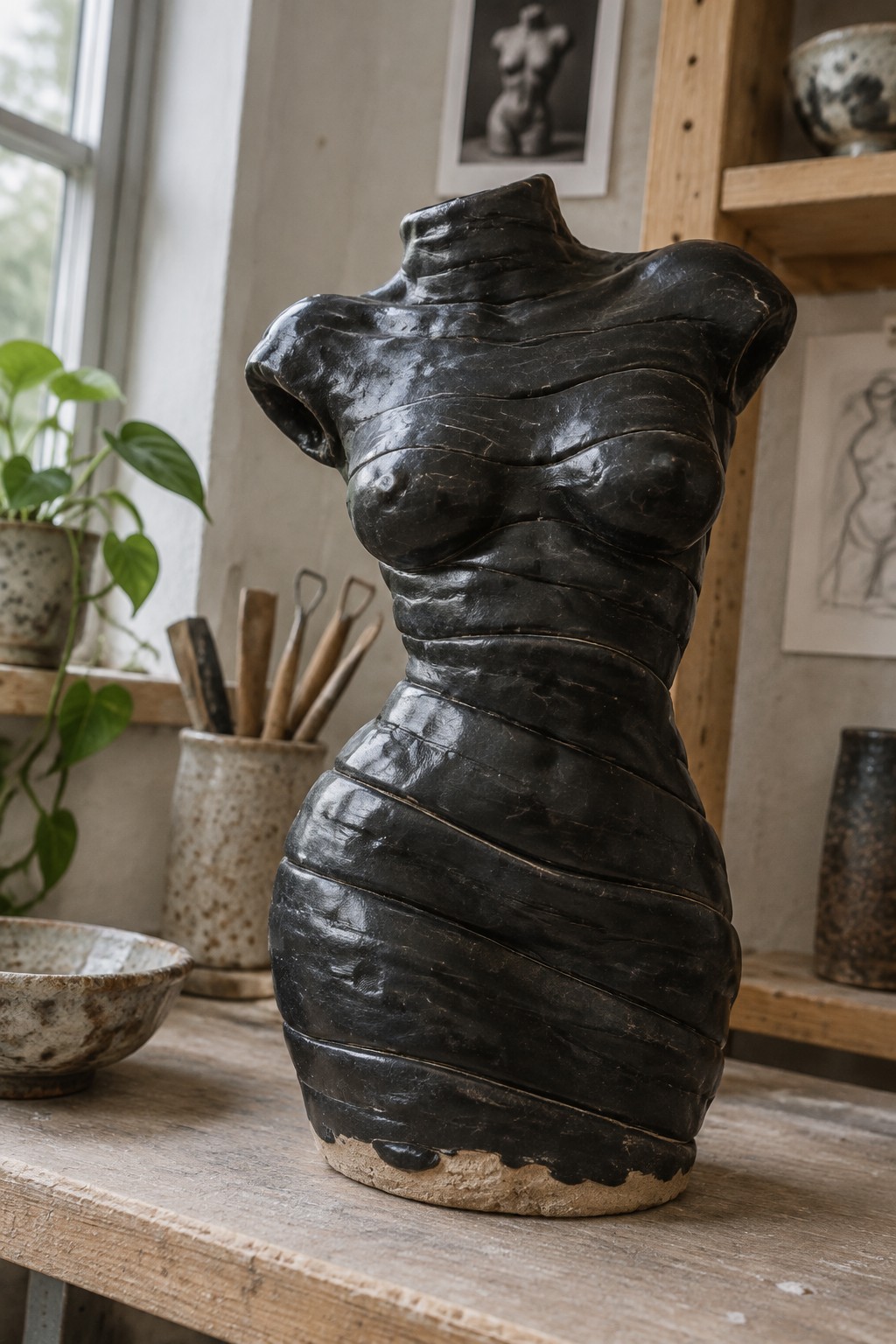
A coil-built torso turns a simple vessel into a sculptural form by layering horizontal coils to define the bust, waist, and hips. The visible coil lines create a ribbed texture that follows the body’s curves, and the dark glaze highlights those ridges while keeping the surface matte and slightly uneven. This method works well for a decor object because the coils do the shaping work and leave the construction visible rather than smoothed away.
What makes this idea useful is how the same coiling technique can be adjusted to change the proportions or height without changing the overall approach. You could shorten the torso into a compact vase or stretch it taller for a more dramatic shelf piece. The dark finish also makes it easy to place among lighter ceramics or plants so the shape stands out on its own.
Stacked Tiered Planter Tower
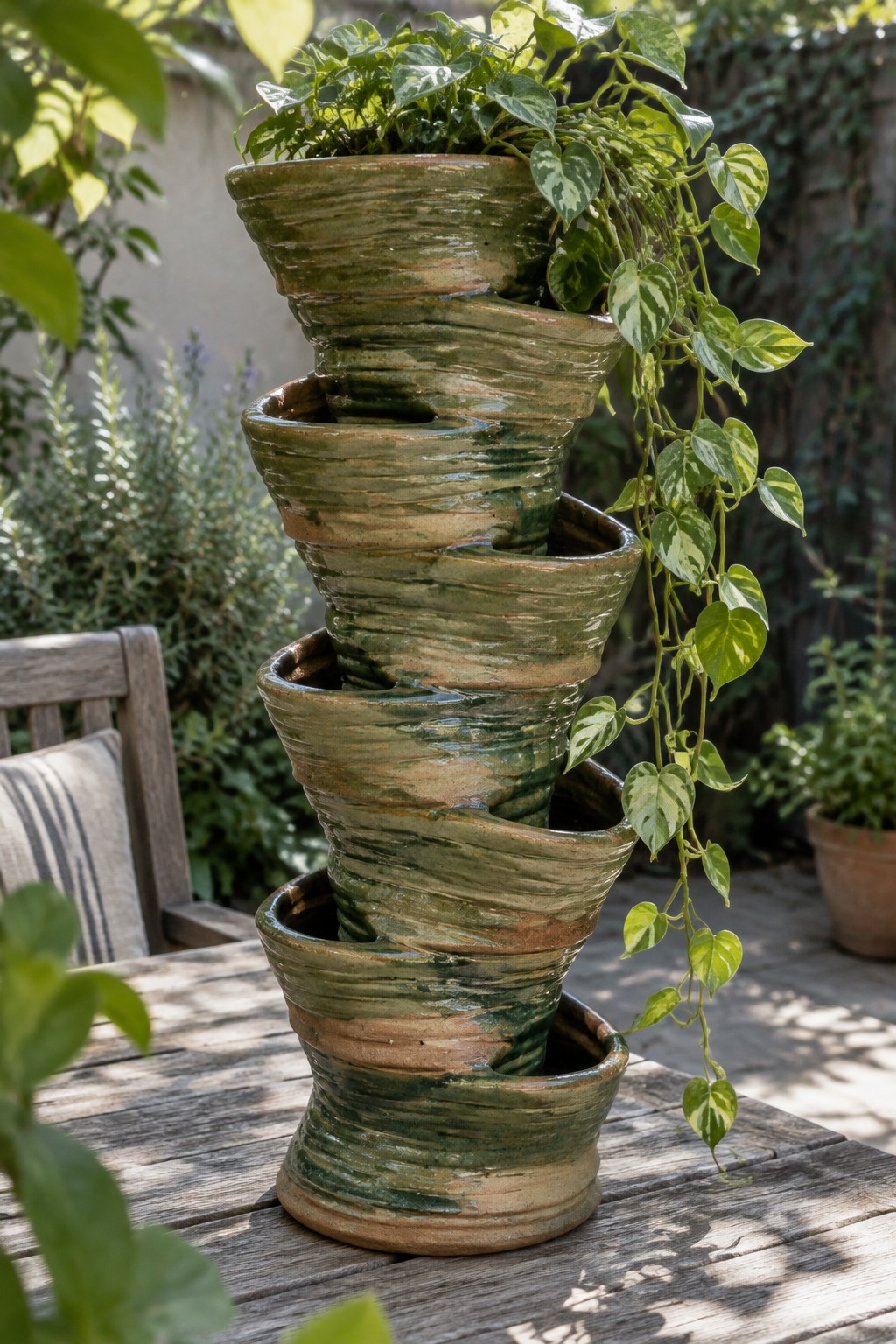
A stacked planter made from multiple separate ceramic bowls creates a tall vertical form for growing plants. Each tier sits slightly offset, with open rims that let foliage spill through the gaps between levels. The streaky green glaze and uneven stacked profile give the piece a sculptural look while still functioning as a practical plant holder.
What makes this idea useful is how the shape turns a single plant into a full vertical display without needing much table space. You could simplify it by using just three tiers or by making the bowls more uniform if the irregular stack feels tricky to balance. For a patio or balcony, this kind of planter keeps vining plants like pothos contained and visible from multiple angles. A smaller two-tier version would also work well as a gift or desk piece.
Ridge-Textured Coil Bowl

A coil-built bowl forms its walls by stacking and smoothing ropes of clay, leaving visible horizontal ridges on the exterior. The gray clay stays matte and textured outside while the interior receives a glossy terracotta glaze that creates a warm contrast. This approach turns the construction method into the main design element, giving the bowl a clear sculptural presence without added carving or handles.
What makes this idea useful is that the ridges provide grip and visual interest while the smooth interior stays easy to clean. The shape works well as a fruit bowl, salad server, or desk catch-all. You could adapt it by using thinner coils for a lighter look or changing the interior glaze to a deep blue or matte black. The same coiling technique scales easily to taller vases or shorter trays if you want to vary the form.
Intertwined Double-Neck Coil Vase

A coil-built vase formed from thick ropes of clay that twist around each other creates two separate necks from one base. The coils are left rounded rather than smoothed, so the spiral lines stay visible and catch light across the surface. A soft green glaze pools slightly in the grooves, emphasizing the texture while keeping the overall color calm. This approach turns a standard vase shape into a sculptural object that still holds flowers or branches.
What makes this idea useful is how the twisting structure gives height without needing extra width on a shelf or table. You could simplify it by using fewer coils or stopping the twist lower down if the full height feels too large for your space. The same coil method works for a single-neck version or even a shorter candle holder. In a kitchen or entryway, the dual openings let you split a bouquet into two smaller groups so the arrangement stays balanced.
Coil-Built Face Mug with Textured Hair and Beard

A coil pottery mug built around a sculpted face uses long rolled strands of clay to form the hairline and beard that wrap around the vessel. The face is modeled with basic features and then painted with blue eyes, rosy cheeks, and soft lip color to create contrast against the natural clay. This turns an ordinary drinking mug into a sculptural piece by letting the coils serve as both decoration and texture instead of adding separate attachments.
What makes this idea useful is that the coils do most of the visual work while still leaving the mug functional. You could simplify the beard into shorter coils or change the hair style to straight lines for a different look. A piece like this works especially well as a desk mug or small gift because the face makes it easy to recognize and remember. The same coil method could be reworked into a small planter or a lidded jar by adjusting the height and adding a base.
Leaf-Shaped Ceramic Tray for Jewelry

A leaf-shaped ceramic tray offers a simple way to create a small sculptural dish that doubles as functional storage. The form uses a broad, slightly cupped leaf silhouette with raised center veins that add both visual structure and a place for items to rest. The speckled green glaze keeps the surface lively without overpowering the shape, making the tray read as a natural object rather than a plain container. This approach fits the ring dish or small tray category while giving the piece a clear sculptural identity.
The shape does most of the work here, so the same leaf idea can be scaled up for a soap dish or kept small for rings and chains on a nightstand or bathroom counter. You could vary the vein depth or switch to a matte finish if you want it to blend into a plant corner. For a gift, this kind of tray works well because it stays useful without taking much space. The design also translates easily to other natural outlines like a simple shell or seed pod if you want to build a small series.
Coiled Utensil Holder with Contrasting Glaze Bands

A coil-built ceramic holder creates a tall, sturdy cylinder by stacking and smoothing ropes of clay, leaving visible horizontal ridges across the surface. The piece uses a bright yellow glaze on the top and bottom sections with a solid blue band through the middle to create clear visual breaks. This keeps the form simple while the texture and color blocks turn a basic kitchen holder into something more sculptural.
What makes this idea useful is the way the coil ridges give the surface built-in pattern without added carving or stamps. The tall shape works well on a counter for holding cooking tools, and the same coil method can be shortened to make a smaller version for pens or bathroom items. Changing the width of the blue band or swapping the yellow for a different base color lets you match it to existing kitchenware. The strong horizontal lines and color contrast make the finished piece easy to photograph clearly.
Coiled Hanging Planter with Textured Walls

A wall-mounted planter built from stacked clay coils forms a rounded, open container that hangs from rope loops. The exterior shows the natural terracotta color and the ridged texture left by the coils, while the inside is coated with a turquoise glaze for a smooth, waterproof surface. This contrast between the rough handmade coils and the bright interior glaze creates a clear visual separation between structure and function. The slightly tilted rim and generous opening make it easy to plant trailing varieties that drape downward.
What makes this idea useful is how the coil method supports larger hanging shapes without needing a wheel or mold. You can scale the same form down for a smaller herb version or add extra coils at the back to create a flat mounting surface. The unglazed exterior keeps the piece lightweight enough to hang safely while the glazed interior handles moisture from plants. This style works especially well for gifting because it pairs directly with common trailing houseplants and needs no extra finishing.
Coiled Lidded Jar with Horizontal Bands

A coil-built lidded jar gives you a simple way to make a rounded storage piece without a wheel. The body is formed by stacking coils into a bulbous shape, then adding raised horizontal bands that hold blue glaze while the rest of the surface stays speckled and matte. The lid continues the same coil idea with concentric ridges that end in a small knob, creating a finished top that matches the base. This style fits the kitchen canister or small decor category where the form itself does most of the visual work.
The compact round shape works well on open shelving or a countertop where it can hold coffee, tea, or craft supplies. You could swap the blue bands for a single slip color or skip the added coils and just carve shallow lines instead. The same proportions scale easily to a taller version for utensils or a shorter one for a ring dish. On Pinterest this kind of straightforward coil jar stands out because the lid and bands give it structure without extra decoration.
Yarn Bowl with Sculpted Spiral Notch

A yarn bowl made from clay keeps a ball of yarn contained while feeding the strand out through a side opening. The design uses a rounded form with a spiral-shaped notch cut into the rim that guides the yarn smoothly and prevents it from rolling away. Horizontal ridges on the exterior give the surface texture and make the bowl easier to hold during use. This turns a standard bowl shape into a dedicated tool for knitting or crochet projects.
What makes this idea useful is how the notch does the main job of controlling yarn tension without any extra parts. The size works well on a lap, couch arm, or small table in a living room or craft corner. You could rework the same spiral cut into a taller cylinder for larger skeins or add a second notch on the opposite side for colorwork projects. The ridged texture also gives you a simple way to vary the look with different glaze colors or matte finishes while keeping the function intact.
Coil-Built Mini Bowls with Dripping Glaze Bands

These small bowls are built from stacked coils that create a ridged, textured surface around the exterior. The form stays low and wide with a thick rim, and the glaze is applied in single bold colors that run down the sides and stop short of the raw clay base. The contrast between the bright glaze and the exposed clay gives the bowls a simple but strong visual weight. They work well as salt cellars, spice dishes, or small prep bowls in a kitchen setting.
The small scale makes these easy to throw together in one session and fire without taking up much kiln space. You can swap the glaze colors to match different kitchen palettes or leave more of the clay exposed for a different look. The same coil method can be adjusted to make taller versions for holding tea bags or smaller ones for ring dishes. In a kitchen, the sturdy shape and open top keep them practical while the color blocks help them stand out on a countertop or open shelf.
Frequently Asked Questions
What is coil pottery and how is it used to create sculptural forms? Coil pottery involves rolling clay into long ropes and stacking them to build the walls of a vessel or sculpture. This method allows artists to gradually shape organic curves, abstract extensions, and layered structures that go beyond simple functional pots. Start by preparing a flat base, then add coils while smoothing the interior and exterior seams. To achieve sculptural effects, vary coil thickness, twist or fold them, and attach additional clay pieces for protrusions or negative spaces.
Which clay bodies work best for large or complex sculptural coil designs? Stoneware or porcelain clays with grog added provide strength and reduce cracking during drying. These bodies support taller builds and finer details without slumping. Test small samples first to check shrinkage rates, and keep the clay at a medium softness so coils join firmly yet hold their shape when manipulated into curves or extensions.
How do I prevent my sculptural coil pieces from collapsing or cracking? Build in stages, allowing lower sections to firm up before adding weight on top. Score and slip every joint thoroughly, then compress the coils both inside and outside to eliminate air pockets. Support overhanging forms with temporary props such as foam or wood, and cover the work with plastic between sessions to control even drying. Aim for walls no thicker than one inch to reduce stress during firing.
What finishing techniques enhance the artistic quality of coil pottery? Apply textured stamps, carved lines, or inlaid contrasting clays before the piece reaches leather hard. Once bone dry, bisque fire and then experiment with matte glazes, slips, or washes that highlight coil lines and surface relief. Multiple light coats of underglaze followed by a clear top coat can emphasize sculptural shadows without obscuring form.
Where can beginners find step-by-step guidance to replicate or adapt these designs? Start with basic coil tutorials from ceramic supply sites or community college classes, then progress to books focused on hand-building. Photograph your own work at each stage and compare it to published examples. Join online pottery forums to ask specific questions about scale, support, or firing schedules, and practice small test pieces before attempting full sculptural versions.

Pottery Path is my cozy corner of the internet where I share clay ideas, pottery inspiration, and simple projects you can recreate at home. I love exploring everything from air dry clay to handbuilt pottery to cute minis that brighten your day. My goal is to make clay crafting feel easy, fun, and welcoming for anyone who wants to try it.
You will find beginner friendly tutorials, creative pottery painting ideas, and lots of warm inspiration for slow and happy crafting. If you enjoy hands on creativity, this space will feel like home.