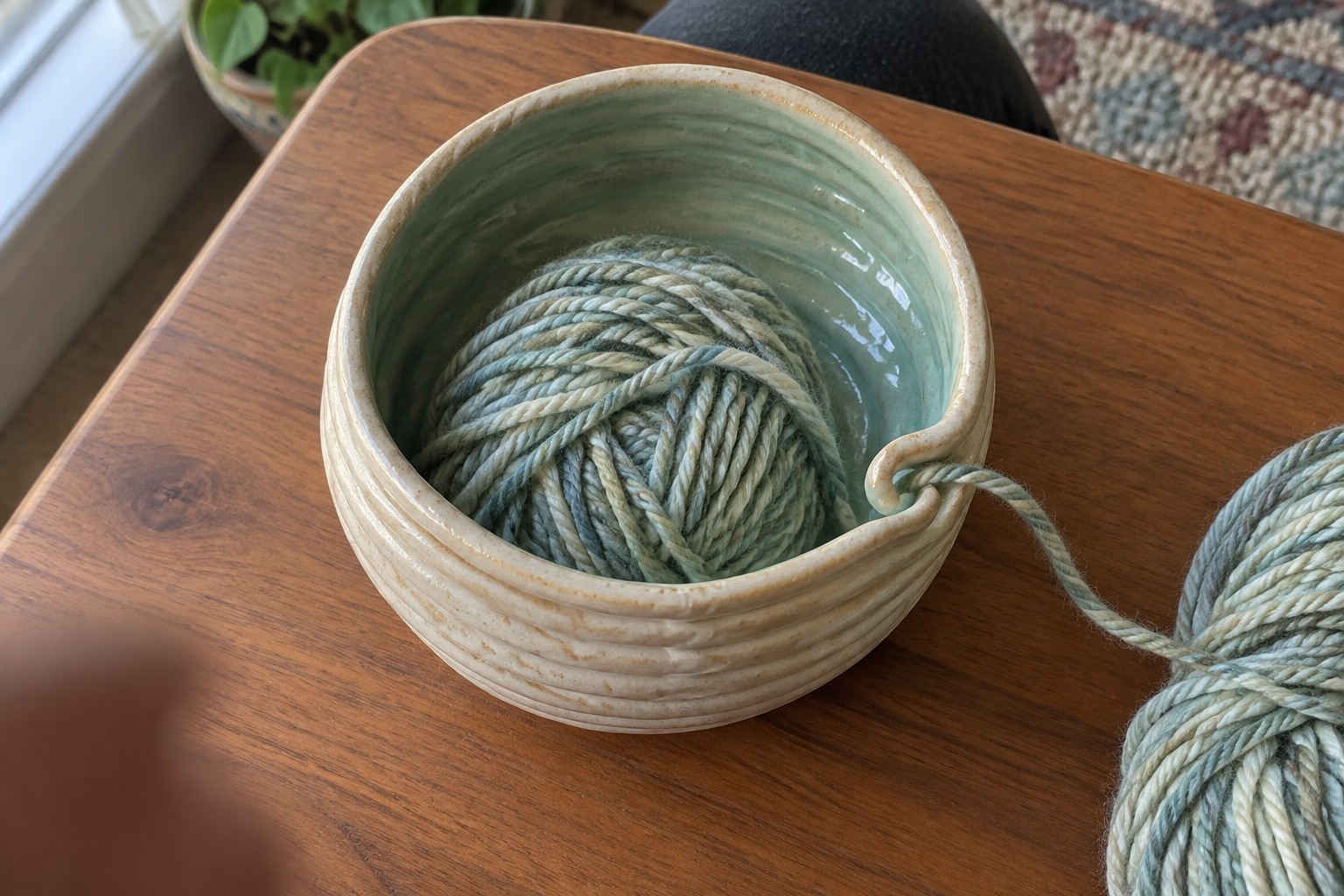
I’ve been making coil bowls for daily use and they turn out sturdy enough for the kitchen.
The coil method is one I come back to because it does not require much equipment.
I have put together some shapes and sizes that fit well on shelves and in the dishwasher.
These ideas come from what I actually use or give away to friends.
They stay simple but still look nice on the table.
Coiled Yarn Bowl with Rim Notch
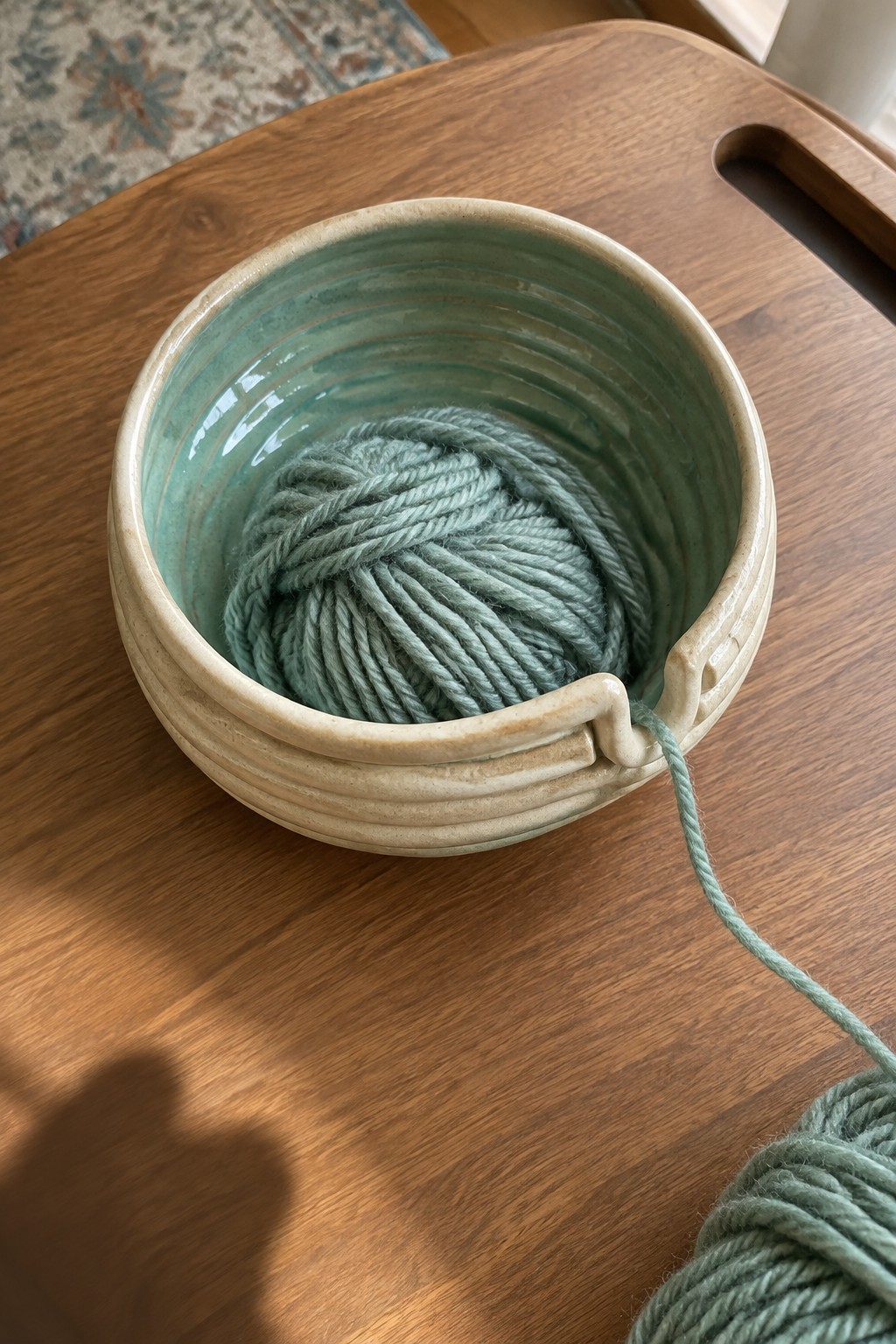
A coil-built ceramic bowl works as a yarn holder by keeping a ball contained while feeding the strand through a carved notch in the rim. The interior carries a soft turquoise glaze that contrasts with the lighter, unglazed exterior where the coils remain visible. This shape and notch placement turn an ordinary bowl into a dedicated tool for knitting or crochet without extra hardware.
The notch does the main job by stopping the yarn from slipping off the edge or tangling around the bowl. A piece this size fits easily on a side table or in a project bag and can be scaled up for larger skeins or made with two notches for color changes. You could adapt the same coil form and notch into a smaller version for embroidery floss or a wider one for chunky yarns.
Ridge-Textured Coil Bowl for Herb Prep

This coil-built bowl stacks clay coils to form visible horizontal ridges that run around the exterior and interior. The speckled neutral glaze highlights the handmade texture while keeping the surface practical for food contact. Its compact size and open shape make it suitable for holding chopped herbs or small prep ingredients right next to a cutting board. The slightly uneven rim comes naturally from the coiling process and gives the bowl an organic outline without extra decoration.
What makes this idea useful is how the ridges provide a visual cue that the bowl is handmade while still functioning as a simple kitchen tool. You could scale the same coil method up for a larger mixing bowl or down for individual dipping bowls. The earthy glaze works well against wood and marble surfaces common in kitchens, so the piece blends into daily cooking rather than standing out as purely decorative. For a variation, repeat the ridge pattern but use a matte glaze to make the coils read even more clearly.
Scalloped Ring Dish Built from Coils
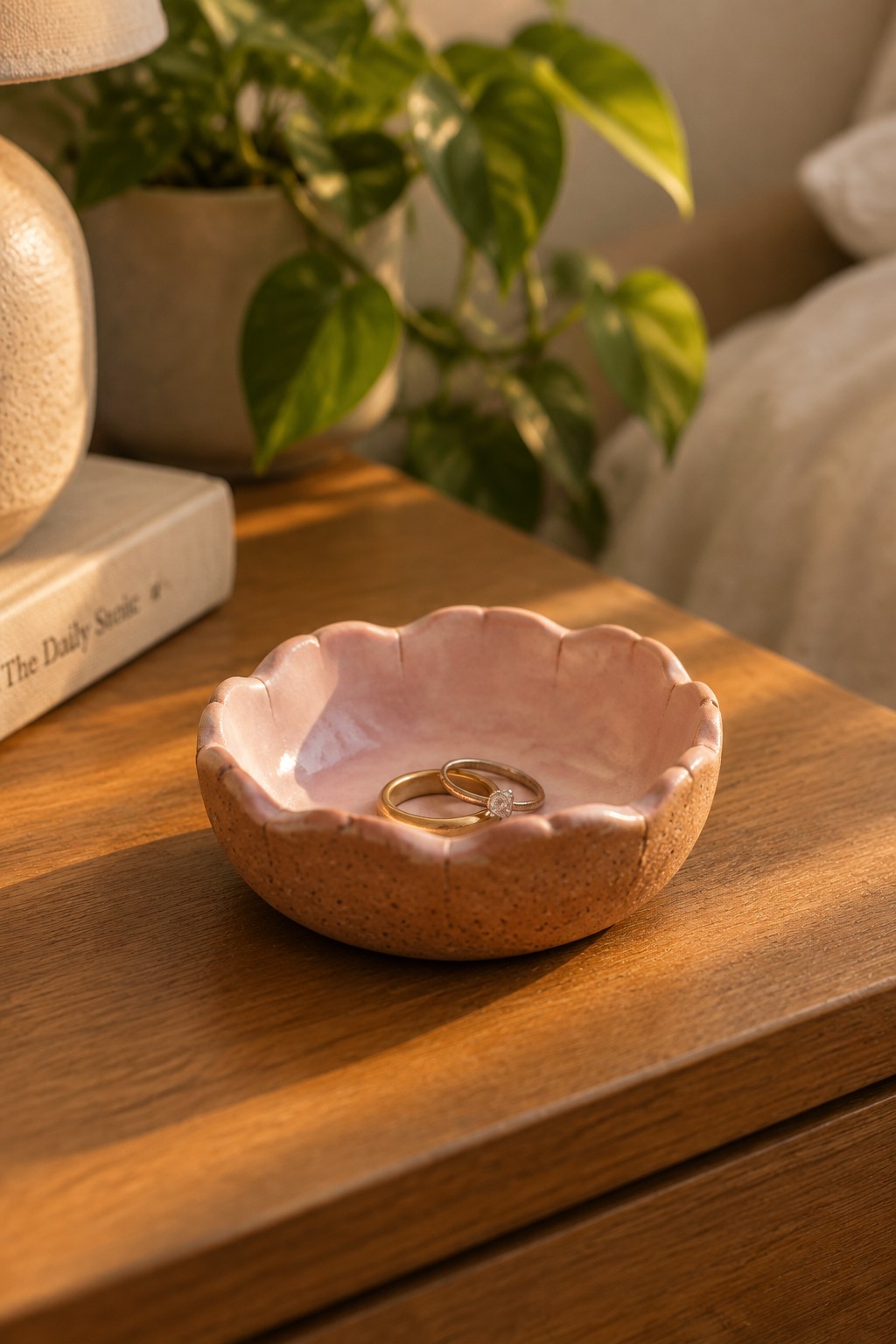
A small coil-built bowl with a scalloped rim works well as a ring dish. The form stays low and wide so rings sit flat, while the exterior keeps the raw speckled clay and the interior gets a light pink glaze that creates clear contrast. The wavy rim gives the piece a finished look without adding extra steps during building.
What makes this idea useful is how the small scale lets you finish the coils and trim the edge in one session. You can adapt the same shape for a soap dish or a small catch-all by adjusting the depth and skipping the interior glaze. This kind of piece stands out on Pinterest because the two-tone finish and scalloped edge read clearly even in a thumbnail.
Ridge Textured Coil Bowl with Dotted Rim

A coil-built bowl shows off its construction through even horizontal ridges that run around the sides and give the form a solid, handmade look. The rim carries a row of blue slip dots spaced at regular intervals, which breaks up the otherwise plain surface without adding extra steps. This shape works as a practical cereal or salad bowl because the wide opening and sturdy walls handle daily use while the foot keeps it stable on the table.
The shape does a lot of the work here since the ridges provide texture that hides minor imperfections and adds grip when moving the bowl around. You could repeat the dotted rim on a set of nesting bowls or change the dot color to match other dishes you already own. In a kitchen this size holds a full serving of cereal or soup without taking up much storage space, and the same coil method can be shortened to make matching small prep bowls.
Coiled Planter Bowl with Horizontal Ridges

A coil-built bowl makes a practical small planter when the coils stay visible as even horizontal ridges around the outside. The low, rounded form gives the roots enough room while keeping the plant stable, and the wide opening works well for succulents or small herbs. A soft green glaze with slight variation in tone adds color without overpowering the plant. This keeps the construction simple but gives the finished piece clear handmade texture.
The shape does a lot of the work here because the wide base prevents tipping and the ridges add surface interest without extra carving. You could repeat the same coil spacing on a taller version for a herb pot or shrink it for a desk planter. The muted glaze color pairs easily with most houseplants, so the bowl stays useful even when the plant changes. For a gift, this style needs only a small plant cutting to look complete.
Ribbed Coil Bowl for Everyday Ramen Servings

A coil-built bowl with pronounced horizontal ridges on the exterior makes a solid choice for a large functional serving piece. The ridges come directly from the construction method and give the form weight and grip while keeping the outside unglazed or lightly finished. Inside, a deep blue glaze covers the food surface and creates contrast against the lighter clay, which helps the contents stand out. This approach fits the everyday bowl category and works for hot noodle dishes or soups where size and stability matter.
What makes this idea useful is how the ribbed exterior adds texture and presence without extra carving or painting. You could repeat the same coil method at a smaller scale to make individual cereal or salad bowls. The blue interior would translate well to any kitchen where you want one strong color against neutral dishes. For a gift set, building three matching bowls in this shape keeps the practical proportions while making the project easier to handle through drying and firing.
Heart-Shaped Coil Bowl with Leaf Stamps

A coil-built heart-shaped bowl makes a practical serving piece for sides or salads. The exterior carries repeated leaf imprints pressed into the coils, giving the surface a simple repeating pattern. An earthy cream glaze covers most of the form while a warmer brown tone at the rim drips downward, settling into the ridges left by the coils.
The shape does a lot of the work here by making the bowl easy to recognize on a table without needing extra decoration. You could change the leaf stamps to other small motifs or skip them entirely if you want a smoother finish. This style works well for everyday kitchen use or as a gift that still functions for actual meals, and the same coil method scales down easily to make smaller versions for dips or snacks.
Yellow Flower Shaped Ring Dish

A small flower shaped bowl made in clay works well as a ring dish or trinket holder. The scalloped edges create a petal form while the yellow glaze sets a solid background for the simple daisy paintings placed inside. This combination keeps the piece compact and easy to shape by hand without needing complex tools or molds.
What makes this idea useful is how the petal edges give the bowl its shape without extra carving. The small size fits on a dresser or bathroom counter for daily jewelry storage, and the daisy pattern can be swapped for other basic motifs or skipped entirely for a plain glazed finish. For a gift, something like this turns into a practical holder that still feels custom when you adjust the size or color.
Horizontal Ridge Coil Bowl for Everyday Serving

A wide serving bowl formed with coils leaves visible horizontal ridges that add both grip and structure to the finished piece. The light speckled glaze settles into the grooves while leaving the raised areas slightly lighter, which keeps the construction details visible instead of hiding them under a smooth surface. This style works especially well for kitchen pieces that need to move from prep to table without looking too delicate.
What makes this idea useful is how the ridges give the bowl a practical surface while the wide, shallow shape handles salads or sides without taking up much storage space. You can adapt the same coiling method to make a taller version for mixing dough or a smaller set for individual portions. The neutral glaze keeps the focus on the texture, so the bowl pairs easily with other everyday dishes.
Coiled Salt Cellar with a Pour Lip

A small coil-built bowl makes an effective salt cellar for everyday kitchen use. The maker left the exterior ridges from the coils visible on the brown clay while adding a white glaze only on the inside and rim. The short spout cut into the rim lets you pour salt directly into a measuring spoon or pan without making a mess on the counter.
The compact size keeps it handy on a stovetop or baking station where you reach for salt often. You could repeat the same coil ridges and lip shape to make a small sugar bowl or a match holder for the kitchen. The contrast between the textured brown clay and the white interior helps the piece read as both functional and handmade without needing extra decoration.
Striped Coil Bowl for Serving Dips
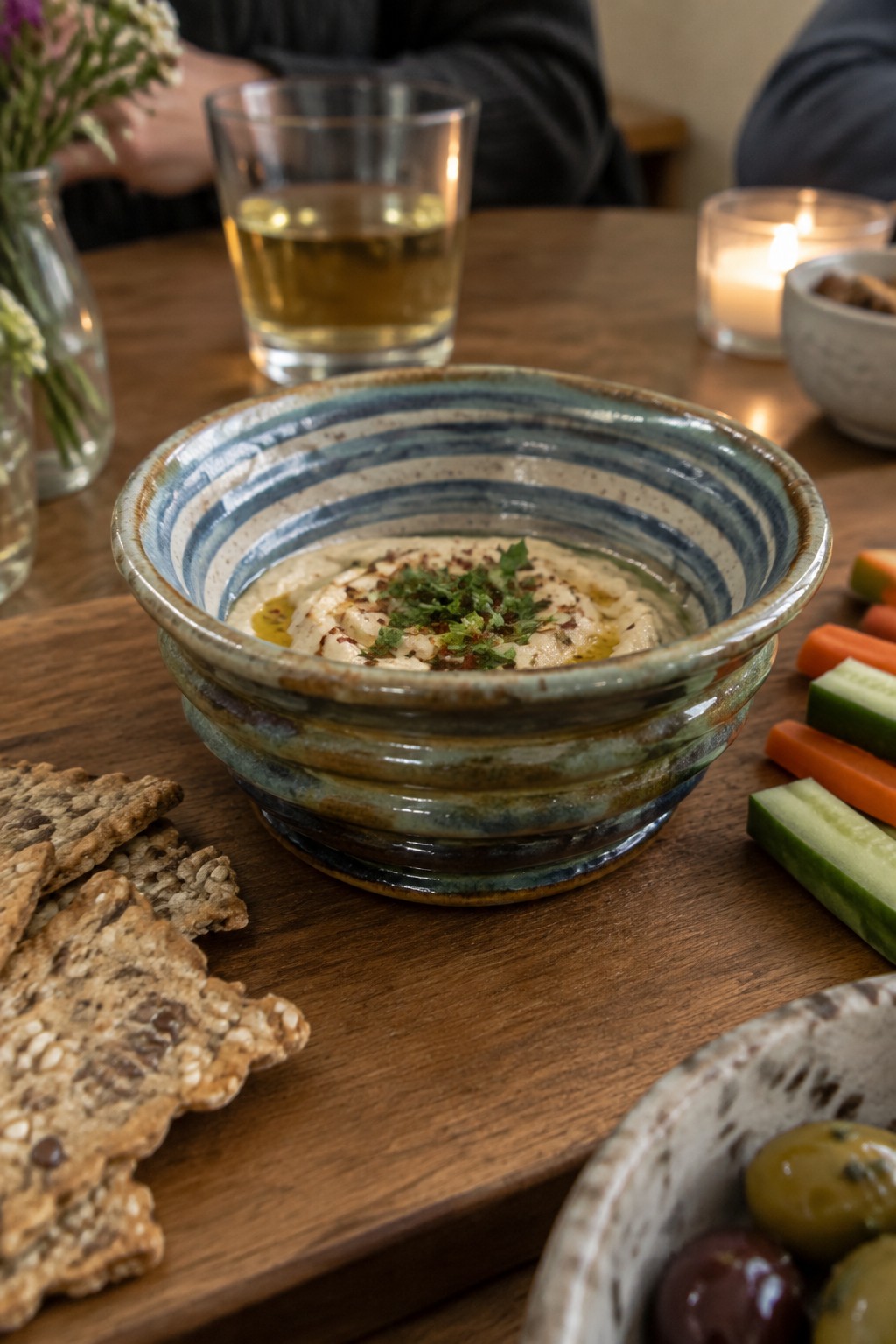
A coil-built bowl finished with wide horizontal stripes in blue, green, and brown works well as a functional serving piece. The bands wrap evenly around the form and create a simple rhythm that stays in the background while food sits inside. This kind of bowl sits in the everyday kitchen category because the shape and size suit dips, spreads, or small sides without needing extra decoration.
What makes this idea useful is how the wide rim and stable base handle both thick and thin foods without tipping or crowding the table. You could change the stripe widths or swap the blue family for warmer tones to match different dishes. In a kitchen this shape adapts easily to cheese boards or snack platters, and the same coil method can be used to make a taller version for salads or a smaller one for single servings.
Spiral-Ridged Soap Dish in Speckled Green

A small ceramic bowl makes an effective soap dish when it has raised spiral ridges built into the base. The ridges keep the bar elevated so water drains instead of sitting against the soap. A light green speckled glaze covers the form and gives it a subtle surface texture that still reads clean in a bathroom setting. This project fits the category of functional bathroom pottery.
The shape does a lot of the work here because the ridges solve the practical issue of soggy soap without adding extra parts. You could scale the same dish down for a smaller sink or widen it slightly for a larger bar. The speckled glaze also makes color matching easy since small variations blend into the finish. For a gift this takes minimal clay and still feels complete on its own.
Coiled Low Bowl as Tea Light Holder
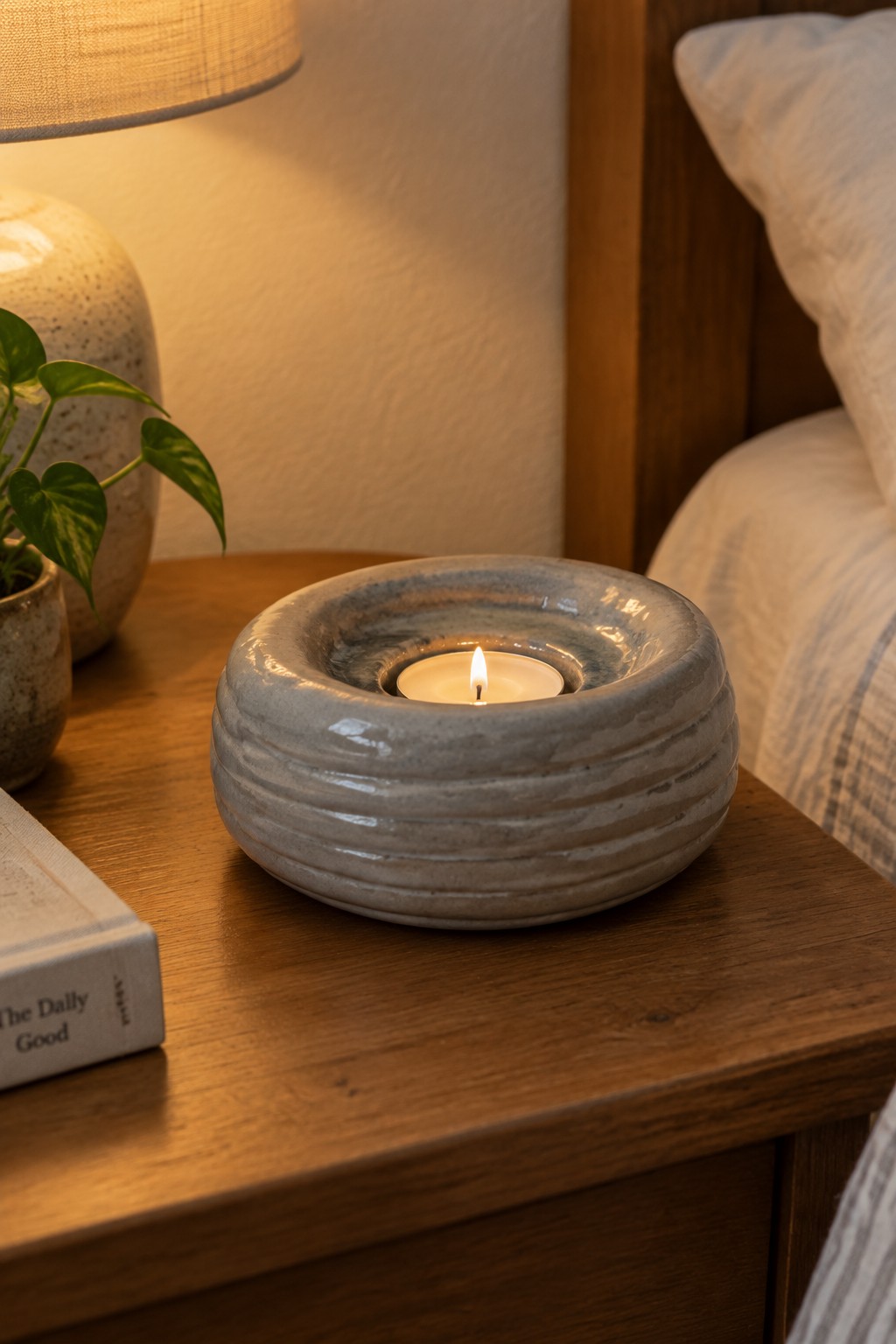
A coil-built bowl makes a simple tea light holder when the walls stay low and the opening stays wide enough for a standard candle. The stacked coils create horizontal ridges that give the form texture while keeping the overall shape compact. A gray glaze with subtle variation helps the piece blend into a bedside table or shelf without drawing too much attention.
The small scale makes this easy to adapt into a ring dish or small catch-all by leaving out the candle. You can widen the coils slightly for a larger votive or switch the glaze to match kitchen colors. A piece like this takes up little space on a nightstand and offers a sturdier alternative to glass holders that tip over easily.
Coiled Pink Bowl with Painted Stars

A coil-built bowl with visible horizontal ridges on the outside creates a simple, sturdy form that works well for small servings. The exterior uses a soft pink glaze while the interior features scattered stars in yellow, blue, pink, and green. This approach fits the category of functional kitchenware for children because the coils add texture and the painted motif keeps the design light without needing complex techniques.
What makes this idea useful is how the coil ridges give the bowl grip and a clear handmade look that still feels practical for daily meals. You could swap the stars for other simple motifs like dots or stripes to match different tableware sets. In a kitchen this size works especially well for cereal or snacks because the low profile and painted details make it more inviting than plain bowls. The same coiled shape could be made slightly larger for side dishes or adapted into a small dip bowl with a single color accent on the rim.
Textured Coil Pet Bowl with Glazed Interior

A wide, low coil bowl makes an effective pet feeder when the walls stay thick and stable for floor use. The exterior features deep carved or impressed lines that create a rough, wood-like texture, while the interior receives a glossy brown glaze that seals the surface for easy cleaning. This combination keeps the form practical as a daily feeding dish without needing extra feet or stands.
What makes this idea useful is the sturdy profile that resists tipping when animals eat. You could repeat the same carved texture on a matching water bowl or shrink the diameter for cats. The low shape also adapts easily to a bread dough rising bowl or a large kitchen prep vessel if you want to move the design out of the pet area.
Nesting Bowls with Pouring Spouts
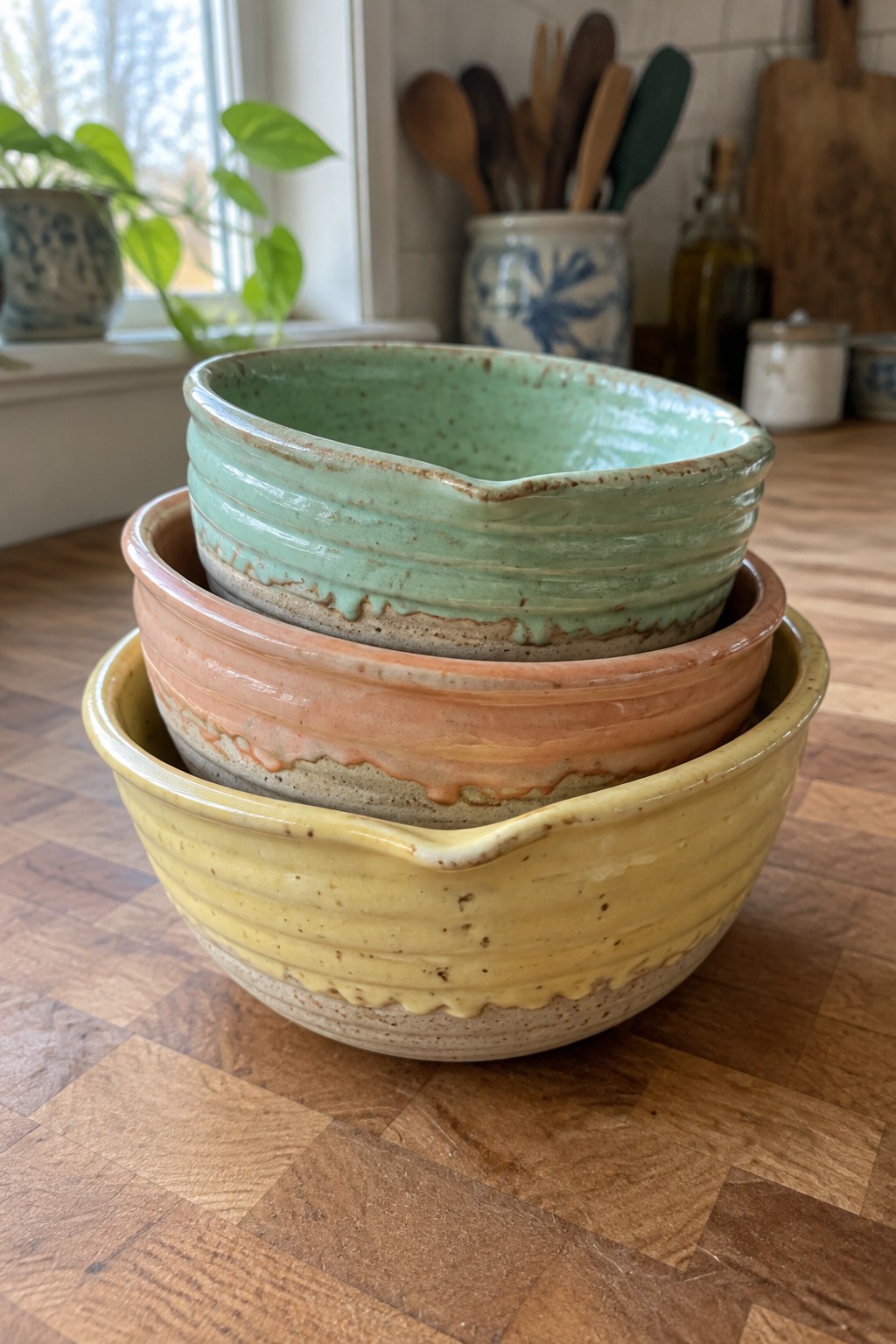
A set of three graduated bowls built with visible coils and finished with a pouring lip on each one gives you a compact kitchen set that stacks neatly when not in use. The horizontal ridges help with grip during mixing, while the runny glazes in yellow, coral, and mint let the speckled clay body show through at the rims and drips. This approach keeps the bowls functional for batters, dressings, or leftovers without taking up much cabinet space.
What makes this idea useful is how the spouts turn ordinary bowls into better tools for pouring. You can adapt the same nesting sizes and ridge texture with just two bowls or swap the glaze colors to match your existing dishes. In a kitchen, the stack stores easily and the lips reduce mess when transferring liquids. The same shape works for small prep tasks or serving sides at the table.
Coil Bowl with Carved Citrus Motifs
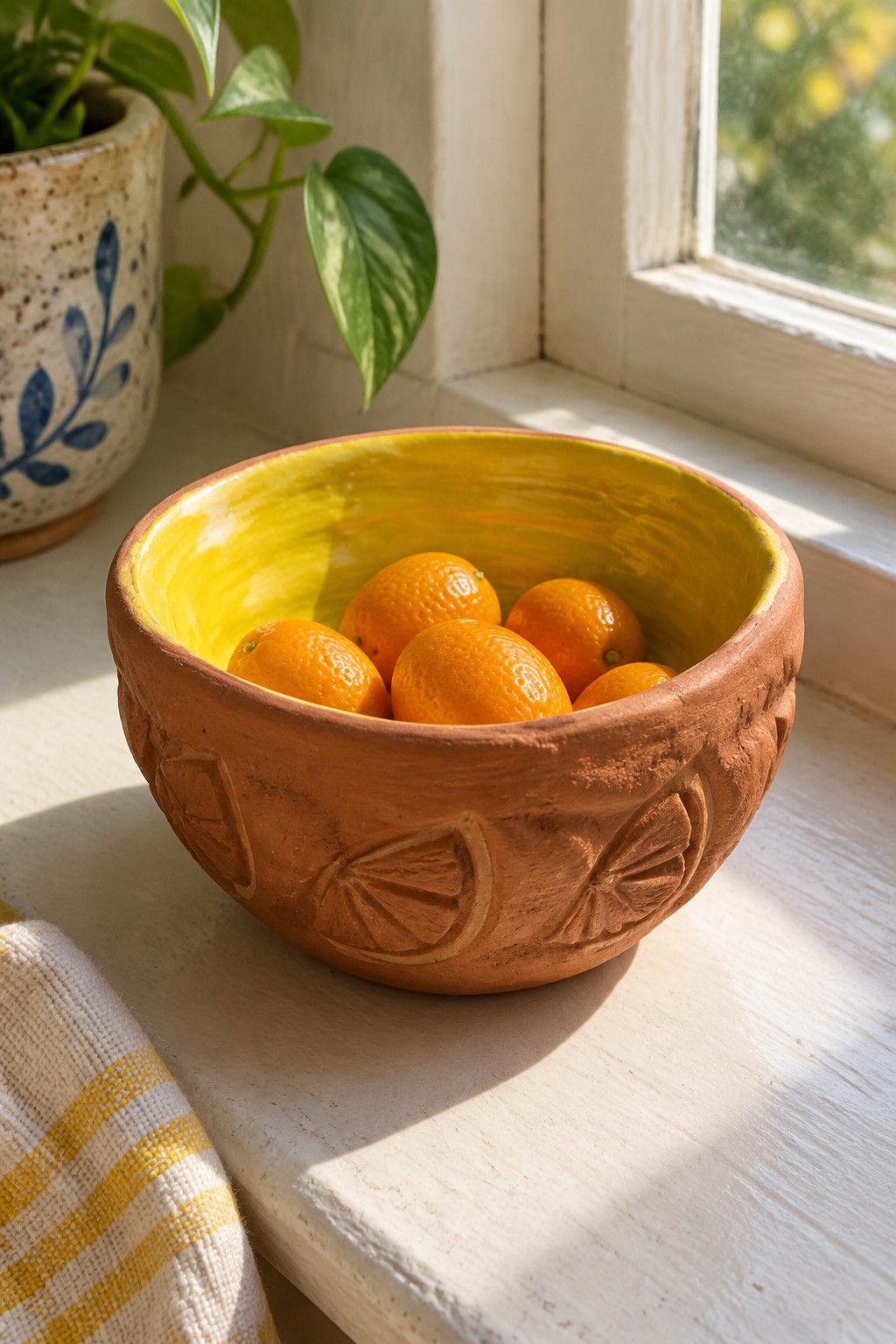
A coil-built bowl in terracotta clay uses simple stamping or carving to press citrus slice shapes around the exterior walls. The interior carries a solid yellow glaze that stops at the rim, leaving the natural clay exposed on the outside. This contrast highlights the carved details while keeping the bowl functional for holding fruit or small produce. The rounded shape and medium size suit everyday kitchen use without taking up much counter space.
The carved citrus pattern works well as a quick way to add interest to a plain coil form without extra tools or complex glazing. You could repeat the same motif on a set of smaller prep bowls or switch the fruit shapes to match different seasons. The unglazed exterior gives a good grip when lifting, while the glazed inside makes cleanup easy after holding wet fruit. This approach stands out in a kitchen because the design stays visible even when the bowl is in use.
Blue Spiral Coil Bowl for Everyday Serving

A wide coil-built bowl finished in white glaze with a bold blue spiral painted across the interior base creates a functional serving piece that stays interesting even when filled. The spiral sits low enough that it remains visible beneath yogurt or salads, while the simple brushwork contrasts cleanly against the white surface. Horizontal ridges left on the exterior emphasize the handmade construction without adding extra decoration. This style suits larger bowls intended for breakfasts, grain bowls, or shared sides rather than small decorative objects.
The shape does a lot of the work here because the open form keeps the painted detail visible during use instead of hiding it under food. You could rework the same spiral in a different color to match your dishes or simplify it to a few quick strokes if you want faster results on multiple pieces. This kind of bowl works well on a breakfast table or as a countertop fruit bowl, and the same interior pattern adapts easily to smaller individual sizes or deeper soup bowls.
Green Coil Bowl with Carved Rim for Everyday Serving
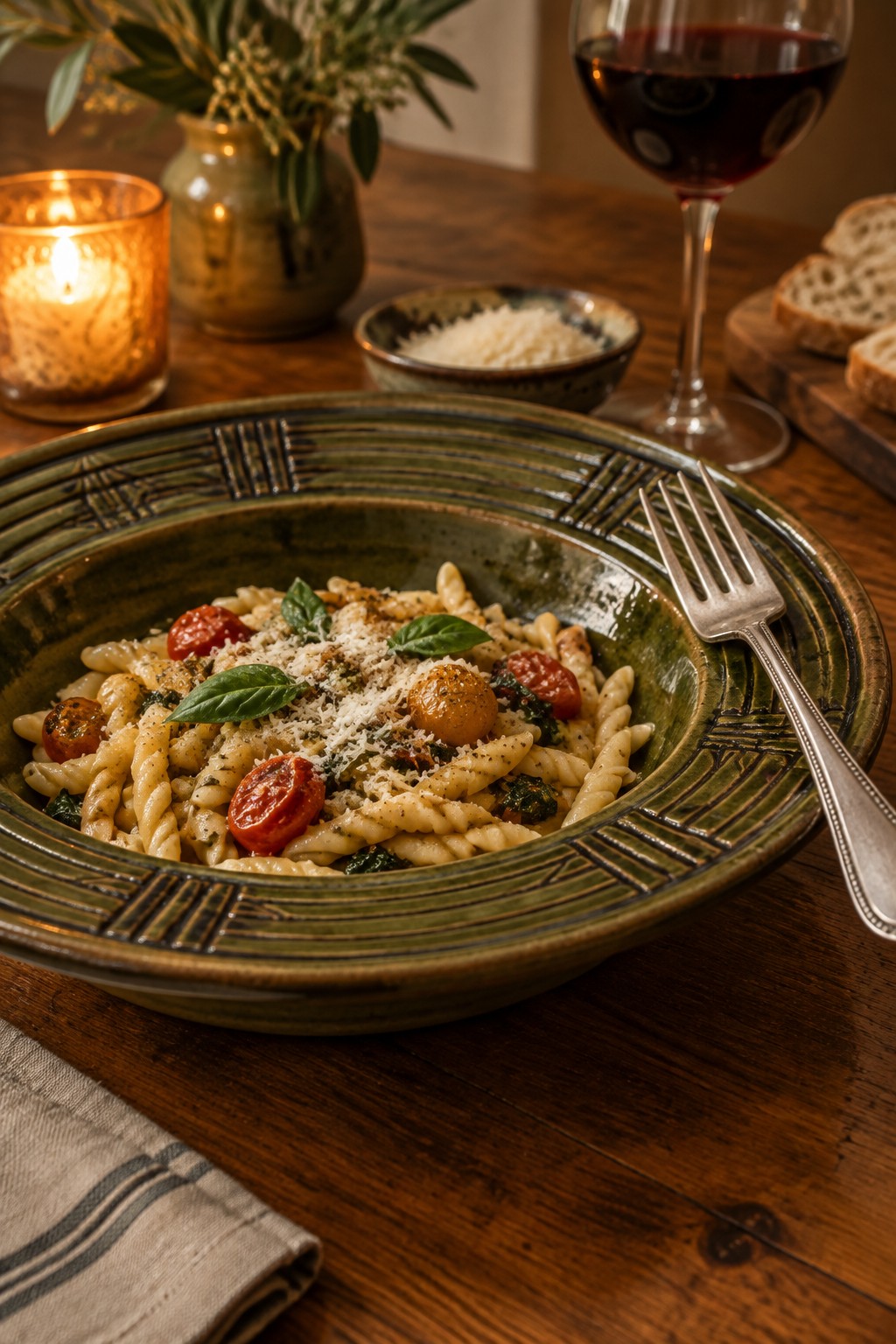
A large, deep serving bowl built from coils works well when you want something sturdy enough for pasta, salads, or shared dishes. The wide rim carries a repeating geometric pattern that was carved in while the clay was firm, giving the piece clear lines without extra decoration. A glossy green glaze covers the interior and most of the exterior, leaving just enough contrast at the rim to highlight the carving. This approach keeps the bowl firmly in the functional kitchen category while still showing the maker’s hand.
The deep shape and wide foot make it stable on the table and easy to pass around during meals. You could repeat the same rim pattern on a smaller set of individual bowls or switch the glaze to a matte oatmeal tone for a quieter look. The carved detail is simple enough to do with a basic loop tool, so the idea scales well if you want to make a matching set for gifts or daily use. On Pinterest this kind of straightforward, usable bowl tends to get saved because it looks finished without needing complex techniques.
Banded Exterior Bowl with Crackled Interior Glaze
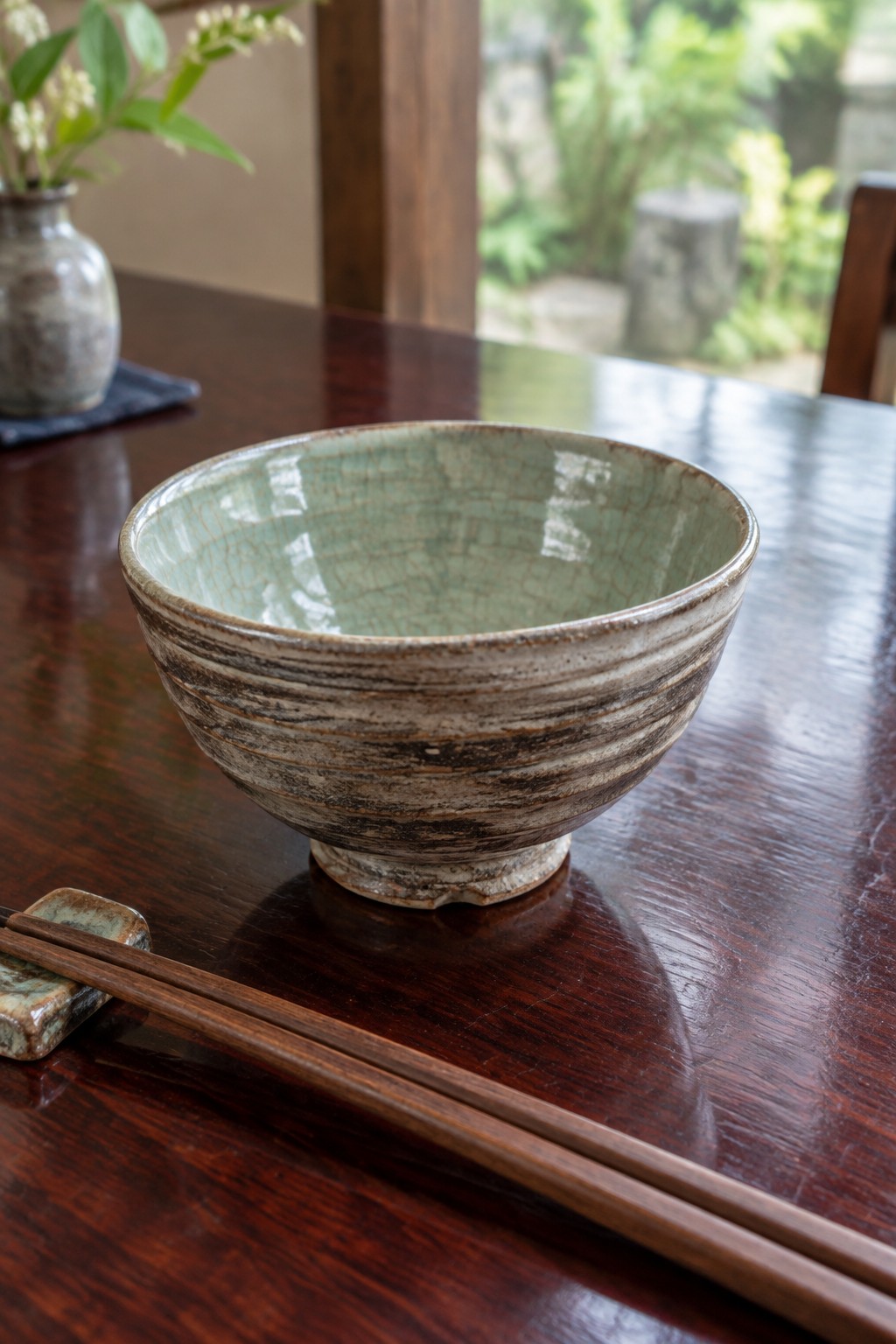
This bowl combines a wide, low profile with horizontal bands of earthy slips or glazes on the outside that create a striped, textured surface. The interior uses a pale green crackle glaze that contrasts with the matte, layered exterior. The form works as a functional serving piece for rice, soup, or noodles, and the simple banding technique keeps the focus on surface variation rather than complex carving.
The shape does a lot of the work here because the wide opening and stable foot make it easy to eat from directly. You could adapt the banding idea by switching to blues or grays for a cooler palette or by narrowing the form slightly for a cereal bowl version. In a kitchen, the neutral tones sit well with wooden tools and everyday dishes without competing for attention. The same banding approach could be simplified for smaller pinch bowls or tried on a taller cylinder for a utensil holder.
Speckled Blue Coil Bowl for Everyday Fruit
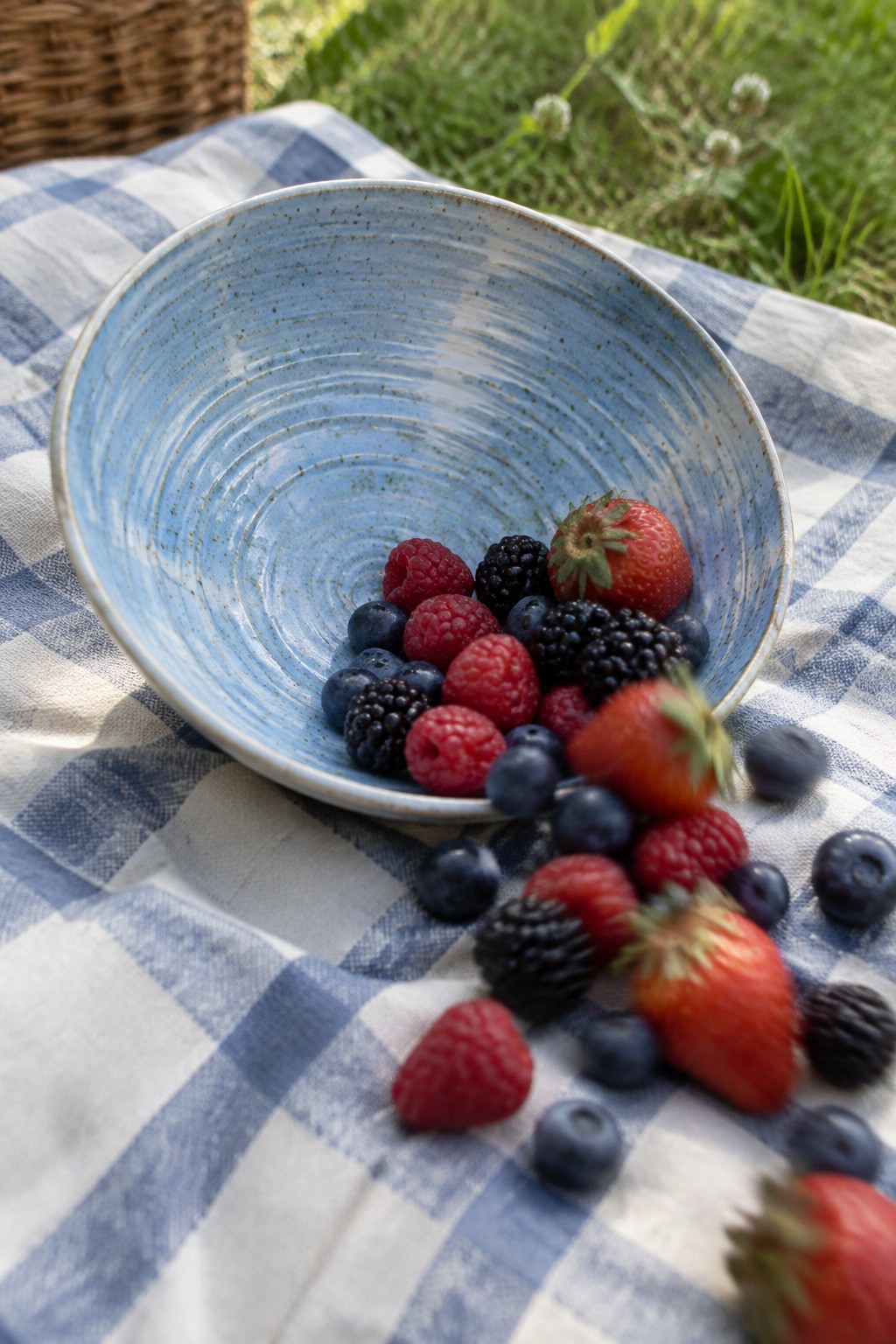
A coil-built bowl in a wide, shallow form keeps fruit from bruising while the open shape makes it easy to reach in and grab what you need. The soft blue speckled glaze creates a durable, low-maintenance surface that still shows the handmade ridges from the coil construction. This style works as a basic kitchen bowl rather than a decorative piece, so it can stay on the counter or table without special care.
The generous rim catches any berries that roll free, which makes it practical for real use instead of just display. You could repeat the same coil technique and glaze on a taller version for salad or a smaller one for snacks. The blue tone pairs with most everyday dishes, so the bowl moves easily from prep to serving without looking out of place.
Pinched Rim Bowl For Kitchen Prep Tasks
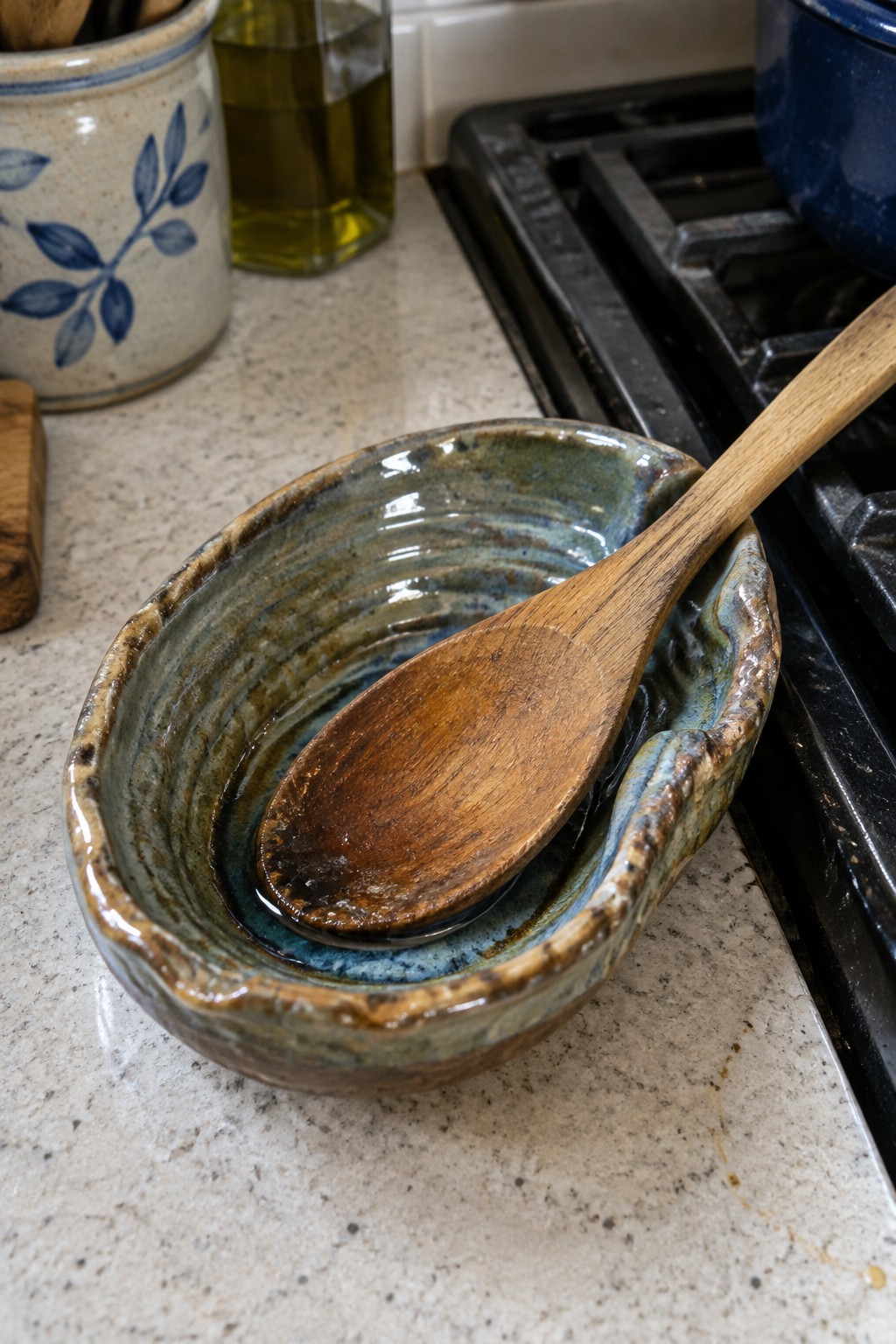
A small handbuilt ceramic bowl gains extra function when one side of the rim is shaped into a shallow notch that cradles a wooden spoon. The earthy blue green glaze with darker brown pooling emphasizes the uneven surface and keeps the focus on the practical form rather than decoration. This shape works as a prep or serving piece that holds both ingredients and the utensil in one spot during cooking.
What makes this idea useful is the way the pinched edge prevents the spoon from sliding onto the counter without adding extra parts. You could repeat the same rim treatment on slightly larger bowls for sauces or smaller ones for spices. In a kitchen this kind of piece reduces clutter by keeping the spoon right where you need it. The simple notch detail also translates easily to other handbuilt shapes if you want to make a matching set.
Scalloped Bowl with Impressed Leaf Motifs

A handbuilt ceramic bowl with a scalloped rim gives you an easy way to create visual interest through shape alone. Vertical ridges run down the sides while simple leaf and stem impressions add pattern without extra color layers. The flowing blue-green glaze settles into the texture and creates natural variation across the surface. This approach fits the decorative bowl category, where the piece can hold fruit, mail, or small household items while also working as a standalone accent.
The shape does a lot of the work here since the wavy edge and ridges make the form look more complete even with basic construction. You could swap the leaf stamps for other simple tools or leave sections plain to change the look quickly. In a kitchen or on a console table this size handles everyday use without feeling oversized. For a gift or smaller space, the same rim treatment and motif could be scaled down into a shallow catchall or trinket bowl.
Ribbed Ceramic Mixing Bowl
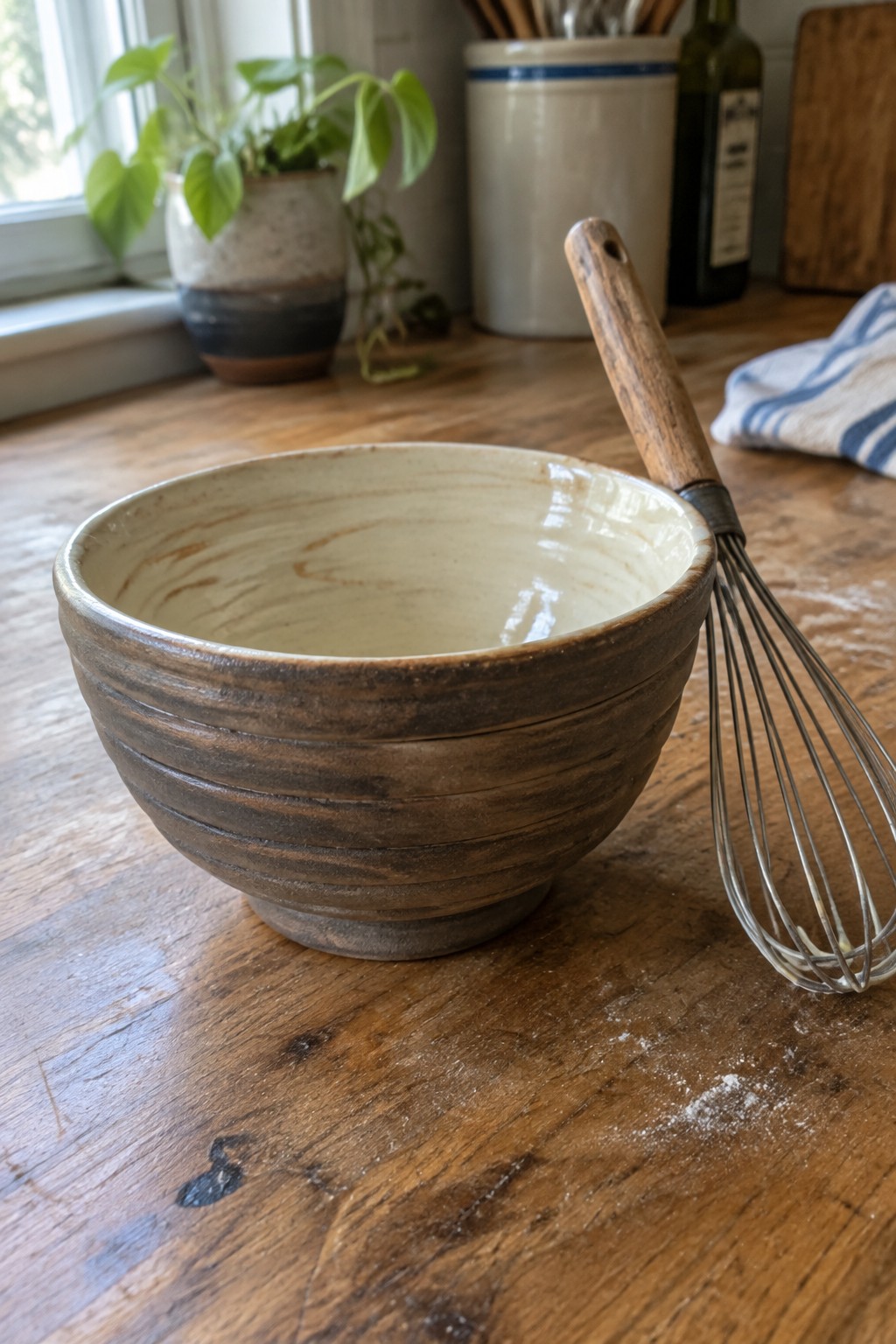
A wide ceramic bowl with horizontal ridges around the exterior makes a practical mixing bowl for kitchen tasks. The ridges give the form extra grip when handling wet dough or batters, while the broad opening and stable base keep it steady on the counter. An earthy brown glaze on the outside paired with a lighter interior keeps the piece simple and versatile for everyday use.
What makes this idea useful is how the ridges add both texture and function without extra tools. You could repeat the same shape in a smaller size for prep work or use a smoother finish if you want less grip. In a kitchen, this kind of bowl handles mixing, serving, or storing and still looks at home on open shelving. The basic form adapts easily to different glaze colors or a taller profile if you want to turn it into a storage crock.
Frequently Asked Questions
What clay types work best for creating durable coil bowls meant for daily use? Stoneware or porcelain clays are excellent choices because they withstand repeated handling and washing while holding their shape well during coiling. Start with a clay body that has some grog for better structure, and always test a small batch before committing to a full set of bowls to ensure it matches your firing setup.
How do I make sure my coil bowls are safe for serving food? Use food safe glazes that are labeled as such and fire them to the correct cone temperature specified by the manufacturer. Apply an even interior coating without any cracks or exposed clay, and run a simple vinegar test on finished pieces to check for leaching before regular kitchen use.
What size variations should I consider when planning coil bowls for everyday meals? Smaller bowls around six inches wide suit side dishes or snacks, while eight to ten inch versions handle soups or salads nicely. Build gradually with even coils to maintain wall thickness, and measure your kiln shelves in advance so the finished pieces fit without crowding during firing.
How can beginners avoid common issues like uneven walls when coiling bowls? Work on a rotating wheel head or lazy Susan and score each coil thoroughly before adding the next one. Keep coils about the thickness of your pinky finger and blend them inside and out with a rib tool as you go to create smooth transitions that prevent weak spots.
What finishing techniques help coil bowls look beautiful yet remain practical? Apply matte or satin glazes in neutral tones that hide minor imperfections from hand building, and add subtle texture only on the exterior to preserve easy cleaning inside. Fire with a slow ramp to avoid dunting, and consider stacking bowls of graduated sizes for efficient storage in daily routines.

Pottery Path is my cozy corner of the internet where I share clay ideas, pottery inspiration, and simple projects you can recreate at home. I love exploring everything from air dry clay to handbuilt pottery to cute minis that brighten your day. My goal is to make clay crafting feel easy, fun, and welcoming for anyone who wants to try it.
You will find beginner friendly tutorials, creative pottery painting ideas, and lots of warm inspiration for slow and happy crafting. If you enjoy hands on creativity, this space will feel like home.