I’ve been playing around with pottery for a while and I like bowls that show some handwork without looking too fussy.
My own pieces tend to mix a bit of traditional shaping with colors and forms that fit into a regular kitchen.
I put together these ideas after testing glazes and trying out shapes that feel current but still handmade.
Some came from workshops I attended and others from just messing around in my studio on weekends.
They range from simple to a little more involved so there’s something useful no matter your experience level.
Two-Tone Speckled Bowls for Kitchen Use

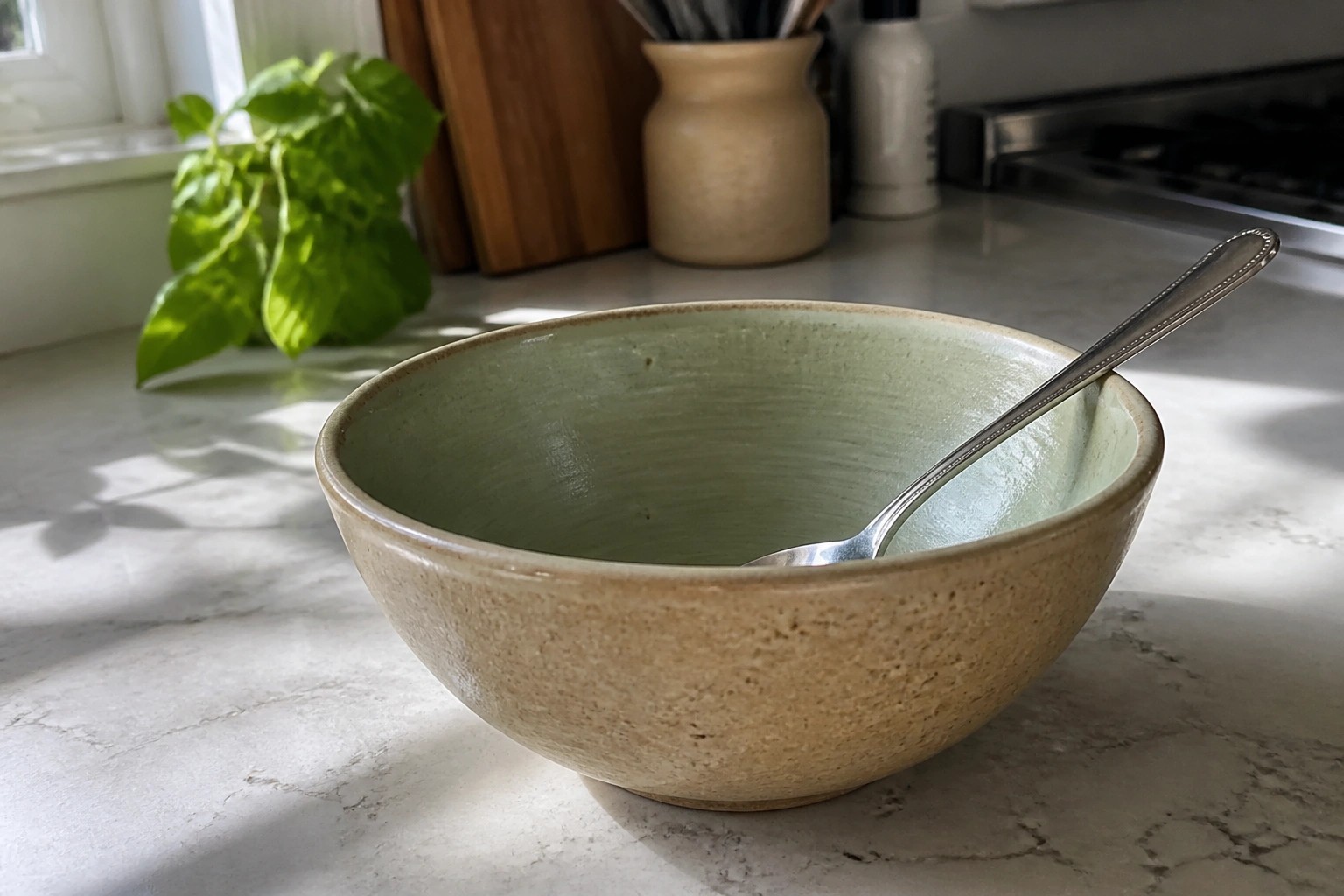
A handmade ceramic bowl with a wide, shallow profile works well as a functional kitchen piece. The exterior keeps the natural speckled clay body in a matte beige finish while the interior uses a glossy light green glaze that covers the entire serving surface. This simple glaze split gives the bowl enough contrast to stand out without added patterns or carving.
What makes this idea useful is how the shape and surface treatment suit both food prep and table service. You can adapt the same two-tone approach to smaller pinch bowls or a deeper mixing bowl by keeping the speckled clay visible on the outside only. In a kitchen, the neutral exterior helps it blend with other stoneware while the colored interior makes it easy to spot when stacked on open shelves.
Striped Nesting Bowls with Speckled Glaze
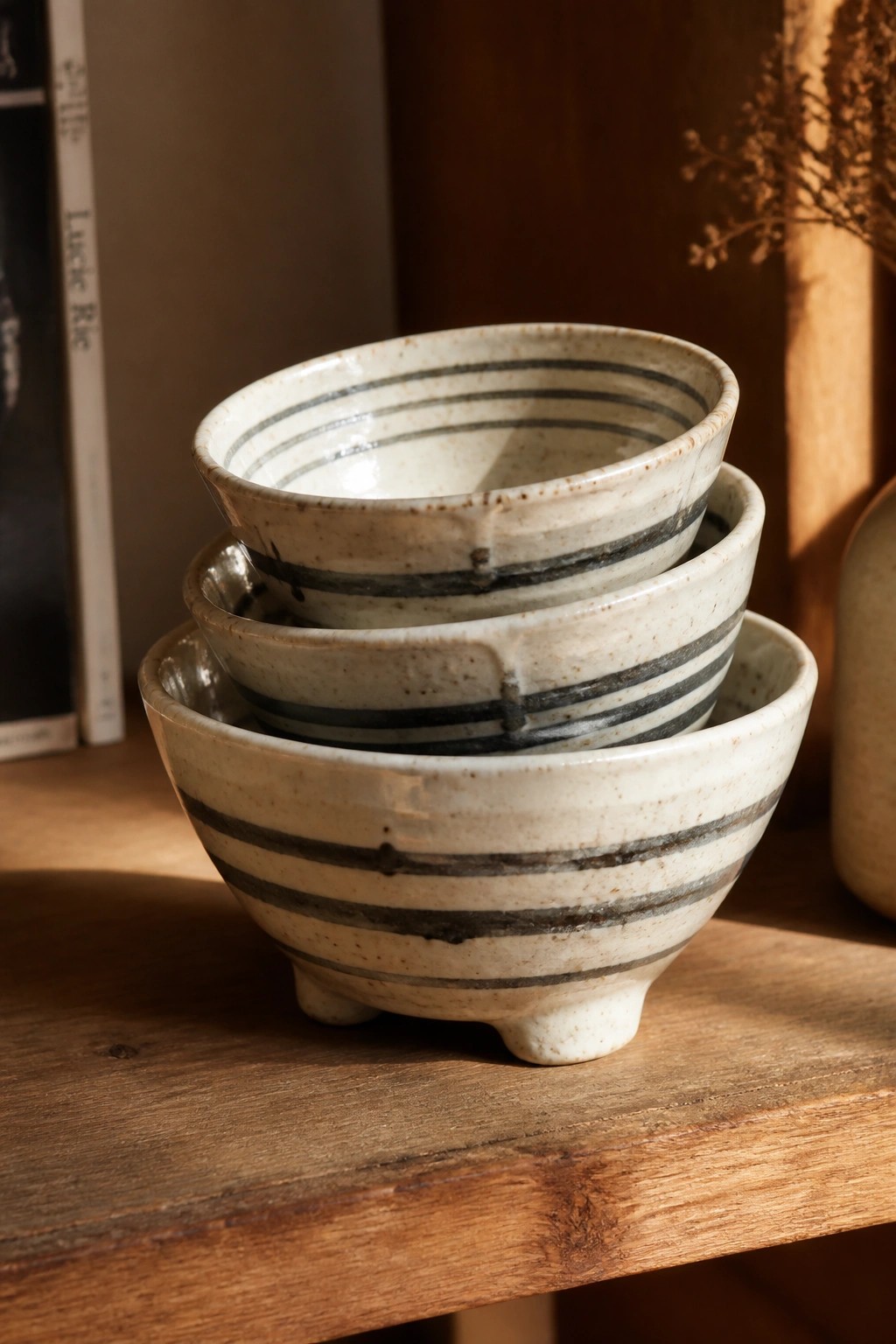
These are three ceramic bowls made to nest together, each finished with a light speckled glaze and dark horizontal stripes. The largest bowl sits on small feet while the others stack inside it, and the stripes run around the outside in slightly uneven bands. The design keeps the bowls functional for serving or prep while the pattern gives them a clear visual identity. This fits the category of kitchen bowls that can stay out on open shelves without looking plain.
What makes this idea useful is how the stripe pattern scales across different sizes without needing new techniques. You could try the same bands on a single large mixing bowl or shrink them for small prep bowls. The footed base on the bottom piece lifts it just enough to add interest on a countertop or table. For a quick version, brush similar stripes onto store-bought bisque bowls before glazing to get the look with less forming time.
Rustic Two-Tone Ceramic Bowl for Noodle Dishes
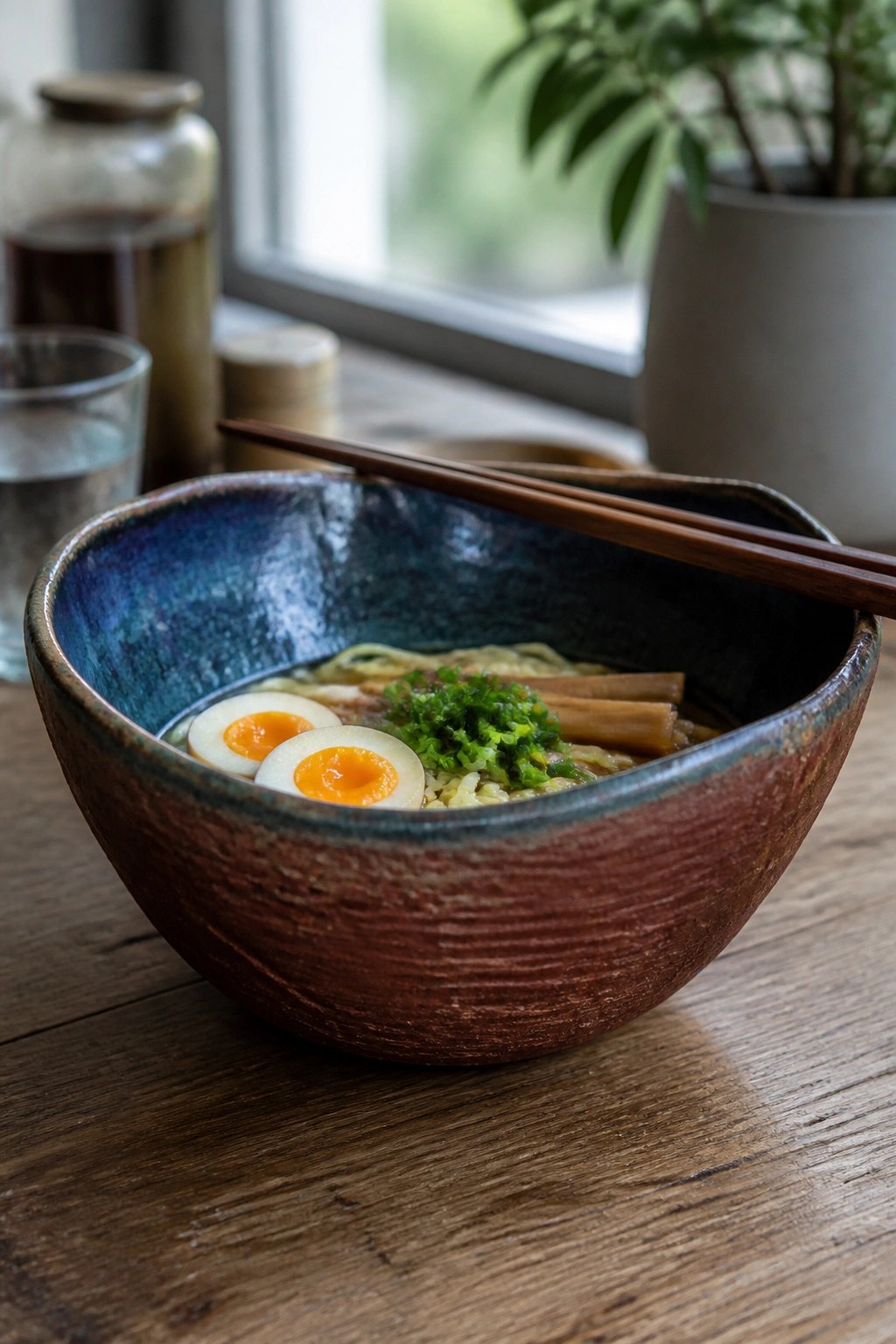
A large handmade ceramic bowl with a rough reddish-brown exterior and a glossy deep blue interior glaze works well for serving ramen or similar dishes. The textured outside surface gives the piece an organic, grounded appearance while the smooth interior glaze provides a practical, easy-to-clean food surface. This approach fits into the category of functional kitchen bowls that combine everyday use with a distinct handmade look.
What makes this idea useful is the clear contrast between the matte exterior and the saturated interior color, which helps the bowl stand out when placed on a wooden table or open shelf. You could scale the same form down for individual soup bowls or swap the blue glaze for another bold color to match different table settings. For a gift, this style works because the shape handles both hot food and simple styling without extra decoration.
Small Pink Crackle Ring Dish
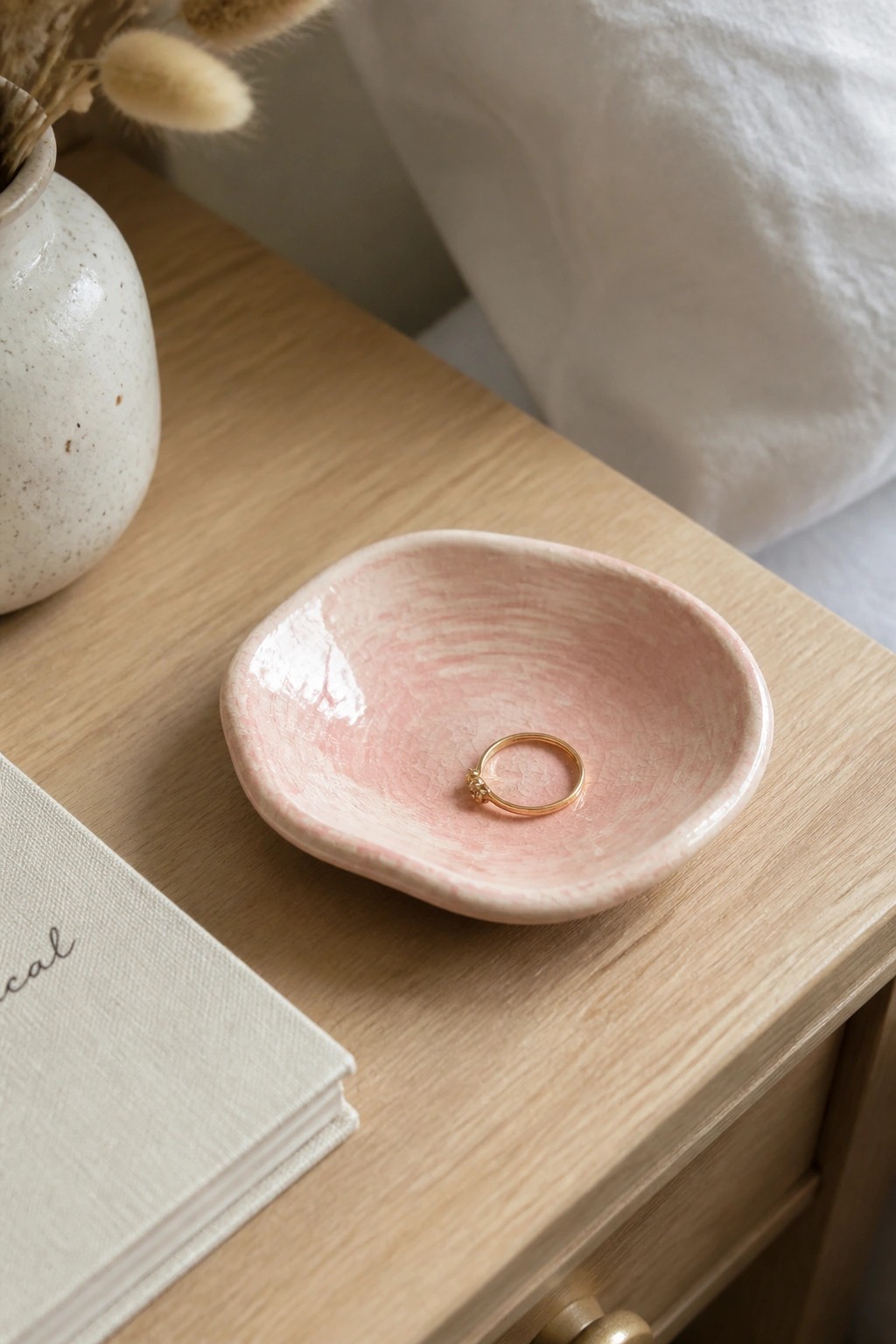
A small ceramic ring dish with an organic, uneven rim shape works well for keeping rings or small jewelry in one spot. The pink glaze shows a fine crackle pattern across the surface that gives the piece subtle texture. This type of project falls into the ring dish or trinket bowl category and stays compact enough to place on a dresser or nightstand.
What makes this idea useful is the shallow form that prevents items from sliding out while still looking simple. You could adapt it by changing the glaze color or adjusting the rim to be more oval for a different look. In a bathroom or entryway, this kind of piece keeps daily items handy without needing much space. The small scale makes it quick to try in a weekend firing and easy to customize for gifts.
Yarn Bowl with Curved Side Notch for Knitting

A yarn bowl is a round ceramic vessel made with a wide opening and a curved notch cut into one side of the rim. The notch holds the yarn in place and lets it feed out steadily from a ball resting inside the bowl. The speckled matte glaze and thick walls give the piece enough weight to stay put on a table or lap during use. This project falls into the functional craft holder category rather than a standard decorative or serving bowl.
The notch shape does most of the work here by turning a plain bowl into a practical tool that prevents yarn from rolling away. A piece like this works especially well in a living room or craft corner where someone knits regularly. You could adapt the same cutout on a smaller bowl for embroidery thread or make a deeper version to hold two skeins at once. For a gift this style stands out because it solves a common problem without needing extra hardware.
Ribbed Bowl with Scalloped Rim and Exposed Clay Base
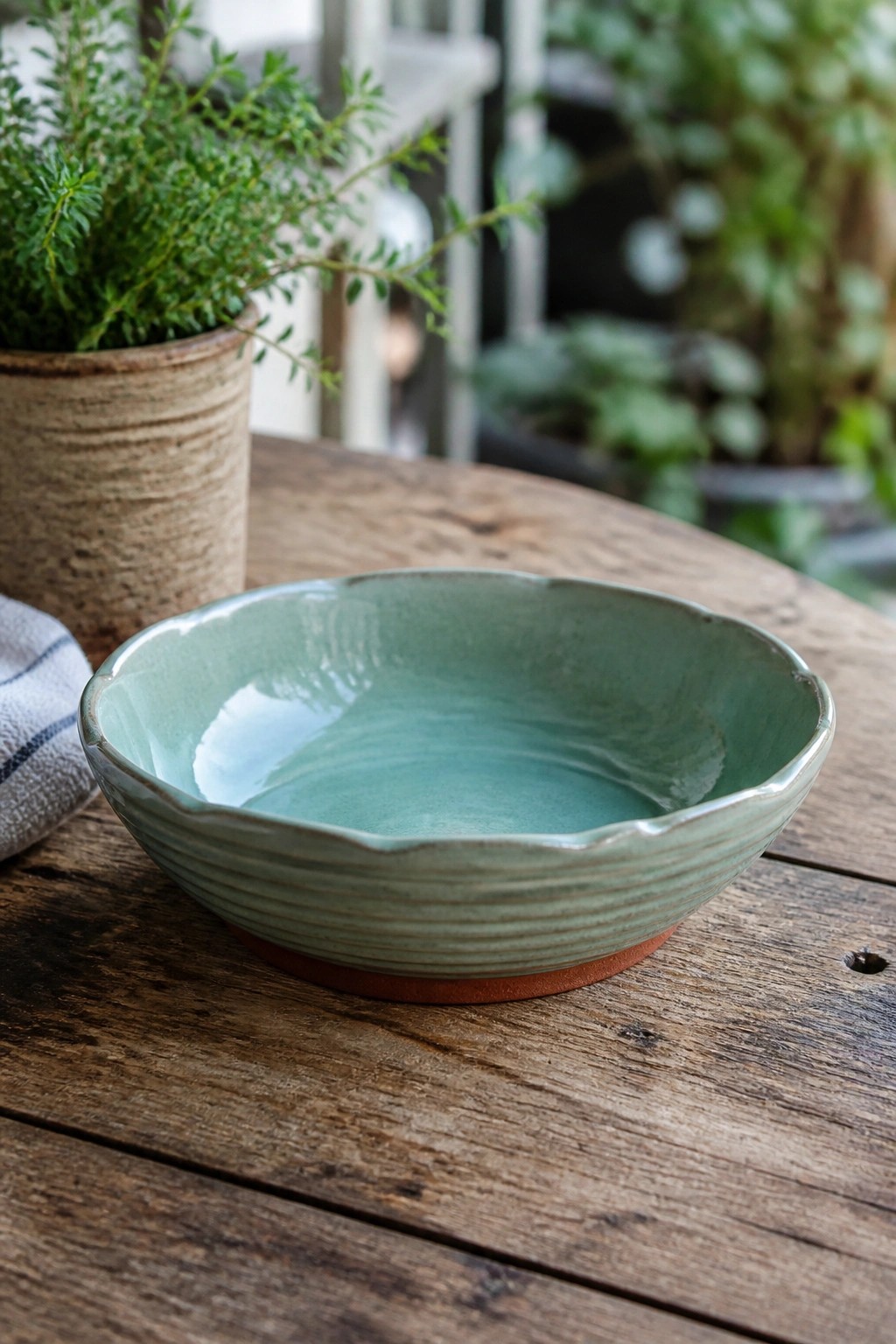
A handmade ceramic bowl with horizontal ridges running around the outside and a wavy scalloped rim gives the form extra texture without added decoration. The interior carries a soft green glaze that pools naturally along the ridges, while the foot stays unglazed to show the original clay color. This approach keeps the bowl simple yet distinct, fitting into the everyday tableware or serving bowl category.
The shape does a lot of the work here because the ridges create visual lines that make the bowl stand out even in a plain color. It works especially well as a fruit bowl or side dish on a wooden table where the terracotta base can contrast with the surface. You could adapt the same ribbed form into smaller dessert bowls or change the glaze to a matte white for a different look. The texture also photographs clearly, which helps the idea travel well on Pinterest boards focused on functional pottery.
Speckled and Marbled Bowls for Serving Dips
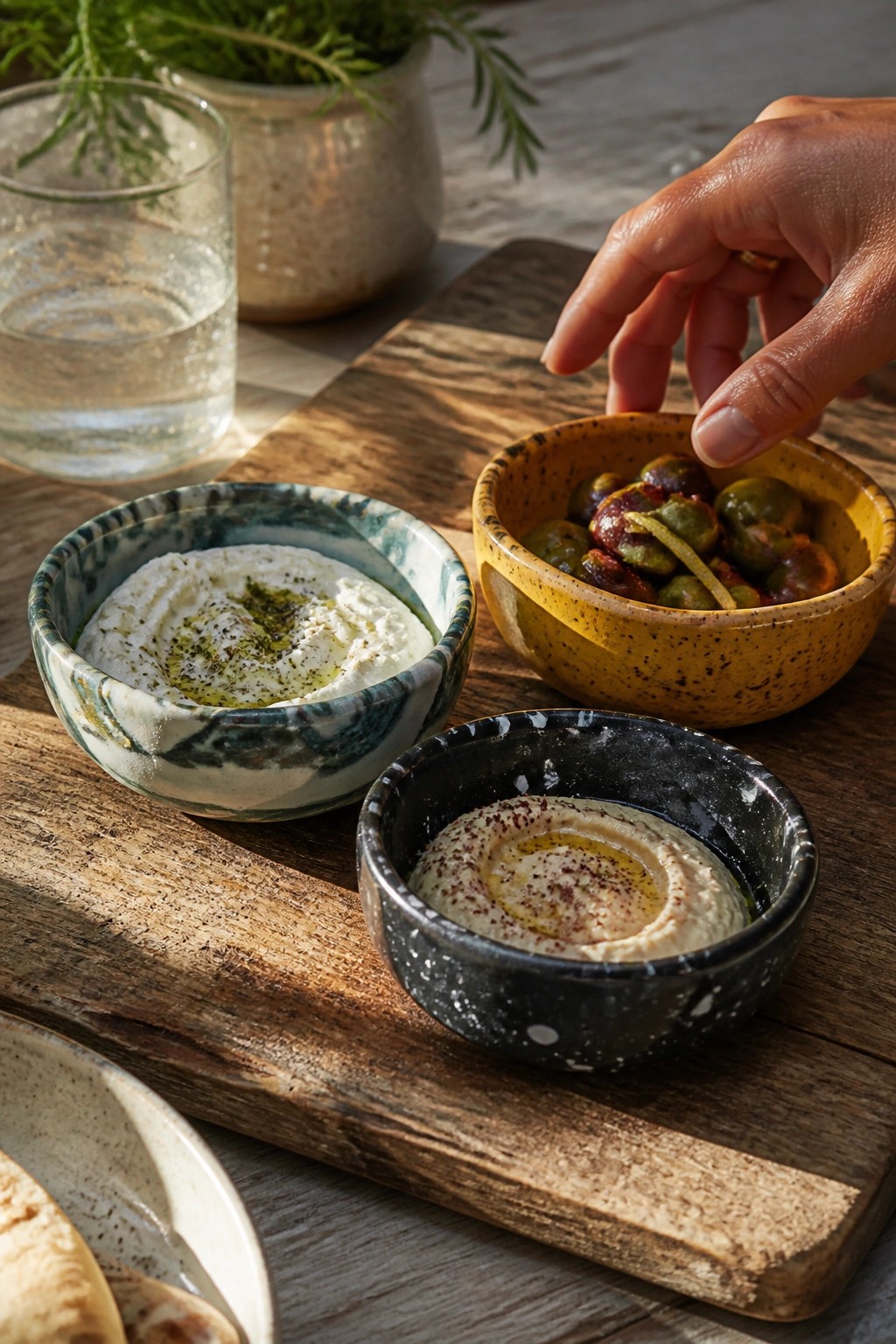
Small ceramic bowls with varied glaze effects work well for serving dips, olives, and similar snacks. One bowl uses a marbled green and white glaze, while the others show speckled yellow and black finishes that highlight the food inside. The simple rounded forms keep the focus on the surface patterns and the way light catches the glossy areas. This style belongs to the kitchen serving bowl category where the pottery doubles as table decor.
What makes this idea useful is the way the different glazes let you build a loose collection without buying a matched set. You can adapt the speckled look by applying contrasting underglazes to a standard bowl shape before firing. These pieces suit casual hosting because the earthy tones pair easily with both plain hummus and brighter toppings. For a smaller version, scale the same glaze approach down to ramekin size to hold nuts or seasonings.
Terracotta Bowl with Dripping Green Glaze Rim

A wide, low ceramic bowl pairs an unglazed terracotta exterior with a soft mint green interior glaze. The glaze is applied thickly enough at the rim to create controlled drips that run downward, giving the edge an organic, irregular line. This simple two-tone treatment turns a basic wheel-thrown form into a finished piece without extra carving or painting.
What makes this idea useful is the clear contrast between the matte clay body and the glossy interior, which helps the bowl read as both natural and finished. You can adapt the drip effect by changing the glaze color or letting it run farther down the inside for a stronger visual break. The shallow shape works well as a catch-all on a console, a plant saucer, or a small fruit bowl on a kitchen counter. Scaling the same form down creates matching ring dishes or spoon rests that share the same finish pairing.
Asymmetrical Stoneware Bowl for Kitchen Counters

A wide, low ceramic bowl with an organic elongated shape makes a practical kitchen piece for holding fruit or produce. The textured exterior in earthy brown pairs with a dark interior to create contrast without extra decoration. This form keeps the focus on the handmade surface rather than precise symmetry, which works for both display and light serving.
What makes this idea useful is the stable base and open shape that lets items sit naturally without rolling out. You could scale the same proportions down for a smaller nut bowl or adjust the rim curve for better stacking if you want a set. In a kitchen, the neutral tones fit with most counter materials and do not compete with other items. The same approach translates easily to a serving dish by widening the base slightly for stability.
Yellow Glazed Catch-All Bowl with Raw Clay Base

A small handmade ceramic bowl finished with a bright yellow glaze that covers the interior and most of the exterior but stops short of the foot creates a clean two-tone effect. The exposed clay at the base gives the piece a grounded, unfinished look that contrasts with the glossy surface above. This style of bowl works as a compact catch-all for keys, coins, or small jewelry rather than a larger serving piece.
The small scale makes this easy to adapt for an entryway tray or desk organizer where you need something that stays out of the way. You could repeat the same glaze cutoff on a slightly wider shape to hold soap or on a deeper form for a small succulent. The contrast between the glossy color and the raw base keeps the dish from blending into plain store-bought options while still staying simple enough to make in a few steps.
Shallow Bowl with Etched Geometric Rim

A wide, shallow ceramic bowl with a band of carved geometric patterns running around the exterior rim offers a simple way to add surface detail without covering the whole form. The interior holds a soft light green glaze that pools slightly in the center, while the rim stays unglazed to highlight the etched lines. This combination keeps the bowl functional for serving while the pattern gives it enough texture to work as a table centerpiece.
What makes this idea useful is how the carved border can be recreated with basic sgraffito or stamping tools once the clay reaches the leather-hard stage. The shallow shape works well for salads, snacks, or fruit on a dining table and can be scaled down for smaller side dishes. The same rim treatment adapts easily to plates or deeper bowls if you want a matching set. The pattern stands out on Pinterest because it reads clearly in photos without needing bright colors.
Speckled Glaze Bowl for Casual Use

A handmade ceramic bowl finished with a mottled gray-blue glaze creates a simple, functional piece that works for both serving and display. The rounded form with its slightly irregular rim and visible texture keeps the focus on the natural surface rather than added decoration. This approach suits the everyday bowl category where the glaze itself becomes the main design element.
What makes this idea useful is how the neutral tone lets the bowl fit on a kitchen counter or dining table without clashing with other colors. You could repeat the same glaze on a set of smaller bowls to create matching pieces for snacks or sides. The shape also translates easily to a slightly wider version for salads or a narrower one for individual portions. In a kitchen, this kind of piece stands out on Pinterest because the speckled finish reads as intentional rather than plain.
Organic Ceramic Bowl with Gradient Glaze Interior
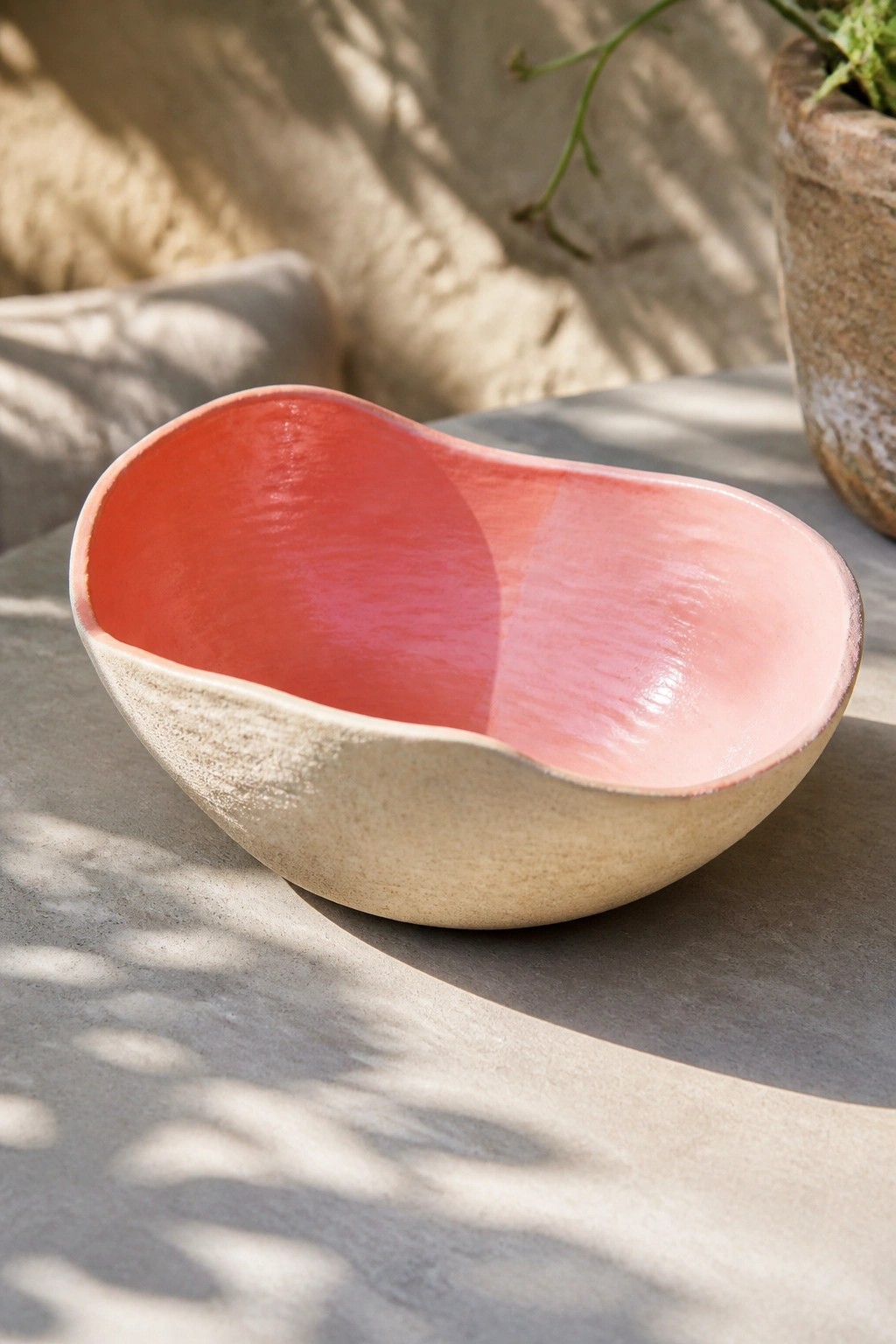
A freeform ceramic bowl with an uneven, slightly kidney-shaped rim gives a simple way to work with organic clay forms instead of perfect circles. The interior carries a glossy glaze that moves from a strong coral red on one side into a softer pink on the other, while the outside stays in a matte, lightly speckled clay surface. This combination keeps the piece clearly handmade and places it in the category of decorative or serving bowls that rely on shape and color contrast rather than added details.
What makes this idea useful is the way the wide, low profile works for holding fruit, small snacks, or just sitting as a tabletop accent. You can adapt the same form by changing the glaze fade to other color pairs or by stretching the shape into a longer tray version for jewelry or keys. The rough exterior also makes the bowl easy to place next to stone, linen, or wood without clashing, and the strong interior color helps it stand out in photos for project sharing.
Grapefruit Segment Ceramic Bowl

A small ceramic bowl uses its interior surface for a painted grapefruit pattern made of wedge-shaped segments in pink and coral tones separated by white lines. The yellow glaze covers the outside to reference the fruit rind while leaving the rim and base in the natural clay color. This design keeps the bowl shape simple and functional while turning the inside into the main visual element.
The small scale works well for holding butter, salt, or a few pieces of fruit on a kitchen counter or breakfast table. You can adapt the segment layout to other citrus varieties or swap the yellow exterior for a different color to match the fruit you choose. For gifts this kind of piece stands out because the painted motif is easy to recognize and the form stays practical for everyday use.
Speckled Terrazzo Ceramic Mixing Bowl

A large, wide ceramic bowl covered in a white base glaze with scattered flecks of blue, orange, brown, and green creates a terrazzo pattern across the entire surface. The shape suits kitchen tasks like tossing salads, chopping herbs, or mixing dough because of its open form and stable base. The random dot pattern gives the bowl visual texture while keeping the overall look simple and neutral enough to fit modern kitchens.
What makes this idea useful is that the speckled glaze works on bowls of different sizes so you can build a matching set over time. The pattern also covers small glaze inconsistencies, which makes it forgiving for home potters testing new recipes. In a kitchen this kind of bowl moves easily from prep to table without looking out of place. You could rework the same speckle technique onto plates or smaller prep bowls for a coordinated look that photographs well for sharing.
Scalloped Rim Bowl in Soft Green Glaze
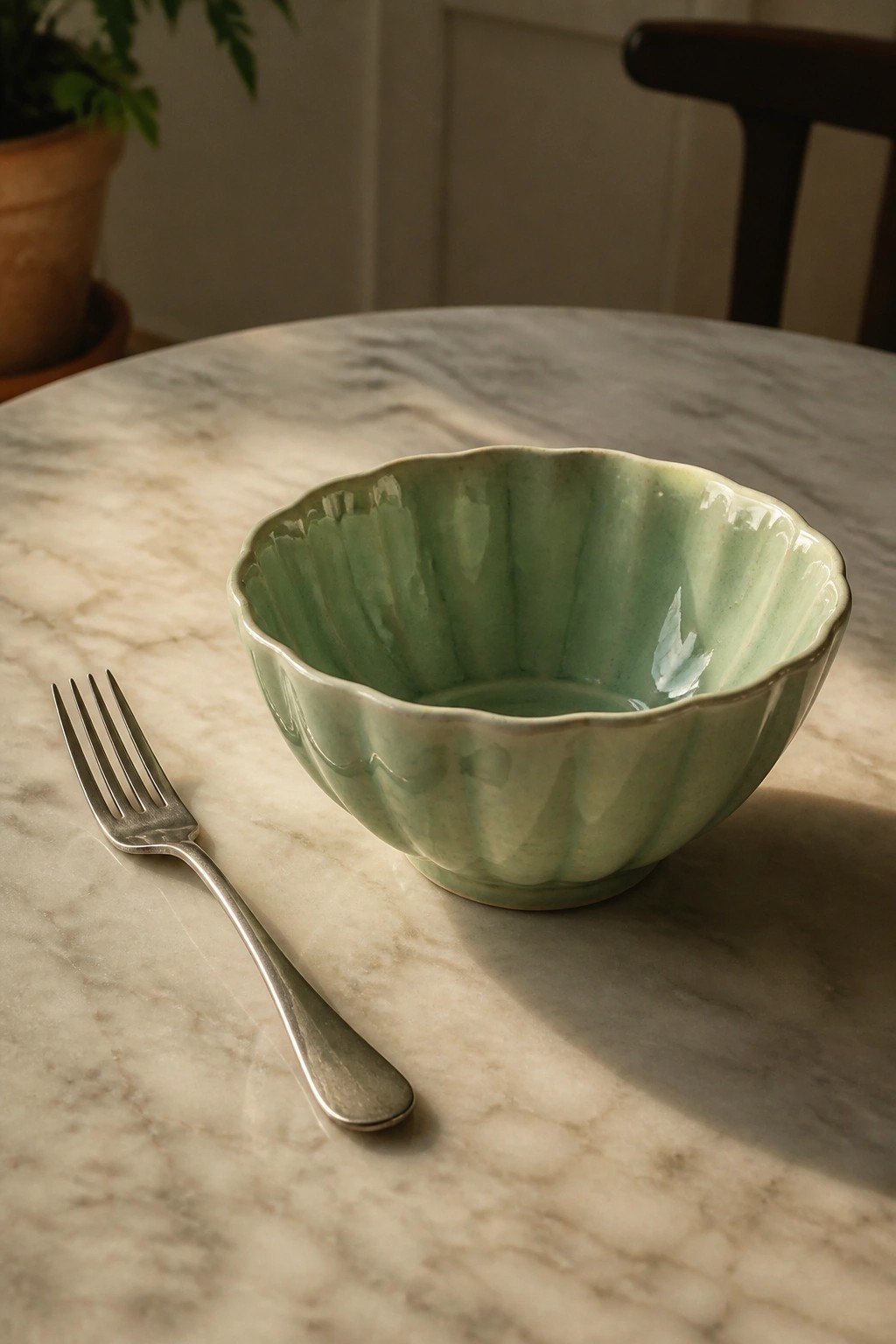
A fluted ceramic bowl with an uneven scalloped edge gives a table setting quiet texture through its shape alone. The light green glaze pools slightly in the ridges, creating soft variations that highlight the handmade form without added decoration. This type of bowl works well as a serving piece for sides or fruit because the rim detail keeps it interesting even when filled.
What makes this idea useful is how the lobed edge can be adapted to different sizes for a matching set of bowls or plates. The same rim treatment translates easily to a deeper soup bowl or a shallow dip dish while keeping the glaze color consistent. In a kitchen it sits nicely on open shelves or marble counters because the green tone pairs with both wood and stone. You could simplify the scalloping on a smaller version to make quick pinch bowls for spices or salt.
Hanging Bowl with Carved Leaf Details
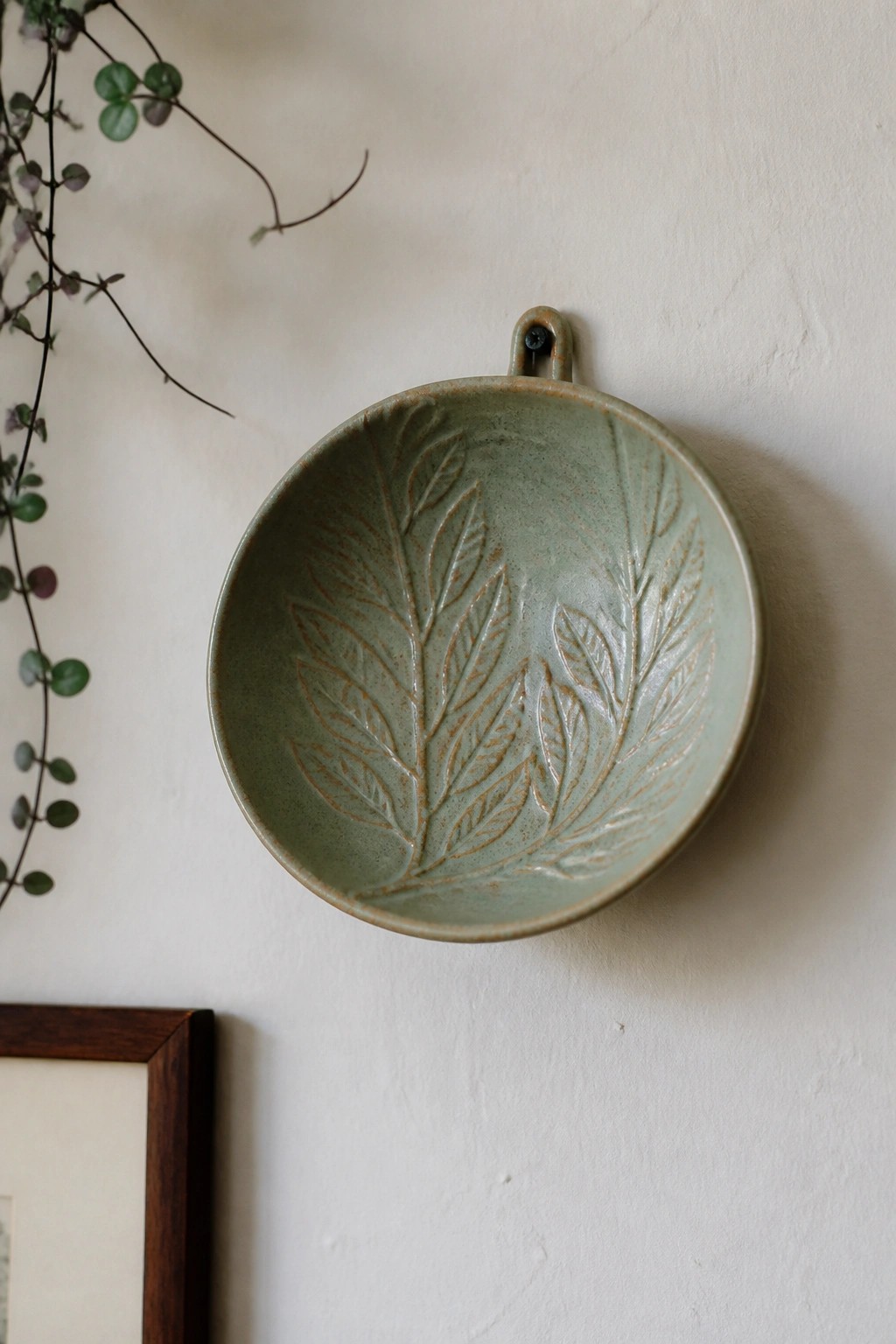
A wall-mounted ceramic bowl with a small loop at the rim works as a decorative piece rather than a functional container. The interior shows raised leaf patterns that stand out against the matte green glaze, with the brown clay showing through the carved lines for contrast. The leaves branch out from the center in an asymmetrical layout that keeps the round shape balanced. This turns a basic bowl form into wall art that hangs flat against the surface.
The hanging loop makes this easy to place in narrow spaces like hallways or above a desk where a regular bowl would not fit. The leaf motif could be swapped for other simple shapes such as waves or geometric lines if you want to match different room styles. Scaling the same carved technique to a smaller dish would work for holding rings or spare change. The green glaze with exposed clay details also photographs clearly for project shares.
Abstract Face Painted Ceramic Bowl

A handmade ceramic bowl decorated with two stylized faces painted in black line work and soft color blocks on the exterior. One face uses blue tones with a yellow accent while the other features pink cheeks against a neutral base, keeping the design simple yet graphic. This turns an everyday bowl into a functional piece that still shows off the hand-painted detail when placed on a table or shelf.
The painted motif works especially well on a medium-sized bowl because the curved surface lets the faces wrap naturally without distortion. You could adapt the same line-and-wash style to a set of smaller dip bowls or a larger serving dish for variety. In a kitchen this kind of piece doubles as both a practical container and a focal point, and the approach is easy to personalize by changing the expressions or color choices on future pieces.
Two-Tone Glazed Mixing Bowl

A large ceramic bowl with a speckled matte beige exterior and a glossy green interior works well as a kitchen mixing bowl. The wide, open shape gives plenty of room for dough, salads, or batters, while the beaded rim detail gives the edge a finished handmade look. Keeping the outside unglazed or lightly textured and the inside fully glazed creates a practical contrast that resists sticking and makes cleanup easier.
What makes this idea useful is how the deep form handles real kitchen tasks without feeling too precious. You could repeat the same two-tone approach on a set of smaller nesting bowls or swap the green for a different interior color to match your dishes. In a kitchen, this kind of piece sits comfortably on the counter for daily use and still photographs cleanly for recipe posts or Pinterest boards.
Two-Part Ceramic Dish for Kitchen Seasonings
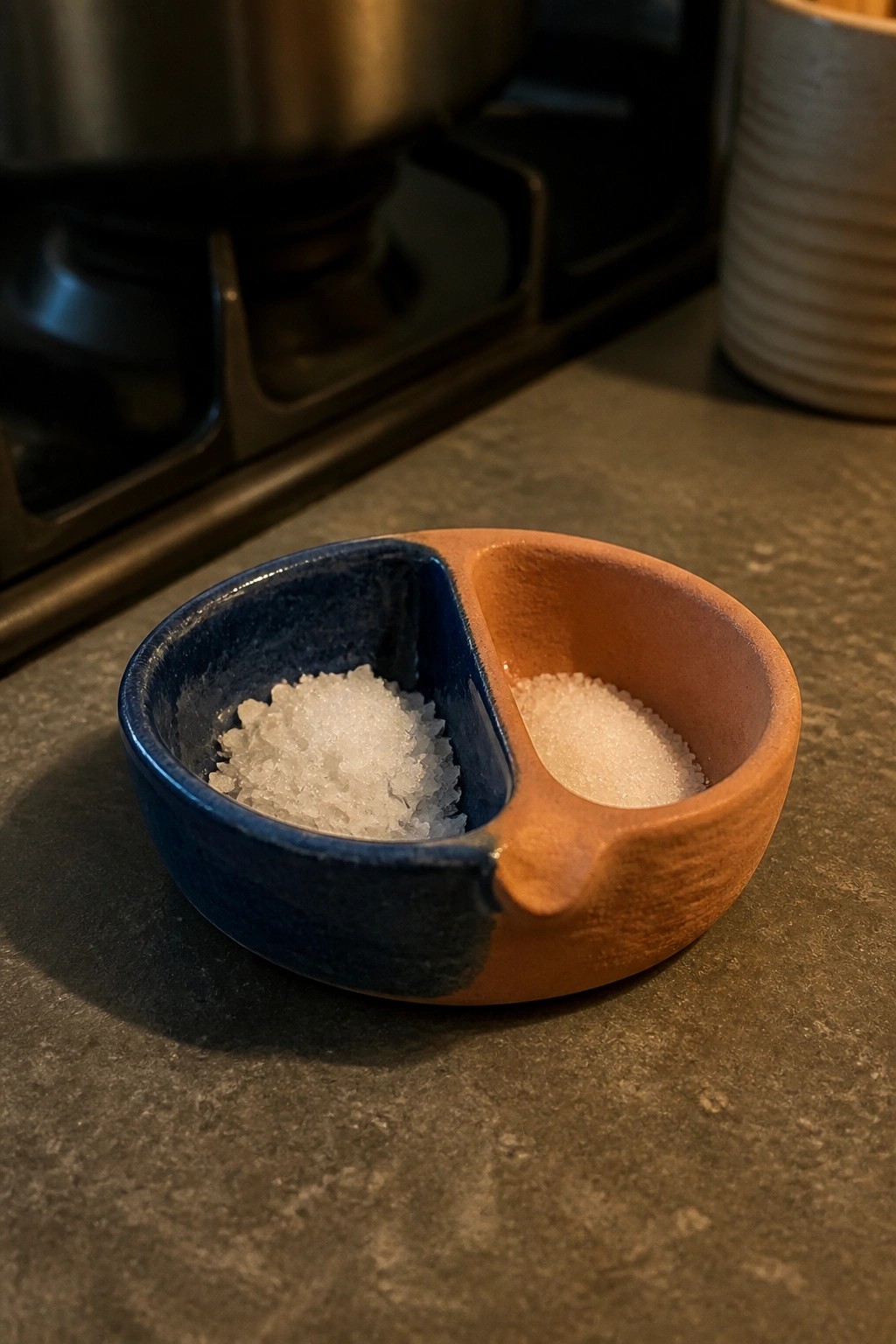
A divided ceramic bowl with one glossy blue section and one matte terracotta section keeps two seasonings separate in a single compact form. The center partition runs straight across so each side stays independent while the overall oval shape stays easy to handle. This project belongs in the kitchen item category and works well as a salt and sugar cellar or dual spice holder. The color split gives visual interest through glaze contrast alone rather than added patterns.
What makes this idea useful is the small scale that fits on a countertop without crowding other tools. You can adapt the same split layout by changing the glaze colors or adding a small spout on one side for controlled pouring. In a kitchen this kind of piece keeps coarse salt and finer sugar ready at once without mixing. For a gift, something like this can be reworked with neutral tones to match different kitchen styles.
Two Tone Glazed Bowl as a Succulent Planter

A wide, shallow ceramic bowl with a matte black exterior and glossy yellow interior works as a small planter for a compact succulent. The interior color creates a strong backdrop for the plant while the dark exterior keeps the form grounded. A thin layer of pebbles at the base supports the roots and helps with moisture control. This turns a basic bowl shape into a functional display piece that needs no extra decoration.
What makes this idea useful is the low profile, which fits easily on a windowsill or shelf without taking much space. You could rework the same two-tone glazing on a narrower bowl for a different plant or make several in matching colors for a grouped display. The contrast helps the piece stand out in photos, which is useful if you want to share the project online. For a quick variation, keep the black outside and swap the yellow for another bright interior color that matches your space.
Wavy Rim Bowl with Perched Bird Detail
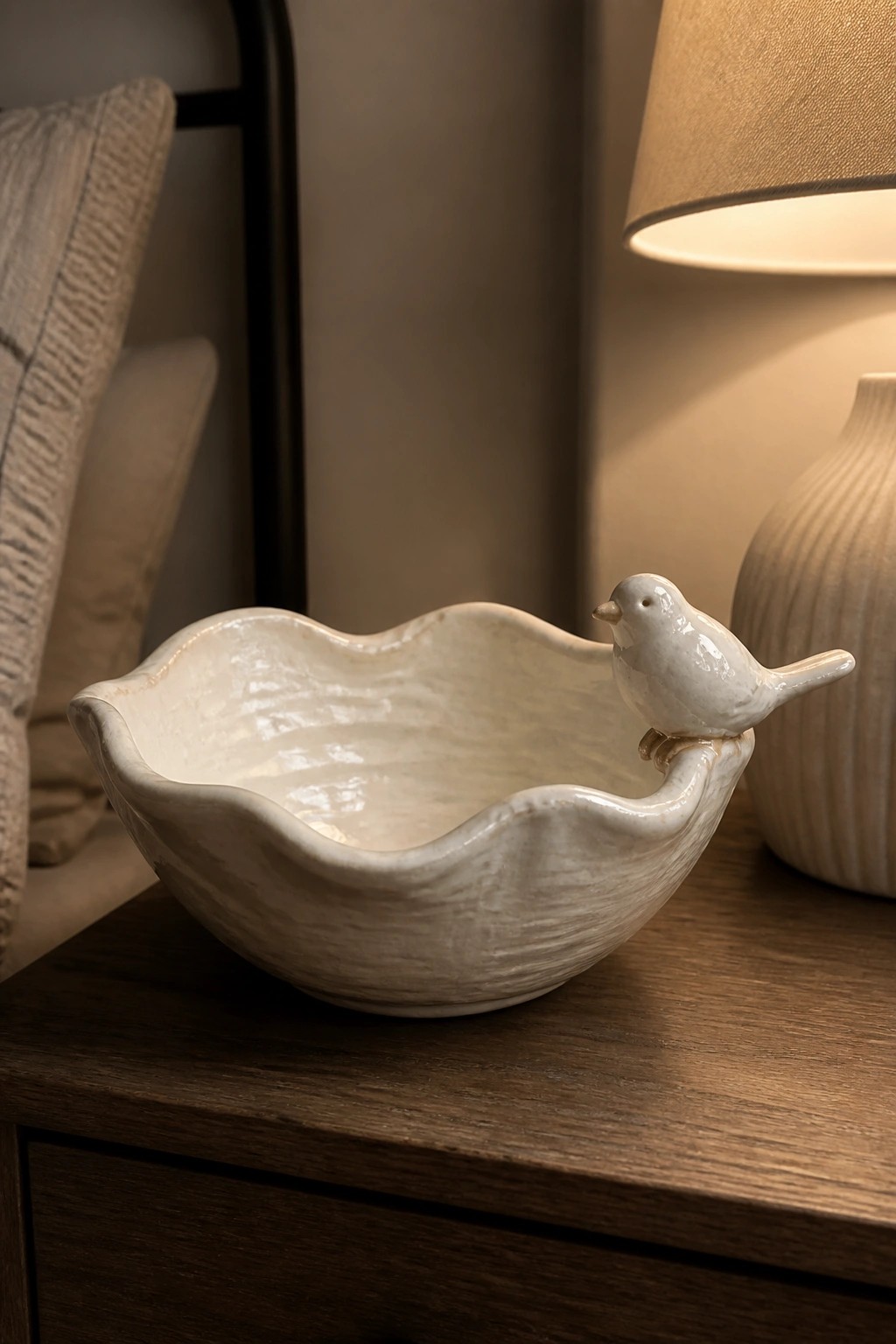
A ceramic bowl formed with a freehand wavy rim and a small sculpted bird attached directly to the edge. The bird sits on the lip as a fixed element rather than a separate piece, keeping the whole object as one cohesive form. The soft white glaze settles unevenly across the surface to show the clay texture beneath. This approach works as a decorative bowl idea that adds a single sculptural accent without needing extra painting or carving after the main shape is made.
What makes this idea useful is how the bird turns an ordinary bowl into a recognizable focal point for a nightstand or entry table. You can adapt the same rim style for a shallower tray or a deeper catch-all by changing the depth while keeping the bird size consistent. The small scale of the detail makes it easy to try in a single firing if you attach the bird before drying. For a variation, mold the bird from the same clay body so the glaze reacts the same way across both parts.
Speckled Ceramic Bowl as a Key Catch-All

A shallow ceramic bowl with an off-white speckled glaze and scattered rust dots and dashes works as a simple catch-all for keys, rings, and small daily items. The low, wide form keeps contents visible and easy to reach, while the matte, textured surface adds subtle variation without busy detail. This style fits the practical decor bowl category that combines storage with a handmade look.
What makes this idea useful is the compact size that fits on a console, dresser, or entry table without crowding the surface. You can adapt the dot and dash pattern to match your wall color or simplify it to just a few lines for quicker making. In a bathroom or bedroom it handles jewelry and small accessories just as well as keys. The same shape also works as a small plant saucer or a holder for loose change in a kitchen drawer.
Wavy Rim Ceramic Bowl with Reactive Glaze
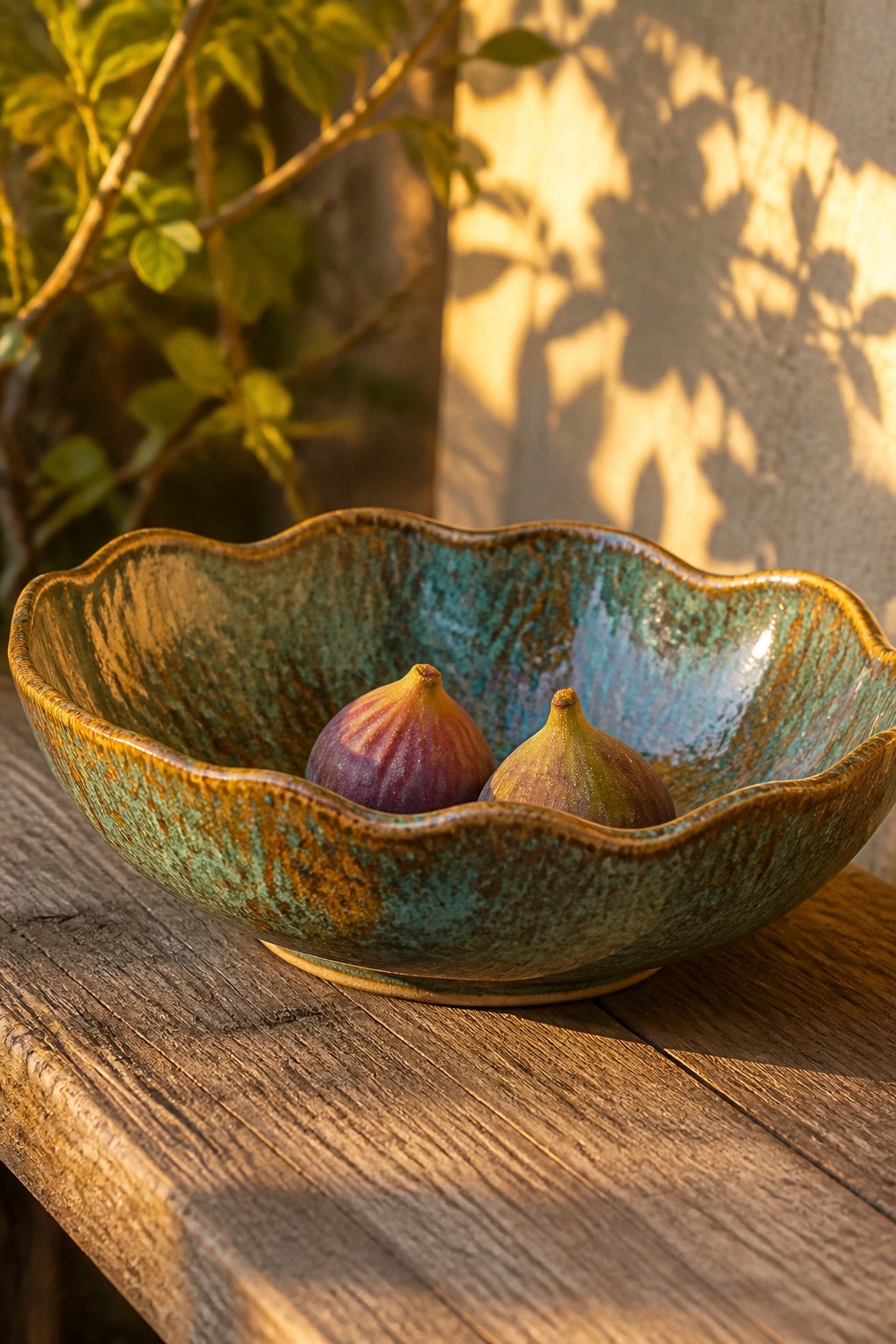
A wheel-thrown or handbuilt bowl with an irregular wavy rim gives the form movement while keeping the profile simple. The mottled glaze layers in teal, brown, and gold create visual interest through color shifts and texture rather than added patterns or carvings. This approach fits into the category of tabletop bowls meant for fruit, small produce, or everyday serving.
The shape does a lot of the work here because the undulating edge draws attention even on a plain surface. A bowl like this works especially well as a fruit holder on a kitchen counter or dining table where the scale stays compact. You could adapt the rim by using a rib tool or your fingers to create softer waves, then layer similar glazes to test how they break over the curves. For a gift, something like this stands out because the form feels intentional without needing extra details.
Frequently Asked Questions
What materials work best for creating durable yet stylish pottery bowls that blend artisan techniques with modern design?
Many creators prefer stoneware or porcelain clays because they offer strength while allowing for smooth, contemporary finishes. These materials hold up well to daily use when fired at high temperatures, and glazes in matte neutrals or subtle metallics enhance the modern aesthetic without sacrificing the handmade charm.
How should I maintain my artisan pottery bowls to preserve both their functionality and visual appeal over time?
Gentle hand washing with warm water and mild detergent helps protect the glaze from wear. Avoid soaking them for long periods or using abrasive scrubbers, and store them with soft padding between pieces to prevent scratches. This approach keeps the bowls looking fresh whether they sit on a shelf or serve meals regularly.
Where can I source similar aesthetic pottery bowls if I want to add them to my home without making them myself?
Online platforms like Etsy and specialized craft sites connect you directly with independent potters who offer custom options. Local artisan markets and galleries also provide opportunities to view pieces in person, ensuring you find bowls that match your modern interior while supporting skilled makers.
What makes these pottery bowl ideas suitable for both everyday use and decorative displays in contemporary spaces?
The designs often incorporate versatile shapes like low profiles or asymmetrical forms that fit seamlessly on dining tables or as centerpieces. Their neutral tones and textured surfaces add depth to minimalist rooms, allowing them to transition easily from functional serving pieces to sculptural accents.
How do artisan crafted bowls differ from mass produced versions in terms of quality and style?
Artisan pieces feature unique variations in form and glaze that mass produced items cannot replicate, resulting in one of a kind details that elevate any setting. They typically use higher quality clays and firing methods for better longevity, making them a worthwhile investment for those seeking authentic character alongside modern simplicity.

Pottery Path is my cozy corner of the internet where I share clay ideas, pottery inspiration, and simple projects you can recreate at home. I love exploring everything from air dry clay to handbuilt pottery to cute minis that brighten your day. My goal is to make clay crafting feel easy, fun, and welcoming for anyone who wants to try it.
You will find beginner friendly tutorials, creative pottery painting ideas, and lots of warm inspiration for slow and happy crafting. If you enjoy hands on creativity, this space will feel like home.