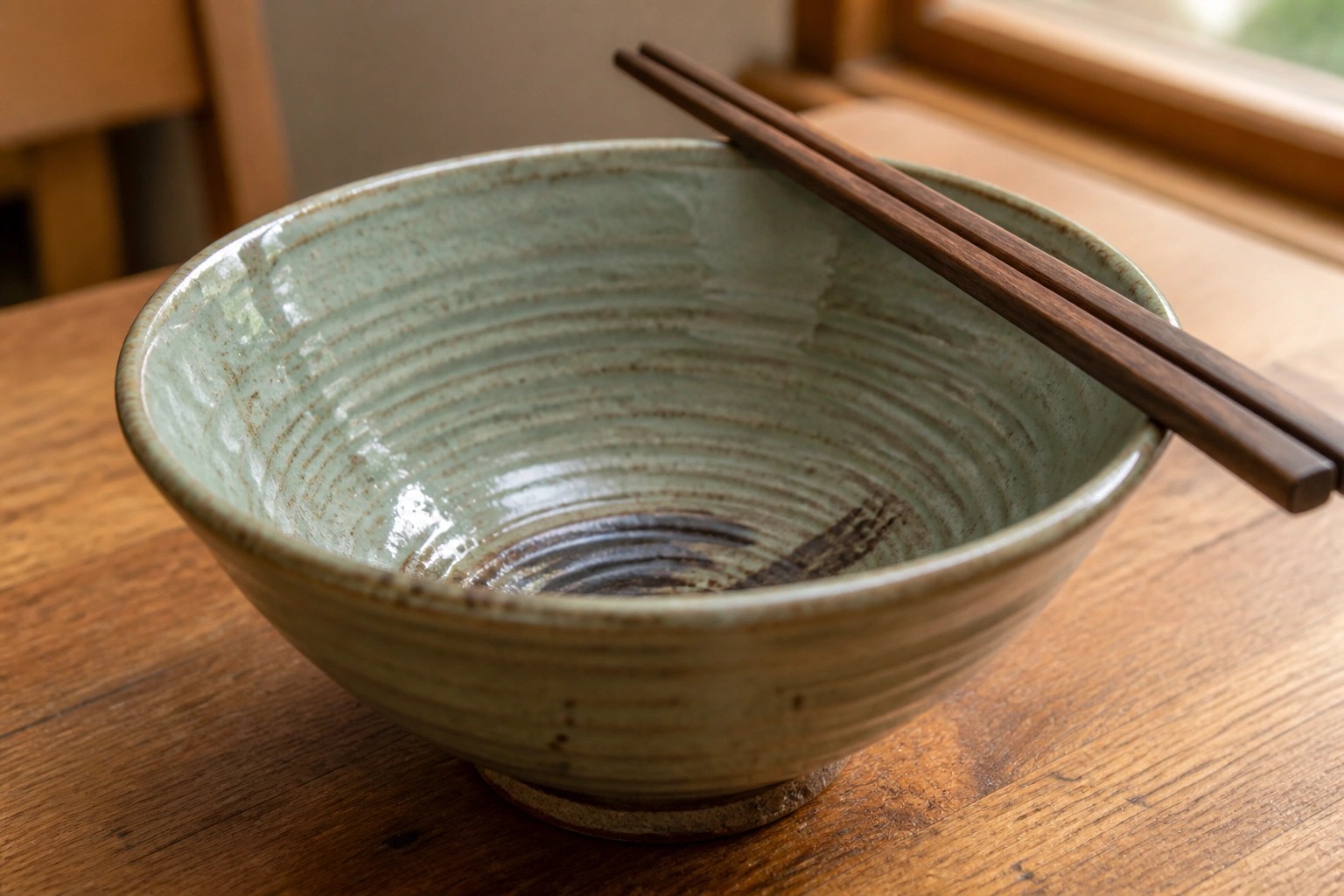
I have spent a lot of time at my wheel and work table trying out different bowl shapes.
Some came out better on the wheel while others worked well when I built them up by hand.
Over the past year I collected the ones that felt practical and not too fussy.
Here are 20 ideas that might give you something new to try with your own clay.
A few are quick and others take a little more patience but all of them are doable at home.
Speckled Glaze Bowl for Serving Noodle Soups
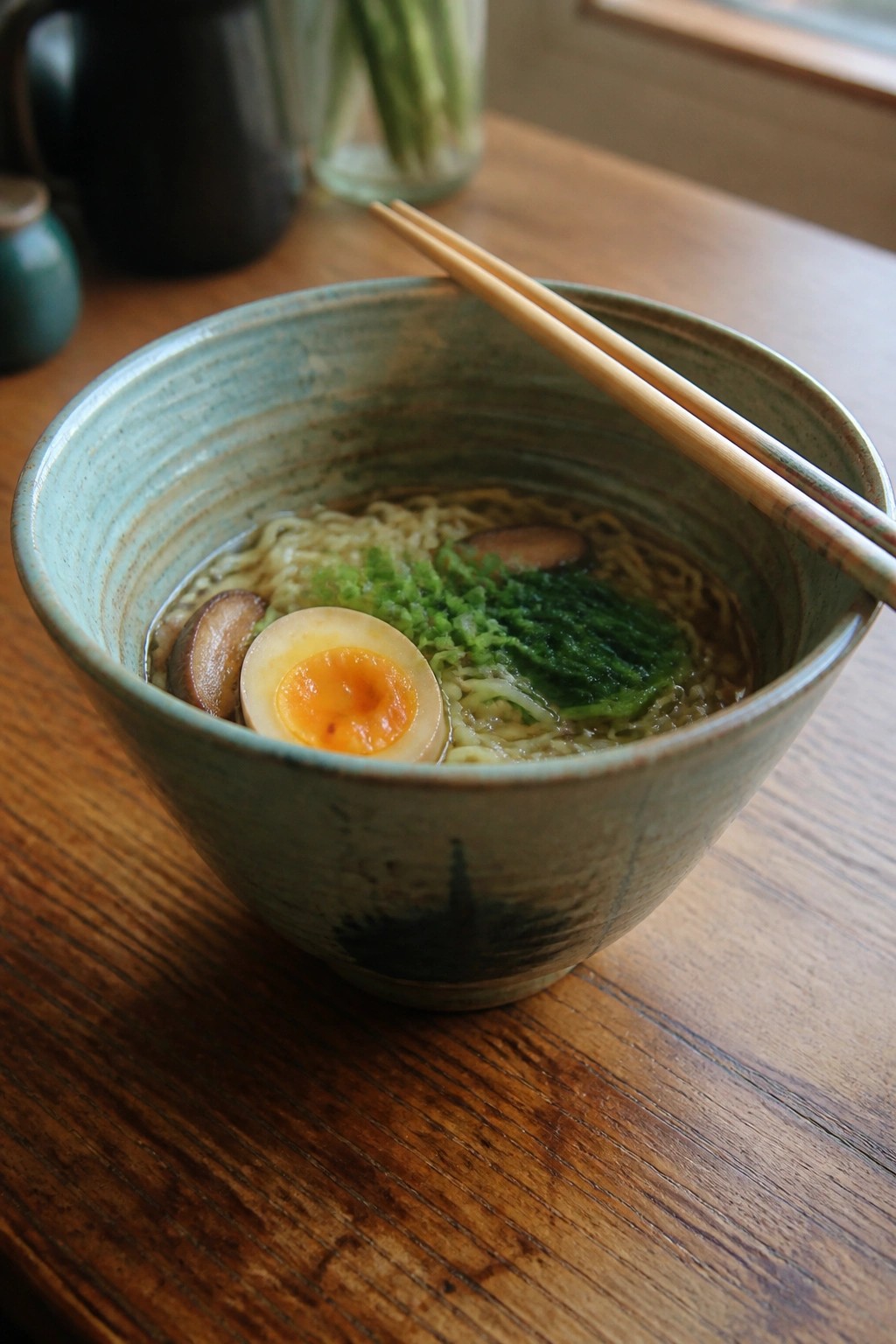
A wheel-thrown bowl with a wide mouth and slightly uneven rim makes a practical choice for serving ramen or similar noodle dishes. The glaze mixes muted blue-green tones with dark speckling that creates subtle variation across the surface without competing with the food. This approach keeps the bowl firmly in the functional kitchen category while still showing clear handmade qualities through the form and finish.
What makes this idea useful is the generous depth and stable base that handle hot broth well without tipping. You could rework the same shape in a single matte color for simpler meals or make a smaller version for rice bowls. In a kitchen this style stands out because it moves easily from everyday use to casual entertaining without needing special care.
Flower Petal Trinket Bowl
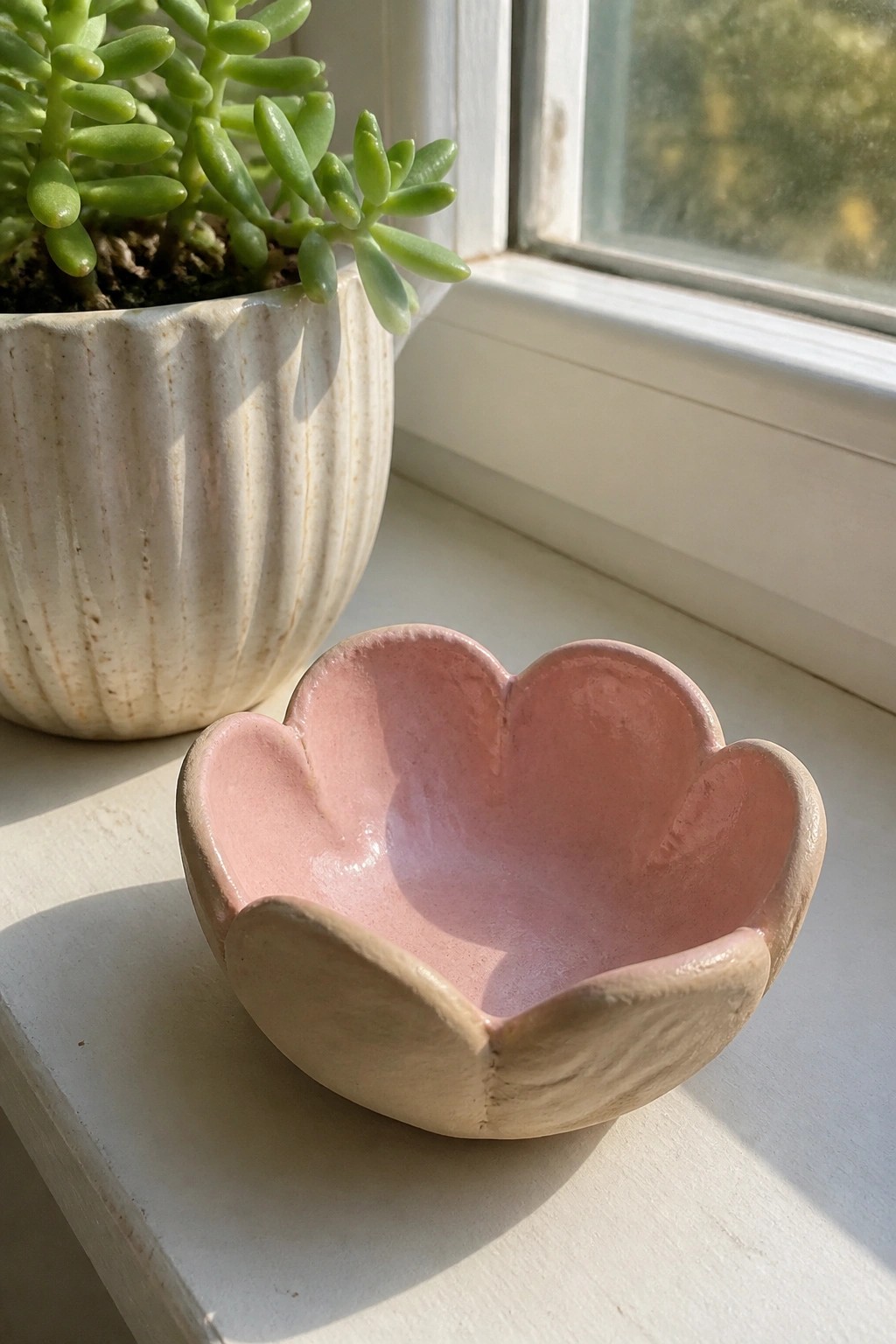
A small handbuilt bowl with scalloped edges shaped like flower petals makes a practical catch-all for rings, earrings, or loose change. The inside is coated in a soft pink glaze that highlights the open form, while the outside remains the natural clay color for a simple contrast. The low, wide shape and pinched petal details give it clear visual interest without needing complex tools or attachments.
What makes this idea useful is how the petal edges turn a basic form into something that stands out on a dresser or nightstand. You could adapt the same pinching method to create matching dishes in different sizes or swap the glaze color to match a room. For a gift, this kind of small bowl works well because it stays functional while looking distinct in photos.
Footed Bowl with Rim Notch for Pouring
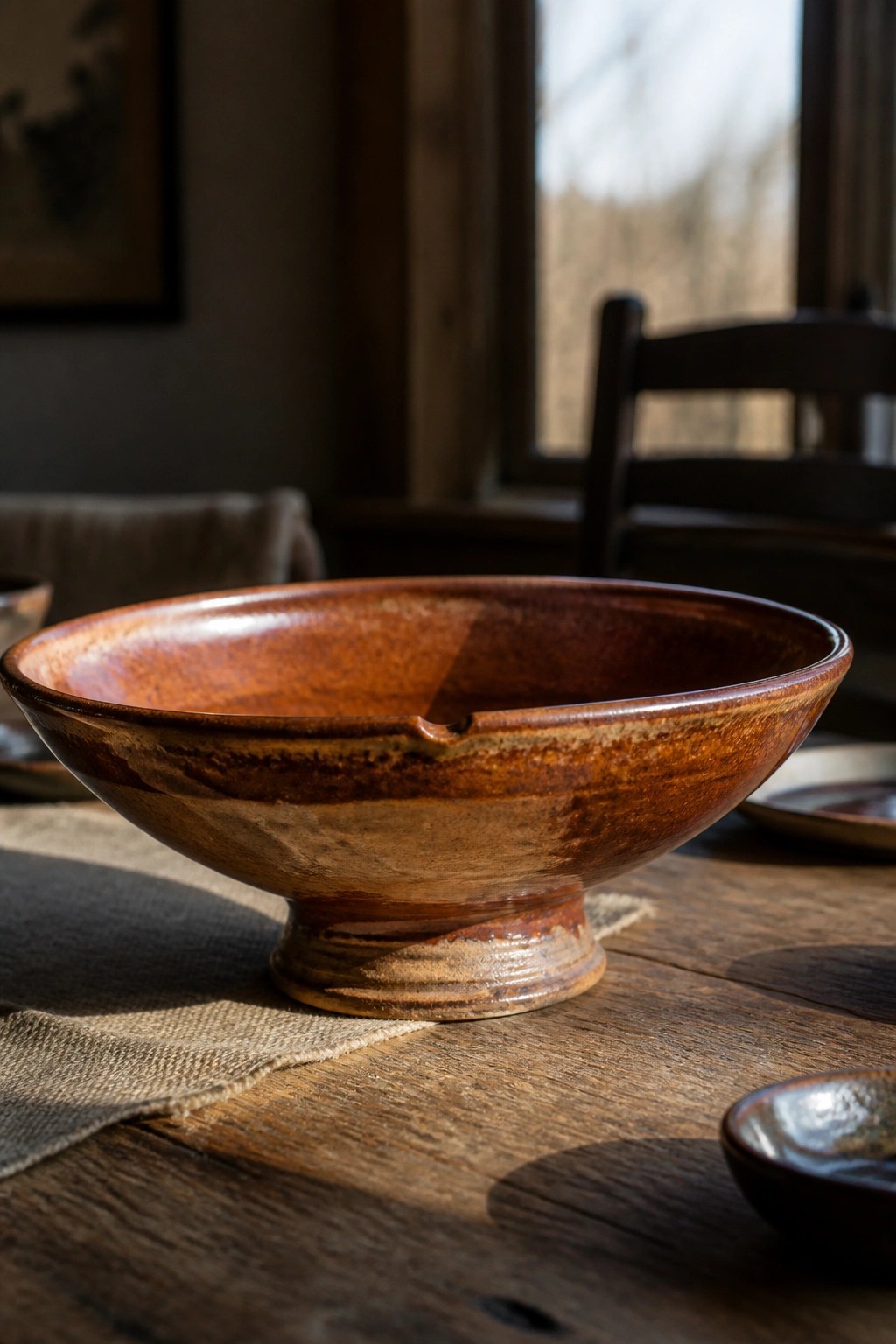
A wheel-thrown bowl with a low foot and a small notch cut into the rim serves as a practical serving piece for soups, sauces, or dressings. The layered brown and rust glazes give the surface depth while keeping the focus on the wide, open shape. This approach fits the kitchen item category and turns a basic bowl form into something slightly more useful at the table.
What makes this idea useful is the notch, which adds function without changing the overall form much. You could adapt the same rim detail on smaller bowls for individual portions or skip the foot if you want a simpler profile to throw. In a kitchen this shape works for both daily use and casual meals because the wide opening makes serving easy. For a Pinterest pin, the earthy glaze variation on a clean wheel-thrown form tends to photograph well and feels straightforward to replicate with basic studio glazes.
Nested Ceramic Bowls in Soft Glazes
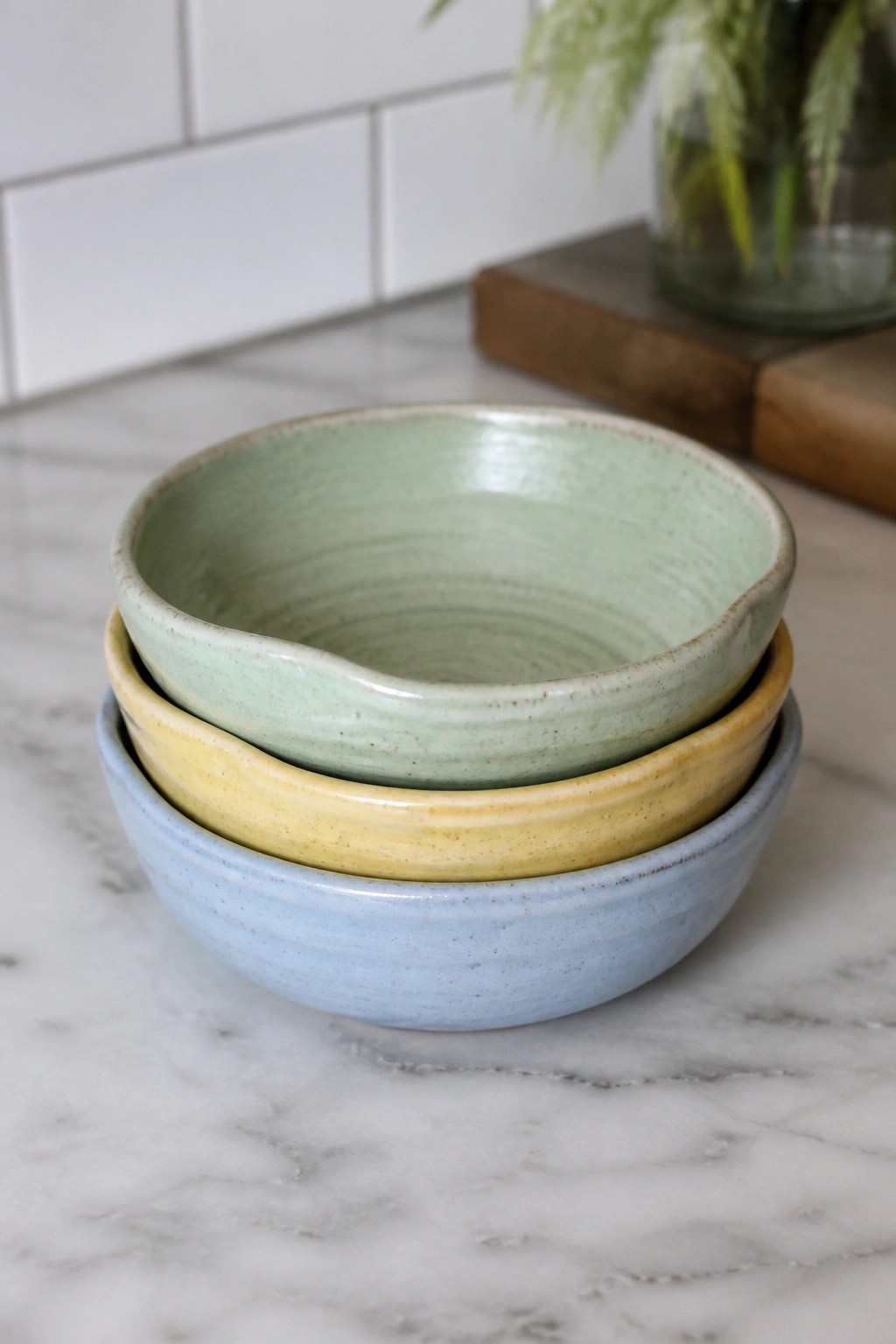
These are three wheel-thrown bowls made to stack neatly inside each other. Each bowl shares the same wide, shallow shape with a slightly uneven rim, but they differ through their individual glazes in pale blue, yellow, and green. The speckled matte finish on each one gives the set a simple, unified look while still letting the colors stand apart. This approach fits the category of everyday kitchen bowls that double as serving pieces.
What makes this idea useful is how the matching shapes solve storage while the separate colors let you mix them into daily use. You could adapt it by changing the glaze colors to fit your kitchen or by making the bowls in graduated sizes for a full set. In a kitchen, this kind of piece works well for salads, snacks, or side dishes without taking up much space when not in use. For a gift, something like this is easy to personalize with just a few extra bowls in the same style.
Handled Bowl with Dotted Rim
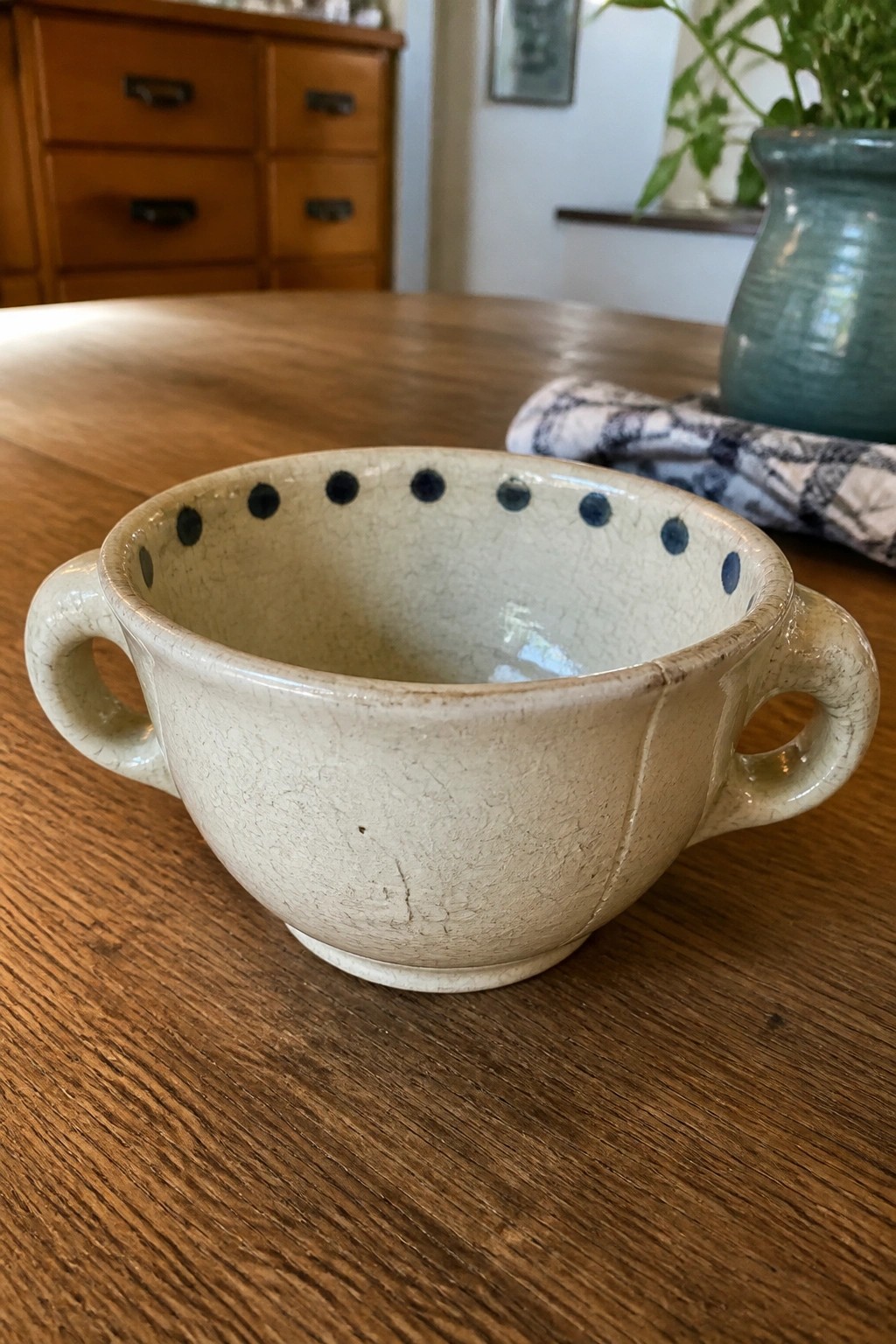
A small ceramic bowl with two loop handles works well for individual portions like soup or cereal. The off-white crackle glaze provides a neutral base while the row of blue dots along the inner rim adds a simple repeated pattern that draws the eye without overpowering the form. This combination keeps the focus on the shape and the contrast between the matte surface and the painted accents. The idea fits the category of a kitchen serving bowl that can be made on the wheel or with slabs.
What makes this idea useful is how easily the dotted rim can be adapted to other colors or repeated across a matching set of dishes. The handles make the bowl easy to carry from stove to table, and the same shape could be scaled down for side dishes or up for larger shared servings. In a kitchen, this kind of piece stands out on open shelving because the painted detail reads clearly from a distance. The pattern can also be simplified to fewer dots or swapped for stripes if you want a faster decoration step.
Ombre Blue Bowl with Hand-Painted Daisies
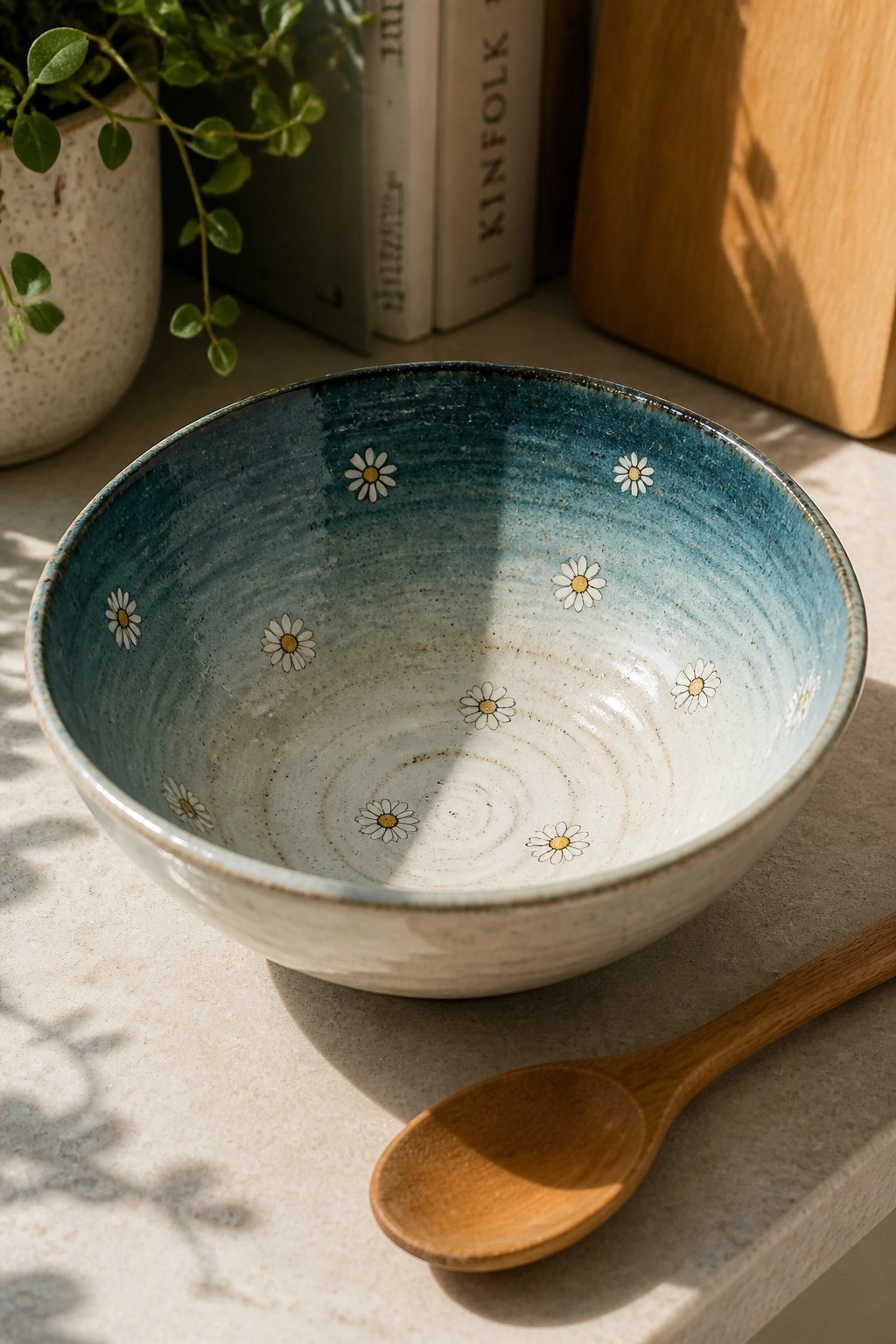
A wheel-thrown ceramic bowl finished with a blue-to-white gradient glaze gives a smooth shift from deep teal at the rim down to a lighter base. Small daisy shapes painted in white with yellow centers are spaced across the interior surface in an irregular pattern. This style fits a medium kitchen bowl meant for serving or mixing, where the glaze movement and repeated motifs add interest without extra texture or carving.
The shape does a lot of the work here since the wide, open form shows off the glaze and painted details during everyday use. You could adapt the same idea by reducing the number of daisies or moving them closer to the rim if you prefer a simpler look. In a kitchen this kind of piece works well for salads or sides and pairs easily with wooden tools. The painted detail helps it stand out from solid-color bowls while remaining straightforward to repeat on future pieces.
Wheel-Thrown Bowl with Horizontal Ridges and Contrasting Glaze

A wheel-thrown bowl gains clear definition from evenly spaced horizontal ridges pressed into the exterior while the clay is still soft. The brown surface on the ridges sets up a strong contrast against the bright turquoise glaze that covers the entire interior. This combination keeps the form simple yet gives the bowl enough surface detail to work as both a functional piece and a display item.
What makes this idea useful is how the ridges create texture with just a basic tool or even a finger during throwing. The same shape adapts easily to different sizes for cereal, salad, or small side dishes. In a kitchen the dark exterior hides everyday wear while the interior color stays visible during use. You could rework the ridging pattern on a taller form to make matching cups or a small planter without changing the core technique.
Cat Ear Bowl with Painted Face
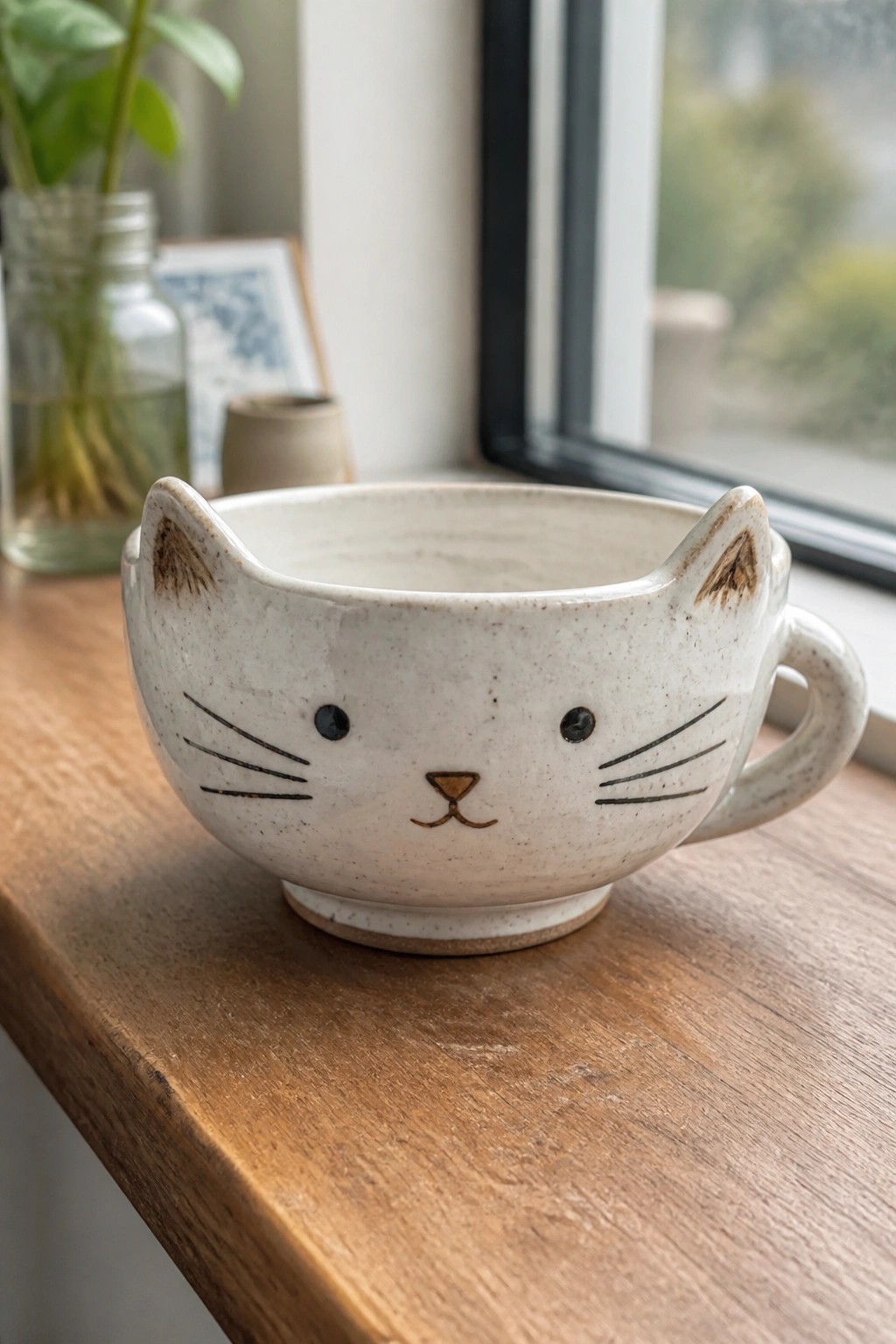
A simple bowl gains a clear cat theme when two ears are added or pinched along the rim and a face is painted on the front. Black lines form whiskers, small dots stand in for eyes, and a triangle marks the nose, all applied over a light speckled glaze. The added handle makes the form function as both bowl and mug without changing the overall shape.
What makes this idea useful is that the ear placement and face layout transfer easily to bowls or mugs in other sizes. You can change the animal by adjusting ear angle and nose shape while keeping the same glaze and line work. In a kitchen this piece holds cereal or snacks and still stacks or stores normally, and the painted details help it show up quickly in photos when you want a quick variation for gifts or everyday use.
Deep Blue Mixing Bowl for Kitchen Prep
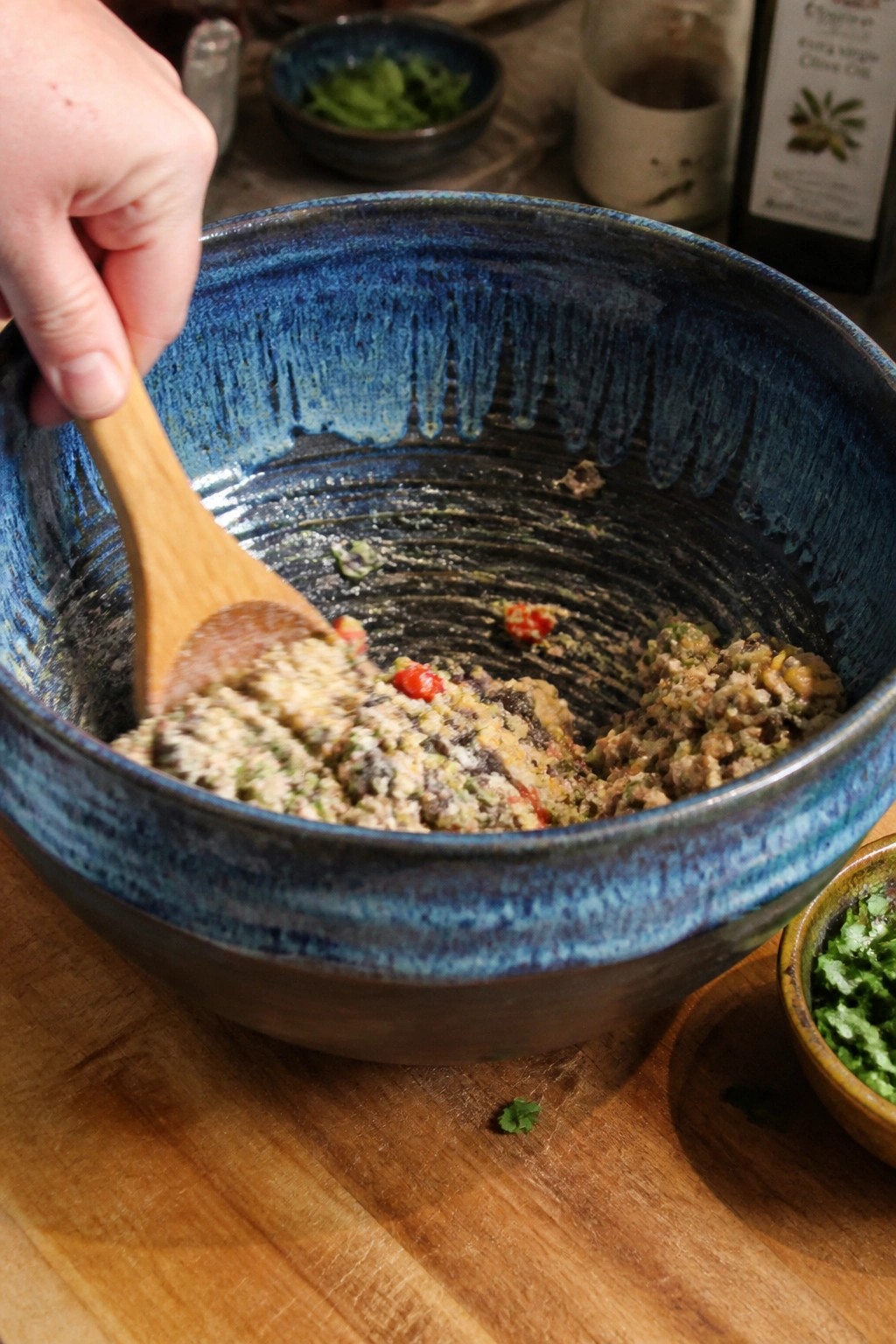
A large wheel-thrown bowl finished in a deep blue glaze with a drippy rim texture works well as a mixing bowl for chopping and combining ingredients. The wide opening and sturdy walls keep mixtures like ground meat or chopped vegetables contained during stirring. The glaze covers both the interior and exterior, making the bowl easy to clean after use.
What makes this idea useful is the generous size that handles bigger batches without crowding. You could repeat the same glaze on a set of smaller bowls for serving or switch the color to fit other kitchen styles. In a kitchen, this kind of piece keeps everything in one spot during meal prep and can double as a serving dish once the food is ready.
Carved Leaf Vine Bowl
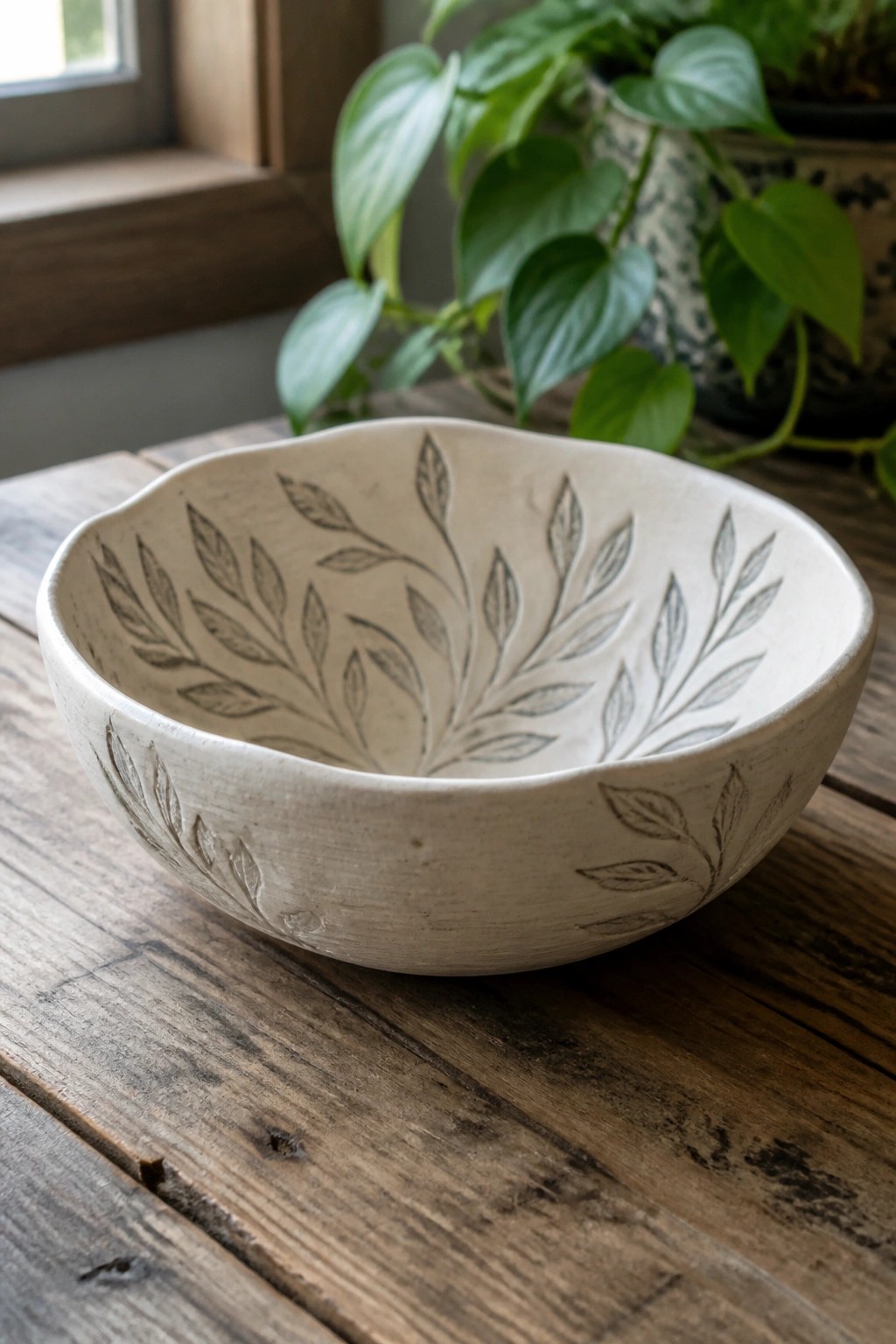
A medium bowl with a repeating vine and leaf motif carved directly into the clay on both the interior and the outer rim. The pattern uses simple leaf shapes connected by thin stems that curve naturally around the form. This style of surface carving turns a basic bowl into a more detailed piece while keeping the overall shape simple and functional.
The carved detail makes the bowl easy to adapt for different uses such as a fruit bowl on a kitchen counter or a decorative catchall on a side table. You could repeat the same leaf motif on plates or a matching pitcher to create a small set. The pattern also works well if scaled down for smaller dishes or changed to different leaf shapes to match the season or your own drawings.
Incised Exterior Bowl with Crackle Glaze

A shallow ceramic bowl with a dark clay body and carved vertical lines plus simple geometric shapes around the outside makes a strong serving piece. The light crackle glaze on the interior creates contrast against the textured rim and exterior without adding color. This approach keeps the form simple while letting the surface carving carry the design, fitting easily into a wheel-thrown bowl project.
What makes this idea useful is how the carved lines highlight the bowl’s curve while leaving the inside smooth for food use. You could repeat the same incisions on a taller salad bowl or shrink the pattern for small condiment dishes. In a kitchen setting the dark exterior helps the piece stand out against lighter tableware, and the motif is straightforward to adjust by changing line spacing or depth.
Citrus Segment Bowl
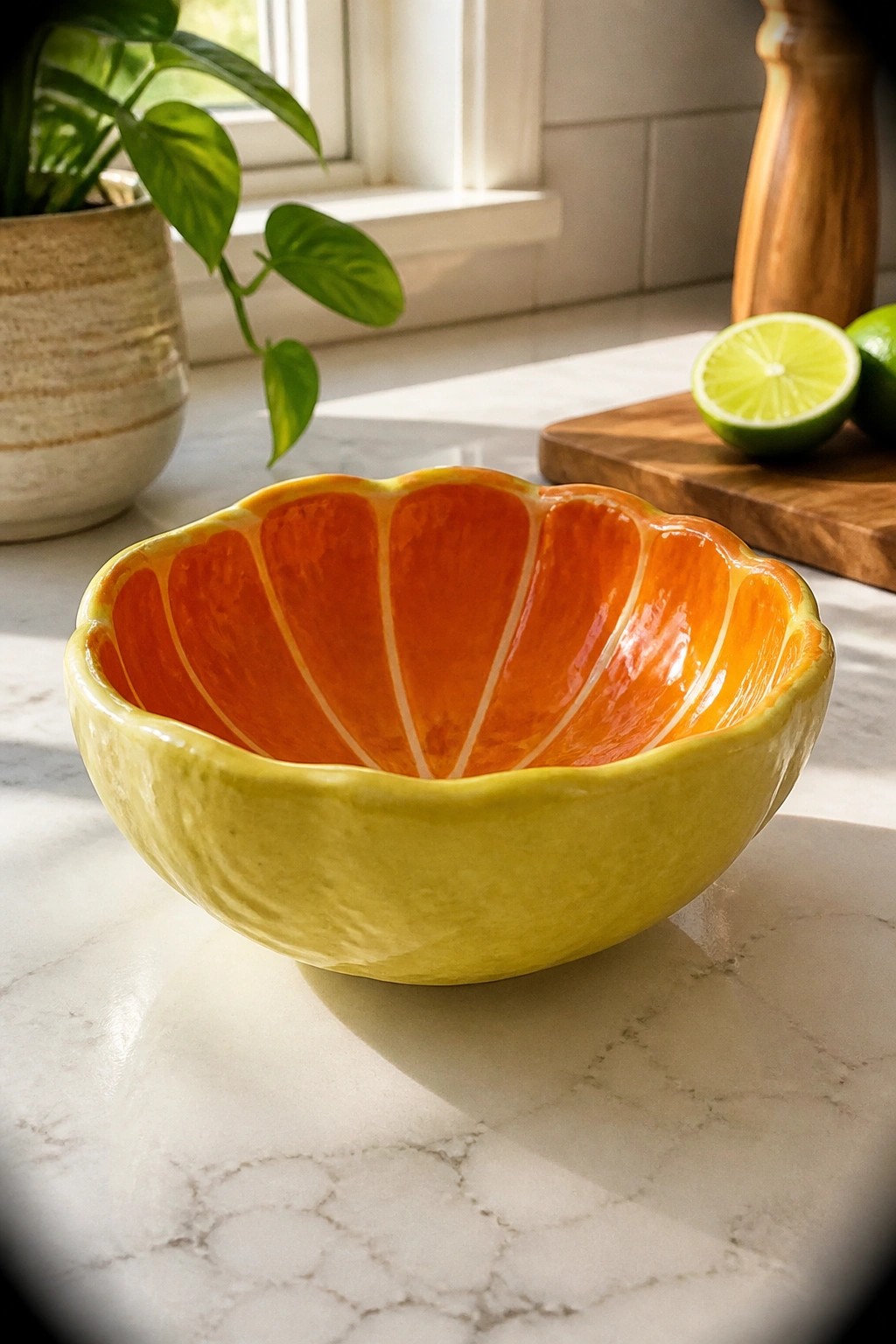
A handbuilt or wheel-thrown bowl can be formed with a scalloped rim and finished in a bright yellow glaze on the outside and a vivid orange glaze inside. White lines added to the interior divide the surface into segments that echo the look of a cut citrus fruit. This approach turns a standard bowl into a kitchen piece that references fruit without needing extra sculpting.
The shape does a lot of the work here by making the fruit reference clear at a glance. In a kitchen this kind of piece works well as a serving bowl for snacks or as a countertop holder for actual citrus. You could adapt the same two-tone glazing and segment lines on smaller bowls or switch the colors to make a lemon version instead. The motif also photographs clearly, which helps it perform well on Pinterest boards about food-themed ceramics.
Speckled Blue Pour Bowl for Sauces and Oils
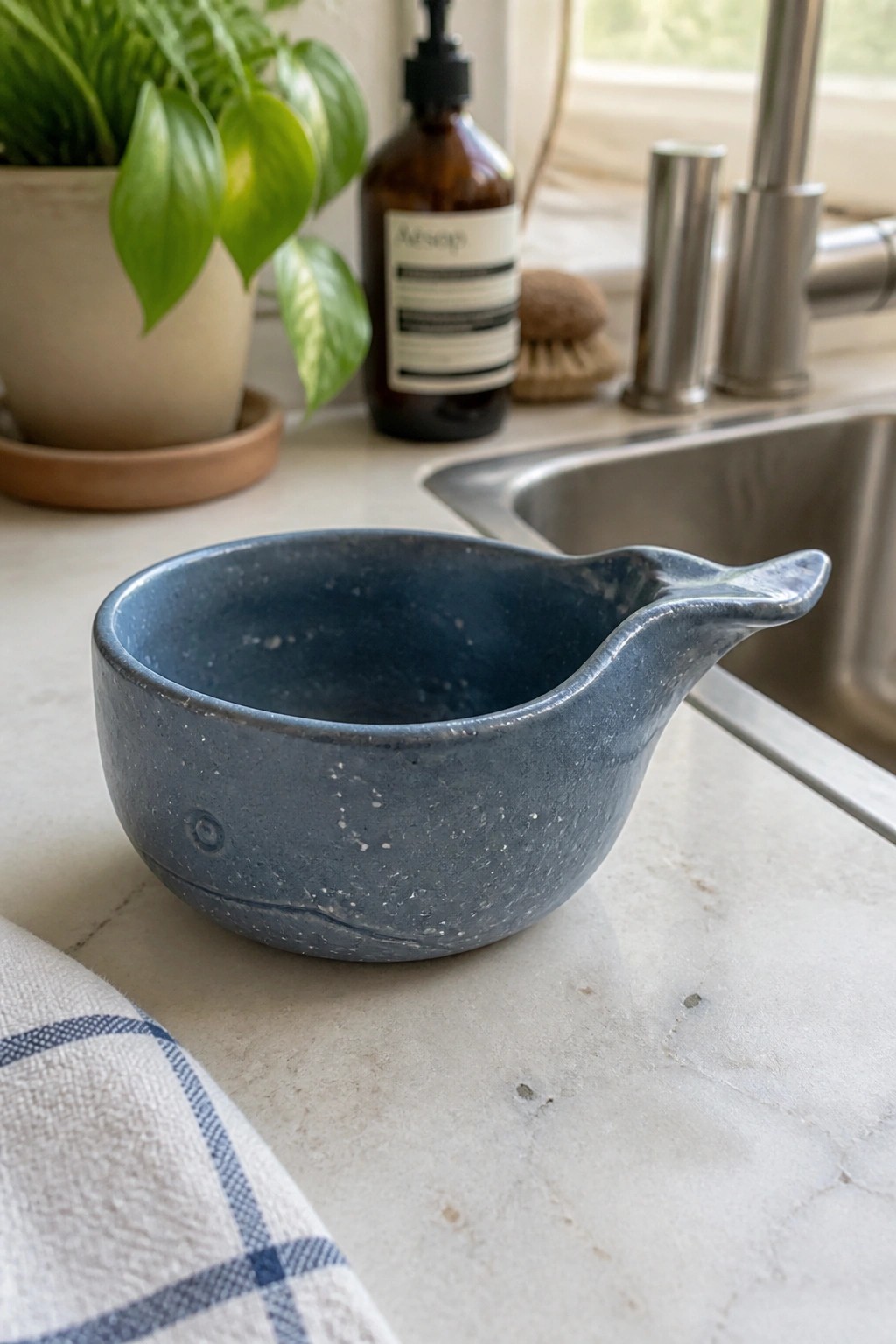
A small ceramic pouring bowl gives you a simple way to serve sauces, oils, or dressings straight from the stove or table. The rounded form with an extended lip creates a functional spout that directs liquid cleanly without needing a separate pitcher. The speckled matte glaze in a deep blue tone keeps the surface easy to clean while adding visual interest through its subtle texture. This type of kitchen piece works as a compact alternative to larger serving ware.
What makes this idea useful is how the spout detail turns a basic bowl shape into something more practical for daily use. You could scale the same form up slightly for syrup or gravy, or simplify it to a plain rim if you want a quicker build. The small size fits neatly beside the stove or on a dining table without taking much space. In a kitchen setting, this kind of piece stands out on Pinterest when shown holding actual food items rather than just sitting empty.
Wheel-Thrown Bowl with Scalloped Rim
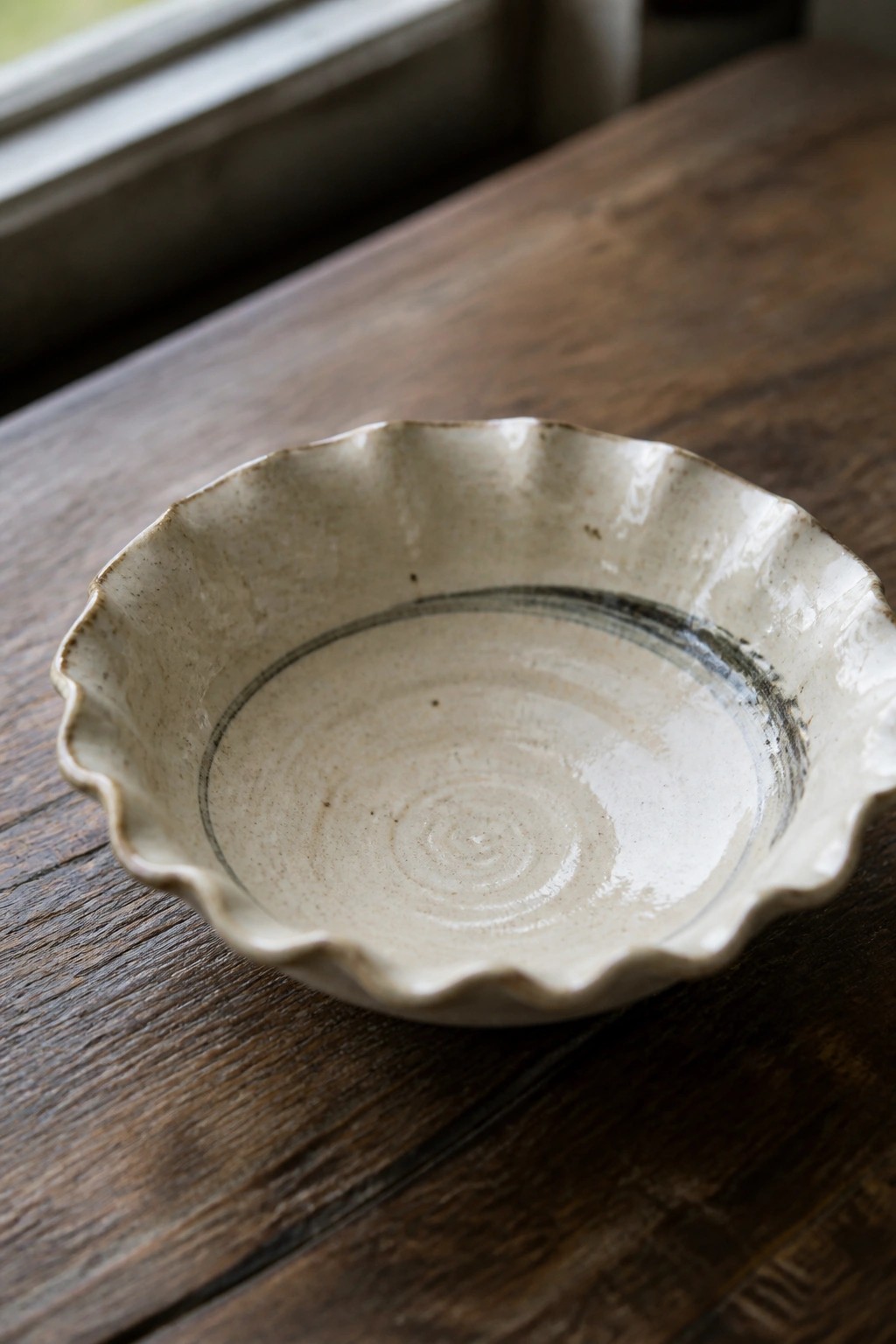
A small wheel-thrown bowl takes on a distinct look from its hand-shaped scalloped rim and a single dark band applied inside near the edge. The visible throwing spirals under the light glaze keep the surface simple while showing the making process. This style suits a compact dish meant for snacks, small kitchen items, or loose objects on a table.
The fluted rim creates shape with minimal extra work once the form is thrown. You can repeat the same rim cut on different sizes or swap the band color to work with other glazes. A bowl this scale serves well as a catchall in an entryway or as a small serving piece, and the clean contrast between the rim and band makes the design easy to adapt for gifts.
Yarn Bowl with Spiral Cutout for Fiber Work

A yarn bowl built from stoneware uses a large spiral cutout along one side of the rim to hold and guide yarn while the ball stays contained inside. The interior carries a glossy brown glaze that contrasts with the matte natural clay exterior. This turns an ordinary bowl into a dedicated tool for knitting or crocheting by stopping the yarn from rolling off the table. The cutout is sized to let the strand slide freely without catching.
What makes this idea useful is how the spiral shape can be adjusted for different yarn thicknesses or even made into two smaller notches on one bowl. You could shrink the same form to hold embroidery floss or scale it up for bulky sweaters. In a craft space, the piece keeps yarn tidy next to other supplies without taking extra shelf room. For a gift, something like this pairs easily with needles and a new skein.
Cloud-Patterned Wheel-Thrown Bowl
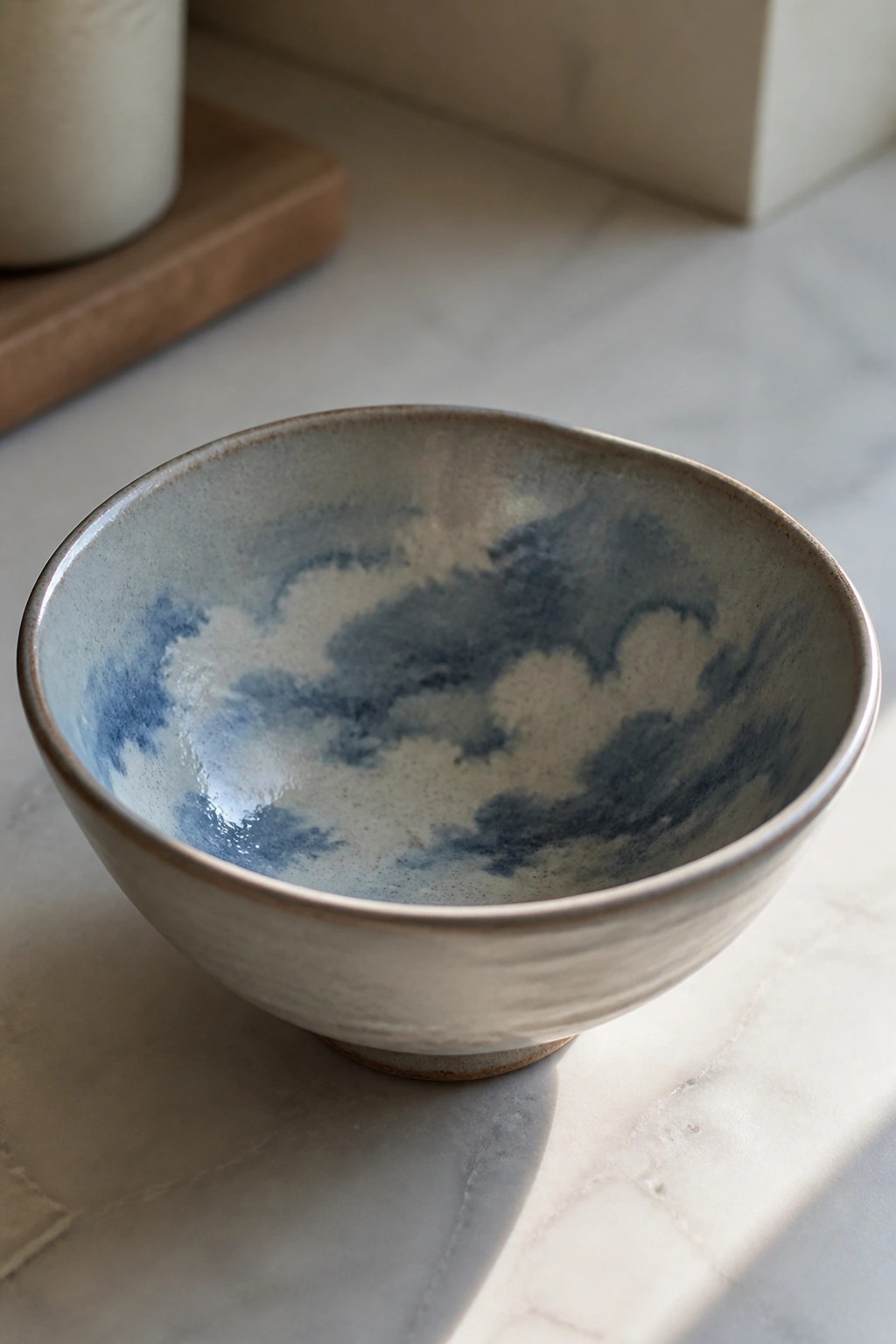
A wheel-thrown bowl like this one relies on a blue glaze that breaks and pools during firing to create irregular cloud shapes across the interior. The light clay shows through in spots, giving the surface a soft, mottled look without any hand-painted details. This style works as a simple serving bowl or small mixing piece that stays functional while carrying a clear decorative effect.
The shape does a lot of the work here because the open form and low profile make it easy to use for snacks, fruit, or small kitchen tasks. You can adapt the same glaze approach by varying the thickness or layering a second color to change how the clouds form. In a kitchen, pieces with this kind of surface pattern stand out on shelves when each one ends up slightly different during firing.
Bowl with Stamped Ovals and Scalloped Rim

A serving bowl formed with a wavy rim and covered in rows of small oval impressions stamped into the clay. The pattern runs in even horizontal bands around the exterior while the rim curves in and out to break up the round shape. The earthy base tone contrasts with the warmer color of the impressed marks, giving the surface a clear, repeating texture that stays visible after firing.
What makes this idea useful is how the stamping adds pattern without extra glaze layers or carving. The bowl size suits chips, nuts, or sides on a kitchen table or picnic setting. You could repeat the oval stamp on a taller cylinder for a utensil holder or switch to a squared rim on a set of smaller bowls for a matching group. The same stamping works on slabs before assembly if you want to try handbuilding instead of throwing.
Hand-Painted Fish Bowl on a Wheel-Thrown Form
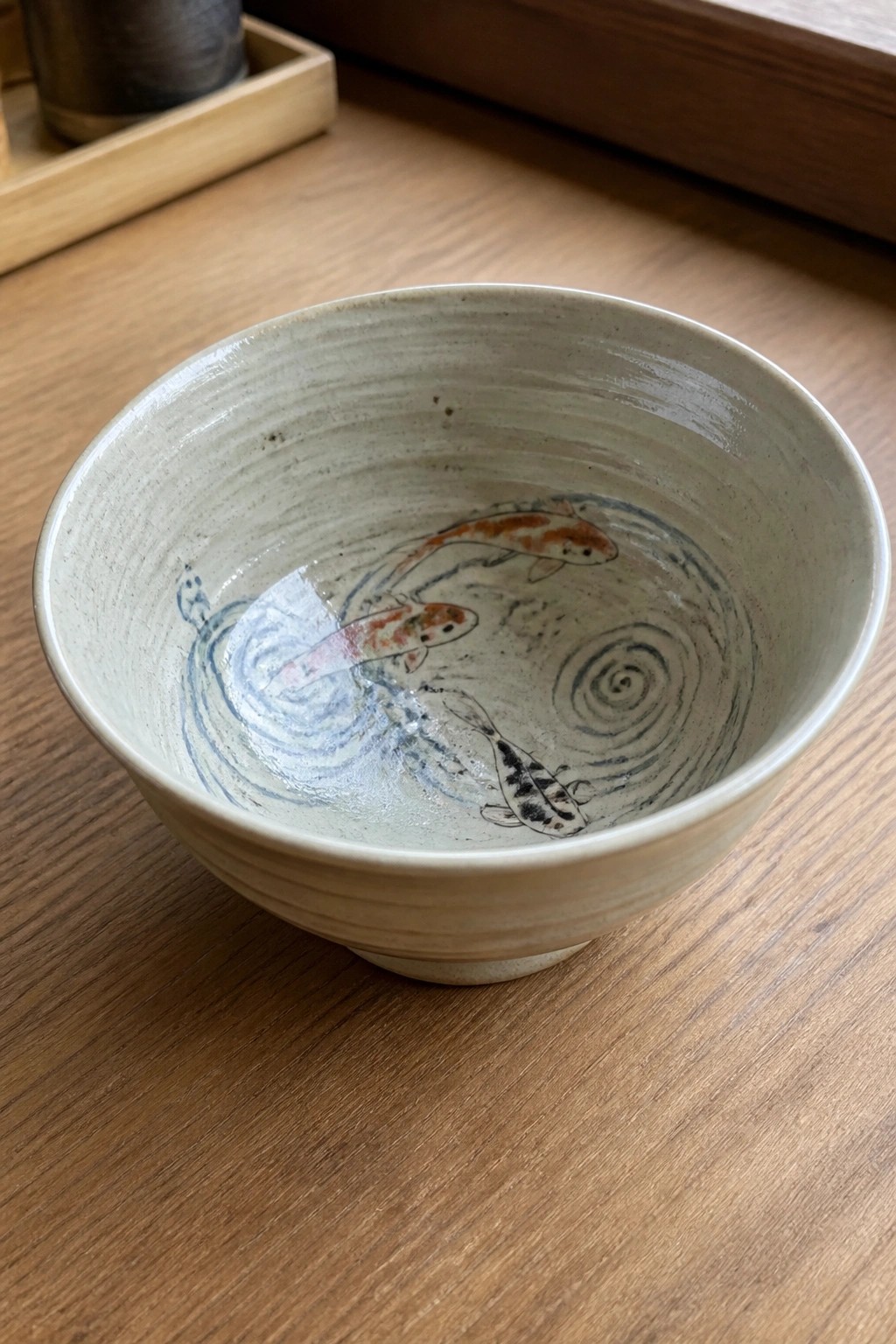
A wheel-thrown bowl gets its main interest from three fish painted directly on the interior surface with blue lines suggesting water movement. The fish use simple color blocks in orange, red, and black against the light glaze, keeping the design readable even when the bowl holds food. This kind of interior painting works best on open bowl shapes where the motif stays visible from above.
The shape does a lot of the work here because the wide rim lets the painted fish show clearly without extra surface carving. You could adapt the same fish layout to a smaller dish for keys or jewelry by reducing the number of fish to two. In a kitchen this style stands out when the bowl sits empty on a counter or holds fruit on a table. The idea also transfers easily to a platter if you want a flatter surface for the same painted pattern.
Marbled Glaze Bowl with Swirled Patterns
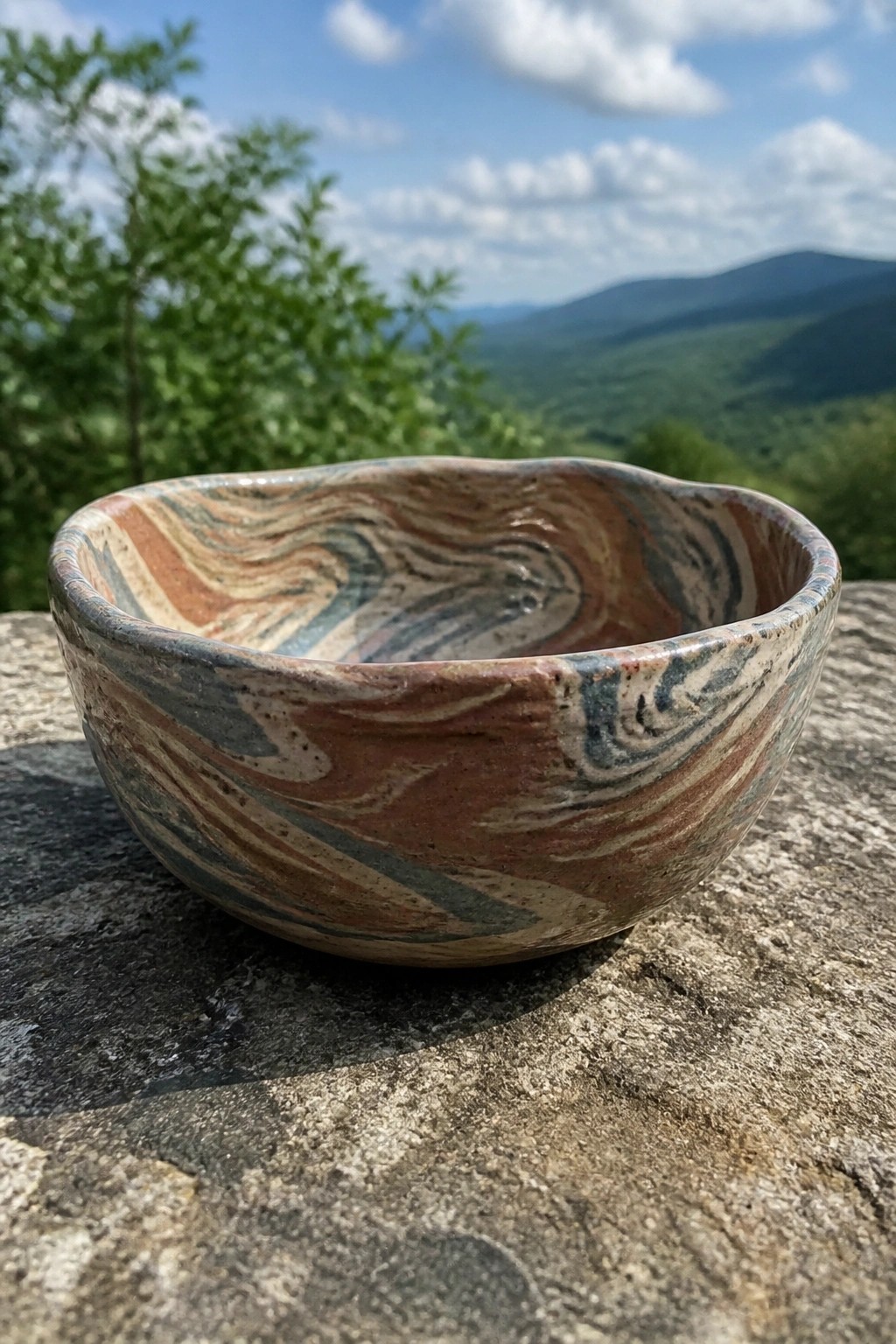
A small ceramic bowl finished with a marbled glaze effect stands out through the way multiple colors blend into flowing, irregular streaks across the surface. The combination of warm reds, browns, and cooler grays creates contrast that keeps the eye moving without overwhelming the simple round form. This approach fits the category of everyday bowls that can hold small items or serve as accent pieces.
What makes this idea useful is how the marbling can be recreated by layering different glazes before firing, letting you test color mixes on test tiles first. The small scale makes this easy to adapt into a set of four or five matching bowls for a table setting. In a kitchen or bathroom, this kind of piece holds jewelry, keys, or spices while adding color variation that plain glazes lack. For a gift, the same marbled surface could be applied to a slightly deeper shape or a wider plate.
Kintsugi Repaired Bowl
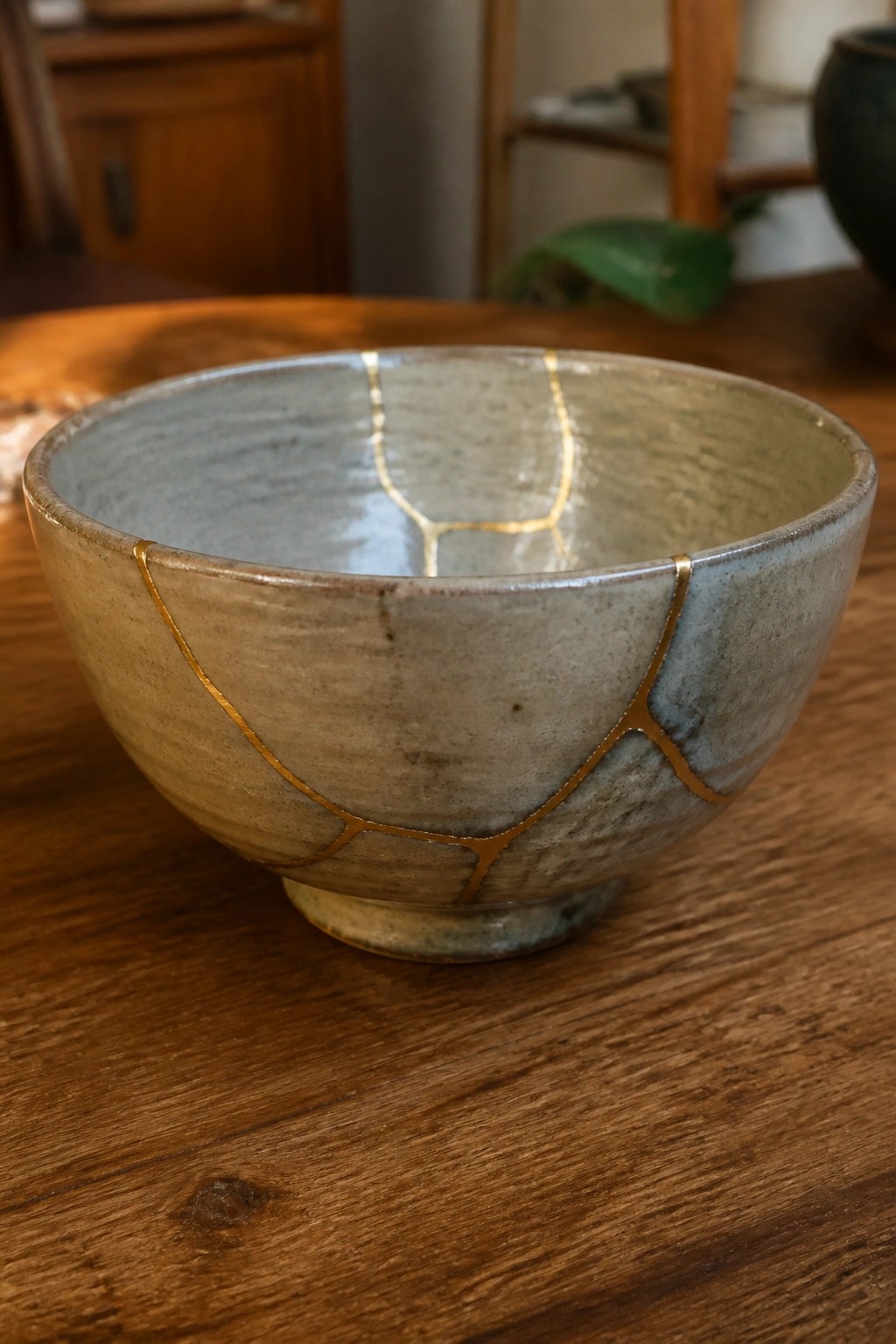
A wheel-thrown ceramic bowl becomes a kintsugi project when cracks are filled and highlighted with gold. The technique turns breaks into a deliberate pattern that runs across the surface. The muted blue-gray glaze makes the gold lines stand out without competing with other details. This approach fits the category of decor objects that can still be used for serving or display.
What makes this idea useful is that it salvages pieces that would otherwise be thrown out. You can apply the same repair method to any bowl or plate you already own instead of starting from scratch. The shape works well as a small centerpiece or catch-all on a table. For a variation, try the gold repair on a mug or small vase to create a simple matching set.
Frequently Asked Questions
What tools and materials are essential for trying the wheel-thrown bowl ideas in the article?
Start with a basic pottery wheel, clay suitable for throwing such as stoneware or porcelain, water, and simple tools like ribs, sponges, and a wire cutter. For handbuilt ideas, gather a rolling pin, canvas, wooden ribs, and scoring tools. Many of the 20 ideas use common studio supplies, so begin with a small batch of clay and focus on one technique at a time to build skills without investing heavily upfront.
How can beginners adapt the handbuilt bowl ideas if they lack access to a pottery wheel?
Focus on slab or coil methods described in several of the ideas, which require no wheel at all. Roll out even slabs for forms like square or oval bowls, then join them securely with slip. Practice on small scales first and use templates from the article to guide shapes. These approaches allow quick progress and can produce striking results comparable to thrown pieces once you master even walls and smooth seams.
What steps help ensure the bowls from these techniques dry evenly and avoid cracks?
Cover your finished bowls loosely with plastic for the first day or two to slow drying, then gradually expose them to air over several days. Turn pieces periodically and keep them away from direct heat or drafts. For handbuilt work, score and slip joints thoroughly, and for thrown bowls, compress the base well during centering. Even drying prevents most warping issues common in mixed-technique projects.
Which of the 20 ideas work best for combining wheel-thrown bases with handbuilt additions?
Ideas that start with a simple thrown cylinder or bowl form pair easily with added coils, slabs, or carved elements on the exterior. Attach these additions after the thrown piece reaches leather hard stage, using slip for strong bonds. This hybrid approach appears in several inspiring examples and lets you create unique textures or handles while keeping the interior smooth and functional.
How do I choose glazes and firing methods to make the bowls food safe and durable?
Select food-safe glazes labeled for cone 6 or higher firing, and test them on sample tiles first. Apply even coats and avoid thick layers near rims to prevent running. Fire in an electric or gas kiln following the clay manufacturer’s schedule, typically bisque at cone 04 then glaze at cone 6. Always confirm the final product passes standard lead and cadmium tests if selling or using for serving food.

Pottery Path is my cozy corner of the internet where I share clay ideas, pottery inspiration, and simple projects you can recreate at home. I love exploring everything from air dry clay to handbuilt pottery to cute minis that brighten your day. My goal is to make clay crafting feel easy, fun, and welcoming for anyone who wants to try it.
You will find beginner friendly tutorials, creative pottery painting ideas, and lots of warm inspiration for slow and happy crafting. If you enjoy hands on creativity, this space will feel like home.