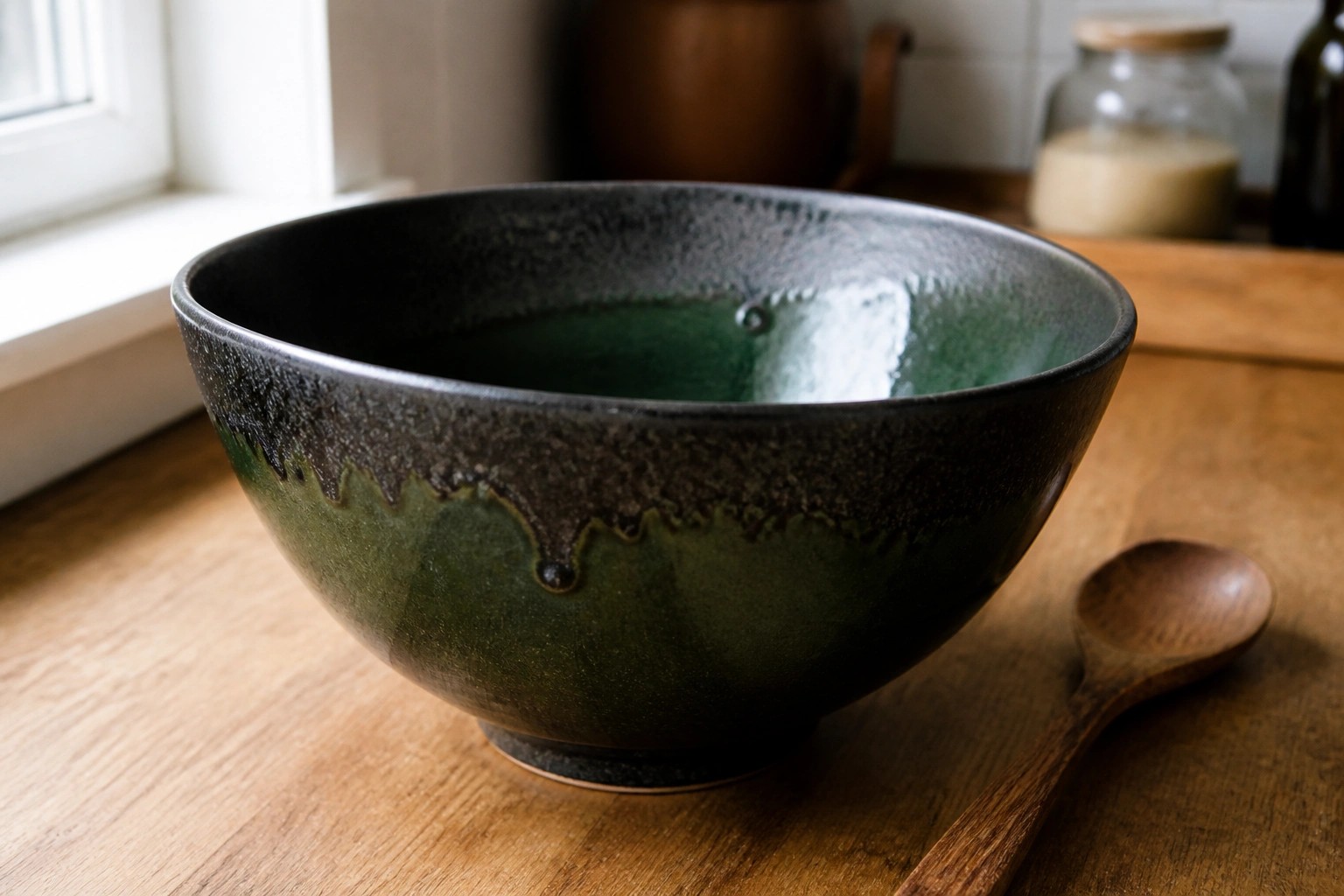
I’ve tried different glazes on my pottery bowls for a few years now.
Speckled finishes give them a bit of texture without much effort.
Matte glazes tend to look softer and more natural once they’re fired.
Layering a couple of glazes has sometimes given me results I didn’t plan for.
These are the ones that turned out well enough to share.
Layered Speckled Exterior with Green Glossy Interior Bowl
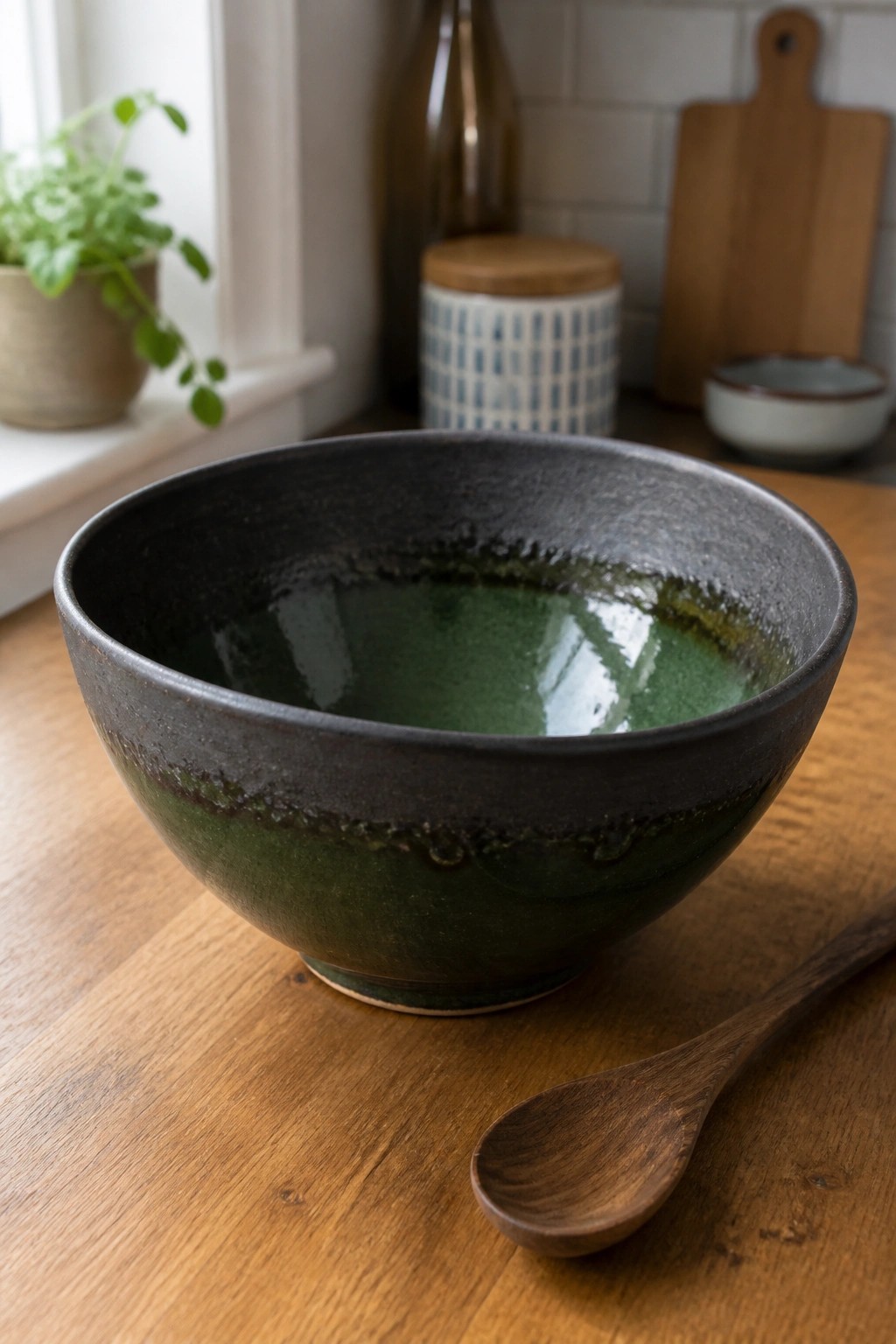
A wide ceramic bowl combines a dark speckled glaze on the upper half with a deep green glossy glaze covering the inside and lower exterior. The two glazes meet in an uneven line with slight drips that add visual interest without extra decoration. This finish works especially well on bowls because the darker outer layer stays practical while the green interior creates a strong color contrast for food or display.
What makes this idea useful is how the layered approach can be repeated on bowls of different sizes for kitchen or table use. You could apply the same dark speckled top and green bottom to a smaller cereal bowl or a larger serving piece. The neutral dark exterior pairs easily with wooden tools and everyday dishes, and the idea translates simply to other forms like a batter bowl or a shallow pasta server.
Speckled Matte Blue Glaze on a Simple Ceramic Bowl
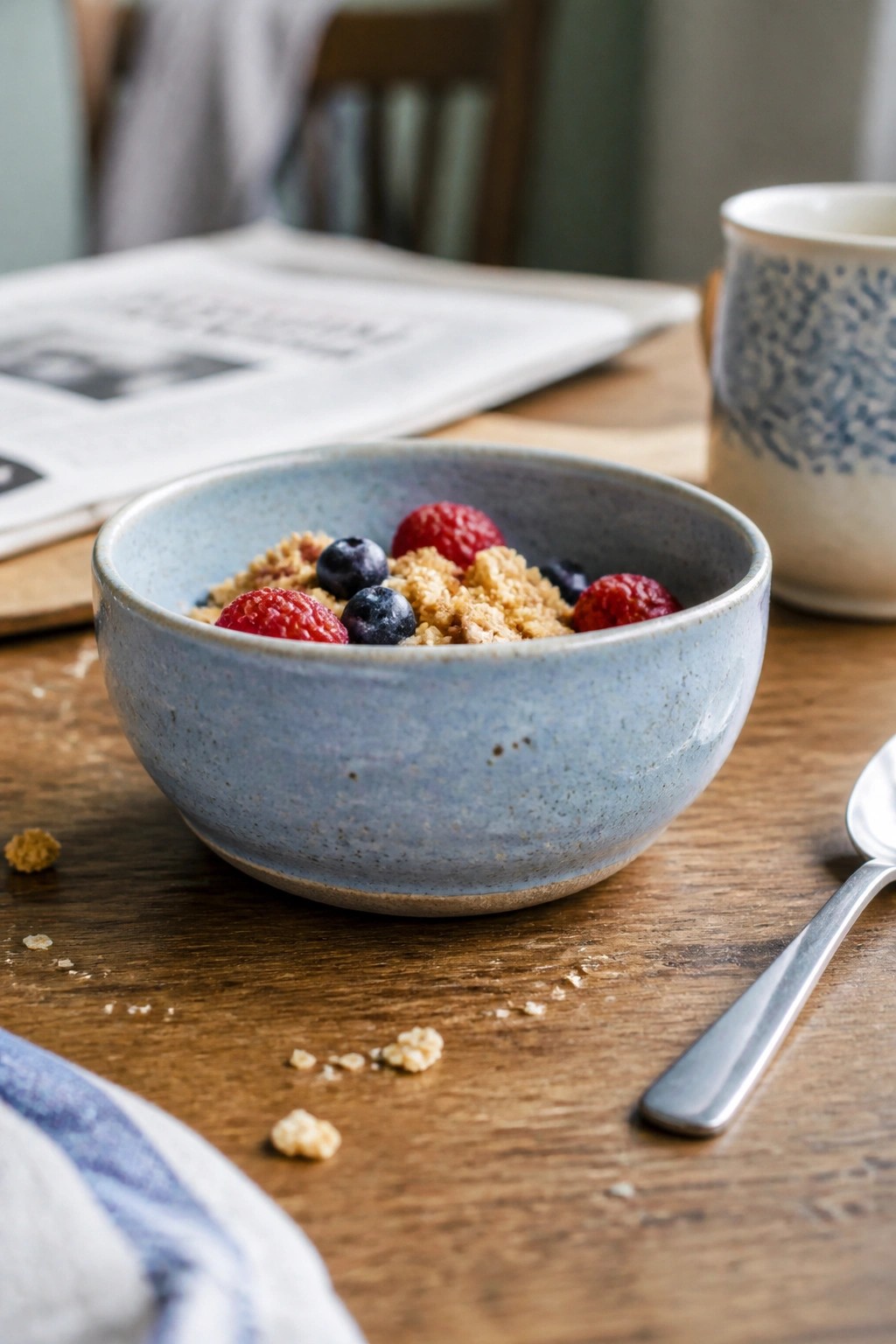
A round ceramic bowl finished with a speckled matte blue-gray glaze makes a solid choice for a breakfast or serving bowl. The glaze sits evenly across the surface with small dark flecks that break up the color without creating a busy pattern. This approach keeps the bowl functional while letting the texture and color do the work.
The shape does a lot of the work here by giving the glaze a clean canvas that shows off the speckling without extra detail. You could apply the same glaze to a set of smaller bowls or scale it up for a larger mixing bowl. In the kitchen the neutral tone pairs with most tableware while the matte finish hides small marks from daily use. The idea also adapts easily to a shallow dish or a lidded jar if you want to repeat the glaze on other forms.
Speckled Gradient Matte Glaze on a Small Bowl
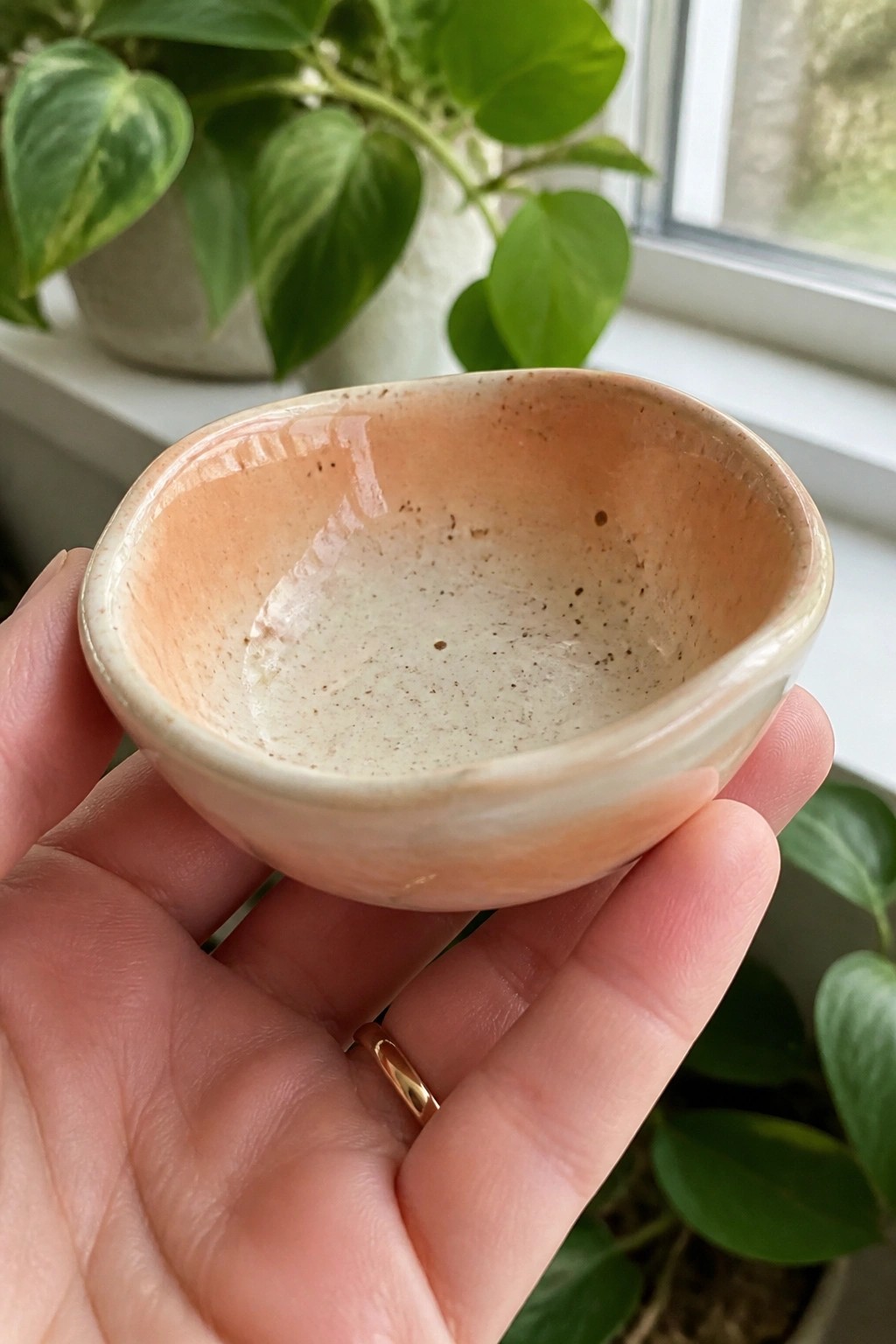
A small ceramic bowl like this uses a speckled matte glaze that layers from a light cream base into a warm peach tone near the rim. The speckles stay visible across both colors and give the surface a subtle texture while the slight gloss along the edge adds contrast. This fits the layered finish category because the two tones blend through overlap rather than sharp lines.
What makes this idea useful is the compact size, which makes it simple to test glaze layering on a single piece before committing to a larger set. You could rework the same gradient by applying a lighter matte base first, then brushing a peach layer higher up the walls so they meet in the middle. The bowl works for holding spices or small snacks on a counter, and the speckled matte approach translates easily to matching plates or cups if you want a coordinated group.
Speckled Matte Glaze on a Footed Bowl
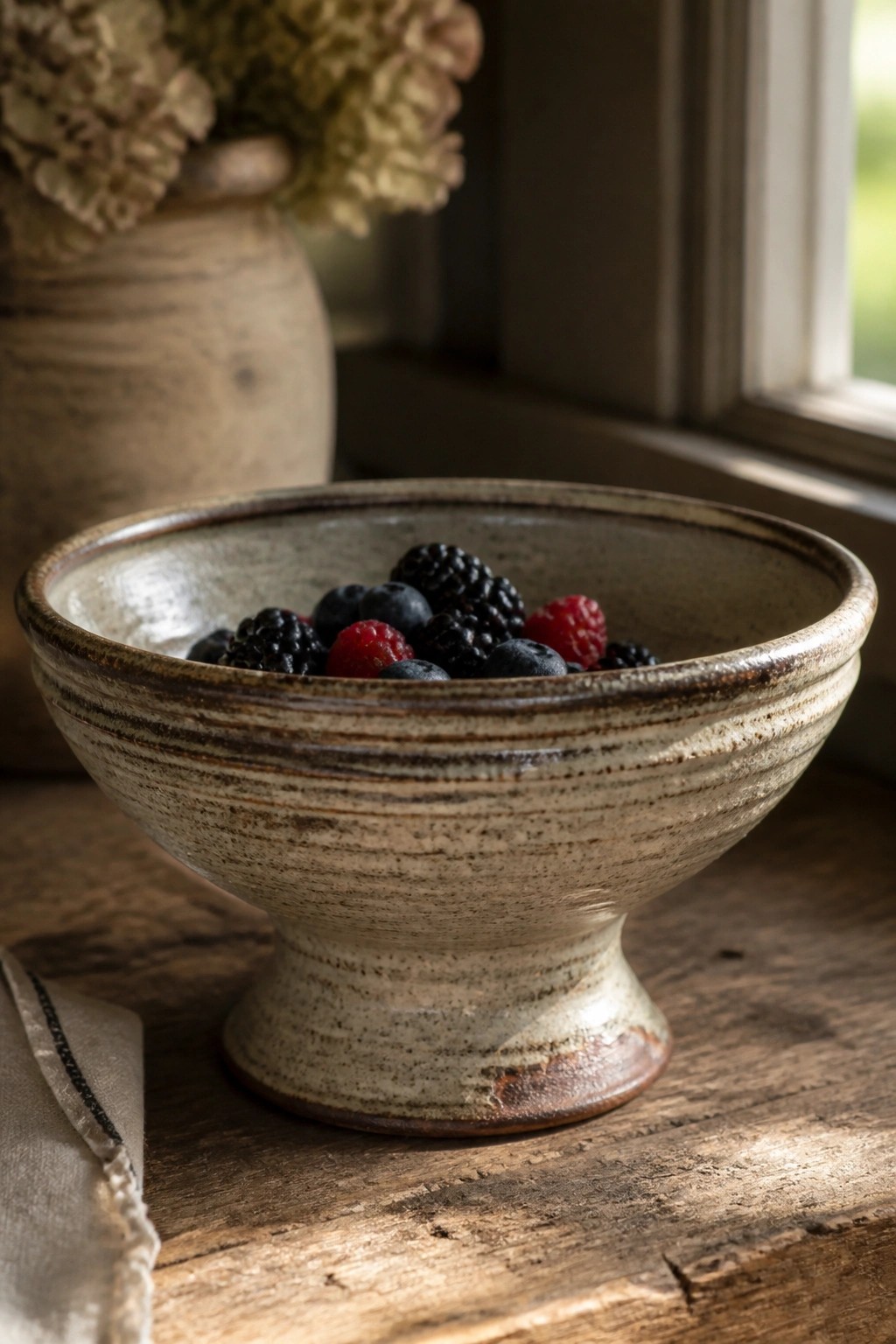
A wheel-thrown ceramic bowl with a wide rim and raised foot makes a solid choice for holding fruit or snacks on a table. The speckled matte glaze shows subtle iron flecks and horizontal throwing lines that add texture without any gloss. This finish works as a straightforward example of combining a speckled surface with a matte result that still feels functional.
What makes this idea useful is that the foot keeps the bowl slightly lifted so it sits steady on wood or stone surfaces. You can repeat the same glaze on a set of smaller bowls for everyday use or switch the shape to a flatter plate while keeping the speckled look. The neutral tones make it easy to match with other kitchen pieces and the texture shows up clearly in photos for reference later.
Speckled Layered Glaze on a Scalloped Bowl
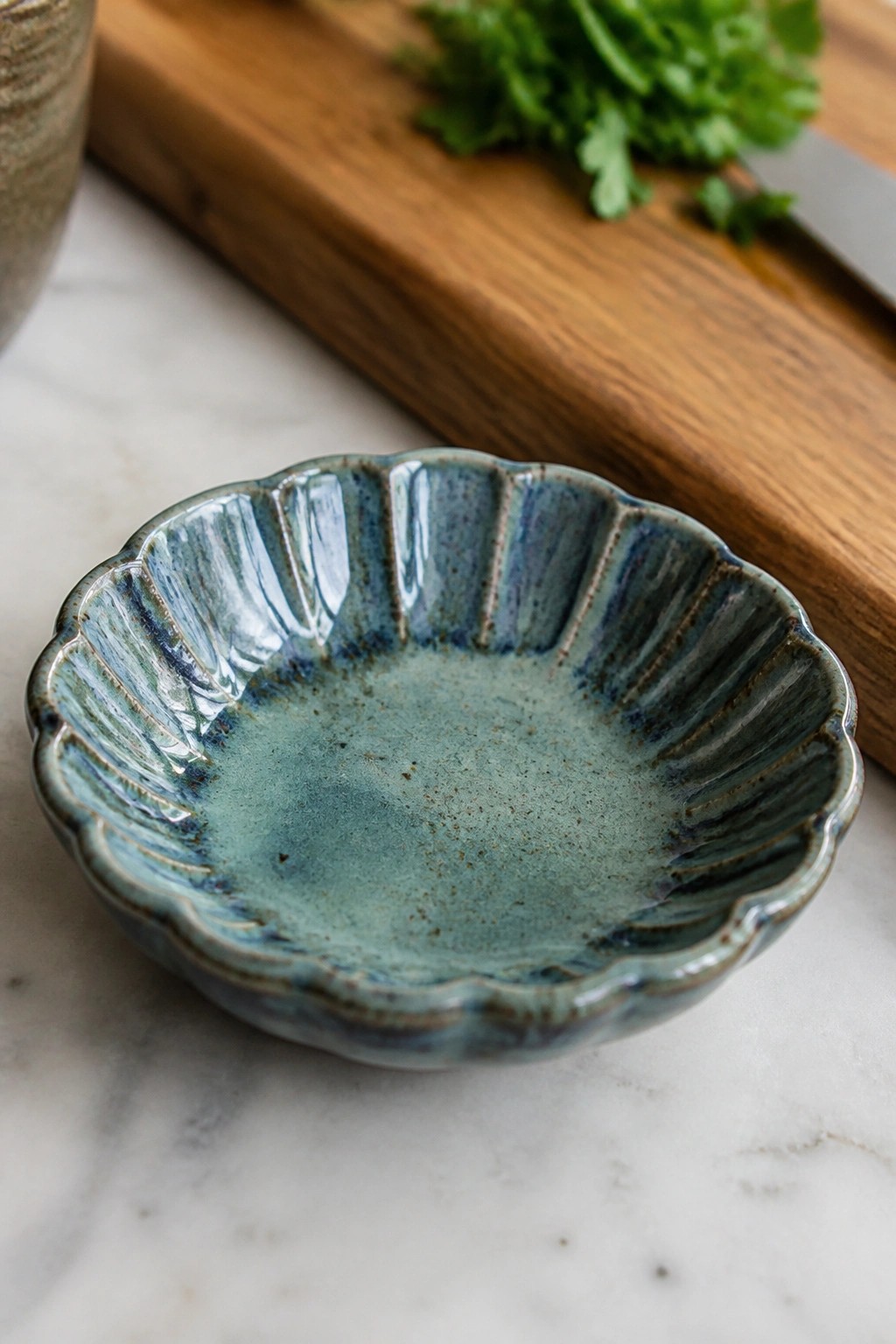
A small ceramic bowl with a fluted rim uses a layered glaze that moves from blue along the edges into a muted green center. The glaze builds up thicker on the raised ridges to create glossy streaks while the interior stays mostly matte with visible speckles. This finish draws attention to the rim shape without covering the whole surface in heavy color.
The small scale makes it simple to test new glaze layers on a single piece before committing to a full set. You could repeat the same rim treatment on a larger serving bowl or scale it down for spice dishes. The speckled matte center keeps the inside practical for food use while the glossy edges add visual interest.
Dripping Speckled Glaze Over Exposed Terracotta on a Mixing Bowl
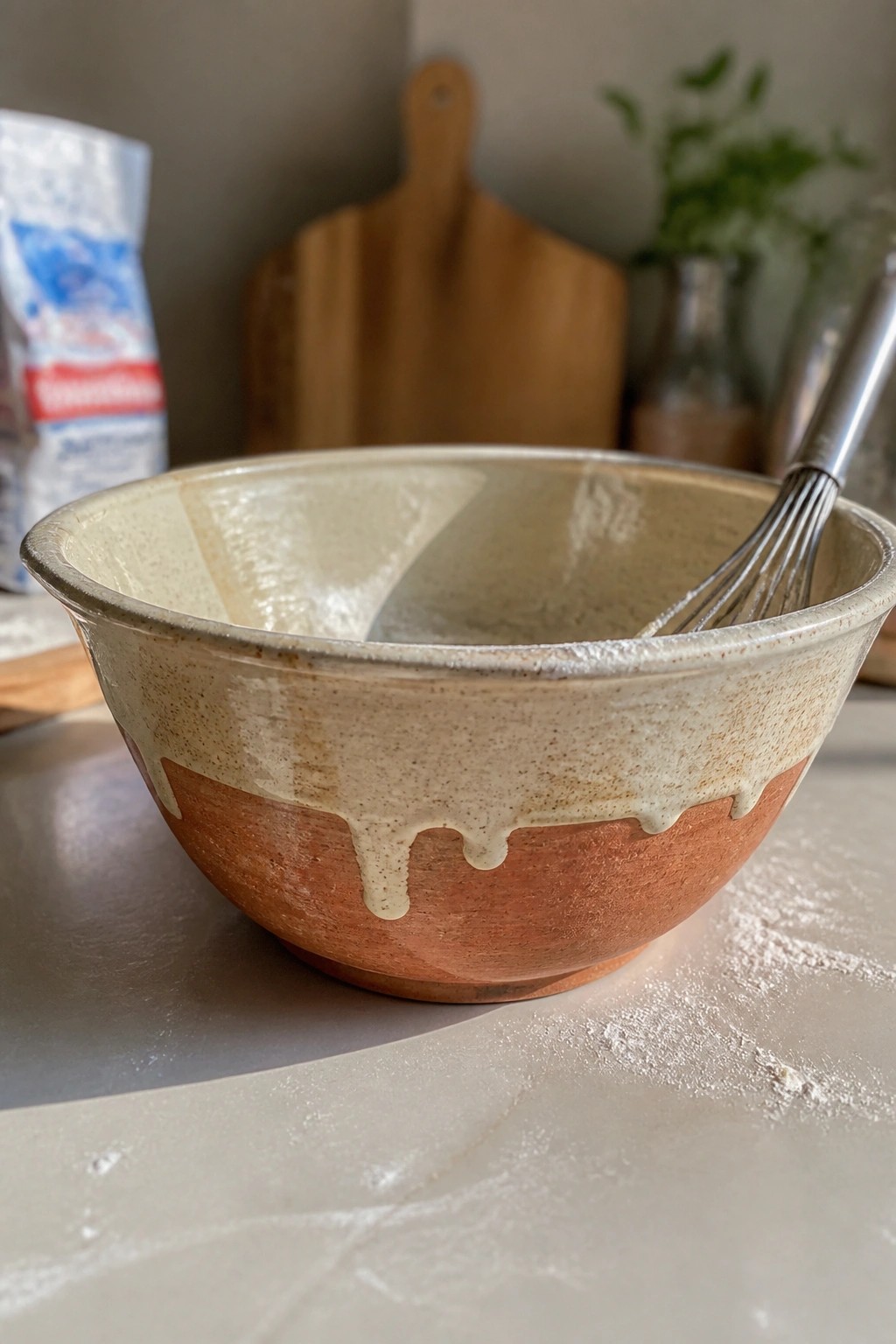
A stoneware mixing bowl uses a simple two-part glaze where a speckled off-white layer covers the top half and runs down in controlled drips onto the raw terracotta base. The matte finish on the upper glaze contrasts with the smoother lower section, making the shape easy to read from a distance. This approach keeps the bowl functional for kitchen tasks while letting the clay color do part of the work.
What makes this idea useful is that the drip line can be adjusted by how thickly the top glaze is applied before firing. The bowl shape works well on a counter for dough or salad mixing and the color split keeps it from looking too plain next to other kitchen items. You could repeat the same layering on a set of smaller prep bowls or a batter bowl by holding the same height ratio between the two glazes.
Speckled Matte Bowls with Layered Horizontal Bands
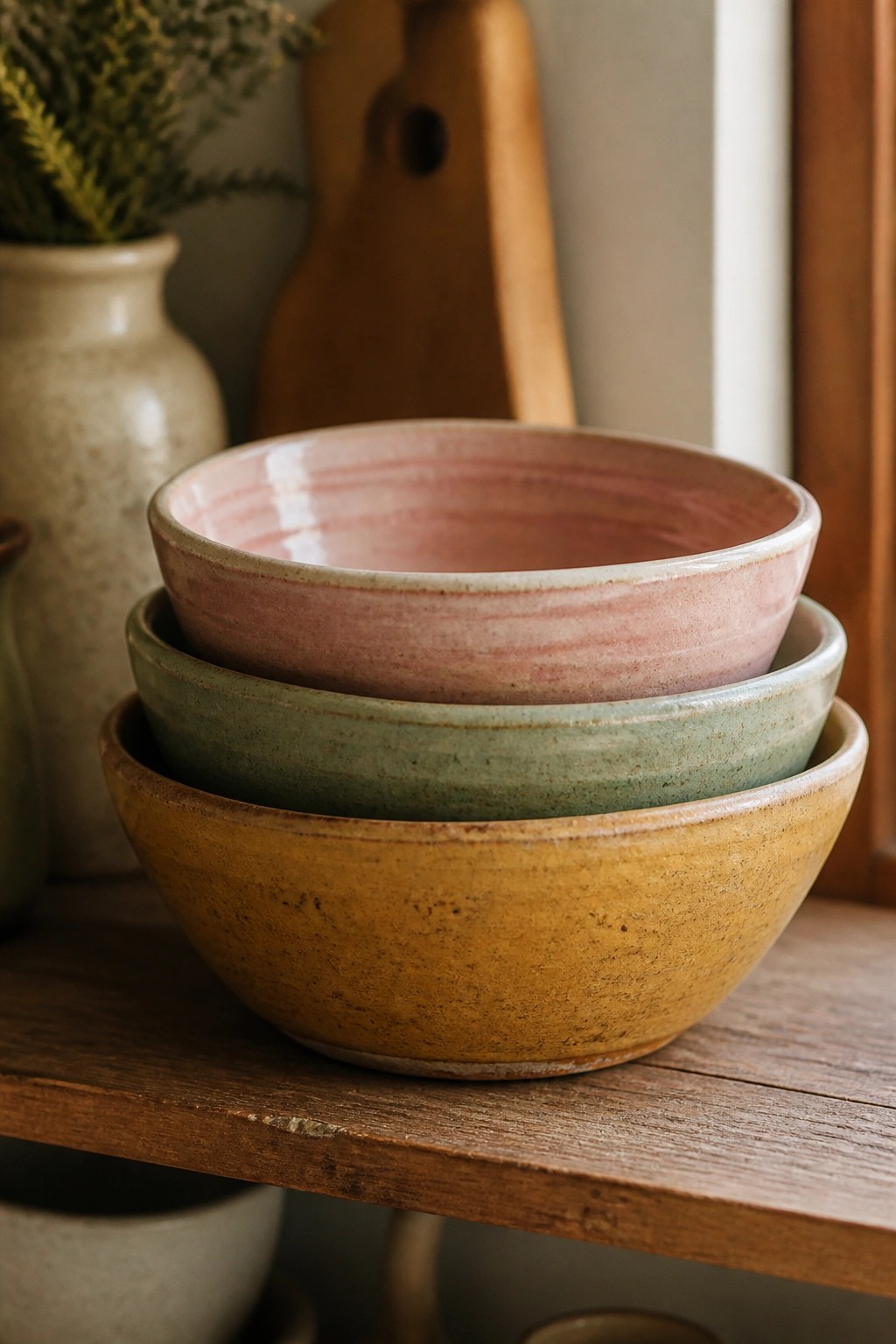
A set of three nesting bowls finished in matte speckled glazes creates a simple kitchen collection. The bottom bowl uses a warm mustard tone, the middle one a muted green, and the top one a soft pink with faint horizontal bands that add light layering over the base glaze. The speckled texture runs through all three and keeps the surfaces from looking flat while the shapes allow them to stack neatly for storage.
What makes this idea useful is the way the color variation lets you pull just one bowl at a time without losing the set. You could adapt the horizontal bands to only the largest bowl or repeat the same three tones on smaller prep bowls for a coordinated group. In a kitchen these work well on open shelves because the matte finishes hide minor marks better than glossy glazes. The same nesting idea can be scaled down for dessert bowls or adjusted with different earth tones to match existing dishware.
Speckled Glaze Bowl in Yellow and Orange Tones
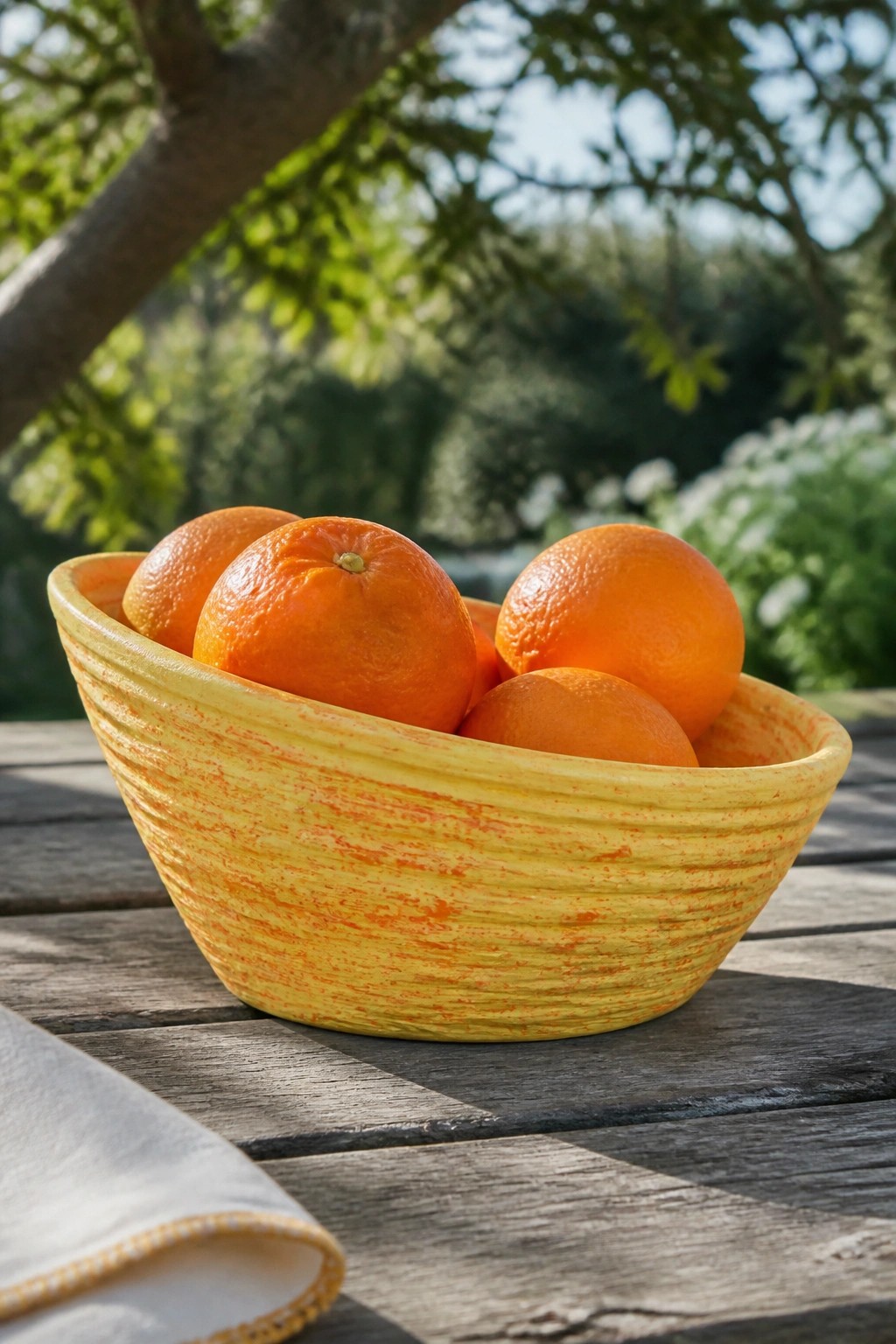
A wide, low ceramic bowl finished with a yellow base and scattered orange speckles works well as a fruit bowl or serving piece. The speckling creates a textured surface that blends with the natural colors of citrus fruit placed inside. This glaze idea keeps the form simple so the color variation becomes the main detail.
The shape does a lot of the work here by keeping the bowl shallow enough to sit comfortably on a table without taking up much space. You could rework the same speckle technique on a taller bowl for salad or change the base color to green for apples. In a kitchen this piece stands out because the glaze gives it more visual weight than a solid color while still staying practical for daily use.
Speckled Matte Base with Layered Blue Rim Drips on a Handled Bowl
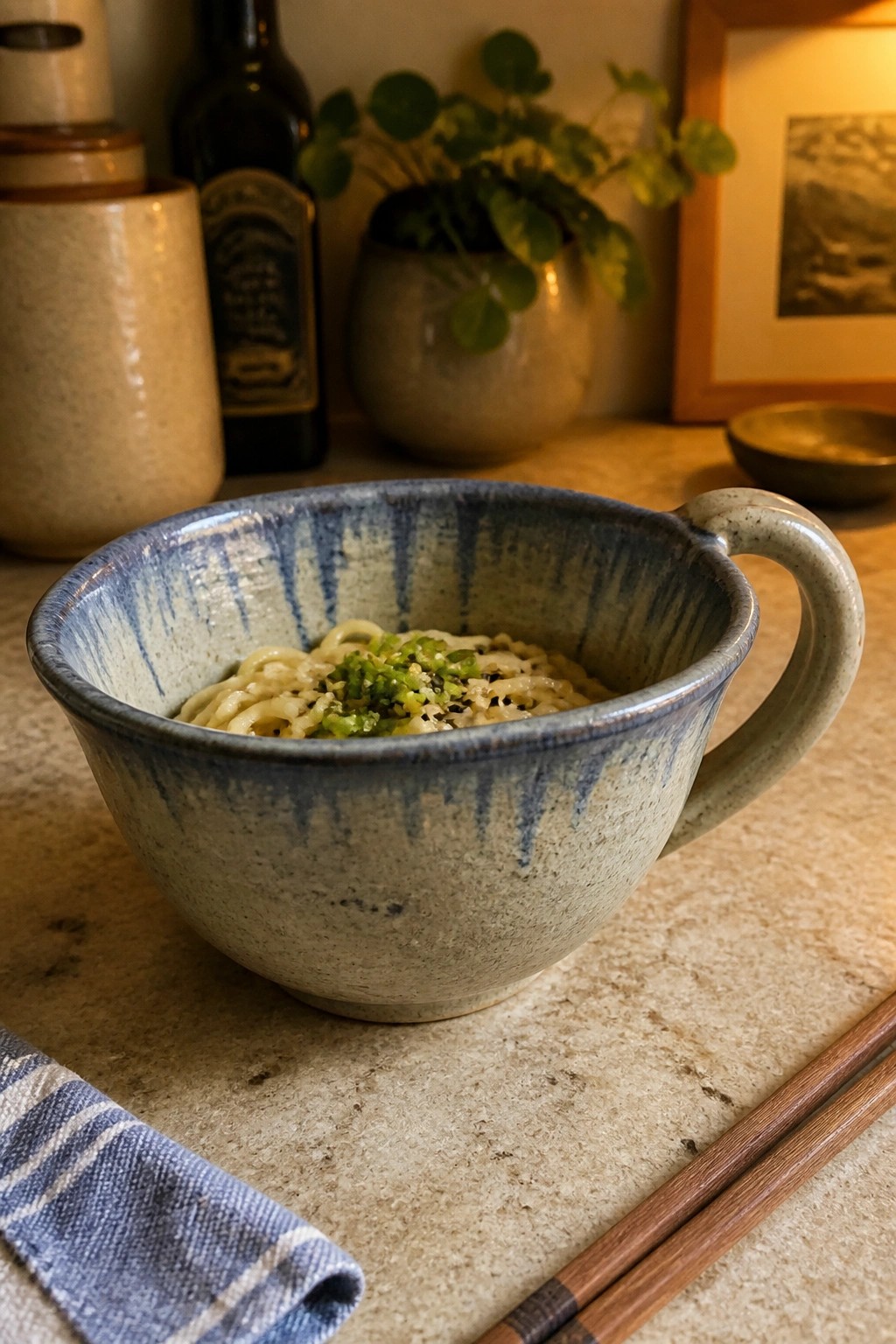
A handled bowl built from stoneware clay uses a speckled matte glaze as the base layer. A second blue glaze applied around the rim creates controlled drips that run down the interior and exterior walls. The speckled surface gives the piece an organic texture while the blue streaks add contrast without covering the entire form. This combination fits the bowl category well for soup or noodle servings where the handle improves grip and portion control.
What makes this idea useful is the way the handle expands the bowl’s function for hot liquids without complicating the form. The speckled matte glaze covers throwing rings and minor surface flaws, which helps when testing new glaze combos. You could scale the same rim-drip treatment down to smaller dip bowls or up to a larger serving piece. In a kitchen setting the blue streaks catch light against the neutral base so the bowl stands out on open shelving even when stacked with plain dishes.
Speckled Matte Wall Pocket with Carved Textures
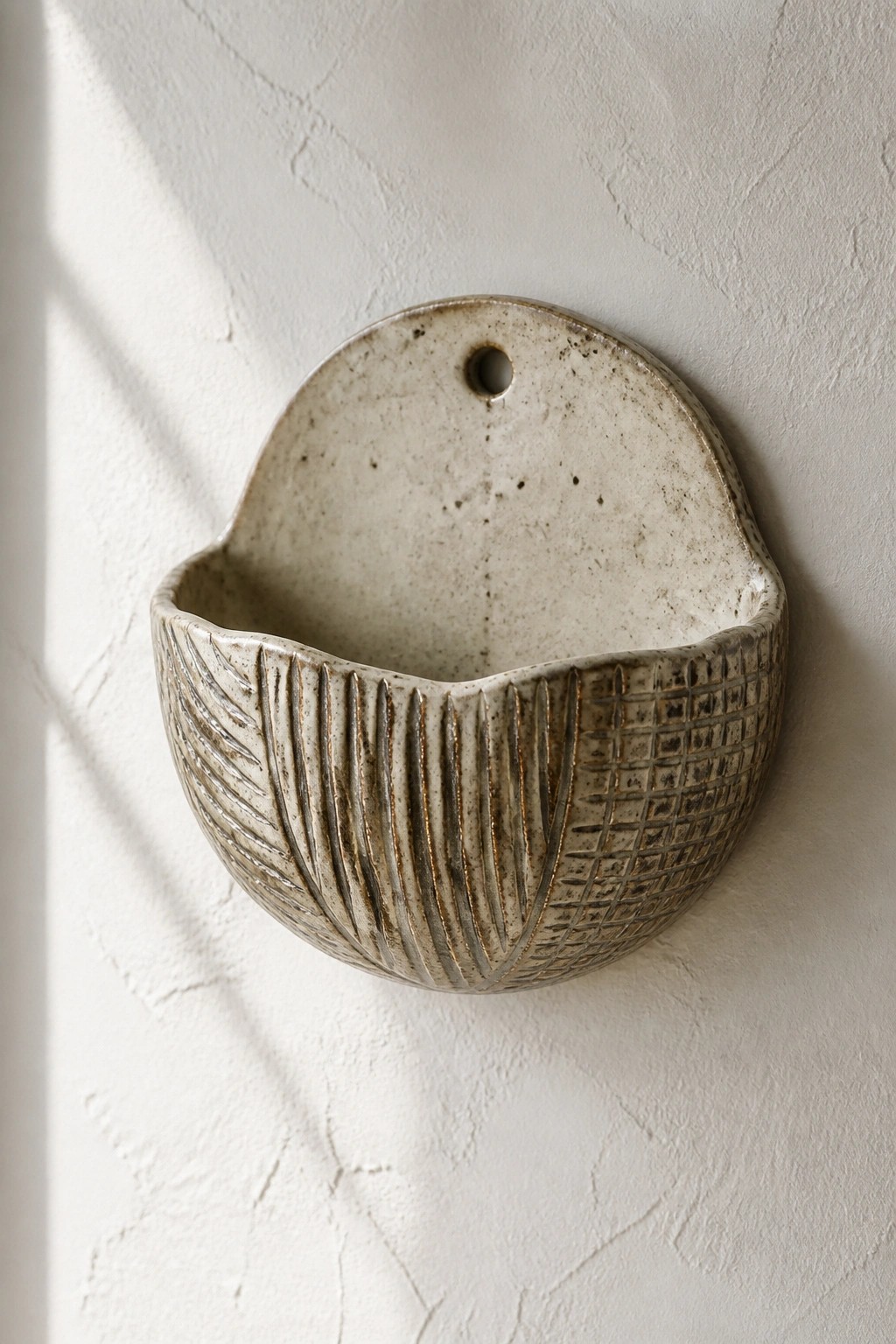
This wall-mounted ceramic pocket uses a matte speckled glaze across a compact half-moon form. One side shows carved vertical lines while the other carries a grid pattern, both left visible under the finish. The single glaze lets the surface textures do the work instead of relying on color changes or layering. The result is a small hanging holder suited for lightweight storage or display.
What makes this idea useful is the hanging hole and shallow shape, which let it fit on a bathroom wall or near a doorway without taking up shelf space. You could repeat the same carved patterns on a set of three in different sizes or swap the speckled glaze for a plain matte version to match existing pieces. The form also works as a simple plant pocket if you add drainage holes during making.
Speckled Gray Yarn Bowl with Layered Pink Rim
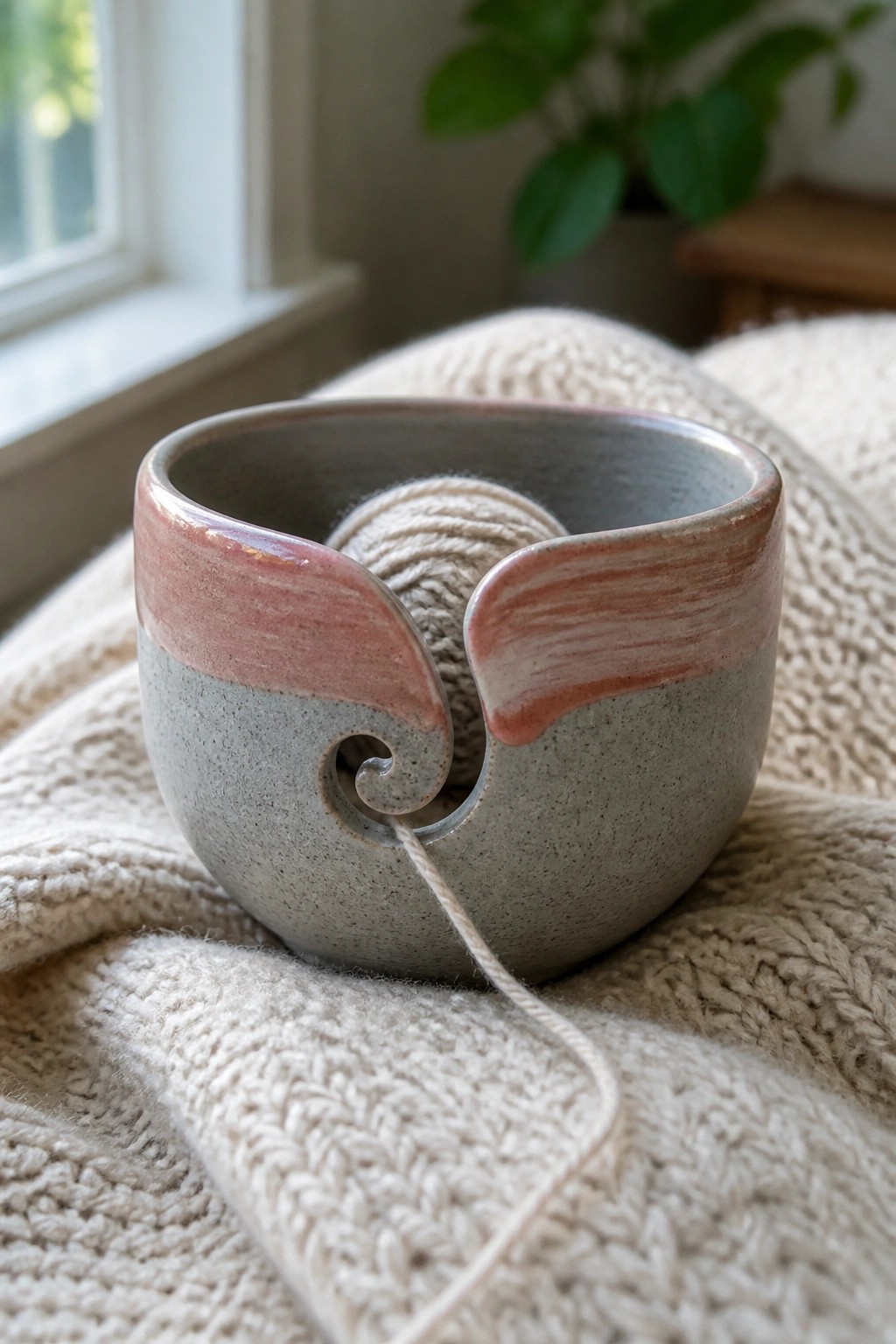
A yarn bowl made from clay uses a speckled gray glaze across the body and a pink band layered along the rim for contrast. The spiral cutout on one side lets yarn feed out smoothly while the bowl keeps the ball contained. This combines a practical knitting tool with a simple two-tone glaze approach that highlights both the speckled texture and the rim detail.
What makes this idea useful is the built-in yarn guide that keeps projects from tangling on the floor. You could swap the pink band for other colors to match different yarn types or room colors without changing the form. In a craft space this shape stays compact on a table yet holds a full skein. The same speckled base and rim layering would translate easily to a smaller version for embroidery floss or to a larger bowl for blanket yarn.
Speckled Green Drip Glaze on a Shallow Wide Bowl
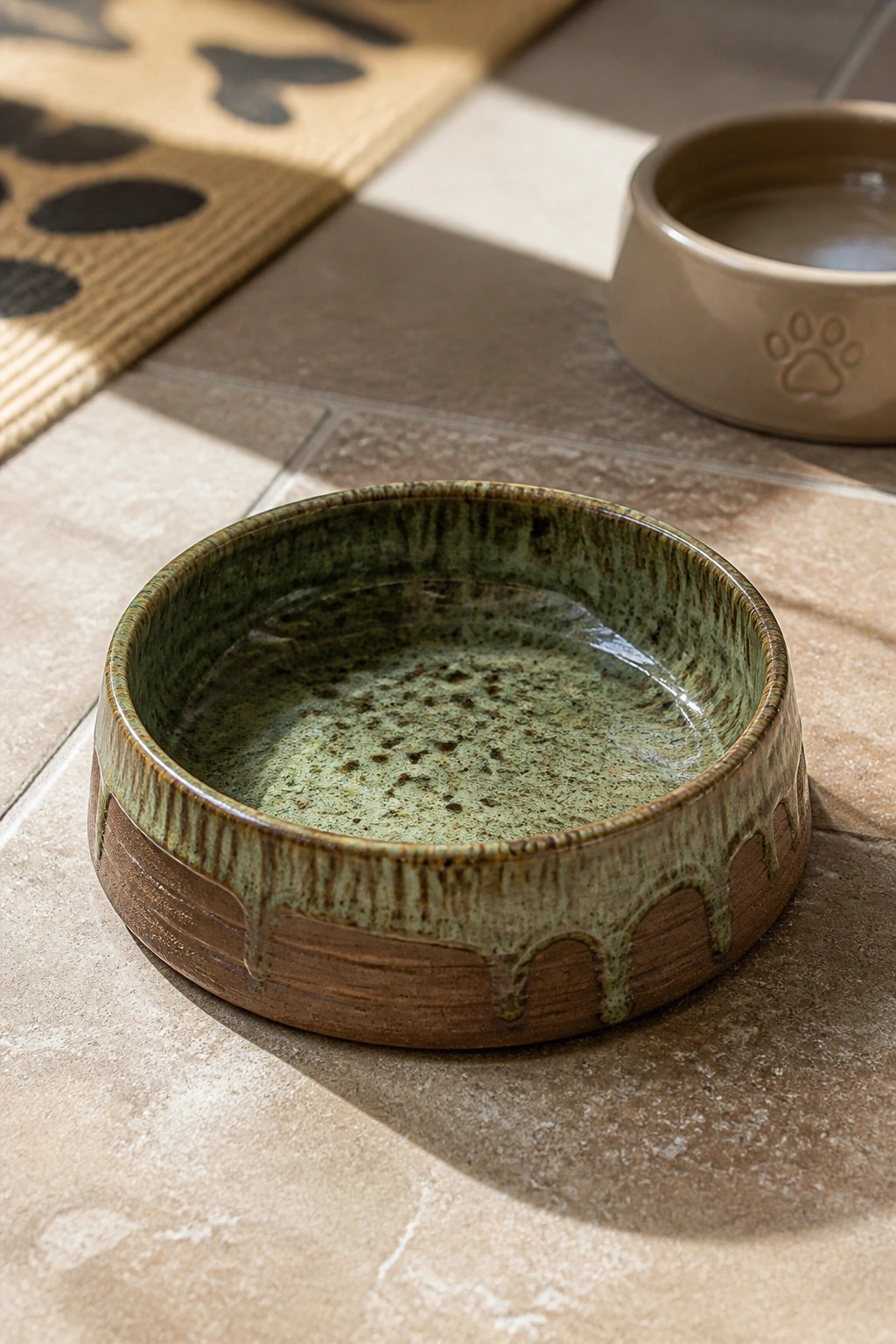
This project uses a low, wide ceramic bowl form with a speckled green glaze covering the interior and dripping down the outside over an unglazed brown clay base. The glaze creates a mottled, earthy pattern inside while the drips add a controlled layered effect along the rim and lower walls. The shape stays simple and functional, letting the combination of speckled interior and dripping exterior do the visual work.
What makes this idea useful is how the drip technique turns a basic bowl into something that reads as both practical and decorative. A piece like this works especially well as a pet bowl or small serving dish where the wide opening gives easy access and the glaze pattern hides wear. You could adapt the same layering by swapping the green for other speckled colors or running the drips only partway down a taller form to make a planter or kitchen prep bowl. The small scale also keeps the project manageable for testing new glaze combos without committing to a large piece.
Speckled Gradient Glaze on a Small Serving Bowl
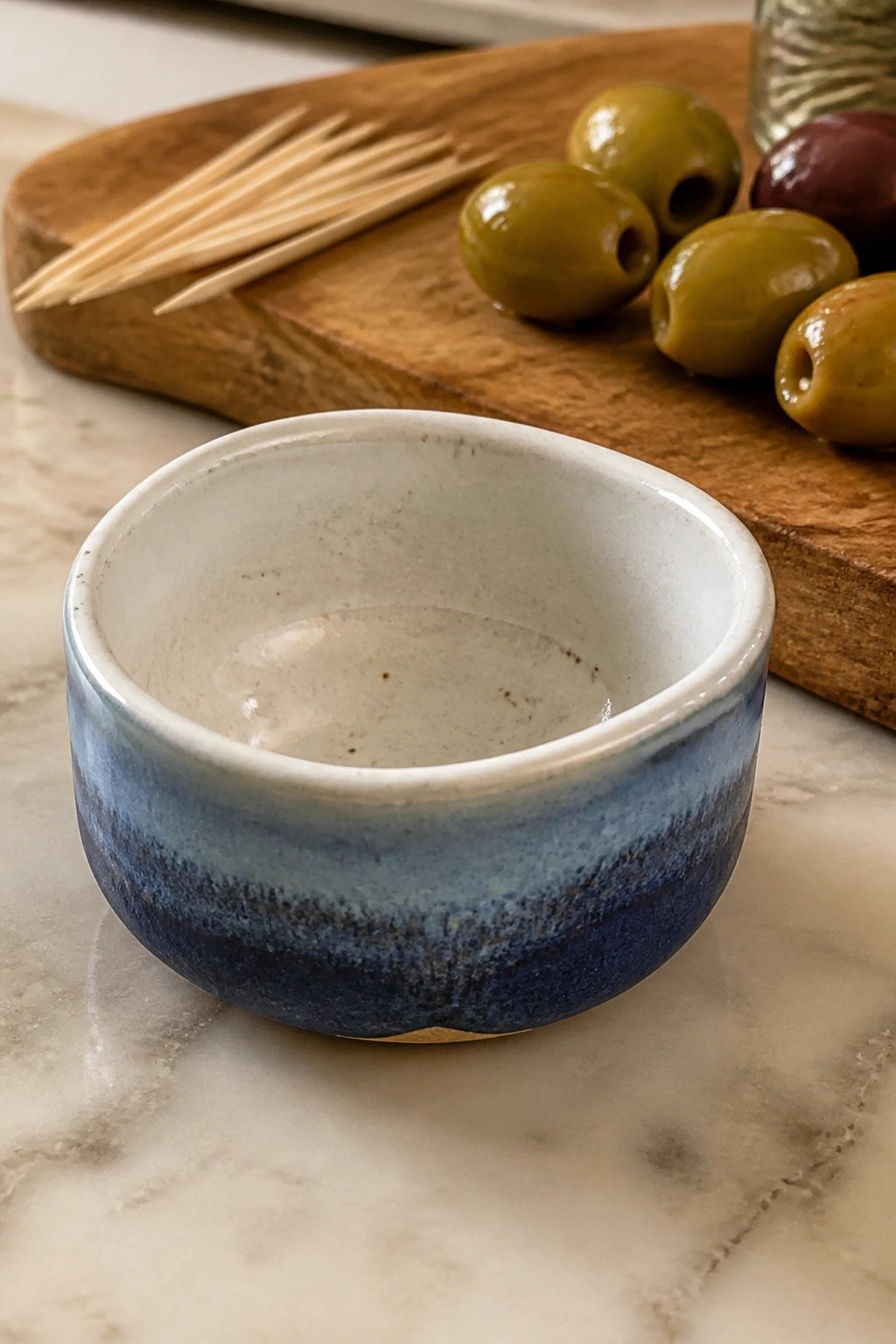
A small round ceramic bowl like this uses a layered blue glaze that shifts from a dark speckled tone at the base up to a lighter blue gray near the rim. The white interior and simple shape keep the focus on the exterior finish while the speckling gives the surface a subtle textured look. This style suits basic bowls meant for kitchen tasks such as holding dips or a few olives.
What makes this idea useful is how the glaze layering adds visual interest to an uncomplicated form that is straightforward to repeat. A piece like this works especially well as a dip bowl next to a snack board or for single serve portions on a table. The same blue gradient speckled approach could be scaled up for a slightly larger mixing bowl or reworked across a set of four matching ramekins for everyday use.
Horizontal Bands of Speckled Green Glaze on a Wide Serving Bowl
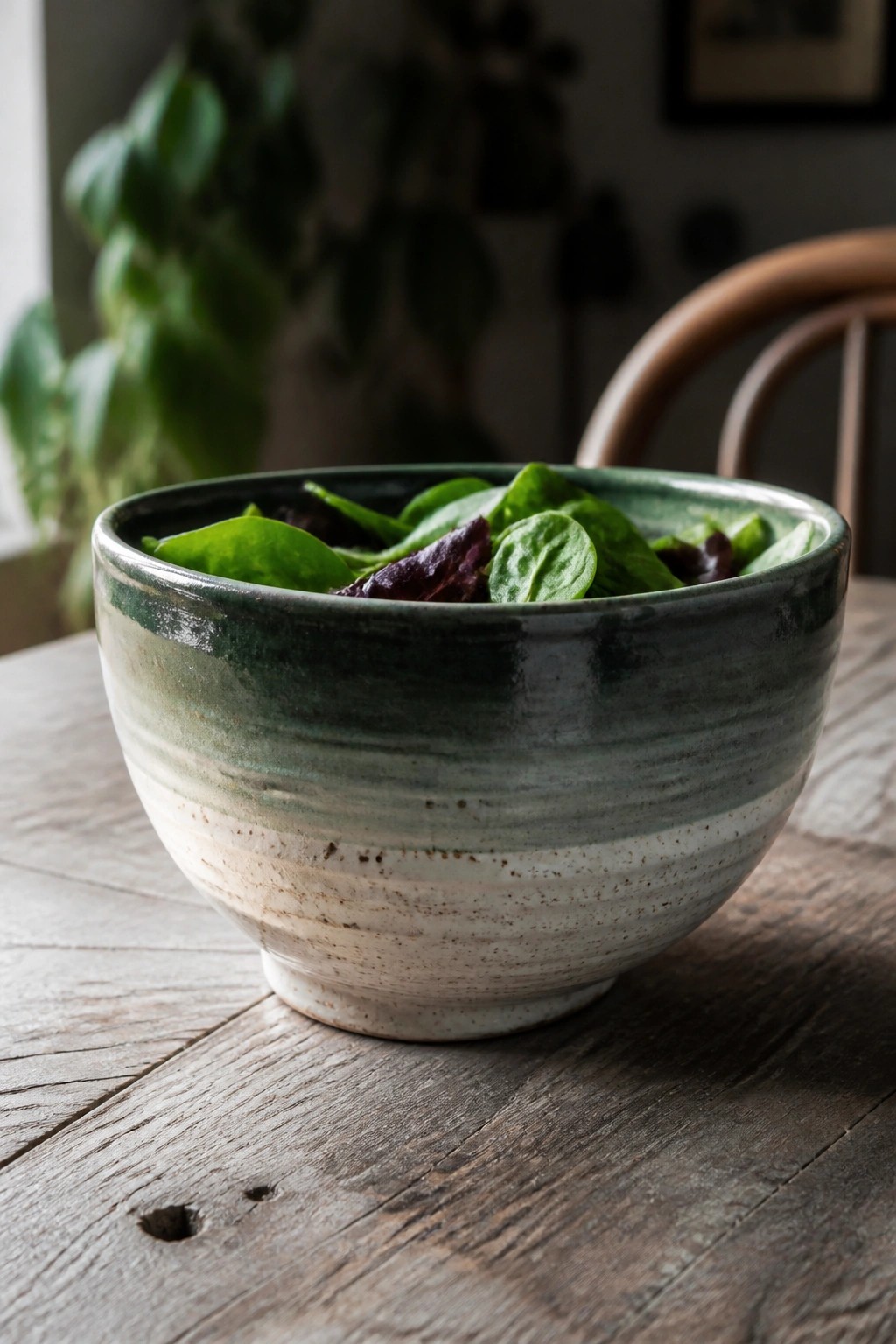
A wide wheel-thrown bowl finished with multiple layers of green glaze applied in bands that fade into a speckled cream base. The glaze settles into the throwing ridges, creating visible horizontal lines where each layer overlaps or thins out. The lower section stays mostly matte and light while the upper rim holds darker green, giving the bowl a simple striped pattern without extra carving or decoration. This style suits a salad or serving bowl because the speckled areas stay neutral enough for food while the layered greens add color.
What makes this idea useful is how the banded layering can be recreated by dipping or brushing glaze at different heights on the same form. The speckled base helps minor application inconsistencies blend in, so the technique works for pieces you plan to use daily. In a kitchen this shape holds salads or sides without taking up much table space, and the same glaze sequence could be applied to smaller mixing bowls or plates for a matching set. You could rework the idea with fewer bands or a single green if you want a quicker version for gifts.
Speckled Hedgehog Bowl with Sculpted Texture
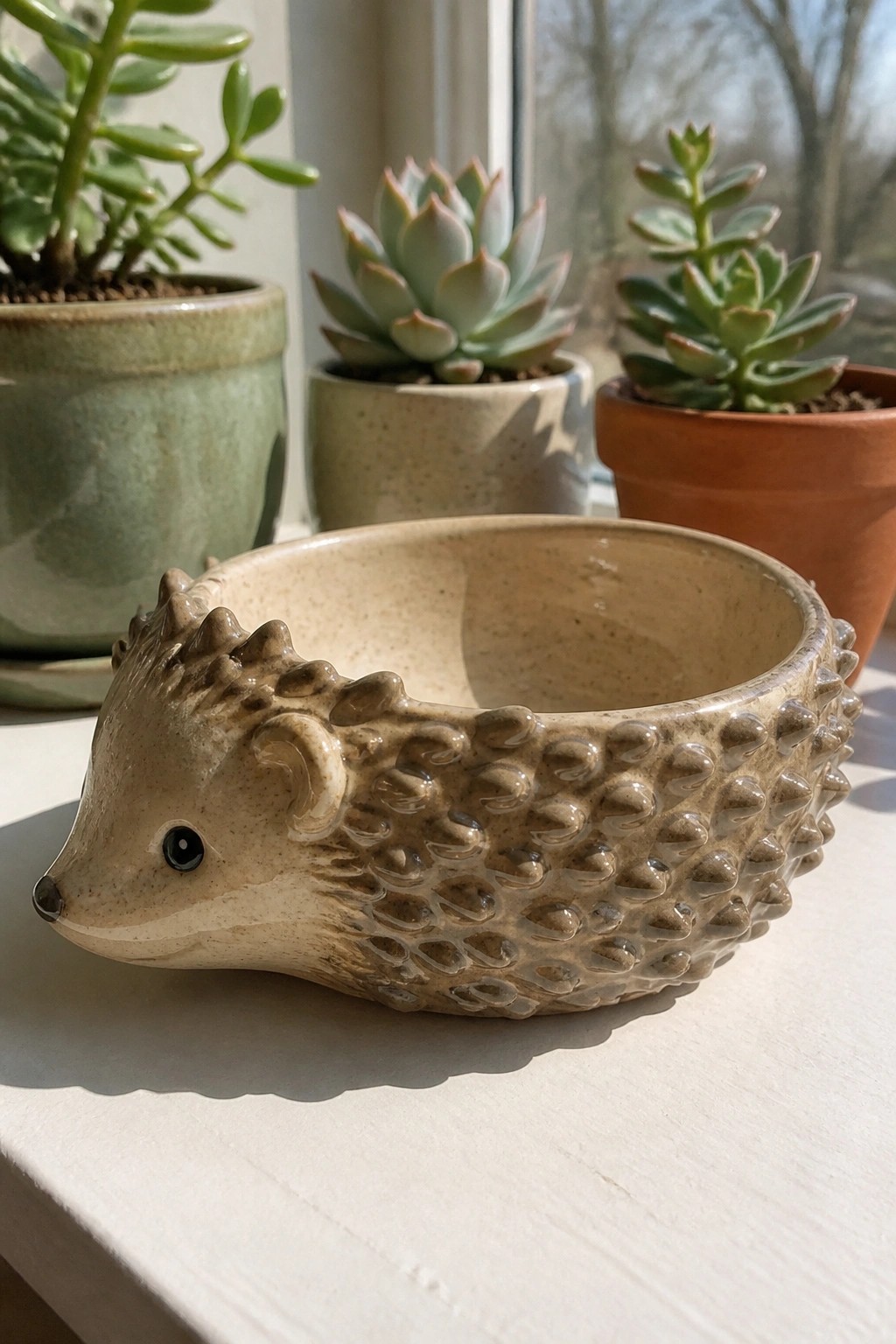
A small ceramic bowl shaped like a hedgehog works well as a decorative holder or mini planter. The front half stays smooth with simple facial details while the back half features raised spines that create a clear texture change. A speckled matte glaze in warm beige tones covers the entire surface and highlights the handmade ridges without needing extra color layers. This approach keeps the focus on form and surface finish rather than painted details.
The shape does a lot of the work here because the hedgehog silhouette makes the bowl instantly recognizable even in a single neutral glaze. It fits nicely on a desk or shelf for holding small items like rings or keys, or it can sit among houseplants as a low accent piece. You could adapt the same idea by scaling it up for a larger catch-all or by swapping the hedgehog for another animal with a similar rounded body. The speckled finish also photographs cleanly, which helps the design stand out in project roundups.
Speckled Layered Glaze on a Ribbed Planter Bowl
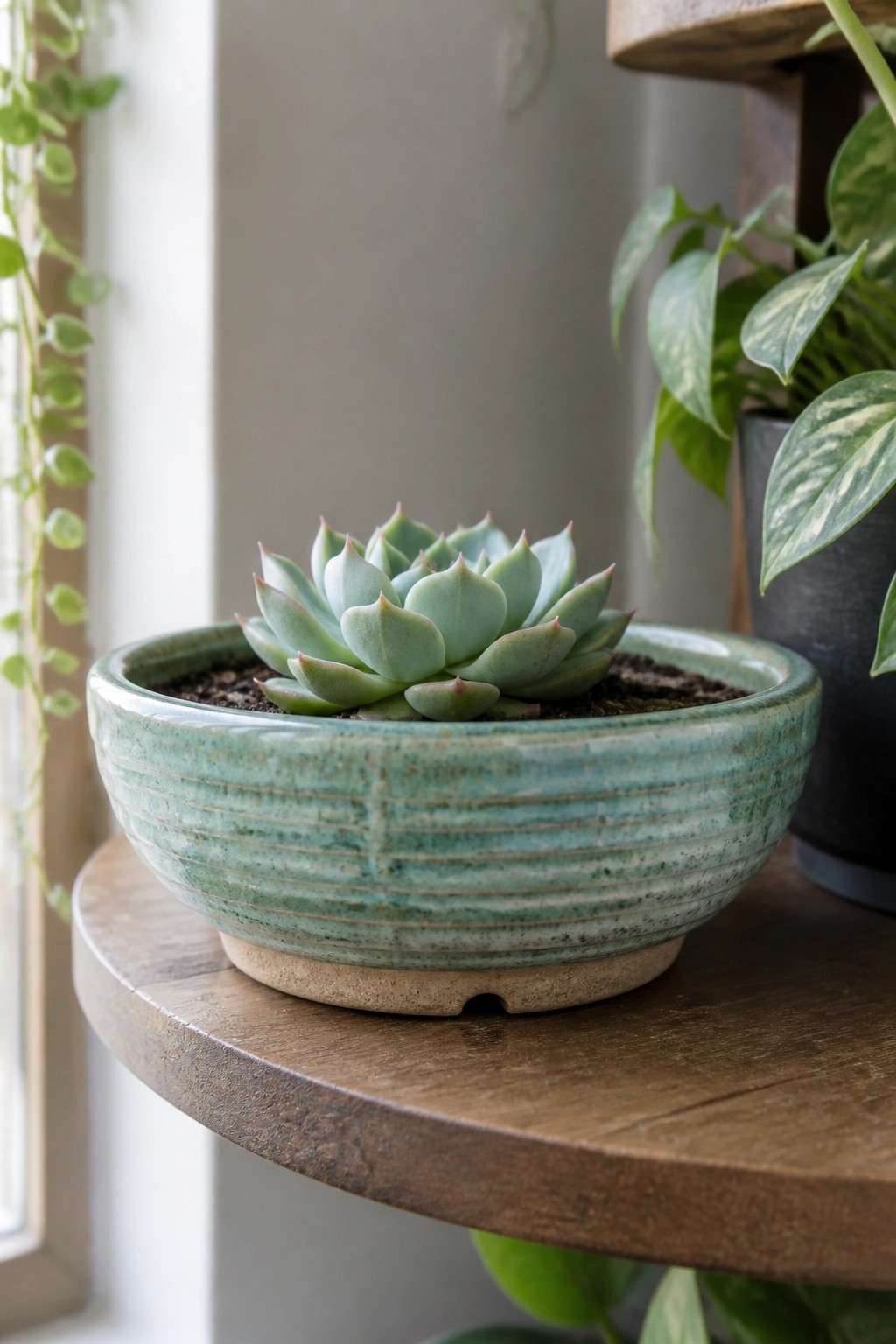
A low, wide ceramic bowl with horizontal ridges makes an effective succulent planter when coated in a layered speckled glaze. The glaze combines teal and muted green tones with visible speckling that shifts across the textured surface. This finish creates depth while keeping the overall look simple and plant-focused.
What makes this idea useful is the wide shape that lets the plant sit naturally without crowding. The ribbed texture helps the glaze pool and vary, so small changes in application produce noticeable differences in color and speckle density. You could scale the same form down for a set of three or swap the green layers for earth tones to match different rooms. The speckled matte surface also works well for hiding small firing marks if you are testing new glaze combos.
Layered Matte and Speckled Rim on a Deep Bowl
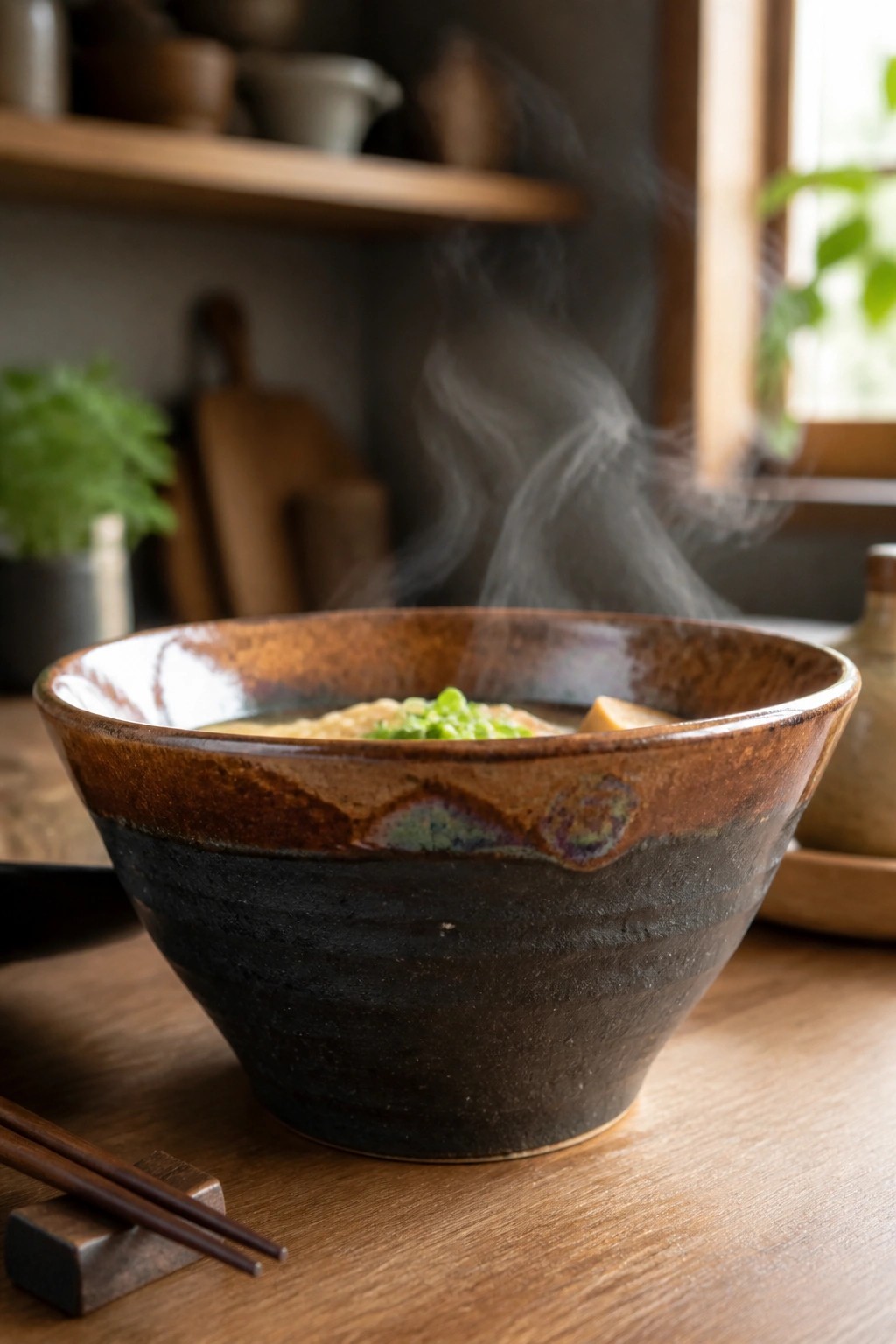
A deep ceramic serving bowl gets its impact from a clear split in finishes, with a dark matte glaze covering the lower two-thirds and a mottled brown glaze wrapping the rim. The upper glaze shows natural speckling and small color shifts that catch light without looking busy. This combination keeps the form straightforward while the glaze contrast supplies the detail.
What makes this idea useful is how the matte base hides wear from daily use and the rim glaze adds enough variation to stand out in a set of tableware. You could scale the same layering down to smaller cereal bowls or apply it to a wider salad bowl by adjusting how far the dark section reaches up the sides. In a kitchen this approach gives you one versatile shape that works for both plain meals and arranged dishes.
Speckled Matte Layers on a Wide Ceramic Serving Bowl
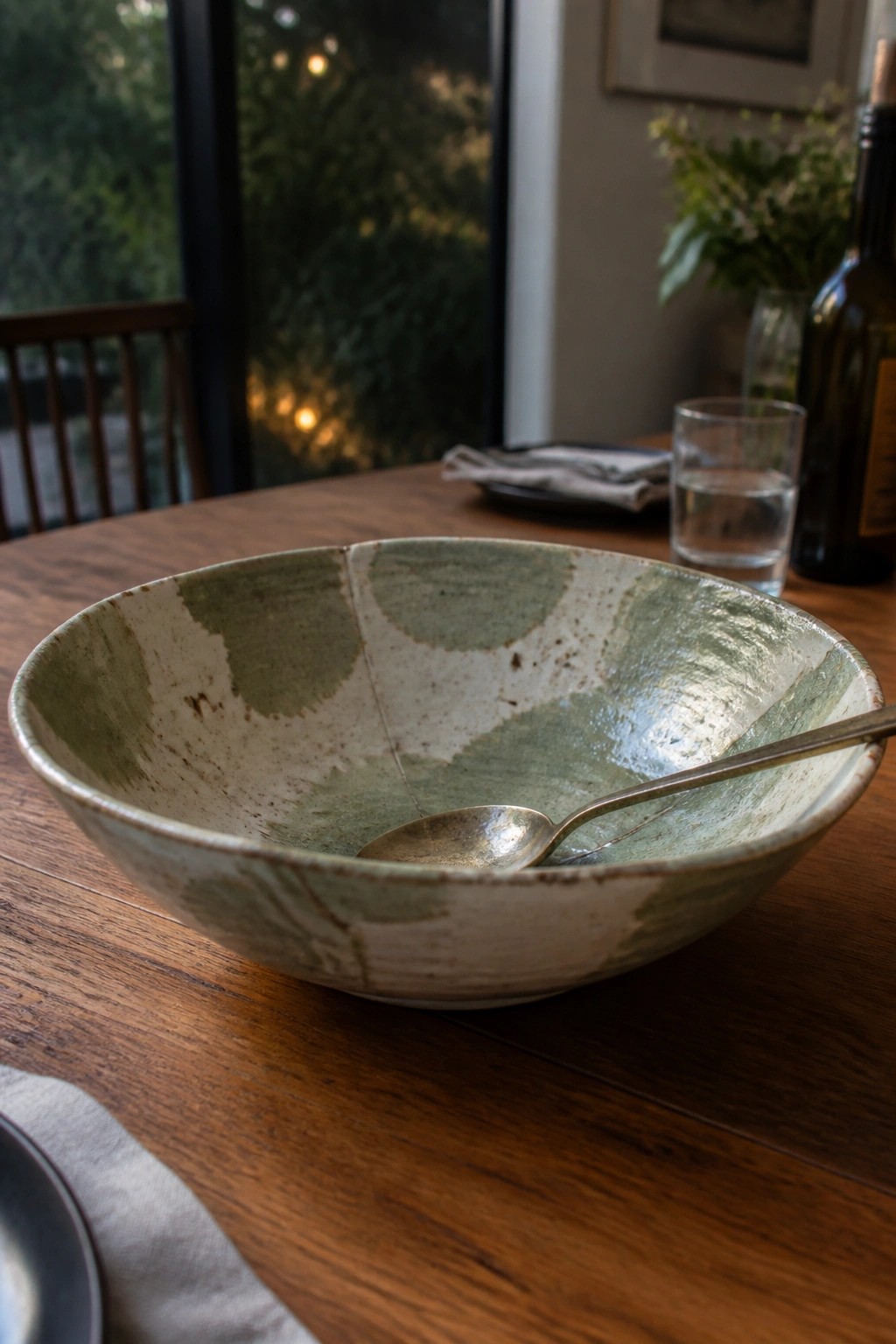
A wide ceramic bowl finished with a speckled matte glaze that combines soft green patches over a light base creates an organic, uneven surface. The glaze sits in thin layers with visible flecks and slight pooling, giving the bowl a natural stone-like appearance without any added carving or texture. This finish suits larger bowls because it emphasizes the simple curved form while keeping the surface practical for food use.
What makes this idea useful is how easily the same speckled layering can be adjusted by changing the thickness of the green wash to suit different clay bodies or firing temperatures. A piece like this works especially well as a salad or bread bowl on a dining table or for holding produce in the kitchen. You could rework the color mix into smaller nesting bowls or plates to build a matching set, or keep the same glaze on a taller cylinder shape for a utensil holder.
Speckled Matte Gray with Soft Green Interior
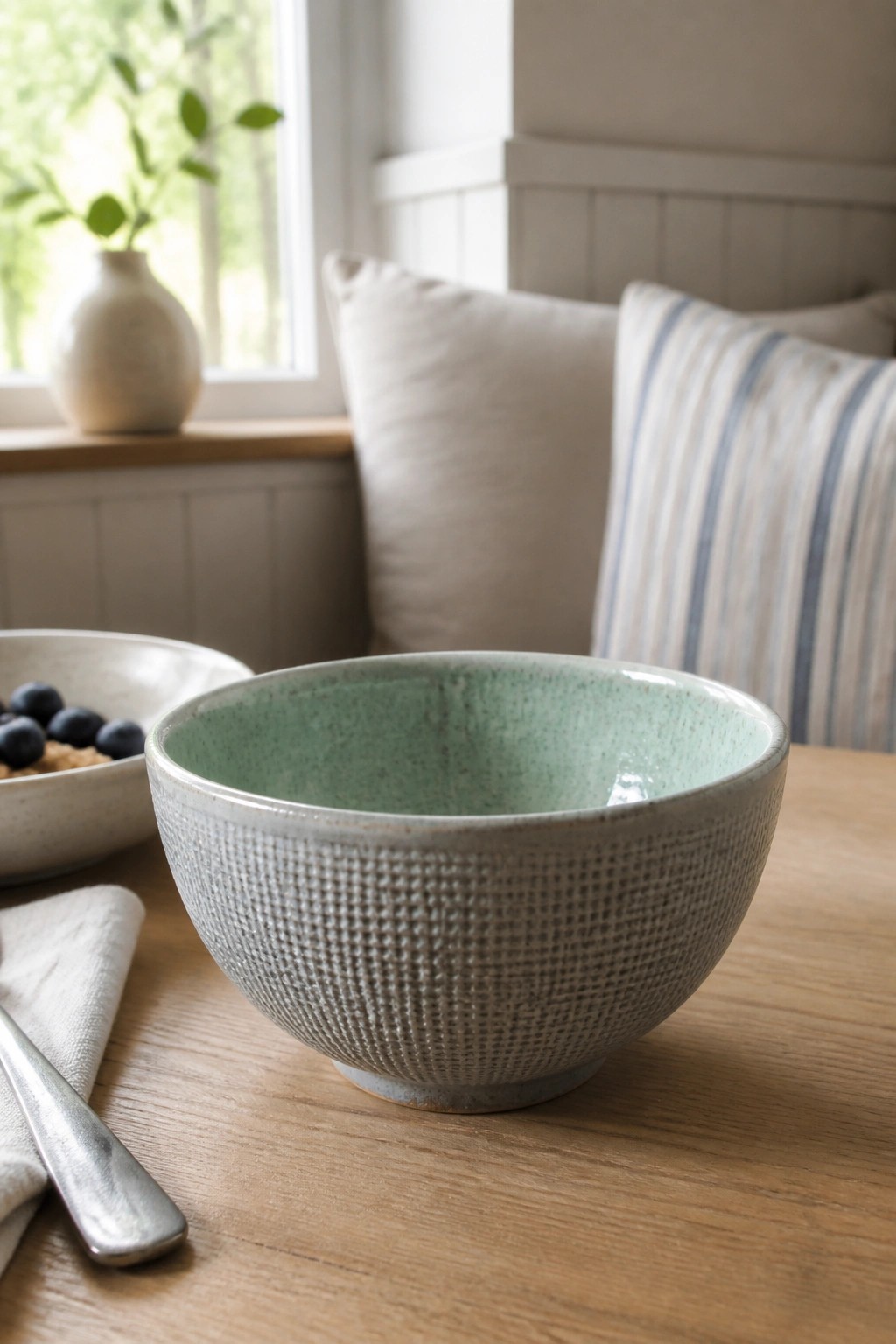
A medium-sized serving bowl uses a heavily dimpled texture across the outside paired with a speckled matte gray glaze, while the inside receives a lighter speckled green glaze that stops at the rim. The texture catches light differently on the gray surface and gives the bowl a clear handmade quality without added carving or painting. This approach fits the layered finish category by letting one glaze handle the exterior texture and a second glaze create contrast on the interior.
What makes this idea useful is how the texture provides a practical grip while the two glazes keep the bowl simple enough for daily table use. You could apply the same gray exterior and green interior to smaller cereal bowls or switch the inside color to a warm speckled tan for variety. In a kitchen setting the contrast between the two finishes helps the piece photograph well and stand out from plain single-glaze bowls.
Speckled Dark Glaze on a Small Dipping Bowl
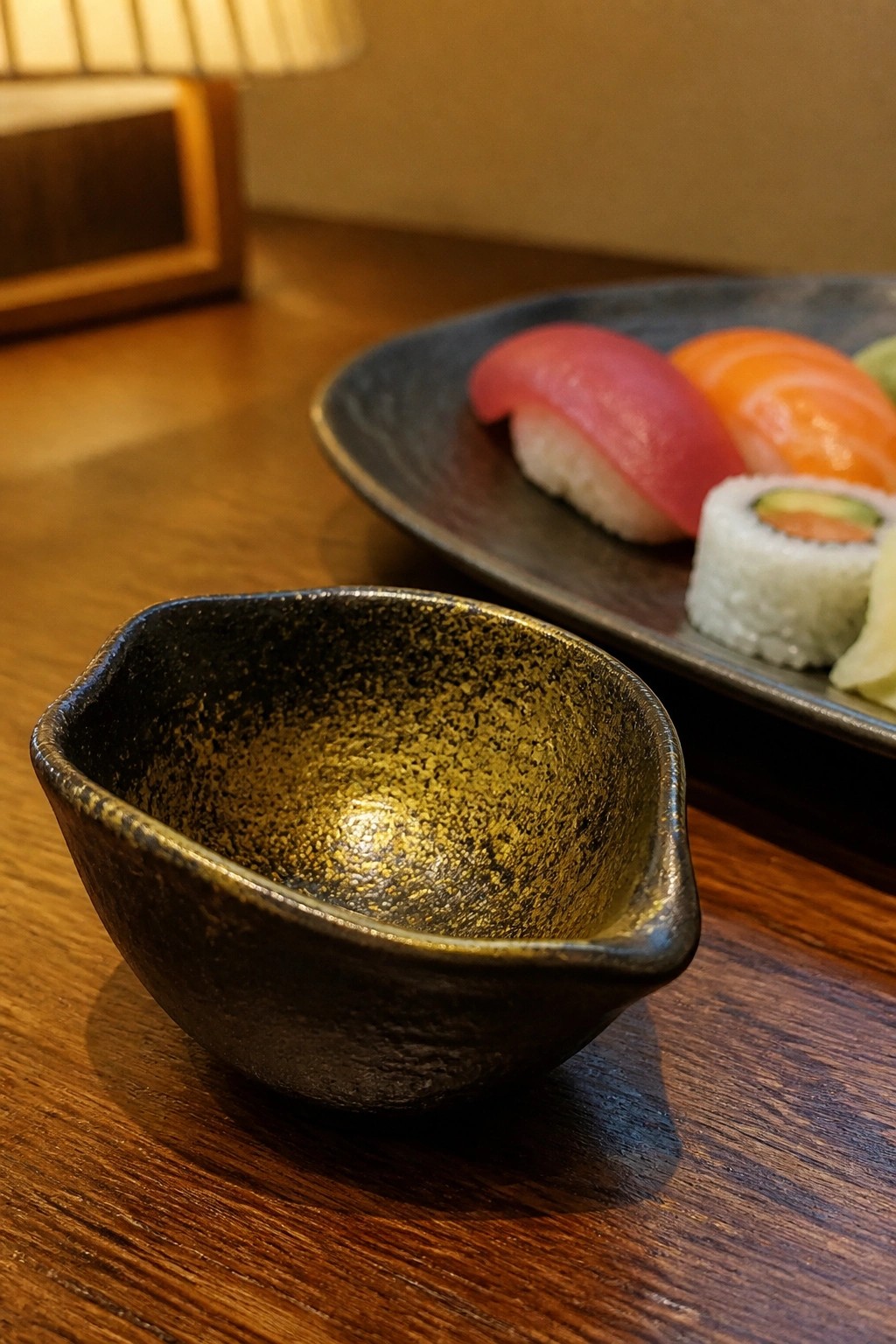
A small ceramic bowl gains strong visual interest from a dark speckled glaze that blends deep browns and blacks with scattered metallic gold flecks. The glaze sits unevenly across the surface, creating natural variation in sheen and color that emphasizes the pinched, slightly irregular rim. This finish suits a compact functional bowl meant for sauces or condiments rather than larger serving pieces.
What makes this idea useful is how the speckled glaze covers small surface flaws that often appear on handbuilt or wheel-thrown bowls. The small scale lets you test layered or reactive glazes without using much material. You could adapt the same glaze treatment to a set of four or five matching bowls for everyday table use or rework the shape into a slightly wider version for spice dishes.
Layered Purple Glaze with Speckled Base and Carved Leaf Details
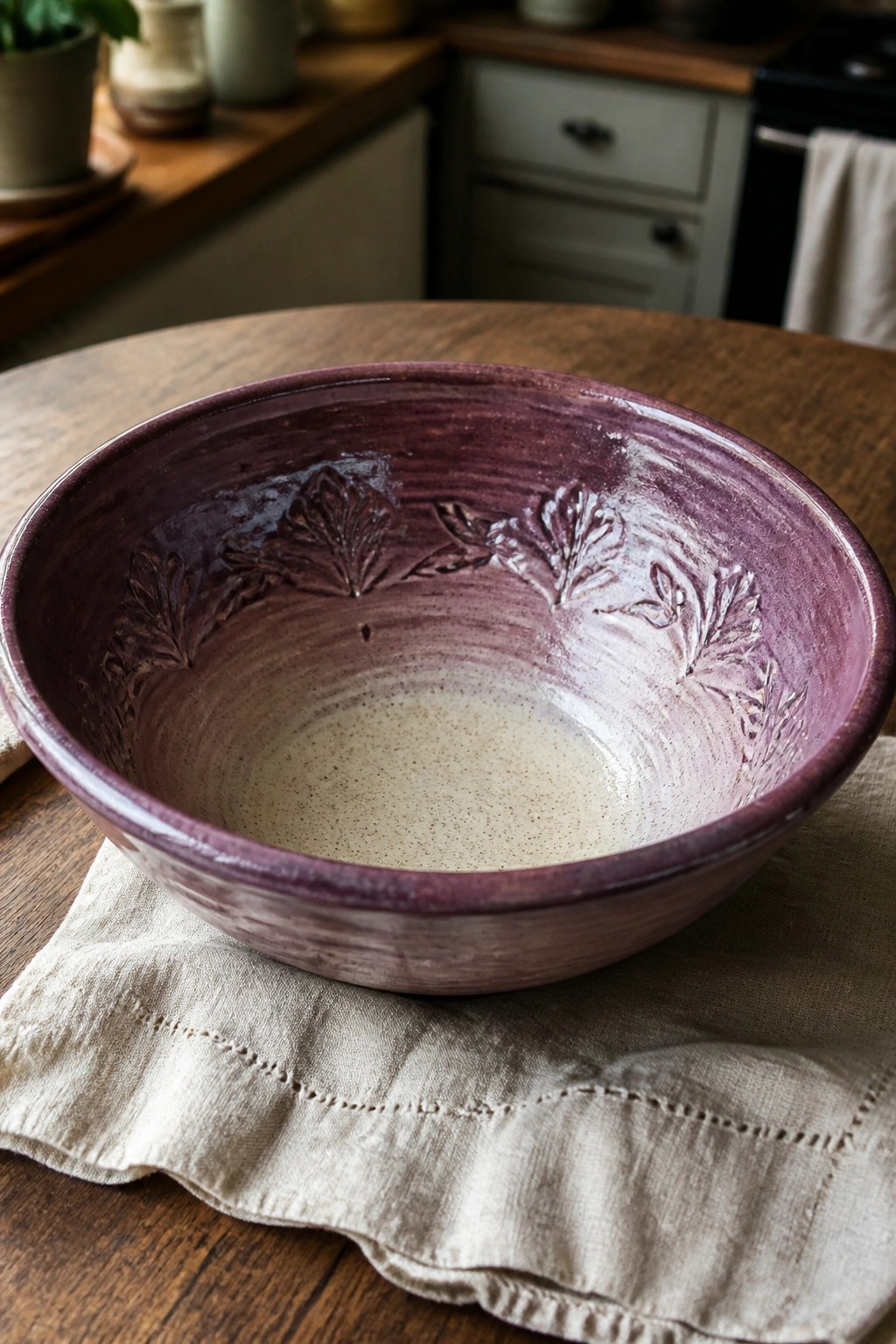
A wide bowl uses a deep purple glaze applied mainly to the rim and upper section, allowing a light speckled finish to show through on the lower interior. Carved leaf shapes run along the inside edge and catch the glaze differently than the smooth areas, giving the surface extra texture. This combines a matte layered finish with speckled contrast and simple sculpted details in one piece.
What makes this idea useful is how the carved leaves add interest without requiring extra colors or complex painting. The same layering works on smaller serving bowls or can be swapped for other stamp patterns like lines or dots if leaves feel too specific. In a kitchen this shape holds up well for mixing or salad serving, and the speckled base helps minor glaze variations blend in during firing.
Layered Pastel Stripes on a Speckled Bowl
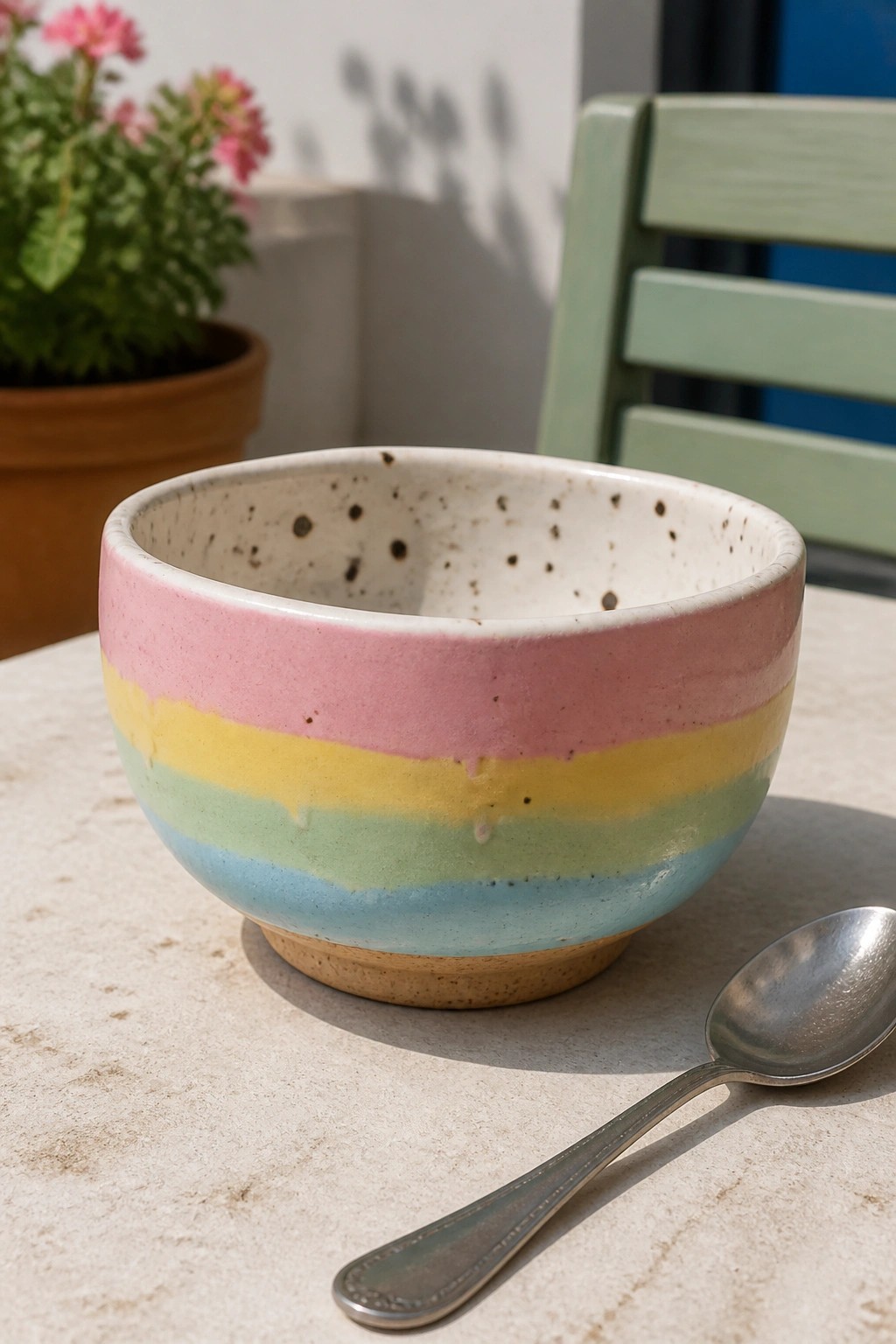
A ceramic bowl finished with wide horizontal bands of pink, yellow, mint green, and blue glaze creates a clean striped pattern around the exterior. The glazes show minor dripping where the colors meet, while the speckled white interior keeps the inside simple and functional. This approach works as a straightforward way to use multiple glaze colors in sections on a standard bowl form.
What makes this idea useful is how the horizontal bands turn an ordinary bowl into something that stands out on a kitchen table or breakfast counter without extra carving or handles. You could adapt the same layering by swapping in different color groups or applying the stripes to a larger mixing bowl instead. For gifts, the bright stacked look works well because it feels current and easy to match with everyday dishes.
Frequently Asked Questions
1. How do I prevent layered glazes from mixing too much during firing? Apply each layer thinly and allow full drying between coats. Fire at a moderate ramp rate to let the glazes mature at their own rates while maintaining distinct bands. Test small samples first to see how your specific combination behaves in the kiln.
2. Are speckled glazes safe for food contact bowls? Many commercial speckled glazes are formulated to be food safe once fired correctly, but always check the manufacturer label for certification. Avoid using glazes with heavy metals like lead or cadmium on interior surfaces, and run a simple lemon juice test after firing to check for leaching.
3. What causes matte finishes to appear uneven on pottery bowls? Uneven application thickness or inconsistent kiln temperature often leads to patchy matte results. Apply glazes in even coats using a soft brush, and ensure your kiln has good heat circulation. Bisque firing the piece to the right temperature beforehand also helps the matte glaze adhere uniformly.
4. Can I combine speckled and matte glazes on the same bowl without issues? Yes, many potters layer a speckled glaze under a matte topcoat for contrast. Choose glazes with similar firing ranges and expansion rates to avoid cracking. Start with thin layers and fire a test tile to confirm the speckles show through without bubbling.
5. How should I store and mix glaze materials for these finishes? Keep dry ingredients in airtight containers away from moisture, and always wear a mask when mixing. Use distilled water for consistent results, and label each batch with the recipe and firing cone. Strain mixtures through a sieve before use to remove lumps that could affect speckle distribution or matte texture.

Pottery Path is my cozy corner of the internet where I share clay ideas, pottery inspiration, and simple projects you can recreate at home. I love exploring everything from air dry clay to handbuilt pottery to cute minis that brighten your day. My goal is to make clay crafting feel easy, fun, and welcoming for anyone who wants to try it.
You will find beginner friendly tutorials, creative pottery painting ideas, and lots of warm inspiration for slow and happy crafting. If you enjoy hands on creativity, this space will feel like home.