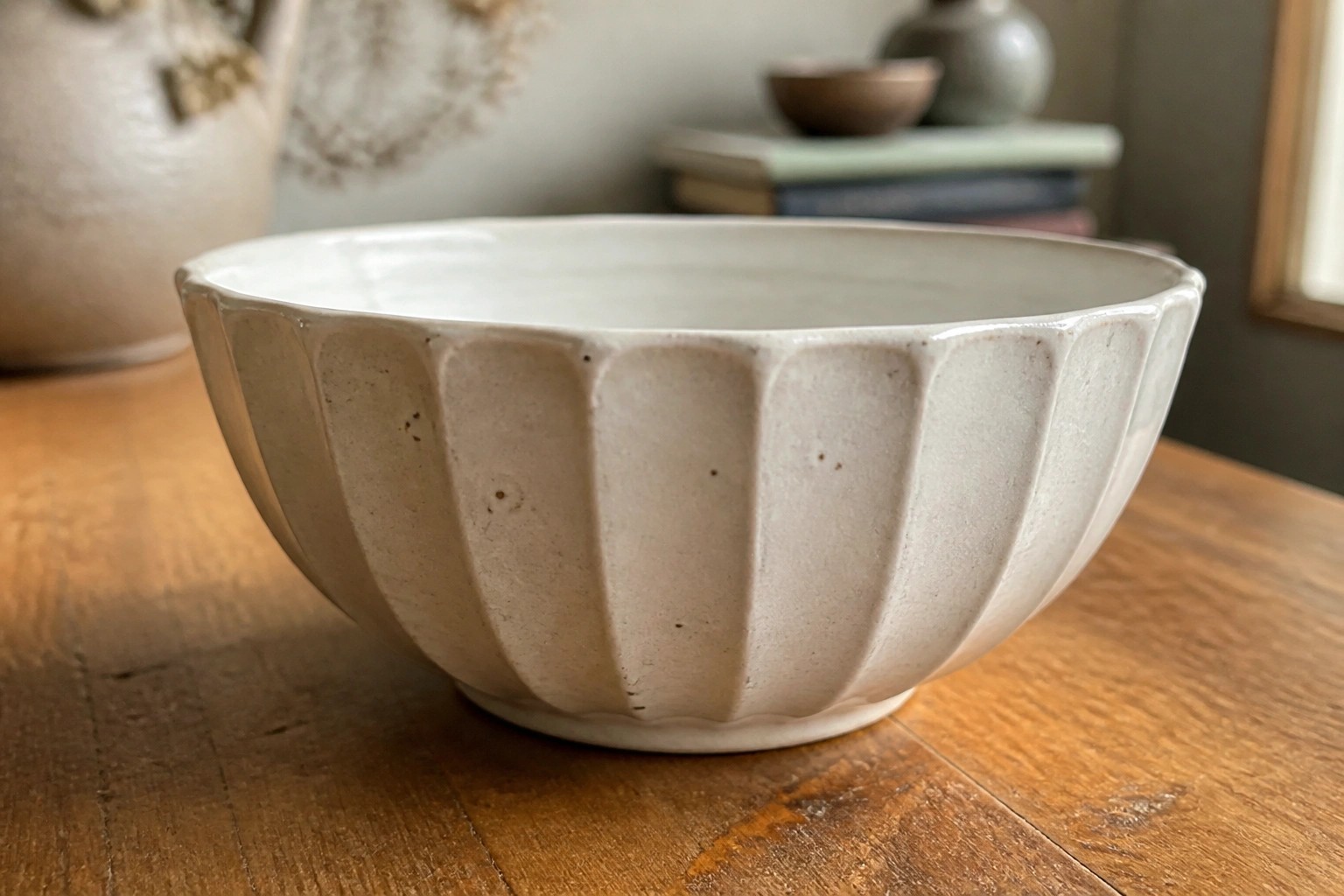
I have found that ceramic bowls can easily become part of the decor in my house.
They do not need special spots or lighting to look right.
My collection has grown with pieces that match the simple style I prefer.
I picked out some designs that show how this can work in different rooms.
Each one has its own quiet appeal without trying too hard.
Fluted Ceramic Bowl with Matte Speckled Finish
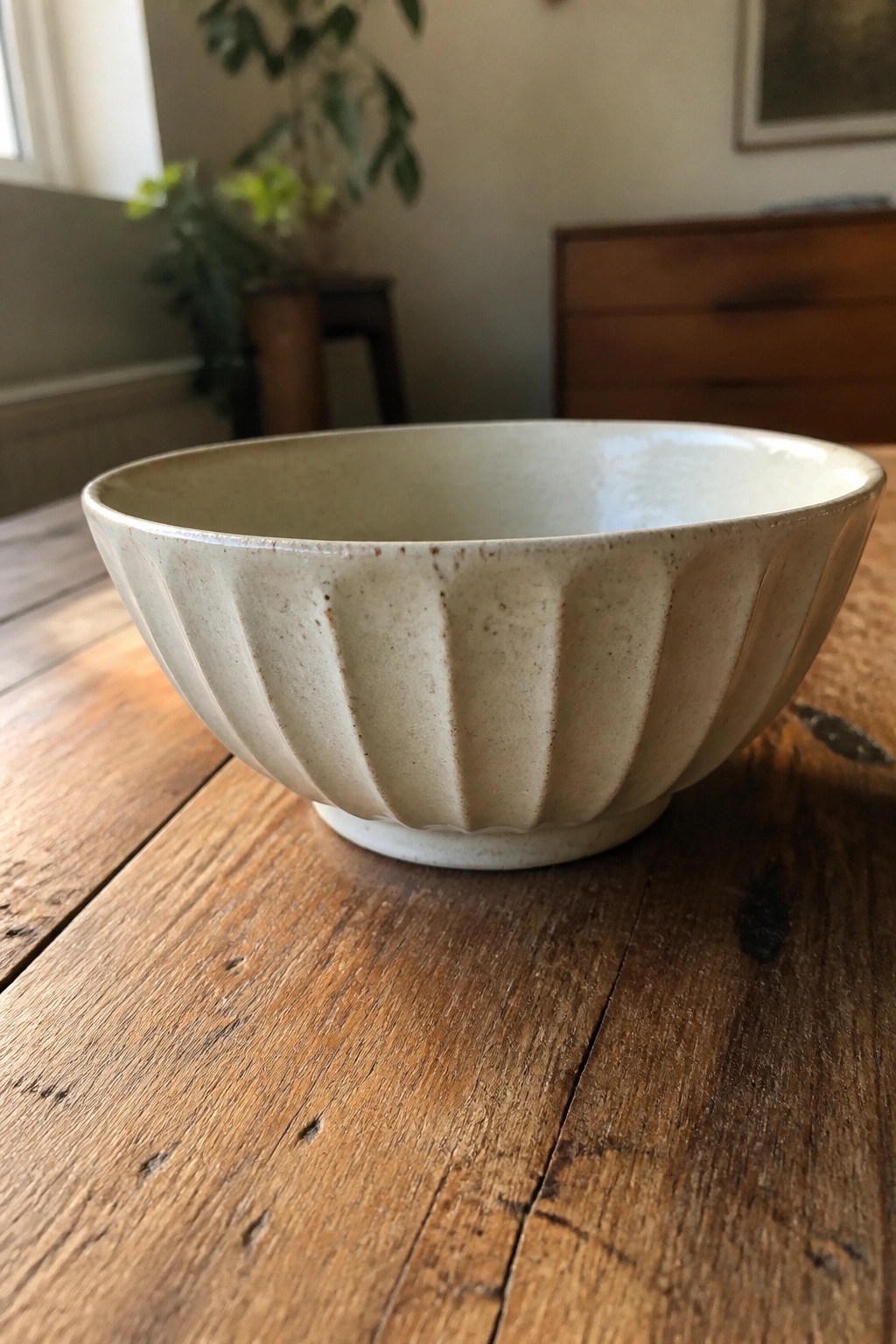
A ceramic bowl shaped with evenly spaced vertical flutes around the exterior gives the form extra structure and shadow play. The simple matte glaze in an off-white tone with light brown speckles keeps the focus on the ridges rather than on color or added decoration. This approach turns a basic round bowl into a piece that works for both everyday table use and display.
What makes this idea useful is how the fluting adds visual weight without extra steps like carving or painting. The same shape could be scaled down for individual serving bowls or widened slightly for a larger salad bowl while keeping the ridge pattern. In a kitchen or on an open shelf the ridges catch light and help the piece stand out next to smoother pottery. A version in a different glaze color would adapt easily for seasonal table settings or as a gift.
Pastel Gradient Nesting Bowls
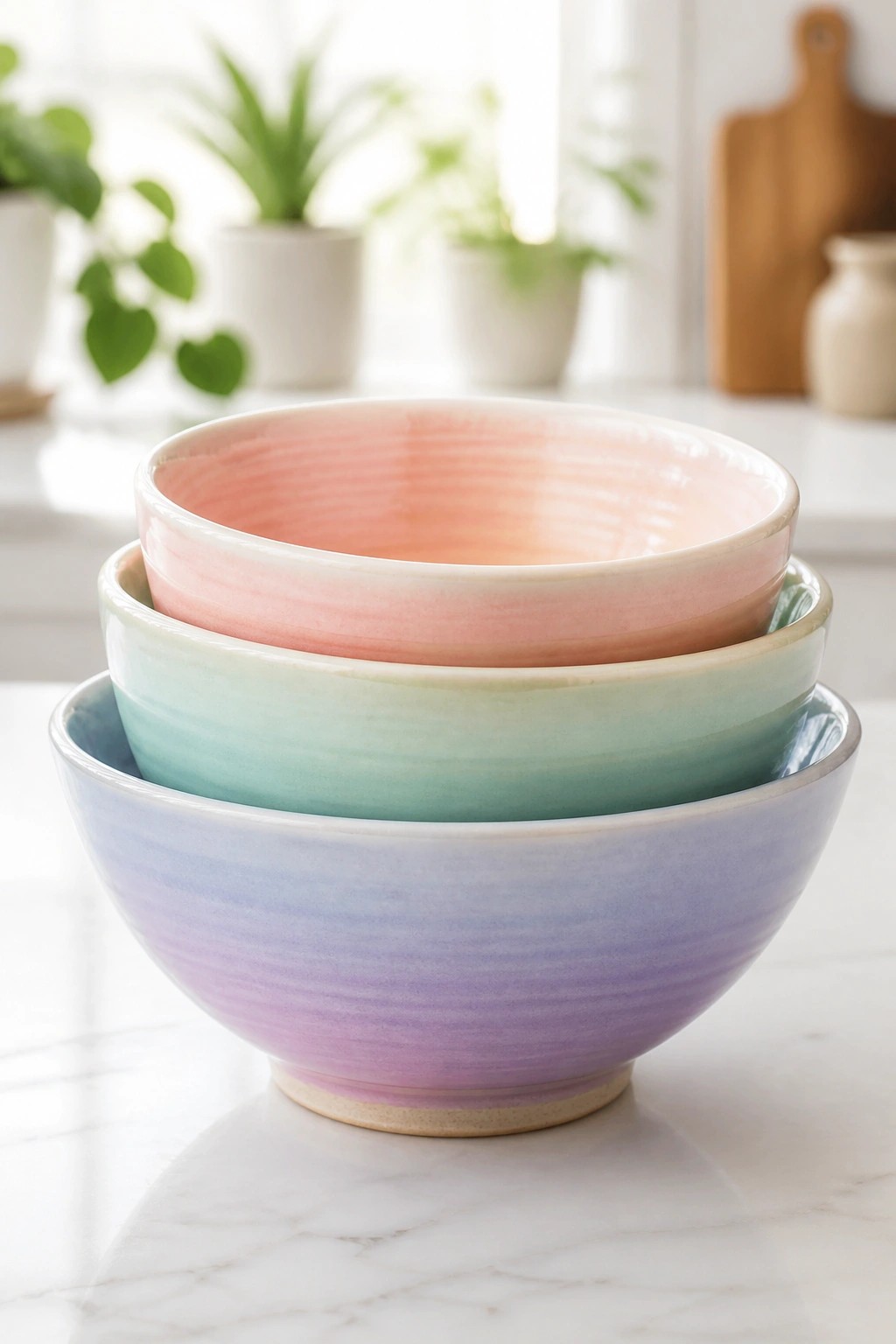
These ceramic bowls form a nesting set of three, each glazed with a soft color gradient that moves across the surface in horizontal bands. The top bowl shifts from peach to cream, the middle from mint to pale green, and the bottom from lavender to blue, all finished with fine raised ridges inside that give the glaze extra depth. The idea centers on using simple wheel-thrown forms and layered glazes to create a coordinated set rather than matching solid colors.
What makes this idea useful is how the nesting shape keeps storage compact while the gradients let you mix and match pieces at the table. You could adapt the same glazing method to a single large mixing bowl or a set of smaller prep bowls by blending just two colors instead of three. In a kitchen this approach adds color without patterns or decals, and the same gradient technique works well on mugs or plates if you want to expand the collection later.
Speckled Bowl with Loose Blue Brushwork
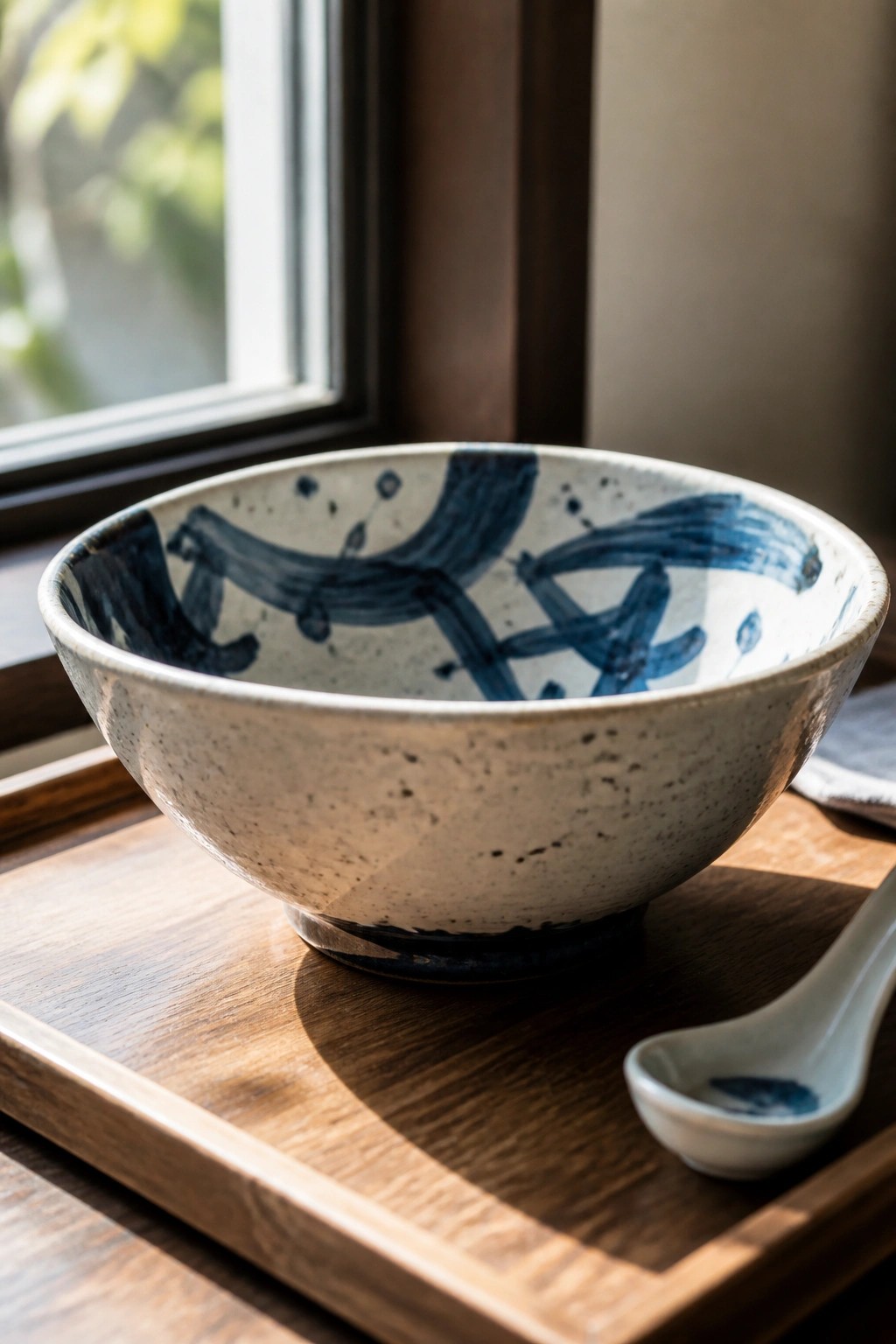
A wide ceramic bowl with a slightly tapered base gives you a practical shape for serving or holding small items on a table. The design relies on broad blue brushstrokes and scattered dots applied over a light speckled glaze, which keeps the surface lively while the neutral base prevents the pattern from feeling heavy. This approach works as a kitchen or tableware piece that can also sit out as decor. The visible texture in the clay and glaze adds depth that reads as handmade without extra carving or detail work.
What makes this idea useful is how the simple brushwork can be copied onto plates or a matching spoon set without needing precise lines. The neutral speckled surface makes the bowl easy to mix with other dishes, and the wide opening gives you room to use it for fruit, snacks, or even a small plant. You could rework the same strokes on a taller vase or a set of ramekins if you want to expand the collection. For daily use, the sturdy rim and foot make it more practical than thinner decorative bowls.
Crackle-Glazed Pedestal Bowl
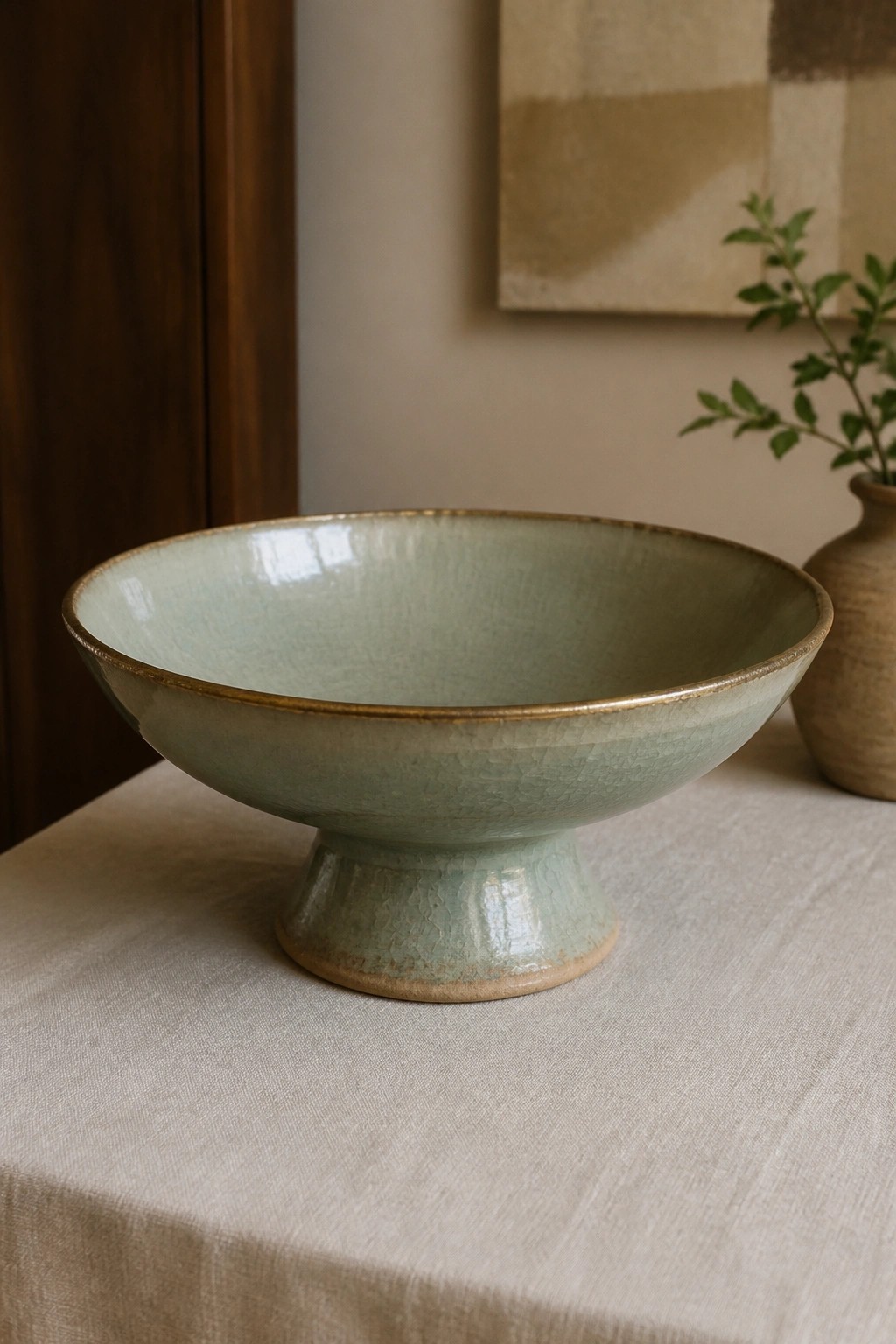
A wide, shallow ceramic bowl raised on a short footed base gives the piece an elevated profile that works for both display and light serving. The soft green crackle glaze covers the entire surface and creates a fine network of lines that catch light, while the narrow brown rim defines the edge without overpowering the form. This style of bowl sits between functional tableware and simple decor, so it can hold fruit, bread, or stand empty as a focal point on a table or shelf.
What makes this idea useful is the raised base, which keeps the bowl from looking flat and makes contents easier to see. You can adapt the same shape by changing the glaze color to match different rooms or by making the foot slightly taller for more height. In a kitchen or dining area the form works well for everyday fruit or rolls, and the crackle texture photographs clearly so the design translates well to Pinterest boards when paired with neutral linens. For a smaller version, reduce the diameter and use it as a catch-all on a console or desk.
Bowl with Openwork Rim in Contrasting Glazes
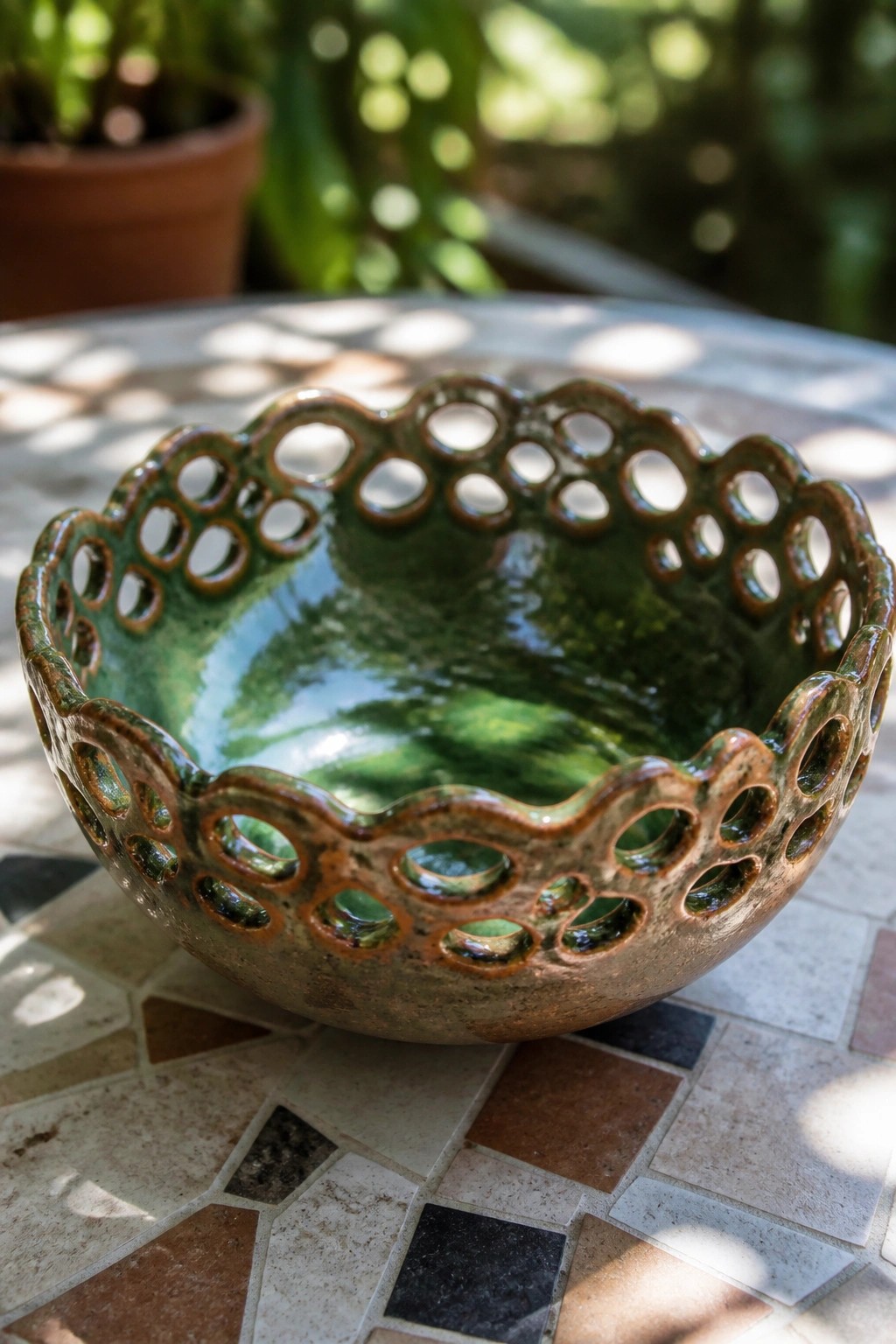
A round ceramic bowl uses a wide, scalloped rim pierced with evenly spaced circular cutouts to create an open pattern around the top edge. The interior carries a glossy green glaze while the exterior and rim show a mottled brown that emphasizes the clay texture and the cut edges. This approach keeps the main bowl form simple but shifts the focus to the rim treatment for visual interest.
What makes this idea useful is how the cutouts let light and shadow play across the piece without extra surface decoration. It works especially well as a decorative bowl for holding fruit, keys, or small plants on a table. The same rim technique could be scaled down for smaller dishes or repeated on a taller cylinder to make a matching vase. The contrast between the solid lower half and the patterned top also helps the shape photograph clearly for sharing.
Vertical Ridges with Soft Green Glaze
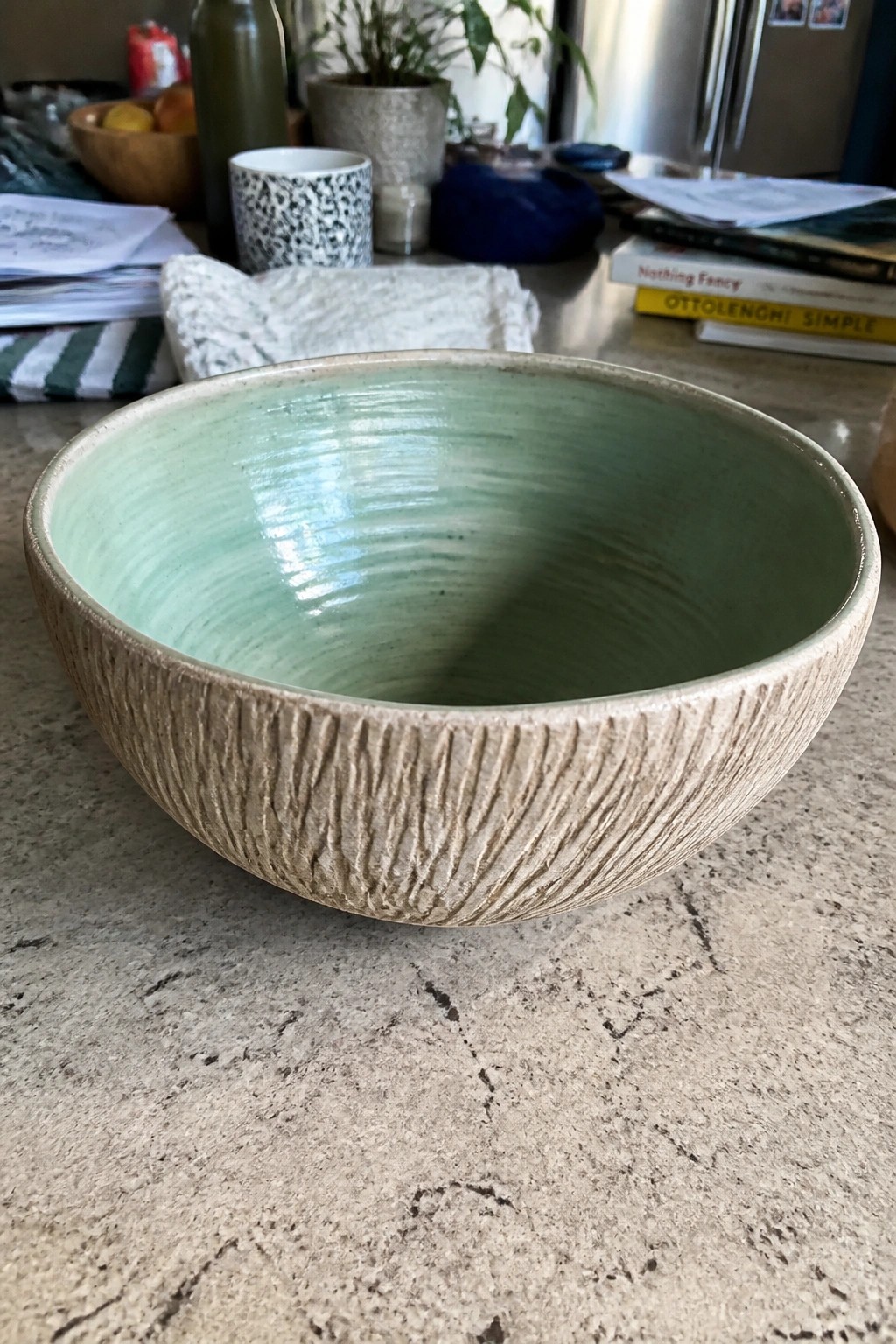
A wide ceramic bowl combines a smooth mint green glaze on the interior with an unglazed beige exterior carved into vertical ridges. The ridges run from the rim toward the base, adding linear texture that plays with light across the form. This design keeps the shape simple while letting the surface treatment carry the visual interest.
The shape does a lot of the work here as a countertop fruit bowl or salad server. You could adapt the vertical ridges by pressing a rib tool into leather-hard clay or try the same inside-outside color split on a narrower bowl for snacks. In a kitchen this kind of piece stands out on a shelf because the texture reads clearly from a distance without needing extra color or pattern.
Double Bowl Server with Gold Dot Details
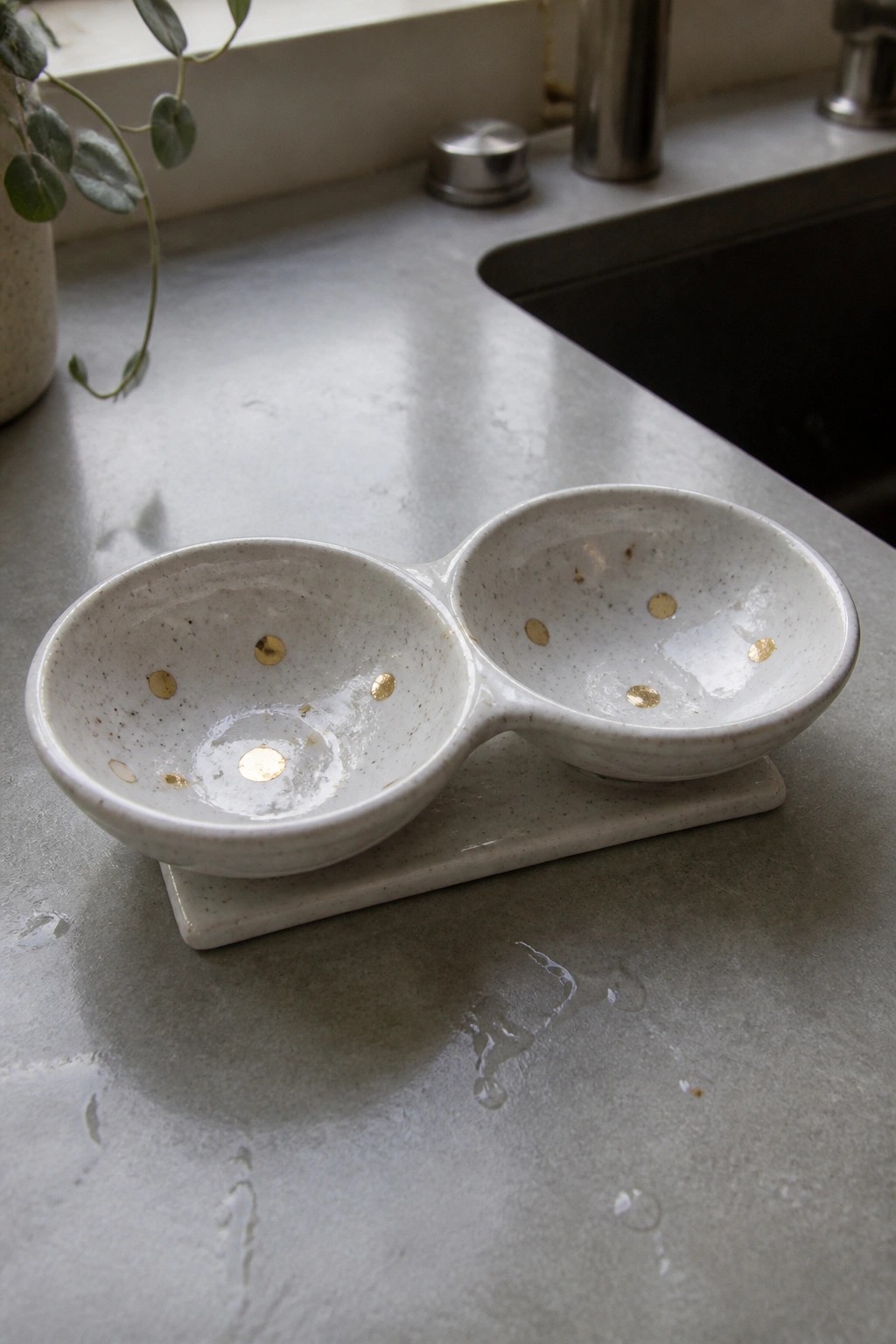
A double ceramic bowl set formed from speckled white clay joins two rounded compartments at the center above a flat rectangular base. Small gold dots applied inside each bowl create contrast against the matte, textured surface. This layout functions as a single kitchen piece for holding dips, sauces, or small snacks without separate dishes.
The joined shape keeps everything stable on a counter while using less space than two individual bowls. You could change the gold dots to other colors or cluster them differently for a custom look, or make a larger version for bigger gatherings. This works well in a kitchen for condiments or near a sink as a small soap holder. The connected design also translates easily to a two-part ring dish or desk organizer.
Speckled Pink Bowl With a Hand-Thrown Spiral Base
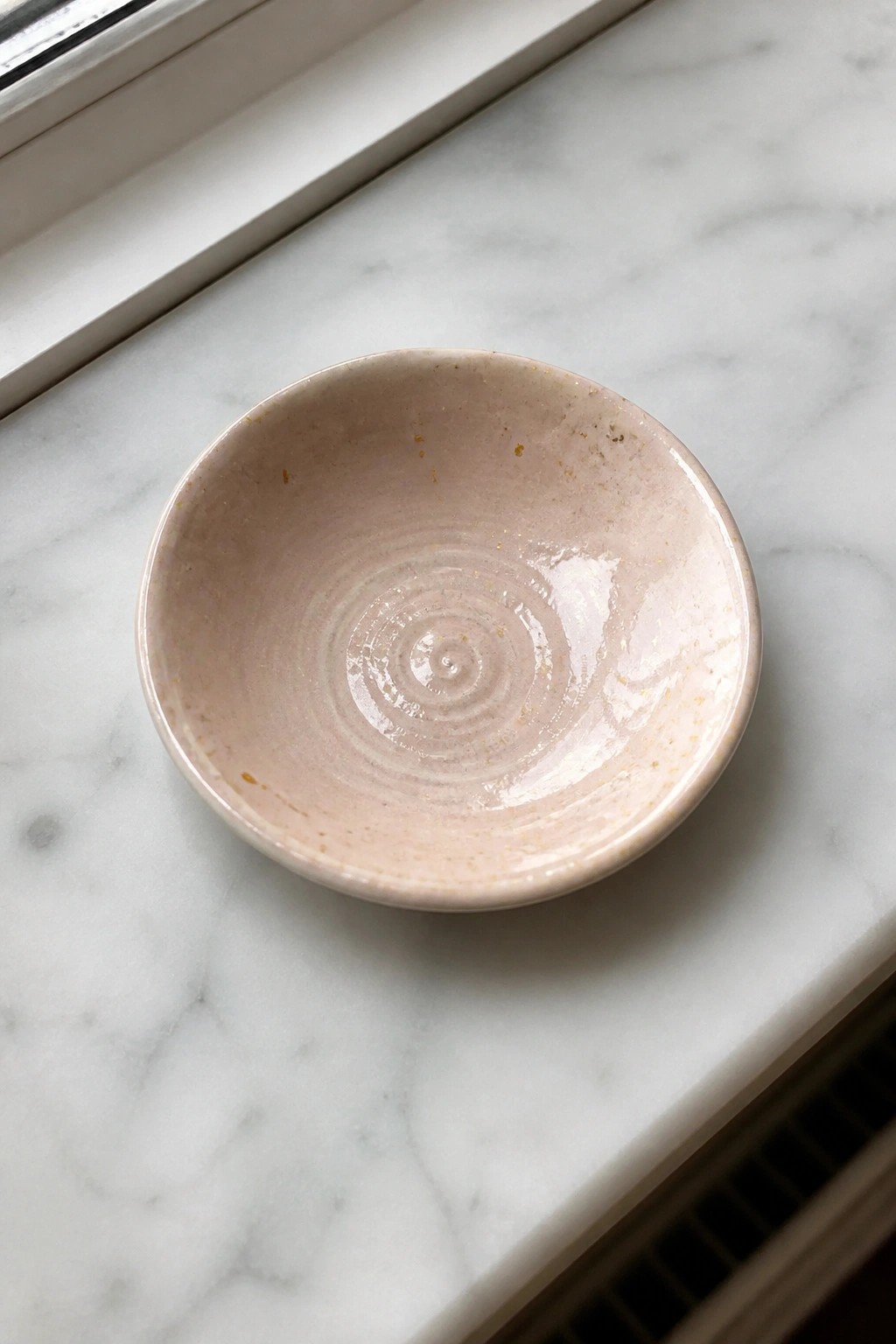
A small wheel-thrown bowl stands out when the throwing rings stay visible and the maker adds a clear spiral at the center. The soft pink glaze with fine speckles keeps the surface simple while the glossy finish reflects light across the ridges. This approach fits the category of everyday decorative bowls that also serve as small tabletop pieces.
What makes this idea useful is how the spiral gives the inside visual interest without added color or carving. The compact size works well as a catch-all for keys or jewelry on a dresser. You could adapt the same form by using a matte glaze in a cooler tone or making a slightly wider version for a desk tray. In a kitchen, this shape holds small portions of salt or spices without needing extra decoration.
Two-Tone Spouted Bowl With Matching Spoon
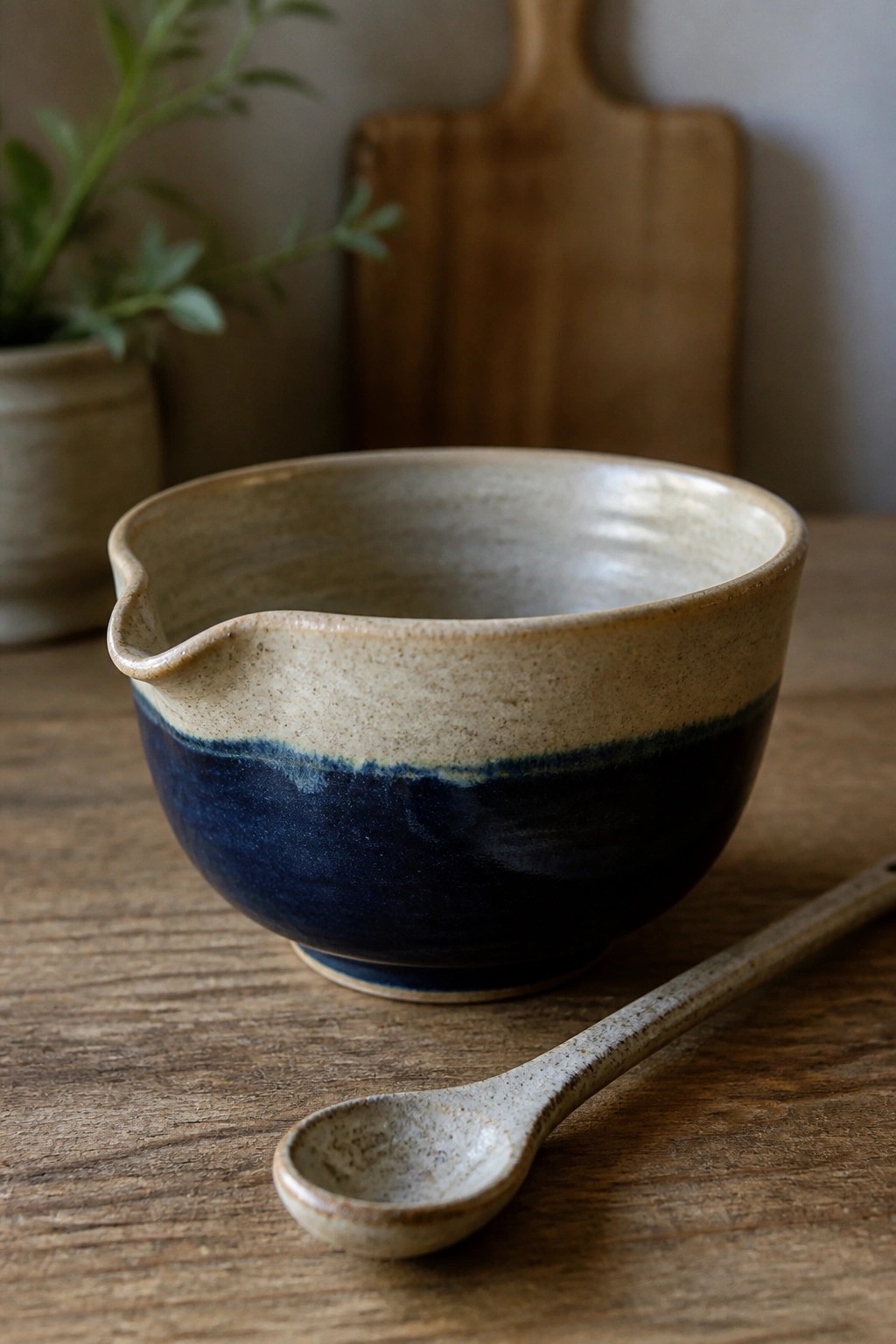
A handmade ceramic bowl with a built-in pour spout combines a light speckled beige glaze on the upper half with a deep blue glaze covering the lower portion. The clean horizontal division between the two glazes gives the bowl a simple structured look while the spout adds a functional detail for pouring. This style fits into the category of kitchen serving pieces that can also sit out as decor.
What makes this idea useful is the spout turns an ordinary bowl into something more practical for sauces or dressings without needing a separate jug. The two-tone glaze approach is easy to adapt by changing the color split or trying it on different bowl sizes to create a matching set. Pairing it with a small spoon in the same glaze keeps the pieces together and gives you a ready-to-use serving combination for the table or counter.
Dimpled Rim Drainage Bowl
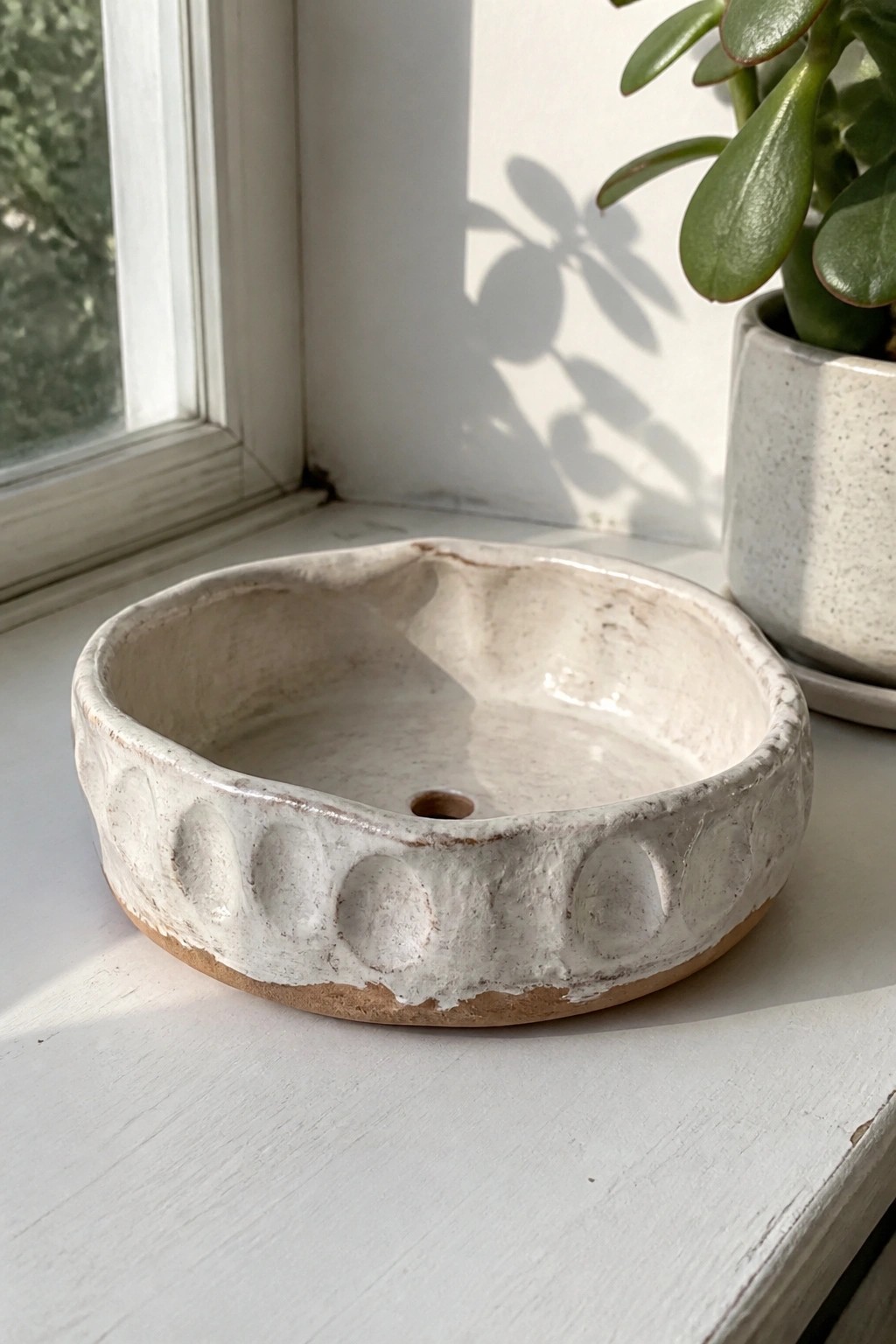
A small ceramic bowl formed with repeated oval impressions along the rim creates a scalloped edge that gives the piece subtle structure without added decoration. The white glaze sits unevenly over the clay, allowing the natural base color to show through near the bottom, while the central hole provides drainage. This approach suits a compact planter or shallow catch-all that stays functional on tight surfaces like windowsills or shelves.
The drainage hole paired with the small scale makes this shape easy to adapt for succulents or small herbs without extra saucers. You can recreate the rim texture using simple stamps or finger presses on other bowls or trays, and the neutral glaze works across kitchen, bathroom, or desk settings. For a gift version, keep the same rim treatment but increase the diameter slightly to turn it into a jewelry dish or soap holder.
Scalloped Pink Ceramic Bowl with Speckled Glaze
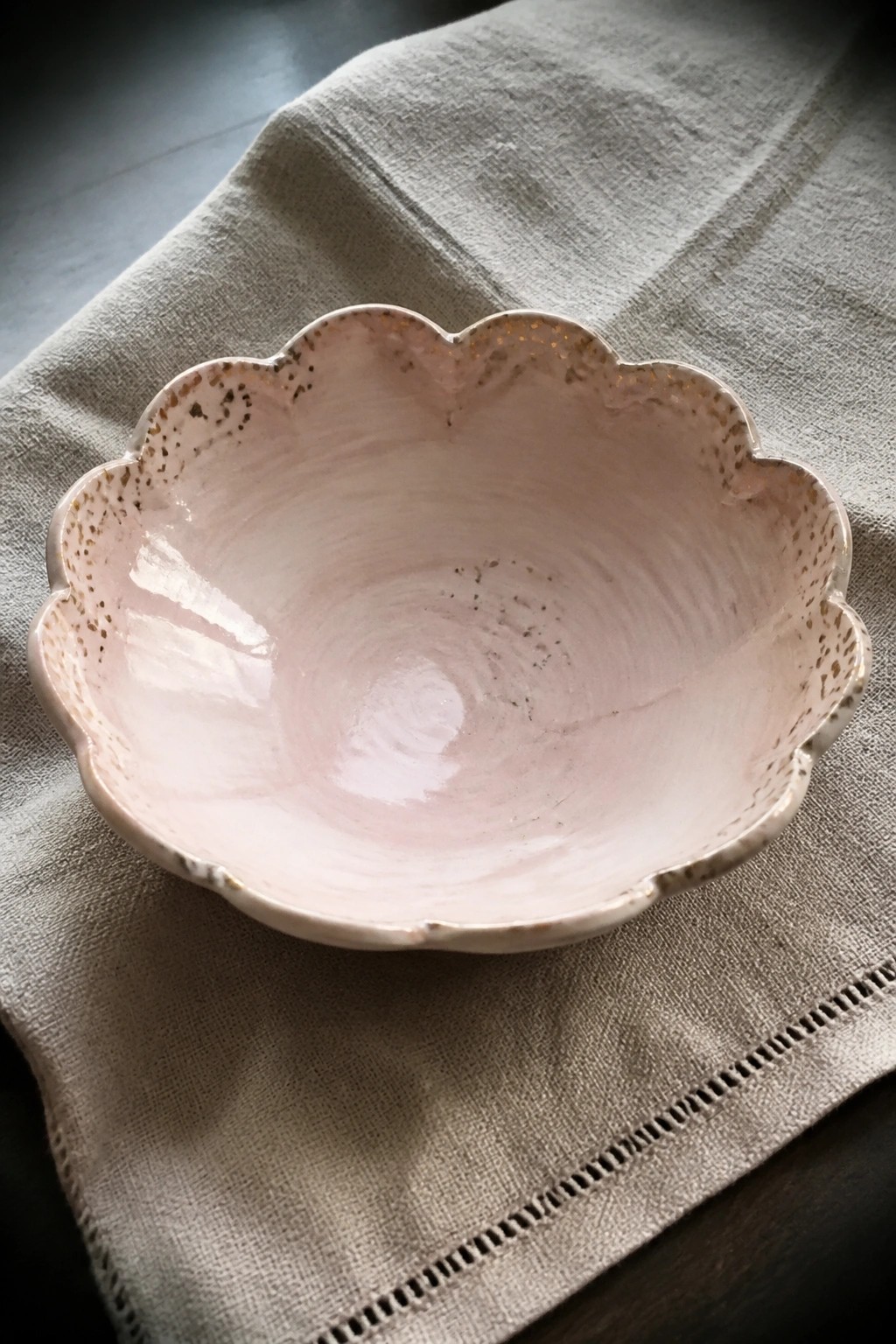
A ceramic bowl shaped with a wavy scalloped rim gives a flower-like outline that stands out on its own. The soft pink glaze carries dark speckles and faint gold flecks that break up the surface and catch light. This approach keeps the form simple while the rim detail and glaze variation do the visual work. It functions as a small serving bowl or catch-all that still reads as handmade pottery.
What makes this idea useful is how the scalloped edge can be repeated on plates or trays in the same glaze for a matching set. The shallow depth suits it for snacks or fruit on a table rather than deep storage. You could scale the same rim shape down for ring dishes or up for a larger salad bowl without changing the glaze. In a kitchen the speckled pink surface contrasts nicely with wood or linen and avoids looking too plain.
Neutral Glazed Ceramic Bowl for Kitchen Prep
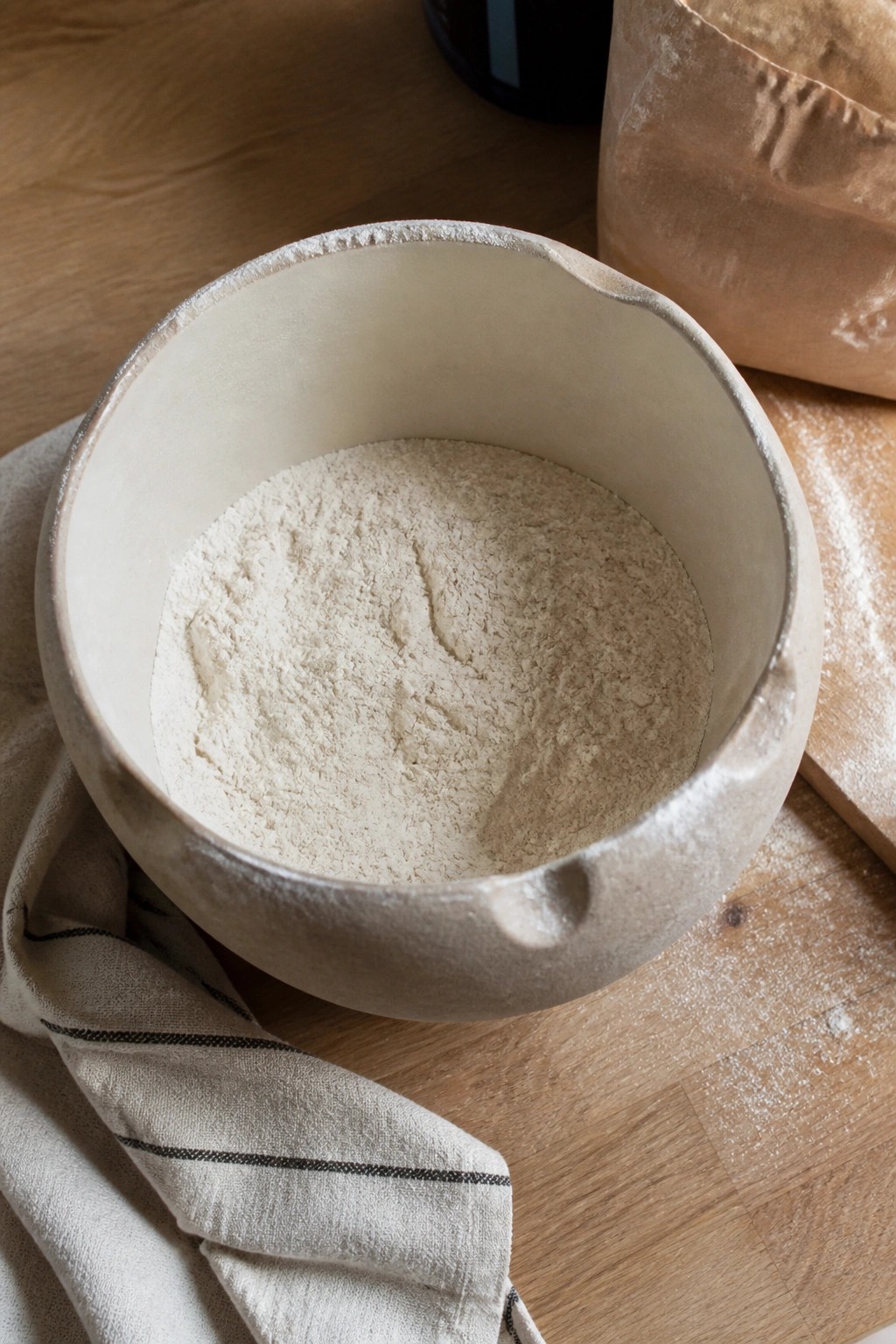
A handmade ceramic bowl with a wide, organic opening and soft matte glaze serves as a practical prep bowl for dry goods like flour. The rounded form and slightly irregular rim give it stability on the counter while the light neutral tone blends easily with other kitchen items. This style fits the category of a functional kitchen bowl that stays useful without needing extra decoration.
What makes this idea useful is the straightforward shape that works for mixing, storing, or displaying ingredients on a counter or shelf. You could scale it down for smaller tasks like holding salt or nuts, or make a deeper version for dough rising. The plain surface leaves room to try different clay tones or add a single stamped mark if you want a subtle variation later.
Swirling Glaze Ceramic Bowl
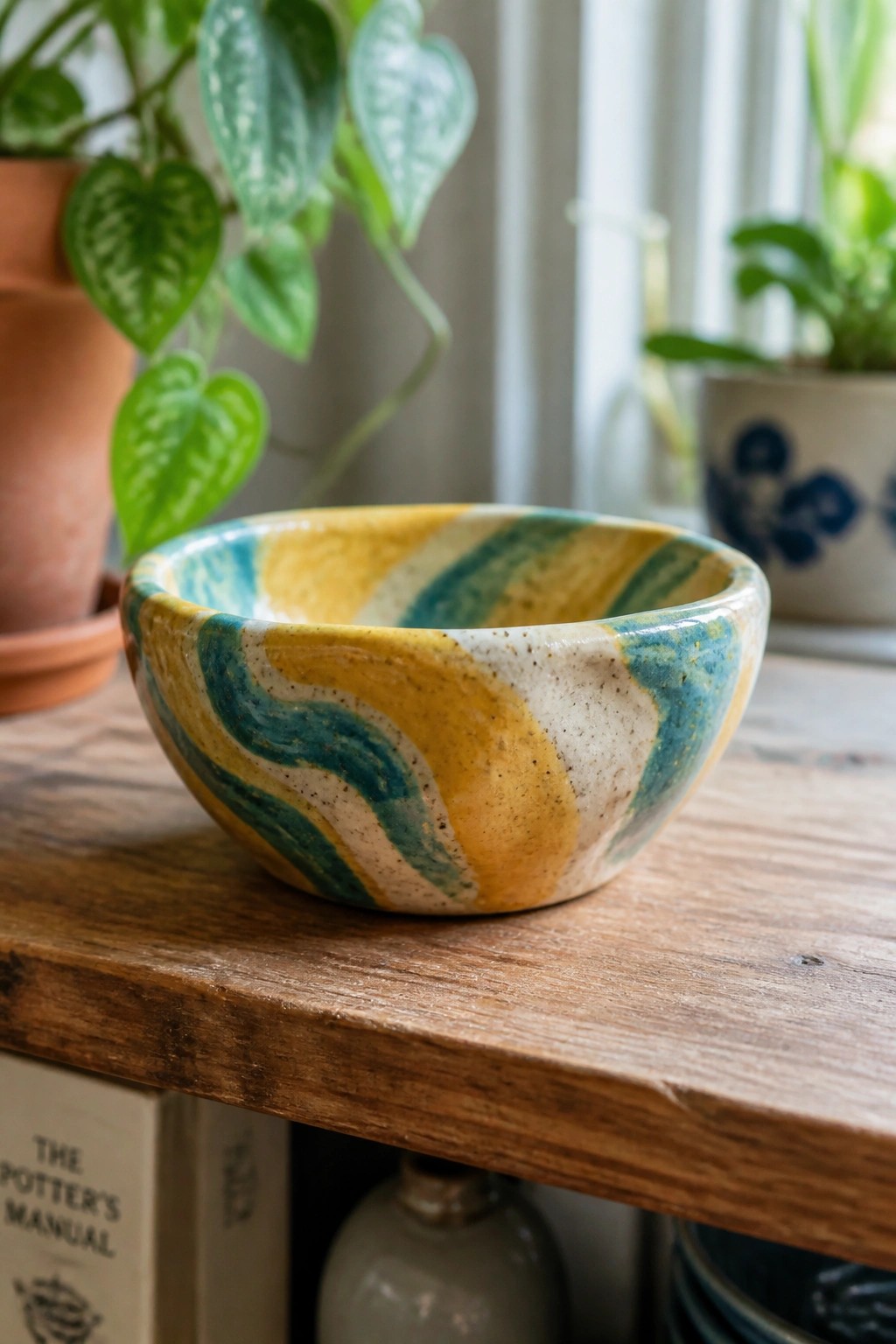
A small ceramic bowl covered in flowing marbled glazes creates the main visual interest here. Yellow, teal, and cream tones blend into irregular waves across the curved surface, with a light speckled texture showing through. The shape stays simple and rounded so the glaze pattern carries the design. This fits the category of a decorative tabletop bowl that can double as a small serving piece or catch-all.
What makes this idea useful is how easily the same glaze approach works on different bowl sizes. You can apply the swirling pattern to a larger mixing bowl for kitchen use or keep it small for a jewelry dish. The color mix stands out in photos, which helps when sharing the finished piece online. For a simpler version, reduce it to two glazes and let them blend more loosely during application.
Marbled Blue Swirl Bowl
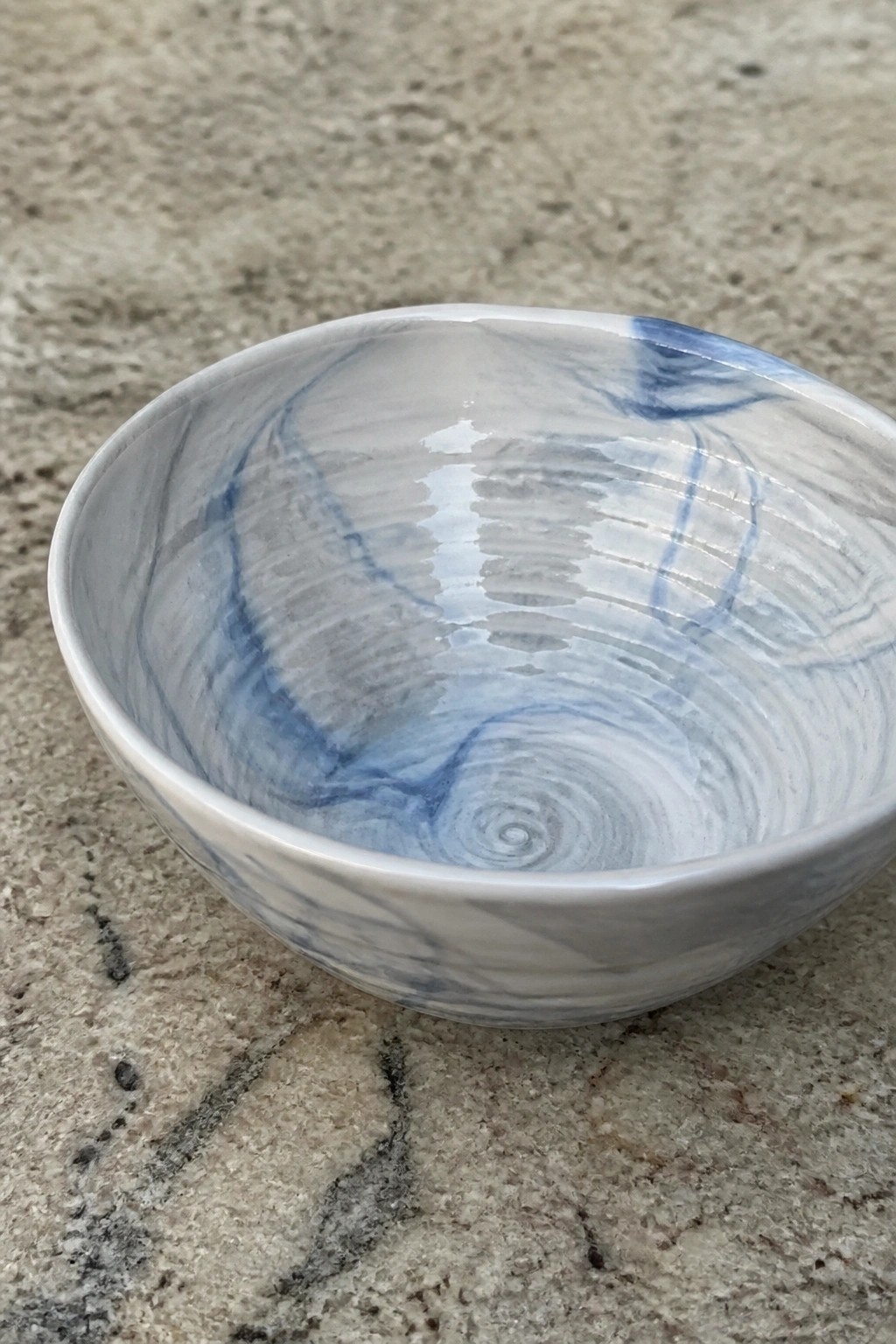
A simple round ceramic bowl gains interest from a marbled glaze that blends soft white with flowing blue streaks. The pattern runs across the interior surface and creeps over the rim, creating movement without added decoration. This approach fits the category of a decorative or serving bowl where the glaze itself becomes the main feature.
What makes this idea useful is how the marbling technique turns a basic wheel-thrown shape into something distinctive with just one glaze application. The same method works on plates, small trays, or even mugs if you want to repeat the look across a set. In a kitchen or on a side table it holds fruit, keys, or jewelry while the blue tones stay neutral enough to match most spaces. You could simplify it further by using fewer colors or scale the bowl larger for a centerpiece.
Two-Tone Drip Glaze Serving Bowl
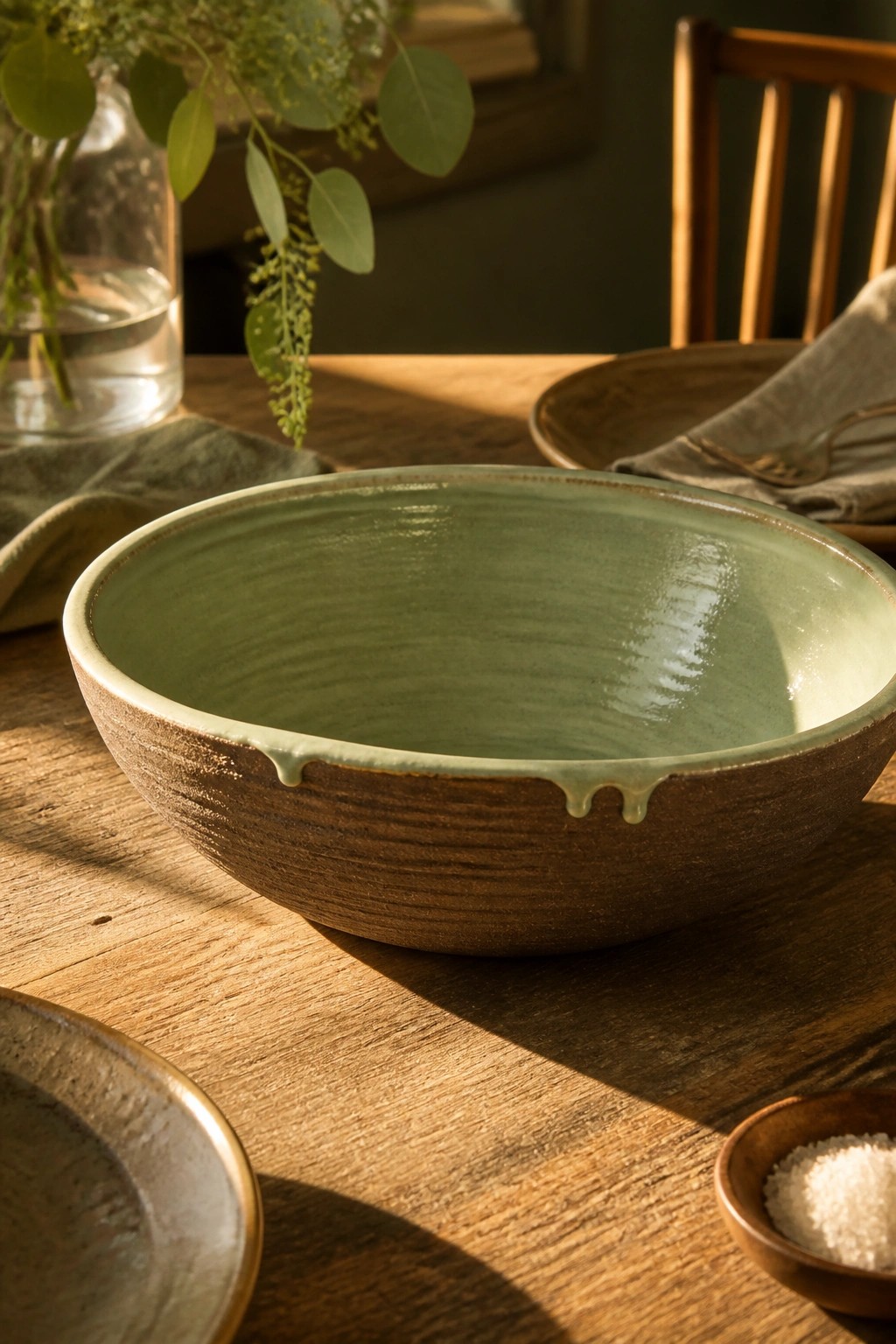
A wide ceramic bowl uses a rough brown clay body paired with a soft green glaze on the interior. The glaze is applied so it runs over the rim in a few controlled drips, leaving a clear division between the matte exterior and the glossy inside. This keeps the form simple while adding visual interest through the contrast of texture and color.
The large diameter works well for serving salads or holding fruit on a kitchen counter. You can adapt the same drip method to smaller bowls or swap the green for a different shade that fits your dishes. The shape stays useful because the wide opening and stable base make it easy to handle without extra decoration.
Scalloped Rim Textured Bowl
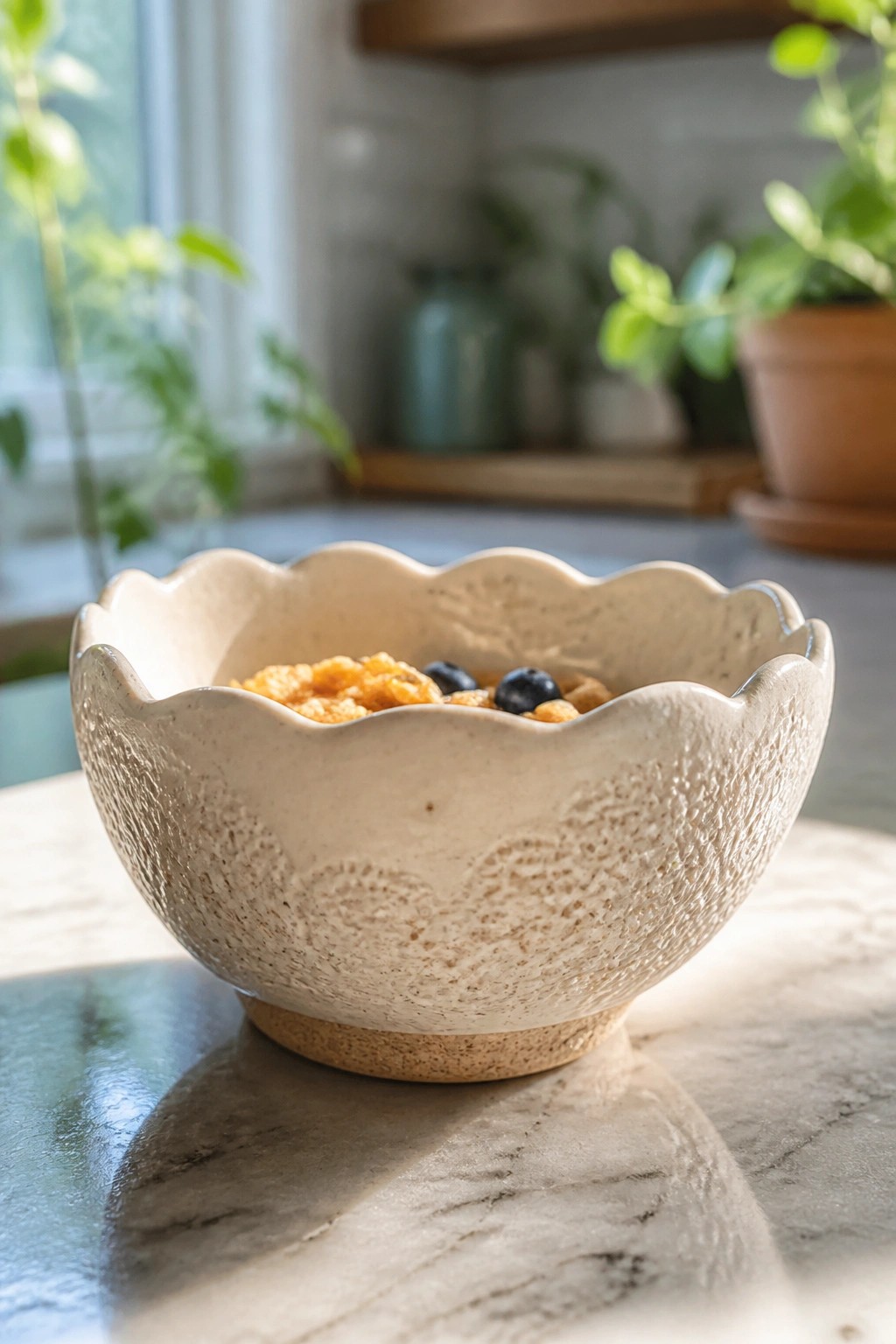
A handmade ceramic bowl with a wavy, scalloped rim and a rough, speckled exterior surface gives this piece its main visual impact. The irregular edge breaks up the round form while the textured finish adds depth without any glaze patterns or added color. This approach fits the category of functional kitchen bowls that also serve as table or shelf decor.
What makes this idea useful is how the scalloped rim creates interest even in a single neutral tone. You could adapt the same rim treatment to smaller bowls for snacks or try a taller version for a fruit bowl. The texture helps disguise throwing rings or minor surface flaws, which is practical when experimenting with larger forms. In a kitchen setting this shape works well for serving because it feels sturdy and stands out against plain dishes or linens.
Matte Black Bowl With Swirled Brown Interior Glaze
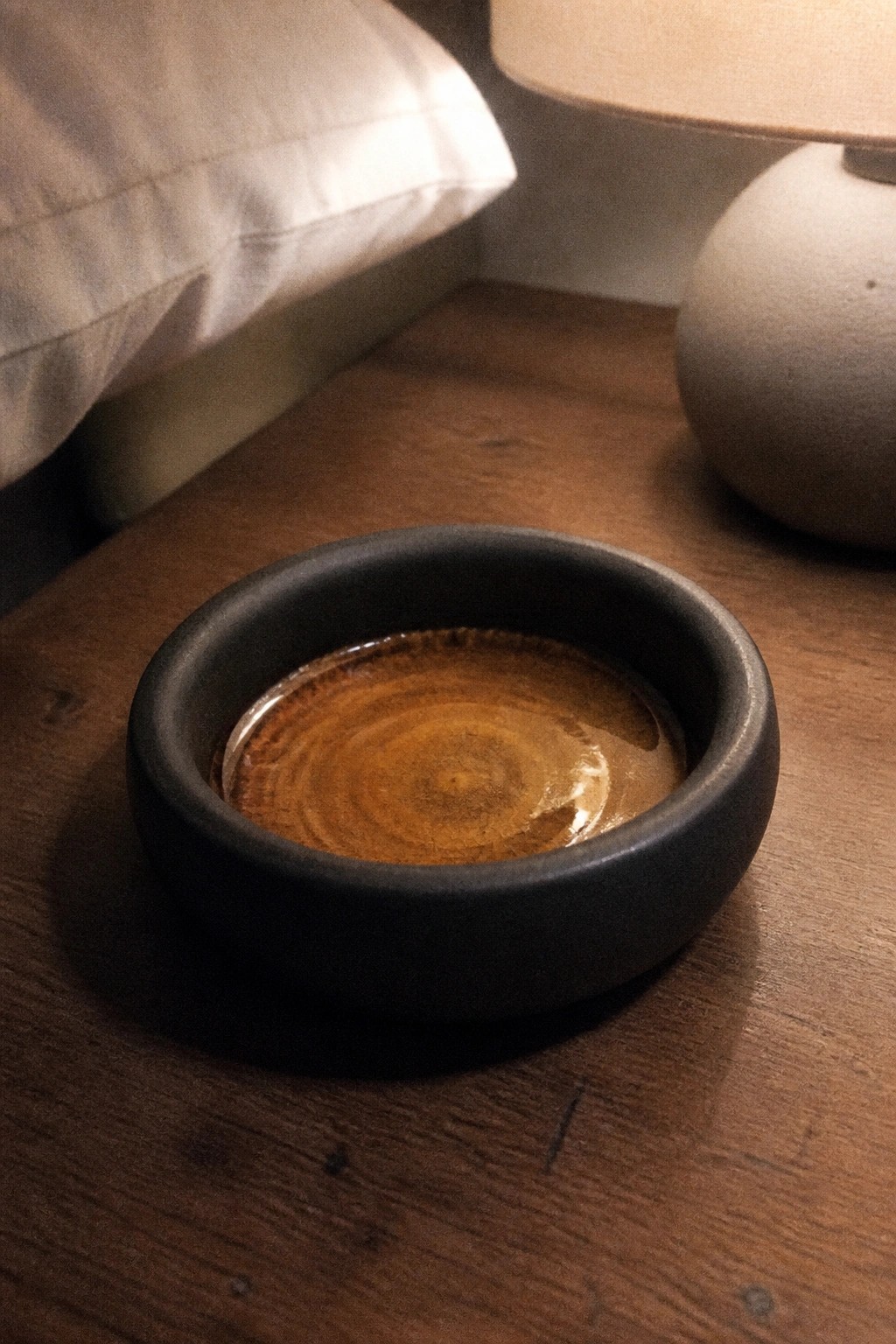
A small, shallow ceramic bowl gains visual interest from a matte black exterior paired with a glossy brown interior that shows a natural spiral pattern from the glaze application. The low profile and wide rim keep the form simple while the contrast between the dark outer surface and the warm, fluid interior makes the piece stand out on a table or shelf. This approach suits small bowls meant for both everyday use and quiet display.
What makes this idea useful is the way the two-tone finish and compact size let the bowl work in multiple spots without needing extra decoration. You could adapt the swirl effect by pouring glaze in stages or testing it on a slightly wider base for a different proportion. In a kitchen or on a nightstand, the same shape handles condiments, jewelry, or small snacks while staying understated. The design also translates well to a set of three or four bowls for consistent table styling.
Leaf Relief Ceramic Bowl
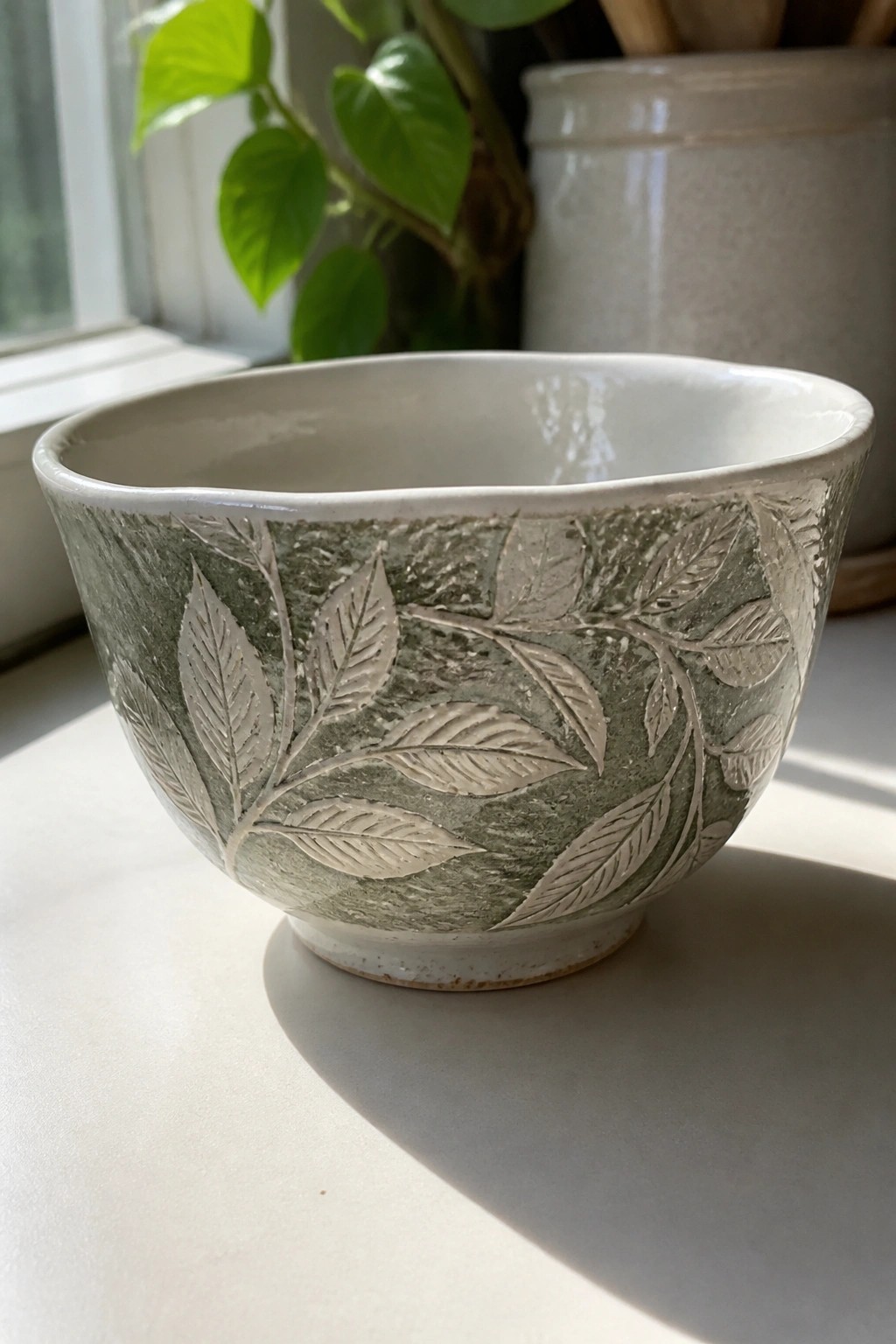
A ceramic bowl with raised leaf and branch details molded or carved into the exterior creates a textured botanical surface. The glaze treatment leaves the leaves and stems in a lighter tone against a darker green background, making the pattern stand out clearly. This turns an ordinary bowl shape into a decorative object that works for display or everyday use on a table or shelf.
What makes this idea useful is how the relief pattern adds interest with just one main color and no extra painting steps. You could adapt the same leaf motif to a smaller bowl or try different plant varieties like ferns or herbs for variety. In a kitchen or living room, this kind of bowl works as a natural accent that pairs with plants or neutral setups. For a gift, scaling the idea down to a set of small dishes would keep the same look while making it easier to produce.
Wide Shallow Bowl with Flowing Green Glaze
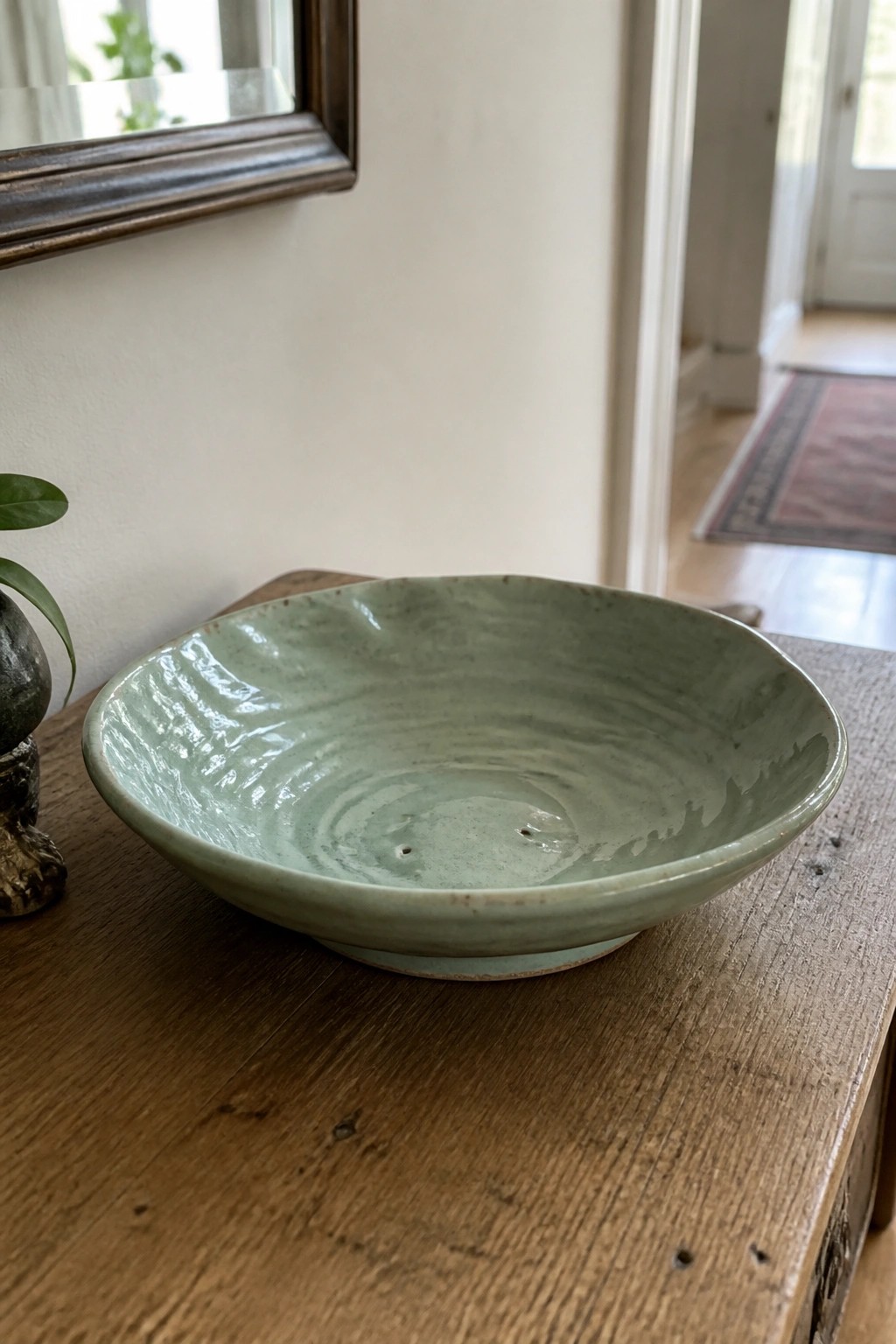
A wide, shallow ceramic bowl works well when the form stays simple and the glaze carries the interest. This piece uses a thrown shape with a slightly uneven rim and a soft sage green glaze that shows brush strokes and pooling where it settled during firing. The result is a low-profile bowl that reads as both functional and decorative.
What makes this idea useful is the broad base that holds fruit, keys, or small plants without adding height on a table. You could repeat the same wide form in a matte finish or a smaller diameter for side dishes. The glaze variation already gives enough texture, so the same shape adapts easily to different color palettes or room styles.
Frequently Asked Questions
How do I choose the right ceramic bowl design to match my existing home style?
Start by assessing your current color scheme and textures. Neutral glazes work well in minimalist spaces while vibrant patterns add interest to eclectic rooms. Measure the intended spot to ensure the bowl size feels balanced and avoid overcrowding surfaces.
Can these elegant bowls serve food or are they only for display?
Many designs function for holding fruits, salads, or snacks on the table while enhancing the look of the space. Confirm food safety details in the product description and skip microwave use on pieces with metallic details to prevent damage.
What steps help maintain and clean ceramic bowls for long term beauty?
Wash by hand with gentle soap and warm water to protect the finish. Apply a baking soda paste for stains and rinse thoroughly. Keep bowls dry between uses and store them with padding to avoid chips or cracks.
Where can I find similar ceramic bowl options if the featured designs are unavailable?
Search artisan marketplaces such as Etsy or local craft fairs for handmade pieces. Retailers like Pottery Barn and West Elm often carry comparable elegant styles. Use terms like textured ceramic serving bowls in your online searches to locate alternatives quickly.
How can I display several designs in one area without creating clutter?
Arrange three to five bowls in varying heights on a single tray or open shelf. Place them across different zones such as a dining table, sideboard, and mantel to distribute visual appeal evenly throughout the room.

Pottery Path is my cozy corner of the internet where I share clay ideas, pottery inspiration, and simple projects you can recreate at home. I love exploring everything from air dry clay to handbuilt pottery to cute minis that brighten your day. My goal is to make clay crafting feel easy, fun, and welcoming for anyone who wants to try it.
You will find beginner friendly tutorials, creative pottery painting ideas, and lots of warm inspiration for slow and happy crafting. If you enjoy hands on creativity, this space will feel like home.