I’ve been working with ceramic bowls for a while now and glazing is one part I keep coming back to.
Finding ways to get more interesting surfaces has been a gradual process for me.
A few techniques stand out because they add depth without too much extra work.
They suit the kind of simple yet modern look I aim for in my pieces.
Sharing them here in case they help with your own projects.
Brushed Reactive Glaze for Natural Two-Tone Pooling

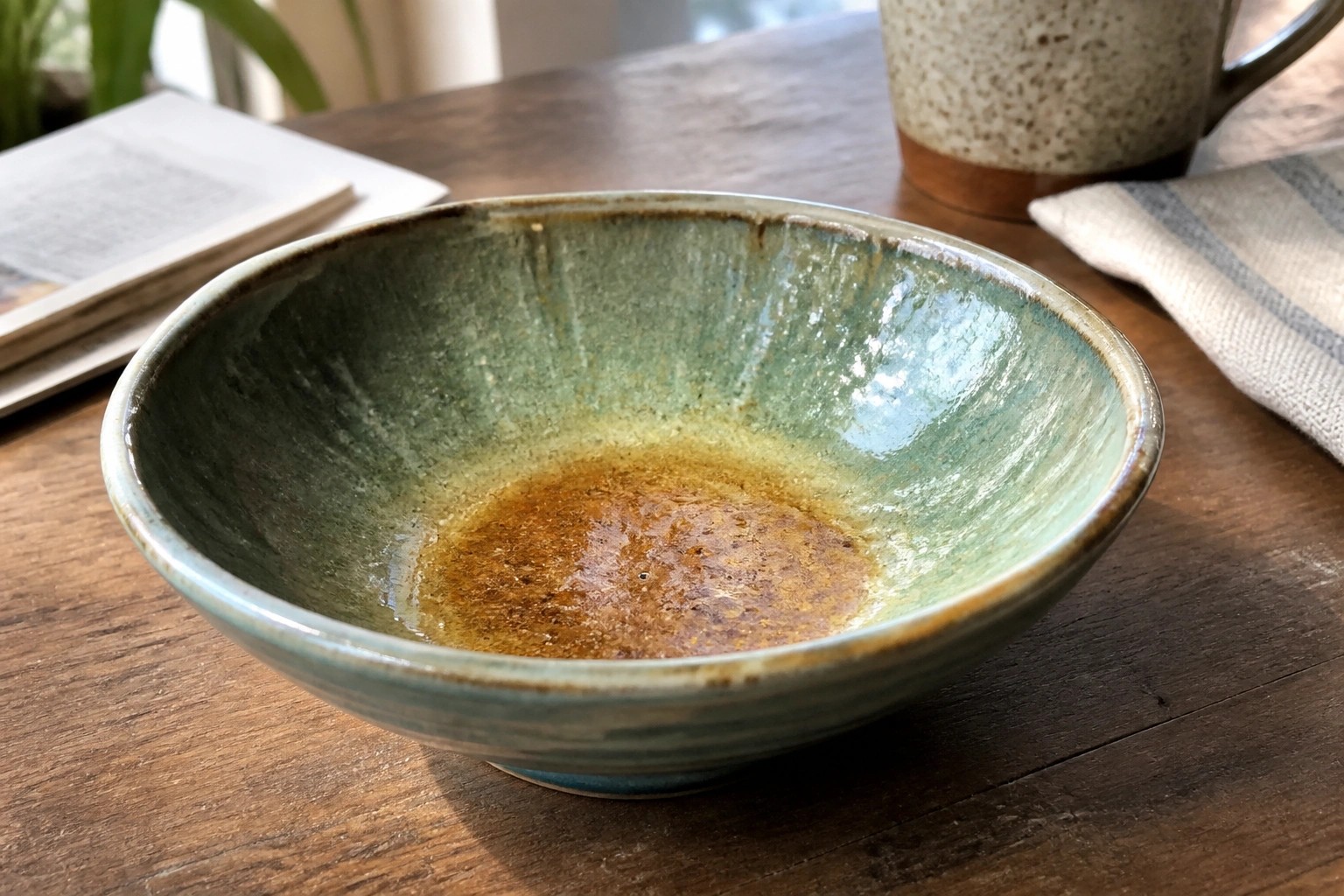
A wide, shallow ceramic bowl shows the effect of brushing a single green glaze so the strokes remain visible and radiate from the center. The glaze thins on the sides to keep the green hue while it pools thicker at the bottom and shifts to a warm brown, creating contrast through the clay body and application rather than added colors. This produces a rich surface on a simple form that still reads as functional tableware.
What makes this idea useful is how the brush texture highlights the bowl’s curve without extra tools or stamps. A piece like this works especially well as a serving dish for fruit or bread where the interior variation stands out. You could rework the same approach on a deeper bowl by adjusting the glaze thickness or carrying the brush marks up the outside wall for a matching set.
Speckled Blue Interior with Matte Striped Exterior
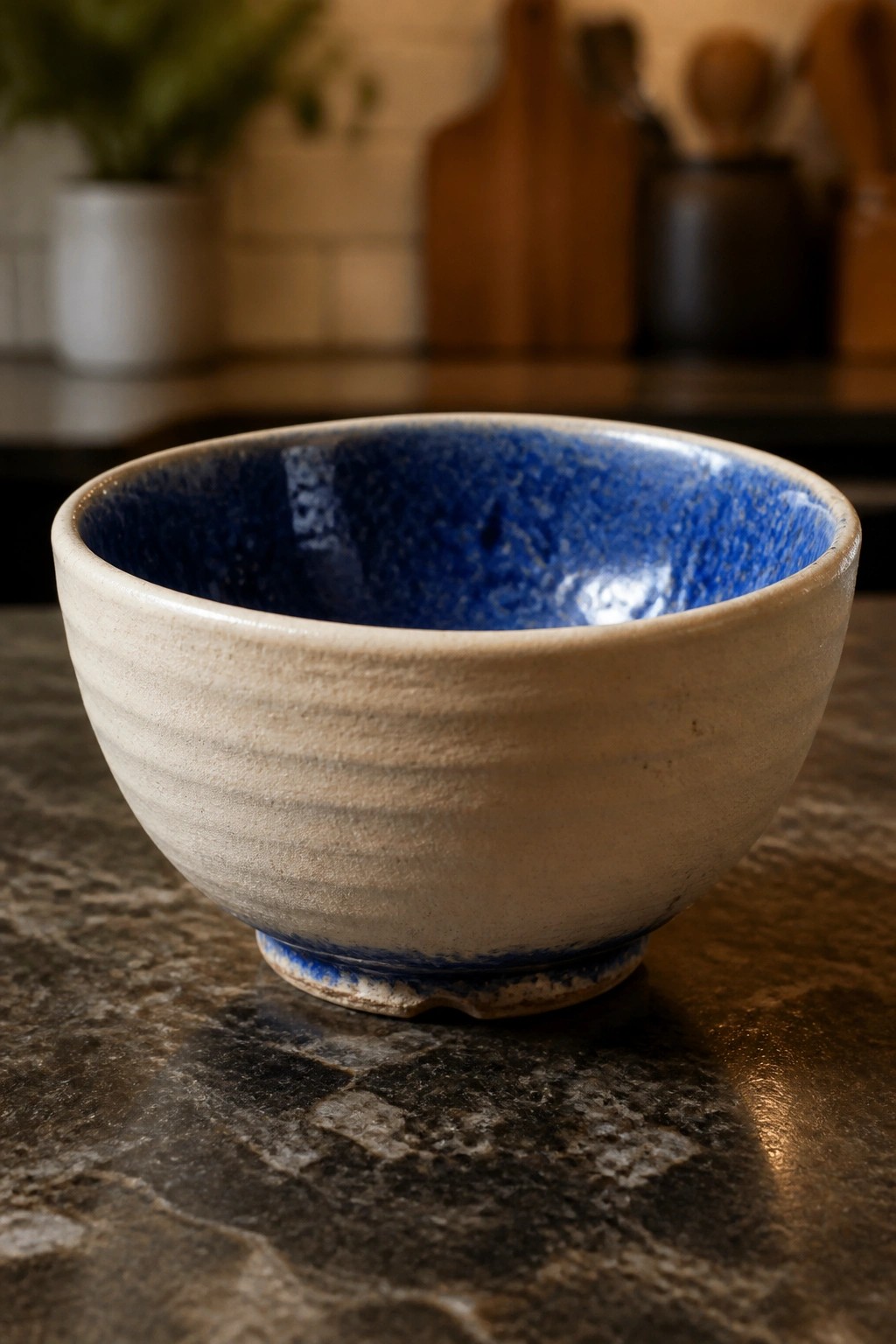
A small ceramic bowl combines a deep speckled blue glaze on the inside with a light beige clay body on the outside. Horizontal throwing lines create a simple textured surface across the exterior while the same blue appears on the foot ring. This setup keeps the color concentrated where it shows during use and leaves the outside matte and understated.
What makes this idea useful is how the shape works for both everyday kitchen tasks and table display. You could repeat the same glaze contrast on a larger serving bowl or a set of smaller dip bowls to create a matching group. The horizontal texture comes directly from the wheel so it needs no extra tools or carving. In a kitchen this kind of piece mixes easily with plain dishes because the interior color provides the main visual interest.
Layered Mottled Glaze on a Pedestal Bowl

A wide, shallow bowl raised on a short foot gives the glaze room to move and collect. Multiple layers in earthy greens and browns are applied so they break and run, leaving streaks and metallic flashes where they overlap. The foot keeps the drips from reaching the table while the uneven surface catches light across the interior.
What makes this idea useful is that the same layering works on both small and larger bowls without major changes. You can swap one of the colors for a brighter tone or add a third layer along the rim to change how far the drips travel. This style stands out for serving pieces or as a catch-all because the foot adds height and keeps the form from looking flat on a surface.
Marbled Pink Glaze on an Irregular Small Bowl

A small ceramic bowl with a slightly pinched, organic rim uses a soft pink glaze that swirls into white and faint orange tones across the surface. The glaze application creates visible streaks and subtle pooling that add movement without any added patterns or carving. This style suits a compact bowl meant for salt, spices, or individual servings where the surface finish does the visual work.
What makes this idea useful is how easily the marbled look can be tested by layering two or three glazes and letting them shift during firing. The compact size keeps material costs low when trying new combinations. The same glaze approach could be repeated on a set of four small bowls or scaled up for a larger serving piece while keeping the irregular rim shape.
Dark Glaze Gradient on a Ribbed Bowl

A small ceramic bowl uses a dark glossy glaze that moves from near-black on the walls to a warmer brown at the base. The interior stays smooth and reflective while the exterior shows repeated horizontal ridges that break up the surface. This approach relies on glaze behavior and simple texture to create visual depth on a compact form.
What makes this idea useful is how the color shift happens naturally inside the bowl without extra painting steps. The same glazing can be repeated on a set of four or five bowls for consistent kitchen use. The ridges are quick to add on the wheel and give the piece enough surface variation to photograph well for reference or sharing. You could scale the shape up slightly or test the glaze on a taller cylinder to see how the gradient changes.
Speckled Earth Glaze on a Wide Ceramic Bowl

A wide, low ceramic bowl finished with a mottled speckle glaze uses small dark flecks against a warm tan and blue-gray base to build surface variation. The glaze shows slight pooling near the rim and some lighter highlights where it thinned during firing. This type of glazing relies on the interaction between the speckling agent and the main glaze to create depth on a simple, functional form.
What makes this idea useful is how the speckle pattern holds up on larger surfaces that get used daily for serving or mixing. The same glaze could be tested on a set of smaller bowls or a deeper casserole to keep the effect consistent across pieces. In a kitchen setting the neutral tones sit easily with wood and linen without needing extra decoration.
Reactive Green Glaze on Ribbed Bowl Form

A wheel-thrown bowl with horizontal ridges on the outside uses a dark clay or slip for the exterior while the interior carries a glossy green glaze that breaks into flowing, petal-shaped patterns. The ridges give the dark surface some texture and catch light along the edges, while the interior glaze pools and varies in thickness to produce natural shifts in color and opacity. This combination keeps the focus on the glaze reaction itself rather than added carving or painting.
What makes this idea useful is how the ribbed shape helps control glaze thickness and creates subtle shadows that play against the green interior. The bowl works well for everyday kitchen use or as a serving piece where the patterned surface shows up when food is added. You could scale the same glaze pairing down to smaller prep bowls or try the rib texture on a plate to see how the pattern changes on a flatter surface. The contrast also makes the piece easy to spot in a set of otherwise plain ceramics.
Scalloped Rim Bowl with Soft Green Glaze

A wheel-thrown bowl with a scalloped rim lets the glaze settle into the grooves and build light variation across the surface. The soft green glaze shows thicker areas along the flutes that create gentle depth while staying in one color family. This approach works on any bowl where the form itself can help the glaze do more of the visual work.
What makes this idea useful is how the rim shape adds interest without extra colors or techniques. You could repeat the scalloped edge on a larger serving bowl or scale it down for small prep dishes. The same glaze would look different on a smoother form, so testing the rim treatment first keeps the result simple to control. In a kitchen this size works well for sides or snacks while still looking finished next to plain plates.
Gradient Glaze Over Thrown Ridges

A wheel-thrown bowl uses a simple two-tone glaze that moves from a cool gray at the rim into a muted green toward the base. The horizontal ridges from the wheel catch the glaze unevenly and create soft bands that add depth without any extra carving or painting. This keeps the surface clean while still giving the bowl visual weight through color change alone.
What makes this idea useful is how the basic form lets the glaze carry the design. You can swap the gray and green for other pairs like warm beige to rust or soft blue to white to match different kitchens. The same layering works on plates or small cups if you want a matching set. A piece like this fits easily into daily use for snacks or sides and stands out in photos because the color shift reads clearly from a distance.
Mottled Orange Over Charcoal Glaze on an Irregular Bowl

A handbuilt ceramic bowl uses a dark charcoal base glaze topped with an orange mottled layer to create strong visual contrast. The uneven rim and slightly pinched form let the glaze pattern stand out without competing with precise lines or symmetry. This glazing approach works because the orange breaks through the darker layer in an organic way that reads as intentional rather than random.
What makes this idea useful is how easily the mottling can be controlled by varying the thickness or application method of the top glaze. The bowl shape works well as a kitchen prep dish, fruit bowl, or bathroom catchall. You could simplify the same color combination on a wheel-thrown cylinder or test it on small test tiles first to dial in the orange density before committing to a larger piece.
Incised Lines Filled with Iron Wash

A wide ceramic bowl features a series of vertical and curved incised lines that run around the exterior. The lines are filled with a brown wash that contrasts against the pale speckled glaze, creating a clean graphic pattern. This surface treatment works especially well on bowls because the rounded form lets the carved lines follow the curve without looking forced.
What makes this idea useful is how easily the carving can be adjusted for different bowl sizes by changing the spacing or depth of the lines. The same approach translates to smaller serving dishes or even a set of plates if you keep the motif consistent. In a kitchen this kind of bowl works well for everyday use since the matte glaze hides minor marks while the pattern still reads clearly from a distance.
Two-Tone Bowl with Intentional Drip Glaze
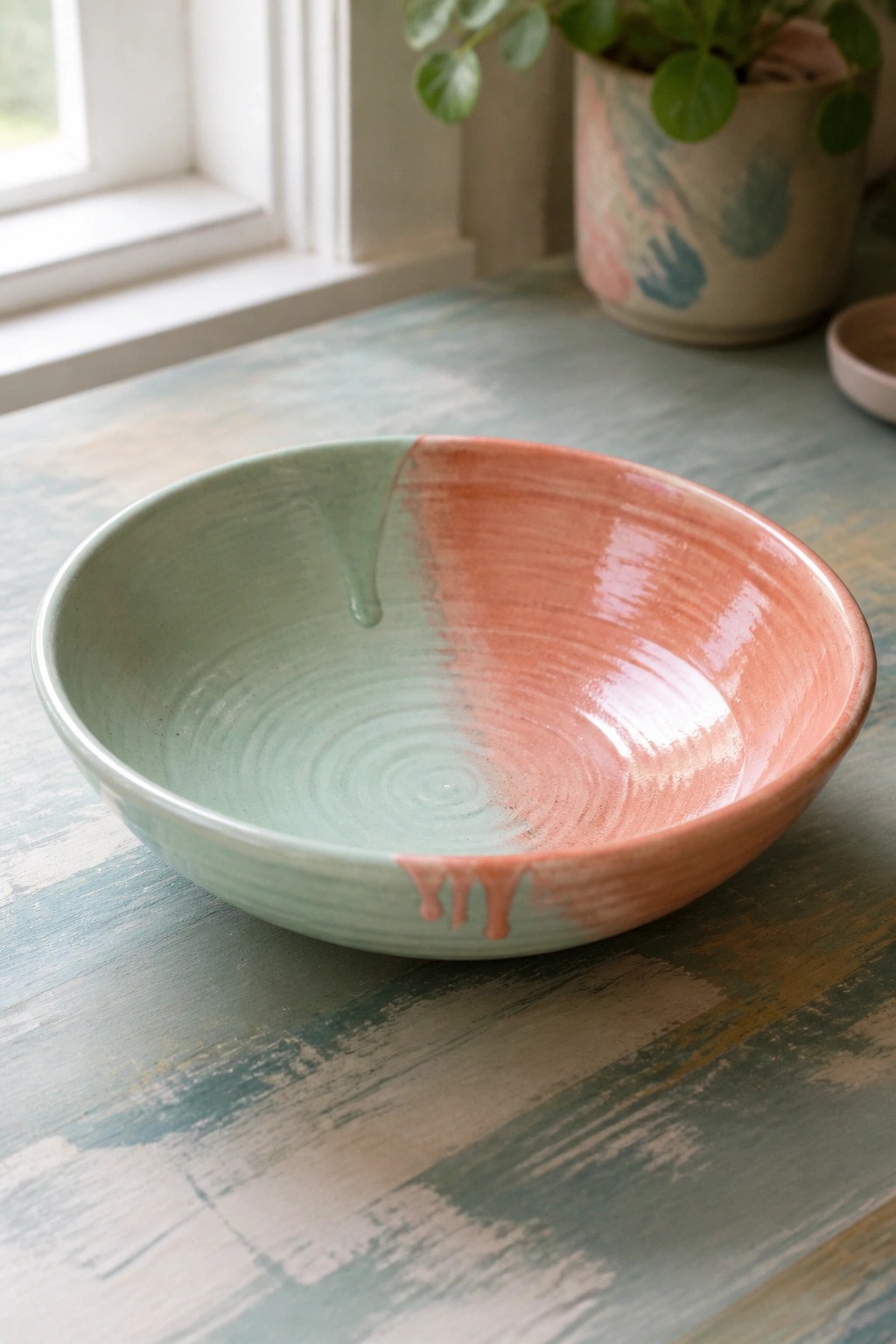
A wheel-thrown ceramic bowl split into two glaze sections gives a simple way to combine colors on one piece. One half uses a soft green glaze while the other uses a warm coral, with the green allowed to run slightly into the coral area and matching drips placed along the exterior rim. The horizontal throwing lines remain visible under the gloss, which keeps the surface from looking flat. This fits into the category of functional serving bowls or decorative kitchen pieces where the glaze transition itself becomes the main design element.
What makes this idea useful is that the drip marks require almost no extra tools beyond how you apply the second glaze. You can adapt the same split by using any two glazes that contrast well or by changing the drip direction to run vertically instead. The shape works for both everyday salad or fruit bowls and for display on open shelves. For a smaller project, the same color split and drip method translates easily to ramekins or small dessert dishes.
Speckled Glaze on a Scalloped Pet Bowl

A small ceramic bowl with a scalloped rim makes an effective pet food dish. The mottled speckle glaze in brown, blue, and cream tones creates a durable surface that masks scratches and food residue over time. This style of bowl keeps the focus on the glaze texture and edge detail rather than added surface patterns.
The shape does a lot of the work here by giving the piece a finished appearance with minimal extra effort. You can scale the same scalloped rim and speckle combination up for a larger kitchen prep bowl or down for a small ring dish. In homes with pets it blends into the room better than standard stainless or plastic feeders. The compact size also makes it a good test piece when trying out new glaze mixes or clay bodies.
Stamped Circular Motifs with Reactive Purple Glaze

A ceramic bowl with a series of stamped circular motifs pressed into the interior creates a repeating pattern that catches glaze differently across the surface. The purple glaze shifts from matte to glossy and pools in the recessed areas of each stamp, giving the flat clay more dimension without extra carving. This idea fits the category of a medium-sized serving or decorative bowl where the stamping and glazing work together as the main surface treatment.
What makes this idea useful is that the stamped circles can be made with basic tools like a small cookie cutter or custom stamp before the clay firms up. The same pattern could be scaled down for smaller pinch bowls or repeated around the outside of a taller vase. In a kitchen or on an entry table, the finished piece handles light use while the varied glaze keeps it from looking plain. You could swap the purple for a different reactive glaze color to match existing dishes or decor without changing the stamping step.
Stacking Bowls with Earthy Glaze Layers

A set of ceramic bowls finished in three different muted glazes creates interest through simple nesting. The bottom bowl carries a gray speckled surface, the middle one a soft teal, and the top a warm ochre yellow, with each glaze stopping short of the foot to leave a raw clay edge. This approach keeps the bowls functional for daily use while letting the colors interact when they are stacked or pulled apart on a counter. The slight drip marks and uneven coverage around the rims add to the handmade look without requiring complex techniques.
What makes this idea useful is how the color contrast works across a matching set of sizes. You could adapt the same stacking format by choosing two neutrals and one brighter accent to fit your existing dishes. In a kitchen these bowls show well when left partially nested on open shelves, where the layers of glaze become the main detail. The same glaze combination could be applied to plates or small serving dishes to build a full collection.
Crackle Glaze on a Wide Shallow Bowl

A simple wide ceramic bowl gains its surface from a crackle glaze that produces a fine network of dark blue lines over a pale green ground. The cracks form naturally as the glaze cools and contracts, creating texture and depth across the entire interior and rim without extra carving or painting. This approach suits basic bowl forms where the shape stays plain so the glaze pattern carries the interest.
What makes this idea useful is how the crackle effect works on any size bowl you already throw or hand-build. You can apply the same glaze layers to smaller prep bowls or deeper serving pieces for different kitchen tasks. The blue-green palette stays neutral enough to mix with other dishware while still showing up clearly in photos. For a gift, the same surface treatment translates easily to a set of small dishes or a single larger tray.
Contrasting Glazes on a Fluted Bowl

A small ceramic bowl with vertical ridges and a scalloped rim uses a matte green glaze on the exterior paired with a glossy coral on the interior. The ridges interrupt the glaze flow and create subtle lines where the two colors meet at the rim. This simple two-color approach turns the bowl’s form into the main design element rather than relying on added patterns or multiple layers.
The shape does a lot of the work here by guiding where the glazes stop and start. You could repeat the same color split on a plain round bowl or try it on a set of nesting sizes for a coordinated look. In a kitchen or on a tabletop the bright interior shows up well even when the bowl holds small items. The idea also adapts easily to other forms like a low tray or a small planter if you keep the same interior-exterior split.
Metallic Rim Glaze Over Dark Matte Clay

A simple round ceramic bowl uses a dark matte clay body paired with a narrow band of iridescent metallic glaze along the rim. The glaze creates shifting copper, blue, and purple tones that catch light against the flat black surface. This keeps the bulk of the bowl understated while the rim supplies the surface interest. The result is a versatile bowl suited for both everyday use and display.
What makes this idea useful is how the rim treatment can be repeated on different sizes without changing the base glaze. The same dark body and metallic edge could work on a set of small dishes or a larger serving bowl. Adjusting the width of the metallic band or testing it on a gray clay gives quick variations. In a kitchen it holds up well for fruit or nuts, and the high-contrast finish photographs clearly for project sharing.
Speckled Green Glaze Over Dimpled Clay

A wheel-thrown bowl gains its surface from a light green glaze that breaks into scattered brown spots where it thins over raised clay areas. The clay itself carries a repeated dimple pattern that creates small craters once the glaze settles and melts during firing. This produces a dotted, mottled effect that comes directly from the glaze and clay interaction rather than any painted design.
What makes this idea useful is that the speckling happens automatically once the right glaze and texture are paired, so no extra surface work is needed after the bowl is formed. The same dimple-and-speckle combination can be scaled up for larger serving bowls or repeated on smaller prep bowls to build a set. In a kitchen the green and brown tones stay neutral enough to work with most dishware while still reading as handmade.
Frequently Asked Questions
What glazing materials work best for creating depth and richness in surface effects on bowls?
Use combinations of matte and glossy glazes or incorporate oxides like iron or copper to add color variation. Layering thin coats allows for interesting interactions during firing that build visual complexity without extra tools.
How do I achieve modern effects like speckling or crystallization on my ceramic bowls?
Add rutile or titanium dioxide to your base glaze recipes for speckles and control cooling rates in the kiln to encourage crystal growth. Test small batches first on sample tiles to refine the look before applying to finished pieces.
What steps should I follow to apply multiple glaze layers safely?
Ensure each layer is dry before applying the next. Use a spray gun or brush for even coverage and avoid thick applications that can cause running or defects during the firing process.
Are these modern glazing ideas suitable for functional bowls that hold food?
Many are but always test for food safety by checking if the glaze matures fully and has no leaching. Use lead free glazes and fire to the recommended cone temperature for reliable results.
How can I troubleshoot uneven glaze results after firing?
Uneven results often come from inconsistent application or kiln hot spots. Try rotating pieces during firing or using kiln wash and shelves properly to promote even heat distribution throughout the load.

Pottery Path is my cozy corner of the internet where I share clay ideas, pottery inspiration, and simple projects you can recreate at home. I love exploring everything from air dry clay to handbuilt pottery to cute minis that brighten your day. My goal is to make clay crafting feel easy, fun, and welcoming for anyone who wants to try it.
You will find beginner friendly tutorials, creative pottery painting ideas, and lots of warm inspiration for slow and happy crafting. If you enjoy hands on creativity, this space will feel like home.